

- 15 Hotel Breakfast Charges Guests Can Avoid by Checking the Rate Plan - October 24, 2026
- 17 Shoulder Season Travel Rules for Sudden Weather Changes - October 24, 2026
- 18 Hotel Arrival Rules That Prevent Expensive Check-In Problems - October 24, 2026
The first ride you spot outside arrivals feels like the obvious one, but it can quietly be the slowest or most expensive choice.
Rail, bus, taxi, and private pickup each have their own zones and rules, and the first few differences below catch plenty of tired travelers off guard.
#1 – Rail Links Versus Bus Services at Large Hubs

Many airports send rail and bus passengers to different exits, levels, or terminals to manage crowds. Rail tickets may come from machines, counters, or apps, while buses may take cash, cards, or app payment on board, depending on the city.
In some European hubs, trains connect straight to mainline networks, while airport buses stop at several hotels. Check signage before leaving baggage claim.
The next one changes the moment you step to the curb…
#2 – Designated Taxi Stands and Their Rules
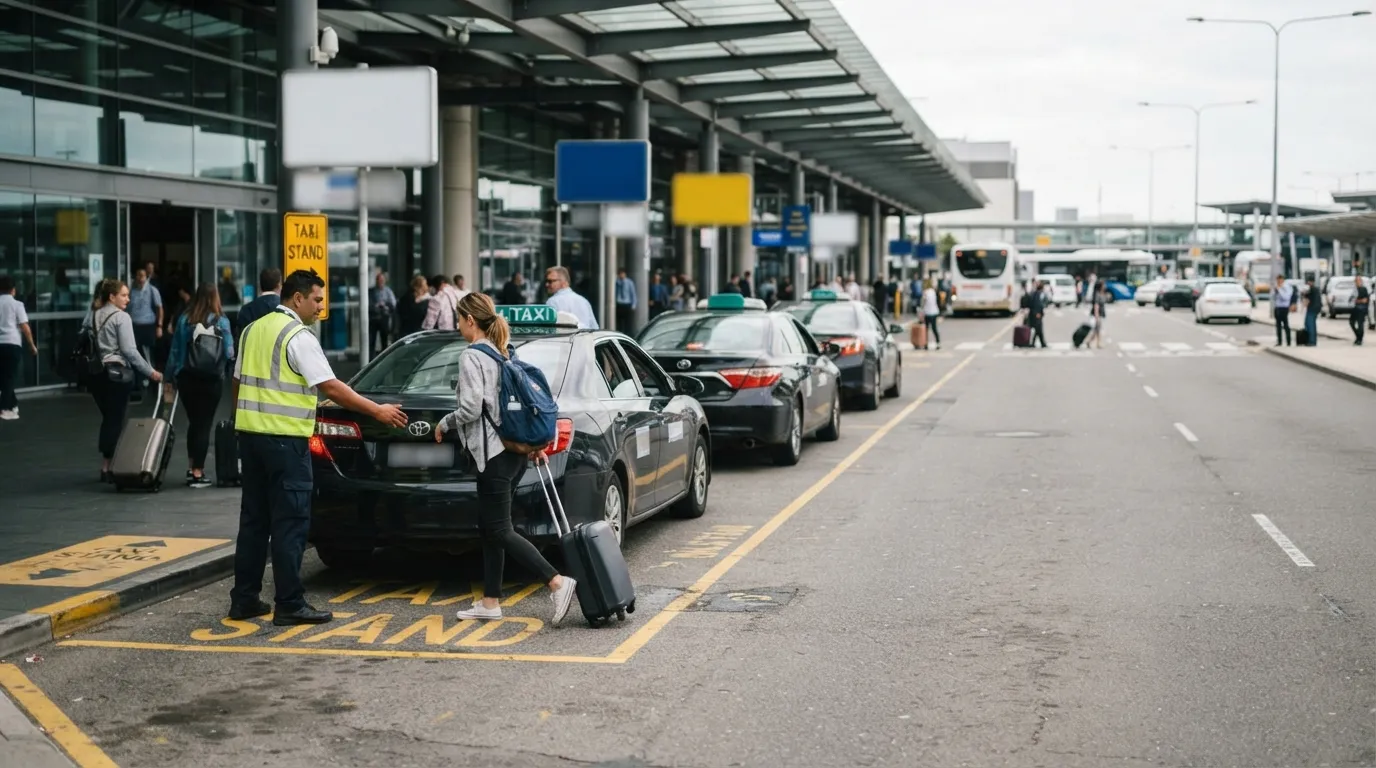
Official taxi stands sit in marked curb areas that can change by terminal. Some jurisdictions require you to take the next cab in line, while others let you choose among waiting vehicles.
Some cities use fixed airport fares, while others run on meters only. Private operators sometimes share the same zone but show different licensing, so check the vehicle markings before you get in.
But the next choice happens before you even leave the building…
#3 – Terminal-to-Terminal Transfers Before You Leave

Some airports link terminals with free trains or people movers, such as Dallas Fort Worth’s Skylink or Atlanta’s Plane Train, which run inside security. Others require you to exit and clear screening again. Confirm which applies, especially when your arrival and departure terminals differ.
#4 – Rideshare Pickup Zones Are Often Far From Arrivals
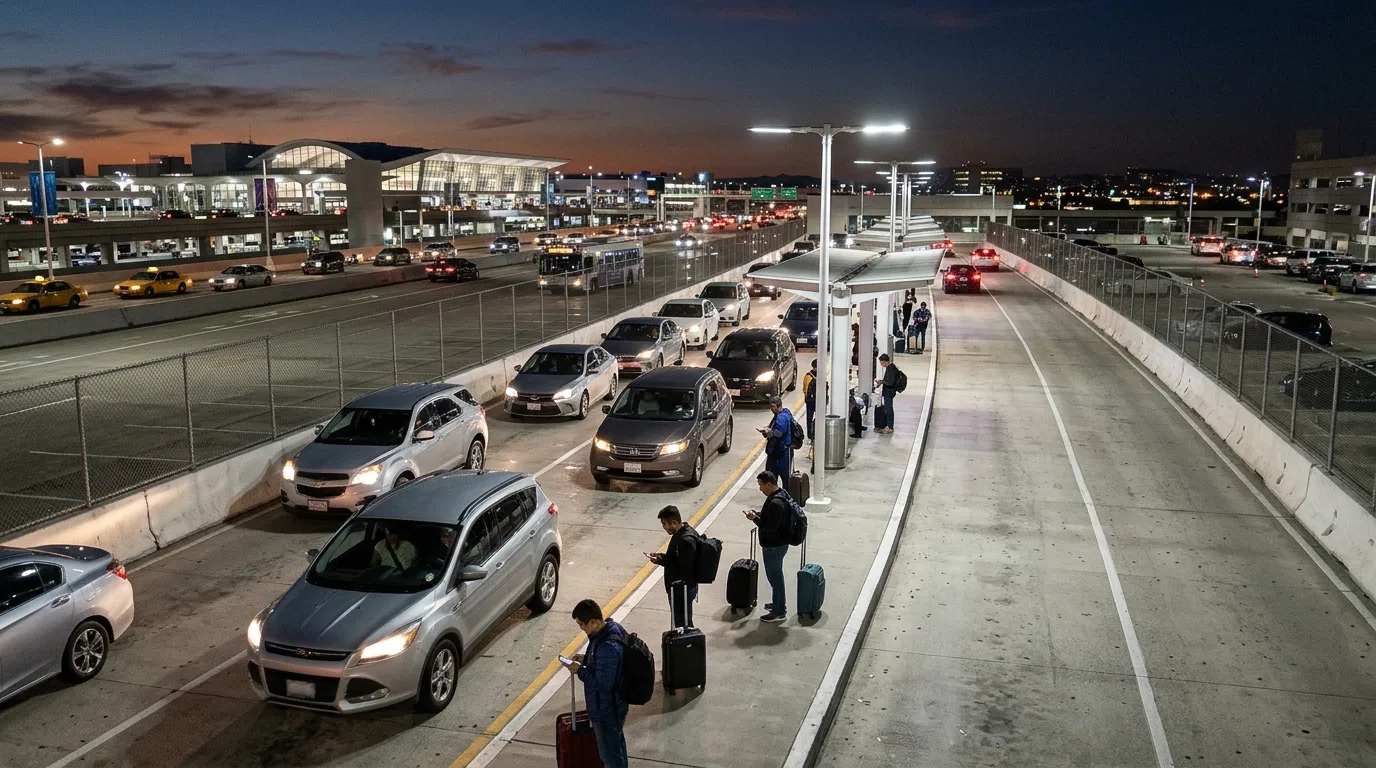
Many airports move app-based rides to separate levels, garages, or lots. Los Angeles International, for example, has used a dedicated pickup lot reached by shuttle. Rules differ by airport and can change, so open the app’s pickup instructions before you walk outside with your bags.
#5 – Flat-Fare Taxis Versus Metered Rides
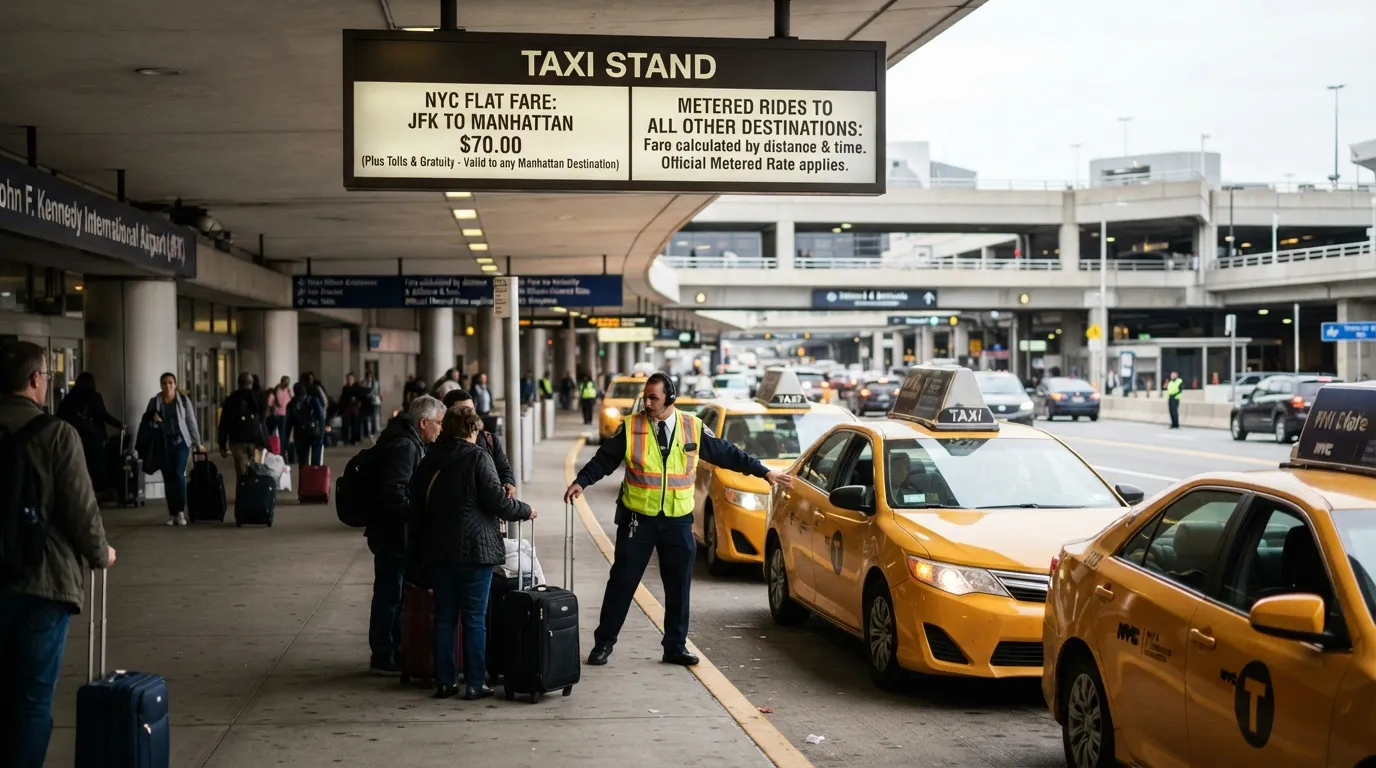
Some cities set a flat taxi fare between the airport and a defined area. New York’s JFK-to-Manhattan fare is one well-known example, with tolls and tip handled separately. Many other airports use meters, so ask official staff or read posted fare signs before departing.
Quick Compare
- Flat fare: The base price is known before you move, but it only applies to a defined zone, and extras like tolls or tip may be separate.
- Metered: The total depends on distance, traffic, and time, so it can vary from ride to ride.
- Either way: Look for posted fare information at the official stand before you get in.
#6 – Competing Rail Operators at One Airport

At London Heathrow, the Heathrow Express, the Elizabeth line, and the Underground all serve the airport but run as different services with different fares and journey times. Tickets are not always interchangeable. Choose by destination, speed, and fare rules, not by whichever platform you reach first.
#7 – Airport-Run Trains With Separate Fares

At some airports, the on-site train is a separate fare from the main rail or subway. JFK’s AirTrain, for instance, links terminals to subway and commuter rail stations and charges its own fee at certain stations. Check whether your onward ticket includes that last link.
#8 – Hotel Shuttle Bays and Reservations
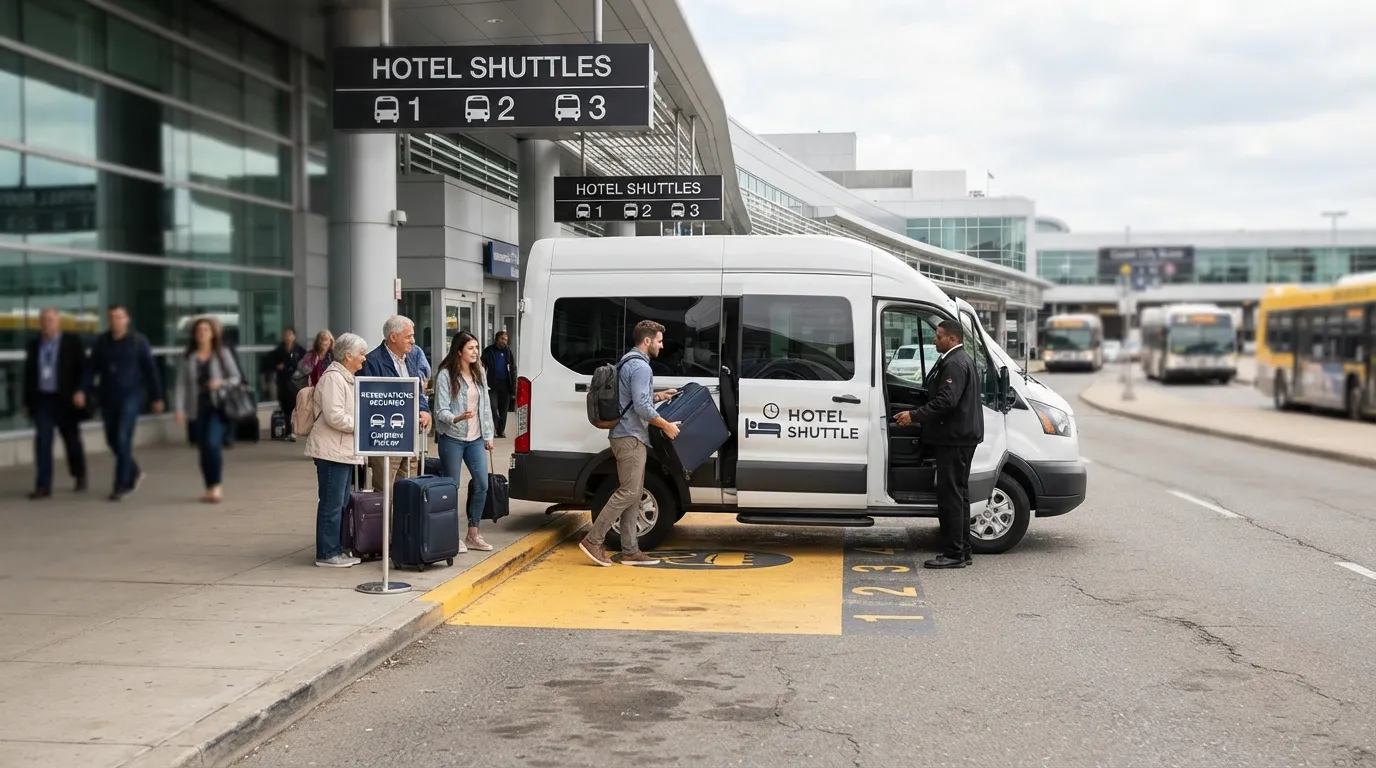
Many hotels run free shuttles from designated bays, often on a different curb from taxis or buses. Some operate on a schedule, while others require a call or reservation after landing. Confirm the pickup point and timing with your hotel before arrival.
#9 – Rental Car Shuttles and Consolidated Centers
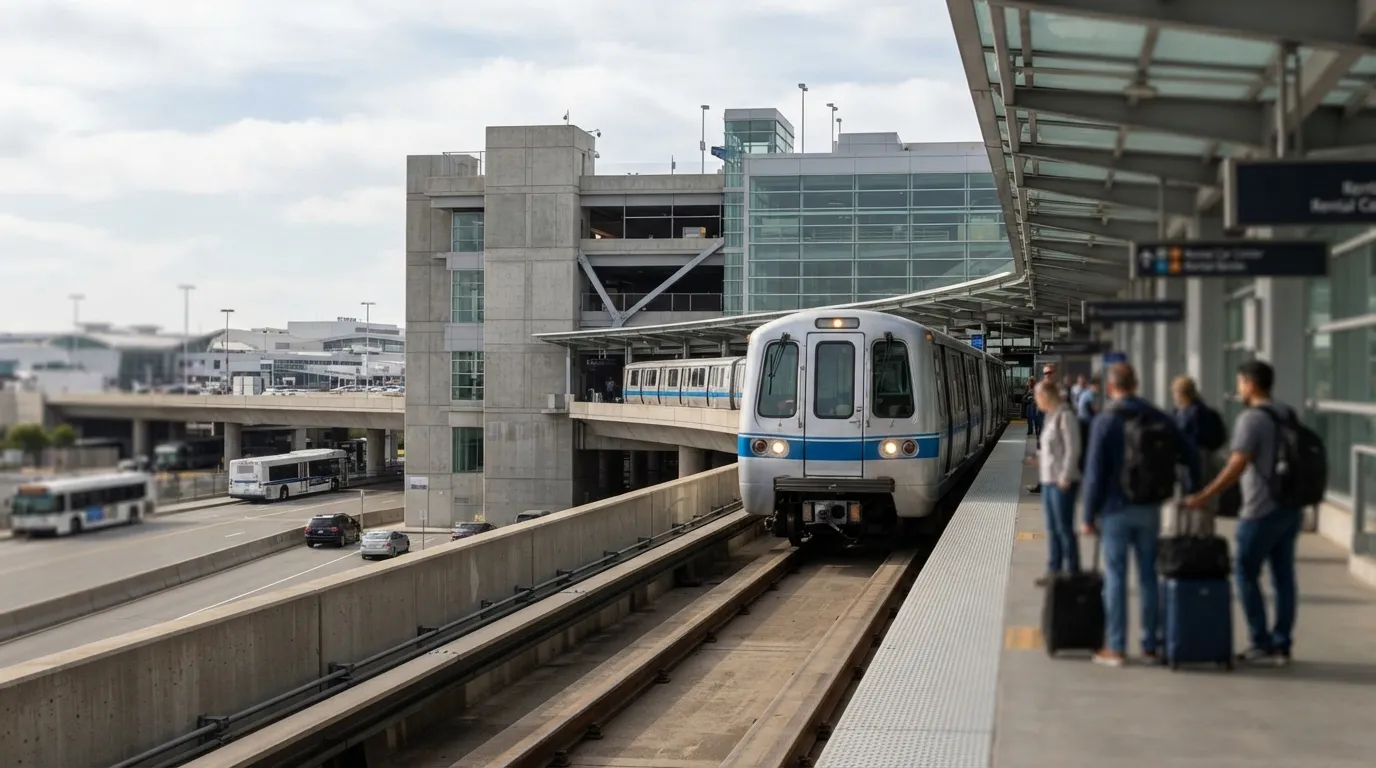
Many large airports place rental companies in a consolidated facility away from the terminals. Some use an airport train, such as San Francisco’s AirTrain to its Rental Car Center, while others use buses. Check your rental confirmation so you board the correct shuttle.
At a Glance
- Where: Often a shared rental facility set apart from the terminals.
- How you get there: An airport train at some airports, buses at others.
- What to bring: Your rental confirmation, so you know your company’s name and pickup details.
- What to confirm: Whether your company runs its own branded bus or shares a route with others.
#10 – Where Pre-Booked Drivers Actually Meet You

Private transfer companies may meet you inside the arrivals hall, at a named pillar, or at a curb zone, depending on the airport and operator. Some airports restrict where drivers may wait. Save the booking’s exact meeting instructions and the driver’s contact method before you land.
#11 – Shared Shuttle Vans and Their Stops
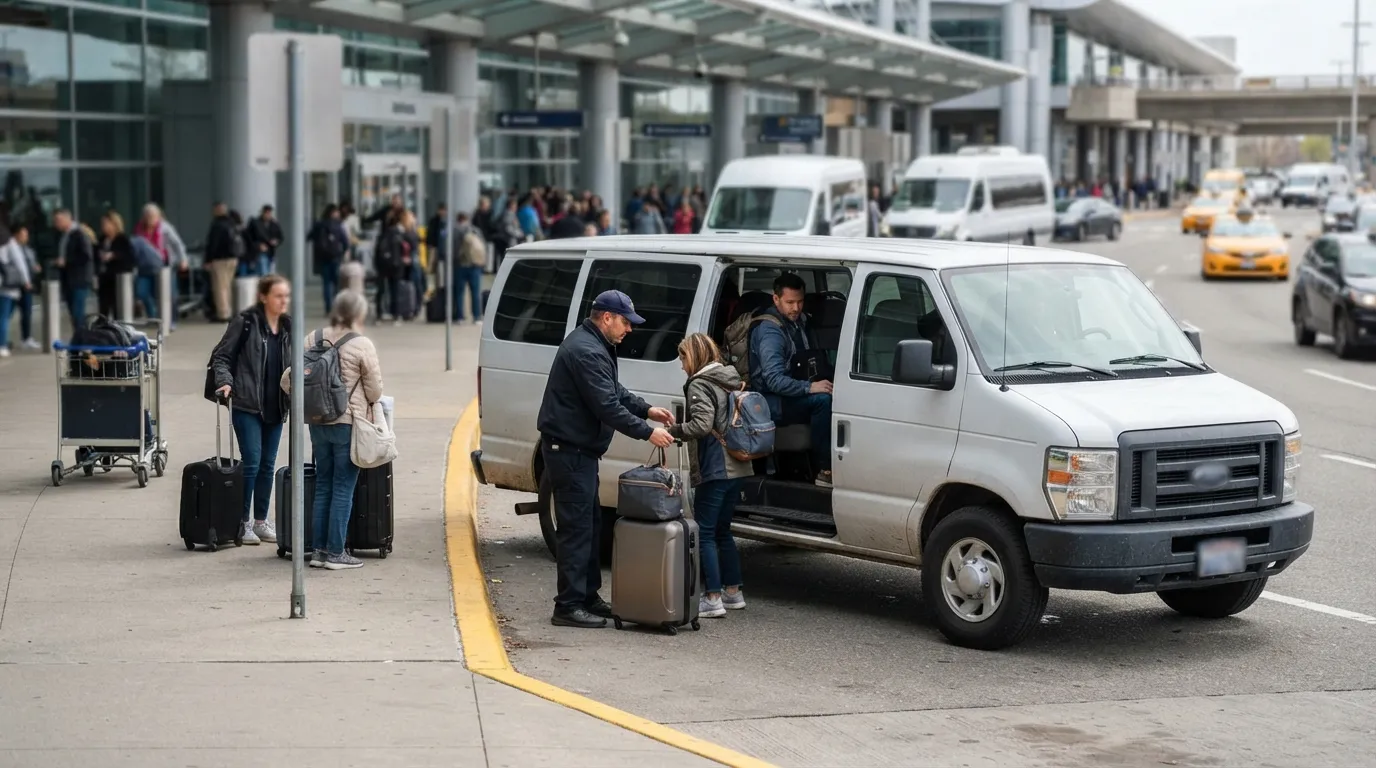
Shared airport shuttles may stop at several addresses before yours, which can lengthen the trip. Some airports have walk-up counters, while others expect advance booking through the operator. Review the pickup location, luggage rules, and drop-off sequence before you commit to the cheaper-looking seat.
#12 – Last Trains and Overnight Bus Schedules
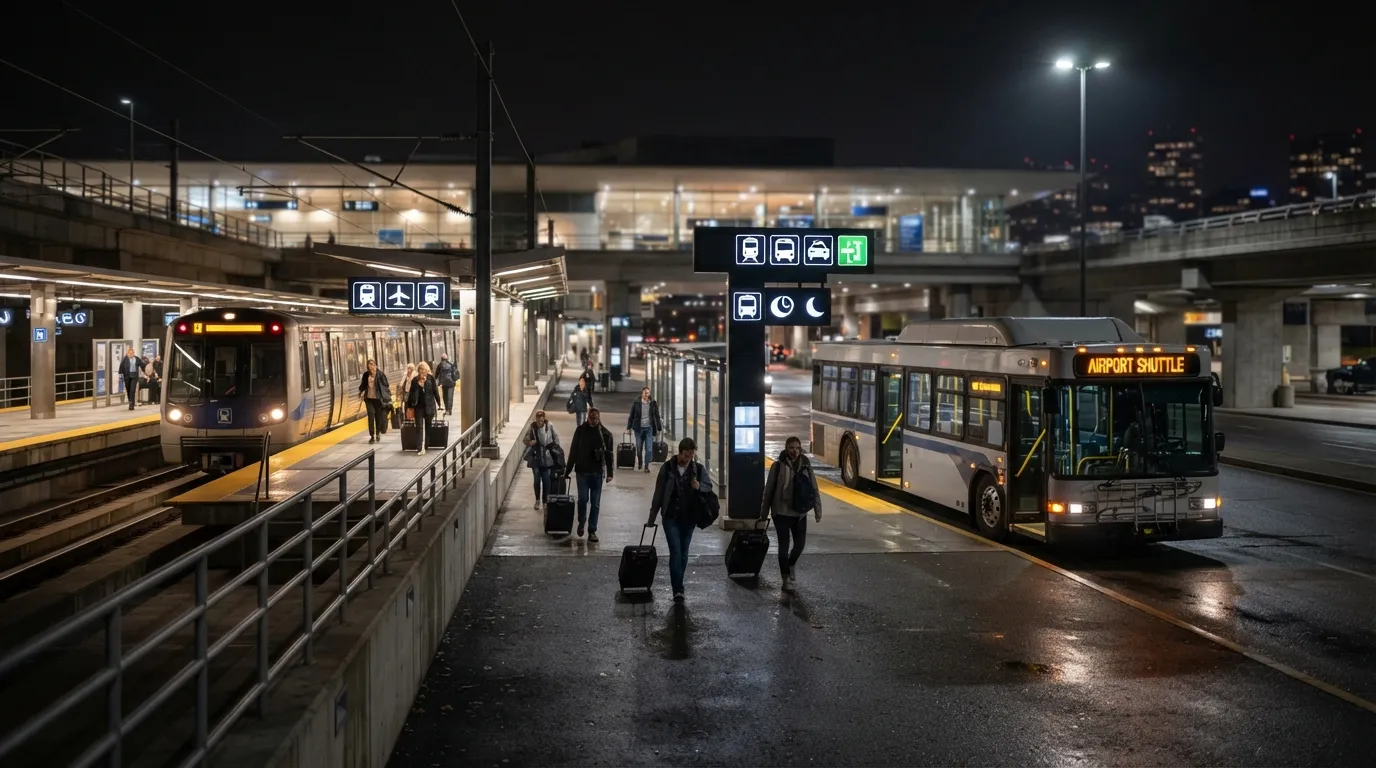
Late arrivals can be the trickiest. Some airport rail lines stop running overnight, and a replacement bus may follow a different route, stop, or fare. Check the operator’s late-night timetable before booking a flight that lands close to the final departure.
Worth Knowing
- Last-departure times can differ by line, direction, and day of the week.
- A replacement bus may leave from a different stop than the train platform.
- Fares and ticket rules on overnight services may not match daytime ones.
- A delayed flight can turn a comfortable connection into a missed one, so plan around your realistic landing time.
#13 – Validating Paper Tickets Before Boarding

Rules vary by country and rail operator. In parts of Europe, some paper tickets must be stamped at a platform validator before boarding, while time-stamped or digital tickets do not. Read the instructions on your ticket or the operator’s website so a fare mistake does not become a fine.
#14 – Step-Free Routes and Luggage Space

Not every rail or bus link handles bags equally. Some stations have elevators and wide gates, while others involve stairs or limited luggage racks. Look up the airport’s accessibility guidance and the operator’s luggage policy if you travel with heavy bags, a stroller, or a wheelchair.
#15 – Curbside Pickup Limits for Friends and Family
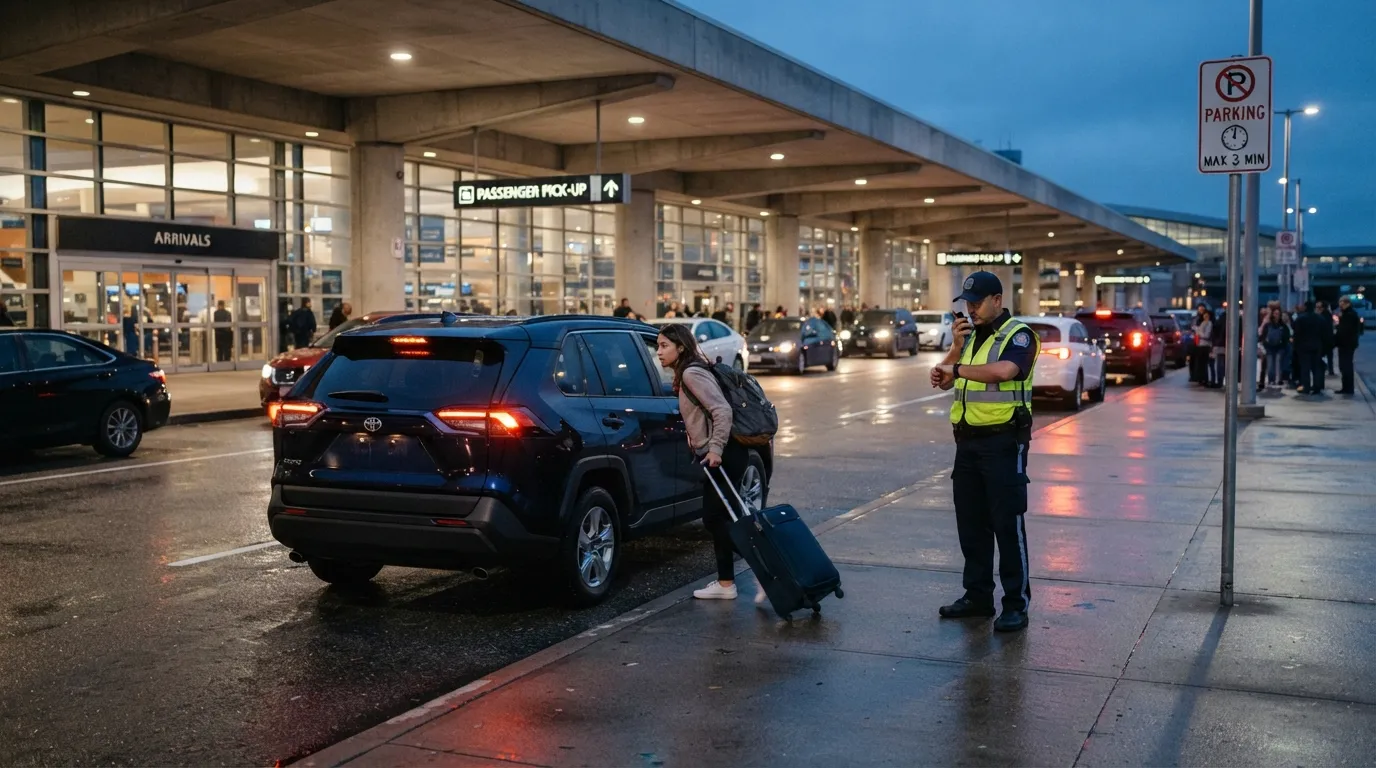
Many airports restrict how long private cars may stop at arrivals curbs, and some require waiting in a short-term lot or cell phone lot. Rules and enforcement differ by airport. Before you ask someone to pick you up, check the airport’s pickup page and agree on a meeting spot.
Fast Facts
- Agree on the terminal, level, and door number before you land.
- Cell phone lots let a driver wait nearby until you are ready, where the airport offers one.
- Send a quick message once you have your bags, not when the plane touches down.
- Check the airport’s own pickup page, since curb time limits differ.
#16 – Unofficial Offers Inside the Terminal

Many airports and local authorities direct travelers to official taxi ranks, ticket desks, or booked services, and some prohibit solicitation inside terminals. Rules differ by jurisdiction. If someone offers a ride before you reach signed transport areas, pause and use the airport’s official options. Your safest transfer is the one you can verify.
CEO-Co-Founder