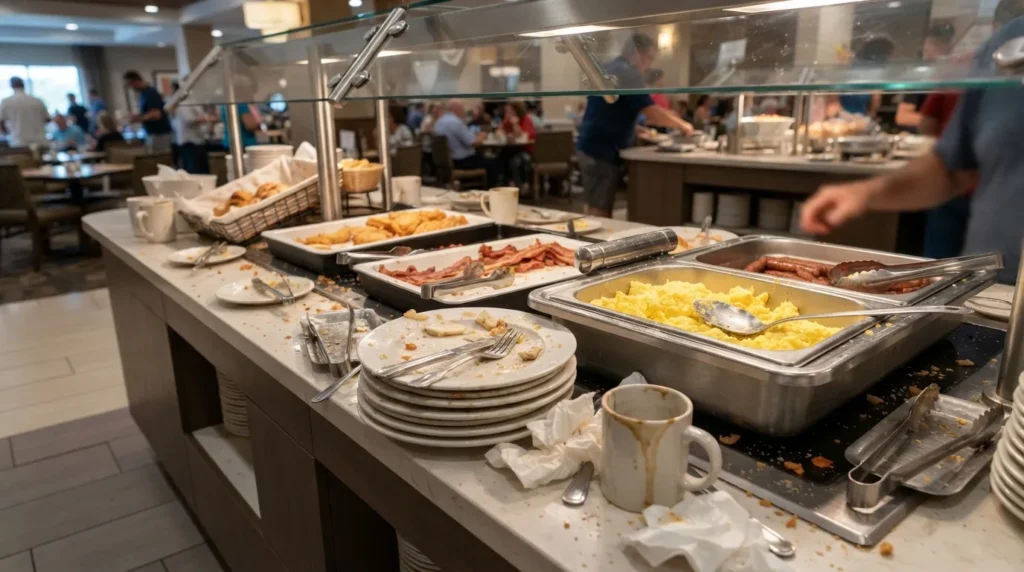

A hotel breakfast buffet looks like the friendliest meal of the trip: warm eggs, bottomless coffee, and no pressure. But behind the steam trays, a handful of guest habits turn that easy spread into extra cleanup, wasted food, and moments the staff remember long after checkout.
Some of these look harmless. Others quietly affect everyone standing in line behind you. The countdown starts with the habit that makes people walk away from a station entirely, and it gets bolder from there.
#22 – Using Bare Hands Instead of Tongs or Utensils
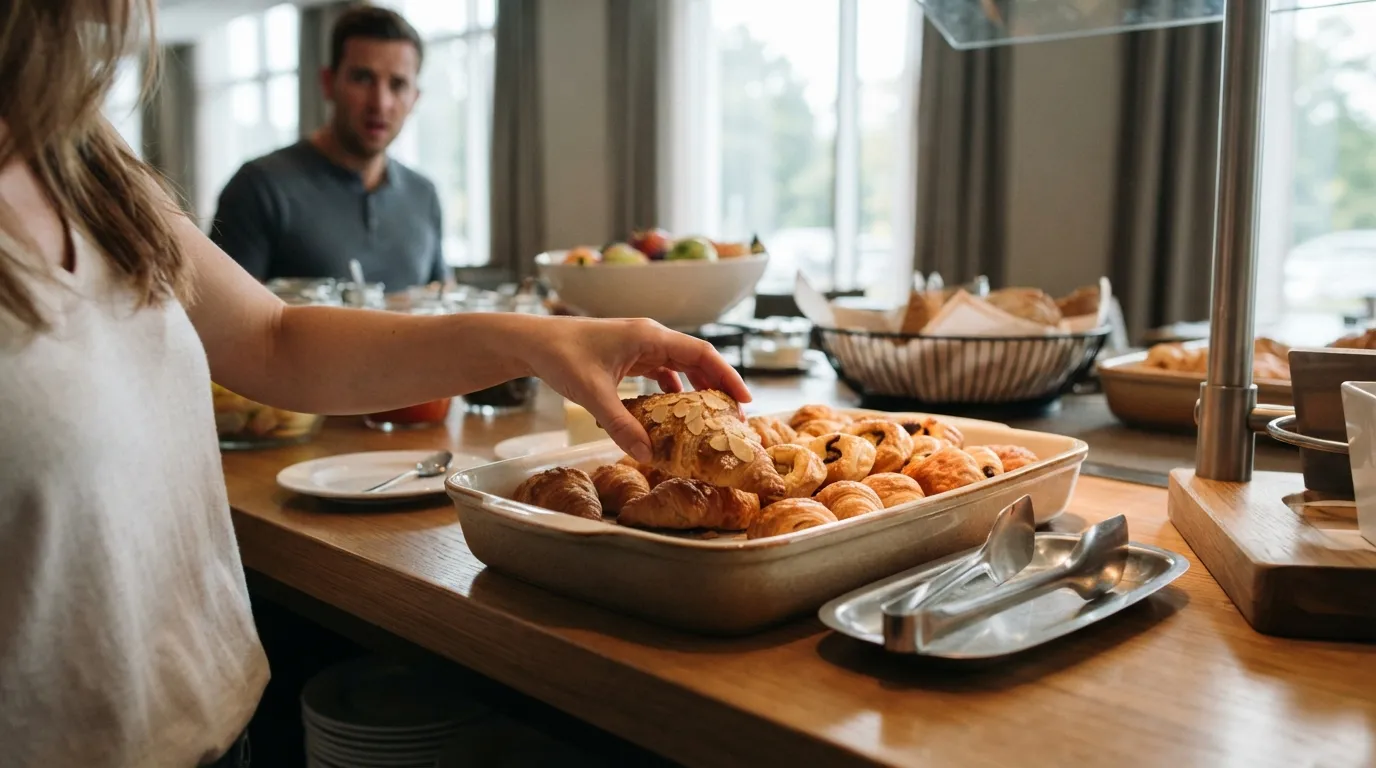
Some guests reach straight into cereal dispensers, fruit bowls, or pastry trays with bare fingers. Staff may have to pull the affected food and sanitize the area, and other guests often skip the station after seeing it.
Grab the provided tongs or spoons first, then return them to their holders. The display stays fresh for the next person. Wait until you see #21.
#21 – Building a Plate Tower That Collapses on the Walk Back
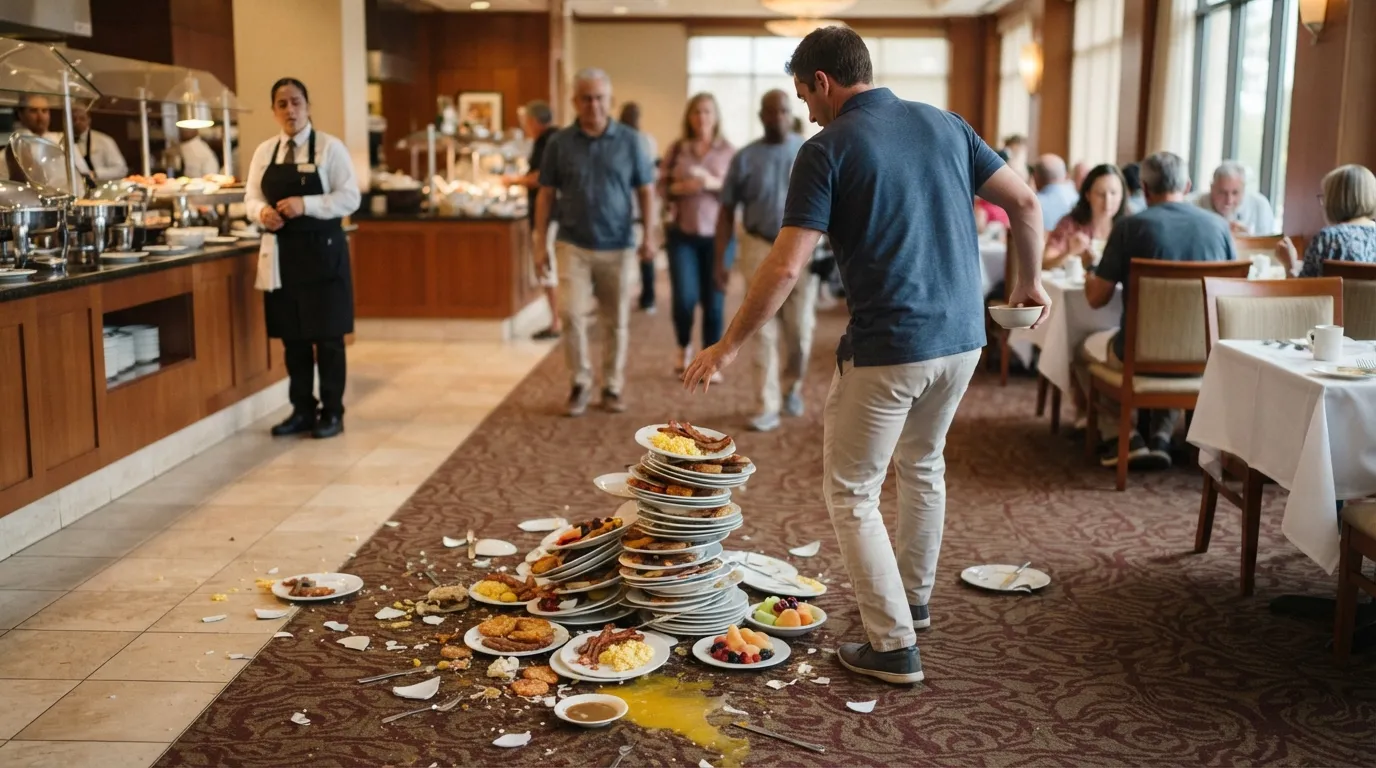
Plates stacked high can drop food on the floor or onto a neighbor’s plate before anyone reaches a table. That means spill cleanup, plus extra food in the trash when the tower goes uneaten.
Start with a smaller first plate and go back for seconds once you’ve finished it. A second trip is normal, and nobody is counting.
#20 – Pocketing Breakfast Food for Later
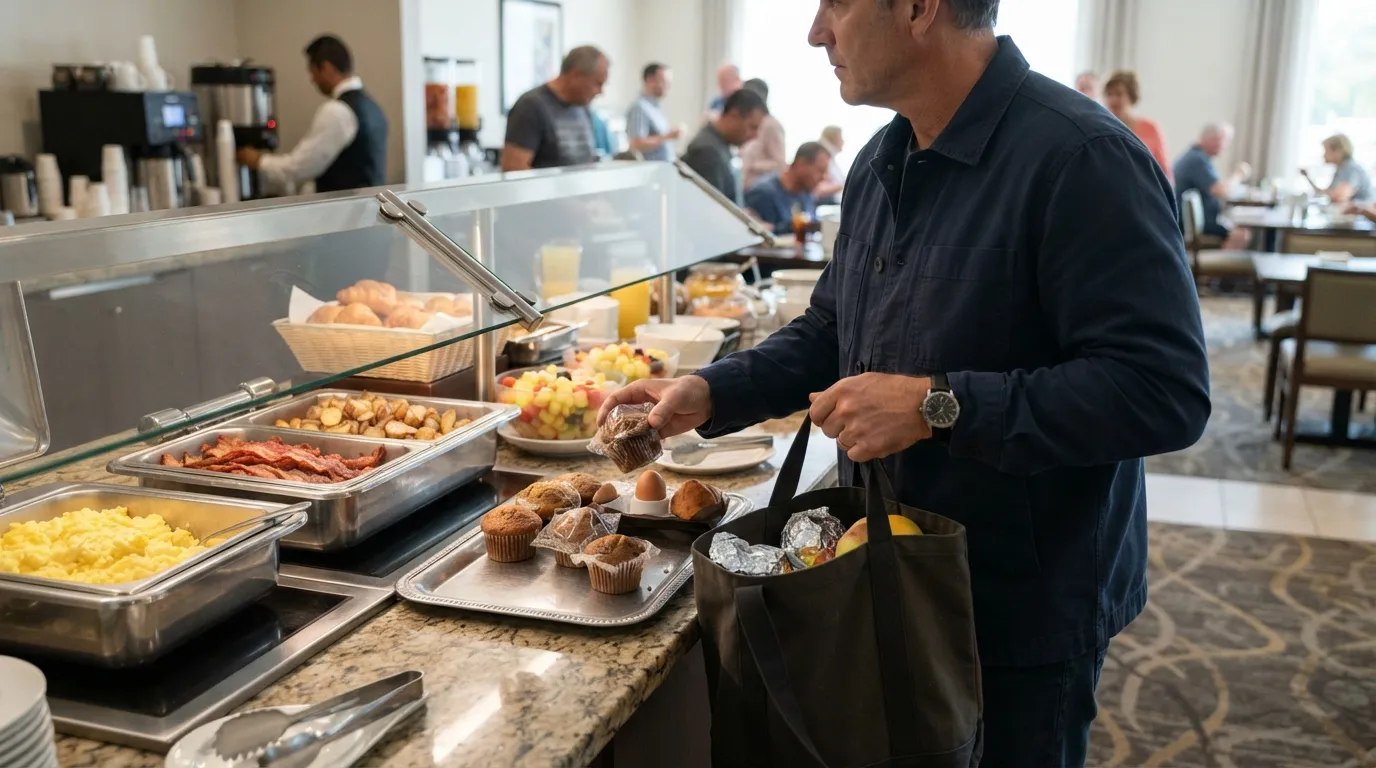
Some guests slip muffins, boiled eggs, or fruit into bags for lunch. Many hotels limit buffet food to eating on-site, so staff may have to restock faster, and the last person in line may find an empty tray.
Ask the front desk or dining staff what’s allowed, since some properties offer grab-and-go options. A quick question beats a bulging tote bag.
Worth Knowing
- Policies on taking food out of the dining room vary from hotel to hotel.
- Some properties offer bagged or boxed breakfasts for early departures.
- The front desk can usually tell you what’s allowed in under a minute.
- Asking first keeps the tray full for the guest behind you.
#19 – Returning to the Buffet With a Used Plate
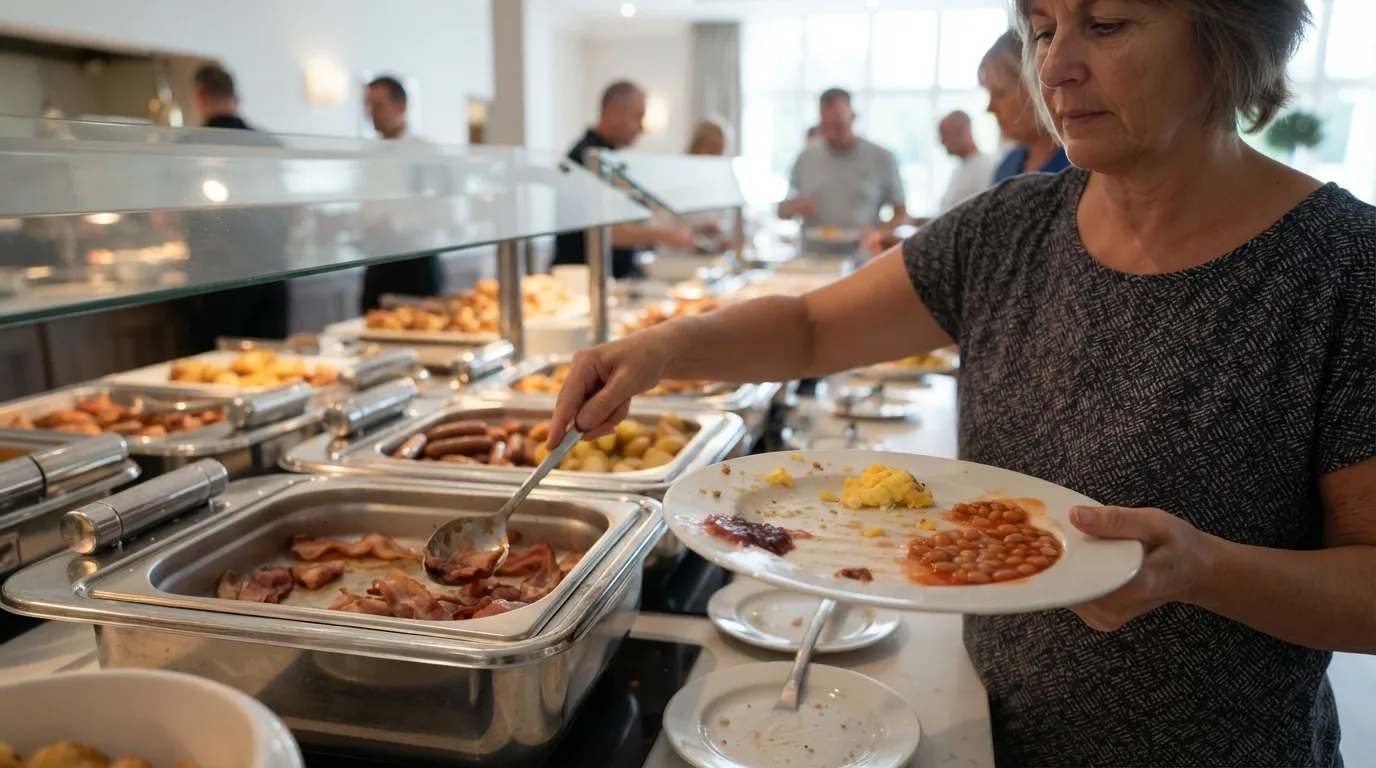
A guest comes back for round two carrying the same plate, still smeared with sauce and crumbs. Leftovers can touch serving utensils and the edges of dishes, so staff may need to swap out the affected food.
Grab a clean plate for every trip. It takes almost no effort and keeps the display safe for everyone behind you.
#18 – Tasting Straight From the Serving Spoon

Someone samples a bite off the tongs or serving spoon, or nibbles while standing in line. Staff then have to replace the utensil and sometimes the food it touched.
Put what you want on your plate and taste it at the table. If you’re unsure about a dish, ask a team member about the ingredients instead of trying it from the tray.
#17 – Swapping Utensils Between Dishes
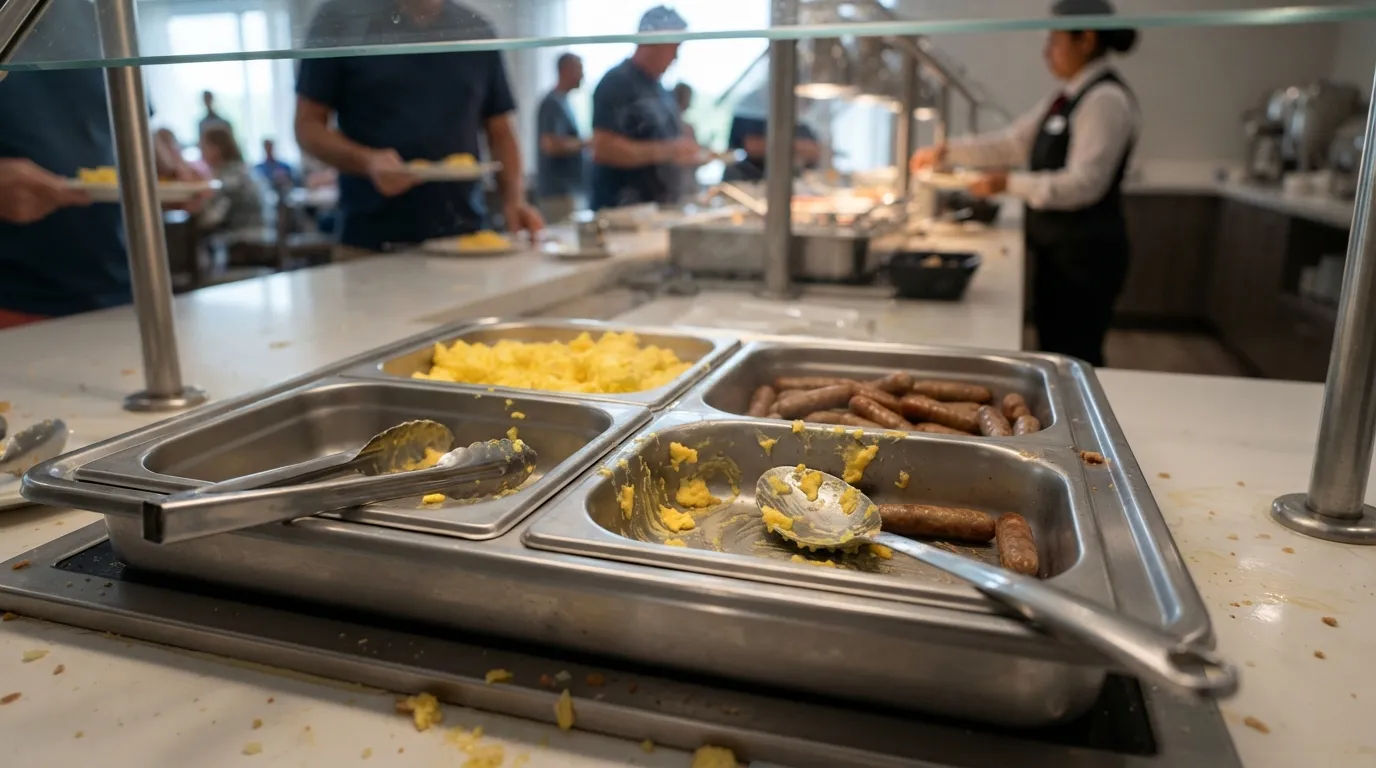
The scrambled-egg spoon ends up in the sausage tray, or tongs get dropped into the wrong dish. Food moves from one tray to another, which matters for guests avoiding certain ingredients, and staff may have to replace the tray.
Leave each utensil with its own dish. If one lands in the wrong spot, tell a team member instead of quietly walking away.
#16 – Freezing at the Waffle or Egg Station
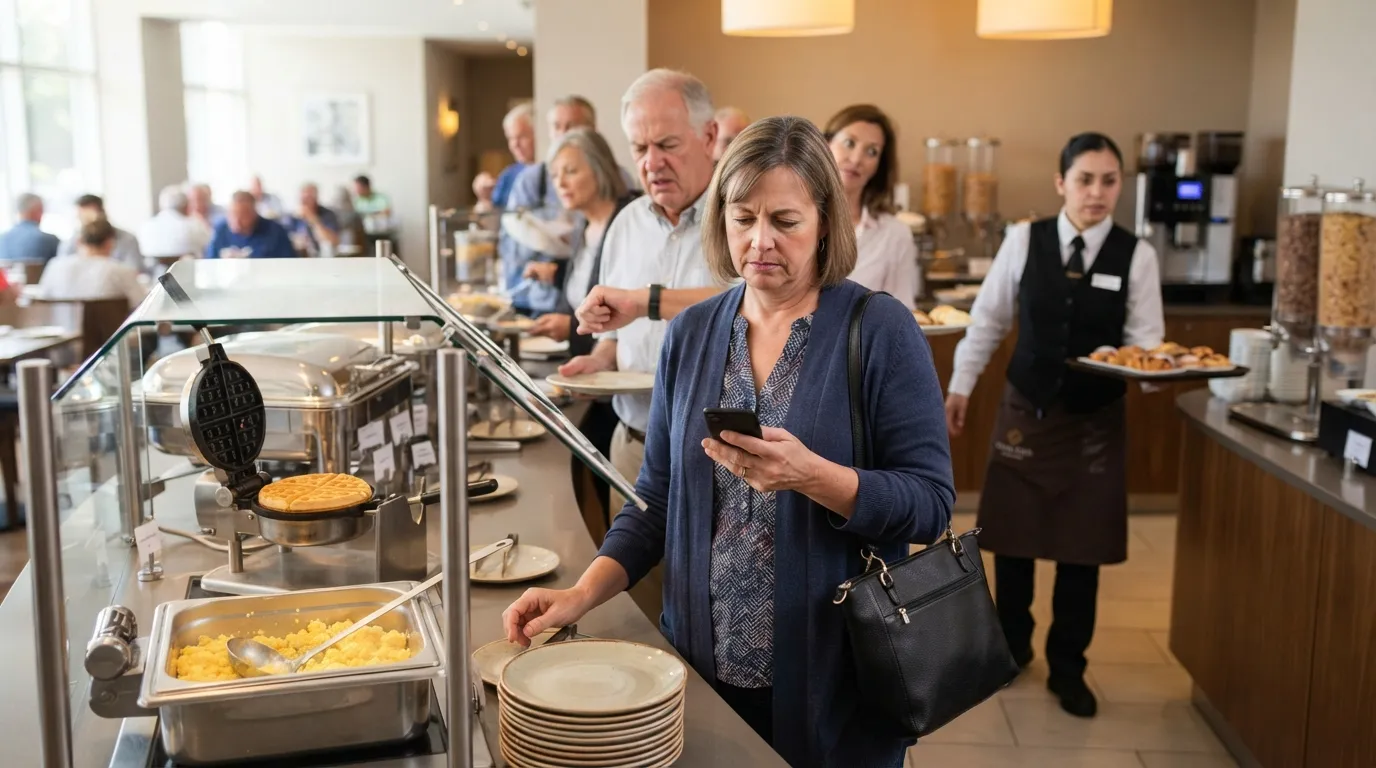
A guest parks in front of the food, scrolling a phone or deciding in slow motion while the line stacks up behind them. Hot food cools, patience wears thin, and staff end up weaving around the jam.
Decide before you step up, then slide aside. If you need a minute, wave others ahead and step out of the flow.
#15 – Reaching Across People and Open Food
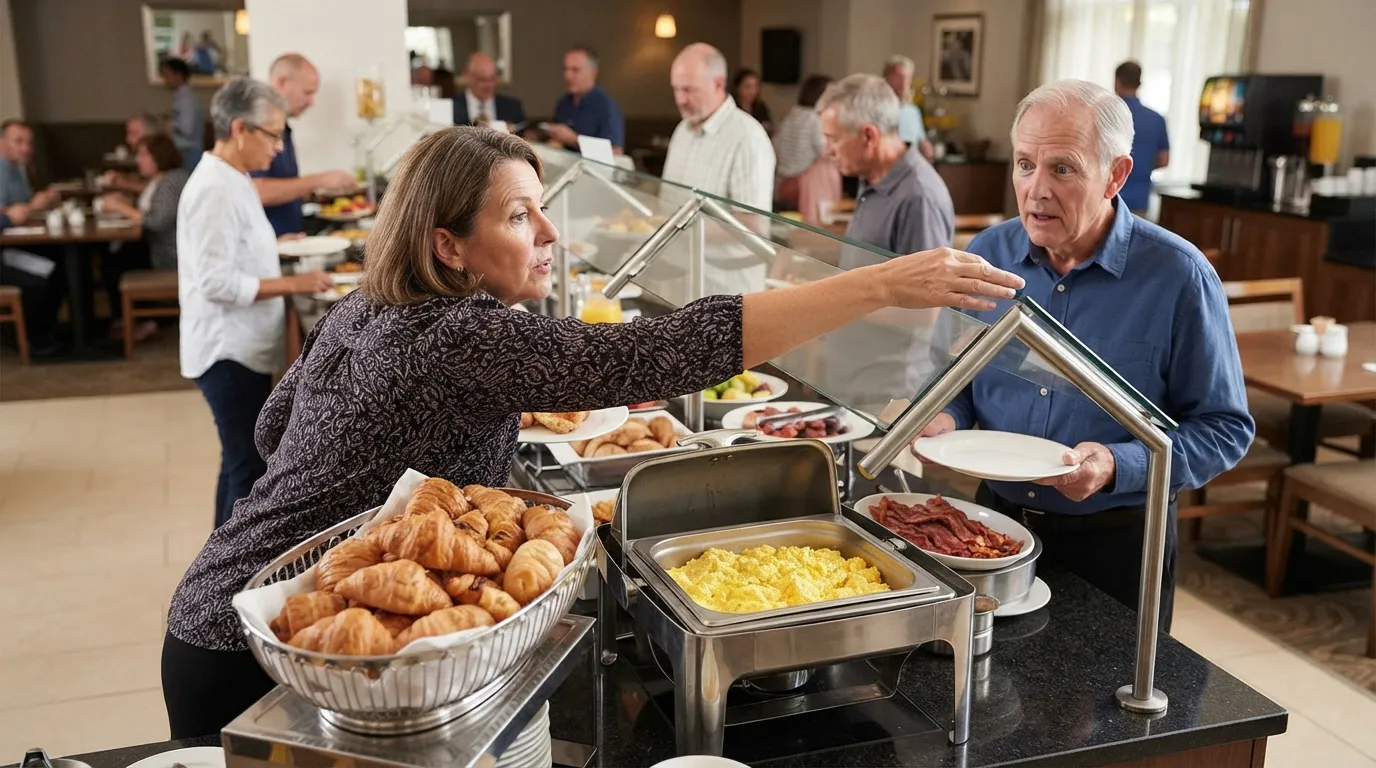
Stretching across another guest to grab the last croissant puts sleeves and arms over shared dishes. In tight spaces, it can also mean bumps, spills, and a tray that has to be pulled.
Wait your turn, or ask the person nearby to pass something. A polite “excuse me” keeps the line moving and the food clean.
#14 – Scraping the Last of a Dish and Walking Away
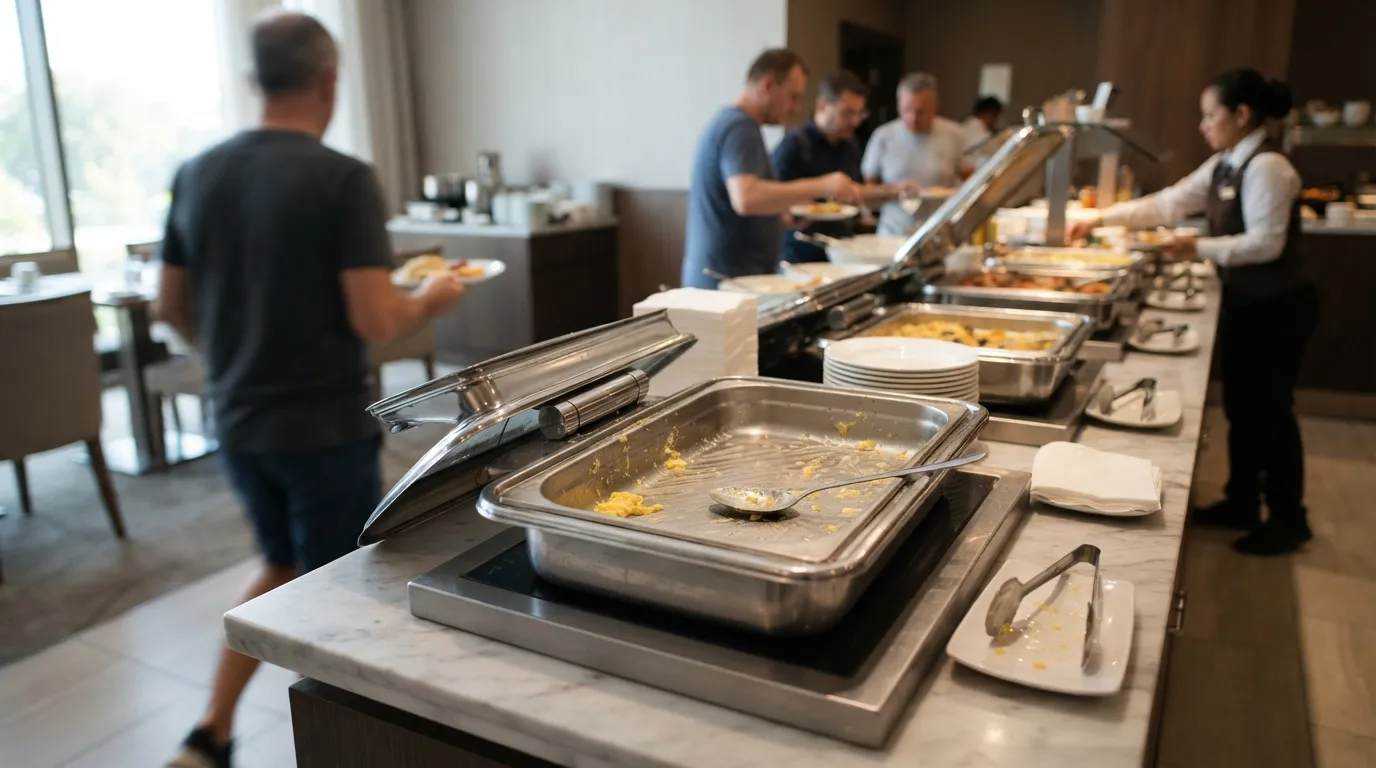
A guest takes the last pancakes or scrapes the final oatmeal, then leaves the pan sitting bare. The next person arrives to an empty tray, and staff may not notice until the rush is already building.
Tell a team member when something is almost gone. That quick heads-up gets the refill started sooner.
#13 – Parking Dirty Dishes Next to the Food
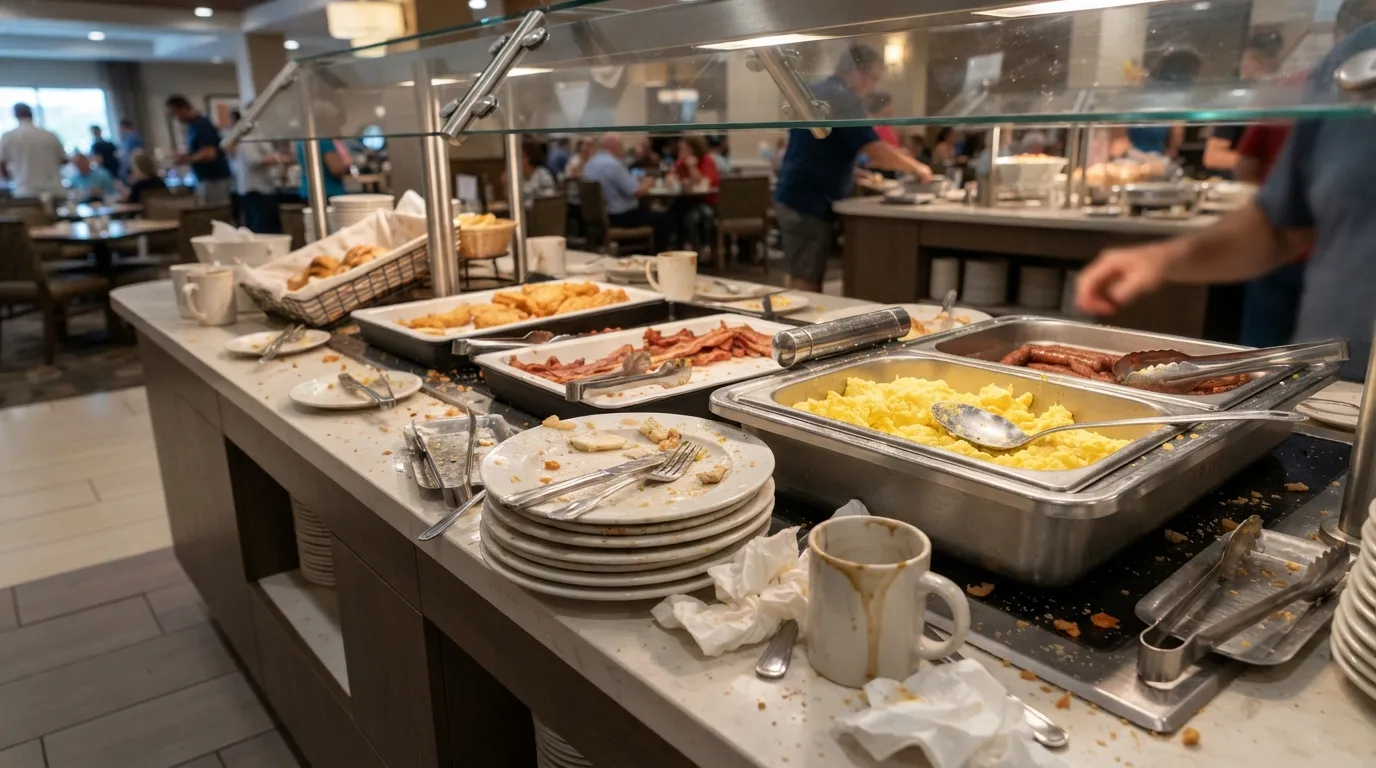
Used plates, cups, and napkins get set down beside the trays or on the coffee station. The counter gets crowded, the area can be contaminated, and staff must clear the mess before they can restock.
Carry used dishes back to your table, or to a bus bin if one is provided. The buffet counter is for food, not leftovers.
#12 – Hovering Over Uncovered Food
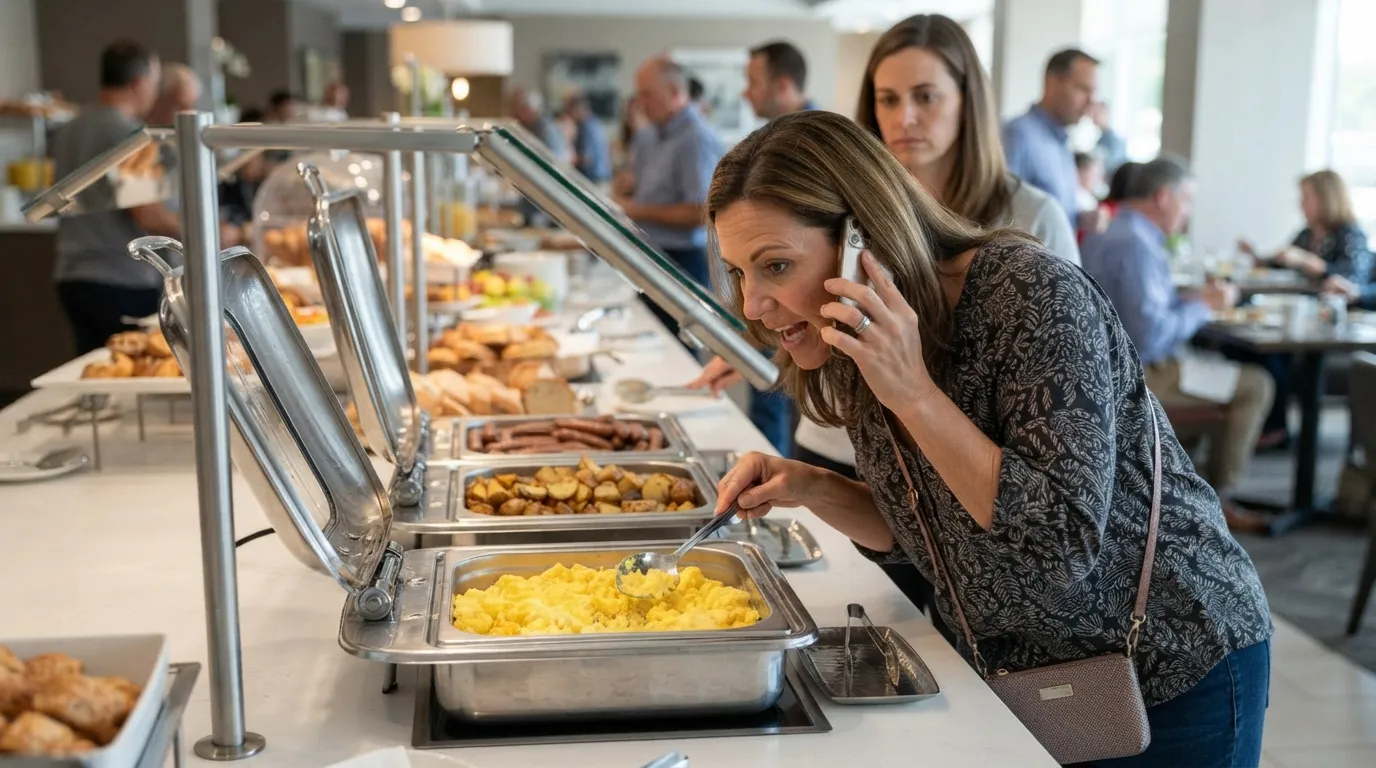
Leaning in close over open dishes while chatting, on the phone, or coughing puts droplets near shared food. Even when nobody means harm, staff may need to discard or replace exposed items, and other guests notice.
Step back from the food when you talk, use a tissue or your elbow for coughs, and let sneeze guards do their job.
Quick Compare
- At the tray: Chatting, coughing, and phone calls happen right over open food.
- One step back: The same conversation happens, and the food stays protected.
- The result: Fewer replaced dishes and a calmer line.
#11 – Letting Kids Touch Everything Before Choosing
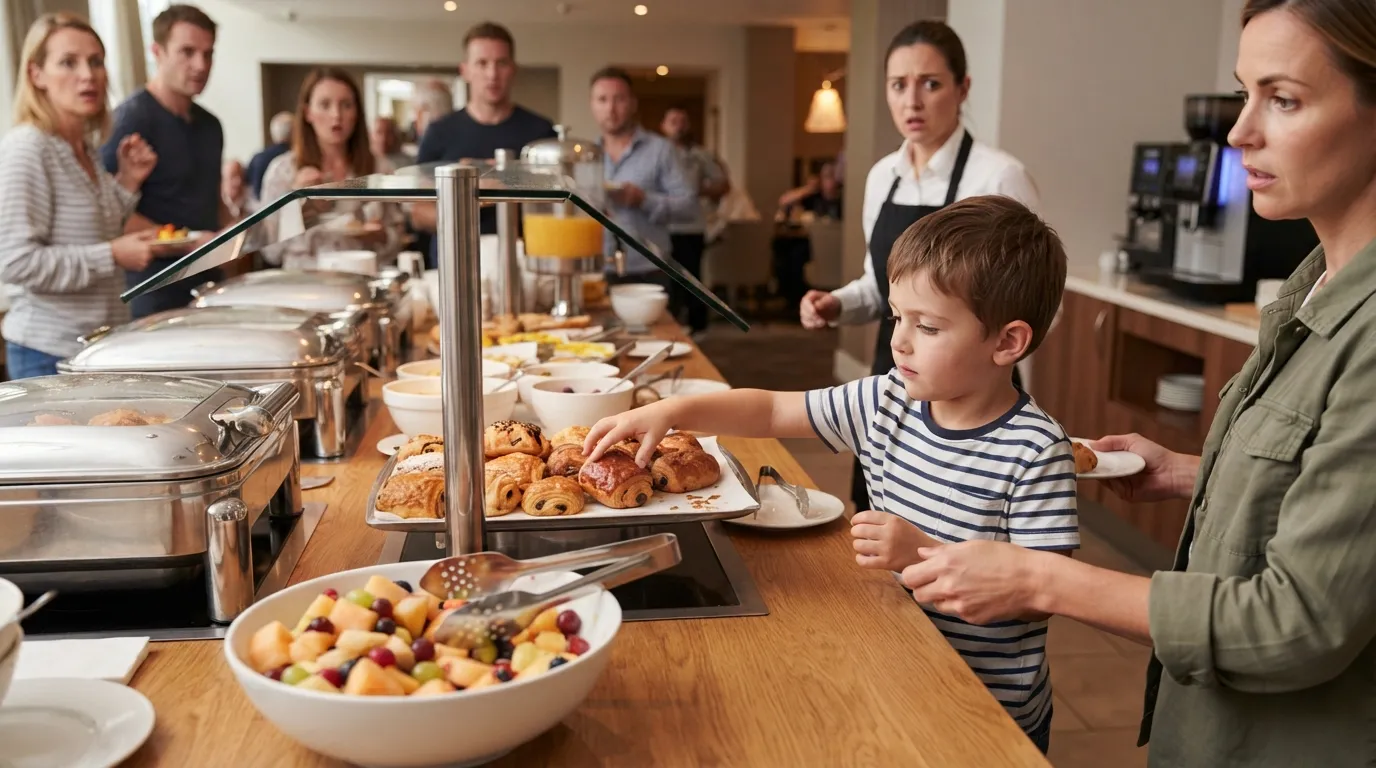
Children poke the fruit, pick up pastries to inspect them, or sample with their fingers. Staff may have to remove those items, and the family can end up with unwanted attention at breakfast.
Walk kids through the line, let them point, and help them use tongs or serve for them. It turns the buffet into a lesson instead of a cleanup.
#10 – Putting Food Back After Changing Your Mind
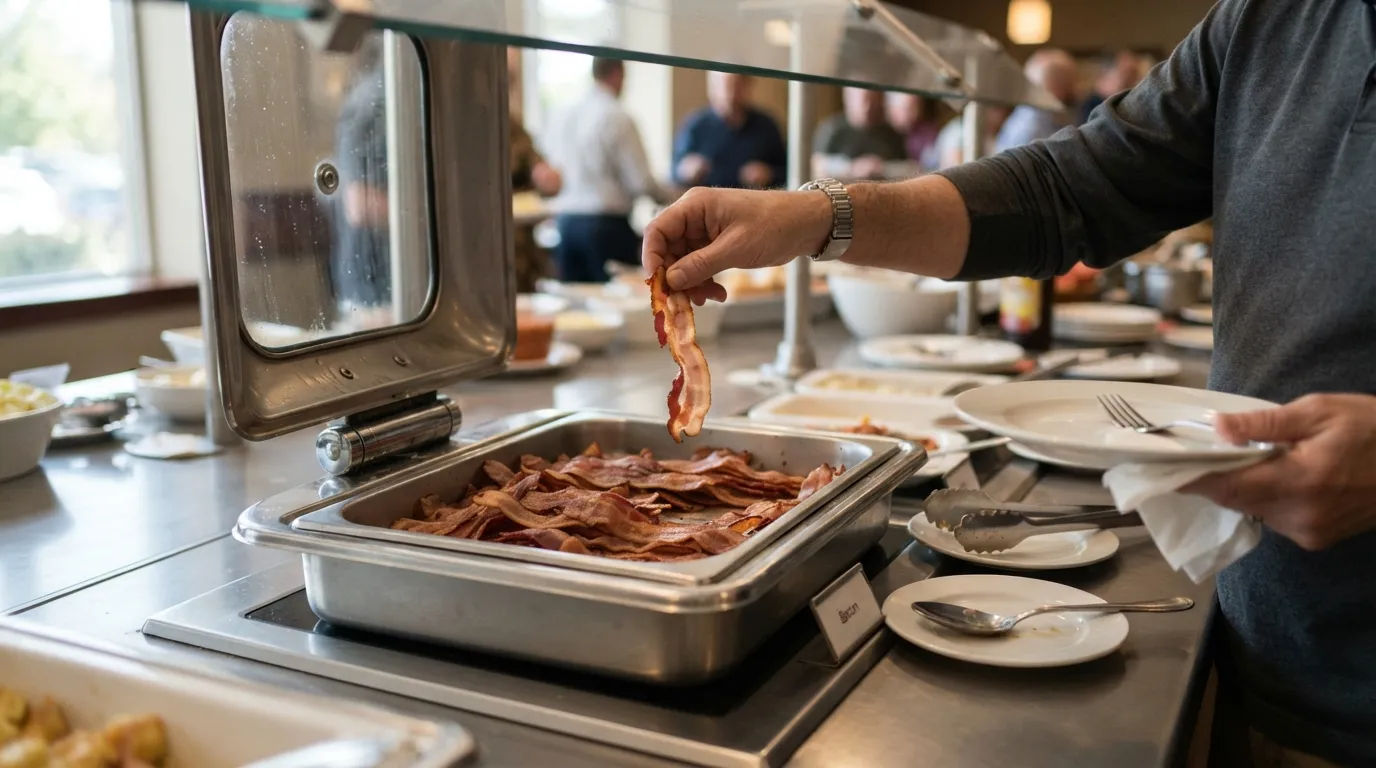
A guest takes a slice of bacon, decides against it, and drops it back on the tray. Once food has touched a plate or hand, it doesn’t belong back in the shared dish, so staff may have to toss the item or the whole tray.
Take one piece at a time if you’re unsure. If you change your mind, eat it or leave it on your plate.
#9 – Leaving Lids Open and Pushing Sneeze Guards Aside
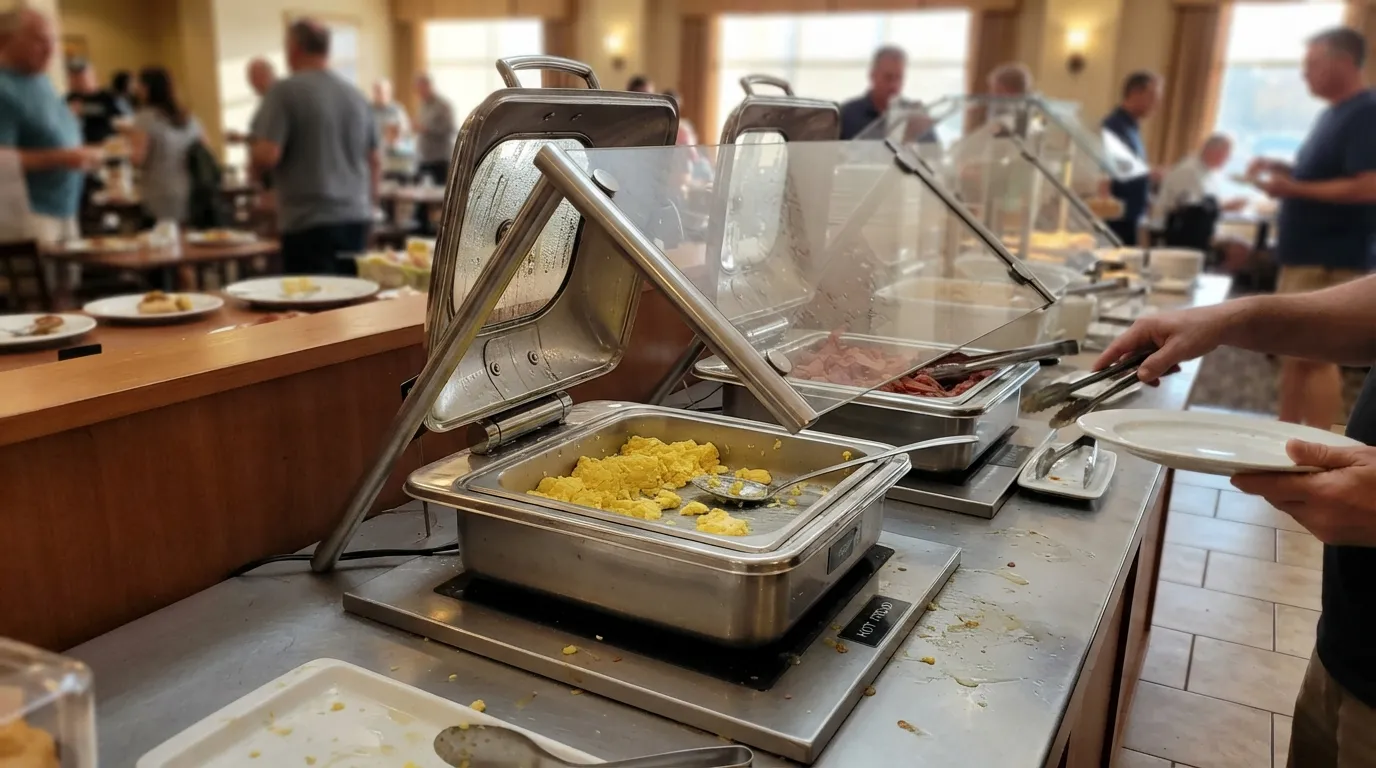
Chafing dish lids get propped open or left ajar, and sneeze guards get nudged out of place for an easier reach. Food cools faster and sits exposed longer, so staff may need to reheat or replace it.
Close lids gently after serving and use the access opening as intended. The next guest gets hotter eggs.
#8 – Rearranging and Mixing Items Between Trays
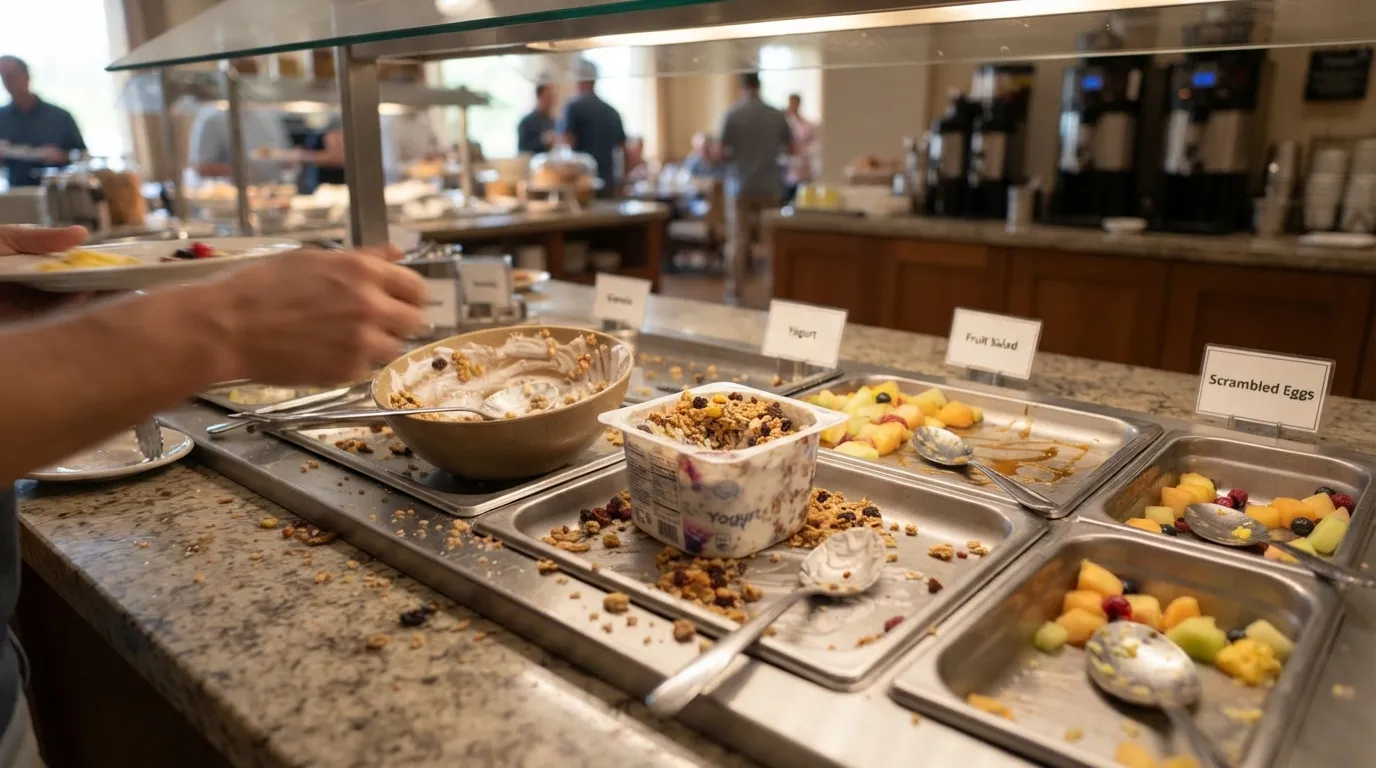
Granola ends up in the yogurt bin, toppings land in the wrong dish, or syrup migrates over to the fruit. Staff have to hunt down misplaced items, and the layout stops making sense for the next guest.
If something is missing or looks wrong, ask a team member. Leave labeled items right where they were.
#7 – Walking Away From the Waffle Maker
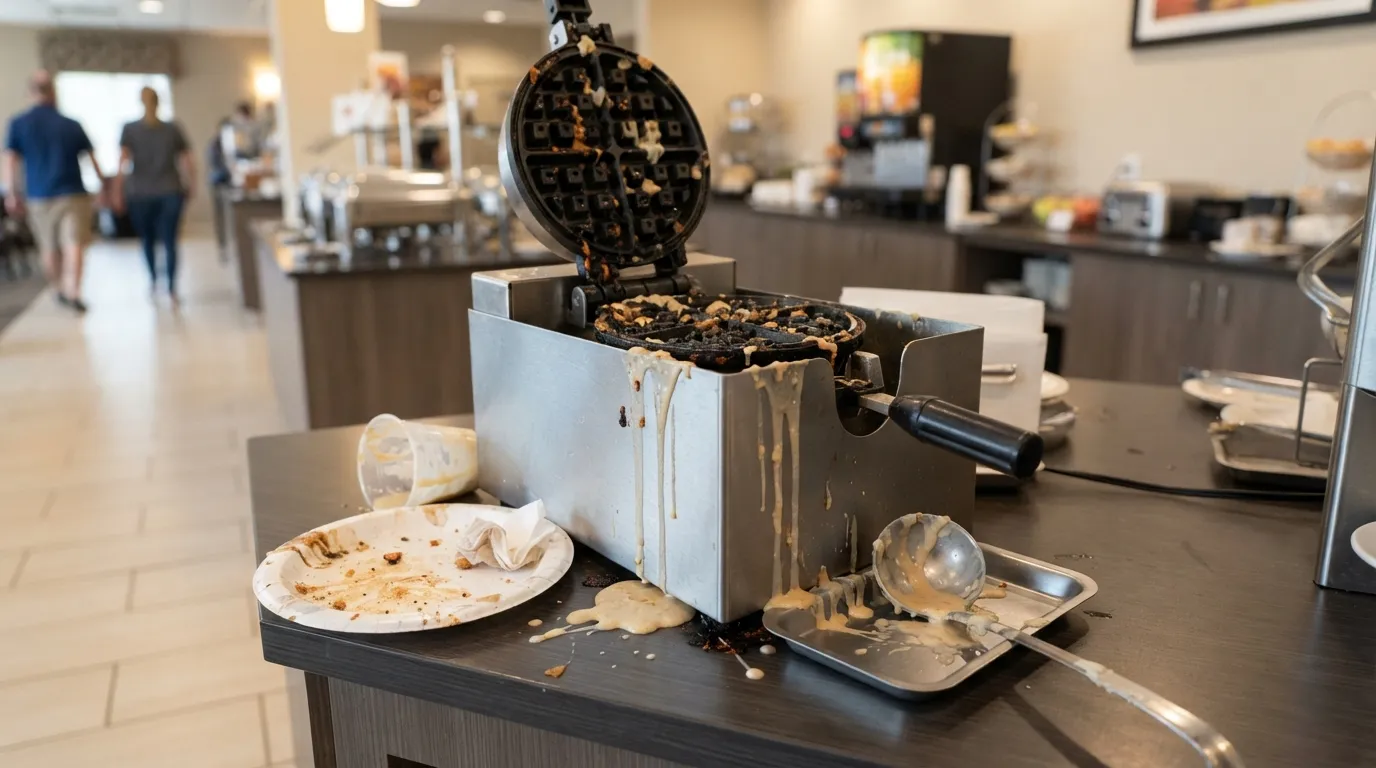
A guest pours batter, wanders off, and leaves drips and burnt bits behind. The next person gets a sticky machine, and staff must scrape and reset it before anyone else can use it.
Follow the posted directions, stay until your waffle is done, and wipe drips if wipes are provided. Otherwise, tell a staff member so the cleanup starts quickly.
Fast Facts
- Most waffle stations post step-by-step directions nearby.
- Batter drips are easiest to wipe while they’re still wet.
- A machine left messy stays out of action until staff reset it.
- Telling a team member about a problem beats leaving it for the next guest.
#6 – Forcing Oversized Bagels Into the Toaster
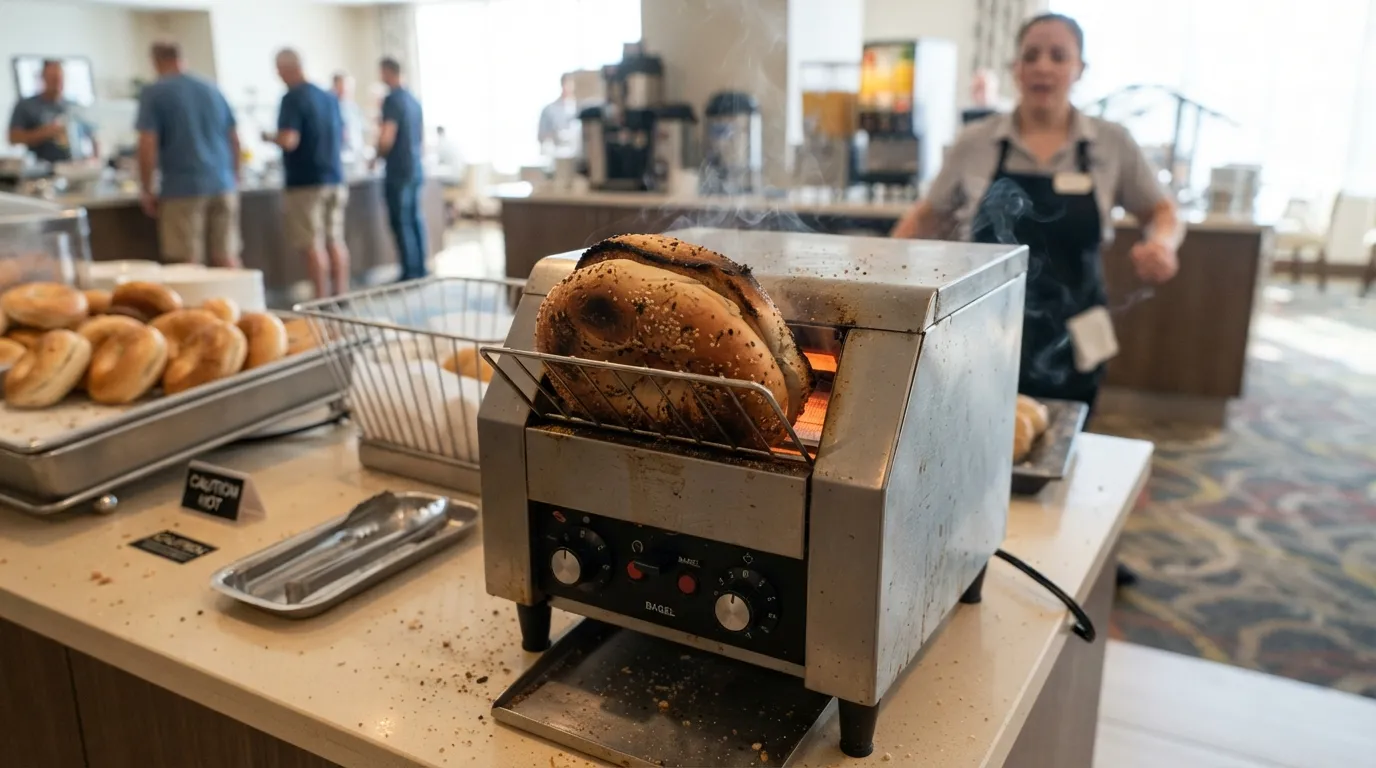
Jamming thick bagels or bulky bread into a toaster can wedge it shut or cause smoke. Staff may have to unplug it, clear it out, and sometimes deal with a smoke alarm in the middle of breakfast.
Use items sized for the toaster and check any posted instructions. If you need a thicker bagel toasted, ask staff about another option.
#5 – Arriving at Closing Time and Expecting a Full Spread
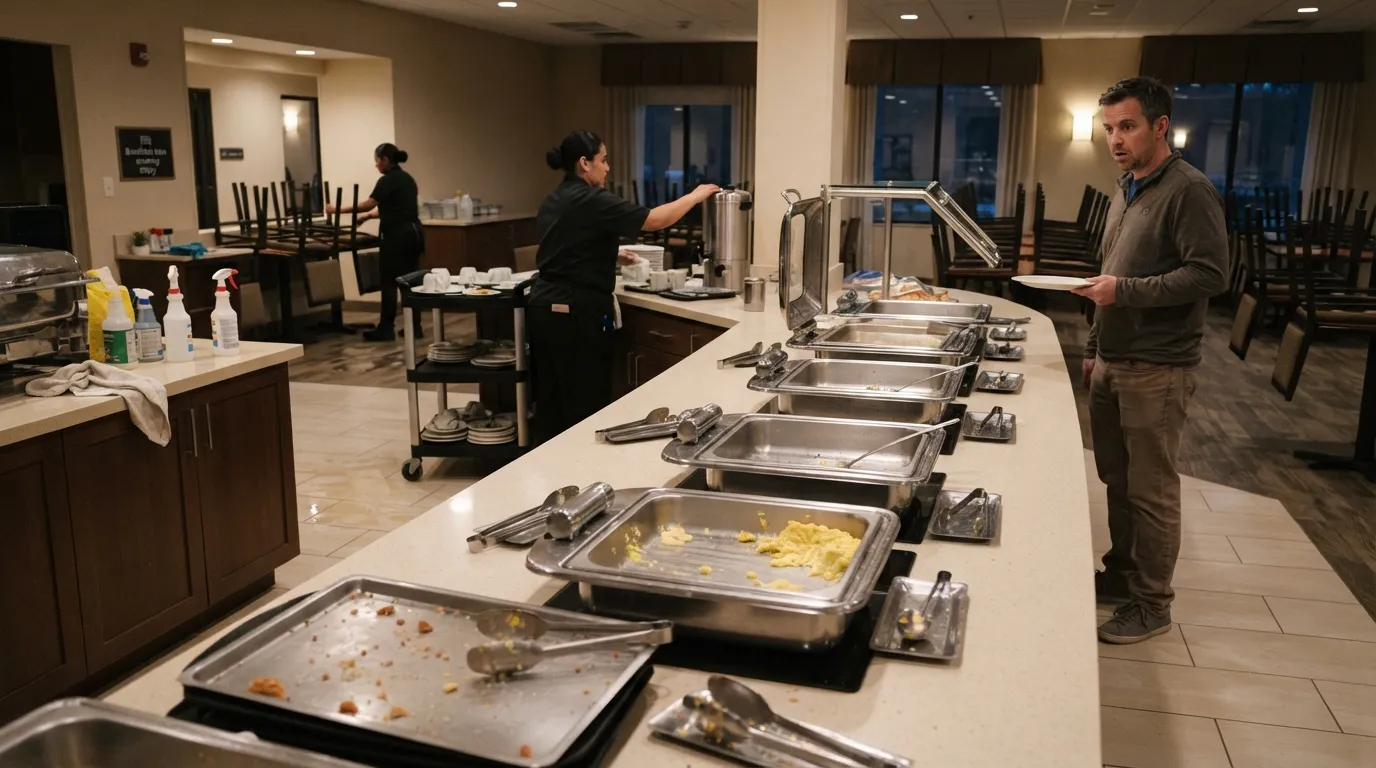
Some guests walk in as breakfast winds down and expect every tray to look freshly filled. Staff are already clearing, packing, and cleaning, and some items may be gone or on their way out.
Check posted breakfast hours the night before and arrive with enough time to eat. If you’re running late, ask what’s still available instead of assuming.
#4 – Snapping at Staff Over an Empty Tray
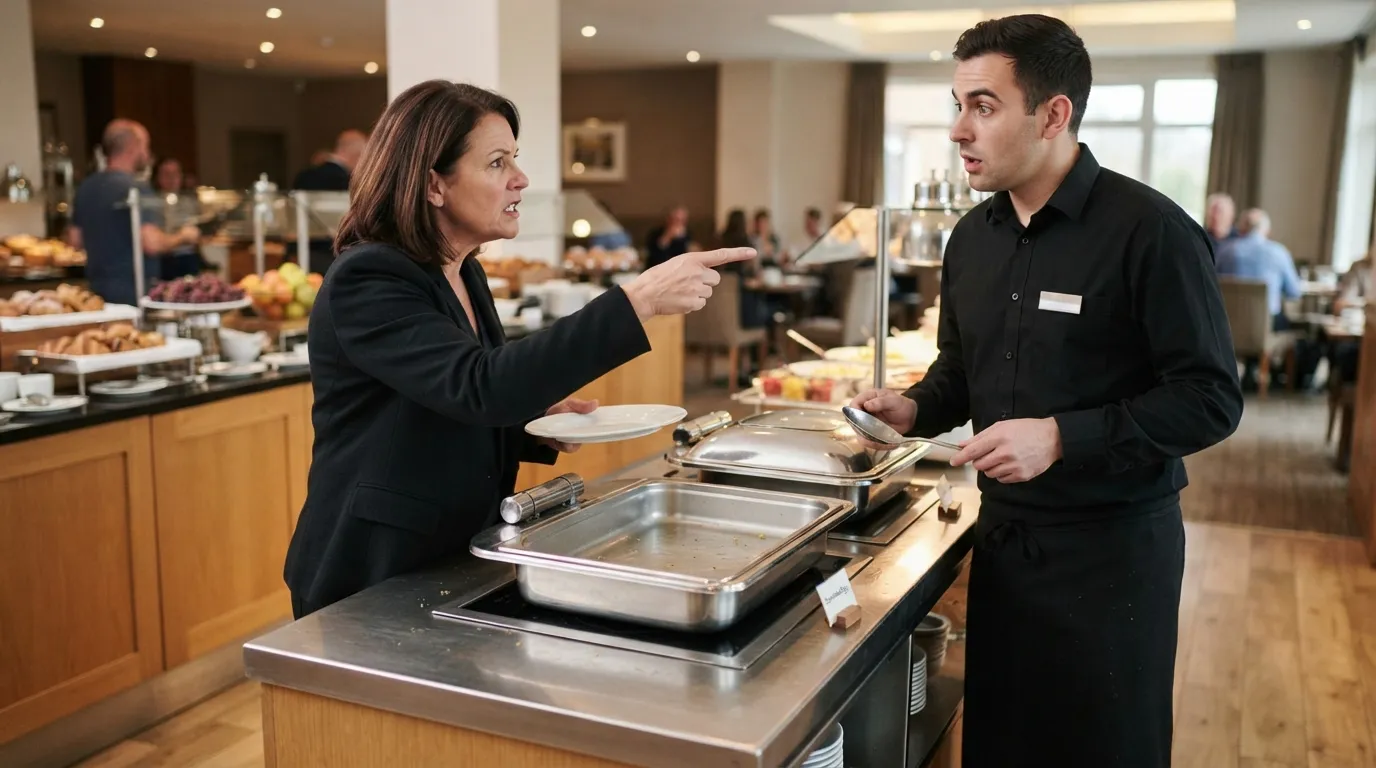
A guest spots an empty tray and takes it out on the nearest employee. That person is usually not the cause. They’re often refilling as fast as the kitchen allows, and the outburst only slows things down.
Politely say what’s missing and ask about timing. A calm request tends to get a better answer than a sharp tone.
#3 – Claiming a Giant Table With Coats and Bags
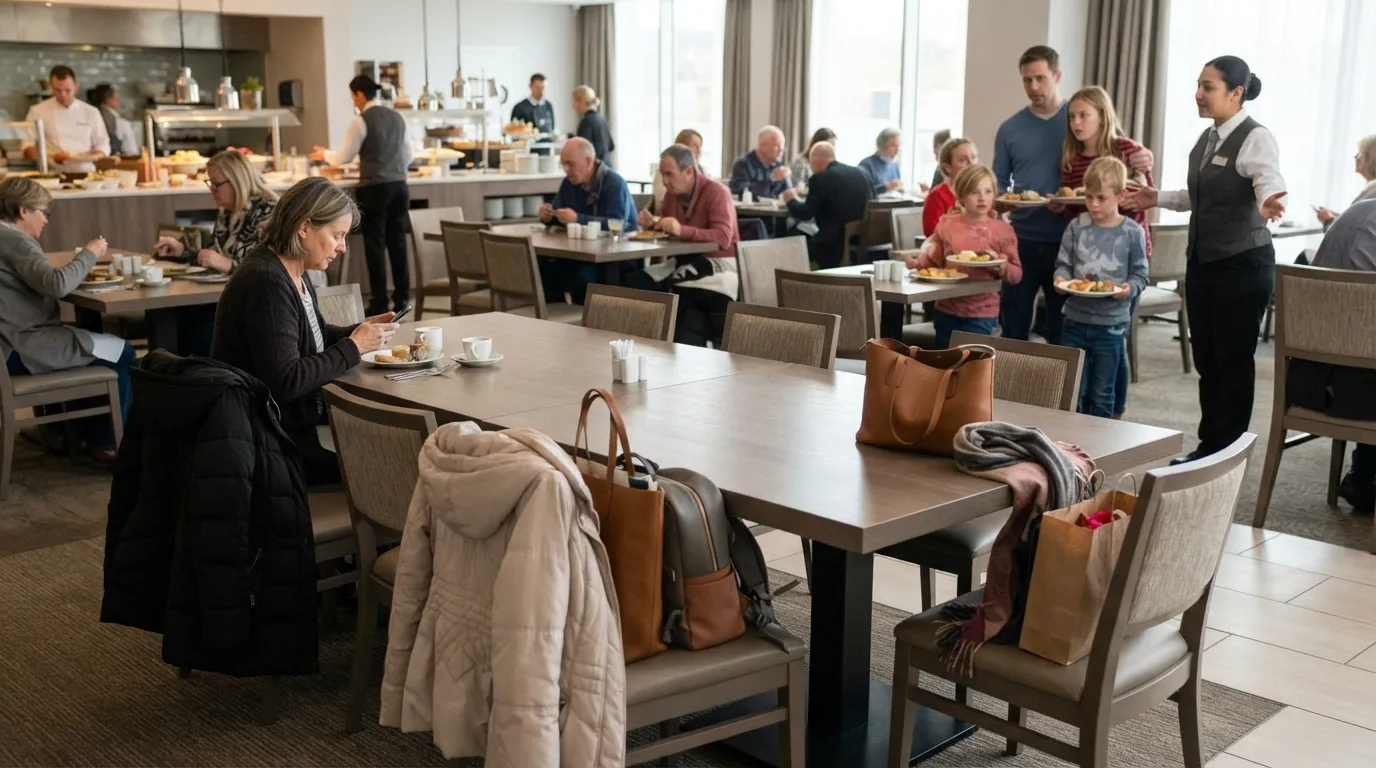
Spreading coats, bags, and extra chairs across a large table for one or two people leaves bigger groups standing with full plates. Staff get pulled in to referee, and the dining room feels tighter than it should.
Choose a table that fits your party and keep belongings close. Free up the space soon after you finish eating.
#2 – Bringing Outside Visitors to a Guests-Only Breakfast

Some guests bring friends or family to breakfast when the room is limited to registered guests. Staff must figure out who’s eligible, which can mean awkward conversations and food planning thrown off.
Check the hotel’s policy on visitors and ask the front desk whether they can join, and under what terms.
At a Glance
- Who’s eating: Registered guests, or visitors the hotel approves.
- Who to ask: The front desk, ideally before breakfast.
- What to ask: Whether visitors are welcome and under what terms.
- Why it helps: Staff avoid awkward table-side conversations.
#1 – Sitting Down Without Checking Breakfast Is Included
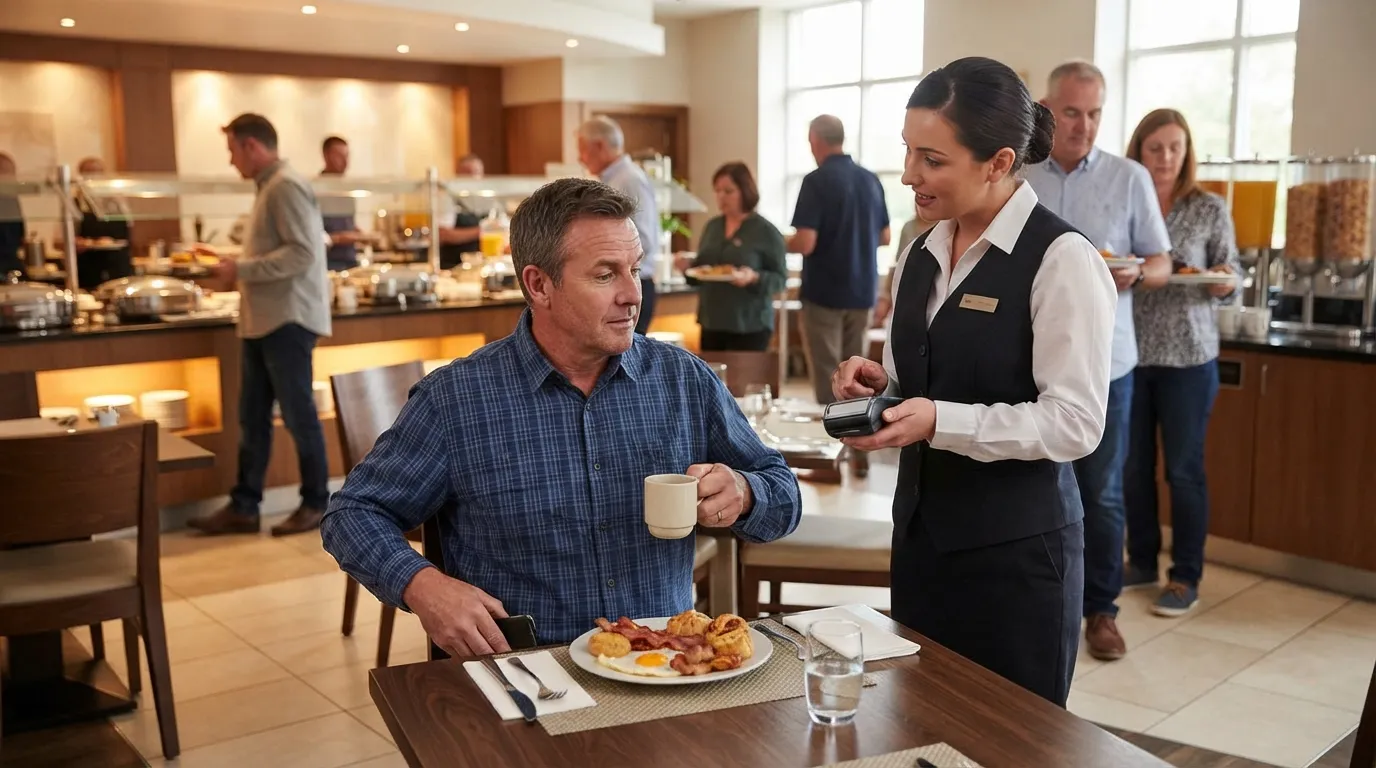
Some guests fill a plate and take a seat without confirming breakfast comes with their rate. Staff may have to verify room numbers or explain charges at the table, with a line forming nearby.
Check your booking or ask at check-in, and keep your room number handy. A clear answer up front makes for a smoother morning for everyone.
None of these habits look dramatic in the moment. But a buffet only works because dozens of strangers share the same spoons, trays, and patience. Take a clean plate, use the tongs, and leave the counter the way you’d want to find it.
CEO-Co-Founder