
- The Day Nixon Resigned: What America Looked Like in August 1974 - October 8, 2026
- 1975: The Year Punk Was Born in America - October 8, 2026
- 15 Authors Who Used a Pen Name and Outsold Their Real Byline - October 8, 2026
#15 – Who Dat (New Orleans Saints)
The phrase “Who Dat” traces back to late-1800s minstrel shows in New Orleans before any football connection existed. Rival fans and local performers used versions of it as playful or pointed jabs at outsiders.
By the early 1980s Saints supporters turned the line into a full chant during games, pairing it with “Who dat say dey gonna beat dem Saints?” The team and its fans embraced the taunt as their own rallying cry. It appeared on a 1983 recording by Aaron Neville and players, cementing its status.
At a Glance
- Team: New Orleans Saints, who began play in 1967
- Home: the Superdome, which opened in 1975
- Biggest stage: Super Bowl XLIV on Feb. 7, 2010, a 31-17 win over the Colts
- Vibe: a borrowed jab turned into a call-and-response
Today the chant fills the Superdome on every home game day. Rivals still hear echoes of its mocking roots when the volume rises. The shift shows how a regional expression once aimed at outsiders became the defining sound of one franchise. Fans now treat it as pure identity rather than borrowed sarcasm.
#14 – Who Dey (Cincinnati Bengals)
Cincinnati’s “Who Dey” began in local beer commercials and Riverfront Stadium vendor calls during the early 1980s. Opposing supporters sometimes mocked the phrasing as unsophisticated or regional.
Bengals fans adopted the exact words and turned them into a stadium-wide response that grew louder with each season. The chant survived multiple stadium moves and ownership changes. It remains distinct from the similar Saints version yet shares the same pattern of reclaiming a casual taunt.
Players and coaches have referenced it in interviews as part of the club’s fabric. The chant’s endurance proves that even light-hearted jabs from outside can be repurposed into lasting home-field energy.
#13 – Duuuval (Jacksonville Jaguars)
“Duuuval” started in Jacksonville hip-hop radio mixes in the 1990s as a shorthand for Duval County pride. Rival fans occasionally used the elongated pronunciation to poke fun at the city’s smaller-market status.
Jaguars players picked it up as an on-field call in the mid-2000s, and supporters soon made it the default stadium roar. The organization later invited local celebrities to lead the chant during games.
What began as street-level shorthand became the official marker of Jacksonville football identity. The evolution highlights how a localized expression once treated as novelty by outsiders settled into permanent team tradition.
#12 – Sandstorm (South Carolina Gamecocks)
Darude’s instrumental track first appeared in Williams-Brice Stadium as a timeout filler in 2009. Visiting fans and commentators initially treated the sudden dance-party reaction as an oddity or distraction.
Gamecocks supporters quickly claimed the song, adding towel waves and “USC” chants that turned it into a defensive rallying point. The tradition spread to other sports on campus and now defines home-game atmosphere.
Rivals have noted the intimidating volume it generates. A single DJ choice transformed an imported techno track into one of college football’s most recognizable home-field weapons.
#11 – Seven Nation Army (Club Brugge and beyond)
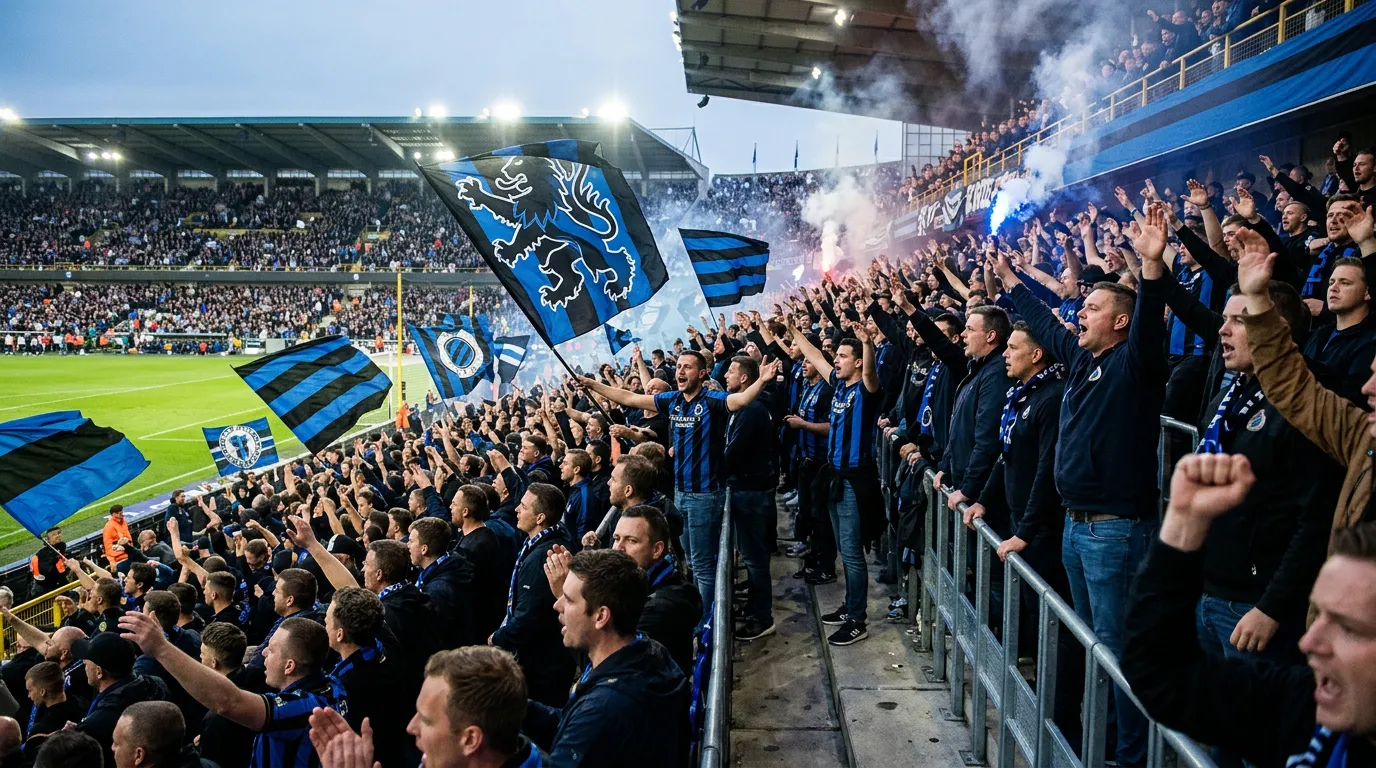
The White Stripes riff first echoed in a Belgian bar before a 2003 Champions League match. Club Brugge fans chanted the simple “oh oh oh” pattern after an upset win, and visiting supporters carried versions home as both celebration and subtle mockery of bigger clubs.
Fast Facts
- The riff comes from the White Stripes album Elephant, released in 2003
- Club Brugge fans took it to the terraces that same year
- Italy won the 2006 World Cup, and the melody rode that celebration
- No lyrics needed: anyone can hum the hook
Roma adopted it next, then Italy’s national team at the 2006 World Cup. The melody now appears at NFL games, European grounds, and beyond.
What started as one terrace’s spontaneous response became a global stadium staple. The riff’s journey shows how a minimal chant born in one corner of Europe traveled through rival reactions into widespread use.
#10 – Rocky Top (Tennessee Volunteers)
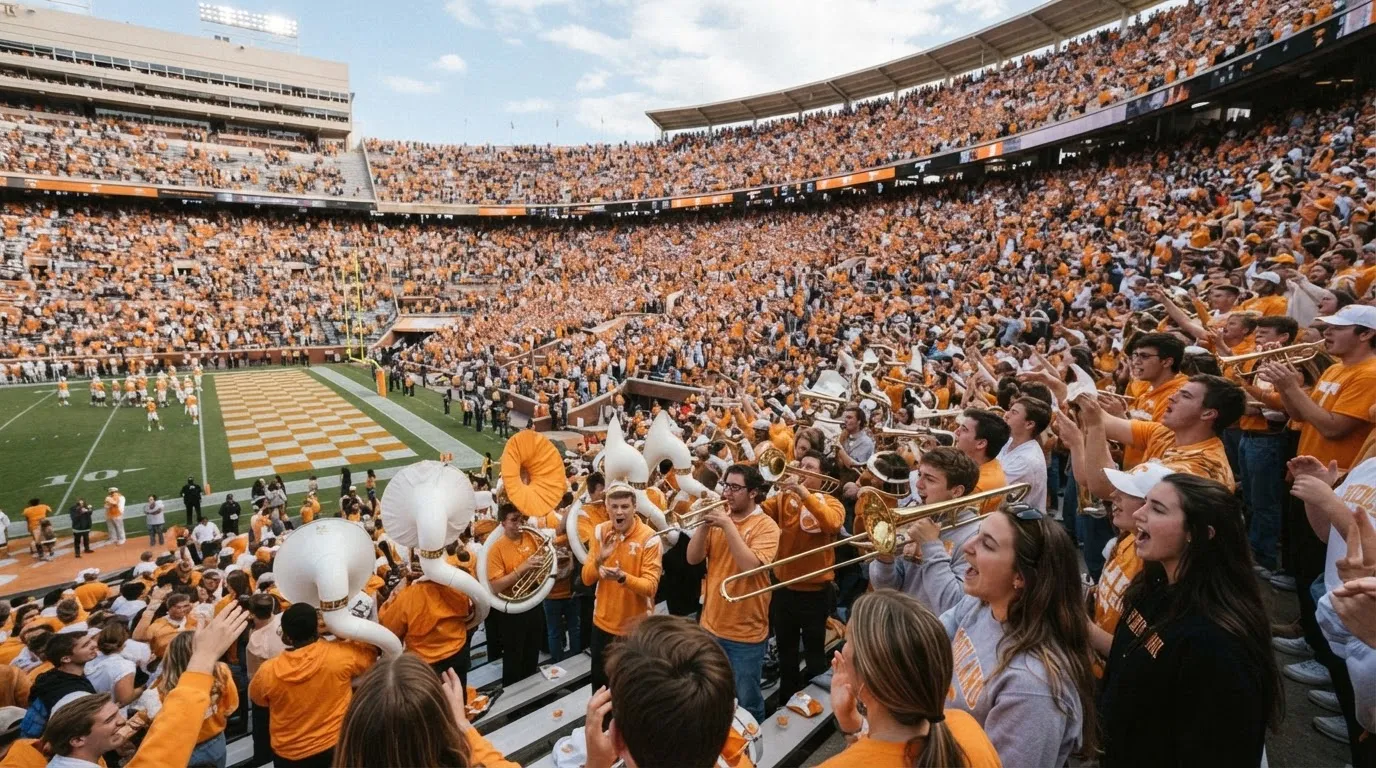
The bluegrass tune existed for years before reaching Neyland Stadium. University of Tennessee Chattanooga fans sang it first during their own championship runs. Rivals sometimes referenced the song’s rural imagery as a way to needle Knoxville supporters.
Tennessee’s band and fans claimed it in the late 1970s, and it quickly became the default fight song. The track now ranks among the most played and debated college anthems.
Its path from smaller-campus favorite to flagship stadium roar illustrates how external commentary can accelerate adoption.
#9 – Greasy Chip Butty Song (Sheffield United)
Sheffield United fans adapted John Denver’s “Annie’s Song” into lyrics celebrating local food in the 1990s. Rival supporters initially mocked the mundane subject matter as proof of provincial tastes.
Blades fans leaned into the joke and made the full version a regular match-day feature at Bramall Lane. The chant now appears on merchandise and in club media.
What began as light-hearted ribbing from outside became an affectionate club signature. The song’s staying power demonstrates how self-deprecating humor can be reclaimed and celebrated.
#8 – On the Ball, City (Norwich City)
Dating to the 1890s, this is among the oldest continuous football songs still sung. Early versions circulated among local works teams before Norwich City formalized it. Rivals occasionally referenced its age or quirky phrasing as outdated.
Norwich supporters kept the melody alive through decades of league changes. The chant remains a Carrow Road staple and a point of historical pride.
Its longevity shows how an early terrace tune survived external commentary to define one club’s identity.
#7 – Blue Moon (Manchester City)
The standard “Blue Moon” ballad gained traction among City fans in the early 1990s during lean years. Opponents sometimes sang altered versions to highlight the club’s trophy drought.
Supporters embraced the original and turned it into a defiant anthem that grew louder with each success. The song now plays before matches and after goals.
Worth Knowing
- “Blue Moon” was written by Richard Rodgers and Lorenz Hart in 1934
- City’s sky-blue identity made the title a natural fit
- The club won the Premier League on May 13, 2012, its first top-flight title since 1968
- That final-day finish gave the song one of its loudest nights
The transformation from perceived weakness into collective strength marks a classic case of fans rewriting the narrative.
#6 – I’m Forever Blowing Bubbles (West Ham United)
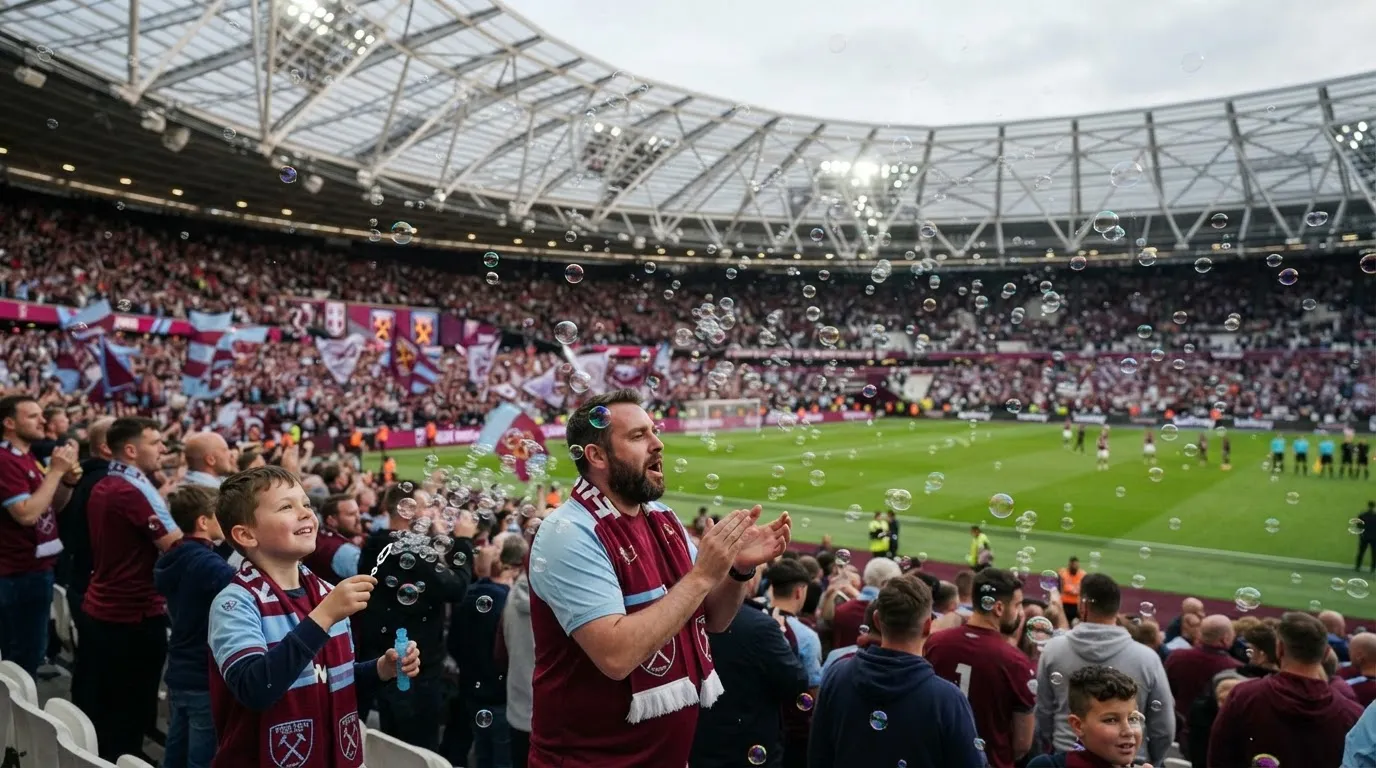
West Ham adopted the music-hall tune in the 1920s. Rival fans later used the “blowing bubbles” image to suggest fragility or lack of substance.
Hammers supporters kept singing it through relegations and promotions, making it a permanent East London marker. The chant appears in club videos and pre-match rituals.
Its persistence despite decades of external mockery underscores how a simple melody can anchor club loyalty.
#5 – You’ll Never Walk Alone (Liverpool)
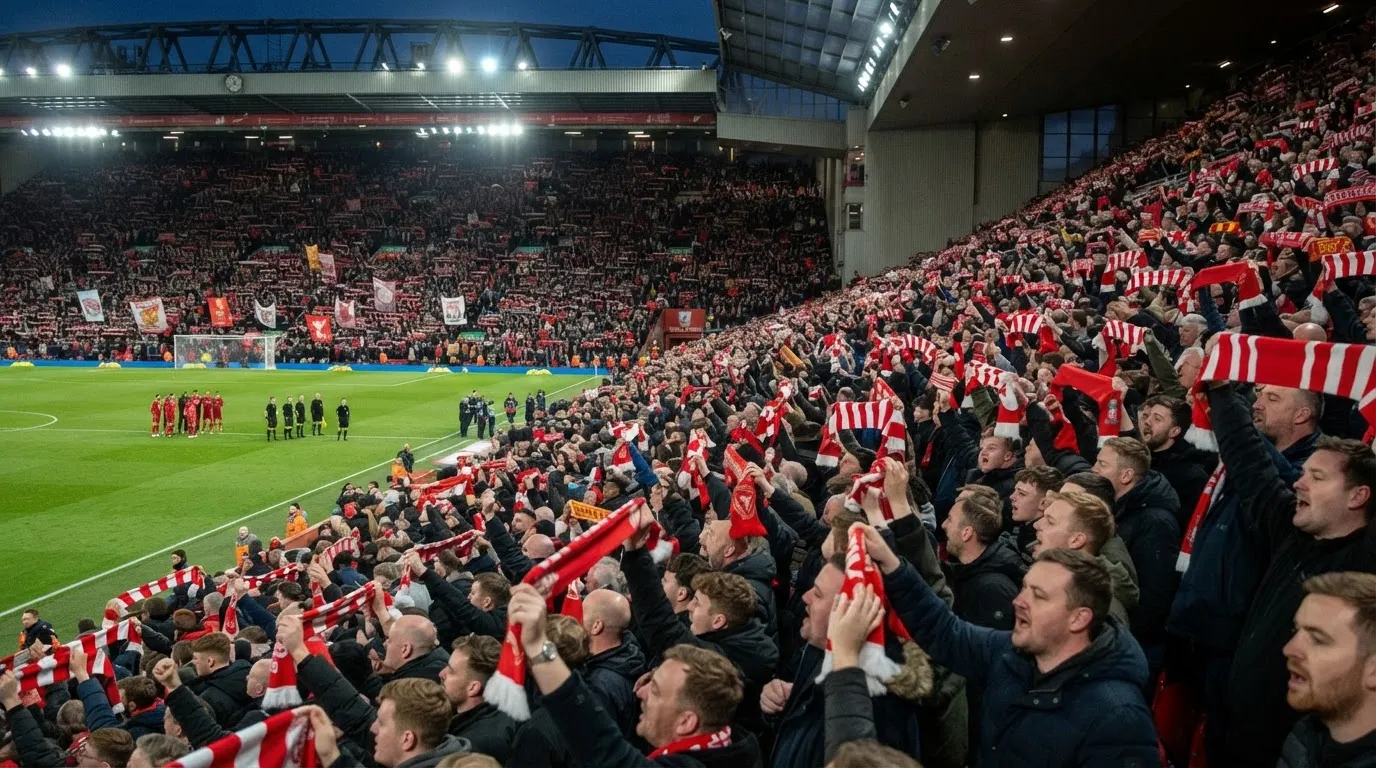
Gerry and the Pacemakers’ version reached Anfield in the 1960s. Rivals occasionally twisted the lyrics into darker versions during heated periods.
Quick Compare
- Stage version: a show tune from the 1945 musical Carousel
- Pop version: Gerry and the Pacemakers took it to No. 1 in the UK in 1963
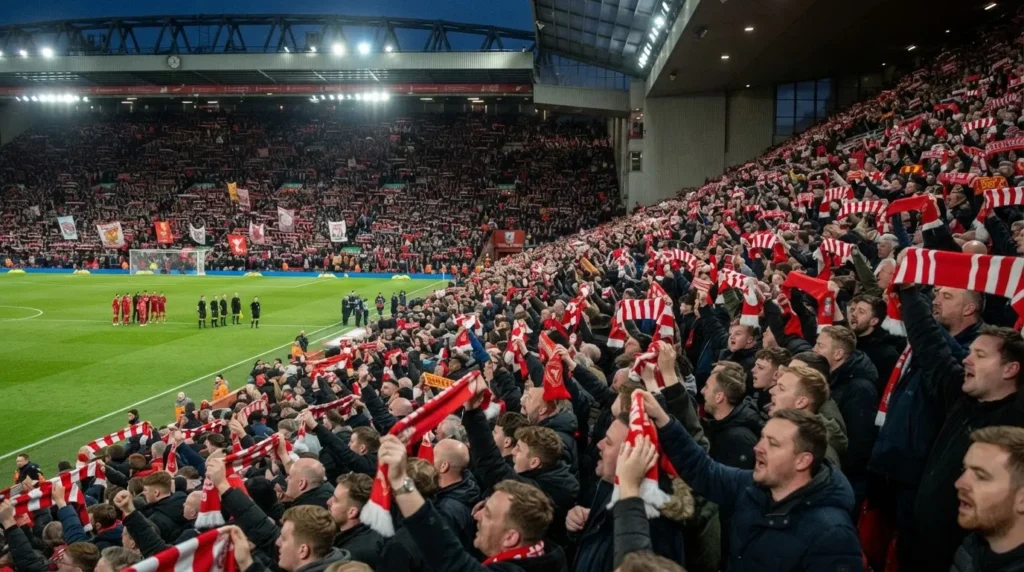
- Terrace version: thousands of voices and raised scarves at Anfield
Liverpool fans reclaimed the original and elevated it to club ethos status. The song now plays before every home game and travels with the team across Europe.
The journey from terrace staple to global symbol shows how external pressure can strengthen internal attachment.
#4 – When the Saints Go Marching In (Southampton)
The hymn first honored player Ian St John at Liverpool before Southampton fans adapted it for their “Saints” nickname. Rivals sometimes used the religious imagery ironically.
Southampton supporters made it their own through consistent match-day use. The chant remains a regular feature at St Mary’s.
Its cross-club migration and eventual home at one franchise illustrate how shared melodies find permanent addresses.
#3 – Glory, Glory (Tottenham Hotspur)
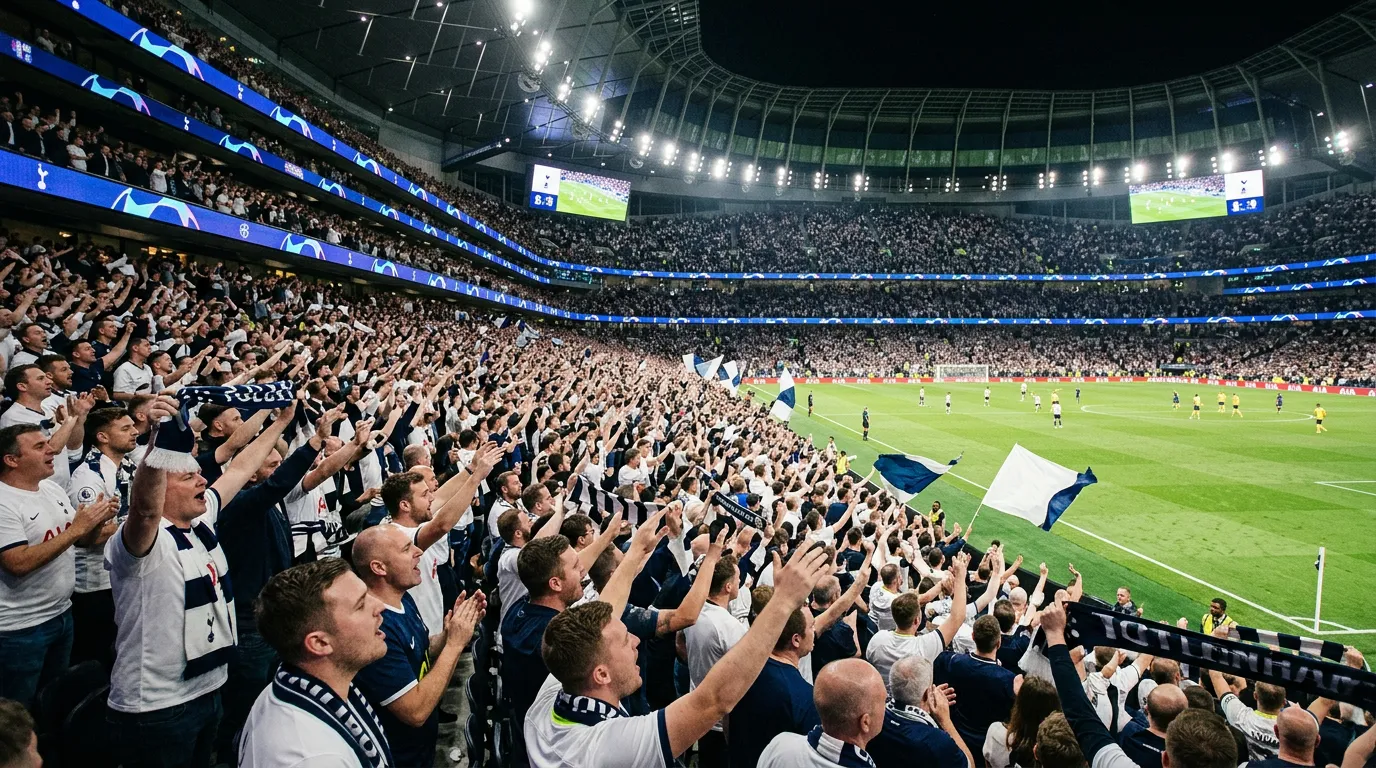
The melody from “The Battle Hymn of the Republic” reached White Hart Lane in the 1960s. Opponents occasionally mocked the religious phrasing during rivalries.
Spurs fans turned the chant into a celebration of attacking play that still echoes today. The song appears in club histories and match-day playlists.
Its survival through decades of external commentary highlights the power of consistent terrace repetition.
#2 – The Bengal Growl (Cincinnati Bengals)
Written in 1968 at the request of founder Paul Brown, the fight song faced early skepticism from some local listeners. Rivals occasionally referenced its campy style as outdated.
Bengals fans and families kept it alive through generations, singing it after scores and at tailgates. The track remains part of every home-game soundtrack.
Its endurance despite initial mixed reception shows how deliberate club traditions can outlast outside opinion.
#1 – Allez Allez Allez (Liverpool and others)
The Italian disco sample first surfaced among Liverpool fans in the mid-2010s. Rivals initially dismissed the repetitive chant as simplistic or borrowed.
Supporters refined the lyrics and volume until it became a European-away staple. Other clubs later adapted versions, yet the original remains tied to Anfield success.
The chant’s rise from casual terrace experiment to defining European nights captures the full arc of insult-to-anthem evolution.
CEO-Co-Founder