

- How World’s Fairs Shaped the Modern World - October 9, 2026
- Why Your 20 Favorite Book Characters Almost Didn’t Exist - October 9, 2026
- 15 Airline Charges That Disappear When a Traveler Over 60 Simply Asks - October 9, 2026
Airline fees look carved in stone, right up until someone asks the right question. Some of the items below are rights written into federal rules. Some are polite waivers an agent can grant. A few are fares that never show up on the main booking page.
The catch is that saying “I’m over 60” is rarely the magic phrase. The exact words matter, and so does the moment you say them. Stick around, because the item that can save the most money is not the one most travelers try first.
#15 – JetBlue’s Phone Booking Fee

You’d rather talk to a real person than fight with an app, and the airline bills you for it. JetBlue has charged a phone-service fee, listed at $25 per person, for bookings and changes made by phone.
Here’s the twist. Agents can sometimes waive it when the website genuinely wasn’t working for you. A specific, calm explanation does far more than a mention of your age.
“The payment page kept freezing on me” gives the agent a reason to write down. “I’m 67” gives them nothing to work with.
Ask before the agent finishes the transaction, not after. Waivers are never guaranteed, and fee amounts change, so glance at JetBlue’s current fee page first. If one agent says no, a second call with the same honest explanation sometimes lands differently.
#14 – American Airlines Senior Fares on Select Domestic Routes

Some of the cheapest fares on a route never appear in the search results you see by default. American Airlines has offered senior fares for travelers 65 and older on certain domestic routes, and agents can look them up.
Availability depends on the market and the date. Some routes have a senior fare, and others simply don’t.
The smart move is to call reservations and ask the agent to price your exact itinerary two ways: the senior fare and the lowest public fare. Then compare the price and the fine print.
Senior fares can carry different change or refund rules, so the cheaper number isn’t always the better deal. Most travelers never ask, so a lower fare can sit there unseen while they pay the sticker price.
#13 – Frontier’s 55FOR55 Age-Based Promo Code

Frontier has promoted a code called 55FOR55, pitched at travelers 55 and older and advertised as taking 55 percent off base fares. It works on Frontier’s own site, and the code goes in at checkout.
Two things to know. These promotions come and go, and age verification can be part of the terms, so confirm the offer is live before you plan around it.
Worth Knowing
- The code is 55FOR55, and it is entered at checkout on Frontier’s own site.
- The advertised discount applies to the base fare only.
- Bags, seats, and other add-ons are priced separately.
- Offers rotate, so check that it is live before you book.
Also remember that a discount on the base fare is not a discount on everything. Bags, seats, and other add-ons on a low-cost carrier can change the final total quickly.
Run a normal search first, then rerun it with the code. Compare the two final prices, taxes and extras included. Because the offer starts at 55, it reaches travelers over 60 without needing a separate senior fare request.
#12 – Seat Selection Fees on Basic Economy
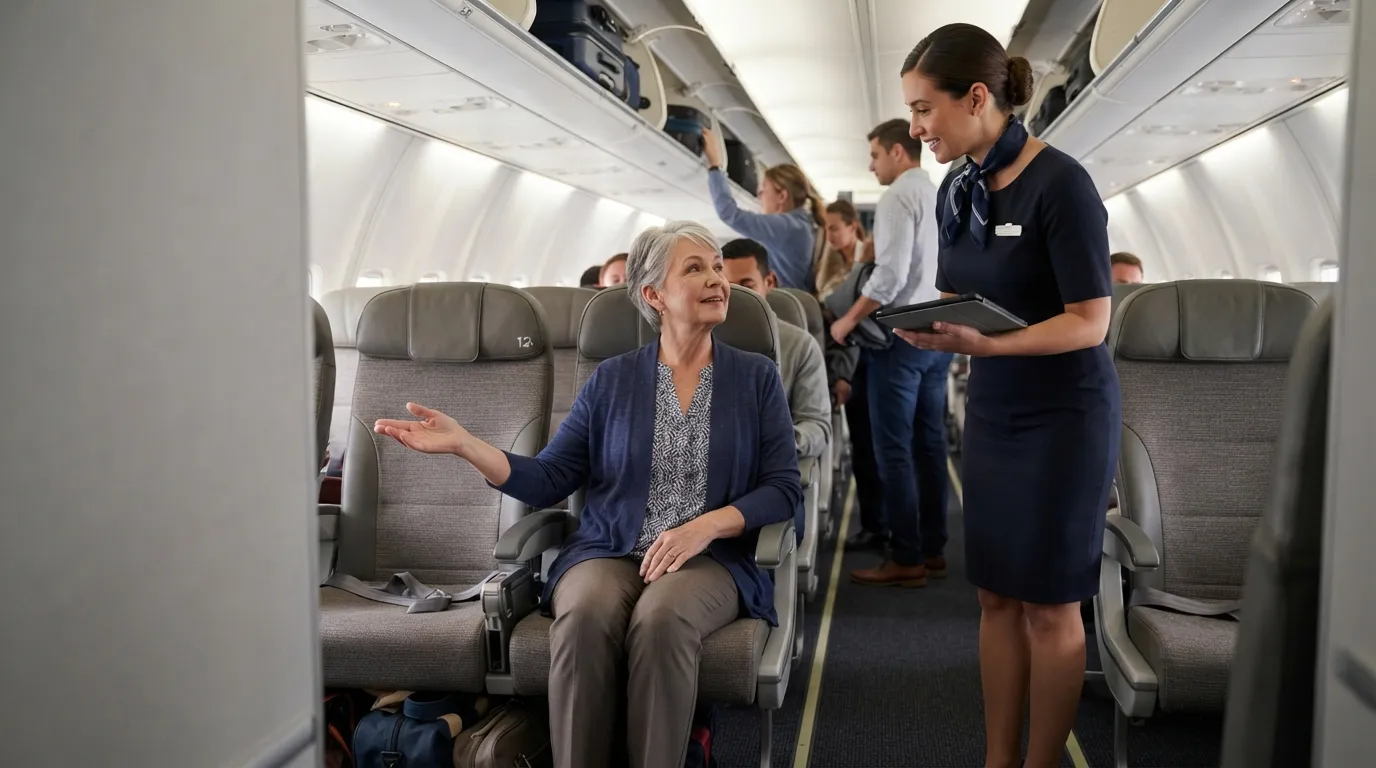
Basic economy fares often charge extra to pick a seat, and families and couples know the sting of being scattered across the cabin. For a traveler with a real physical need, that fee can sometimes be set aside.
The key is to ask about the need, not the birthday. Needing an aisle for a stiff knee or a seat near a lavatory is a disability-related seating request, and U.S. airlines must work to accommodate those under the Air Carrier Access Act.
Say it plainly at booking, by phone, or at check-in: “I need an aisle seat because of a medical condition.” Many carriers will then assign a suitable seat without the usual fee.
This isn’t a loophole for a better view. It applies when the seat solves an actual need, and agents may ask a short question or two.
#11 – CPAP Machines and Portable Oxygen Concentrators
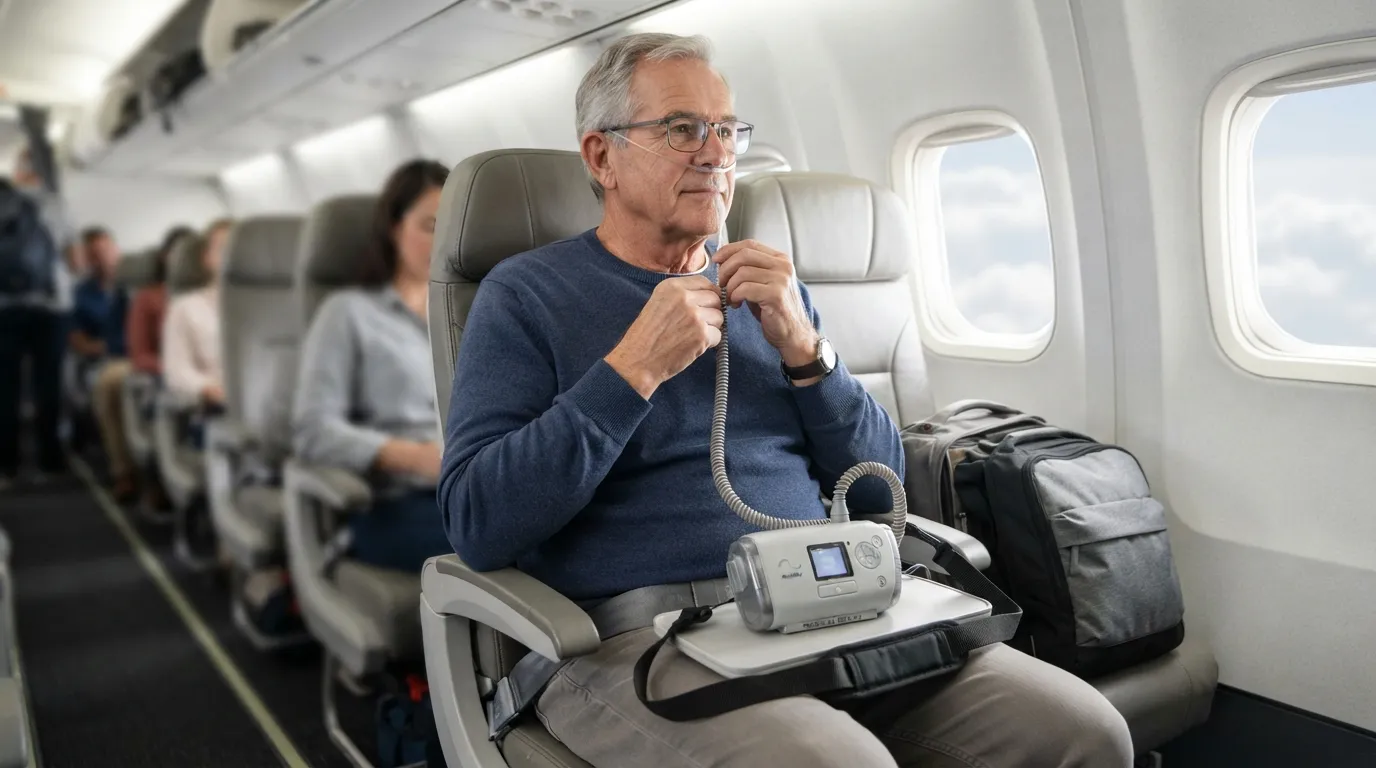
Nobody should pay a baggage fee to breathe safely overnight. Under federal disability rules, medical devices like a CPAP machine travel in the cabin without counting against your carry-on limit.
The same goes for an FAA-approved portable oxygen concentrator, which has its own advance paperwork and battery requirements. Check your airline’s page for those well before the trip.
Fast Facts
- A CPAP machine does not count against your carry-on limit.
- A portable oxygen concentrator must be FAA-approved.
- Oxygen concentrators come with advance paperwork and battery rules.
- A dedicated carrying case makes the device easy to spot and explain.
At the counter or the gate, name the item for what it is: “This is my CPAP machine.” That one sentence keeps a well-meaning agent from treating it like an extra bag.
If you’re charged anyway, politely mention that it’s medical equipment and ask for a supervisor. Pack it in its own carrying case so it’s easy to spot and easy to explain.
#10 – Change Fees on Delta, American and United Main Cabin Tickets

Many travelers still brace for a $200 change fee that mostly vanished years ago. Delta, American, and United dropped change fees on most standard domestic economy tickets in 2020.
Basic economy is where the restrictions tend to survive, and the rules differ by airline. So the first step is to check which fare you actually bought. It’s printed on your confirmation.
If you hold a standard main cabin ticket and an agent quotes a change fee, ask them to double-check the fare rules. You may still owe a fare difference if the new flight costs more, but the old penalty shouldn’t apply.
It’s a quiet kind of savings. You don’t need a special trick, just the confidence to say, “I believe this fare has no change fee.”
#9 – Paid Priority Boarding Add-Ons
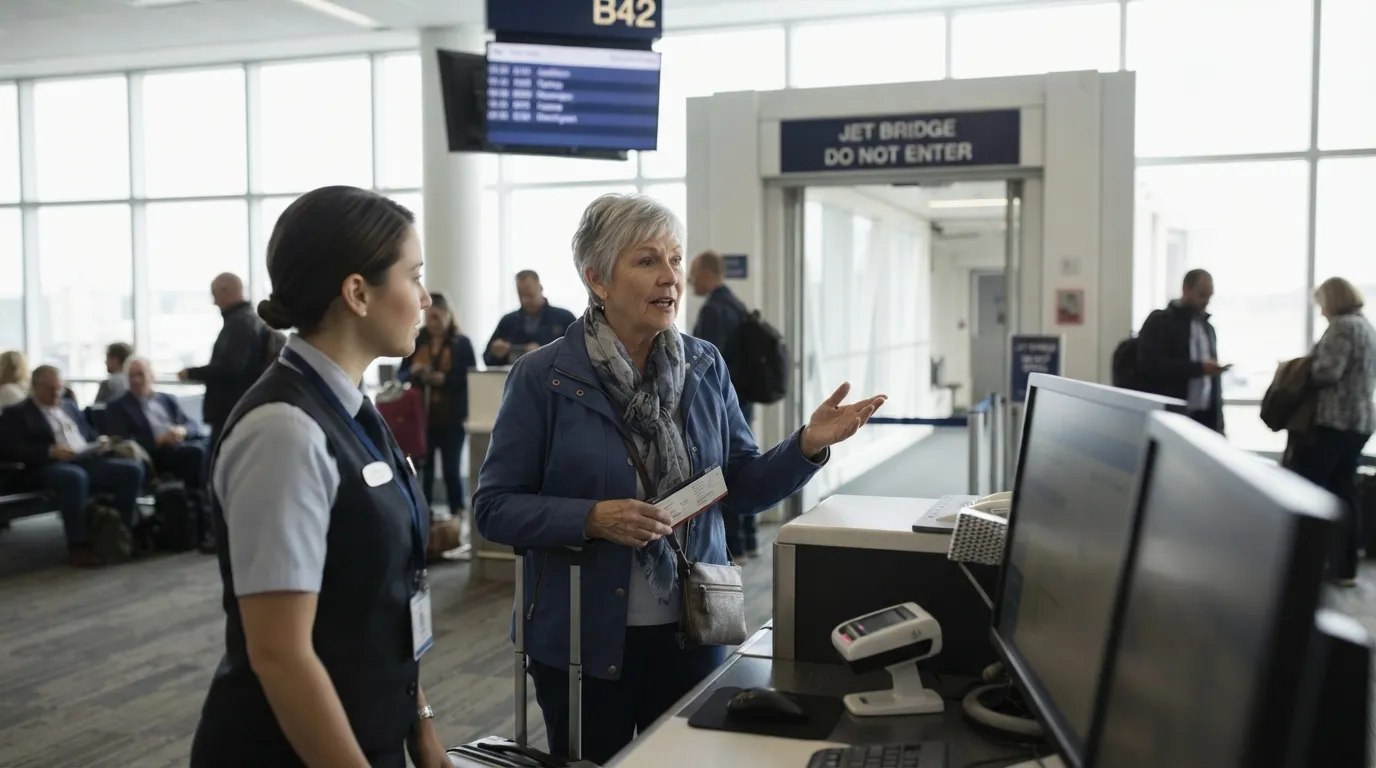
Some airlines sell early boarding as an add-on, and travelers who simply want an easier walk down the jet bridge end up paying for it. But paid priority and accessible preboarding are two different things.
Airlines must offer preboarding to passengers with disabilities who say at the gate that they need extra time or help to board. It’s offered separately from any paid early-boarding upgrade.
So before you buy the add-on, think about what you actually need. If it’s more time on the jet bridge or help finding your seat, tell the gate agent in plain words, and do it early.
Waiting for the final boarding call defeats the purpose. Agents handle these requests every day, and they are usually easier to honor before the line forms.
#8 – Delta’s Senior Discounts on Select Markets

Delta has listed senior discounts for certain markets, and the catch is where you find them. These fares are bookable through reservations rather than the usual website search, which is why so many travelers never see them.
The phone call itself is simple. Give the agent your route and dates, and ask whether a senior discount is filed for that market.
Don’t assume it will win. The discount applies only where it’s filed, and sometimes a public sale fare beats it.
That’s why the comparison matters. Ask for the senior price and the lowest public price side by side, then check the change and refund terms on each. Sometimes the call saves real money, and sometimes it only confirms you already have the best deal.
#7 – United’s Senior Traveler Type on the Booking Form

Some savings hide behind a single dropdown menu. United’s booking form has allowed travelers to choose a senior traveler type for passengers 65 and older, and selecting it can surface senior fares on eligible routes.
Most people skip that menu and leave everyone as a default adult. When they do, any fare built for seniors stays out of sight.
Quick Compare
- Search as adult: shows the standard public fares.
- Search as senior (65+): may surface senior fares on eligible routes.
- Then compare: the total price, plus the change and refund rules.
Don’t expect miracles on every route. Availability shifts often, and these fares may not combine with other promotions.
The simple routine is to search once as an adult and once as a senior, then compare the lowest fares and their rules. If you’re flexible on dates, run it again closer to travel, because options can change.
#6 – Free Checked Walkers, Canes and Folding Wheelchairs
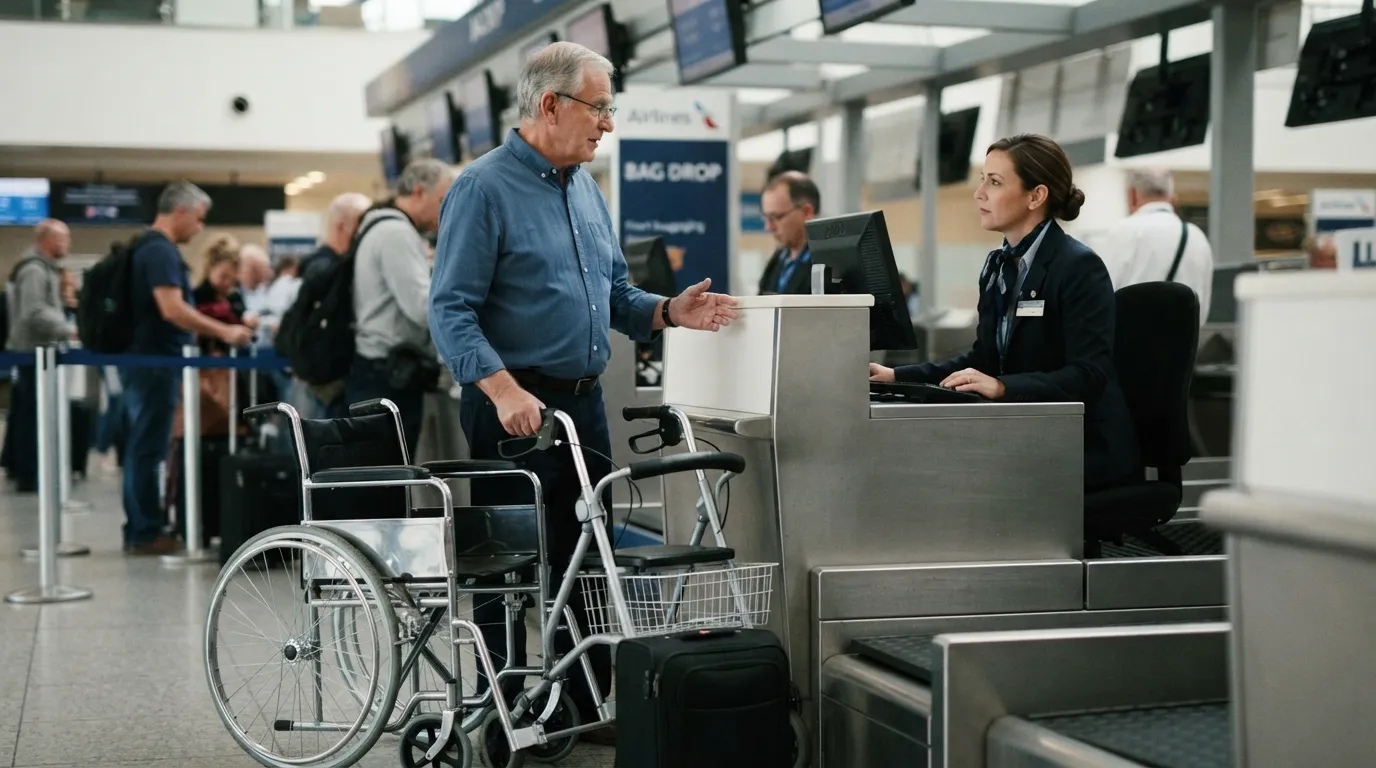
Few airline moments feel worse than being quoted a bag fee for a mobility aid. Under federal rules, airlines must carry wheelchairs, walkers, canes, and similar assistive devices without charging for them.
These items don’t count toward your baggage allowance. They are treated as part of how you travel, not as luggage you chose to bring.
Tell the agent when you check in. A folding wheelchair or walker can often go at the aircraft door and come back to you when you land, so ask about that option too.
If anyone starts typing in a fee, say calmly, “This is an assistive device.” Paperwork is rarely demanded, and the charge should disappear.
#5 – TSA’s Easier Screening for Travelers 75 and Older
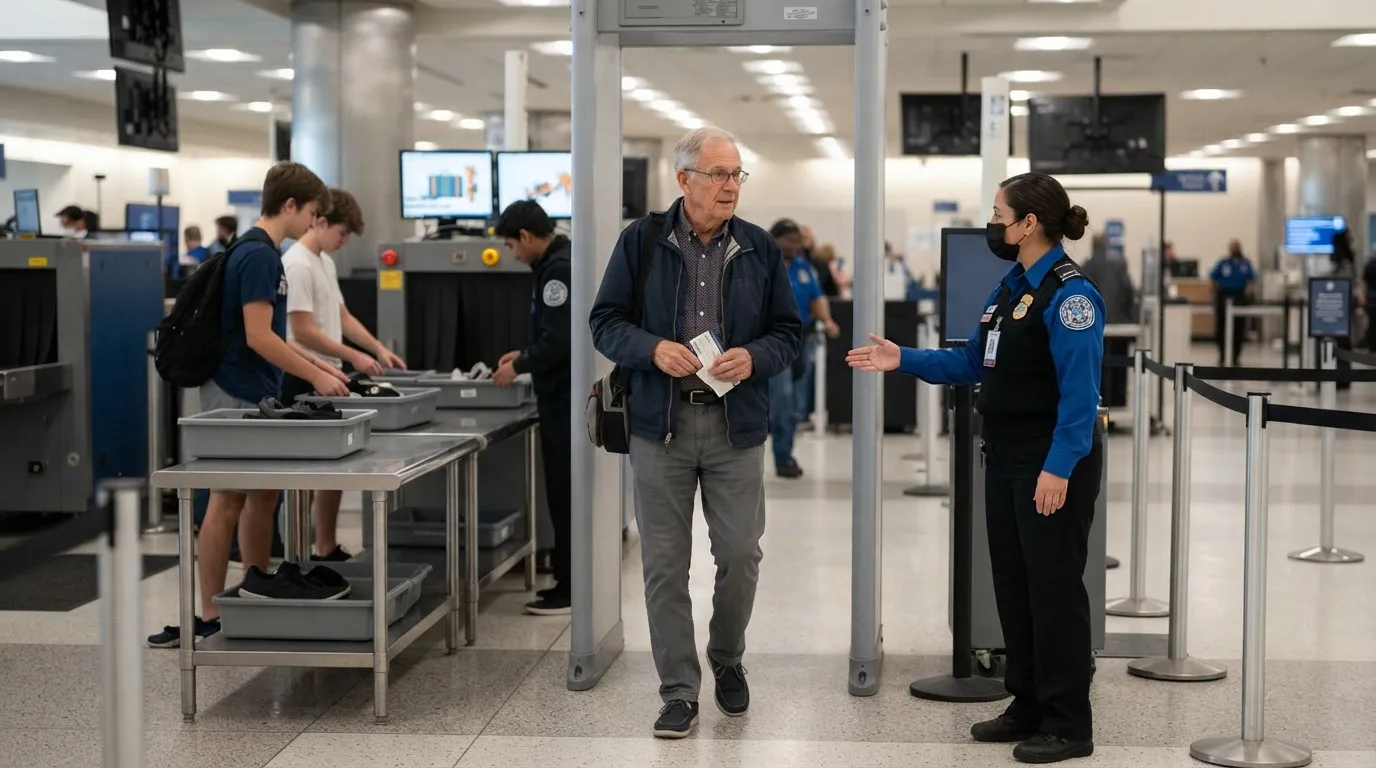
This one isn’t an airline charge, but it removes one of the most dreaded parts of the trip. TSA lets travelers 75 and older leave their shoes and light jackets on at the checkpoint.
The age is 75, not 60 or 65. Younger travelers over 60 don’t get this perk, so don’t count on it just because you’re a senior.
If you qualify, mention it politely to the officer at the start of screening. The policy is published by TSA and applies at checkpoints nationwide.
One honest caution: screening officers can still ask for extra checks if an alarm goes off or something needs a closer look. The perk smooths the process, but it doesn’t guarantee it.
#4 – Preboarding by Self-Identification
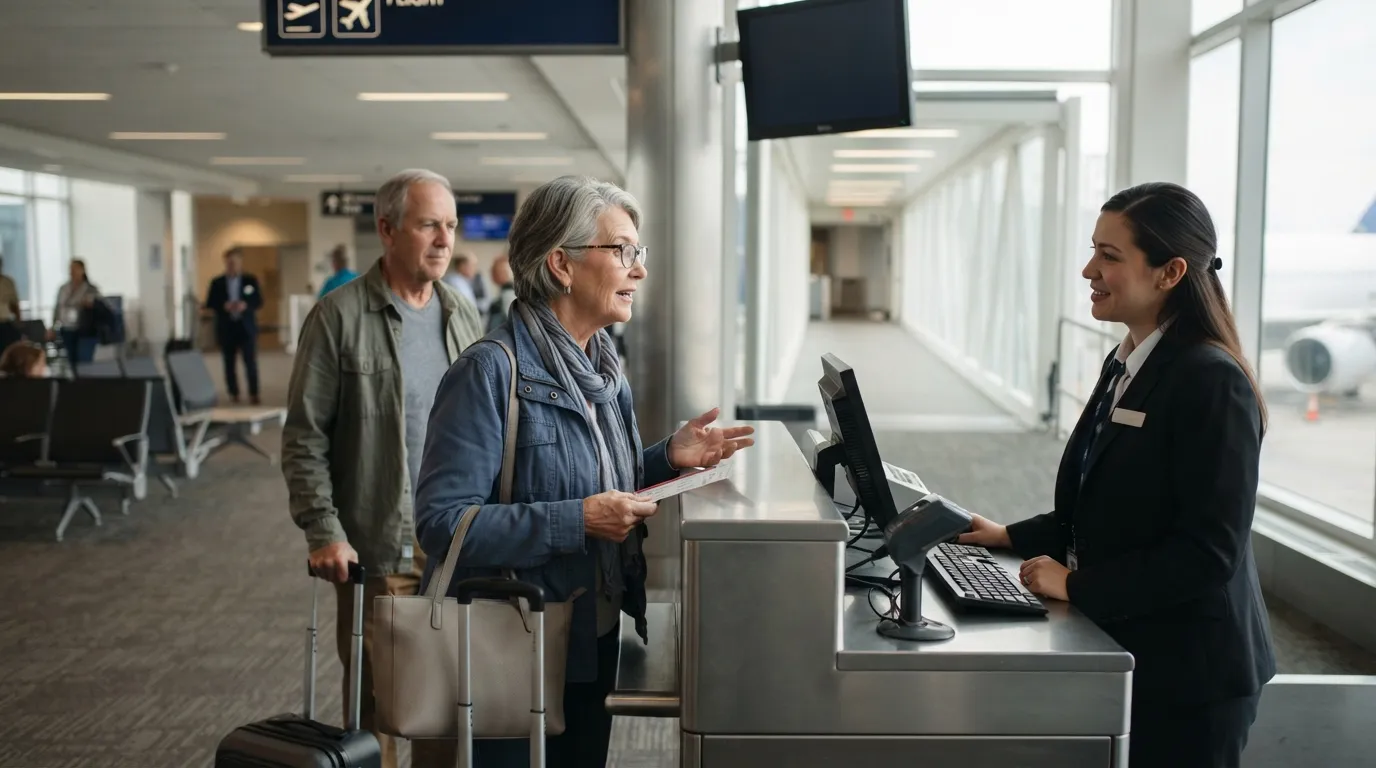
You don’t have to prove anything to board a few minutes early. Under the Air Carrier Access Act, U.S. airlines must offer preboarding to passengers with disabilities who self-identify as needing extra time or help.
Age alone doesn’t trigger it. Needing more time to get down the jet bridge and settle in does.
At a Glance
- Who it’s for: passengers with disabilities who say they need extra time or help.
- How to ask: tell the gate agent before boarding begins.
- Paperwork: usually none, and advance notice is typically not required.
- Cost: separate from any paid early-boarding upgrade.
So walk up to the gate agent well before boarding begins and say something like, “I’d like to preboard because I need extra time.” No advance notice is typically required, and it’s usually offered without paperwork.
Many airlines also let a companion board with you, though policies vary. Ask the agent how it works on your flight.
#3 – Wheelchair and Curb-to-Gate Escort Assistance
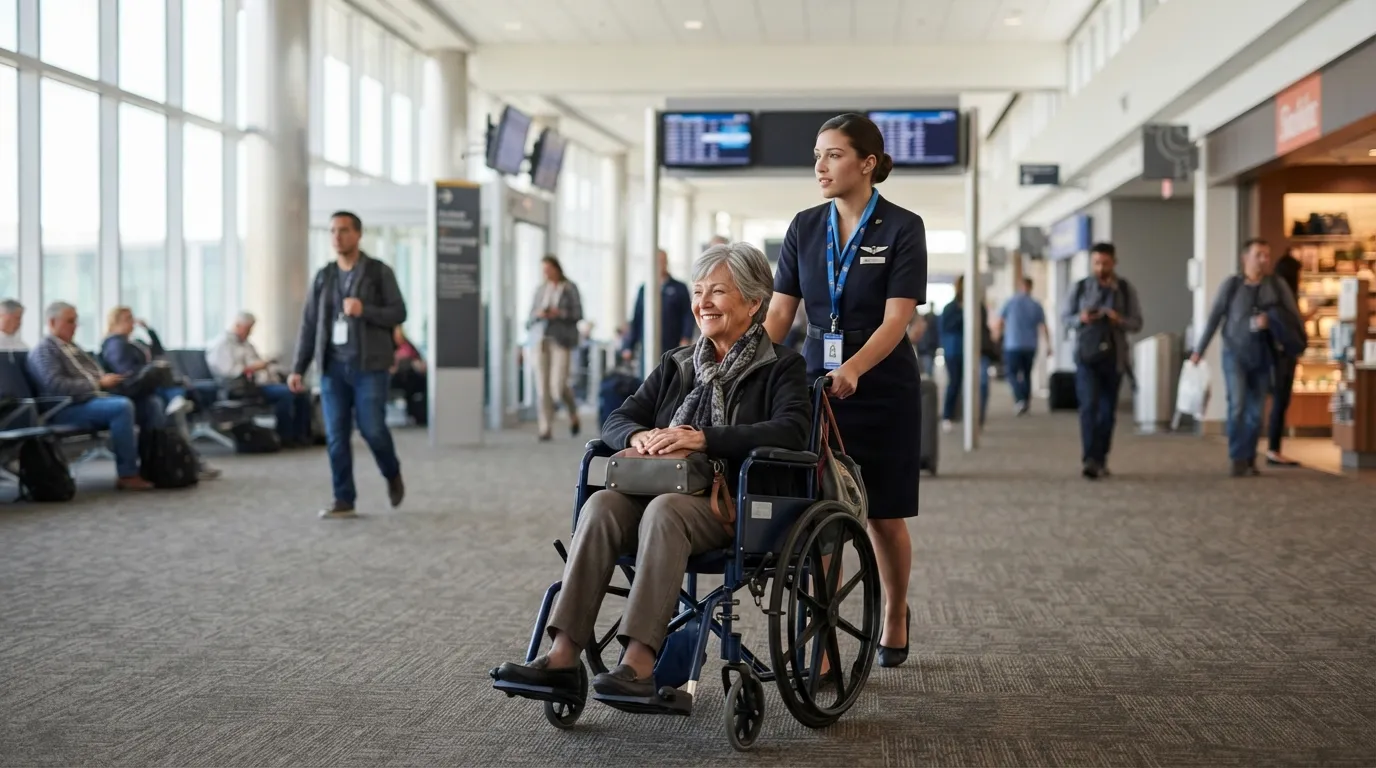
Big airports are enormous, and a connection with ten minutes to spare can feel like a marathon. Airlines provide wheelchair or escort help through the terminal on request, and you aren’t charged for it.
The service isn’t only about wheelchairs. It can include walking assistance and guidance from the curb to your gate, or from one gate to another on a tight connection.
Request it when you book or at check-in. Advance notice makes it easier for staff to be ready, though you can usually still ask at the airport.
Federal rules require airlines to provide the assistance when requested, so you aren’t asking for a favor. If you were quoted a fee, speak up politely, and ask to talk to a supervisor if needed.
#2 – AARP Member Travel Discounts

AARP is the shortcut some travelers forget they already carry. Members can reach negotiated travel rates through the AARP travel portal rather than directly through an airline’s site.
Airline-specific deals are less common than hotel, rental car, and vacation package offers, and they change over time. That’s why checking the current offer matters more than assuming a discount exists.
Membership is required, so this only helps if you’re already a member or the savings justify joining. Look at what the membership costs against what you might actually save.
Compare the portal’s price with the airline’s own price for the same flight, taxes and fees included. Sometimes it wins, and sometimes you’ve simply confirmed you already found the best fare.
#1 – The Senior Fare Comparison Call to American, Delta or United

If you only try one thing from this list, make it this. Call reservations and ask for the senior fare on your exact itinerary. Agents at American, Delta, and United can check whether a senior fare is filed for passengers 65 and older.
Then comes the part most people skip. Ask for the senior fare and the lowest public fare, and compare them side by side.
Read the rules before you say yes. If the senior fare is lower and the change and refund terms work for you, book it. If it isn’t, you’ve lost ten minutes, and you know the public fare really is the best.
That single call is the whole point of this article. The cheaper price was never hidden by magic. It was sitting there the whole time, waiting for someone to ask.
CEO-Co-Founder