

- 20 Musicians Who Turned Tragedy Into Timeless Hits - October 11, 2026
- What These Classic British and American Novels Say About Society - October 11, 2026
- The Forgotten U.S. Festival That Inspired Woodstock - October 11, 2026
The brochure shows a ship gliding past castles, and that part is real. What it leaves out is everything you only learn once the gangway is up: the odd docking habits, the water-level drama, and a cabin that works like a puzzle box.
Some of these quirks are charming. A few can rearrange your whole week. And the last one explains what really separates river cruising from the big-ship kind.
#17 – Rafting and Walking Through Other Ships on the Rhine
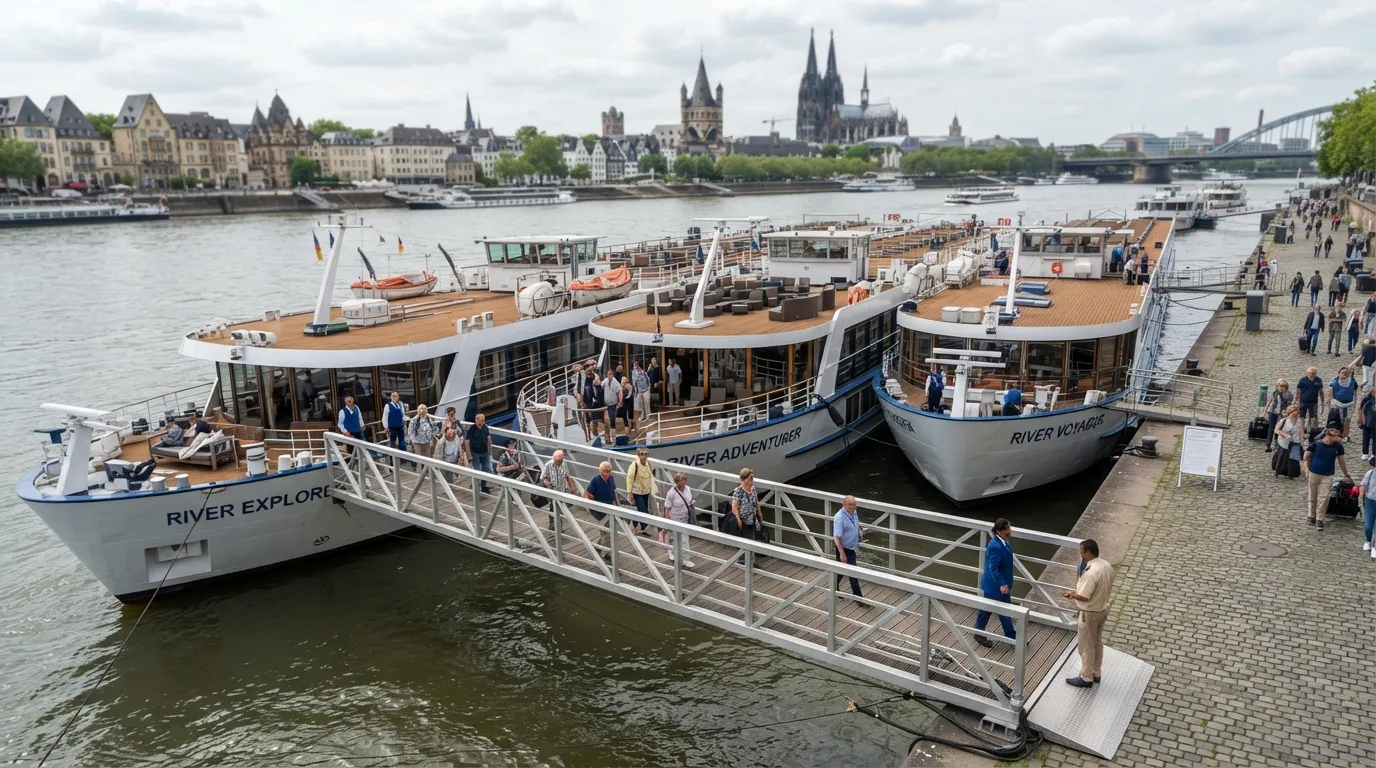
You expect to step off your ship and onto the pier. On a busy Rhine or Danube dock, you may step onto someone else’s ship instead.
When berths run short, river ships tie up side by side, a practice called rafting. If yours is on the outside, the gangway lands on the neighboring vessel, and you walk through its lobby to reach shore. Crews on both ships coordinate the crossing.
It feels strange the first time. You pass a stranger’s reception desk, glance at their staircase, and nod at crew in a different uniform.
Peak season makes this common. Guests who expect private, ocean-style docking are startled once, then shrug. By the second crossing it feels like a shortcut through a very polite hotel.
#16 – Low Water Levels Forcing Bus Transfers on the Danube
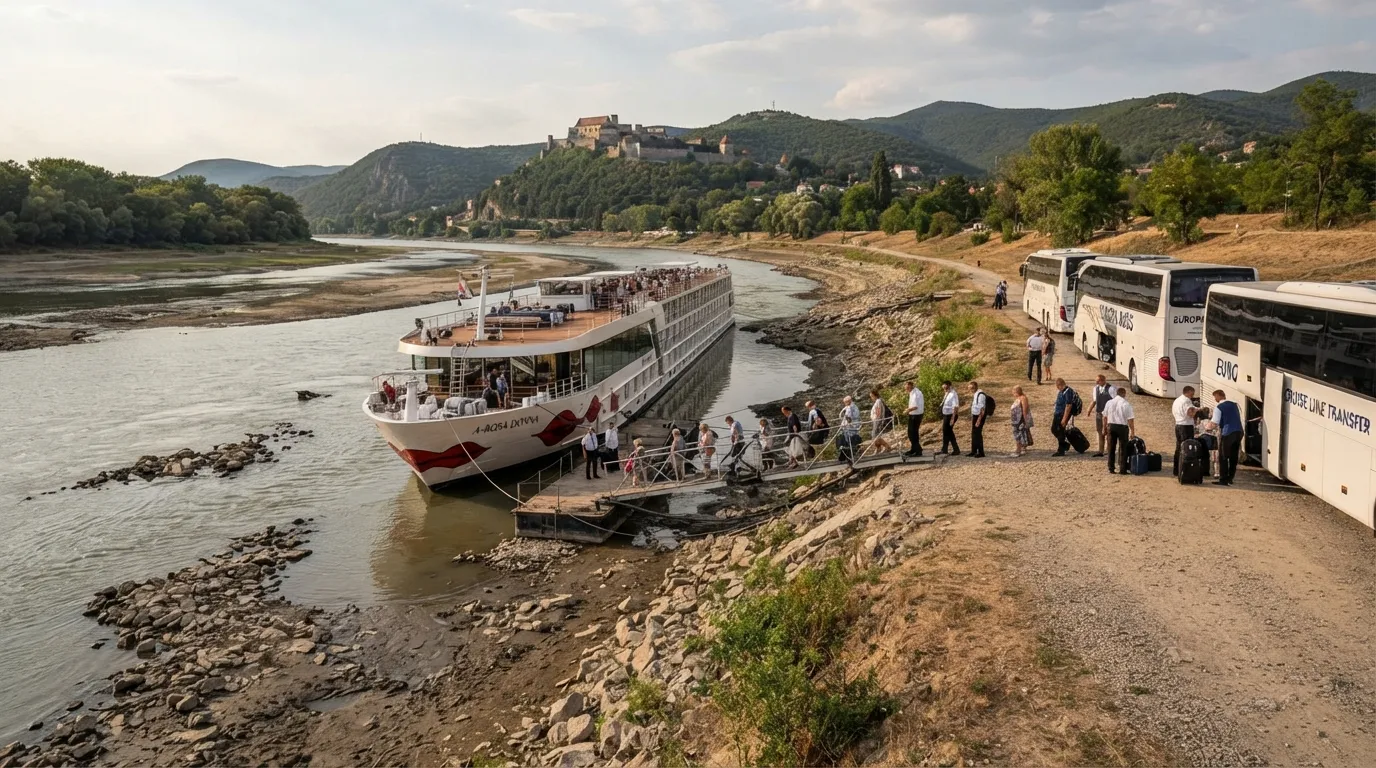
A river cruise can be derailed by something as plain as a dry summer. When the Danube drops too low, ships can’t always sail the full stretch you booked.
Shallow sections, including parts of Germany and stretches near Budapest, can leave a ship unable to pass. Operators respond by adding motorcoach legs, moving the embarkation point, or shortening the sailing. Guests may miss a planned port but typically get a substitute excursion.
This tends to show up in summer and early autumn, when rain is scarce. Gauge readings at key spots decide whether the ship sails or you travel by land, and lines watch them daily. Most of the time the plan bends without breaking.
Still, the sunset deck day you pictured may turn into a day watching the Danube from a bus window.
#15 – Sun Deck and Wheelhouse Lowering for Low Bridges
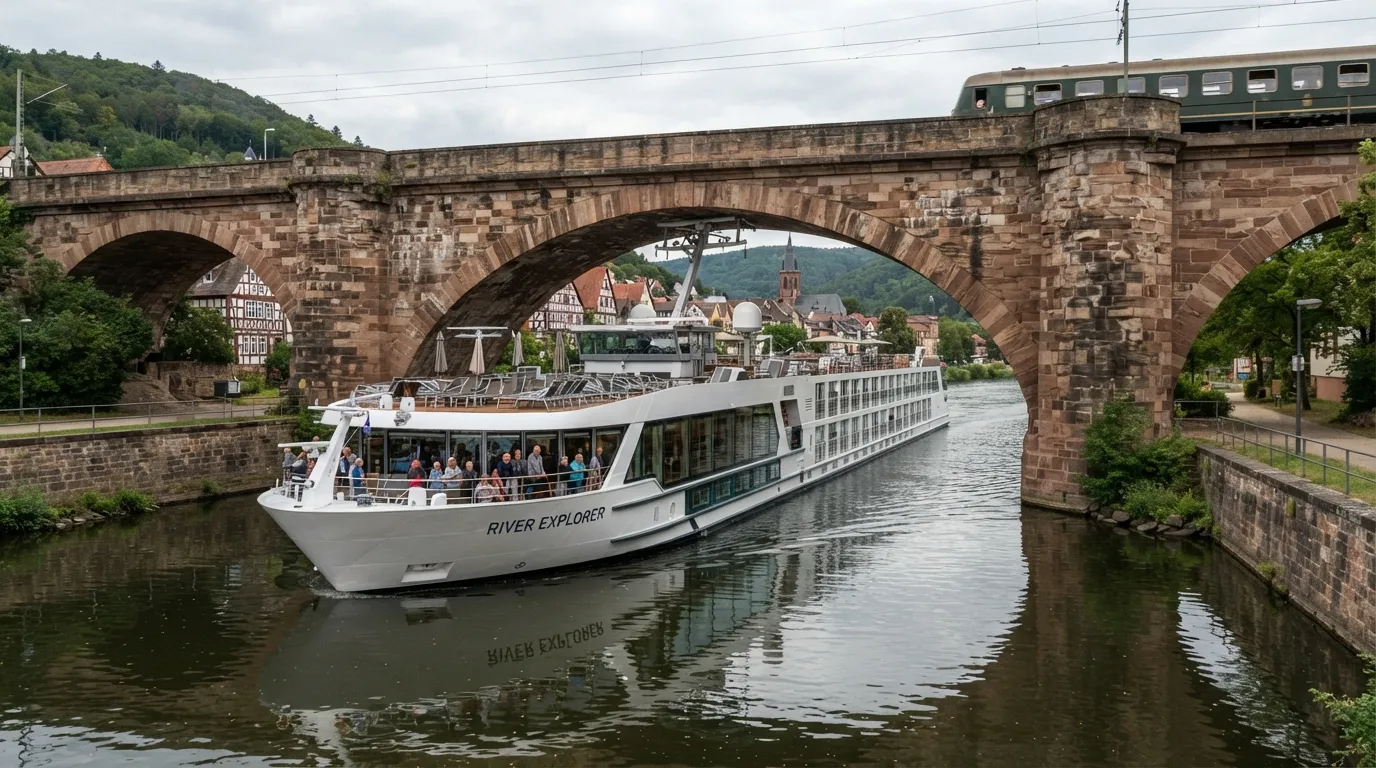
One minute you’re stretched out on the sun deck. The next, the whole deck is closed and the wheelhouse is sinking.
On rivers like the Main and the Neckar, some bridges leave very little clearance. Crews close the top deck, lower the structures that stand tallest, and hydraulically drop the wheelhouse so the ship can slip underneath.
Passengers usually watch from the lounge windows as the gap tightens, and it’s more dramatic than it sounds. High water can also close the deck, but a low bridge is a mechanical fix, not a weather one.
It’s a small reminder that these ships are built for tight rivers, not open water. They’re tall enough for the views and flexible enough to duck when they have to.
#14 – Cabins Measuring Only 150-170 Square Feet
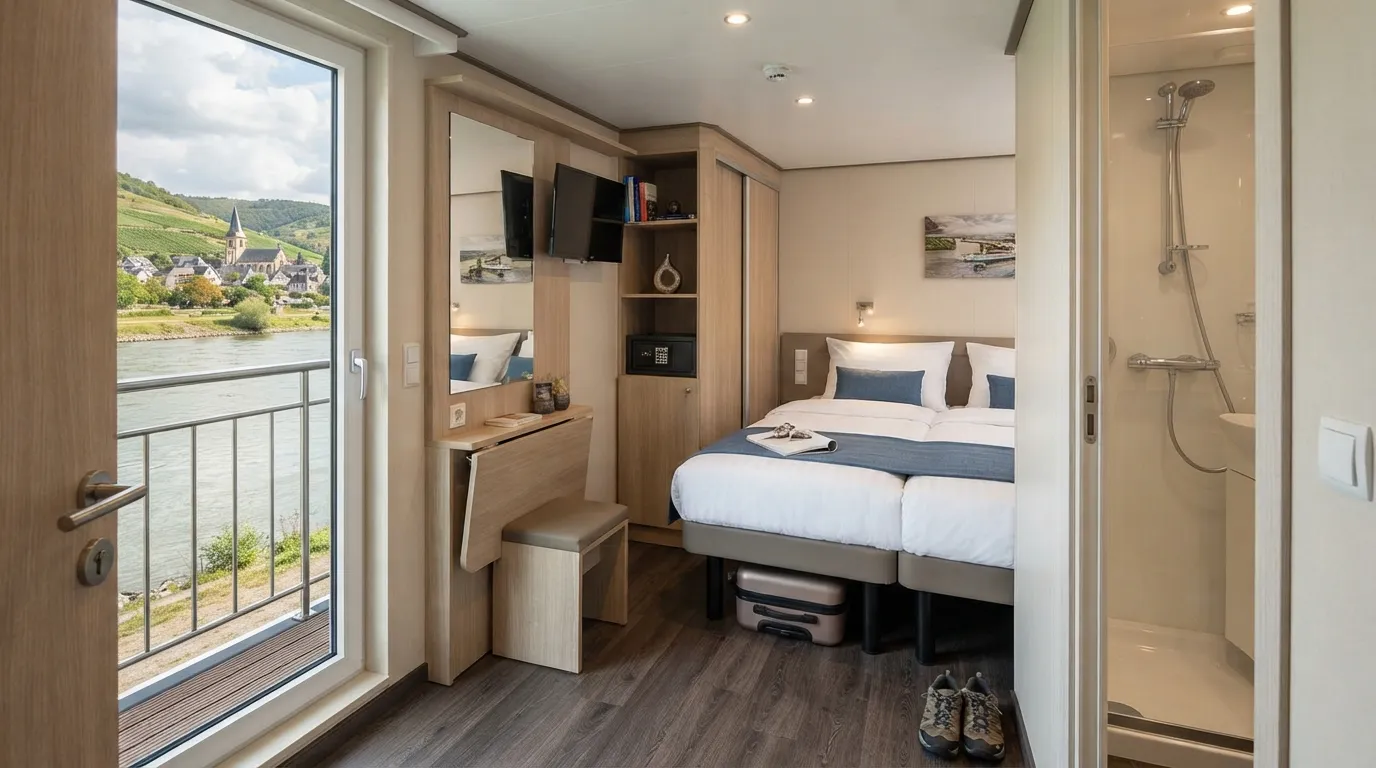
Open your cabin door and you’ll find a room smaller than many hotel bedrooms. Standard river cruise cabins often run about 150 to 170 square feet, well under a typical ocean stateroom.
Fast Facts
- Standard cabins: roughly 150 to 170 square feet
- Hull width: about 37 feet, set by the size of European locks
- Some suites: around 220 square feet, with larger ones on certain ships
- Space savers: fold-down desks, wall storage, and furniture with two jobs
The reason is the river itself. Every cabin has to fit inside that narrow hull, so designers squeeze in storage wherever it will go.
Balcony cabins add a little room but still feel snug. Suites are built for efficiency rather than sprawl. Most guests adapt within a day, once they find where everything hides.
#13 – Passing Through River Locks Up Close
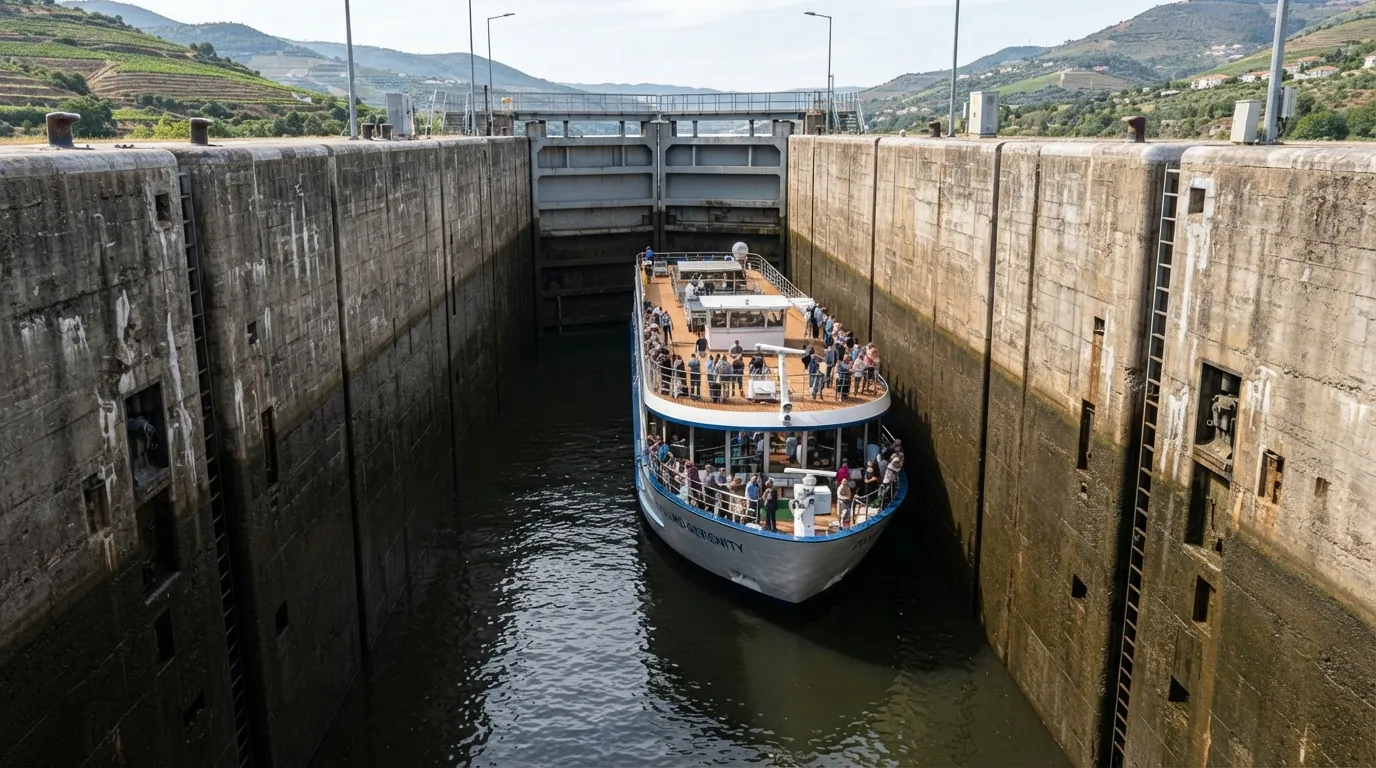
Few things on a river cruise feel as strangely thrilling as sinking into a concrete canyon. In a lock, the walls sit just feet from your hull while water drains or floods around you.
Ships rise or fall several meters in minutes, and some locks on the Douro lift vessels far higher than most guests expect. Gates close, pumps work, and the sky shrinks or grows as the chamber changes.
Passengers watch from the sun deck or through lounge windows on routes like the Douro and the Danube. Some lines add commentary during the passage.
On certain itineraries it happens multiple times a day, and the novelty doesn’t fade quickly. It’s a front-row look at how a river is managed so a ship can travel it.
#12 – Docking Directly in City Centers Like Budapest
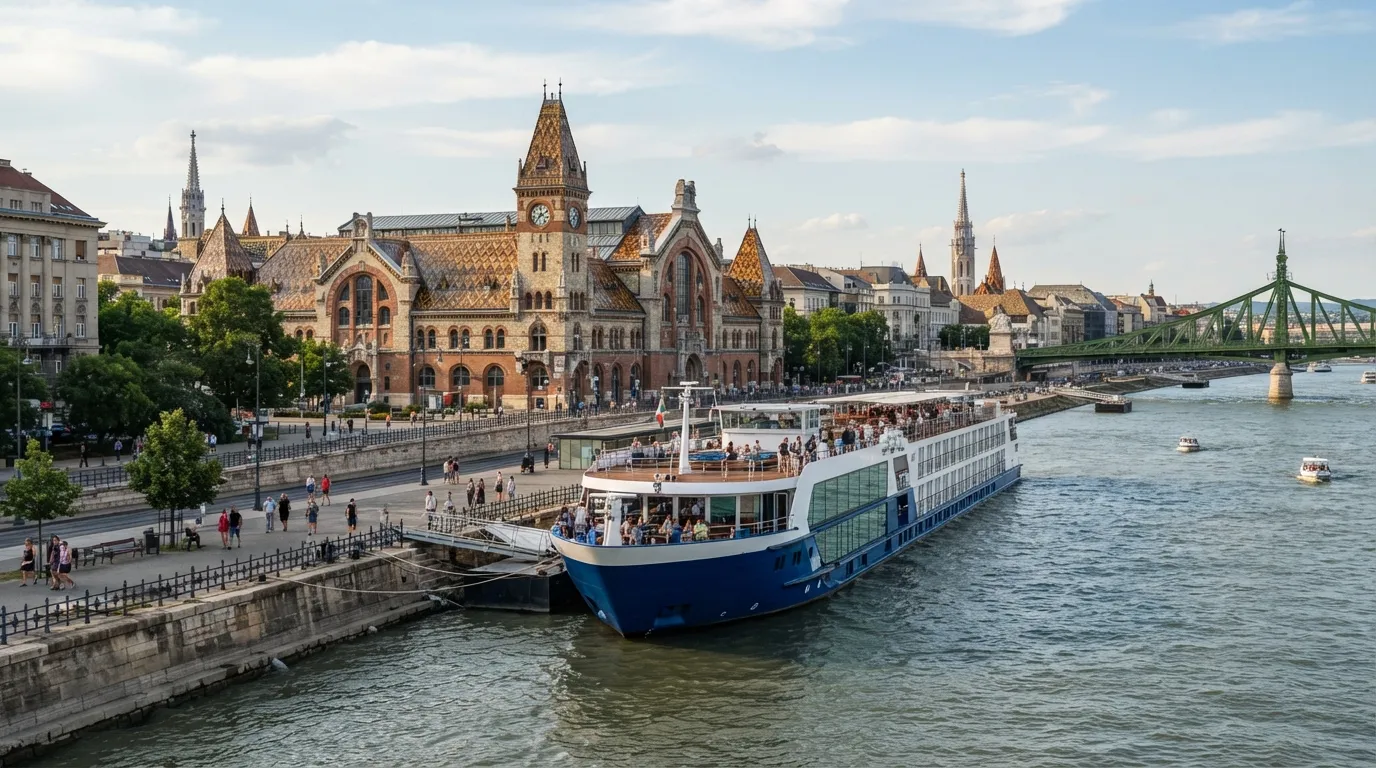
Ocean ships often park far from the action. River ships tuck right up to the heart of town.
On the Danube in Budapest, berths along the Pest embankment put you within reach of landmarks like the Great Market Hall. In Cologne on the Rhine, you can be a short walk from the cathedral. There are no tender boats and no long bus rides before your day begins.
That changes how you travel. Between included tours, you can wander on your own, grab a coffee, or slip back aboard for lunch or a rest.
The ship stops feeling like a hotel at a distance and starts feeling like a home base in the middle of the city.
#11 – Included Daily Shore Excursions
On many ocean cruises, every excursion is another charge. River cruises flip that habit.
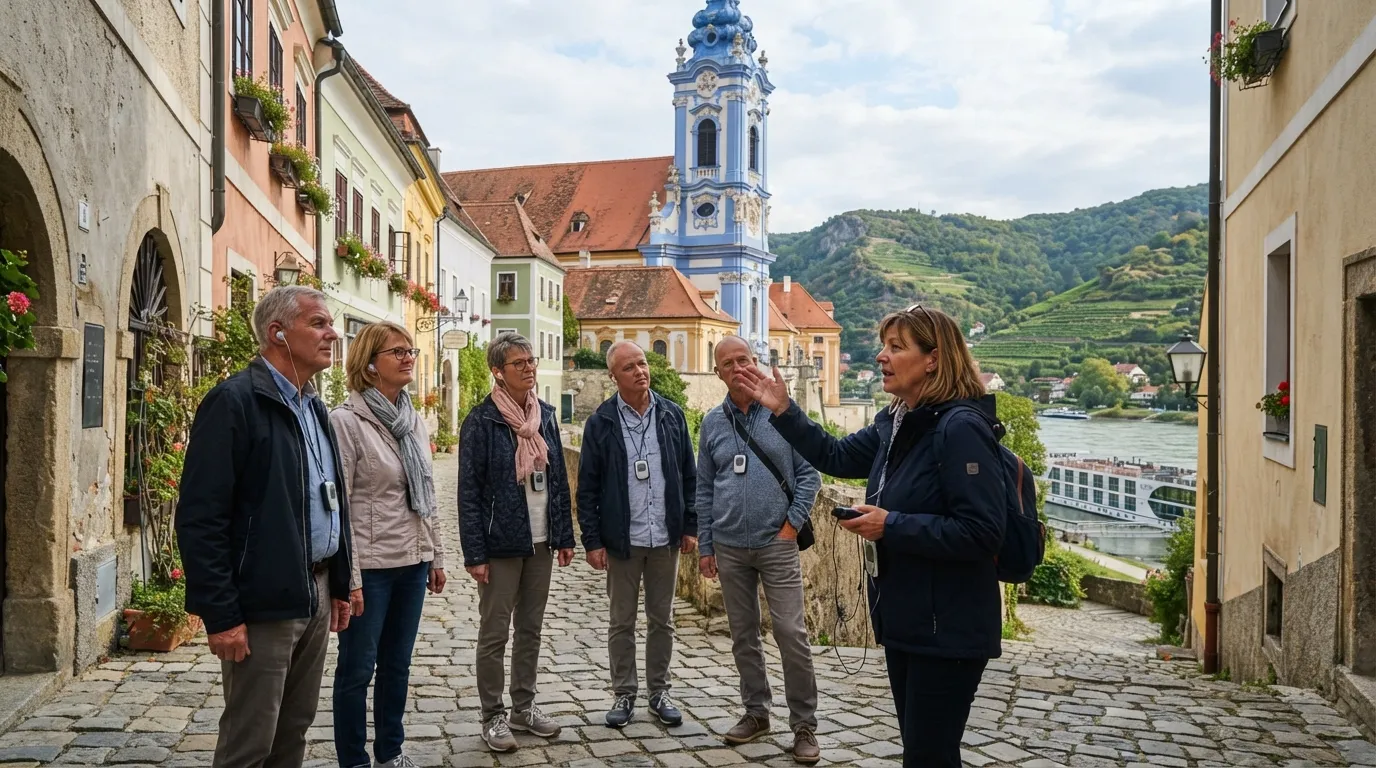
Most fares include at least one guided walking tour in each port. Local guides lead small groups through historic districts and cultural sites, and the ship supplies headsets so you can hear without crowding the guide.
At a Glance
- Usually included: a guided walking tour in each port
- Usually provided: headsets so you can hear the guide
- Sometimes extra: active or private options
- Always optional: you can skip the tour and explore solo
Lines bundle these tours because the destination is the point, not the ship. Details are shared onboard, and nothing forces you to go. If you’d rather explore on your own, you can still return to a ship that’s moored close by.
#10 – No Seasickness Due to Calm Waters
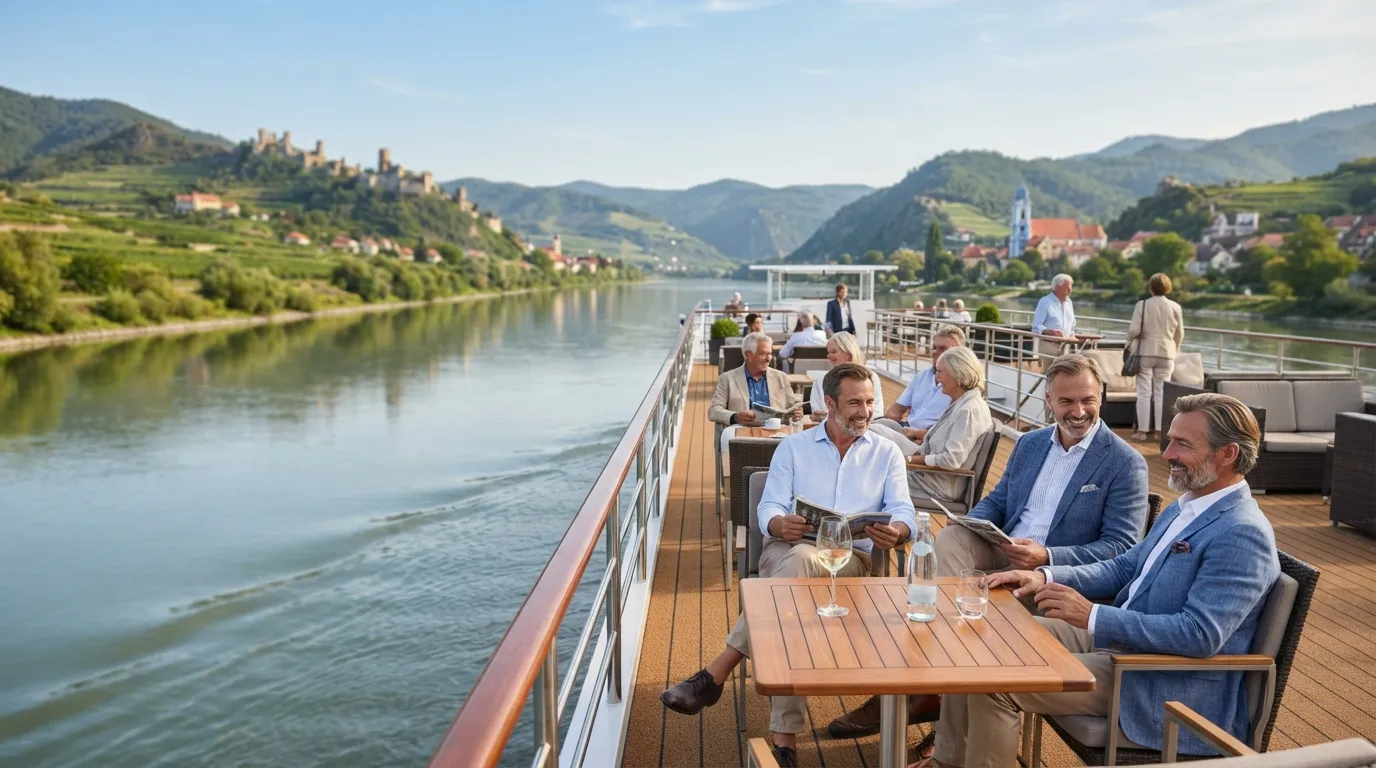
For travelers who dread rolling decks, this one is a quiet relief. River cruises stay in protected waterways and never meet open ocean swells.
Instead of rocking, you get gentle wakes and a steady current. Guests who avoid ocean voyages for fear of motion often find river sailing a very different experience.
Meals feel normal. A wine glass stays where you put it. You can stand on deck without bracing yourself.
The difference tends to show within the first hours aboard, when you realize you haven’t thought about the water at all. For some people, that peace of mind is reason enough to choose a river over the sea.
#9 – Limited Onboard Entertainment Options
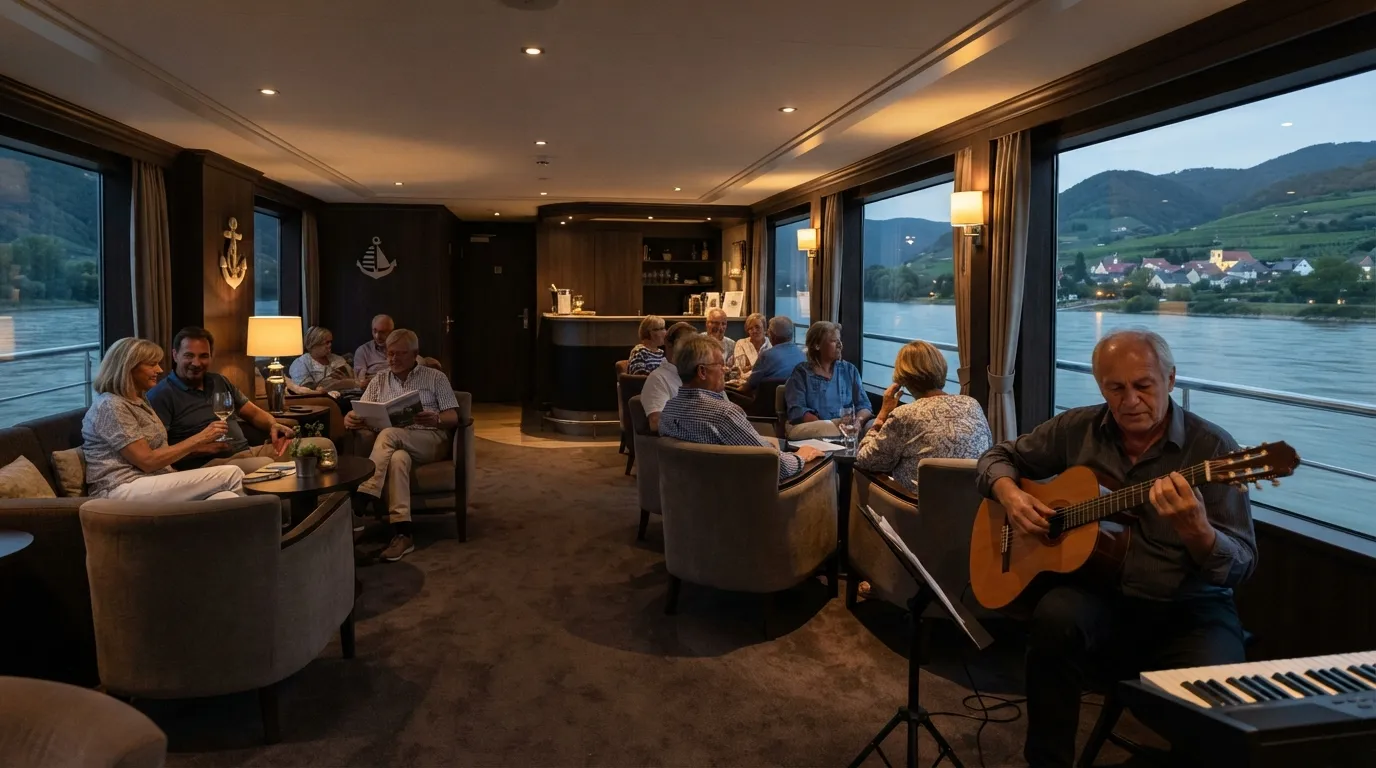
If you’re picturing a theater, casino, and multiple bars, adjust the picture. River ships are small by design.
Most have one main lounge, a restaurant, and a sun deck. Evenings tend to feature a local musician, a talk about tomorrow’s port, or a quiet tasting.
There are no production shows competing for your attention. The scenery slipping past the window is the main event, and the ports are the main program.
Some lines add wine tastings or guest lectures tied to upcoming stops. If you crave nonstop options, it may feel sparse. If you’re tired after a day of cobblestones, the calm is a gift.
#8 – Single Supplements Adding 50-100% for Solo Travelers
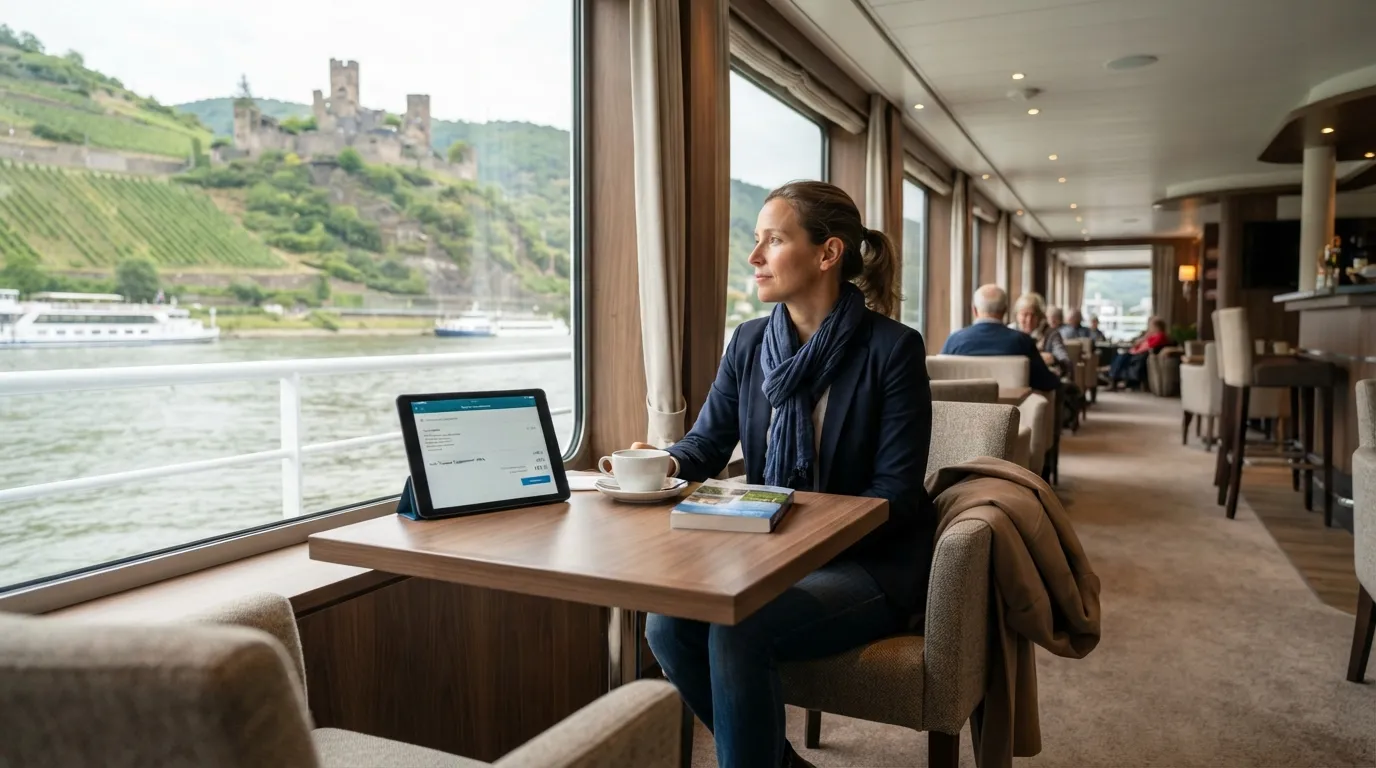
Traveling alone on a river ship can come with a sticker shock nobody mentions until you’re pricing it out.
Solo passengers often pay a supplement of 50 to 100 percent on cabins priced for two. Single cabins are rare because the ships are small, and they tend to sell out first on popular routes.
Quick Compare
- Standard solo booking: a supplement of 50 to 100 percent on a double-priced cabin
- Select waived-fee sailings: limited, and they go quickly
- Dedicated solo staterooms: rare, and often the first to sell out
Solo travelers should compare policies before booking and ask about waived supplements early. The cost structure is fairly consistent across most European operators, which makes the exceptions worth hunting for.
#7 – Ship Swaps During Low Water on the Rhine
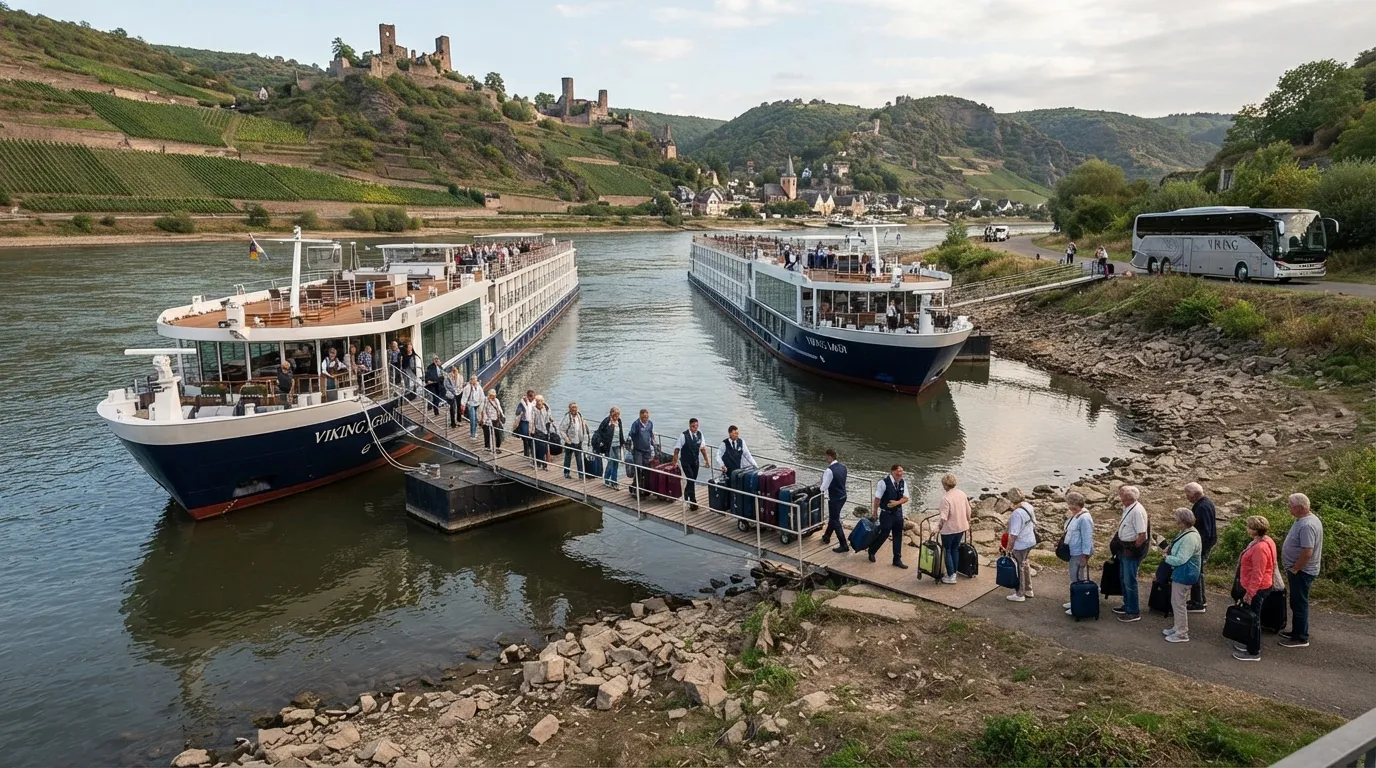
Here is a twist that sounds almost impossible: when the river blocks the ship, the ship can change.
When a stretch becomes impassable, some lines move guests by coach past the blockage to a sister ship waiting on the other side. Operators with fleets of nearly identical vessels can make this work. Luggage is typically moved for you, and the replacement cabin is set up to feel familiar.
Viking and similar lines use this kind of coordinated fleet planning. Guests disembark, ride past the shallow section, and reboard the matching ship.
It shows up more in dry spells on the Rhine and Danube. The result is an itinerary that stays mostly intact when a full cancellation might have been the alternative.
#6 – Clever Storage Solutions in Compact Cabins
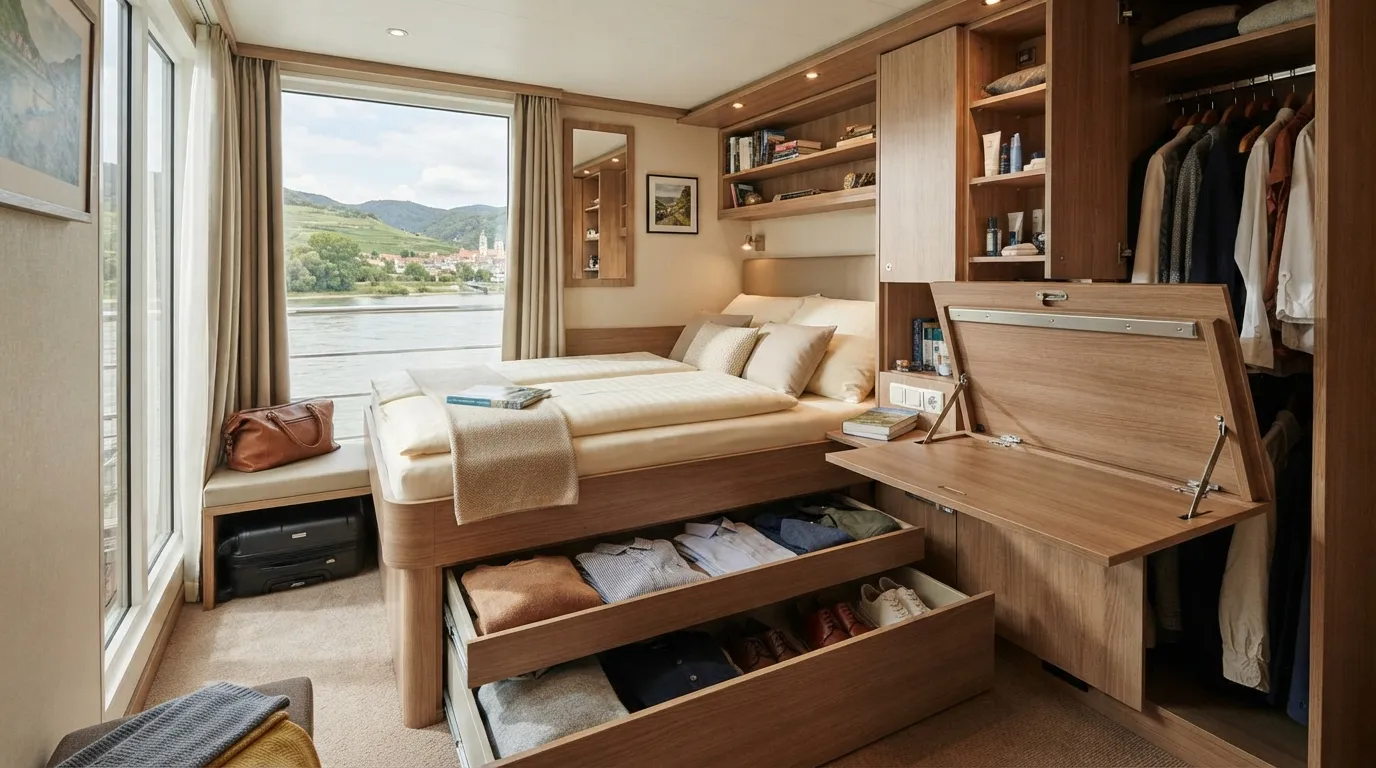
The first night, you’ll open a drawer and find nothing. Open another panel and discover room for half your suitcase.
Designers hide storage in places you wouldn’t think to look: beneath the bed, behind wall panels, and inside built-in compartments. Fold-flat surfaces turn a corner into a desk, then back into open floor.
Once everything is unpacked, the cabin feels architectural rather than cramped. European river ships have refined this approach for years.
It’s the engineering that lets you pack for a whole itinerary without a mountain of luggage, as long as you resist overpacking.
#5 – Bringing Your Own Alcohol Without Corkage Fees
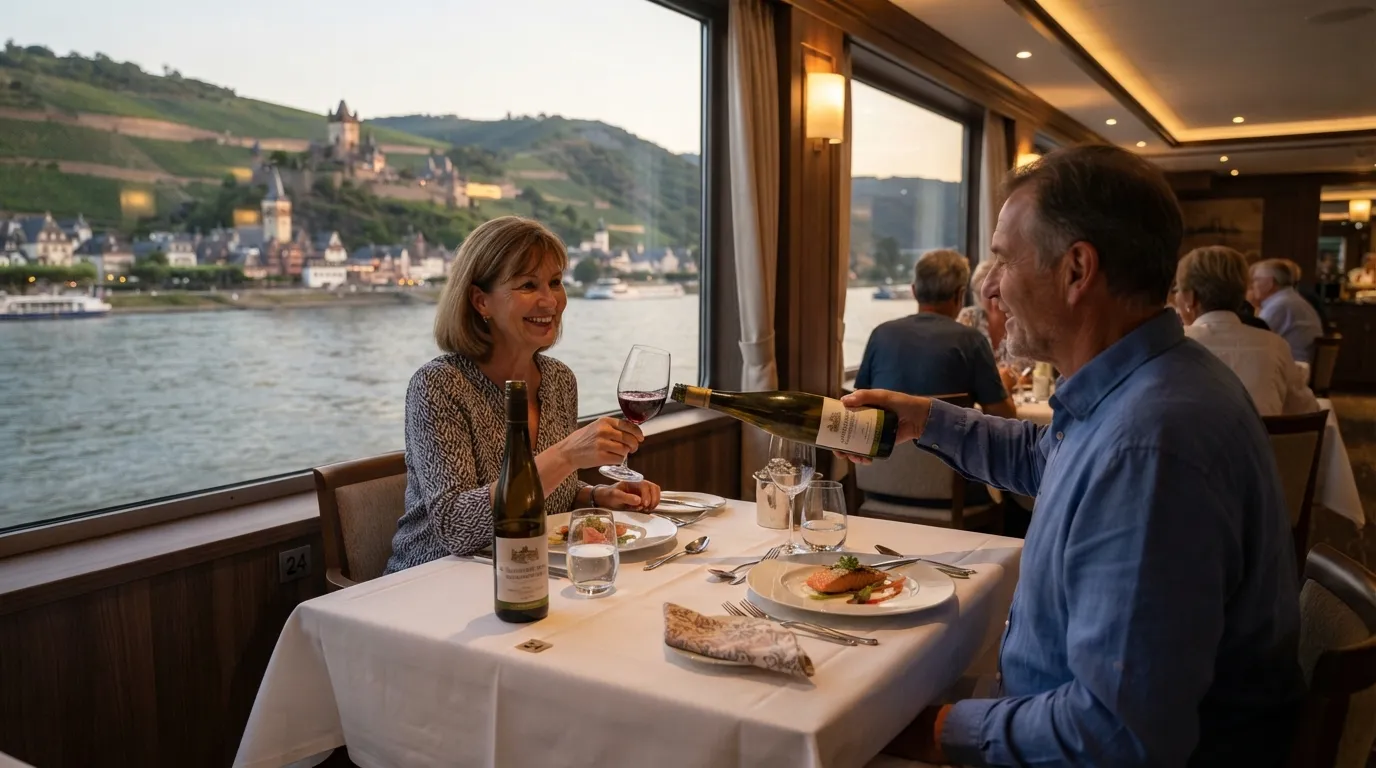
Some river cruisers quietly stock up in port, and for good reason.
Certain lines allow guests to bring wine, beer, or spirits onboard. Crew members may serve your own bottle in the dining room without charging a corkage fee. Policies vary by operator and sometimes carry limits, so check your line’s rules before you pack.
That means the bottle you buy in a Rhine town can become dinner later. Passengers pick up local favorites during port stops and enjoy them with the meal.
On such a small ship, the formal bar sees less traffic anyway. For anyone who plans ahead, it can trim drink costs and turn a souvenir into a memory.
#4 – Quick Recognition of All Fellow Passengers
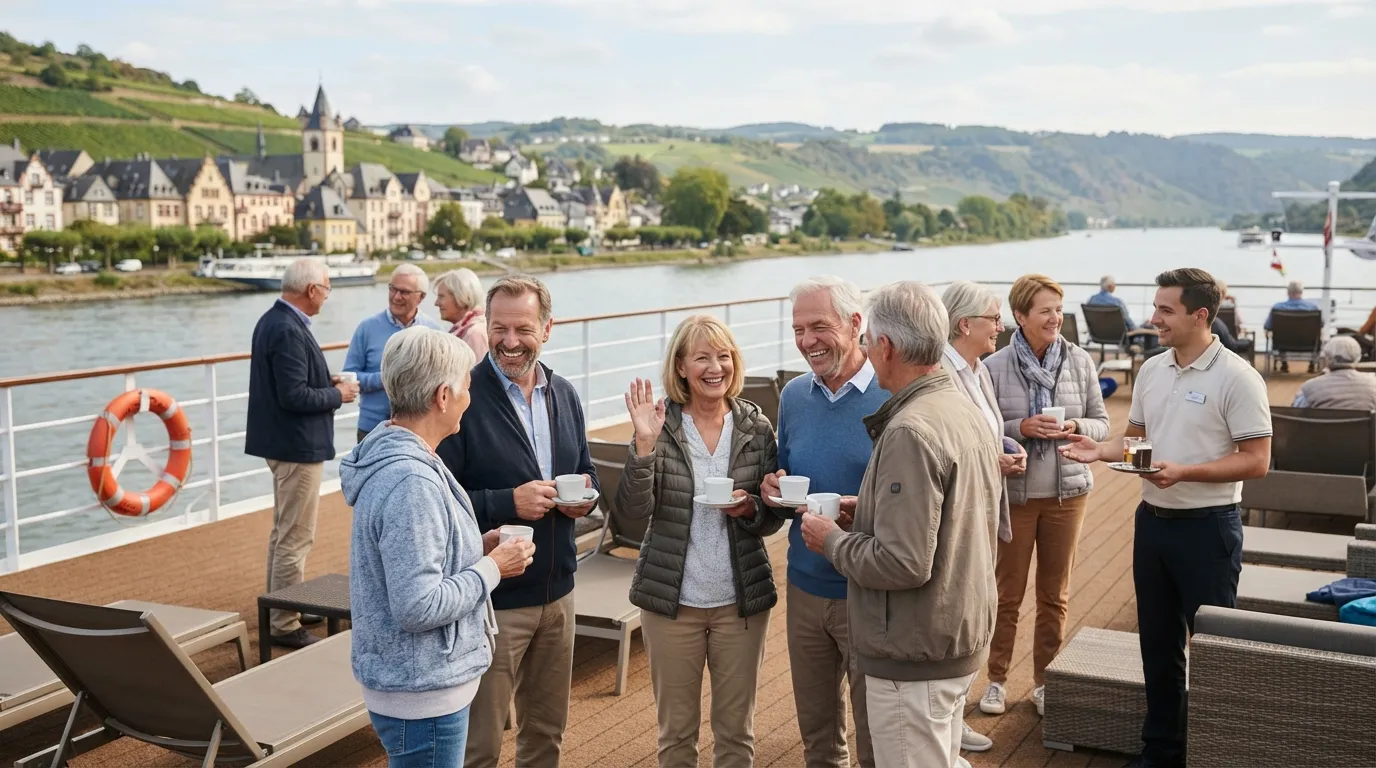
By the second morning, you’ll probably know half the ship by sight.
With roughly 100 to 190 guests aboard, faces become familiar fast. You share one dining room and one lounge, so you keep running into the same people. The crew picks up names quickly too.
Socializing happens naturally, without the crowds of an ocean ship. You can wave at the couple from breakfast, compare notes after a tour, and feel known rather than anonymous.
Repeat passengers often point to this as a defining trait. It suits travelers who prefer conversation over crowds, and it can be a surprise for anyone expecting to disappear.
#3 – Itinerary Changes from Water Level Fluctuations
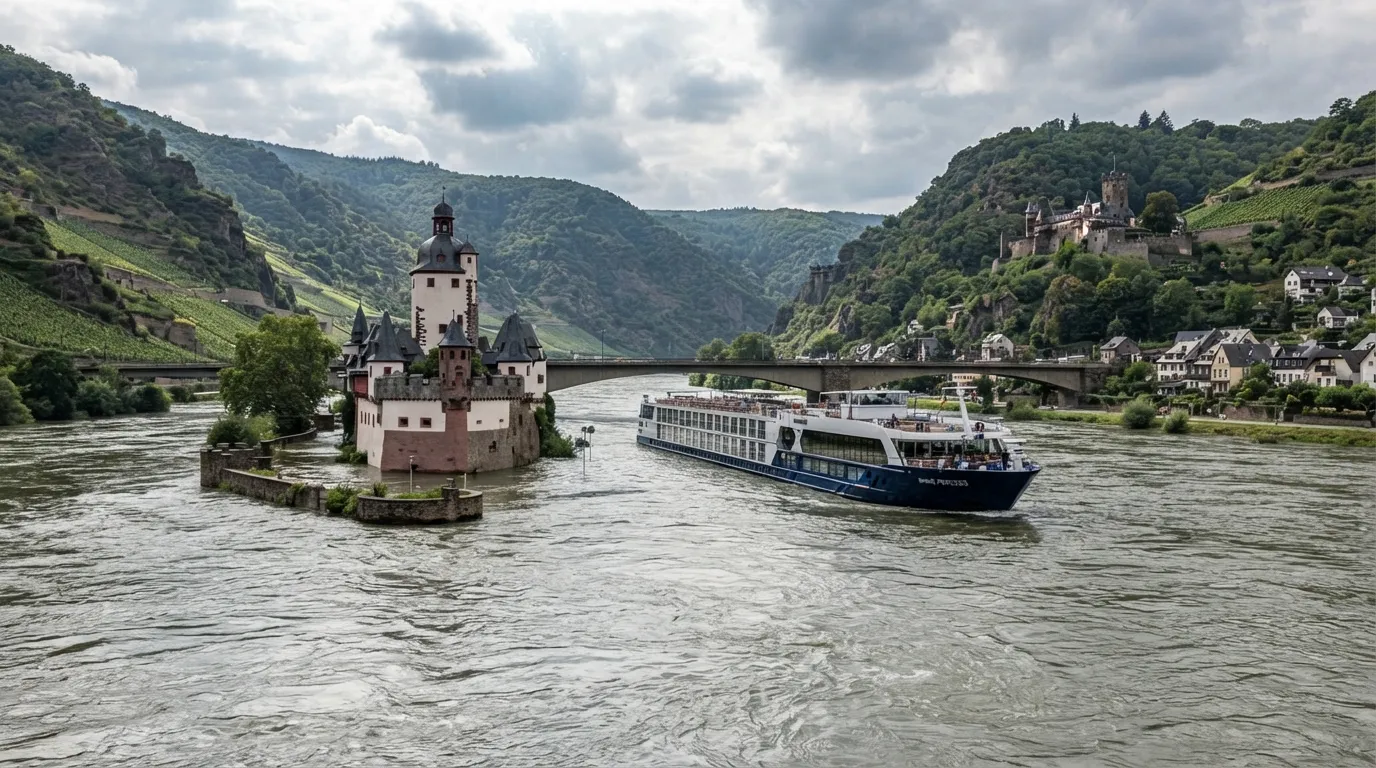
On a river, the plan is always a little negotiable. The water has a vote.
Low water gets most of the attention, but high water can also stop a ship, because it may no longer fit under bridges or be safe to pass. Lines respond by swapping ports, adding coach legs, or even reversing direction.
Worth Knowing
- Low water: ships can run too deep to pass shallow stretches
- High water: ships may not clear bridges or may be unsafe to move
- Common fixes: swapped ports, coach legs, or a reversed route
- Key gauge: the Rhine at Kaub, which captains watch closely
Adjustments keep the ship safe while preserving as much of the original experience as possible.
The cruise director delivers updates, sometimes overnight. On affected rivers, flexibility is part of the deal. The best travelers hold the itinerary loosely and enjoy whatever the river gives them.
#2 – Views Blocked by Rafted Ships Overnight
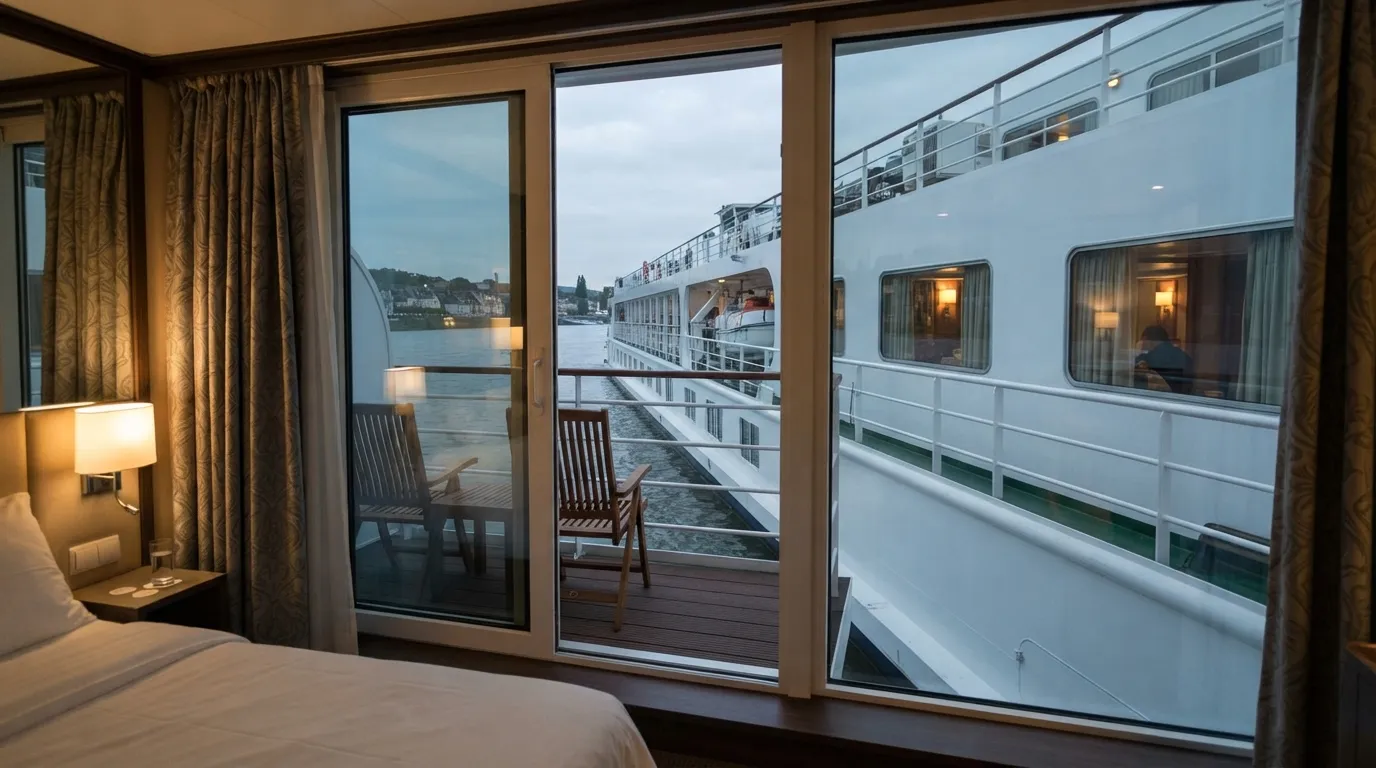
You open the curtains expecting a river. Instead, you find someone else’s window.
When ships raft overnight, the neighboring vessel can sit so close that your balcony loses its outlook. Curtains become the main line of separation, and some guests keep them shut until the ships part.
It happens often at popular stops with limited berths. A scenic morning may turn into a wall of hull and glass, then clear when the other ship leaves.
Passengers adapt by adjusting expectations. The scenery waits on the sun deck, in the lounge, or in the next port. It’s a glimpse of how crowded busy European rivers really are.
#1 – The Intimate Atmosphere with Under 200 Guests
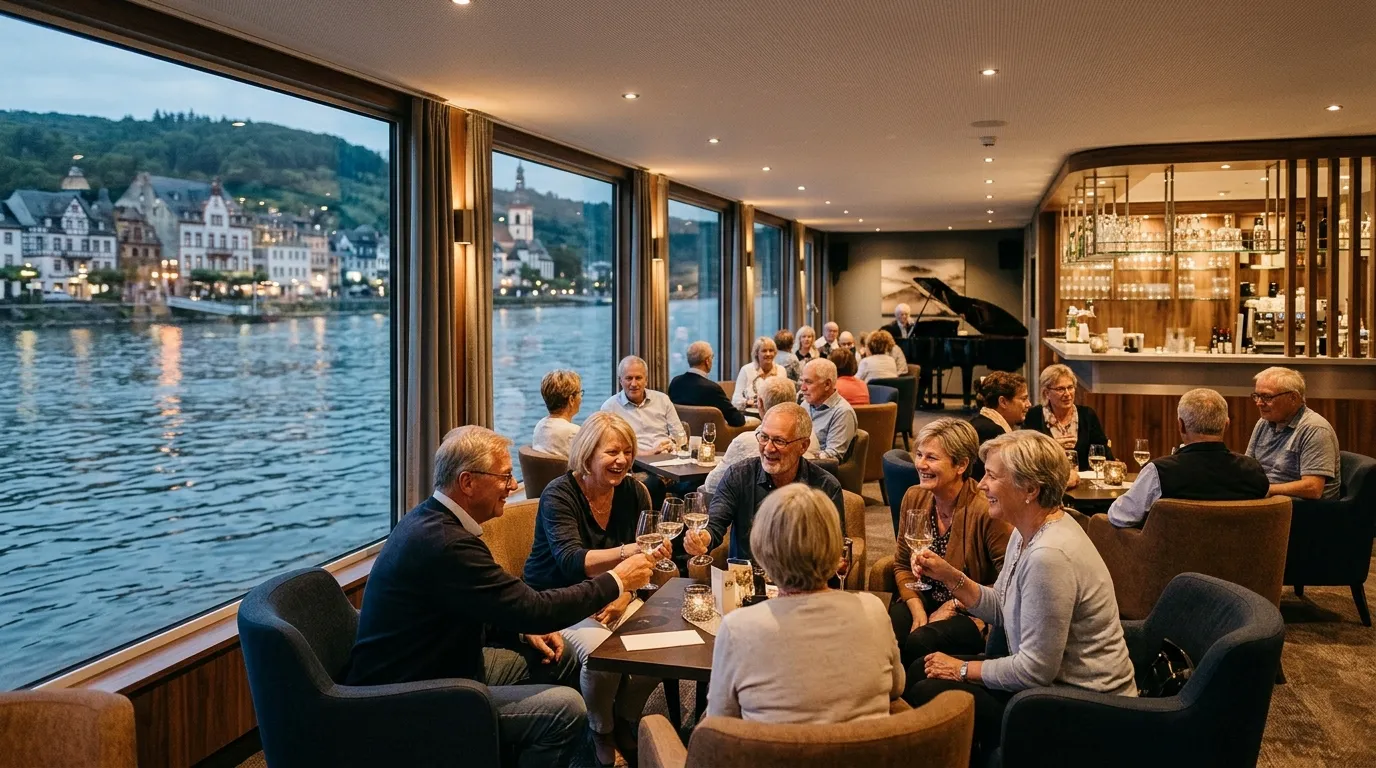
The thing guests talk about most isn’t a castle or a canal. It’s the feeling of a ship small enough to know.
With fewer than 200 passengers, a river ship feels more like a boutique hotel than a floating resort. One restaurant and one lounge mean everyone shares the same spaces every day. Service improves, and conversations build over several meals.
Instead of competing venues and constant noise, the ship leaves room for the destination. The ports become the stars, and the ship becomes the calm place you return to.
Many guests cite this closeness as the strongest draw after their first sailing. It’s the quiet difference that sets river cruises apart from bigger ships, and the one people remember long after the gangway goes down.
CEO-Co-Founder
