

- 20 Musicians Who Turned Tragedy Into Timeless Hits - October 11, 2026
- What These Classic British and American Novels Say About Society - October 11, 2026
- The Forgotten U.S. Festival That Inspired Woodstock - October 11, 2026
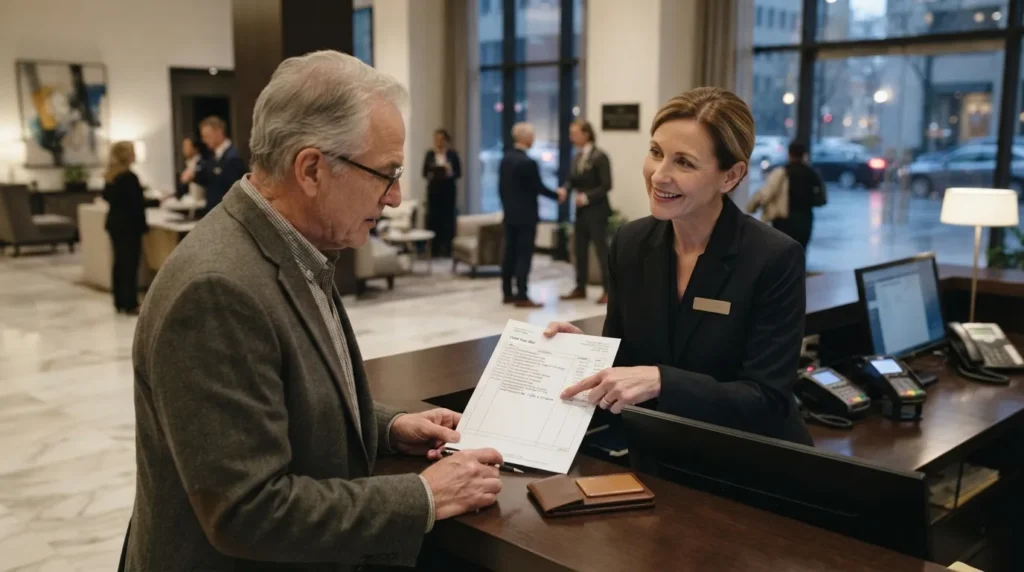
You glance at the folio at checkout and there it is: a charge for a gym you never entered, a safe you never opened, a parking space for a car that never moved. For many travelers over 60, the real shock isn’t the total. It’s learning that some of these lines were never as fixed as they looked.
The twist is how small the fix often is. No scene, no speech, just one calm question at the right moment. Fourteen charges are ahead, and the last one may be the biggest of all.
#14 – Resort Fees at Las Vegas Strip Properties
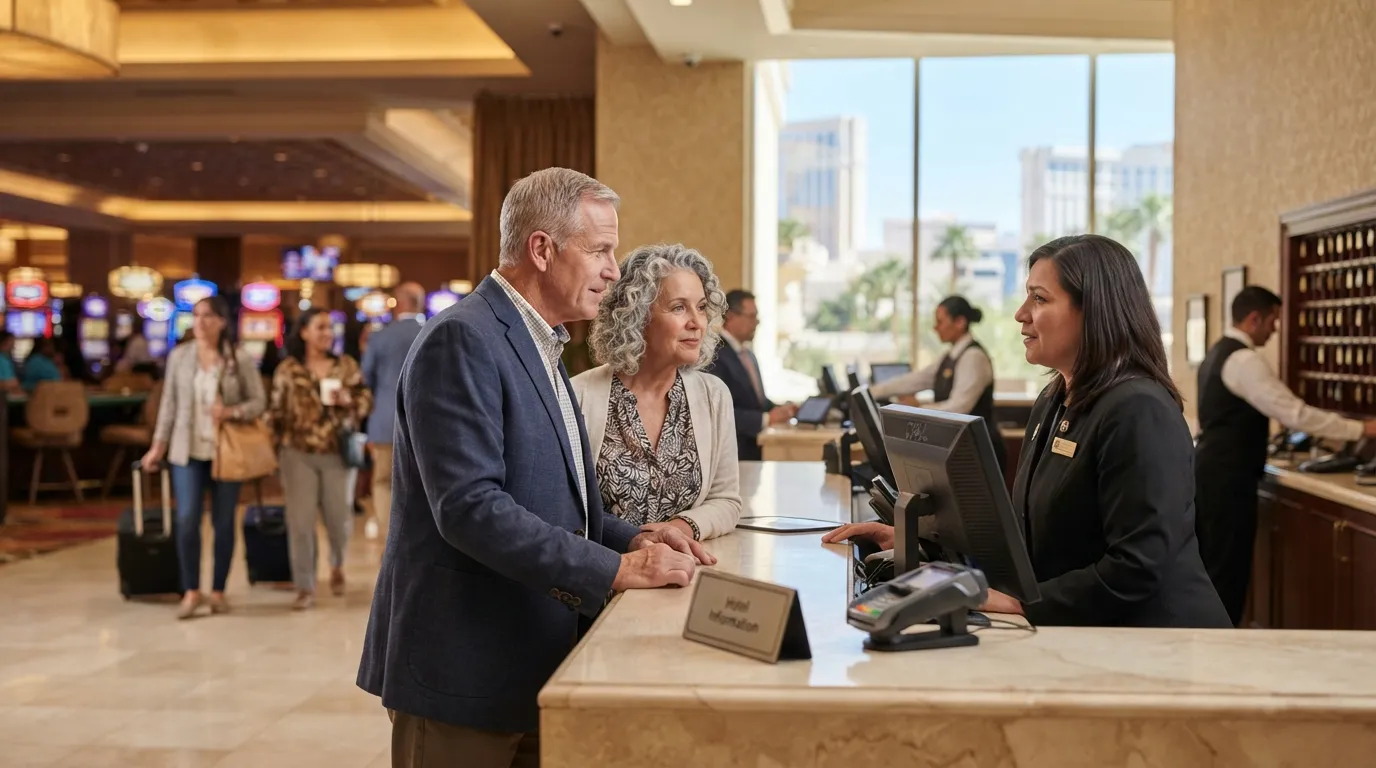
Few lines on a hotel bill sting like the resort fee. At many Las Vegas Strip casino hotels it is charged every night, often in the $45 to $57 range, and it supposedly covers things like Wi-Fi, pool access and the fitness center whether or not you touch any of them.
Because it is added automatically, it feels untouchable. But front desk agents sometimes have room to adjust it when a guest politely explains that they barely used the property, such as arriving late at night and leaving at sunrise.
Ask at check-in or before the bill is finalized, not after you have left. Something as simple as “Could you review this fee? We won’t be using the pool or gym” keeps the tone friendly. It is never guaranteed, but it is a question worth asking.
Next up: a charge for a car that may never leave its spot.
#13 – Self-Parking Fees at Downtown Urban Hotels

Picture paying $25 to $60 a night to park a car you never drove. At city-center hotels, self-parking fees commonly land in that range, and they can show up on the bill even when the guest arrived by train, taxi or on foot.
When the garage is quiet or the guest never used it, staff can sometimes waive or reduce the charge. Managers often have more flexibility than the agent at the counter, so a polite request to have it reviewed can be worth the extra minute.
Fast Facts
- Typical self-parking range at city-center hotels: $25 to $60 a night.
- The fee can appear even if you arrived by train, taxi or on foot.
- Managers often have more room to adjust it than the counter agent.
- Best timing: request the itemized folio the night before checkout.
The smartest move is to ask for that folio early. It gives the desk time to look at the parking line without a queue forming behind you or a cab waiting outside. Policies differ by hotel, but this one is often treated as negotiable.
Next up: a fee that depends entirely on the clock.
#12 – Early Check-In Charges at Full-Service Properties

You land at 10 a.m., worn out, and the hotel says the room won’t be ready for hours. Or worse, it is ready, and there is a $25 to $75 fee to get into it. Some full-service hotels charge for early check-in, even when a clean room is sitting empty.
The person who controls room assignments is usually the agent on duty, and that person can sometimes skip the fee. Quiet periods help. So does a friendly, honest explanation that you’ve been traveling all night and would love to rest.
Calling ahead can work well, but so can a simple, unhurried ask at arrival. The key is not to demand it. Brands set policies differently, yet the request itself often prompts the desk to take a second look.
Next up: the same trick at the other end of the stay.
#11 – Late Checkout Fees at Busy Resort Destinations

Noon arrives faster than anyone expects. At busy resort properties, staying past checkout time can add $50 or more to the bill, especially in peak season. For someone with a late flight or a slow morning, that feels steep for a few extra hours.
Many hotels will grant an extension at no cost if the room isn’t needed. The best time to ask is the evening before, when the desk can see how full the next day looks. Explaining a practical reason, like a mobility need or a medical schedule, tends to land better than asking as if you are owed it.
It also helps to check the itemized folio ahead of time. Catching a late checkout line before it locks in is far easier than disputing it after you are home.
Next up: a daily rental for something most guests never open.
#10 – In-Room Safe Rental Fees at Mid-Range Chains
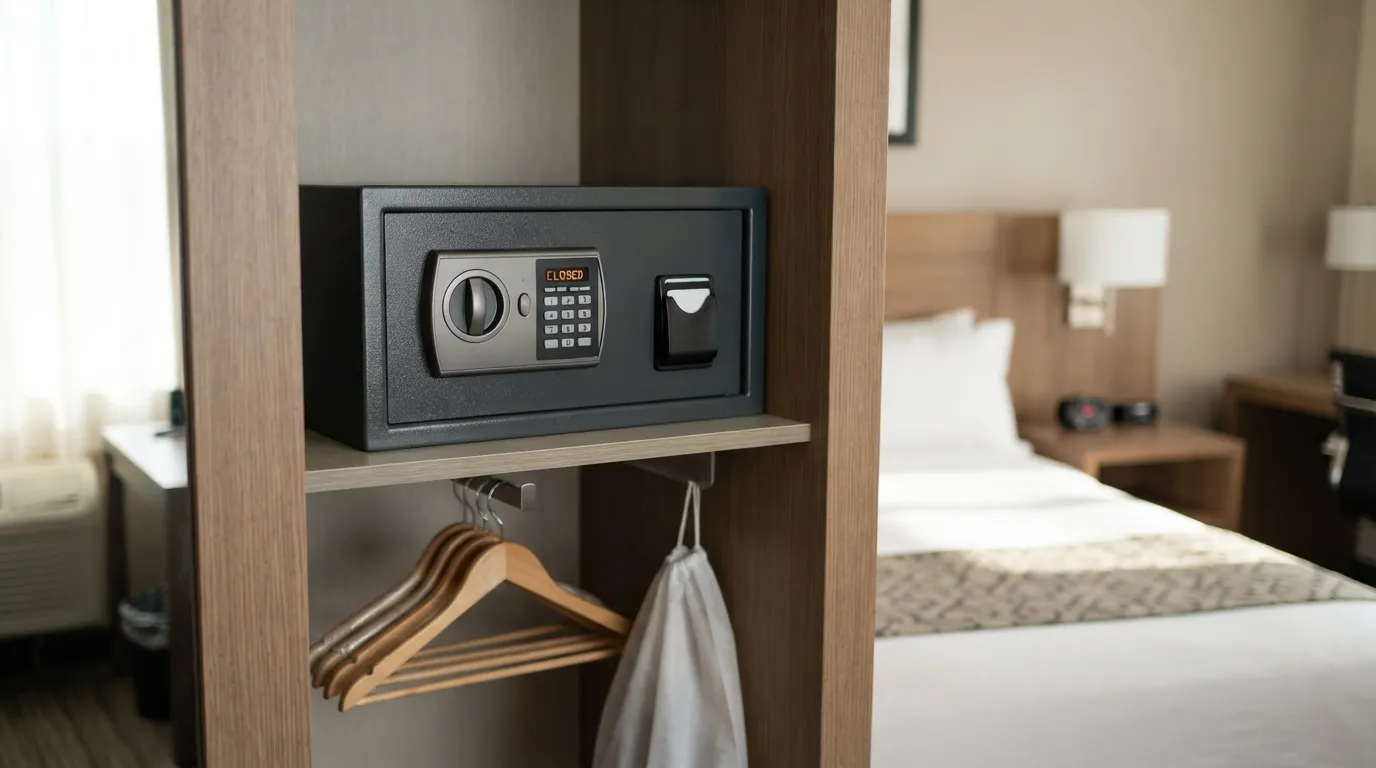
It is only a few dollars a day, which is exactly why nobody notices it. At some mid-range chains, an in-room safe fee of $2 to $5 per night appears on the folio whether the safe was ever used or not. On a week-long stay, those small amounts quietly add up.
The fix is usually painless. Ask at check-in whether the safe charge can be turned off, or point it out at checkout and say you never opened it. Staff can often take it off before the final bill prints.
The charge covers an optional convenience, not a required service, and that gives the desk reason to be flexible. A short, polite question is usually all it takes.
Next up: a charge triggered by a sensor that may be wrong.
#9 – Minibar Sensor or Restocking Fees

Some minibars charge you the moment an item is lifted, even if you set it right back down. Others add restocking fees after the sensor registers a bump. Either way, guests can wake up on checkout morning to a snack bill for snacks they never ate.
Motion sensors can misfire, and hotels know it. When a guest calmly says, “I never touched the minibar,” staff can often check the room or review the charge and reverse it.
If the desk hesitates, asking for a manager to look at it or for a printed note that nothing was consumed gives them a clear reason to correct the line. Policies vary, but a calm, specific request usually gets further than a heated argument at the counter.
Next up: the connectivity charge that refuses to die.
#8 – Wi-Fi or Internet Access Fees
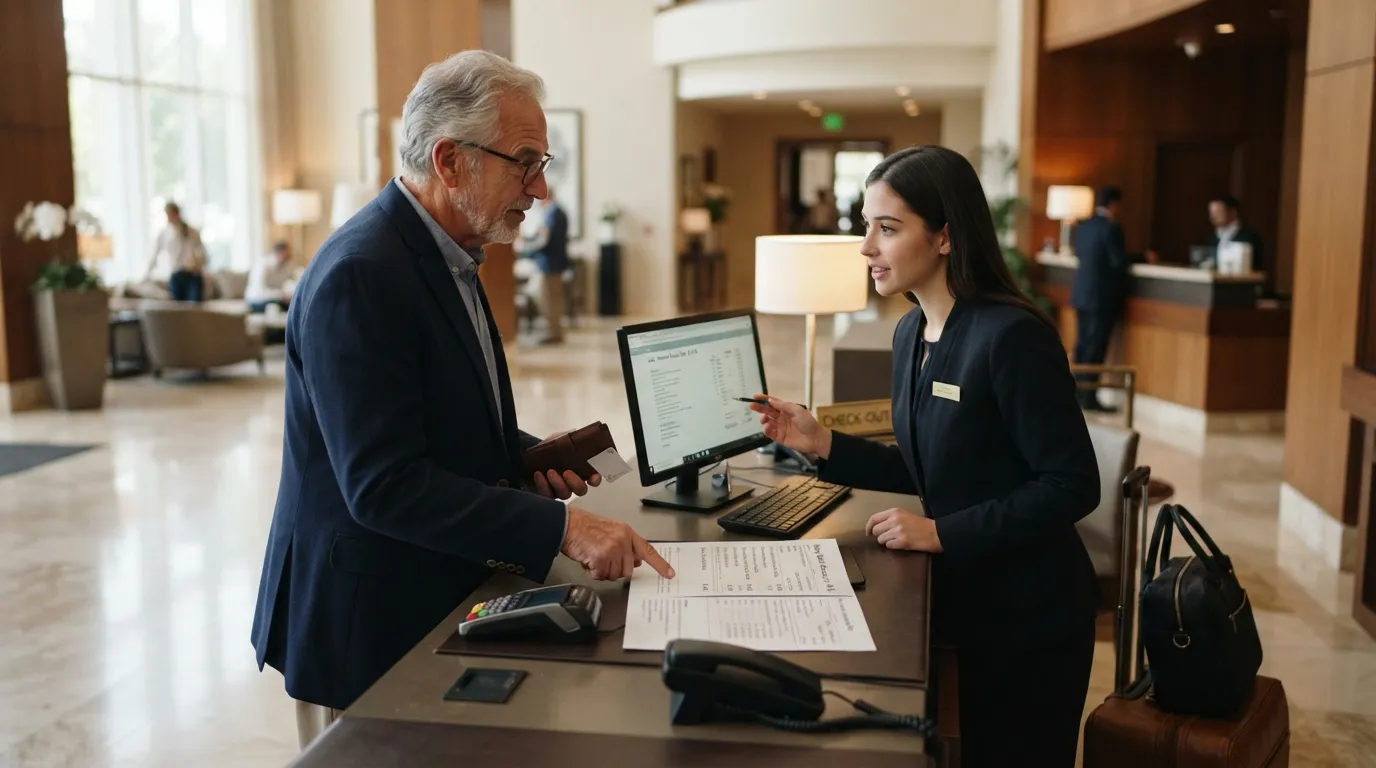
In an age when free Wi-Fi is standard almost everywhere, a hotel that still charges for it feels like a time capsule. Yet daily internet fees do still appear at some properties, usually buried in the rate details.
Before accepting the charge, ask whether your rate or loyalty membership includes connectivity. Many hotels bundle it with certain senior, loyalty or member rates, and staff can sometimes apply it if you ask at check-in or during folio review.
Worth Knowing
- Internet fees are often tucked into the rate details, not the headline price.
- Loyalty, member and some senior rates may already include Wi-Fi.
- Saying you only need basic email and web access invites the standard free tier, if one exists.
- A quick call before arrival shows what the property actually charges.
That last step means no surprises at the end of the stay.
Next up: a percentage that gets added to your dinner without a word.
#7 – Auto-Added Gratuity on In-Room Dining

The soup arrives lukewarm, the tray sits in the hallway for two days, and the bill still has an automatic gratuity of 18 to 22 percent. At many full-service hotels, room service and in-room dining orders come with that line already added.
It is not a universal rule, and it is not always set in stone. If the service didn’t match the charge, or if you would prefer to tip separately, staff can often remove or adjust it when you ask politely.
The best habit is to read the itemized bill before signing. A calm question at the desk or over the phone gives staff time to check the order and correct it. Guests who stay several nights and are friendly with the team often find the process smoother.
Next up: a fee for a service hotels used to hand out for free.
#6 – Luggage Storage Fees After Checkout

You checked out at 11, your flight leaves at 7 p.m., and now a bag is sitting behind the desk with a $5 to $10 price tag on it. Some hotels now charge per bag to hold luggage after checkout, even though bell staff once did it as a courtesy.
The good news is that many properties will waive the fee for a guest with a late flight or a medical appointment, especially if you ask ahead of time. The desk usually has discretion over whether to store bags without charge.
Say what your schedule looks like and ask whether the hotel can hold your bags as a courtesy. Mentioning it the day before works better than a last-minute request with a line forming behind you.
Next up: a rental tied directly to health needs.
#5 – Refrigerator Rental for Medication Storage
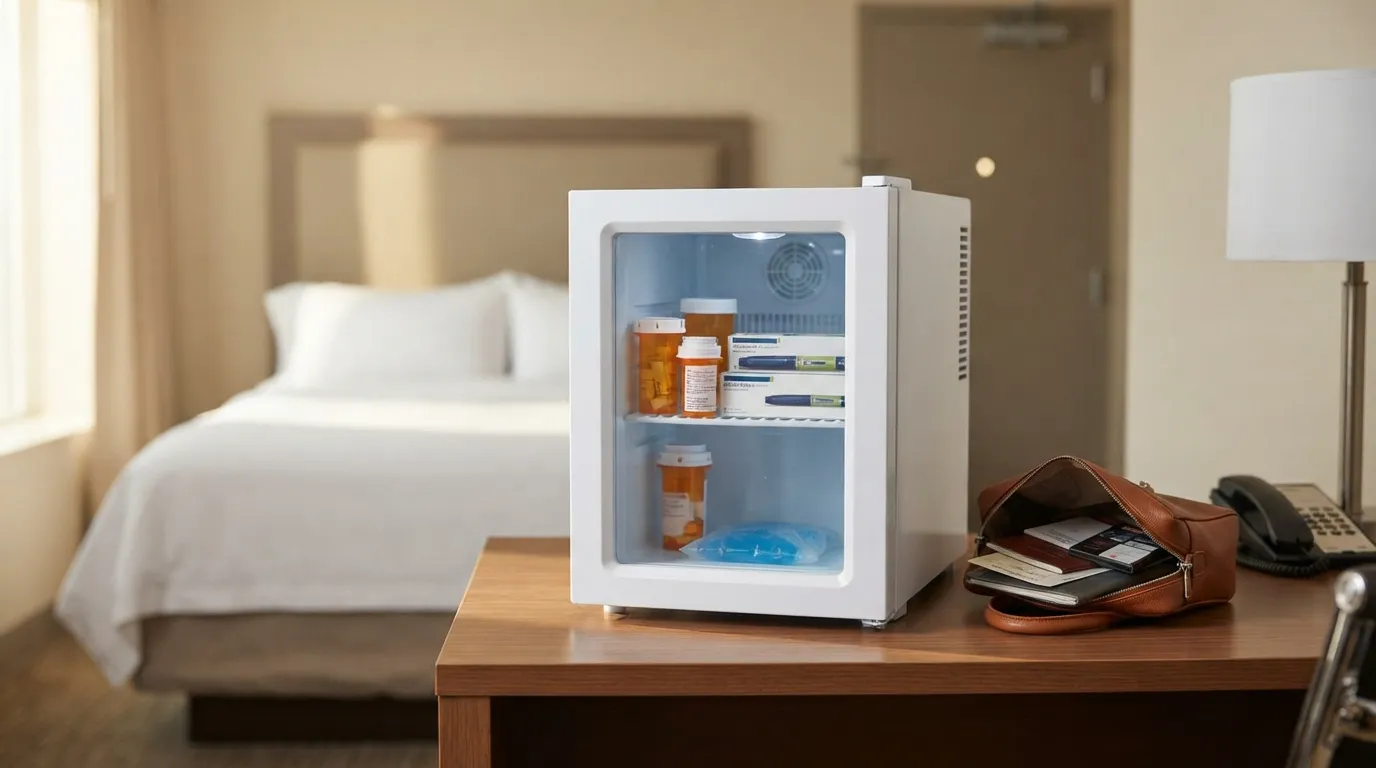
For some travelers, a fridge is not a luxury. It is where their medication has to stay cool. Yet at some hotels, a mini-fridge beyond the standard room setup comes with a daily rental fee.
When a guest explains politely at check-in that the fridge is for medication storage, many hotels will provide the unit at no charge. It is an accommodation, not an amenity upgrade, and many desks treat it that way.
The smoothest approach is to mention it when booking and confirm it again at the desk. That way the room is set up before you walk in, and the charge never reaches the folio. Keep the conversation simple and avoid sharing more medical detail than you want to. A clear, friendly request is usually enough.
Next up: a discount that most guests never think to request.
#4 – Missed Senior Rate Adjustments at Checkout
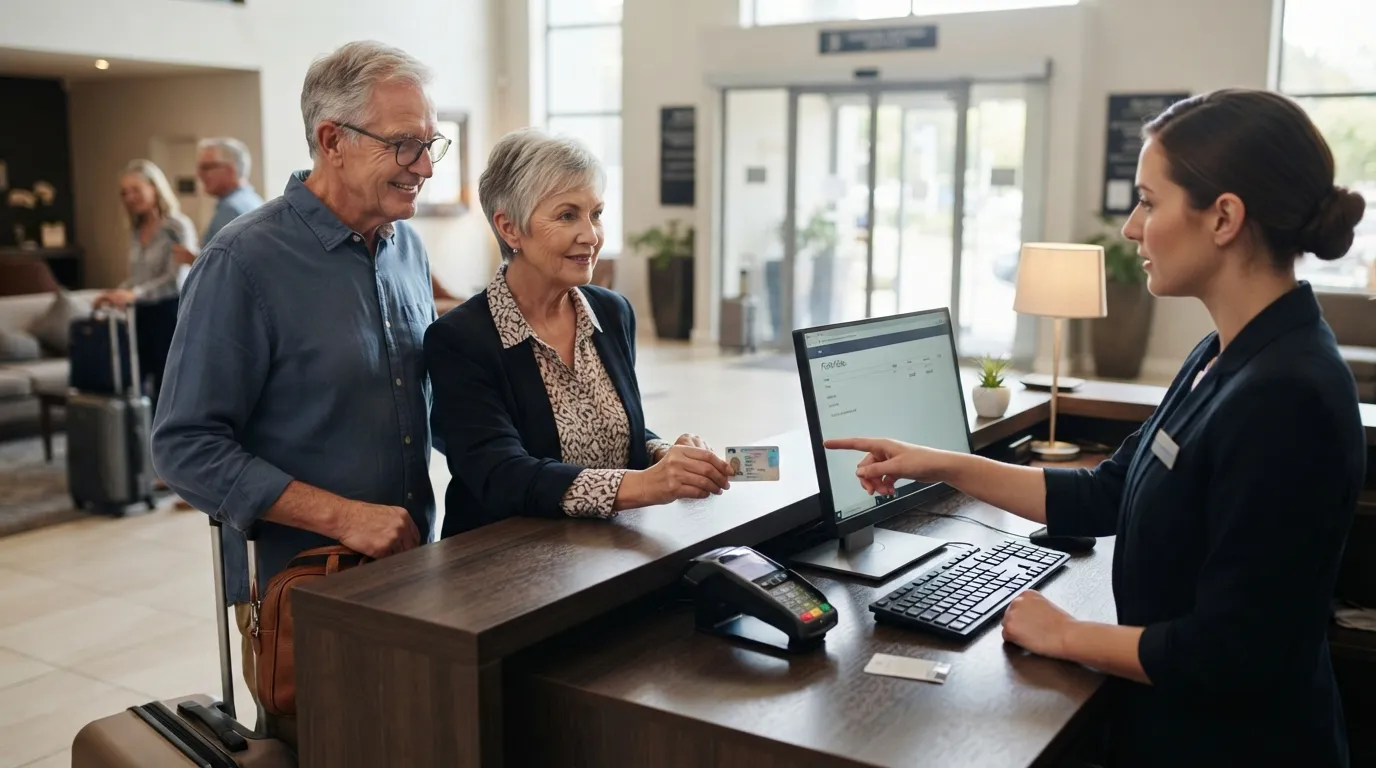
Here is a mistake that costs real money: booking the standard rate and then discovering at checkout that a senior rate existed all along. Chains like Choice Hotels and Wyndham offer senior discounts on participating properties, often starting at age 60, and savings of 10 percent or more are possible.
If you realize it only after arriving, it is still worth asking. Some desks will reprice the stay at checkout when you show ID and the property participates, especially when the hotel isn’t packed.
At a Glance
- Brands to check: Choice Hotels and Wyndham.
- Eligibility often starts at age 60 at participating properties.
- Savings of 10 percent or more are possible.
- Bring a photo ID, and expect rules to vary by brand and property.
Be calm and specific: “I qualify for the senior rate. Could you check whether it can be applied to this stay?” It is not guaranteed after the fact. But a friendly question and a photo ID can turn a missed discount into a lower bill.
Next up: a nightly fee with a very fuzzy description.
#3 – Urban or Destination Fees at City Properties

Few charges are as vague as the urban or destination fee. At some downtown hotels it can run $20 to $40 per night, supposedly to cover local amenities, and the list of what you actually get can read like a riddle.
That vagueness is your opening. Ask politely what the fee covers, and mention what you actually used. If you used little or none of it, staff can sometimes reduce or waive part of the charge, especially when the stay was booked under a qualifying senior rate.
Do it during the folio review, not at the last second. It also helps to contact the property directly before booking, since fees and flexibility vary widely by city and hotel. A calm question about what you are paying for can be more powerful than it sounds.
Next up: a fee that can depend on who you call.
#2 – Cancellation or Date-Change Fees

Plans change. A doctor’s appointment moves, a flight shifts, a family situation comes up. And when it happens close to arrival, cancellation or date-change fees can sting.
Here is the quiet secret: who you call matters. The 800 number often works from a rulebook, while the local front desk can sometimes make adjustments the central line can’t. Many hotels will waive or soften a fee when a guest calls the property directly and explains politely, especially in health-related situations.
Quick Compare
- Central 800 line: often follows the rulebook, with little room to bend.
- Local front desk: can sometimes adjust or soften a fee on the spot.
- Best bet: call the property directly, early, and stay calm and honest.
Advance notice gives the hotel a chance to resell the room, which makes a yes much easier. The fee protects revenue, but at the property level there is often more flexibility than the policy suggests.
And the last one is the biggest: the price of the room itself.
#1 – Standard Room Rate When Senior Discount Applies

The most expensive line on your bill may be the one you never questioned: the room rate itself. At participating properties, chains such as Wyndham and Choice offer senior rates for guests 60 and older, and the standard price you were quoted may be higher than what you qualify for.
The catch is that the discount often stays unclaimed until someone asks. Comparing rates before booking, then requesting the senior option with proof of age at booking or check-in, can lower the whole stay. In some cases a desk may even apply it retroactively when asked politely.
Rules vary by brand and property, so confirm the details before relying on them. But this one question can unlock more savings than every smaller fee on this list combined. The cheapest charge to remove is the one you never get billed for.
CEO-Co-Founder
