

- 20 Musicians Who Turned Tragedy Into Timeless Hits - October 11, 2026
- What These Classic British and American Novels Say About Society - October 11, 2026
- The Forgotten U.S. Festival That Inspired Woodstock - October 11, 2026
The night before a trip feels like it should be about packing. Folding shirts, hunting for socks, deciding on a third pair of shoes. Experienced travelers know the real work looks a lot more boring, and it saves a lot more trips.
Below are 14 habits that frequent flyers quietly run through before bed, counting down from the one most people skip to the one almost nobody takes seriously. The last one has nothing to do with your suitcase, and it may be the one that changes how your whole trip feels.
#14 – Double-Check Passport and Visa Expiration Dates
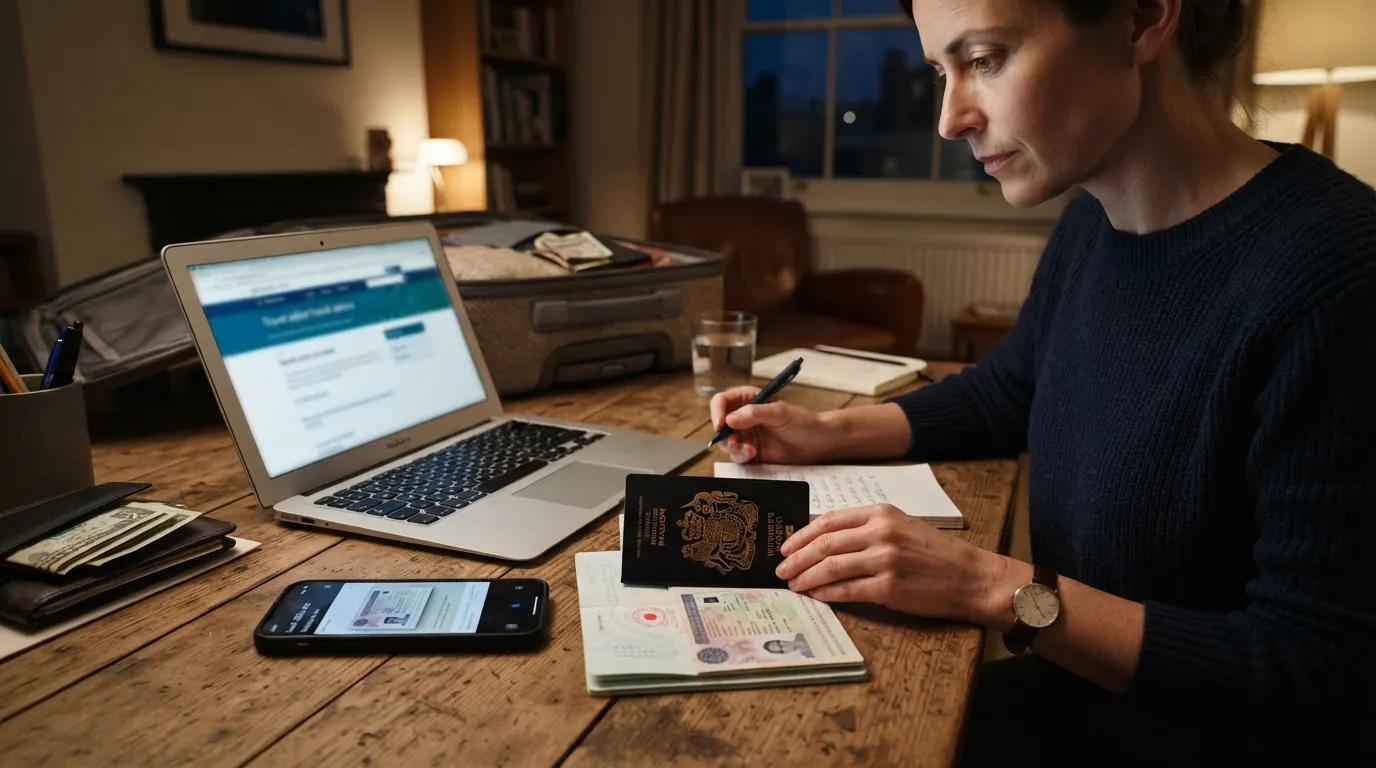
Experienced travelers check their passport dates before anything else, because this is the mistake that ends trips at the check-in counter. Many countries require at least six months of validity beyond your return date, and airlines can refuse to board you when the dates fall short.
They also confirm that any visa or entry permit is approved, then save a copy on the phone itself, not just in an email they can’t open without Wi-Fi.
Most people assume their documents are fine until travel day, but a date problem is only fixable when you catch it early. Seasoned travelers check the destination country’s official government requirements instead of trusting memory, a friend’s advice, or an outdated app.
- Confirm the exact validity window on the government travel site for your destination.
- Note any onward-ticket or secondary ID requirements listed by your airline.
#13 – Charge Every Device and Pack Backup Power Banks
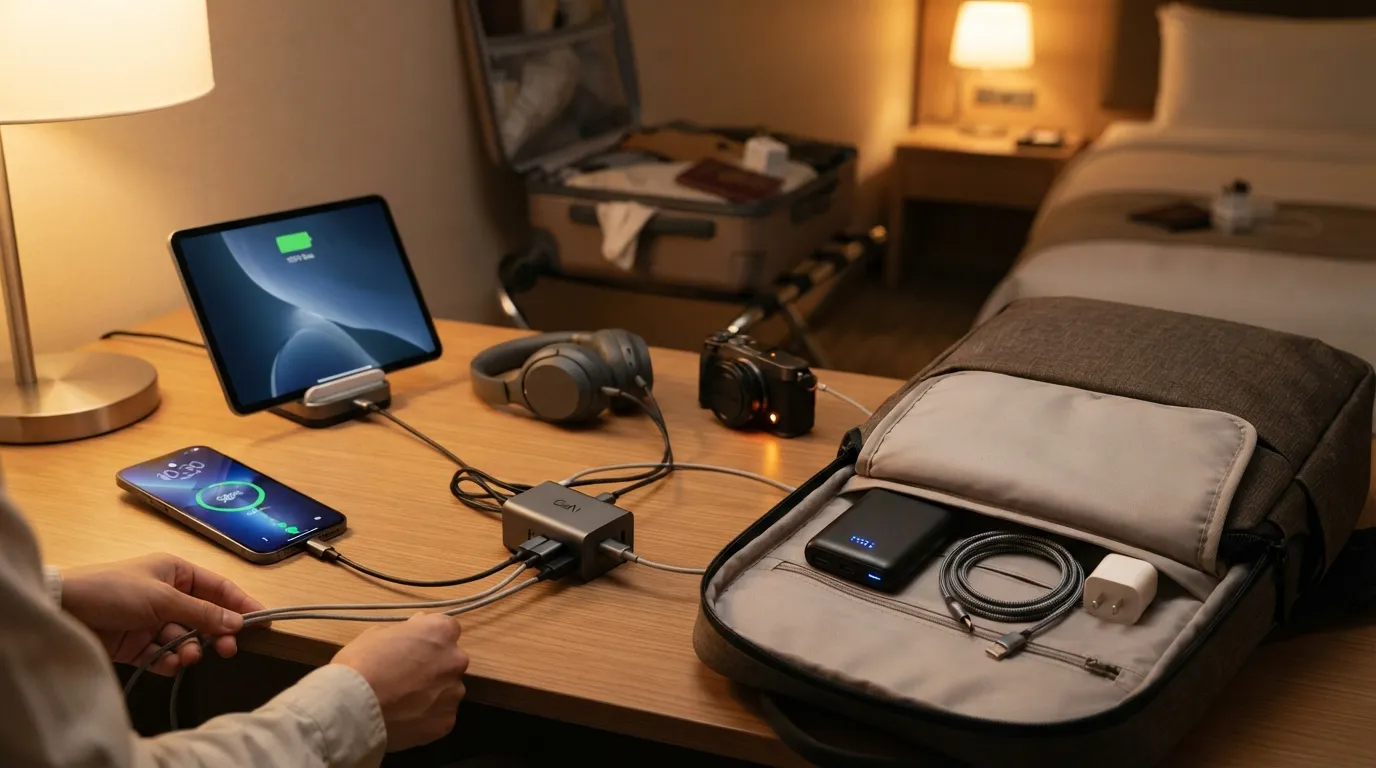
Seasoned travelers plug in phones, tablets, headphones, and cameras the night before departure. They don’t just assume it’s working. They look at the screen and make sure each device is close to full before it goes into the bag.
A dead phone can strand even the most organized traveler without a boarding pass, a ride-share app, or a translation tool. That’s why a portable power bank goes into the carry-on, never the checked bag, along with a spare cable in case one fails mid-journey.
Charging outlets at gates are often taken, broken, or nowhere near your seat. Charging at home means you walk into the terminal with a full battery and no scramble.
- Label cables with a strip of tape so they don’t get mixed up in shared spaces.
- Carry one universal adapter for the destination’s outlets.
#12 – Review the Full Itinerary and Print Key Confirmations
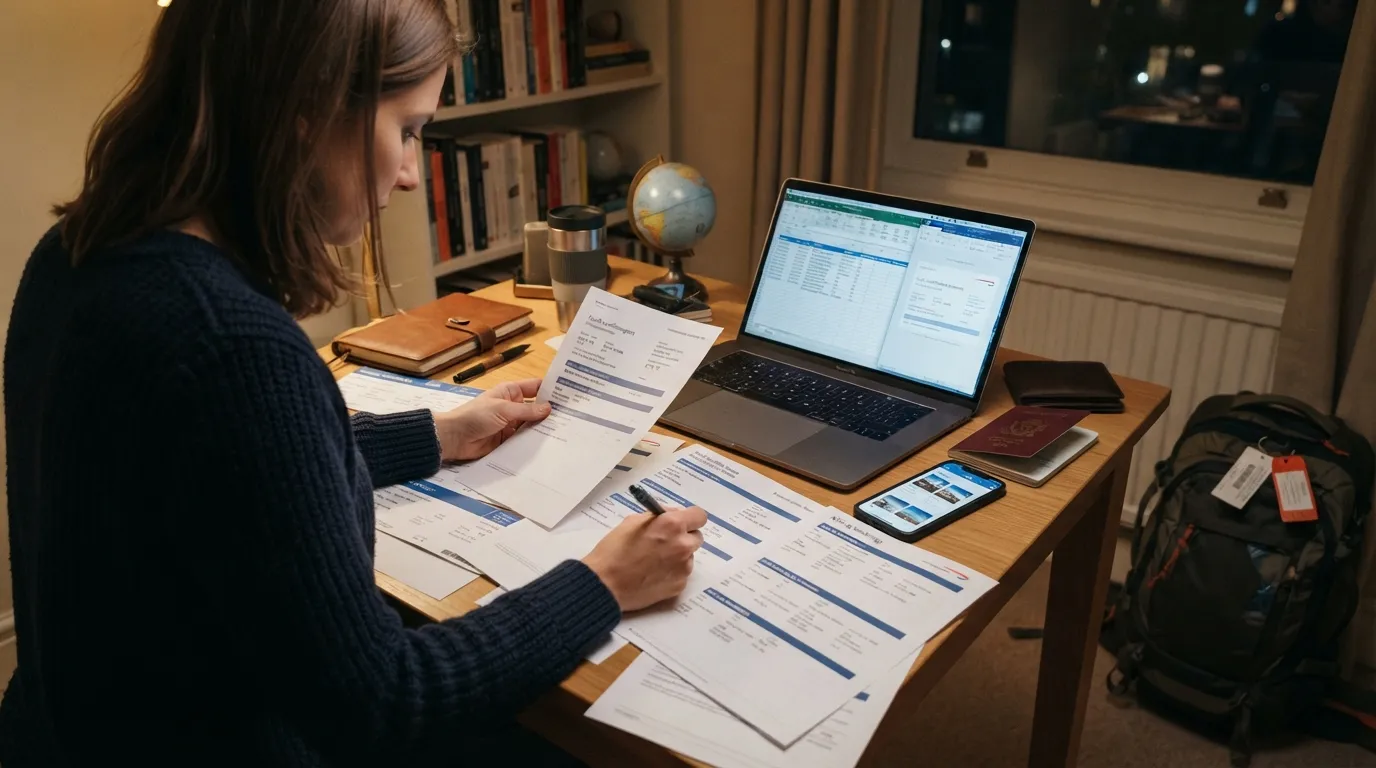
Veteran travelers read every flight, hotel, and activity confirmation one last time, slowly, with the names and dates in front of them. They note terminal numbers, check-in deadlines, and the address of where they’re sleeping on night one.
Many travelers skip this step and only discover a wrong date or a misspelled name at the check-in counter. At that point it’s a fee, a phone call, or a missed flight. The night before, it’s a two-minute fix.
They also print the most important pages, such as the first hotel booking and any pre-paid tour voucher. Paper doesn’t run out of battery or lose signal in a basement taxi line. As a backup, they save the PDFs in more than one folder on their phone so nothing takes five minutes to find.
#11 – Check In Online Through the Airline’s App
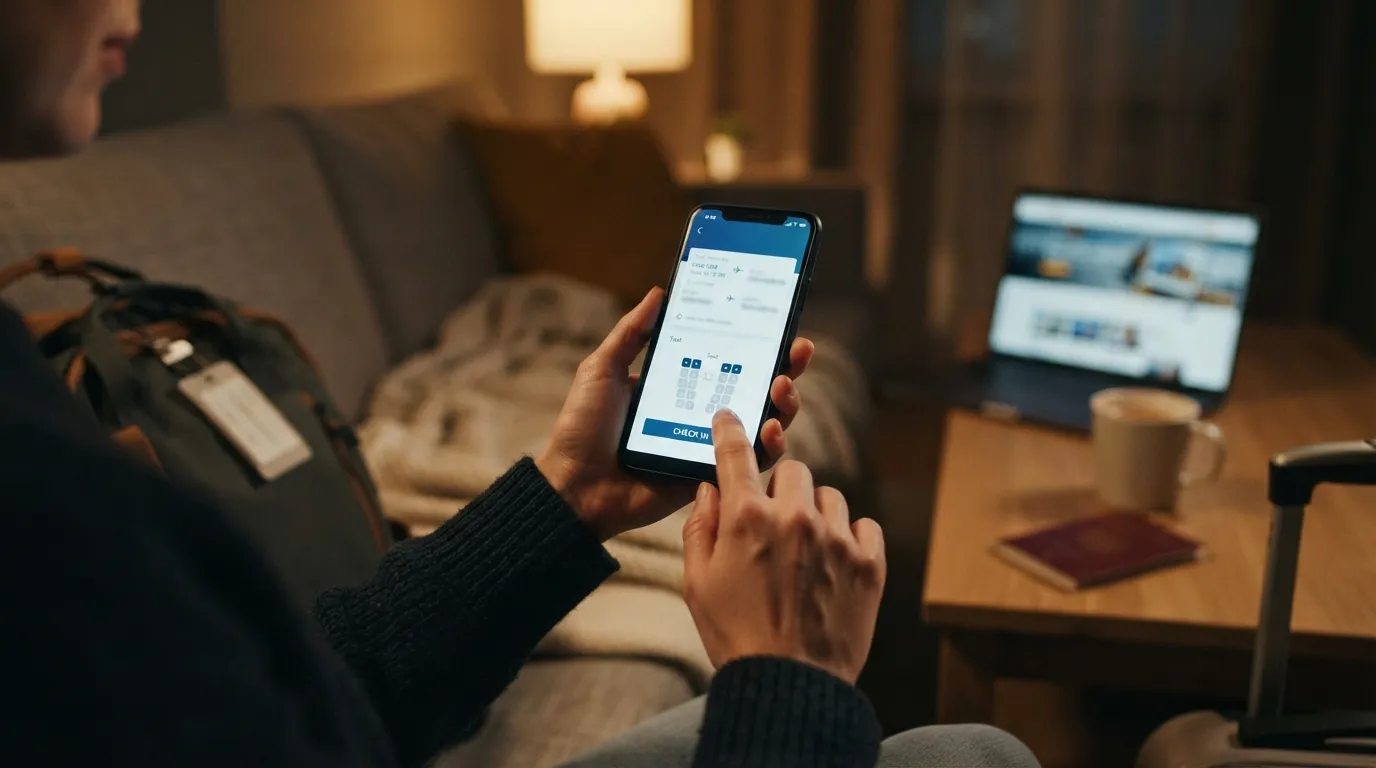
Most major U.S. airlines, including Delta, United, American, and Southwest, open online check-in 24 hours before departure. Experienced travelers don’t leave it for the airport kiosk. They do it as soon as the window opens, then screenshot the boarding pass.
It’s a small habit with a real payoff. Checking in early lets you pick a seat, see gate changes, and catch any schedule shift before you’ve left the house.
The boarding pass in your wallet app is nice. The screenshot is what saves you when the app freezes at the gate.
They also glance at the flight status that evening. If the airline has pushed the departure time or swapped the aircraft, they’d much rather learn it over dinner than in a security line at 5 a.m.
Fast Facts
- Delta, United, American, and Southwest all open online check-in 24 hours before departure.
- Screenshot the boarding pass in case the app freezes at the gate.
- Recheck flight status that evening for time or aircraft changes.
#10 – Download Offline Google Maps for Your Destination
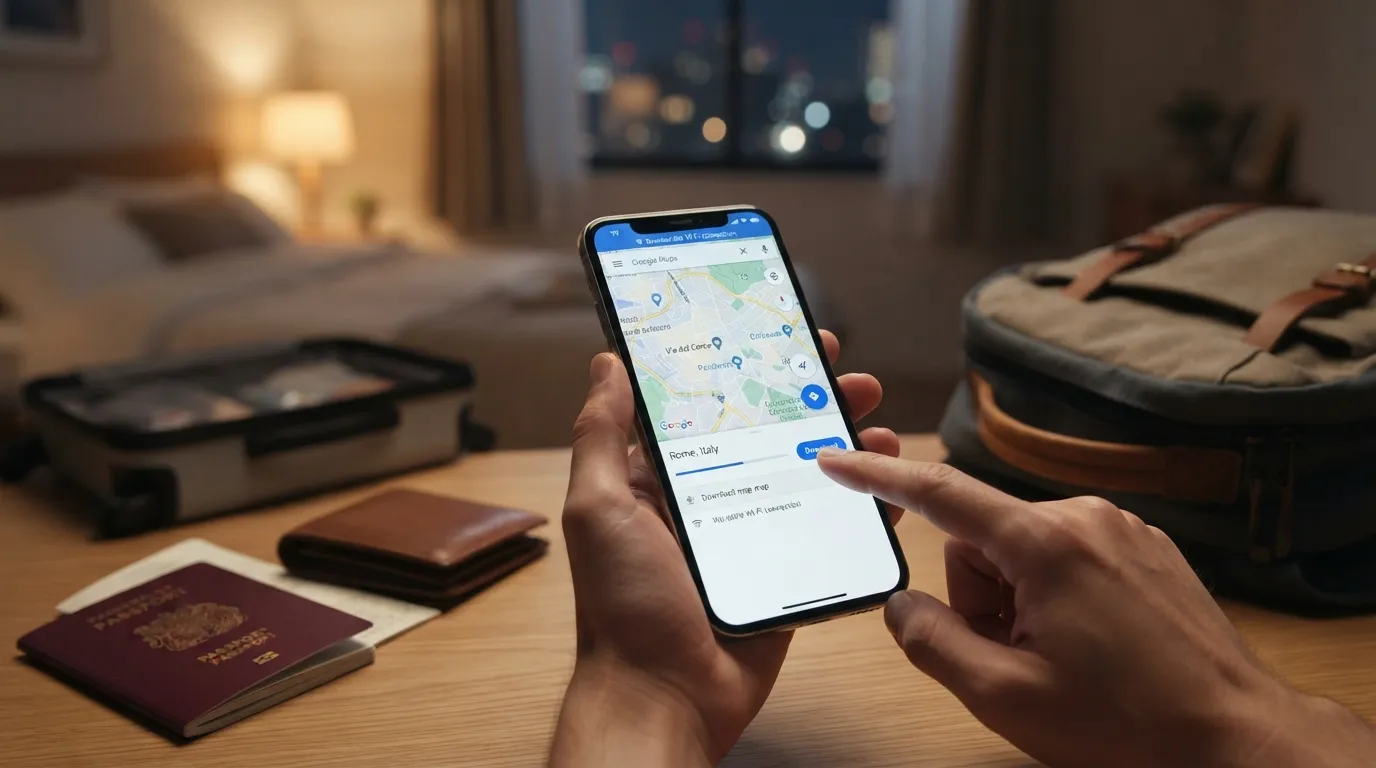
Google Maps lets you download an area to your phone so directions and place names keep working with no signal. Seasoned travelers do this the night before, while they’re still on strong home Wi-Fi.
The scene they’re avoiding is familiar. You land in a new city, your data isn’t working yet, and you’re staring at a spinning wheel while a taxi driver waits for an address you can’t pull up.
Offline maps cover the basics, like the walk from the train station to the hotel or the route to a restaurant they saved. Smart travelers also star the hotel, the airport, and a few must-see spots so they show up instantly.
It takes a couple of minutes, and it turns arrival day from a guessing game into a plan.
#9 – Follow TSA’s 3-1-1 Liquids Rule Before You Zip the Bag
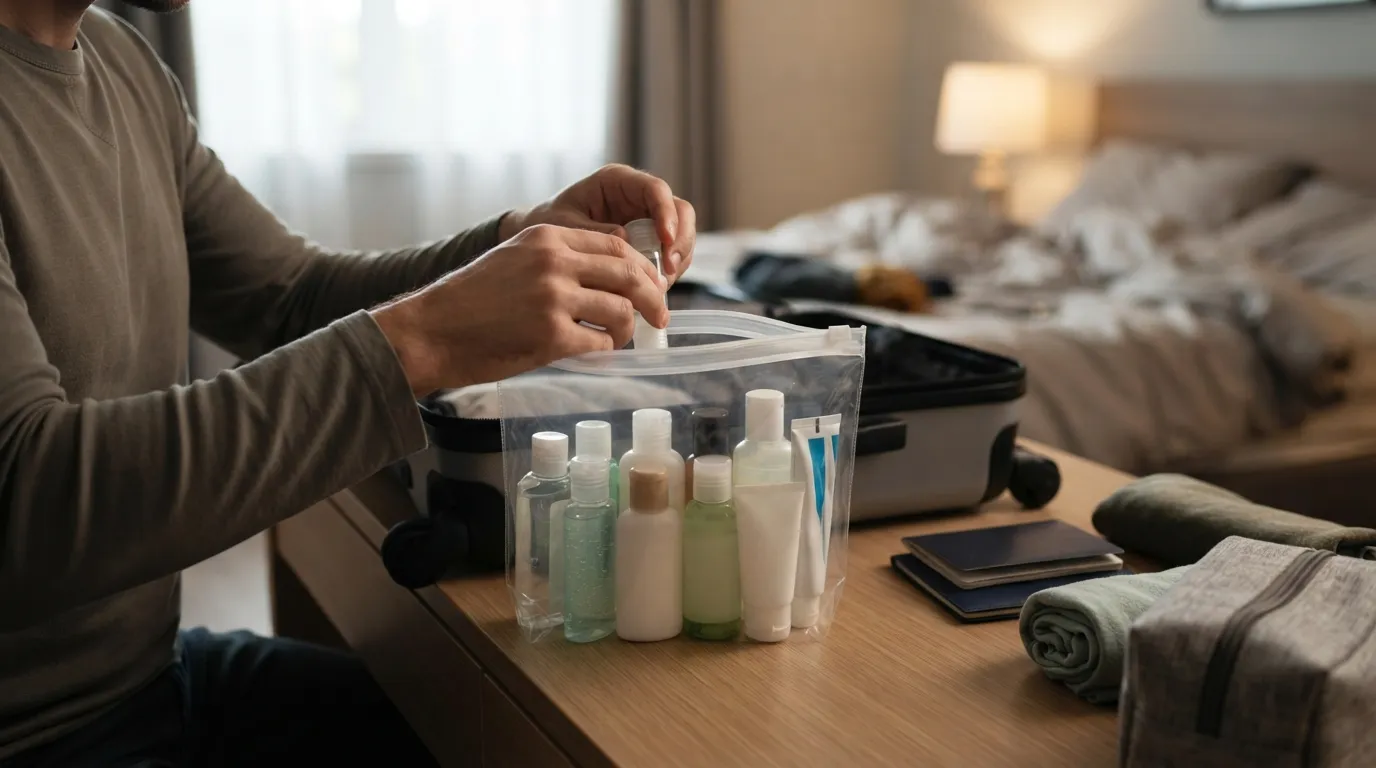
The TSA’s 3-1-1 rule is simple and routinely ignored. Liquids in the carry-on must be in containers of 3.4 ounces (100 ml) or less, and all of them must fit in one quart-size clear bag.
Experienced travelers pack that bag the night before, not in the airport bathroom. They put it at the top of the carry-on, so it can come out fast at the checkpoint.
The full-size shampoo you forgot is the one that gets tossed in the bin, and nobody gets it back. Veterans decant into travel bottles at home, where there’s time and a sink.
They also double-check things people don’t think of as liquids, like gel, paste, and cream. If it spreads or pours, it counts, and a quick pass over the bag beats losing a favorite moisturizer.
At a Glance
- Container size: 3.4 ounces (100 ml) or less.
- Bag: one quart-size clear bag per traveler.
- Placement: top of the carry-on for a fast checkpoint pull.
- Sneaky items: gels, pastes, and creams all count.
#8 – Weigh Your Bag With a Cheap Luggage Scale
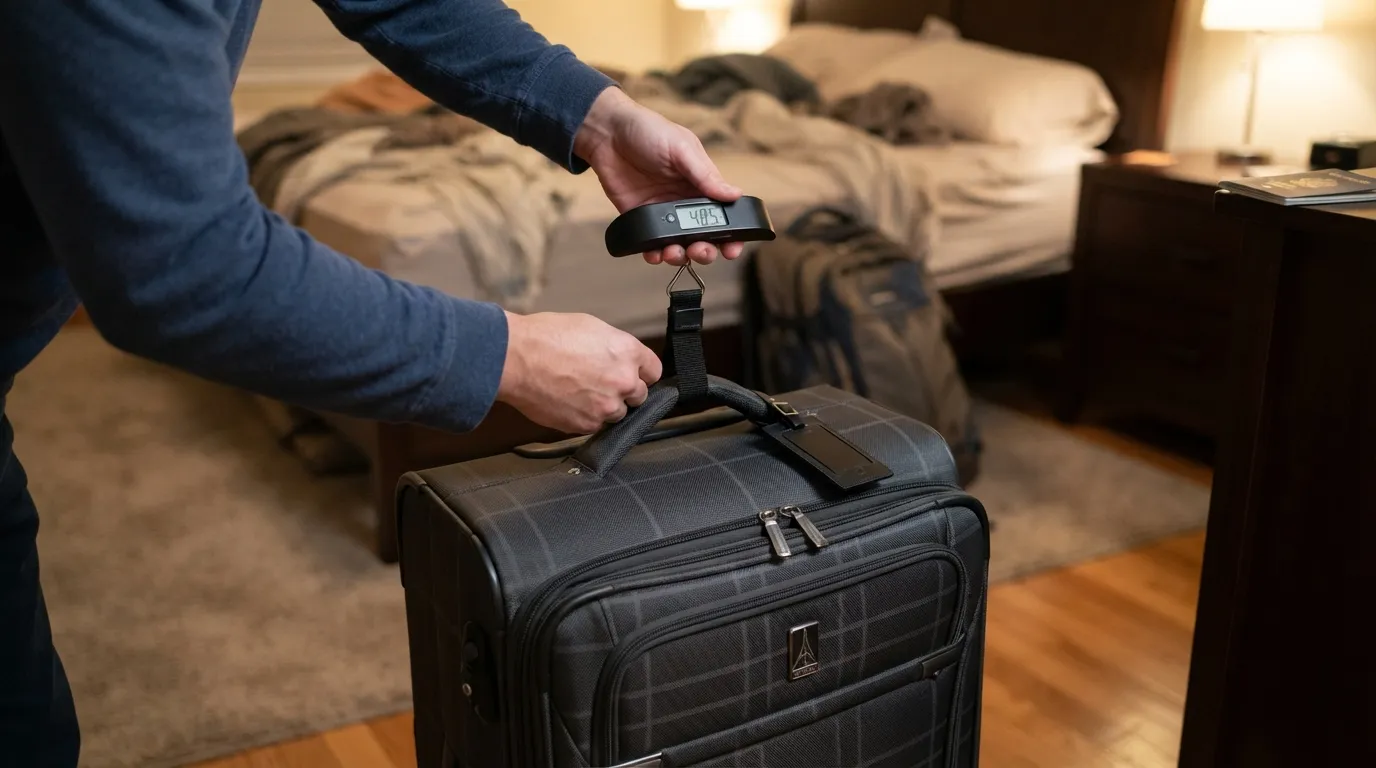
Many major U.S. airlines set the standard checked-bag limit at 50 pounds, and overweight fees can arrive at the counter with no warning. Frequent travelers keep a small handheld luggage scale for exactly this reason.
The night before, they hook the scale to the handle, lift, and read the number. If it’s over, they shift heavy items like shoes and books into the carry-on while there’s still time to think.
Repacking on the airport floor, with a line forming behind you, is the kind of memory nobody wants to repeat.
They also check the airline’s own rules for carry-on size and weight, since limits vary, especially on budget carriers and international routes. A bathroom scale works in a pinch: weigh yourself, then weigh yourself holding the bag, and subtract.
#7 – Check the Forecast on Weather.gov for Every Stop
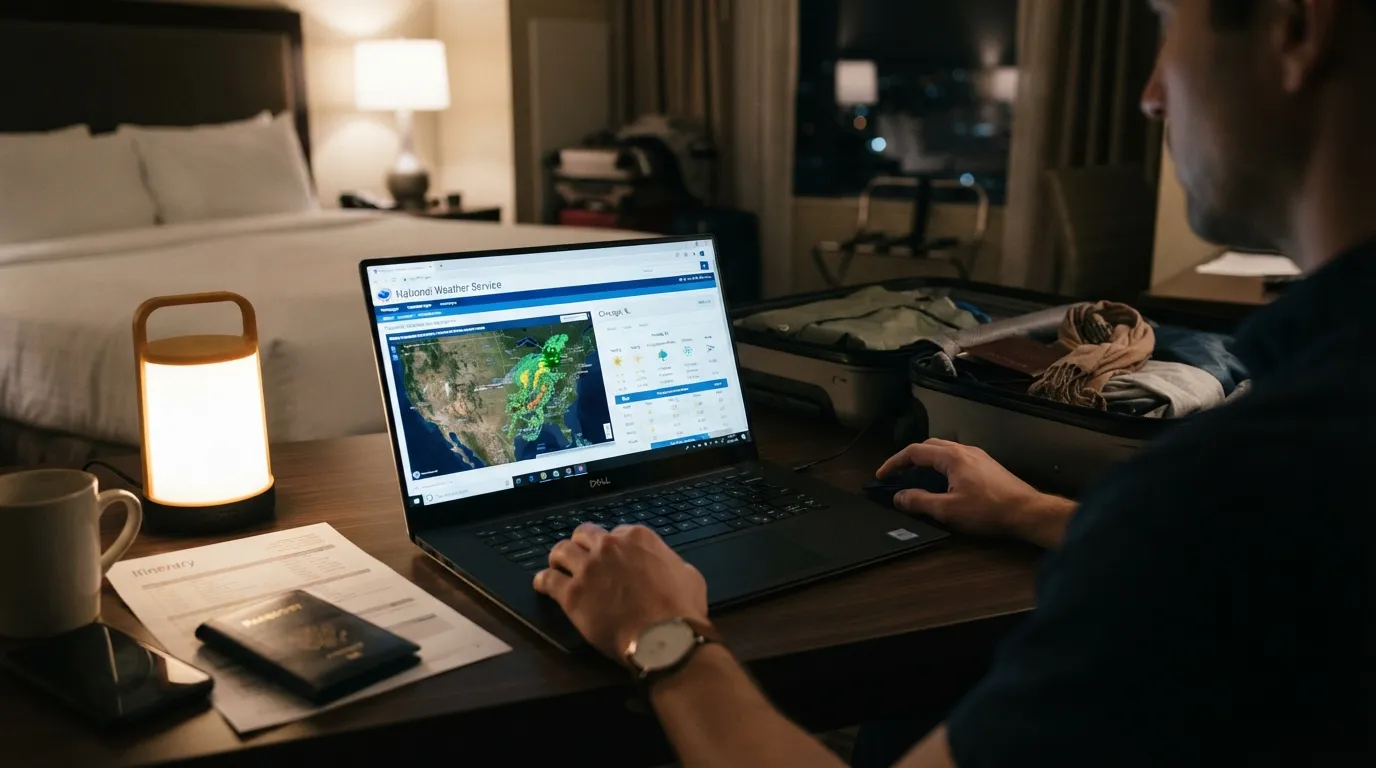
Packing for the city you imagine is different from packing for the weather you’ll actually get. Experienced travelers pull up the forecast the night before, often through the National Weather Service at Weather.gov for U.S. destinations.
It’s not about perfect prediction. It’s about the small swaps, like a rain jacket instead of a sweater, or a light layer for an air-conditioned train that feels like winter.
The forecast is also an early warning system for delays. A snowstorm at a connecting hub or heavy thunderstorms can disrupt flights, and a traveler who sees that coming can check rebooking options before everyone else is in the same queue.
They check every stop, not just the final one. A layover city with a cold snap can still mean a cold walk across a jet bridge.
#6 – Pack Prescription Medications in the Carry-On
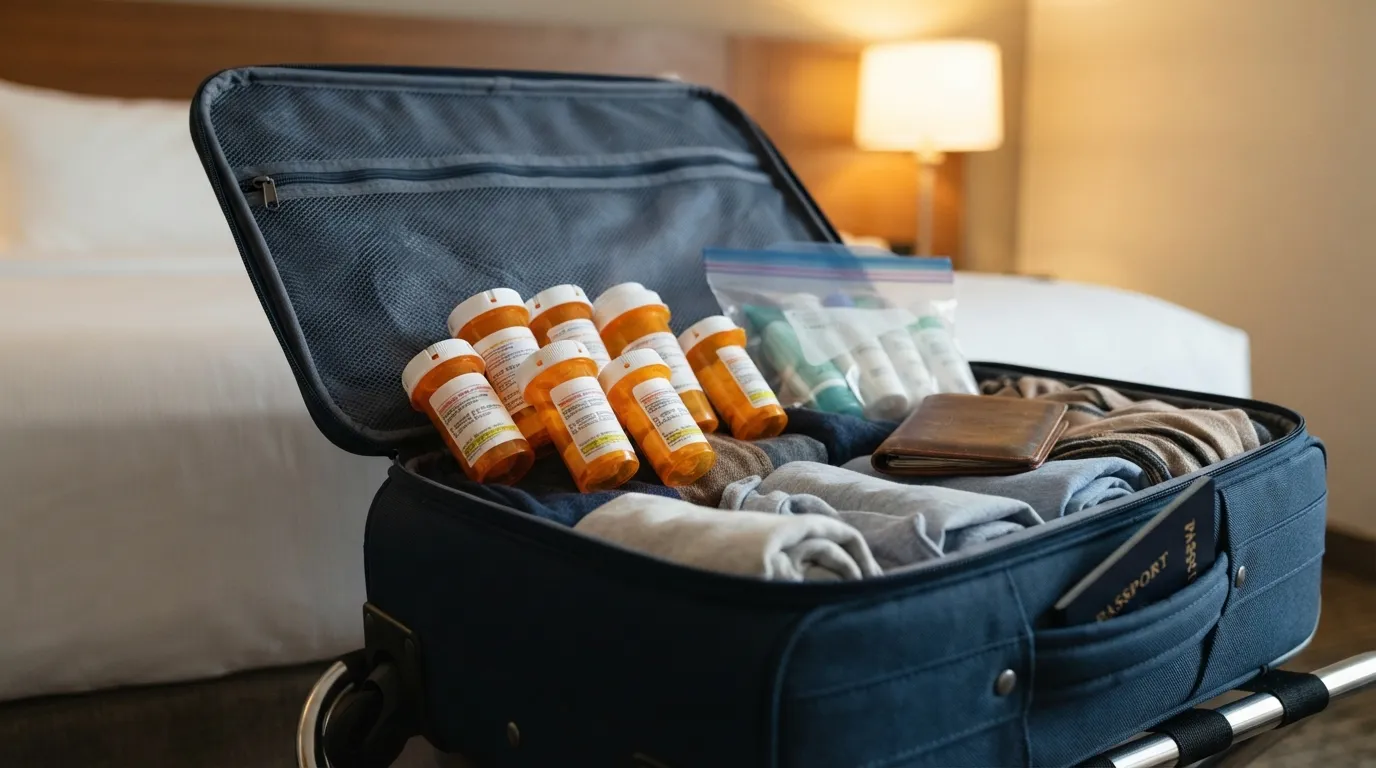
Experienced travelers keep prescriptions in their carry-on, never in checked luggage. Bags get delayed, rerouted, and occasionally lost, and a missing suitcase is a lot easier to handle when your medicine is sitting under the seat in front of you.
They keep medications in their original labeled containers. That helps when someone asks what a bottle is, and it makes the contents clear if there’s a question at security or customs. The TSA allows medications in carry-on bags in reasonable quantities, and the agency has guidance on its website for how to pack them.
They also bring a little extra for delays. A canceled flight can turn a two-day trip into four, and a pharmacy in an unfamiliar place is the last thing anyone wants to find on a deadline.
Worth Knowing
- Original labeled containers make contents easy to explain at security.
- Medically necessary liquids can exceed 3.4 ounces, but tell the officer at the checkpoint.
- A few extra days of supply is cheap insurance against delays.
- Keep everything in the carry-on, within arm’s reach.
#5 – Photograph Your Passport and Email It to Yourself
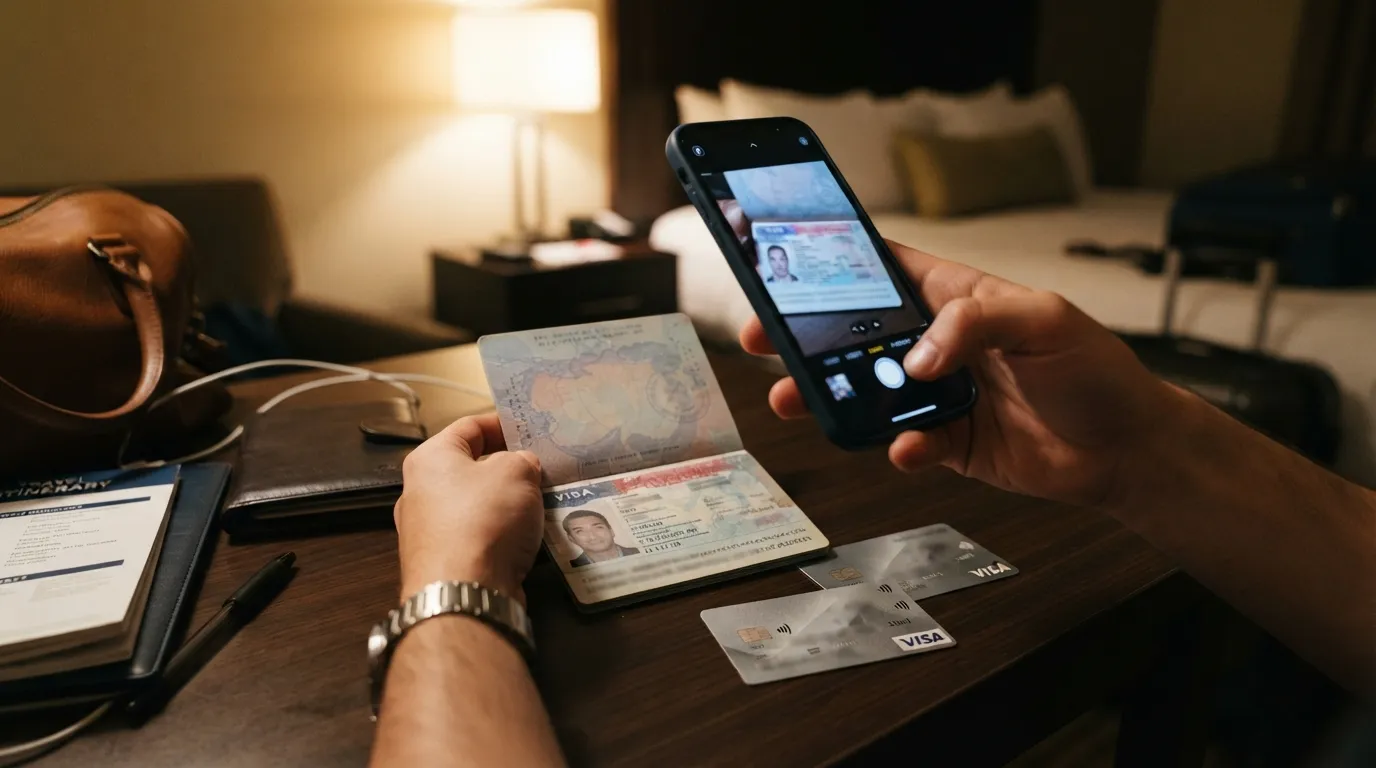
The U.S. Department of State recommends keeping a copy of your passport’s information page separate from the passport itself. Experienced travelers take that advice seriously, and the night before is when they do it.
They snap a clear photo of the passport page, the visa, and the front and back of their credit cards. Then they email the files to themselves, or save them to a secure cloud folder, so they can reach them from any device.
If a bag is stolen in a train station, a photo of the passport is the difference between an hour of paperwork and a week of panic.
Many also leave a copy of the itinerary with a trusted person at home. If anything goes wrong, someone knows where you’re supposed to be.
#4 – Set Two Alarms and Work Backward From Your Flight
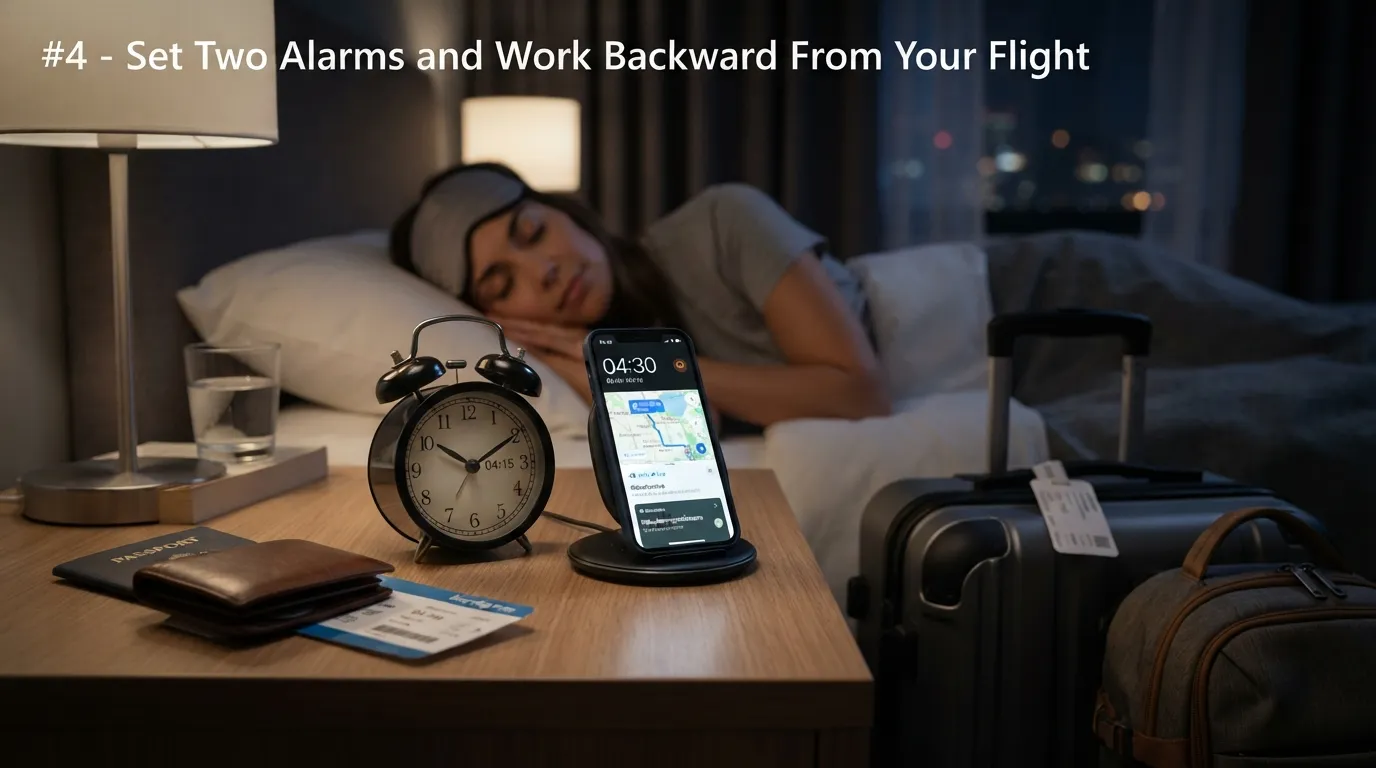
Experienced travelers don’t pick a wake-up time by feel. They start with the departure time and count backward, starting with the common airline advice to arrive about two hours early for domestic flights and three for international ones.
Then they subtract the drive or train ride, parking or drop-off time, and a buffer for the unexpected. That number becomes the time they have to walk out the door, and the alarm goes 45 minutes before it.
They set a second alarm on a different device, because one dead phone shouldn’t be able to cancel a vacation.
They also check the route in a traffic app and confirm the ride is booked. If they’re taking a rideshare at dawn, they know in advance how long it takes to get one.
#3 – Download Netflix Shows and Spotify Playlists Before You Go
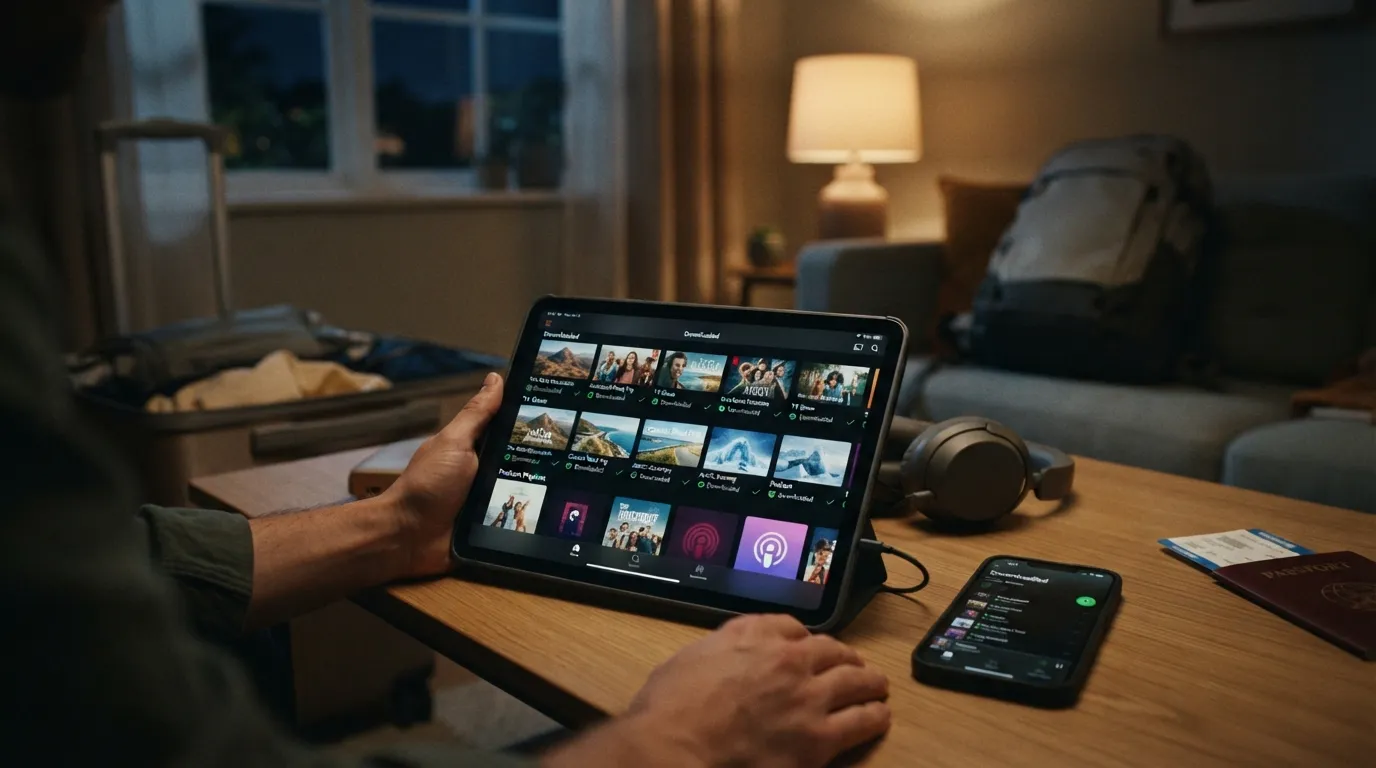
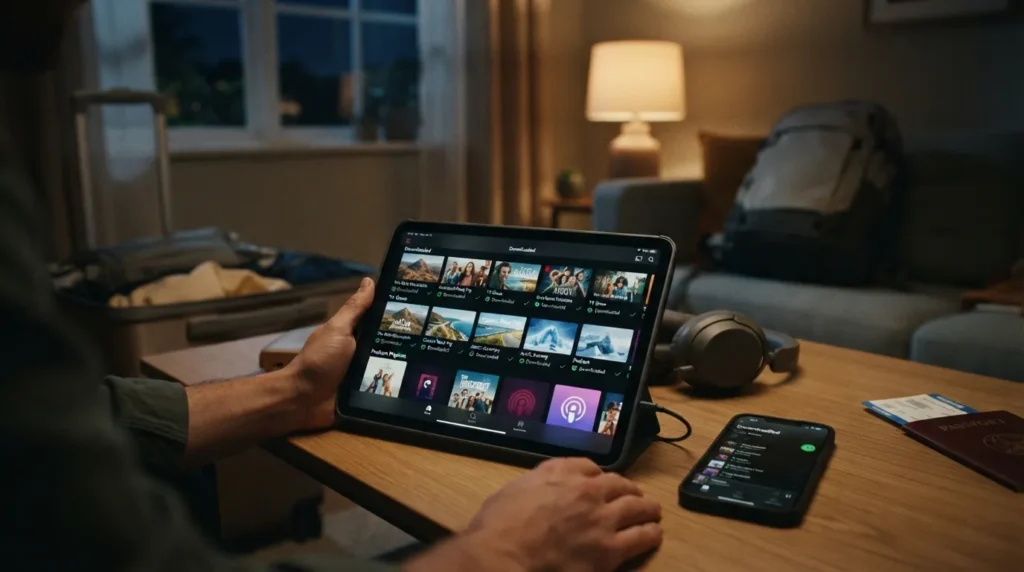
In-flight Wi-Fi is spotty, pricey, and sometimes just broken. Experienced travelers don’t depend on it. Netflix and Spotify both let paid subscribers download content for offline use, and the night before is the right time to do it.
They load a few episodes, a podcast queue, or an audiobook, depending on the length of the trip. They also download a playlist for the ride from the airport, which can be a surprisingly long and quiet one.
A three-hour delay on the tarmac is a lot easier when you aren’t staring at a seat-back screen that won’t load.
They also download a few things for kids or travel companions. Fresh content on a charged tablet is the cheapest peace and quiet money can buy.
Why It Stands Out
- Downloads play in airplane mode, so no signal is needed.
- Home Wi-Fi is faster and saves cellular data.
- Both apps need a plan that allows downloads, so check before bed.
- It pairs perfectly with a fully charged device.
#2 – Take Out the Trash and Unplug Things at Home
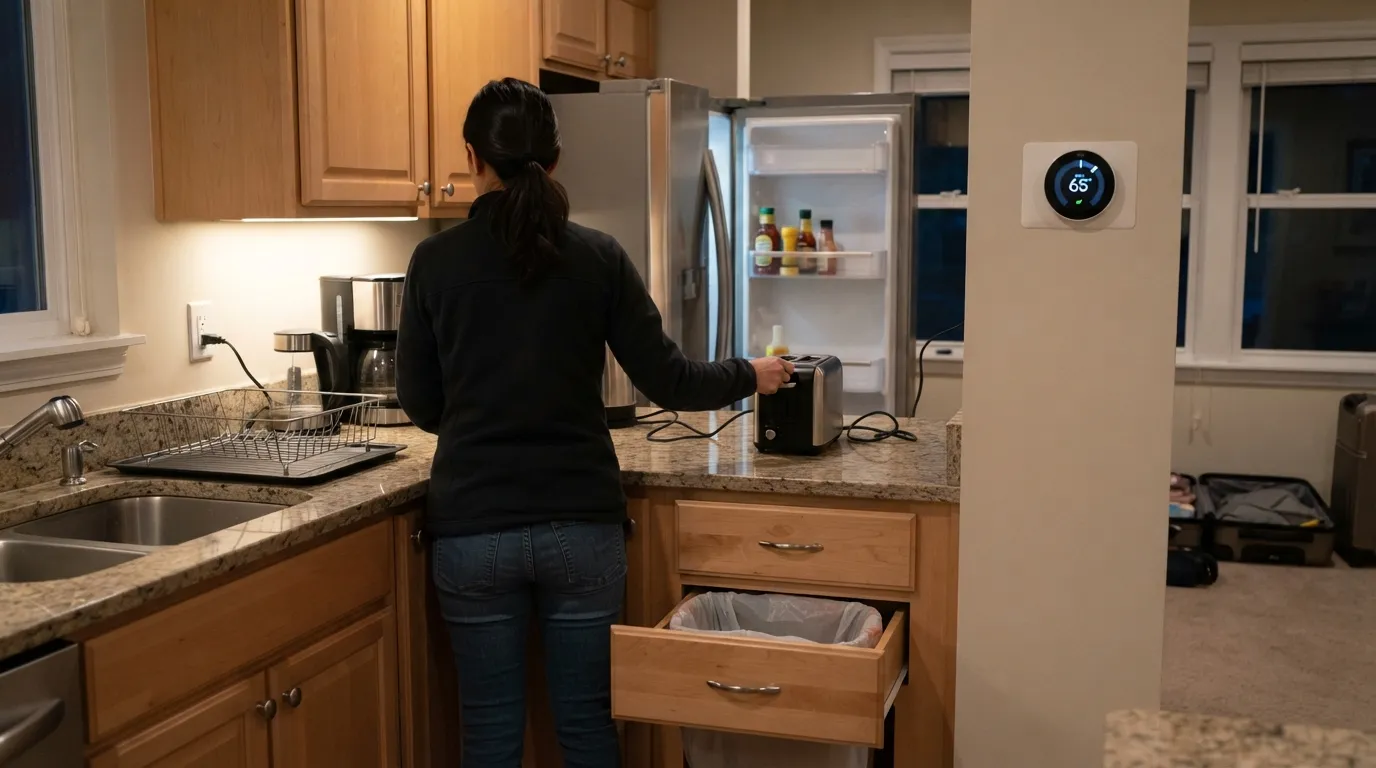
Experienced travelers think about the home they’re leaving, not only the destination. The night before, they take out the trash, clear the fridge of anything that will spoil, and wash the dishes so they don’t come home to a smell.
They unplug small appliances like toasters, coffee makers, and phone chargers, and they turn the thermostat to a sensible setting. Many also lock windows and double-check that the stove is off, because it’s hard to relax at a beach resort wondering about it.
The best part is the return, when you walk into a clean, quiet house instead of a chore list.
If they have a plant, a pet, or a package coming, they tell a neighbor or a friend. A short text now saves a worried phone call later.
#1 – Lay Out Tomorrow’s Travel Outfit and Go to Bed Early

The most seasoned travelers do the least dramatic thing of all. They lay out tomorrow’s clothes, put keys, wallet, passport, and phone in one spot, and go to bed at a reasonable hour.
The outfit is practical. Slip-on shoes for the security line, comfortable layers for a cold cabin, and pockets that don’t set off the scanner. They know travel day is long, and comfort is part of the plan.
A rested traveler makes better decisions at 5 a.m. than one who stayed up packing until midnight. They catch the gate change, stay patient with the delay, and remember to drink water.
Every other item on this list is really in service of this one. Do the work, close the suitcase, and let yourself walk into tomorrow with nothing left to worry about.
CEO-Co-Founder
