


- 18 Hit Sitcoms That Kept Going After a Major Cast Exit - October 17, 2026
- 18 Movie Scenes That Almost Got Cut but Became the Part Everyone Remembers - October 17, 2026
- 22 Sitcom Cast Members Who Left Hit Shows and Let Someone Else Carry the Next Season - October 17, 2026
The room rate on your booking is rarely the number that hits your card at checkout. Mandatory add-ons can push the total well above the advertised price, and even with the FTC’s total-price rule that took effect in May 2025, many of those fees are still legal.
Front desks often have more wiggle room than guests realize, especially on charges tied to amenities you never touched. Start at #17 and keep going, because the charge that costs people the most isn’t the one they usually look for.
#17 – The Resort Fee That Covers Amenities You Might Skip

The resort fee is the most common surprise on a final bill. It often runs $30 or more a night, and many Las Vegas and Florida properties charge $45–$55 or higher.
It bundles pool access, Wi-Fi, and fitness center use, even if you only came for a quiet week and a good book. Some luxury properties push the number far higher.
If you barely touched the amenities, say so politely at checkout. Staff can often reduce or remove the fee.
But the next charge shows up even when you never had a car…
#16 – Parking Fees Charged Even Without a Car

You took a shuttle or a rideshare, so you’d expect no parking charge. Some folios add one anyway.
Self-parking at city and resort hotels often runs $25–$60 a night, with valet costing more. Some hotels even list it separately when the resort fee is supposed to cover it.
A calm question at checkout often wipes it out when no vehicle was ever parked.
Next comes a fee with a very sneaky name…
#15 – Destination or Amenity Fees in Disguise
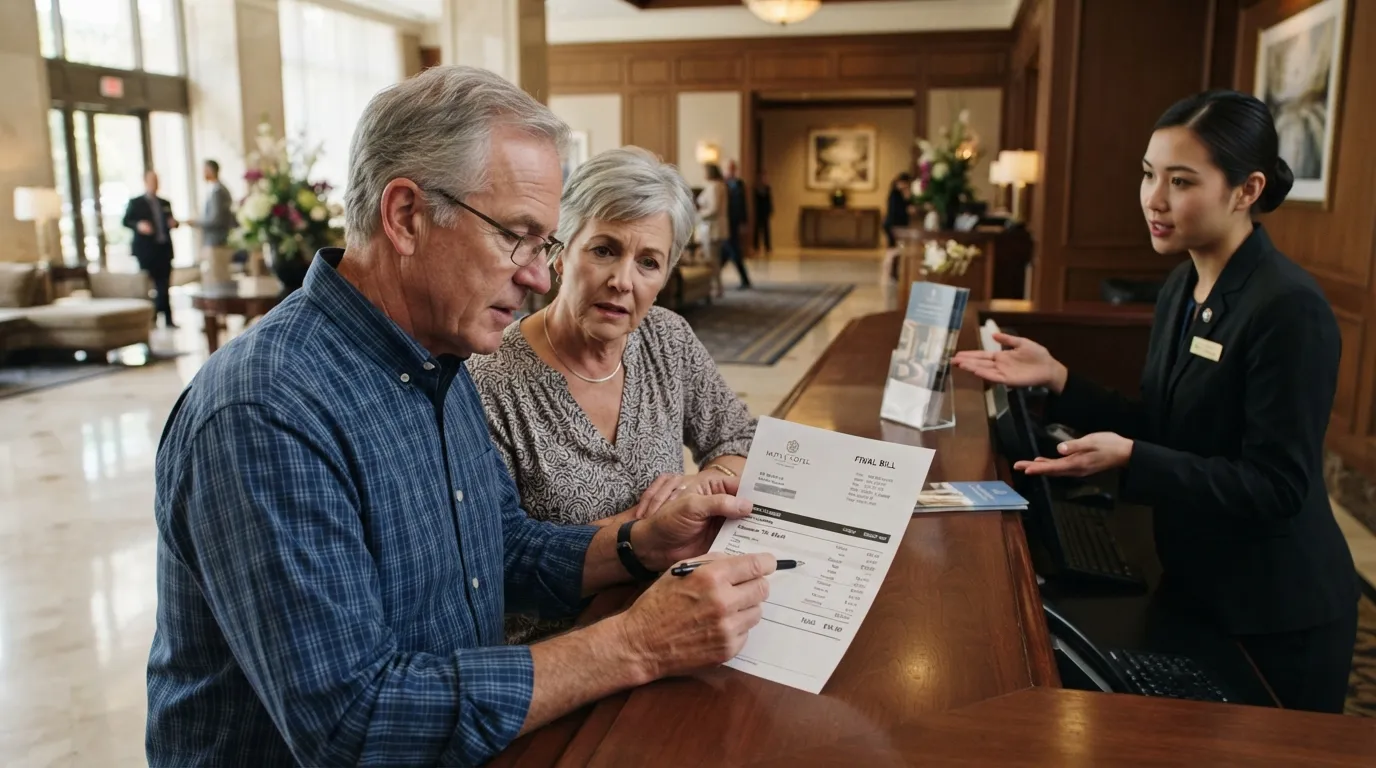
A destination fee is a resort fee wearing a different label. It’s common at city hotels and often runs $20–$50 a night.
The name sounds like a local tax, so many guests don’t question it. It tends to cover the same Wi-Fi and gym access you may already be paying for elsewhere.
Ask for the full breakdown and check whether it overlaps with other line items.
The next one hits hardest when you simply need more time…
#14 – Late Checkout Fees That Hit Seniors Hardest

Need extra time because of a medical appointment, a slow morning, or mobility needs? Some hotels charge $50–$150 or more for it.
Loyalty members and guests at hotels with low occupancy often get it waived. Ask early, explain simply, and ask again at checkout if needed.
Its mirror image is waiting at the other end of your stay…
#13 – Early Check-In Charges That Add Up Quickly

Arriving after a long flight and just wanting a bed? Early check-in fees can start around $30 and climb to $100 or more in peak season.
The fee usually isn’t automatic, and if the room is already clean, staff can often comp it. Ask before you hand over your card.
Quick Compare
- Early check-in: roughly $30 to $100 or more in peak season.
- Late checkout: roughly $50 to $150 or more.
- Best move for both: ask at booking, not at the desk.
The next charge appears when your family tags along…
#12 – Extra Person or Occupancy Fees

Traveling with grandchildren or adult kids? Many hotels add $10–$30 per extra person per night once a room holds more than two guests.
The charge can also change the math on a senior rate that looked like a bargain. Confirm the occupancy policy before you arrive.
Now for a charge that has been quietly billing guests for something they never opened…
#11 – In-Room Safe Rental Fees
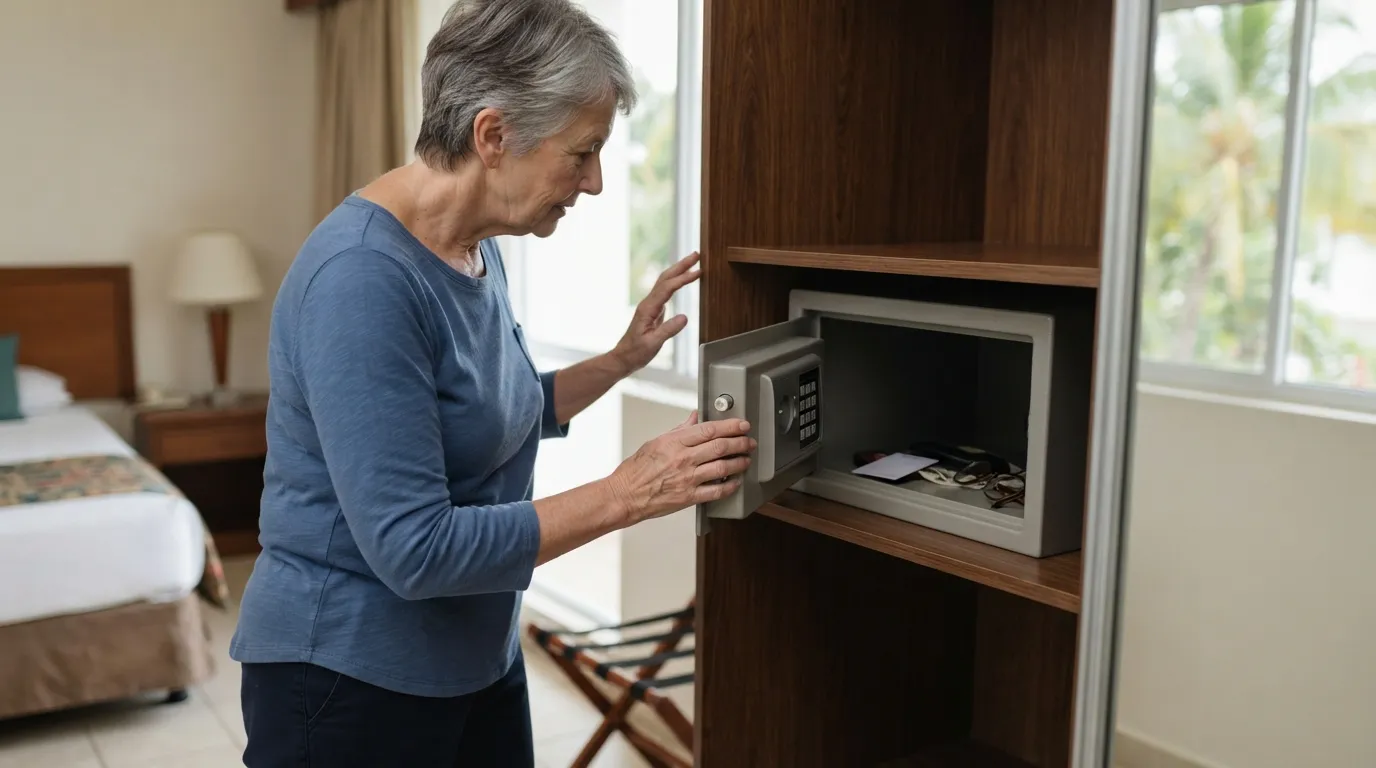
A few older resorts still charge $1.50–$5 a day for a safe, whether you use it or not. Most guests only spot it at checkout.
It’s optional at most modern hotels but still a default at some legacy properties. Decline it at check-in and the charge disappears.
The next fee can be triggered by nothing more than moving a water bottle…
#10 – Mini-Bar Sensor or Restocking Charges

Some mini-bars use sensors that bill you the moment an item is lifted. Charges of $5–$15 per item can land even if you only moved a bottle to make room for medication.
Many hotels will disable the sensor if you ask at check-in. That’s much easier than disputing the charge later.
The next fee feels like it belongs to another century…
#9 – Local and Long-Distance Phone Call Fees

Yes, some hotels still bill for phone calls. Local calls can cost $1–$2 each, and long-distance calls can cost far more.
Guests who prefer a landline for clearer calls get hit the hardest. Some resort fees even claim to include local calls, so mention the overlap and ask them to remove the line.
Next up is a charge that taxes you on top of a fee…
#8 – Taxes Applied to Resort Fees
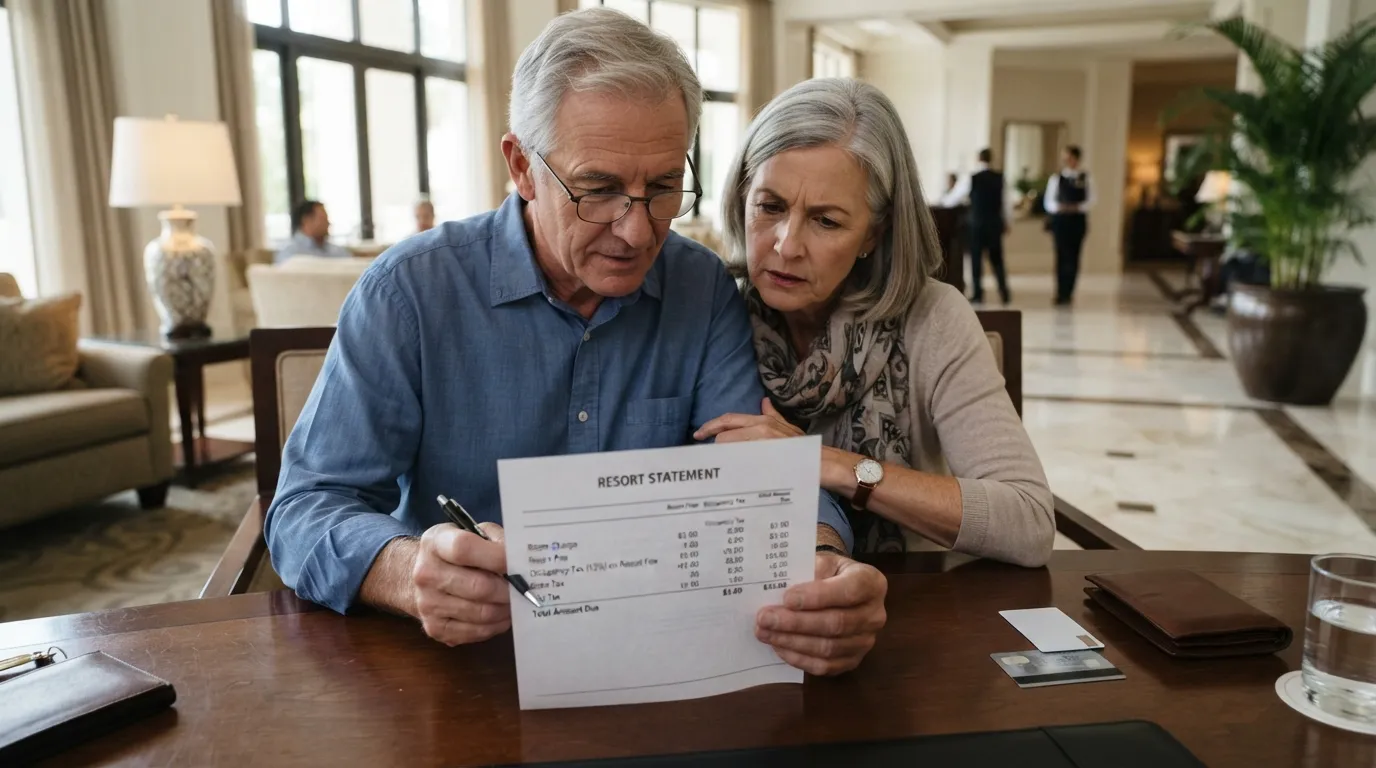
In many places, occupancy taxes of roughly 10–18% apply to the resort fee itself. That’s a fee on top of a fee.
It’s legal, but it adds up fast on longer stays. Ask for a printed breakdown to see exactly where the extra tax lands.
Worth Knowing
- Occupancy taxes of roughly 10–18% can apply to the fee itself.
- Example: a $40 nightly fee over 5 nights is $200, and a 12% tax adds about $24.
- Longer stays make the tax-on-fee effect bigger.
- A printed folio breakdown shows exactly which lines are taxed.
The next charge strikes when life interrupts your plans…
#7 – Cancellation or Change Fees

Cancel too late and you may owe anything from one night’s rate to the full stay. For guests whose plans shift because of health, that stings.
Many hotels will consider a waiver with documented medical reasons. Read the terms, then ask for an exception.
Next, a points trap that catches loyal travelers off guard…
#6 – Resort Fees on Award Stays at Certain Chains

Paid for your room with points and still got a resort fee? It happens, and policies vary sharply by brand.
Hyatt waives resort fees on award stays, while other major chains often still charge them. Top-tier Hyatt Globalist status can waive them on cash stays too.
The next item can make a senior discount vanish…
#5 – Senior Rate Blackout Dates and Exclusions

A senior rate can look like a win until you read the fine print. Blackout dates, minimum stays, and weekend or holiday exclusions can shrink the savings.
Add resort and parking fees, and the advertised discount may disappear. Compare the all-in total against the standard rate, and request the full itemized quote before confirming.
The next charge doesn’t show up on the bill, but it still takes your money…
#4 – Incidental Hold Amounts

Hotels often place a hold of $50–$200 per night on your card for possible extras. On a fixed income, that sudden dip in available credit can sting.
The hold can take several days to disappear after checkout. Ask for a lower amount, and remember that a debit card hold ties up actual cash.
At a Glance
- Typical hold: $50–$200 per night.
- Five-night stay: roughly $250–$1,000 set aside.
- Release time: can take several days after checkout.
- Safer choice: a credit card, since a debit hold freezes real cash.
Now for a fee for something you didn’t ask for…
#3 – Housekeeping or Daily Service Surcharges

Some properties charge $10–$25 a day when you decline daily housekeeping. Yes, you can get billed for a service you skipped.
It’s often negotiable if you didn’t want the service. Confirm the policy at check-in so it never reaches your folio.
The next one is meant for travelers who want to stay connected…
#2 – Premium Wi-Fi or Connectivity Upgrades

Basic Wi-Fi may already sit inside your resort fee, while faster speeds cost extra. That upsell lands hardest on guests who want smooth video calls with family.
Many properties now include decent Wi-Fi in the base fee. Ask whether the upgrade is truly needed before you pay for it.
And the final charge is the one that ties the whole bill together…
#1 – Overlapping Fees That Charge You Twice for the Same Thing

The biggest charge to question is any line item that bundles something you’re already paying for elsewhere. Resort fees, destination fees, and amenity charges often overlap in exactly this way.
Guests who ask for a full explanation of every bundled item see the biggest reductions. A polite, specific question at checkout remains the strongest tool you have.
Why It Stands Out
- It hides inside fees that look unrelated.
- Wi-Fi and gym access can show up in both a resort fee and a destination fee.
- Local calls may be listed even when the resort fee claims to cover them.
- One specific question can clear several lines at once.
Resort bills for guests over 65 often include negotiable charges that can add up to hundreds of dollars when no one challenges them. The FTC rule improved upfront disclosure, but it didn’t remove the room for a polite conversation at the front desk.
So before you sign, read the folio slowly, line by line. The total at the bottom is often not the final word.
CEO-Co-Founder
