
- 20 Classic Movies That Still Hold Up Decades Later - October 21, 2026
- 18 Iconic TV Shows That Defined a Generation - October 21, 2026
- 22 Tiny Towns That Look Straight Out of a Fairytale - October 21, 2026
These towns are not film sets, and none of them needed a special-effects budget. Every one of the 22 below is a real place with church bells, cobblestones and rooftops that look lifted from the first page of a storybook.
The countdown has a few surprises, though. One town has fewer residents than a big wedding party, one was deliberately rebuilt in another country’s style, and one has a full-scale twin on another continent. Start at the bottom, because #1 is the one that keeps turning up in other people’s imaginations.
#22 – Hum, Croatia, the Hilltop Town With Fewer Than 30 Residents
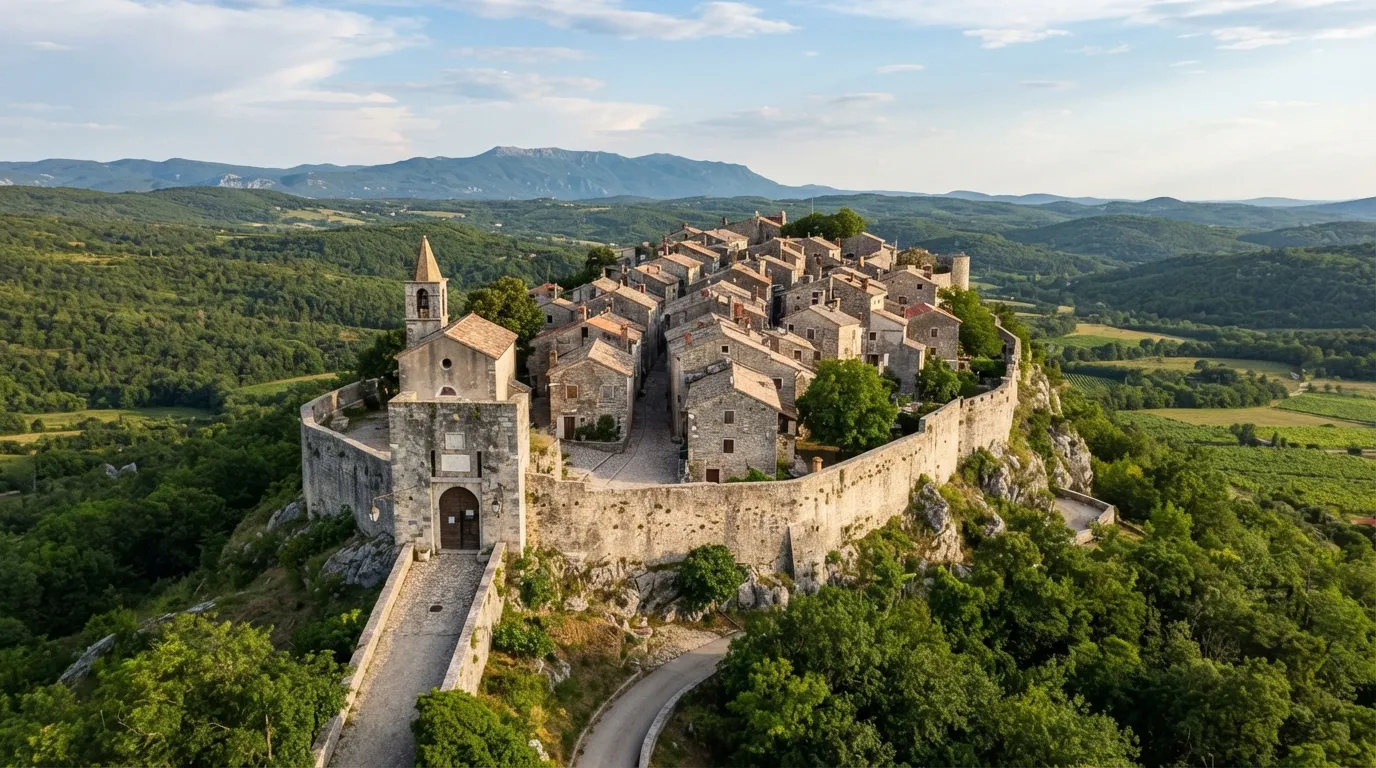
Blink on a back road through Istria’s green interior and you could drive right past the smallest town on Earth, or at least the one that claims the title. Hum sits on a hilltop with just two streets and fewer than thirty residents.
A stone wall and gate frame its little medieval world. Inside is the Church of St. Jerome, a 12th-century building with old frescoes, and a handful of stone houses crowded close around it.
Hum also has a literary side. It sits at the end of the Glagolitic Alley, a roadside route of monuments honoring the Glagolitic script once used in this part of Croatia. Locals are proud of biska, a mistletoe brandy you will see on offer in the tiny village.
You can walk the whole place in the time it takes to finish a coffee. Fields roll away in every direction, and it feels like stepping into a stone-walled illustration.
But the next village on the list has already played England on screen more than once, and it is still completely real. Which one is it?
#21 – Castle Combe, England, the Village Filmmakers Keep Borrowing
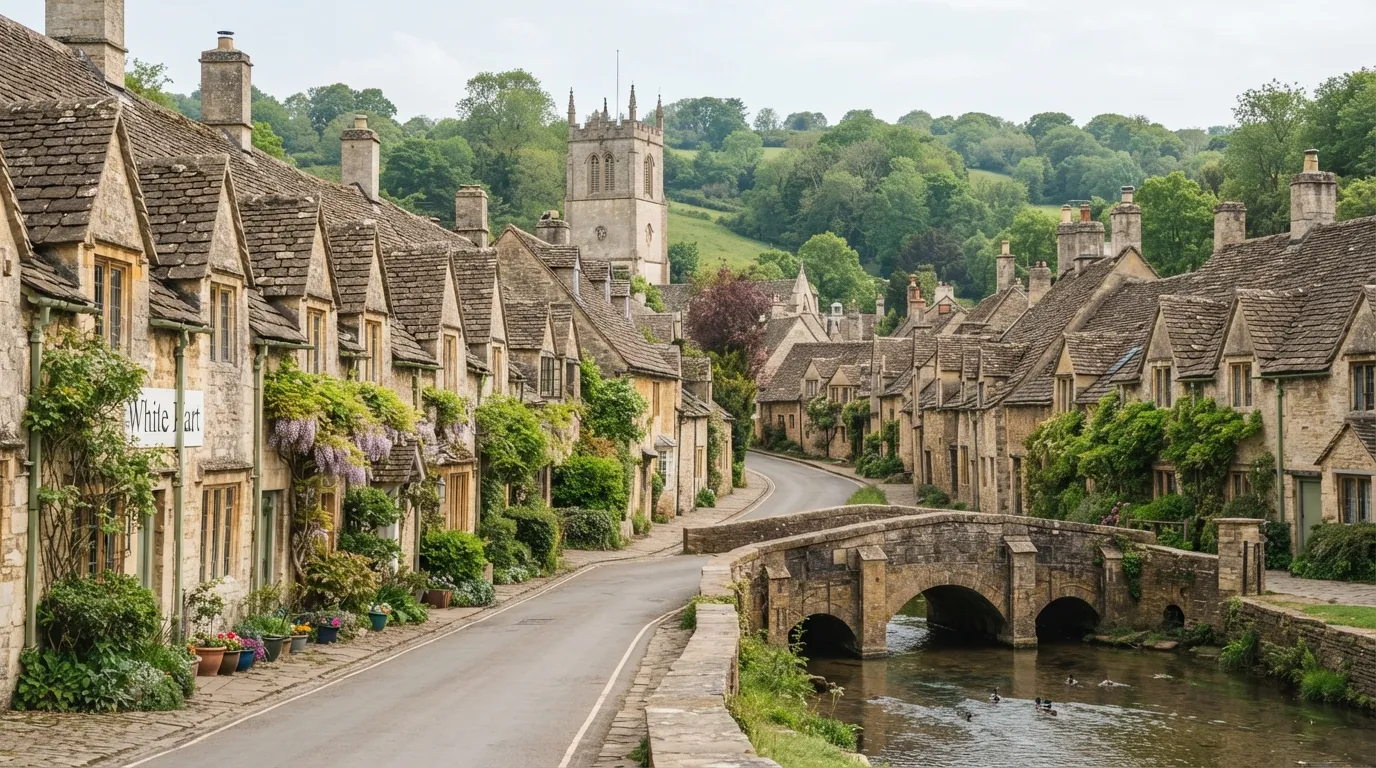
Castle Combe in Wiltshire is so postcard-perfect that it has been called the prettiest village in England, a title that gets repeated on almost every travel list. One look at its honey-colored stone cottages along a gentle slope and the nickname makes sense.
The village has served as a movie location more than once. Steven Spielberg filmed here for War Horse in 2011, and the 1967 musical Doctor Dolittle shot here decades earlier.
Look for the old stone bridge over the Bybrook, the medieval market cross and the church tower rising over slate and stone roofs. Many of the buildings have been standing since the Middle Ages.
Everything is small enough to take in at a stroll. Even the stream seems to know it is part of a postcard.
Now picture a village in the mountains where roofs look like hands pressed together in prayer. It is next.
#20 – Shirakawa-go, Japan, the Village of Praying-Hands Roofs
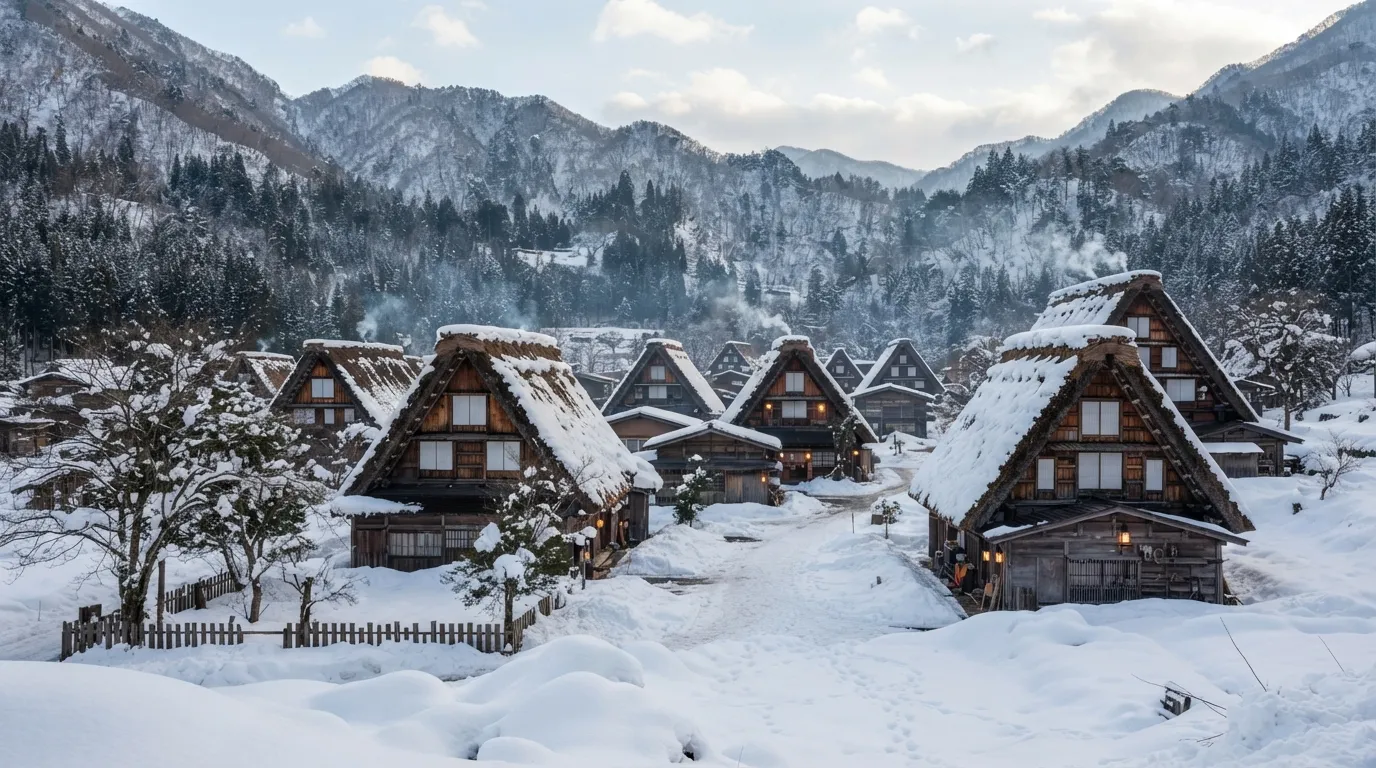
In Japan’s Gifu Prefecture, farmhouses rise out of the snow with roofs so steep they look like palms pressed together. This is Shirakawa-go, and the style is called gassho-zukuri.
The steep thatch, roughly 60 degrees, sheds heavy mountain snow instead of holding it. UNESCO inscribed Shirakawa-go and neighboring Gokayama on its World Heritage list in 1995.
The thatch is not a one-person job. Villagers have traditionally pitched in together to re-roof houses, a custom known as yui, so the whole community shares the work.
Fast Facts
- Region: Gifu Prefecture, Japan
- Style: gassho-zukuri farmhouses
- Roof pitch: roughly 60 degrees, built to shed heavy snow
- UNESCO listing: 1995, shared with Gokayama
- Community custom: yui, the shared re-roofing effort
Some of these farmhouses are open as inns, so you can sleep under a roof that has watched generations of winters. On select winter evenings, the village is lit up and the snow glows around the glowing windows.
The next place trades mountain peaks for something stranger: streets that are made of water.
#19 – Giethoorn, the Netherlands, the Village Where Roads Became Canals
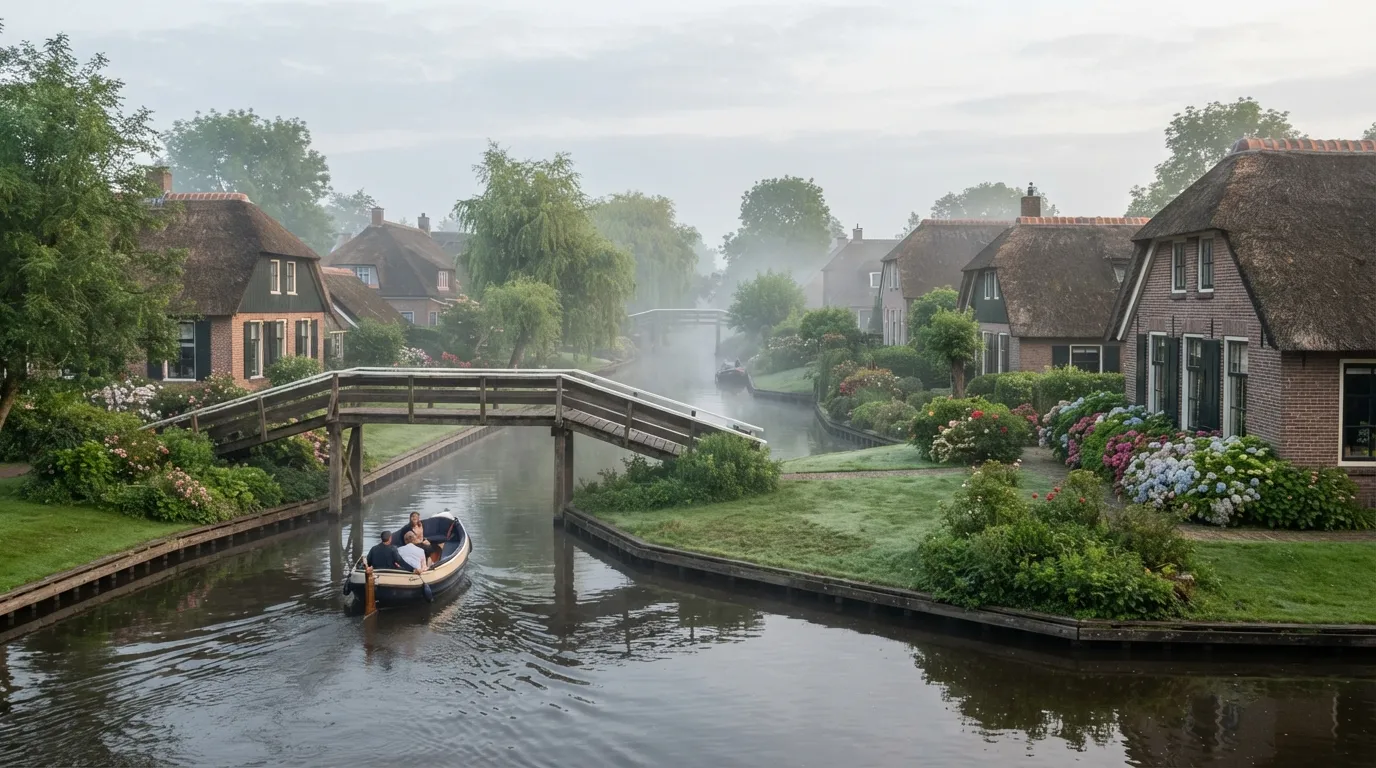
There is a village in the Netherlands where you might never see a car on the main route. Giethoorn is built around canals, and getting to your front door often means crossing a wooden bridge.
Its name is often said to mean goat horn, tied to a legend of early settlers finding horns in the peat. The canals themselves came from digging peat for fuel, which left behind lakes and channels.
Today thatched cottages sit on little islands, with gardens running right down to the water. Quiet electric boats drift past, and dozens of small bridges link the pieces together.
Early mornings are the best time to see it, when mist sits low on the water and the only sound is a paddle.
Next, we leave the flat Dutch countryside and climb into a valley where waterfalls drop from nearly every cliff. One literary legend is tied to it.
#18 – Lauterbrunnen, Switzerland, the Valley Said to Have Inspired Rivendell
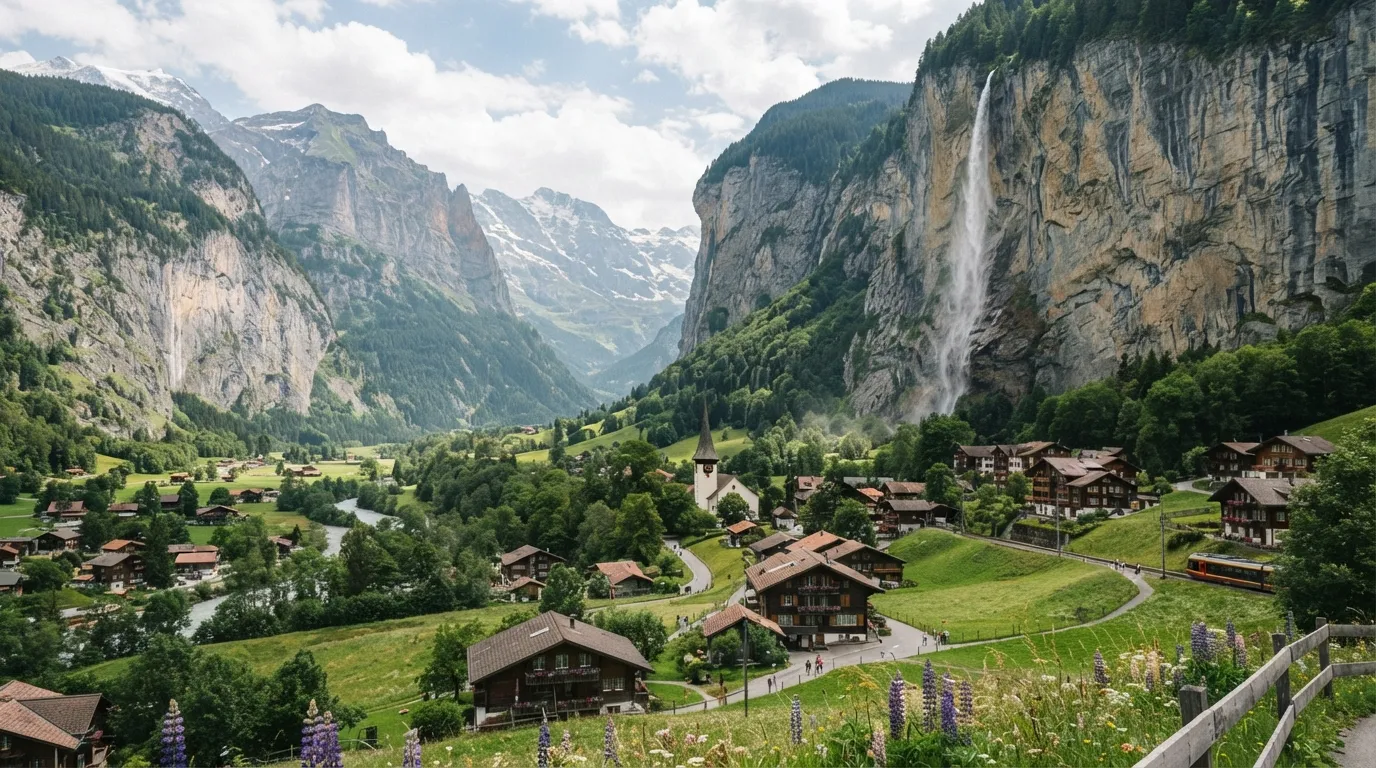
Lauterbrunnen sits in a deep Swiss valley so lined with waterfalls that its name is often translated as many springs. Around 72 falls are commonly cited, spilling off sheer rock walls.
The biggest star is Staubbach Falls, which drops from a high cliff right above the village. It once inspired the poet Goethe, who wrote Song of the Spirits over the Waters in 1779 after seeing it.
J.R.R. Tolkien hiked through the region as a young man in 1911, and the valley is often named as an inspiration for Rivendell. Whether or not that is the whole story, the view fits the legend perfectly.
Wooden chalets and green meadows sit at the bottom of the cliffs. Inside the mountain nearby, the Trummelbach Falls thunder through carved rock.
But the next town is famous for a wall, a Christmas legend and a surprising story of survival. Why is it still standing?
#17 – Rothenburg ob der Tauber, Germany, the Walled Town Often Linked to Disney
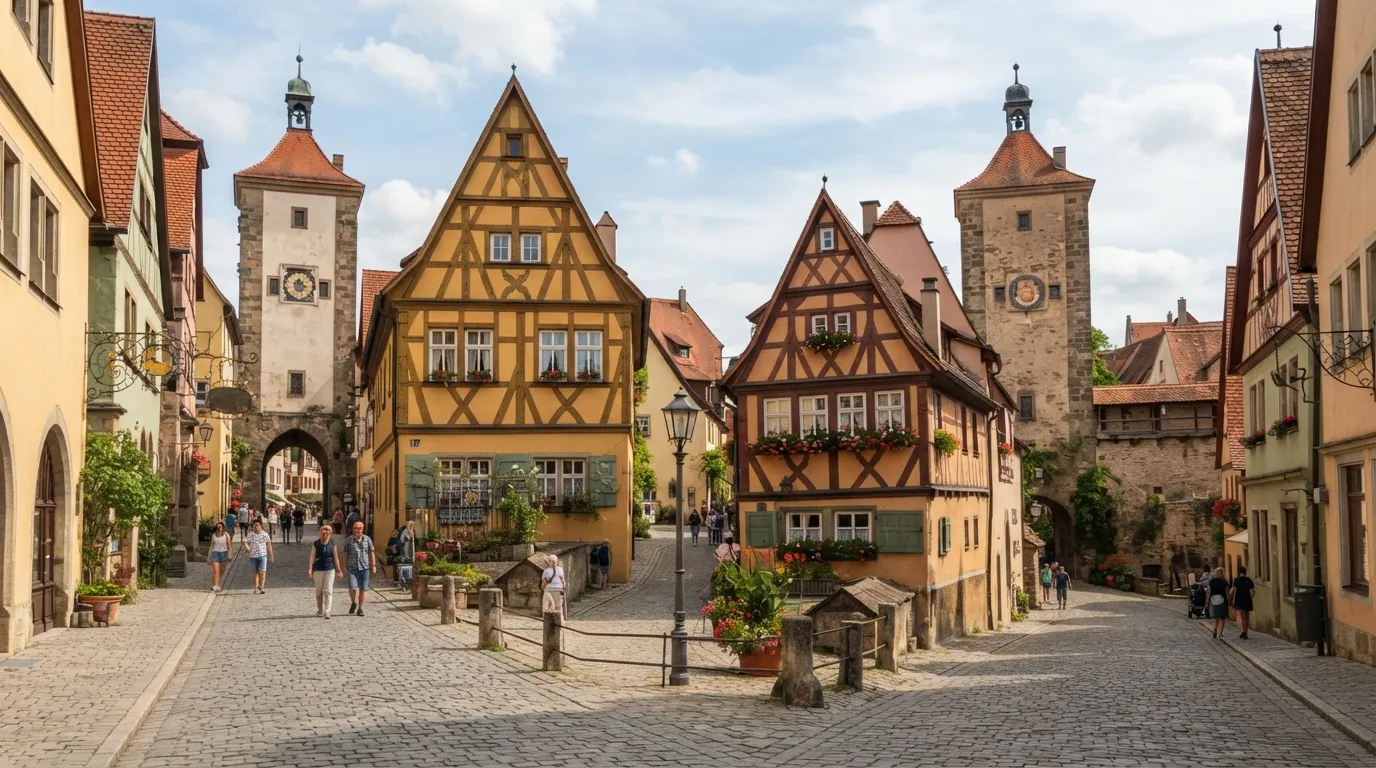
Few towns look as much like a storybook illustration as Rothenburg ob der Tauber in Bavaria. Half-timbered houses, steep roofs and old gates fill the center, and it is often linked to the look of Disney’s Pinocchio.
The history is more dramatic than the postcard. Bombing in March 1945 destroyed a large part of the old town, and a negotiated surrender helped spare the rest.
After the war, the community rebuilt with help from donors around the world. Today you can walk along the town’s historic wall for views over red roofs.
Don’t miss the Plonlein, the photogenic fork in the road with two towers. After dark, a night watchman tour turns the streets into a story.
The next town earned the nickname Little Venice, and the fairy-tale claims around it travel far beyond France.
#16 – Colmar, France, the Alsace Town Called Little Venice
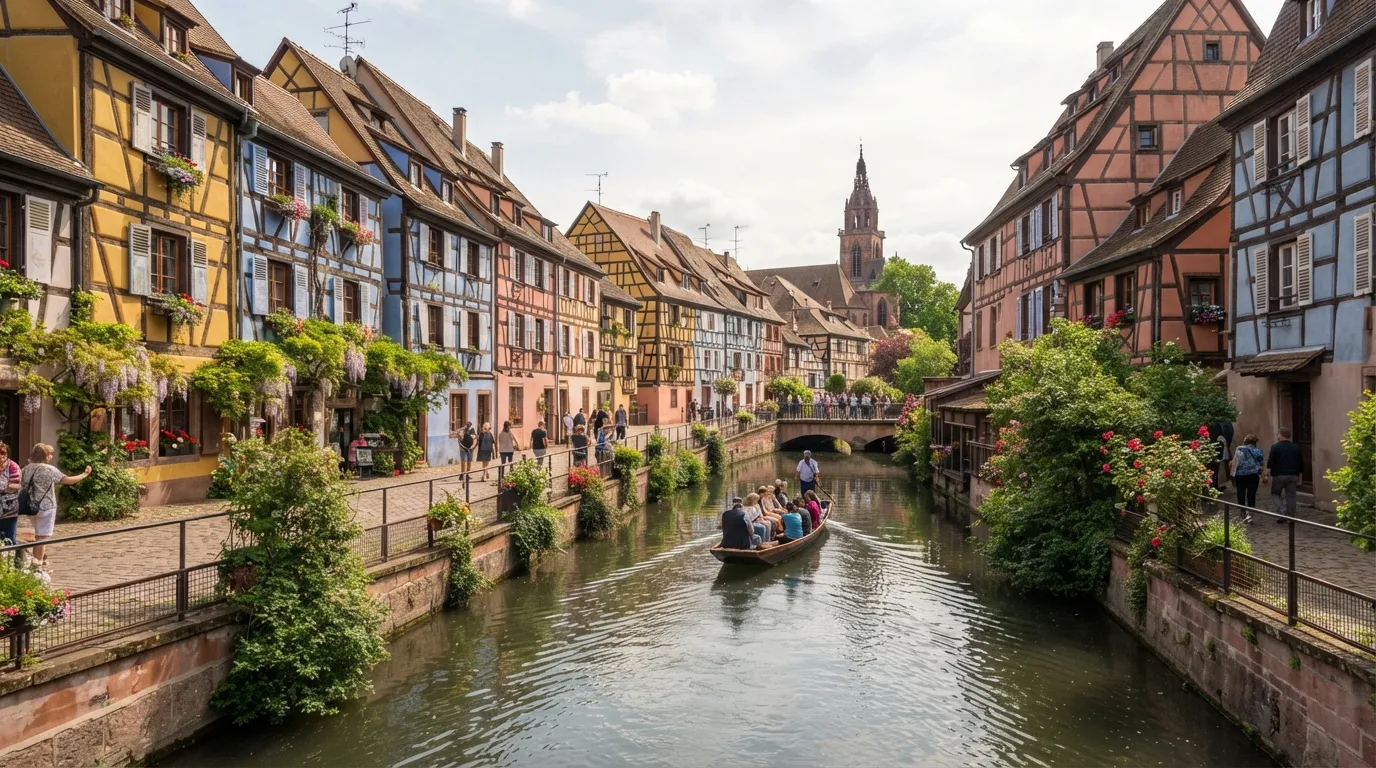
Colmar has a quarter of narrow canals and leaning half-timbered houses that reads like an animator’s sketch. The district is called Petite Venise, or Little Venice.
It is often mentioned as an inspiration for the look of towns in animated films, including Howl’s Moving Castle. Whatever the truth, the colorful facades and flower boxes make the comparison easy to believe.
The old canals were once used to carry goods to the houses, which is why the buildings lean so close to the water. Another surprise: Frederic Auguste Bartholdi, the sculptor of the Statue of Liberty, was born here in 1834.
For art lovers, the Unterlinden Museum is home to the Isenheim Altarpiece, painted in the early 1500s.
The next stop swaps medieval streets for a seaside village where houses have names instead of addresses.
#15 – Carmel-by-the-Sea, California, the Village of Storybook Cottages
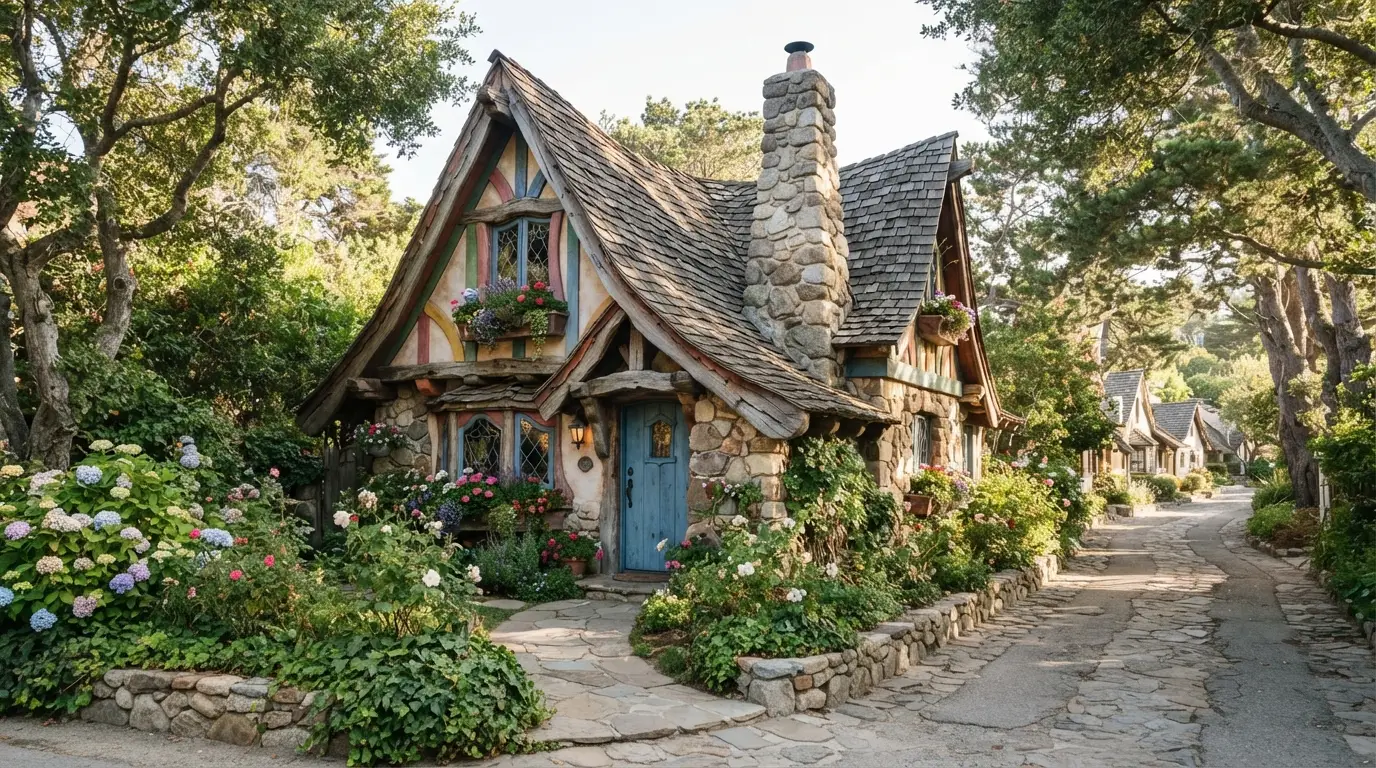
On California’s Central Coast, a village has built its reputation on whimsical cottages that seem to belong in a children’s book. Carmel-by-the-Sea leans into the idea.
The storybook look is often credited to builder Hugh Comstock, who began making fairy-tale cottages in the 1920s. Many have curved roofs, thick chimneys and playful windows.
Houses here are known by names rather than numbers. There is no home mail delivery, so residents have long gone to the post office.
Beyond the cottages, white sand and Monterey cypress trees frame the coast. Mission San Carlos Borromeo, founded in 1771, adds an older layer of history.
Next we cross the Atlantic to a Czech town where a river bends around a giant castle. Why does it look so impossible?
#14 – Cesky Krumlov, Czech Republic, the Town Wrapped in a River
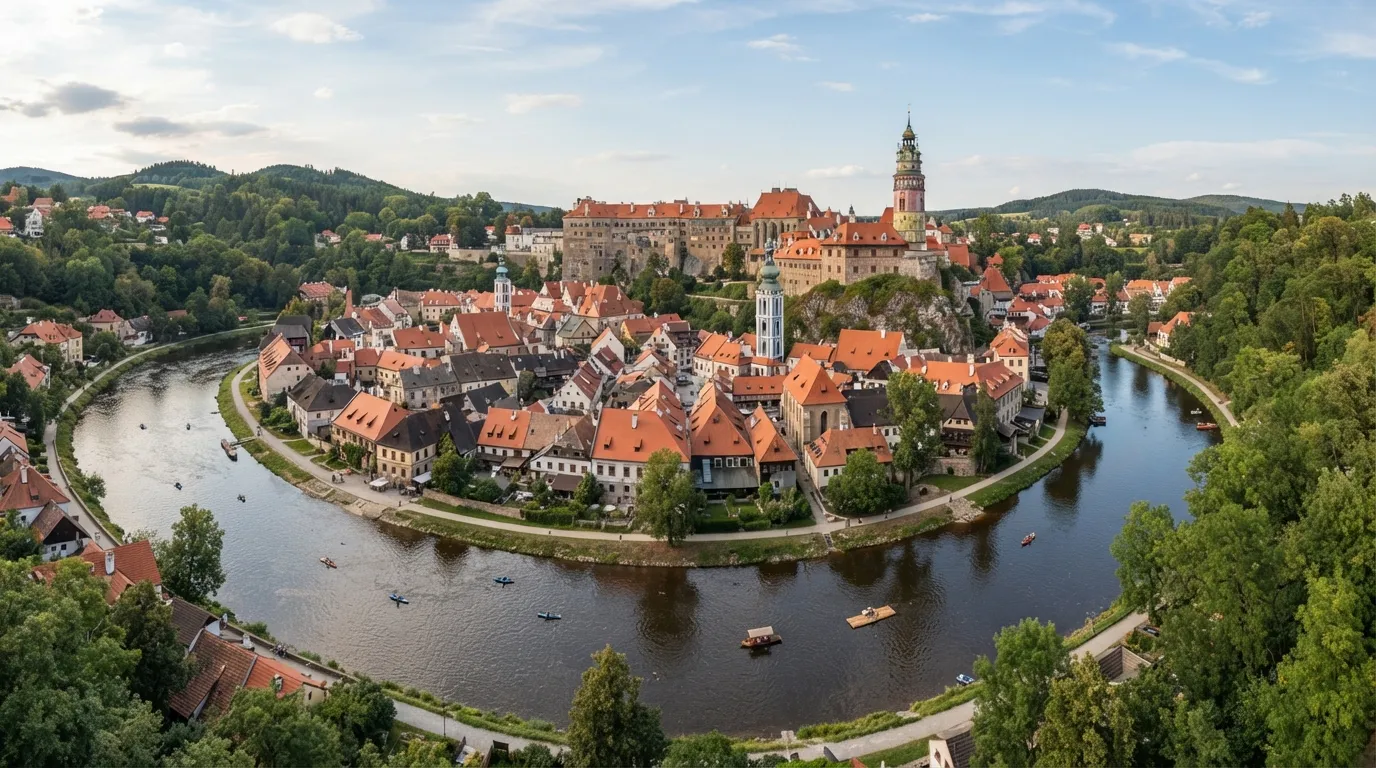
The Vltava River curls through Cesky Krumlov in tight loops, with red roofs piled along the banks. Above it all rises a castle that dominates the skyline.
The castle complex is the second largest in the Czech Republic, after Prague Castle. UNESCO inscribed the historic center in 1992.
Inside the castle grounds are some real surprises. There is a Baroque theatre with original stage machinery, and a revolving auditorium in the gardens that dates to 1958. Bears have lived in the castle’s bear moat since the early 1700s.
Worth Knowing
- The castle is second in size only to Prague Castle in the Czech Republic.
- The historic center joined UNESCO’s list in 1992.
- The garden’s revolving auditorium dates to 1958.
- The bear moat has housed bears since the early 1700s.
Summer festivals bring period costumes to the lanes. The river is a favorite spot for slow floating trips.
Next, a coastal village stacks its houses in bright colors above the sea. One festive tradition there will surprise you.
#13 – Manarola, Italy, the Cliffside Village of Candy Colors
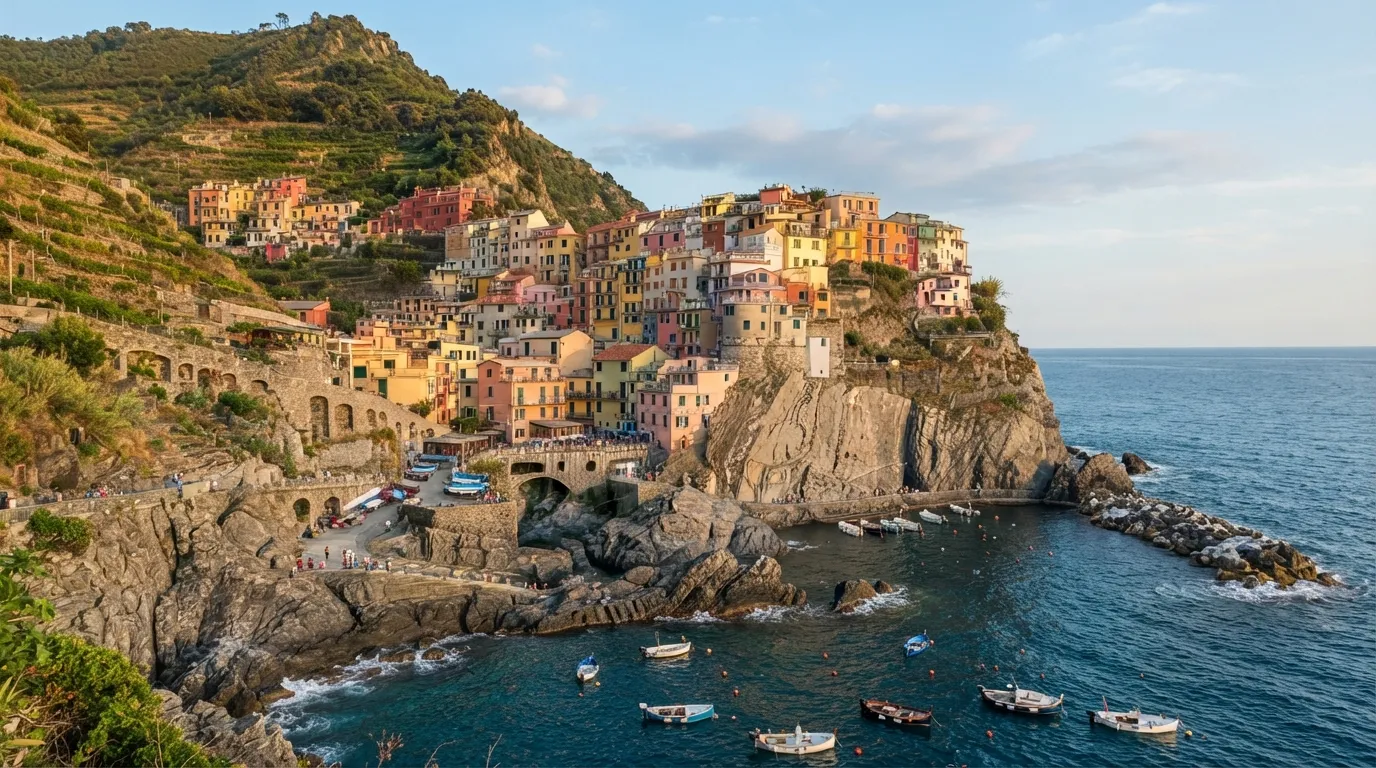
Manarola clings to a rocky cliff on the Italian Riviera, with tall houses painted in warm shades stacked above the sea. It is one of the five villages of Cinque Terre.
The area is protected as a national park and a UNESCO World Heritage site, listed in 1997. Vineyards climb the steep terraces, and the area is known for sweet Sciacchetra wine.
In winter, Manarola lights up a giant nativity scene on the hillside, with thousands of tiny lights. Called Presepe di Manarola, it has been described as one of the world’s largest.
The best views come from the trails above the village, looking back down at the harbor and the rooftops.
But our next stop is a hilltop with a castle that looks like it was designed by someone daydreaming. It was.
#12 – Sintra, Portugal, the Hill Town With a Palace Painted Like a Dream
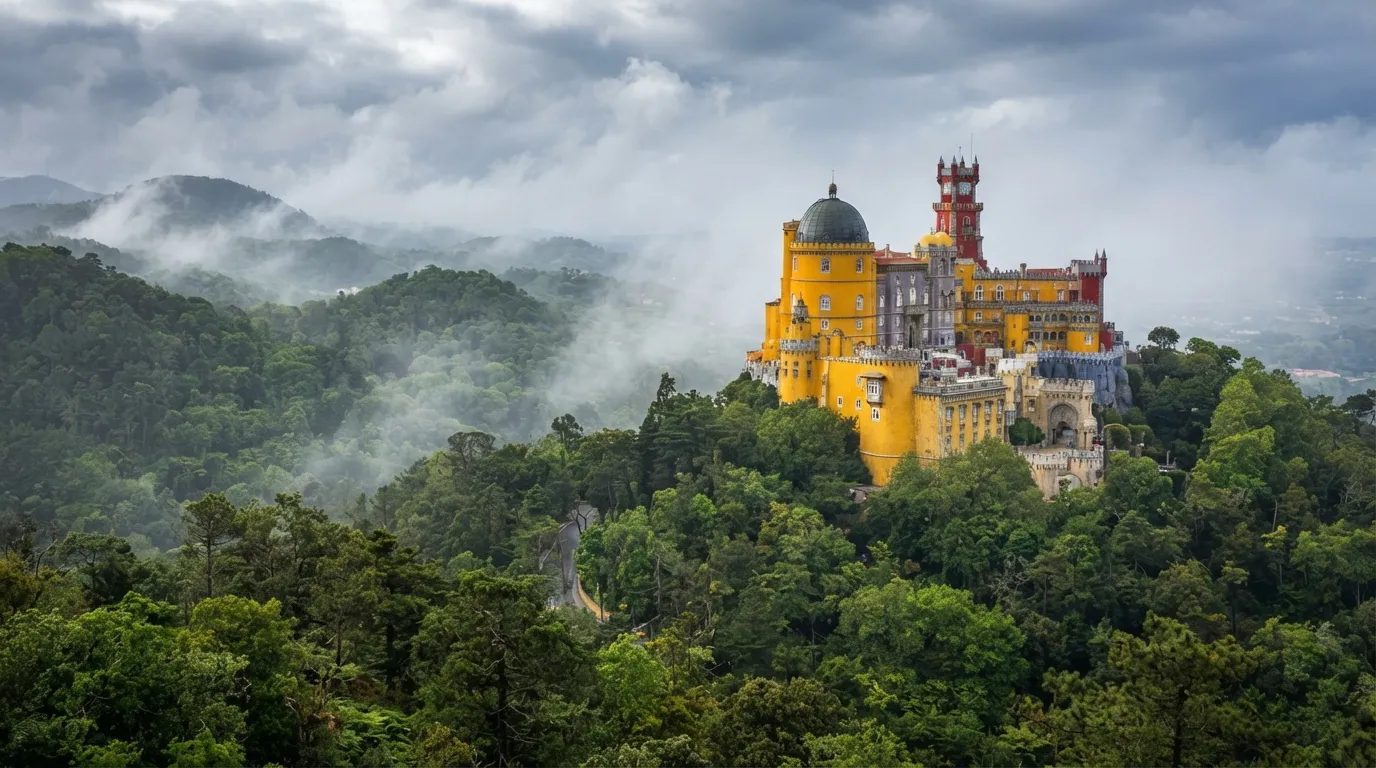
Up in the misty hills above Lisbon, Sintra seems to have been drawn by a storyteller. Pena Palace sits on a ridge in bright yellow and red, with towers and domes.
It was built in the 19th century under King Ferdinand II in the Romantic style. That mix of fantasy and mountain mist is what gives it a dreamlike feel.
Nearby is Quinta da Regaleira, with gardens, tunnels and a famous spiral initiation well. The whole landscape is part of a UNESCO site, listed in 1995.
Lo! Cintra’s glorious Eden intervenes
Lord Byron
That is how Byron described the place in Childe Harold’s Pilgrimage, and you can see why.
Next is a lake with an island church that you can reach only one way. Count the steps.
#11 – Bled, Slovenia, the Lake Town With an Island Church
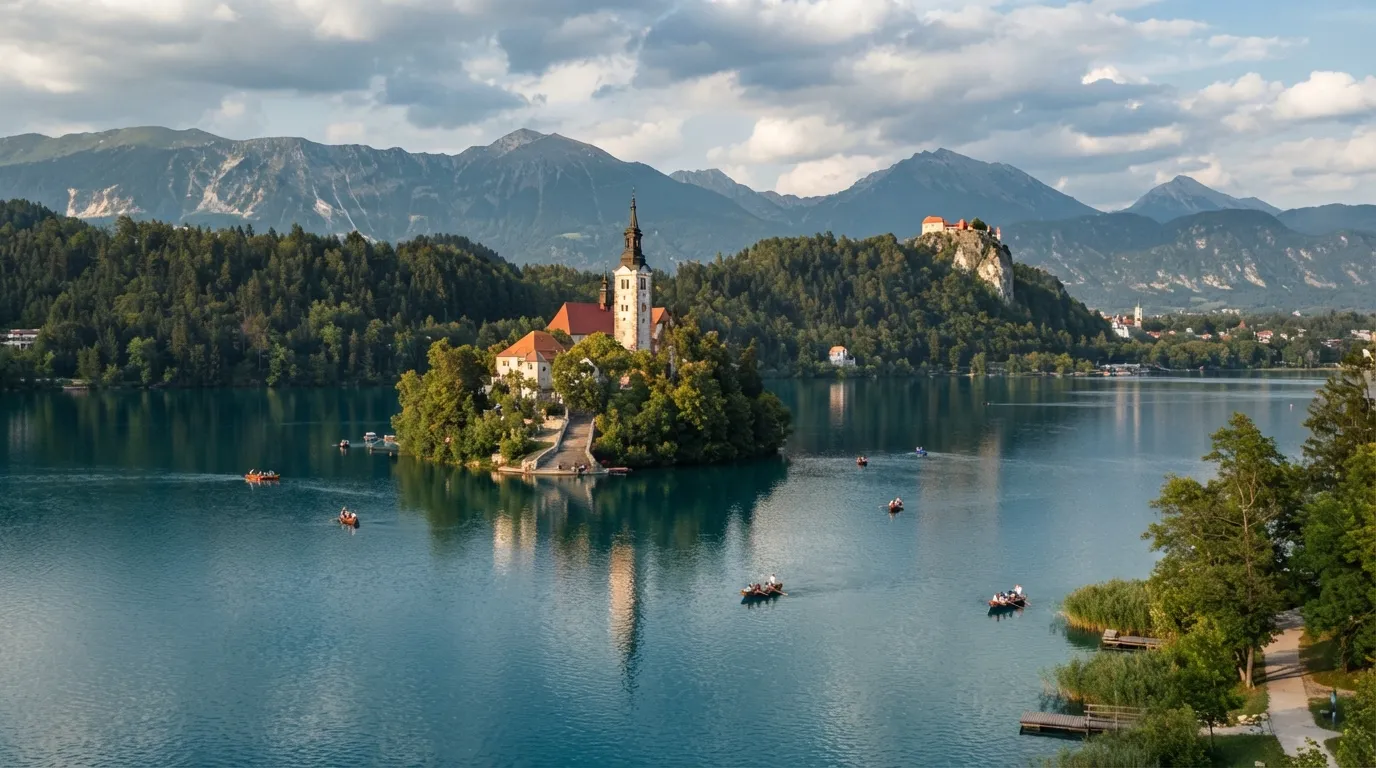
In the Julian Alps, a small church sits on a tiny island in the middle of Lake Bled. The church is the kind of image that makes people go quiet.
You reach the island by traditional wooden boat called a pletna. Once there, a flight of 99 steps leads up to the Church of the Assumption of Mary.
Inside is a wishing bell, and visitors ring it and make a wish. On a cliff above the lake, Bled Castle is often described as Slovenia’s oldest castle, first mentioned in 1011.
Don’t leave without trying the local cream cake, kremsnita, the regional specialty.
The next village is built in rings. Which medieval town is shaped like a snail shell?
#10 – Eguisheim, France, the Village Built in Circles
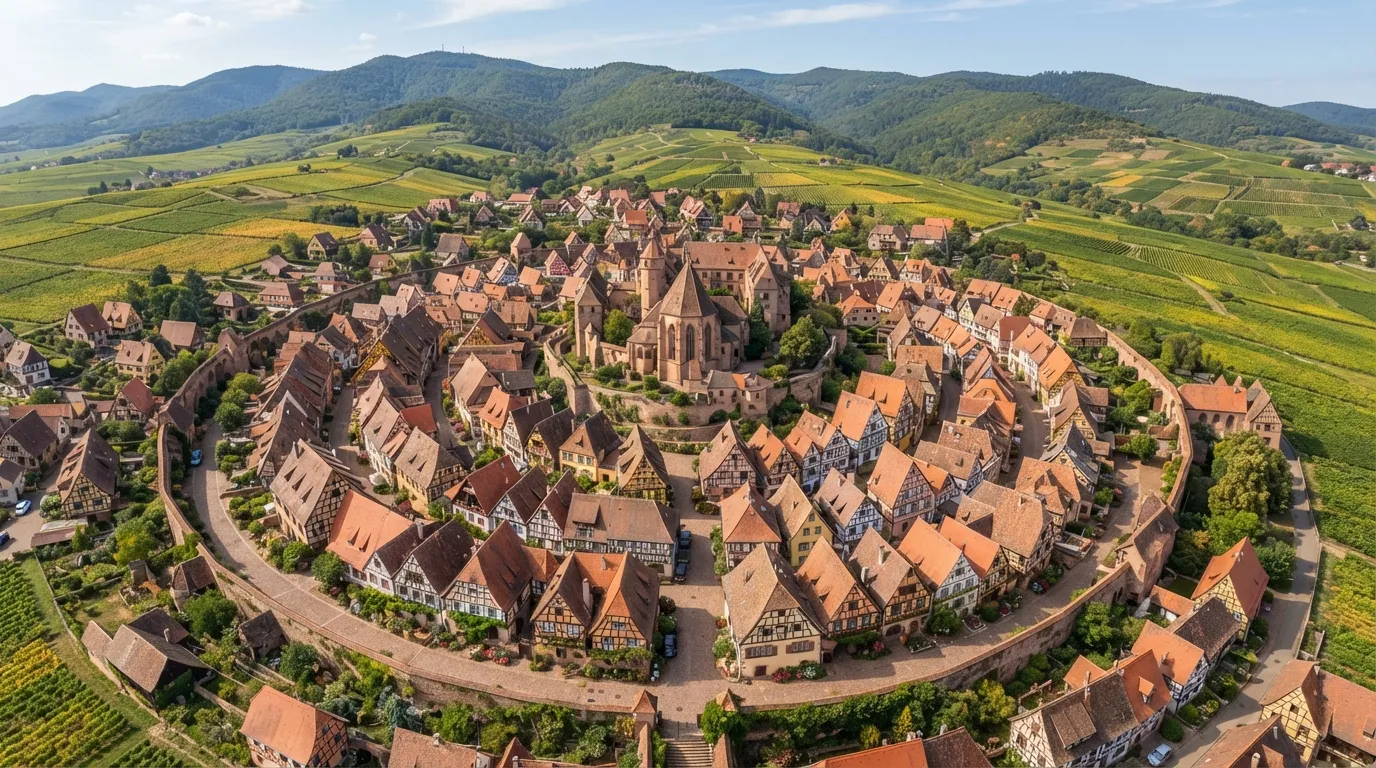
From above, Eguisheim in Alsace looks like a ripple of houses spreading outward. The village streets form concentric circles around a central castle.
The pattern is not random. The curved layout is tied to the village’s medieval defenses, and it makes every lane bend in a satisfying way.
At a Glance
- Region: Alsace, France
- Layout: concentric lanes circling a central castle
- Famous native: Pope Leo IX, born here in 1002
- Honor: voted France’s favorite village in 2013
Flower boxes hang from half-timbered houses, and storks are a familiar sight in Alsace. The surrounding vineyards produce well-known wines.
Next is a hilltop with a famous cheese, a castle and a very unexpected museum. Can you guess which?
#9 – Gruyeres, Switzerland, the Castle Town Behind a Famous Cheese
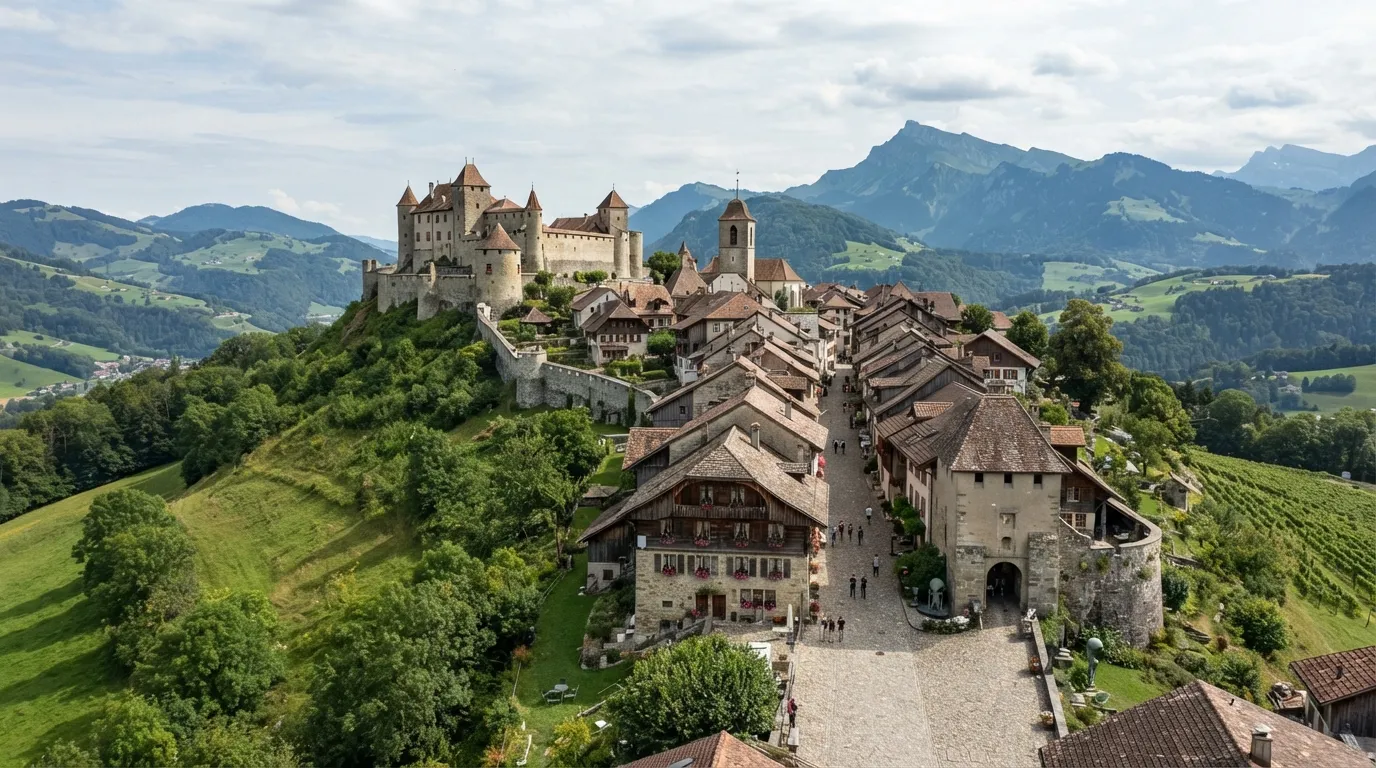
Gruyeres sits on a hill in Switzerland’s Fribourg region, crowned by a medieval castle. A cobbled main street runs from the gate straight toward it.
The cheese that shares its name is protected as Le Gruyere AOP, and it is made in several regions of Switzerland. You can see how it is made at the demonstration dairy at the foot of the hill.
Gruyeres also has a surprising side. The town is home to a museum dedicated to H.R. Giger, the artist who designed the creature for the film Alien.
The Cailler chocolate factory in nearby Broc adds another delicious stop.
The next town has a castle that looks ancient but is actually newer than it seems. What is the twist?
#8 – Cochem, Germany, the Moselle Town Under a Hilltop Castle
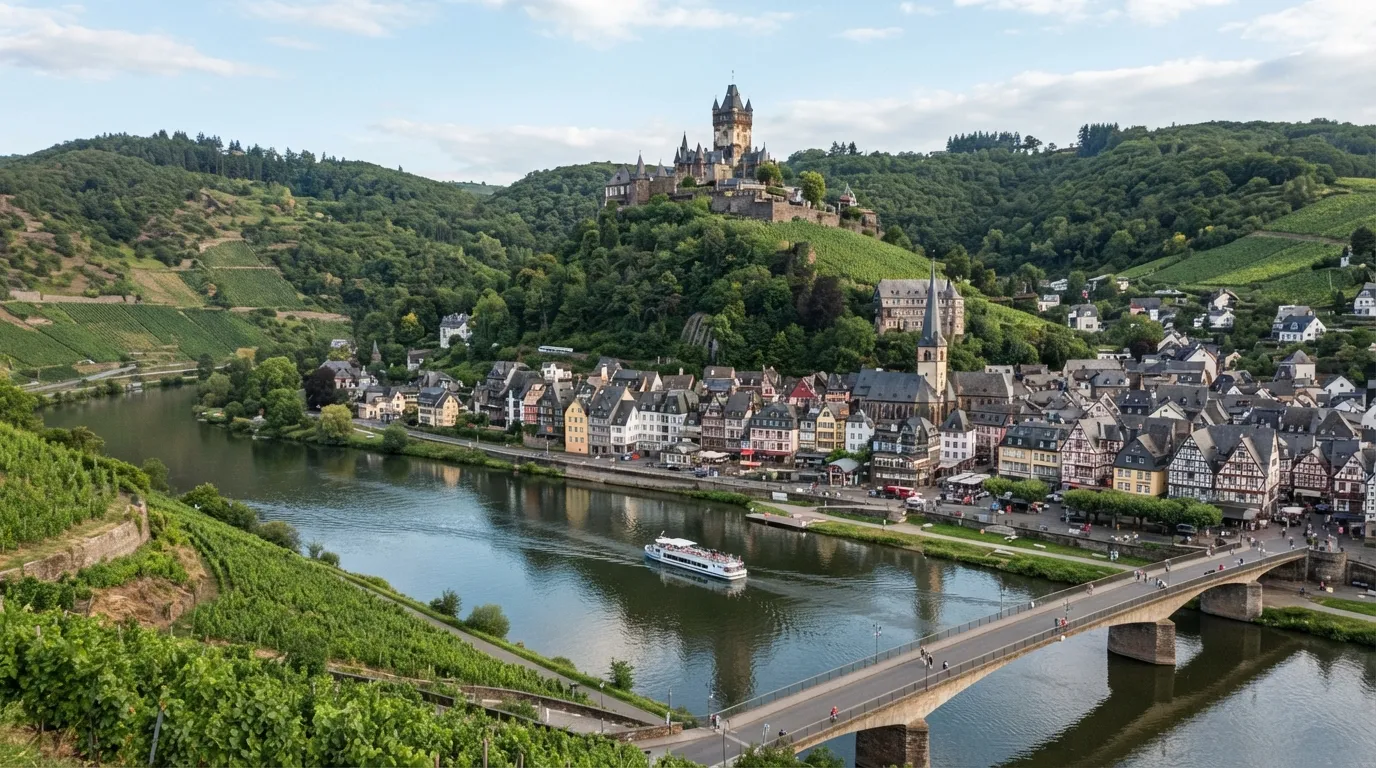
Along the Moselle River, the town of Cochem tucks its houses beneath a castle on a hill. Vineyards on the slopes frame the picture.
The castle, Reichsburg Cochem, was damaged by French troops in 1689. It was rebuilt in the 1870s in a Gothic Revival style, which gives it the fairy-tale silhouette you see today.
Look for the half-timbered houses clustered around the market square. The surrounding region is known for Riesling.
A river cruise or a walk across the bridge gives the best view of the whole scene.
The next one has a bridge that doubles as a gateway. Which Spanish town still enters through the Middle Ages?
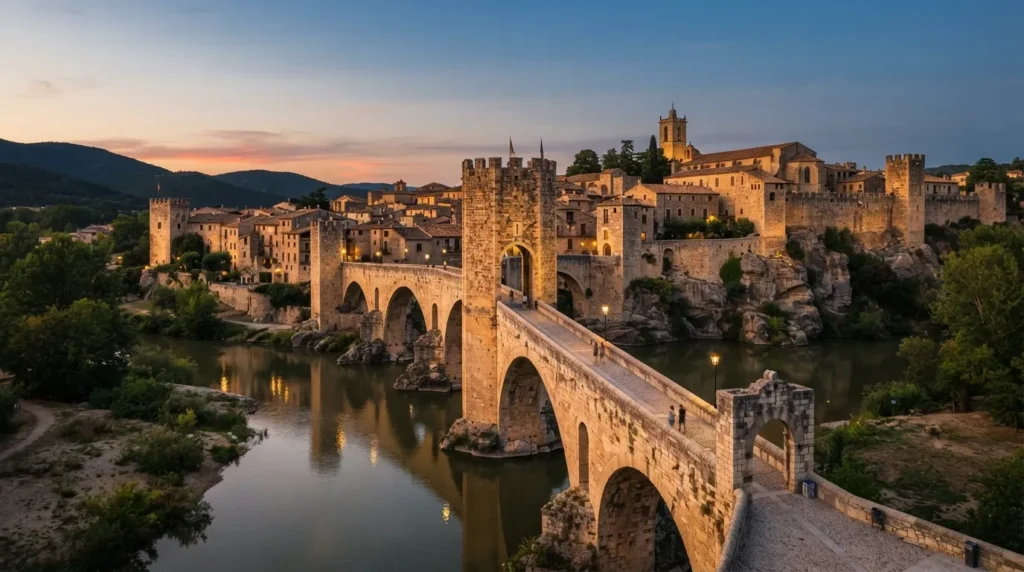
#7 – Besalu, Spain, the Medieval Town With a Fortified Bridge
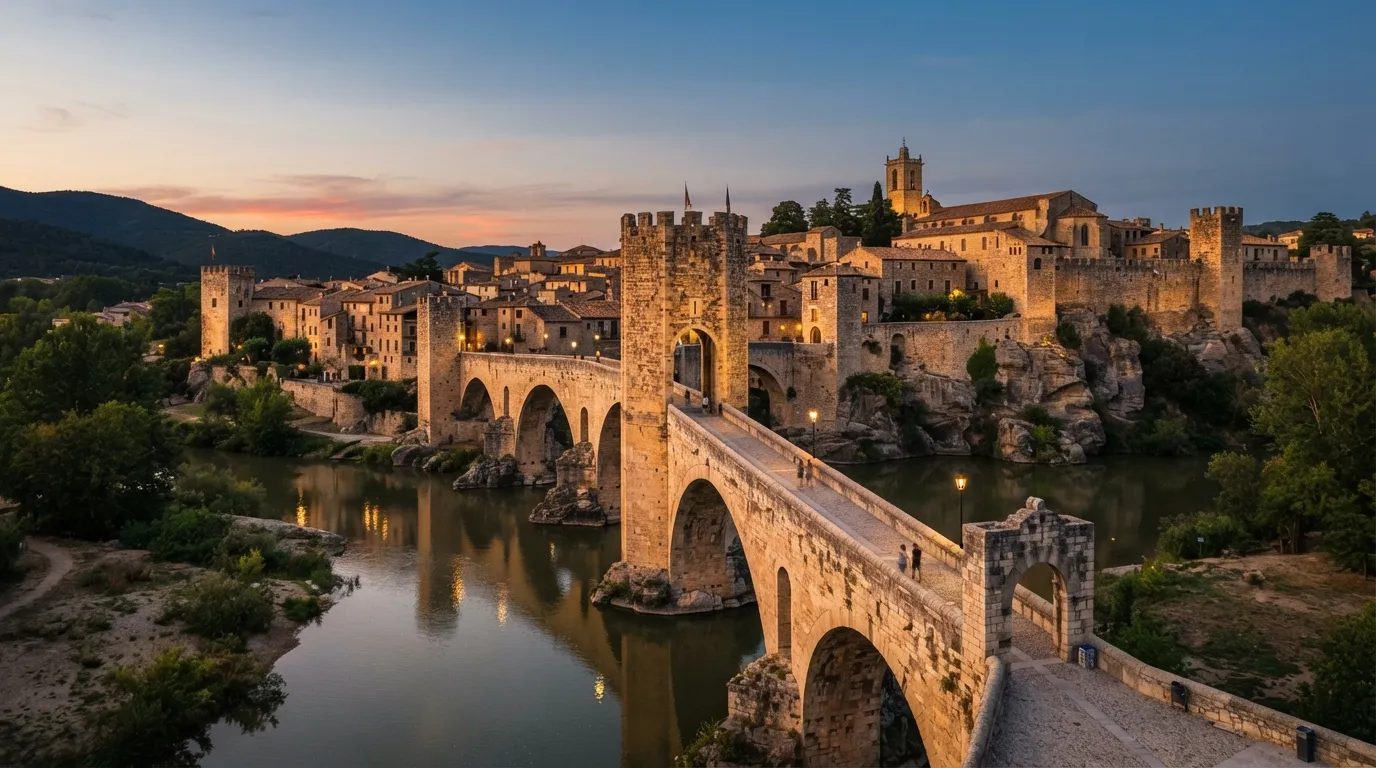
In Catalonia, the town of Besalu is entered by a stone bridge that looks like a drawing from a legend. The Romanesque bridge crosses the Fluvia River and is fortified with a tower in the middle.
The bridge dates to the 12th century. It was damaged during the Spanish Civil War and later rebuilt, so what you cross is a careful restoration.
Besalu also holds a rare medieval Jewish ritual bath, or mikveh, from the 12th century. It is one of the few of its kind to survive in Europe.
A monastery founded in the 10th century adds more ancient stone. Wander the lanes at dusk and everything glows golden.
The next town is a river city with a saxophone secret.
#6 – Dinant, Belgium, the Cliffside Town Where the Saxophone Was Born
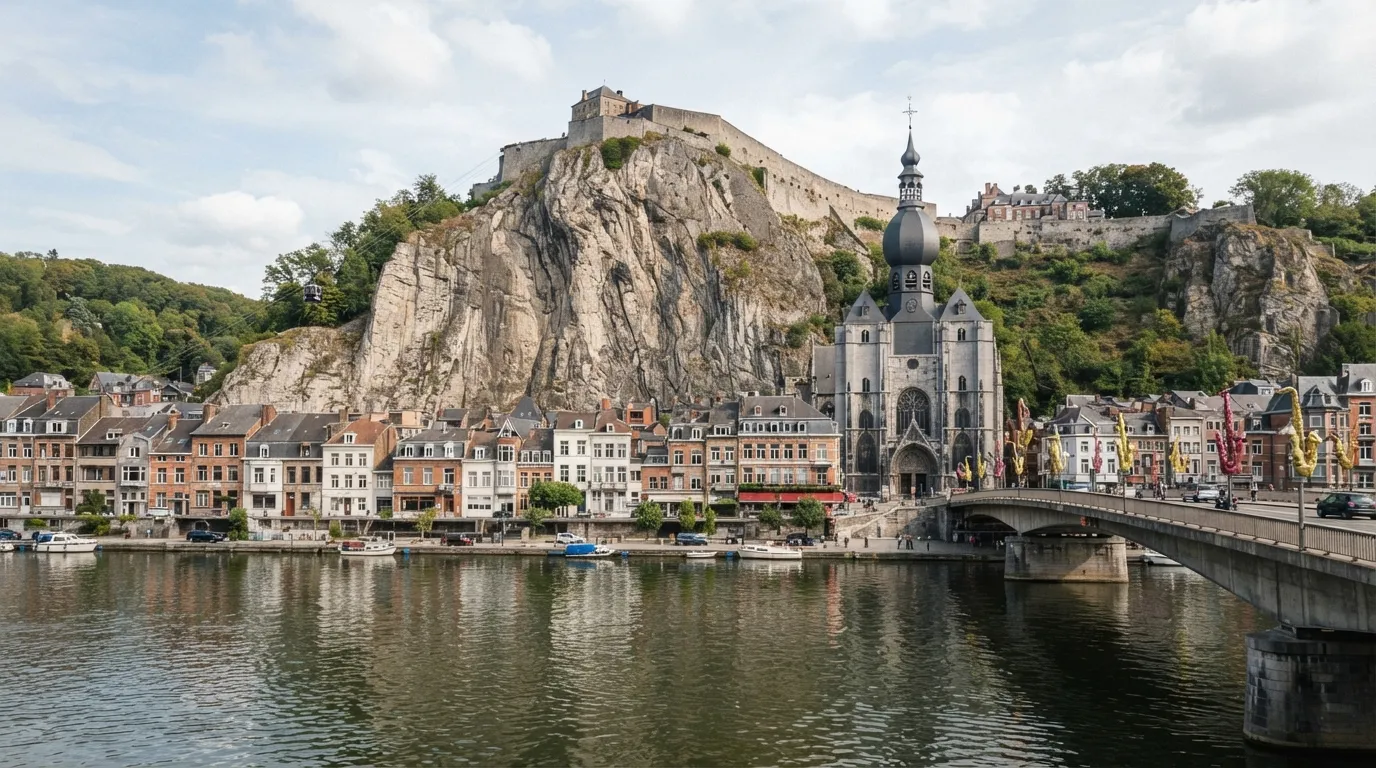
Dinant squeezes along the Meuse River under a limestone cliff. Above the water, a citadel and a church with a bulbous tower stand out.
Adolphe Sax, the inventor of the saxophone, was born here in 1814. Today Dinant celebrates that fact with saxophone decorations along the river bridge.
The citadel is reached by cable car or on foot. Its current form dates from the early 19th century, and the view from the top is a favorite.
Don’t leave without trying a couque de Dinant, the town’s famously hard honey biscuit.
The next village is a bit of an English icon, and it has been on something you carry in your pocket.
#5 – Bibury, England, the Village of Arlington Row
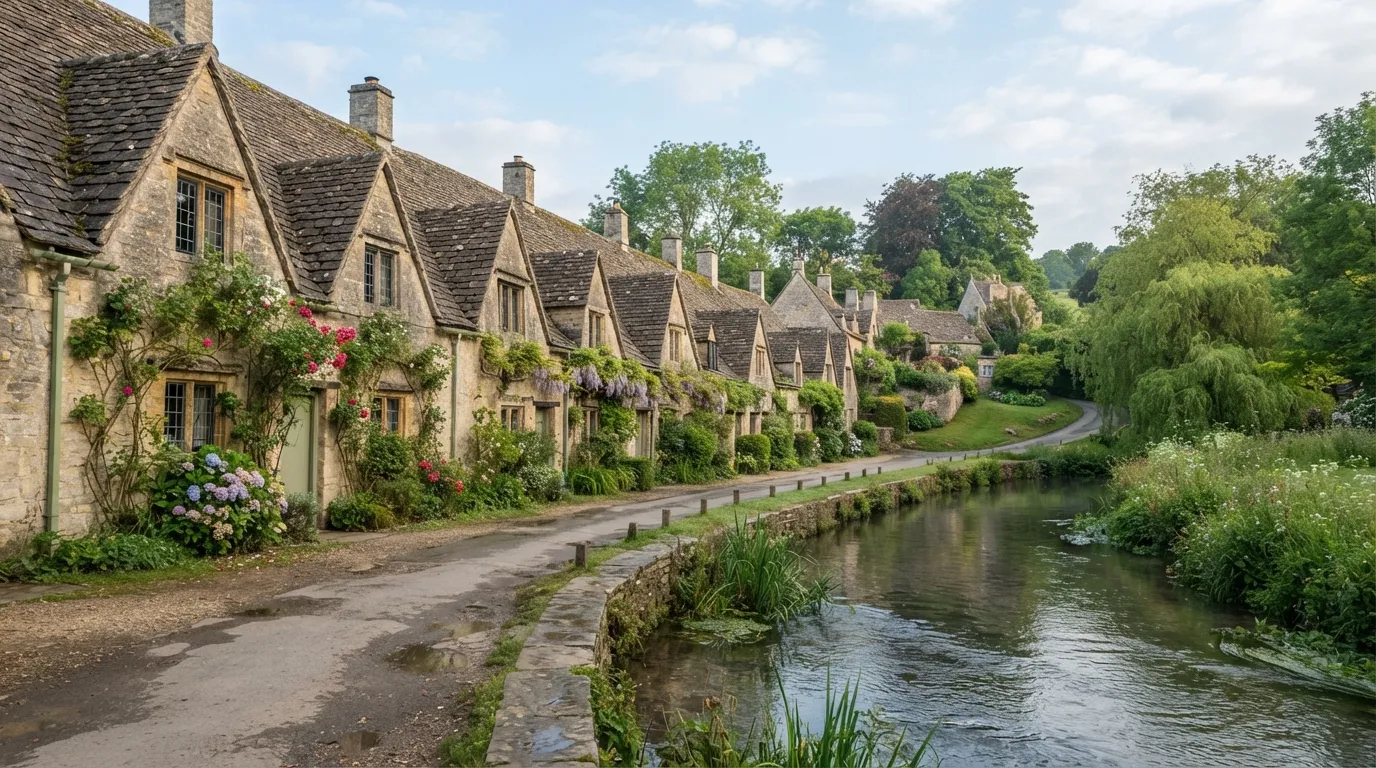
In the Cotswolds, a line of old stone cottages sits beside a stream. That row is Arlington Row, and it is one of the most photographed spots in England.
The buildings date back to the 14th century, and later became weavers’ cottages in the 17th century. William Morris is often credited with calling Bibury the most beautiful village in England.
The River Coln runs right alongside, and the cottages’ steep roofs and honey-colored stone are a Cotswold classic. Arlington Row has even featured in UK passport artwork.
Nearby you can visit a trout farm and Arlington Mill. Come early, because the postcard crowd arrives fast.
The next town is full of white stone cones, and the story of why is said to involve tax collectors.
#4 – Alberobello, Italy, the Town of Cone-Roofed Trulli
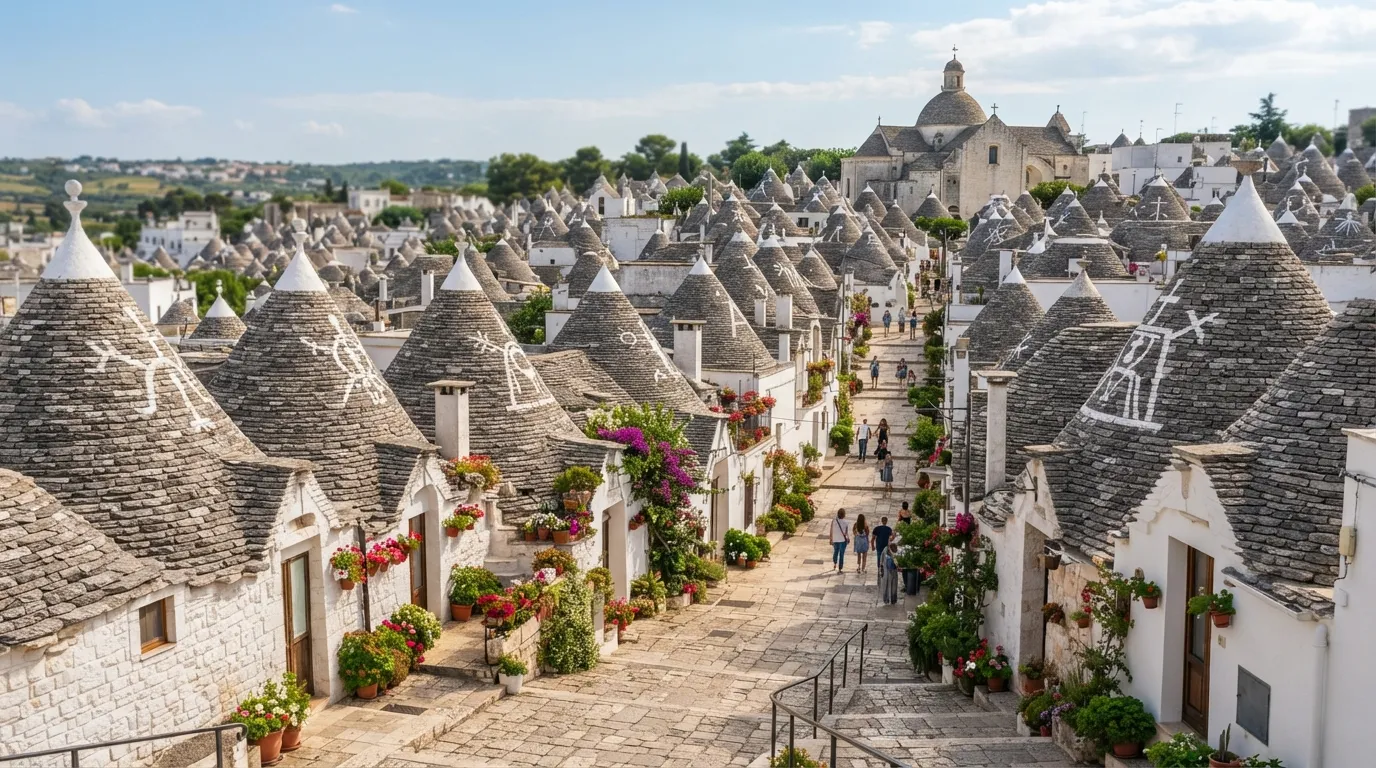
In Italy’s Puglia region, white stone houses with cone-shaped roofs crowd the hillside. They are called trulli, and they look like something out of a gnome village.
Alberobello has around 1,500 of them, mostly in the Rione Monti and Aia Piccola districts. They are built from dry stone, without mortar.
Why It Stands Out
- Around 1,500 trulli fill the town.
- The densest clusters are in Rione Monti and Aia Piccola.
- The walls are dry stone, stacked without mortar.
- UNESCO inscribed the trulli in 1996.
Local legend says the dry-stone method let houses be taken apart quickly when tax inspectors came. Whether or not that is the full story, the effect is unforgettable.
Some roofs are painted with symbols, adding a hint of mystery to the white cones.
Next we jump back to the United States, to a place that borrowed a whole country’s style. Can you guess which?
#3 – Leavenworth, Washington, the Mountain Town That Became Bavaria
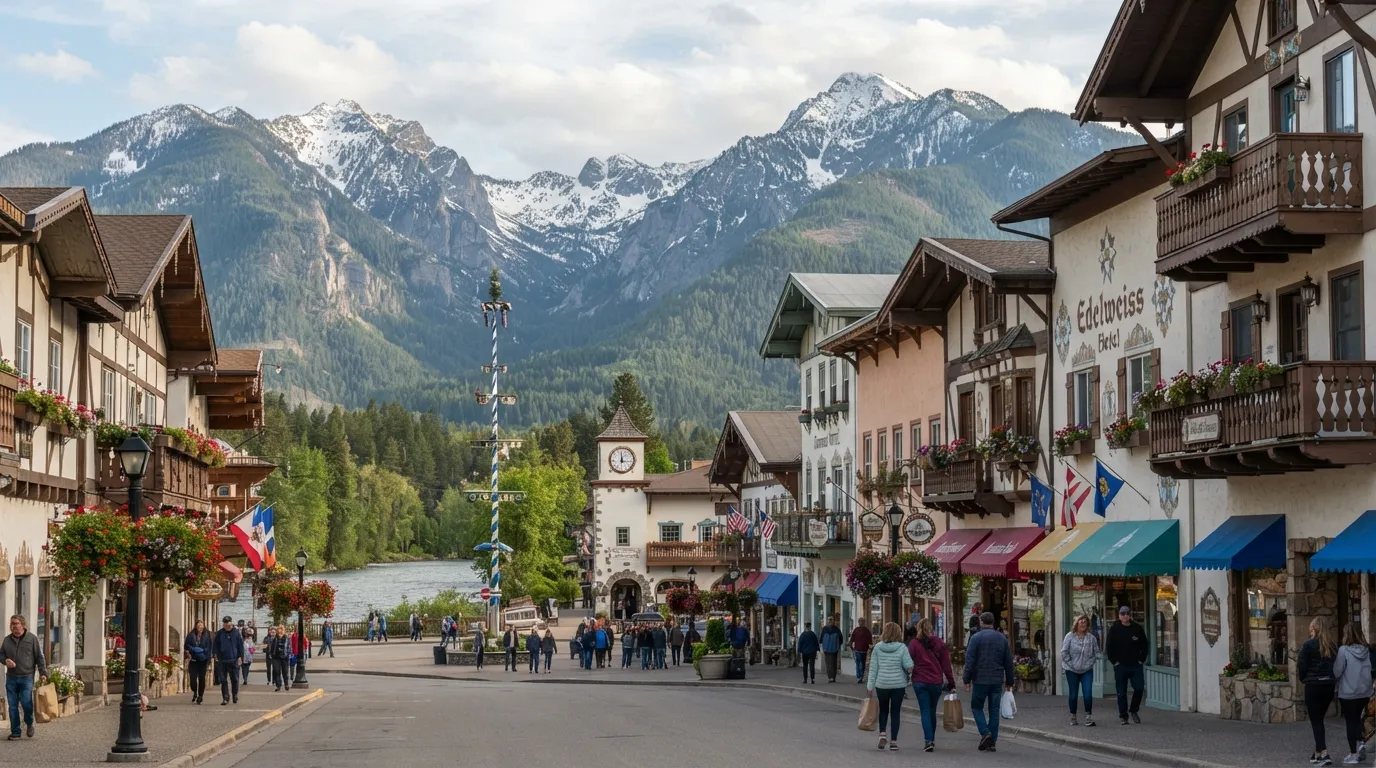
In the Cascade Mountains, a Washington town looks like a Bavarian village. Leavenworth has half-timbered buildings, painted shutters and alpine-style details.
It was not always so. The town was a lumber and railroad community, and after the railroad moved its operations, it reinvented itself in the 1960s with a Bavarian theme.
Today the Bavarian look is the draw. Festivals like Oktoberfest and the Christmas lighting turn the streets into a winter scene.
The mountains and the Wenatchee River frame the town. It is a real transformation, and a surprisingly successful one.
There is one more American village in this style, and it has a Danish accent. It is next.
#2 – Solvang, California, the Danish Village in Wine Country
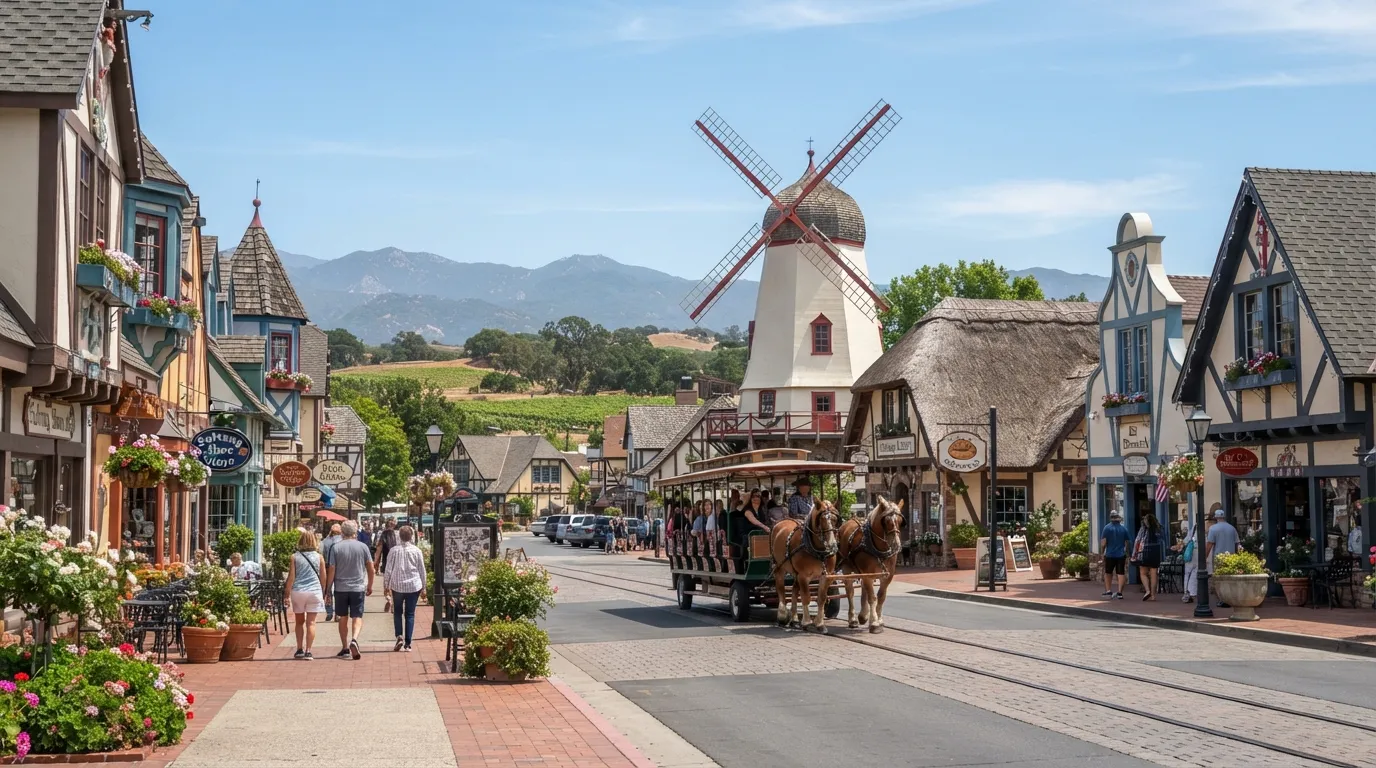
In the Santa Ynez Valley, Solvang is a Danish village with windmills and half-timbered buildings. Its name means sunny field.
It was founded in 1911 by Danish-American educators who wanted to create a community around a folk school. The Danish theme grew strongly in the decades after.
Quick Compare
- Leavenworth, Washington: Bavarian theme, adopted in the 1960s.
- Solvang, California: Danish village, founded in 1911.
- Leavenworth’s backdrop: the Cascade Mountains and Oktoberfest.
- Solvang’s backdrop: windmills, pastries and wine country.
Bakeries sell Danish pastries and aebleskiver, the round pancake puffs. A horse-drawn trolley rolls through town, and the Hans Christian Andersen Museum adds a storytelling touch.
Solvang is also close to the wine country that appeared in the 2004 film Sideways. Nearby Mission Santa Ines dates to 1804.
And now the number one: a lake village so perfect, someone built a copy of it.
#1 – Hallstatt, Austria, the Lakeside Village So Perfect China Built a Copy
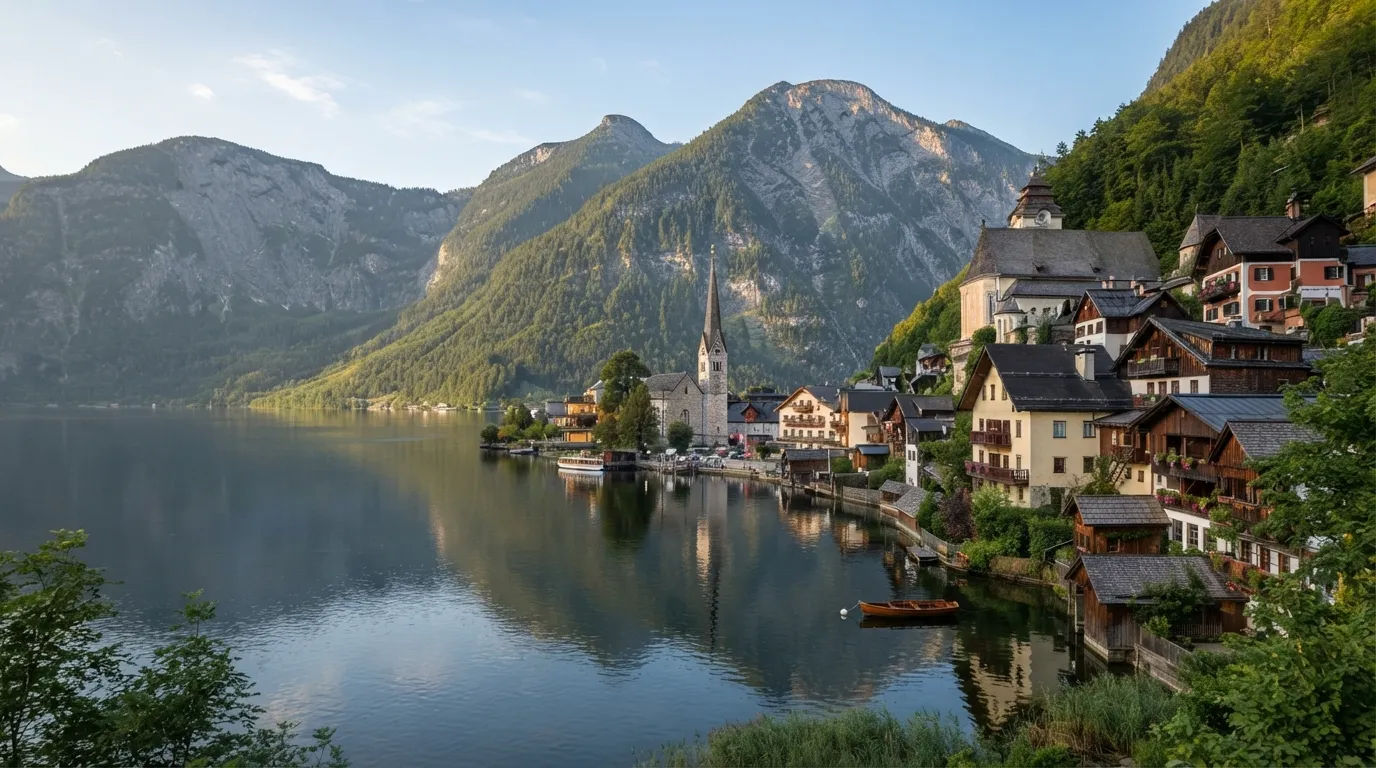
Hallstatt sits on a narrow strip of land between a mountain lake and steep rock. Its houses cluster along the shore, with a church spire above them.
It is part of the Hallstatt-Dachstein Salzkammergut UNESCO site, listed in 1997. Salt mining here goes back thousands of years, and the salt mine above the village is often said to be around 7,000 years old.
There is more. In the village a small chapel holds the charnel house, a collection of painted skulls kept because graveyard space was limited.
Hallstatt was copied, too. A replica was built in Guangdong, China, in 2012, and the story made headlines around the world.
Arrive early or stay overnight and you may catch the quiet hour before the day trippers arrive, when the lake is still and the village feels like it belongs to you.
That is the thread running through all 22. Fairy-tale towns survive where geography is dramatic and where someone, whether a medieval builder or a modern villager, cared enough to keep the story intact.
CEO-Co-Founder