
Most people think the hard part of a first campervan night is finding somewhere to park, but the real surprises (local orders, tight access roads, waste points and hookups) usually show up only after the engine is off.
Here are 17 details that can turn a calm first night into a scramble, starting with the one that can get a parked van moved on and ending with the habit that decides whether a spot stays available.
#17 – Local Parking Ordinances Override General Assumptions
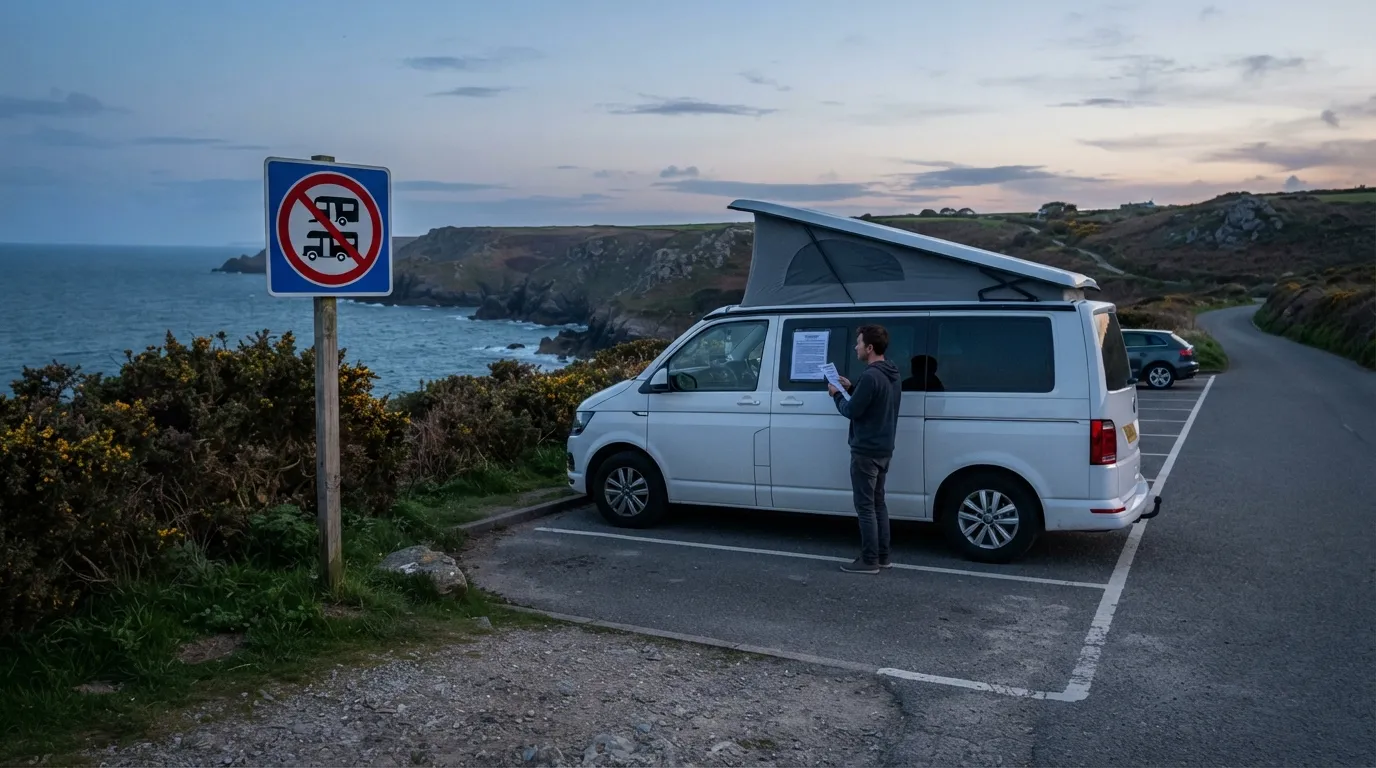
Many drivers assume a public road or lay-by will allow an overnight stay without fuss. Council parking orders and Public Spaces Protection Orders can restrict or ban sleeping in vehicles, even where ordinary parking looks perfectly fine.
Posted signs beat assumptions, so read them and check council details before you settle in. Road or lay-by parking must still follow the Highway Code on direction and lights where limits exceed 30 mph. Private land generally needs the owner’s permission.
Staying in a vehicle without consent can draw enforcement when it causes disruption.
Next up: the problem that can leave you staring at a gate your van will not fit through.
#16 – Vehicle Size Limits Road and Site Access More Than Expected
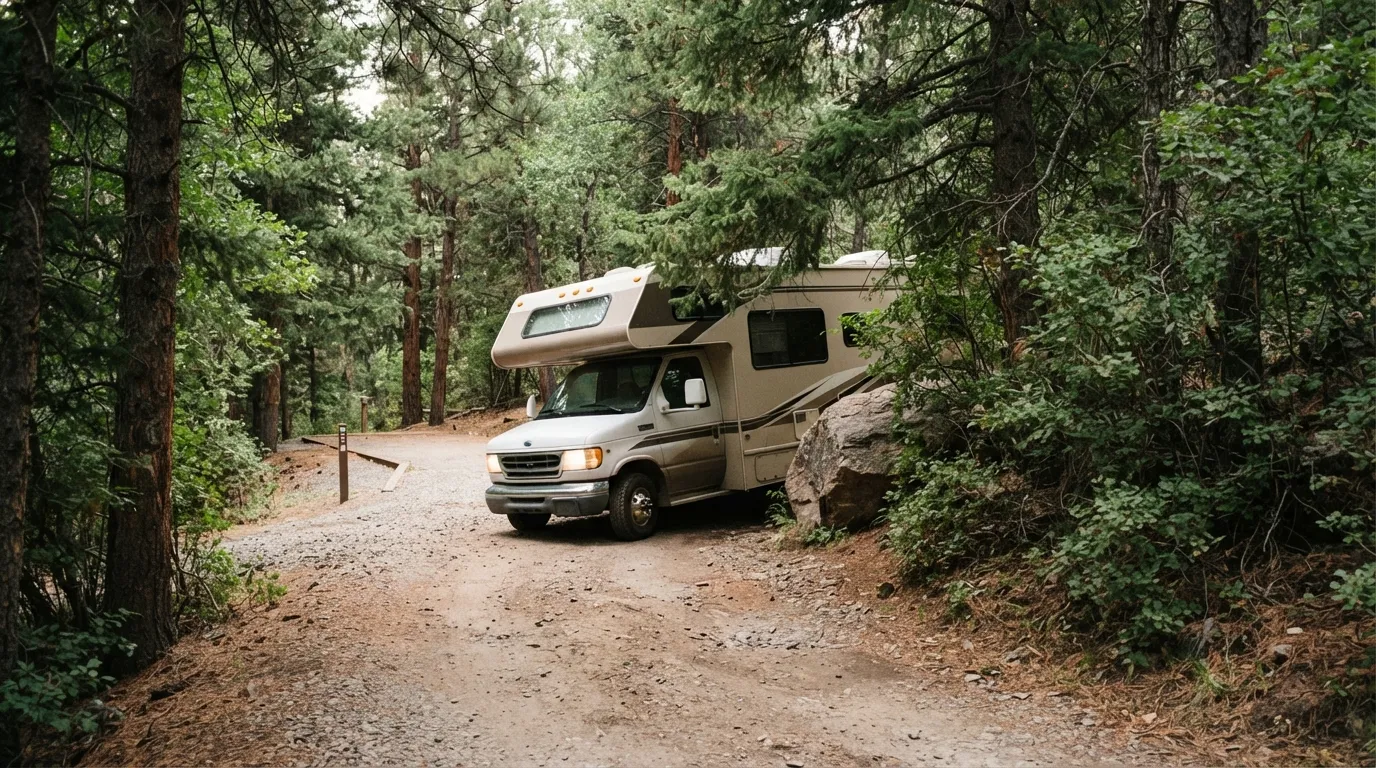
Length, height and turning radius can exceed what narrow forest roads or older campsite pads can handle. National Park Service guidance notes that a listed maximum length may apply to the RV alone or to the full combination, and a reservation does not guarantee fit.
Measure your rig, including any tow vehicle. Confirm access roads, clearances and pad design in advance, and remember that slide-outs need extra room that can intrude on roads or neighboring sites.
Many first-timers discover on arrival that their van cannot reach the booked pitch.
Now for the spot that looks welcoming right up until you unfold a chair.
#15 – Stealth Spots Demand No Visible Setup
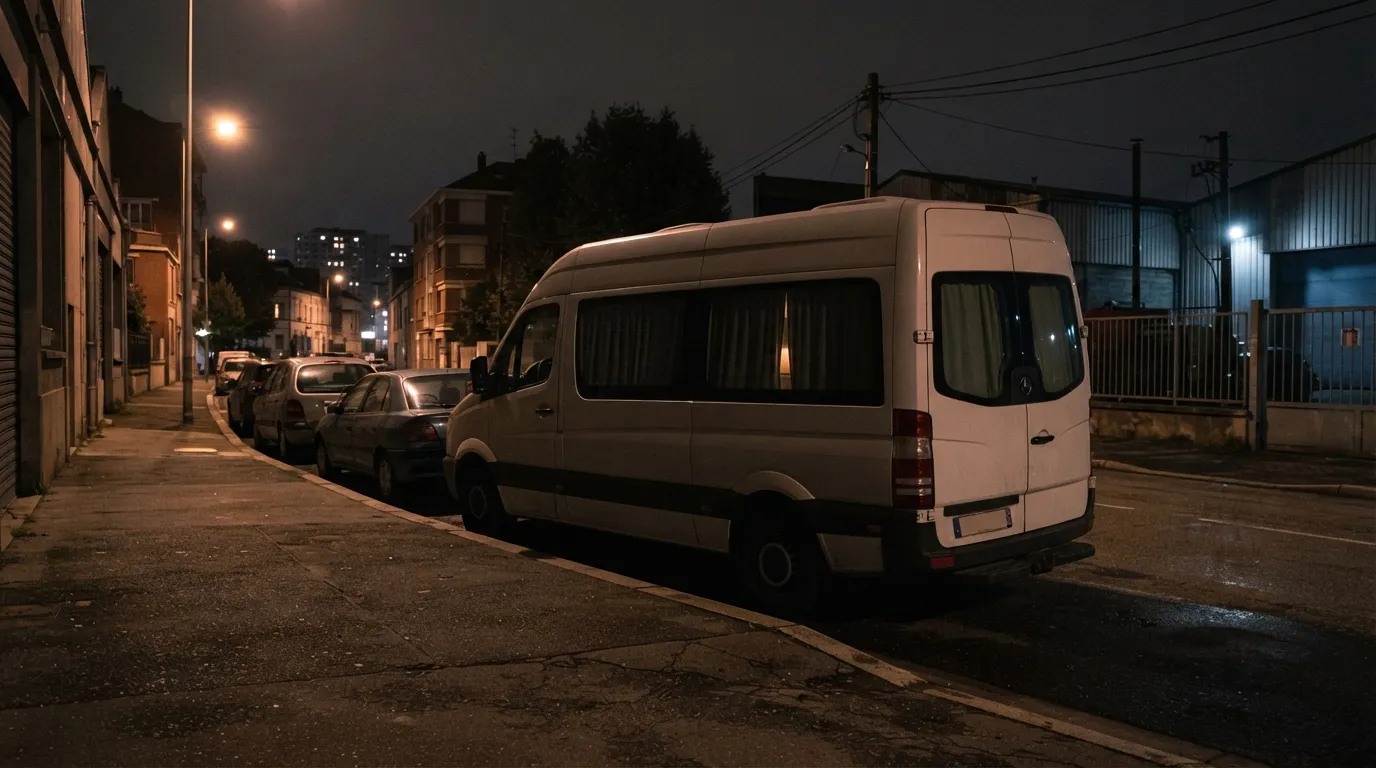
An urban or retail lot can feel like a free campsite. It is not, and setting out chairs, awnings or cooking gear turns tolerated parking into something that draws attention and complaints.
Keep the van looking like it is simply parked. Close the curtains before dark and keep lights low. Many locations tolerate one night only, and only when no camping activity is visible.
Quick Compare
- Looks parked: curtains closed, lights low, nothing outside the van.
- Looks camped: chairs, awning or stove set out on the pavement.
- Looks parked: one quiet night, then gone.
- Looks camped: a second night in the same urban spot.
Industrial or mixed-use streets tend to cause fewer neighbor concerns than residential blocks.
Then there is the chore nobody pictures when they imagine van life.
#14 – Waste Disposal Points Require Specific Preparation
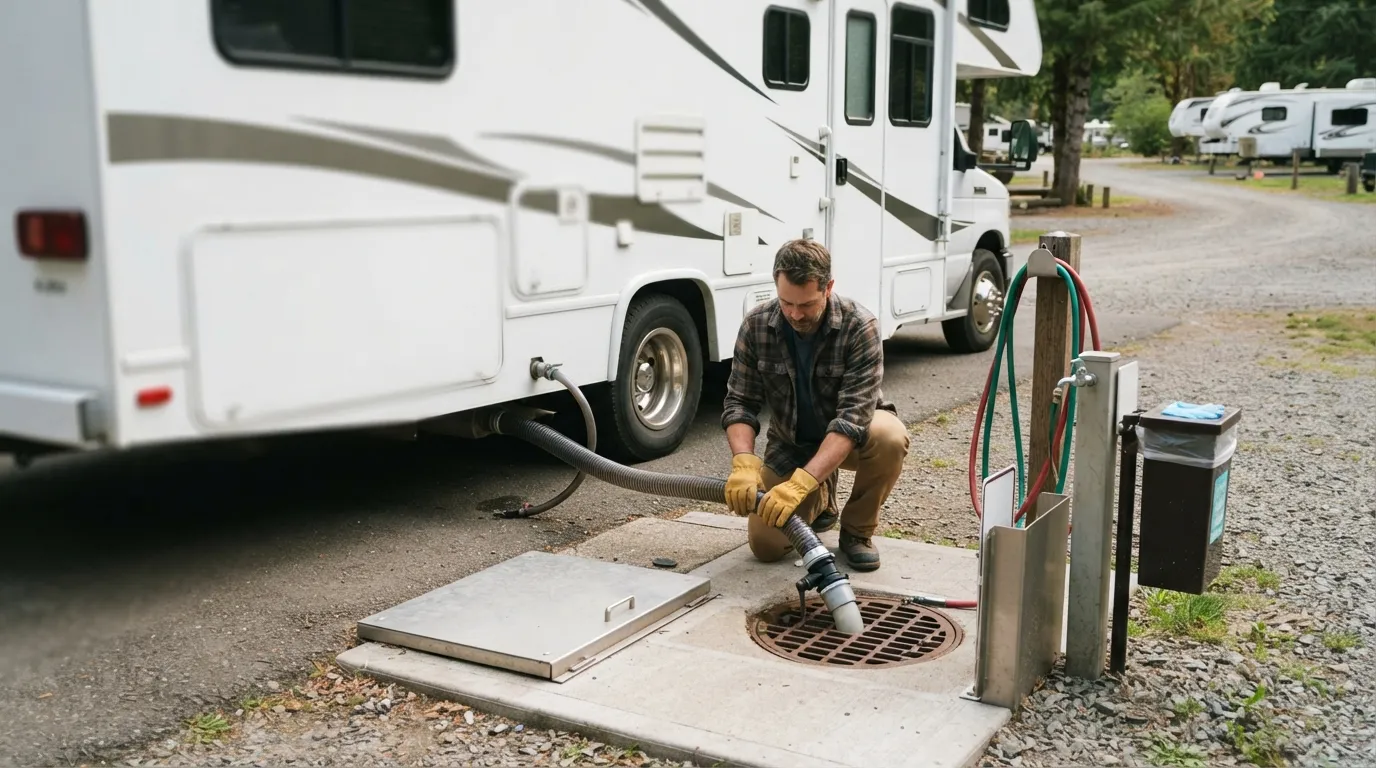
Dump stations expect you to arrive ready, with gloves, hoses and adapters in hand. Blocking the lane while you dig through lockers frustrates everyone behind you and can lead to restrictions at the site.
Only black and grey water belong in the sewer inlet. Never add grease, chemicals or trash. Rinse the area thoroughly and leave it cleaner than you found it.
A separate non-potable rinse hose prevents cross-contamination with fresh water supplies.
Even prepared drivers get the order wrong, and that is where the mess starts.
#13 – Tank Dumping Order Prevents Hose Blockages
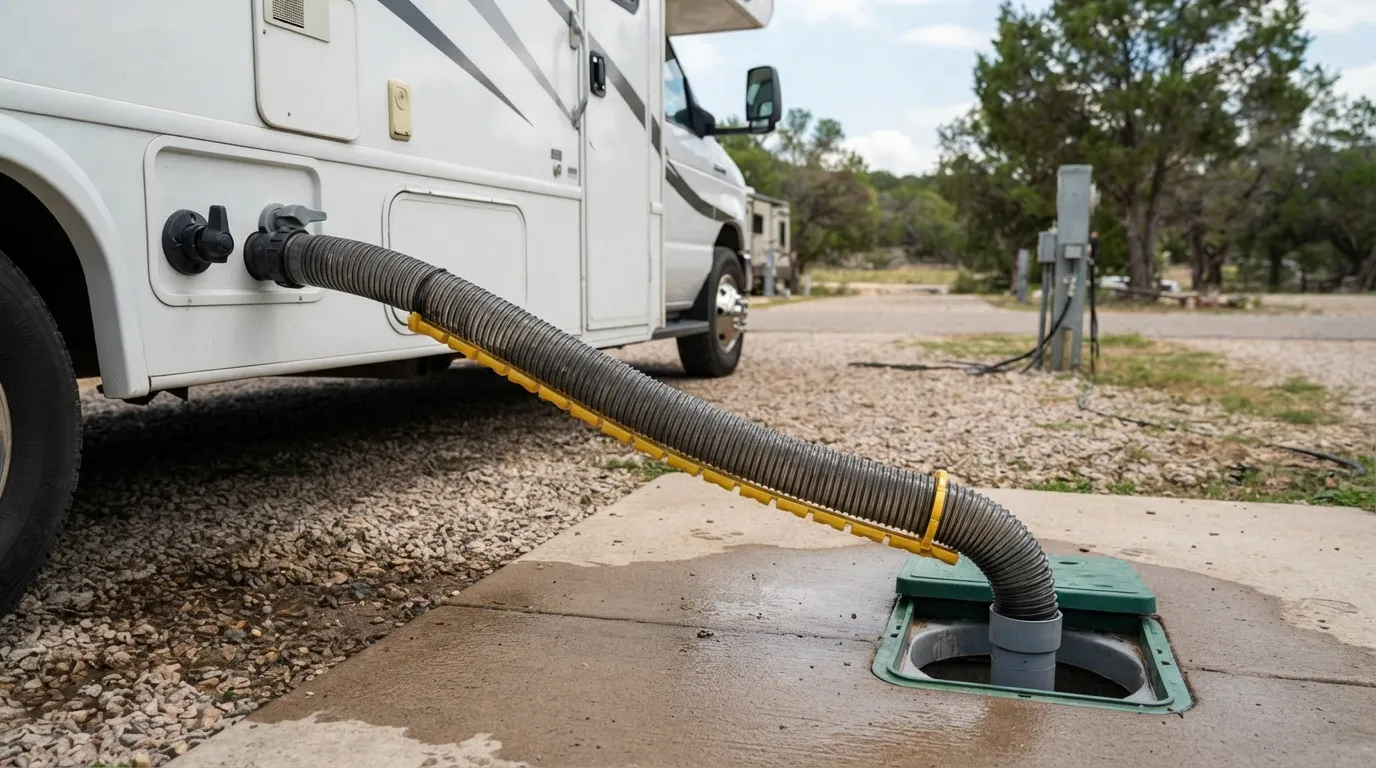
The sequence matters. Opening the black tank first lets solids clear before grey water rinses the hose, while reversing the order can leave residue that builds up over time.
Wait until the tanks are full enough for good flow, then empty black completely before grey. Use a sealed connection and support the hose so it slopes downhill all the way.
Fast Facts
- First: black tank, emptied completely.
- Second: grey tank, which rinses the hose behind it.
- Hose: sealed connection, sloping downhill the whole way.
- Valves: don’t leave the black valve open between dumps.
Leaving the black valve open continuously can cause hardened waste buildup that is hard to clear later.
Hooking up to water brings its own quiet risk.
#12 – Water Pressure at Hookups Can Exceed RV Design Limits
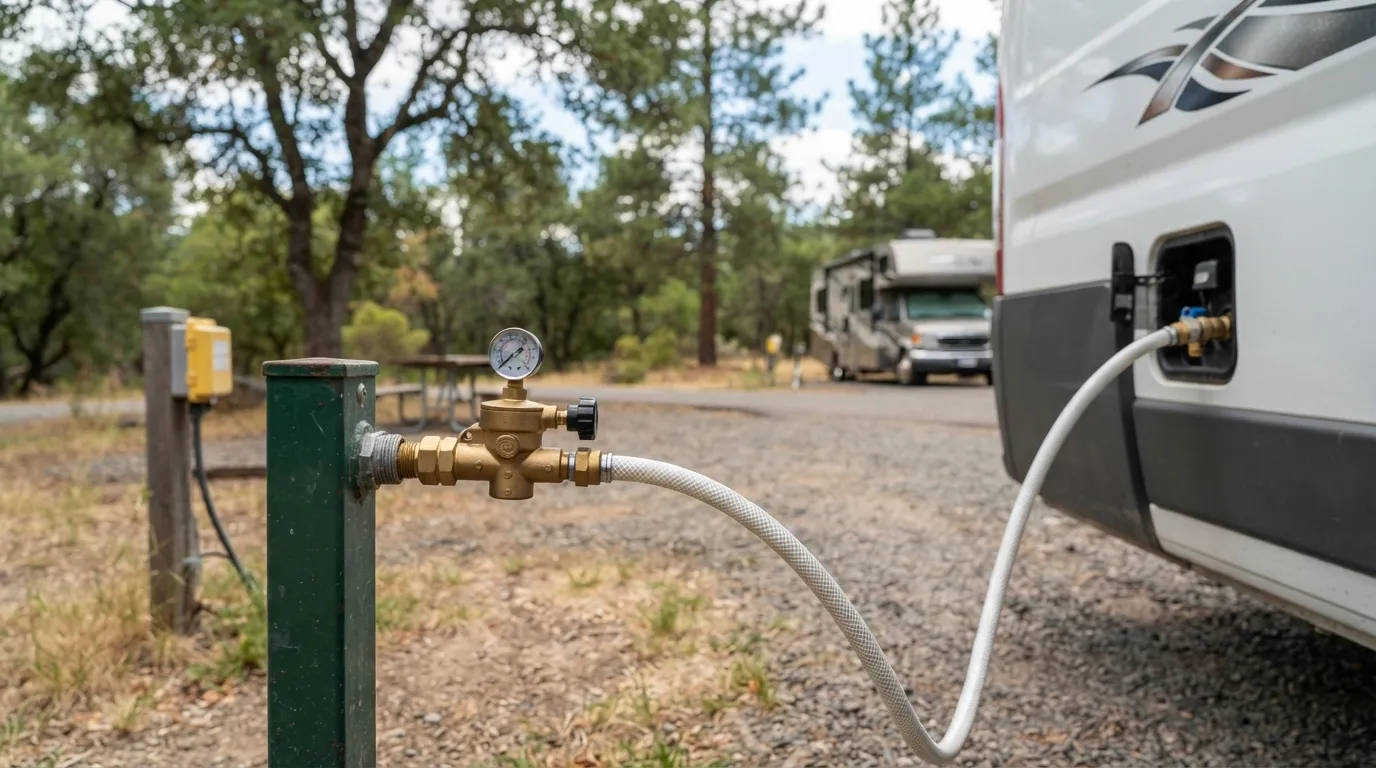
Campsite and city water pressure can be higher than RV plumbing is built for, often rated at around 50 PSI. Connecting straight to the tap risks leaks or burst fittings inside the van.
Fit a pressure regulator at the source before anything else, then test the setup and keep the regulator within reach for adjustments.
Partial hookups with water and electric but no sewer are common at developed sites, so keep an eye on tank levels.
Once the water is sorted, your bed may be the next thing to complain.
#11 – Leveling Affects Systems and Comfort Immediately
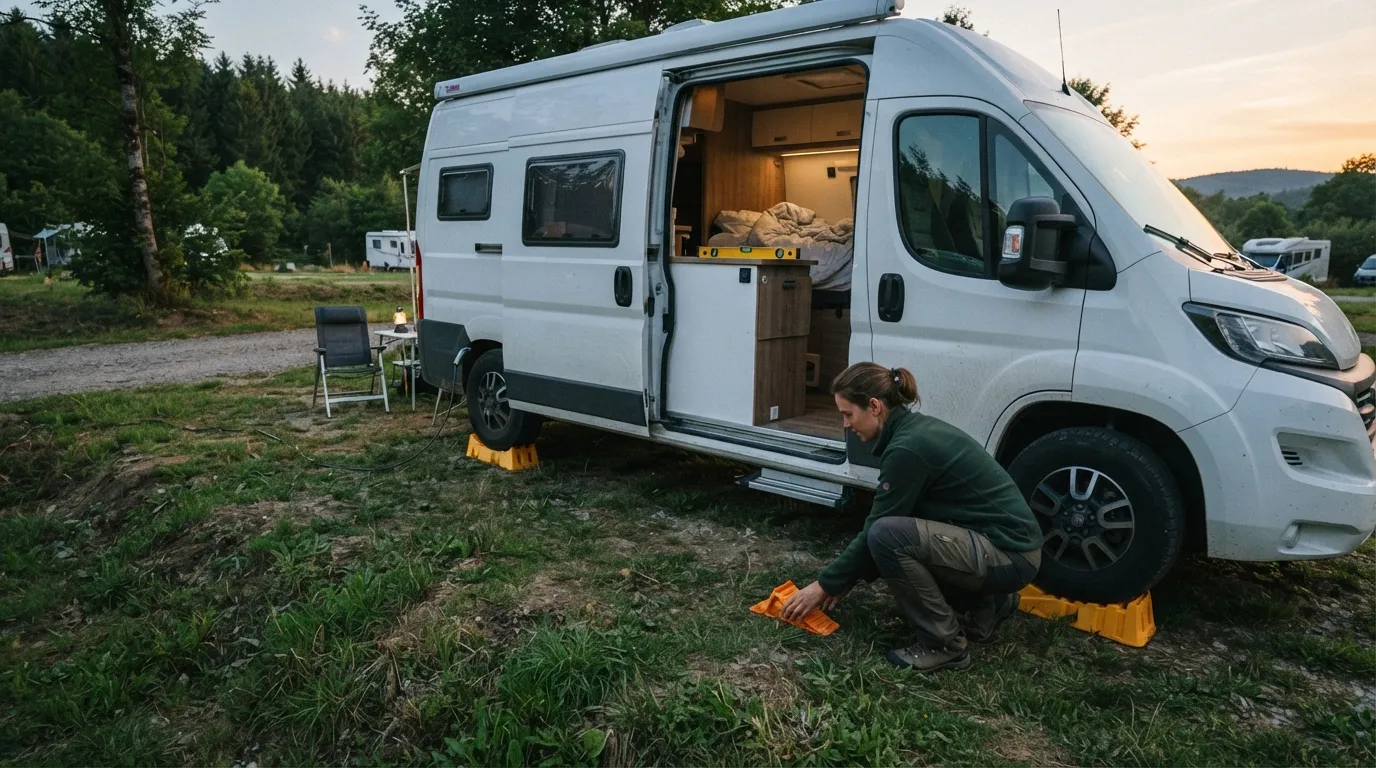
An unlevel van means a sloping bed and appliances that work badly. Walk the pitch first to spot soft ground or slopes before you position the vehicle.
Use chocks and leveling blocks as needed, then check side-to-side and front-to-back. Secure the vehicle before unhitching or extending any slide-outs.
On caravans, lower the corner steadies only after the unit is level and stable.
And then the night itself starts to matter.
#10 – Quiet Hours Apply Even at Informal Stops
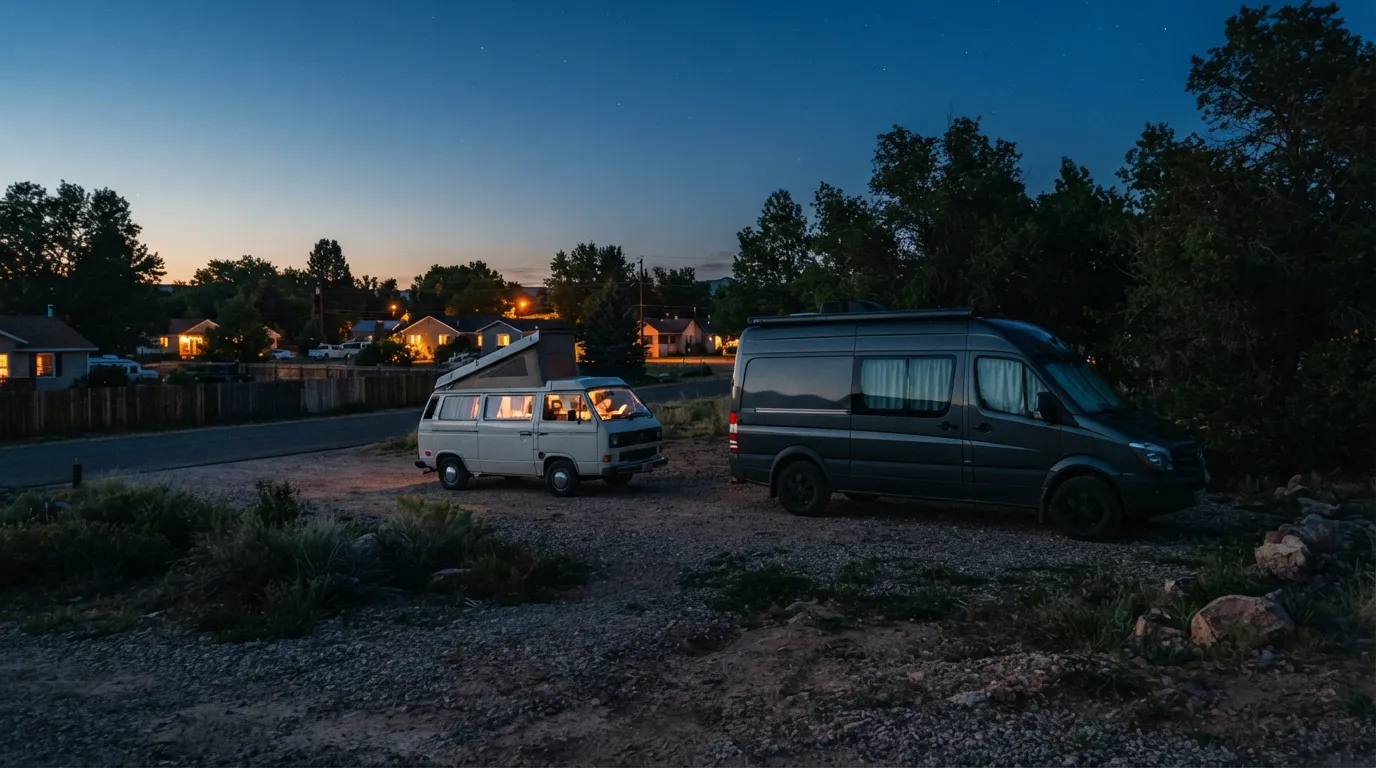
Many sites and residential areas enforce quiet periods that start earlier than you would expect. A generator or late-night activity can prompt complaints whether the stop is paid or free.
Respect posted or customary quiet times and keep noise minimal after dark. That goes double at dispersed or retail locations, where tolerance depends on low impact.
Some assume dispersed camping has no rules, but local orders often set time or activity limits.
Where you park relative to everyone else counts too.
#9 – Spacing From Other Vehicles Reduces Conflict
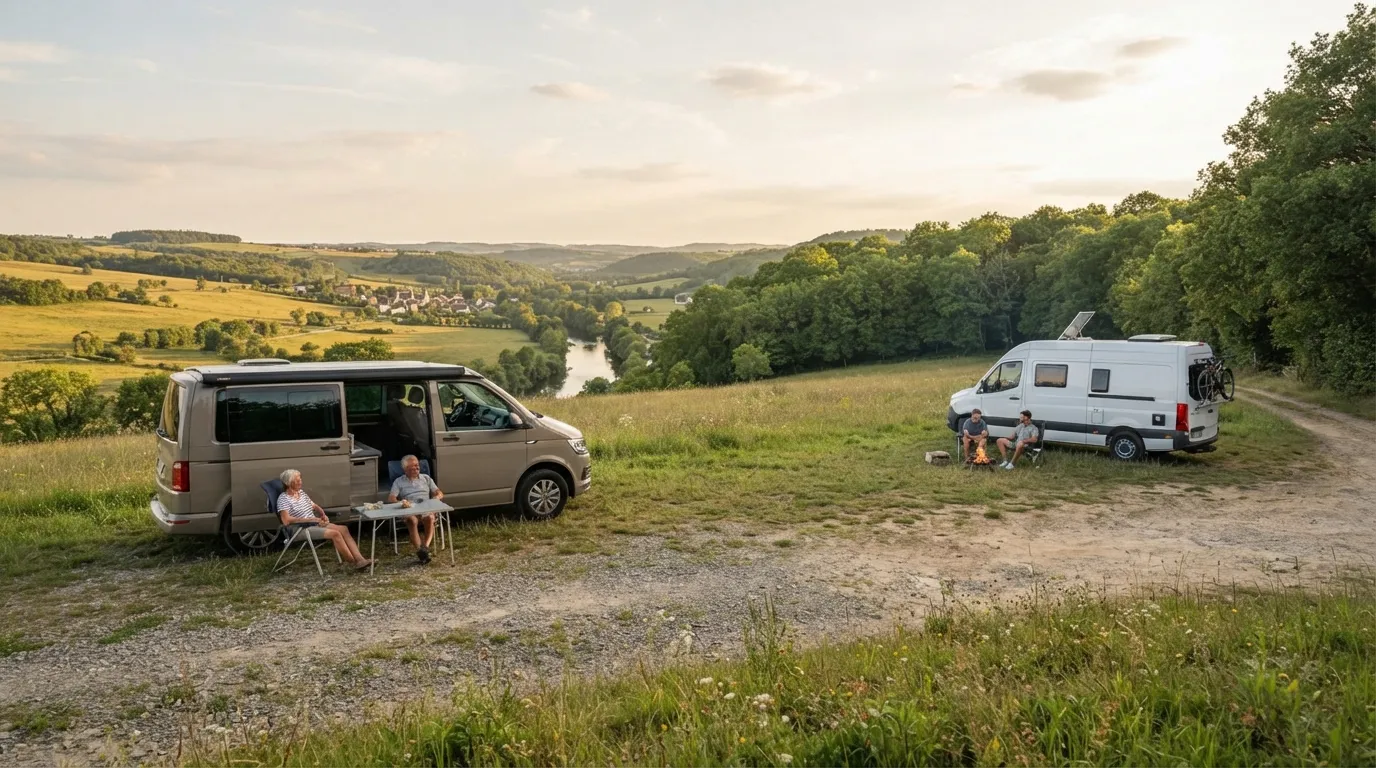
Parking right beside another rig when there is plenty of room creates needless tension. Leave space for doors, awnings and movement.
This holds at formal campsites and informal overnight areas alike. Keeping your distance supports the low-profile approach that keeps spots available.
Many experienced users choose industrial edges over prime residential spots for the same reason.
Timing, it turns out, can be as important as location.
#8 – Timing of Arrival and Departure Matters for Tolerance
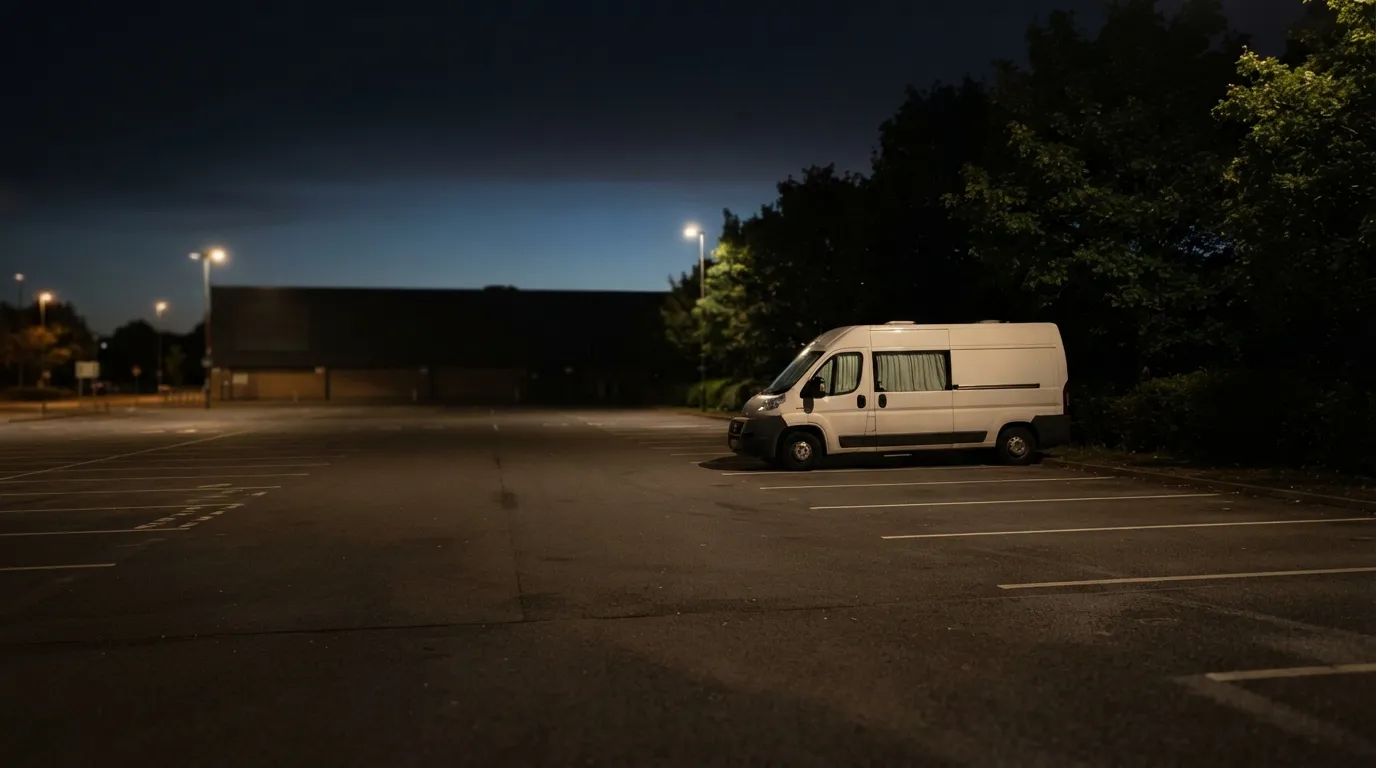
Pulling in after dark and leaving before the area becomes busy reduces visibility and complaints at tolerated locations. Setting up in broad daylight tends to draw the kind of attention a quick overnight avoids.
This pattern shows up repeatedly in guidance for retail lots, rest areas and street parking. Never stay multiple nights in the same urban spot.
Closed curtains and minimal exterior lights help sell the “just parked” look.
A paid pitch brings a different kind of trap: power that does not match your cable.
#7 – Electrical Hookups Require Amperage Checks
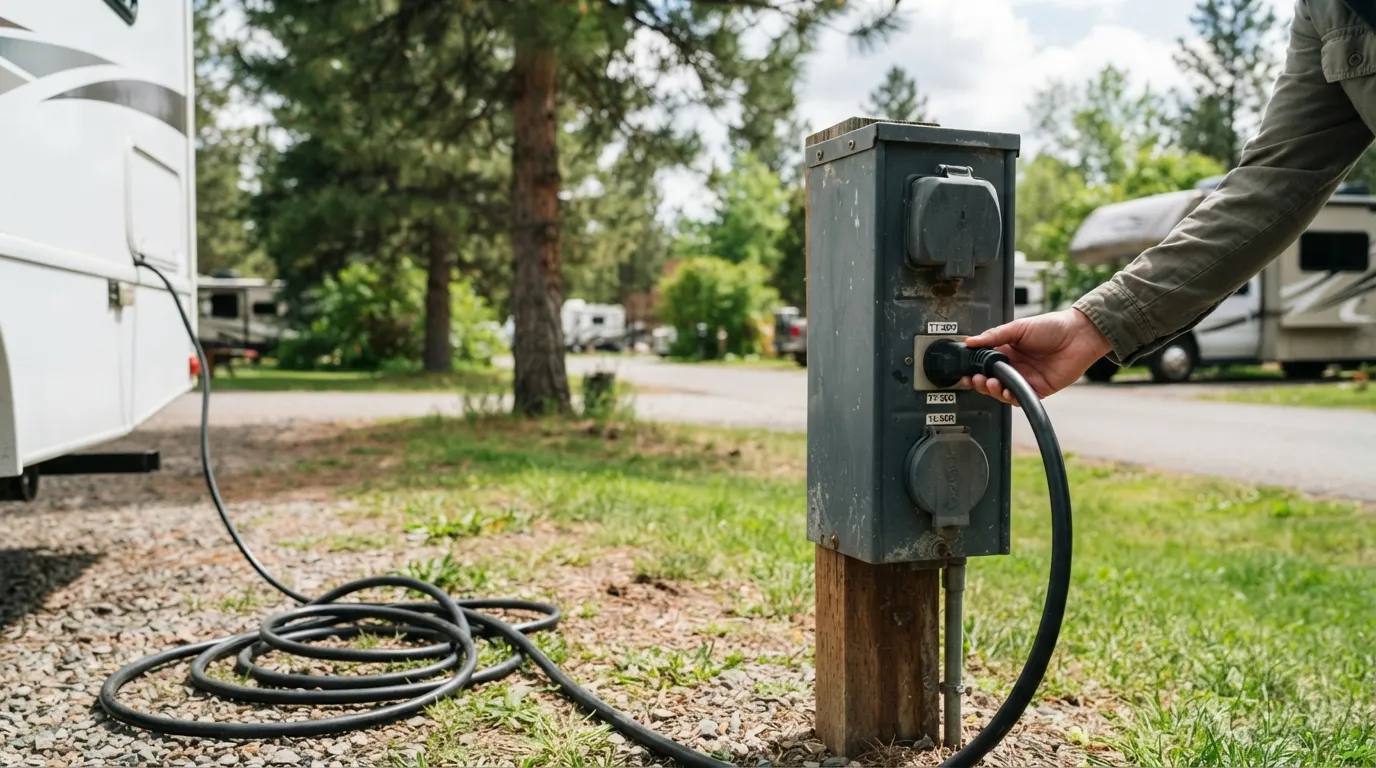
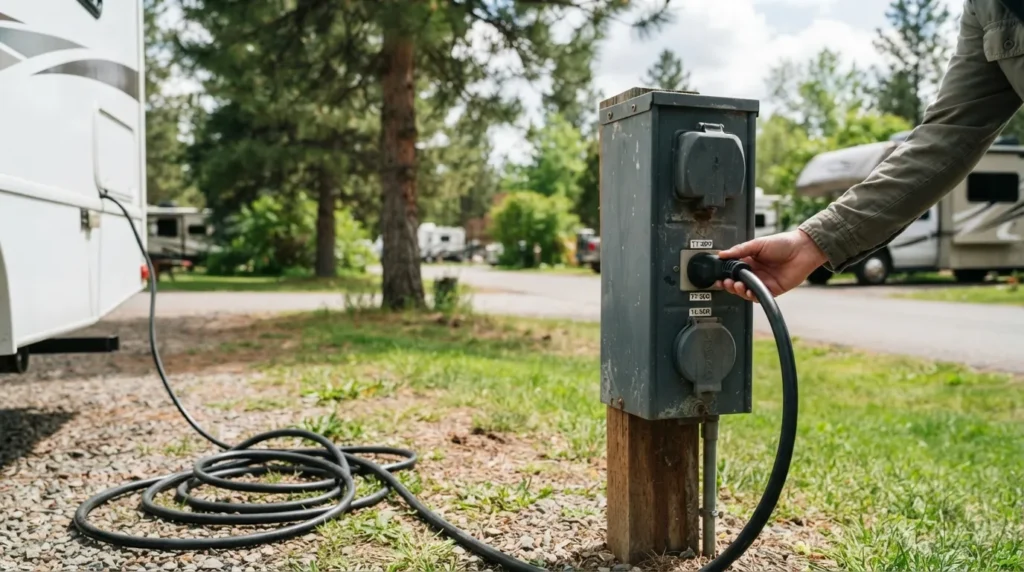
Pedestals provide 30-amp or 50-amp service depending on the site. A mismatch between your cord and the outlet, or the wrong adapter, can trip breakers or damage equipment.
Confirm the rating on the pedestal, then match your cord or use the correct adapter. Uncoil the cable fully to avoid heat buildup.
At a Glance
- 30-amp service: a single 120-volt line, roughly 3,600 watts at full load.
- 50-amp service: two 120-volt lines, roughly 12,000 watts in total.
- Before plugging in: read the pedestal label, then check your cord’s plug type.
- If they don’t match: use the correct adapter, not a guess.
One pitch, one hookup connection prevents overload on shared posts.
The same care applies to the water you drink.
#6 – Fresh Water Fill Points Need Dedicated Equipment
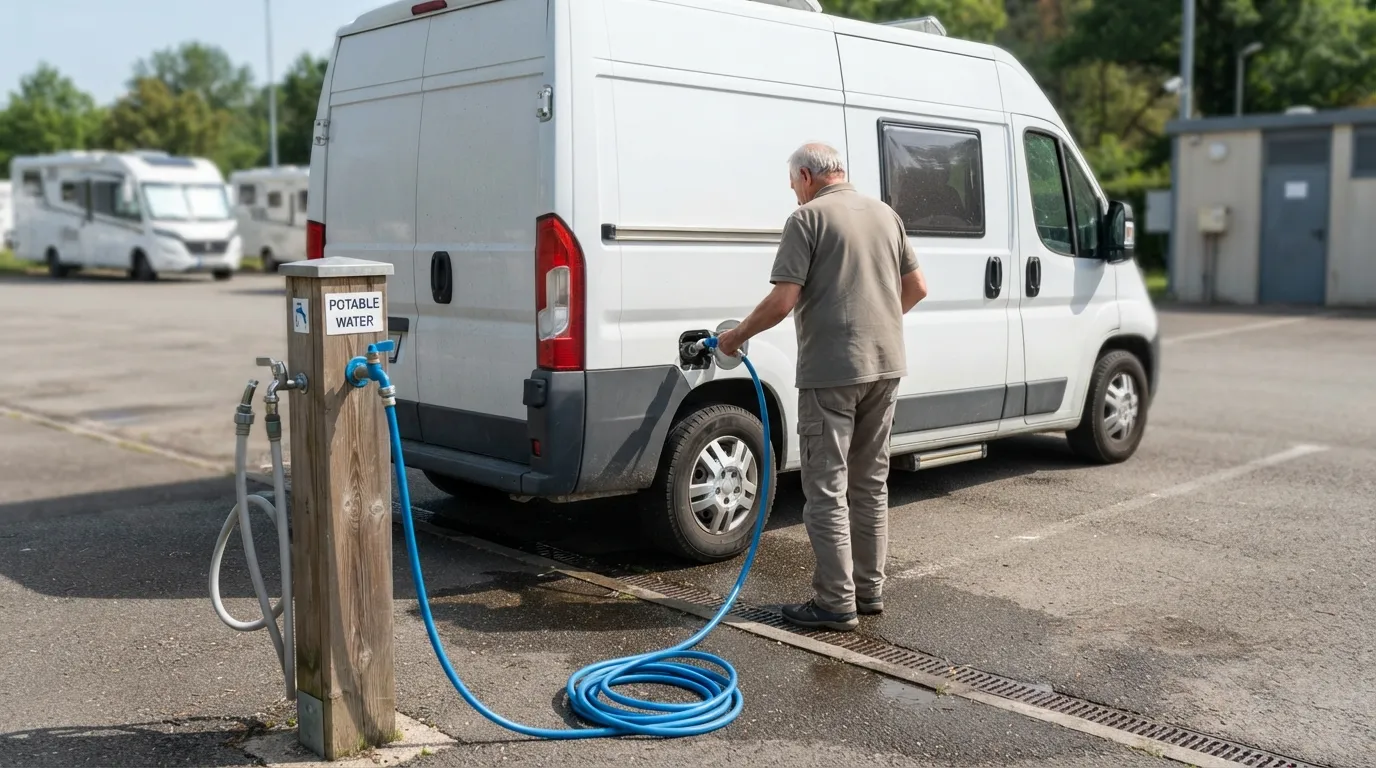
Using one hose for both drinking water and rinsing risks contamination. Dedicated potable hoses and separate non-potable rinse lines are standard at service points.
Label hoses clearly and never let a fresh-water tap touch grey or black equipment. Fill tanks only at designated potable sources.
That separation protects drinking supplies at shared facilities used by many vehicles.
Then comes the leftover problem every van builds up faster than expected.
#5 – Trash Must Leave With the Vehicle
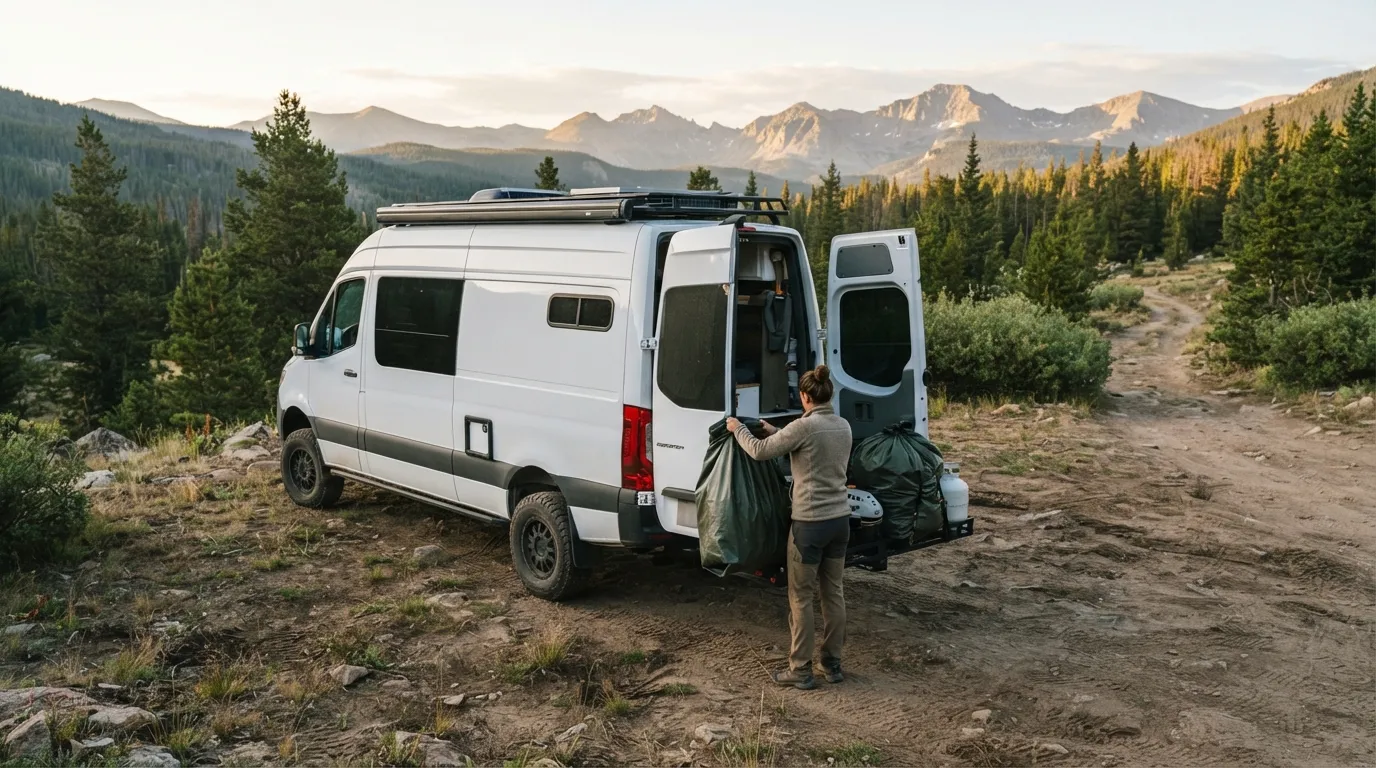
Fire rings and natural areas are not disposal points. All waste, including food scraps and packaging, goes to proper bins or home facilities.
Dispersed and stealth locations have no on-site collection, so plan your carry-out from the start. Anything left behind can close the spot for the next person.
Wild camping can feel zero-impact, but a vehicle-based stop often generates more waste than a lightweight tent trip.
Free spots also come with a clock, and it is easy to lose track of it.
#4 – Maximum Stay Limits Require Tracking
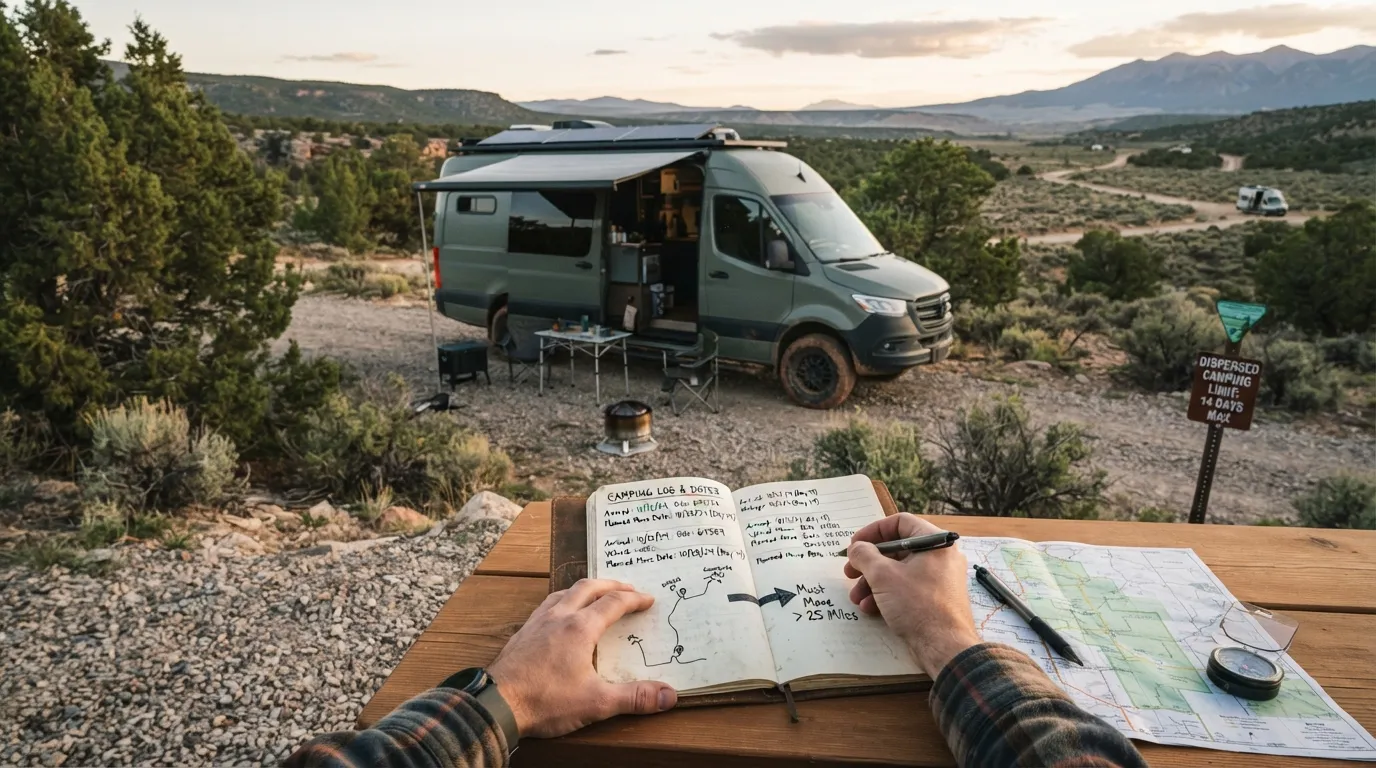
Dispersed areas on public land commonly allow up to 14 days in any 28-day period, after which the vehicle must move a set distance. Overstaying without relocating can trigger enforcement.
Track your dates and how far you moved. Some forests set shorter or variable limits, so confirm the current order.
Moving only a short distance often fails to satisfy the rule.
Even a perfect spot is no help if you run dry halfway through the night.
#3 – Service Points for Water and Waste Need Advance Location
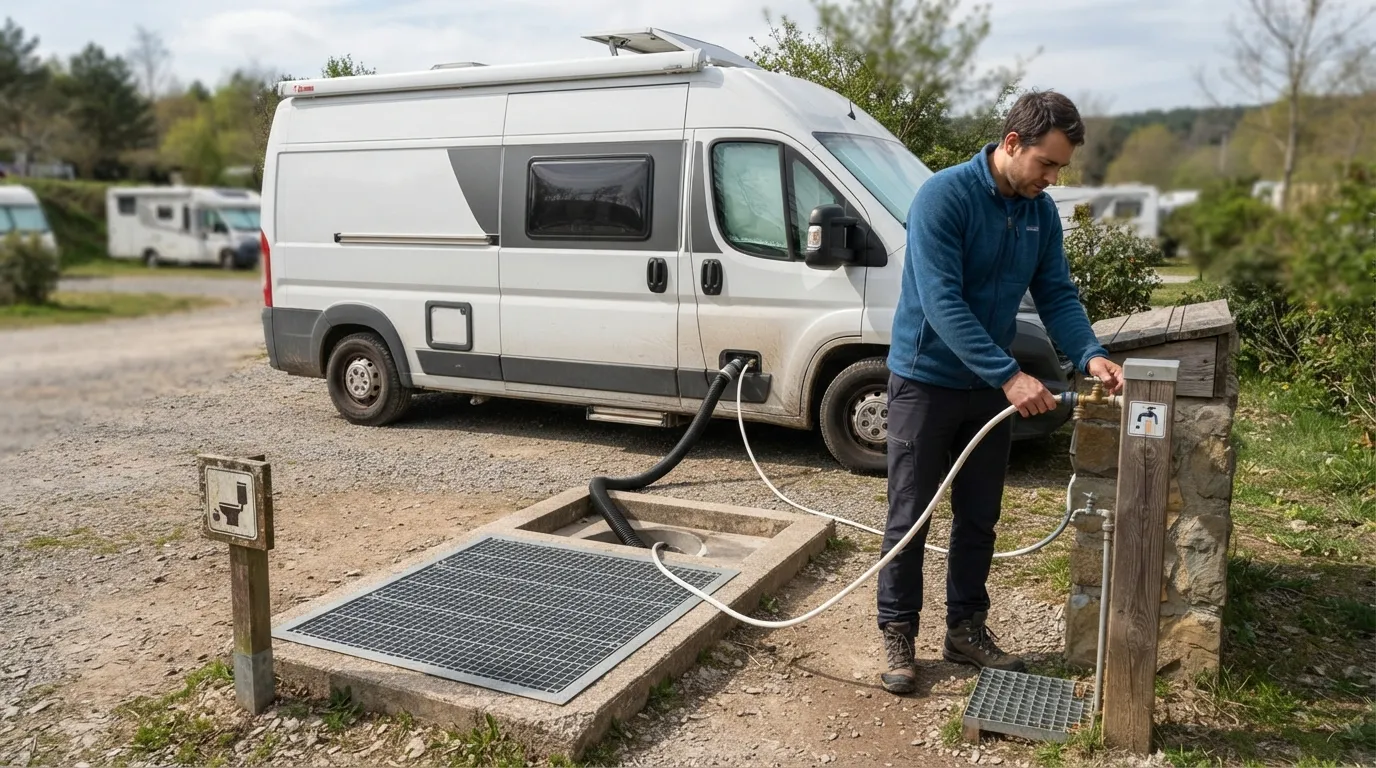
Not every overnight area has water or a dump station. Planning your next service stop before you arrive keeps you from running low on fresh water or sitting on full tanks with no option nearby.
Apps and recent reports can help you find the nearest legal dump or fill point. Grey water on the ground is prohibited in most jurisdictions.
Worth Knowing
- Many overnight areas have no tap and no dump point at all.
- Pick your next fill and dump stop before you leave the last one.
- Recent visitor reports can show whether a service point is open.
- Grey water on the ground is off limits in most places.
Black waste belongs only at a designated chemical or sewer disposal point.
And the rules you planned around may already have changed.
#2 – Signs and Recent Reports Override Older Information
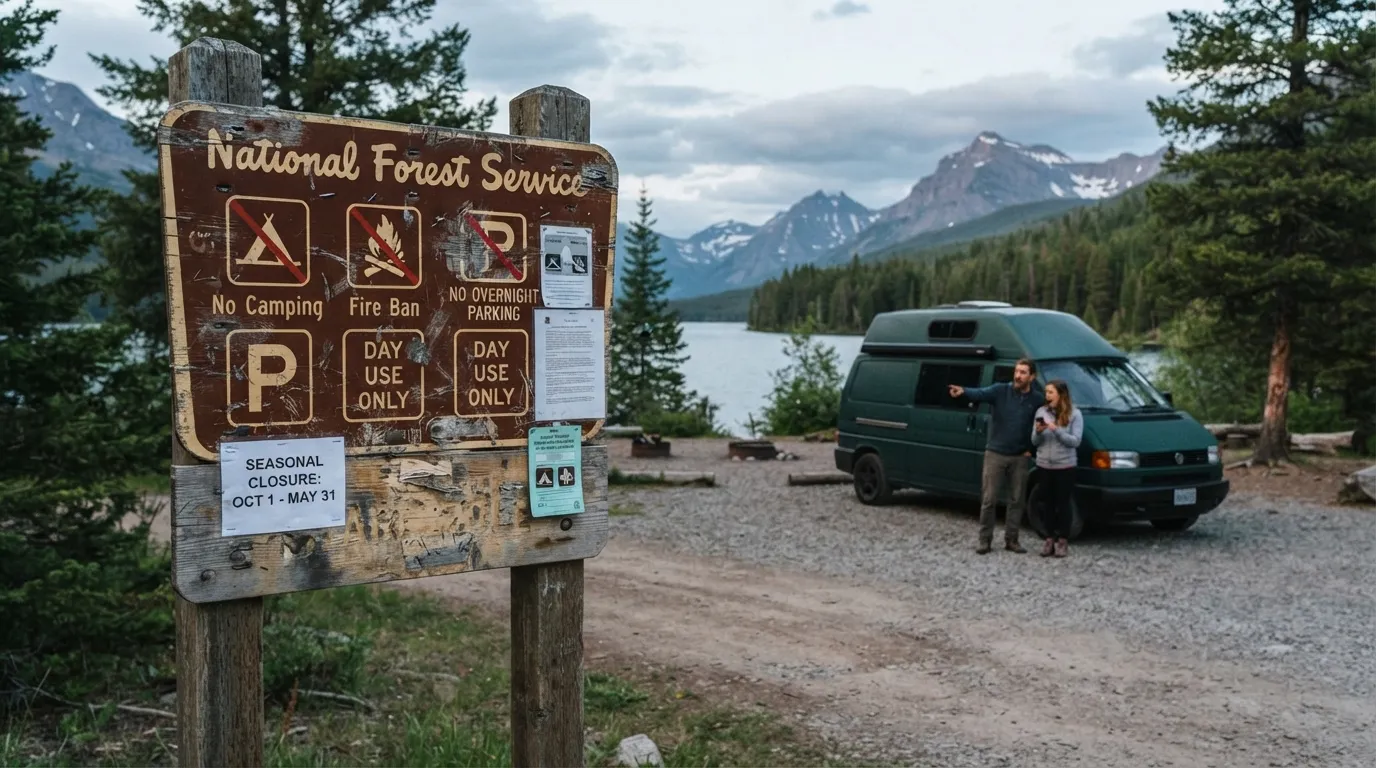
Rules change with new orders and seasonal restrictions. A spot that worked last season may now carry a ban or a permit requirement.
Read every sign on arrival and cross-check recent visitor updates for the exact location. Enforcement follows posted notices first.
Assuming a spot has not changed is one of the quickest ways to get an unexpected request to move.
All of this leads to the one habit that outweighs the rest.
#1 – Discretion Determines Whether a Spot Remains Available
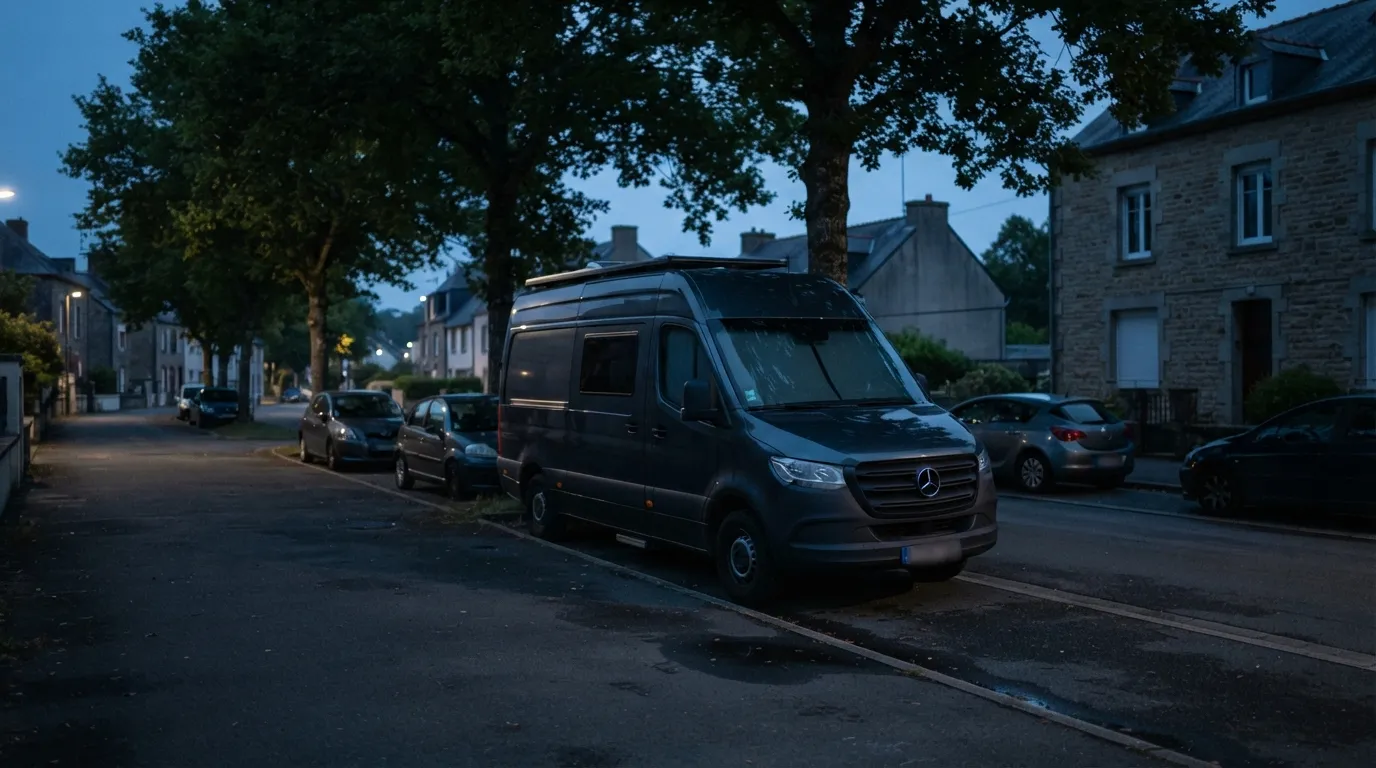
The strongest factor in repeat success is keeping the stop unnoticed by neighbors and authorities. Low lights, closed curtains, no exterior setup and a prompt departure help preserve tolerance at marginal locations.
This approach applies to retail lots, street parking and dispersed edges alike. Once camping activity becomes visible, the situation shifts from parking to camping, and that often ends the option.
Some people push their luck with extended stays or visible gear, but quiet, brief stops are the ones most likely to keep a spot open for the next traveler.
So read the signs, match the hookups, dump black before grey and leave nothing behind. The vans that keep finding good spots are usually the ones nobody notices.
Did we miss one? Drop it in the comments.
CEO-Co-Founder