

- 18 Things Nobody Tells You About Houseboat Rentals Until the First Morning Aboard - October 29, 2026
- 17 Things Nobody Tells You About Small Ship Cruises Until the First Tender Port - October 29, 2026
- 17 Airline Seat Charges That Come Off the Fare When a Traveler Over 65 Asks - October 29, 2026
Here’s the twist: no law hands out a senior discount on resort fees, yet plenty of travelers over 60 watch charges disappear at the front desk. The difference is almost always a calm, specific question asked at the right moment.
Below are 16 charges worth a second look, counting down from the most common to the one that works even after you’ve gone home. Start with the fee almost everyone assumes is untouchable.
#16 – The Daily Resort Fee You Never Saw in the Total
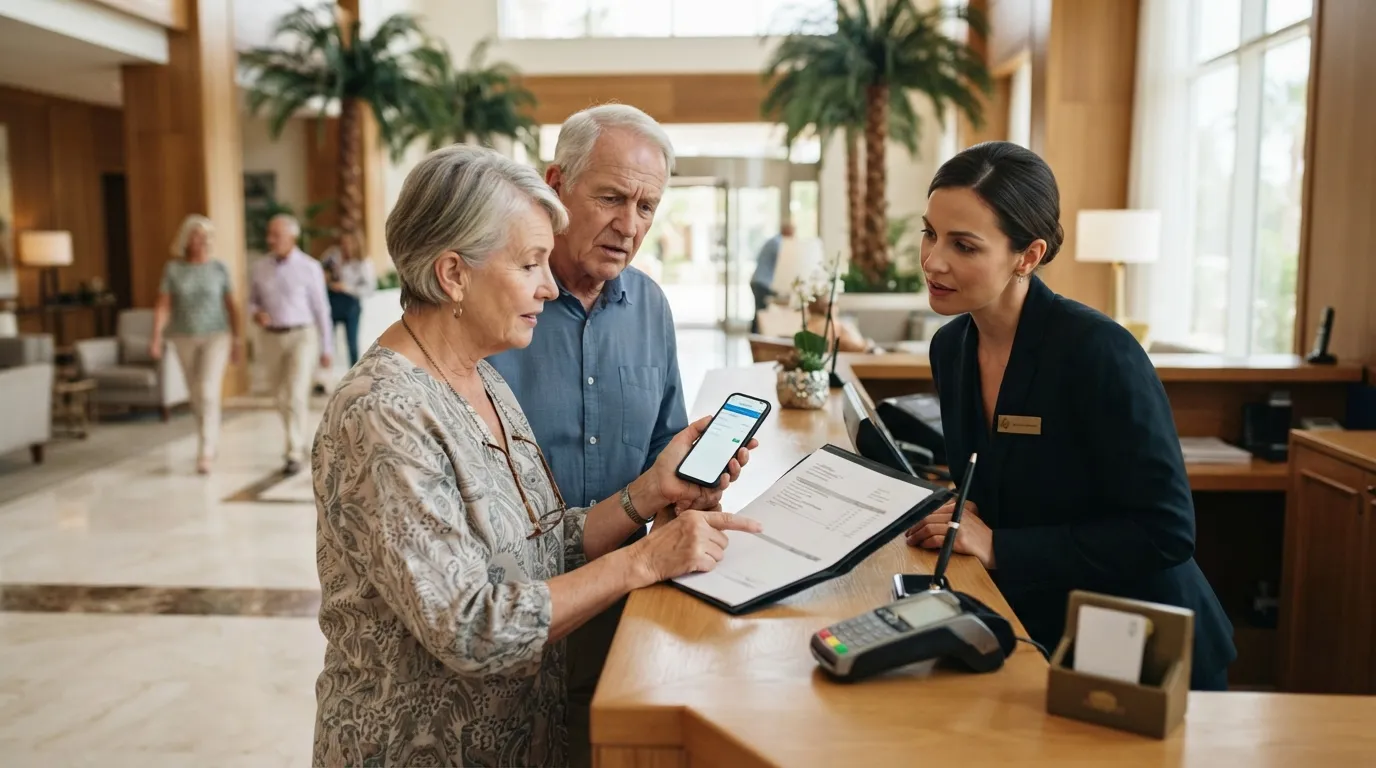
It’s often labeled mandatory, and sometimes it is. But if it wasn’t included in the total price you were shown when you booked, or the pool, gym, or shuttle it “covers” was closed, you have a fair reason to ask.
Pull up your booking confirmation and ask the manager to review the fee. Whether it’s reduced is the property’s call, but the question costs nothing. Next, a charge that sneaks onto the bill even when you never moved your car.
#15 – Parking Charges for Days the Car Never Moved

Parking is one of the easiest line items to get wrong. Guests get billed for valet when they self-parked, or for nights when they arrived by shuttle or rideshare.
Ask for an itemized folio and check the dates against your actual stay. Then ask politely whether a self-park rate, loyalty benefit, or member rate applies. Policies vary by property, so ask about this one. Still, the next fee is even easier to question.
#14 – In-Room Wi-Fi You Were Charged for Twice

Many major chains include basic Wi-Fi for loyalty members, sometimes only when booking direct. Others bundle it into the resort fee, which means you may be paying for it twice.
Quick Compare
- Loyalty perk: Basic Wi-Fi may be free for members, sometimes only on direct bookings.
- Resort fee bundle: Wi-Fi may already be paid for in the daily fee.
- Separate line item: If it appears on its own, ask which of the two above applies.
At checkout, ask: “Is Wi-Fi already covered by my membership or my resort fee?” Check the program’s own terms first, because they differ by brand. Now for a fee that surprises points travelers.
#13 – A Resort Fee on a Stay You Paid for With Points

Reward nights feel free until a daily fee shows up at checkout. Some loyalty programs waive or limit resort fees on award stays, while others don’t.
Before you book, read the program’s terms for award nights. If a fee still appears, ask whether it applies to your reservation type and request a review. The next charge hits people who simply changed plans.
#12 – The Early Departure Fee Nobody Mentioned at Check-In

Some properties charge a fee when you leave earlier than your reserved checkout date. It tends to feel unfair when a health issue or family emergency cuts the trip short.
Ask where the policy was disclosed, then explain your situation to the manager. Waivers are discretionary, so never assume one, but a documented reason can help. Next, the fee that’s really an upsell in disguise.
#11 – Early Check-In and Late Checkout “Courtesy” Charges

A late checkout that seemed like a favor can show up as a line item. So can an early room that someone offered casually at the desk.
Check whether you actually agreed to the charge, and what it was quoted as. If it wasn’t clear, ask the front desk to confirm and adjust it. Loyalty tiers sometimes include late checkout, so check yours. The next one hides in plain sight.
#10 – Housekeeping Fees for Service You Declined
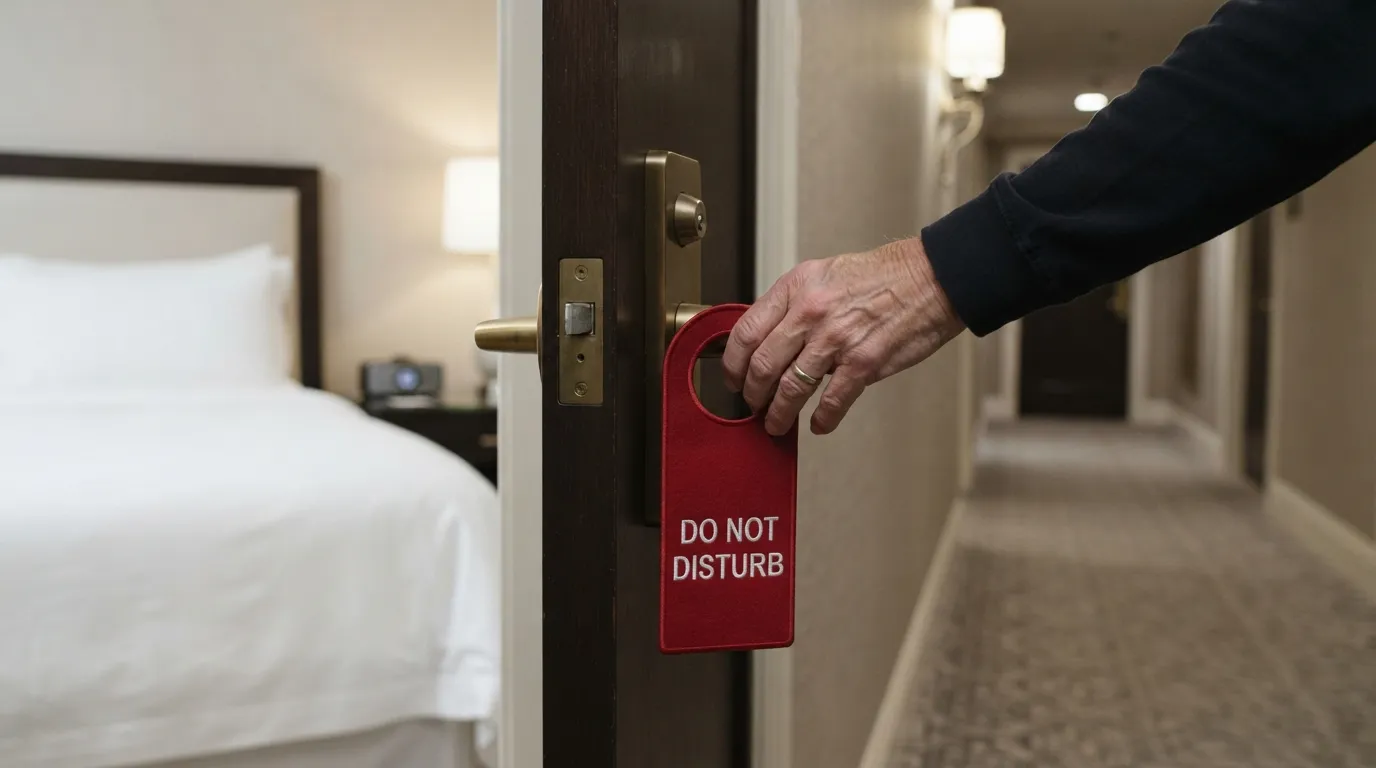
Some hotels now tack on a daily housekeeping or cleaning fee, even when you hang the Do Not Disturb sign all week. It’s easy to miss in a long folio.
Ask what the fee covers and whether it applies if service is declined. Some properties offer credits or points for skipped cleanings, though not all do. And the next charge is one you may have paid without meaning to.
#9 – Automatic Gratuities and Service Charges Stacked on Top of Tips

Room service, spa visits, and poolside orders often arrive with an automatic service charge. Many guests then tip again at the table, not realizing the first charge was already there.
Ask exactly where the charge goes and whether it’s mandatory. If you tipped twice by mistake, tell the manager before you leave. The next fee is one where the hotel’s own records can work in your favor.
#8 – Minibar Charges for Items You Never Touched

Sensor-based minibars can register a charge when you simply move a bottle to make room for your own water or medication. It’s a classic billing error, and a frustrating one.
Ask the desk to check the minibar log and confirm the items. Most hotels handle genuine mistakes quickly when the question comes before you leave. Next, a charge that looks like a fee but may not be one.
#7 – Leftover Holds and Duplicate Authorizations
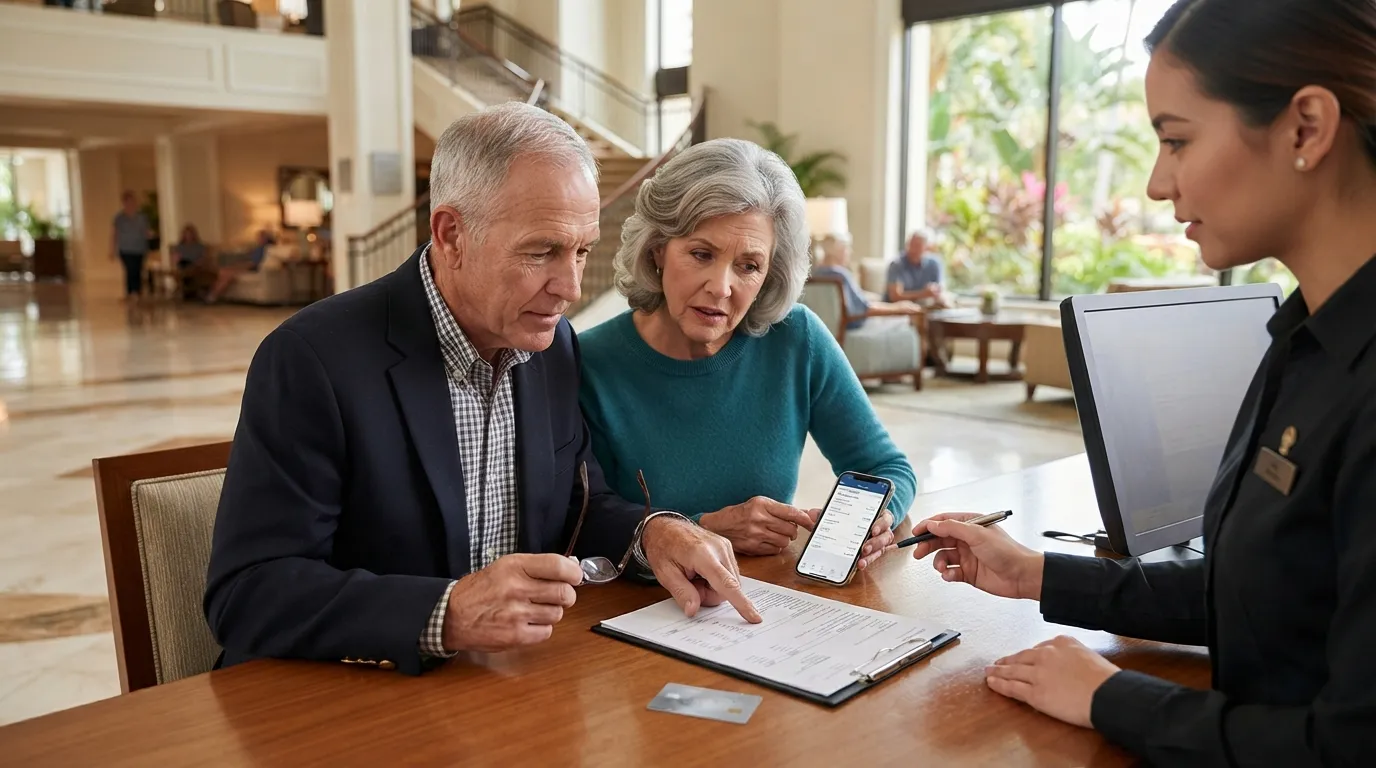
A deposit hold at check-in is not the same as a final charge. Still, duplicate authorizations and leftover holds can make your card look overbilled for days after you’ve left.
Worth Knowing
- A hold is a temporary authorization, not a completed sale.
- How long it lingers depends on your card issuer as well as the hotel.
- A pending item and a posted charge can look alike in a banking app.
- Only a posted duplicate calls for a formal correction request.
Ask the desk how much was authorized and when it will be released. If a real duplicate charge posted, request a correction in writing. Up next, a fee that stings after plans change.
#6 – Cancellation or Change Fees After a Medical or Family Emergency

Rebooking or canceling inside the penalty window can trigger a fee that feels brutal after bad news. These charges follow the property’s stated policy, but managers often have discretion.
Contact the hotel directly, explain what happened, and offer documentation if you have it. A waiver is never guaranteed, but a courteous, specific request has a real chance. Now, a charge that stacks up when you use “included” extras.
#5 – Pool, Cabana, and Fitness Charges Already Covered by Your Resort Fee

Some resorts charge a resort fee for access to the pool and gym, then bill separately for towels, lounge chairs, or classes. That’s double-dipping, or at least looks like it.
Ask the desk to show you what the resort fee covers in writing, then compare it to your bill. If something overlaps, request an adjustment. The next one is not just a billing issue.
#4 – Pet Fees Charged for a Service Animal
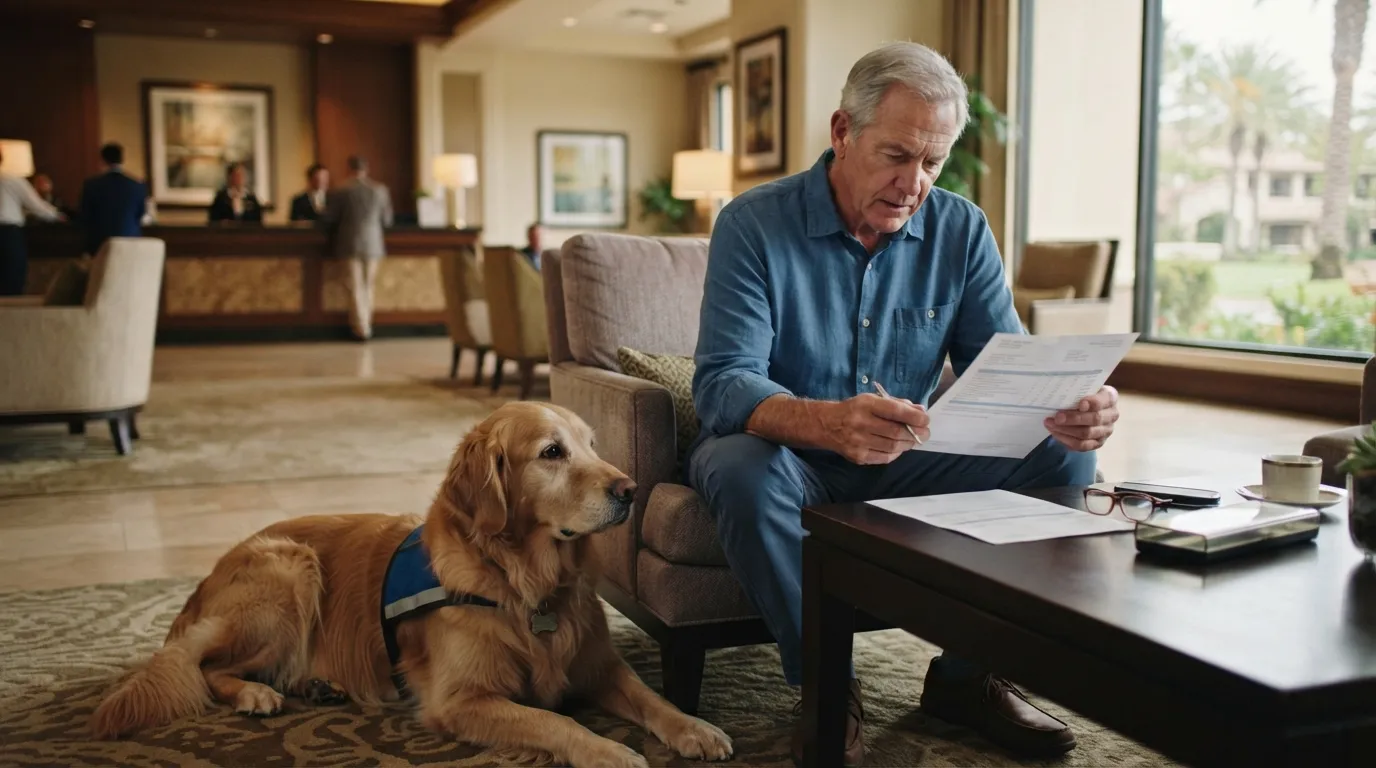
Under the Americans with Disabilities Act, hotels generally cannot charge a pet fee for a trained service dog. They can still bill for actual damage, though.
Fast Facts
- Under the ADA, a service animal is a dog individually trained to do work or perform tasks for a person with a disability.
- Staff may ask two questions: is the dog required because of a disability, and what task is it trained to perform.
- Staff generally cannot demand documentation or a demonstration.
- Emotional support animals are not service animals under the ADA.
If a pet fee appears for your service animal, ask the manager to remove it and cite the policy. Emotional support animals are treated differently, so be clear about what applies to you. Next, a fee that catches grandparents off guard.
#3 – Extra Guest and Rollaway Bed Fees When Family Joins You

A grandchild sleeping on a rollaway can add a surprise fee. Sometimes the room rate already covered the extra guest, or children stay free under the property’s own rules.
Check the occupancy terms on your reservation before the stay. If a fee still appears, ask the desk to match it against what you booked. Next, a mismatch that starts before you ever arrive.
#2 – Third-Party Booking Mismatches
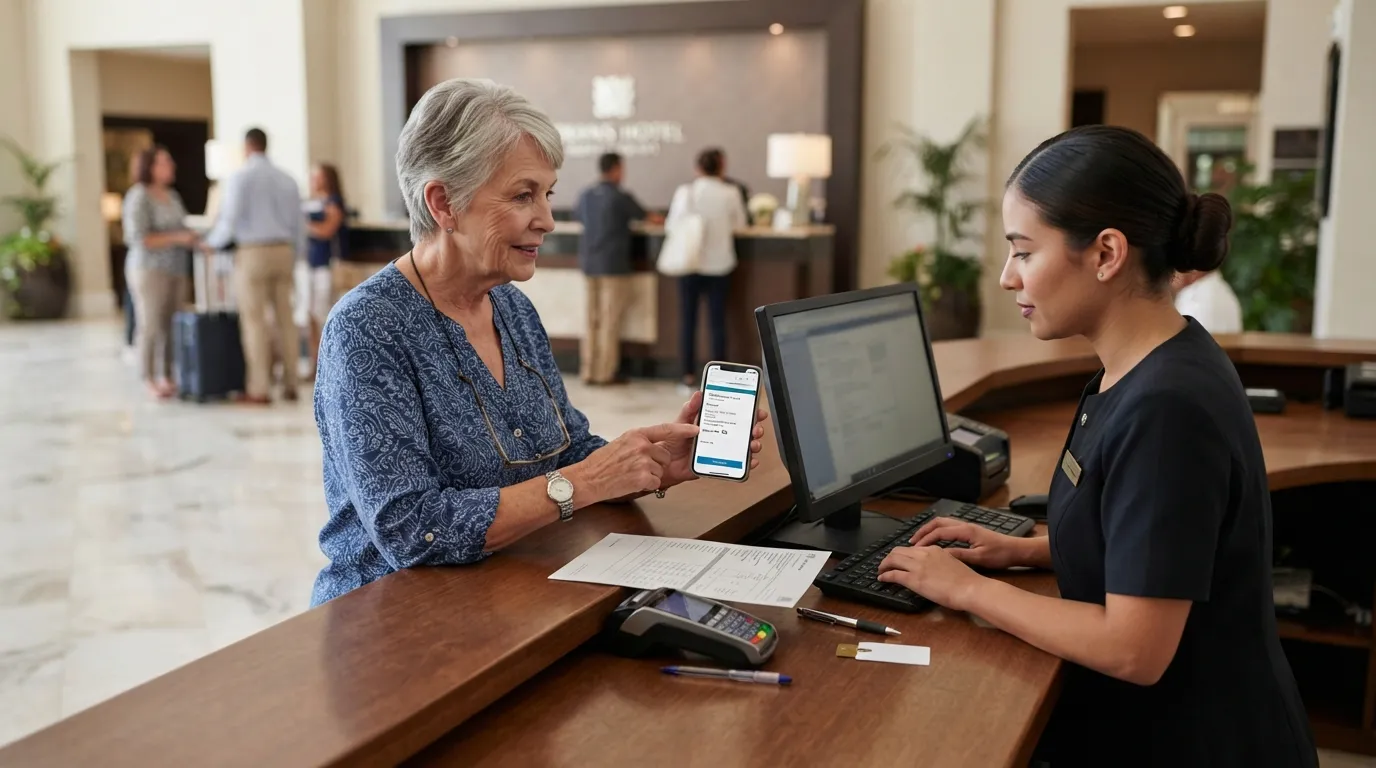
You booked through a travel site, prepaid, and the hotel still asks for a fee at checkout. That usually means the two sides disagree about what was included.
Show your confirmation email and ask the desk to compare it with the reservation on file. If it can’t be settled there, contact the booking site too. The last item is the one that works even after you’re home.
#1 – Any Charge You Only Notice After Checkout

Many travelers never read the folio until they’re home. The good news is that you still have options, starting with a request for an itemized bill from the property.
At a Glance
- Step one: Ask the hotel for an itemized folio and a walk-through of the charge.
- Step two: If it’s a clear error, send your card issuer a written dispute.
- Timing: Under the Fair Credit Billing Act, written notice is due within 60 days of the statement showing the error.
- Keep handy: Confirmation email, folio, and the date and name of anyone you spoke with.
If the hotel won’t fix a clear error, you can dispute it with your card issuer, and federal rules generally require you to do so in writing within 60 days of the statement. The best question isn’t about age. It’s “Can you walk me through this charge?”
CEO-Co-Founder