
- The Day Nixon Resigned: What America Looked Like in August 1974 - October 8, 2026
- 1975: The Year Punk Was Born in America - October 8, 2026
- 15 Authors Who Used a Pen Name and Outsold Their Real Byline - October 8, 2026
Some festival moments feel so natural that you assume they have always existed: the shower of beads, the umbrella twirling over a brass band, the king who rules for exactly one day. They did not appear out of nowhere. A surprising number trace back to one stubborn, joyful city.
Some of these traditions were truly born in New Orleans. Others were adopted, remixed, and polished until the city’s fingerprints ended up on festivals everywhere. The countdown starts with a parade that needed no sunlight, and the final entry involves a mayor handing over the keys to a city.
#12 – Comus and the Torchlit Night Parade
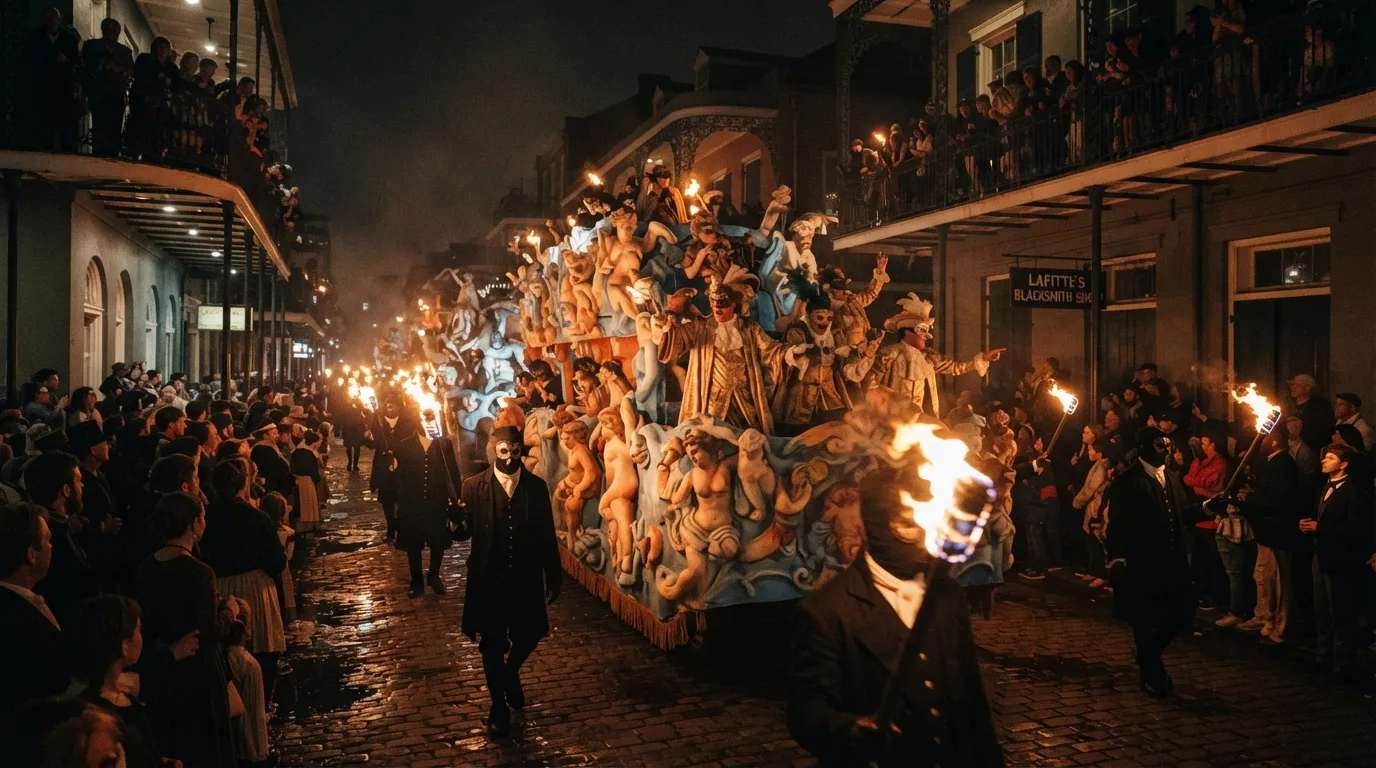
Picture New Orleans in 1857. There is no daylight, only torches throwing orange light across masked riders and painted scenery rolling down the street. That was the Mystick Krewe of Comus, and its first parade told a story in tableaux on floats.
Comus is widely credited as the first krewe, and its recipe was the hit. It had a secret society, hidden faces, a theme revealed only on parade night, and flambeaux flickering beside the floats. Its founders reportedly drew on earlier carnival societies in Mobile, so the spark had Gulf Coast roots. New Orleans turned it into a template.
Krewes that followed copied the themed floats and the mystery. Carnival groups in other Gulf Coast towns picked up the habit of staging a parade as a story rather than a simple procession.
The surprise is how little has changed. Swap in electric lights and modern costumes, and the basic idea is the same: a night street becomes a stage, and the audience is left guessing.
#11 – Rex’s Purple, Green and Gold
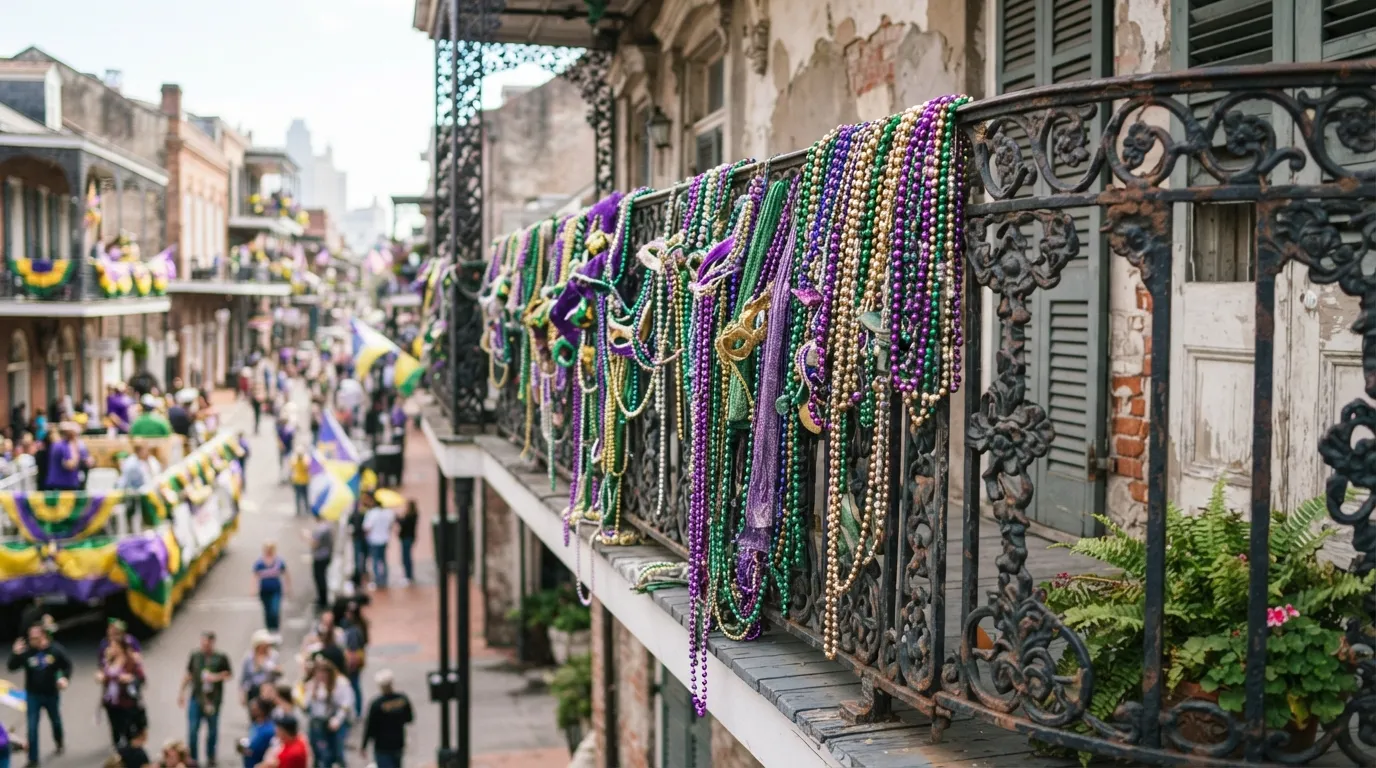
Few color schemes are recognized as fast as purple, green, and gold. The story points to 1872, when Rex first paraded and the city was preparing to welcome Russian Grand Duke Alexis Romanov. The Rex anthem, “If Ever I Cease to Love,” is tied to that same moment.
The colors got meanings later: purple for justice, green for faith, and gold for power. That gave them a kind of heraldry, which made them easy to copy and hard to forget.
Today those three colors turn up on beads, banners, porch railings, and sugar sprinkled on cakes. They appear in Mardi Gras celebrations far from Louisiana, usually with no explanation needed. People who have never heard of Rex still read the palette as a signal that a party is about to start.
That is the quiet power of this entry. A parade organization chose a look in the 1870s, and the rest of the festival world adopted it as shorthand for carnival itself.
#10 – Beads, Doubloons and Zulu Coconuts
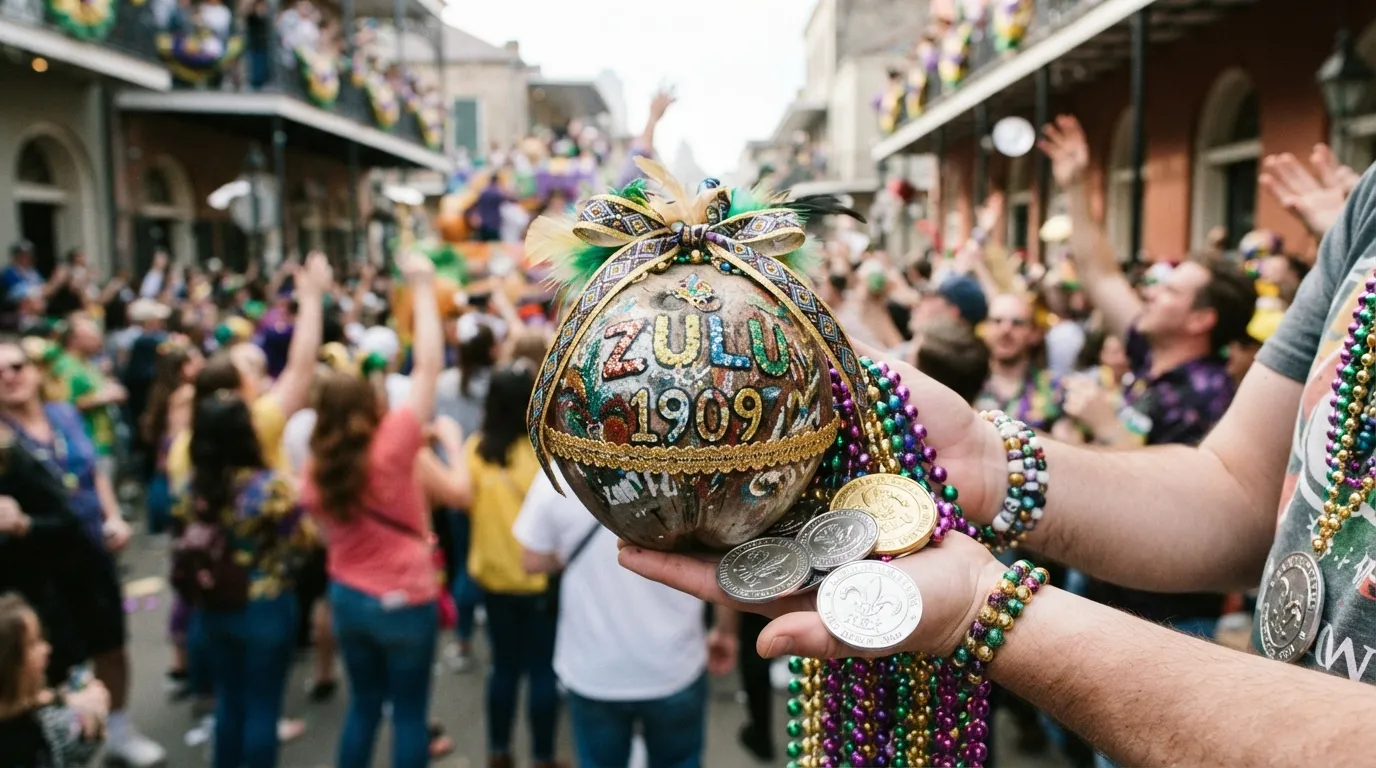
Somewhere along a parade route, a stranger on a float locks eyes with you and a shiny object arcs through the air. That ritual grew up in New Orleans. Float riders began tossing trinkets to the crowd in the 1800s, and the famous shout of “Throw me something, mister!” became part of the show.
Then the throws got inventive. Rex began minting its own doubloons in 1960, turning a souvenir into a collectible. The Zulu Social Aid & Pleasure Club made the hand-decorated coconut one of the most prized catches in Carnival.
Fast Facts
- Trinket tossing from floats goes back to the 1800s.
- Rex has minted its own doubloons since 1960.
- Zulu’s hand-decorated coconut is a top Carnival catch.
- Mobile’s parades are famous for flying MoonPies.
The idea spread because it changes how a crowd behaves. Spectators stop being spectators and become hunters, reaching, shouting, and trading. Parades across the Gulf Coast and beyond now hand out candy, beads, and small trinkets.
It sounds like a small thing, but it explains why so many parades feel like an exchange rather than a show. You do not just watch. You catch something and take it home.
#9 – Second-Line Umbrellas and Handkerchiefs
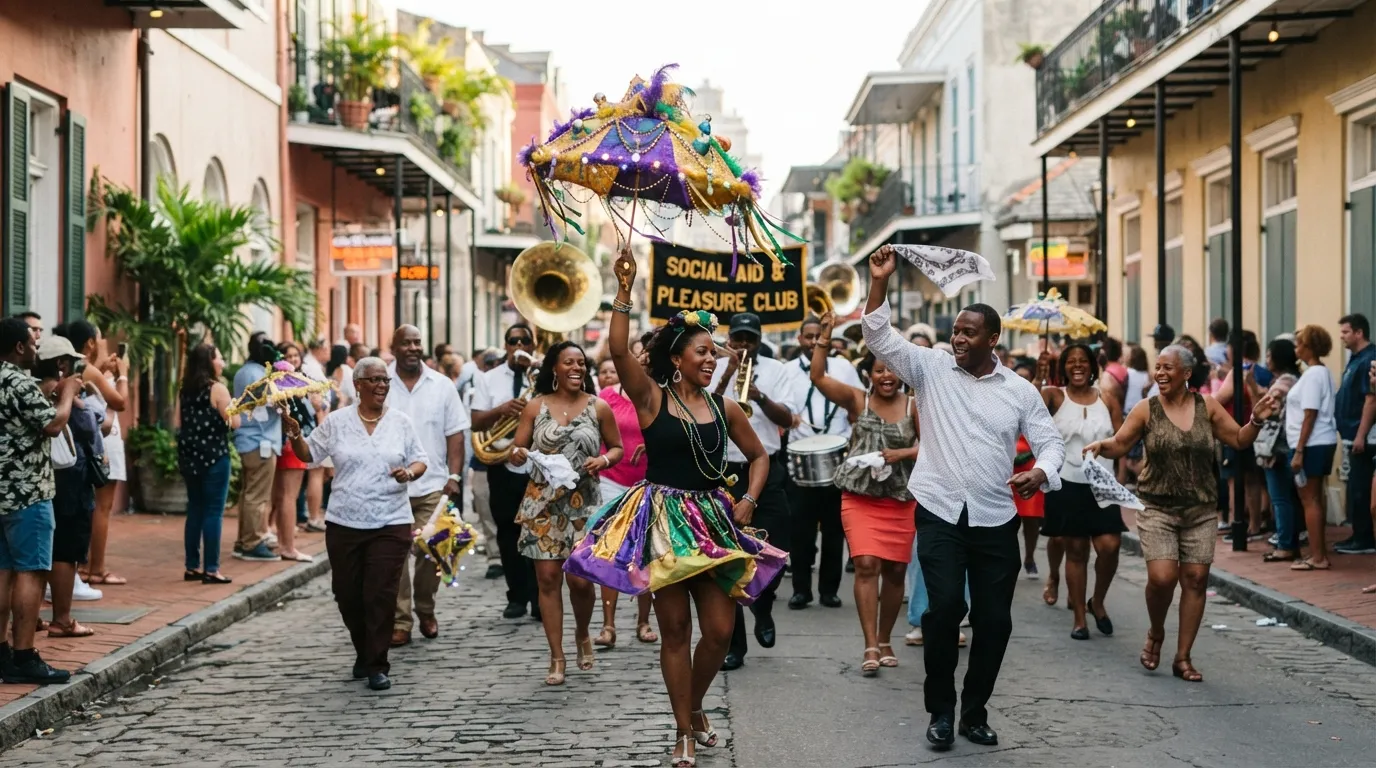
In a New Orleans second line, the “main line” is the club and the band. The “second line” is everybody who joins in behind them. That distinction sums up the whole appeal: you do not need an invitation, just the willingness to move.
The tradition grew out of Black benevolent societies and social clubs. Dancers wave handkerchiefs, twirl decorated parasols, and answer the brass band with footwork that is half strut and half conversation.
The umbrella became the visual shorthand. It signals the tradition from a block away, and it photographs beautifully.
Outside Louisiana, the format has traveled to weddings, conventions, victory celebrations, and festival finales. Organizers like it because it asks very little. There is no stage required and no rehearsal needed, just a band and a crowd willing to follow. A good second line turns a polite audience into a moving, laughing mob in about three minutes, and that is exactly why other events keep borrowing it.
#8 – The Jazz Funeral Procession
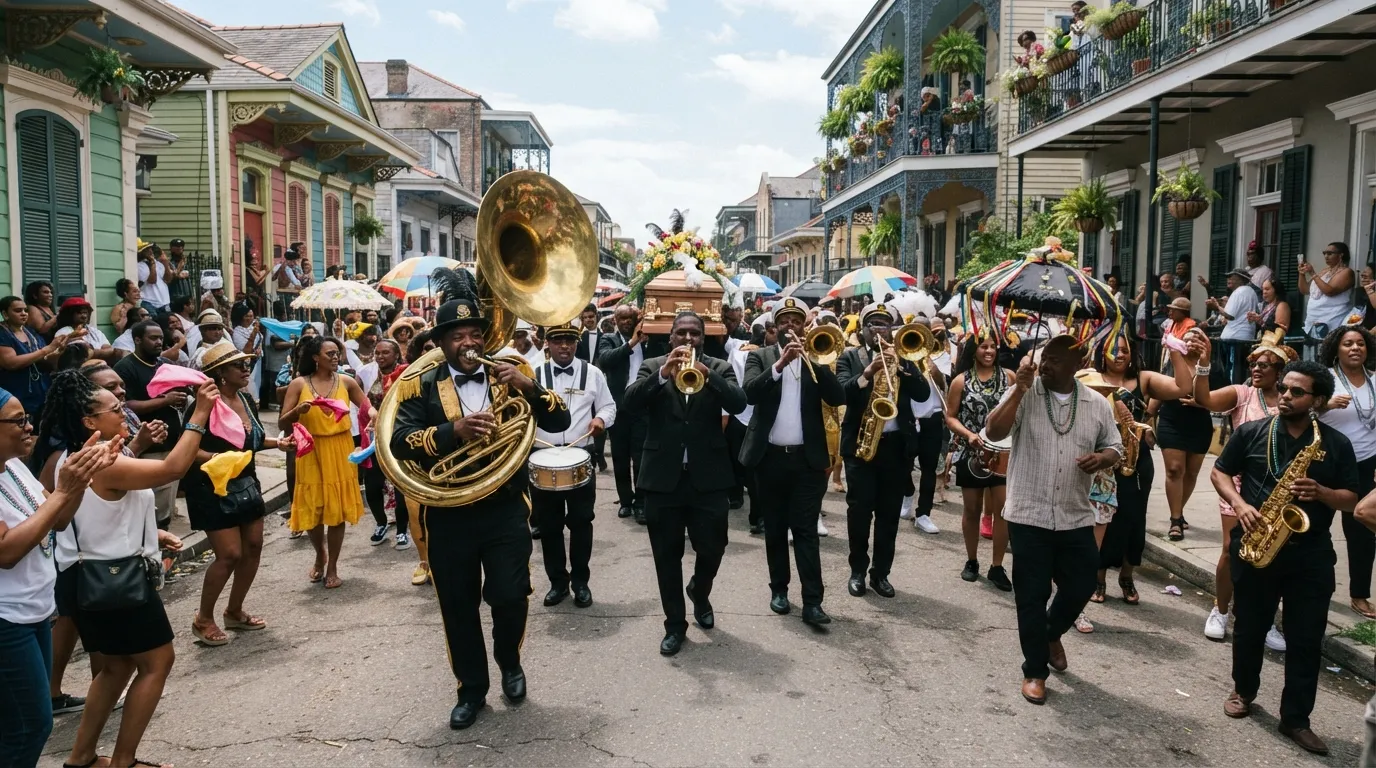
The sound begins slowly: a dirge, a hush, and horns that sound like grief. That is how the traditional New Orleans jazz funeral travels toward the cemetery. Then, after the burial, the mood flips. The band picks up the tempo and the procession turns into a celebration of a life.
That emotional turn is the whole point. The ritual treats mourning and joy as parts of the same walk, and the music is how people get from one to the other.
Danny Barker, the New Orleans musician and storyteller, helped keep the tradition alive by founding the Fairview Baptist Church Christian Marching Band in the 1970s to train young players. Many of those young players went on to carry the brass-band sound further afield.
Bands such as Rebirth Brass Band took that New Orleans sound on the road. Brass-led processions now open and close sets at festivals outside the city, and few things lift a crowd faster than horns coming down the aisle. Few people on the dance floor know they are borrowing a funeral.
#7 – Black Masking Indian Suits
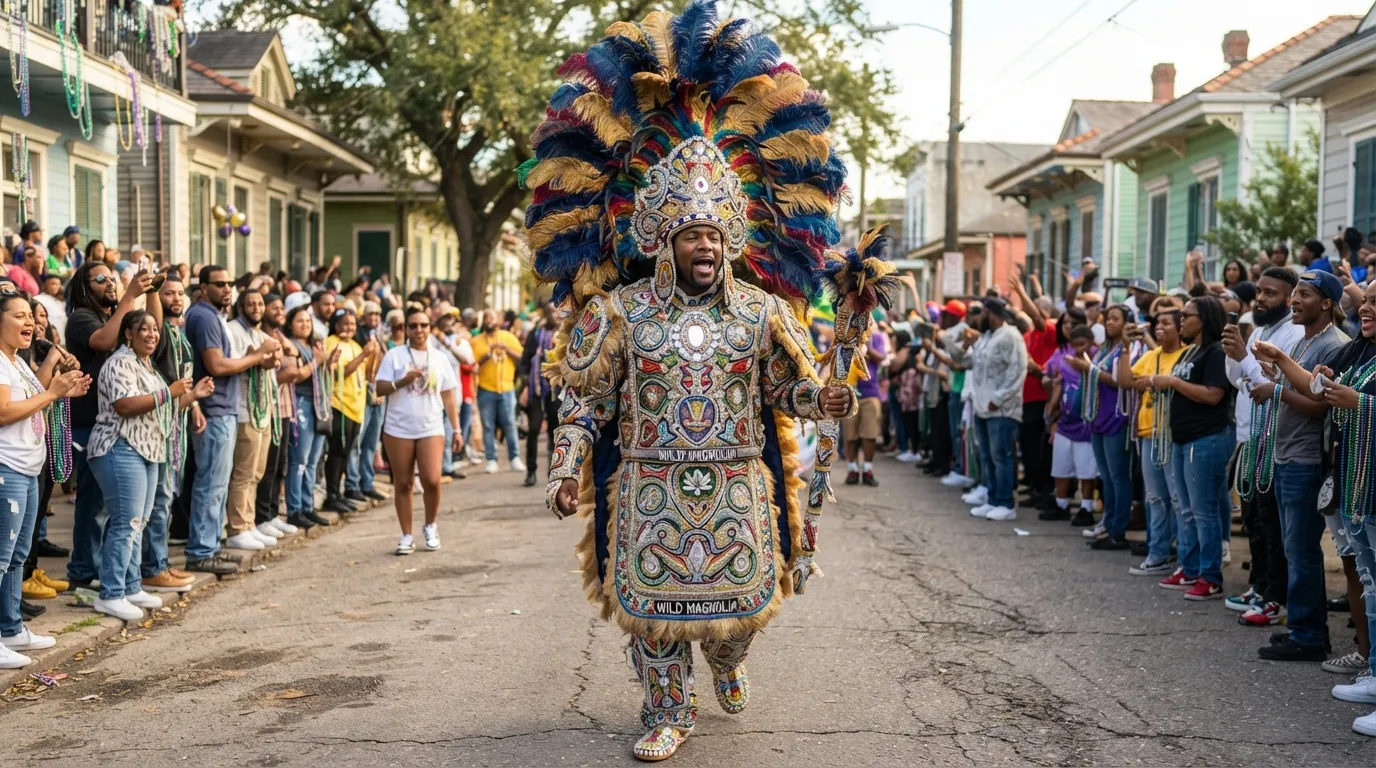
Every year, Black Masking Indians in New Orleans sew new suits by hand. The work can take months of beadwork, rhinestones, and feathers, and some suits end up looking like walking sculptures. The result is not a costume so much as a year of devotion worn on the body.
The tribes appear on Mardi Gras morning, on St. Joseph’s Night in March, and at Super Sunday gatherings. The chants, including the well-known “Indian Red,” are call-and-response, with the Big Chief leading and the tribe answering.
The tradition is often described as a tribute that blends African and Native American influences, and it has long been a point of pride in Black neighborhoods. In the 1970s, groups such as the Wild Magnolias brought the chants to records and festival stages.
Since then, masking Indian performances and exhibits have been invited to folk festivals, museums, and music events beyond the city. The suits photograph dramatically, but the real pull is the sound, which hits you before you understand it.
#6 – King Cake and the Hidden Baby
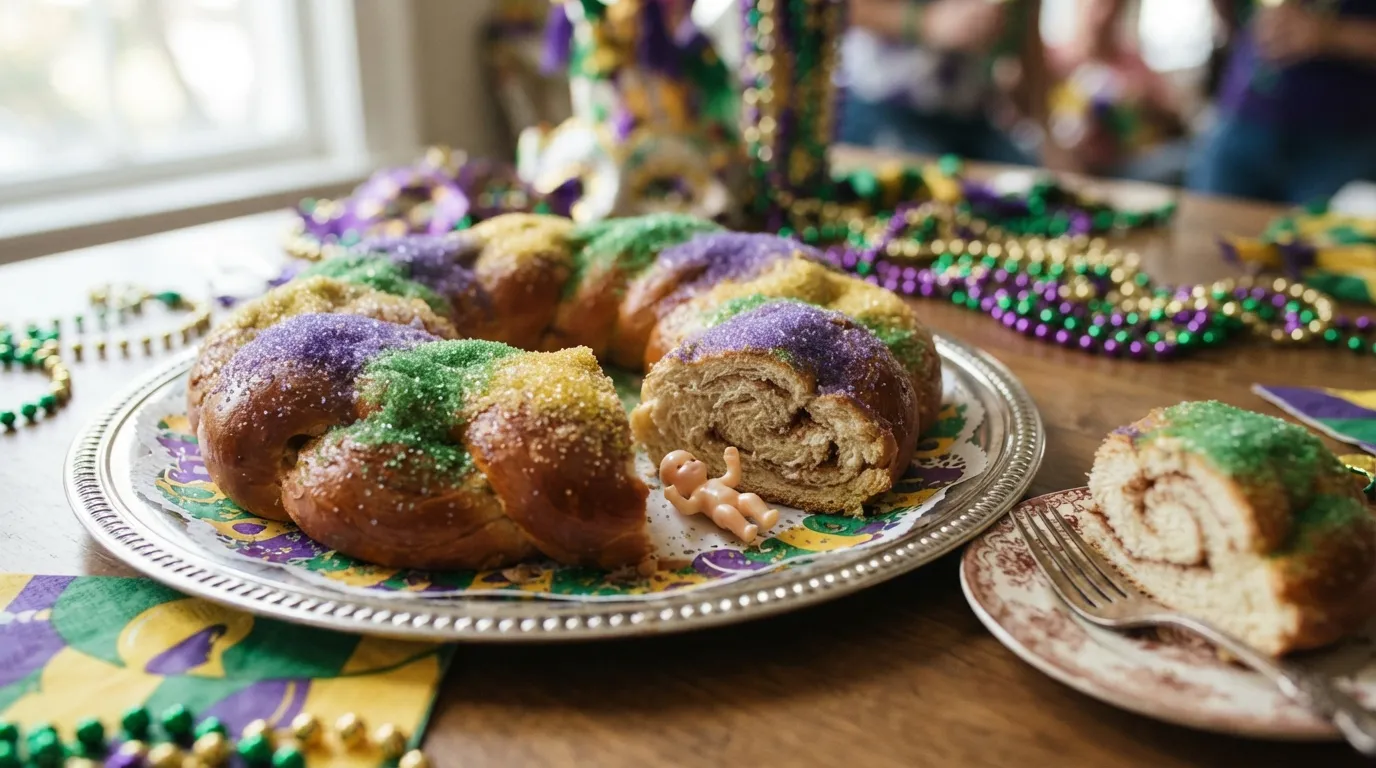
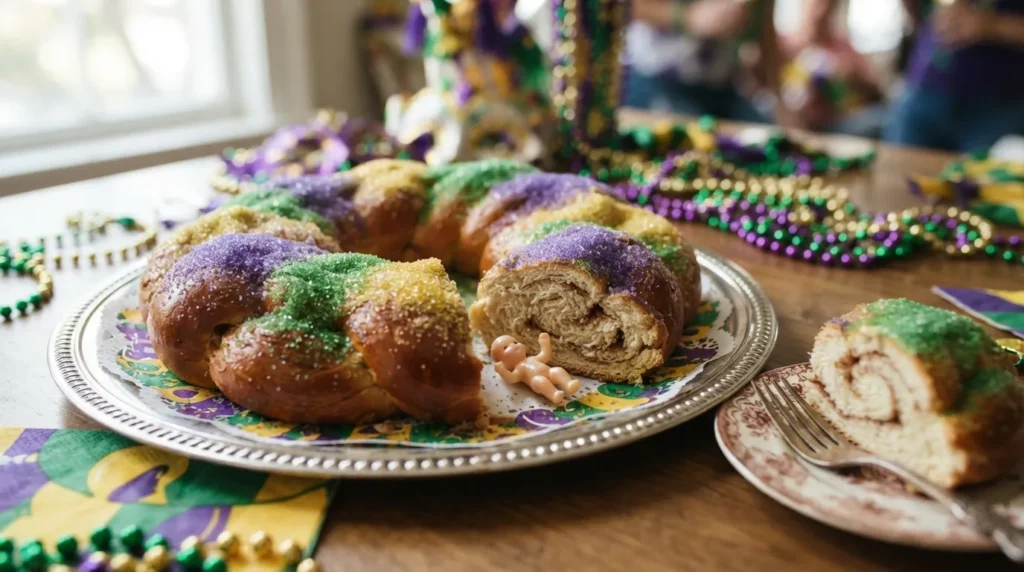
New Orleans did not invent the king cake. The tradition arrived from French roots and is tied to Epiphany on January 6. What New Orleans did was turn it into a season that runs from Twelfth Night right up to Mardi Gras.
The cake is a ring of sweet dough, usually covered in purple, green, and gold sugar. Hidden inside is a trinket, once a bean and now more often a tiny plastic baby. Whoever finds it is expected to bring the next cake or host the next party.
Quick Compare
- Brought from France: an Epiphany cake tied to January 6, with a hidden bean.
- Added in New Orleans: purple, green, and gold sugar, a plastic baby, and a season that lasts until Mardi Gras.
That small rule is the genius. It turns dessert into a game with a social contract, and it works for an office break room as easily as a family kitchen.
New Orleans bakeries such as Haydel’s and Gambino’s ship cakes around the country, and bakeries elsewhere now offer their own versions. It spreads without much marketing because people love an excuse to say, “You got the baby, so you’re next.” A single piece of cake becomes a reason to see one another again.
#5 – Social Aid & Pleasure Club Parades
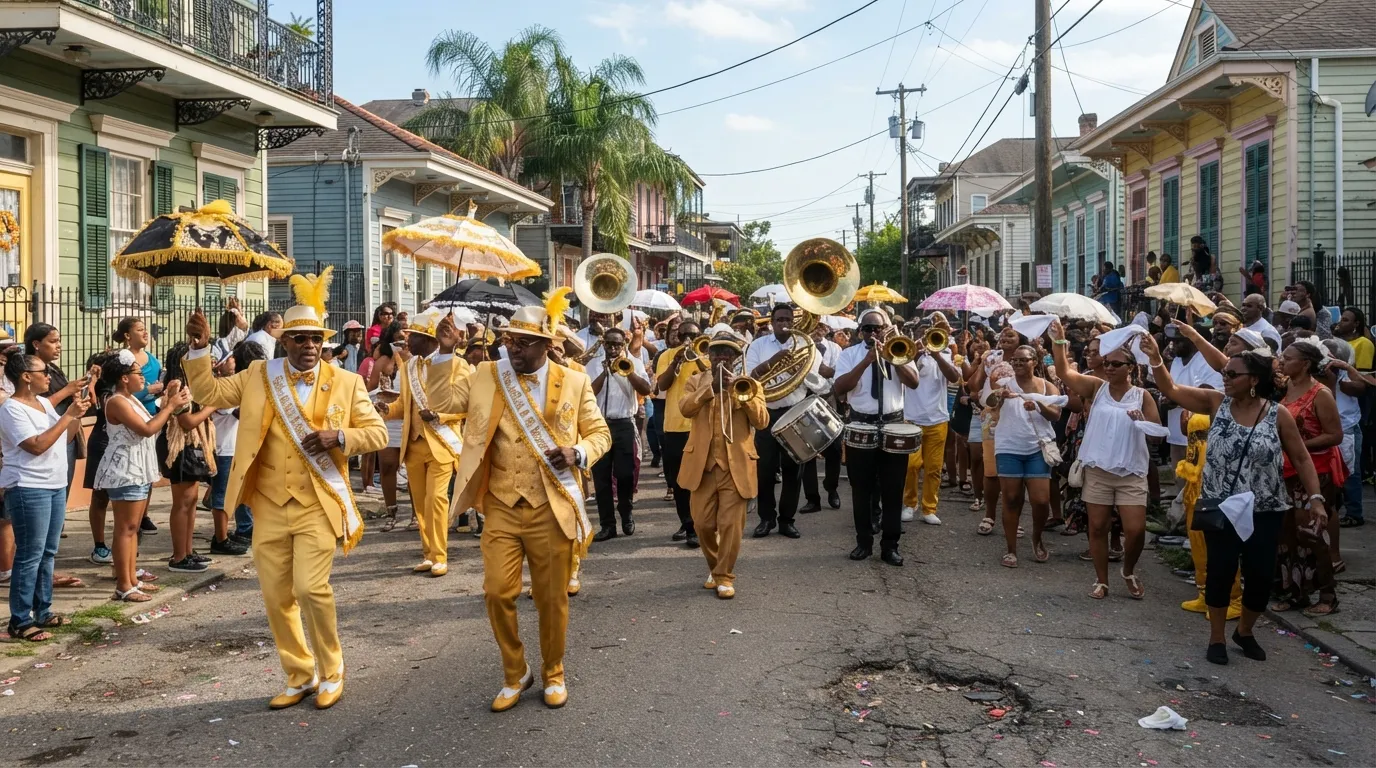
Before there were official insurance policies for many Black New Orleanians, there were mutual aid societies. Members paid dues so that families could be helped in times of sickness or death. Those clubs grew into the social aid and pleasure clubs that parade today.
Clubs such as the Young Men Olympian Jr. Benevolent Association, the Jolly Bunch, and Black Men of Labor still take to the streets on Sundays from fall into spring. Members wear custom suits, hats, and sashes, and each club designs a new look each season. A hired brass band plays behind them while a second line forms.
The blueprint is simple and powerful: matching outfits, a banner, a mapped route, and a band. It gives a neighborhood a way to announce itself.
Festivals elsewhere now book New Orleans clubs and brass bands, and many borrow the look for their own community parades. What looks like pure spectacle began as a way of taking care of one another, and that history is why the strut feels so proud.
#4 – Jazz Fest’s Fair Grounds Parades
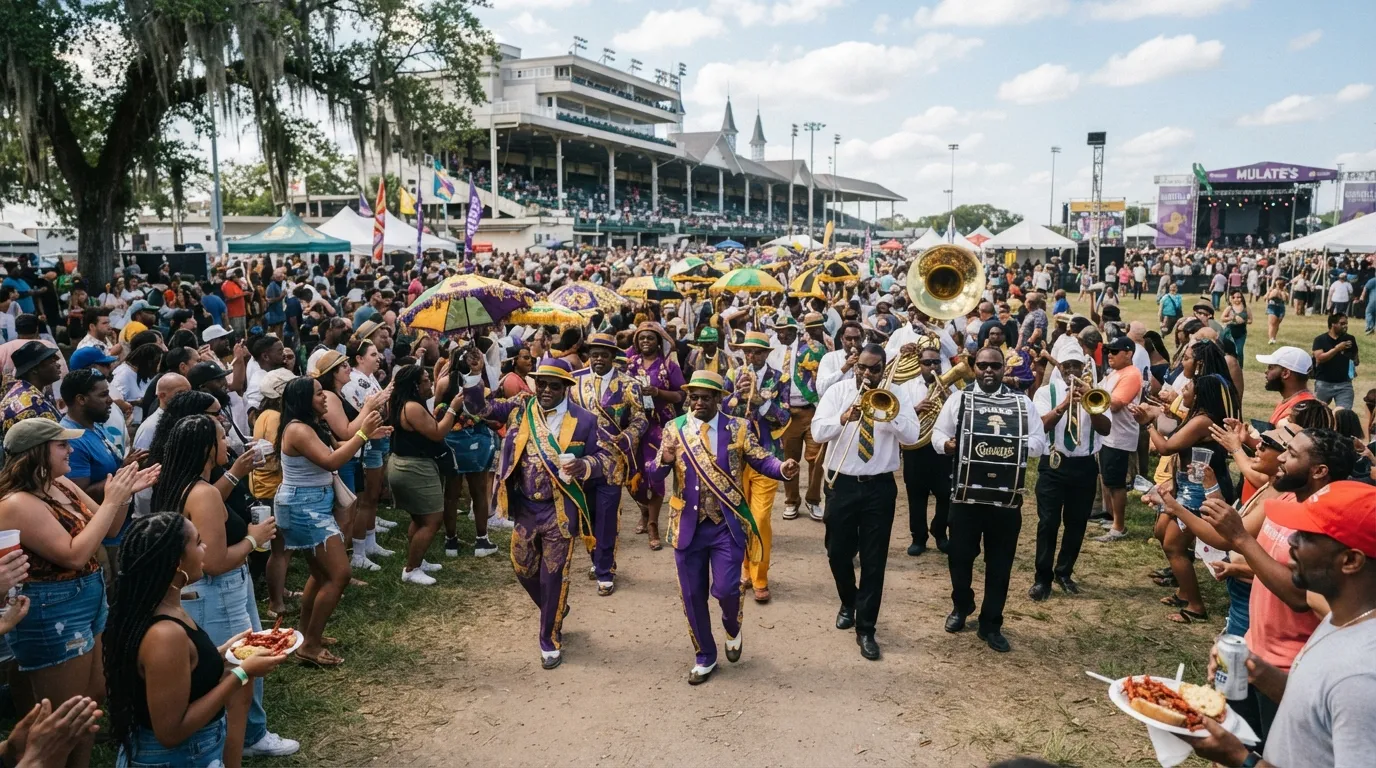
The New Orleans Jazz & Heritage Festival began in 1970 and later settled at the Fair Grounds Race Course. It did something unusual for a music festival: it let the street come inside. Parades with social aid and pleasure clubs, brass bands, and umbrellas wind through the crowd between sets.
The effect is hard to overstate. You can be eating crawfish bread, hear a bass drum behind you, and suddenly the whole crowd is part of a parade. The festival’s stages are only half of the show.
Why It Stands Out
- The festival launched in 1970.
- Parades move through the crowd between stage sets.
- Social aid and pleasure clubs bring the neighborhood in.
- Food, music, and street culture share one field.
That mix became a model. Festivals elsewhere now send a brass band weaving among the audience, schedule surprise parades, or give local traditions a prominent place beside the headliners.
Organizers like it because it keeps people moving between stages, but the real prize is the feeling it creates. A giant festival suddenly feels like a neighborhood party, and that is much harder to manufacture than another stage.
#3 – St. Joseph’s Day Altars
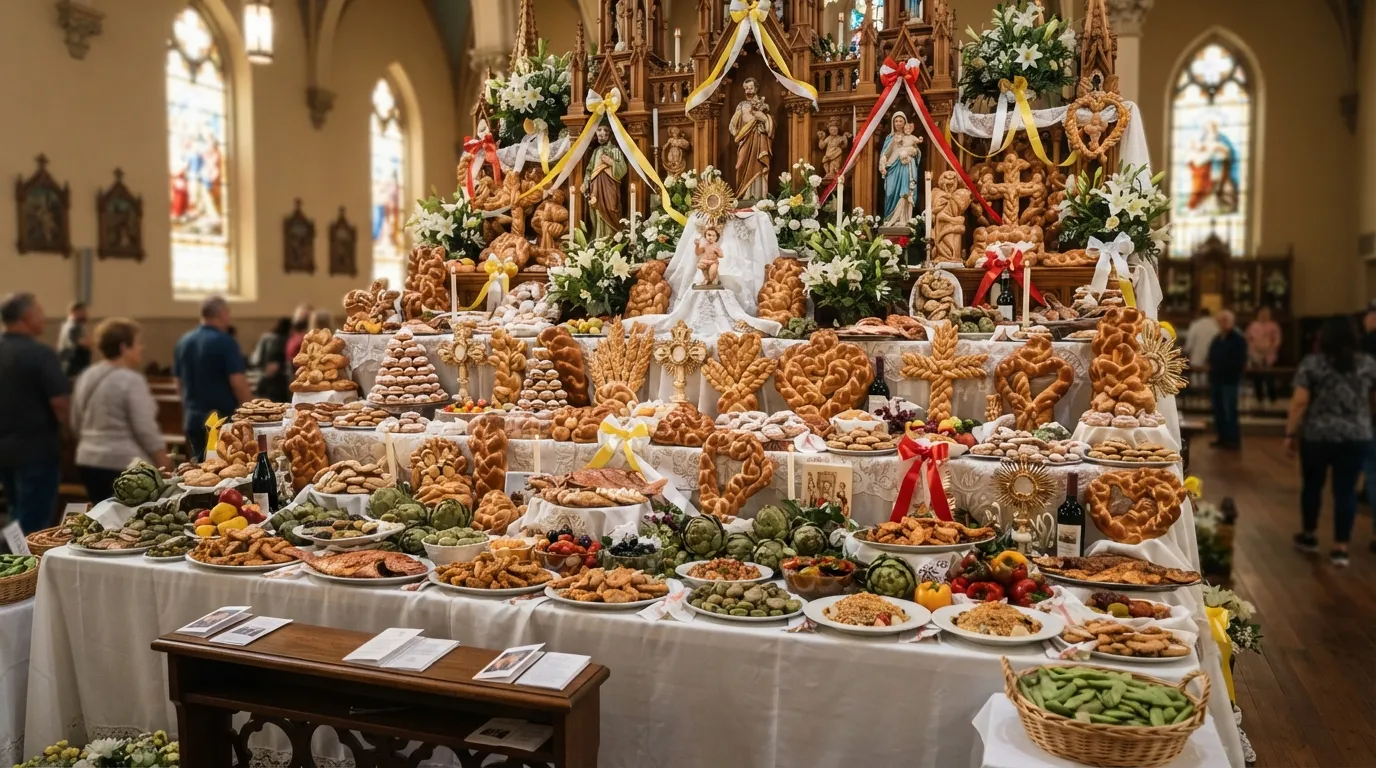
Every March 19, New Orleans homes and churches build altars that look like edible cathedrals. Tiers of bread, fish, vegetables, fig cookies, and pasta topped with breadcrumbs fill the tables. The breadcrumbs are said to recall the sawdust of Joseph the carpenter.
The custom comes from Sicilian immigrants, and the story behind it goes back to a famine in Sicily. People prayed to St. Joseph for relief, and the fava bean, which survived, became a symbol of luck. Many visitors still carry a blessed fava bean in a wallet.
The altars are meant to be shared. Food is given to the hungry, and visitors are welcomed in.
New Orleans did not invent the devotion, but it turned the altar into a citywide public spectacle. Italian-American parishes and community groups elsewhere hold St. Joseph tables, and each one has a version of the same idea: build something beautiful, then give it away. That generosity is what people remember long after the bread is gone.
#2 – Congo Square Drumming
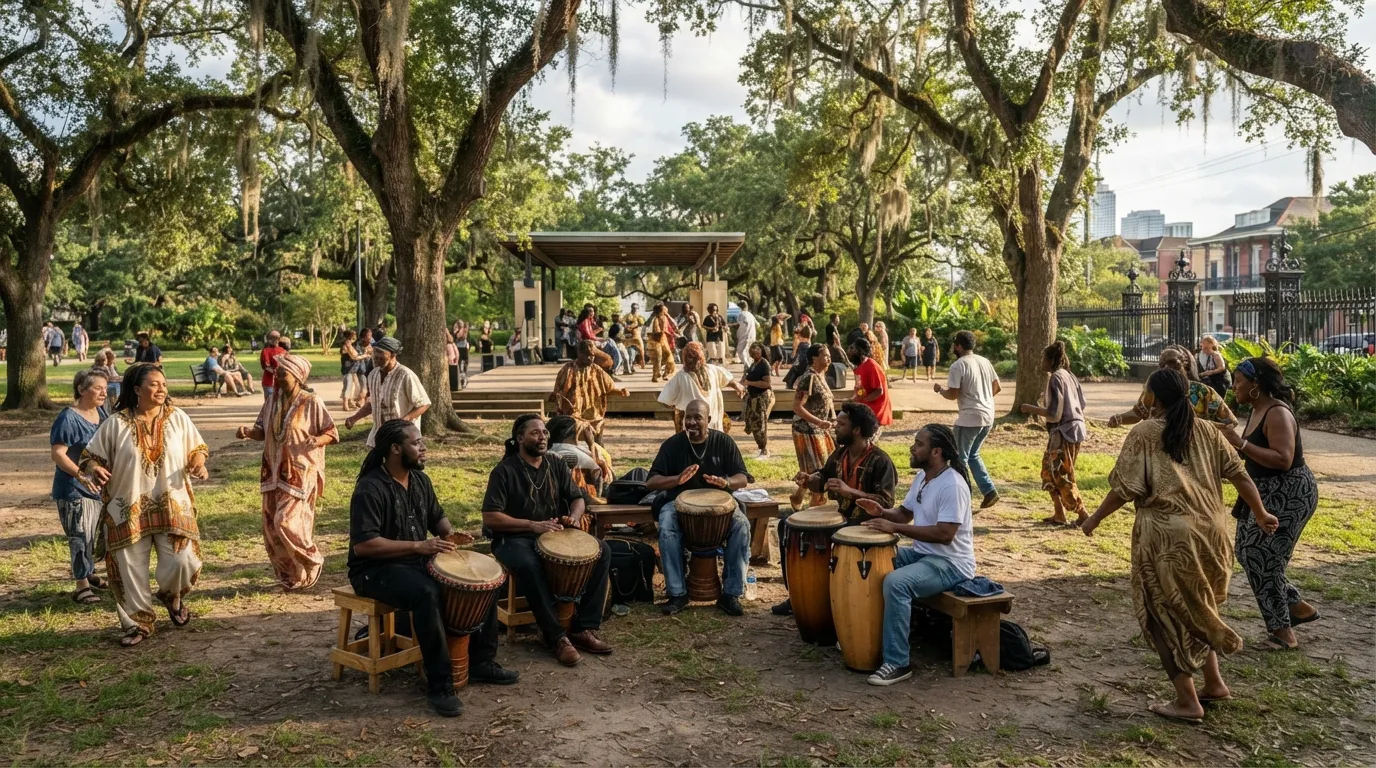
In the 1800s, Congo Square was a patch of ground where enslaved people gathered on Sundays to dance, drum, and trade. In 1819, the architect Benjamin Latrobe described the scene in his writings, and his account remains one of the best-known looks at it.
The music and dance there are often cited as roots of the rhythms that shaped New Orleans and, through it, American music. The square is now part of Louis Armstrong Park.
Worth Knowing
- Gatherings took place on Sundays in the 1800s.
- Benjamin Latrobe wrote about the scene in 1819.
- The square sits inside Louis Armstrong Park today.
- Jazz Fest named a stage in its honor.
Its influence is easy to see at festivals. The stage name signals a promise of African diaspora music, dance, and community. Heritage stages and drum circles elsewhere borrow the same idea.
The format is almost shockingly simple. A circle, a few drums, and an open invitation can hold a crowd for hours. This entry earns its high spot because it reminds us that the loudest festival traditions started with people who were given very little space and made a world in it.
#1 – Rex, the King of Carnival
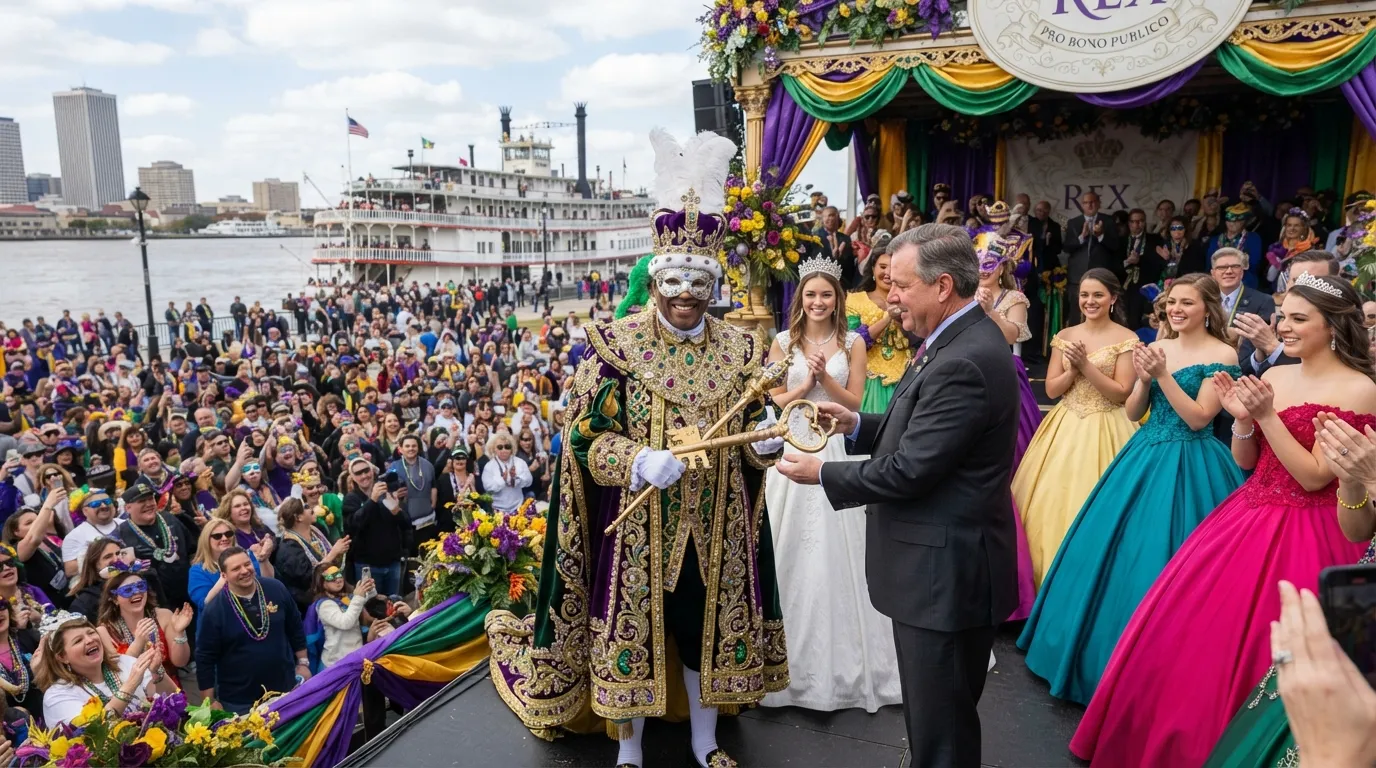
On Lundi Gras, a man arrives on the riverfront dressed as royalty. The next morning, the mayor hands him a key to the city. For one day, a king rules New Orleans, and the whole city plays along.
That king is Rex, whose organization first paraded in 1872 and whose motto is “Pro Bono Publico.” With a king, a queen, a court, and a grand procession, Rex made make-believe government into civic theater.
The structure was built to travel. A temporary monarch gives a parade a clear center, a photo-ready figure, and a story that everyone understands without a program. It also cost far less than building a new attraction every year.
Carnival courts with kings and queens are now standard across the Gulf Coast and in carnival celebrations elsewhere. Some towns crown their own royalty with the same pomp, and some do it with a wink.
That is why this tops the list. Many festivals borrowed a float, a color, or a dance step. Rex handed them the idea that, for one glorious day, anyone could be king.
CEO-Co-Founder