

- 12 Differences Between What a Cruise Fare Covered in 1980 and What It Covers in 2026 - October 16, 2026
- 13 Differences Between a Concert Ticket in 1978 and a Concert Ticket in 2026 - October 16, 2026
- 15 Differences Between a Road Trip in 1970 and a Road Trip in 2026 - October 16, 2026
#14 – A 1975 paper ticket booklet beside a 2026 boarding pass on a phone
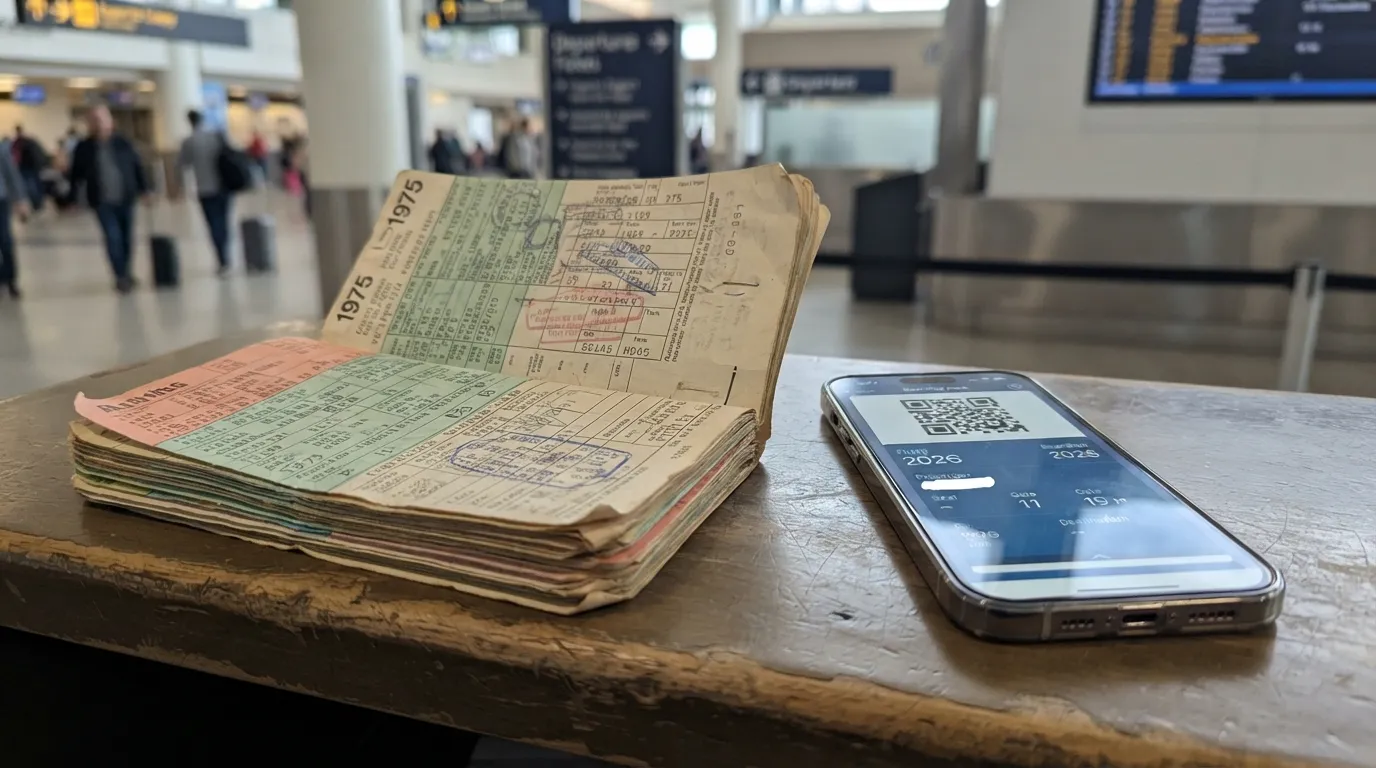
Start with the first thing every traveler once held in their hands. On the left, a 1975 ticket booklet lies open on a counter, a thick stack of carbon-copy pages and flight coupons with fare rules in tiny type. An agent had to tear out a coupon by hand at each step.
On the right, from the same camera height, a 2026 boarding pass glows on a phone screen. A scannable code, a gate, and a seat sit together in one tidy rectangle, and if the gate changes, the pass can update itself.
ID still gets checked in both eras. But the paper version meant more handling and more pieces to lose, while the phone version puts the whole trip in one place and makes a dead battery a brand-new problem.
#13 – A 1975 meal tray set at every seat beside a 2026 cart selling food in the aisle
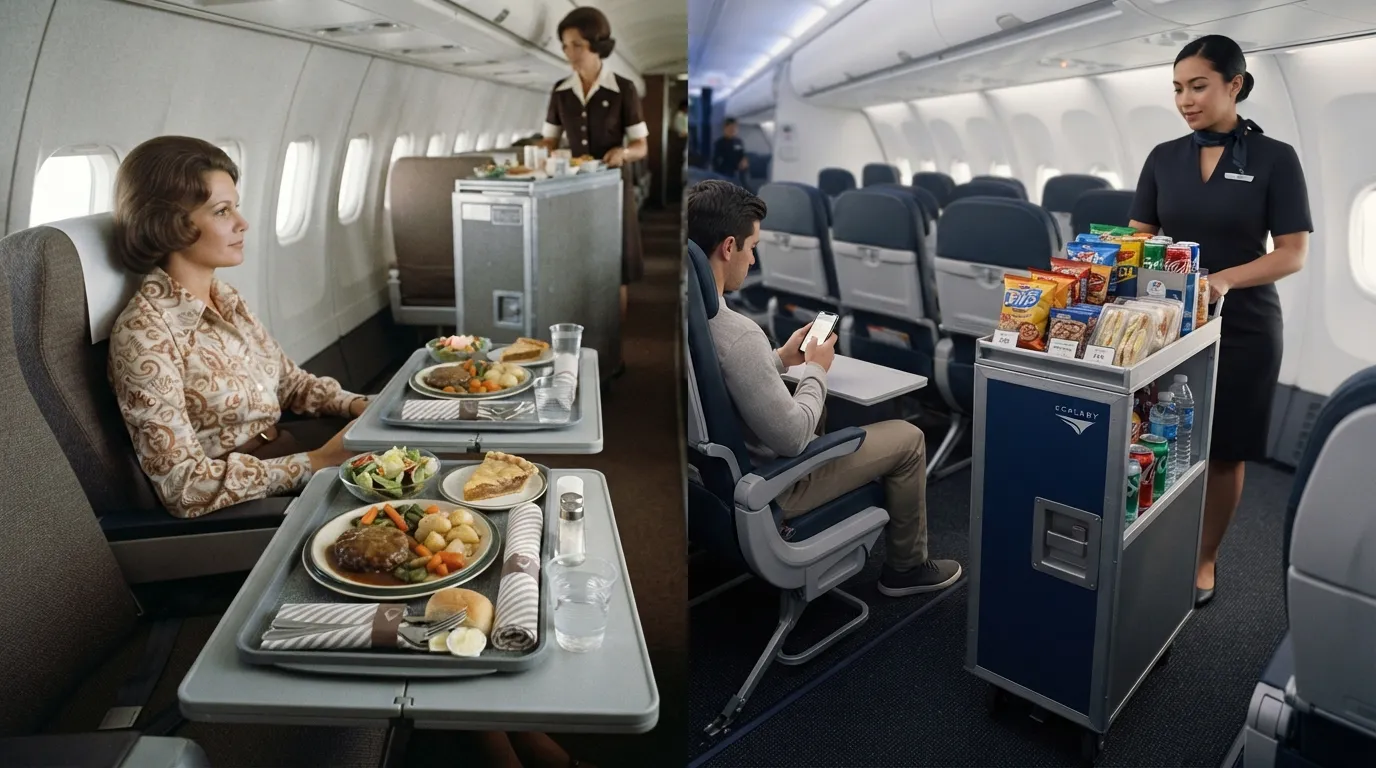
Here is the change that surprises people most. On the left, a 1975 coach tray is already set at the seat: a main course, salad, roll, and dessert, with metal cutlery rolled in a napkin and little condiment containers alongside. Nobody had to ask for it, and nobody reached for a wallet.
On the right, the 2026 tray table sits empty while a cart rolls down the aisle with packaged snacks and drinks. On many flights, those items are bought one at a time instead of arriving with the fare.
Both eras use a cart to move through the cabin. The difference is what rides on it: the earlier cart carried complete trays for everyone, while the later one carries individual choices with price tags.
#12 – A 1975 armrest ashtray beside a 2026 armrest with no ashtray
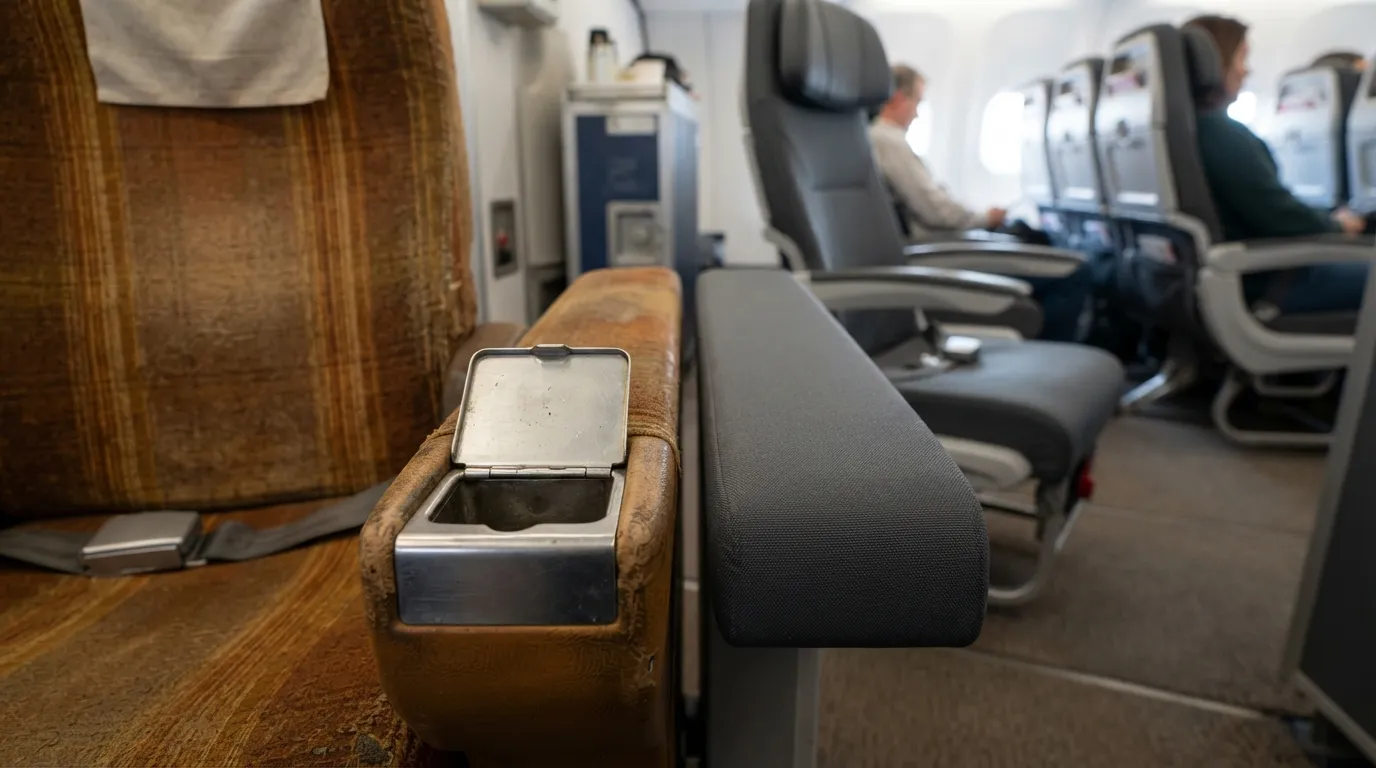
Look closely at the end of the armrest. On the left, a 1975 armrest has a small flip-up ashtray built in, often with a metal liner, sitting flush when closed and opening with a simple press. It was as ordinary a part of the seat as the seat belt.
On the right, the 2026 armrest in the identical spot is smooth padding. There is no lid, no slot, and no liner, because smoking is banned on U.S. flights and the feature vanished from the design.
Even now, many aircraft keep a small ashtray in the lavatory as a safety measure. In the armrest, though, that little hinged door is gone, and with it a whole era of cabin life.
Fast Facts
- 1988: a U.S. rule banned smoking on domestic flights of two hours or less.
- 1990: the ban widened to domestic flights of six hours or less.
- 2000: the ban reached all flights to and from the United States.
- The armrest ashtray faded out as the rules spread, but the lavatory one often stayed.
#11 – A 1975 paper route map in the seat pocket beside a 2026 map on the seatback screen
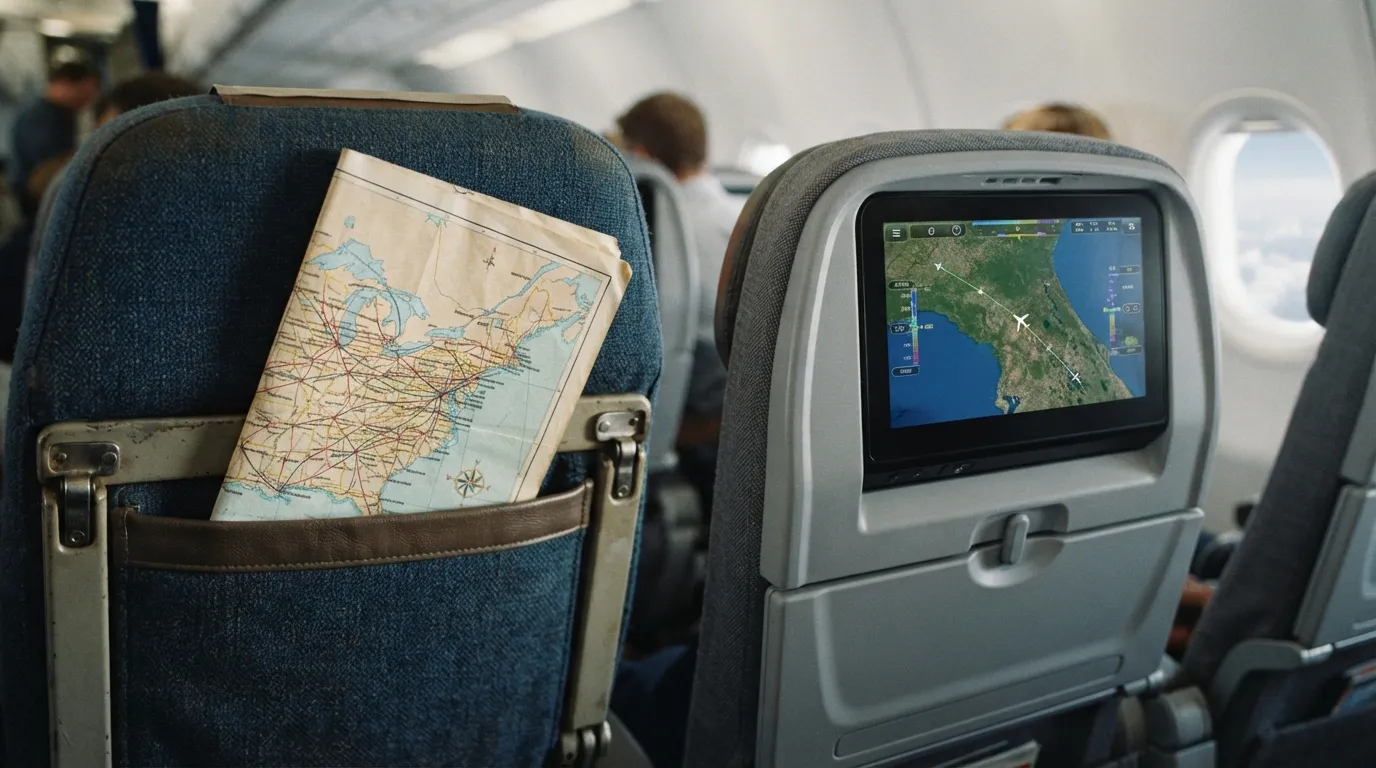
Before seatback screens, the question of where you were had a paper answer. On the left, a folded route map rests in a 1975 seat pocket, printed with city pairs and flight paths, ready to be unfolded across a lap and traced with a fingertip.
On the right, the 2026 seatback shows a screen with a moving map. A small aircraft icon creeps across the display while speed and estimated arrival update as the flight goes on, at least on planes that have screens.
The paper map never changed after printing, and it showed where an airline could take you rather than where you were. The screen shows the present moment. Both give passengers a sense of place, but only one could be folded up and carried home.
#10 – A 1975 open hat rack beside a 2026 closed overhead bin
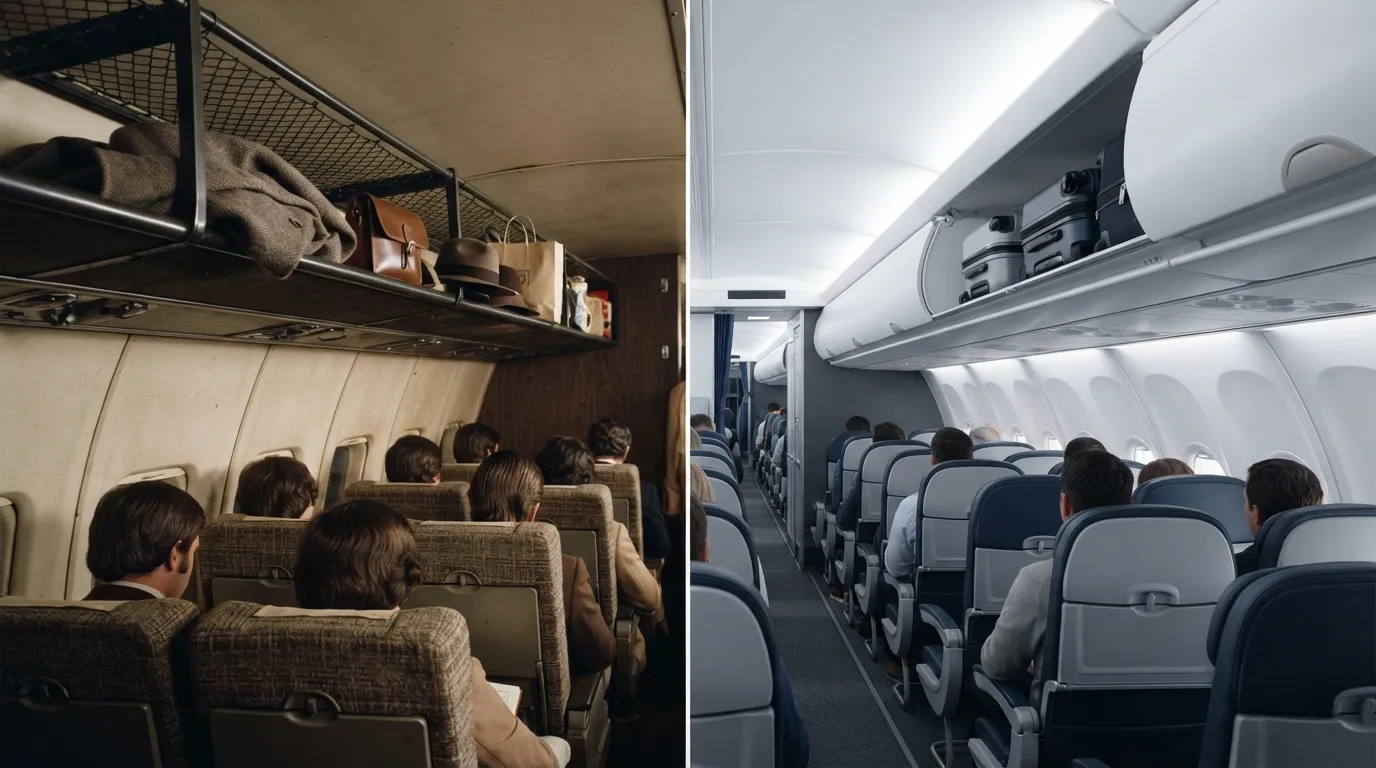
Picture the ceiling above the seats. On the left, a 1975 cabin on many jets has an open rack running overhead, with hats, coats, and small bags resting right out on the shelf. There are no doors in sight, and a jacket is one reach away.
On the right, the 2026 view has closed overhead bins with latched doors that swing up or out, holding carry-on bags out of sight. The look of belongings perched above your head is gone.
The open rack was quick but left items exposed and free to shift when the air got bumpy. The closed bin keeps things enclosed and the aisle tidier, though anyone who has watched a boarding scramble for bin space knows it brings its own stress.
#9 – A 1975 thick seat cushion beside a 2026 thin seat cushion
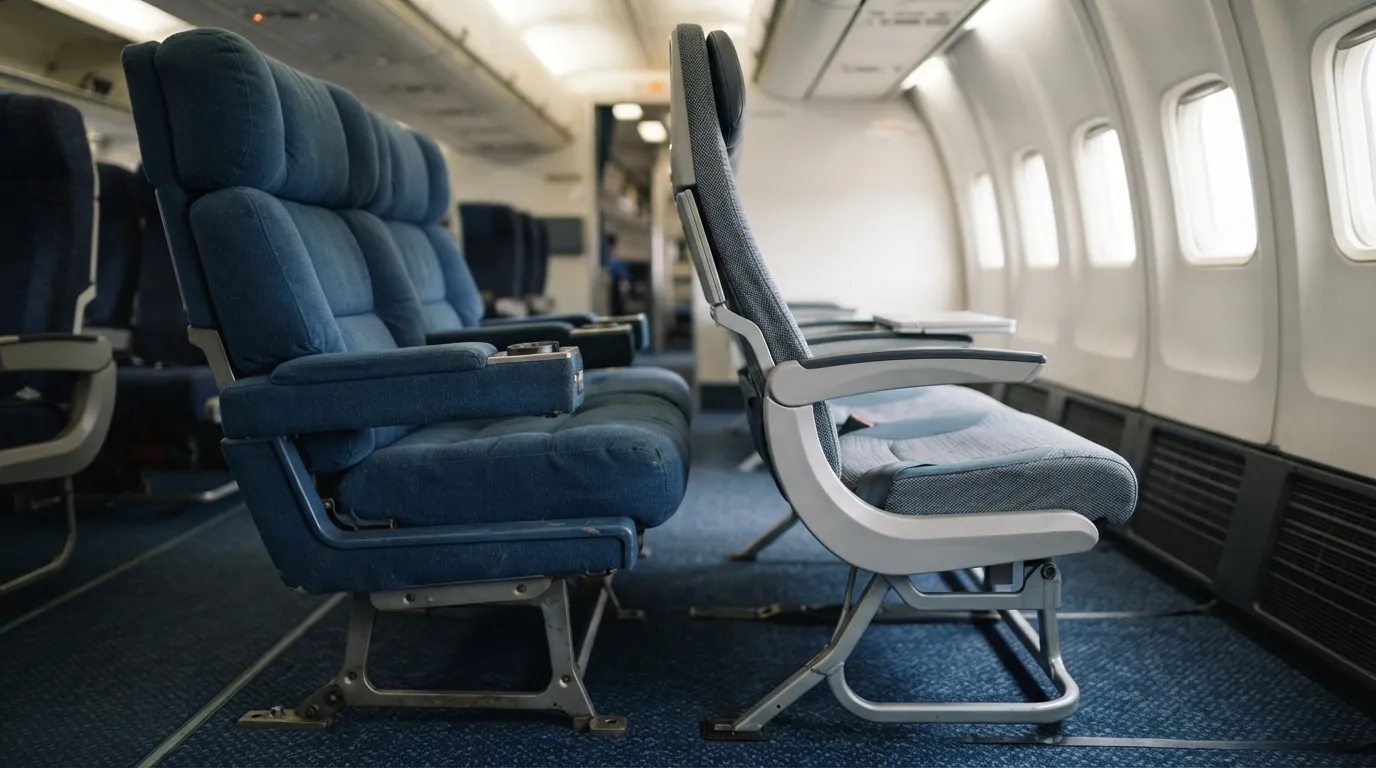
You can feel this one before you can see it. On the left, a 1975 coach seat seen from the side has a deep, plush cushion and a chunky backrest, with real thickness under the passenger. It looks like a small armchair bolted to the floor.
On the right, from the identical angle, the 2026 seat looks slimmer, with a thinner cushion and less depth in the seat bottom and back. Slimmer designs can free up knee room or help fit more seats into the same cabin length.
Both rest on the same basic idea of a frame, padding, and a cover. The earlier seat used more foam and a softer first sit, while the later one trades some of that cushion for a tighter, lighter build. Whether thin feels better or worse depends on who is sitting.
#8 – A 1975 suitcase taken at the counter beside a 2026 suitcase on a scale at the counter
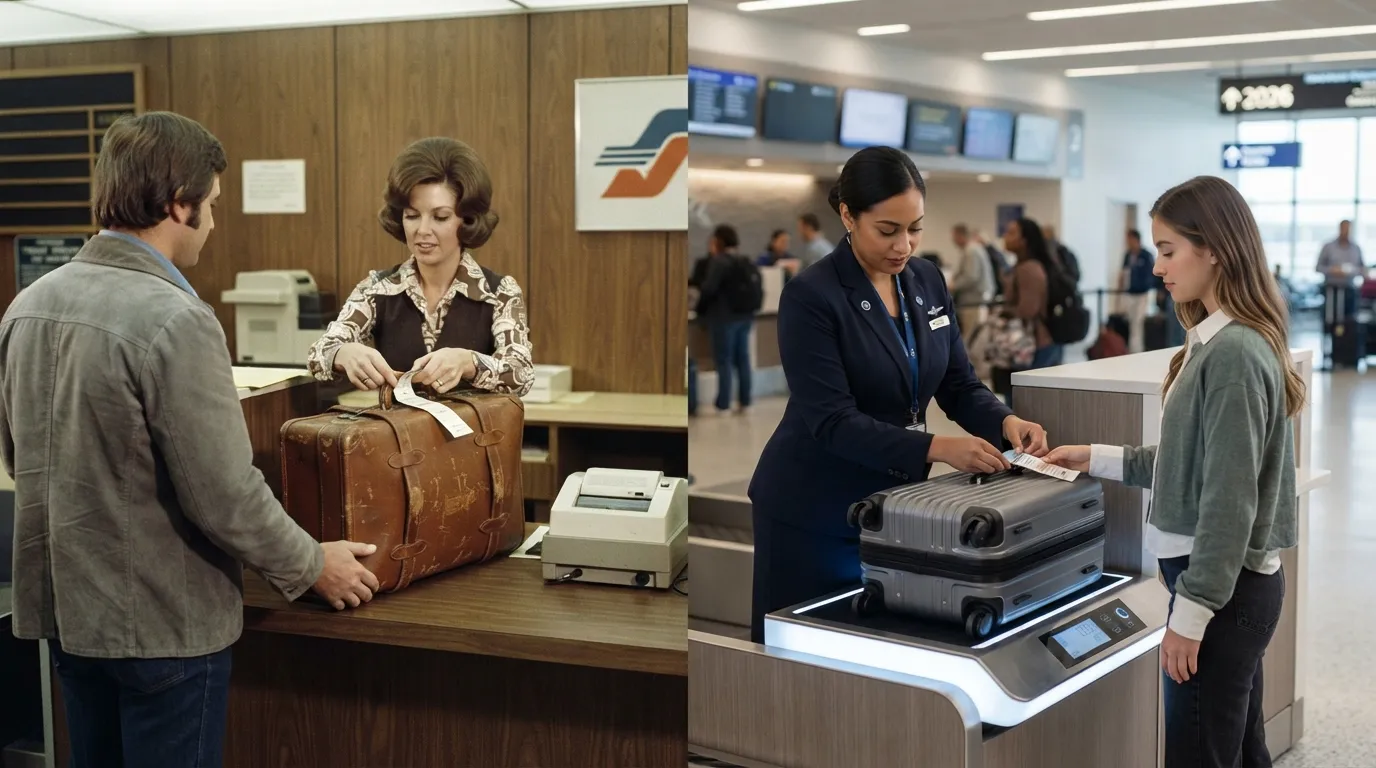
Checking a bag used to feel almost casual. On the left, a 1975 suitcase is lifted onto the ticket counter, an agent attaches a tag, and the bag heads off into the baggage system. Checked bags were typically part of the ticket price, so there was little ceremony.
On the right, the 2026 suitcase sits on a scale built into the counter, and the agent reads the weight before tagging. On many fares, a checked bag now has its own fee, and the number on that scale matters.
Allowances existed back then too, but the scale was never the star of the show. The camera stays on the same counter and the same agent position, so the handling looks familiar. The visible scale just turns a bag drop into a small moment of truth.
Quick Compare
- Left, 1975: bag lifted to the counter, tagged, and sent along, usually with the cost folded into the ticket.
- Right, 2026: bag weighed first, checked against the allowance, and often tied to a separate fee.
- Still the same: the counter, the tag, and the handoff to the baggage system.
#7 – A 1975 stair truck on the tarmac beside a 2026 jet bridge at the cabin door
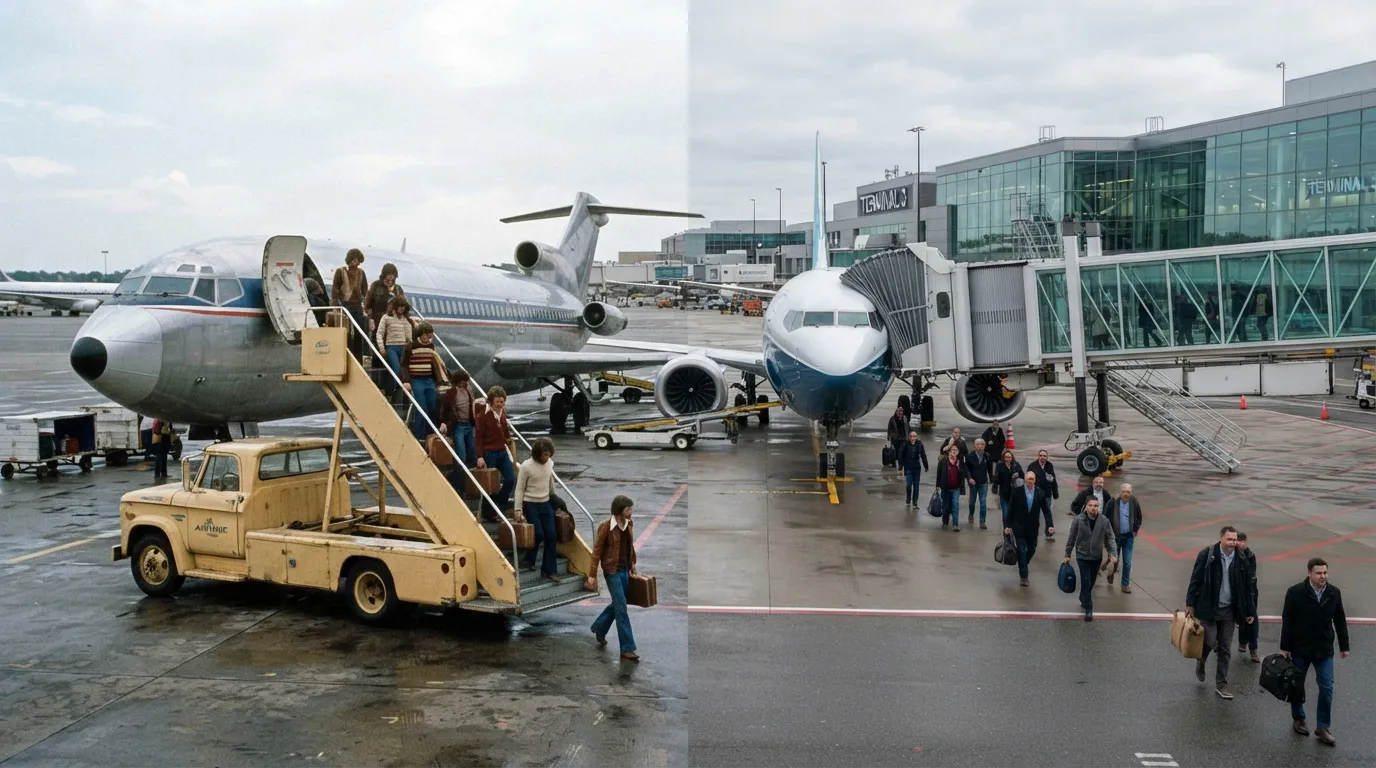
Some arrivals came with weather. On the left, a 1975 stair truck is parked at the aircraft door, and passengers step down its stairs until their feet meet the tarmac. At many airports, especially smaller ones, this was routine, and wind, sun, or rain came along for the walk.
On the right, from the same ground-level camera height, a 2026 jet bridge stretches from the terminal straight to the cabin door. Passengers walk through an enclosed passage and never touch the pavement.
Jet bridges already served busy airports in 1975, and stairs still show up at some airports today. But the picture captures the broader shift: the trip from plane to terminal went from an outdoor stroll to a covered hallway. It is kinder in bad weather and a little less memorable.
#6 – A 1975 cloth seat pocket with a magazine beside a 2026 hard screen in the seatback
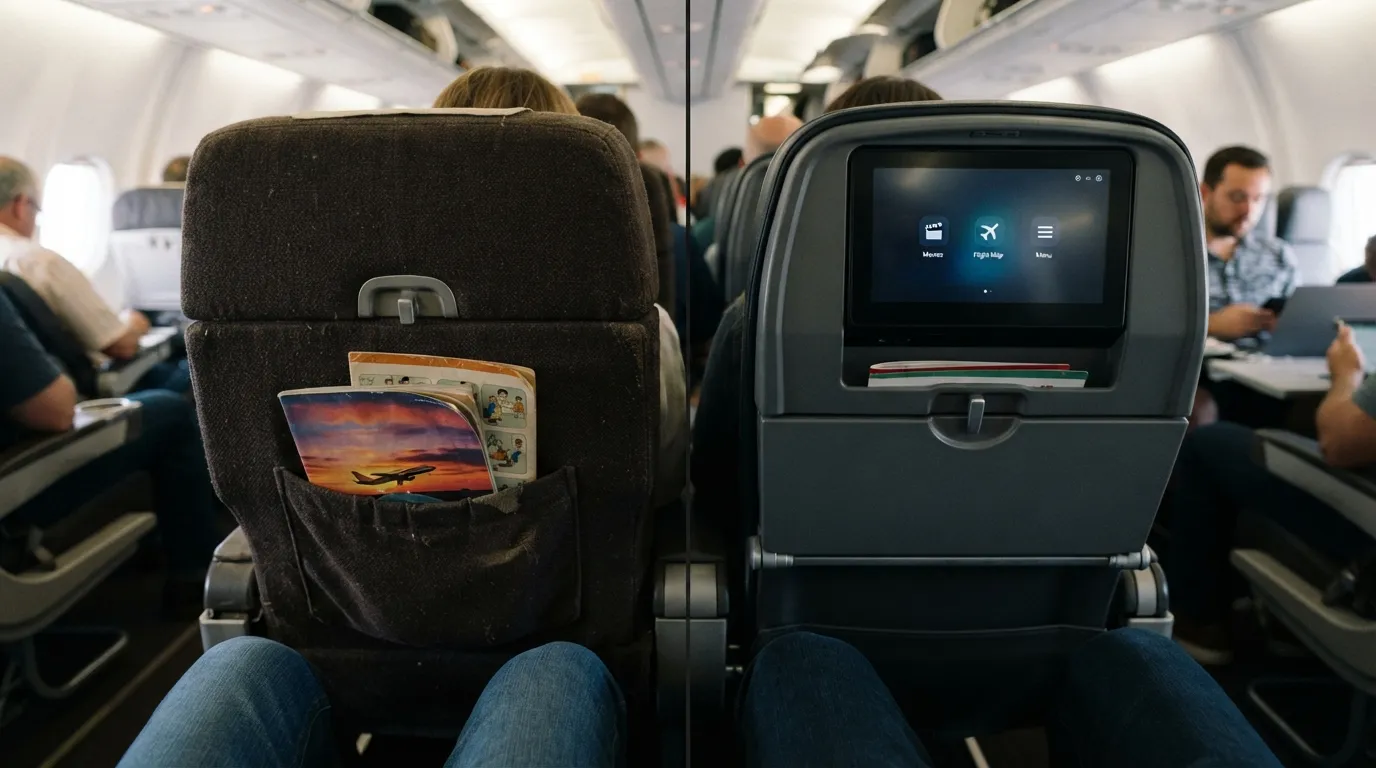
Now look at what sat right in front of your knees. On the left, a 1975 seatback pocket is a cloth pouch that matches the seat upholstery, holding a printed magazine and a safety card, with a corner of a page sticking out like a bookmark.
On the right, the 2026 seatback has a hard plastic or composite screen mounted in that spot. The pocket shrinks to a slim slot or disappears, because much of the entertainment moved onto the display. Not every plane has a screen, but where one exists, it takes the pocket’s place.
Both occupy the same space directly in front of the passenger. One held paper you could flip through, fold, or doodle on during a delay. The other offers menus and a glowing panel, with no pages to turn.
#5 – A 1975 headset plugged into the armrest beside a 2026 screen built into the seatback
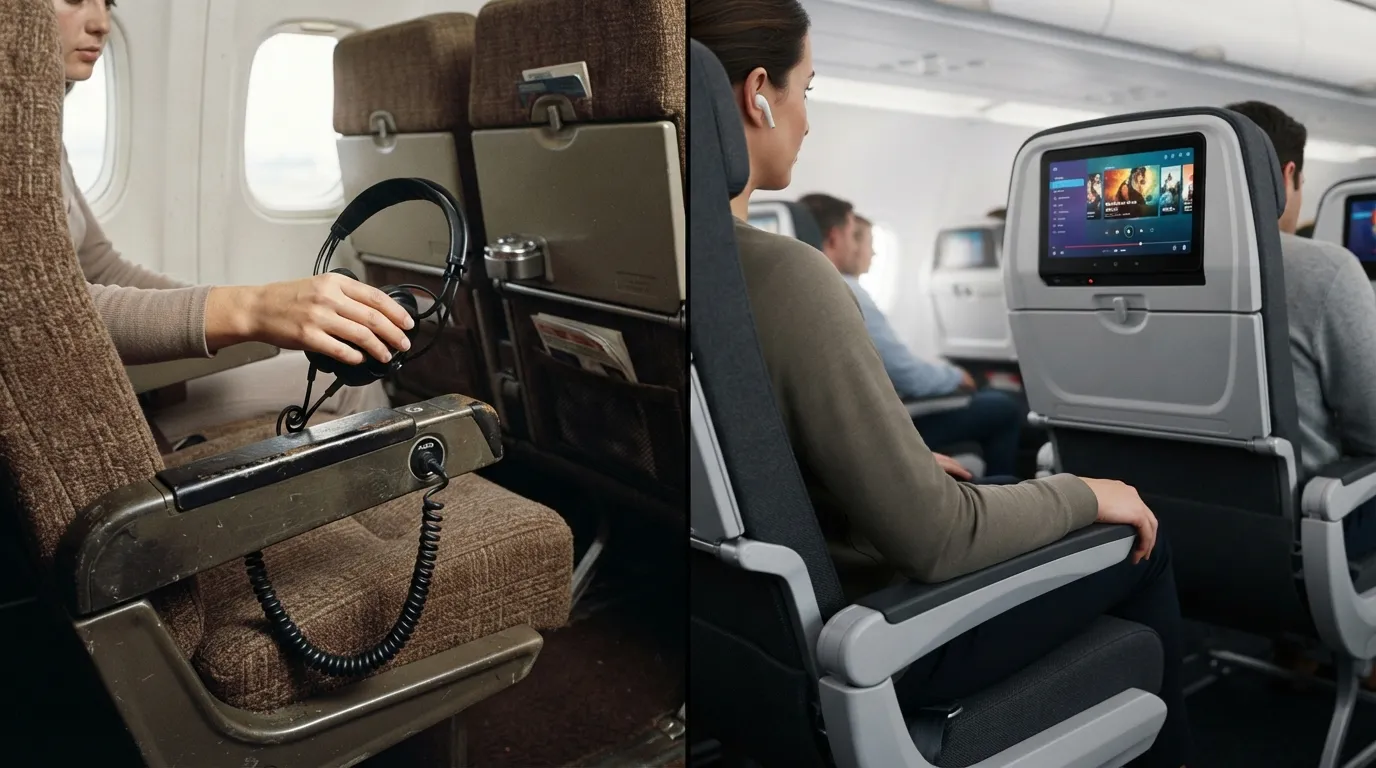
Airline audio used to come with a cord. On the left, a 1975 passenger plugs a wired headset into a jack in the armrest, with the cable looping down beside the seat. Many early sets used hollow plastic tubes rather than modern earbuds.
On the right, from the same viewpoint, the 2026 armrest is just an armrest. The audio lives in the screen built into the seatback ahead, and passengers can often use their own devices to listen instead.
Both eras deliver sound to the person in the seat. The older setup tied it to a single armrest connection and a short cord. The newer one puts picture and sound in the same place, right where your eyes already are.
Worth Knowing
- Many early headsets carried sound through hollow tubes instead of electronics.
- The 1975 jack lived in the armrest, so the cord ran beside the seat.
- In 2026, the screen often sits in the seatback ahead, but not every plane has one.
- Many passengers can now listen on their own devices.
#4 – A 1975 crew cart with plated food beside a 2026 sealed snack box on the tray
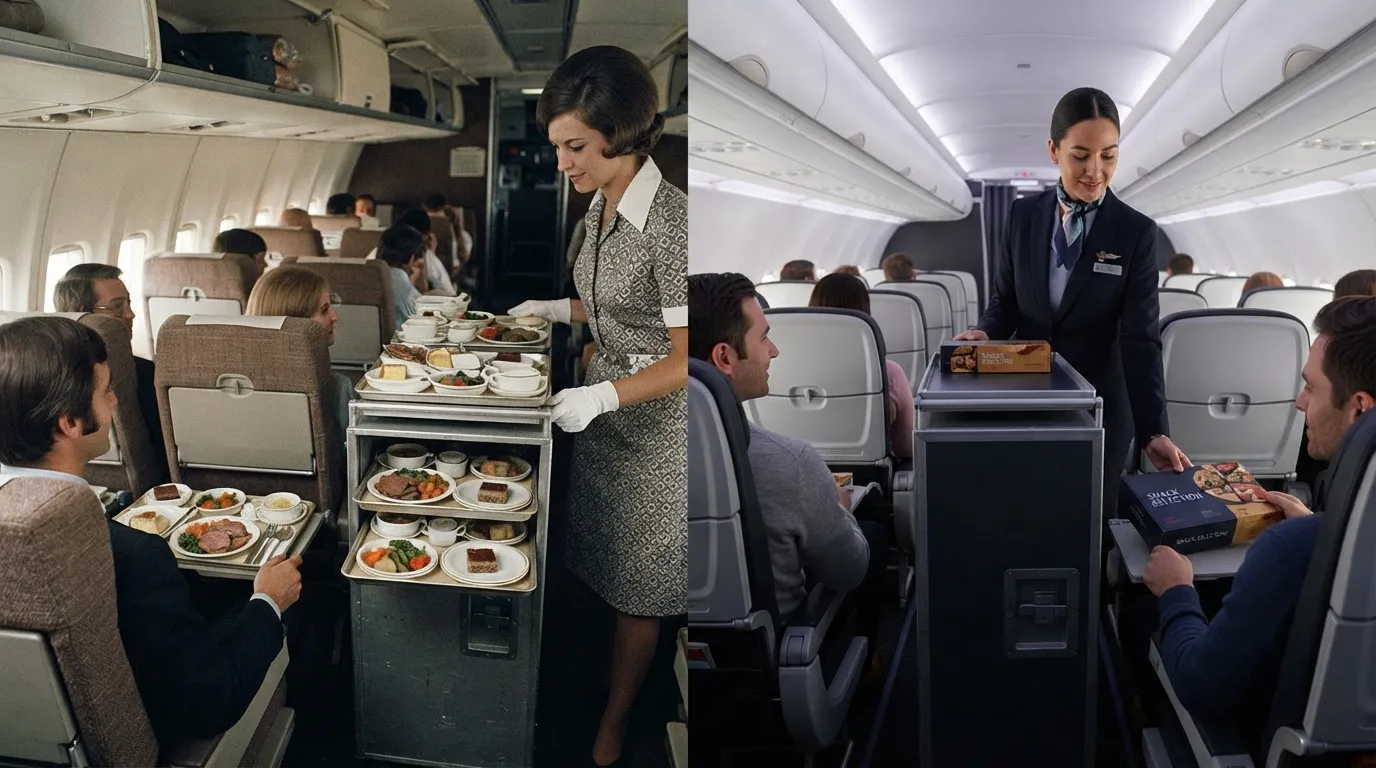
Meal service had a rhythm you could hear coming. On the left, a 1975 crew cart is stocked with plated meals, and an attendant serves each row from open trays, one full dinner after another. The cart holds enough complete meals to feed a whole section.
On the right, a 2026 tray table holds a sealed snack box chosen from a smaller cart or basket. It is wrapped, closed, and quiet, with nothing steaming and nothing to uncover.
Both scenes feature a cart rolling through the cabin. The earlier one hands out complete plated meals, while the later one hands out packaged choices. The camera stays on the cart and tray in the same positions, so the change in service style is easy to see.
#3 – A 1975 middle-seat ashtray beside a 2026 middle-seat tray table
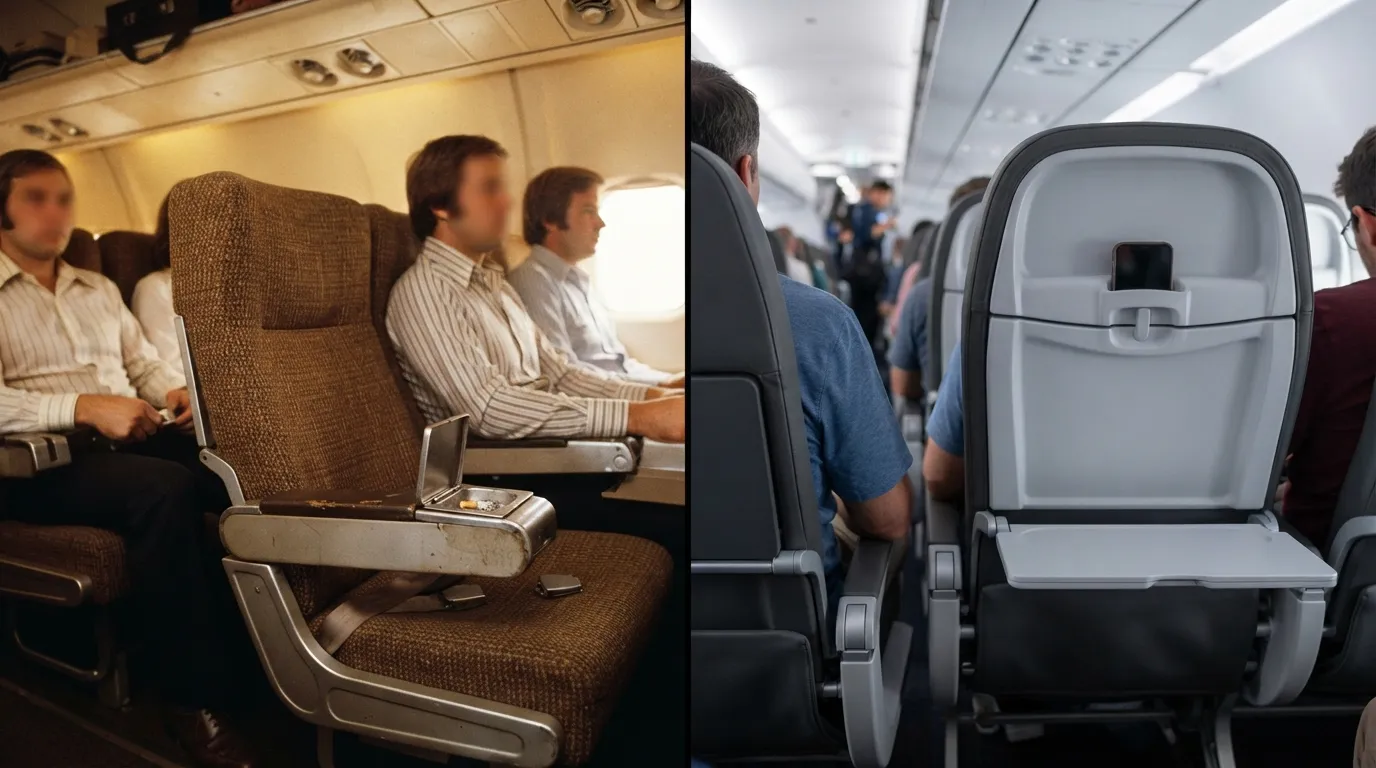
The middle seat has always been the hard seat, yet this detail shows it once came with a built-in extra. On the left, a 1975 middle seat has a small ashtray in its armrest area, within easy reach of the center passenger, wedged between two neighbors.
On the right, from the same viewpoint, the 2026 middle seat shows a full-size tray table, latched and ready to lower. There is no ashtray anywhere near it.
Both features belong to the person squeezed into the middle of a three-seat row. The earlier one served smokers, while the later one serves anyone with a laptop, a drink, or a snack box. Same cramped spot, completely different priority.
#2 – A 1975 small oval window beside a 2026 larger cabin window
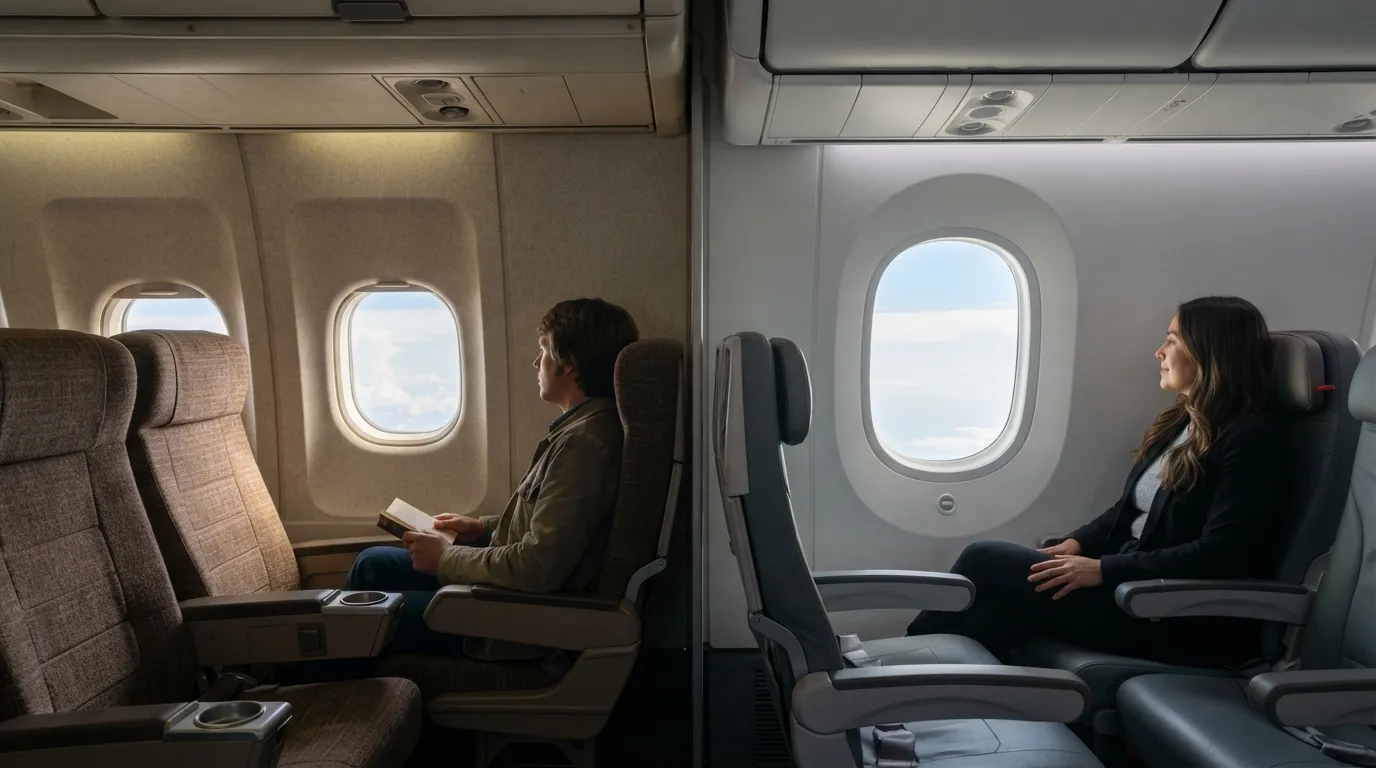
Window seats have always promised a view, but the frame decides how much you actually get. On the left, a 1975 window looks small and oval from inside the cabin, a modest porthole that limits how much sky and ground you can see.
On the right, at the same seat position and eye level, a 2026 window is larger and more rectangular, giving a wider field of view through the same stretch of fuselage. This varies by aircraft. Some newer jets have bigger windows, and many older designs still fly with small ones.
Either way, the window sits beside each seat at the same height. The earlier design offered a smaller opening, and the later one offers more glass. Anyone who has watched a sunset from a window seat knows how much the size changes the moment.
Why It Stands Out
- It is one of the few cabin details you can see without leaving your seat.
- Window size varies by aircraft, so the 2026 side is not true of every plane.
- More glass means more horizon, more clouds, and a better sunset.
- Same eye level, same seat position, very different view.
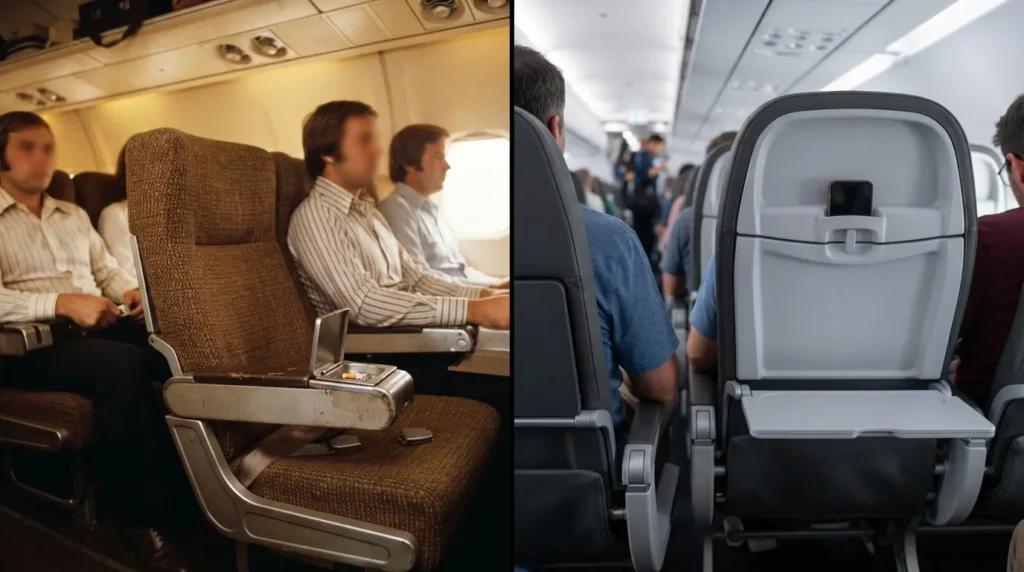
#1 – A 1975 hot meal on a napkin beside a 2026 empty tray table
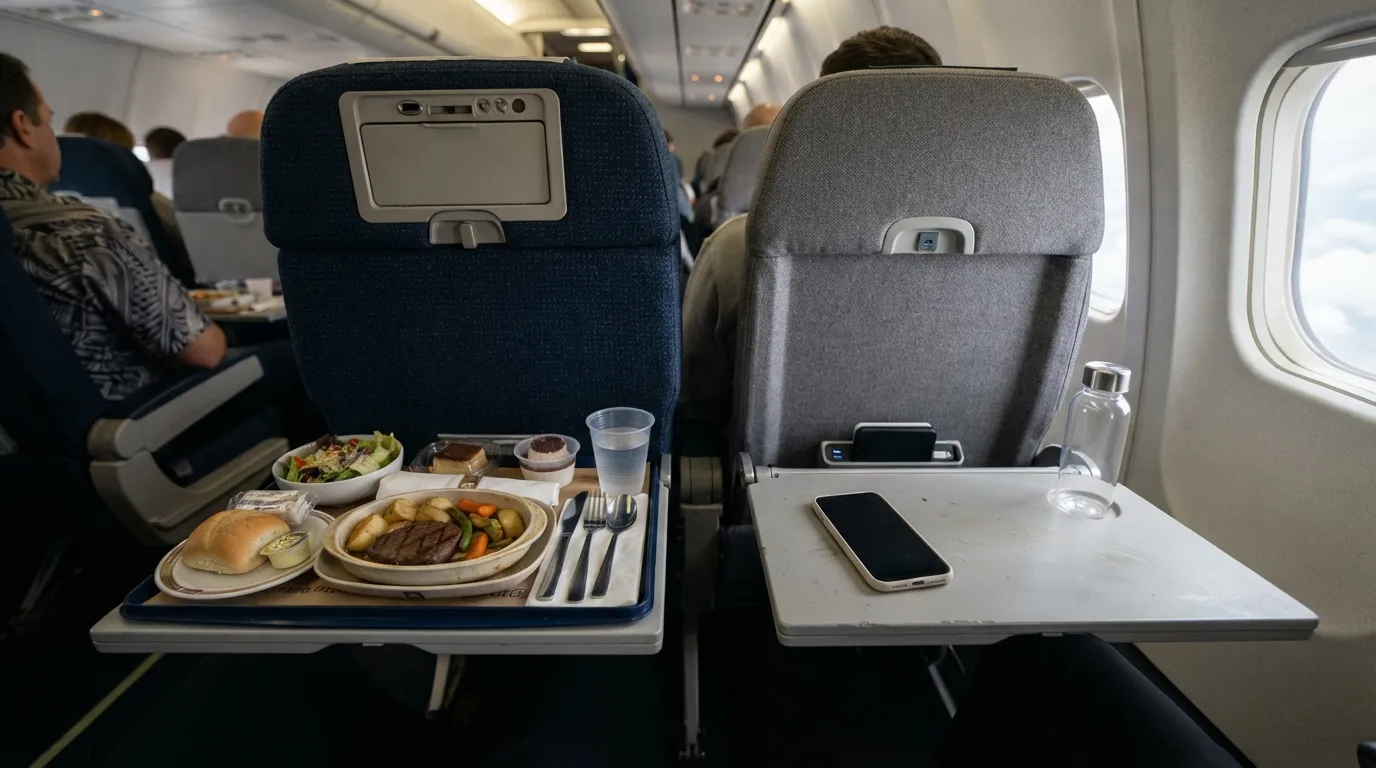
The last picture is the quietest, and maybe the most striking. On the left, a 1975 tray table holds a hot meal, with the main course, sides, utensils, and a napkin arranged and ready for the first bite. It is a full dinner at cruising altitude.
On the right, the identical tray table is empty, the surface clear except for any personal items, with no meal service in progress. On many flights today, food is something you buy, bring, or skip.
Same seat, same angle, same tray. One holds dinner, and the other holds a phone, a cup, or nothing at all. For some passengers that is a loss, and for others it is simply a different kind of flight.
CEO-Co-Founder
