
- 20 Classic Movies That Still Hold Up Decades Later - October 21, 2026
- 18 Iconic TV Shows That Defined a Generation - October 21, 2026
- 22 Tiny Towns That Look Straight Out of a Fairytale - October 21, 2026
Most of us assume movie magic lives behind studio gates, in places no ordinary person will ever stand. Then you find out you can buy a ticket to a prison from The Shawshank Redemption, walk toward the temple from Indiana Jones, or have a drink at the Green Dragon Inn.
Fourteen real places are waiting in this countdown, from a firehouse that still answers emergency calls to a sheep farm that became a village. They get stranger, more remote, and more cinematic as the numbers shrink. And the last one isn’t just a spot where a scene was shot, so keep going.
#14 – Griffith Observatory in Los Angeles, California
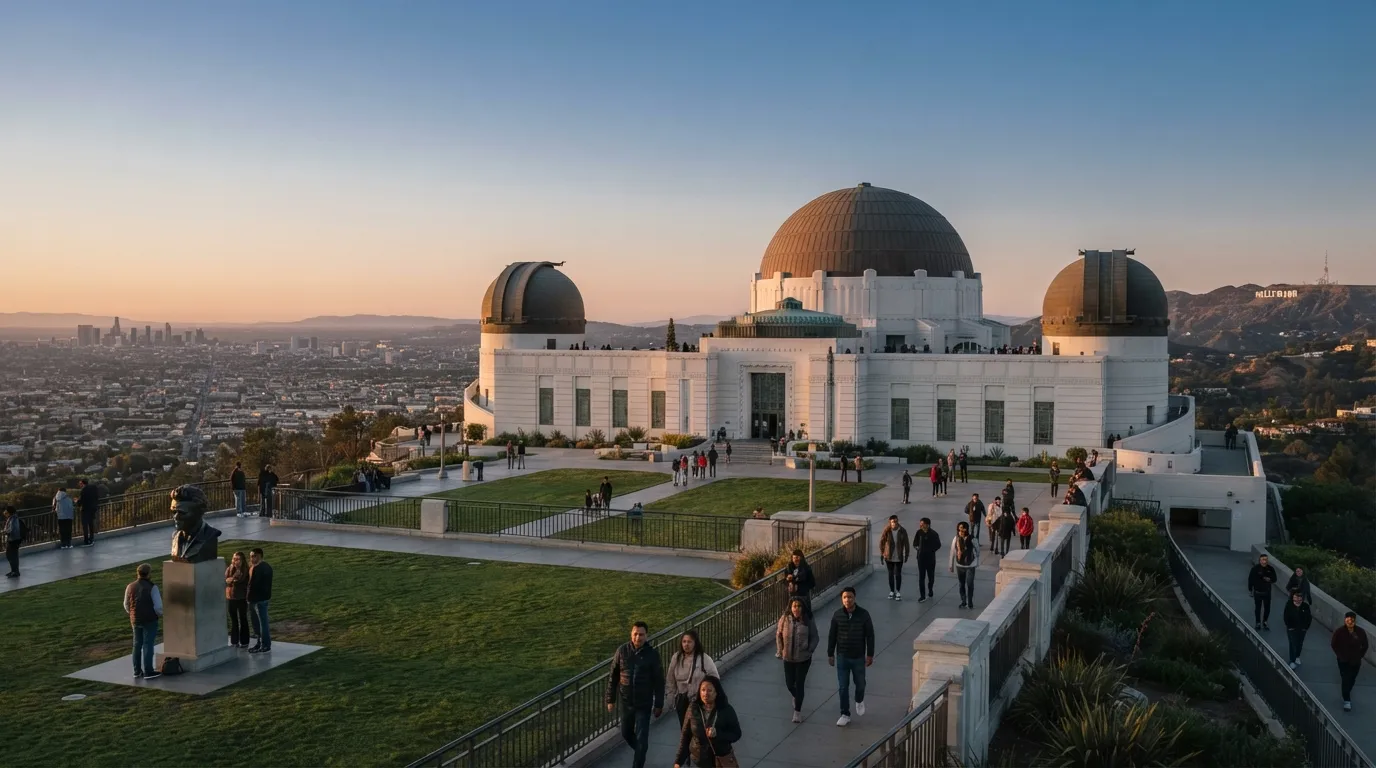
A glowing white dome, a city sprawled out below, and a knife fight on a hilltop. That’s the scene that made Griffith Observatory part of Rebel Without a Cause in 1955.
The observatory opened in 1935 and has been a screen favorite ever since. It shows up in The Terminator and The Rocketeer, and it’s the setting for the floating-through-the-stars dance in La La Land.
Today you can walk the same terraces for free, with a view that runs from downtown to the distant Hollywood Sign. A bronze bust of James Dean stands on the grounds, a quiet nod to the film that put the place on the map.
One practical tip: the observatory is closed on Mondays, so check hours before you drive up the hill. Planetarium shows cost extra, but the grounds and exhibits are free.
The next stop is a skyscraper that was still being built when a barefoot cop ran through it.
#13 – Fox Plaza in Century City, Los Angeles
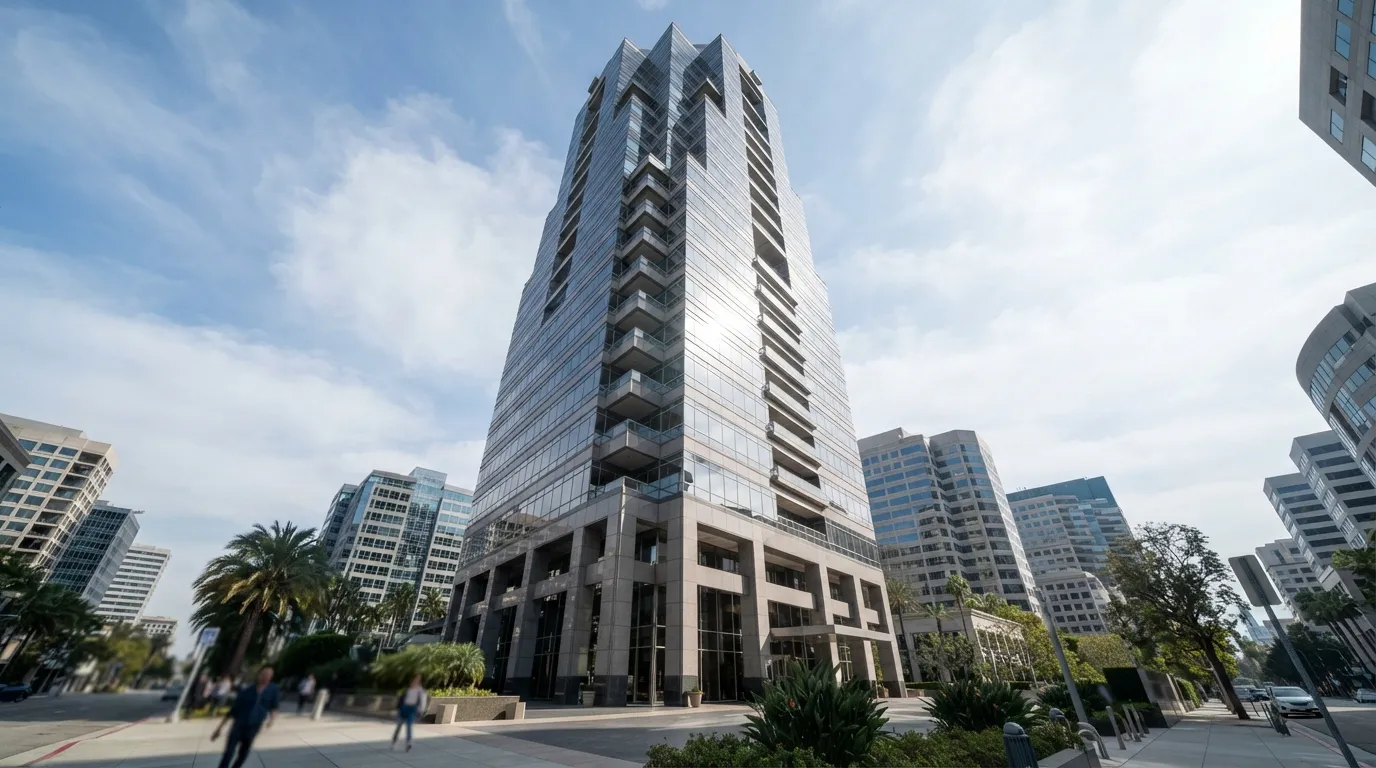
Christmas Eve, a glass tower, and one very bad night for a group of thieves. Fox Plaza played Nakatomi Plaza in the 1988 classic Die Hard.
The 34-story tower was still under construction during production. That unfinished, half-empty feeling is part of what made it such a convincing trap.
The building is a working office tower beside the old Fox studio lot, so the lobby isn’t open for wandering. What you can do is stand on the public plaza and sidewalks and look straight up at the tower that sold the whole movie.
It’s a different kind of visit from the others in this countdown. There’s no ticket booth, just a skyscraper in the middle of a busy business district that you instantly recognize.
Next, a famous firehouse where the people inside aren’t actors.
#12 – Hook & Ladder Company #8 in New York City
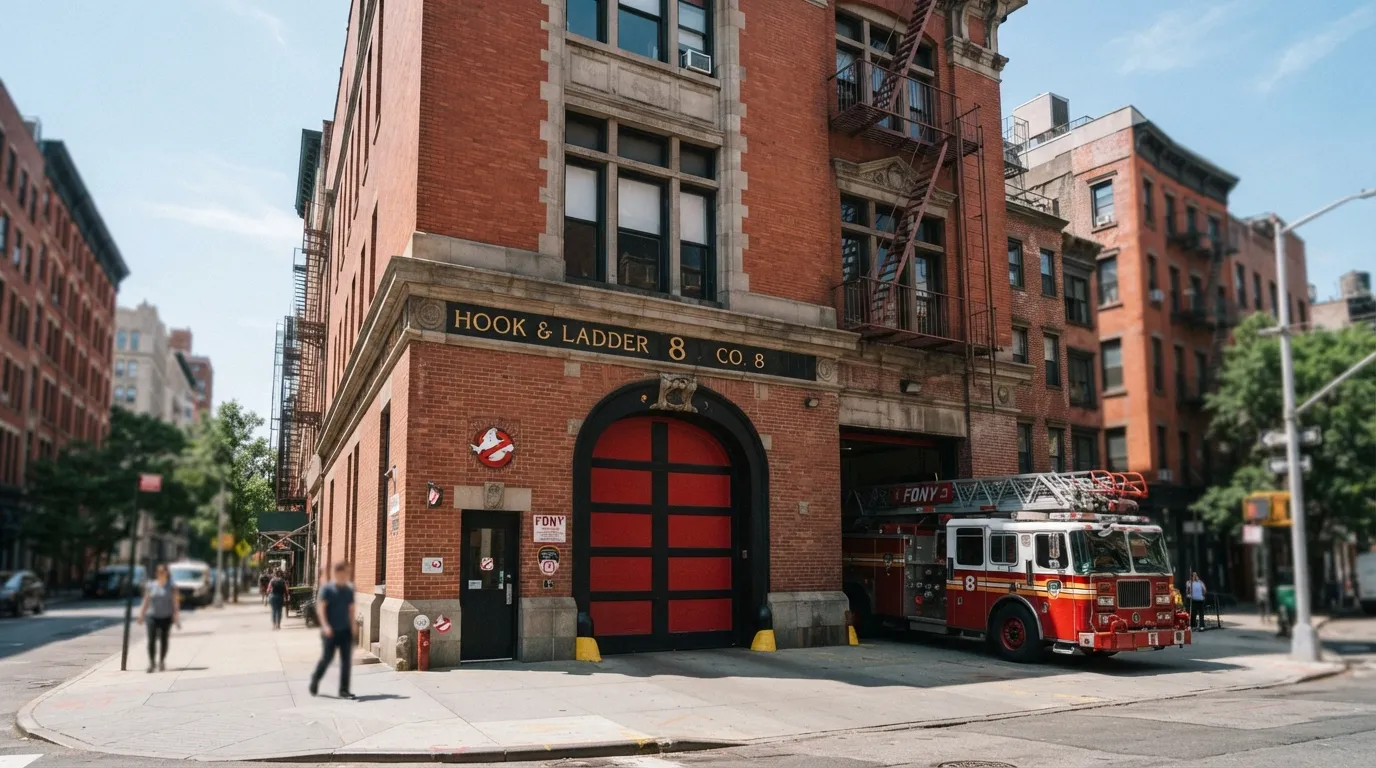
Who you gonna call? In Tribeca, the answer is a red-brick firehouse at 14 North Moore Street. It served as the Ghostbusters headquarters in the 1984 original and returned for the 1989 sequel.
It’s still an active FDNY station, not a replica or a gift shop. Stand at the corner of North Moore and Varick and you’ll see the same arched bay doors and brick front from the movie.
The interiors weren’t filmed here. Those scenes were shot at a firehouse in Los Angeles, so New York gets the famous face and Hollywood got the staircase.
Quick Compare
- The exterior: Real and visitable at 14 North Moore Street in Tribeca.
- The interior: Filmed at a Los Angeles firehouse, so don’t expect the movie staircase in New York.
- Your visit: Sidewalk photos only, because this is a working FDNY station.
Because it’s a working station, the polite way to visit is to take your photo from the sidewalk and keep the driveway clear. Fire engines come first, even for ghosts.
Next, a prison that closed for real just before the cameras arrived.
#11 – Ohio State Reformatory in Mansfield, Ohio
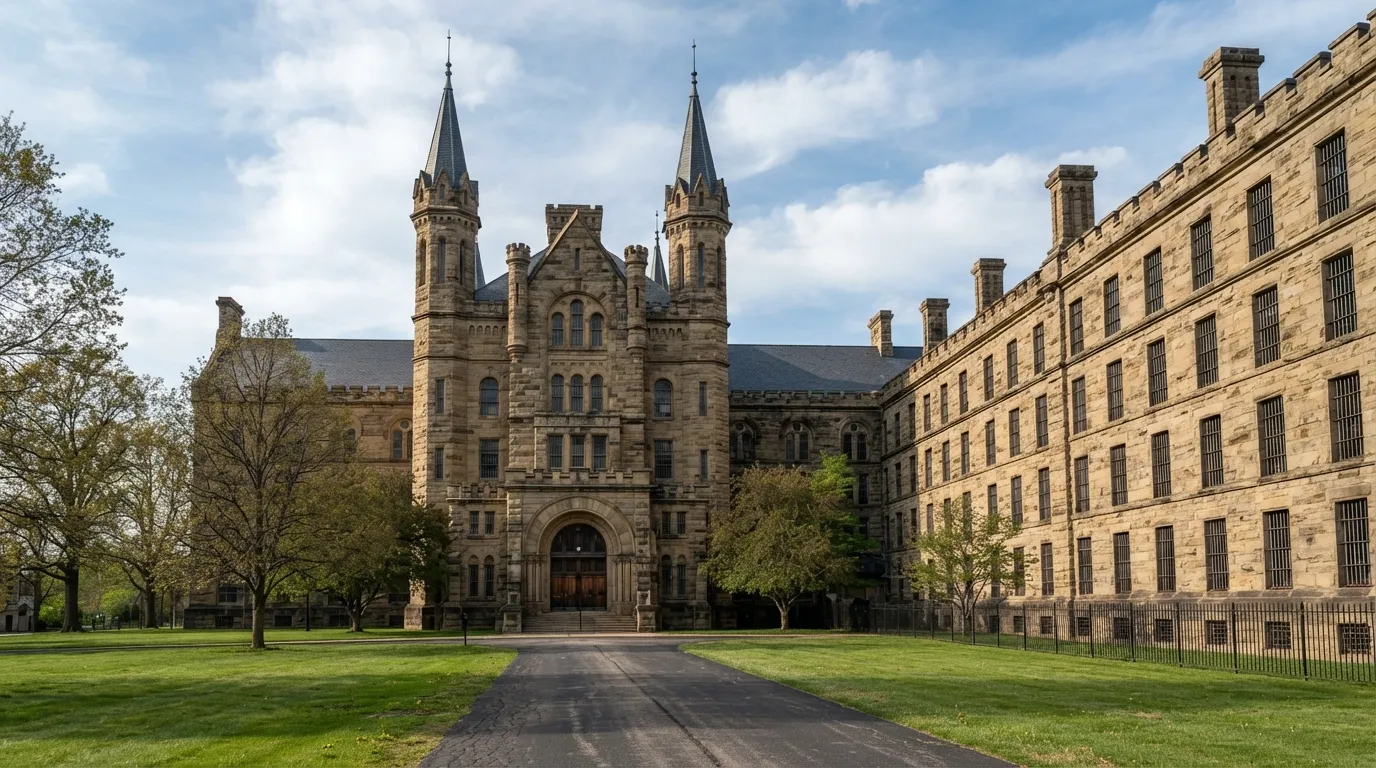
Few places look as much like a movie prison as the real one in Mansfield, Ohio. The Ohio State Reformatory played Shawshank State Penitentiary in The Shawshank Redemption in 1994.
The Gothic-style stone fortress opened in 1896 and closed as a prison in 1990. A few years later, the film crew moved in and used the building’s real corridors, tiers, and offices.
Today it’s a museum and event space with tours that take you through the cell blocks and the warden’s office. The towers, arches, and rusting steel feel less like a set and more like a place that held real people for nearly a century.
The reformatory also hosts Shawshank fans from around the world, who come to stand in rooms they’ve watched dozens of times on screen.
The next location is a rock so strange that it needed no set dressing at all.
#10 – Devils Tower National Monument in Wyoming
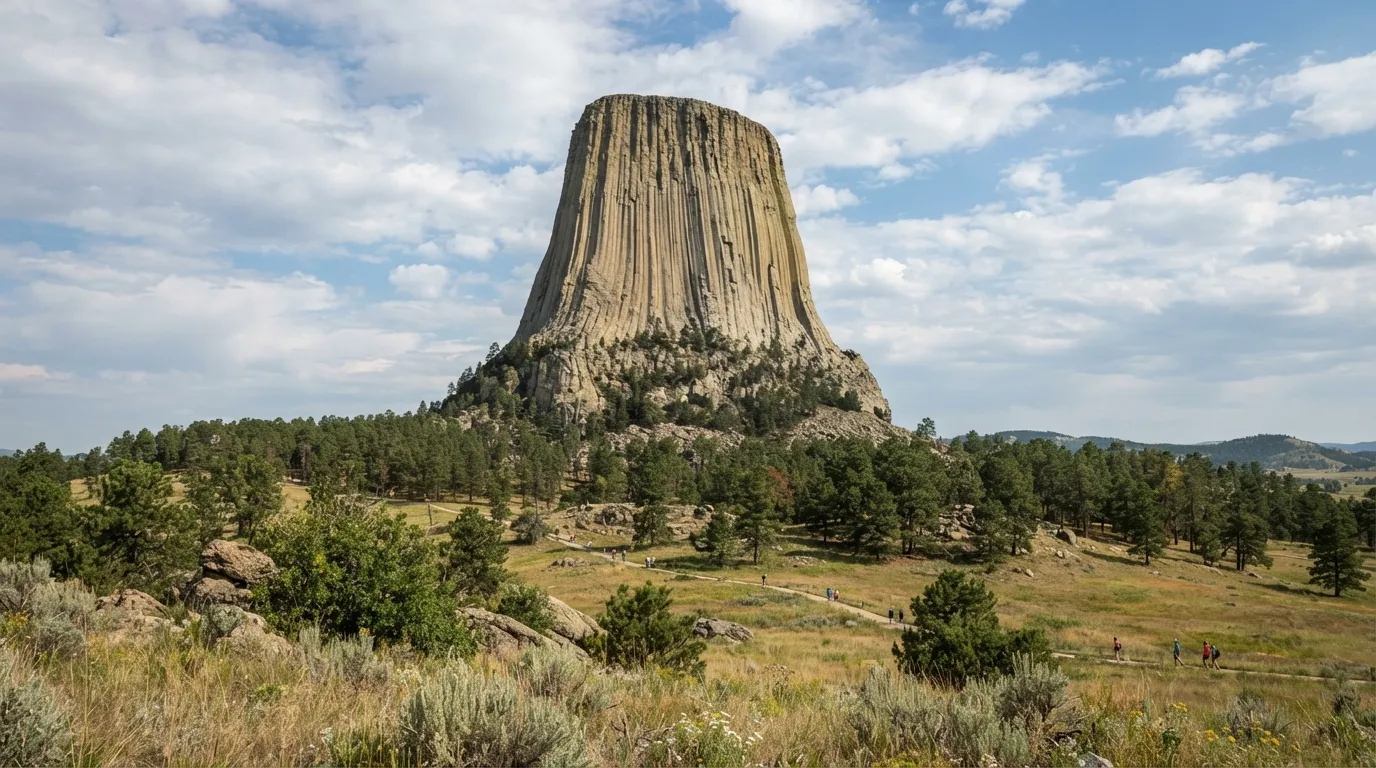
In Close Encounters of the Third Kind, Richard Dreyfuss’s character becomes obsessed with a strange shape, which he sculpts in mashed potatoes. It turns out to be a real mountain.
That mountain is Devils Tower in northeastern Wyoming. It rises 867 feet from its base, and in 1977 it became the landing site for the film’s climactic alien encounter. Long before that, it was the first U.S. national monument, designated in 1906.
You don’t need to climb it to feel the scale. A roughly 1.3-mile loop trail circles the base, and from the prairie the columns look almost too regular to be natural.
The tower is also sacred to many Native American nations, and climbers observe a voluntary closure in June out of respect for ceremonies. Nearby, a prairie dog town adds an unexpected touch of wildlife to your trip.
Next, a Hawaiian ranch where dinosaurs ran wild, at least on film.
#9 – Kualoa Ranch on Oahu, Hawaii
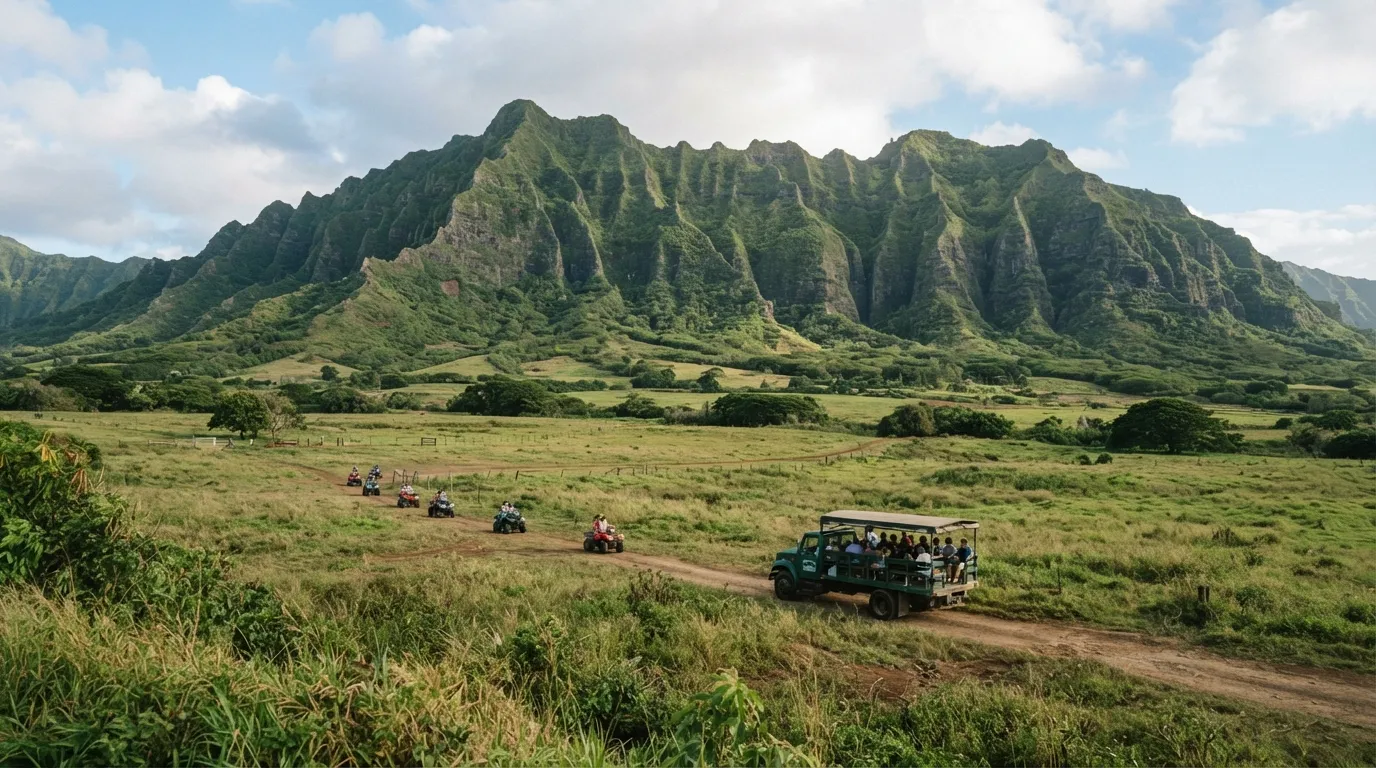
The ground shakes, a herd of Gallimimus bursts over the ridge, and Dr. Grant yells for everyone to run. In Jurassic Park in 1993, that stampede was filmed at Kualoa Ranch on Oahu.
The dinosaurs were added by filmmakers, but the steep green ridges and open valley floor are real. The ranch covers about 4,000 acres of private land, and it’s been a repeat film location ever since, including for Jurassic World.
Visitors can take guided movie-site tours and see the valleys that doubled for Isla Nublar. The ranch also runs other outdoor activities, including zip lines and ATV rides, so you can build a whole day around it.
Because it’s a working private ranch, access is by tour only, and booking ahead is the smart move.
Next, a jungle where a Rebel base hid in plain sight.
#8 – Tikal National Park in Guatemala
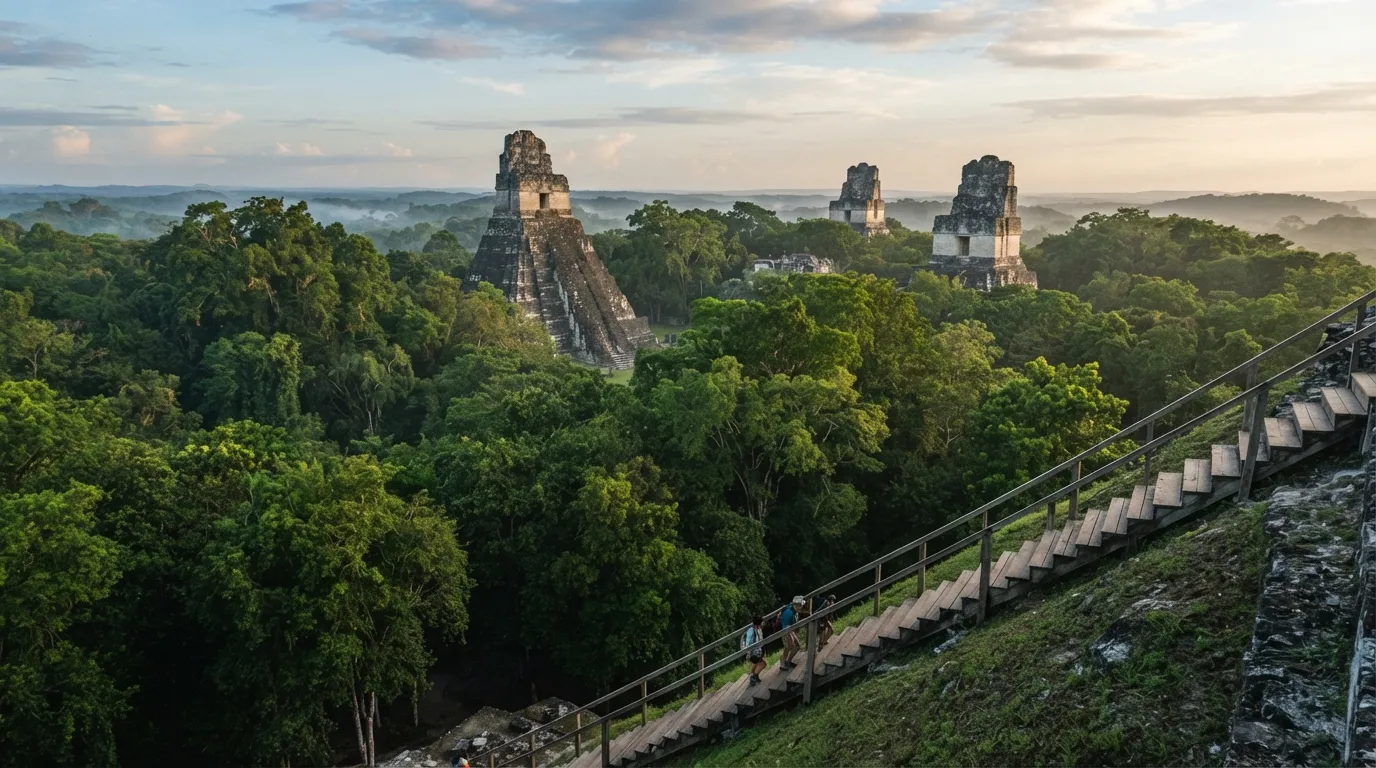
A starship swoops in over a jungle, and a stone temple rises above the trees. That’s the Rebel base on Yavin 4 in the original Star Wars in 1977, and it was shot at Tikal.
Tikal is a UNESCO World Heritage site and a former Maya city in Guatemala’s northern jungle. Its temples were already more than a thousand years old when George Lucas’s crew arrived.
Visitors can climb a wooden staircase up Temple IV, one of the tallest structures in the park, for a view across the canopy. Go early and you may hear howler monkeys booming through the mist.
At a Glance
- On screen: The Rebel base on Yavin 4 in the 1977 original.
- In real life: A former Maya city in Guatemala’s northern jungle.
- Status: UNESCO World Heritage site.
- Don’t miss: The wooden staircase up Temple IV and the canopy view.
The temples don’t look like a movie set because they weren’t built for one. That’s what made the shot so haunting and so hard to forget.
Next, a desert where one astronaut was stranded and another famous traveler once rode through.
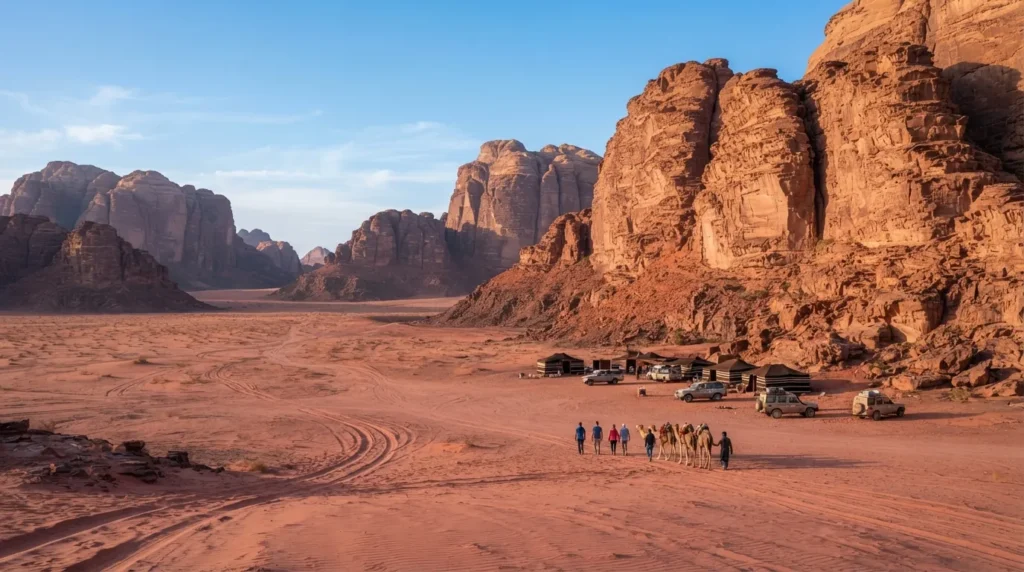
#7 – Wadi Rum Protected Area in Jordan
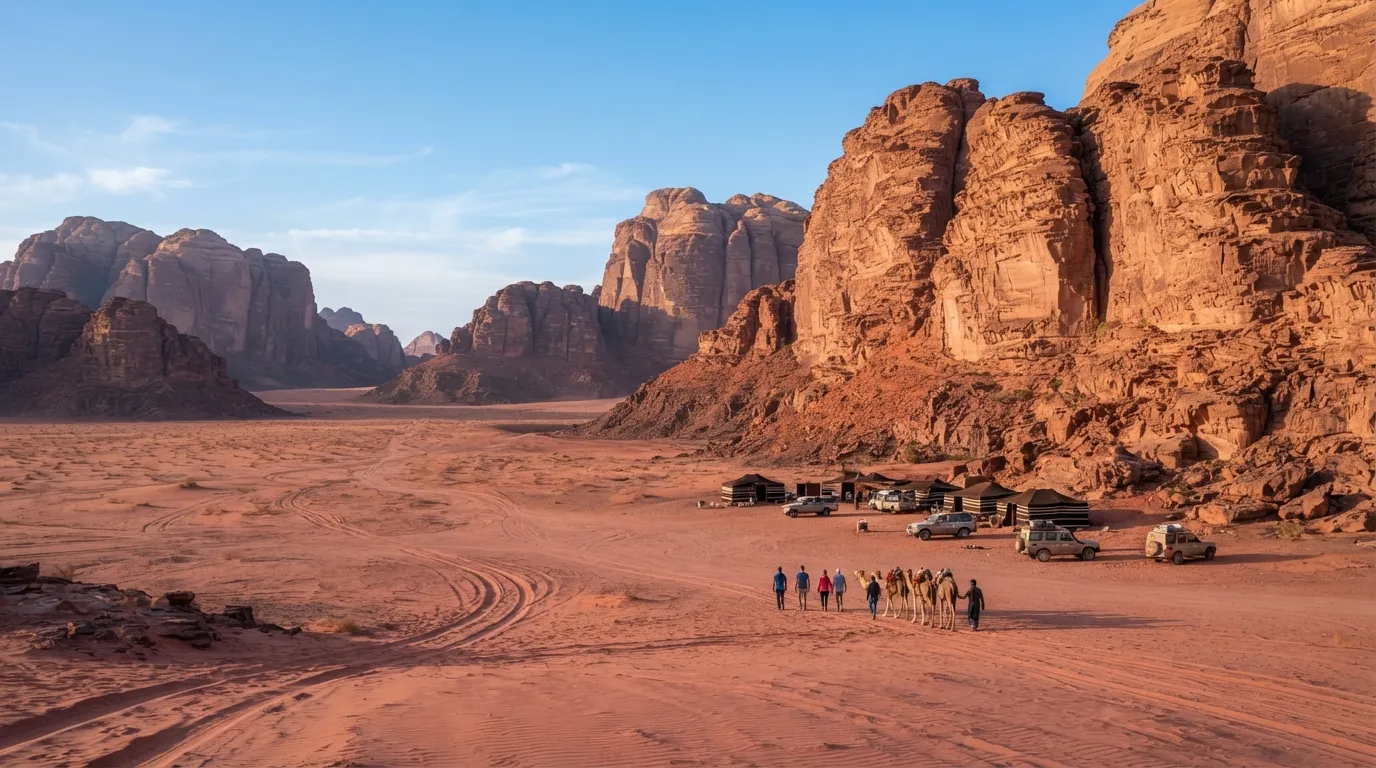
When The Martian needed a stand-in for Mars in 2015, it found rust-red sand and giant sandstone cliffs in southern Jordan. That place was Wadi Rum.
The desert has a much longer film history. Lawrence of Arabia shot there in the early 1960s, and more recent sci-fi like Dune has returned to the same dramatic landscape.
The protected area covers roughly 280 square miles and has almost no development. Local Bedouin guides run 4×4 tours, camel treks, and overnight camps, so you can sleep out under the same sky as the movie.
Go at sunrise or sunset, when the cliffs go from orange to deep red. After dark, the stars come out in a way most cities never see.
Next, another Jordan landmark, and this one hides behind a long and narrow canyon.
#6 – Petra in Jordan
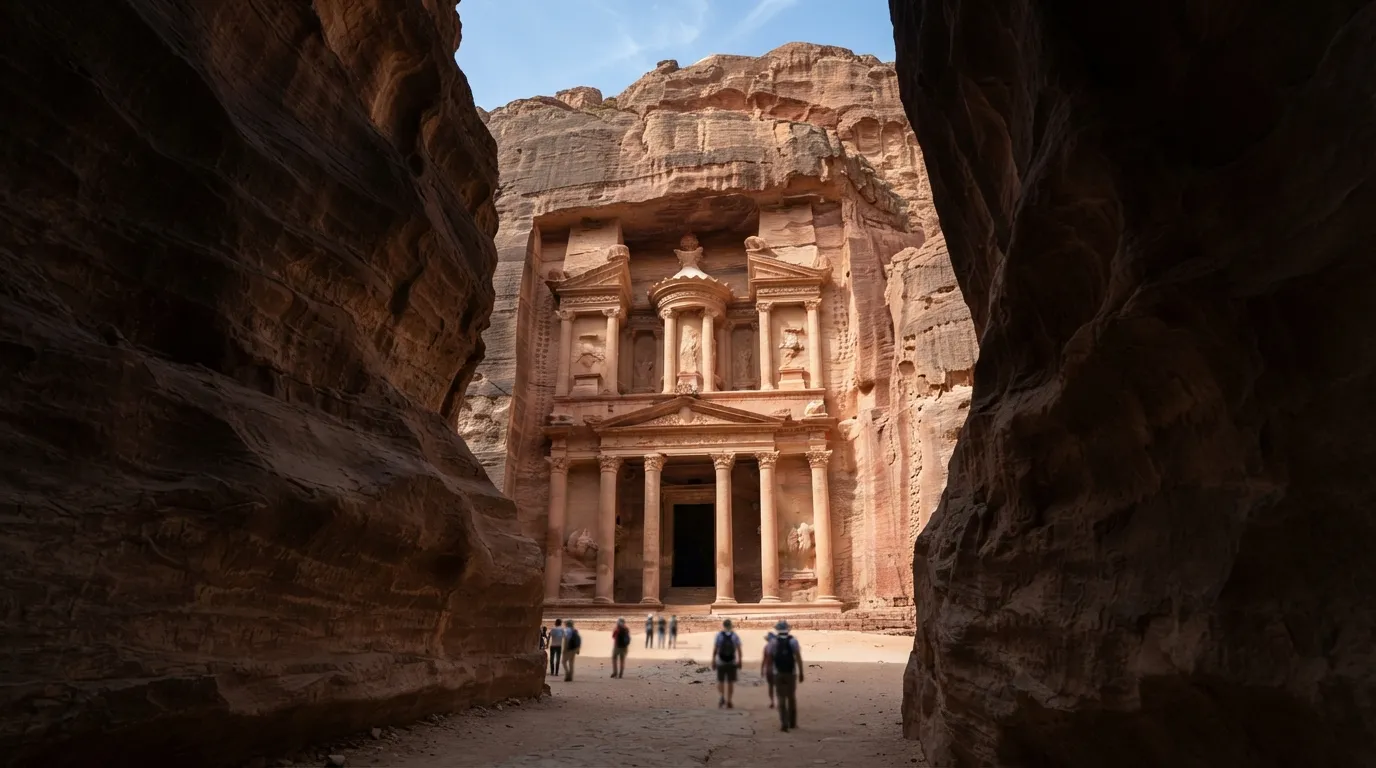
Indiana Jones rides through a narrow canyon, and suddenly a giant temple appears carved into the rock. In Indiana Jones and the Last Crusade in 1989, that facade was Petra’s Treasury, standing in as the exterior of the Grail temple.
The interior was a studio set, but the exterior is real. The Treasury is carved straight into rose-colored sandstone and stands roughly 40 meters tall.
The best part is the approach. You walk the Siq, a winding canyon about 1.2 kilometers long, with walls pressing in on both sides. Then it opens and the Treasury appears, exactly the way it does on screen.
Petra is a UNESCO World Heritage site and was built by the Nabataeans. If you have energy left, you can climb to the Monastery for another monumental facade, and on select evenings Petra by Night lights the path with candles.
Next, a hotel that gave a famous novelist his worst nightmare.
#5 – The Stanley Hotel in Estes Park, Colorado
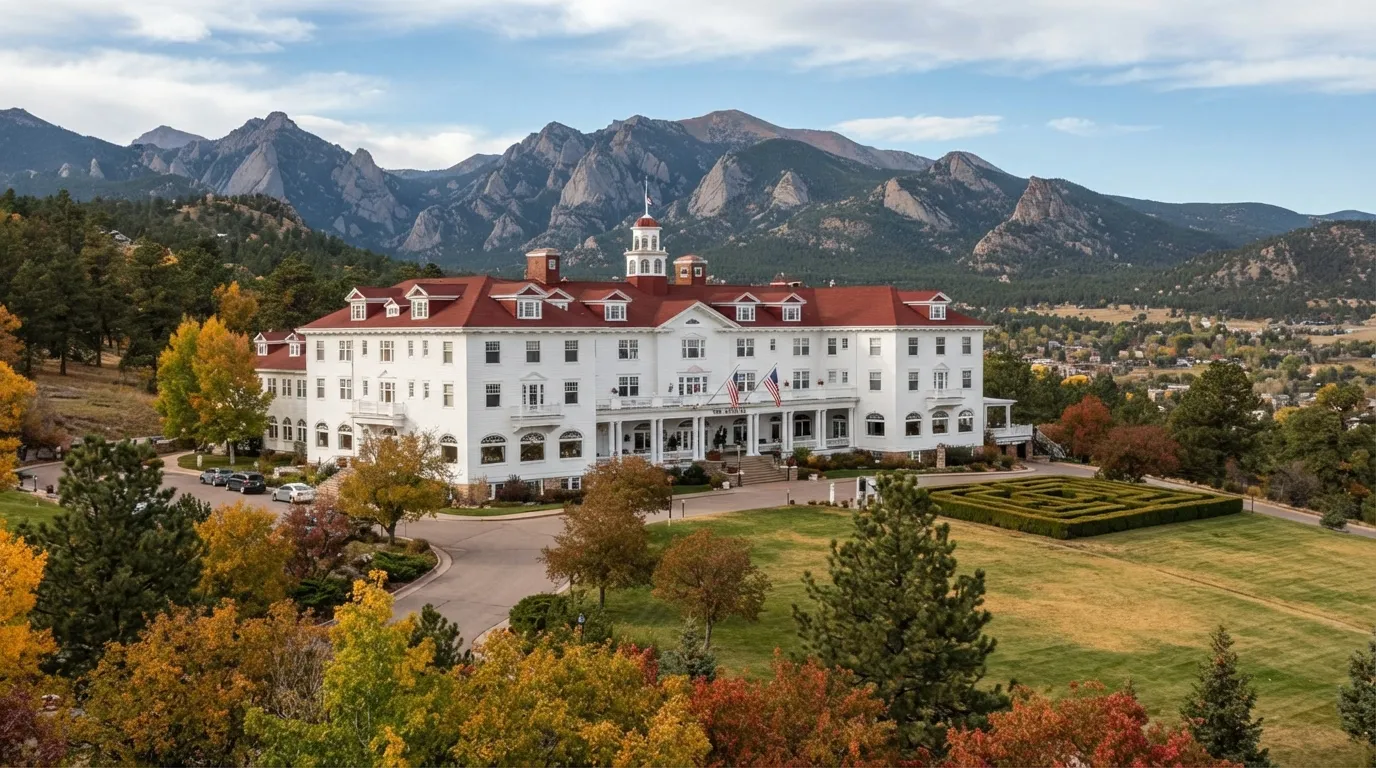
In the fall of 1974, Stephen King and his wife checked into a nearly empty mountain hotel on the last night of its season. He later said the stay inspired The Shining, and the Stanley Hotel has been tied to the story ever since.
The hotel opened in 1909 and sits in the Rocky Mountains near Estes Park, Colorado. It was also the main location for the 1997 The Shining miniseries, which King wrote, and the exterior for the hotel in Dumb and Dumber.
Visitors can book a tour, a night tour, or a room, and the grand white building looks every bit the part. A hedge maze out back is a playful nod to Stanley Kubrick’s famous film.
Room 217, where King stayed, remains the most famous number in the building. Whether you believe in ghosts or not, the long hallways and mountain silence set the mood.
Next, a landscape that taught the world what the American West looks like.
#4 – Monument Valley Navajo Tribal Park in Arizona and Utah
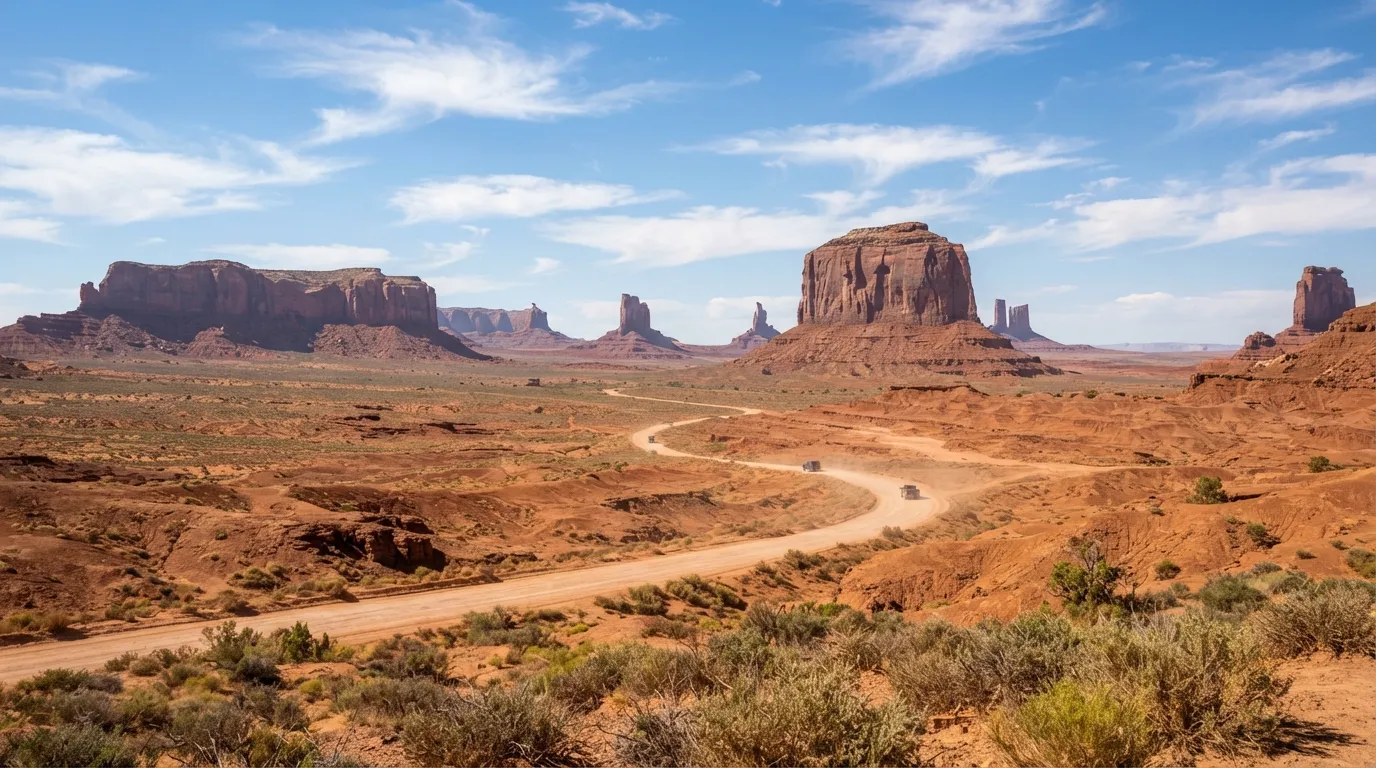
Towering red buttes, a ribbon of dirt road, and a sky that seems to go on forever. For many people, this is what the American West looks like.
Director John Ford filmed here repeatedly, including Stagecoach in 1939 and The Searchers in 1956. The formations became shorthand for the frontier long before most Americans had visited.
The park sits on the Navajo Nation, straddling the Arizona-Utah border. A 17-mile scenic drive is open to visitors, and Navajo-led tours reach areas you can’t get to on your own.
Fast Facts
- Director link: John Ford shot Stagecoach (1939) and The Searchers (1956) here.
- Where: On the Navajo Nation, across the Arizona-Utah border.
- Self-guided option: A 17-mile scenic drive.
- Go deeper: Navajo-led tours reach areas closed to independent visitors.
Just north on US-163 is the road where Forrest Gump famously ended his cross-country run. Between the buttes and the long highway, the view is cinema history in every direction.
Next, a rocky island so remote that landing on it takes planning and luck.
#3 – Skellig Michael off the coast of Ireland
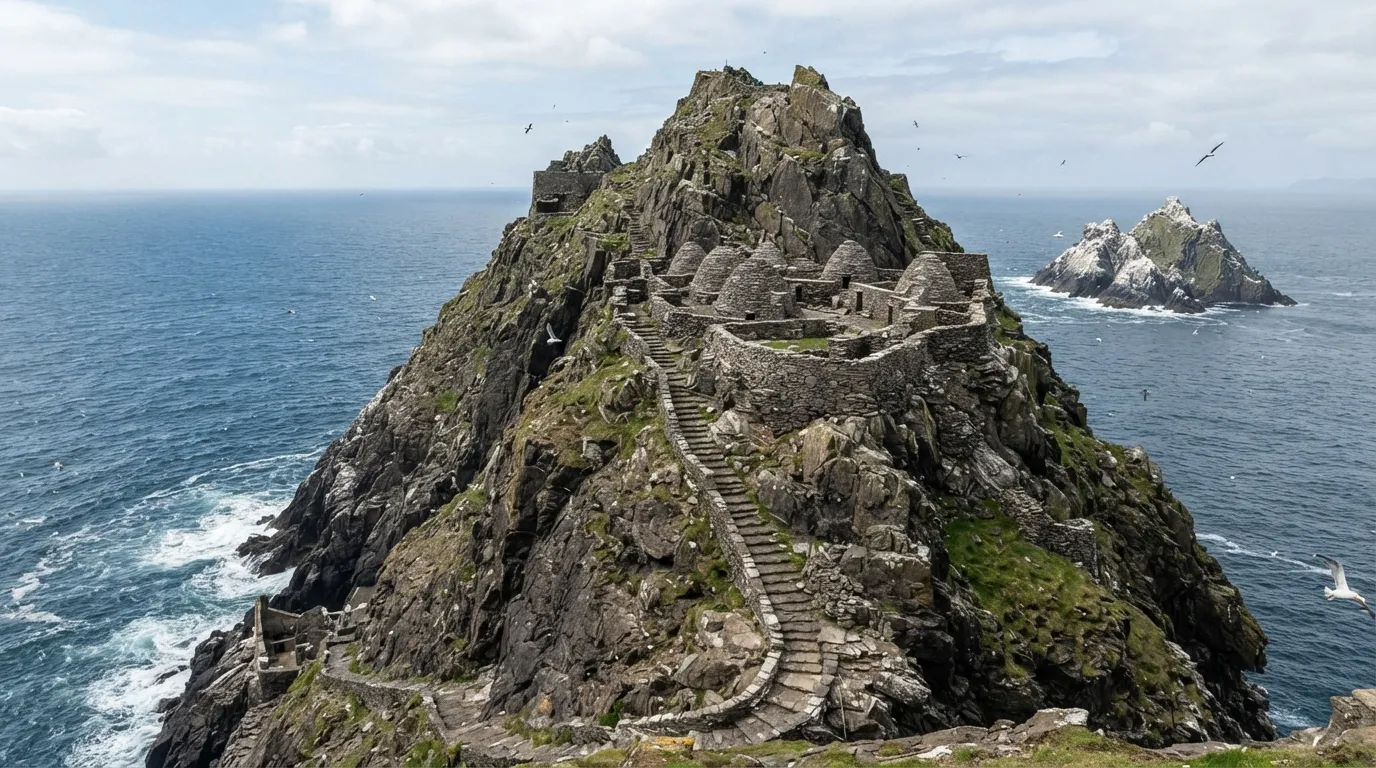
At the end of Star Wars: The Force Awakens in 2015, Rey climbs to a remote island to find Luke Skywalker. She was climbing Skellig Michael, a jagged rock about 12 kilometers off Ireland’s southwest coast.
The island returned in The Last Jedi in 2017. Its beehive-shaped stone huts were built by monks who settled here between the 6th and 8th centuries, and today it’s a UNESCO World Heritage site and bird sanctuary.
Getting there takes effort. Boats leave from the Kerry coast in the warmer months, and landings depend on the weather and are limited in number.
Once on the island, you climb roughly 600 steps cut into the rock to reach the monastery. The sea is a long way down and the wind seldom stops.
Next, an English castle that taught a generation what a magic school looks like.
#2 – Alnwick Castle in Northumberland, England
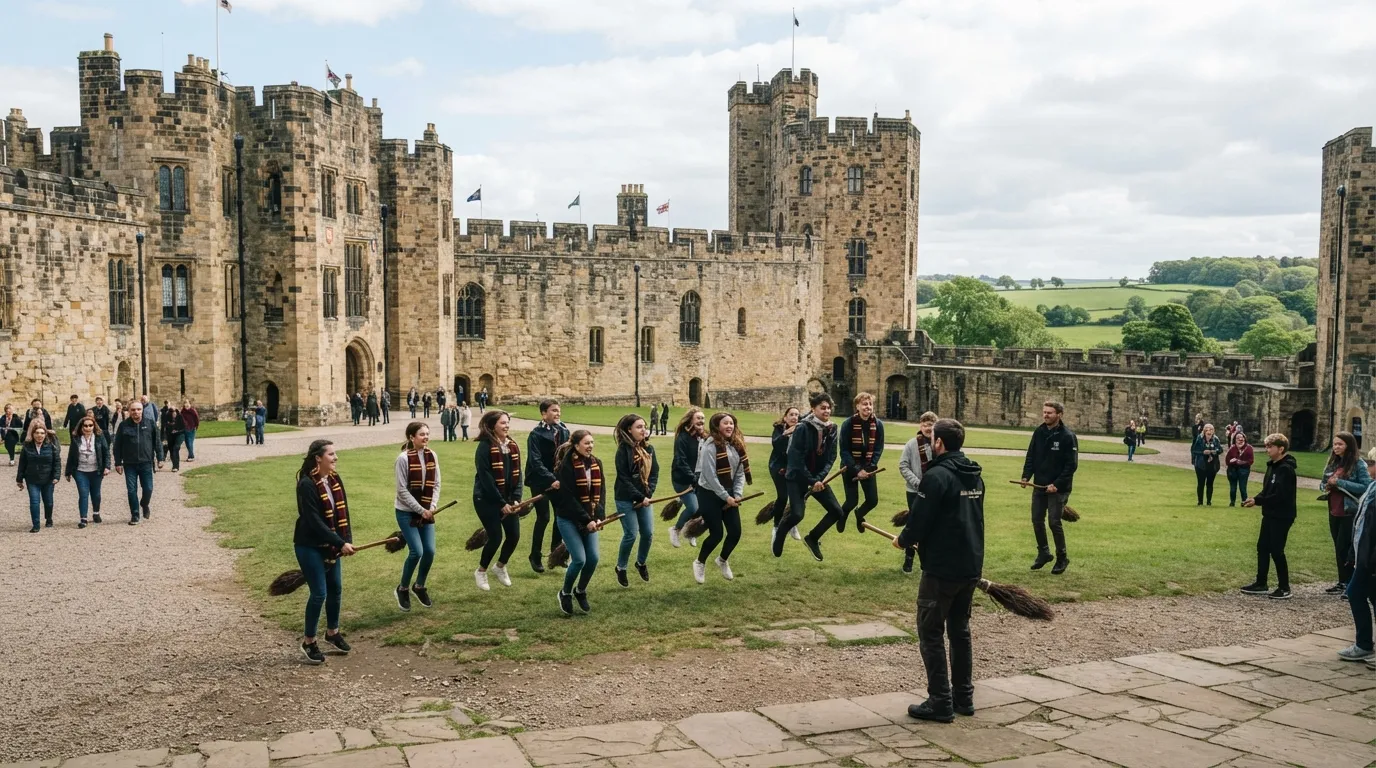
Young wizards in robes, a courtyard full of broomsticks, and a first look at Hogwarts. Alnwick Castle was the exterior of Hogwarts in the first two Harry Potter films in 2001 and 2002.
The castle dates to 1096 and has been home to the Percy family for centuries. It has also appeared in Downton Abbey and Robin Hood: Prince of Thieves.
The interiors for Hogwarts were filmed elsewhere, but the castle’s outer courtyard is where the first-year students had their broomstick lessons. Visitors can try broomstick training themselves in that very space.
Alnwick is a working castle with towers, battlements, and state rooms, so you can see how well it holds up as a magical school. The stone and the setting do most of the work.
Now for the number-one spot, which is not just a location but a whole world.
#1 – Hobbiton Movie Set in Matamata, New Zealand
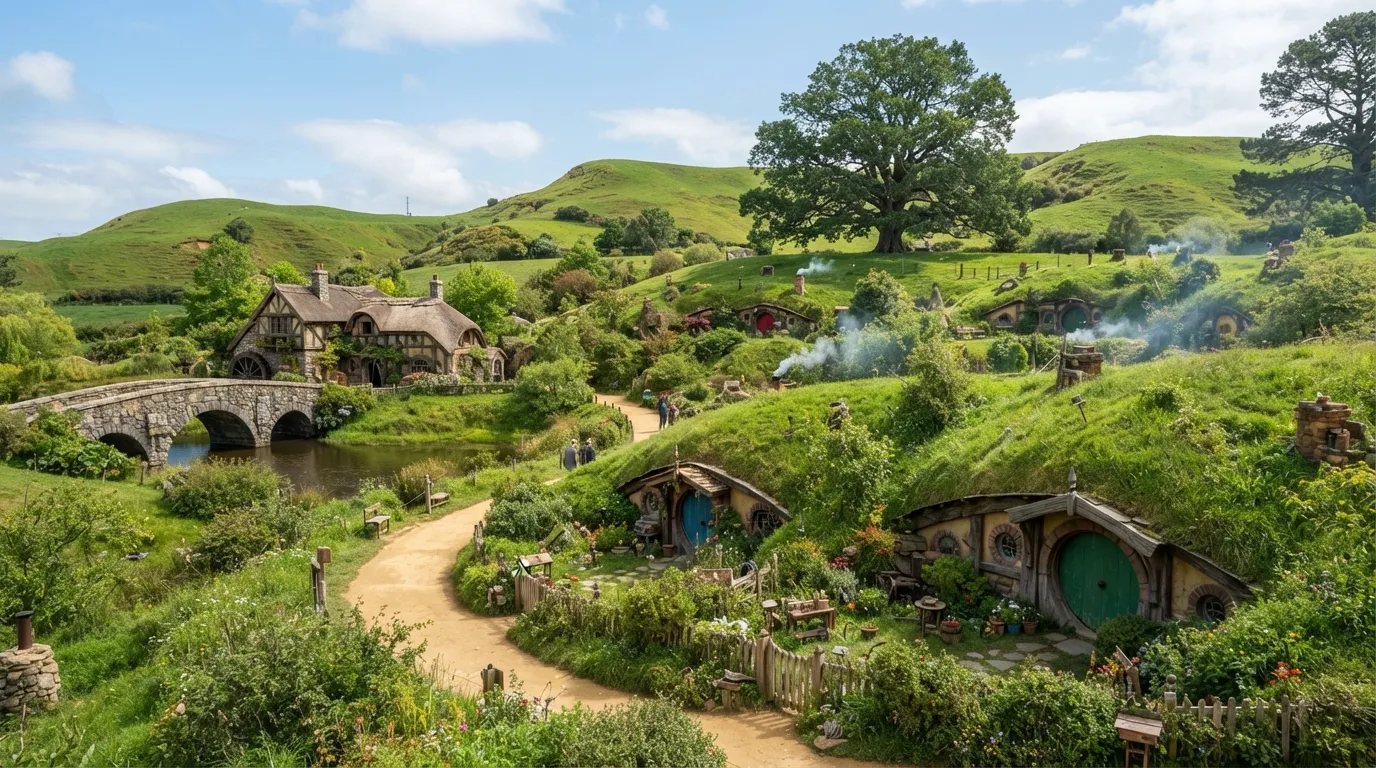
Rolling green hills, round doors, and smoke curling from tiny chimneys. Hobbiton looks like a place that couldn’t exist, until you realize it’s on a working sheep farm near Matamata, New Zealand.
Director Peter Jackson reportedly spotted the farm from the air while scouting for The Lord of the Rings. The original set was built for the films, and a more permanent version was built for The Hobbit trilogy.
Today it includes 44 hobbit holes, the Mill, the Party Tree, and the Green Dragon Inn. Guided tours wind through gardens, past tiny doors, and finish with a drink at the inn.
Why It Stands Out
- Built to last: A permanent version of the set was created for The Hobbit trilogy.
- Full village: 44 hobbit holes, plus the Mill and the Party Tree.
- Real working farm: The set sits on a sheep farm near Matamata.
- The finale: Tours end with a drink at the Green Dragon Inn.
That’s why Hobbiton is number one. Other places on this list were beautiful backdrops that crews borrowed for a few days or weeks, while Hobbiton was built to be a story and was preserved so you can step into it.
Every location here proves that the movies didn’t invent their most unforgettable places. They just pointed a camera at real ones, and the doors were left open for the rest of us.
CEO-Co-Founder