

- 12 Differences Between What a Cruise Fare Covered in 1980 and What It Covers in 2026 - October 16, 2026
- 13 Differences Between a Concert Ticket in 1978 and a Concert Ticket in 2026 - October 16, 2026
- 15 Differences Between a Road Trip in 1970 and a Road Trip in 2026 - October 16, 2026
#15 – A 1970 folded gas-station map beside a 2026 phone mounted on the dash
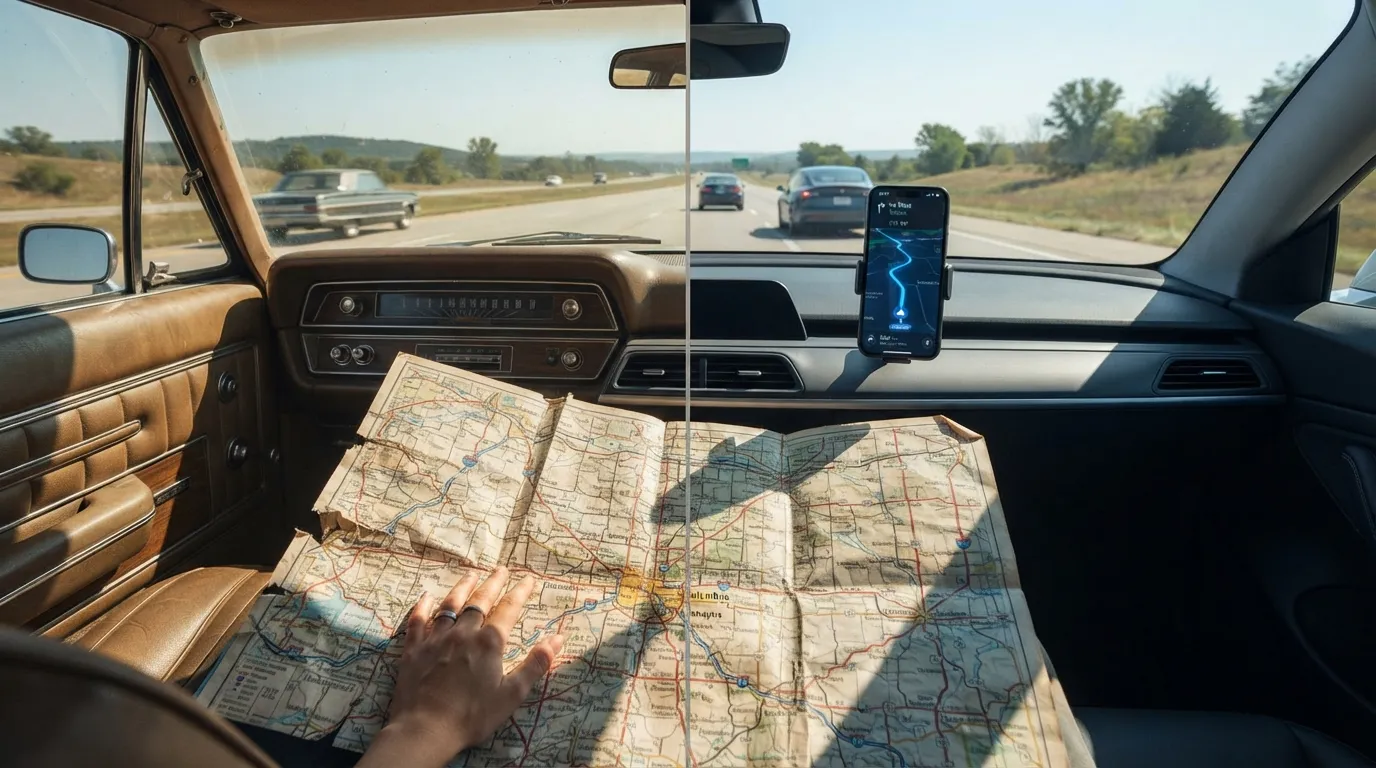
Picture one wide photograph sliced straight down the middle. On the left sits the passenger seat of a 1970 station wagon, with a gas-station map sprawled across the vinyl. It is creased in a dozen directions, and its edges curl from being opened and refolded all the way from the state line. Anyone who ever fought to refold one is already wincing.
On the right, same camera height, same kind of dashboard, a phone sits in a mount just under the windshield. A single glowing route line has replaced the tangle of black and red roads. Nothing needs unfolding, and nobody needs to hold the page flat.
That is only the first of fifteen swaps, and it’s the easy one. The changes get stranger and more personal the closer you get to #1.
#14 – A 1970 attendant holding the pump beside a 2026 driver paying at the pump
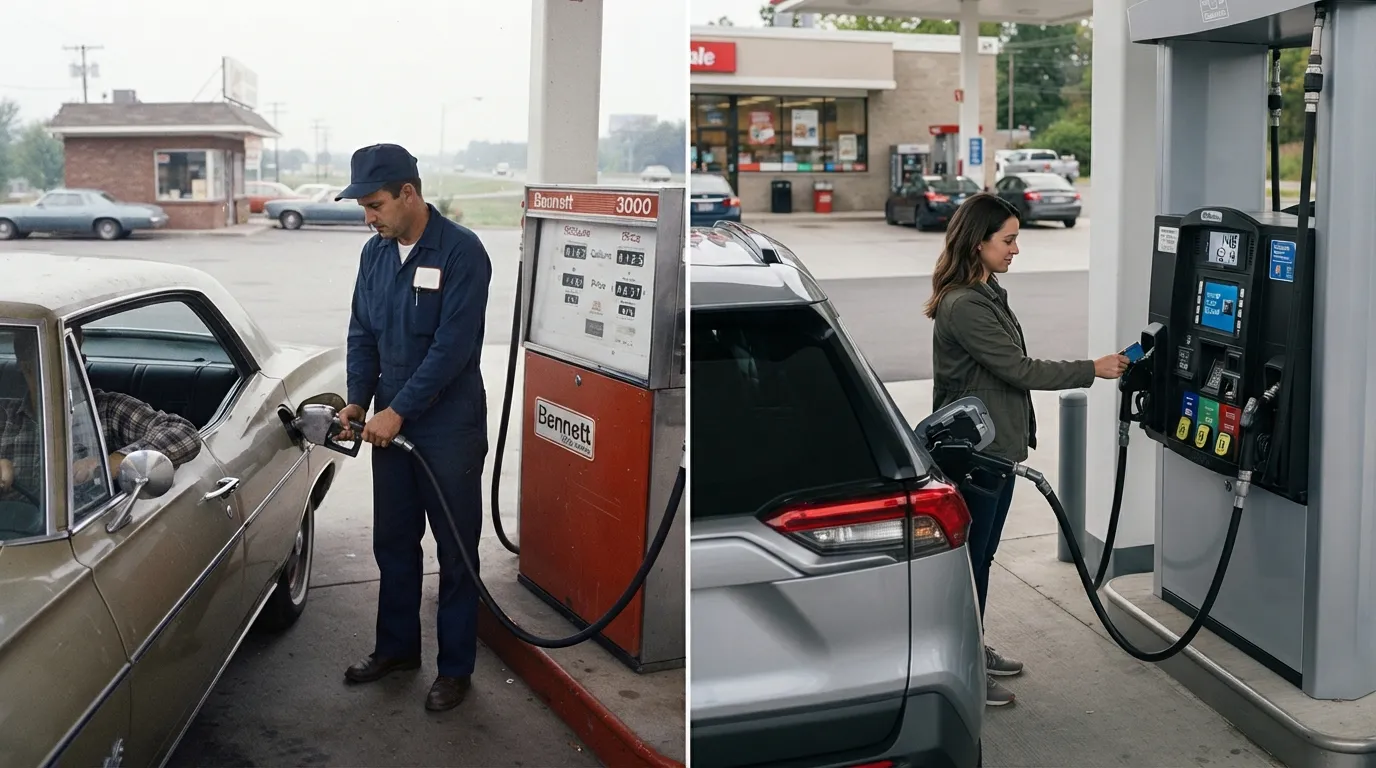
On the left, the view from a driver’s side window shows a full-service island. An attendant in a plain uniform holds a metal nozzle in the open tank while a tall, boxy pump with analog dials rolls over its gallons and price. In that era, this was also the moment someone might wipe your windshield or check the oil.
On the right, the same island and the same angle belong to 2026. The pump is shorter and wider, with a digital screen. A driver stands alone beside the car, tapping a card, then squeezing a trigger handle on the nozzle.
At a Glance
- Left half: an attendant works the nozzle while you stay in your seat.
- Right half: you stand at the pump and handle the payment yourself.
- Still the same: the canopy, the concrete, and the price on display.
- Gone from the frame: the second person.
The canopy and concrete look almost the same. What vanished is the second person in the picture, and with him the small talk, the quick favor, and the sense that someone else was handling it.
#13 – A 1970 motor-court room door beside a 2026 exterior hotel-room door
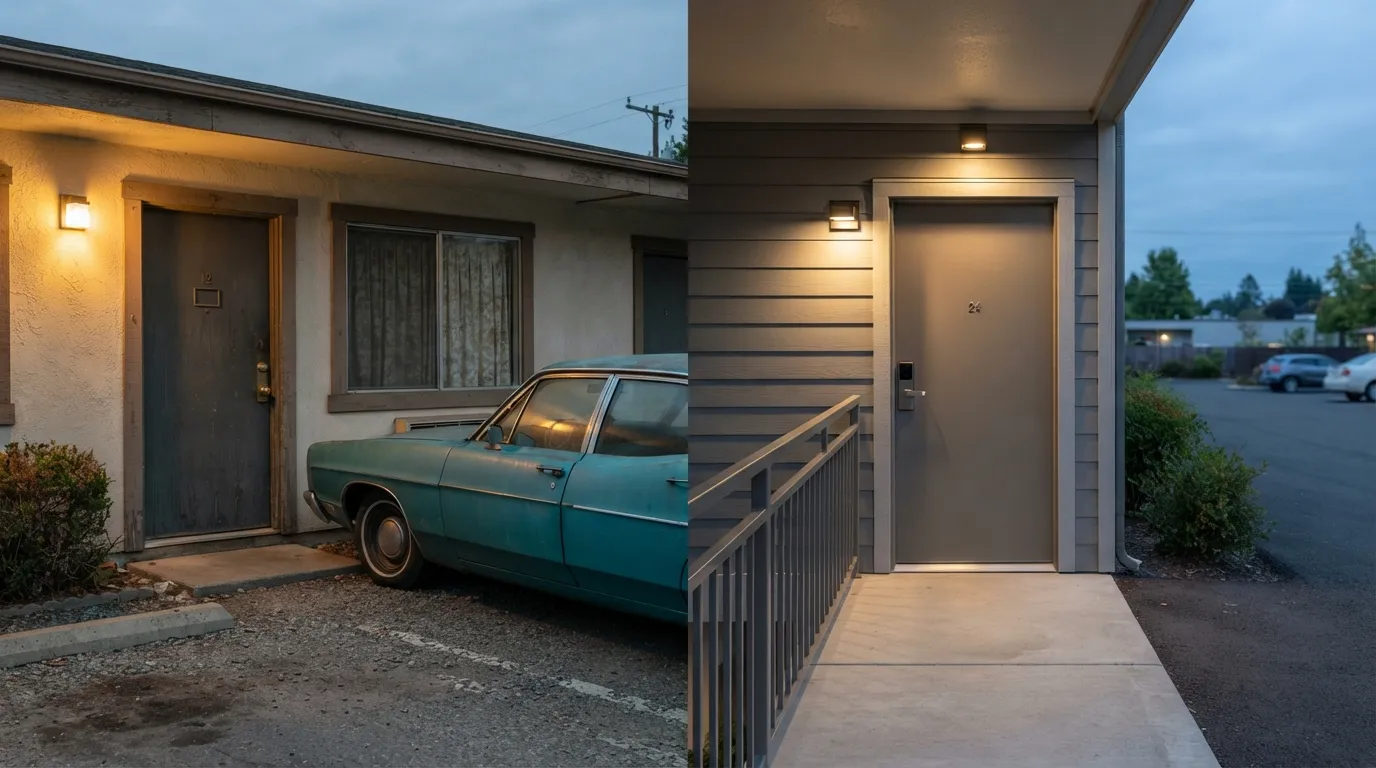
On the left, a low, single-story motor court sits in the glow of the parking lot. The room door is a plain wooden panel with a brass knob and a blank metal plate where the room number hangs. A curtained window sits beside it, and the car is parked close enough to touch. You could step from the driver’s seat to the doorstep in about four paces.
On the right, the same camera sits at the same distance and the same door-handle height. The door is now metal, with a deadbolt, a card reader, and a small security light above the frame. A low railing runs along the walkway, and fresh siding covers the wall.
The turn of a key has become a tap of a card. The “drive up and walk straight in” feeling is still there, just wearing newer hardware.
#12 – A 1970 roadside diner booth beside a 2026 drive-through window
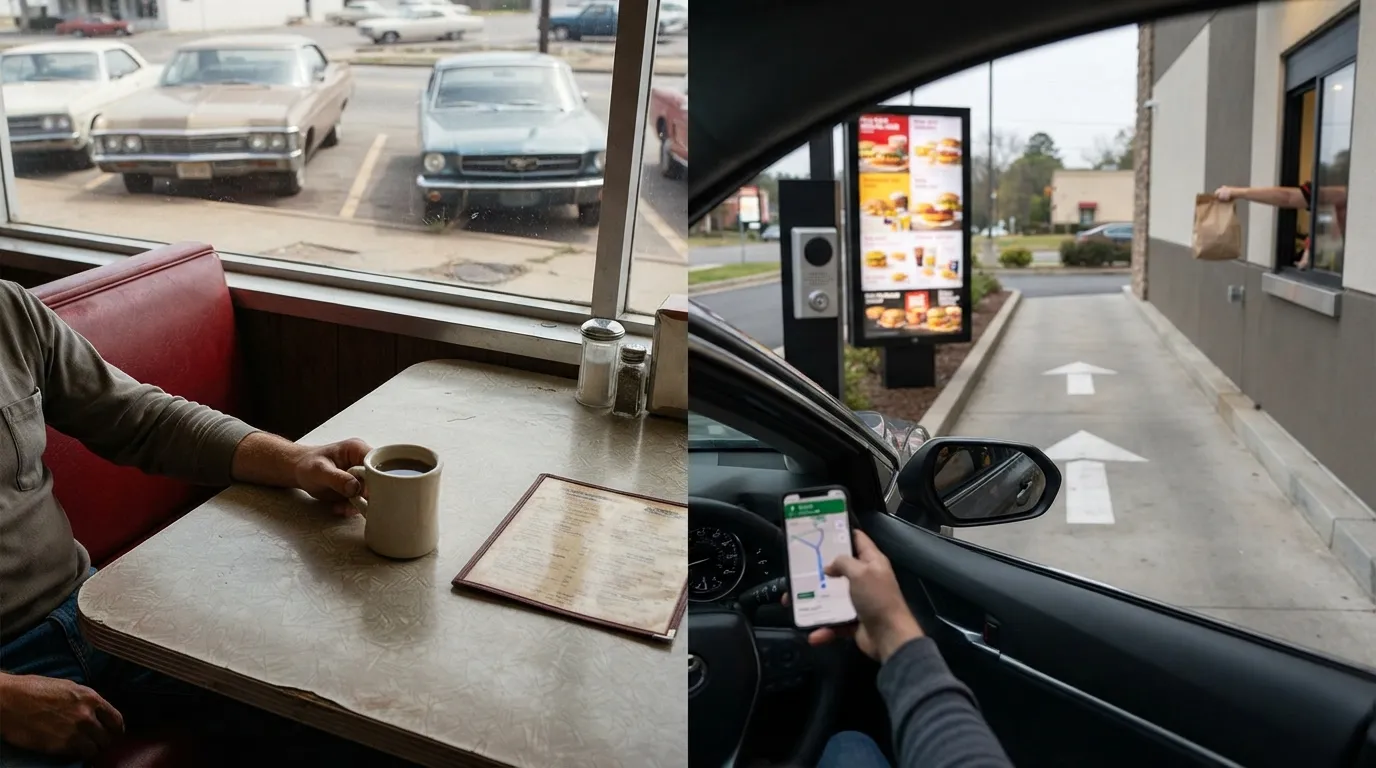
On the left, you sit inside a roadside diner at a red vinyl booth. A Formica table holds salt and pepper shakers, a menu, and a thick coffee mug catching the light from the big front window. Through the glass, older cars sit nose-in at the curb. Nobody is in a hurry, because the whole point is to sit.
On the right, the same car-window height now looks out from the driver’s seat of a car at a drive-through. A speaker post stands beside a lit menu board covered in food pictures, and painted arrows steer the line of cars toward a small open window.
The meal got faster and the stop got shorter. The booth, the window view, and the pause in the trip are what traded places with a paper bag handed through a car door.
#11 – A 1970 CB radio under the dash beside a 2026 phone in a cup holder
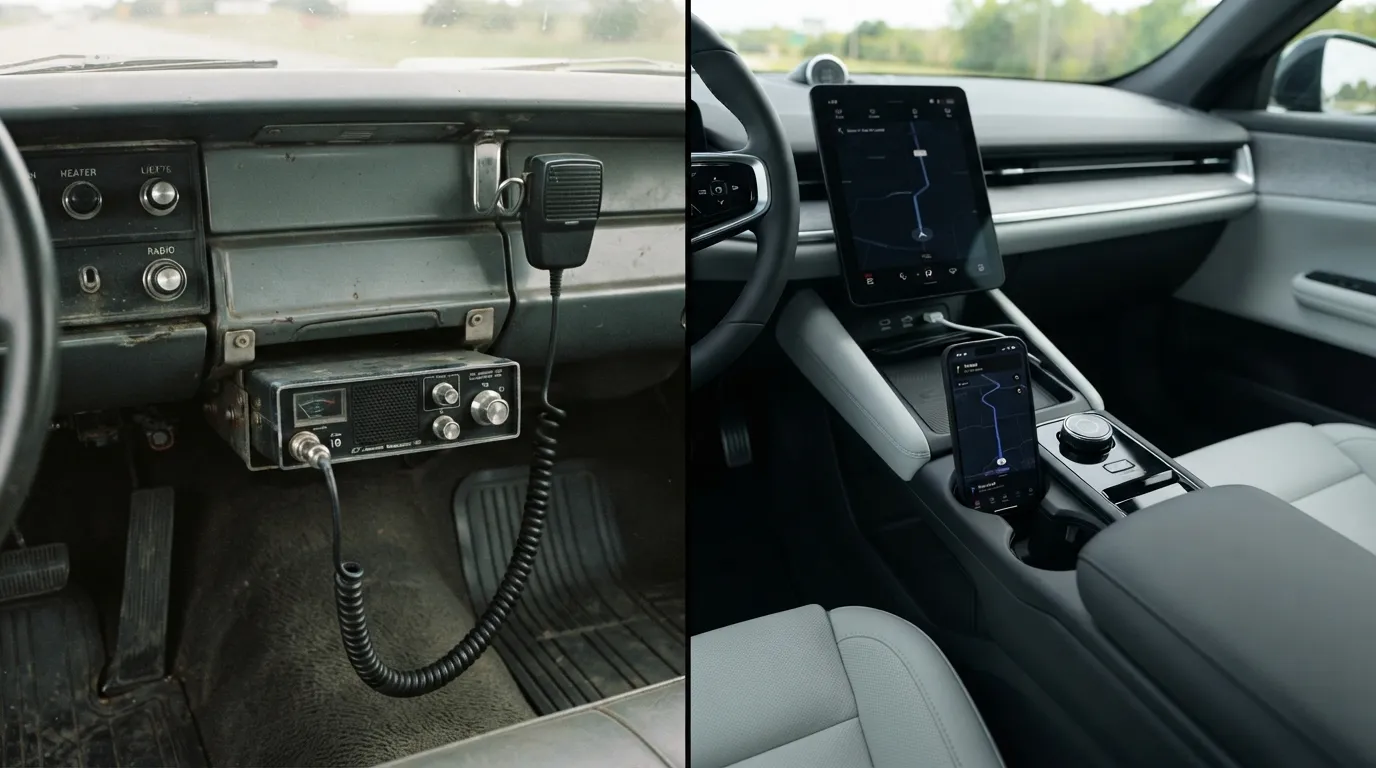
On the left, a low angle looks under the dashboard of a 1970s car. A CB radio is bolted beneath it, with a channel knob, a small speaker grille, and a coiled cord running to a clipped-in microphone. Truckers often gathered on channel 19. A stranger’s voice could warn you about a slowdown miles before you saw brake lights.
On the right, the same low angle shows a modern center console. A phone rests in a molded cup holder, its screen dark or showing a route. USB ports sit nearby, and the old knobs and bulky metal trim are gone.
Worth Knowing
- Channel 19 was the one truckers commonly used, so it was the best place to hear road news.
- Drivers traded warnings about slowdowns and road trouble by voice, in real time.
- Anyone in range could listen in, which made it feel like a shared party line.
- A phone route is private by comparison: helpful, but quiet.
The road used to talk back through a crackling speaker. Now it mostly talks through one quiet screen, and the voices of strangers are harder to find.
#10 – A 1970 paper atlas in the glove box beside a 2026 screen stuck to the windshield
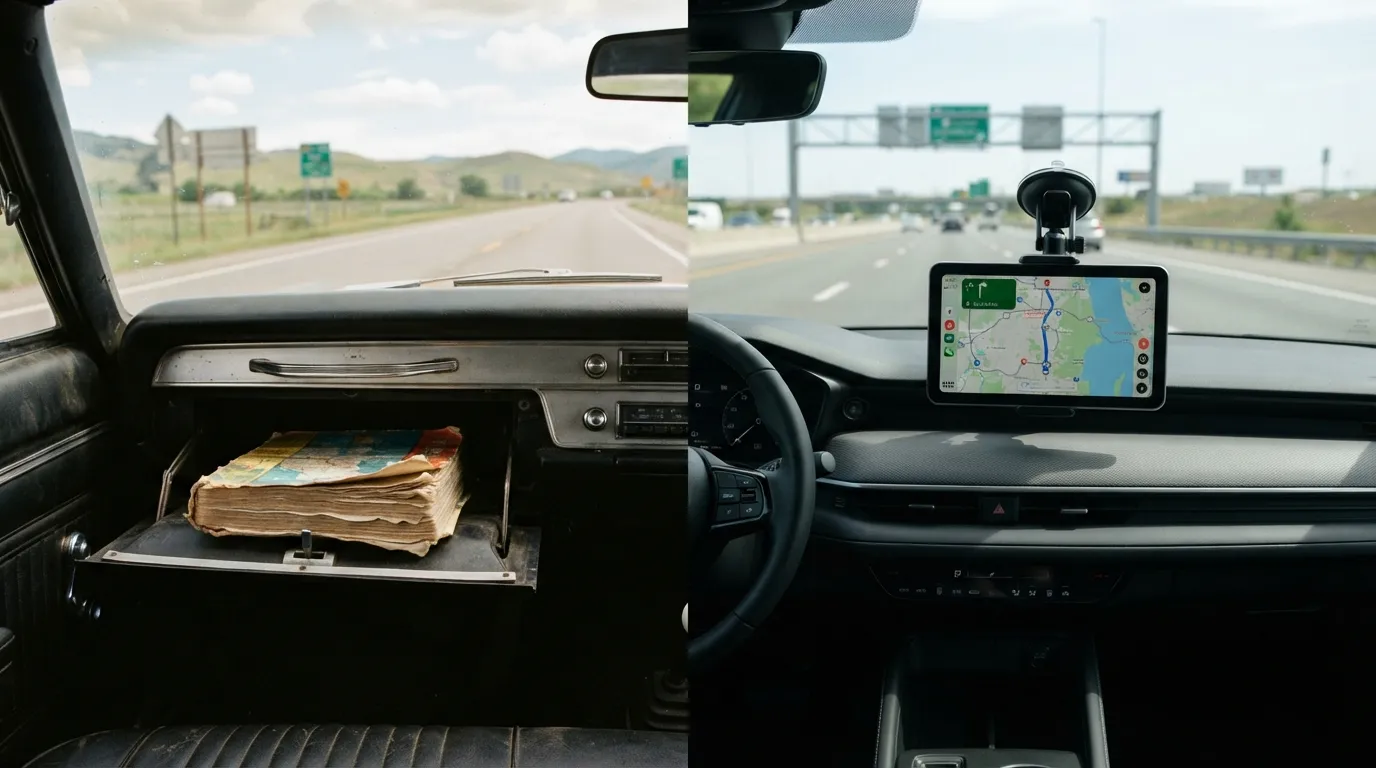
On the left, the glove box hangs open on an older car. Inside lies a thick paper road atlas with its spine showing and its pages slightly fanned, as if it had been grabbed in a hurry a hundred times. It holds the whole country, flat and stubborn, in one cramped little compartment.
On the right, the same camera height looks across a 2026 cabin. A tablet-style screen is held to the windshield by a suction mount, showing a map. The dash below it runs in cleaner lines with less storage tucked into it.
The atlas let you zoom out and see every option at once. The windshield screen shows exactly what’s ahead of you, and you have to ask for the rest.
#9 – A 1970 station wagon beside a 2026 tall crossover
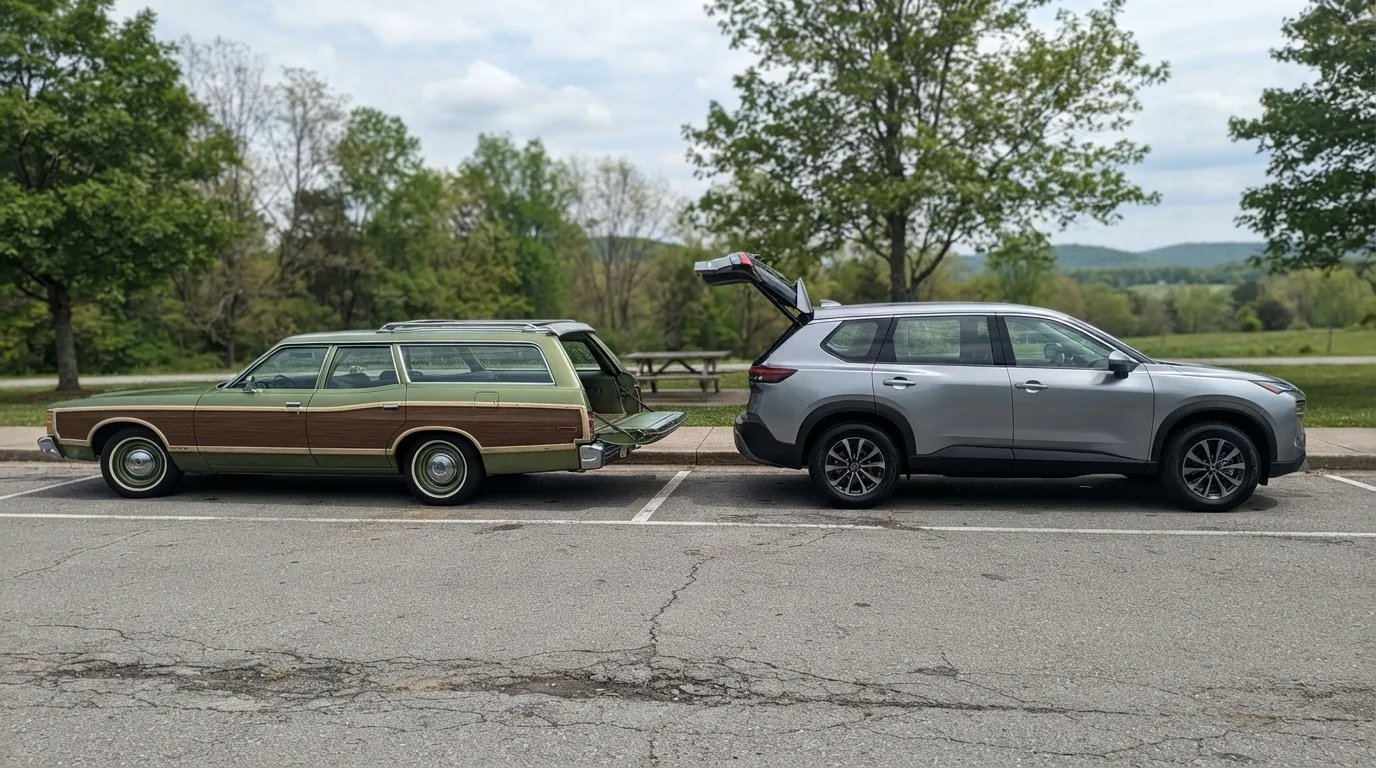
On the left, a side profile shows a station wagon parked at a rest area. It is long and low, with woodgrain side trim, a stretched roofline, whitewall tires, and a tailgate that drops down like a drawbridge. It looks like it could swallow a family’s luggage whole.
On the right, a tall crossover fills the same parking spot at the same angle. It sits higher, with a taller roof, larger windows, modern radial tires, and a liftgate that swings up instead of down. The pavement and landscape behind it haven’t changed a bit.
The wagon stretched out low and long. The crossover stands tall and boxy. Both promise room for the trip, but they each look at the road from a different height.
#8 – A 1970 metal ice chest beside a 2026 cooler plugged into the dash
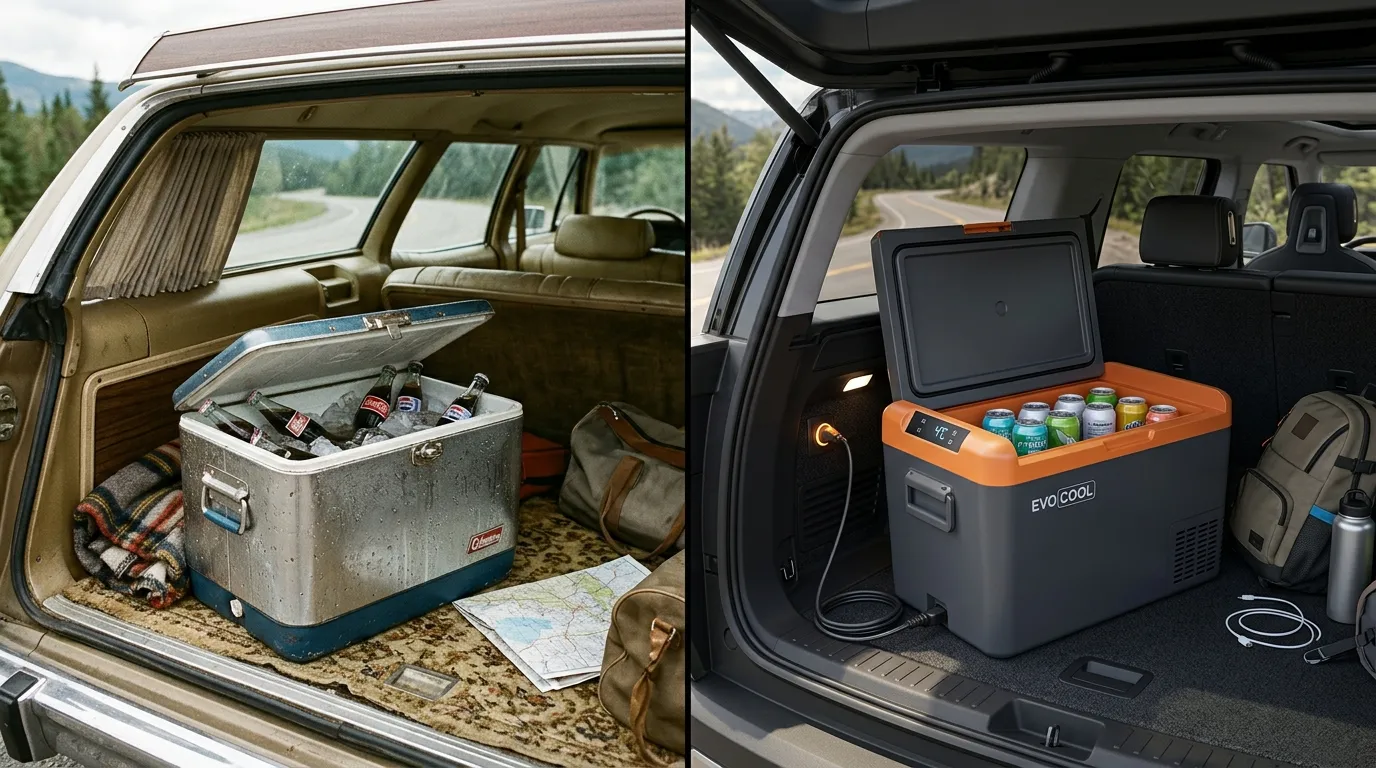
On the left, the rear of a station wagon is open to the carpeted cargo floor. A rectangular metal ice chest with a hinged lid sits there, beaded with condensation. Inside, the drinks slosh around in cold meltwater, and the chest takes up a stubborn share of the load space.
On the right, the same view from the open tailgate looks into a modern SUV. A plastic cooler sits in about the same spot, but a 12-volt cord runs from it to the vehicle’s power outlet. A small digital display on the lid shows its temperature.
One keeps things cold with ice that disappears by afternoon. The other keeps things cold as long as the car supplies power. The trade is a stop for ice versus a cord you must remember to plug in.
#7 – A 1970 film camera on the seat beside a 2026 phone used as a camera
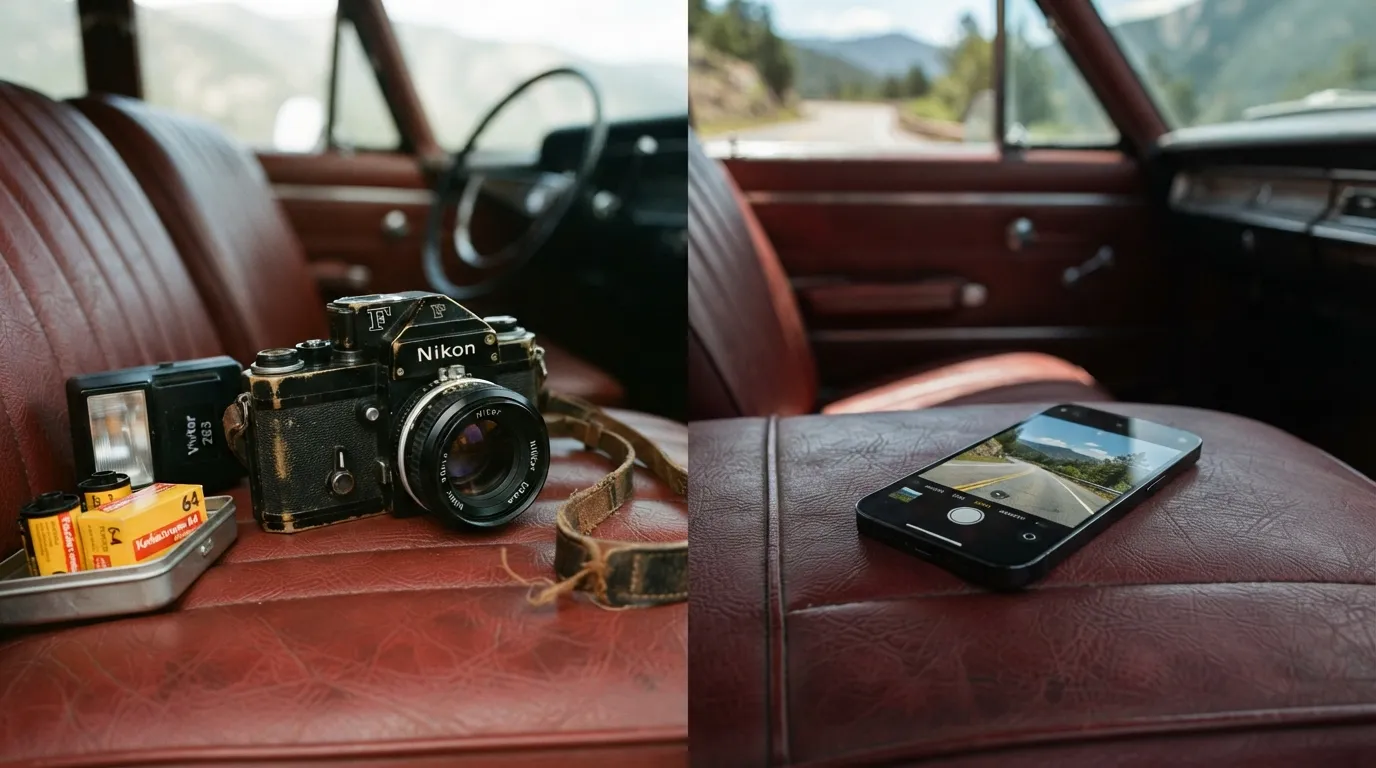
On the left, a 35mm film camera rests on the vinyl passenger seat, its lens attached and its leatherette body worn smooth at the edges. A separate flash sits nearby. Each roll held a limited number of pictures, so a scenic overlook meant choosing carefully.
On the right, the camera angle stays level with the seat cushion. A thin, light phone lies on the upholstery with its camera app open and the lens aimed at the roof. There is no flash, no spare roll, and no bulky case.
Fast Facts
- A standard roll of 35mm film commonly held 24 or 36 exposures.
- Film had to be processed before anyone saw a single result.
- A phone shows the shot the moment you take it.
- Left half: a separate flash and spare rolls. Right half: none of it.
In 1970, you didn’t know what you’d captured until the film was developed days or weeks later. In 2026, you know instantly, and you can retake the shot before you even pull away from the overlook.
#6 – A 1970 coin basket at a toll booth beside a 2026 open-road toll gantry
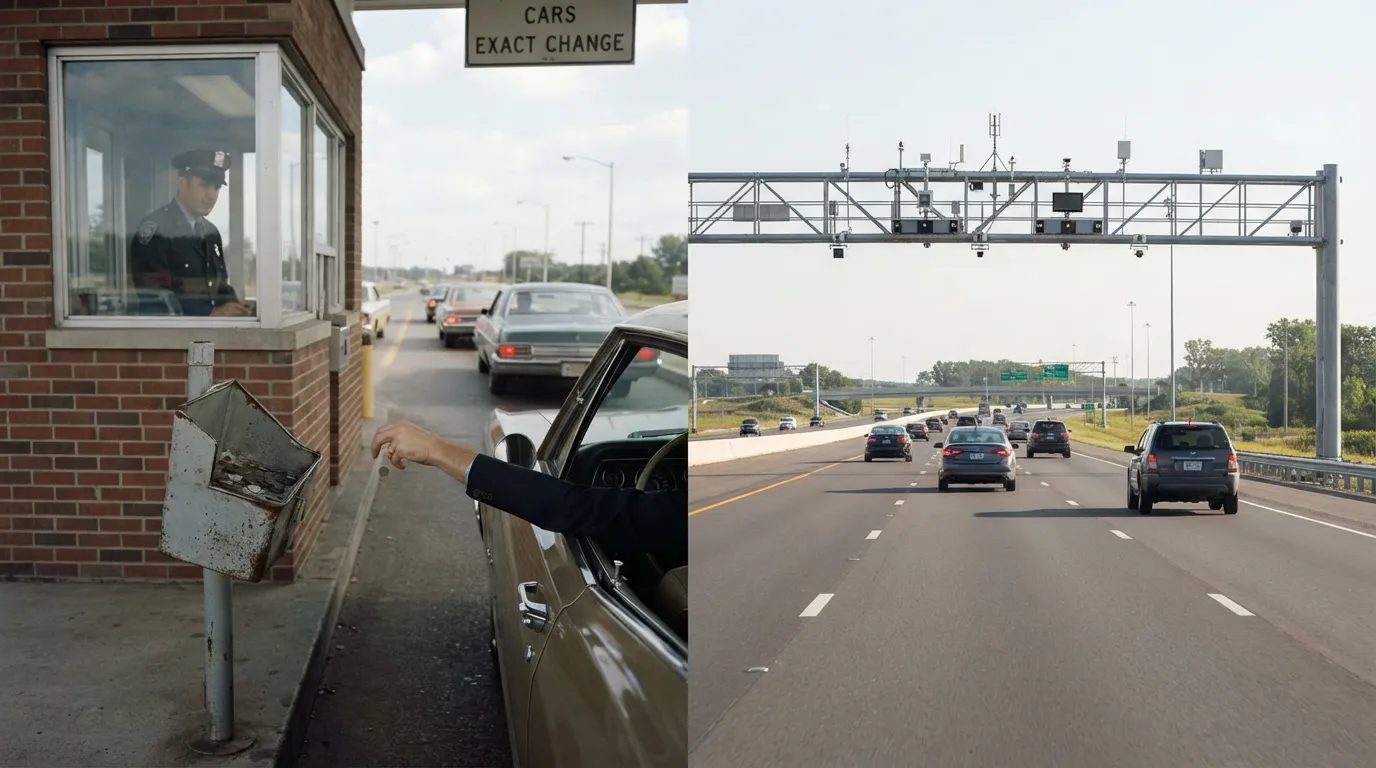
On the left, the view from a driver’s eye level shows a toll plaza. A metal basket sits at window height on the booth, with coins glinting inside. Behind a small pane of glass, an attendant waits. Every driver had to slow down, roll down the window, and toss a few coins at the basket.
On the right, the same eye level looks down an open highway. Overhead gantries stretch across the lanes, with electronic sensors hanging above. There is no booth, no basket, and no brake lights stacking up, because the road simply keeps going.
The old way made everyone stop, and the new way lets everyone roll on. The toll still exists, but the little moment of reaching for change has been replaced by a bill that arrives later.
#5 – A 1970 picnic table lunch beside a 2026 rest-area building
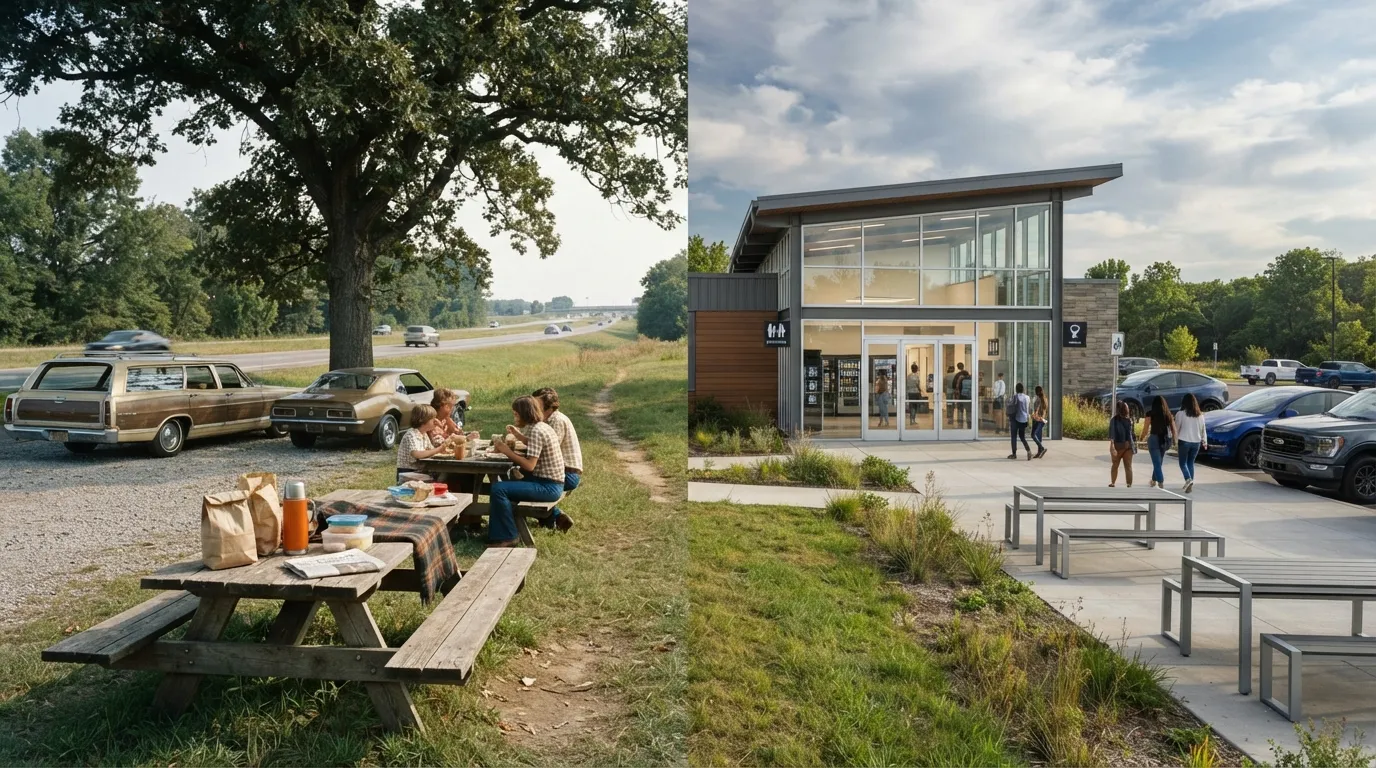
On the left, a wooden picnic table with attached benches sits under a tree at the roadside. Paper lunch bags and a thermos rest on the weathered boards. Parked cars and grass fill the background, and the whole stop feels like a small family reunion with the engine off.
On the right, the same distance from the parking lot shows the entrance to a modern rest-area building. Large glass doors open onto vending machines, with restrooms inside. Picnic tables still sit nearby, but the main activity has moved indoors.
The old stop was about spreading out and eating what you packed. The new stop is faster and more convenient, and it’s mostly built around the building rather than the grass.
#4 – A 1970 paper trip map from the auto club beside a 2026 route glowing on a phone
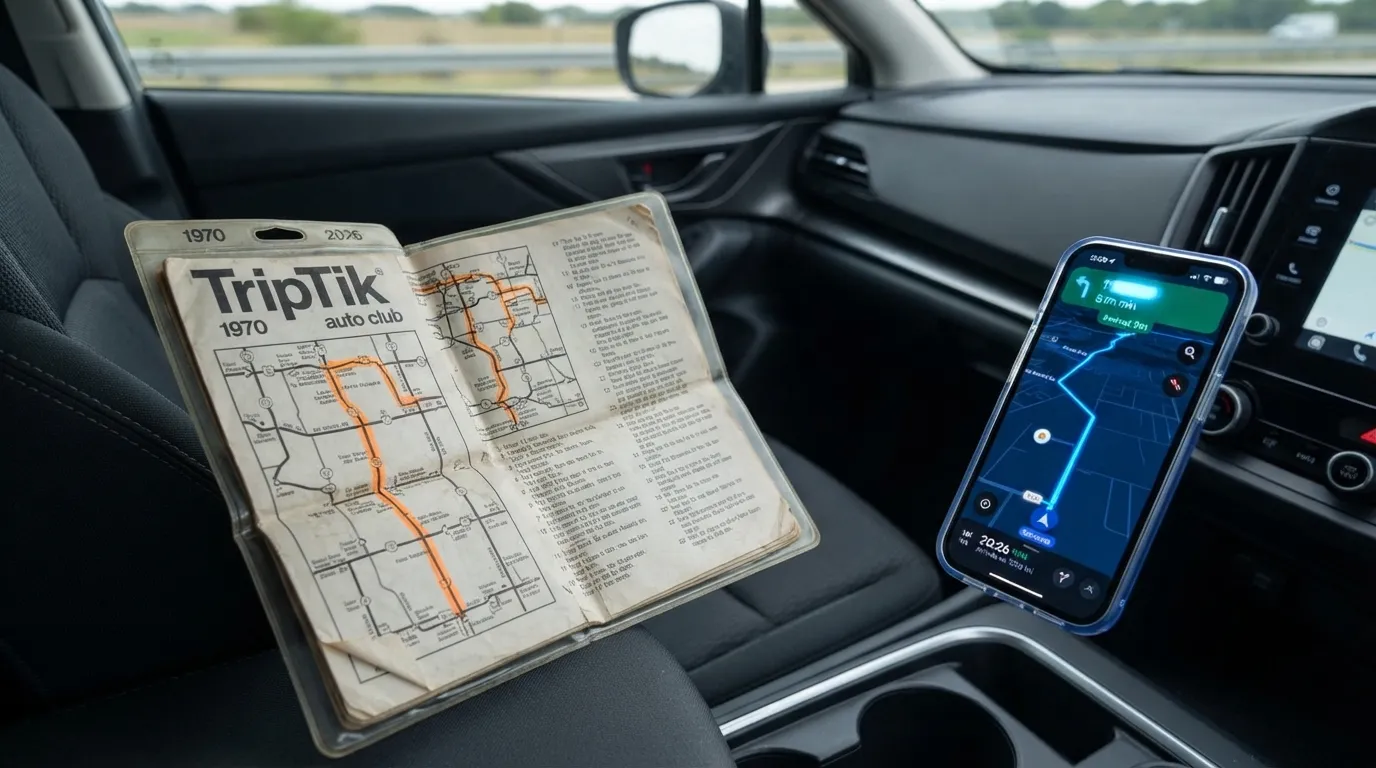
On the left, the passenger seat holds a folded paper trip plan made by an auto club. The route is highlighted in marker, with turn-by-turn pages printed in strips and tucked inside a custom cover. Someone sat down weeks earlier and planned the entire journey by hand.
On the right, the same seat and the same dashboard hold no paper at all. A smartphone lies there with a glowing blue route line, and the screen updates as the car moves. If you miss a turn, it simply redraws the path.
Quick Compare
- 1970: planned weeks ahead, marked in highlighter, printed in strips.
- 2026: built in moments, redrawn after every wrong turn.
- The feeling: a promise on paper versus a conversation on a screen.
The paper plan was a promise that someone had thought it through. The phone is more of a conversation that changes every mile, and it never makes you commit to a single plan.
#3 – A 1970 neon sign outside a motel office beside a 2026 lobby desk with a screen
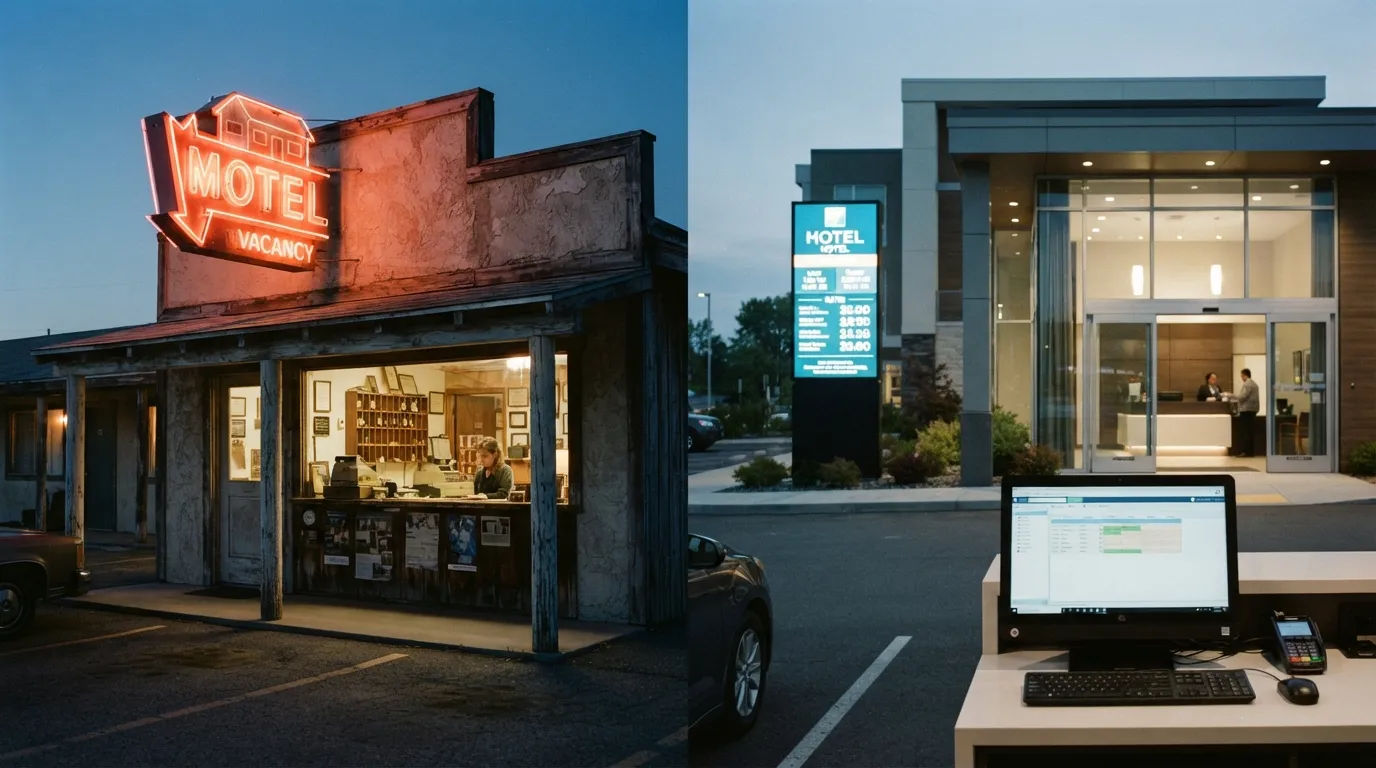
On the left, the exterior of a motel office glows at dusk. A neon sign burns red-orange above the door, humming against the darkening sky. Through the window, you can see a small counter with a register and a rack of room keys. The glow itself was the message: a light on meant someone was awake and a bed was waiting.
On the right, the same eye-level angle looks across the parking lot toward a current hotel entrance. Inside the lobby, a front desk holds a computer monitor showing reservation software. Outside, an LED sign has replaced the buzzing neon tubes.
The old sign worked like a lighthouse. The new desk works like a database, and the welcome is usually settled before you ever pull in.
#2 – A 1970 thermos on the seat beside a 2026 cup in a molded holder
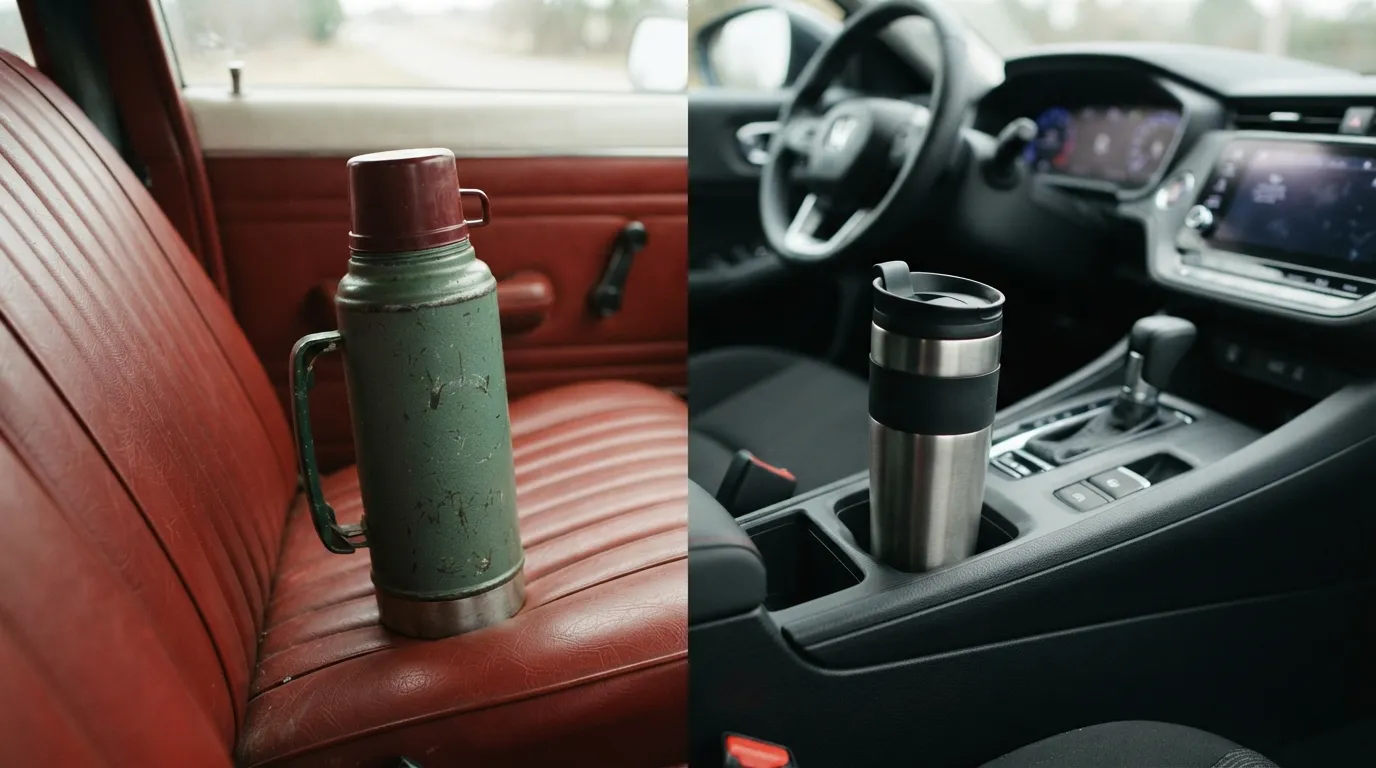
On the left, the center of a vinyl front seat holds a metal thermos with a handle and a cup for a lid. Its paint is worn where hands have gripped it for years. When the car stopped, you poured the coffee into the lid, and it was usually still hot.
On the right, the camera sits at the same low angle from the driver’s side. A travel cup rests in a molded holder built into the console, a sip-spout lid on top. The console is contoured to grip it so it won’t slide in the turns.
The thermos asked you to pause. The cup holder lets you keep driving. One turned a coffee break into a little ritual, and the other made sure you never have to stop at all.
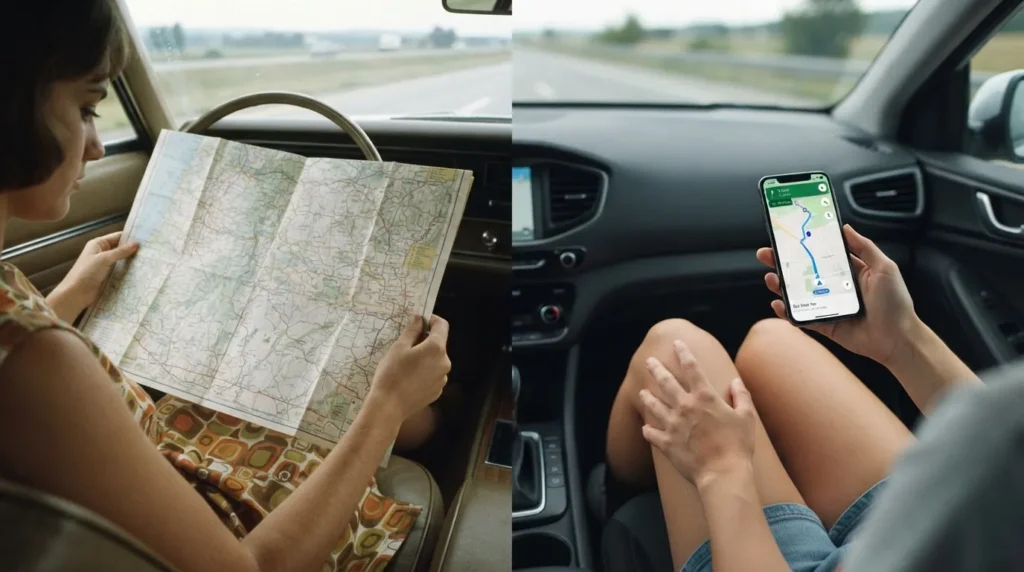
#1 – A 1970 map spread across a passenger’s lap beside a 2026 phone held over that same lap
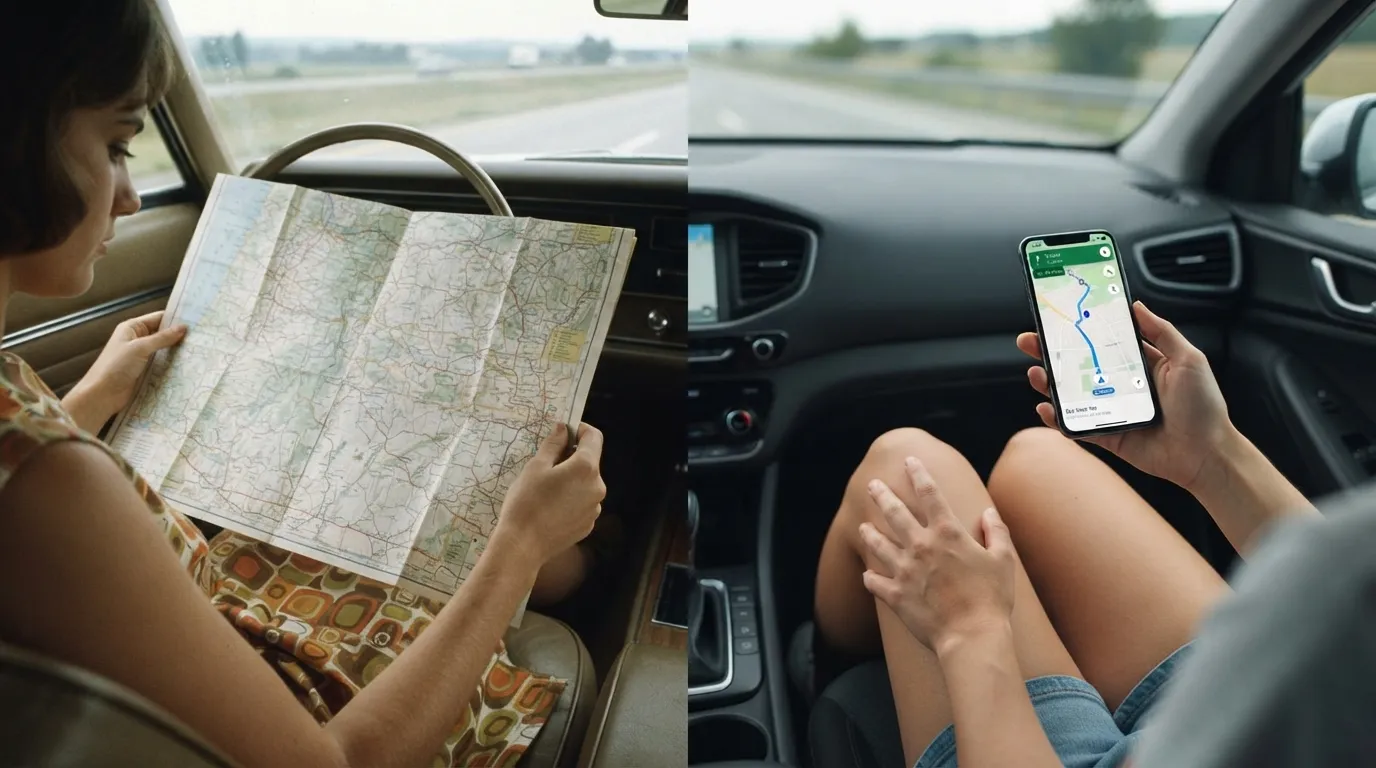
On the left, the view from the driver’s seat shows a passenger’s lap buried under a huge paper map. Both hands hold the edges flat while the paper tries to spring back. The passenger is not a passenger at all but the navigator, reading the road and calling out turns.
On the right, the same lap, the same seat, and the same angle show a phone held over the legs. A map app glows on the screen, and the other hand rests easily on a knee. There is no wrestling, and no one has to say “left at the next light” out loud.
That may be the biggest change of all. In 1970, the person beside you was part of the machine that got you there. In 2026, they are mostly just along for the ride.
CEO-Co-Founder
