- 15 Hotel Breakfast Charges Guests Can Avoid by Checking the Rate Plan - October 24, 2026
- 17 Shoulder Season Travel Rules for Sudden Weather Changes - October 24, 2026
- 18 Hotel Arrival Rules That Prevent Expensive Check-In Problems - October 24, 2026
You can point at a map and say “where?” all day and still end up on the wrong side of the city.
The fix is usually a handful of small, polite phrases that change how locals answer you, and the best ones are still ahead.
#18 – Excuse Me, Where Is the Nearest Metro Station?
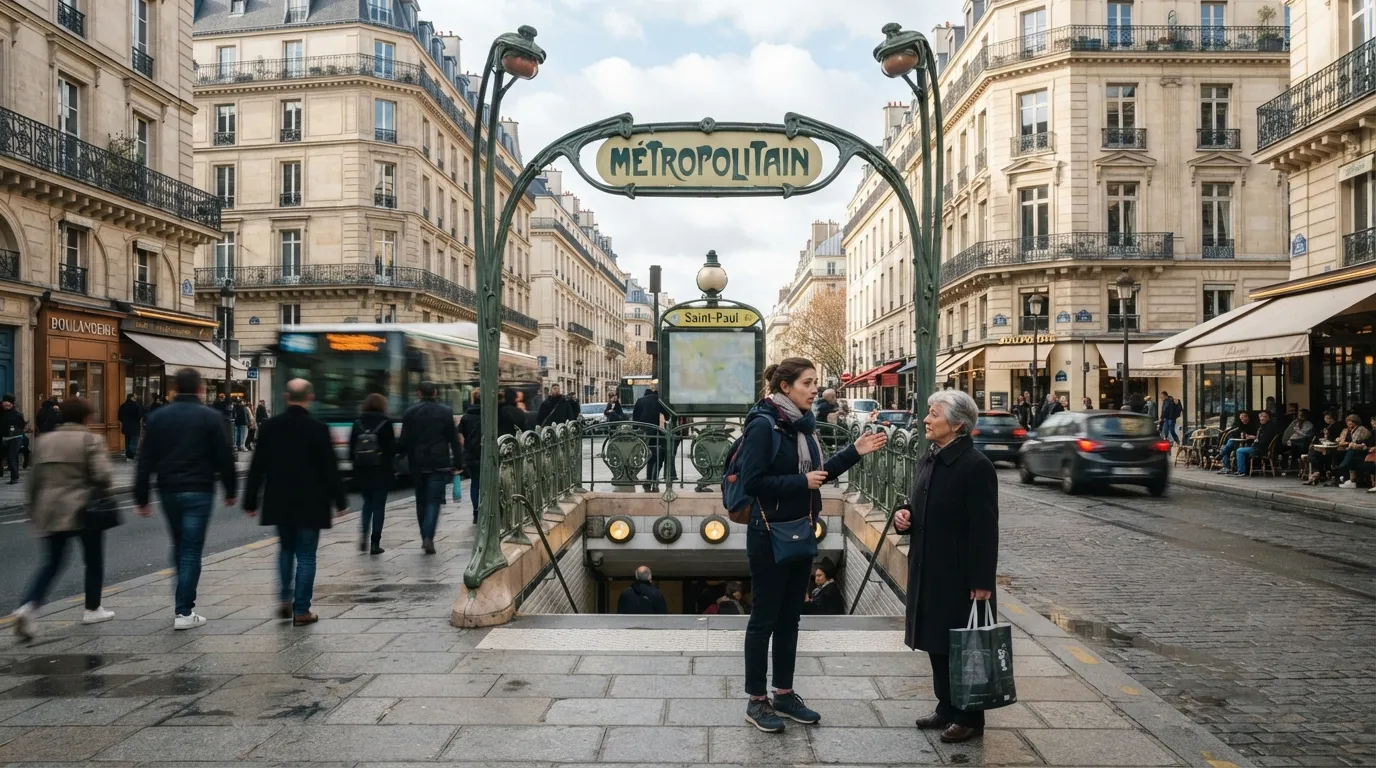
A courteous opener plus a clear destination tells people exactly what you need. They can answer with a route instead of a vague wave.
If you know the line name, add it, since some stations in the same city have similar names. In Paris, try “Excusez-moi, où est la station de métro la plus proche ?”
#17 – Could You Show Me on the Map?
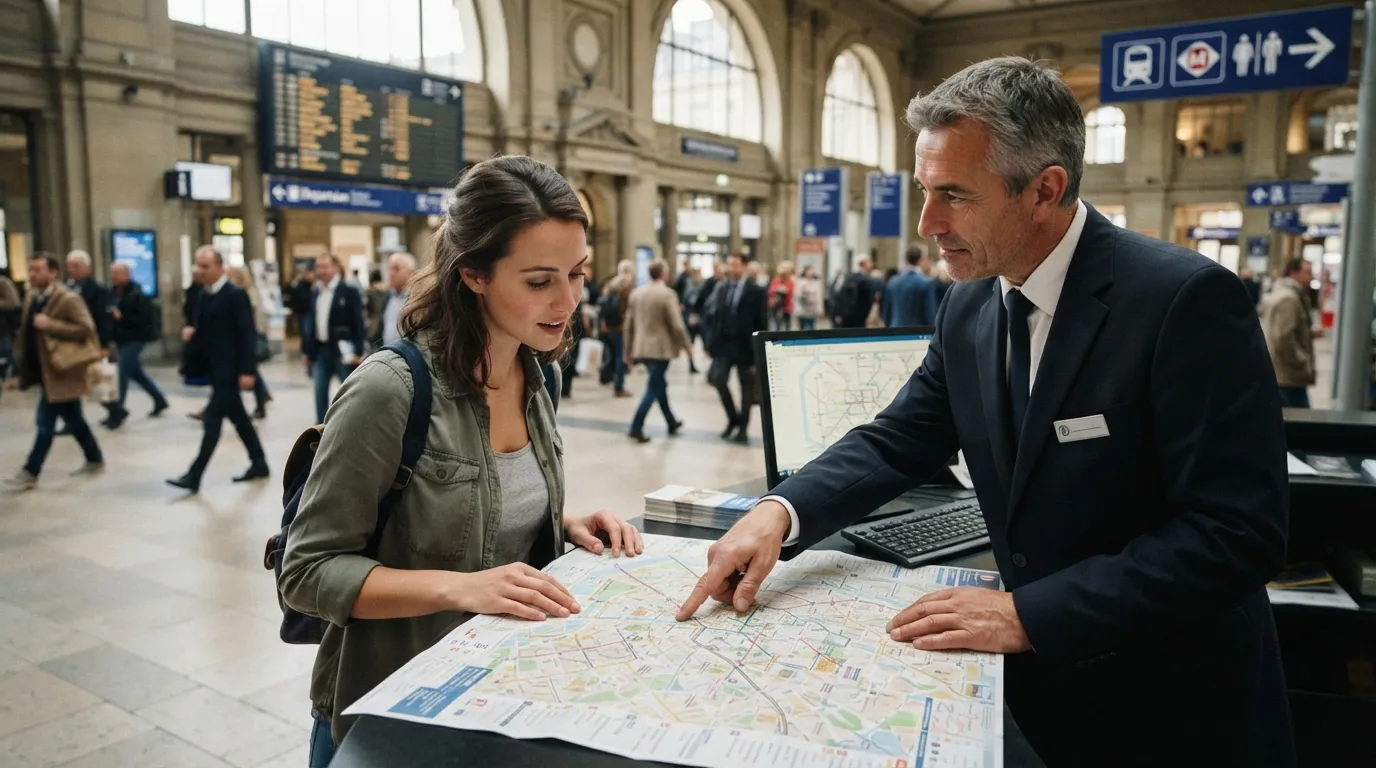
This turns a stream of words you might miss into a finger tracing a route you can actually see. It helps most where street names are hard to catch by ear.
Information desks and paper maps vary by city and operator, so be ready to hand over your phone instead.
#16 – Do You Speak English? (Asked in the Local Language)
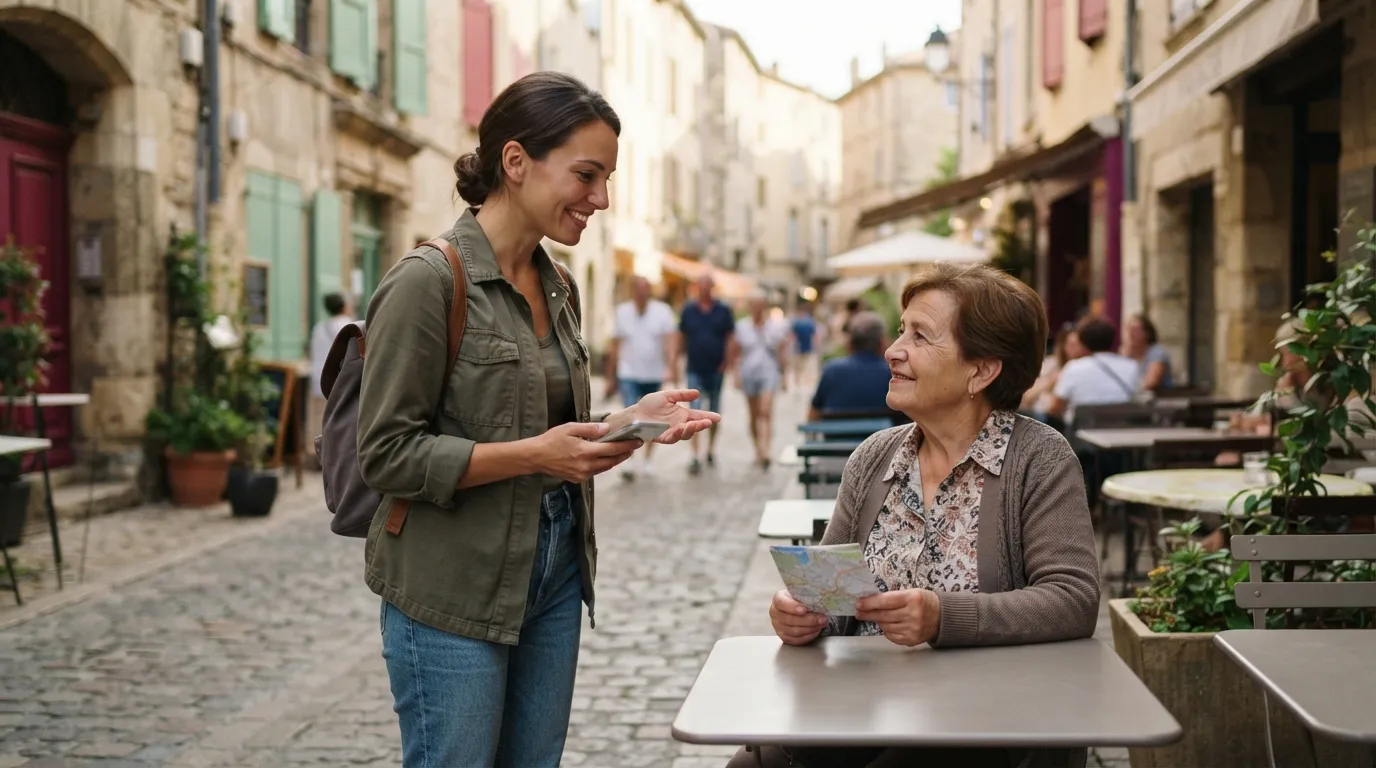
Asking first is a small courtesy that often softens the whole exchange. Try “¿Habla inglés?”, “Parlez-vous anglais ?” or “Sprechen Sie Englisch?”
Comfort levels differ from person to person, so a smile and a thank-you work whatever the answer is. If it’s a no, you can still switch to a map or gestures.
#15 – Could You Speak More Slowly, Please?
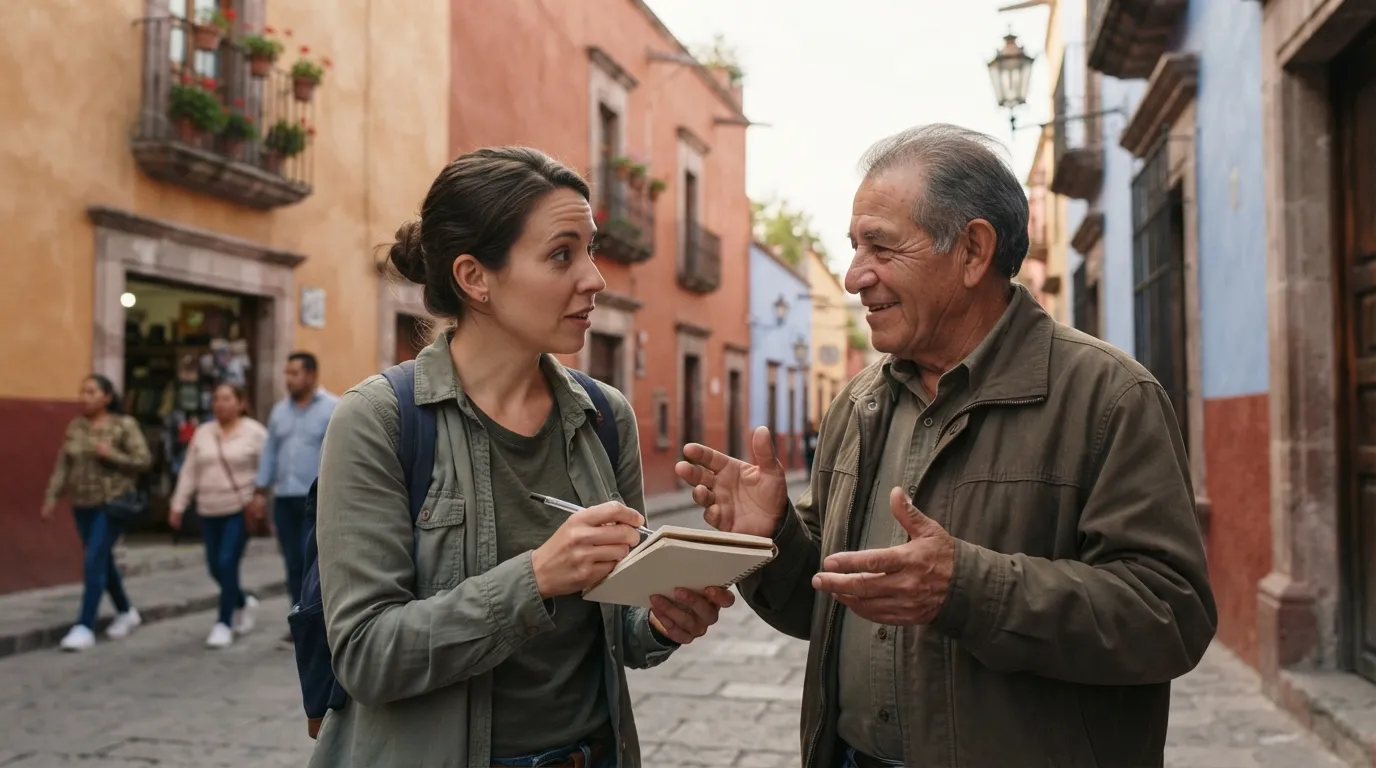
Fast directions arrive as one blur of streets, turns and numbers. Slowing the speaker down gives your ear time to catch each step.
In Spanish, say “¿Puede hablar más despacio, por favor?” Handing over a pen and paper for numbers can help just as much.
Quick Compare
- Spanish: “¿Puede hablar más despacio, por favor?”
- French: “Pouvez-vous parler plus lentement, s’il vous plaît ?”
- German: “Könnten Sie bitte langsamer sprechen?”
- Italian: “Può parlare più lentamente, per favore?”
#14 – Could You Repeat That, Please?
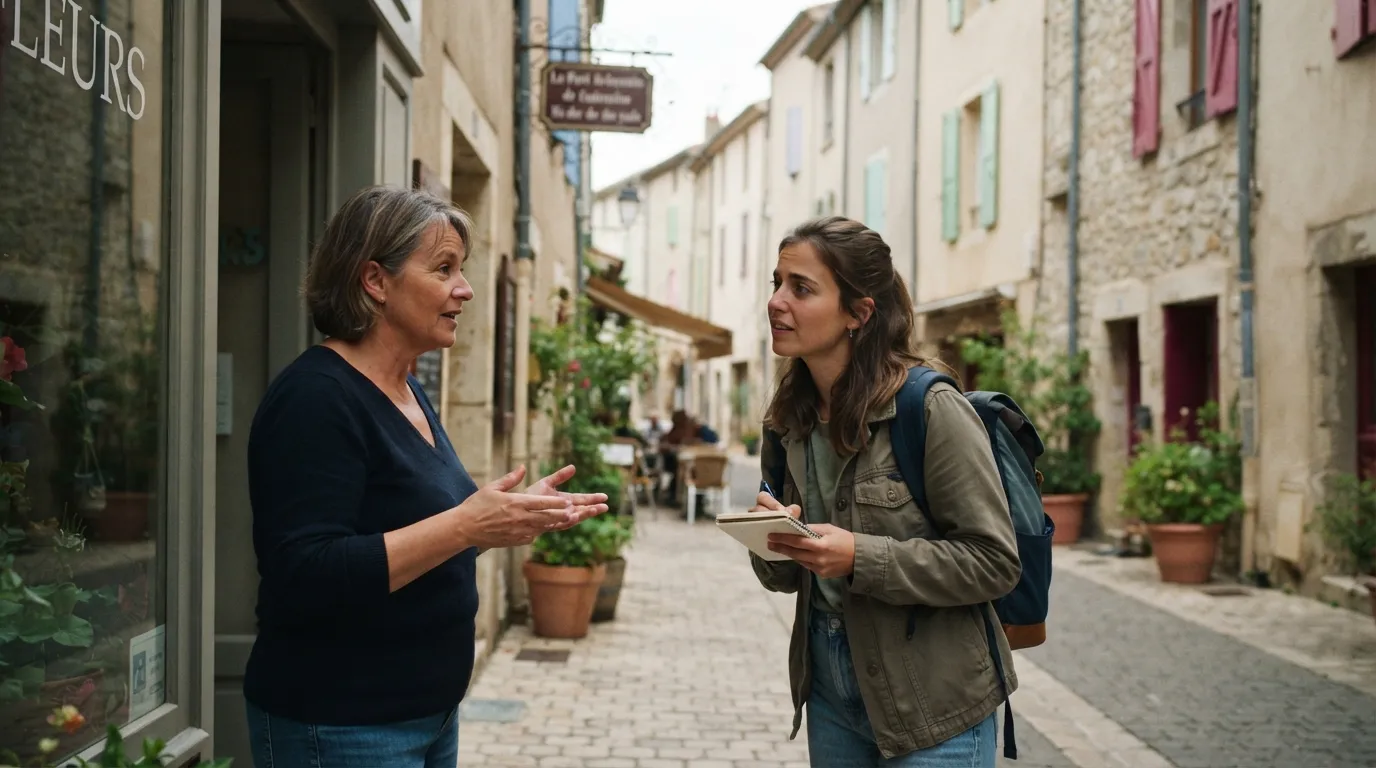
One repeat often reveals the word you missed, like “second street” or “after the bridge.” In French, “Pouvez-vous répéter, s’il vous plaît ?” does the job politely.
Pair it with a request to slow down. People tend to repeat more clearly when you ask kindly and listen closely.
#13 – Is It Far from Here?
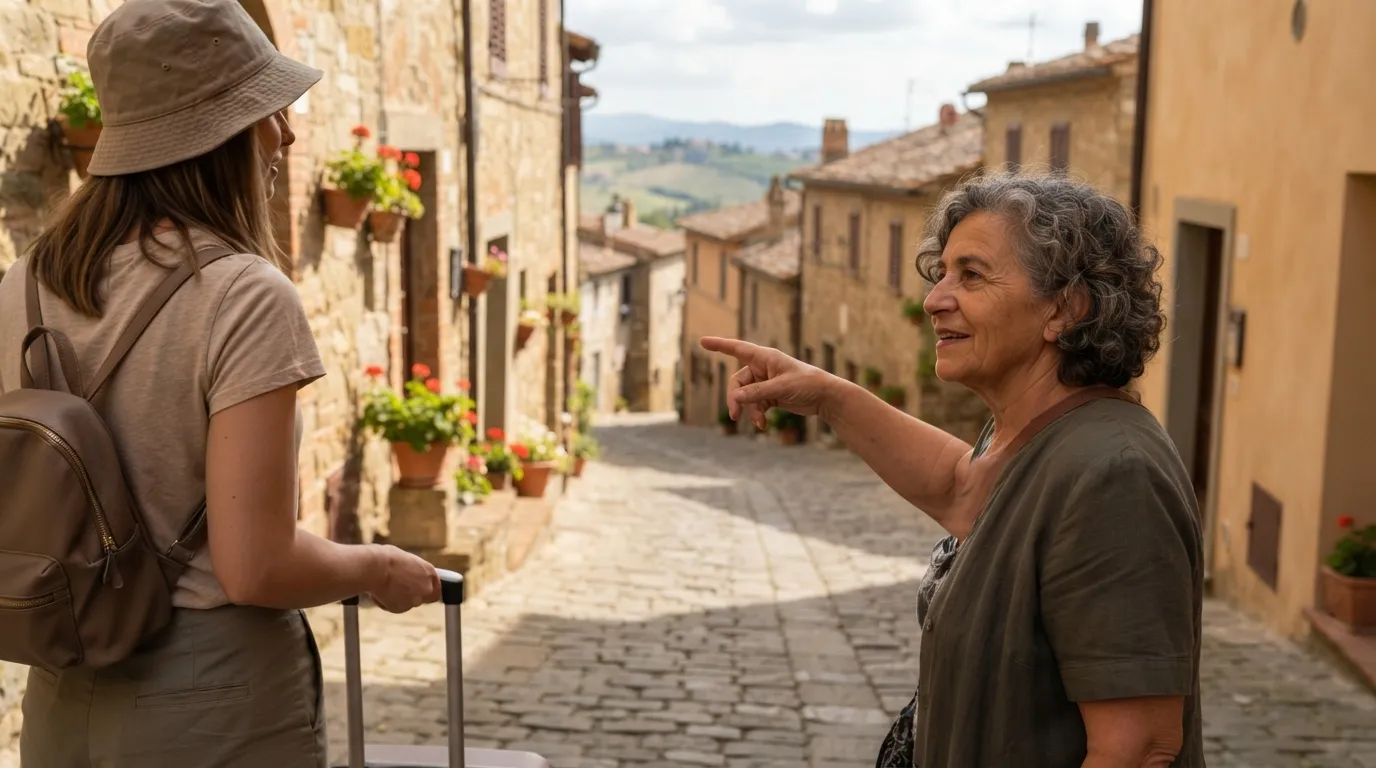
This one answers the question that matters most: walk, ride or taxi. Try “¿Está lejos?” in Spanish or “È lontano?” in Italian.
“Far” is relative, though. What a local calls close can be a long walk with luggage, hills or heat, so follow up with a time question.
#12 – How Long Does It Take on Foot?
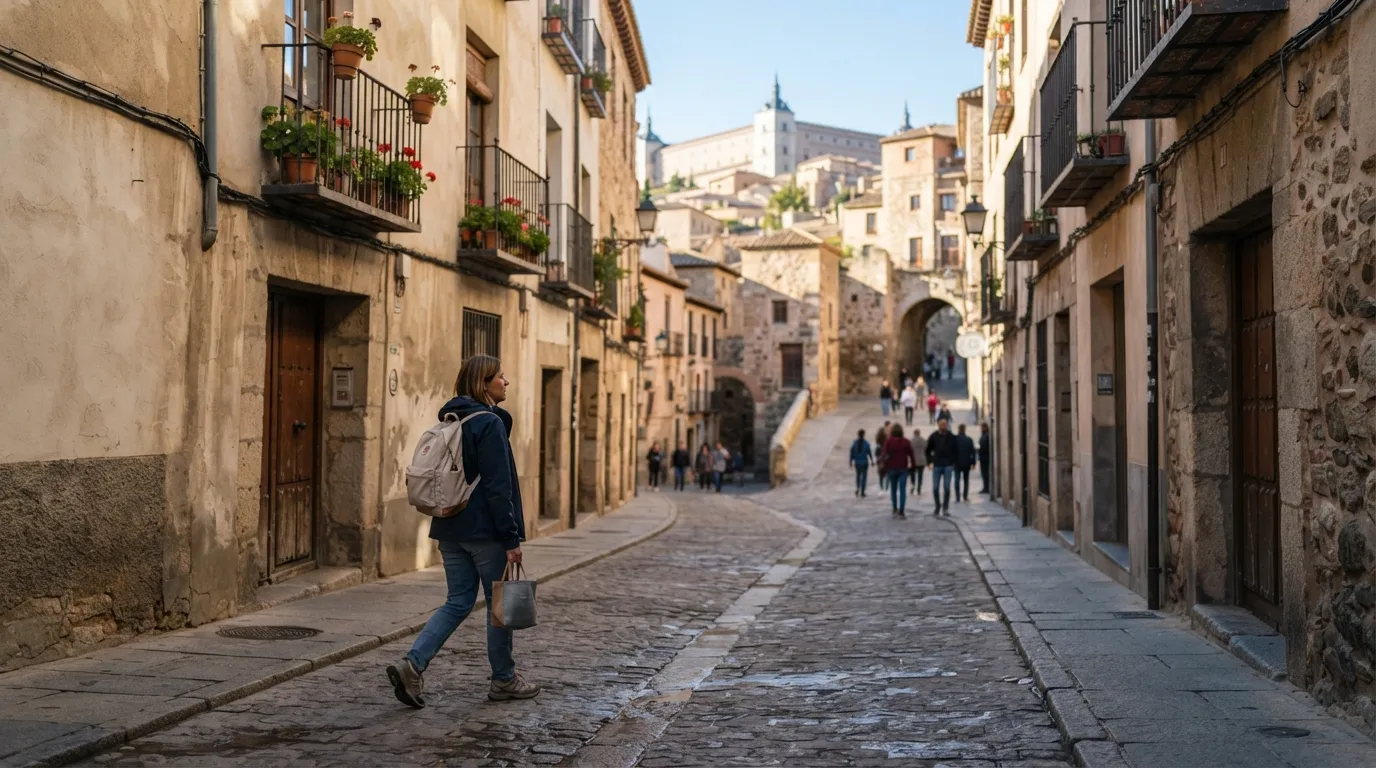
Minutes are easier to picture than distance, especially where people measure in kilometers and you think in miles. In Spanish, ask “¿Cuánto se tarda andando?”
The answer also helps you decide whether to walk or switch to transit. Treat it as a local estimate, not a guarantee.
Fast Facts
- 1 kilometer is about 0.62 miles.
- 1 mile is about 1.6 kilometers.
- 5 kilometers is roughly 3.1 miles.
- A typical walking pace is often put near 3 mph (about 5 km/h), and luggage, hills or heat can slow it.
#11 – Which Exit Should I Take?
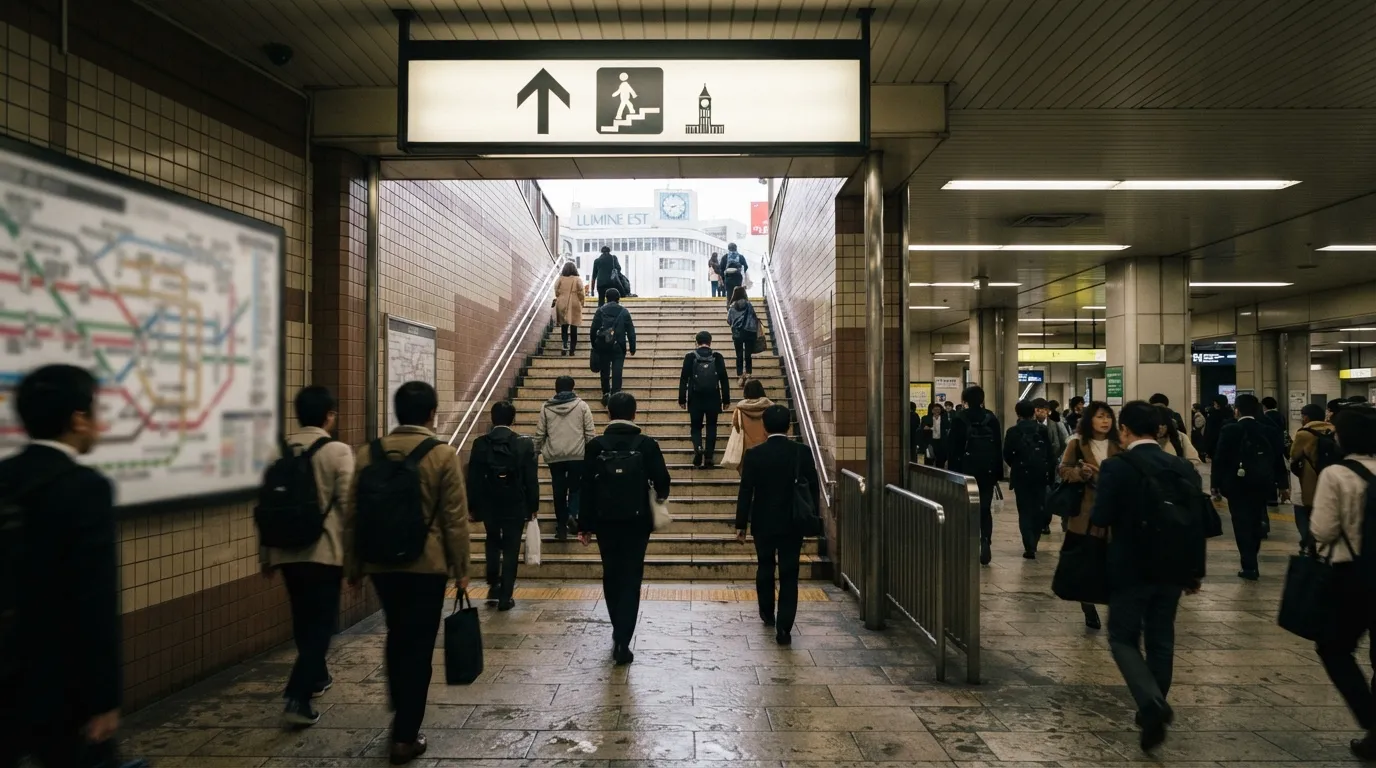
Big stations can have many exits, and the wrong one may drop you blocks away or on the wrong side of a major road. Ask which exit is closest to your destination.
Some large stations number or letter their exits, but signage differs by operator. A landmark near the right exit makes it easier to spot.
#10 – Which Direction Do I Need for This Final Stop?
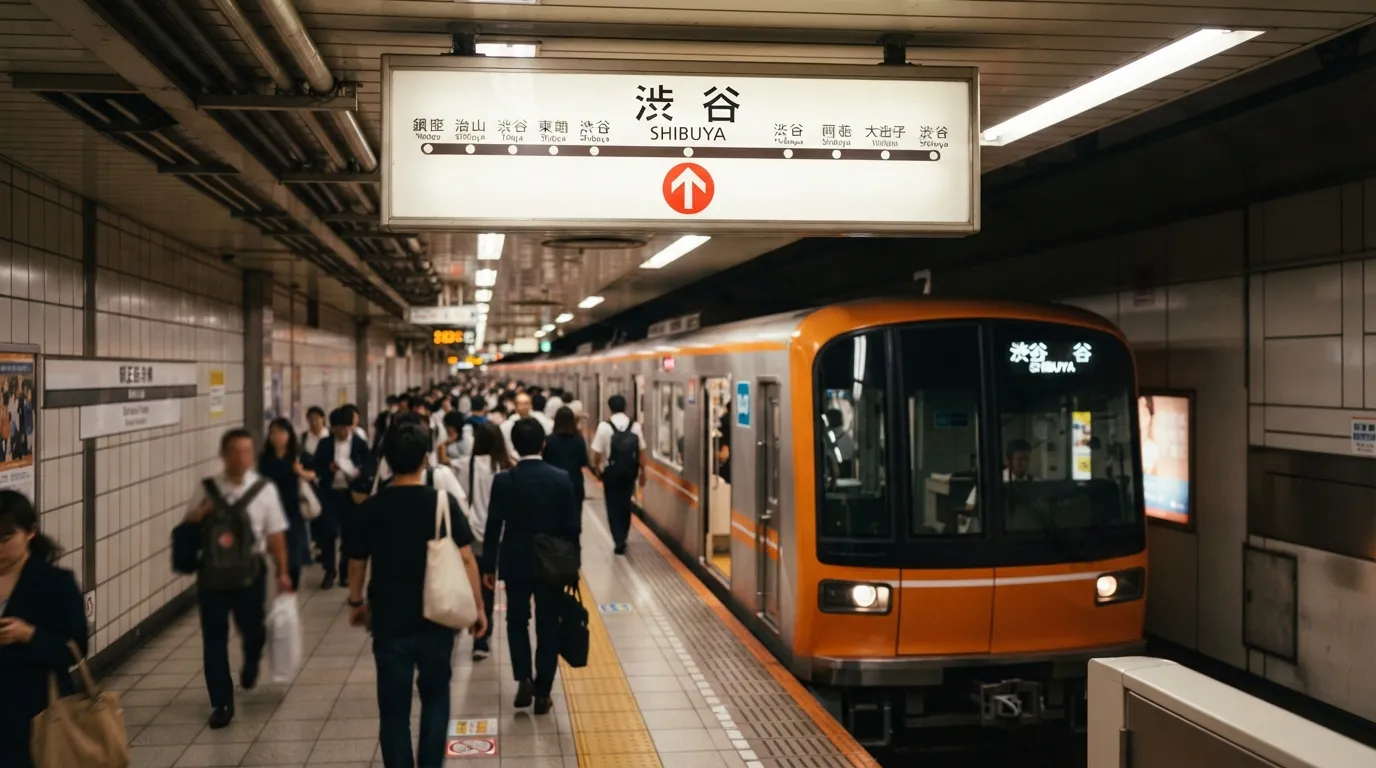
In many metro systems, platforms are labeled by the last station on the line, not by compass direction. Knowing that end-of-line name can matter more than north or south.
Ask “Which direction for [last station]?” Labeling conventions vary by city, so confirm before you step onto the platform.
#9 – Do I Need to Change Trains?
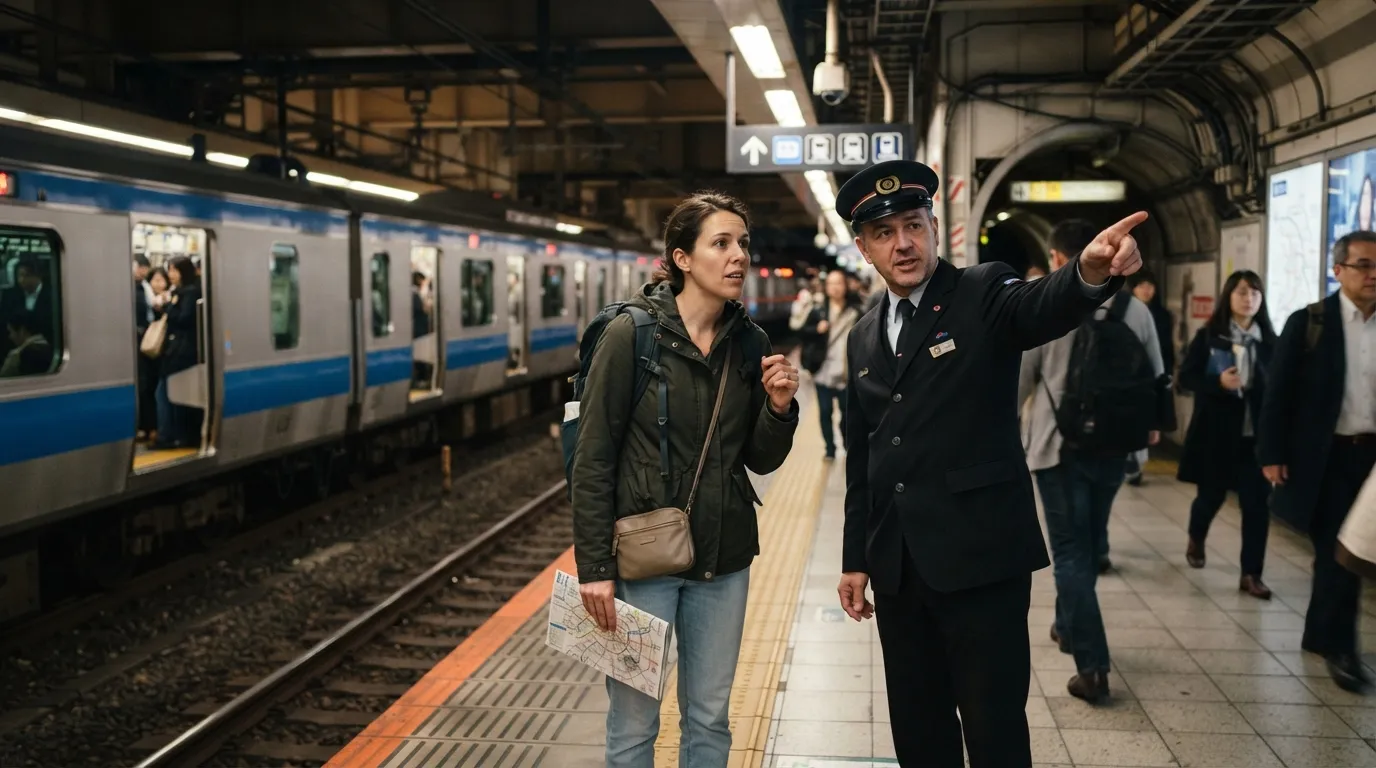
A route that looks direct on a map may need a transfer, and the walk between platforms can be longer than you expect. Ask “Where do I change?” before you board.
Station layouts and signage differ by operator. Hearing where to change, and in what direction, saves a confusing scramble mid-journey.
#8 – Where Do I Buy a Ticket?
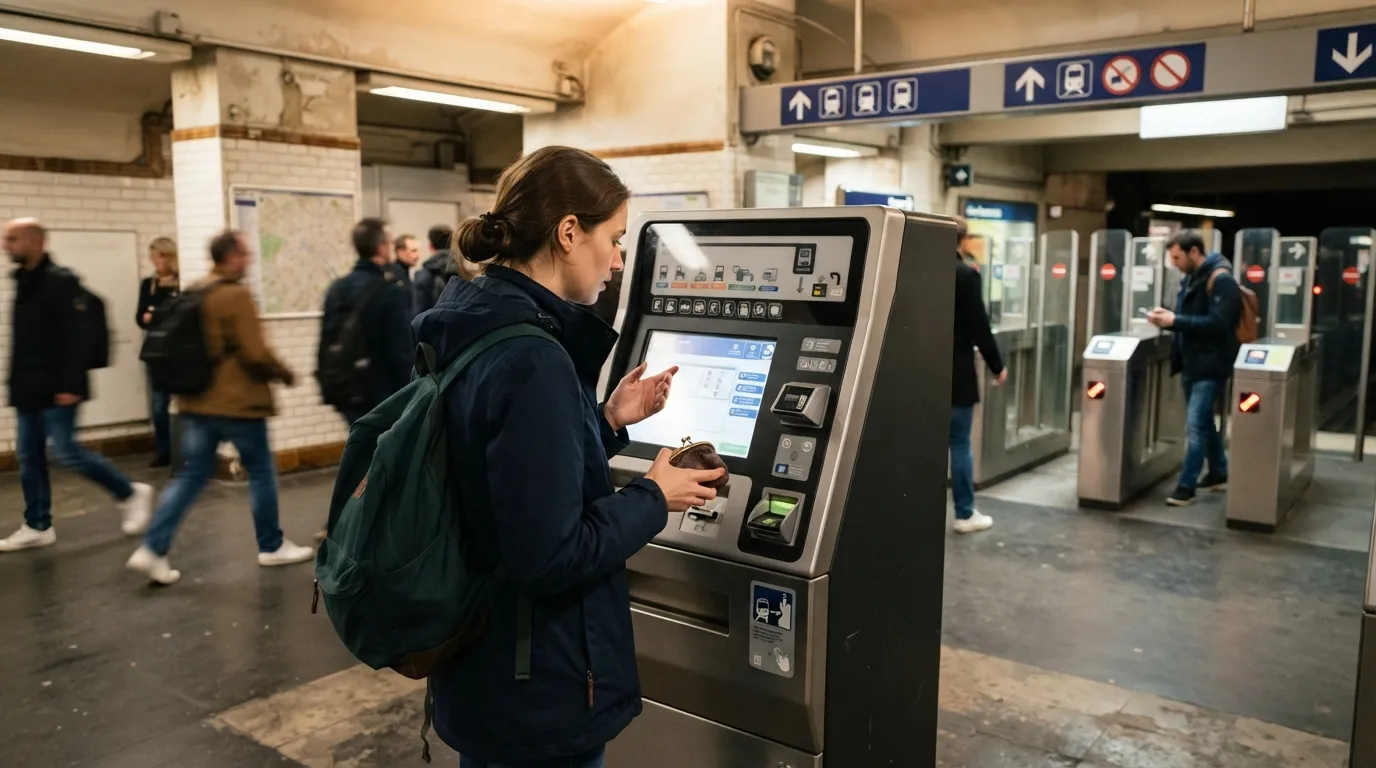
Fare systems are not the same everywhere. Some use tap-in cards, some sell paper tickets that must be validated, and some sell tickets onboard.
Ask before you go through the gates or board. Rules and penalties vary by city and operator, so a quick question beats a guess.
#7 – Is This the Right Stop for…?
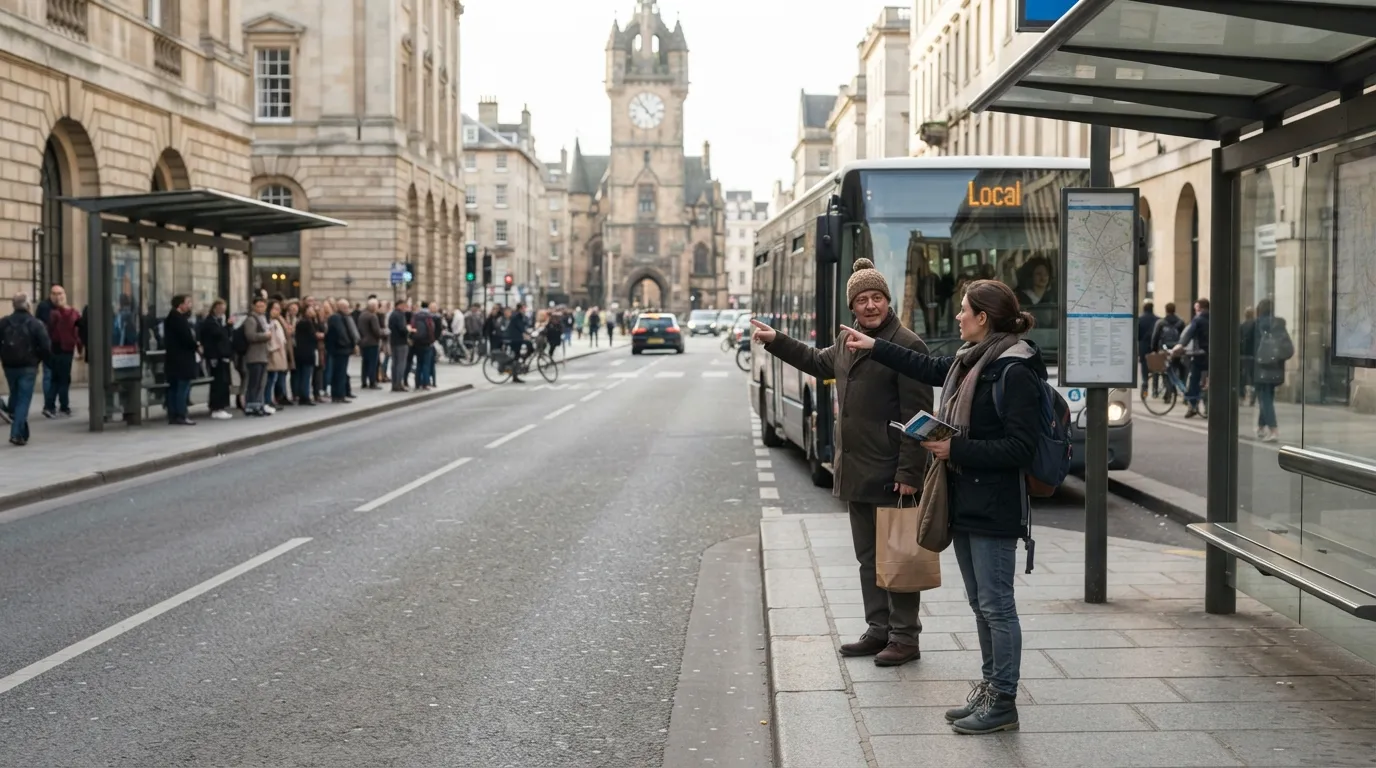
In many places, stops for opposite directions sit on opposite sides of the street. You can wait patiently and still be at the wrong one.
Add your destination name and ask the driver or someone waiting beside you. A quick nod or head shake can save you a long ride the wrong way.
#6 – Do I Turn Left or Right?
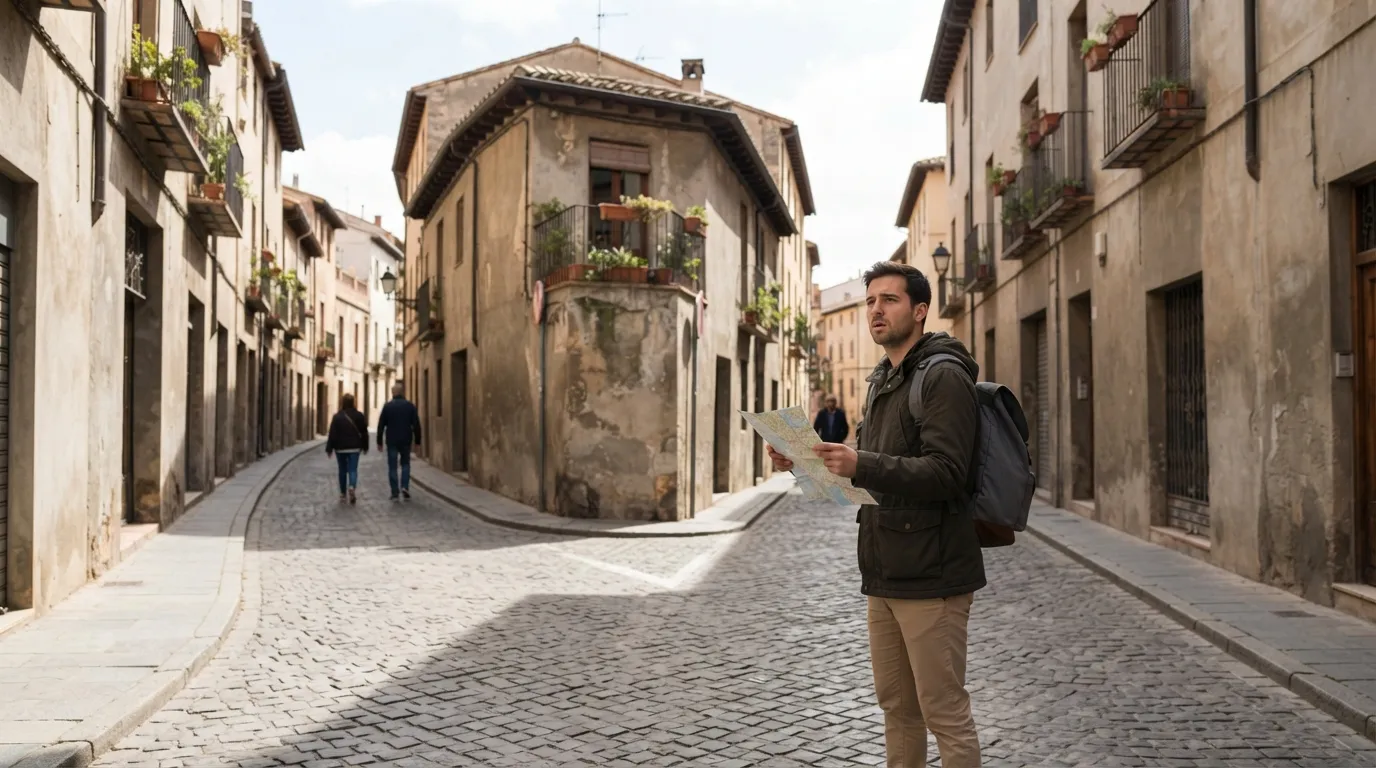
Learn three words: left, right, straight. In Spanish they’re izquierda, derecha and todo recto. In German, links, rechts and geradeaus. In Italian, sinistra, destra and sempre dritto.
Even if the rest of the answer flies past, those words let you follow the main turns.
#5 – Is There a Landmark I Should Look For?
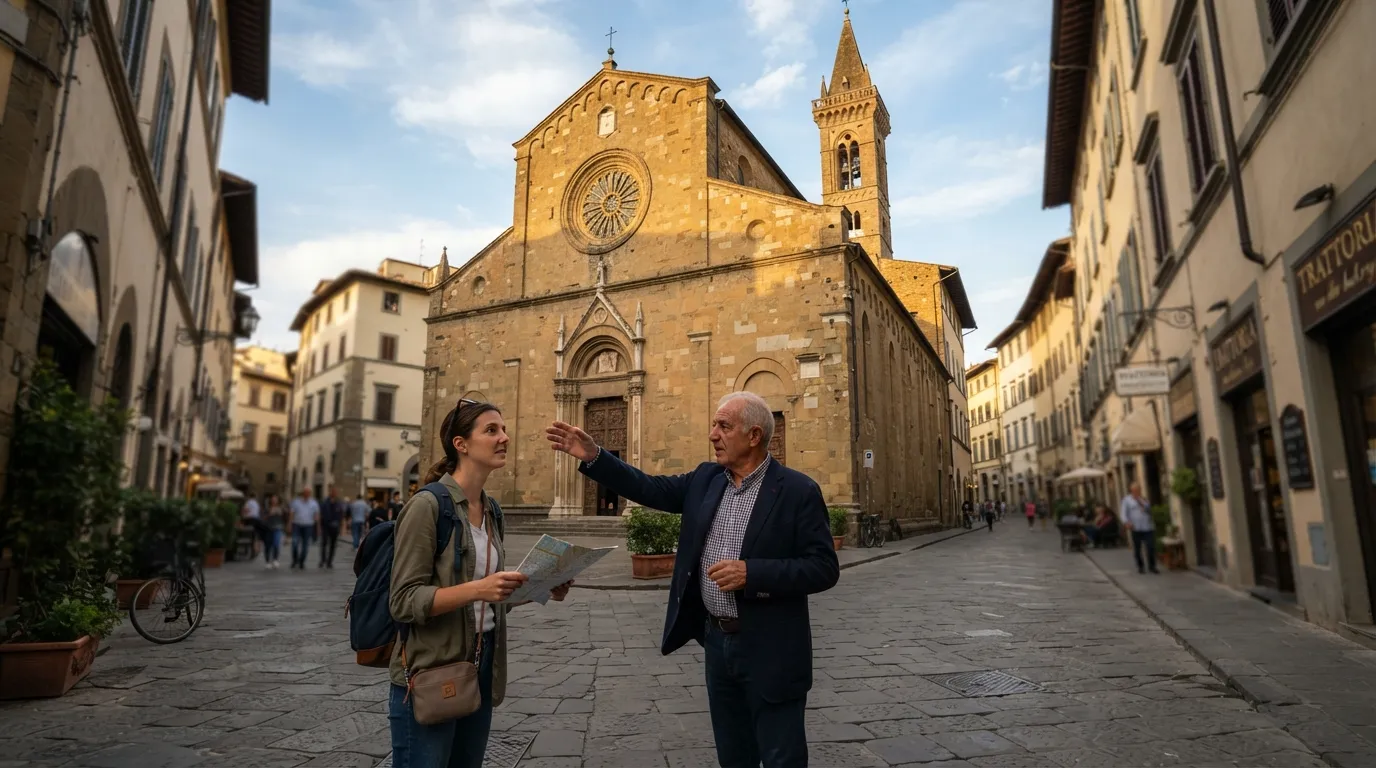
Street signs can be missing, tiny or written in an unfamiliar script. A church, bridge, bakery or big intersection gives you a visual checkpoint instead.
Ask for one landmark near your turn and one near your destination. Seeing them in real life tells you that you’re on track.
#4 – Could You Write It Down?
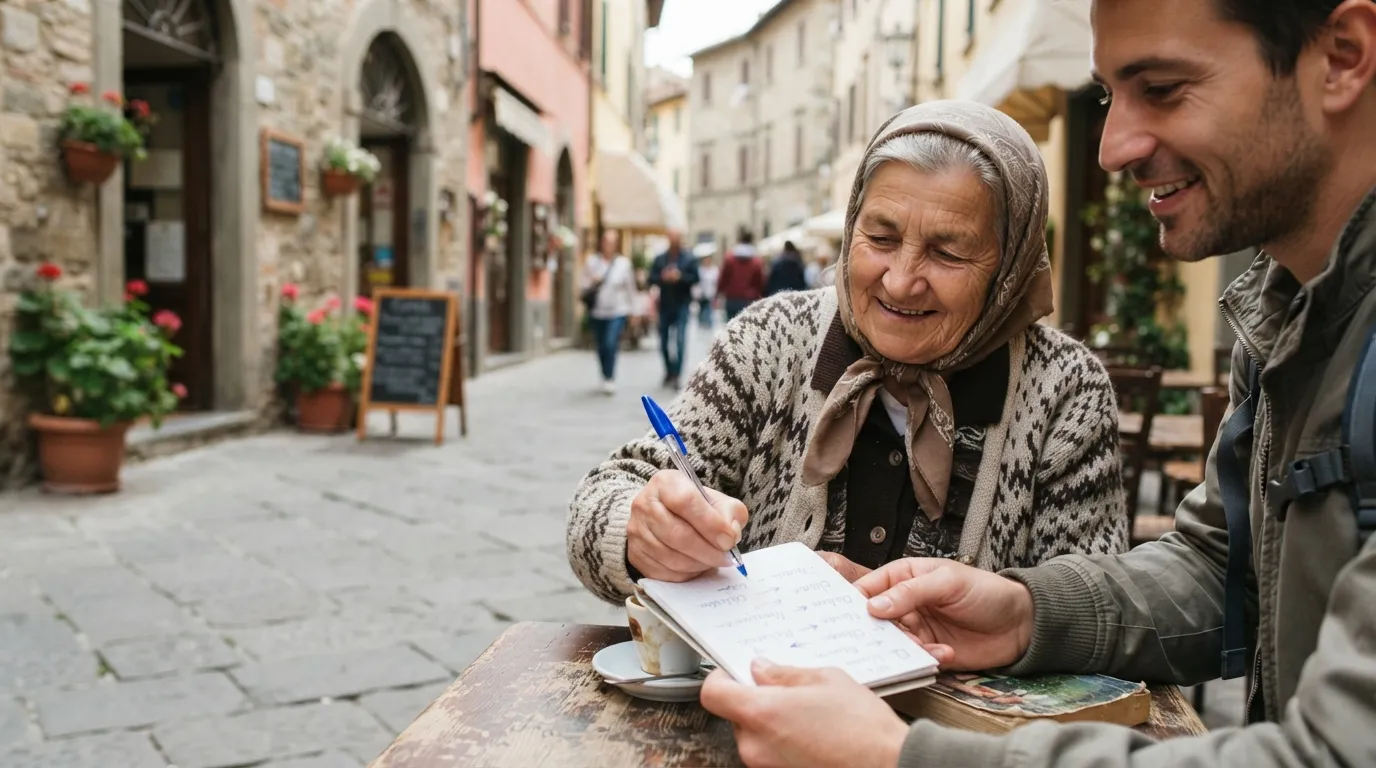
Place names can be hard to catch, spell or pronounce, especially in an unfamiliar language. A written note gives you something to check later.
You can also show it to the next person you ask or to a taxi driver. It turns one helpful stranger into a chain of help.
Worth Knowing
- Spanish: “¿Podría escribirlo, por favor?”
- French: “Pouvez-vous l’écrire, s’il vous plaît ?”
- German: “Könnten Sie das bitte aufschreiben?”
- Italian: “Può scriverlo, per favore?”
#3 – So I Go Straight, Then Turn Left?
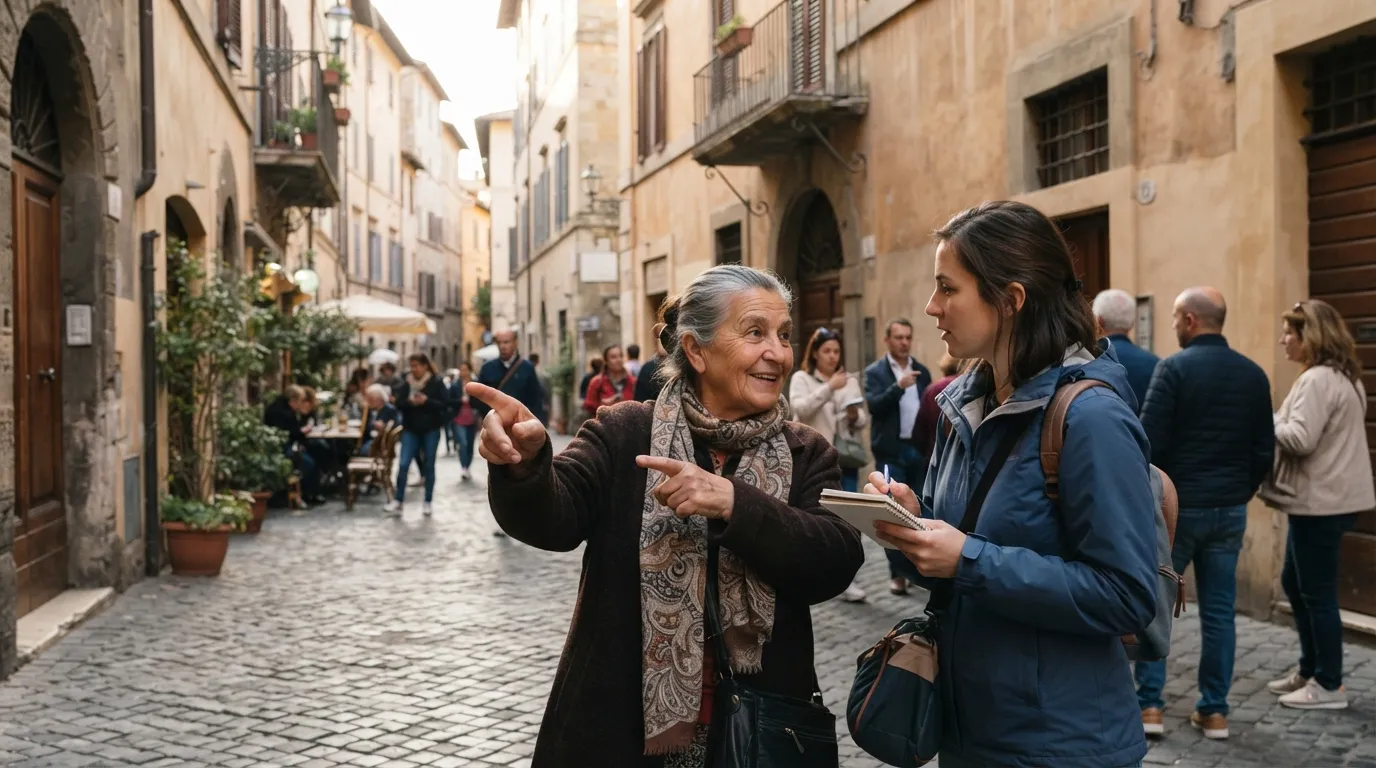
Repeating the directions back gives the other person a chance to correct you before you walk the wrong way. It’s often where hidden mistakes surface.
It works in any language, even with gestures. Say it slowly, point as you go, and watch for a nod or a gentle “no, no.”
#2 – Am I Going the Right Way?

Directions fade fast once you start walking. Checking a few blocks in catches a missed turn while it’s still easy to fix.
Station staff, hotel desks and shopkeepers are often easier to ask than people rushing past. Name your destination and point ahead to show where you think you’re going.
#1 – Thank You So Much, You’ve Been Very Helpful

Close the exchange in the local language: gracias, merci, danke, grazie or arigatō gozaimasu. A few local courtesy words are commonly recommended by language-learning guides because they show effort and goodwill.
It’s the last thing the person hears from you, and it can turn a quick favor into a pleasant moment.
At a Glance
- Spanish: “Muchas gracias.”
- French: “Merci beaucoup.”
- German: “Vielen Dank.”
- Italian: “Grazie mille.”
- Japanese: “Arigatō gozaimasu.”
CEO-Co-Founder