
- 15 Legendary Writers Who Rewrote History - October 28, 2026
- 15 Times Fiction Sparked Scientific Innovations - October 28, 2026
- Books That Inspired Major Supreme Court Decisions - October 28, 2026
Most people picture a canal boat holiday as a floating picnic with a few gentle locks thrown in. The first lock changes that picture fast, because speed, ropes, paddles and water all matter at once.
None of it is hard once you know it, but a lot of it never makes the brochure. Here’s what Canal & River Trust guidance and hire operators say, and the first surprise arrives well before you reach the chamber.
#18 – Four Miles an Hour Feels Slower Than You Think
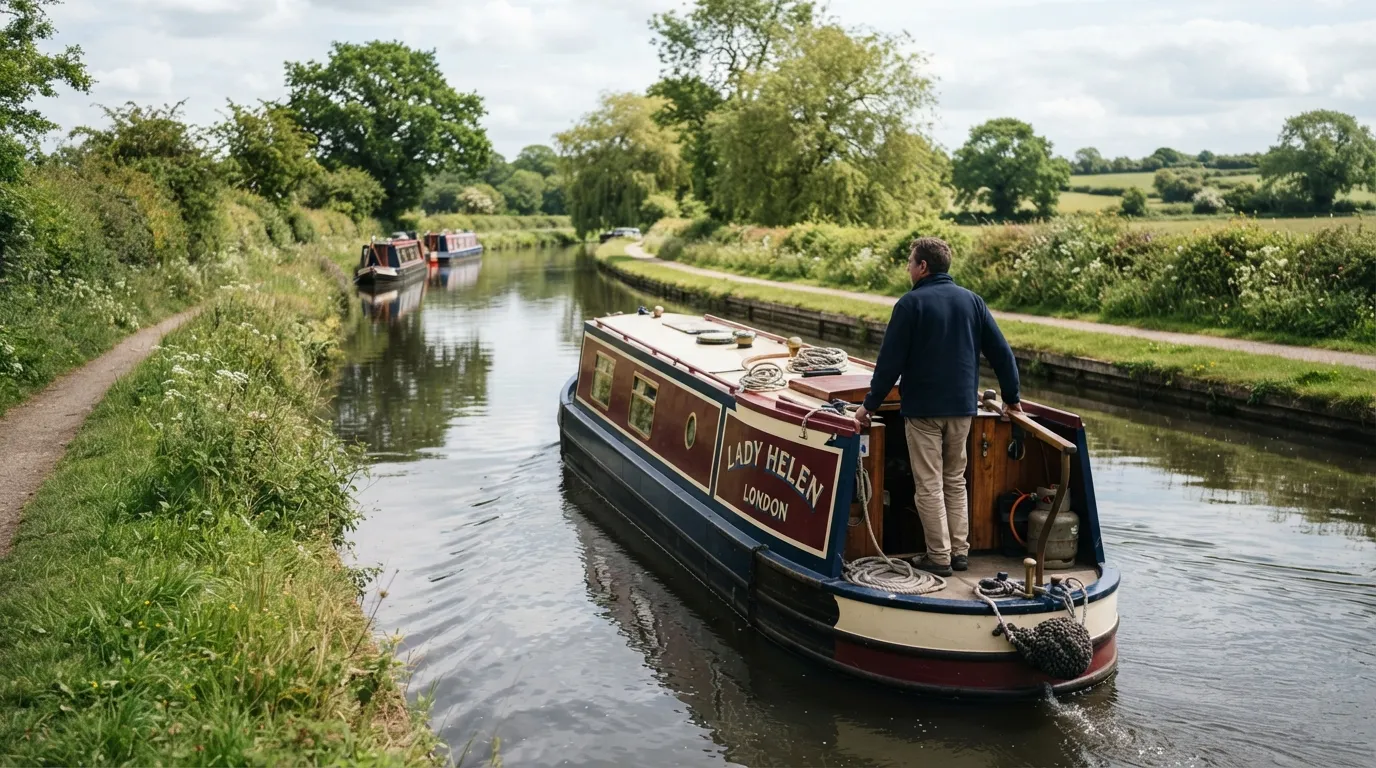
On most Canal & River Trust waterways the limit is 4 mph, about a brisk walk. It sounds laughably slow until you’re standing at the tiller.
The real test is your wash. If the water behind you is breaking against the bank, you’re going too fast, so slow right down when passing moored boats.
Give way to commercial boats early. And where you’re allowed to stop comes with its own surprises.
#17 – Some Perfectly Pretty Mooring Spots Are Off-Limits
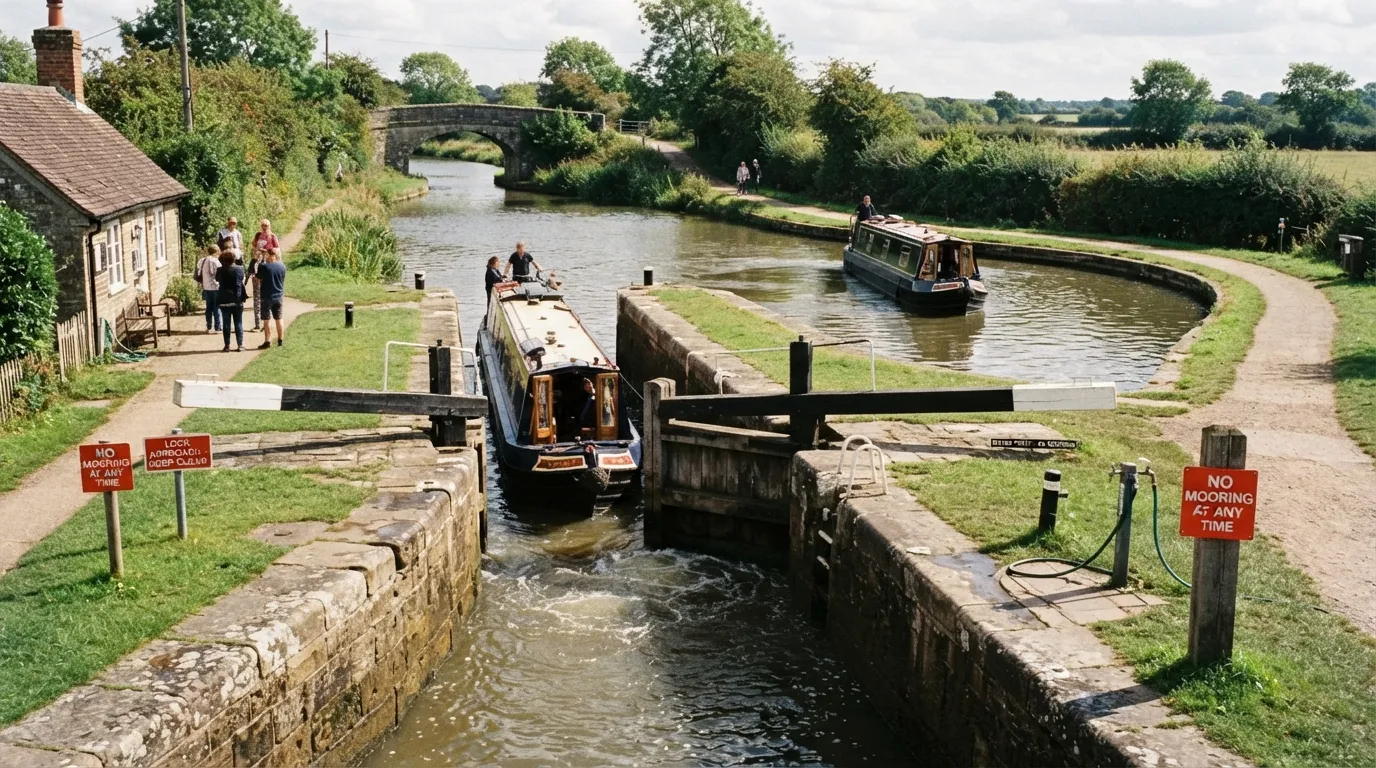
Towpath moorings are often fine unless signs say otherwise. But don’t moor at locks, movable bridges, weirs, water points or winding holes, which are kept clear so everyone can get through.
Worth Knowing
- Keep clear of locks, movable bridges and weirs.
- Leave water points and winding holes free for other boats.
- Visitor moorings have stay limits that vary by site.
- Popular spots fill early, so pick a backup before you need one.
Check the posted maximum, because overstaying can bring charges. Back at the hire base, there’s a small tool that matters more than it looks.
#16 – The Windlass Is the Most Important Thing You’ll Hold
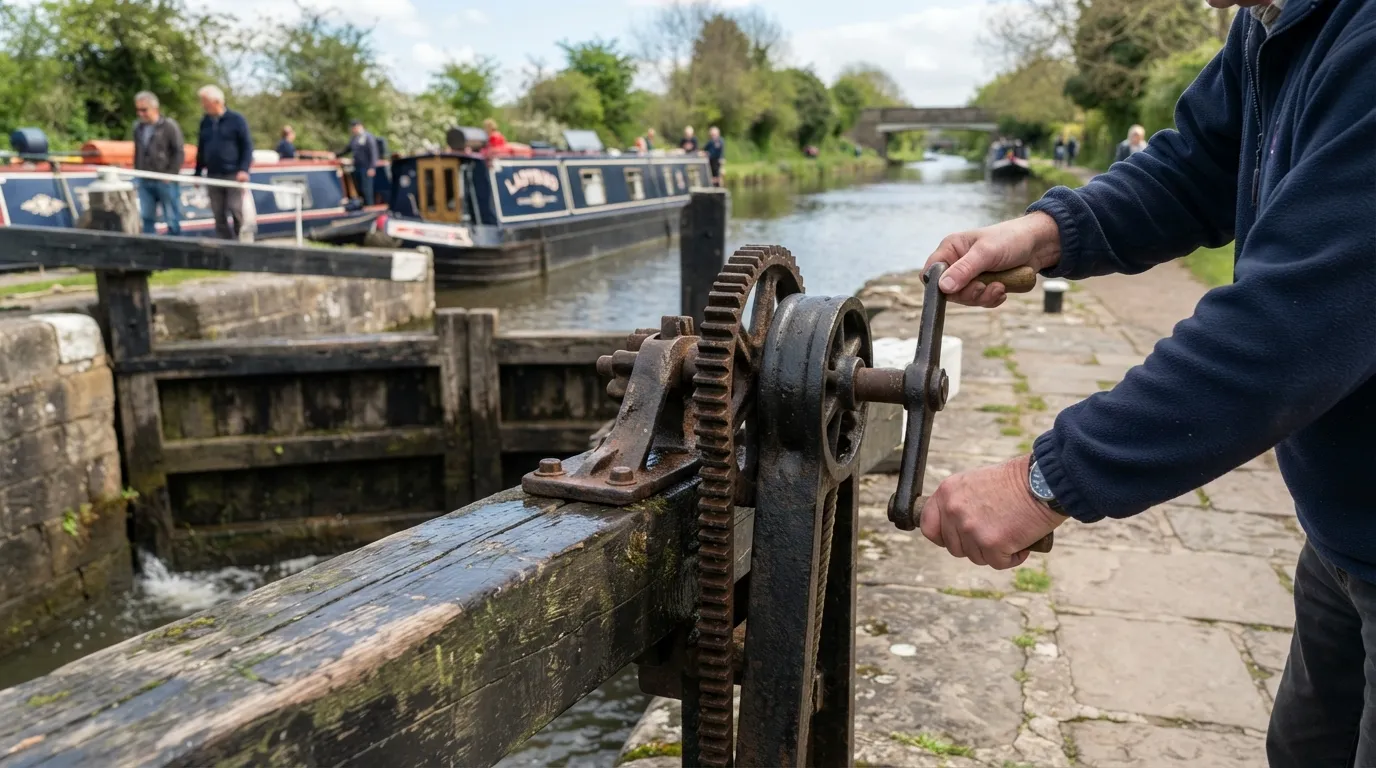
At handover, staff show you how the windlass fits the paddle spindles. It must sit snugly, because a loose fit can slip off under load.
Make sure the safety catch engages as you wind paddles up, and never leave the windlass on a spindle when you walk away. Keep fingers, hair and clothing clear, because a spinning handle can cause serious injury.
Ropes are next, and they cause more trouble than most people expect.
#15 – Inside the Chamber, Your Ropes Are Never Finished Working
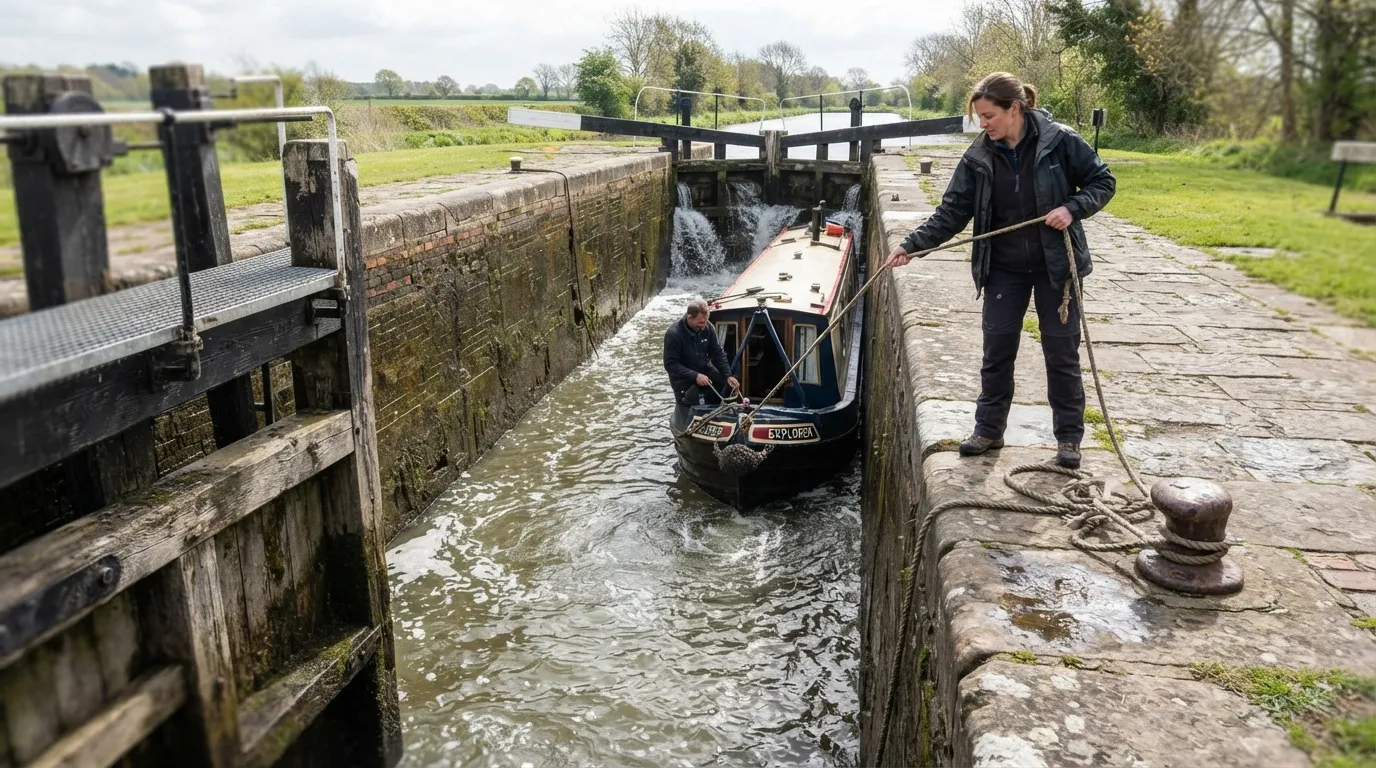
Control the boat with bow and stern lines looped around bollards rather than tied off. As the water rises or falls, keep adjusting the tension.
The aim is to stop the boat surging forward into the cill or catching on the gates. Practice varies between waterways, so follow your operator’s instructions on engine use and the centre line.
Then there’s the water itself, which the whole system exists to protect.
#14 – Every Lock Is a Tank of Water Someone Else Needs
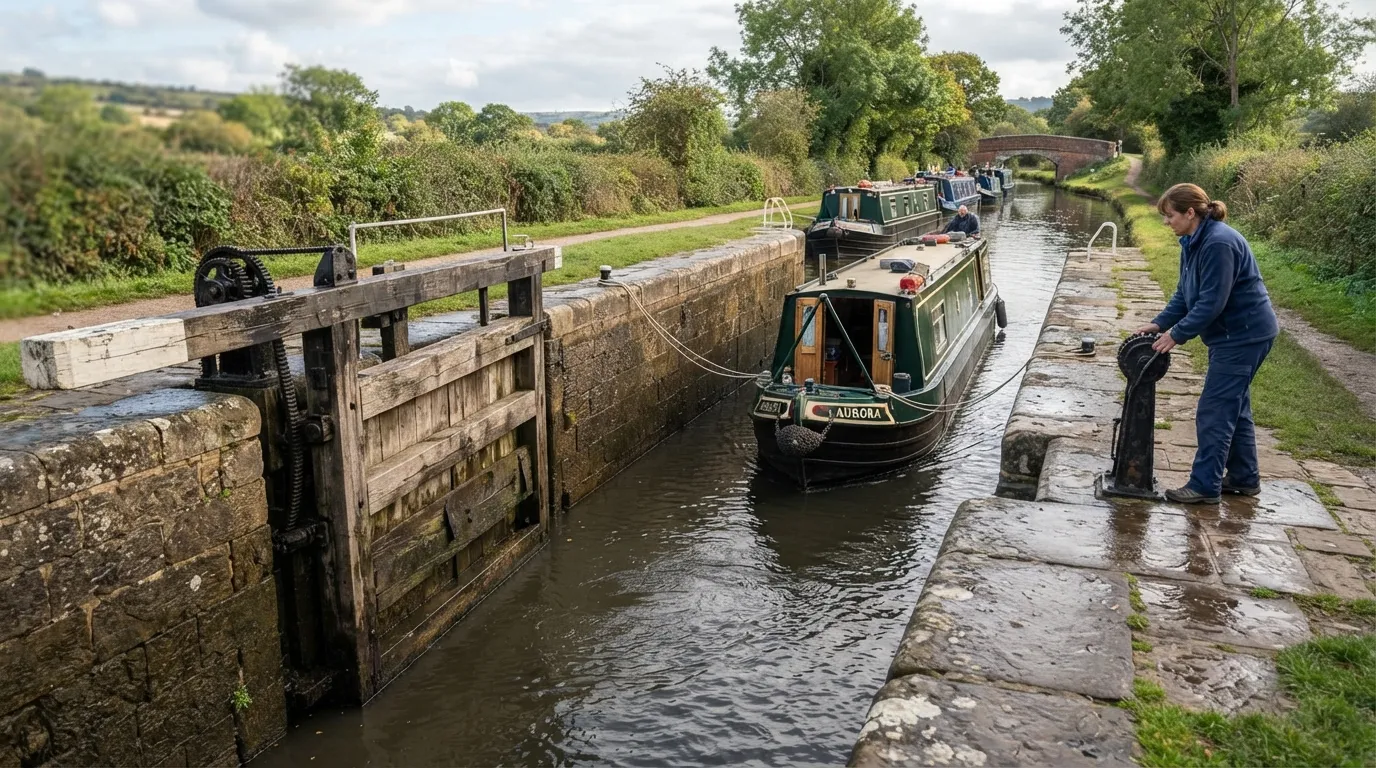
Leave locks as you found them unless another boat is approaching, and close every paddle fully after use. Sharing a lock saves water and shortens queues on busy flights.
A paddle left open can drain a pound and strand the boats behind you. Local notices can change the usual routine, so read them.
Next, the water under your hull may be thinner than you’d guess.
#13 – The Deep Part of the Canal Is Narrower Than It Looks
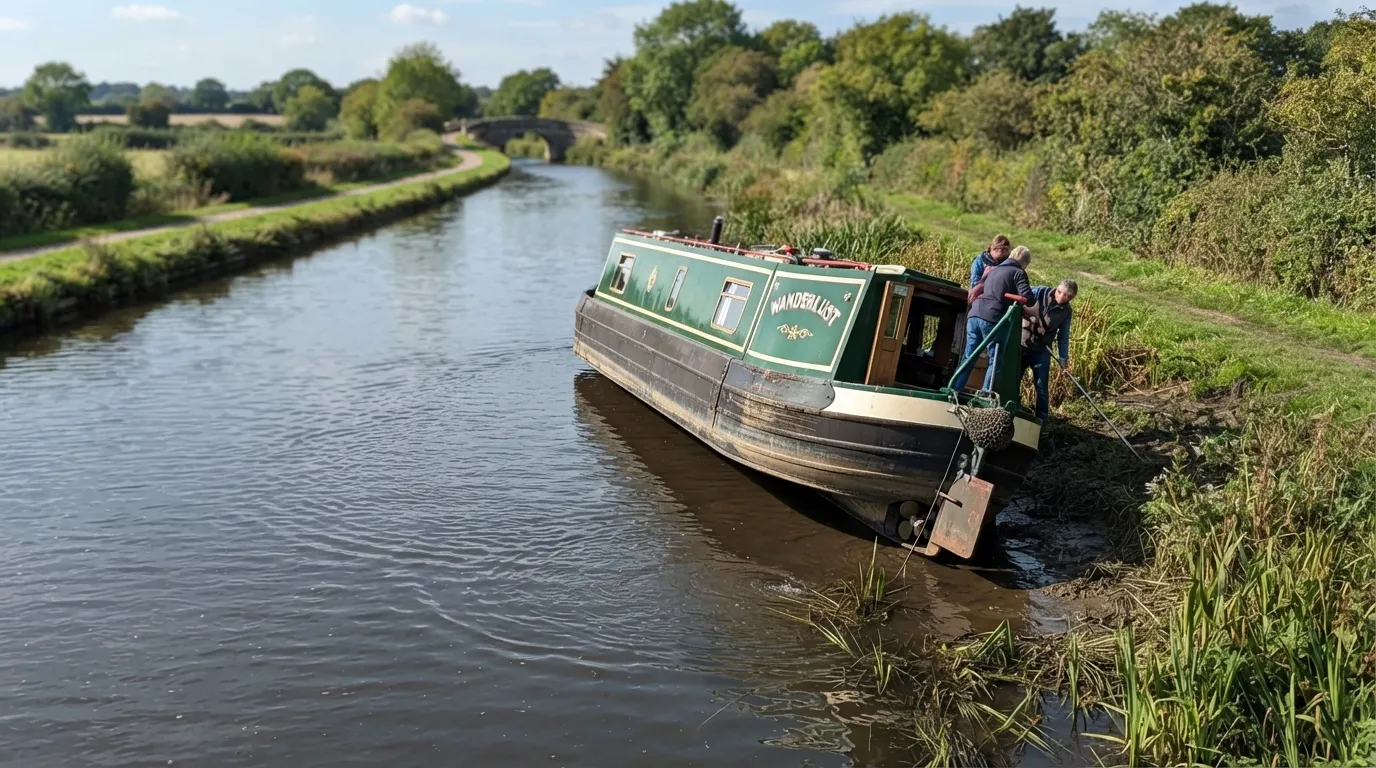
Canals are often deepest down the middle, so drifting toward the edges can ground you. Dry spells make it worse, because depths vary from day to day.
Check navigation notices for depth warnings before you set off. If you do touch bottom, stay calm and follow your handover advice rather than revving the engine.
Running aground is embarrassing, but running dry is worse.
#12 – Your Fuel and Water Won’t Last as Long as You Hope
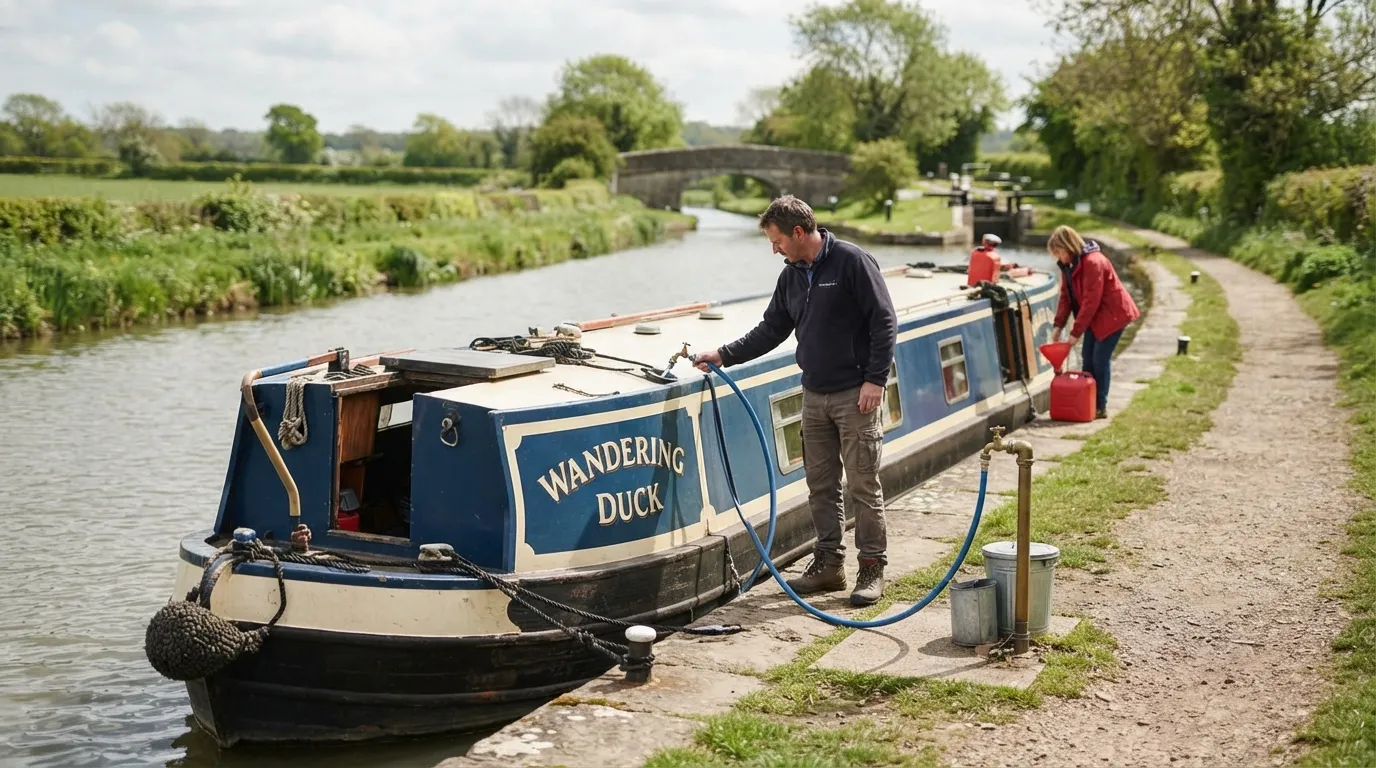
Hire boats carry limited fuel and fresh water, and service points can be spaced far apart. Mark their locations on your map during handover.
At a Glance
- Fuel and fresh water are both limited on a hire boat.
- Service points can be far apart, so mark them early.
- Don’t linger at a water point while others wait.
- Running low forces an unplanned stop or a long detour.
And what leaves the boat needs just as much planning as what goes in.
#11 – Nobody Mentions the Pump-Out Until You Need One
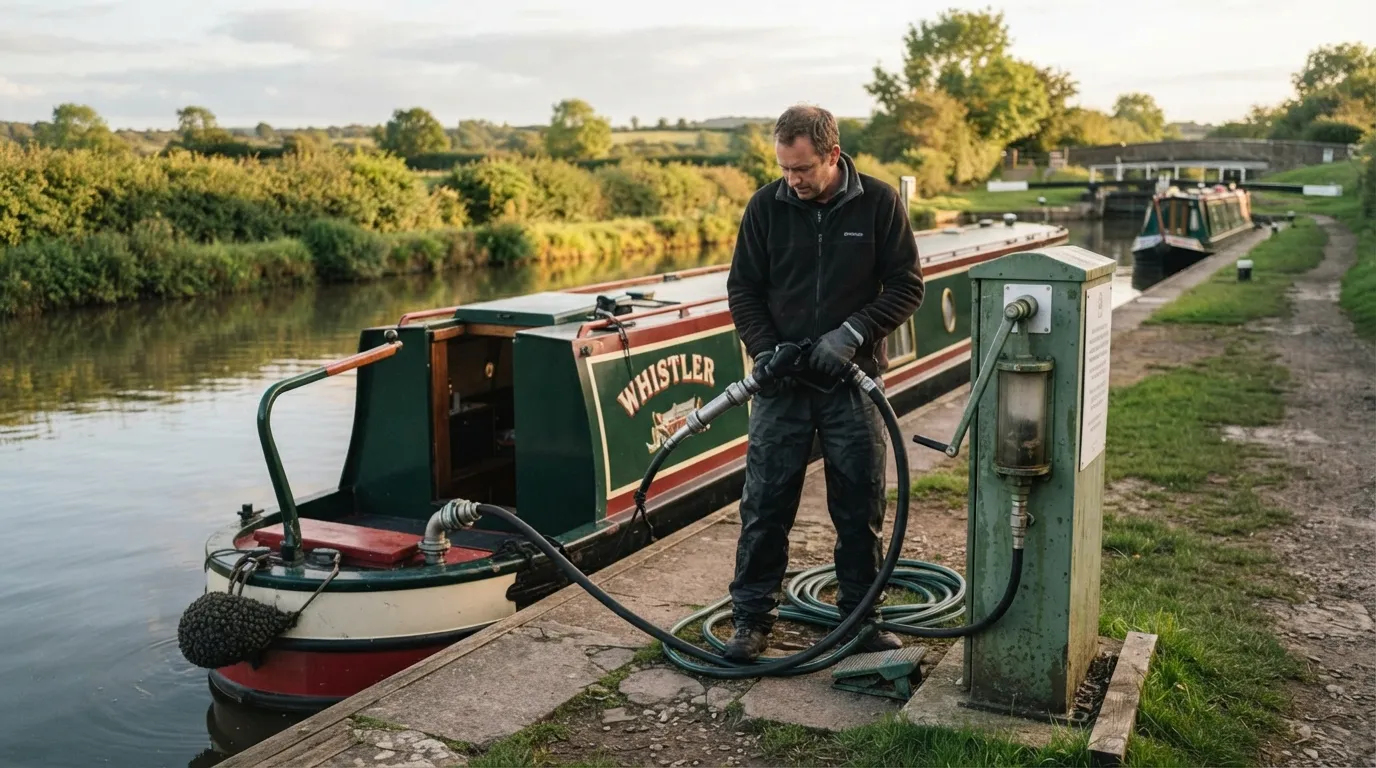
Waste tanks must be emptied at designated pump-out stations, and how often depends on your crew size. These facilities aren’t everywhere, so plan them alongside fuel and water stops.
Never empty tanks into the canal. Ask your hire company which stations suit your boat’s system.
Good planning also decides how your day ends, as daylight starts to fade.
#10 – Plan to Be Tied Up Before Dark
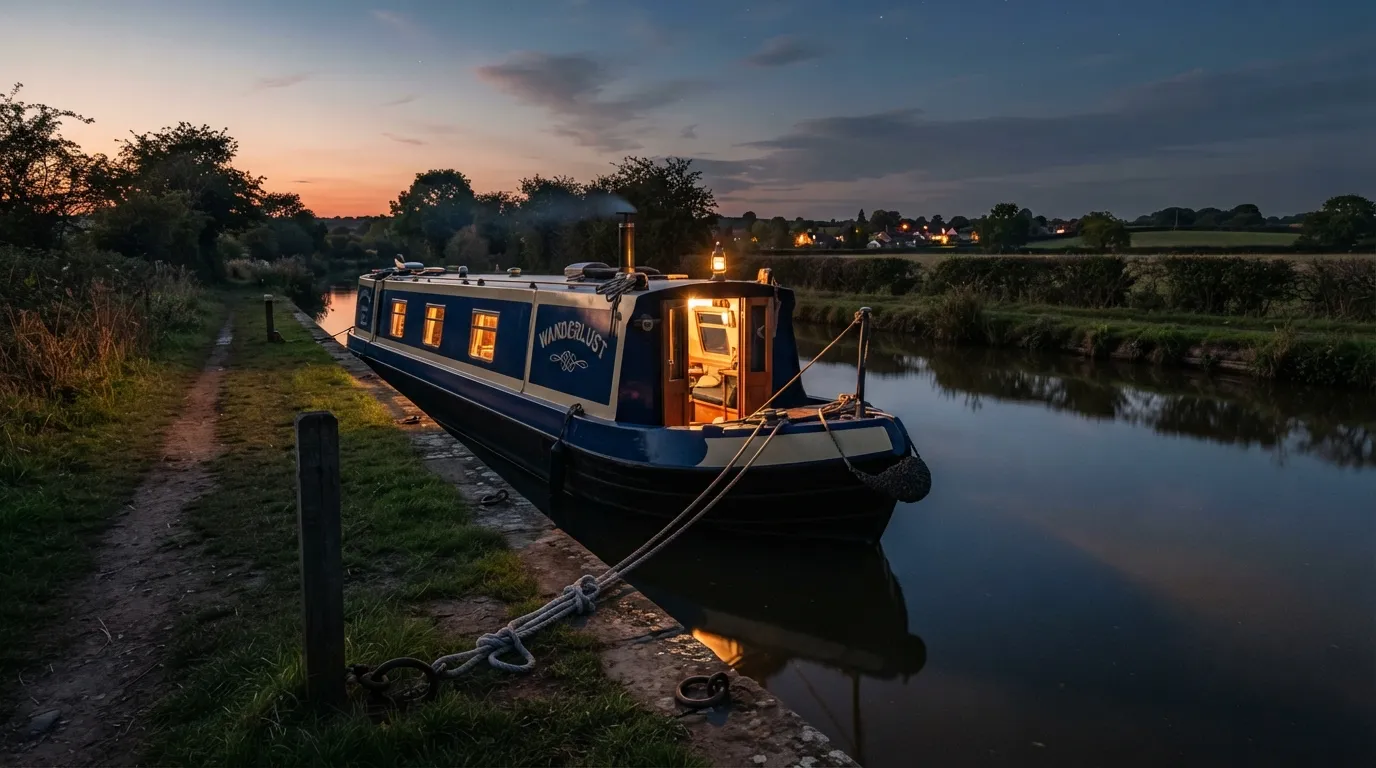
Most hire companies expect you to finish cruising before dusk, so build your day’s distance with plenty of margin. Check your hire terms, because conditions and insurance may rule out night cruising.
Tunnels and aqueducts need extra care even in daylight. Keep your headlight on and everyone inside the boat’s outline.
Once you’ve stopped, though, the rules aren’t finished with you.
#9 – Evening Quiet Hours Apply, Even in a Beautiful Spot
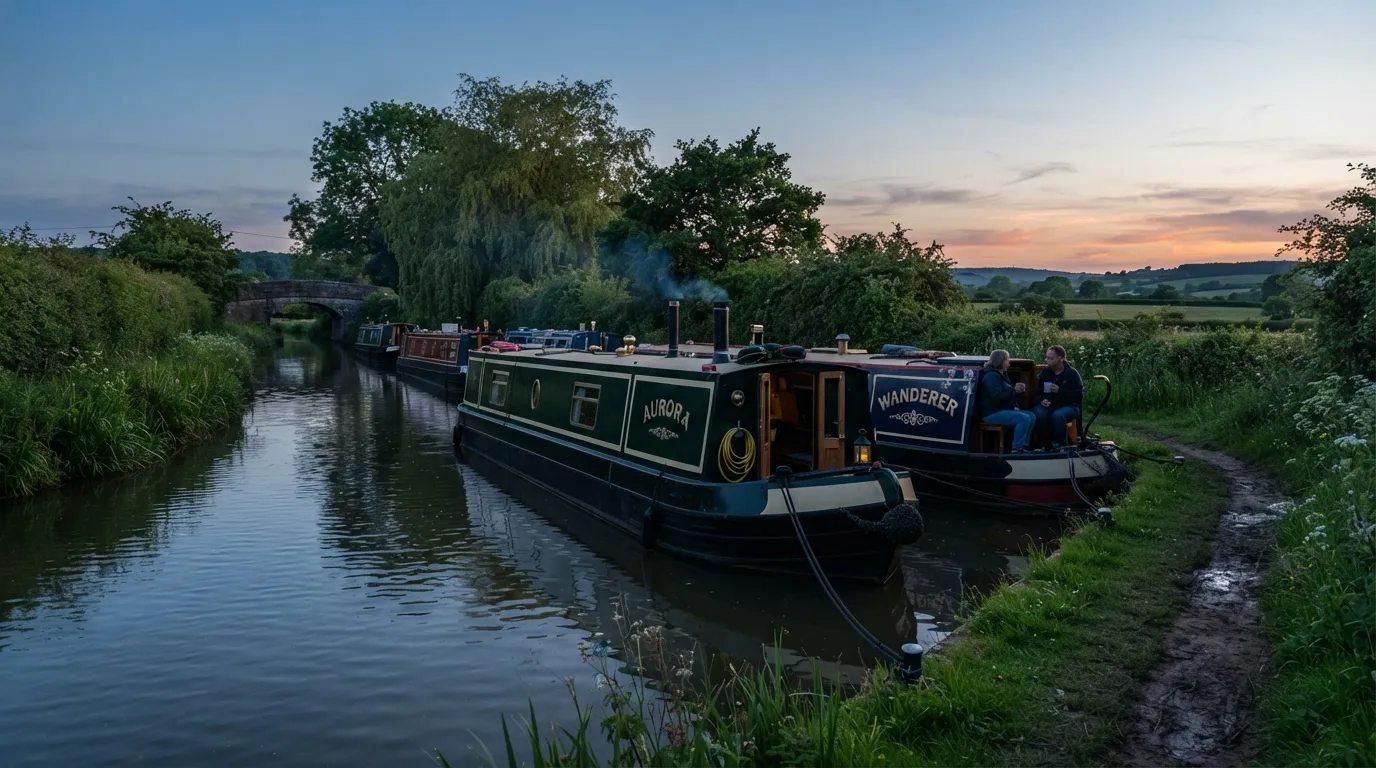
Canal & River Trust guidance asks boaters not to run engines or generators between 8 pm and 8 am while moored. It protects neighbours, especially in built-up areas.
Check local signs, because some moorings carry extra restrictions. Keep an eye on stove and exhaust fumes too, especially close to other boats.
Rivers, meanwhile, play by a different set of rules.
#8 – Rivers Don’t Follow Canal Habits
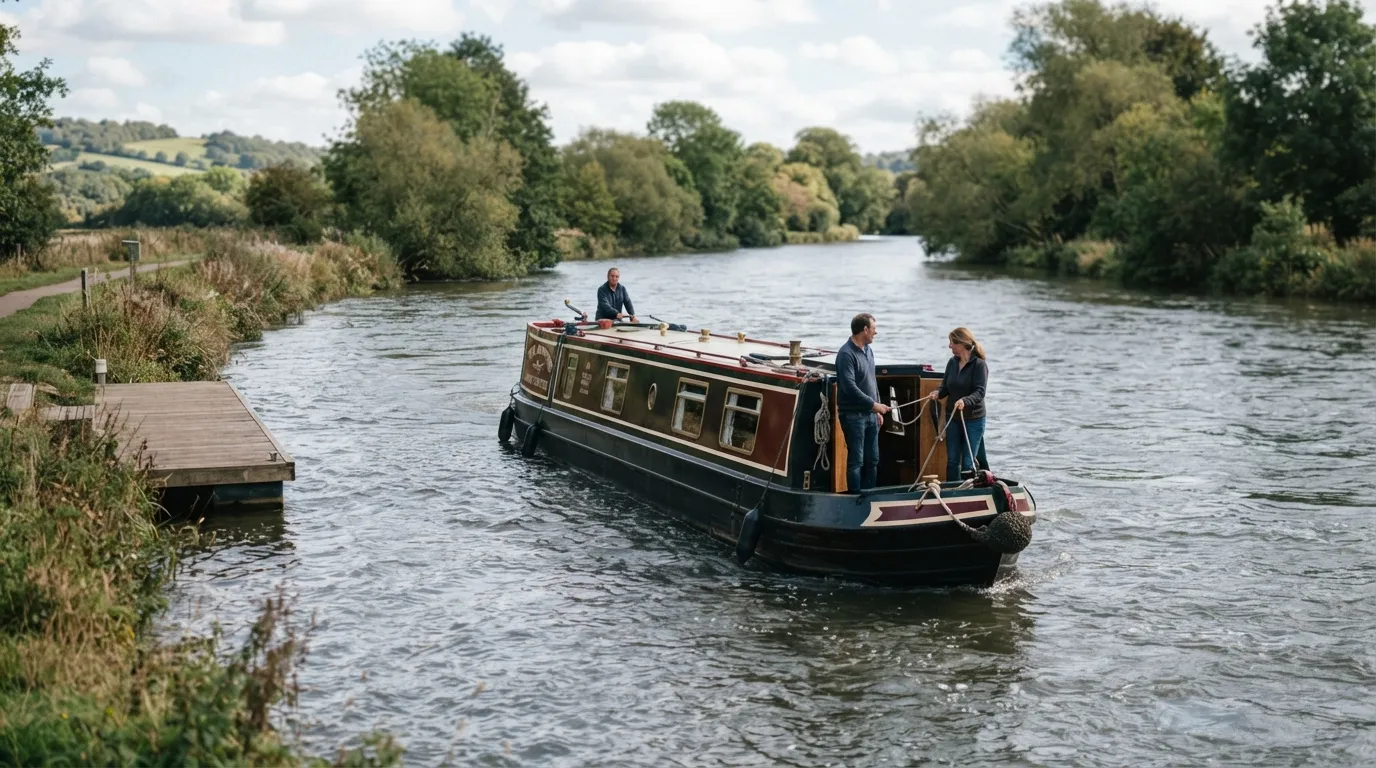
On rivers the current matters, so moor with the bow facing into the flow for better control. That often means passing your chosen spot and turning round.
Quick Compare
- Canal: little flow, so you can usually moor in either direction.
- River: current rules, so bow into the flow.
- Overnight on a river: avoid bank moorings where levels can rise or fall.
- Tidal stretches: follow your operator’s guidance.
Canal rules don’t carry over automatically. Back at the lock, small technique details matter more than anything.
#7 – One Windlass Mistake Can Close the Lock
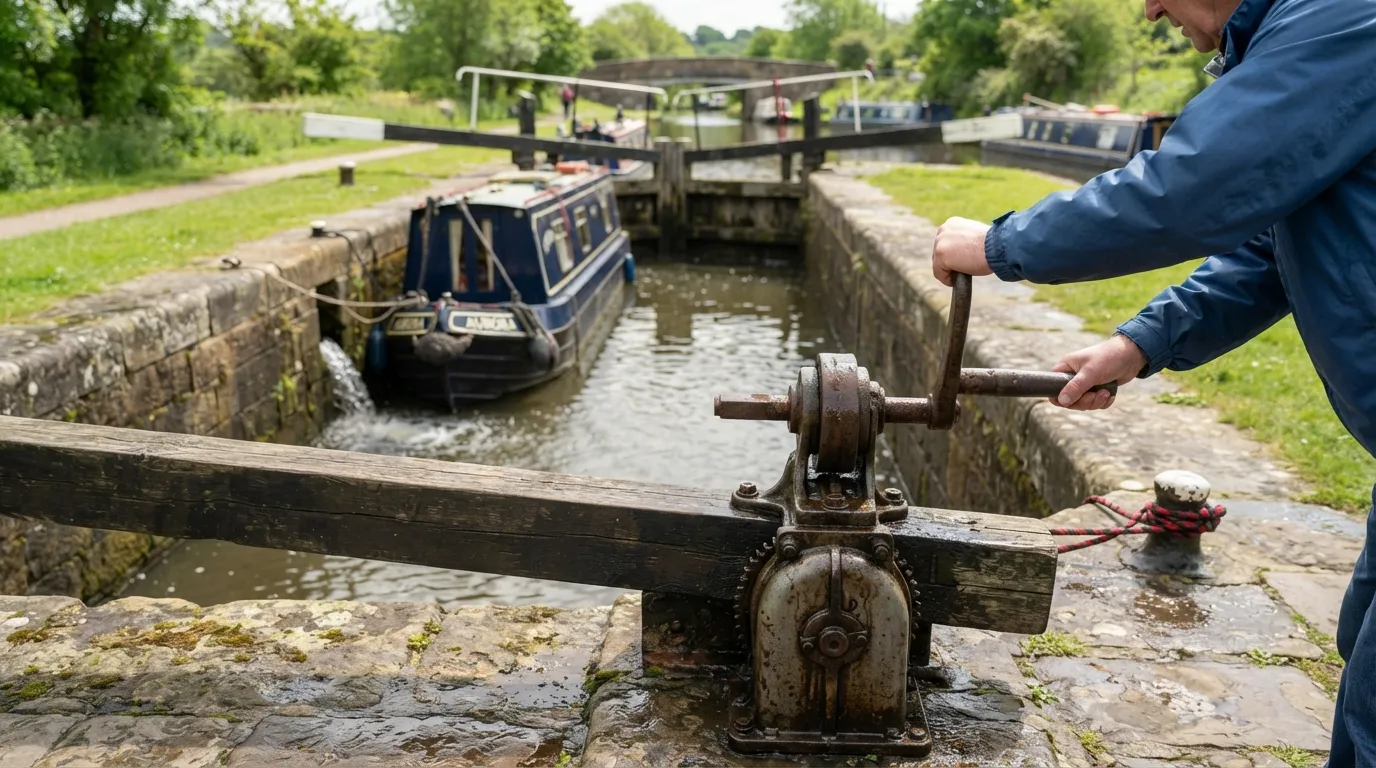
Wind paddles up slowly and keep the windlass snug on the spindle. Never let the handle spin back or let a paddle drop, because it can damage the gear and put the lock out of use.
When filling, raise paddles gradually and start small. That avoids churning the water and shoving the boat against the gate.
Your fenders have a say in all this too.
#6 – Your Boat Needs Room, Not Just Fenders
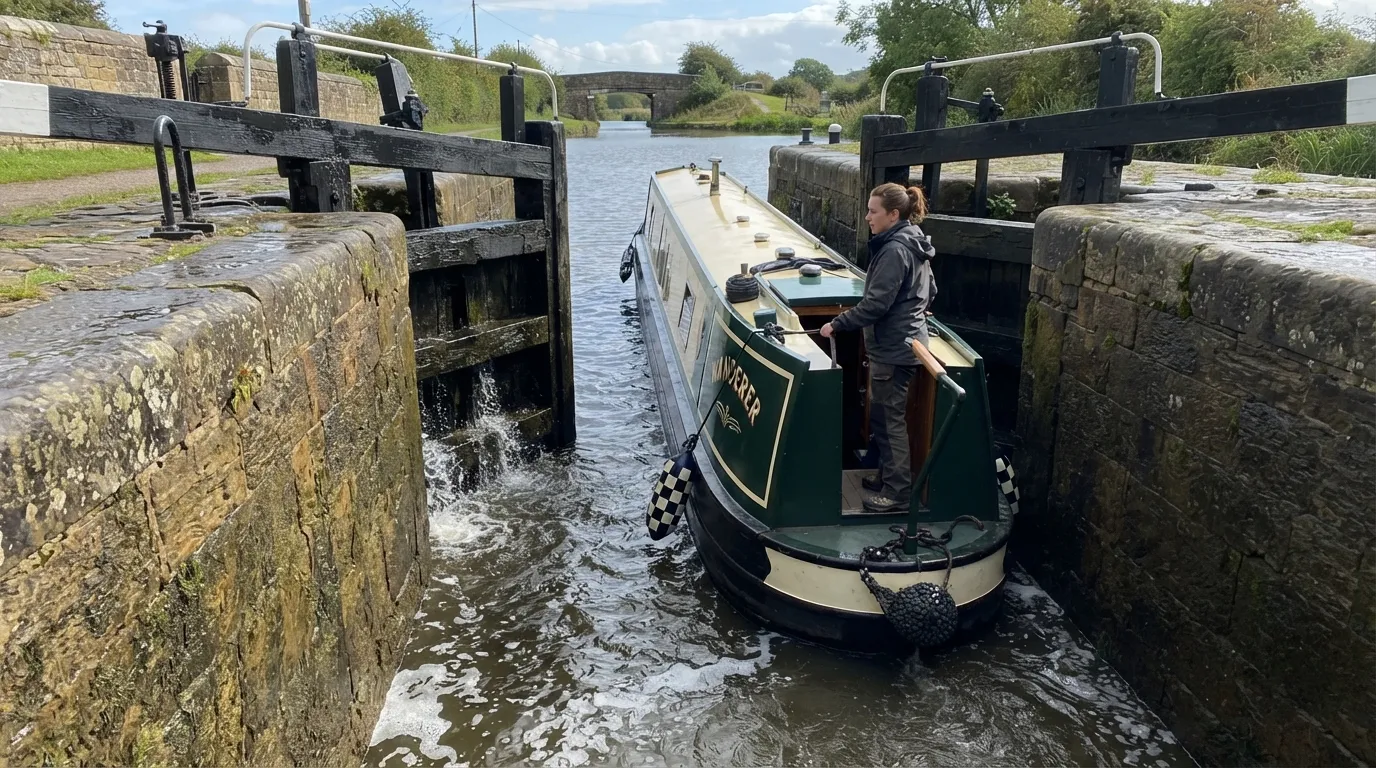
In narrow locks, lift side fenders on Canal & River Trust waterways so they can’t snag on the walls. When descending, keep the boat well clear of the top cill.
Never push off the lock wall with your feet or legs. A capable crew member must stay on board throughout.
Then there’s the traffic that outranks you.
#5 – Some Boats Always Outrank Yours
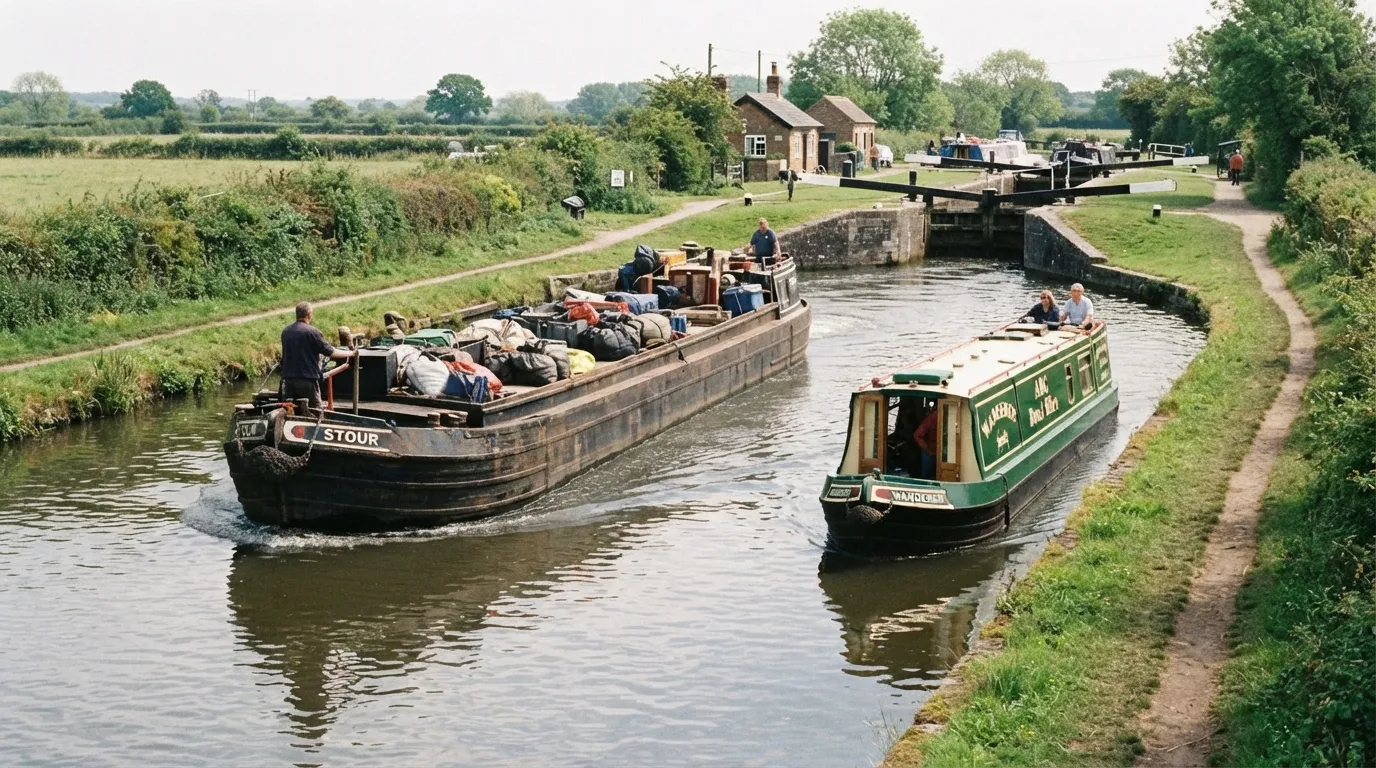
Commercial boats have right of way on many waterways. Don’t try to overtake them, especially when approaching locks.
Give way early and follow any signals from their crew. A working boat can’t dodge as easily as a hire boat, so holiday boats are expected to yield.
The next surprise can end your route before you’ve even started it.
#4 – A Closure Notice Can Rewrite Your Whole Route
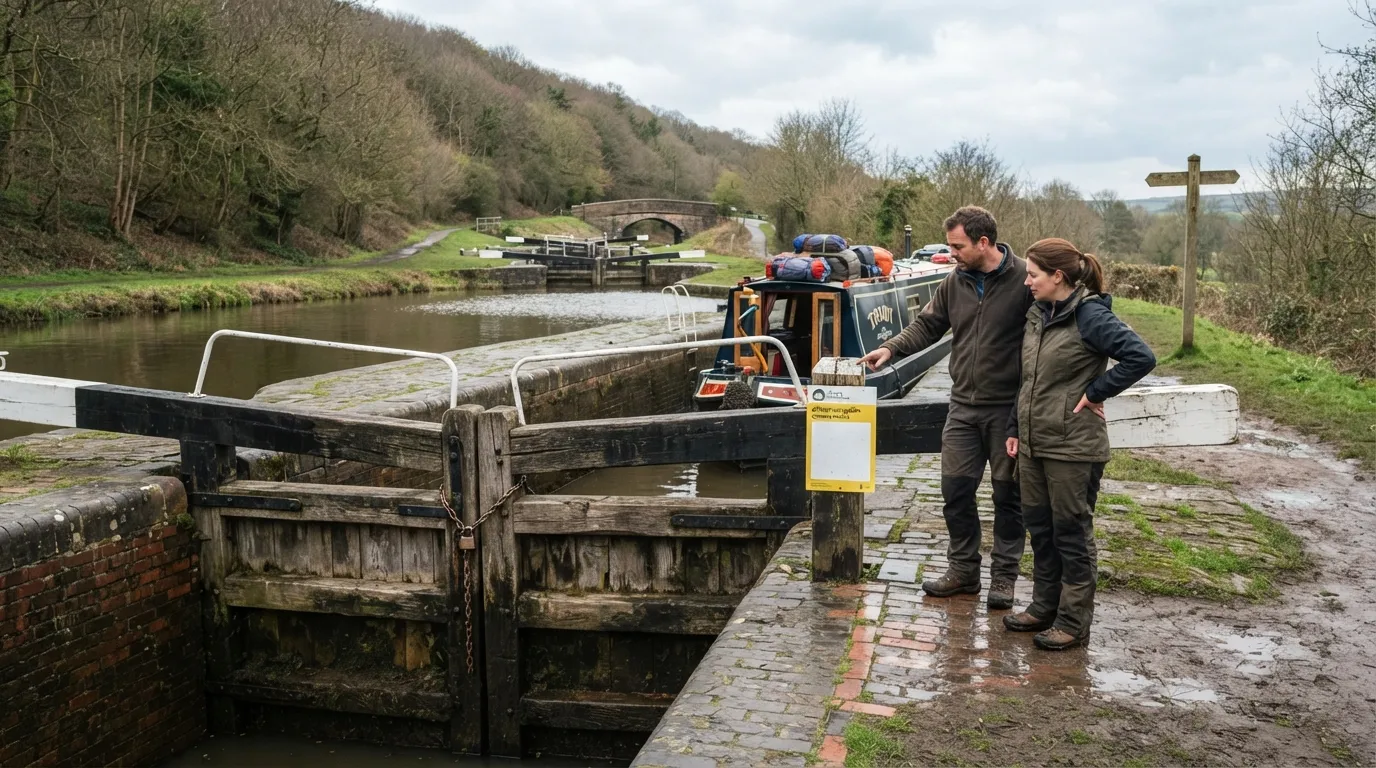
Navigation notices list closures, reduced lock hours and low-water restrictions, and they change often. Review the full route, not just the next stretch, because problems upstream can affect levels downstream.
Fast Facts
- Notices cover closures, reduced lock hours and low-water limits.
- They change often, so check again each day.
- Read the whole route, not just the next stretch.
- Drought measures can suspend passage on whole sections.
Always confirm before committing to a flight. Even with a clear route, the crew has to move as a team.
#3 – Stepping Off the Boat Is Not the Same as Jumping
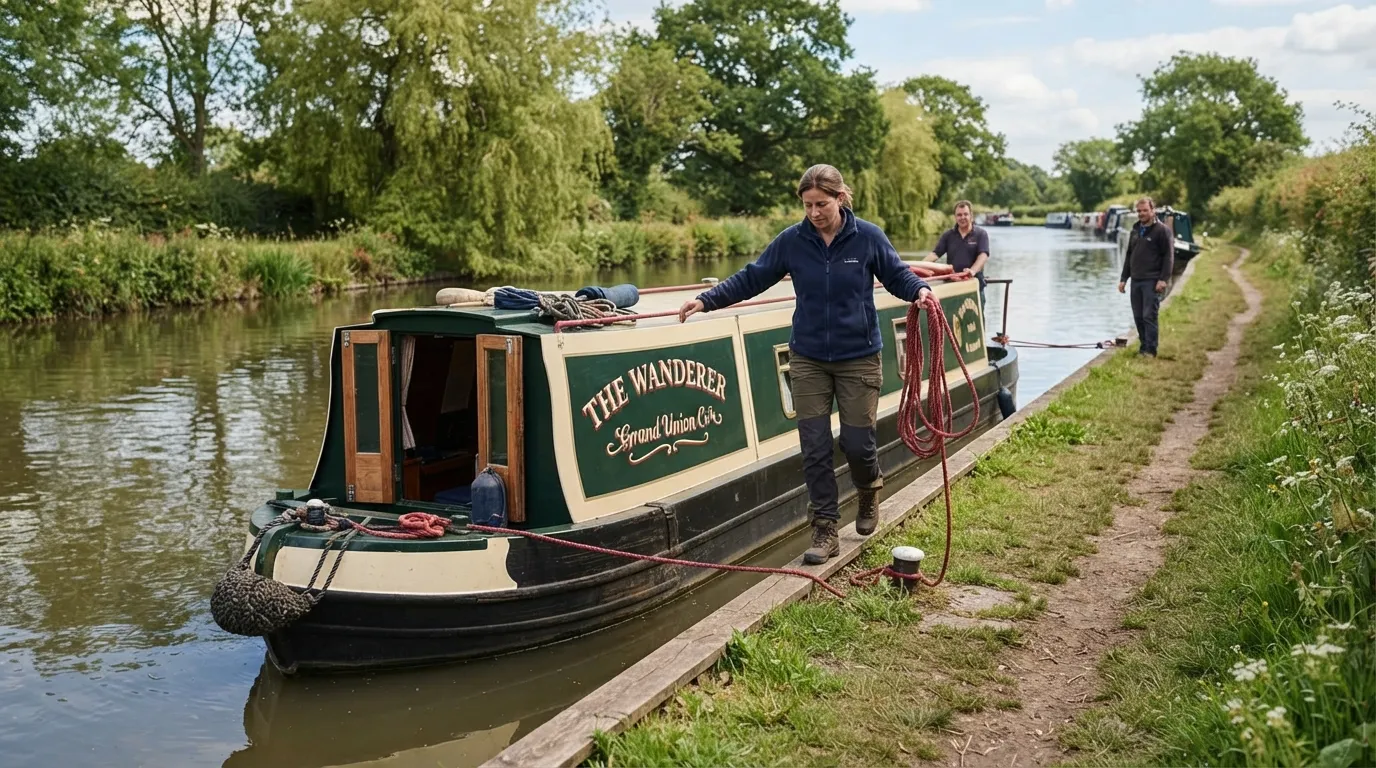
When going ashore, step off rather than jump, and carry ropes with some slack. Coil them ready to use and never let them trail near the propeller.
Give each crew member a job before the manoeuvre begins. The skipper can’t steer from the bank, so the whole team has to work together.
And then the wind gets a vote.
#2 – Wind Can Hijack Your Steering
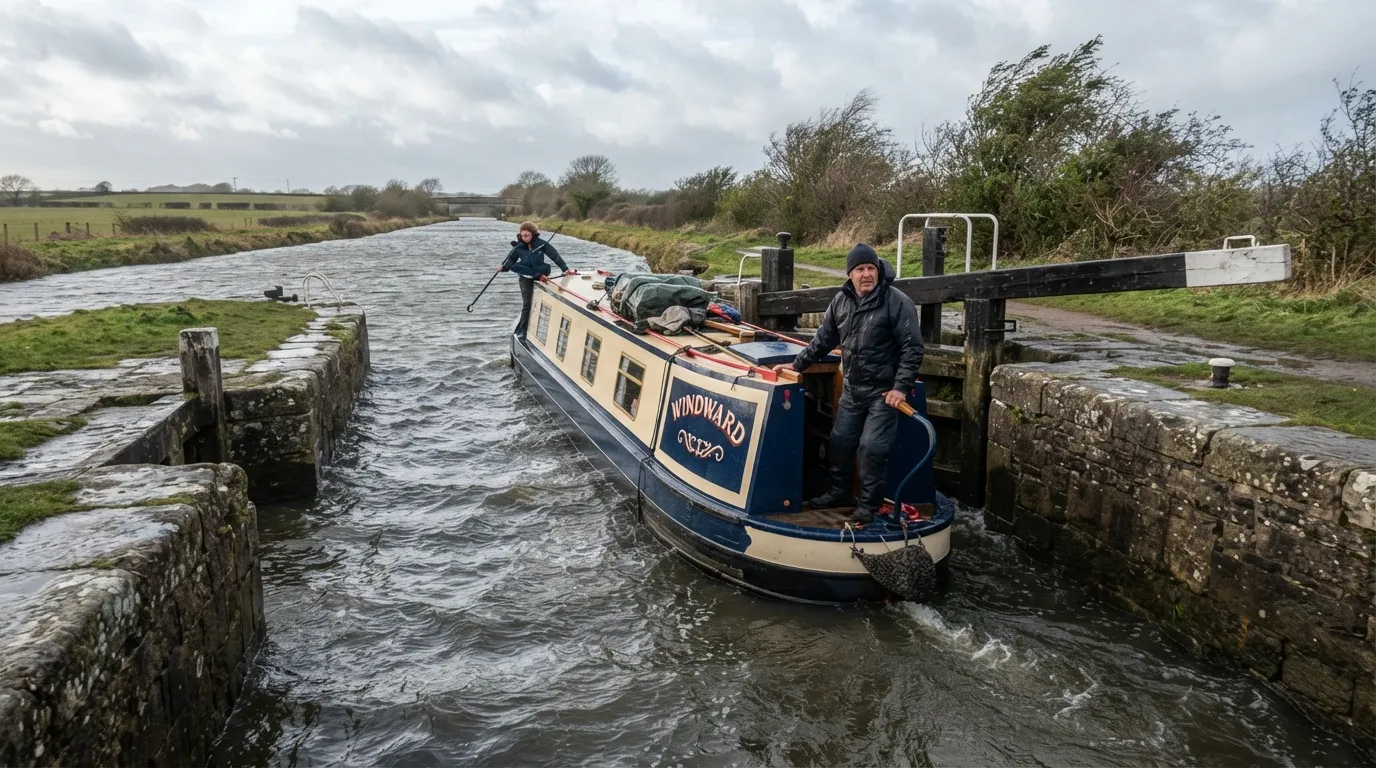
Strong wind makes steering harder, especially when reversing or turning. A canal boat catches more breeze than it looks like it should.
Check the forecast and allow extra time around exposed sections, because conditions can change quickly. Slow, prepared moves beat last-second corrections.
All of it now comes together at one set of gates.
#1 – The First Lock Tests Everything at Once
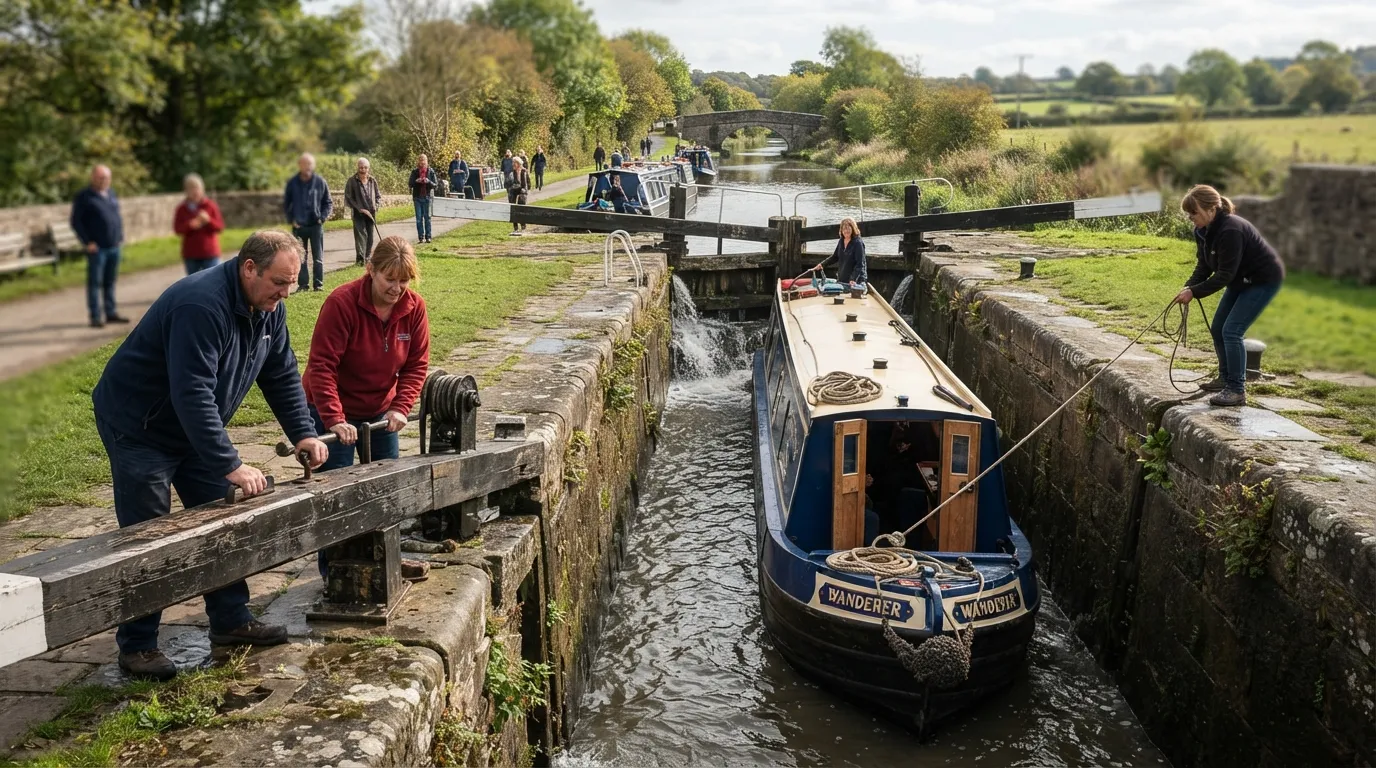
The first lock demands speed control, rope handling, paddle operation and crew coordination under real pressure. Windlass fit, cill clearance and water-saving etiquette stop being theory.
That’s why operators build handovers around this moment. The rules only click once the gates close behind you.
Four miles an hour, mooring exclusions, windlass safety, rope control, water conservation and quiet hours all arrive together at that first chamber. Canal & River Trust guidance comes down to slow, prepared manoeuvres and checking notices daily.
Get through that first lock calmly and the rest of the holiday finally becomes the floating picnic you pictured.
CEO-Co-Founder