
- 20 Classic Movies That Still Hold Up Decades Later - October 21, 2026
- 18 Iconic TV Shows That Defined a Generation - October 21, 2026
- 22 Tiny Towns That Look Straight Out of a Fairytale - October 21, 2026
Picture the world’s most unreal islands and you probably see palm trees and a turquoise postcard. This list has those, but it also has islands where jagged peaks rise out of Arctic water, waterfalls drop straight into the ocean, and beaches blush pink.
Some of these places look edited even when you’re standing in front of them. The countdown starts with an island of red fishing cabins and works toward one so strange it barely feels like Earth. Keep going, because the last stop has trees that look like they were drawn by someone who’d never seen a tree.
#19 – Lofoten Islands, Norway
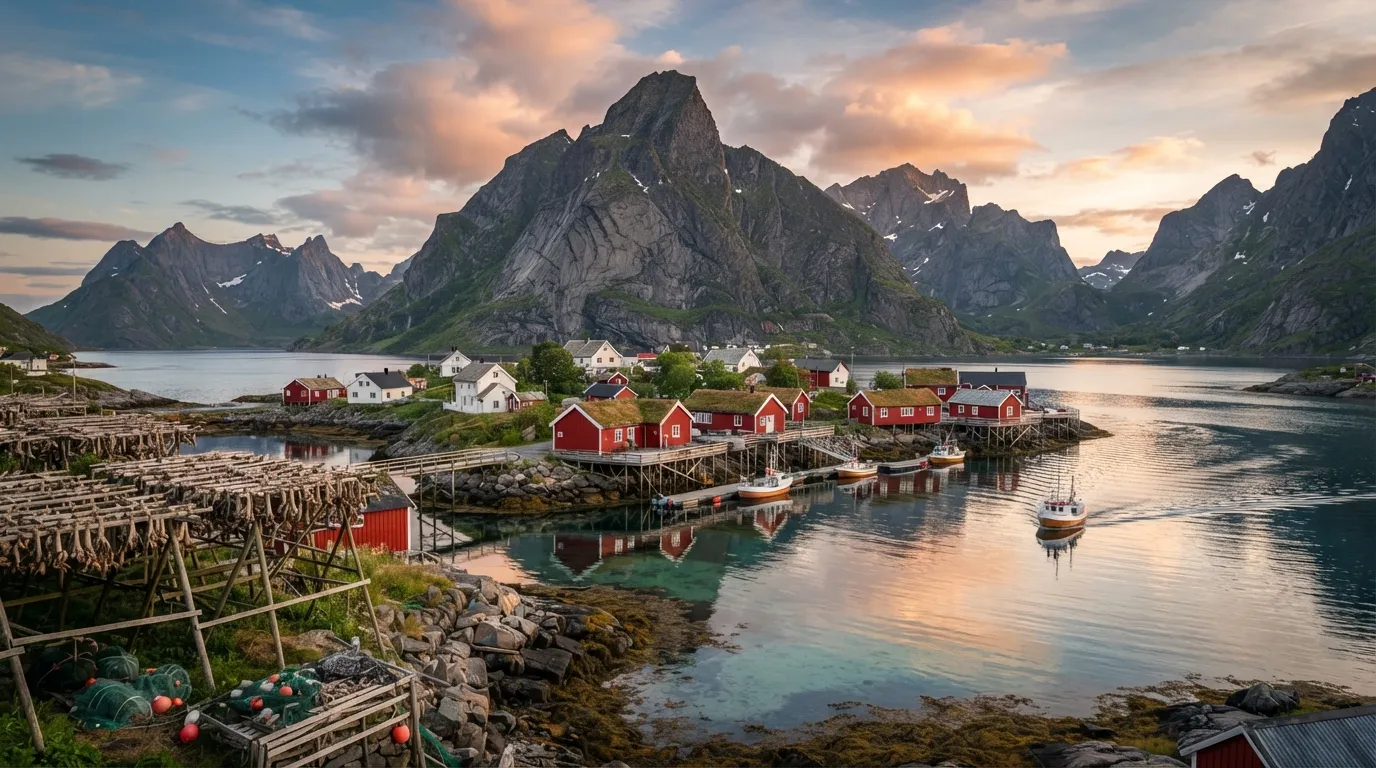
Lofoten looks like a fantasy map somebody forgot to tone down. Sharp granite peaks shoot straight out of the Nordic sea, and little red fishing cabins sit along the shoreline as if they were placed there for a painting.
The islands lie well above the Arctic Circle, yet the Gulf Stream keeps the climate milder than you’d expect at that latitude. In winter the Northern Lights ripple overhead. In summer the midnight sun keeps the sky glowing long past any normal bedtime.
Look closely at villages like Reine and Hamnøy and you’ll spot wooden racks where cod has been dried for generations. Working fishing life carries on right beneath those impossible mountains.
It’s a stunning start, but the next archipelago has houses with grass growing on their roofs.
#18 – Faroe Islands
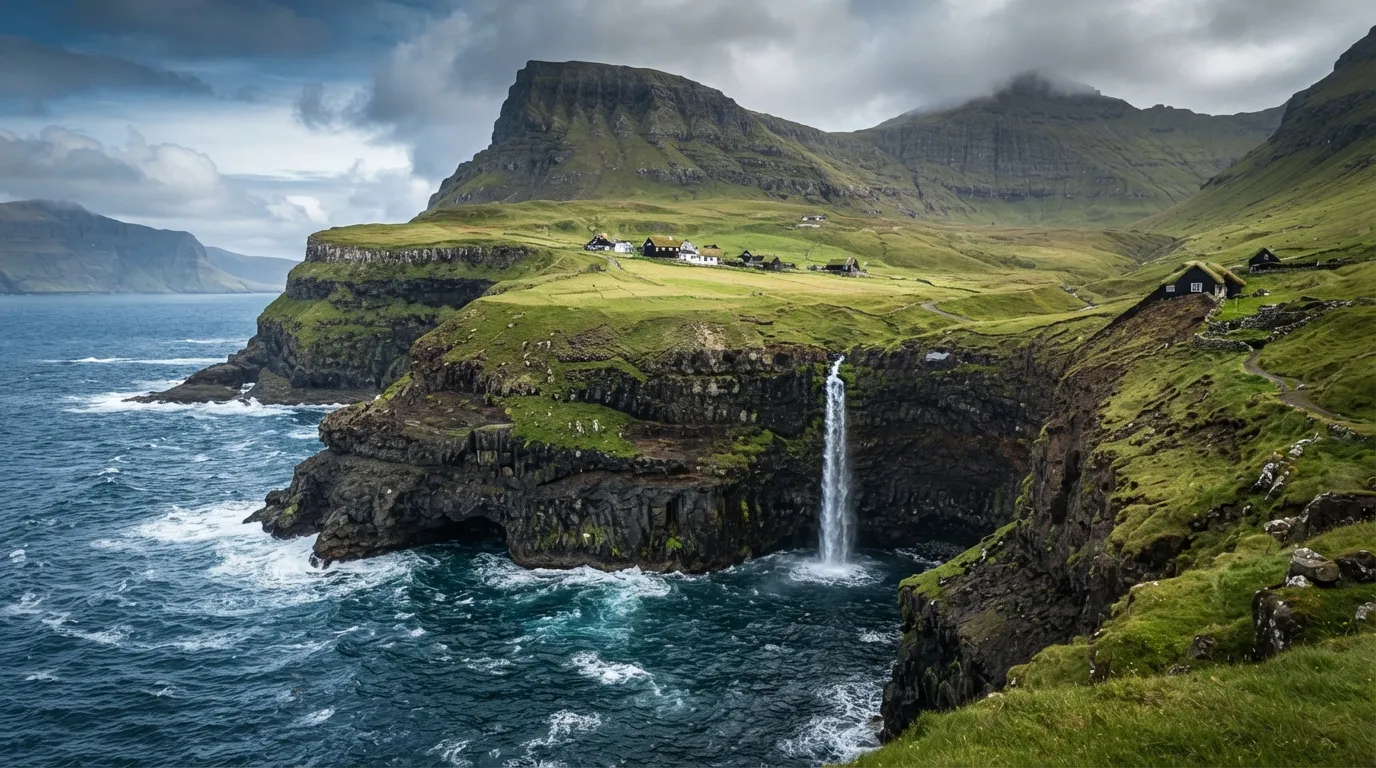
The Faroe Islands look like Middle-earth with better weather forecasts. This North Atlantic archipelago of 18 main islands sits between Norway and Iceland, and its green slopes tumble into the sea in sheer cliffs.
Many traditional houses wear turf roofs, bright little squares of grass against enormous hills. At Gásadalur, the Múlafossur waterfall drops from the clifftop straight into the ocean.
Puffins nest on the cliffs in breeding season, with Mykines a favorite spot to see them. Fog can roll in without warning and erase the peaks, then pull away and reveal them again.
Next up is an island where the mist has a legend attached to it.
#17 – Isle of Skye, Scotland
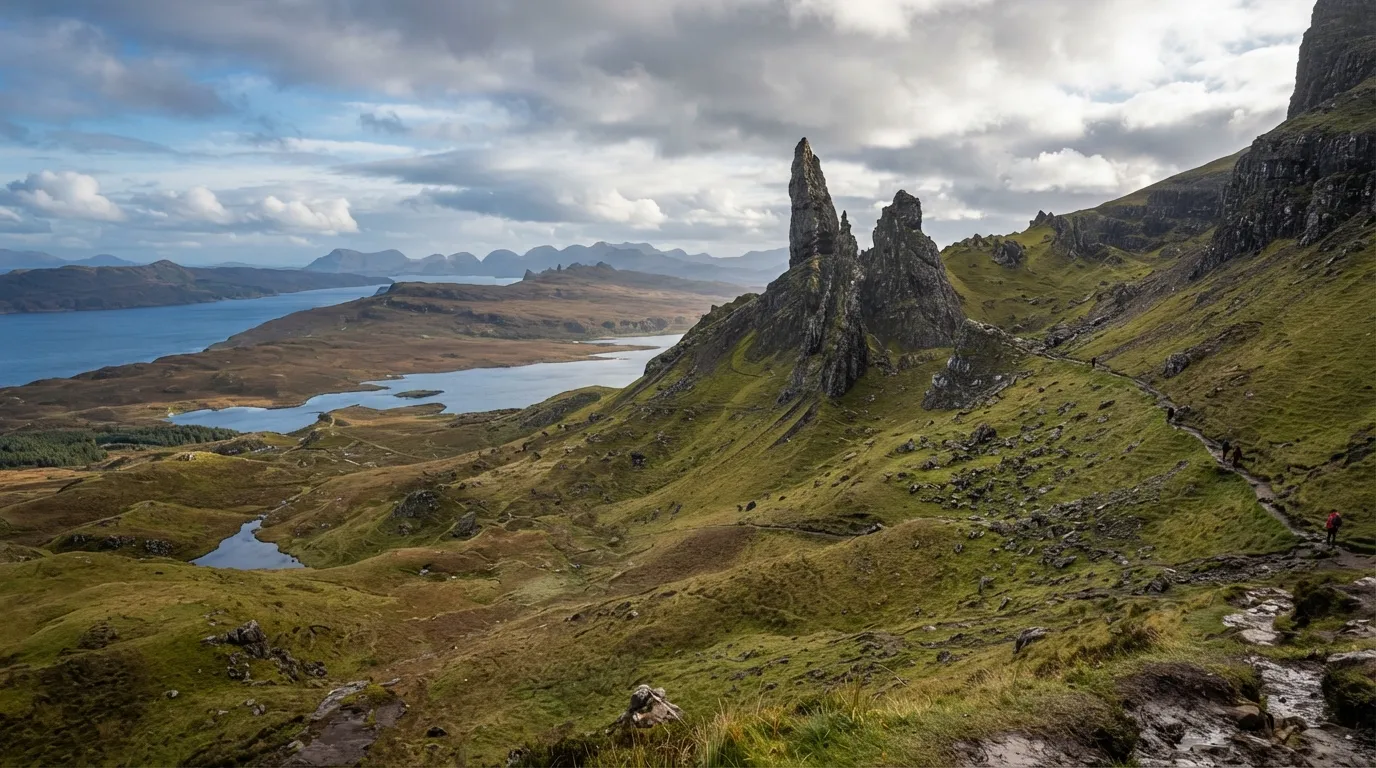
Skye is where Scotland seems to turn up the drama as far as it will go. The black, jagged Cuillin mountains loom over moorland, and clouds slide across them so fast the view changes every few minutes.
The Fairy Pools are a string of waterfalls and clear pools whose water shifts from deep green to a startling blue. Over at the Quiraing, a landslip ridge creates a landscape of pinnacles and hidden plateaus that feels like another geological era.
The Old Man of Storr, a tall rock pinnacle above the coast, looks like something left behind by giants. Dunvegan Castle, home of Clan MacLeod, adds centuries of human story to all that raw rock.
The next island is volcanic, and some of its women have spent their lives diving into the sea on a single breath.
#16 – Jeju Island, South Korea
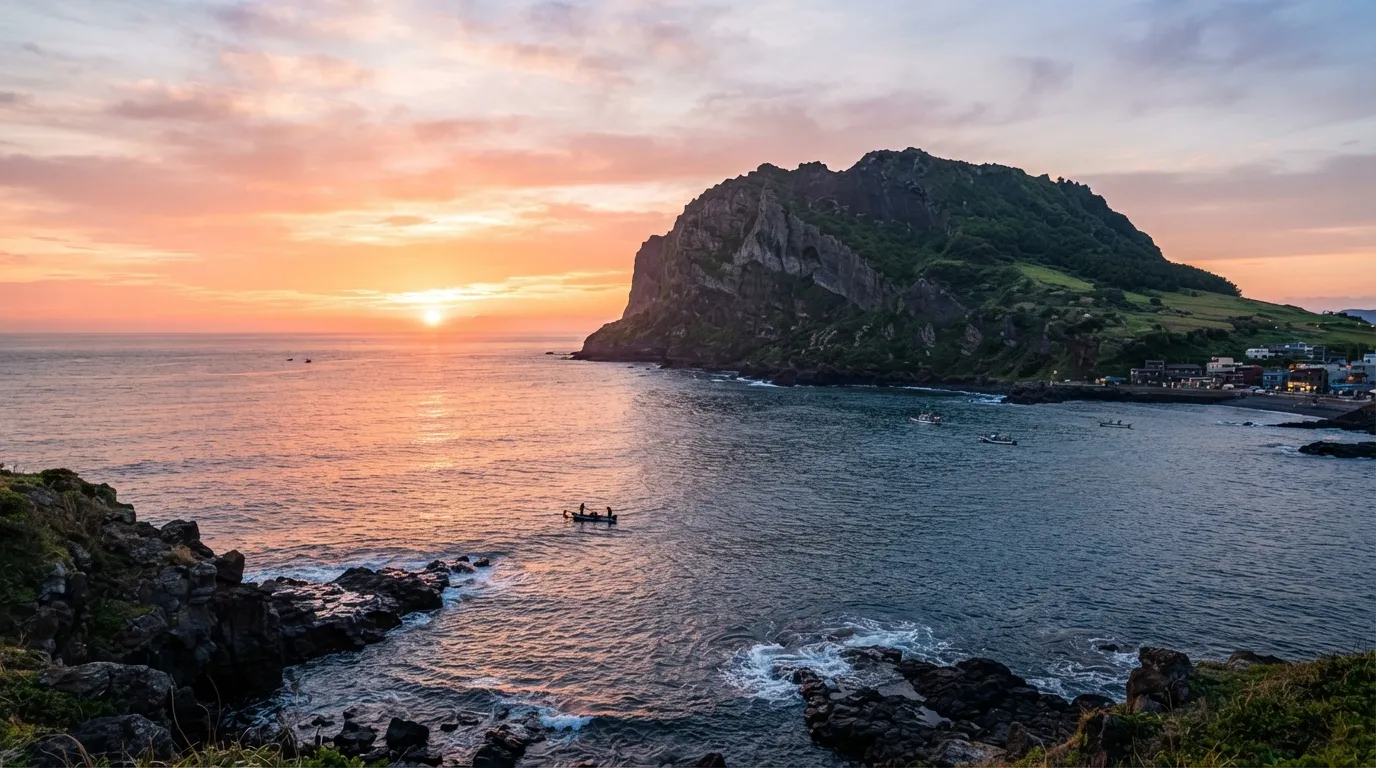
Jeju is a volcano that turned itself into a vacation island. At its center rises Hallasan, South Korea’s tallest peak at roughly 1,950 meters, with craters, lava tubes, and waterfalls all around it.
The island holds several UNESCO designations, including World Heritage status for its volcanic landscapes. Manjanggul, one of its lava tubes, is a vast underground tunnel carved by flowing lava.
Then there are the haenyeo, the island’s women free-divers, who have harvested seafood without breathing tanks for generations. Their tradition has been recognized by UNESCO as cultural heritage.
At Seongsan Ilchulbong, a crater rising straight from the sea, sunrise can feel like the island’s grand finale. The next stop is an island where the animals have never learned to run from you.
#15 – Galápagos Islands, Ecuador
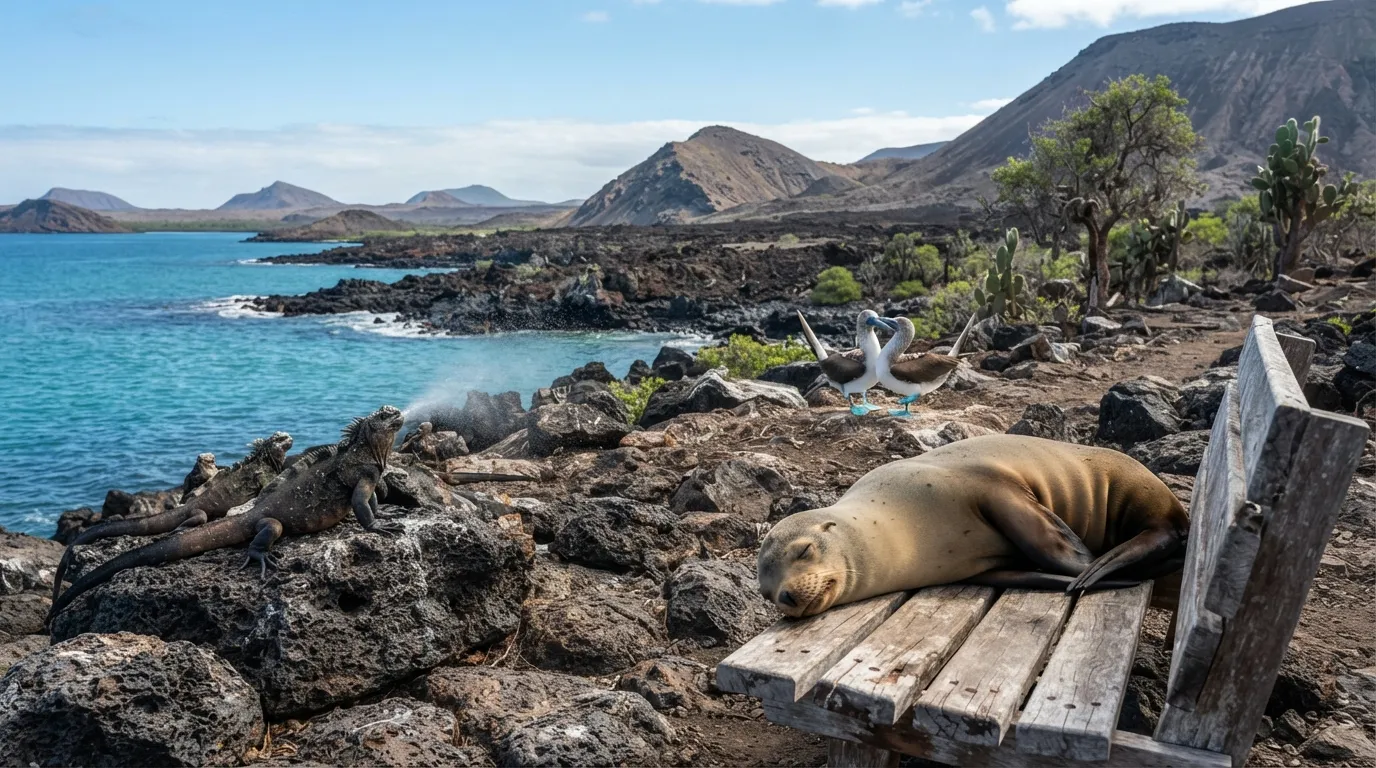
In the Galápagos, the wildlife looks at you as if you’re the one who’s out of place. Sea lions nap on park benches, and marine iguanas sneeze salt from their noses.
The islands sit about 600 miles off Ecuador, formed by volcanoes and shaped by isolation. Charles Darwin visited in 1835, and the unusual wildlife he saw helped feed the ideas behind his theory of evolution.
Fast Facts
- Location: about 600 miles off Ecuador’s coast
- Darwin’s visit: 1835
- Galápagos National Park was established in 1959
- UNESCO listed the islands in 1978, among the very first World Heritage Sites
Giant tortoises plod across volcanic ground, blue-footed boobies strut through courtship dances, and marine iguanas are famous for feeding in the sea. Strict park rules and managed visitor numbers help keep it all intact.
The next stop is an Indonesian reef region whose underwater world is even harder to believe.
#14 – Raja Ampat, Indonesia
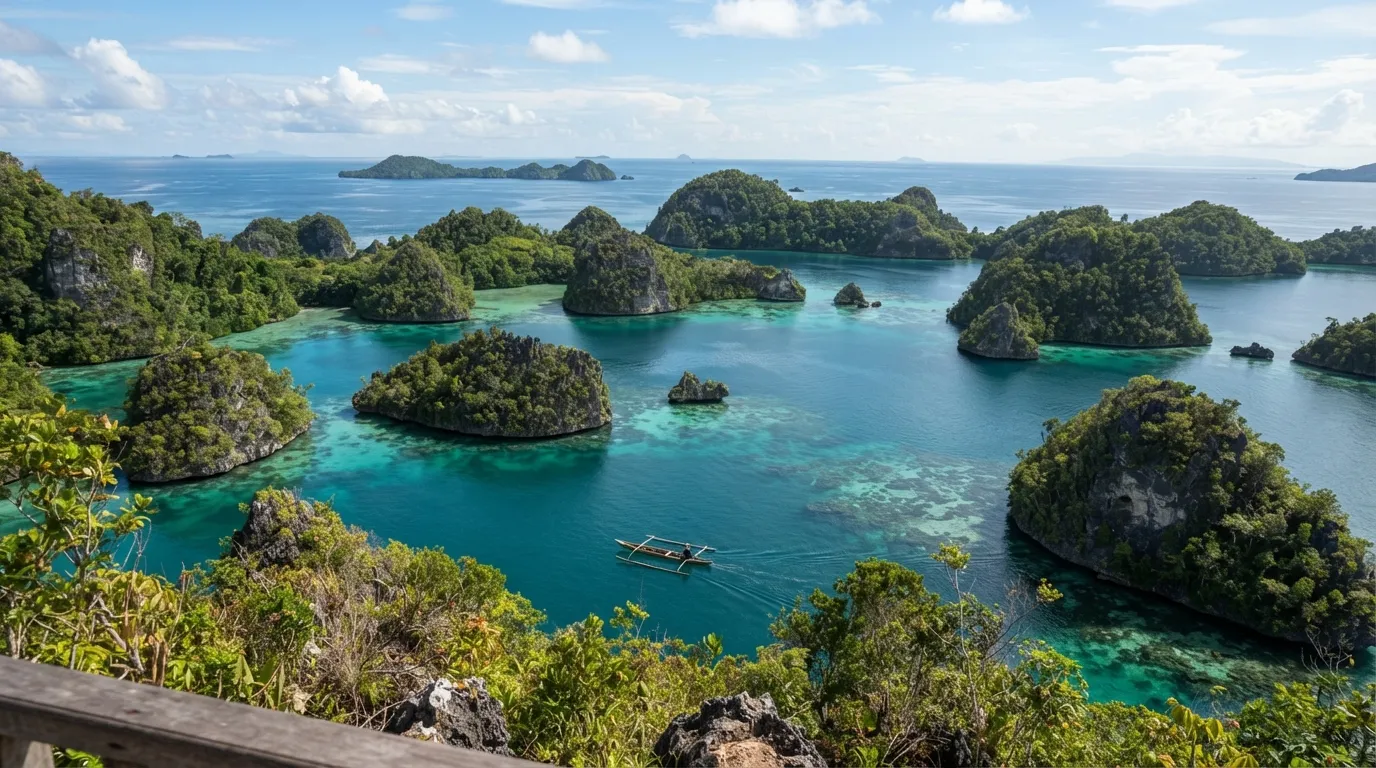
Raja Ampat is what happens when a whole region seems to hide its best show underwater. The name means “Four Kings,” a nod to its four largest islands, and the area spreads across well over a thousand smaller ones off the western tip of New Guinea.
It sits inside the Coral Triangle, which is famous for some of the richest marine biodiversity on the planet. Divers go for the reefs, schools of fish, and the sense that every dive shows them something new.
Above the surface, limestone islets crowned with jungle rise from calm, bright water. Viewpoints like the one at Wayag show the maze of green pillars floating in blue.
Next is a Philippine island where the lagoons are so clear that the cliffs seem to float.
#13 – Palawan, Philippines
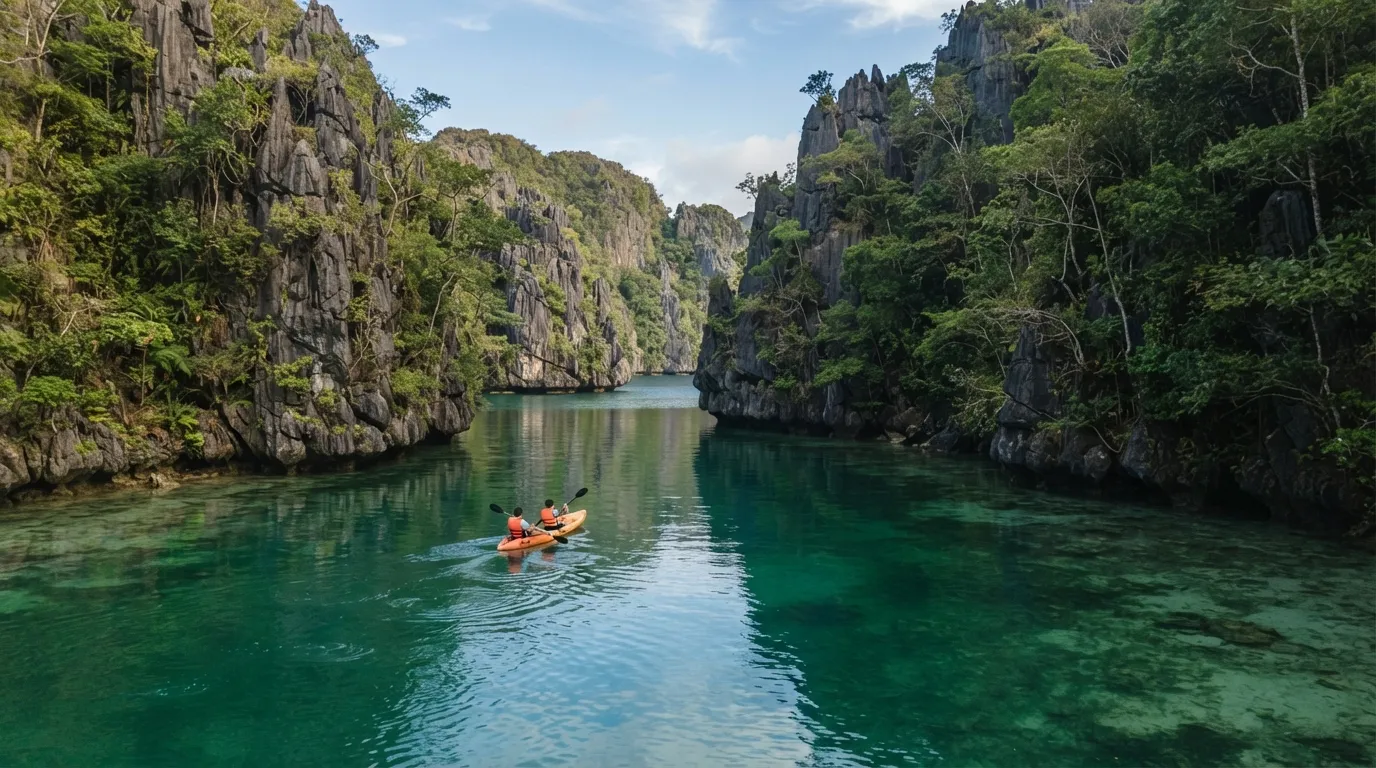
Palawan feels like a place where the limestone got carried away. Around El Nido’s Bacuit Archipelago, steep karst cliffs plunge into lagoons of vivid green and blue.
Kayaks glide through hidden entrances into the Small Lagoon and the Big Lagoon. Early in the morning, paddlers can sometimes have the quiet to themselves.
Then there’s the Puerto Princesa Underground River, a UNESCO-listed cave system where boats drift beneath towering formations. It’s all above-ground drama and below-ground mystery on one long island.
Next, we head to the Caribbean, where two peaks rise from the sea like a pair of giant green thumbs.
#12 – St. Lucia
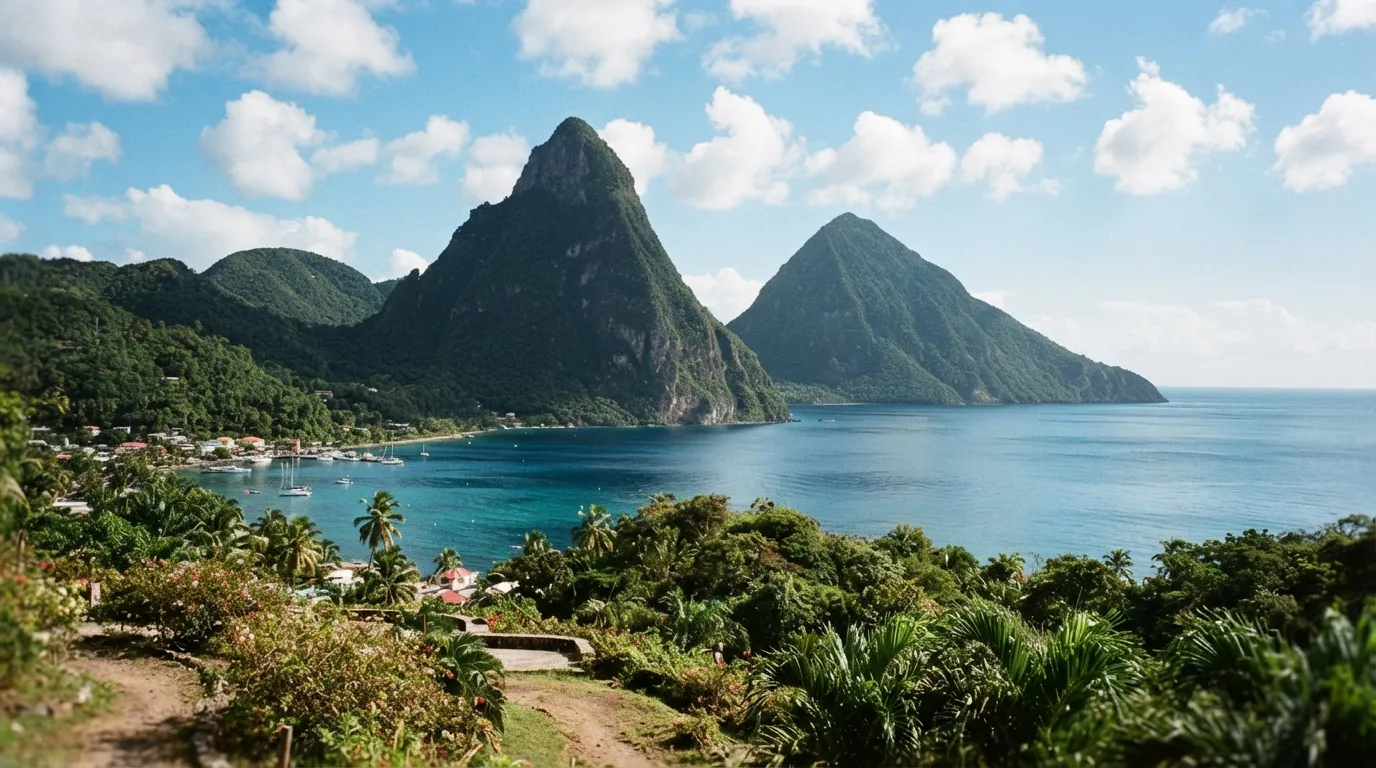
You don’t need a caption to recognize St. Lucia. The Pitons, Gros Piton and Petit Piton, are two steep, jungle-covered volcanic spires that rise nearly 800 meters straight from the sea.
They earned UNESCO World Heritage status in 2004, and they dominate the skyline from the beach, the road, and the water. Near Soufrière, the Sulphur Springs area shows off the island’s volcanic heart with steaming vents and bubbling pools.
At a Glance
- The icons: Gros Piton and Petit Piton
- UNESCO World Heritage status: 2004
- Base camp town: Soufrière
- Easier viewpoint: the Tet Paul Nature Trail
The Tet Paul Nature Trail offers wide views of the Pitons and the coastline without the long hike of the big climbs. The island proves that Caribbean scenery can have teeth.
Up next is a Greek island that looks like someone sculpted the coastline from chalk.
#11 – Milos, Greece
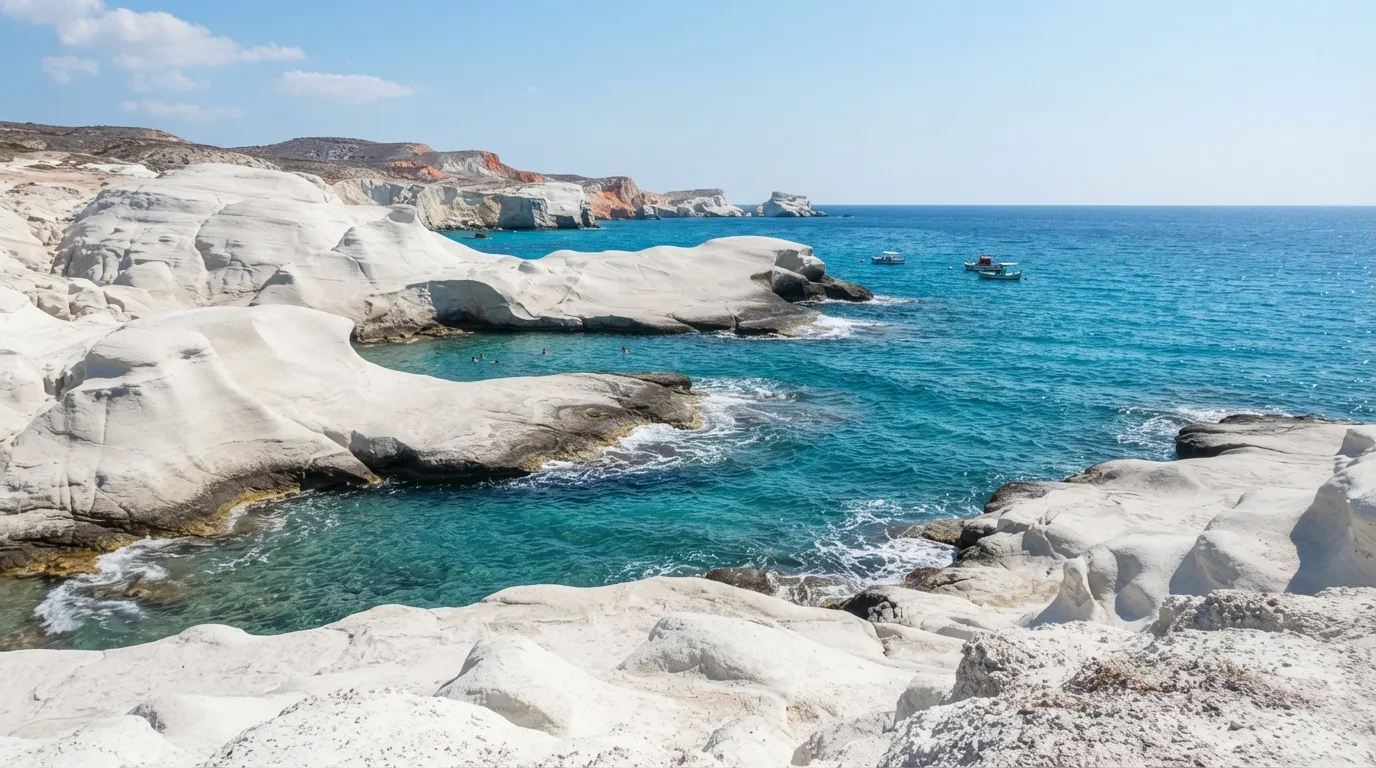
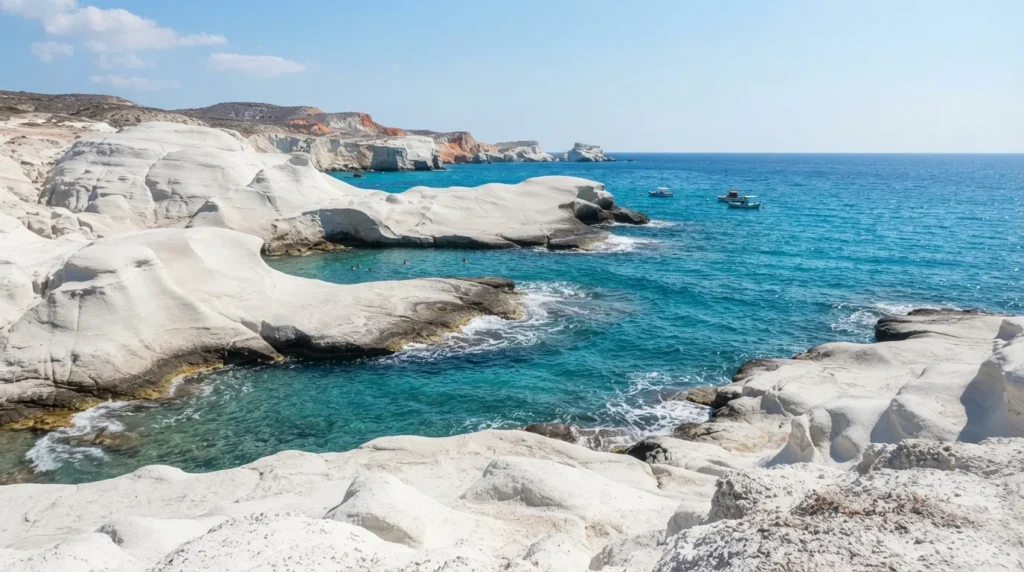
Milos looks like the Moon decided to take a Mediterranean vacation. At Sarakiniko, smooth white volcanic rock curves into the sea like frozen waves, with water so blue it seems unfair.
This is the island where the Venus de Milo was discovered in 1820, the statue now famous around the world. Its landscape is just as striking, with sea caves, colorful cliffs, and boat-only coves like Kleftiko.
Volcanic activity and old mining history have left the island with striking colors and strange rock shapes. It’s often calmer than Santorini and much easier to explore at your own pace.
The next island is covered in boulders the size of houses sitting on a white sand beach.
#10 – Seychelles
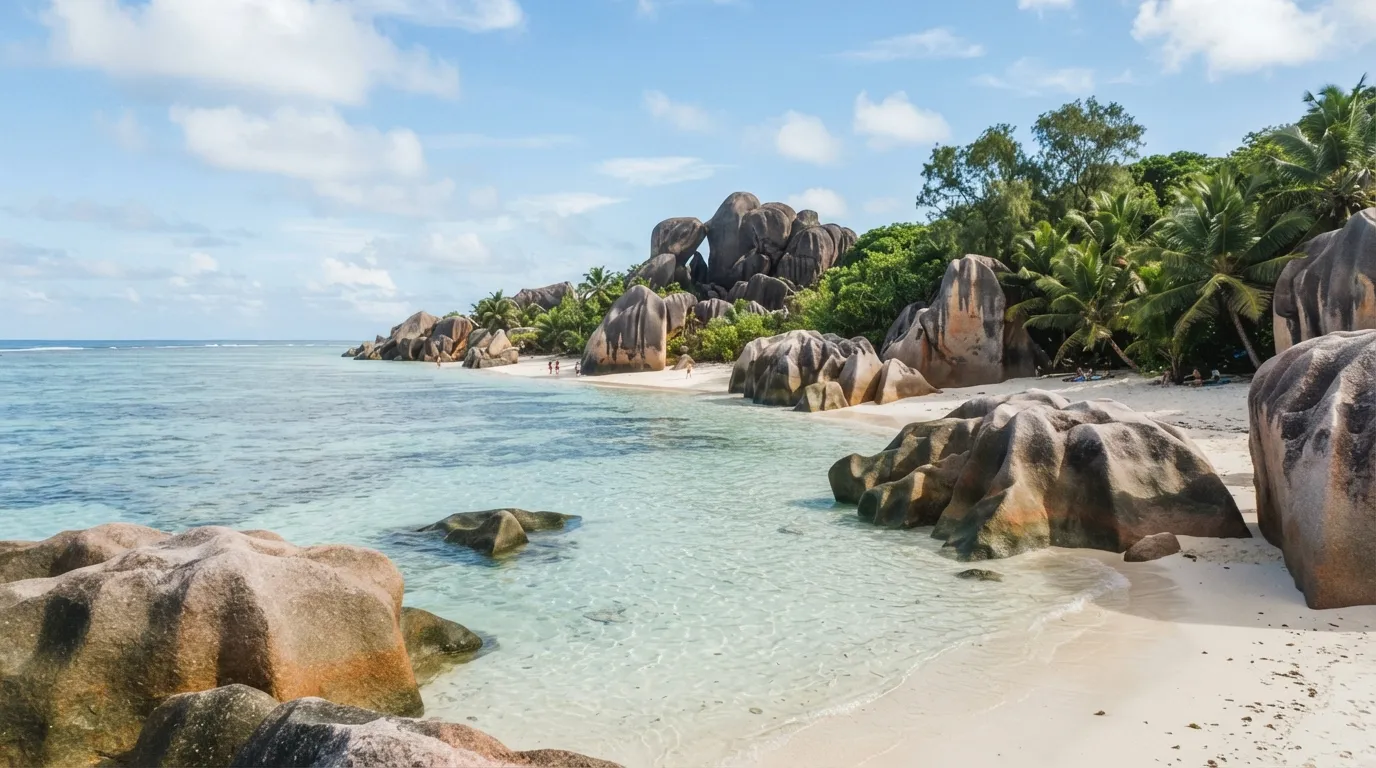
The Seychelles break the tropical rulebook with giant rocks. On Anse Source d’Argent on La Digue, enormous granite boulders curve over powder-white sand and shallow, clear water.
It’s one of the most photographed beaches on Earth, and it still looks surprising in person. La Digue itself moves at a slower pace, where bicycles and ox carts are part of everyday life.
The archipelago has 115 islands, a mix of granite and coral. On Praslin, the Vallée de Mai protects the coco de mer palm, whose giant seeds are among the most famous in the plant world.
Next, the lagoon that made the whole world fall for the South Pacific.
#9 – Bora Bora, French Polynesia
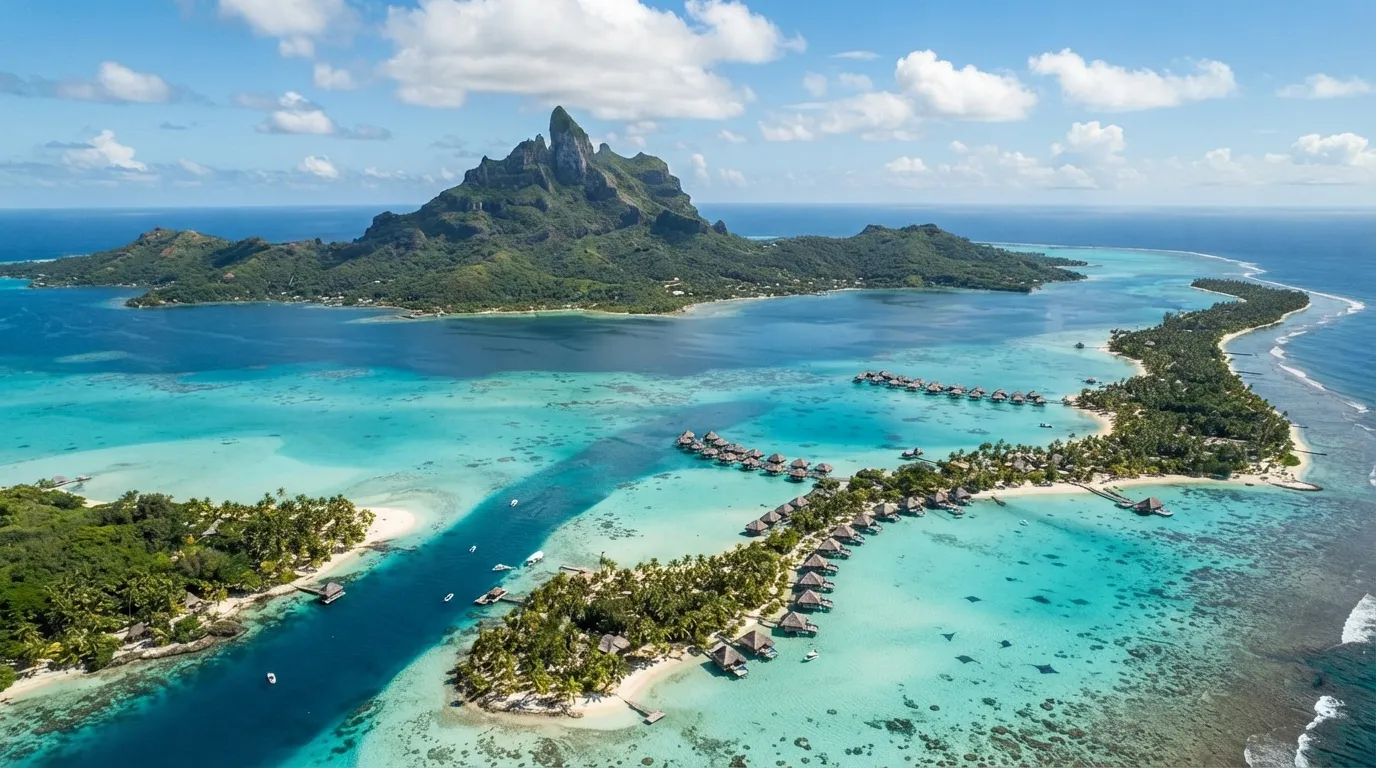
Bora Bora is the postcard that earned its reputation. The jagged green peak of Mount Otemanu rises from a lagoon in layers of turquoise, aquamarine, and deep navy.
A ring of coral and small palm-covered islets called motu shelters the lagoon from the open ocean. From the air, it looks like a jewel set in a blue bowl.
Overwater bungalows stretch across the shallows, and manta rays can glide through nearby waters. The color gradients are a result of depth, sand, reef, and sunlight all working together.
The next lagoon is bigger and quieter, and you have to fly to find it.
#8 – Aitutaki, Cook Islands
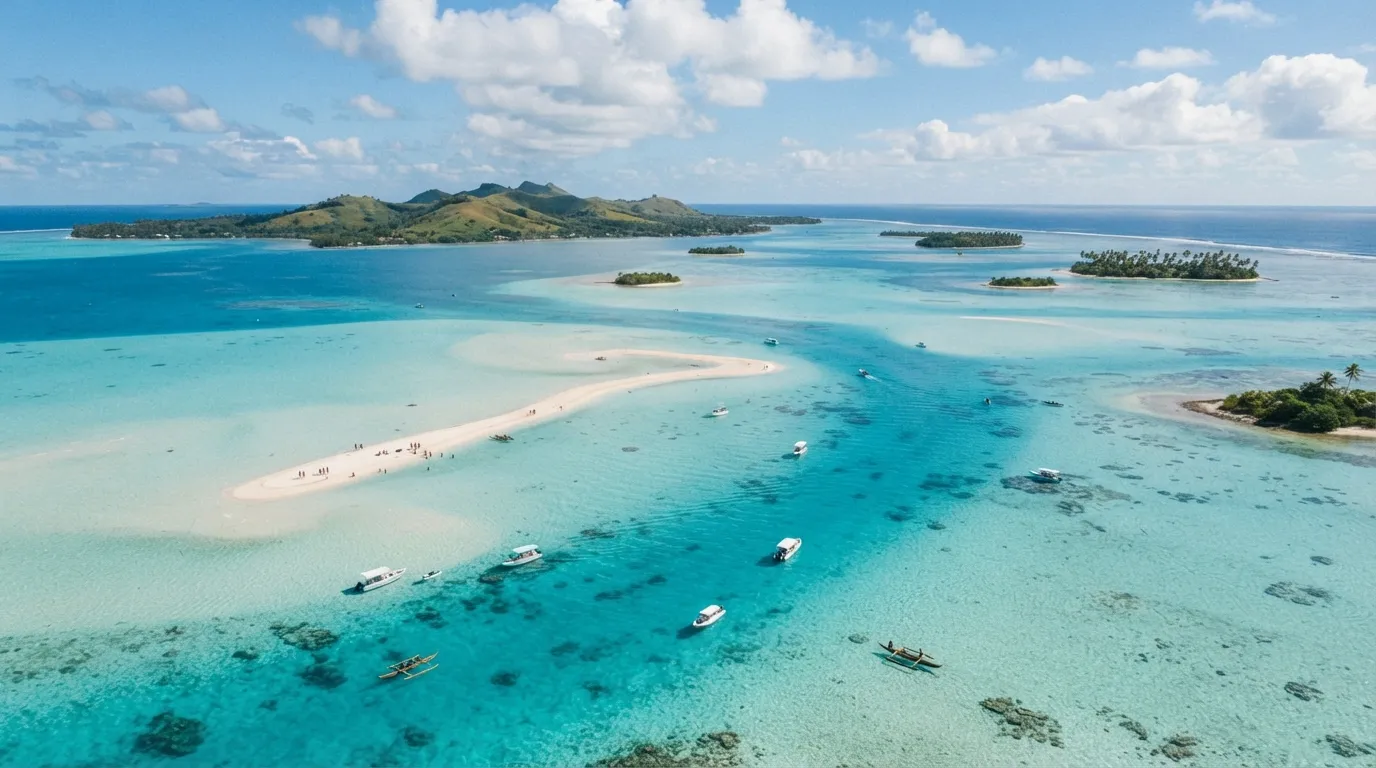
Aitutaki is what Bora Bora might look like if the crowds disappeared. Its huge, shallow lagoon glows in shades of blue in every direction, dotted with tiny islets and pale sandbars.
You reach it with a short flight from Rarotonga, which already feels like part of the adventure. The main island is small, so the lagoon stays the star of the show.
Quick Compare
- Bora Bora: a dramatic volcanic peak plus overwater bungalows
- Aitutaki: a wide, shallow lagoon with sandbars and tiny islets
- Getting there: Aitutaki is a short hop from Rarotonga
Lagoon cruises stop at sandbars, snorkeling spots, and little islands like One Foot Island. The water is so clear that boats can look as if they’re floating on air.
Now we cross to Australia for a beach whose sand is part of the show.
#7 – Whitsunday Islands, Australia
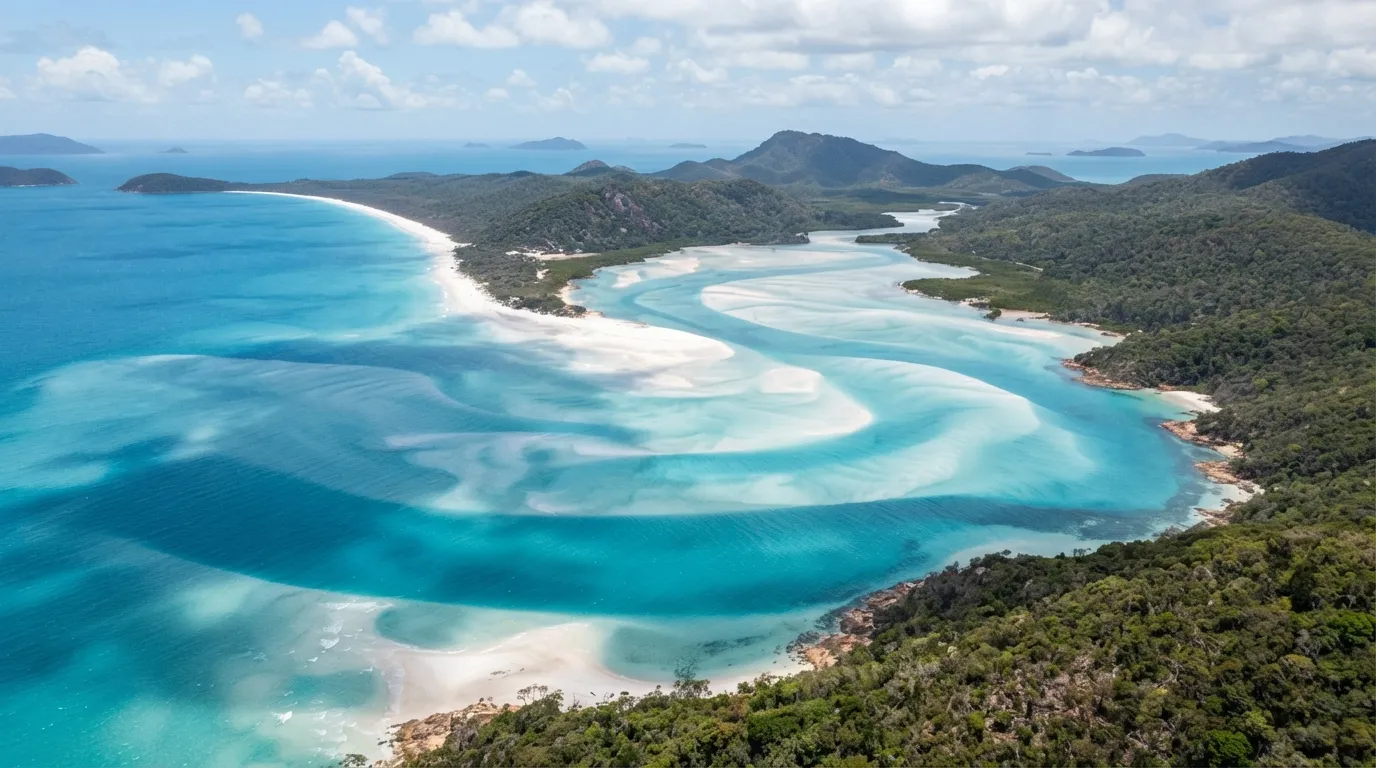
Whitehaven Beach looks like someone turned the saturation up and the sand down to zero. The beach runs about seven kilometers along Whitsunday Island, with sand so bright and fine it seems almost artificial.
That sand is made of nearly pure silica, which helps explain its dazzling whiteness. At Hill Inlet, the tides swirl sand and water into ribbons of white and blue, best seen from the lookout above.
The islands sit beside the Great Barrier Reef Marine Park, so beach days and reef days can share a trip. Boat tours and scenic flights reveal even more, including famous reef shapes from above.
Next up is a volcanic island whose disaster became its most famous view.
#6 – Santorini, Greece
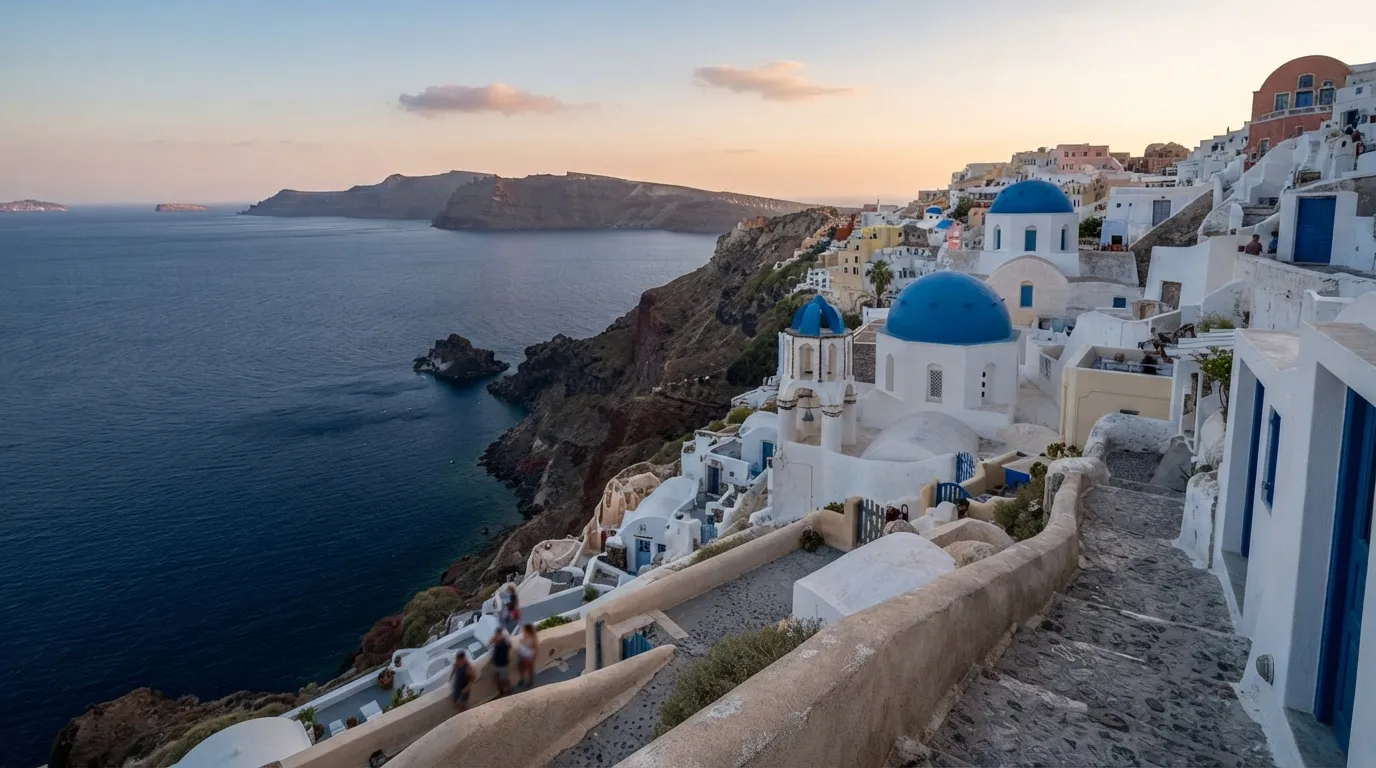
Santorini is beautiful because something went catastrophically wrong. A massive volcanic eruption roughly 3,600 years ago blew out the center of the island and left a flooded caldera.
Today, white villages cling to the rim above deep blue water. In Oia, blue domes and sunset crowds have turned the view into one of the Mediterranean’s most photographed scenes.
Beneath it all lie reminders of the island’s past, including the Bronze Age town of Akrotiri, buried by volcanic ash. Even the vineyards bear the mark, with vines trained into low baskets to survive wind and dry soil.
The next stop is the opposite of dramatic cliffs: an island nation so flat that the horizon takes over.
#5 – Maldives
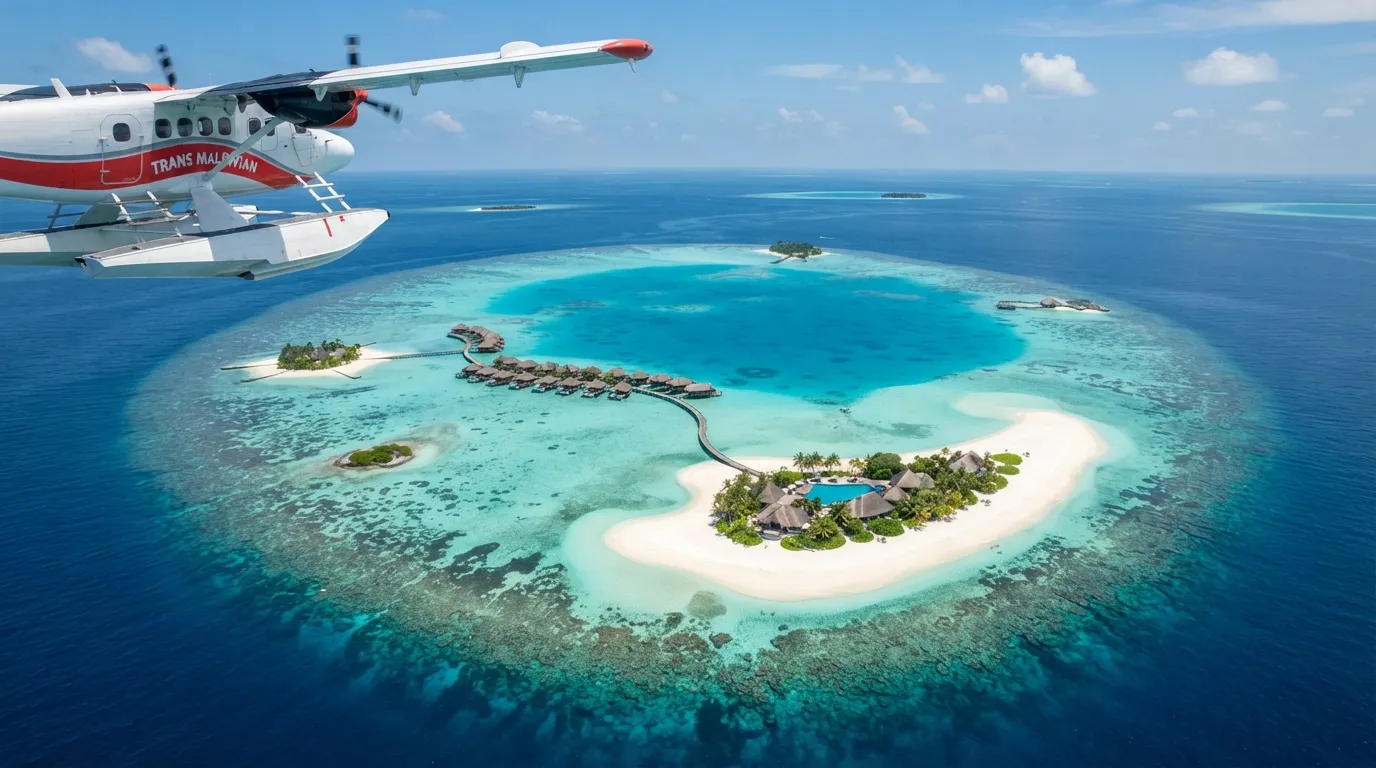
The Maldives look like an idea that shouldn’t work. About 1,200 coral islands scatter across 26 atolls, and the nation’s highest natural point is only about eight feet above sea level.
There are no mountains to interrupt the view, just water, sky, and sand. From a seaplane, the atolls look like rings of turquoise drawn on the ocean.
Worth Knowing
- The Maldives is the lowest-lying country on Earth
- The capital city is Malé
- Seaplanes are a signature way to reach far-flung resort islands
- Sea level is a major long-term concern for the nation
Sandbanks appear and fade like brushstrokes across lagoons, and many resort islands sit beside house reefs a few steps from the sand. It’s gorgeous, and it’s fragile, which only makes the beauty feel more precious.
The next archipelago is beautiful partly because it limits who gets to see it.
#4 – Fernando de Noronha, Brazil
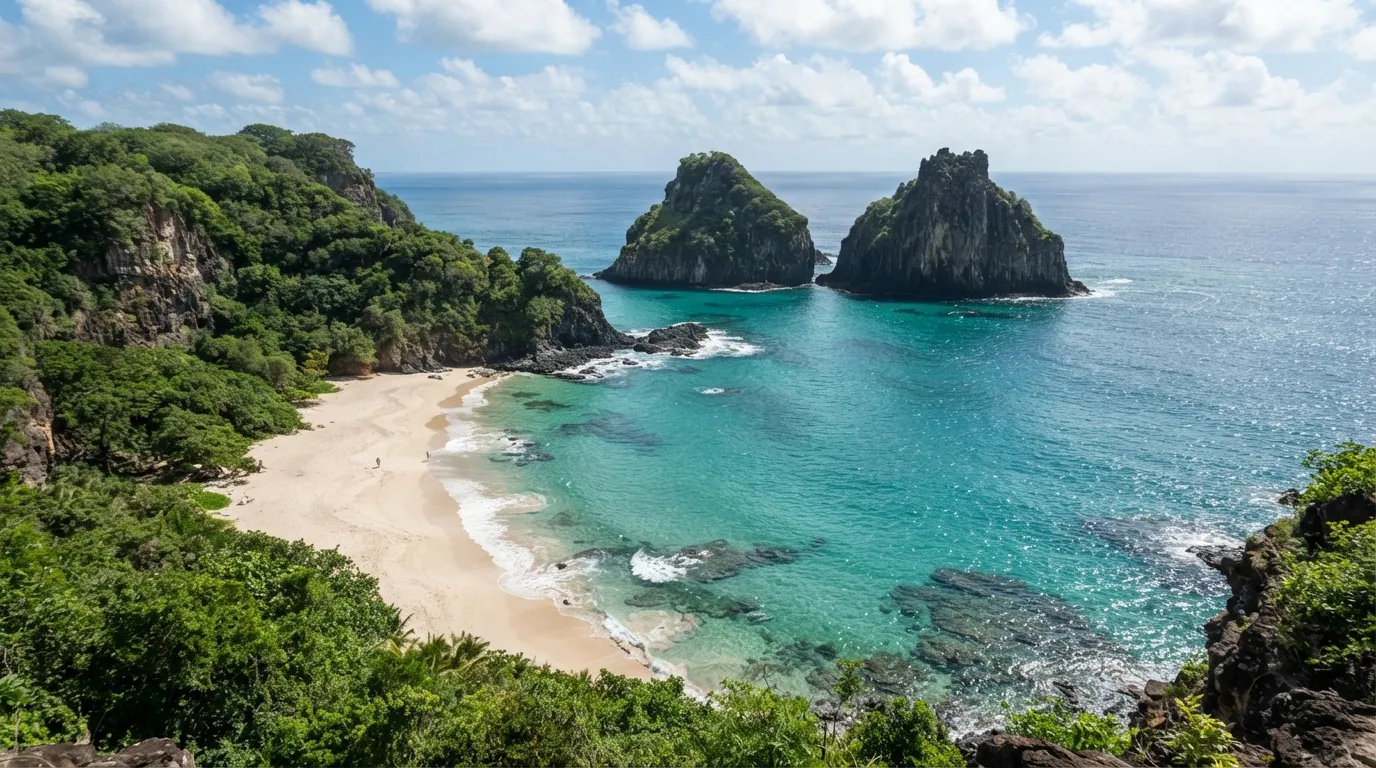
Fernando de Noronha is Brazil’s version of a locked garden. This volcanic archipelago off the northeast coast has 21 islands and islets, and only the main island is open to visitors.
Access is controlled, with limits on how many people can be there and fees that help support conservation. The islands are protected, and parts of the archipelago hold UNESCO World Heritage status.
The payoff is empty-feeling beaches, rocky bays, and clear water full of life. Sea turtles are regular visitors, and spinner dolphins gather in the waters near Baía dos Golfinhos.
Next, we land on an island where the beach is pink and the locals have claws.
#3 – Komodo Island, Indonesia
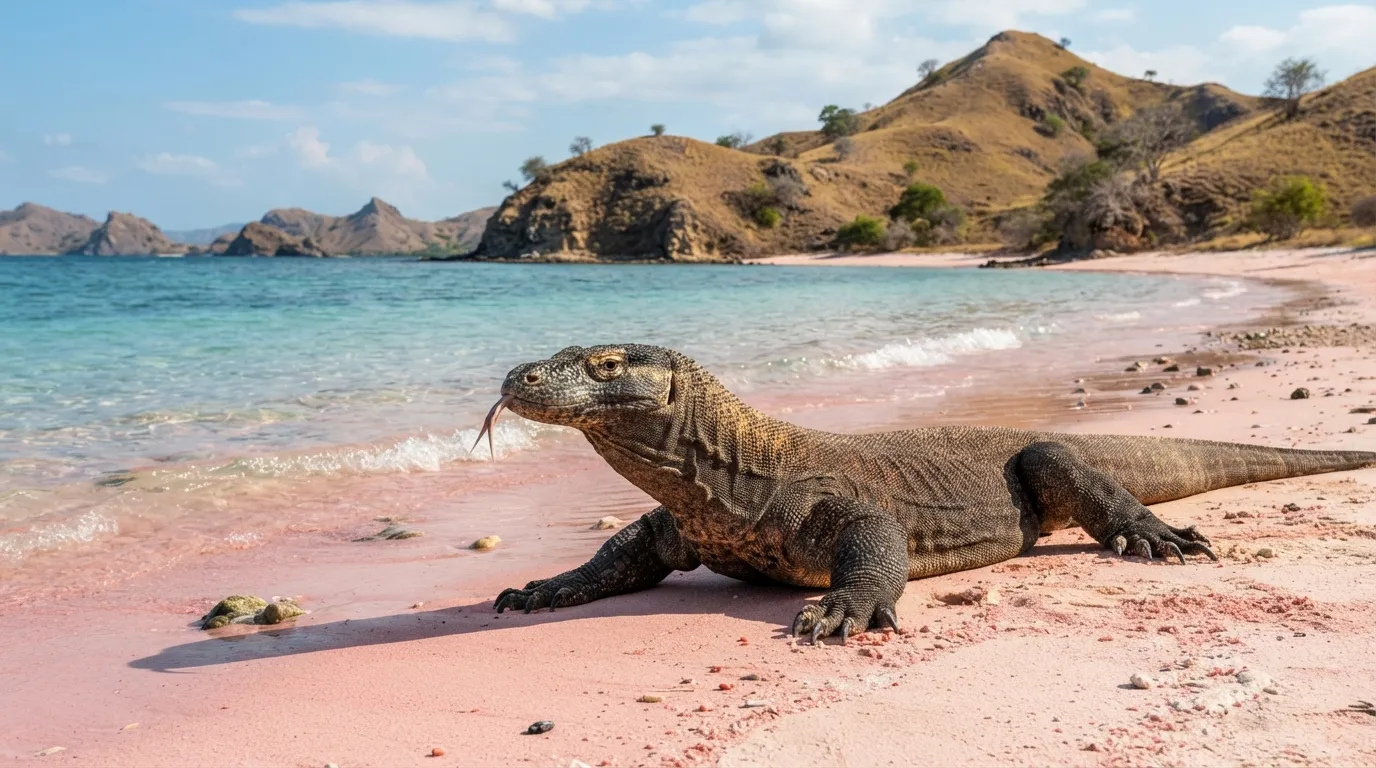
Komodo Island is the only place on this list where the main attraction could also eat your lunch. It’s famous for the Komodo dragon, the largest living lizard, found wild only on a handful of Indonesian islands.
The scenery is just as odd: dry golden hills, thorny savanna, and then turquoise water. Pink Beach gets its blush from tiny red organisms mixed into the white sand.
Why It Stands Out
- Home to the Komodo dragon, the largest living lizard
- Pink Beach adds a rare blush-colored shoreline
- Padar Island offers a viewpoint over bays of different colors
- Komodo National Park has been a World Heritage Site since 1991
Komodo National Park was named a UNESCO World Heritage Site in 1991. Nearby Padar Island adds its own famous viewpoint, overlooking curved bays and beaches in different colors.
Two spots remain, and the next one looks like a mountain range was dropped into the sea.
#2 – Ha Long Bay, Vietnam
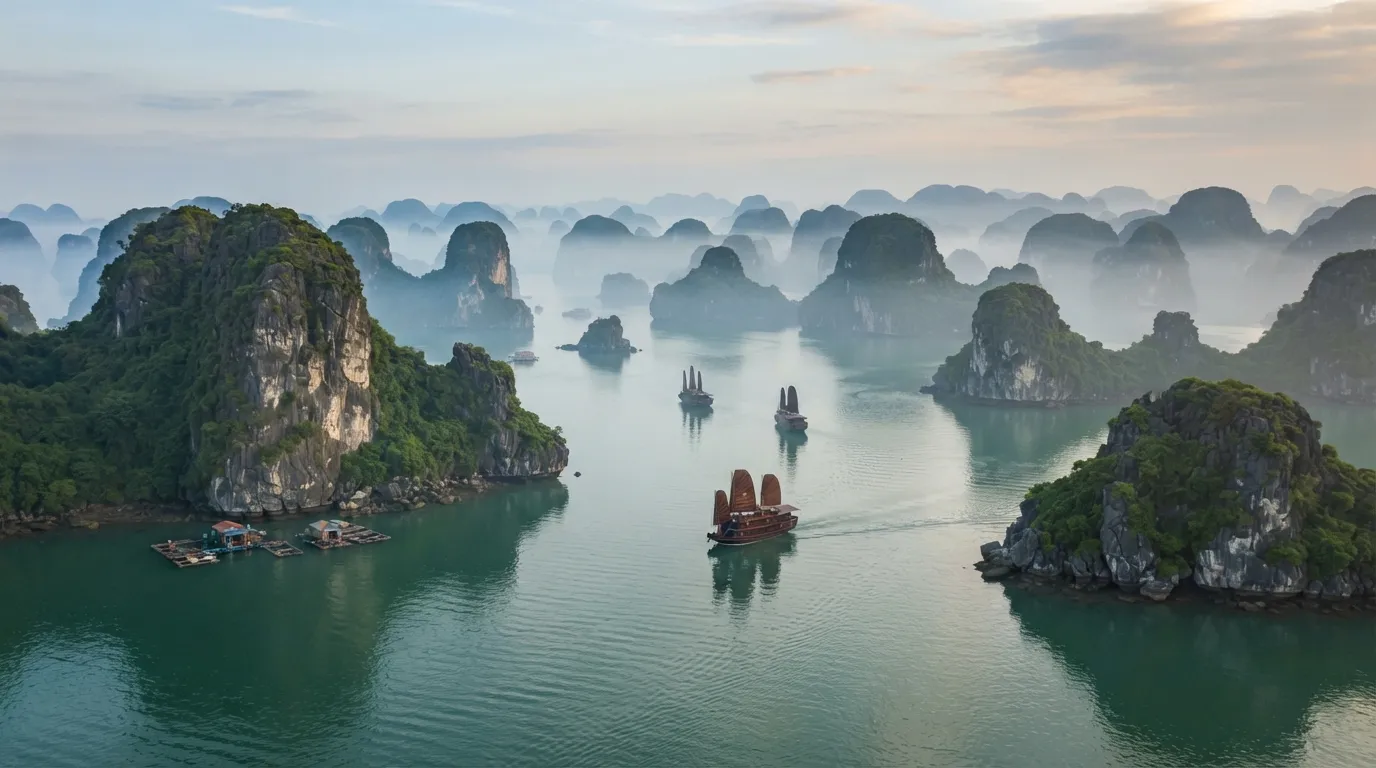
Ha Long Bay looks like a landscape painter got a little too excited. Roughly 1,600 limestone islands and islets rise from emerald water, often wrapped in mist.
The name means “descending dragon,” and local legend says dragons helped create the bay. UNESCO listed it as a World Heritage Site in 1994.
Boats glide between towering rock pillars, past caves and floating fishing villages. Every turn changes the layout, so the view never quite repeats itself.
But the number one island doesn’t just look unusual. It grows plants you can’t find anywhere else.
#1 – Socotra, Yemen
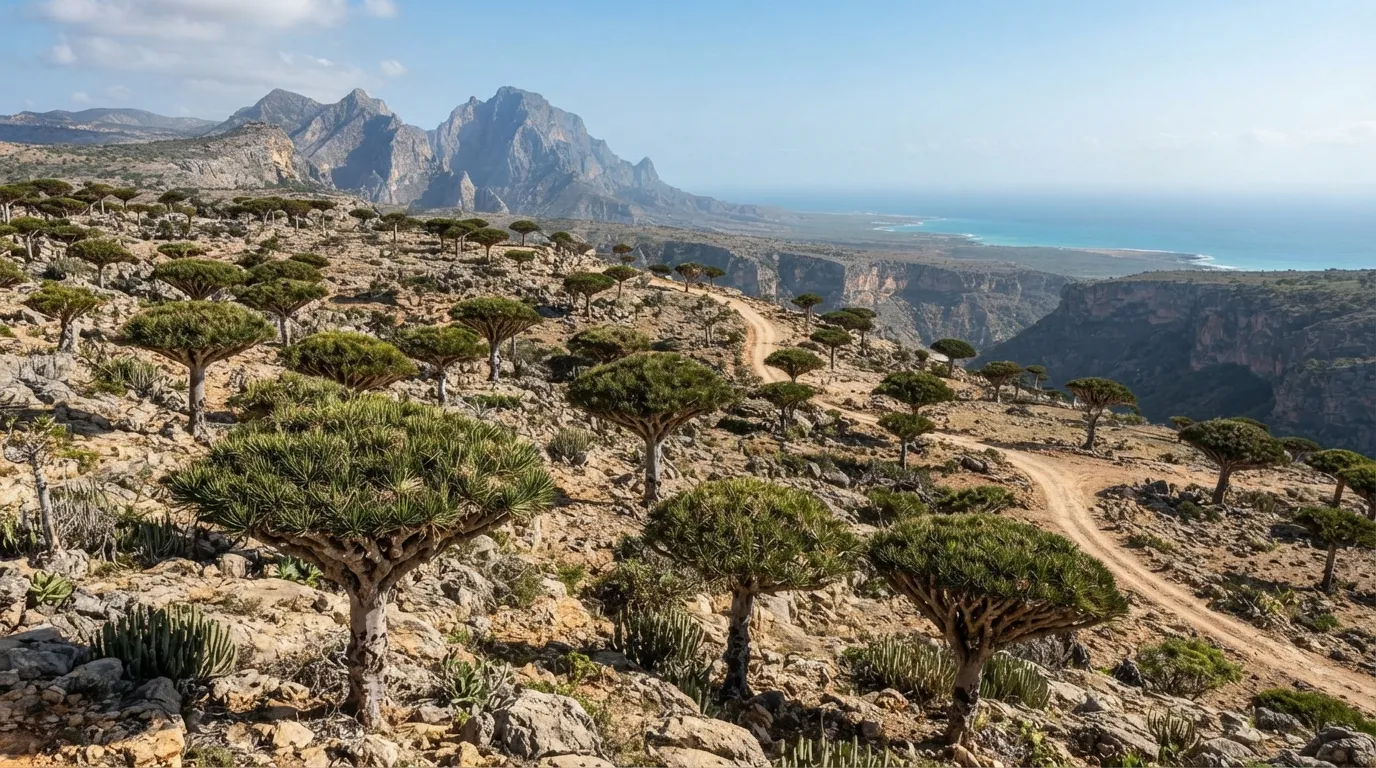
Socotra looks like a film set for another planet, except it’s real. It floats in the Arabian Sea, closer to Somalia than to the Yemeni mainland, and it has spent millions of years evolving on its own.
The star is the dragon’s blood tree, with its umbrella-shaped canopy and deep red resin. It grows on plateaus like Dixsam, where the trees look as if they’ve been arranged by an artist.
UNESCO named Socotra a World Heritage Site in 2008, noting that more than a third of its plant species are found nowhere else. Add white dunes, limestone cliffs, caves, and turquoise water, and it’s a landscape that keeps changing the rules.
Reaching it isn’t simple. Flights are limited and the region can be unstable, so any trip needs careful planning and attention to current travel advisories.
Put all 19 together and a pattern appears. The islands that feel least real are often the ones that were left alone the longest, by oceans, by volcanoes, or by rules that keep the crowds out.
You don’t need a tropical postcard to find a place that looks edited. Sometimes the most unreal view is just a coastline that kept its own rules.
CEO-Co-Founder