
- The Day Nixon Resigned: What America Looked Like in August 1974 - October 8, 2026
- 1975: The Year Punk Was Born in America - October 8, 2026
- 15 Authors Who Used a Pen Name and Outsold Their Real Byline - October 8, 2026
#13 – The Fanny Pack
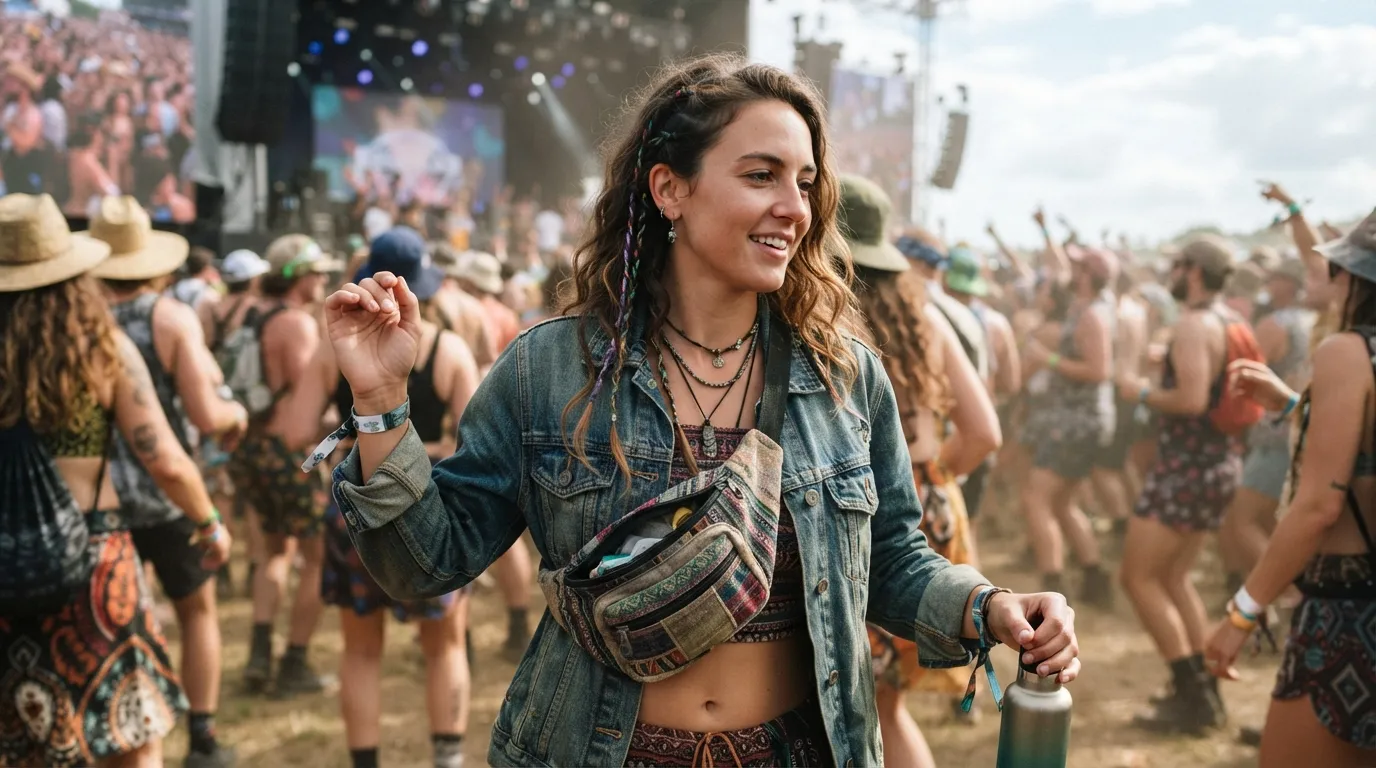
Nobody mocks the fanny pack at a festival anymore, and that is the clue. Worn on the hip or slung across the chest, it solves a problem every long outdoor day creates: where do your phone, cards, and keys go when you’re dancing, climbing a muddy slope, and squeezing through a packed crowd?
A swinging tote or a half-open backpack is a hassle in that setting. A small zippered pouch stays against your body, leaves your hands free, and can be spun to the front when the crowd tightens. That is the whole appeal.
The belt-bag idea is much older than festival culture, with roots in practical carrying gear for hikers, cyclists, and travelers. Festivals just turned out to be the perfect stress test. Rain, dust, and ten hours on your feet reward anything that stays put.
Once a few people were wearing one, everyone nearby noticed how little they had to fuss with their belongings. Copying followed fast. What began as a punchline became standard kit, and the next item on the countdown handles an even dustier problem.
#12 – The Cotton Bandana
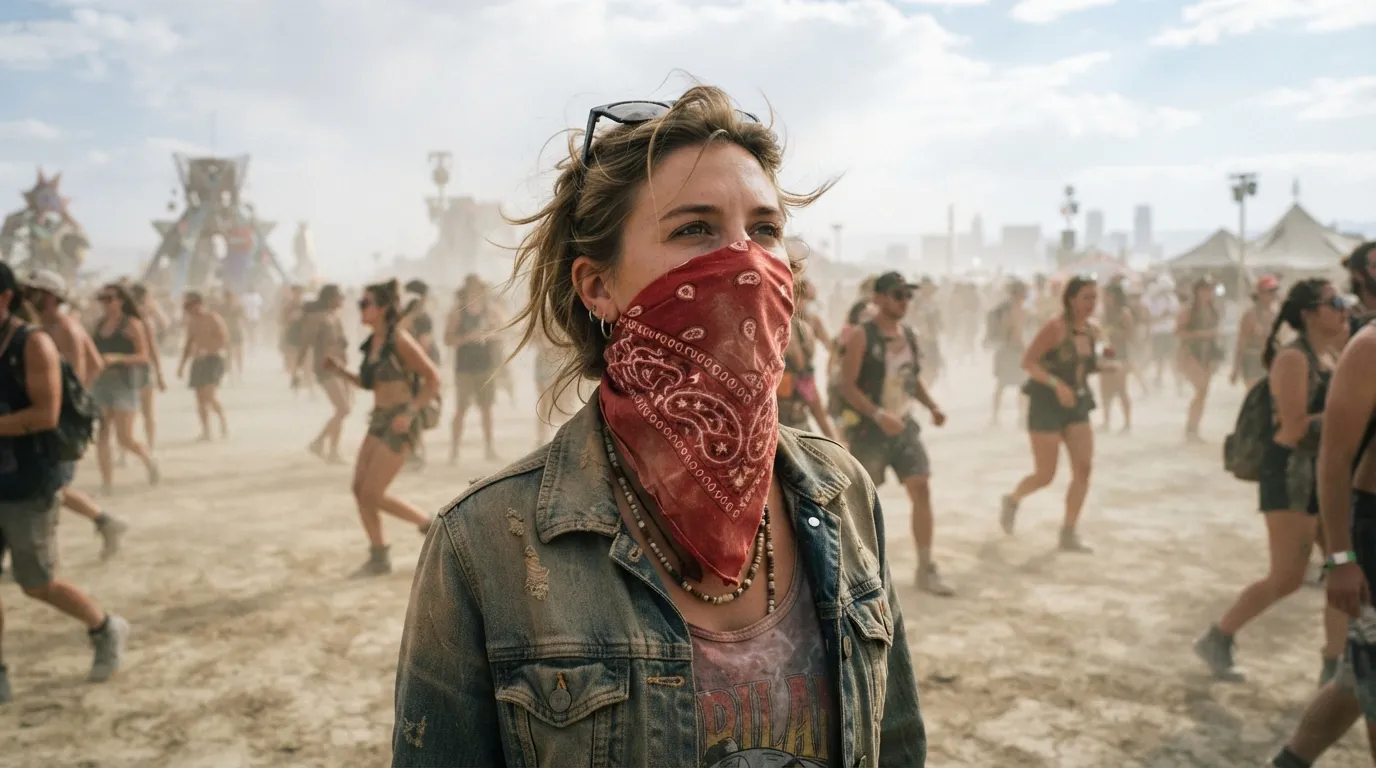
Before the bandana was a boho accessory, it was a cheap square of cotton that did a surprising number of jobs. On dry, windy festival grounds, people tied one over their nose and mouth to keep dust out. Burning Man’s famously fine playa dust made it a familiar sight, and dusty fields at other desert and summer events did the same.
It is not a medical mask, and nobody pretends it is. It is simply a barrier you can pull up in seconds.
Then the rest of its résumé shows up. Soak it in water and it becomes a cooling wrap for your neck. Fold it into a band and it holds sweaty hair back. Knot it around a bag strap and your friends can spot you across a field.
It also costs almost nothing and washes easily, which matters when you are living out of a bag for three days. Plenty of people started wearing one for a dust storm and kept it on because it worked in every kind of weather. Next comes a pair of pants built for carrying things.
#11 – The Cargo Pants
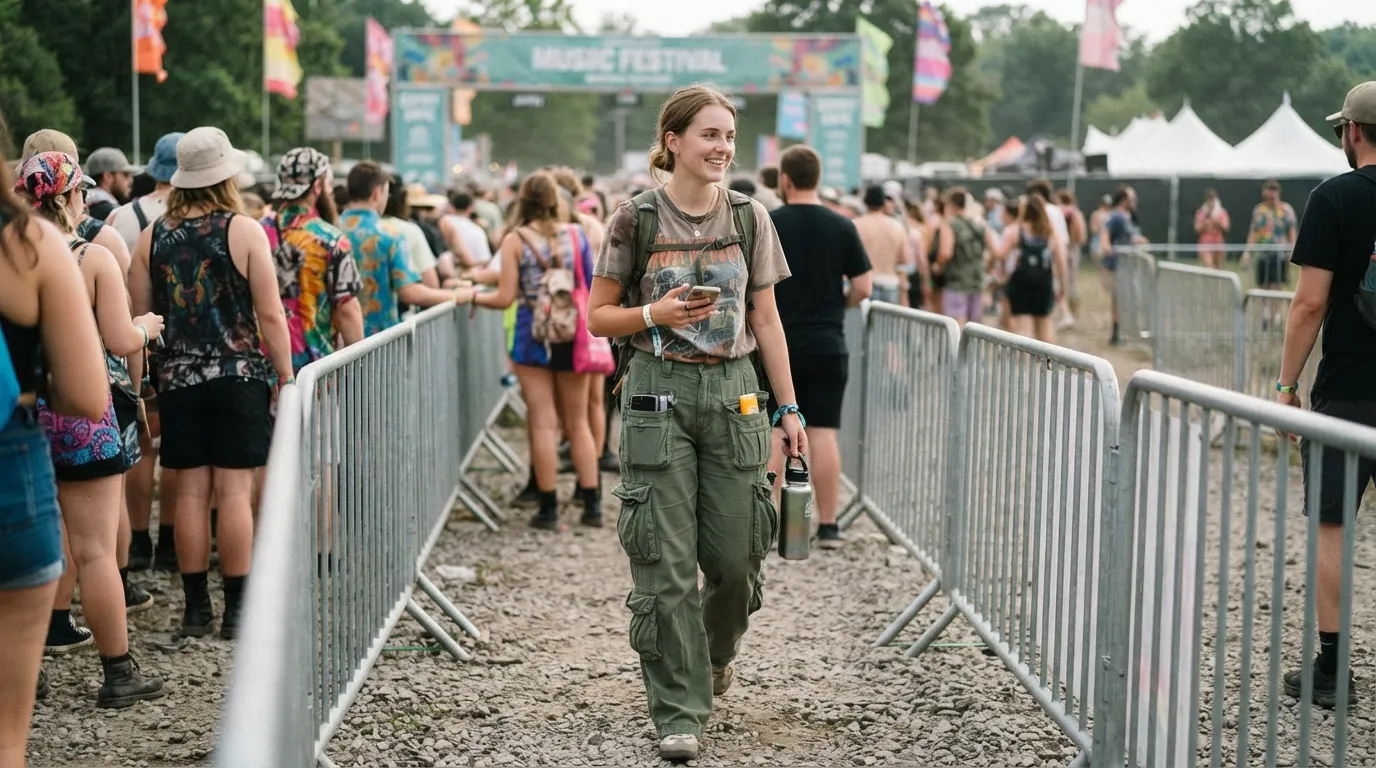
Cargo pants are often traced to military clothing, including the British Army’s World War II-era battledress trousers with a large thigh pocket. The point was to carry gear without a bag. That is exactly what a festival crowd wants.
Now picture entry lines where bag size is restricted. Pockets suddenly look like freedom. A phone, a portable charger, a wallet, sunscreen, and earplugs can all disappear into the legs without a single strap on your shoulder.
The loose cut helps too. It gives you room to move in a pit, sit on the grass, and shrug off a warm afternoon without feeling trapped in stiff denim. Canvas and cotton-blend versions also tend to dry faster than heavy jeans after a wet patch of lawn.
None of this required a trend report. People simply noticed that the person with the big pockets was not hunting for anything. Soon the style was everywhere in the crowd, and brands followed with versions made for the weekend. The next piece of the uniform is about your feet.
#10 – Dr. Martens 1460 Boots
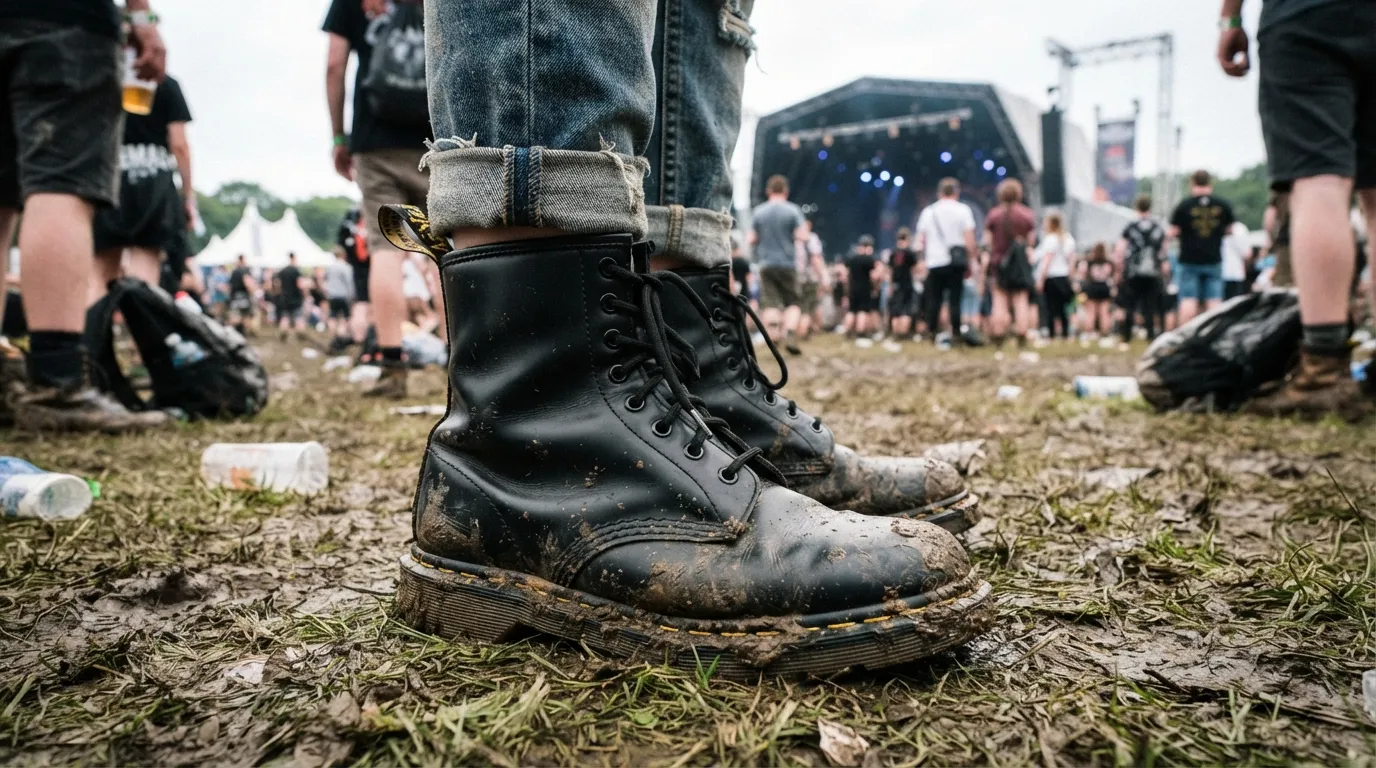
The Dr. Martens 1460 has one of the great practical origin stories in footwear. The boot grew out of a German doctor’s search for a more comfortable shoe after a foot injury, and its air-cushioned sole became the signature feature. The 1460 name comes from its first release date, April 1, 1960.
It began as a work boot, which is part of why it fits festivals so well.
Fields do not stay pretty. By Saturday afternoon they can be a mix of ruts, mud, spilled drinks, and trampled grass. A leather boot with a thick sole and a grippy tread is built for that kind of mess, and you can wipe it down when you get back to the tent.
Fast Facts
- The doctor behind the design was Klaus Märtens, and the story usually starts with a 1945 skiing injury.
- Griggs, a bootmaker in Northamptonshire, England, helped bring the design to market.
- The classic 1460 is the eight-eyelet style, with yellow stitching and a heel loop.
Over time, other things piled on. Punk, skinhead, and alternative scenes all adopted the boots, so a festival crowd arrived already primed to recognize them. Practical choice met cultural history, and the result is a boot that looks like a statement but began as a fix for sore, wet feet. Another head-to-toe staple handles the sun.
#9 – The Bucket Hat
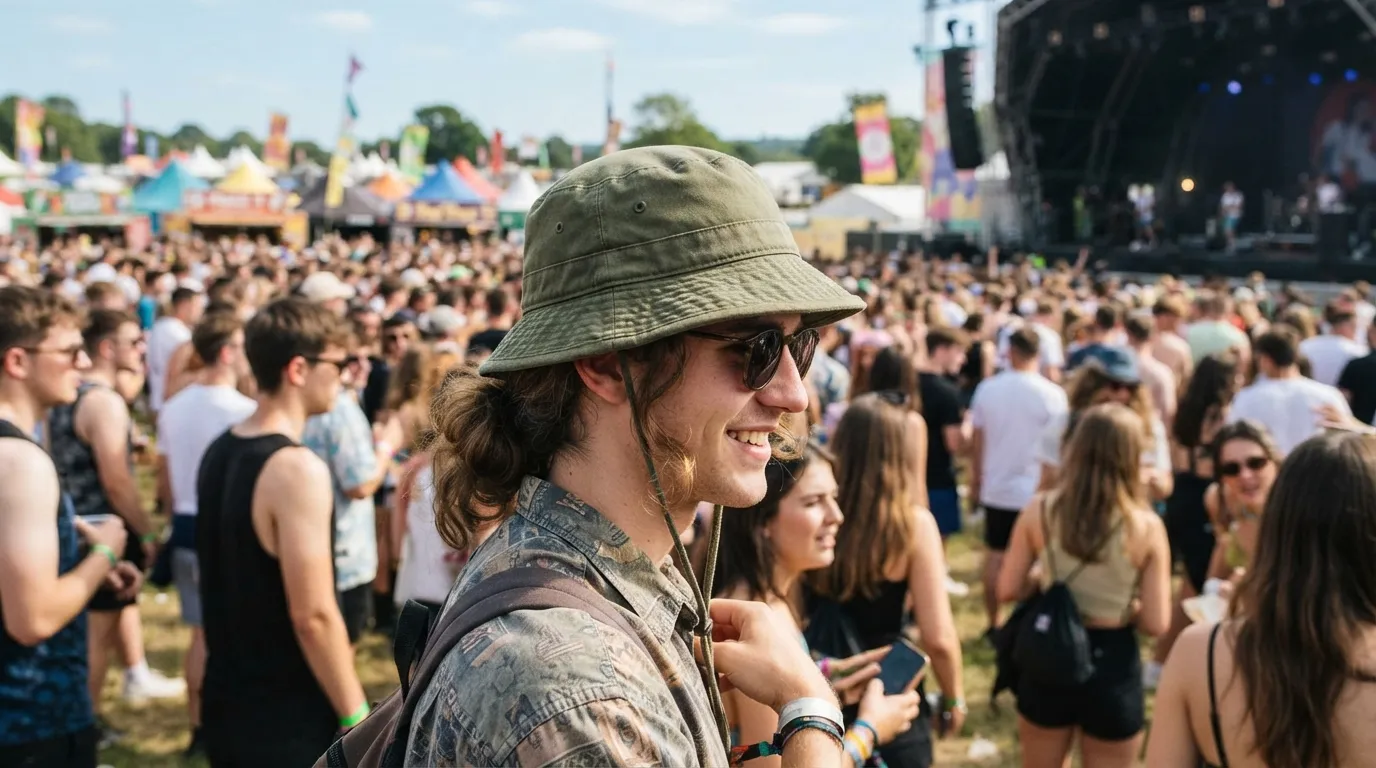
The bucket hat is often traced to early 1900s Ireland, where simple, rain-shedding hats were worn by fishermen and farmers. A soft brim all the way around, a rounded crown, and fabric that could take a soaking made sense for people who worked outside all day.
Fast-forward to a festival and the logic still holds. The brim shades your face when there are no trees for acres. If the sky opens up, the downturned edge keeps drips off your glasses and neck.
Then there is the packing factor. A bucket hat can be crushed into a pocket or clipped to a bag, so you can wear it for the afternoon heat and stash it when the sun drops. Caps don’t give you that kind of all-around cover.
Pop culture added to its glow. Liam Gallagher and LL Cool J are among the names regularly associated with making it cool in the 1990s. But the festival crowd didn’t need a celebrity to get it. After a day of sunburn, the hat sells itself.
#8 – The Clear Rain Poncho
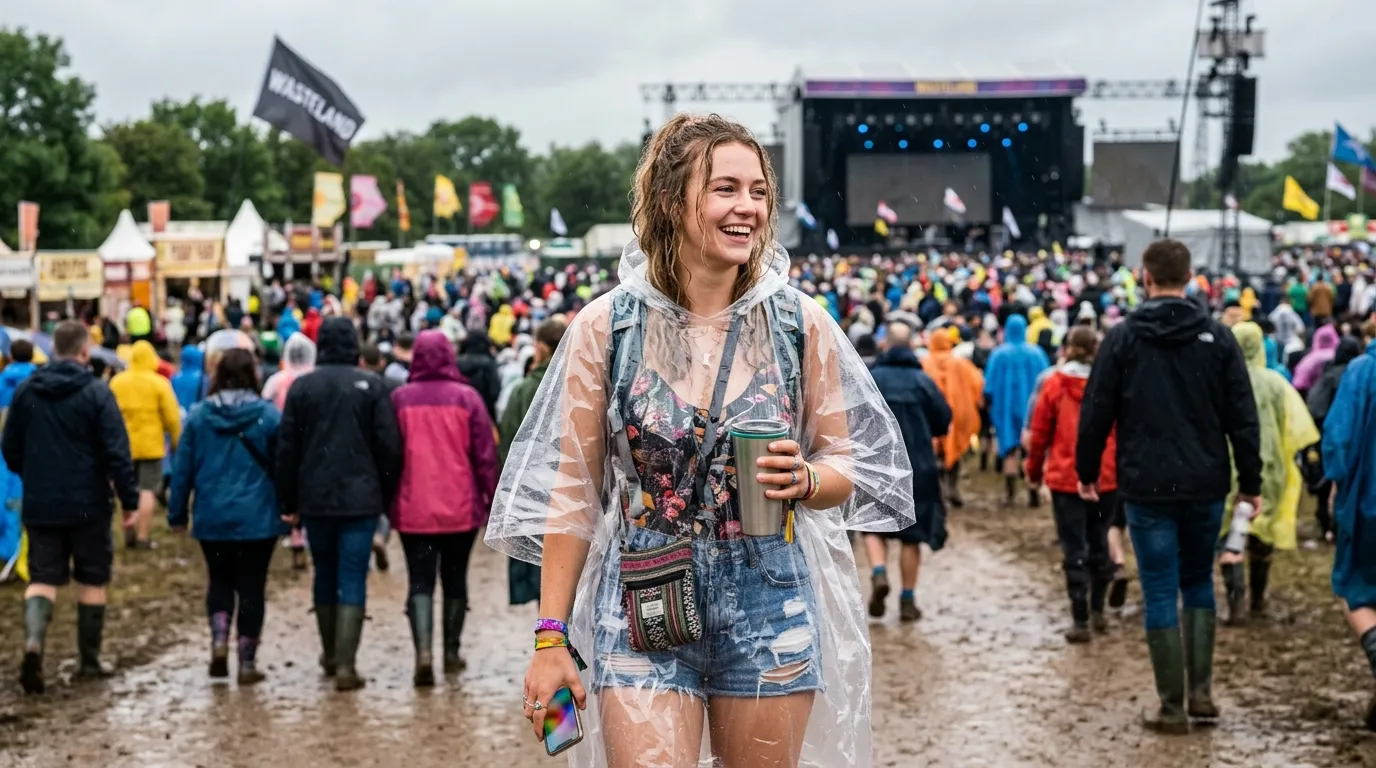
A festival forecast can change in the time it takes to walk from one stage to another. That is how the humble poncho became a rite of passage. It folds down to something not much bigger than a deck of cards, and it goes over your clothes and your bag in one move.
The clear version has a bonus that people notice right away. You can still see your outfit, your phone screen, and the friends standing beside you.
It is also a very forgiving piece of gear, and the choice usually comes down to a simple trade-off.
Quick Compare
- Disposable: cheap, featherlight, and built to survive one surprise storm.
- Reusable: sturdier, packs down small, and lives in your bag all weekend like an insurance policy.
There is a strange beauty to the aftermath. When rain hits a crowd, the field turns into a sea of plastic and color, and thousands of strangers end up dressed alike for the same reason. Nobody planned that look. The weather picked the uniform, and the poncho made a pattern out of it. Next up is a classic from the work world.
#7 – Carhartt Bib Overalls
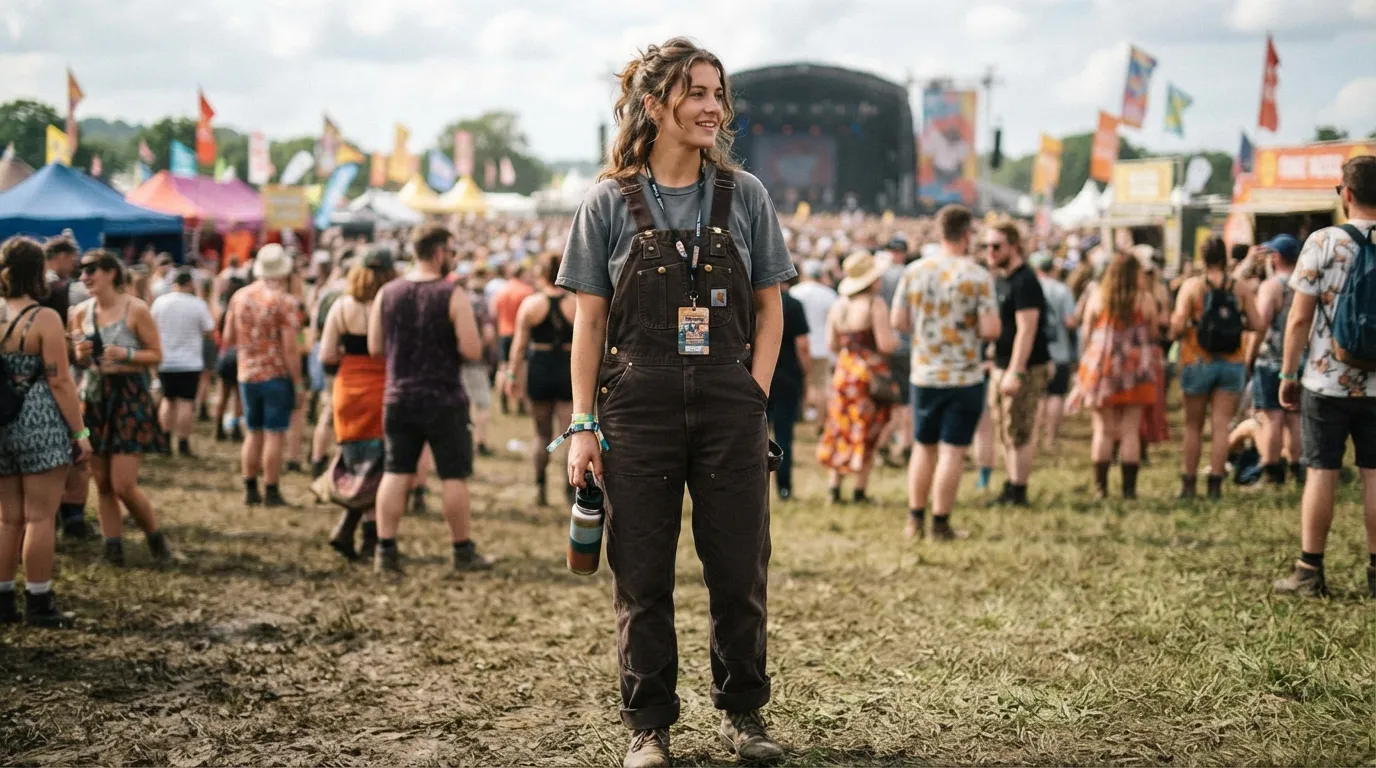
Carhartt, founded in Detroit in 1889, was making overalls for railroad workers long before anyone thought of wearing them to see a band. The brand became a symbol of tough workwear: heavy fabric, big pockets, and a reputation for lasting.
Why would that suit a festival? Because the day is a long, messy job of its own.
Overalls keep everything in place. The bib pocket is a safe spot for a phone or tickets, and the legs have room for the rest. The straps hold the garment up while you dance, climb a hill, or sit cross-legged on the ground.
The sturdy canvas or denim can also take mud, spilled drinks, and repeated washing without falling apart. And because they work over a T-shirt, a swimsuit top, or a hoodie, they adapt as the temperature changes.
It is a clothing choice that began on job sites and found a second life in the crowd. Something designed for hard labor turned out to be ideal for hard fun. Another fabric choice answers the heat.
#6 – The Mesh Tank Top
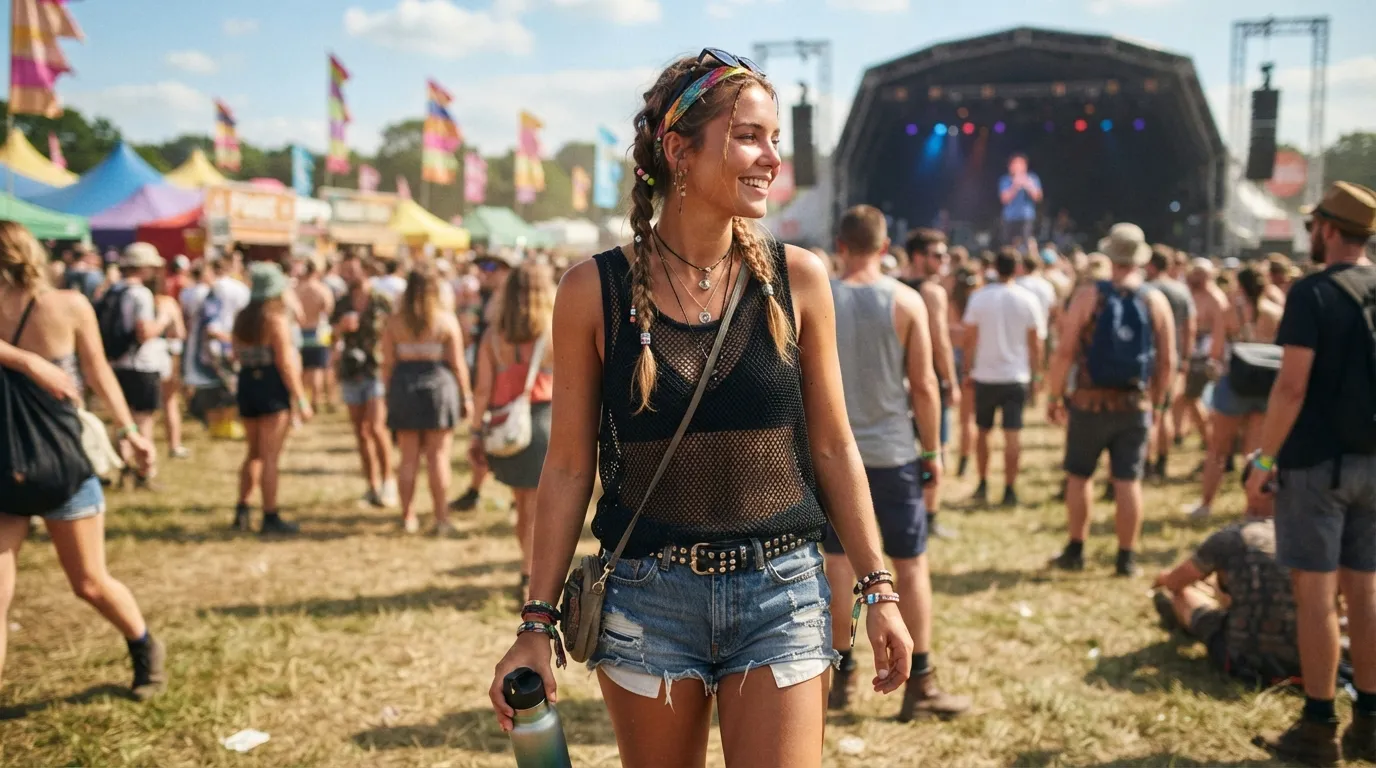
Mesh has a long history in sportswear because open weave moves air, and a festival field in July is one of the places that need it most. Stand in the sun for hours, add a crowd, and a regular cotton shirt can feel like a heavy blanket.
Mesh tops work against that. Air passes through, moisture dries quickly, and the fabric is thin enough to stuff in a bag when the temperature drops.
The visual side matters, too. Layer one over a bralette, a swimsuit, or a plain tank and suddenly the practical piece has texture and attitude. It is easy to see how people started wearing it for comfort and kept going because it looked good.
It also works across a whole day. A mesh top that keeps you cool at 3 p.m. can sit under a jacket or flannel at midnight without adding bulk. That flexibility is the real reason it keeps coming back. People did not choose it because a trend said so. They chose it after one sweaty afternoon taught them better. Next is a DIY classic.
#5 – Daisy Dukes (Denim Cutoffs)
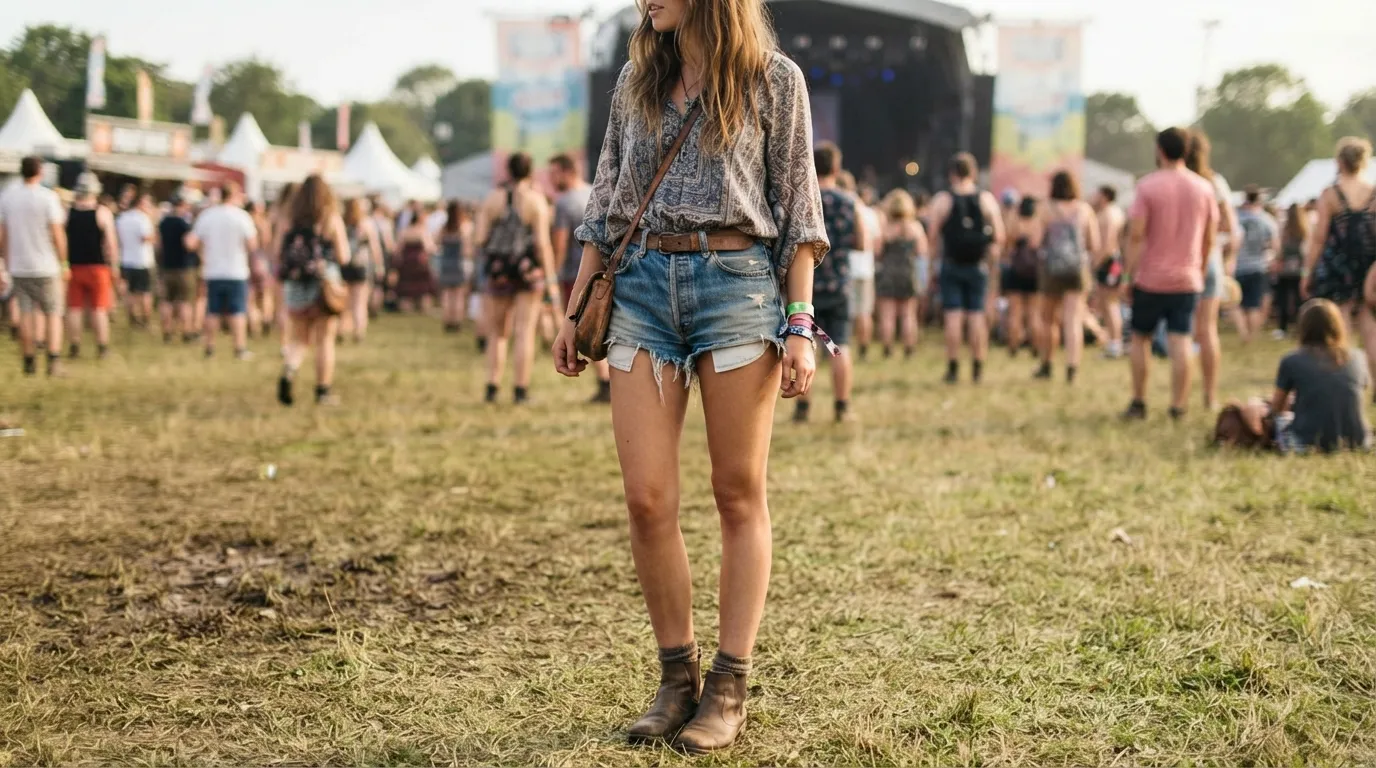
Cutoff jean shorts are the great do-it-yourself solution. Take a worn-out pair of jeans, cut the legs off, and you’ve got something lighter and cooler. The frayed edge is not a design flourish at first. It is just what happens when you skip the hem.
The style got a pop-culture name in the late 1970s. Catherine Bach’s Daisy Duke on The Dukes of Hazzard, which aired from 1979 to 1985, made short denim cutoffs so famous that the nickname stuck.
At a festival, the reasons to wear them are plain. Pockets still hold your essentials. Shorter legs do not drag in mud. Denim is tougher than many lightweight fabrics and can take a weekend of sitting on the ground.
There is also a big emotional appeal: they can be made at home, for almost nothing, out of something old. That makes them personal. Every pair has a different length, fade, and fray. A garment that started as a way to reuse worn jeans ended up looking like summer itself. The next staple is made for storage.
#4 – The Photographer’s Utility Vest
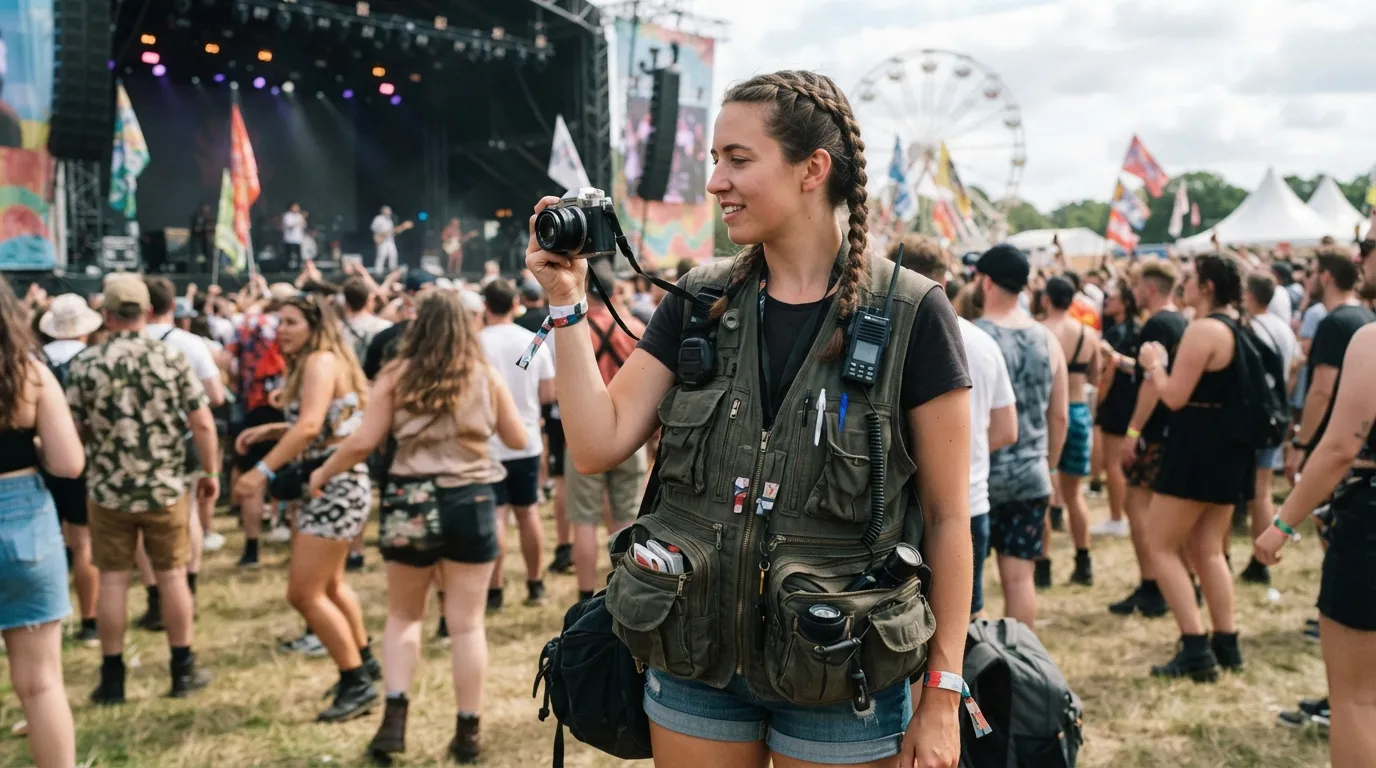
Utility vests grew out of work that needs quick access to small things: photographers, anglers, and field crews all rely on pockets they can reach without opening a bag. At a festival, the same setup suddenly makes sense for everyone.
Think about what you carry in a day. A pass, a charger, earplugs, lip balm, a few snacks, maybe a flashlight for the walk back. A vest lets you spread that load across your chest instead of digging through a pack in the dark.
Its sleeveless cut is part of the charm. Your arms stay free for dancing, but you still get layers of storage and, in some versions, an extra bit of warmth when the sun goes down.
The look turned heads because it seemed official, as if the wearer had a job to do. In a field of people trying to keep track of everything, that sense of preparedness stood out. Others took the hint. What started as crew gear became one more way to stay organized and a little bit stylish at the same time.
#3 – The Small Crossbody Bag
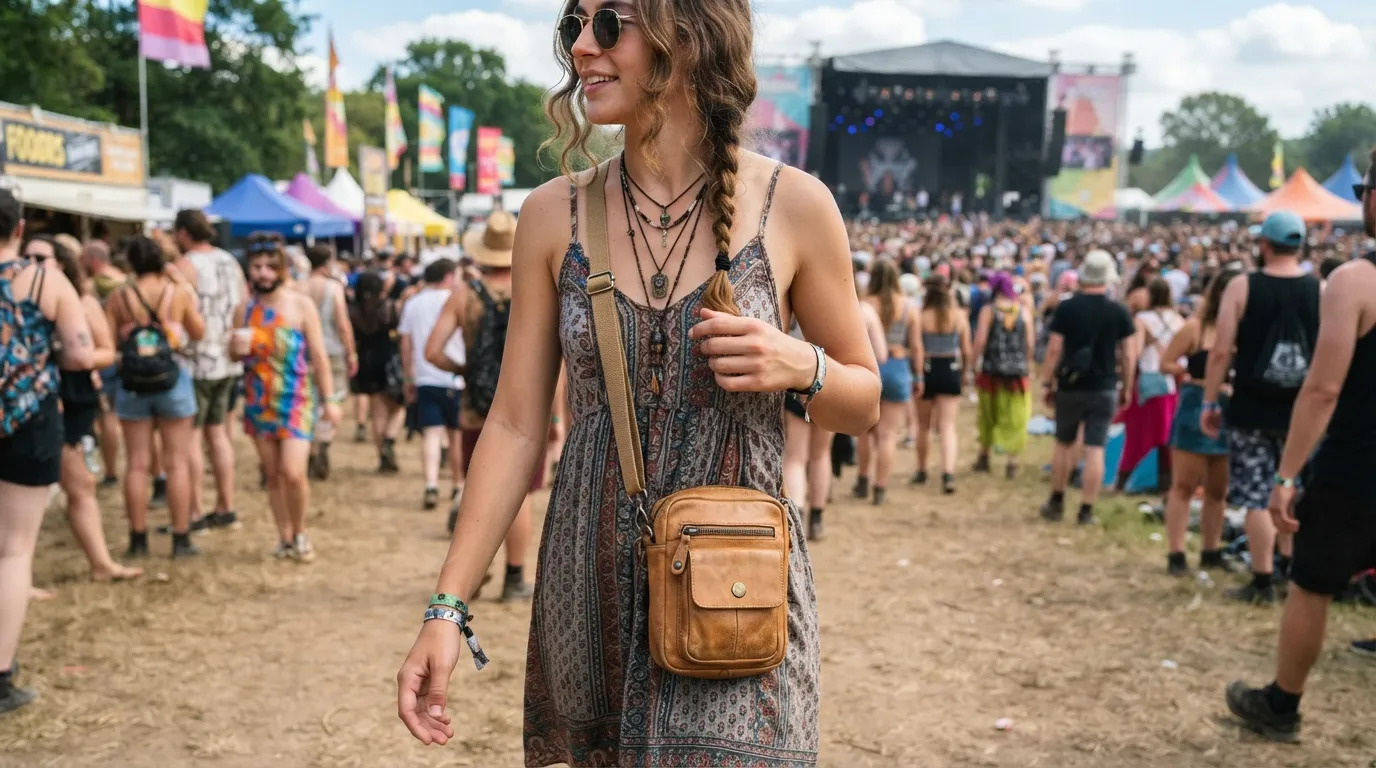
Many festivals limit bag sizes or require clear bags, and that rule has quietly reshaped how people carry things. A giant backpack is hard to get through security, hard to guard in a crowd, and a drag after a few hours.
The crossbody bag is the compromise. It holds the basics, sits against your hip, and keeps both hands free.
Its design echoes messenger and courier bags, which were built for people who needed to ride, walk, and grab things quickly. At a festival, that quick access matters. You can get to your phone, tickets, or lip balm without taking the bag off, and you can swing it to the front in a tight crowd.
Why It Stands Out
- A small one is far easier to fit within a venue’s bag-size rules.
- It stays in front of you when the crowd gets tight.
- Adjustable straps let it sit high for dancing or low for a long walk between stages.
- Your hands stay free for food, friends, and phones.
Many people now treat it as the default festival bag, not just a backup. It did not win by being flashy. It won because the rules, the crowds, and the schedule all pointed to the same answer. The last two items are the ones that rule the weather.
#2 – Hunter Wellies at Glastonbury
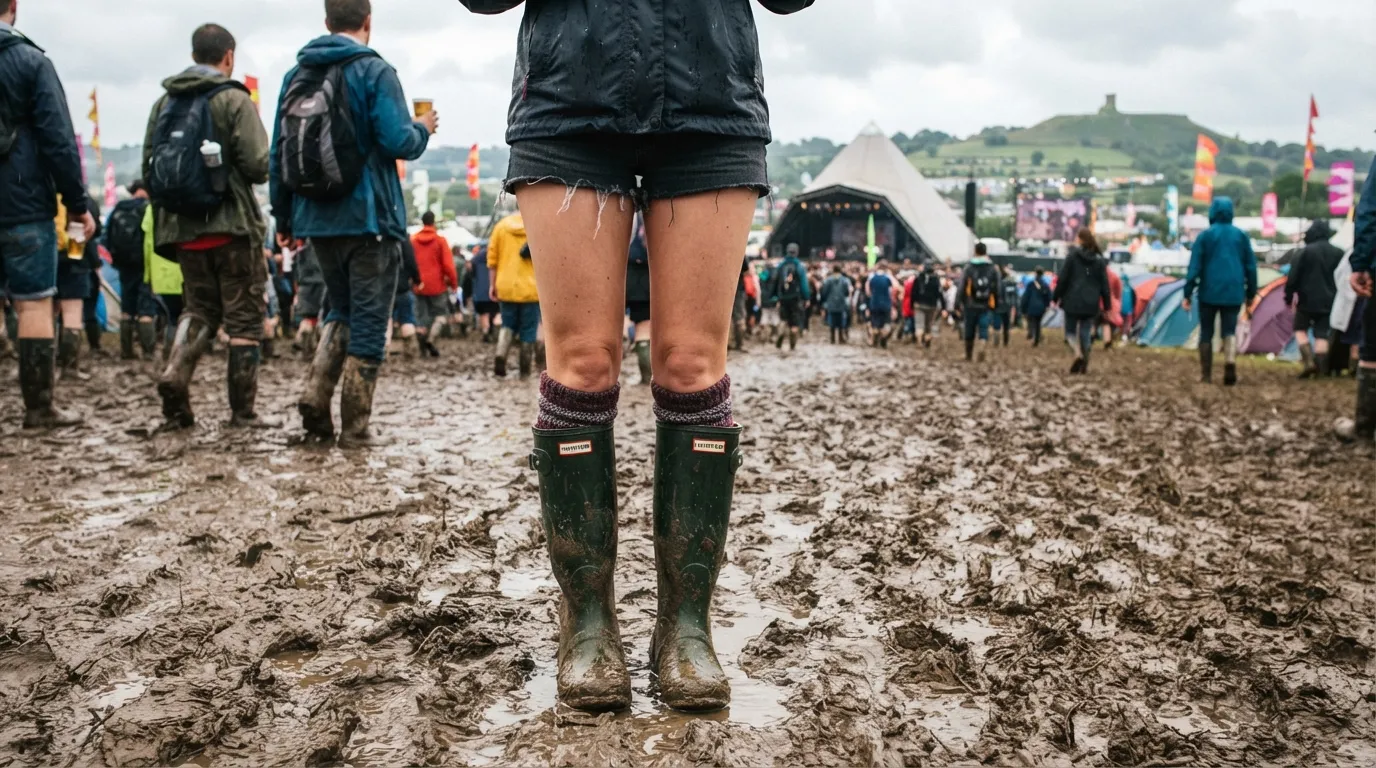
Wellington boots take their name from the Duke of Wellington, and rubber versions have long been a staple of wet British life. Glastonbury made them a festival icon. The festival’s reputation for deep mud means a pair of wellies is less a fashion decision than a survival tool.
Then came 2005. Kate Moss was photographed at Glastonbury in Hunter wellies and tiny shorts, and the image became a defining one of festival style. A boot meant to keep farmers’ and walkers’ feet dry suddenly looked like the coolest thing on the field.
But the real reason behind the trend is simple. When the ground turns to soup, sneakers fail. Rubber boots stay dry, rinse clean with a hose, and slip on without fuss.
That is why you still see rows of them outside tents after a rainy day. Fashion gave the boots a spotlight, but weather gave them their job. If you have ever stood in a flooded field wearing the wrong shoes, you know exactly why the uniform stuck.
#1 – The Flannel Shirt Tied Around the Waist
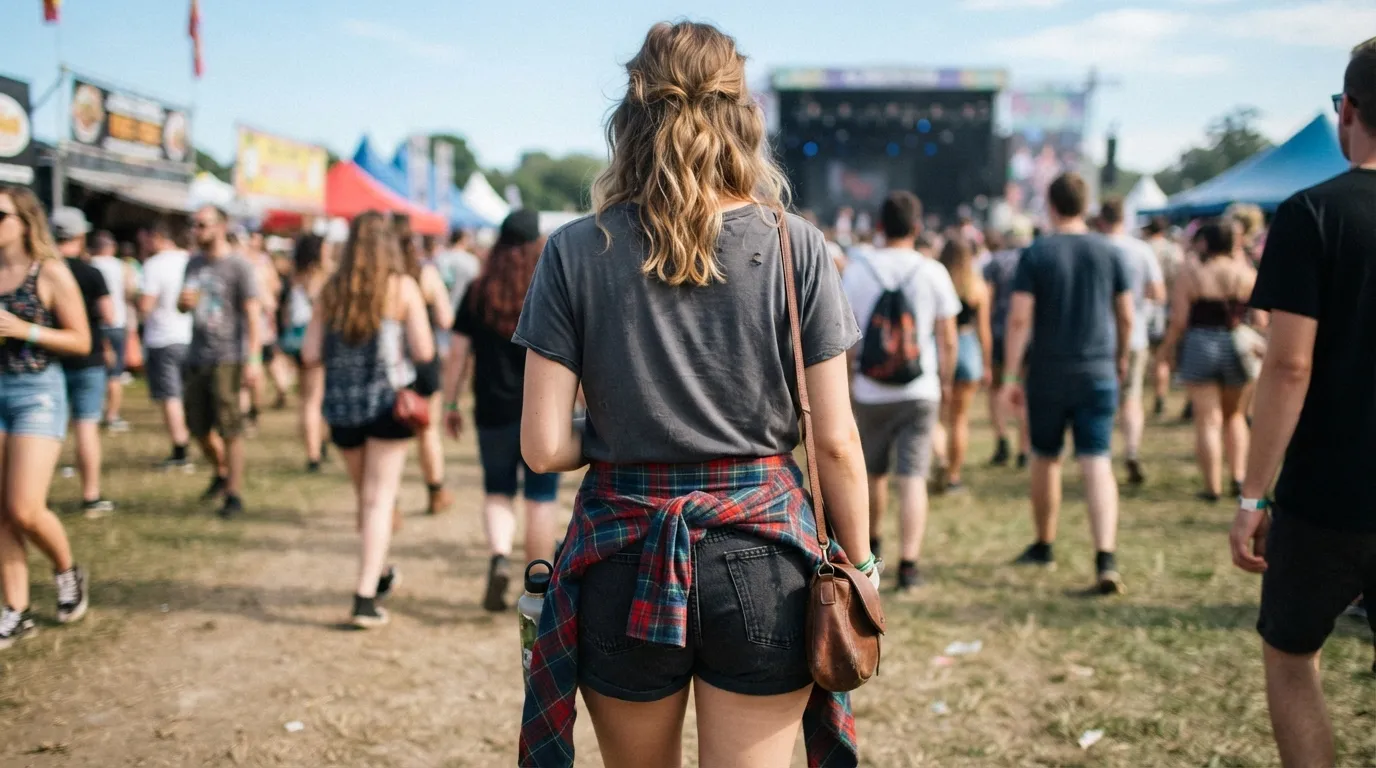
It might be the least impressive item on the list, and that is exactly why it takes the top spot. The flannel tied around your waist is not a product, a brand, or even a purchase. It is a little trick that makes a long festival day work.
Flannel has long been workwear fabric. In the early 1990s, grunge pushed it far into the mainstream. But at a festival, the shirt does something more useful than look moody.
At 2 p.m., the sun is brutal and a layer is the last thing you want. By midnight, the temperature has dropped and you are suddenly grateful for it. Tying the shirt around your waist solves both problems in a single knot, with no bag, no locker, and no trip back to camp.
That is the secret of the whole countdown. Great festival style rarely starts with a mood board. It starts with a sore foot, a muddy field, a cold night, or a heavy bag, and somebody finding a fix. Then everyone else sees it work, and a solution quietly becomes the look.
CEO-Co-Founder