
- The Day Nixon Resigned: What America Looked Like in August 1974 - October 8, 2026
- 1975: The Year Punk Was Born in America - October 8, 2026
- 15 Authors Who Used a Pen Name and Outsold Their Real Byline - October 8, 2026
#16 – Stourbridge Fair (Cambridge, England)
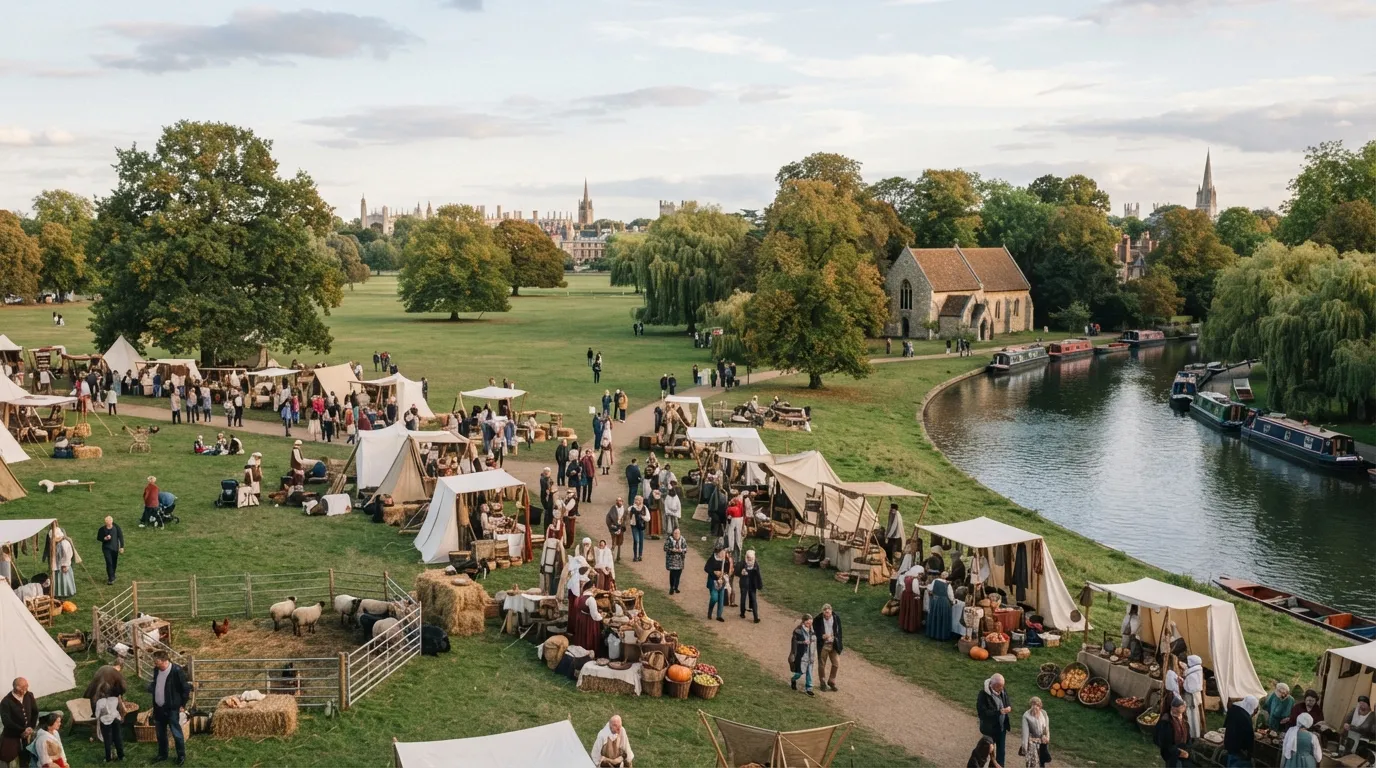
Picture a charity fundraiser for a leper hospital turning into what one famous traveler called the greatest fair in the world. That is the strange career of Stourbridge Fair, chartered by King John in 1211 to support the hospital outside Cambridge.
It set up on Stourbridge Common beside the River Cam in the weeks after harvest. Stalls sold cloth, spices, livestock and oysters, and merchants arrived from across Europe. When Daniel Defoe visited in the 1720s, he judged it bigger than any fair in the country, and bigger than anything abroad.
It faded once permanent shops and better transport made seasonal mega-markets unnecessary. But you can still find its ghost in Cambridge: Oyster Row and Garlic Row sit near the old site, and the little hospital chapel is still standing.
#15 – Bridgwater Fair (Somerset, England)
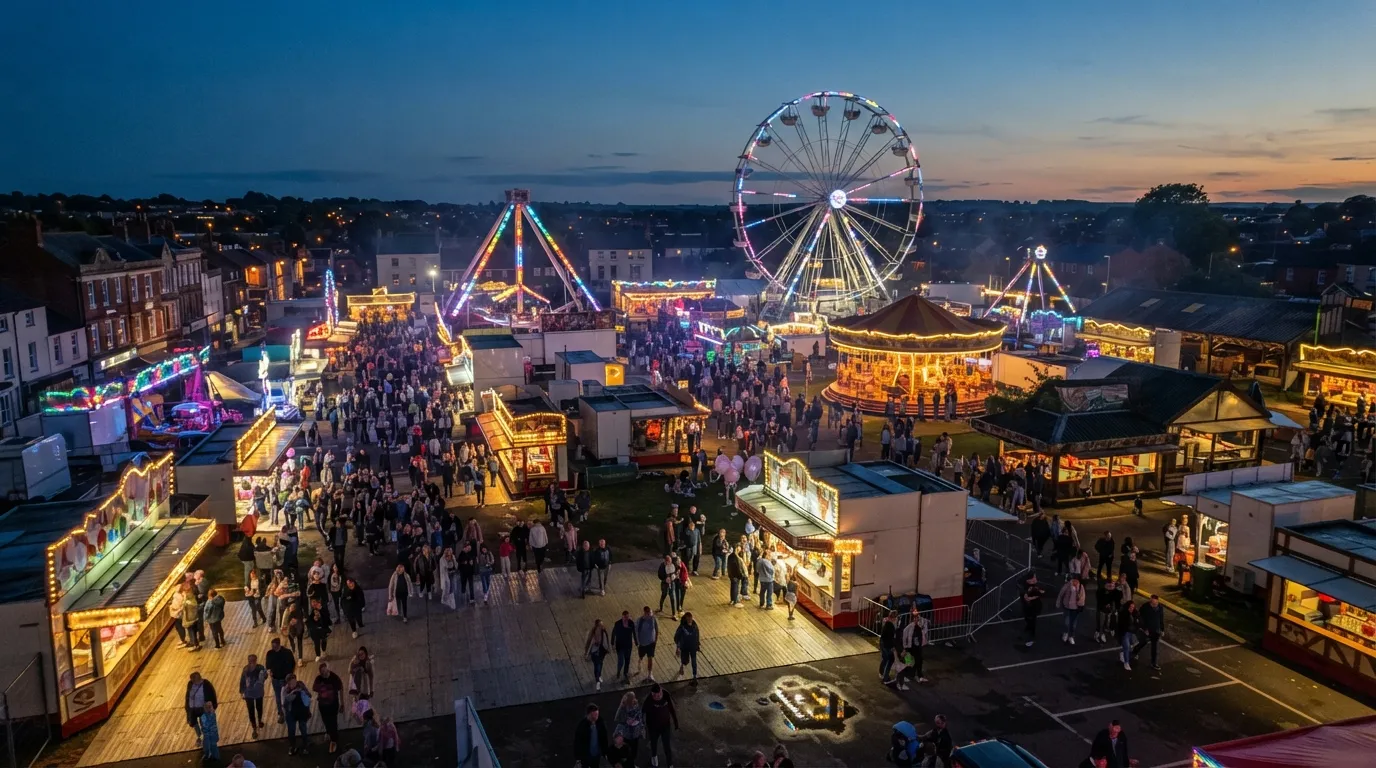
Bridgwater’s fair has outlasted kings, wars and the entire livestock trade that created it. Its royal charter dates to 1249, and the event still takes over the Somerset town each autumn.
Originally it was a serious market. Farmers brought cattle, sheep and horses to town as the season turned, and deals were struck in the streets. Over the centuries, the animals gave way to rides, food stalls and flashing lights.
Today the fair fills St Matthew’s Field and spills into the surrounding streets, drawing huge crowds for the midway. It is one of the biggest fairs in England, and the main attraction is no longer anything you could milk or ride to market. A medieval trading license now sets the rhythm of a whole town’s September.
#14 – Ephrata Fair (Pennsylvania)
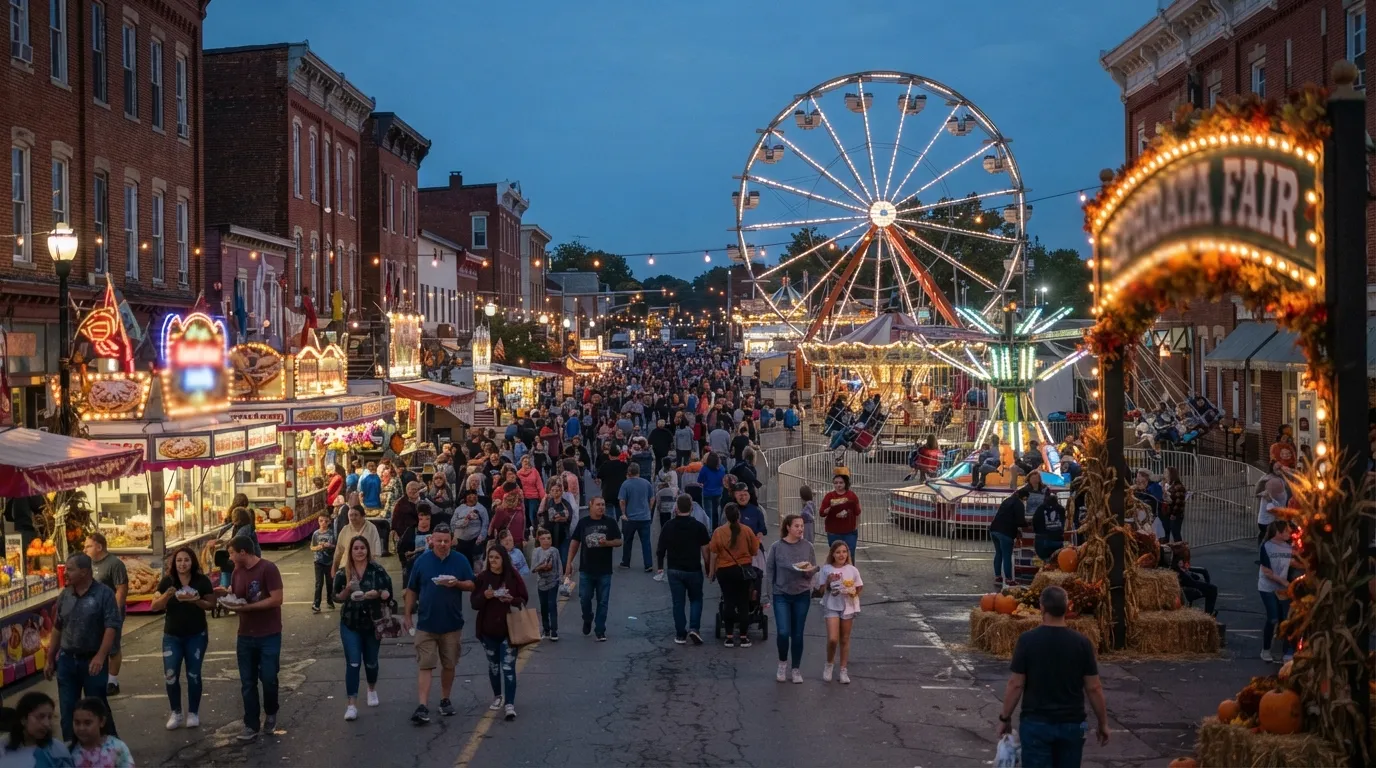
The Ephrata Fair did not start with crops at all. It began in 1919 as a one-day welcome-home party for soldiers returning from World War I, held along Main Street.
The harvest theme arrived the next year, and it stuck. By the early 1920s the event had become a multi-day Farmers Day Fair with agricultural exhibits, parades and commercial displays, drawing visitors from well beyond town.
Fast Facts
- Born in 1919 as a one-day party for returning World War I soldiers
- The harvest theme was added the following year
- By the early 1920s it was a multi-day Farmers Day Fair
- Livestock shows and produce contests still sit beside the midway
Over time the fair grew into one of Pennsylvania’s best-known street fairs, running several days each early autumn. The farm side never vanished, either. You can watch a prize animal being judged and then wander into the carnival noise a few minutes later.
#13 – Hebron Harvest Fair (Connecticut)
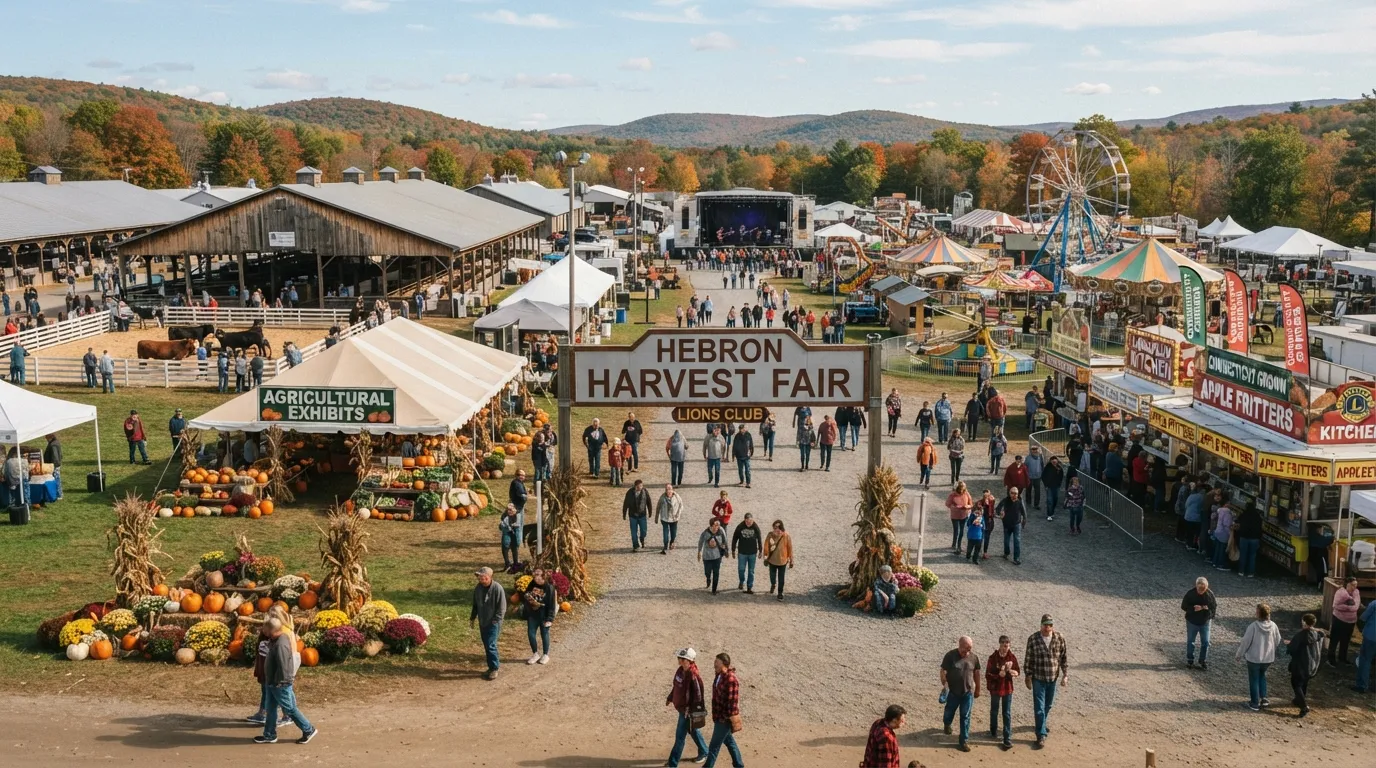
Few fairs grew as fast as this one. Hebron Harvest Fair began in 1971 as a small indoor event organized by the town’s recreation council at a school.
The Hebron Lions Club soon took over, and local demand pushed the fair out of the building. In 1972 the club bought 84 acres and set up permanent fairgrounds, which turned a modest gathering into a major multi-day event.
Now the fair is among Connecticut’s larger agricultural fairs, with livestock competitions, produce displays, food vendors and family entertainment each autumn. The Lions Club still runs it and funnels proceeds into community projects. A school-gym harvest display became a regional institution in about one year, which suggests people were hungry for exactly this.
#12 – National Apple Harvest Festival (Biglerville, Pennsylvania)
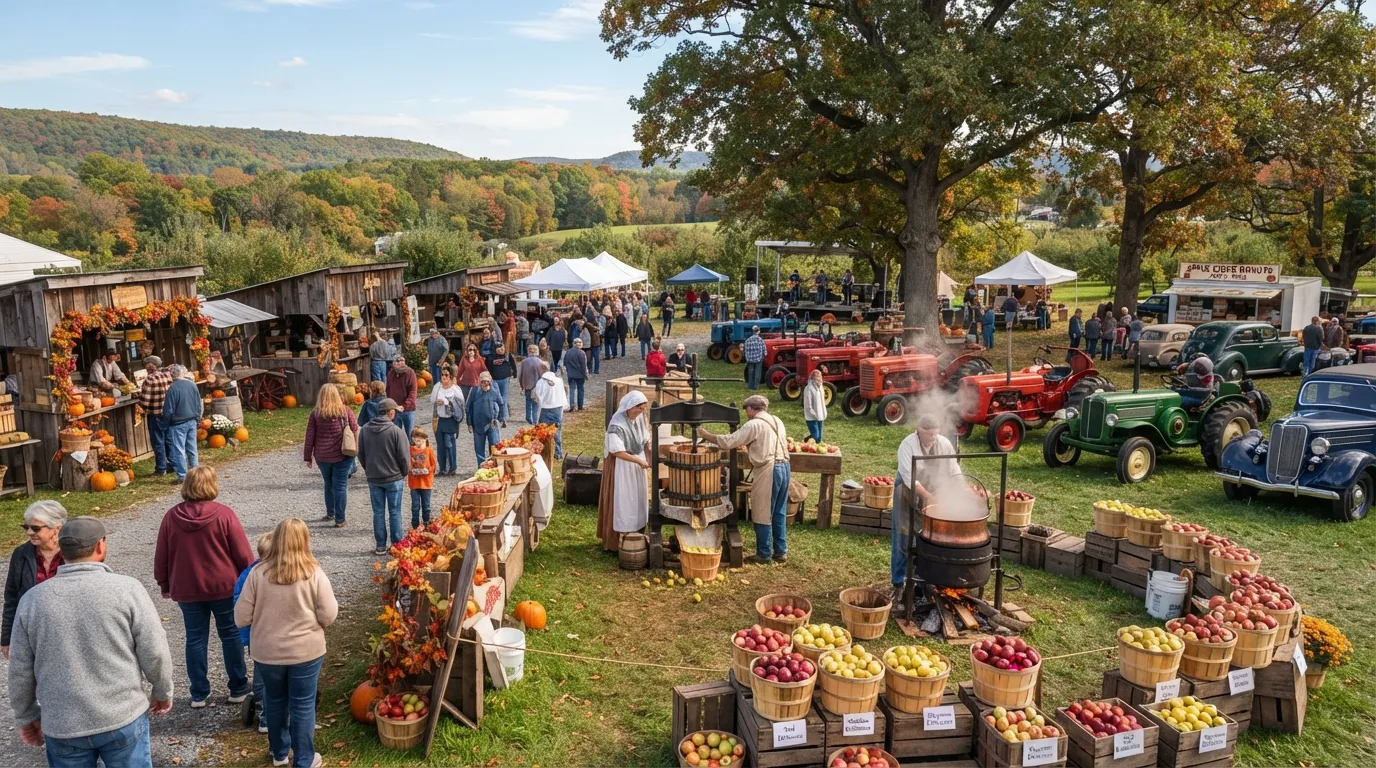
This one started as a growers’ pitch for their own fruit. In the early 1960s, the Adams County Fruitgrowers Association launched an Apple Harvest Holiday to celebrate the region’s orchards.
The Upper Adams Jaycees later took over and built it into a full festival, with cider pressing, antique cars and apple products for sale. Profits went toward local community needs such as park development.
Now it fills two October weekends in the heart of Pennsylvania apple country. Orchard tours, apple-butter boiling and fruit competitions sit beside crafts, food and live entertainment. Attendance has multiplied since the early days, but the whole thing still hangs on a single crop and its short, glorious season.
#11 – Clayton Harvest Festival (North Carolina)
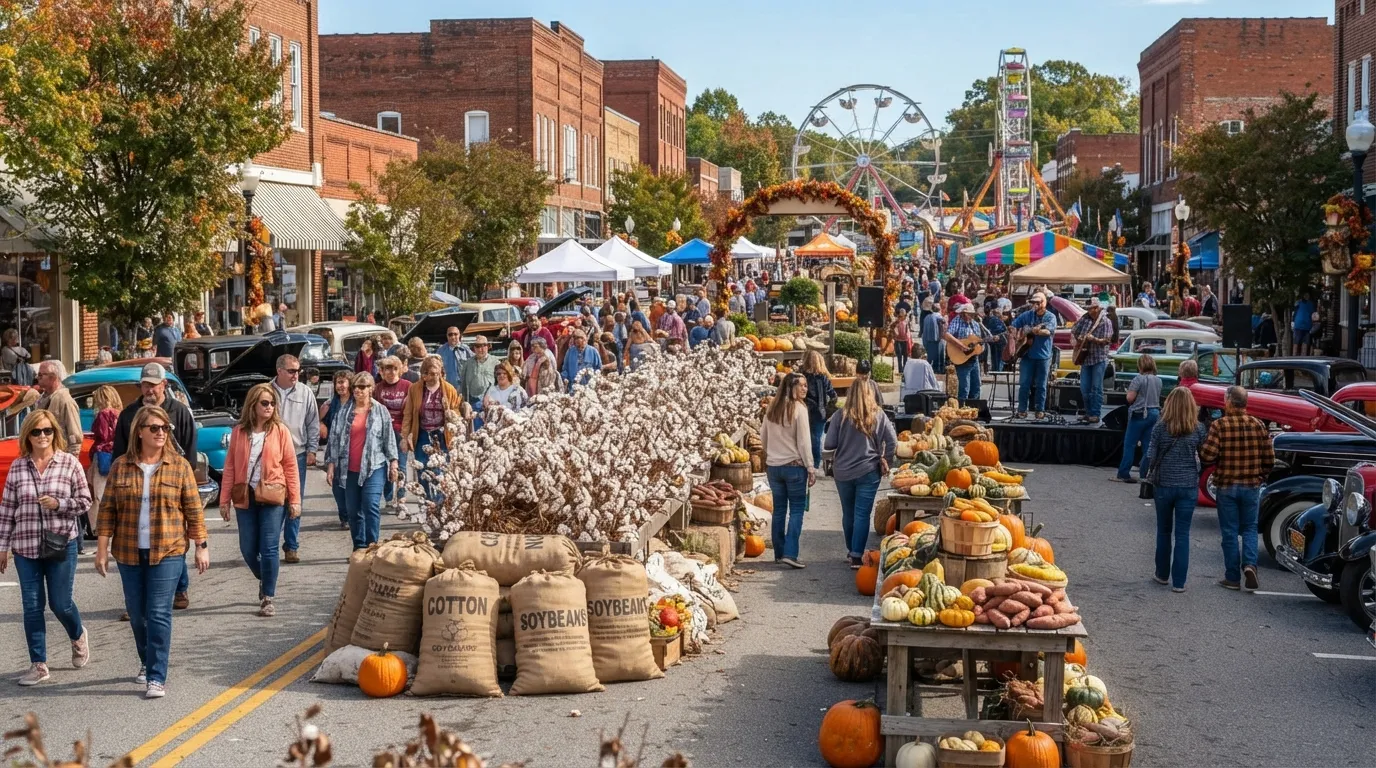
This festival has changed its name more times than most people change jobs, and each switch tells you something about the farms around it. It began in 1951 as the North Carolina Cotton Festival, celebrating the area’s key cash crop.
As local farming shifted, it became the Soybean Festival in 1972. In 1986 it settled on the broader Clayton Harvest Festival, which made room for a wider mix of local produce and community activities.
It now ranks among Johnston County’s biggest annual gatherings, held in October. Expect vendor markets, live music, a car show and carnival rides next to agricultural exhibits and seasonal food. The crop at the center changed twice, yet the town kept the party going.
#10 – Granville Harvest Fair (Massachusetts)
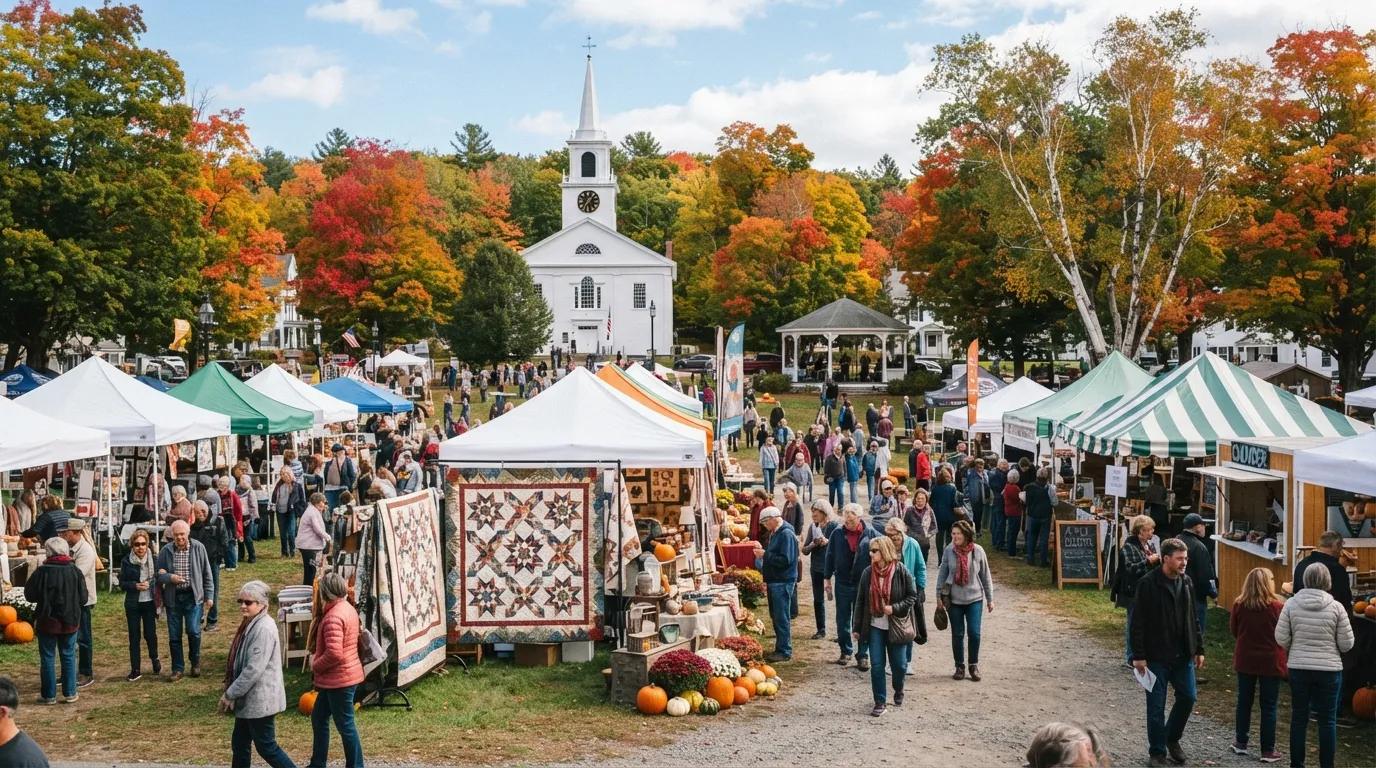
Here is a fair that began with quilts and ended up outgrowing its own hilltown. In 1981, Granville, Massachusetts, held a modest quilt show.
Organizers kept adding craft vendors, food booths and live entertainment until it became a multi-day autumn event with well over a hundred vendors spread across town.
At a Glance
- First held in 1981 as a quilt show
- Takes place on Columbus Day weekend
- Well over 100 vendors in a town of fewer than 2,000 year-round residents
- Free admission, with proceeds supporting community nonprofits
Thousands of visitors descend on the town each year, and the local food pantry is among the beneficiaries. The focus stays on local makers, artists and cooks, so a fall weekend in a quiet Western Massachusetts town now feels like the main event of the entire year.
#9 – Saanich Fall Fair (British Columbia, Canada)
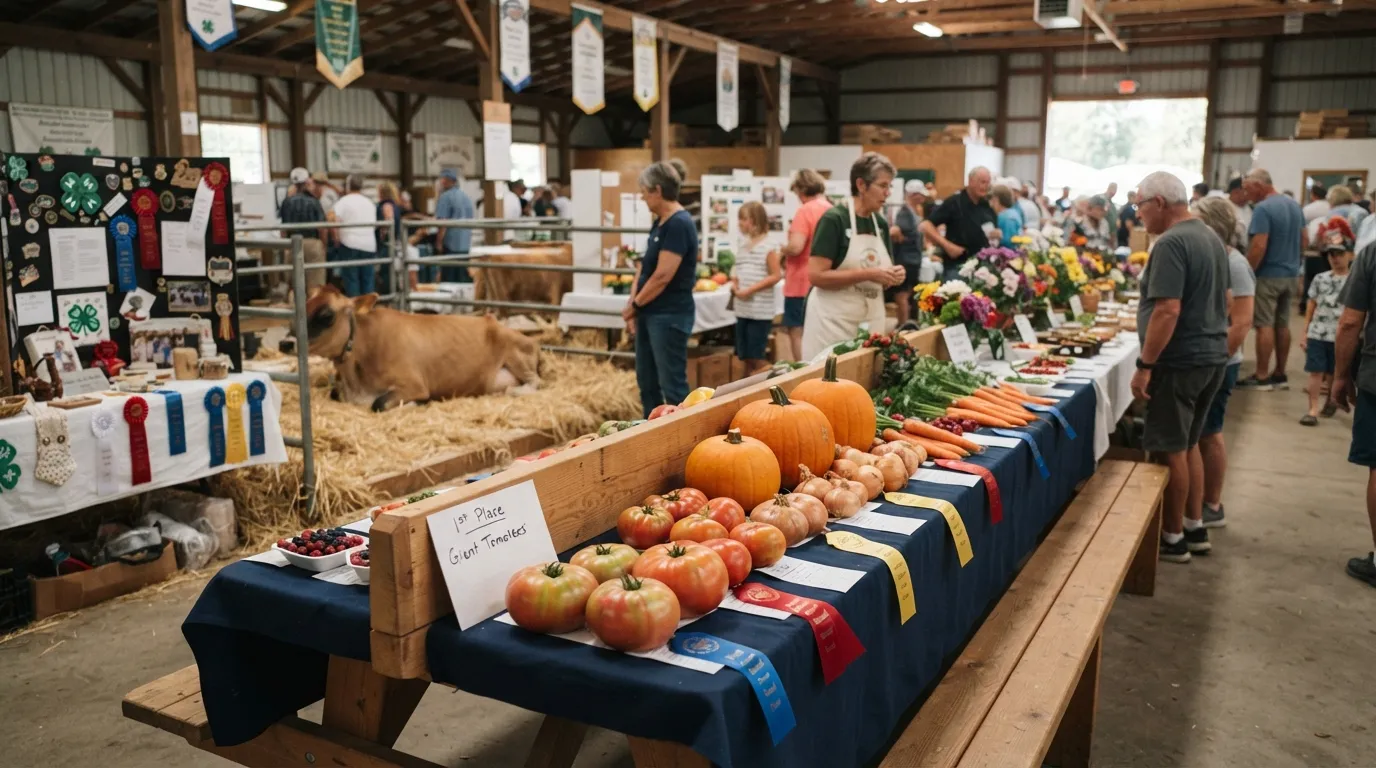
On Vancouver Island, one fair has been showing off prize vegetables and well-groomed animals since 1868. The Saanich Fair, held in Saanichton over Labour Day weekend, is billed as one of the oldest continuously running agricultural fairs in Western Canada.
It began as a harvest exhibition run by local agricultural interests. Farmers competed for prizes on crops and livestock, and the whole thing doubled as a lesson in what a good farm could produce.
The midway and entertainment have grown, but the old categories survive. Think 4-H exhibits, flower shows, baking and livestock judging. The surprise is how little the heart of it has changed. Families still bring their best tomatoes, quilts and animals to be judged, as their great-grandparents did.
#8 – Arcola Fair (Saskatchewan, Canada)
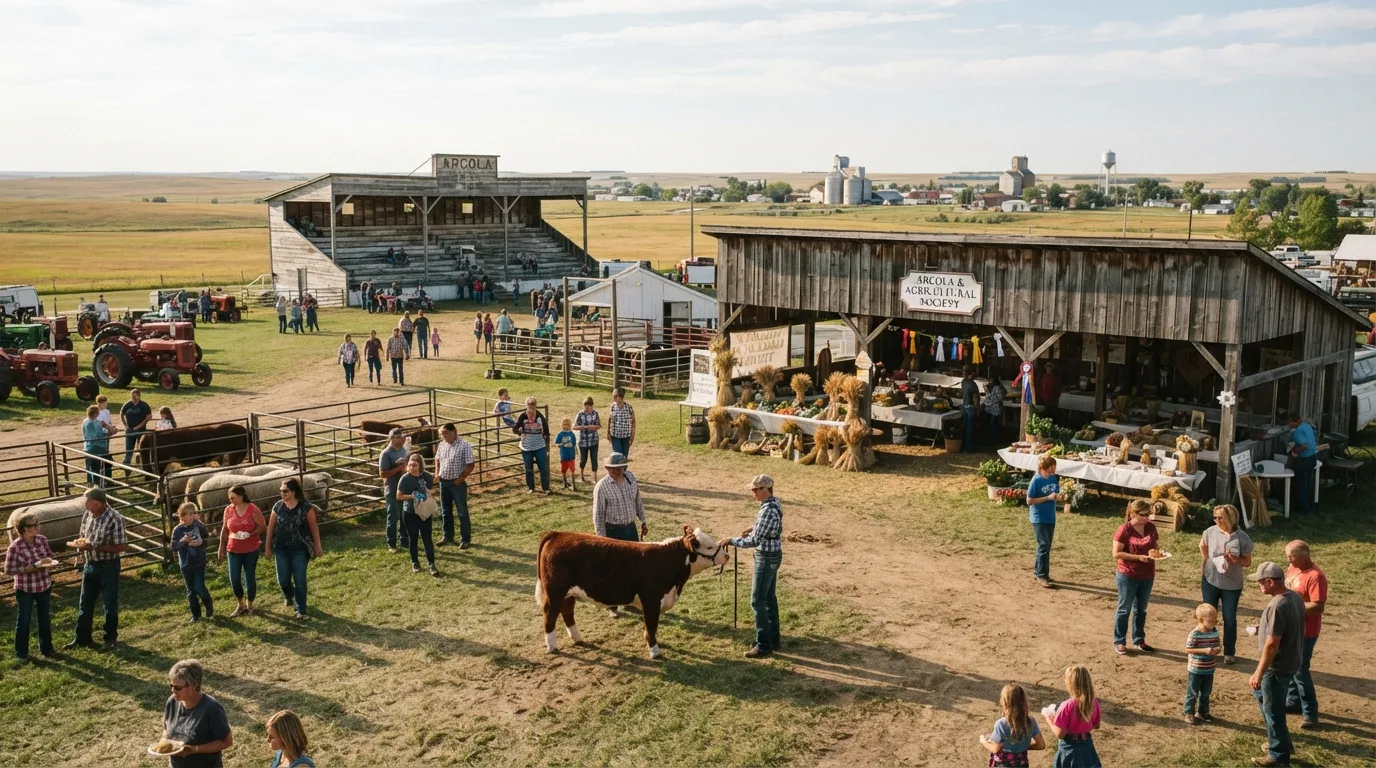
Prairie towns used to measure themselves by what they could grow, and the Arcola Fair was one way to prove it. The local agricultural society launched it in the early 1900s so residents could show off livestock, grain and handiwork.
It quickly became an annual social event in southeastern Saskatchewan, a chance for isolated farm families to compare results, catch up and celebrate the end of the growing season.
The fair has endured through world wars, droughts and big changes in farm life. It has added horse shows, 4-H events and entertainment, yet agriculture remains its anchor. The society still organizes it on grounds that generations of farm families know by heart. What began as a showcase of crops has become a rare fixed point in a changing countryside.
#7 – Berkshire Cattle Show (Pittsfield, Massachusetts)
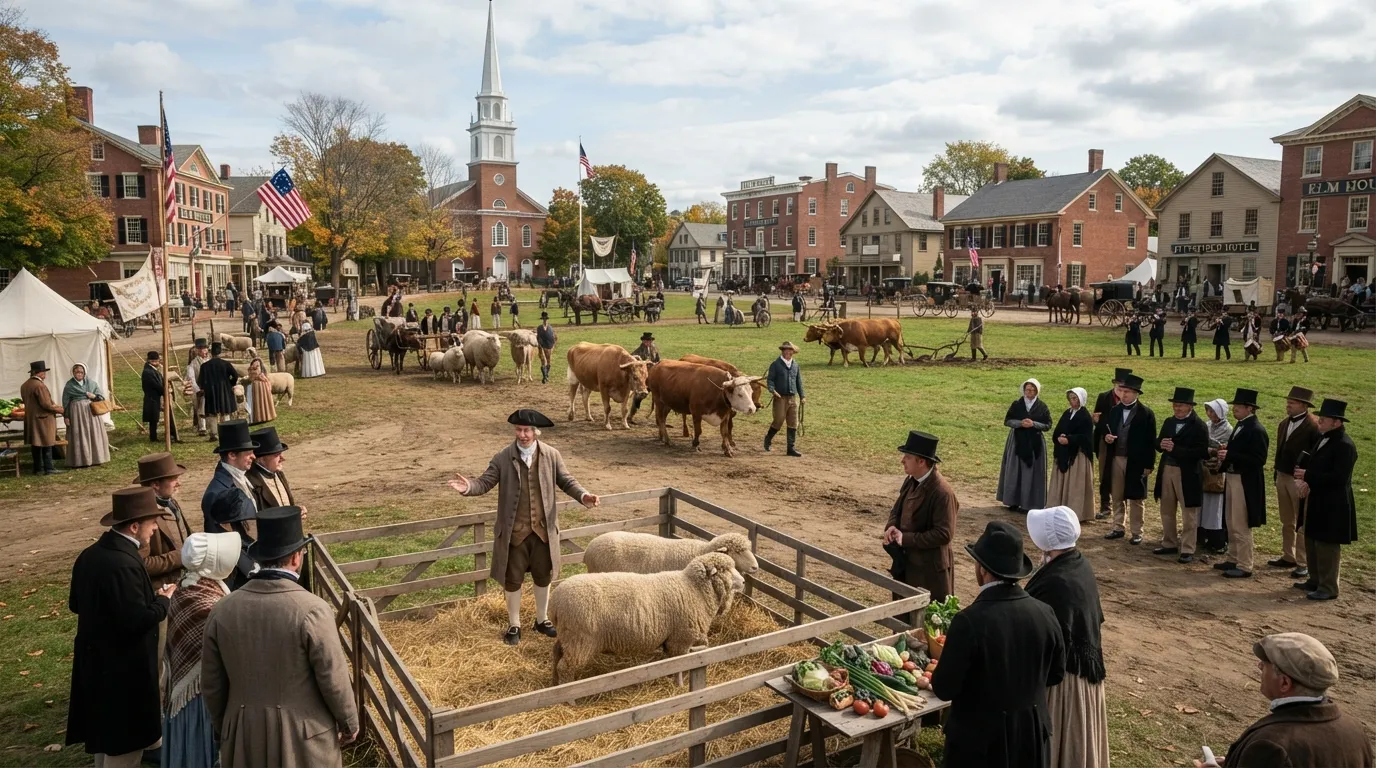
It all began with two sheep. In 1807, Elkanah Watson showed a pair of Merino sheep in the public square of Pittsfield, hoping to inspire local farmers to improve their flocks.
People noticed. In 1810 Watson helped launch the Berkshire Agricultural Society’s cattle show, with prizes for livestock and crops. Parades, speeches and plowing contests were added to draw bigger crowds.
Worth Knowing
- 1807: Watson displays two Merino sheep in Pittsfield’s public square
- 1810: the Berkshire Agricultural Society’s cattle show is launched
- Crowd-pullers included parades, speeches and plowing contests
- The format spread across New England and shaped county and state fairs
His idea was simple: give farmers a reason to compete, compare and learn from each other. So the next time you watch a blue ribbon pinned to a prize animal, remember that a modest sheep display in a Massachusetts square helped set the pattern.
#6 – Windsor Fair (Nova Scotia, Canada)
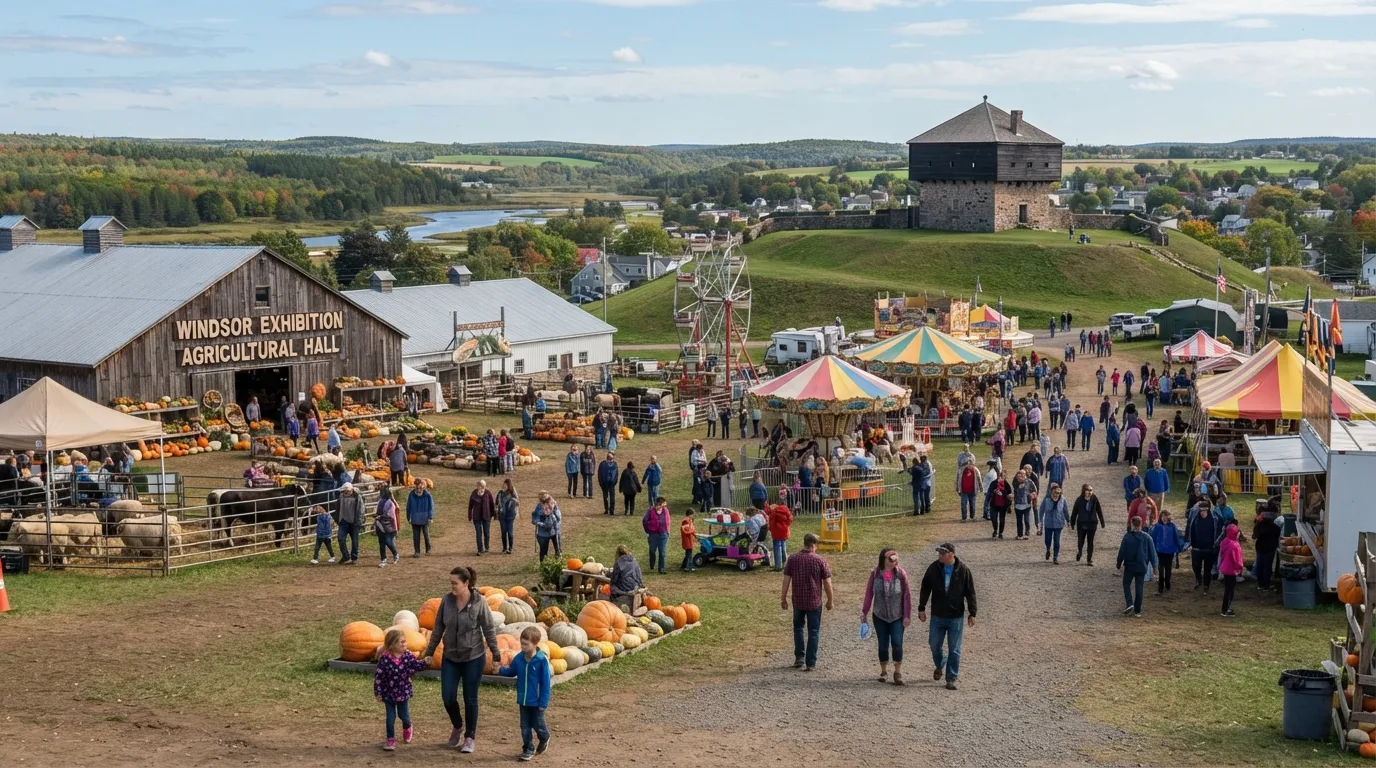
Windsor, Nova Scotia, has a fair with colonial roots so deep that it is often named among the oldest in North America. The fair was authorized in 1764, and the first one took place in 1765 on Fort Edward Hill.
Local gentlemen offered prizes for livestock, produce and sports, giving the new township a way to show off what its farms could do. At first, the fair ran irregularly. A renewed charter in 1815 helped steady it.
Since then it has continued as an autumn gathering that mixes agricultural display with community entertainment. The attraction is the sheer stretch of time. A fair started when the area was still a young British outpost now belongs to the modern calendar, and people still show up to compare vegetables and livestock.
#5 – Nottingham Goose Fair (England)
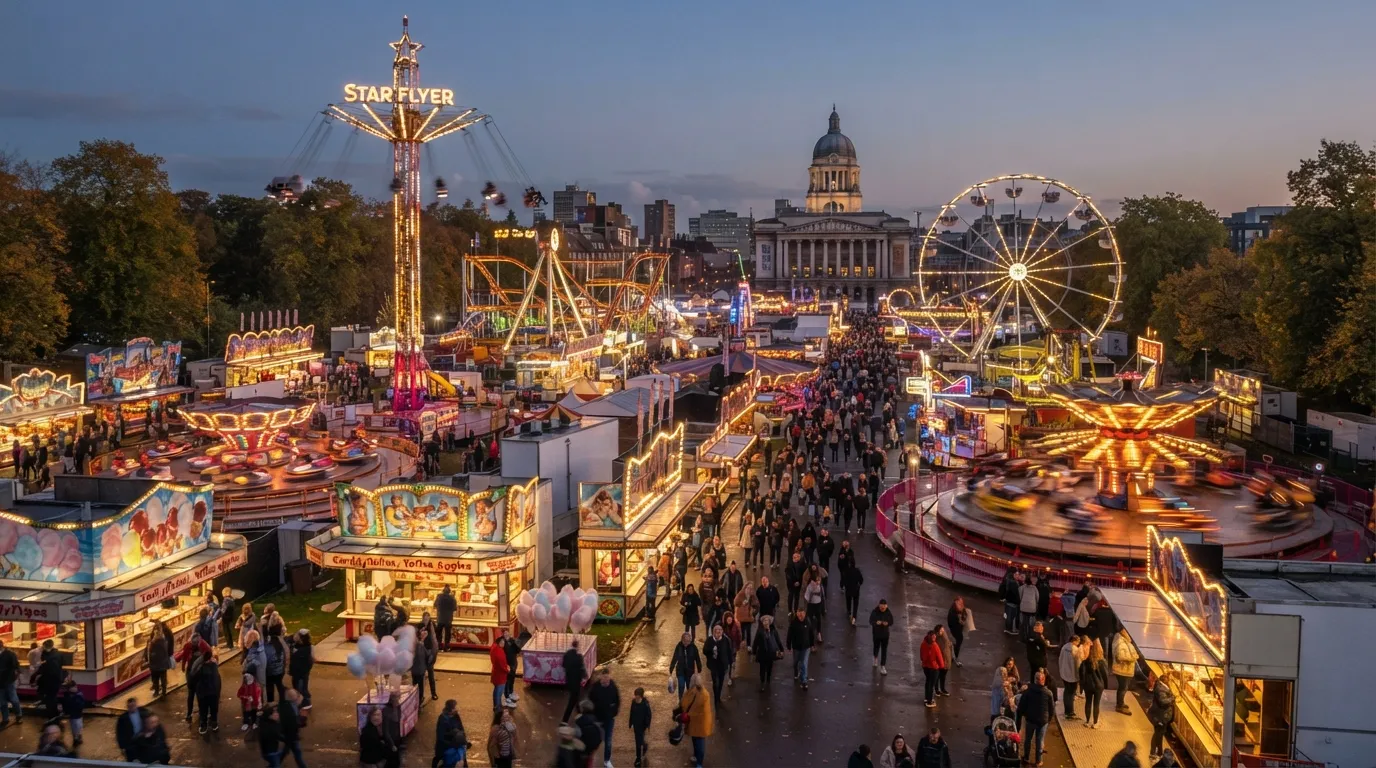
For centuries, the star of this fair walked in on its own feet. Nottingham Goose Fair goes back to a 1284 charter that formalized an existing market, and its name comes from the geese that were driven to town after the harvest.
Farmers and traders brought flocks, often from the Lincolnshire countryside, to sell at the end of the farming year. Other livestock and goods changed hands too, and the market doubled as a place to find work.
The geese are long gone, but the fair is not. It now takes over the Forest Recreation Ground each autumn with rides, stalls and food. One of England’s most famous traditional fairs began as a sale of birds fattened on stubble fields, and it is still named after them.
#4 – Mendocino County Fair and Apple Show (Boonville, California)
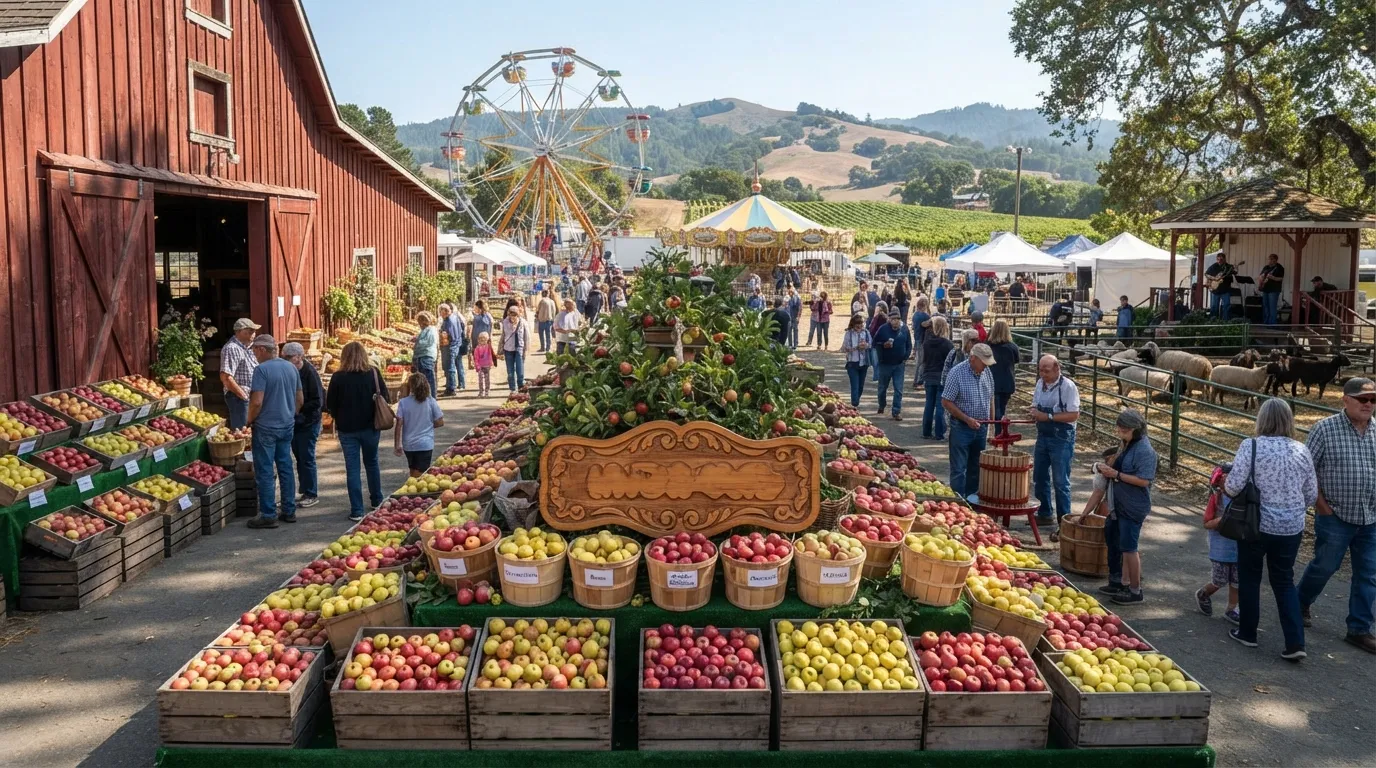
Most fairs advertise the animals. This one puts the fruit right in the name. The Mendocino County Fair and Apple Show, held in Boonville each September, keeps the apple harvest at the center of the Anderson Valley’s biggest fair.
Anderson Valley is orchard country, and the apple tie is no accident. Fruit exhibits, cider making and orchard-style displays sit beside the livestock shows, crafts and music you would expect at a county fair.
It is a small-town gathering with a very specific local flavor. Boonville even has its own homegrown slang, Boontling, which adds to the feeling that this fair belongs to its valley and nowhere else. The apples are still the point, and the name proves it.
#3 – Edmonton Exhibition (Alberta, Canada)
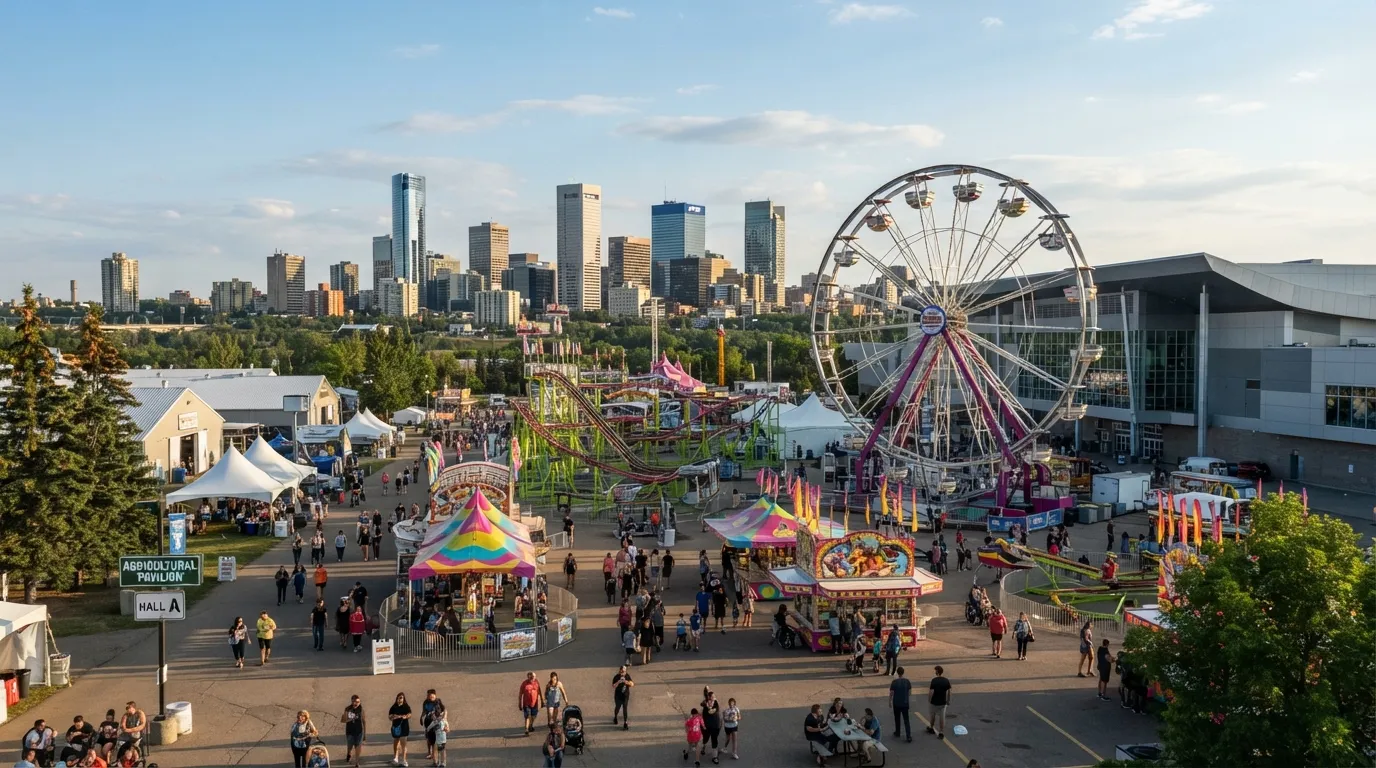
Before Edmonton had skyscrapers, it had a harvest fair. In 1879, the Edmonton Agricultural Society organized an exhibition to showcase what Northwest farmers could grow and to encourage settlement.
Farmers displayed grain, vegetables and handiwork on grounds near the fort. It was a way to tell newcomers, and each other, that the land could actually feed a town.
That small fall fair became the seed of a much larger tradition. The Edmonton Exhibition grew into a major annual event for the city, with agricultural competitions alongside ever-bigger entertainment. It is a striking reminder that some of Canada’s biggest summer and fall spectacles started as farmers simply trying to prove their fields were worth a bet.
#2 – Hull Fair (England)
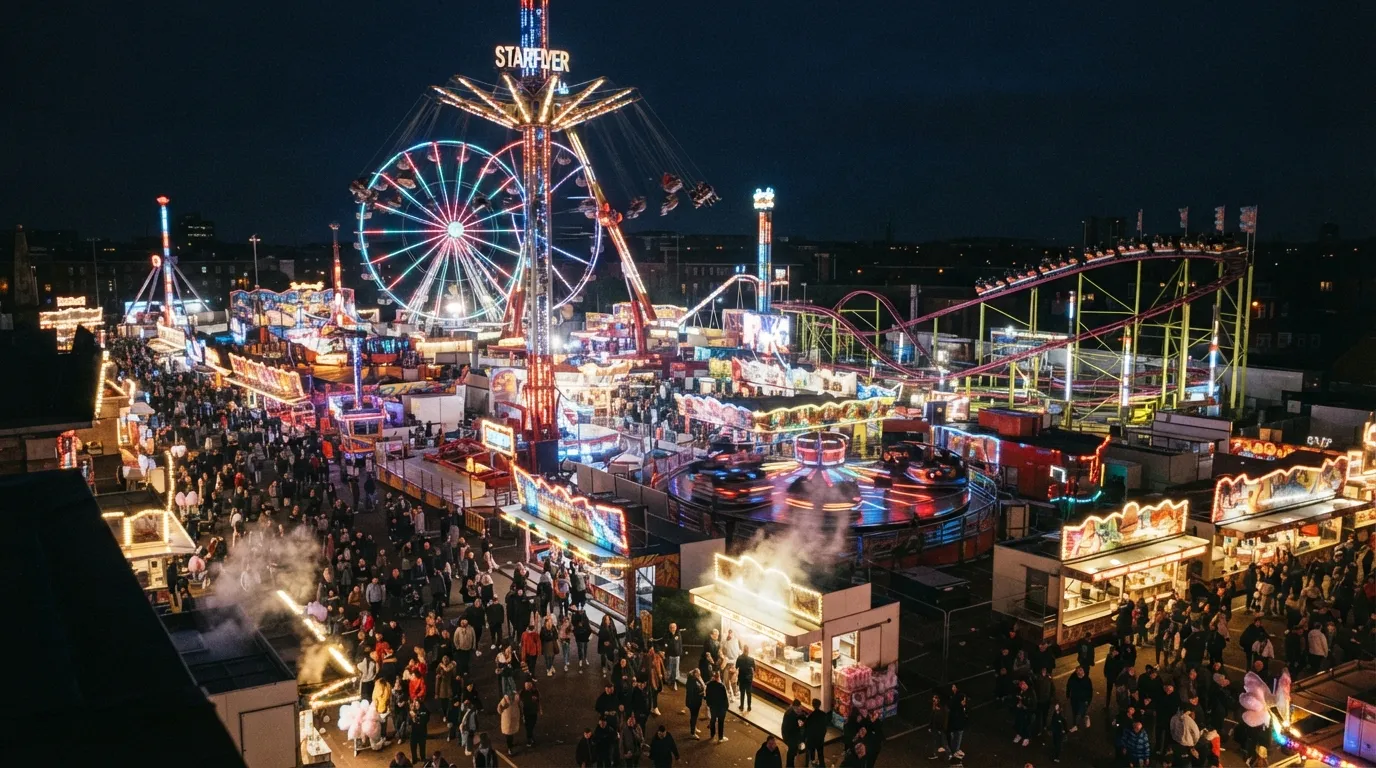
Hull Fair is the kind of event that makes visitors forget it has a market in its bones. Its history runs back to a medieval royal charter in 1278, when trade fairs were serious business for the port town.
Traders and laborers came to buy, sell and find work. For centuries, commerce was the point, and amusements were just a sideshow competing for attention.
Quick Compare
- Stourbridge Fair: chartered in 1211
- Bridgwater Fair: royal charter in 1249
- Hull Fair: royal charter in 1278
- Nottingham Goose Fair: charter in 1284
Today Hull is one of England’s largest traveling funfairs, filling the Walton Street site each October for about a week. Rides, food stalls and flashing lights have long since taken over, but the autumn slot has endured. Walking through the noise, you are standing on the site of a very old marketplace that simply learned to throw a bigger party.
#1 – Topsfield Fair (Massachusetts)
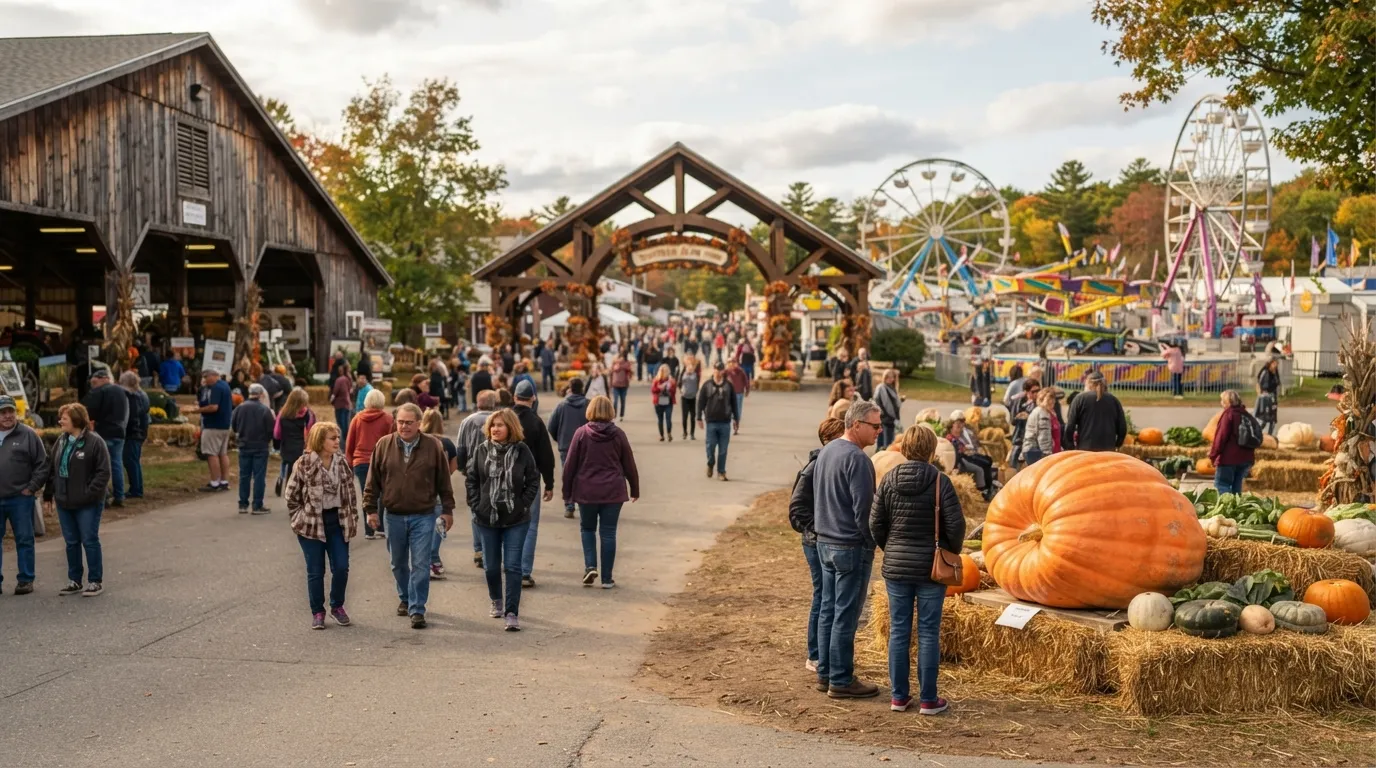
The top spot goes to a fair that never stopped being a fair. Topsfield Fair dates to 1818, when the Essex Agricultural Society put on an exhibition to help New England farmers compare livestock and crops. It is billed as the oldest continuously operating agricultural fair in the United States.
Today it runs for about ten days around Columbus Day, and it has become a full-blown autumn tradition across the region. Giant vegetables and oversized pumpkins still draw crowds, along with livestock shows, food and a midway.
That is the real twist. A farmers’ contest to see who raised the best animals is now a big-name event people plan their fall around. The prize-winning produce is still there, and so is the crowd that came to see it.
CEO-Co-Founder