

- 12 Differences Between What a Cruise Fare Covered in 1980 and What It Covers in 2026 - October 16, 2026
- 13 Differences Between a Concert Ticket in 1978 and a Concert Ticket in 2026 - October 16, 2026
- 15 Differences Between a Road Trip in 1970 and a Road Trip in 2026 - October 16, 2026
#12 – A 1980 soda poured at the dinner table beside a 2026 soda kept behind the bar
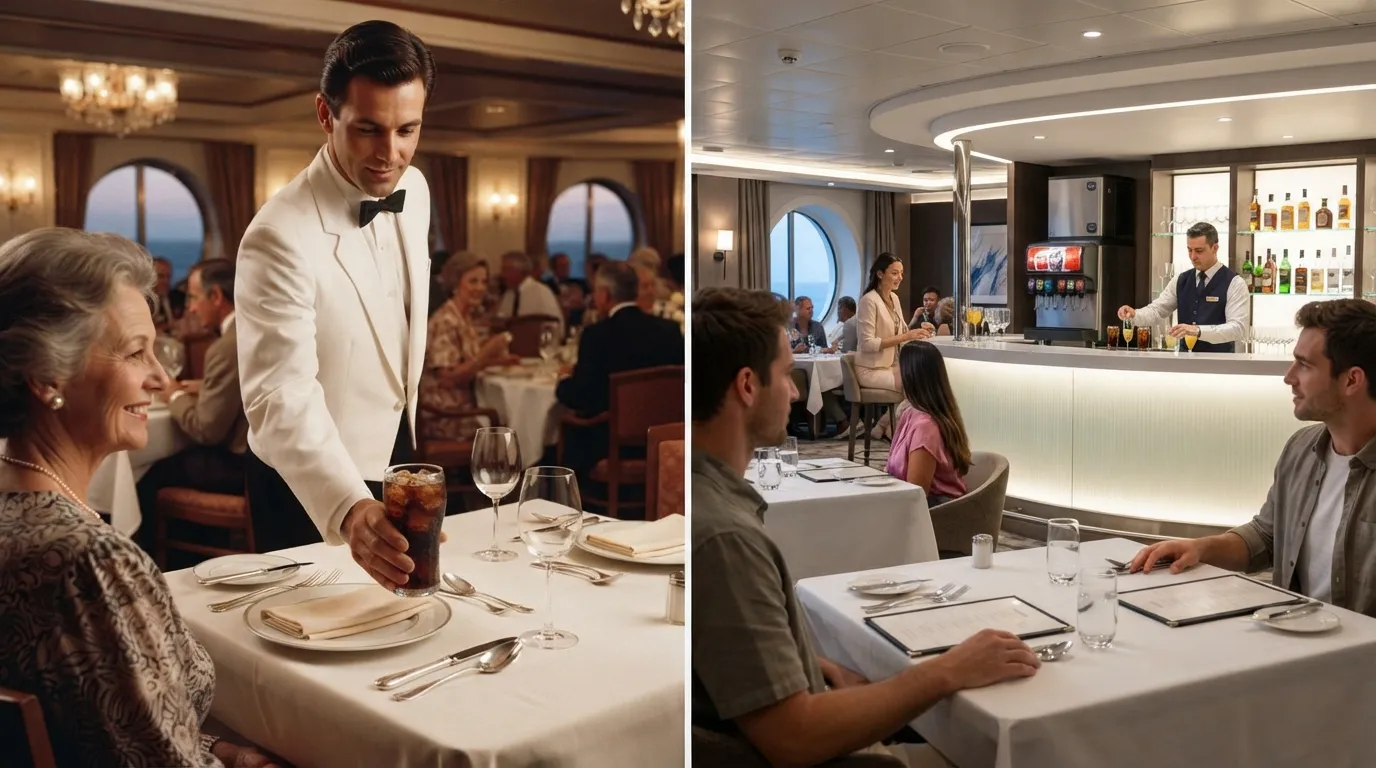
Start on the left, in 1980. A waiter sets a cold glass of soda beside the dinner plate, and nobody reaches for a card or a pen. On many ships of that era, soft drinks and lemonade arrived with the meal as part of table service the fare already covered.
Now the right half, same camera height, same kind of dining room. The soda has moved behind the bar, and a passenger has to walk over and ask for it. On many ships today it comes with a per-drink price or a prepaid beverage package.
Water, coffee, and tea at meals usually stay free, which makes the change easy to miss. The glass that once showed up on its own now lives at a separate station with its own step. Same thirst, different counter.
#11 – A 1980 shore-tour desk in the lobby beside a 2026 excursion desk with its own till
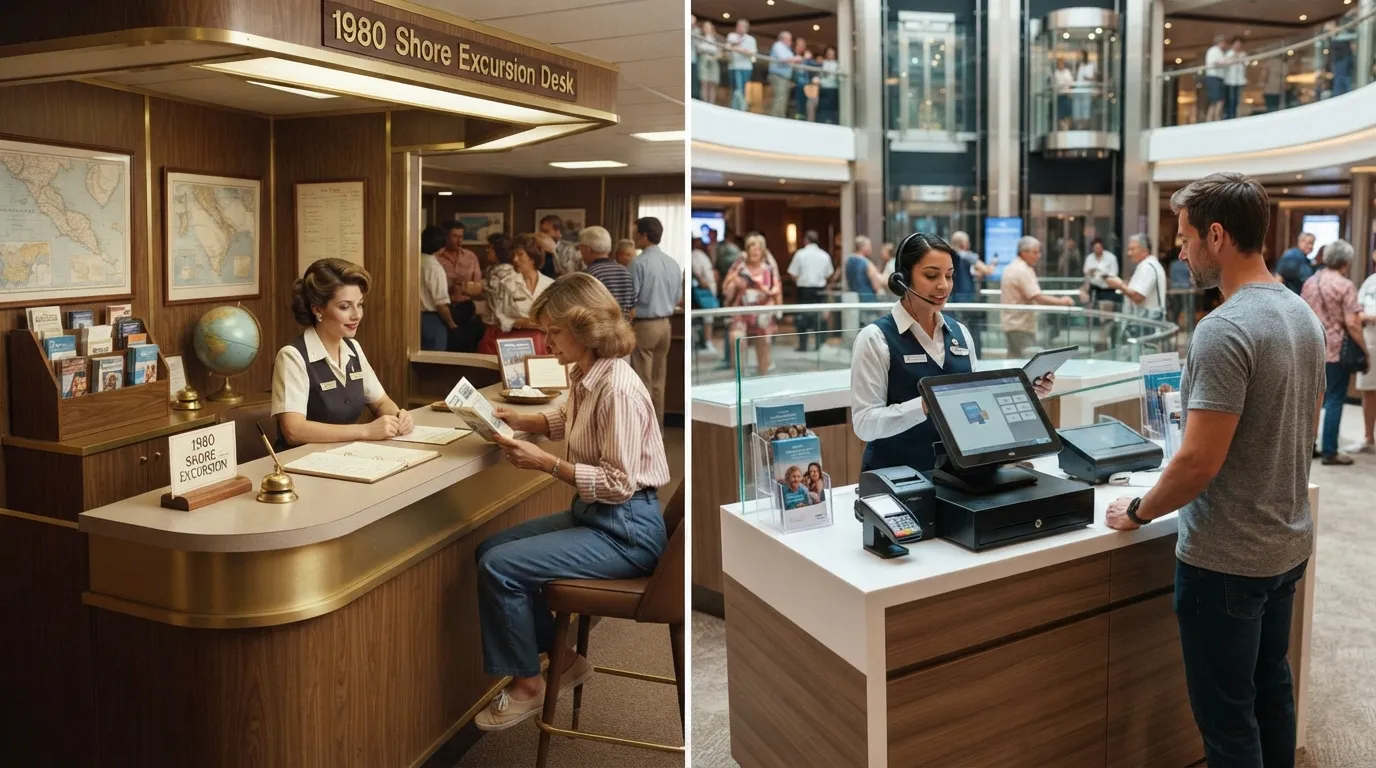
On the left, a 1980 lobby desk looks almost sleepy. A staff member sits behind a plain counter with port information and tour sign-ups, and the money changes hands without a register in sight. Booking a day ashore felt like part of arranging the trip itself.
On the right, the desk is still in the lobby, but it now has a till of its own. Bookings, payments, and receipts all run through one counter built to take money on the spot.
The information is still there, but the furniture tells the story. A port day that once felt like part of the cruise now looks like a separate purchase at a retail counter, and on most lines that is exactly what it is.
#10 – A 1980 dining room that was the only restaurant beside a 2026 specialty restaurant behind a closed door
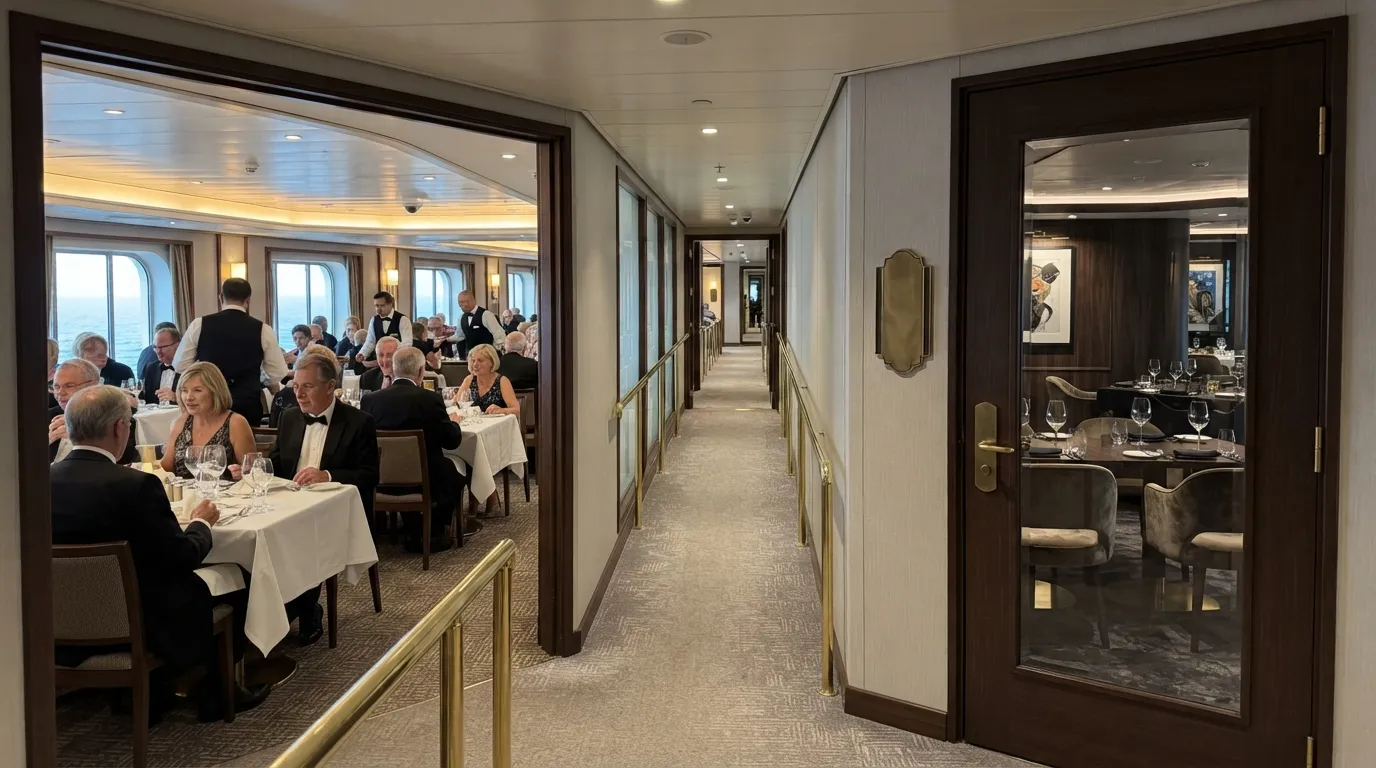
Look left and you see the whole dining story of 1980 in one room. Set seatings, white tablecloths, and one big dining room that served as the main restaurant on many ships. Nothing else on board asked you to book a table.
Now look right, from the same spot. The main dining room is still there, but a closed door has appeared nearby, and behind it sits a specialty restaurant. Getting in usually means a separate reservation and often a cover charge.
Quick Compare
- 1980: one main dining room, set seatings, nothing extra to book.
- 2026: the main dining room is still included, with specialty rooms alongside it.
- The catch: the specialty door usually asks for a reservation and often a fee.
Nothing was taken away from the included meals. What changed is that the best-looking table on the ship may now be behind a door that asks for something extra. A fare that once covered the only restaurant now covers the main one.
#9 – A 1980 cash tip left on the dresser beside a 2026 printed folio on the desk
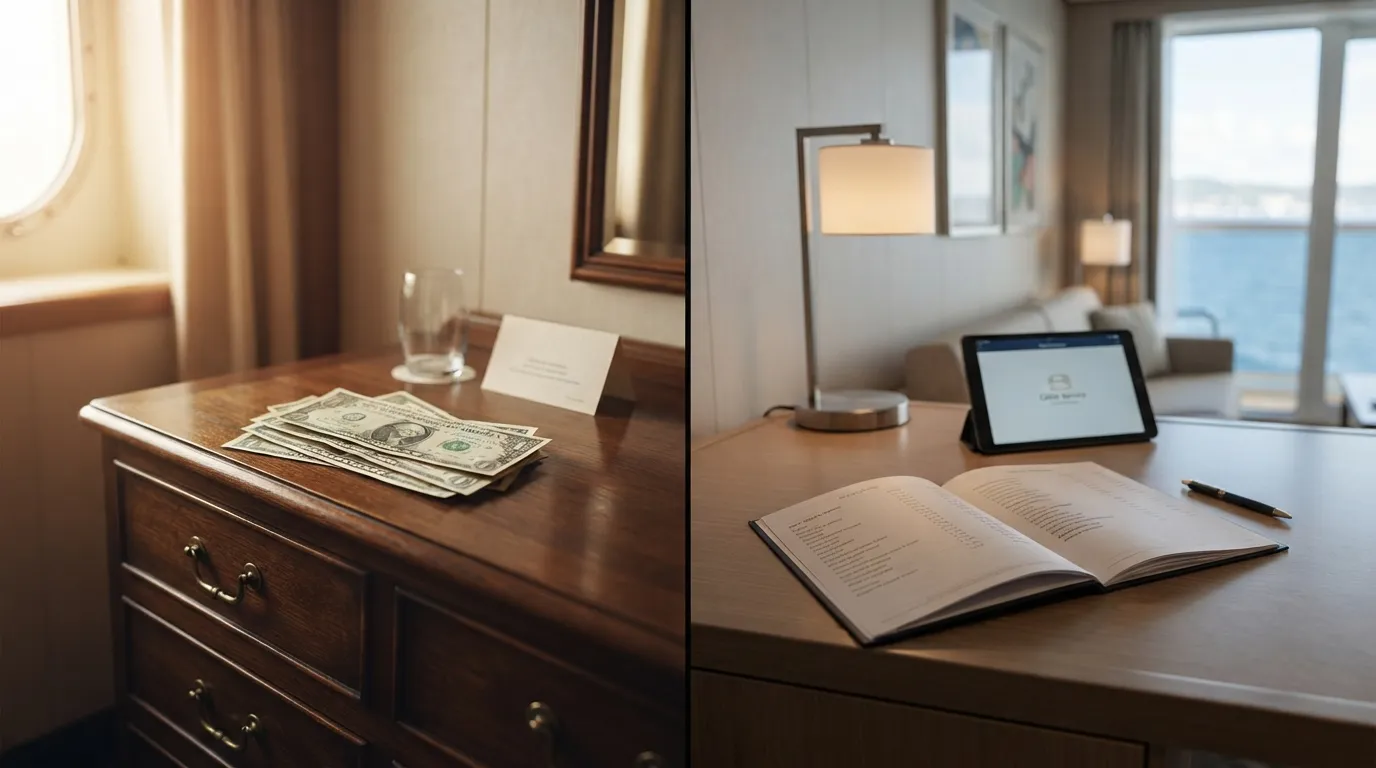
On the left, a small stack of bills sits on a 1980 dresser. Onboard materials suggested daily tipping amounts, and passengers often left cash for cabin staff at the end of the voyage. The thank-you was visible and personal, and it was waiting to be picked up.
On the right, the dresser is bare. A printed folio rests on the desk instead, listing the account and any service charges already added.
On many lines today, daily gratuities are charged automatically, so the folio carries what the bills once did. The gesture moved from a pile of cash on furniture to a line of ink on paper. Whether that feels easier or colder depends on who is holding the pen.
#8 – A 1980 room-service tray with no charge slip beside a 2026 room-service tray with a charge slip
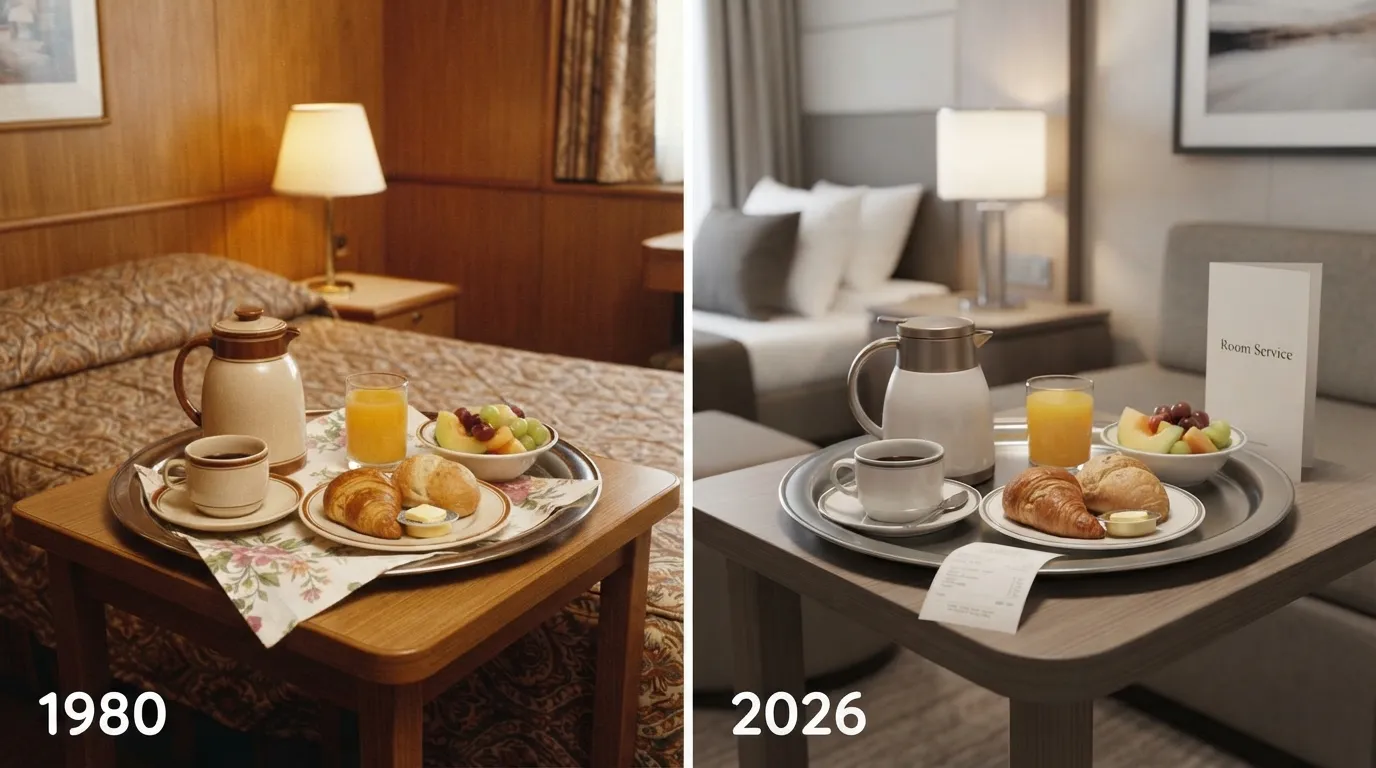
On the left, a tray arrives in a 1980 cabin with coffee, rolls, and fruit, and no slip of paper anywhere on it. On many ships of that era, continental breakfast and some daytime items came with the fare. The steward set the tray down and left.
On the right, the tray looks familiar, but a charge slip rides along with it. On many lines today, full room-service orders carry a delivery or service fee, though a limited free menu, such as continental breakfast, often remains.
The slip is small, but it changes the feeling of ordering in your robe. A midnight snack that once felt like part of the vacation now comes with a tiny receipt, and you notice it before the first bite.
#7 – A 1980 flight coupon clipped into the cruise folder beside a 2026 separate airline boarding pass
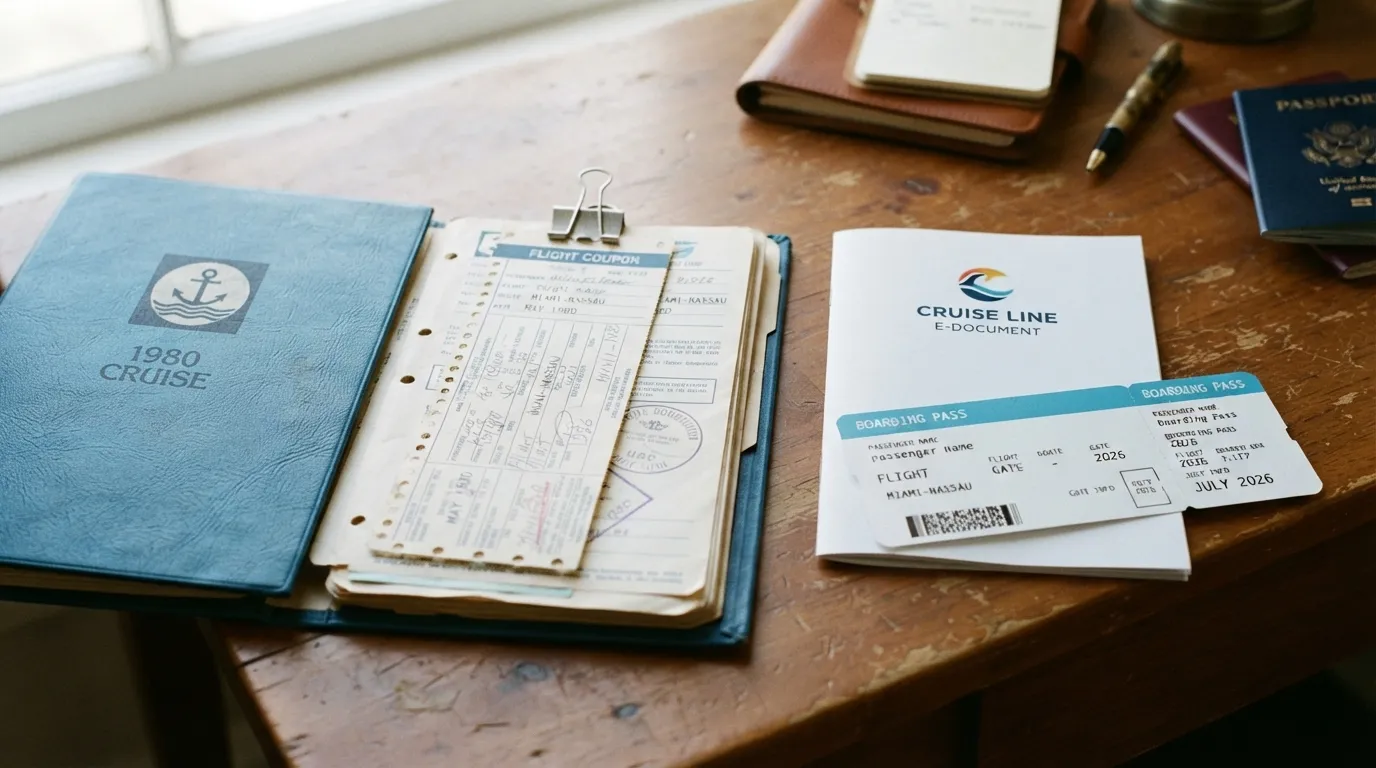
The left half shows a thick 1980 cruise folder with a flight coupon clipped inside. Air-sea packages were sold at the time, and the coupon tied the flight to the sailing. One folder held the whole journey, from the airline counter to the gangway.
On the right, the folder is thinner. A separate airline boarding pass sits beside it, a document from a completely different company.
Worth Knowing
- Air-sea packages bundled the flight and the sailing into one purchase.
- Today many travelers book flights on their own, with any airline they like.
- Choice of airline, price, and timing moves to the passenger.
- Many travelers arrive a day early to leave a cushion before sailing.
Separate booking can mean more choice over airline, price, and timing. It also means the trip to the ship is a puzzle the passenger solves alone. One folder used to carry the whole story, and now it carries only the cruise.
#6 – A 1980 beer set down with dinner beside a 2026 beer listed on a separate card
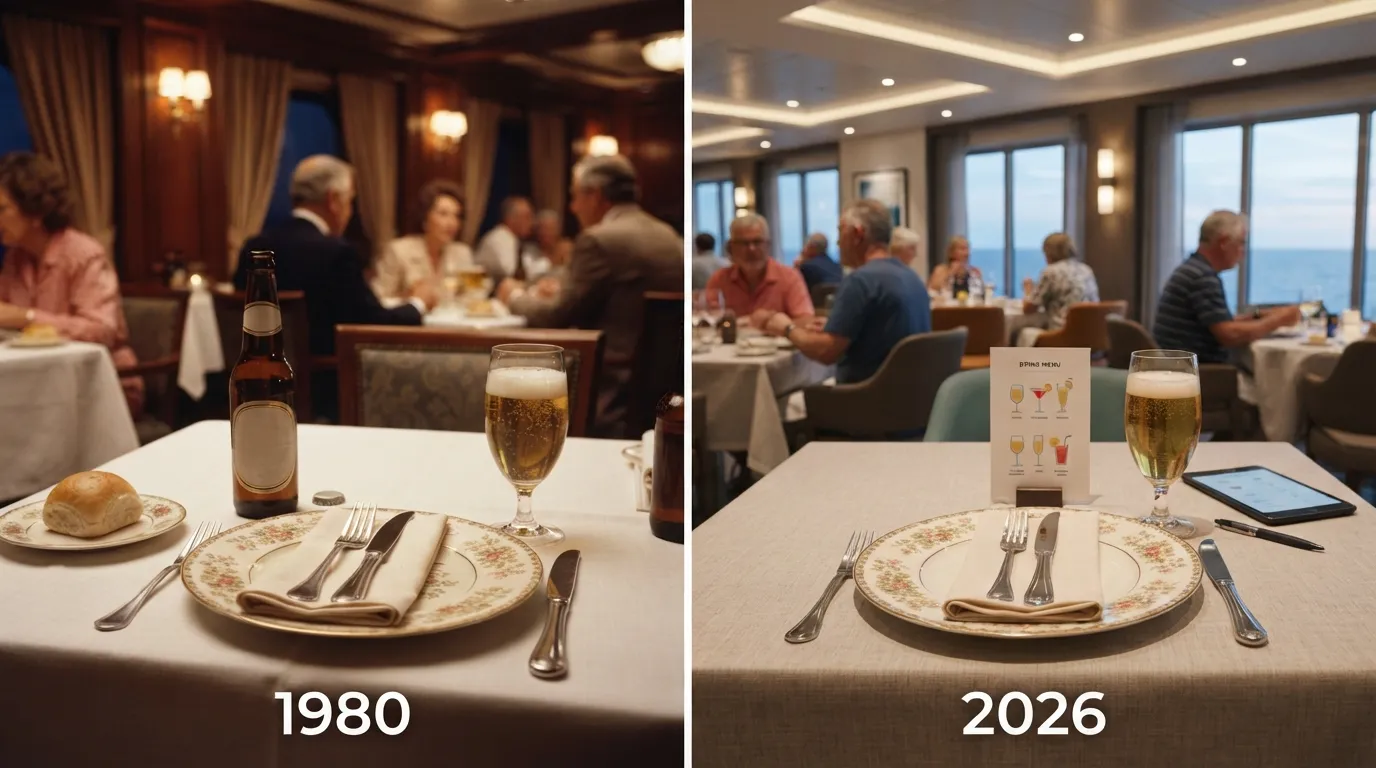
On the left, a bottle of beer stands beside a 1980 dinner plate, ordered as casually as the bread. Depending on the ship and the fare, a drink with the meal could be woven into dining service instead of treated as its own purchase. No separate list had to be handed over first.
On the right, the plate looks the same, but a separate card has appeared at the table. It lists drinks and prices apart from the food menu, and the server presents it as its own step.
Passengers choosing a drink today are reading a second document. The dinner menu stays about food, and the card carries the cost of what goes in the glass. It is a small piece of cardstock with a very large job.
#5 – A 1980 water glass filled from a pitcher beside a 2026 bottled water in the cabin fridge
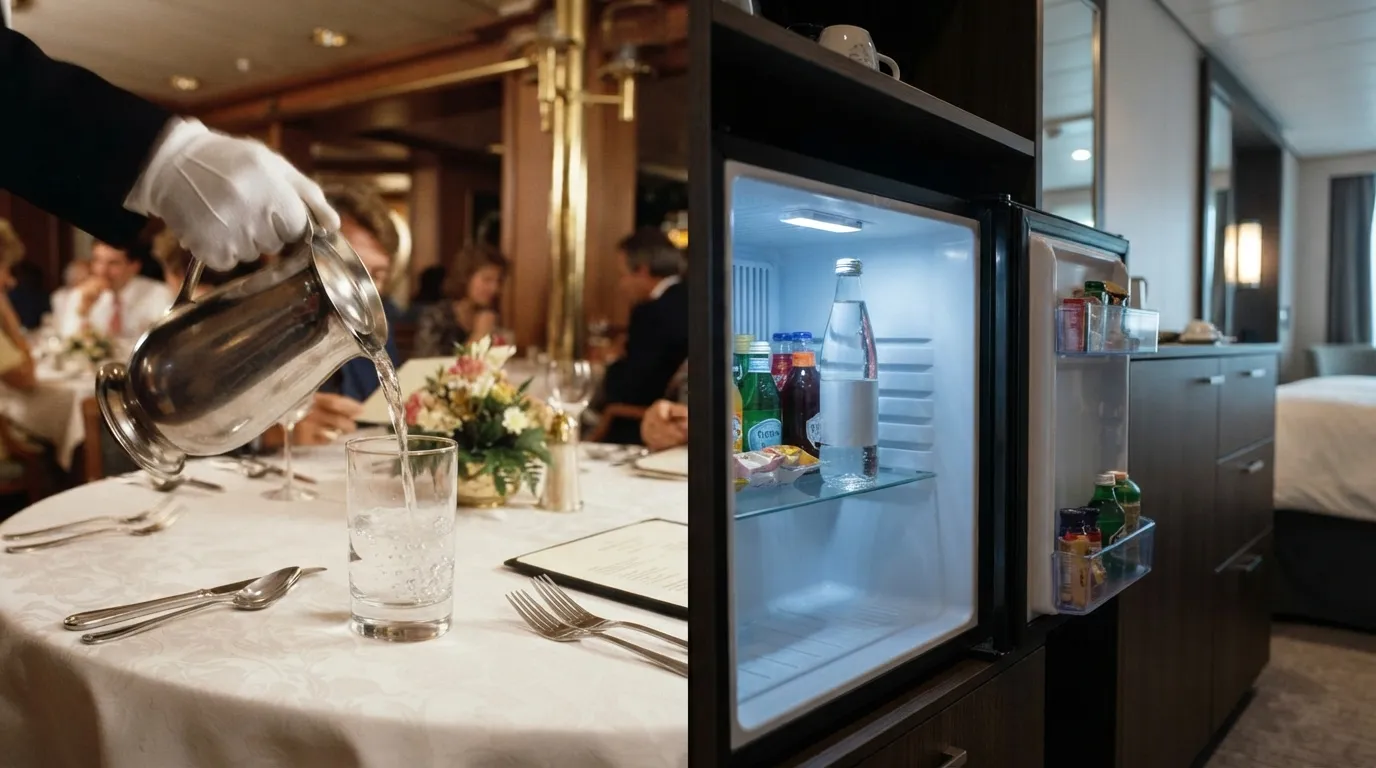
On the left, a waiter tips a pitcher over a 1980 water glass, and the glass never stays empty for long. Water came from the ship’s own supply and refills were part of the rhythm of the meal. Nobody counted the glasses.
On the right, the scene moves from the table to the cabin. A bottle of water waits in the fridge, a separate item that may carry a price or come with a package.
Tap water is still available at meals and in public areas, so no one goes thirsty. But the bottle in the cabin now sits where the pitcher once did, as a small product with its own place in the account. Hospitality used to pour. Now it sometimes stocks a shelf.
#4 – A 1980 main-dining menu beside a 2026 specialty menu kept outside the dining room
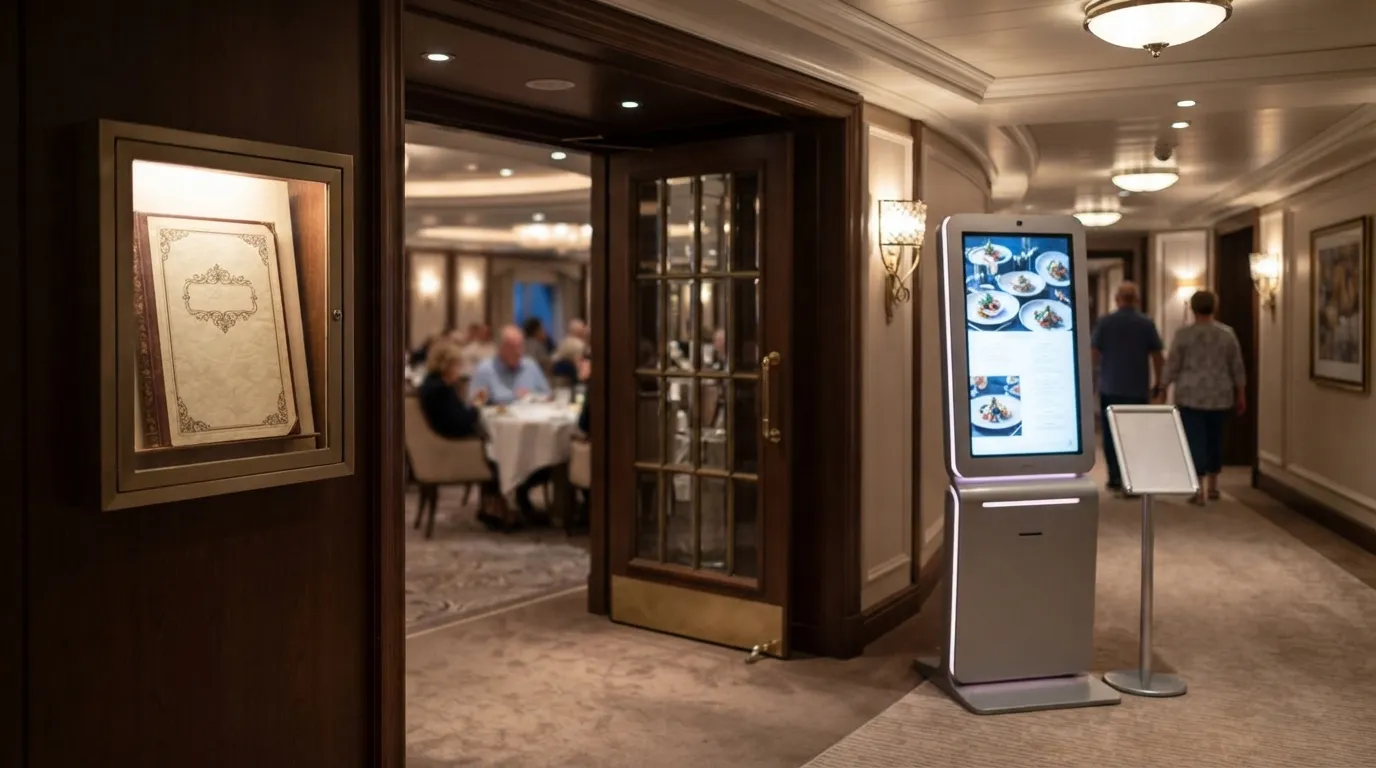
On the left, one menu does all the work in 1980. Passengers sat down, opened it, and chose from the evening’s offerings in the main restaurant. There was no second list waiting in the hallway to tempt anyone.
On the right, the same dining room still serves its included menu inside. But now a specialty menu is posted or displayed outside the entrance, where passengers walking past can read it first.
It works like a shop window for dinner. The extra options are there before you ever sit down, and the included menu has competition from the hallway. The meal you were already entitled to is still on offer, but now it has a more glamorous neighbor.
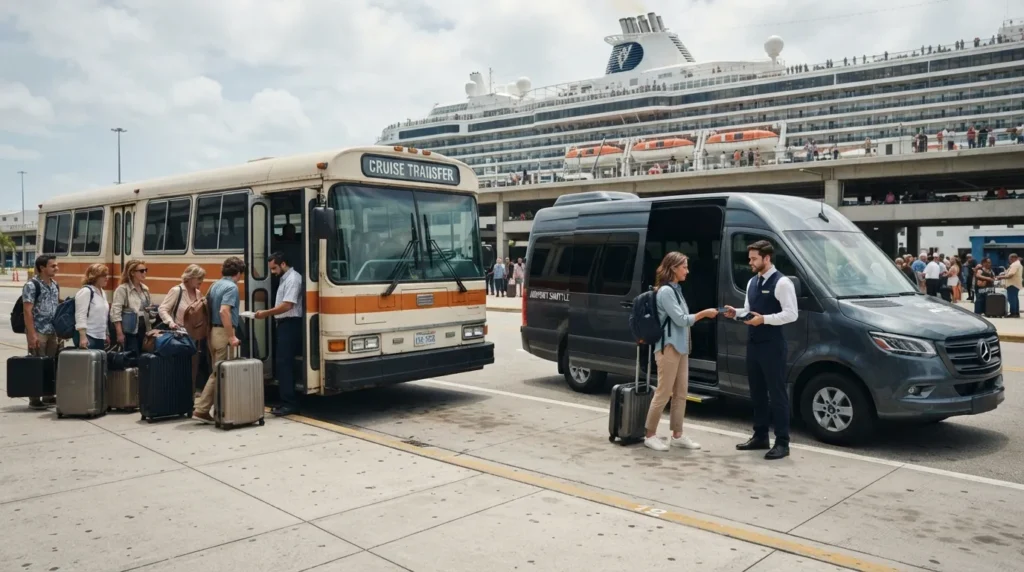
#3 – A 1980 airport transfer bus beside a 2026 passenger paying for a separate van
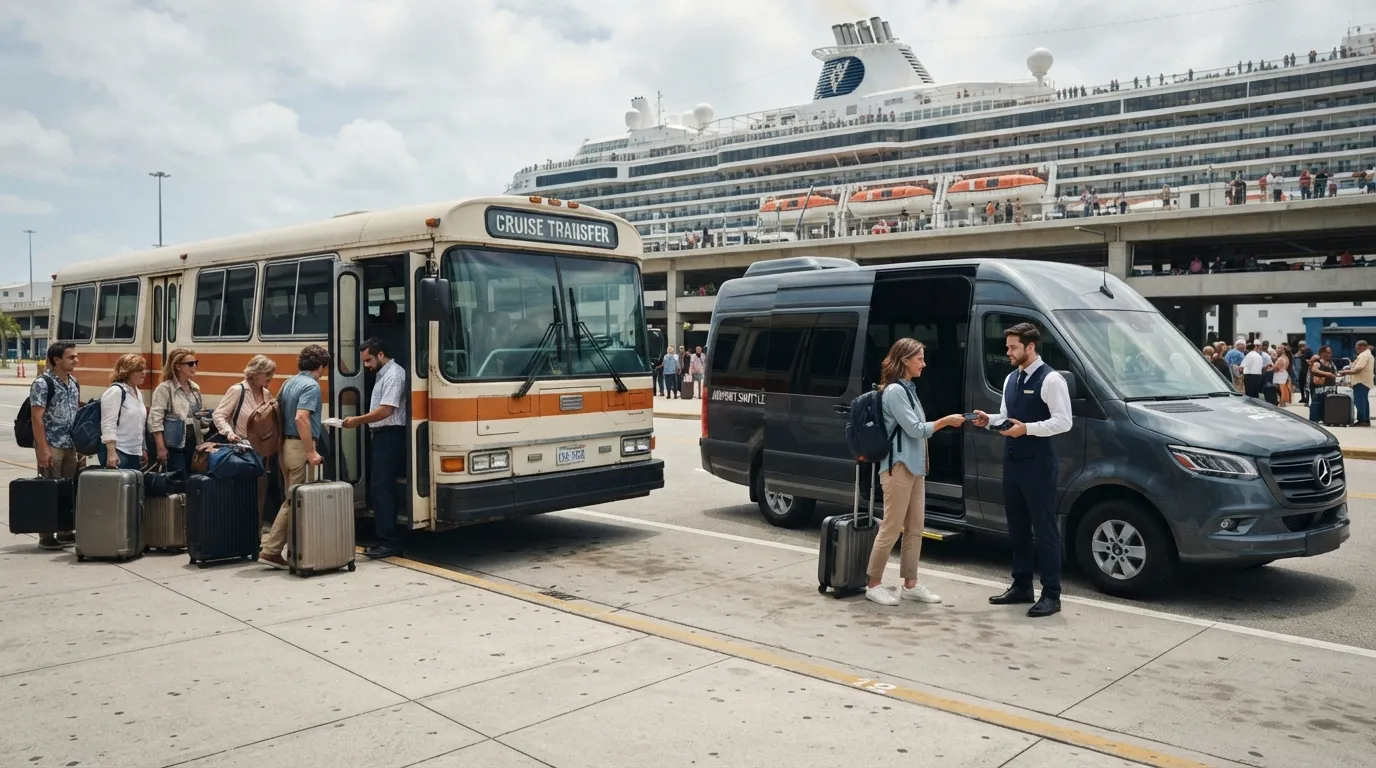
On the left, a 1980 transfer bus waits at the curb with its door open. On many air-sea packages, the ride from the terminal to the pier was part of the arrangement, and groups boarded together without anyone paying at the step. The trip to the ship simply continued.
On the right, the same curb tells a different story. A passenger stands beside a separate van, settling the fare before the ride begins.
At a Glance
- 1980: a shared bus was often part of an air-sea package.
- 2026: some lines sell transfer seats, while others leave the ride to you.
- Where the cost shows up: at the curb, not in the base fare.
- Worth checking: whether your booking lists a transfer at all.
Many travelers now book or pay for their own ride, alone or in a small group. The start of the cruise moved outside the base fare, right where passengers are tired, holding luggage, and not yet on vacation.
#2 – A 1980 envelope of cash for the steward beside a 2026 folio left on the desk
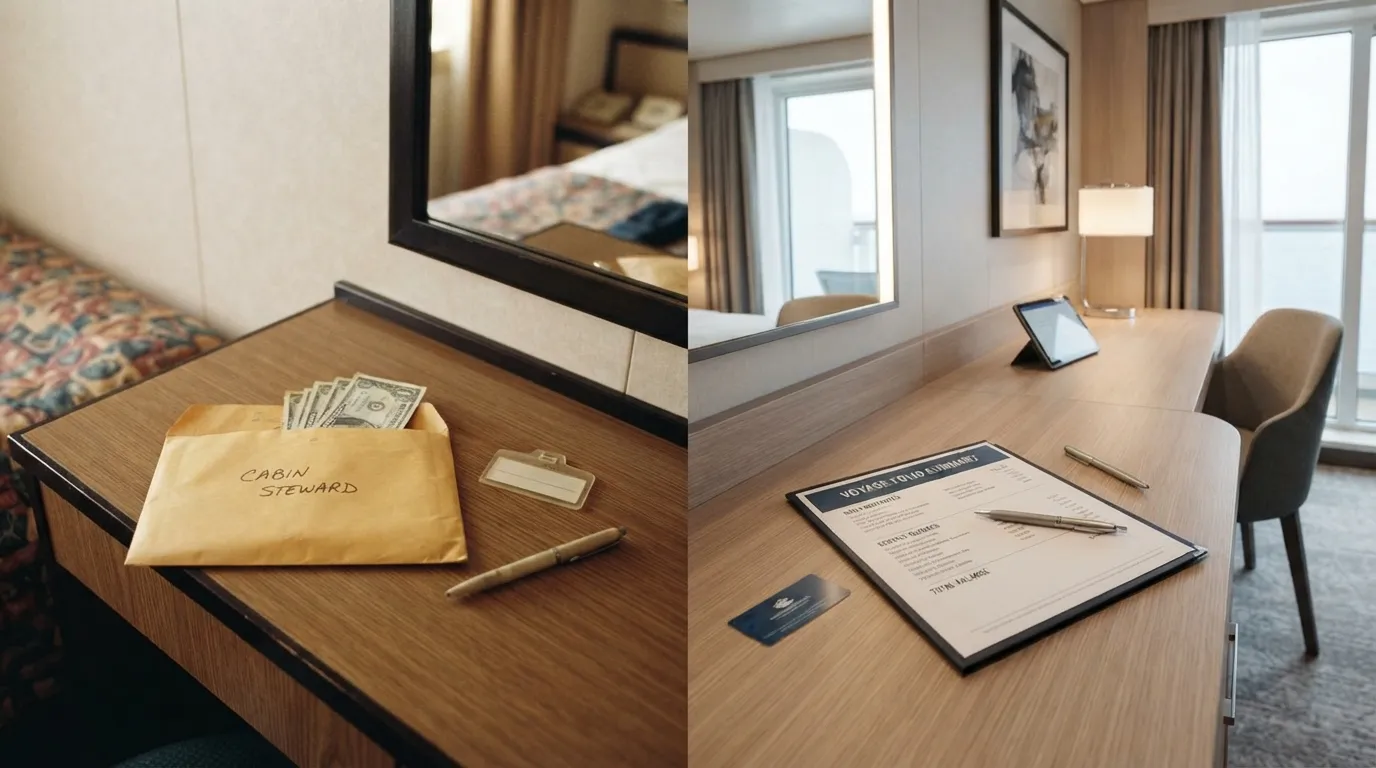
On the left, a sealed envelope sits on a 1980 cabin surface, prepared the night before. The daily program suggested tipping amounts, and passengers often counted out the cash themselves, then tucked it in for the steward to collect. It was a quiet, hands-on goodbye.
On the right, no envelope sits there. A printed folio lies on the desk, summarizing the account and the service charges already added along the way.
On many lines today, gratuities are billed daily, so the passenger’s job shifts from preparing an envelope to checking a total. The ritual of deciding is mostly gone. What remains is a sheet of paper and a decision about whether to adjust it.
#1 – A 1980 gangway with the meals already covered beside a 2026 cabin screen offering extras
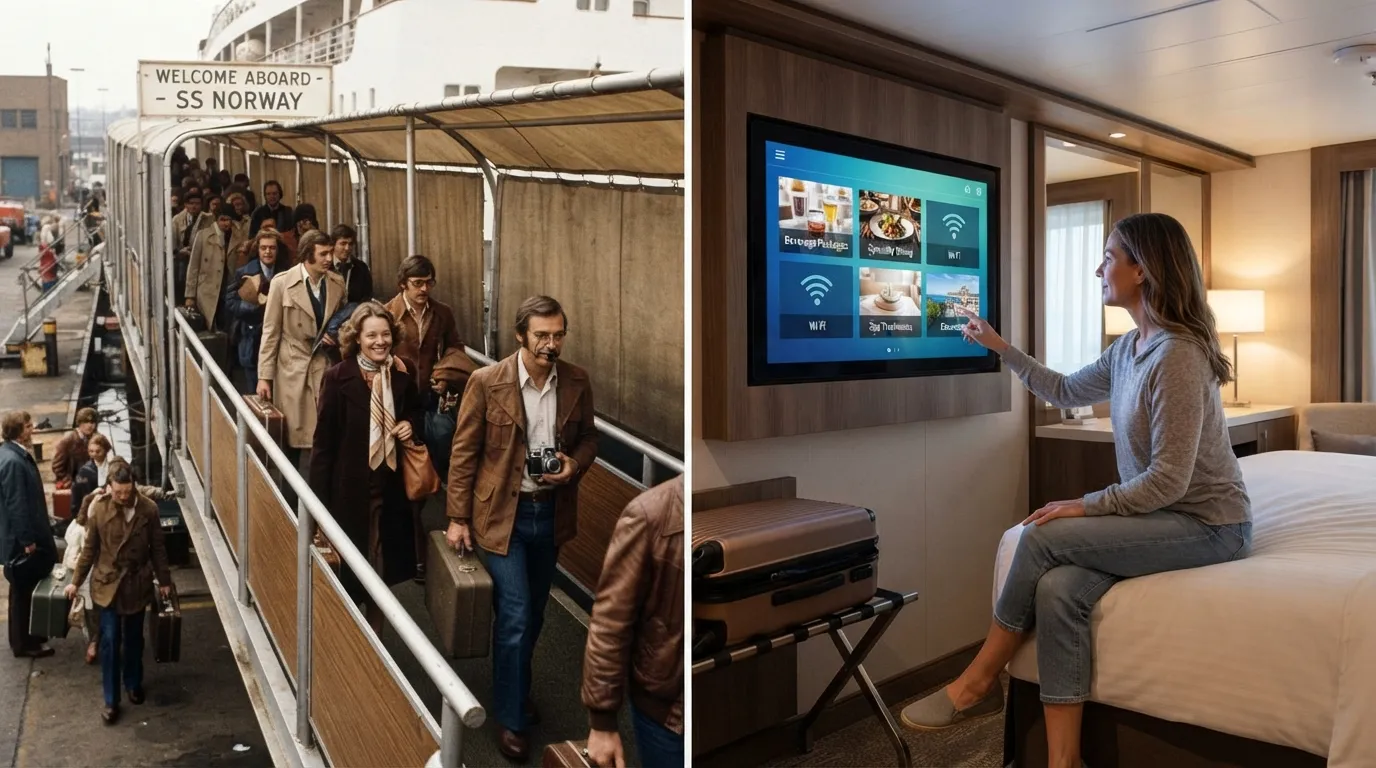
On the left, passengers cross a 1980 gangway with one comforting fact in their pockets: the meals in the main dining room are already paid for. No prompt about food charges greets them at boarding. The first job is simply finding the cabin.
On the right, the camera has followed the passenger into the stateroom, where a screen glows with choices. It offers beverage packages, dining credits, and other extras, all within reach before the suitcases are unpacked.
Why It Stands Out
- The promise of included main-dining meals has not vanished.
- The offers now arrive earlier, on a screen in the cabin.
- Every extra is a choice, but each one is placed within easy reach.
- The fare has become a starting point instead of the whole bill.
The main dining room is still part of the fare, but the first minutes aboard now include a menu of ways to spend more. The biggest change is not one missing item. It is how early the questions begin.
CEO-Co-Founder
