

- 12 Differences Between What a Cruise Fare Covered in 1980 and What It Covers in 2026 - October 16, 2026
- 13 Differences Between a Concert Ticket in 1978 and a Concert Ticket in 2026 - October 16, 2026
- 15 Differences Between a Road Trip in 1970 and a Road Trip in 2026 - October 16, 2026
#12 – A 1975 round porthole beside a 2026 balcony door
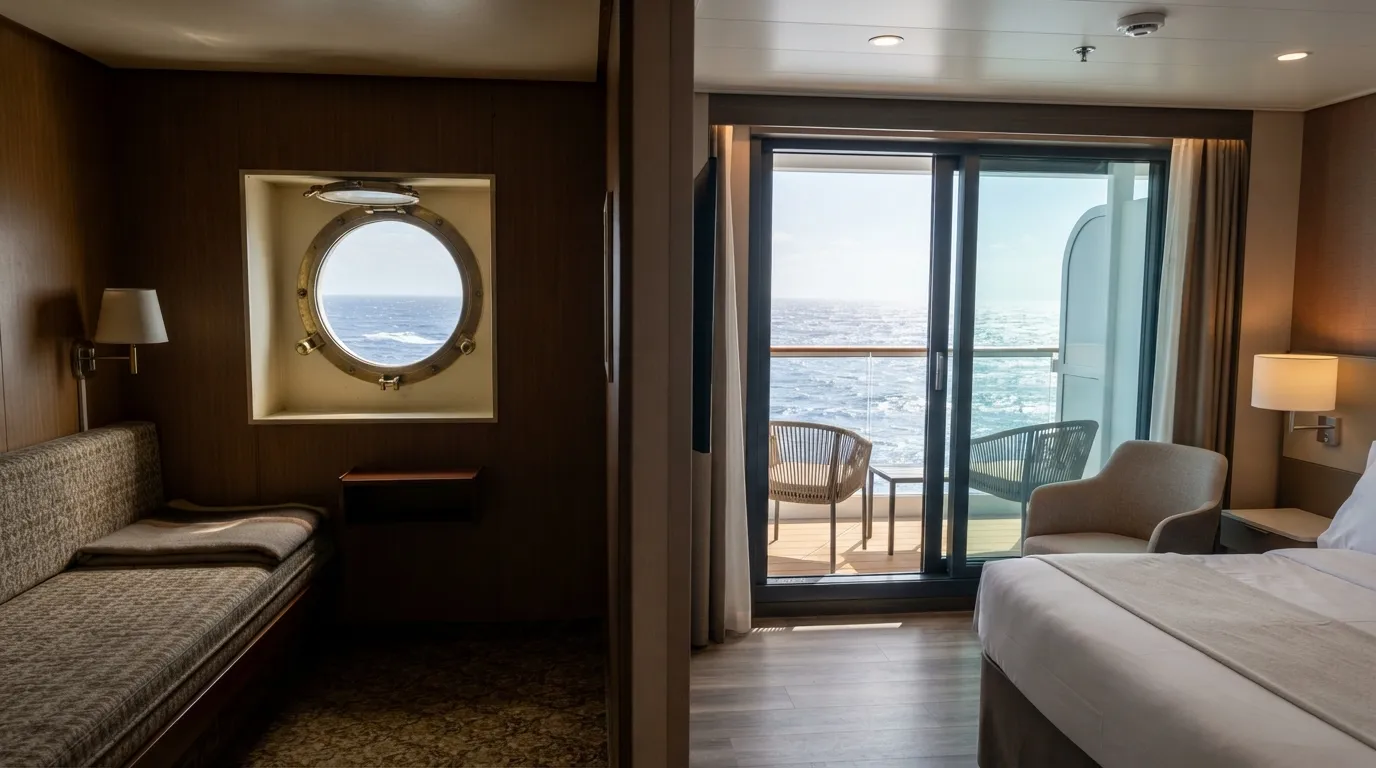
Start with the wall, because it changes everything. On the left half, a small round porthole sits low in the cabin wall, its thick metal ring clamped around heavy glass. You would have to bend down to look out. On the right half, a sliding glass door runs nearly floor to ceiling, with a balcony railing just beyond it.
Same camera height, same kind of cabin, and a completely different relationship with the sea. One is a peephole. The other is an exit.
Balconies spread across cruise ships as designs changed over the decades, and many older ships had few or none. A porthole lets in daylight. A balcony door lets in wind, salt air, and a private spot to stand with your coffee. The glass is not the real surprise, though. The real surprise is what the view does to the room.
#11 – A 1975 metal cabin key on a tag beside a 2026 flat key card
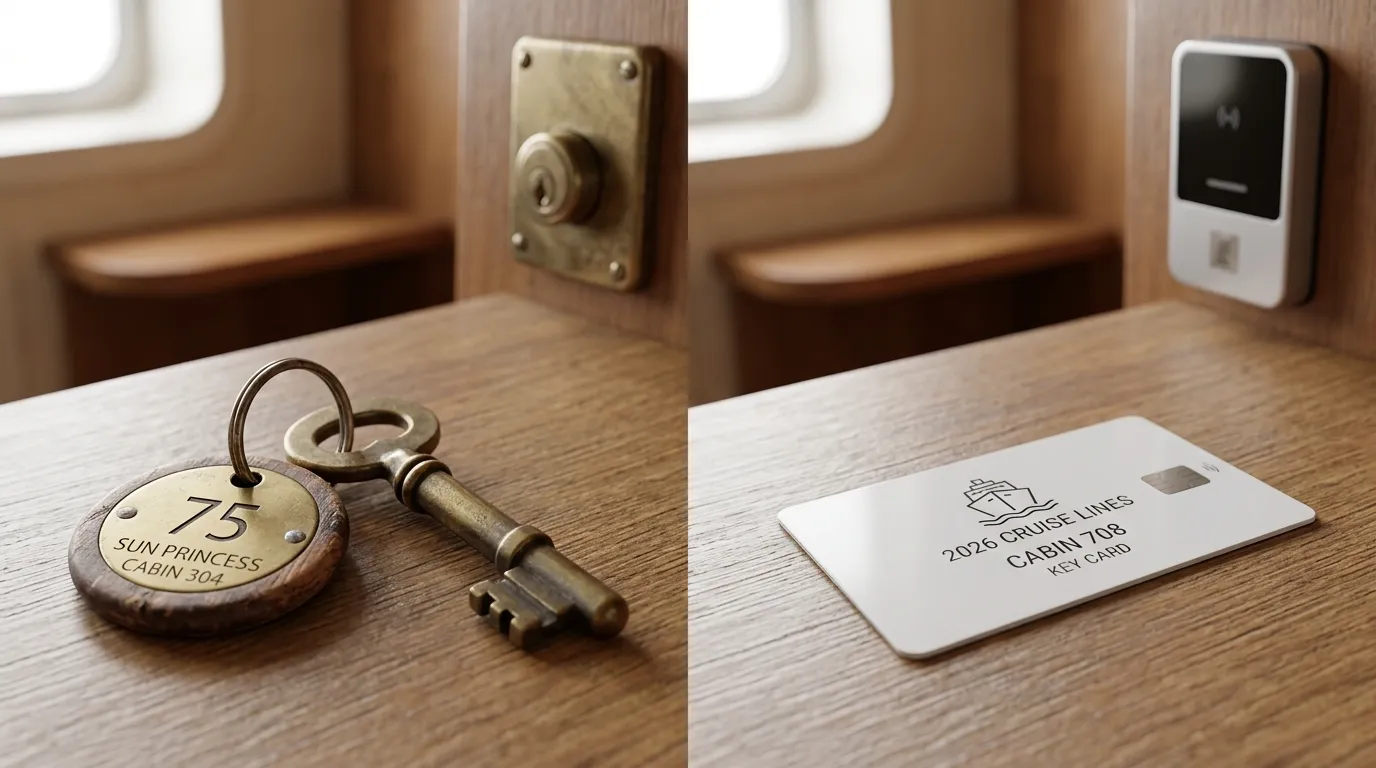
On the left half, a heavy metal key dangles from a numbered tag on a ring, the kind of weight that makes a pocket sag. On the right half, a thin plastic card lies flat at the same angle, light enough to vanish in a wallet.
One announces itself every time you set it down. The other disappears until you are standing at the door, patting every pocket.
The old key turned a mechanical lock, and the tag existed so you would remember to hand it in or keep track of it. The card is read by a sensor beside the door, by a tap or a swipe depending on the system. A card can be reissued without changing any metal hardware, which helps when a cabin changes guests again and again. Some older ships may still use traditional locks.
#10 – A 1975 pair of fixed twin beds beside a 2026 bed pushed into one queen
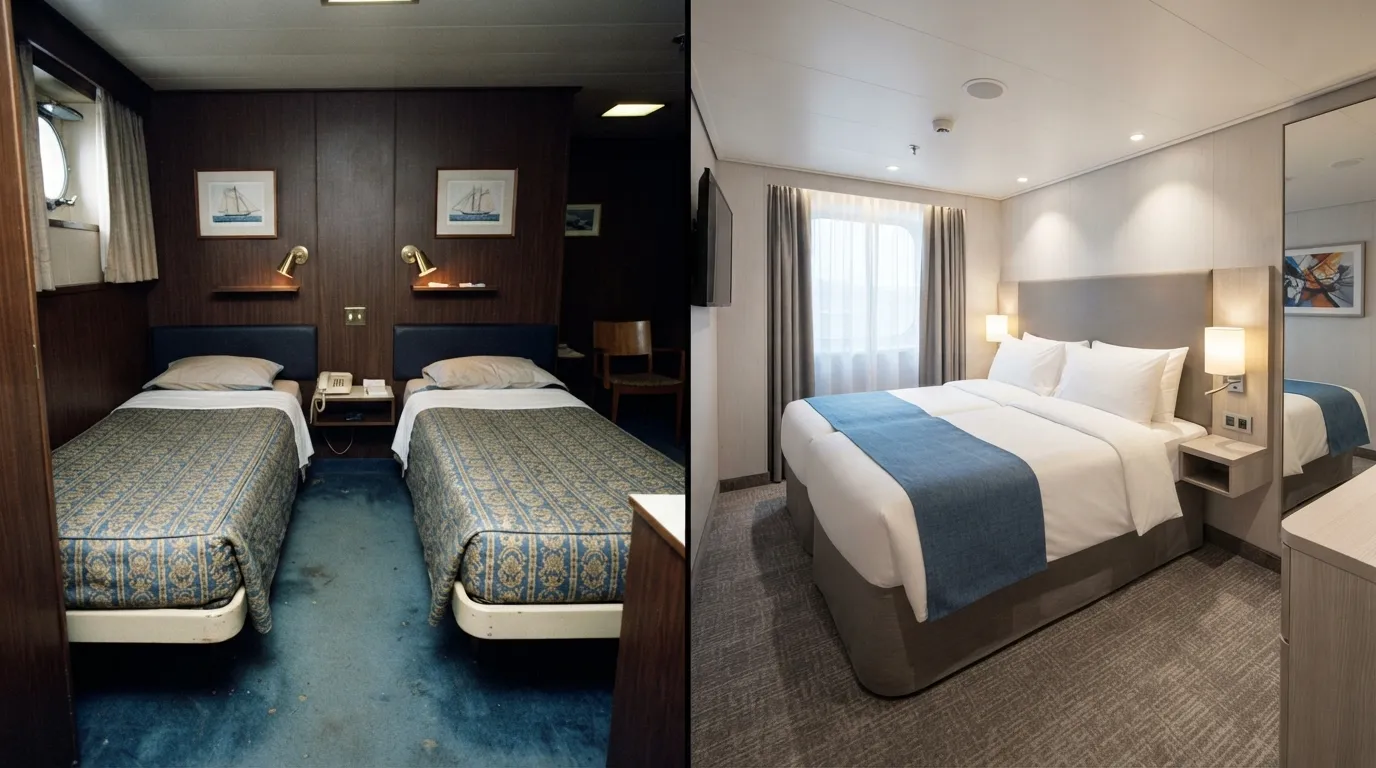
On the left half, two narrow twin beds sit side by side, each with its own thin mattress, its own blanket, and a gap between them. They look fixed in place, and they were built for sleeping, not lounging. On the right half, the same floor space holds one wide bed, with a single headboard and one smooth stretch of bedding.
The room did not grow. The bed simply stopped pretending to be two.
Twin layouts suited a time when cabins were compact and many guests shared with friends or relatives. Today many cabins are set up so the beds can be pushed together into a queen or pulled apart again. Same footprint, same camera angle, but a very different idea of who is sleeping in there.
At a Glance
- Left half: two separate narrow beds with a gap between them
- Right half: one wide bed under a single headboard
- What stays the same: floor space and camera angle
- Worth noticing: many modern cabins can be set up either way
#9 – A 1975 paper daily program under the door beside a 2026 cabin screen on the wall
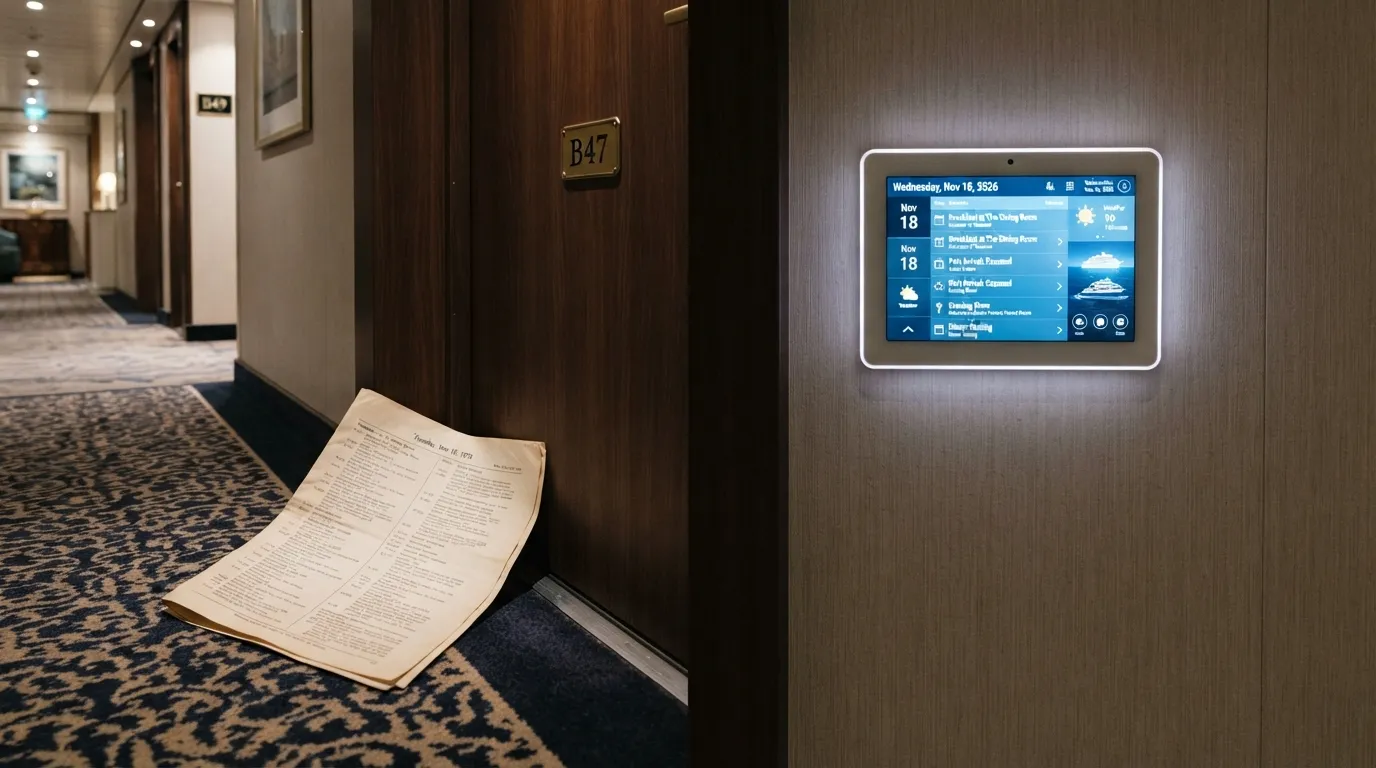
On the left half, a folded sheet of paper lies on the carpet just inside the door, slipped there while you slept. It lists the day’s events, dinner times, and port notes in printed type. On the right half, a small screen on the wall shows the same kind of information in glowing text, right at eye level.
One waits on the floor for you to notice it. The other is already awake.
Printed daily programs were a ship ritual, and plenty of passengers still circled the activities they wanted with a pen. A screen can update the moment a plan changes, with no reprinting. The paper version has not vanished everywhere, so some ships still use both. But the feeling of finding the day waiting under your door is a small piece of cruise life that screens do not quite copy.
#8 – A 1975 dresser with no fridge beside a 2026 cabin mini fridge
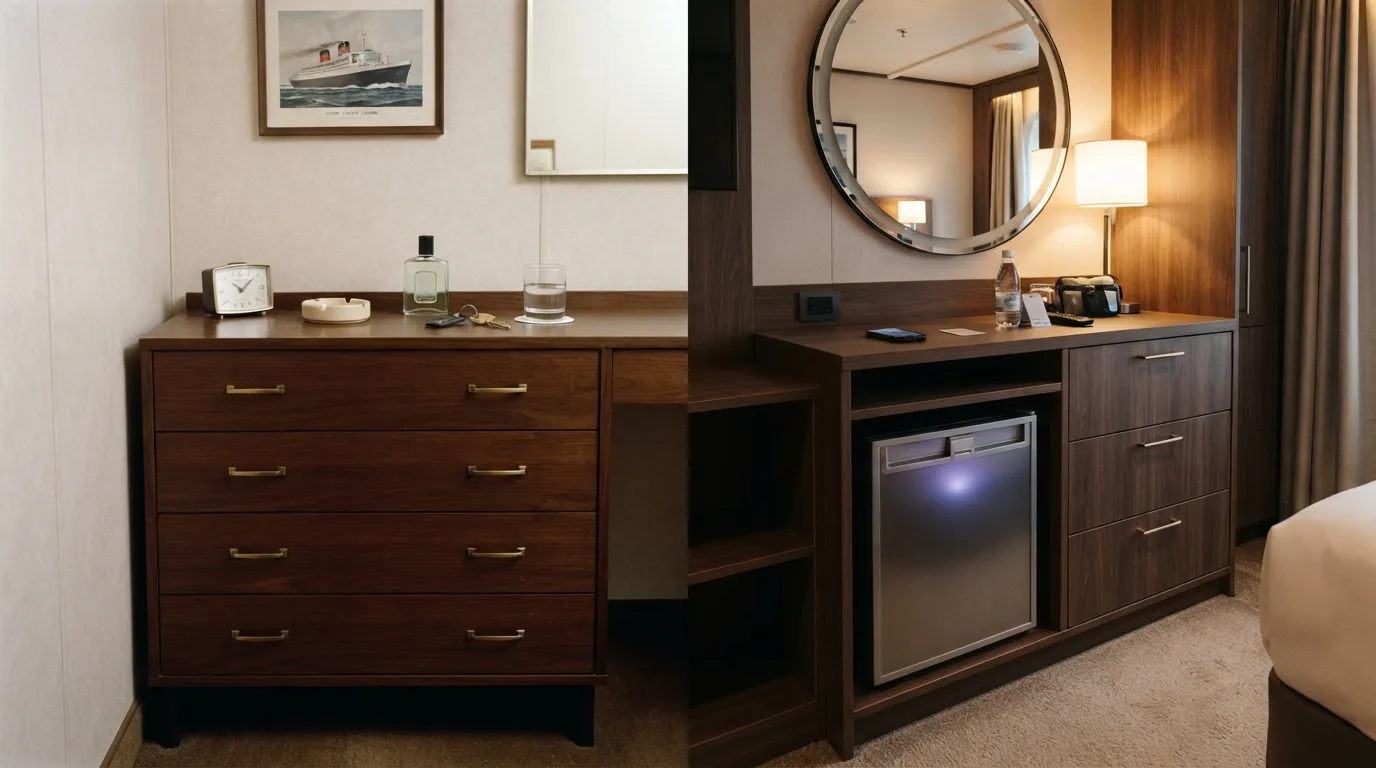
On the left half, a plain dresser stands against the wall, with drawers, a clear top, and nothing cold anywhere. On the right half, the same kind of furniture has a compact mini fridge tucked into the space beneath, its door closed.
The shelf where you once set a drink and hoped for the best now has a cold spot built in.
In earlier decades, a cold drink in the cabin often meant asking for ice from a steward. Today many cabins come with a small fridge, handy for bottled water, snacks, or anything that needs to stay cool. It is not in every cabin on every ship, but it has become a common feature. The surprise is how much a tiny box changes the rhythm of a cabin. You stop calling for ice and start keeping your own supplies.
#7 – A 1975 shower curtain in the bathroom beside a 2026 glass shower door
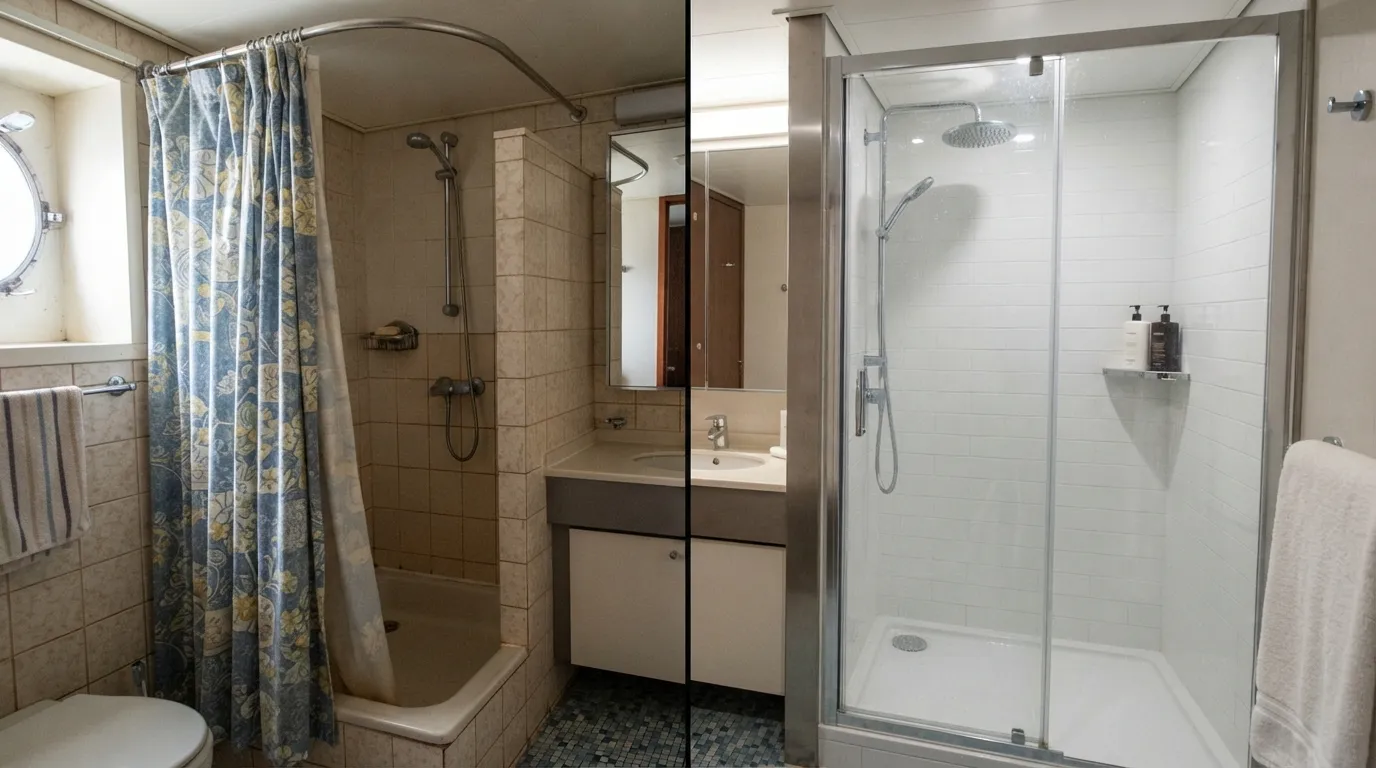
On the left half, a fabric or plastic shower curtain hangs from a curved rod, partly open so you can see the tub or shower space behind it. It sways at the slightest touch. On the right half, a clear glass door with a slim metal frame closes around the shower, solid and still.
Anyone who has fought a curtain that billows inward and clings to their leg knows why that right-hand side looks tempting.
Curtains were cheap, easy to replace, and forgiving in tight bathrooms. Glass doors can keep water inside the shower area more reliably and look cleaner. But they are not perfect either, because glass shows every fingerprint and water spot. Neither version is simply better. They are two different answers to the same tiny space.
Quick Compare
- Curtain: cheap, easy to replace, forgiving in a tight space, but it sways and can cling
- Glass door: holds water in more reliably and looks cleaner, but shows every spot and fingerprint
- Shared problem: a very small bathroom with very little room to spare
#6 – A 1975 steward call bell beside a 2026 cabin phone
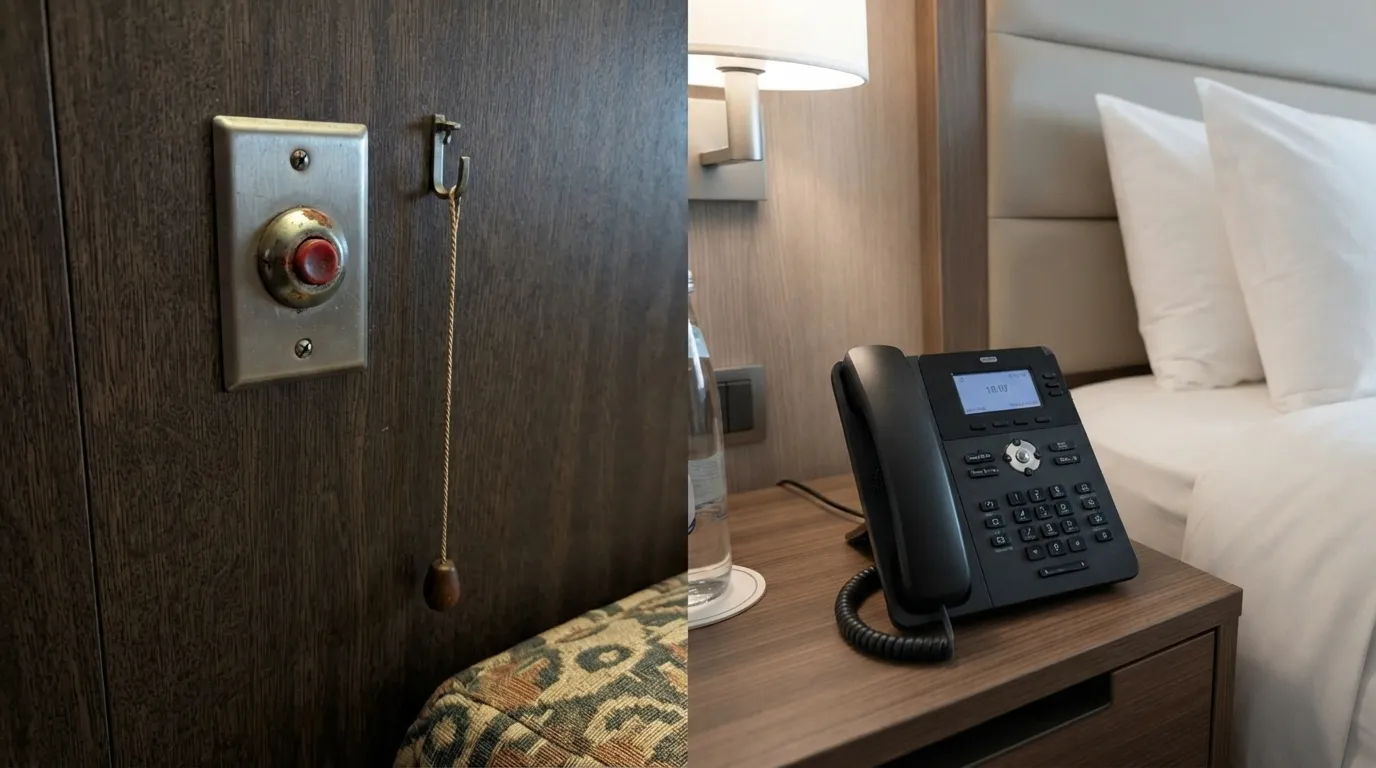
On the left half, a small wall button or pull cord waits near the bed or door. Press it, and somewhere in the crew area, a signal sounds that you need something. On the right half, a telephone handset rests on a bedside table or desk, wired into the ship’s internal system.
One is a summons. The other is a conversation.
A call button gets a steward’s attention, but it cannot tell them whether you need extra towels, a pillow, or help. A cabin phone lets you say exactly what you want, or ask a question about dinner, the doctor, or the front desk. Both let you ask for service without leaving the room. Only one lets the person on the other end answer you before they arrive.
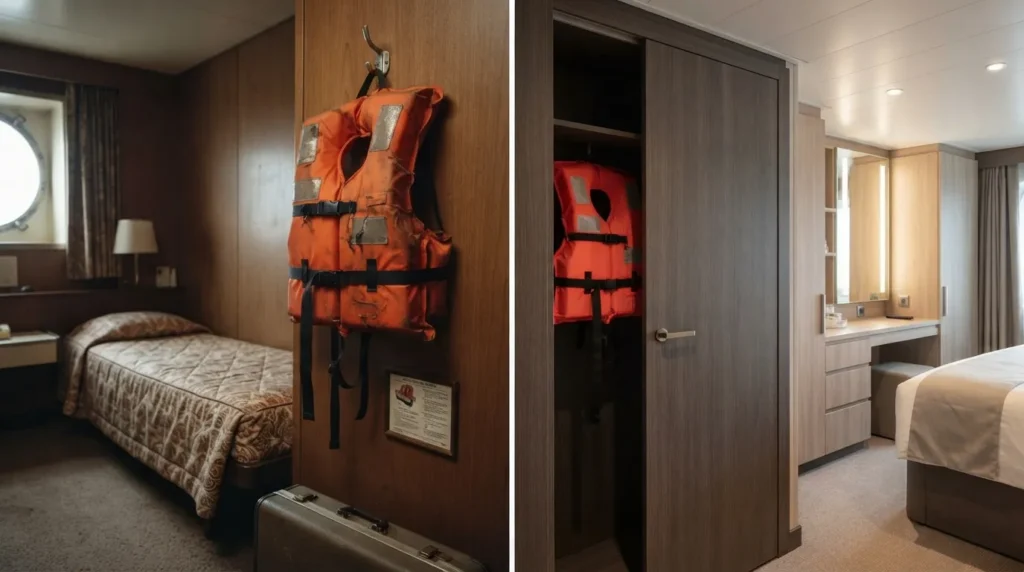
#5 – A 1975 life jacket on an open hook beside a 2026 life jacket inside a closet
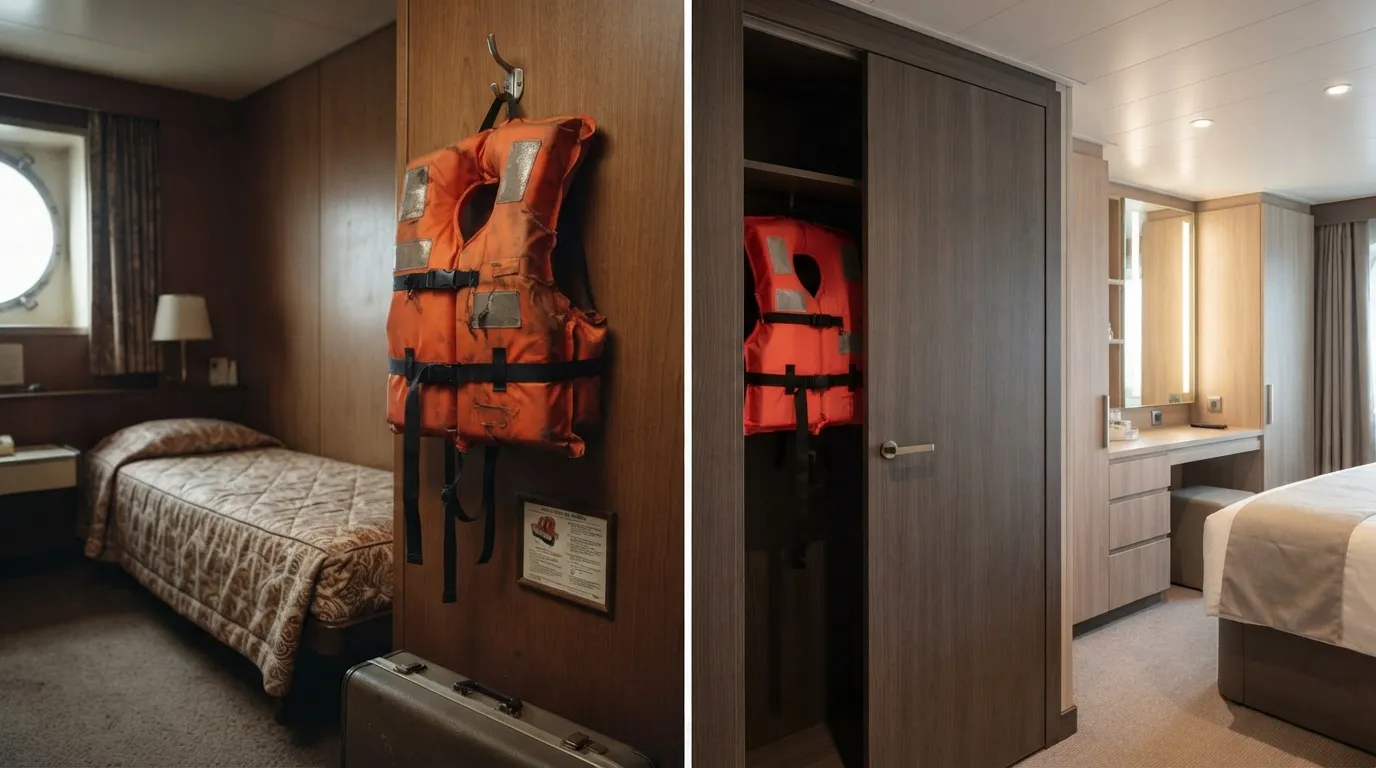
On the left half, a bright orange life jacket hangs in plain sight on a wall hook, straps dangling and reflective tape catching the light. On the right half, the same kind of jacket is stored out of view inside a closet, with only a closed door showing.
One is impossible to forget. The other is easy to forget until the day it matters.
Life jackets have long been a basic part of ship safety, and passengers are shown where to find theirs and how to put them on. Out in the open, a jacket makes the safety message feel constant, but it takes up room in a small cabin. Tucked away, the room looks cleaner. The practical point stays the same either way. Know where yours is before you need it.
#4 – A 1975 bolted ashtray on the dresser beside a 2026 smoke detector on the ceiling
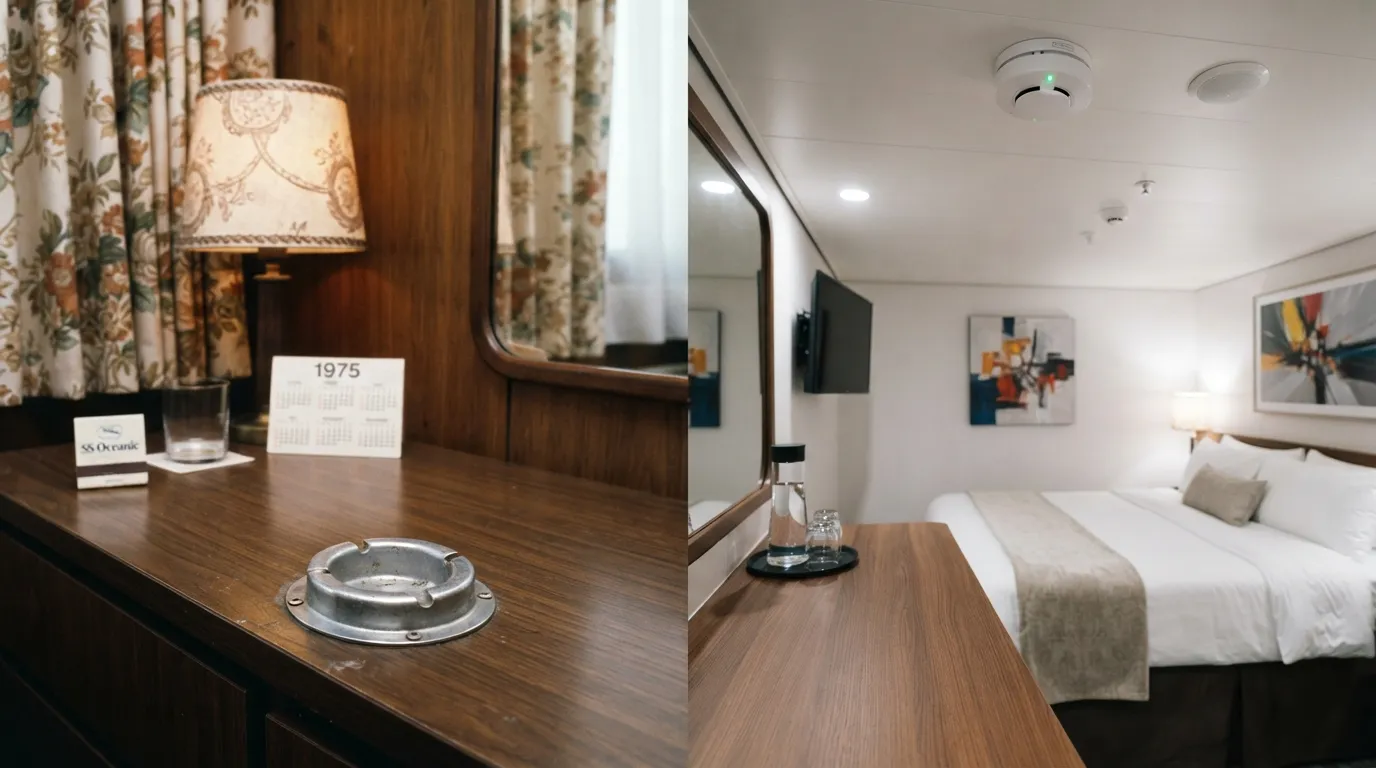
On the left half, a small metal ashtray is fastened to the top of the dresser, scuffed from use. On the right half, a round smoke detector sits on the ceiling above the bed, and the dresser top is empty.
The thing you once expected to find in a cabin is gone, and the thing you now look up to find is easy to miss.
Bolting an ashtray down made sense when smoking indoors was ordinary and people wanted fewer spills at sea. As smoking rules tightened and fire-safety expectations grew, cabins shifted from making room for smoking to watching for smoke. The same camera angle shows the whole story. The attention moves from the dresser to the ceiling, and the cabin quietly stops treating cigarettes as part of the furniture.
Worth Knowing
- A fastened ashtray stays put when a ship rocks, which is why it was bolted down
- Smoke detectors sit high because smoke rises toward the ceiling
- Smoking rules differ from ship to ship, so check the policy for your own sailing
- The camera angle matters here: your eyes travel from dresser to ceiling
#3 – A 1975 single overhead bulb beside a 2026 pair of bedside reading lights
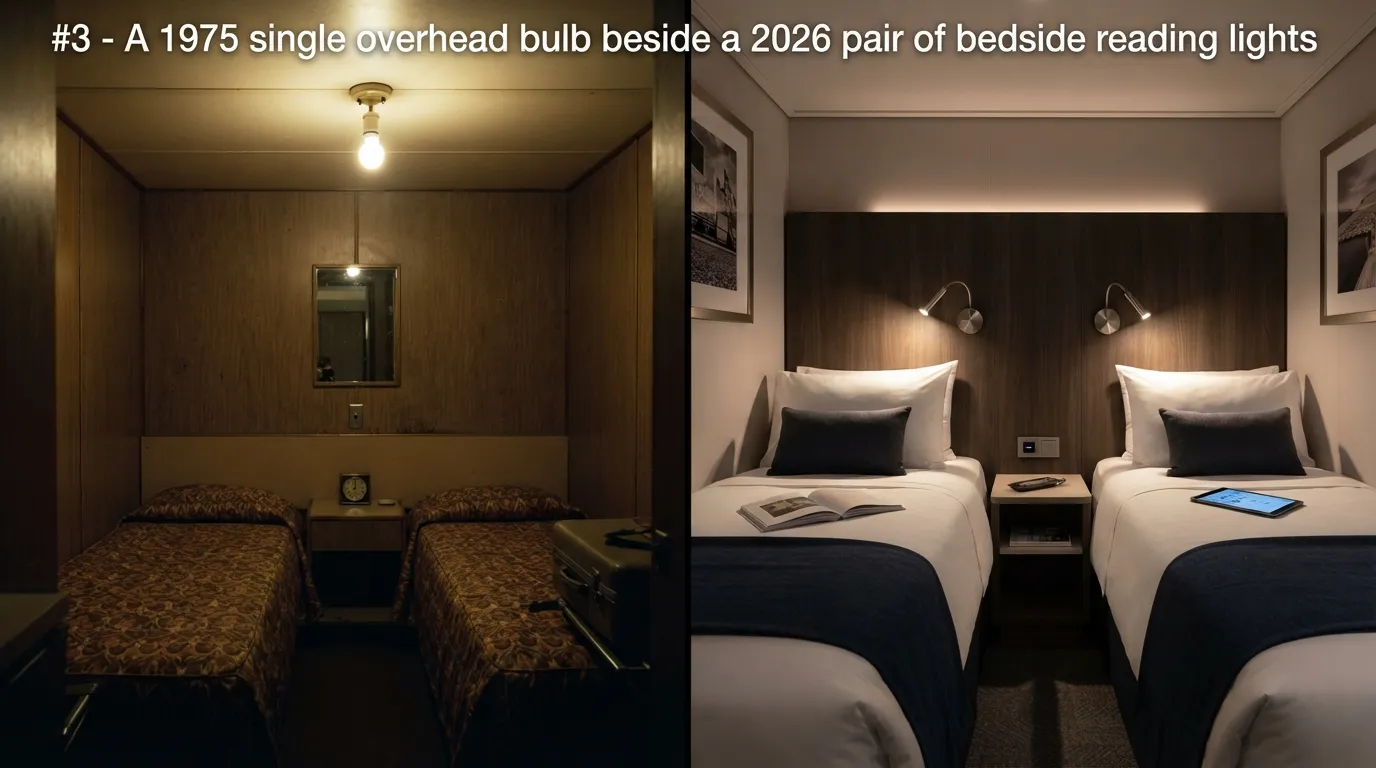
On the left half, one bulb, bare or under a simple shade, hangs in the middle of the ceiling and floods the cabin with the same flat light. On the right half, two small adjustable lamps sit on either side of the bed at reading height, each throwing its own pool of light.
The old setup had one setting for everyone. The new one lets two people share a room without sharing a bedtime.
With one overhead fixture, reading in bed often meant either lighting the whole cabin or giving up. Bedside lights let one person read while the other sleeps. They also make a small room feel warmer and less like a waiting room. It is a modest upgrade, and it may be one of the most noticeable once the sun goes down.
#2 – A 1975 suitcase left in the corridor beside a 2026 suitcase standing inside the cabin
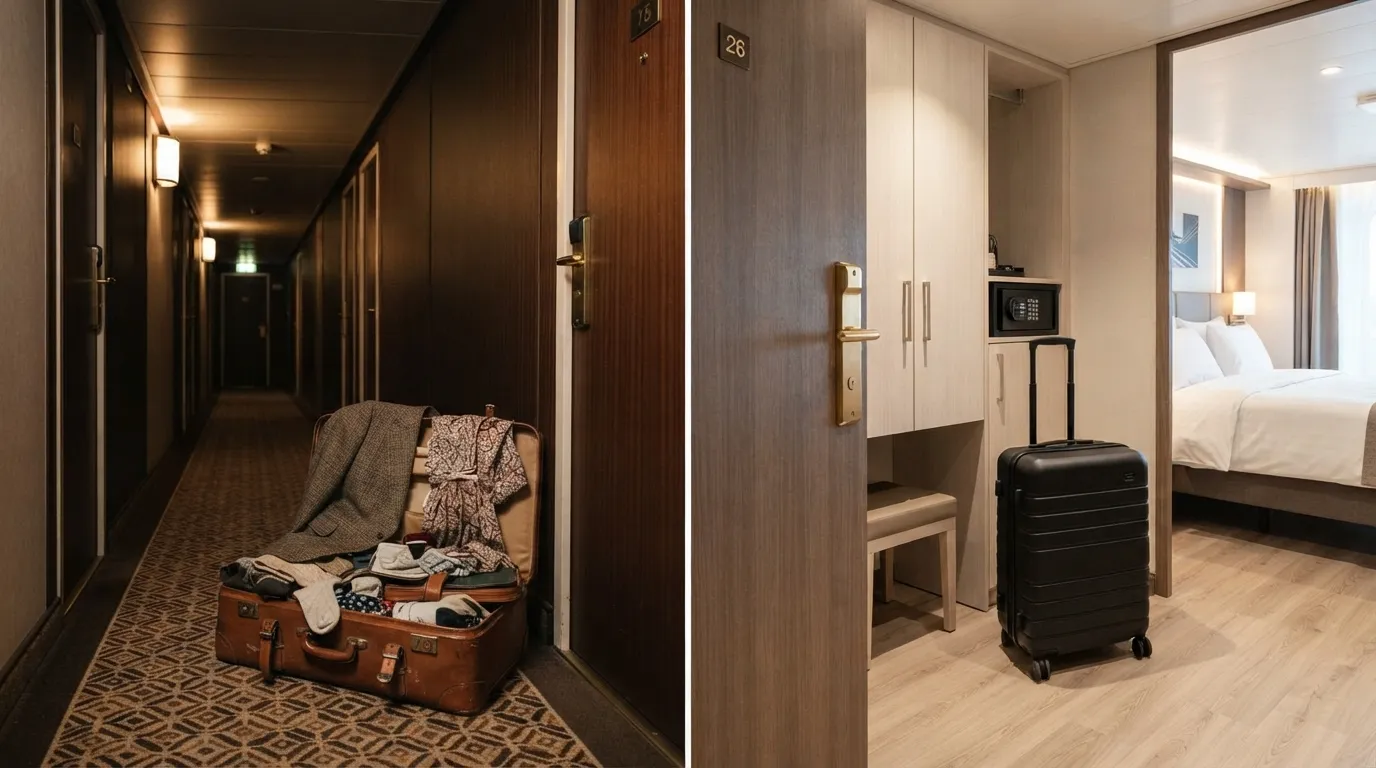
On the left half, an open suitcase sits in the narrow corridor outside the cabin door, clothes half visible and the passageway squeezed around it. On the right half, a suitcase stands upright inside the cabin by the closet, and the corridor beyond the door is clear.
It is a small scene with a big message about how tight the old cabins could be.
When a room has little floor and little storage, a suitcase becomes a problem with handles. Many modern cabins make better use of closets, shelves, and the space under the bed, so luggage can disappear from view after unpacking. The suitcase itself has not changed much. What changed is the room’s ability to swallow it, and the hallway’s chance of staying clear for everyone else.
Why It Stands Out
- The suitcase is the same object on both sides, so the room is the real difference
- A cluttered corridor affects every neighbor, not just one cabin
- Closets, shelves, and under-bed space give luggage somewhere to go
- One small scene quietly explains how much storage matters at sea
#1 – A 1975 porthole facing the hull beside a 2026 balcony facing the ocean
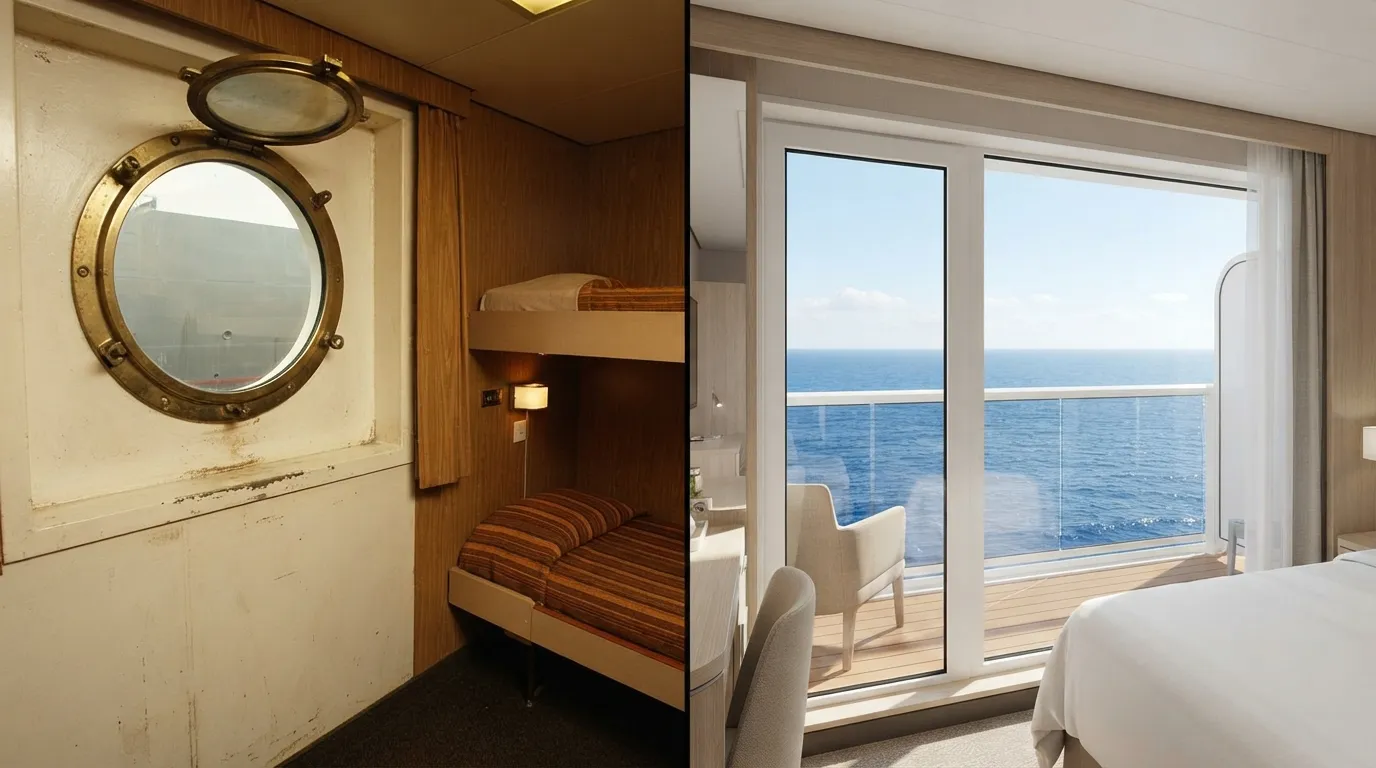
On the left half, a round porthole looks straight onto a flat wall of painted steel. No horizon, no waves, only metal filling the glass. On the right half, an open balcony faces outward, and the view is all ocean and sky, stretching to the horizon.
Same height, same angle, and one side gives you a wall while the other gives you the world.
Not every older cabin had a view like this, and not every modern cabin has a balcony. But this pairing shows what changed in the way passengers experience a voyage. The sea is no longer something you glimpse through a small circle. For many travelers, it is something you step out and stand in. That may be the biggest difference of all.
CEO-Co-Founder
