

- Exhausted? Try These 5 Quick Habits That Actually Work When You’re Drained - October 16, 2026
- 20 Songs That Captured the American Recession - October 16, 2026
- Hidden Messages in America’s National Documents - October 16, 2026
#12 – A 1975 folded paper timetable beside a 2026 screen above the platform
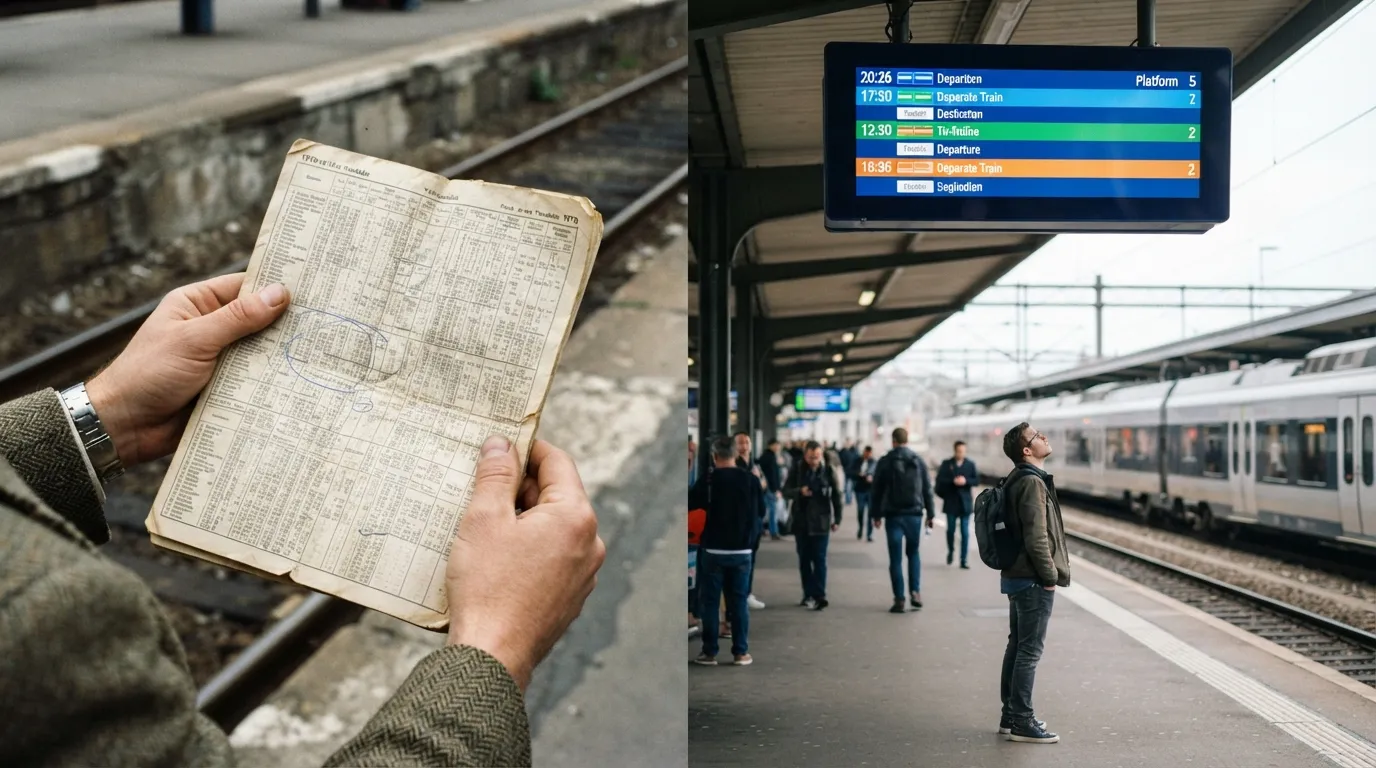
In 1975, the schedule was something you could hold, fold, and lose in a coat pocket. On the left half of the picture, a paper timetable is opened wide on the platform, its tiny columns of stops crammed across the page and its creases gone soft from handling.
Travelers often circled their own stop with a pen so they wouldn’t miss it. If a delay hit, the paper couldn’t tell you.
Now look right. Same platform, same standing eye level, but a screen hangs above the tracks, glowing with bands of color that show the train’s status and next stops. Nobody unfolds anything. Heads simply tilt up.
The trade-off is real, though. The paper never needed power, and a screen can go dark at the worst moment.
#11 – A 1975 dining car with a white tablecloth beside a 2026 cafe-car counter
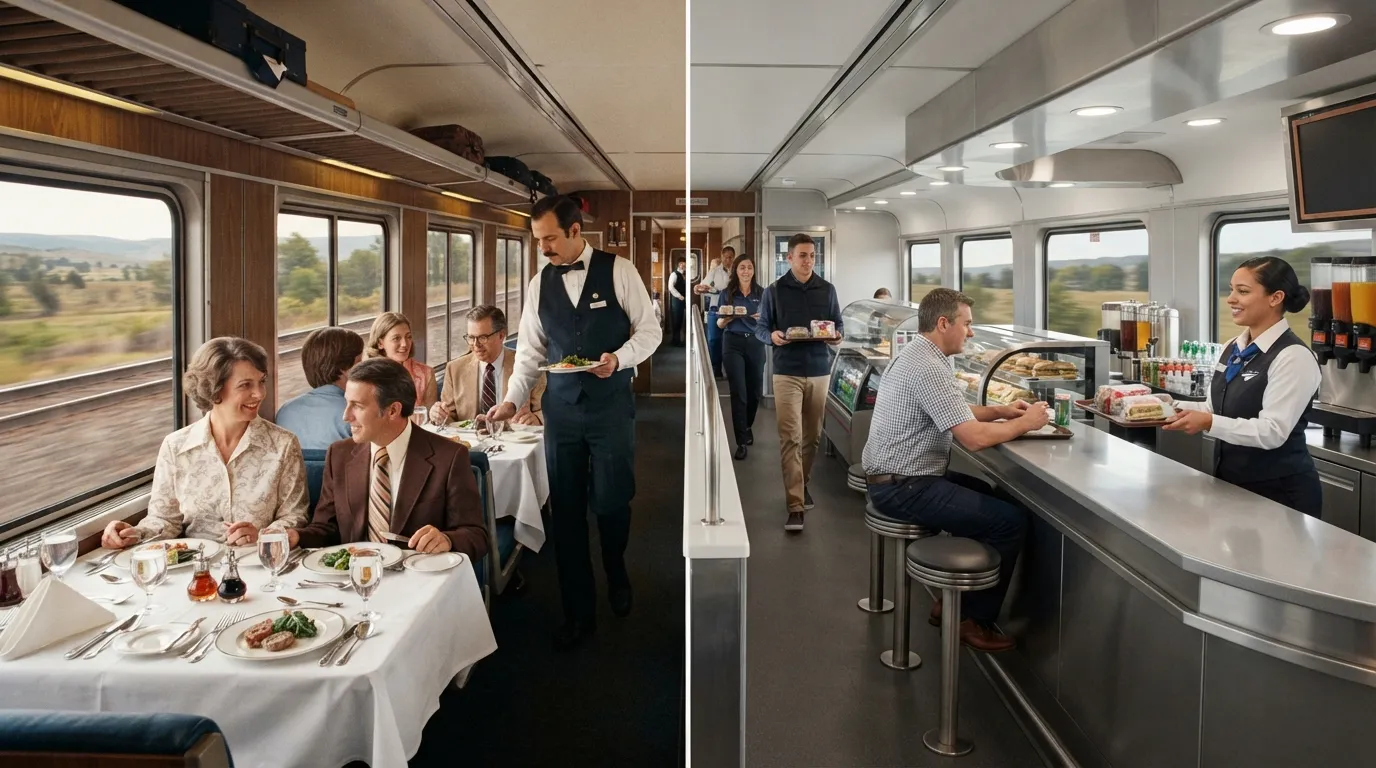
Picture lunch at seventy miles an hour with a white tablecloth under your elbows. On the left half, a 1975 dining car is set with linen, cloth napkins, heavy silverware, and china, while a server edges down the narrow aisle with plates held steady against the sway.
Strangers often shared a table, and a meal could stretch into a long conversation as the landscape slid past.
On the right half, from the same angle inside the car, the tablecloths are gone. A cafe-car counter stands in their place, with a menu board and a worker handing over trays. Passengers carry food back to their seats or perch on nearby stools.
It is faster and easier on the wallet for many riders. It also trades away some of the ceremony.
Quick Compare
- Seating: shared tables then, a counter, stools, or your own seat now.
- Service: plates carried to you then, trays handed across the counter now.
- Pace: a lingering sit-down meal then, a quick grab-and-go now.
#10 – A 1975 window that opens beside a 2026 sealed train window
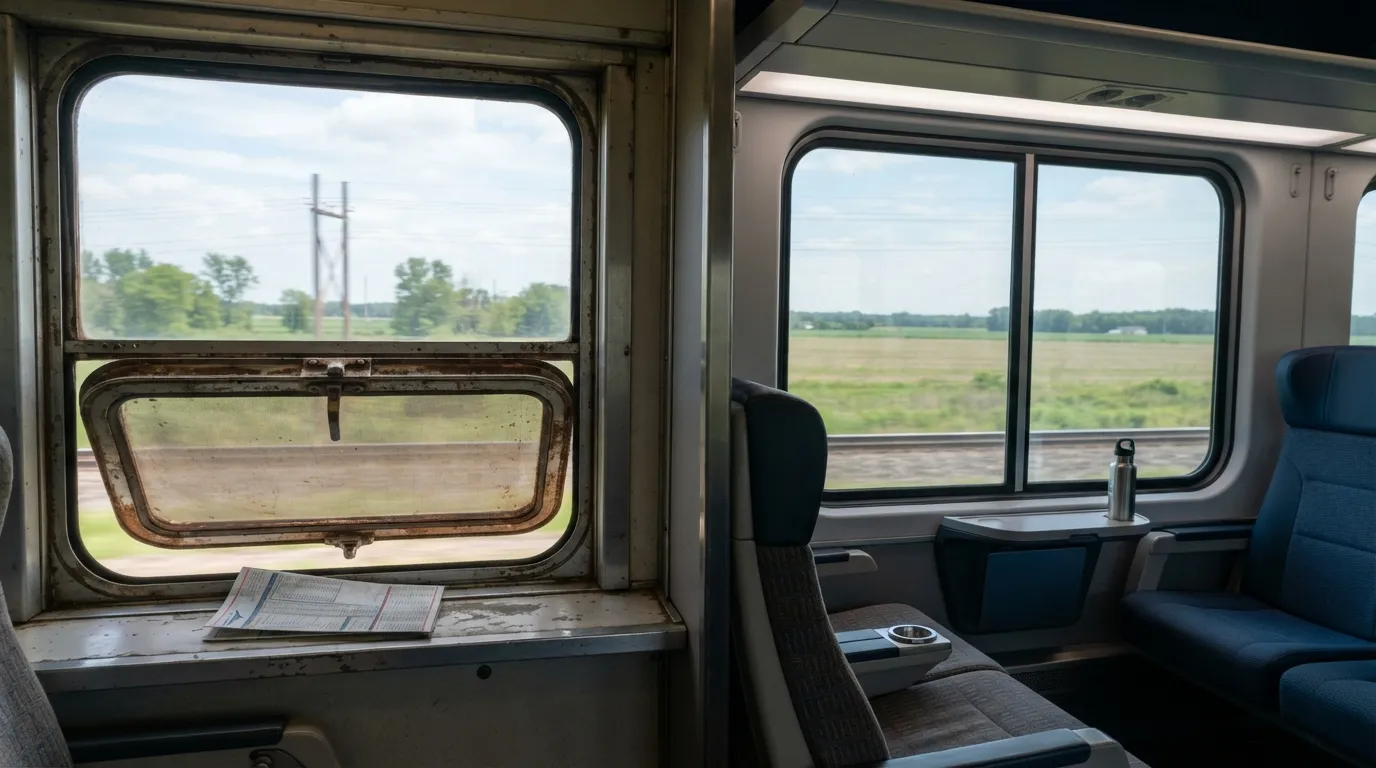
There was a time when you could feel the country on your face from a train seat. On the left half of the picture, a 1975 coach window is pushed open by its latch and sash, letting in fresh air at a station stop or on a mild day. A small screen keeps insects out, and the frame shows the wear of many hands.
You could lean toward the opening and catch the smell of rain, fields, or a platform in summer.
On the right half, seen straight on from seated eye level, a 2026 window is one fixed, sealed double pane. There is no latch, no handle, and no draft. The glass stays clean and the cabin stays steady in temperature.
You gain comfort and quiet. You lose that moment of leaning into the weather.
#9 – A 1975 roomette with a sink beside a 2026 bedroom behind a closed door
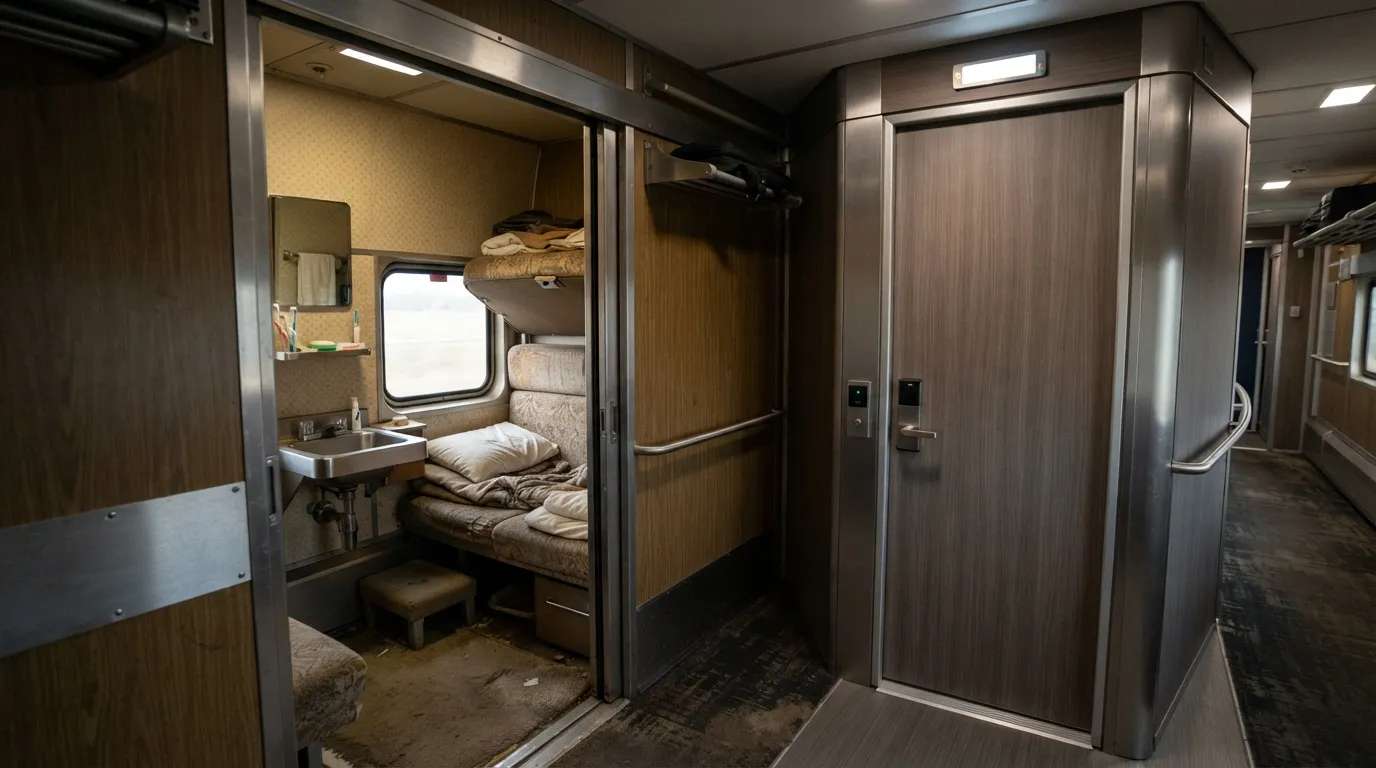
A 1975 roomette was a tiny world with a surprising amount tucked into it. On the left half of the picture, a small sink folds down from the wall near the berth, with a little mirror and a towel rack within arm’s reach. By day the space stays open, and by night it turns into a place to sleep.
Everything was close enough to touch. That was the charm, and the squeeze.
Now shift to the right half, from the same corridor viewpoint. A 2026 bedroom sits behind a closed door, and the first thing you notice is what you can’t see. Privacy comes first, with the fixtures kept out of view until the door opens.
The open-and-ready roomette felt cozy. The closed door feels private, and different travelers will prefer one or the other.
#8 – A 1975 conductor’s ticket punch beside a 2026 handheld scanner
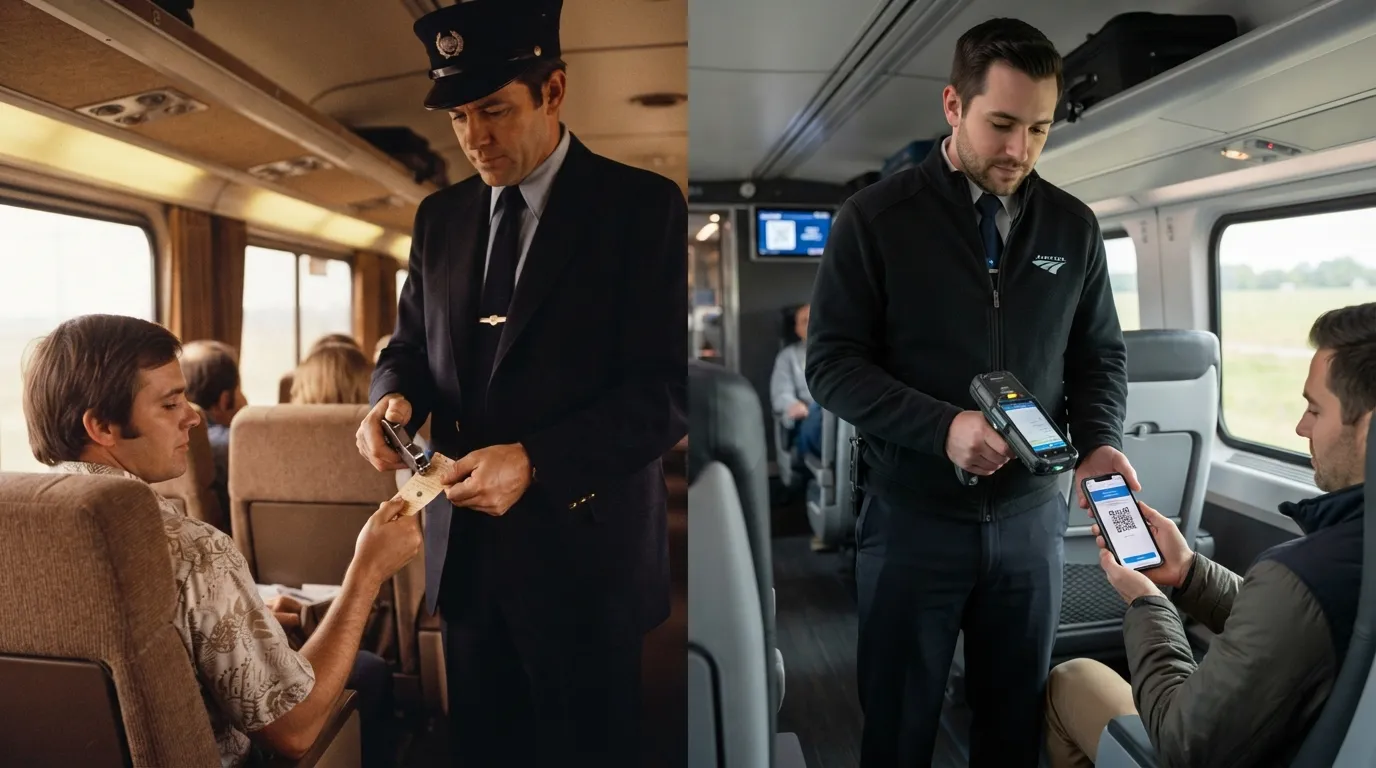
Some sounds belong to a particular era of travel, and the click of a ticket punch is one of them. On the left half of the picture, a 1975 conductor holds a metal punch beside a passenger seat, ready to bite a small shape out of a paper ticket. Each punch marked a stage of the trip.
Passengers handed the ticket over and got it back changed, a little worn, with proof that it had been checked.
On the right half, at the same height beside the seat, a 2026 conductor raises a handheld scanner. It reads a barcode or QR code from paper or a phone screen in seconds and logs the result at once.
The scan is quick and leaves the ticket untouched. It also leaves no little holes to keep as a souvenir.
Worth Knowing
- A punched ticket was visible proof that a conductor had already checked it.
- A scanner can read a code from paper or from a phone screen.
- The scan is recorded right away, with nothing left to mark by hand.
- A paper ticket now stays clean, which is tidy but a little less memorable.
#7 – A 1975 vista-dome car beside a 2026 lounge car with tall windows
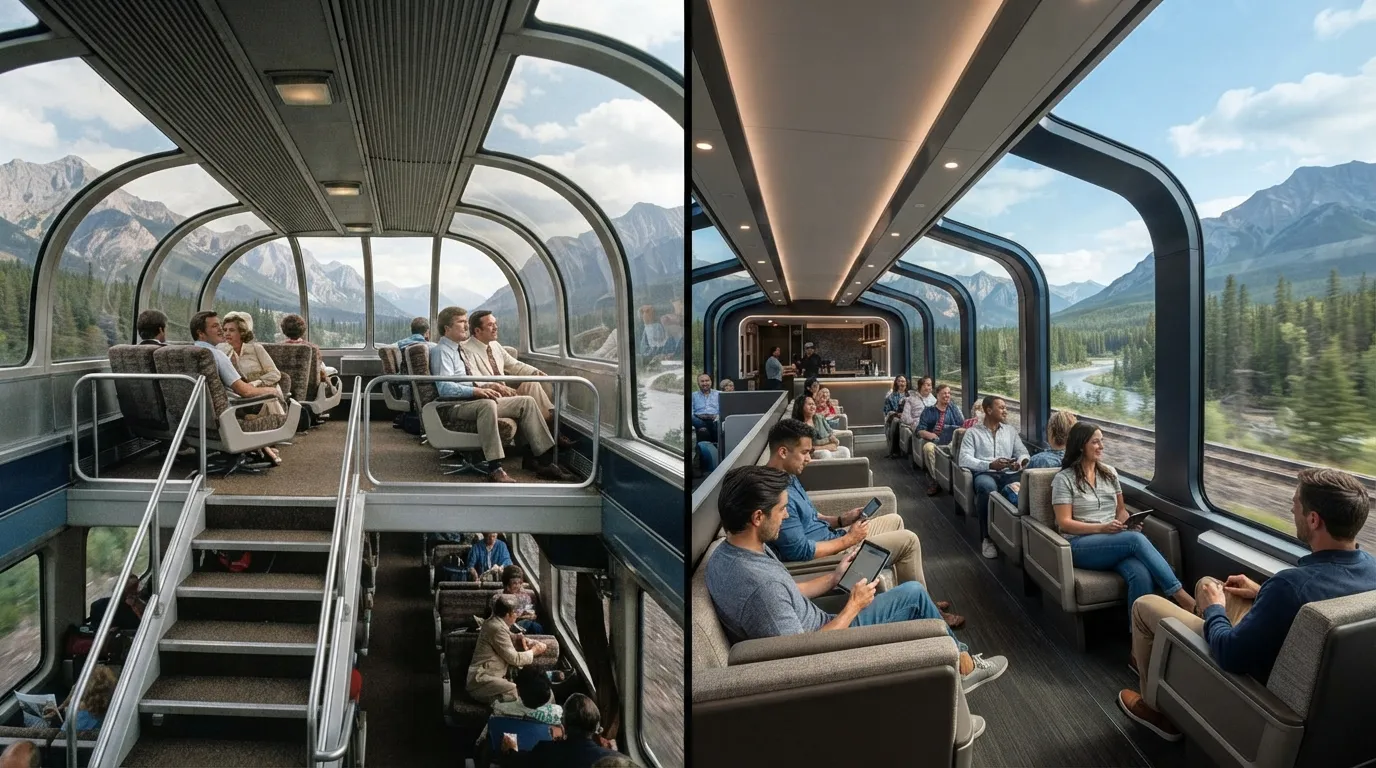
Few train cars ever felt as theatrical as a vista dome. On the left half of the picture, a 1975 dome car lifts a glass bubble above the roofline. Passengers climb a short stair to sit in swivel chairs with sky above them and mountains, plains, or city lights all around.
It put you above the train itself, and that raised seat was a prize.
On the right half, from the same forward-facing angle inside the car, a 2026 lounge car skips the bubble. Instead, tall side windows rise higher than ordinary coach glass, giving a wide view from regular seating without a climb.
The view is broad and easy to reach. The glass overhead is what you miss.
#6 – A 1975 smoking-car ashtray beside a 2026 car with no ashtray
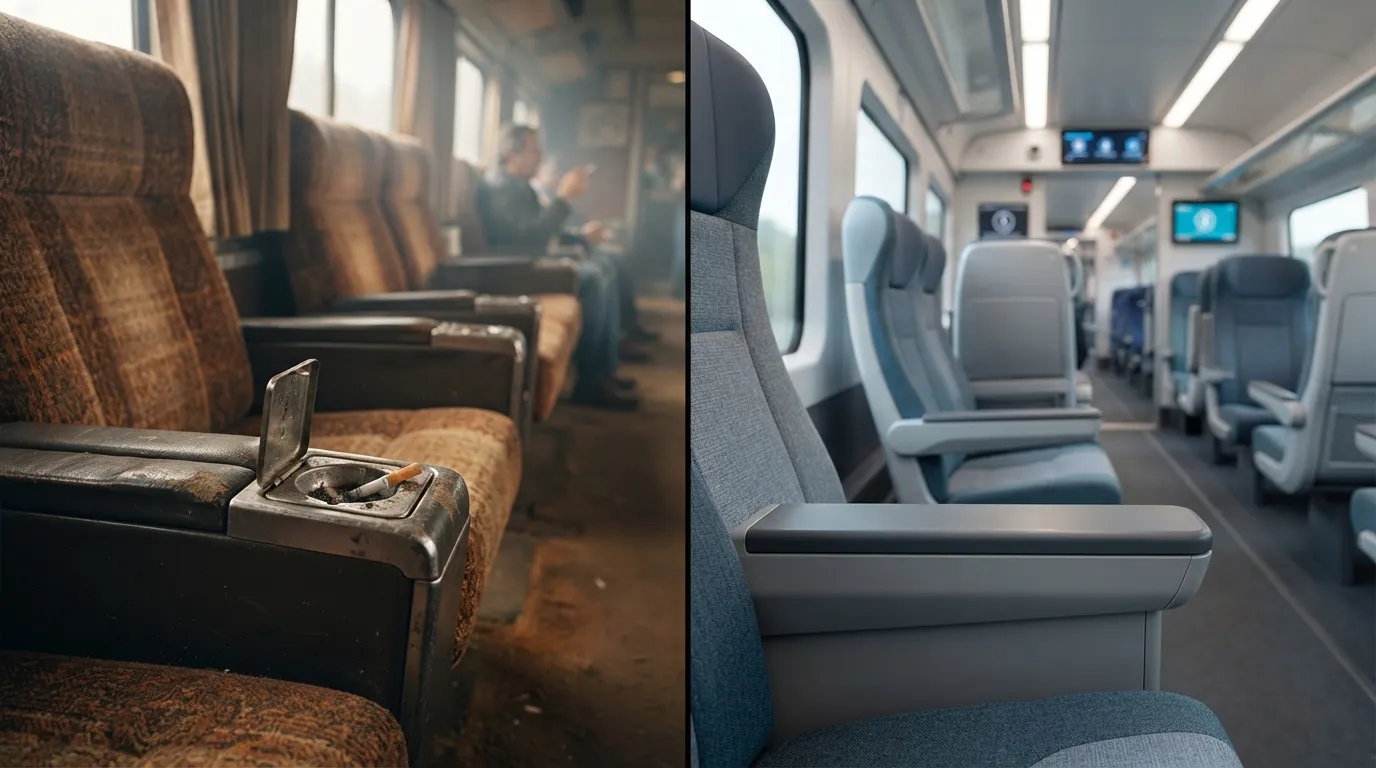
One of the starkest changes is something you can’t spot at a glance, because it’s missing. On the left half of the picture, a 1975 smoking car shows an ashtray set into an armrest or table, the small metal tray that tells you what this space was for.
Travelers who wanted a cigarette moved to that car, and the air there carried the scent of it. For many people, it was simply part of a long ride.
On the right half, from the same seat position, the 2026 car shows clean tables and armrests with no ashtray anywhere. It is a smoke-free space, and it looks calm and plain.
For riders who dislike smoke, the change is welcome. The empty spot where the tray used to be marks how much the rules have changed.
#5 – A 1975 cardboard hat check above the seat beside a 2026 card clipped to the seat back
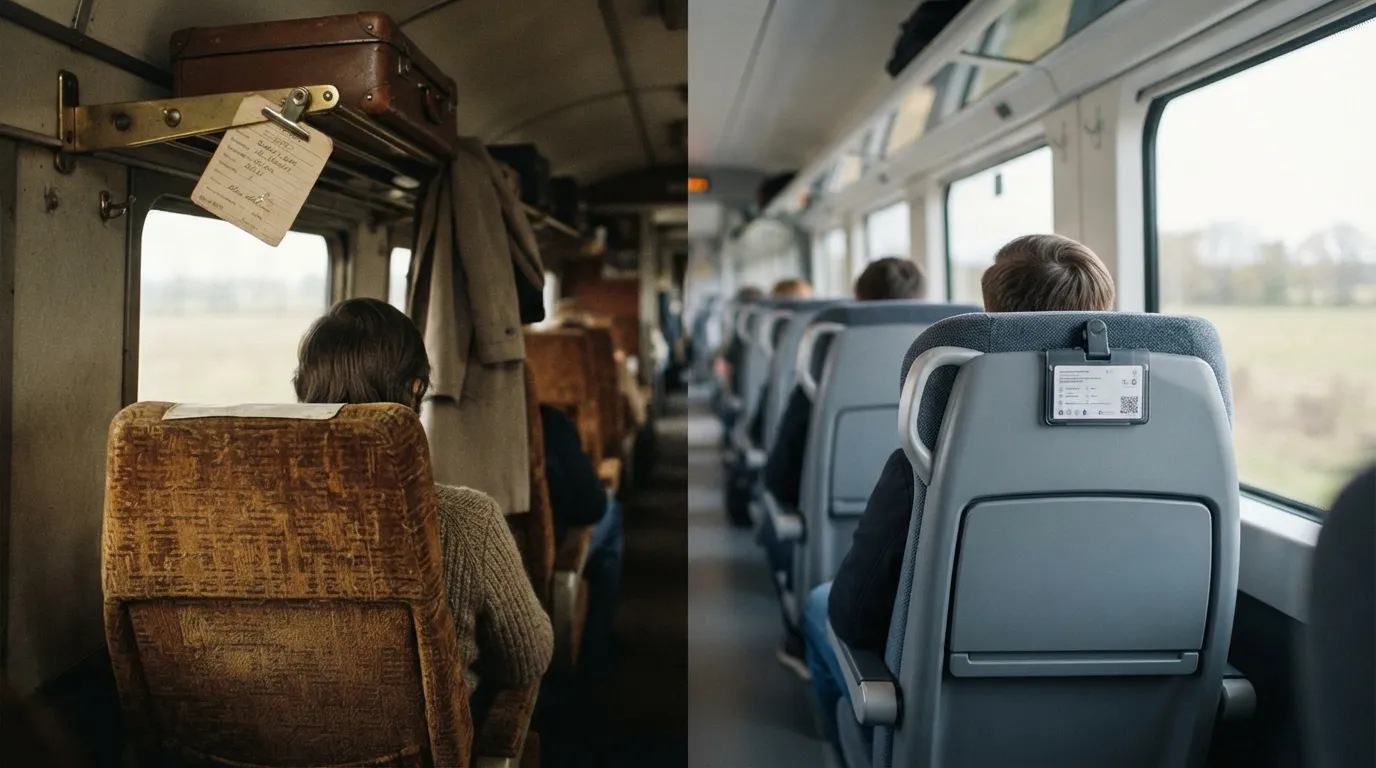
A scrap of cardboard once did a surprising amount of work. On the left half of the picture, a 1975 hat check is tucked in above the seat, a small slip that helped the crew know where each passenger was headed. It hangs at eye level from the aisle, simple and a little crooked.
Conductors could read the sleepy rows of seats at a glance, without waking anyone to ask.
On the right half, at the same eye level from the aisle, a 2026 card clips to the seat back and holds the reservation details for that seat. Nothing hangs above the head, and the card sits where the eye naturally lands.
Both are small, humble tools. One lives overhead, and the other sits on the seat back.
#4 – A 1975 step box on the platform beside a 2026 level boarding door
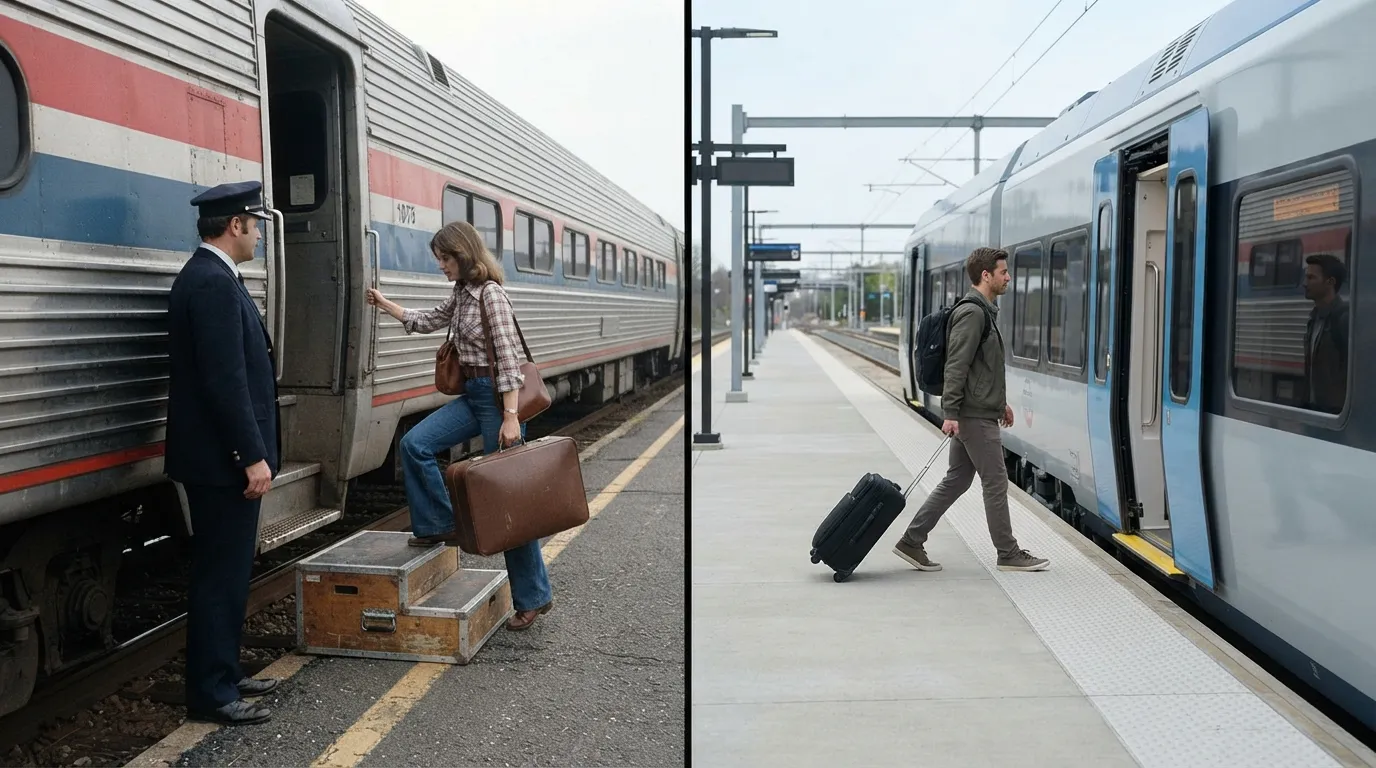
The hardest part of boarding was sometimes the first step. On the left half of the picture, a 1975 platform holds a portable step box, a wooden or metal stool placed right at the train door. A conductor set it down by hand to bridge the gap between ground and car.
Passengers hauled bags up and over that gap, one careful step at a time.
On the right half, from the same standing position beside the train, a 2026 door opens level with a raised platform edge. A passenger can walk straight on through wide doors with no step at all.
It is a big change for anyone with a heavy suitcase or a wheelchair. Not every station offers it, but where it exists, the gap nearly vanishes.
Fast Facts
- The 1975 step box was placed by hand at each door.
- Level boarding depends on a platform raised to the height of the car floor.
- Where it exists, bags can roll aboard instead of being lifted.
- Many stations still lack it, so the experience varies by stop.
#3 – A 1975 printed route guide beside a 2026 screen in the lounge
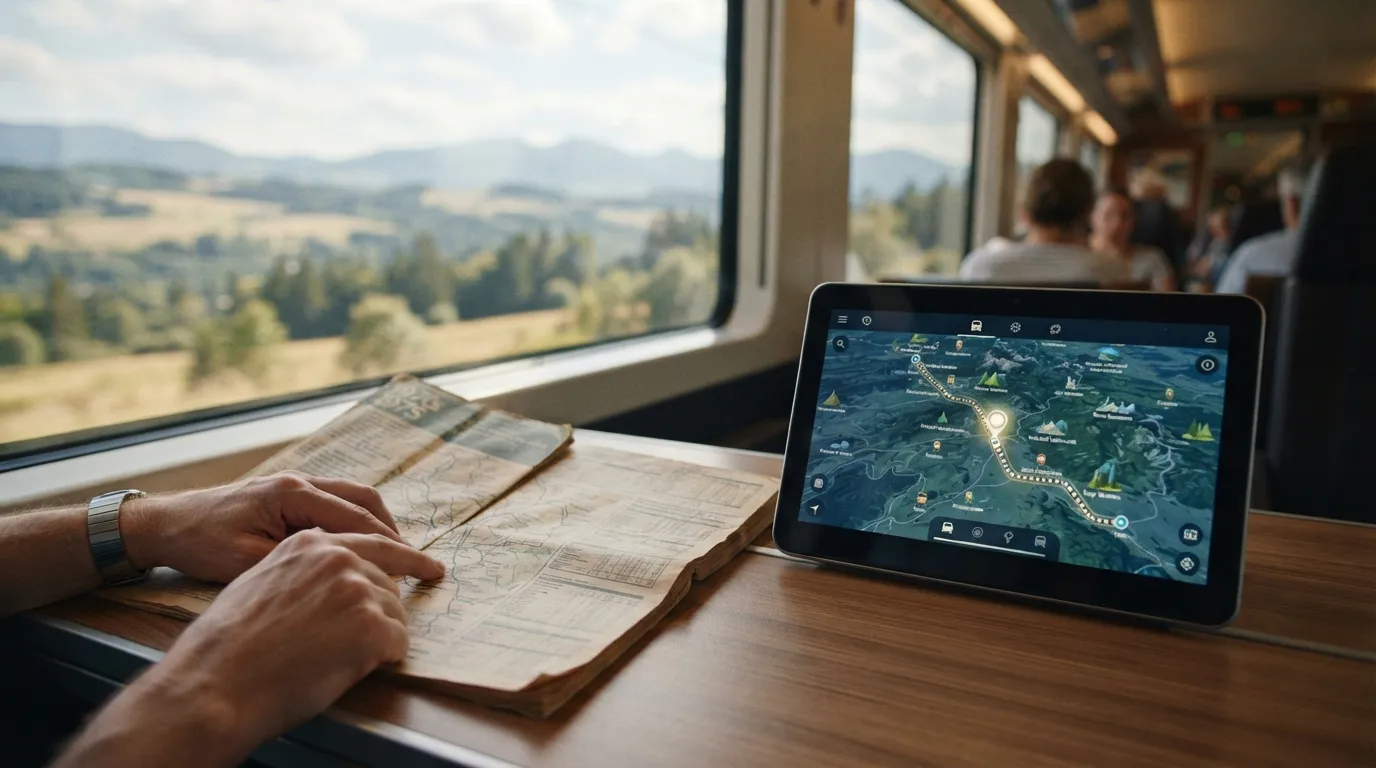
Before screens, the map was something you held open on your lap. On the left half of the picture, a 1975 route guide lies unfolded on a lounge table, a booklet or map listing towns, landmarks, and rough times along the whole line. Passengers checked it against the scenery outside.
You could put a finger on the page and say, we must be about here.
On the right half, at the same height in the lounge car, a 2026 screen shows the route with a marker for the train’s current position and points of interest noted along the way. It answers the question for you, and it keeps updating.
The screen is quicker and always current. The paper had one quiet advantage, which was that you could mark it up and keep it forever.
#2 – A 1975 shared bathroom down the hall beside a 2026 bathroom inside the bedroom
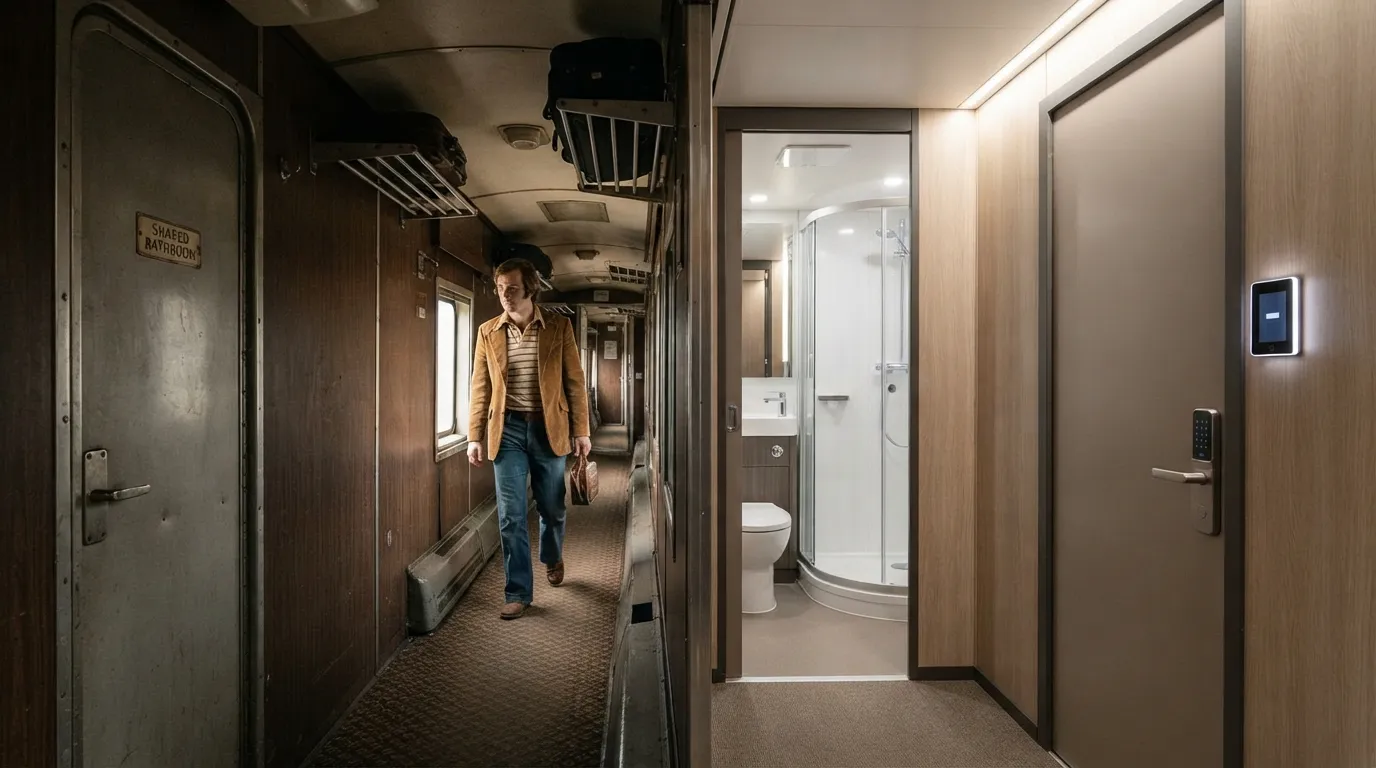
Some of the biggest differences are measured in steps down a swaying hallway. On the left half of the picture, a 1975 sleeping car shows a hallway door to a shared bathroom, used by many passengers and kept up by the crew. Inside were a toilet, a sink, and a small shower area.
Late at night, that walk down the corridor was a small adventure in itself.
On the right half, from the same corridor angle, a 2026 bedroom door is closed, and the bathroom is inside the compartment. No one needs to leave the room or share the facilities with the rest of the car.
It makes for a more private trip. It also takes away the hallway encounters that once came with the journey.
Why It Stands Out
- The bathroom moves from the hallway into the compartment itself.
- A late-night trip no longer means walking a moving corridor.
- Privacy goes up, while chance meetings with other passengers go down.
- A shared bathroom meant sharing the space, but the crew handled its upkeep.
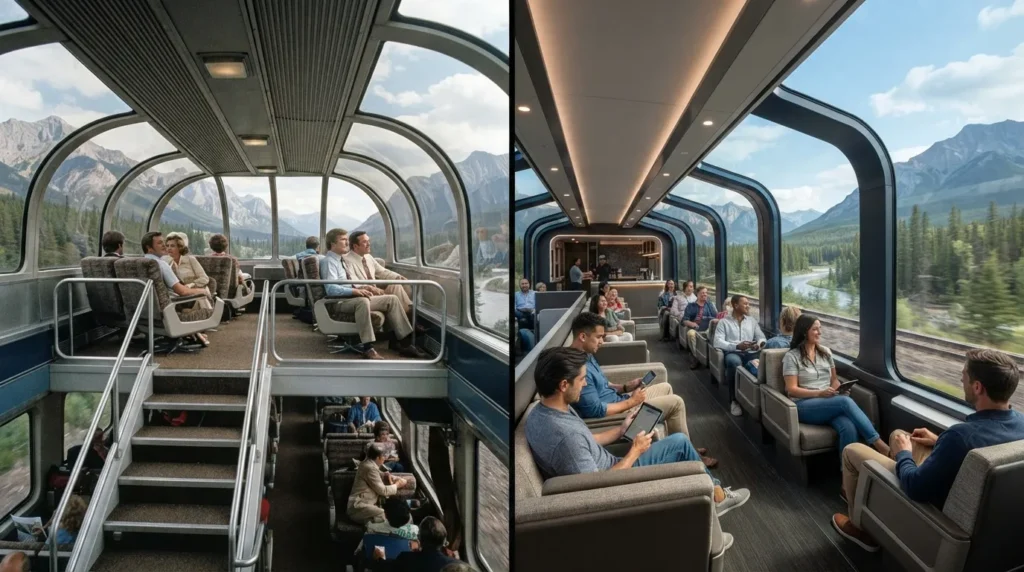
#1 – A 1975 seat under a curved glass dome beside a 2026 upper-level lounge seat
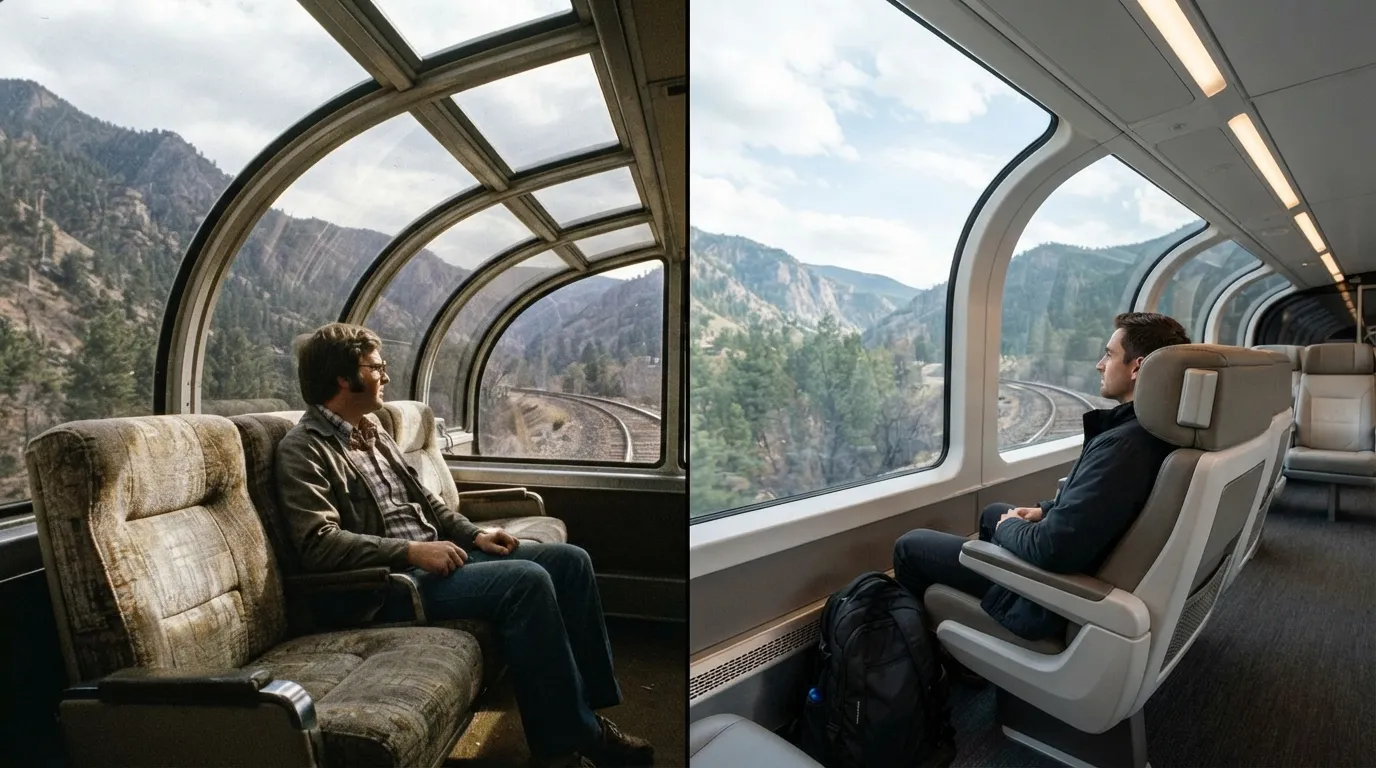
This is the picture people remember, the one that turns a train seat into a front-row view of the world. On the left half, a 1975 passenger sits under a curved glass dome, with sky overhead and glass on the sides. The dome makes a bright pocket above the main level of the car.
Sunsets, storms, and mountain curves all play out above your head.
On the right half, from the same forward-looking angle inside the car, a 2026 upper-level lounge seat sits on the second floor of the car. Large windows wrap around the sides and front, lifting your sightline high without any separate bubble.
The modern seat gives a wide, comfortable view. The dome gave you the feeling of riding inside the sky.
CEO-Co-Founder
