- 20 Novels That Predicted Modern-Day America - October 21, 2026
- 15 Songs That Brought Hidden Histories to Light - October 21, 2026
- 20 Classic Movies That Still Hold Up Decades Later - October 21, 2026
You’ve seen the festival highlight reels: glowing wristbands, packed fields, a sea of raised phones. But the trips people still talk about years later usually start somewhere older and stranger, like a town buried in tomato pulp, a hillside lit by thousands of candles, or a medieval square where a horse race lasts barely ninety seconds.
This countdown gathers 21 festivals with real dates, real histories, and a real reason to build a whole trip around each one. The early entries are already wilder than you’d expect. The last few are the ones travelers describe in a quieter voice, and #1 has nothing to do with stages or headliners.
#21 – La Tomatina in Buñol, Spain
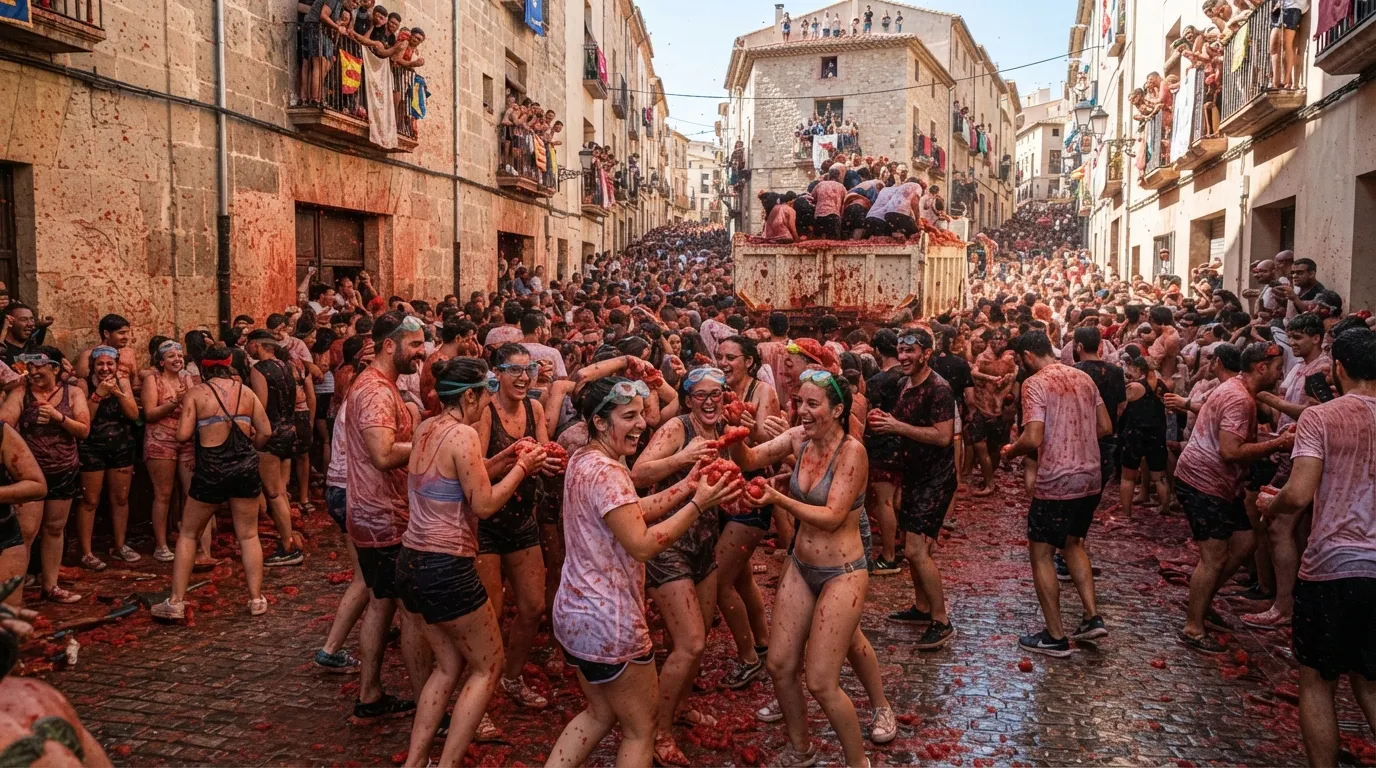
Picture a small Valencian town where, for one hour, the streets run red and every stranger becomes a target. That’s La Tomatina, held in Buñol on the last Wednesday of August.
It sits at the end of the town’s week of summer festivities. The official start is signaled by a shot, and then trucks roll in with tomatoes for the battle.
The rules are surprisingly strict for a food fight. Tomatoes must be squashed before they’re thrown, and entry now requires a ticket, so the crowd is capped instead of swelling endlessly. Goggles and old clothes are standard gear, and when the second shot ends the hour, crews hose down the streets.
That’s the loud, messy end of the spectrum. Next comes a three-day celebration where the water is meant to wash away the old year, and where even the elders get a gentle dousing at #20…
#20 – Songkran Water Festival in Thailand
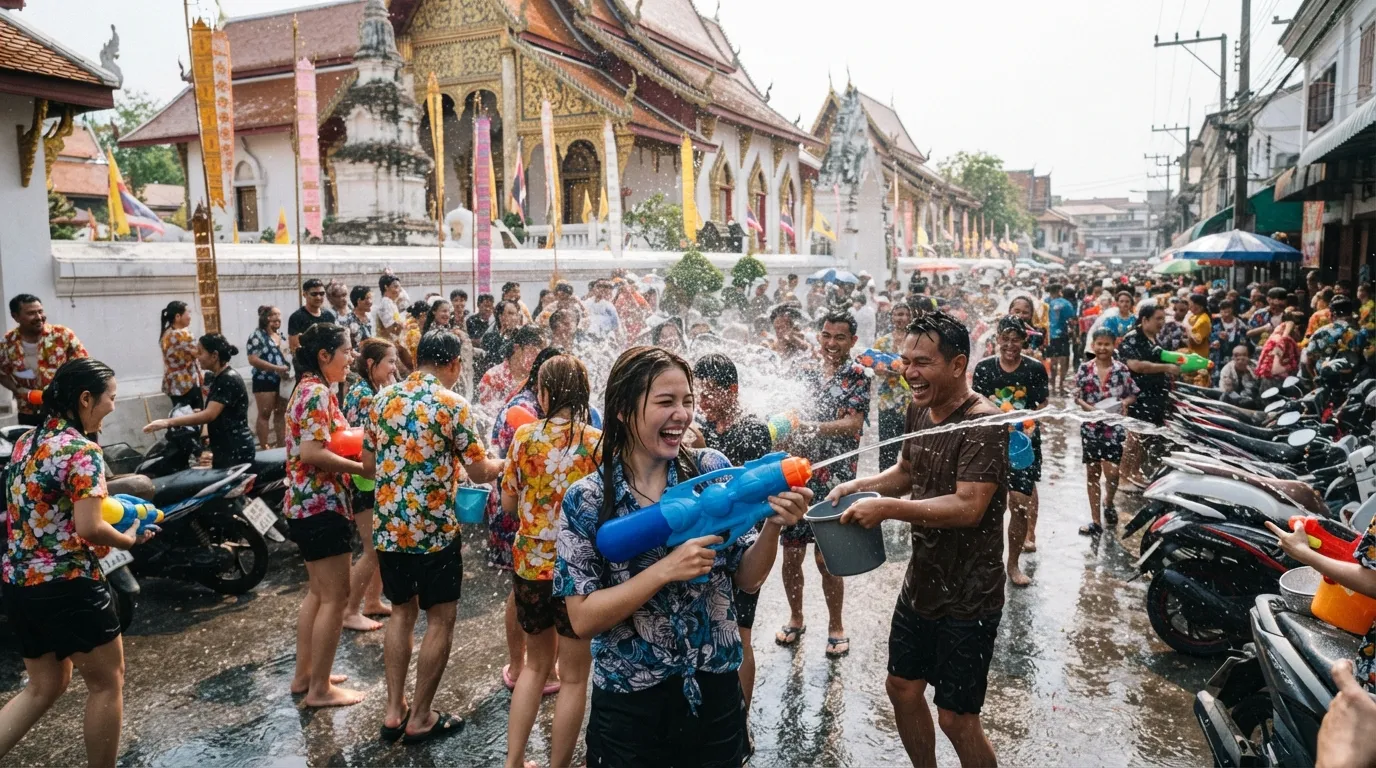
For a few days every April, Thailand’s streets turn into one giant, good-natured water fight. Locals and visitors stand shoulder to shoulder with buckets and super soakers, and nobody walks away dry.
Songkran marks the traditional Thai New Year and is officially observed April 13-15. Before the splashing starts, families visit temples and pour scented water over Buddha statues.
The water has a purpose beyond the fun. It’s meant to wash away the previous year’s bad luck and welcome a fresh start. Watch closely and you’ll see younger people gently pouring water over the hands of their elders as a mark of respect, even as chaos erupts a few feet away.
In Bangkok and Chiang Mai the biggest battles take over major roads and the moat around Chiang Mai’s old city. Smaller towns often lean toward temple visits and quieter family traditions.
Water is one thing, but what about a festival where an entire country throws colored powder at each other? That one is at #19…
#19 – Holi in India and Nepal
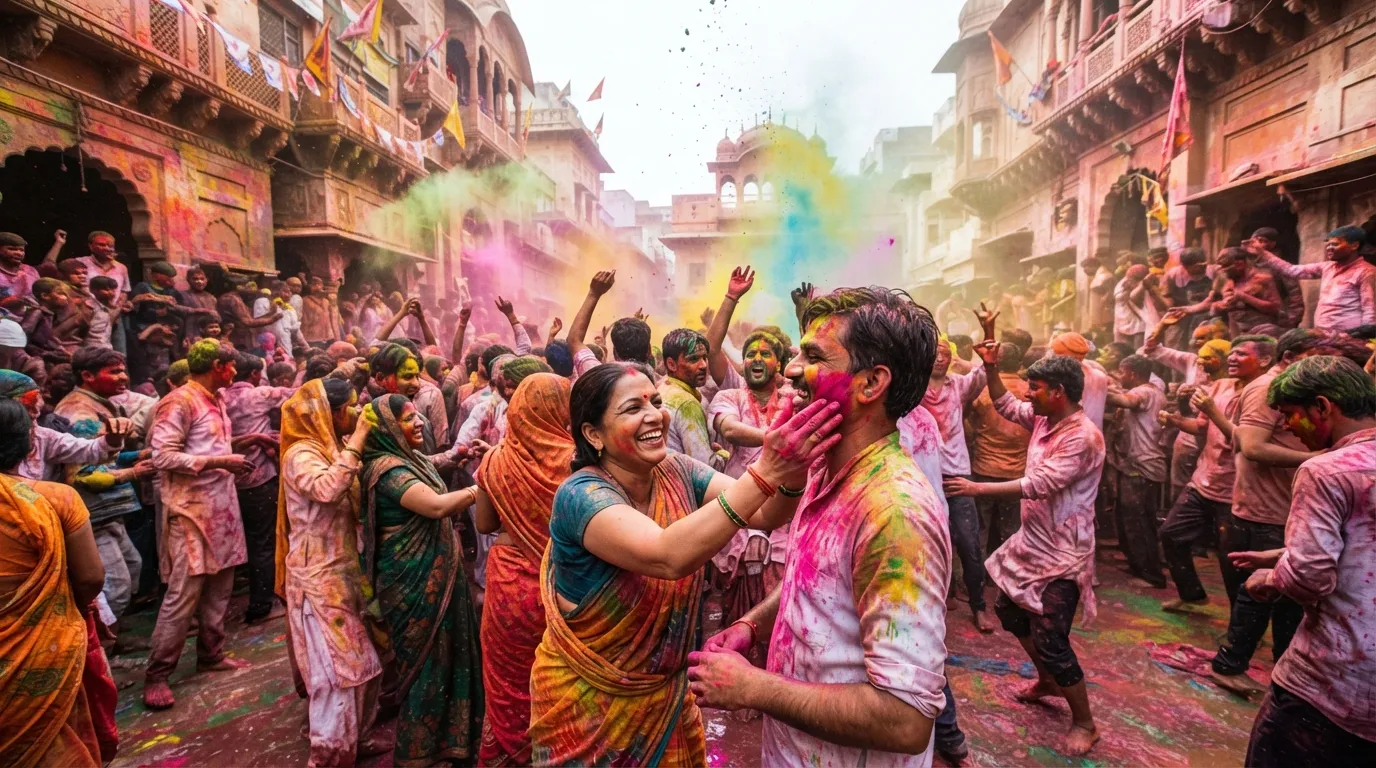
It starts with a bonfire, not a rainbow. On the night before the main event, communities gather around Holika Dahan fires that symbolize good triumphing over evil.
The next morning, the colors come out. Holi falls on the full moon of the Hindu month of Phalguna, usually in March, and marks the arrival of spring.
Streets fill with clouds of bright gulal powder, music, sweets, and shouts of “Happy Holi!” Strangers smear each other’s cheeks with color, and the old rule is that nobody is supposed to take offense.
For the full-on experience, head to Mathura and Vrindavan, tied to the legends of Krishna. In nearby Barsana and Nandgaon, the playful Lathmar Holi has women chasing men with sticks in a ritual teasing that locals have kept alive for generations.
If you think that sounds like a lot of energy, wait until you see what a single German city does with a beer tent at #18…
#18 – Oktoberfest in Munich, Germany
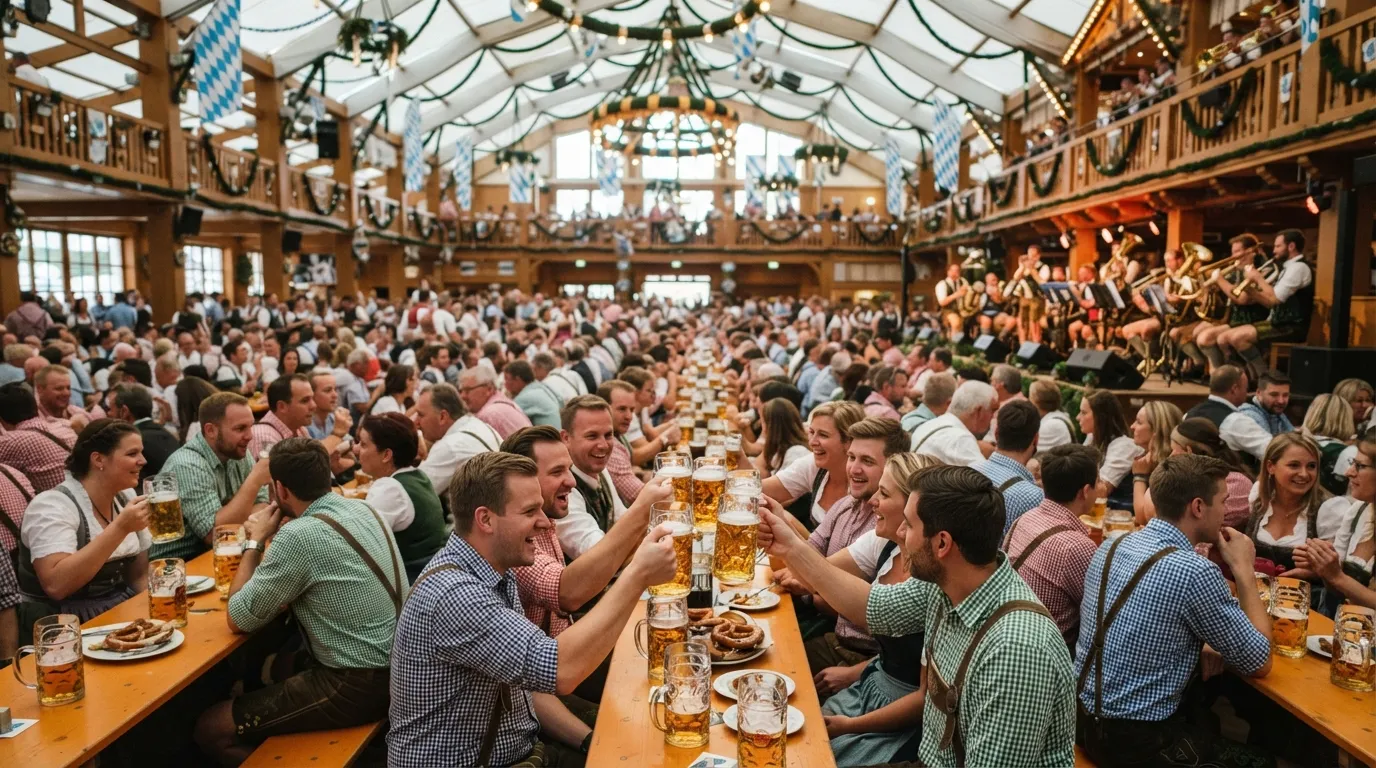
It began as a wedding party and never stopped. In October 1810, Munich celebrated the marriage of Crown Prince Ludwig and Princess Therese with a horse race on the meadow that still bears her name, the Theresienwiese.
Today the festival runs for roughly two and a half weeks, starting in September and ending on the first Sunday of October. It opens at noon on the first Saturday, when Munich’s mayor taps the first keg and declares, “O’zapft is!” (“It’s tapped!”)
Only beer from Munich breweries is served, poured into one-liter glasses called Maß. The big tents are decked out with long wooden tables, brass bands, and rows of locals in dirndls and lederhosen.
Go on a weekday morning if you can, and you’ll find a calmer, more local rhythm than the weekend crush. There are also rides, roasted chicken, and giant pretzels outside the tents.
Fast Facts
- First held in October 1810 to celebrate a royal wedding
- Still staged on the Theresienwiese, named for the bride
- Opens at noon on the first Saturday with a keg tapping
- Beer comes in one-liter Maß glasses from Munich breweries
But the next stop on our list wasn’t invited to its own origin story at all. It crashed the party at #17…
#17 – Edinburgh Festival Fringe in Scotland
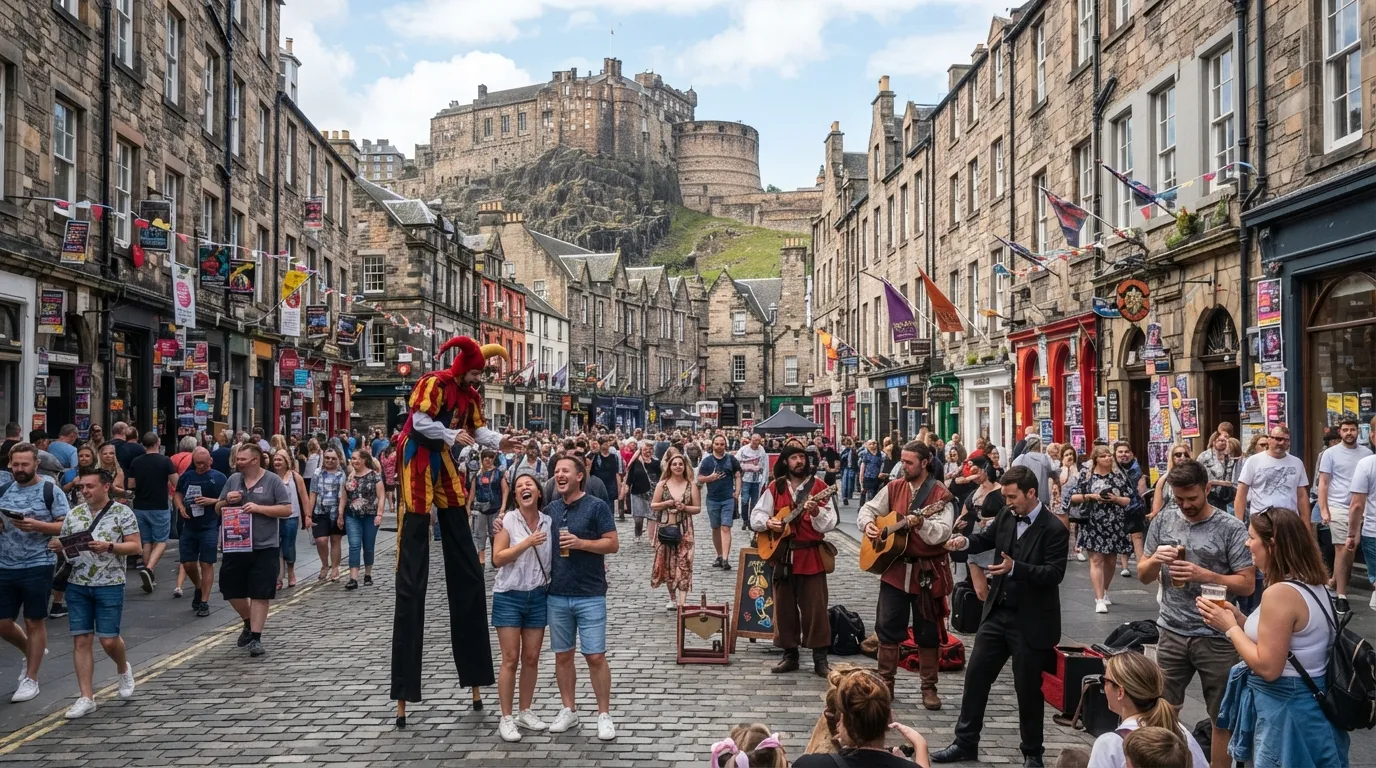
Every August, a whole city turns into a stage. The Edinburgh Festival Fringe takes over theaters, pubs, church halls, basements, and just about any room with a door.
It began in 1947, when uninvited performers turned up in Edinburgh while the first Edinburgh International Festival was getting underway. They staged shows on the sidelines anyway, and the “fringe” was born.
That open-door spirit is what makes it special. The Fringe is billed as the world’s largest arts festival, and anyone with a show and a venue can take part.
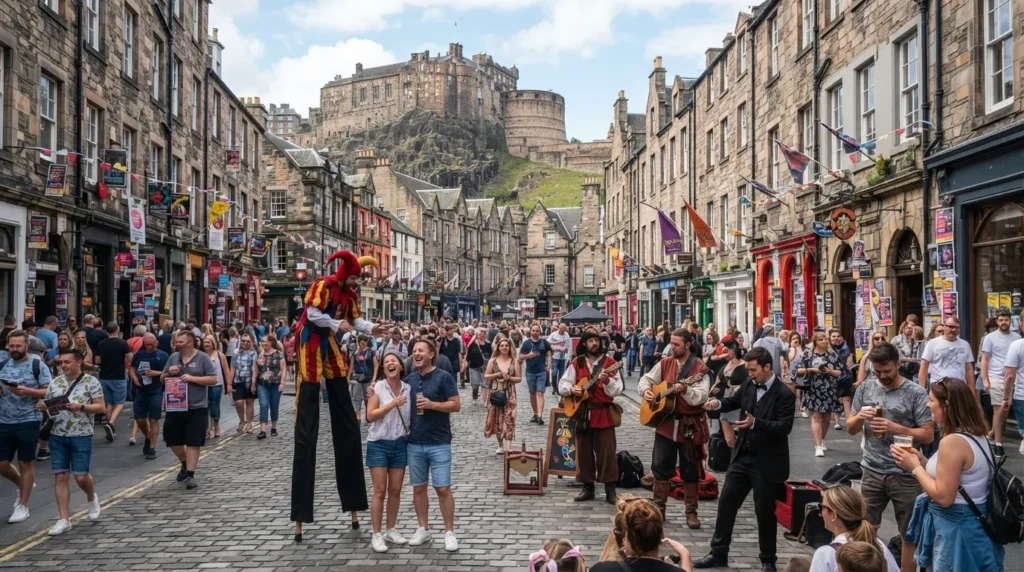
Wander the Royal Mile and you’ll be handed flyers by performers in costume, pitching you on comedy, drama, music, circus, and shows you can’t quite categorize. You might see something brilliant, or something bizarre, and often both in the same afternoon.
If you like your costumes a bit more mysterious, the next entry hides every face in the crowd at #16…
#16 – Venice Carnival in Italy
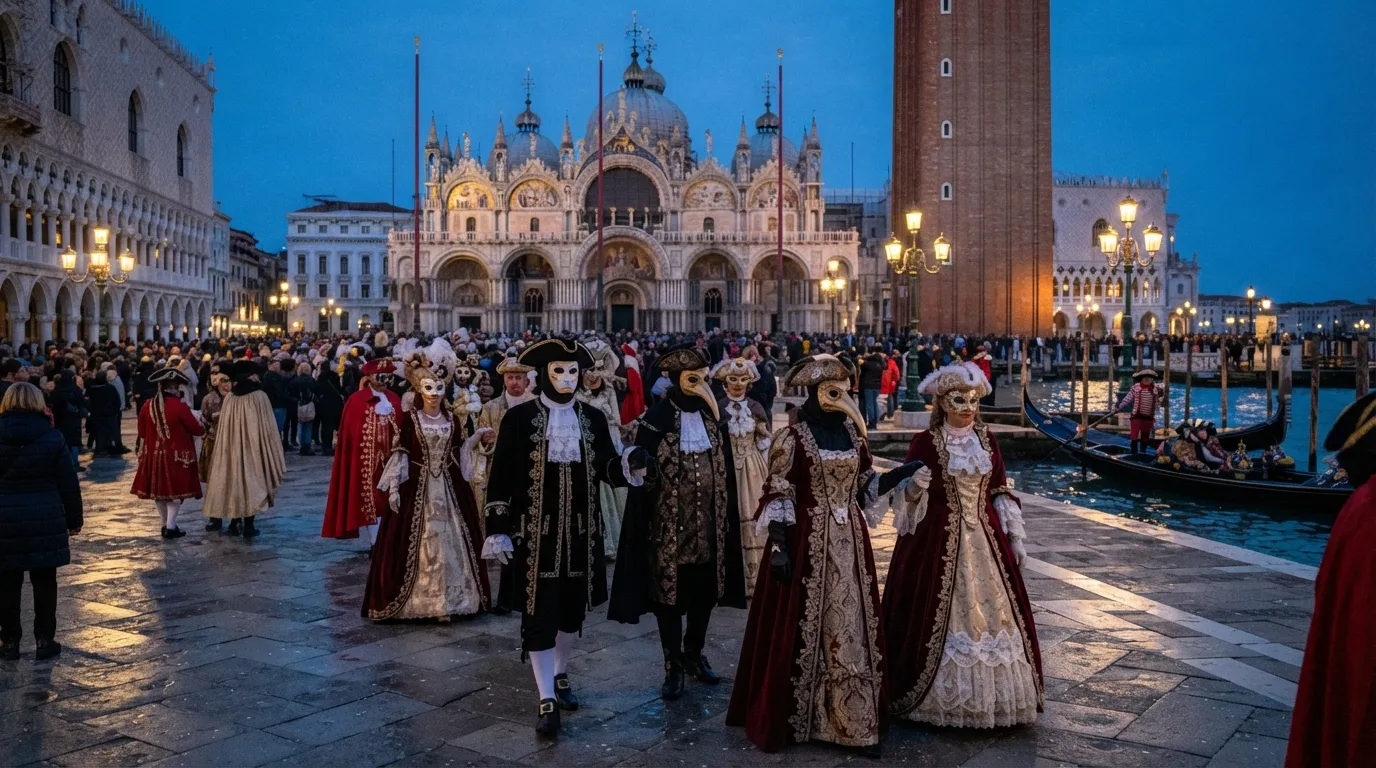
Imagine stepping onto a Venetian bridge and realizing half the people around you have no faces, just glossy masks and centuries-old costumes. That’s Carnival, which fills the weeks before Lent and builds to Shrove Tuesday.
Its roots stretch back centuries to the Republic of Venice, when masks let people slip out of their social roles for a while. The classic styles include the white bauta and the long-beaked plague doctor mask.
The best scenes happen in and around St. Mark’s Square, where costumed visitors pose against the basilica and the lagoon. Grand balls, parades, and a water procession along the Grand Canal add to the spectacle.
Wearing a costume yourself is half the fun, and many shops sell handmade masks. Go early in the morning when the light is soft and the crowds are thin.
Venice is all velvet and shadows. But our next festival is built entirely from frozen water and carved by the thousands at #15…
#15 – Sapporo Snow Festival in Hokkaido, Japan
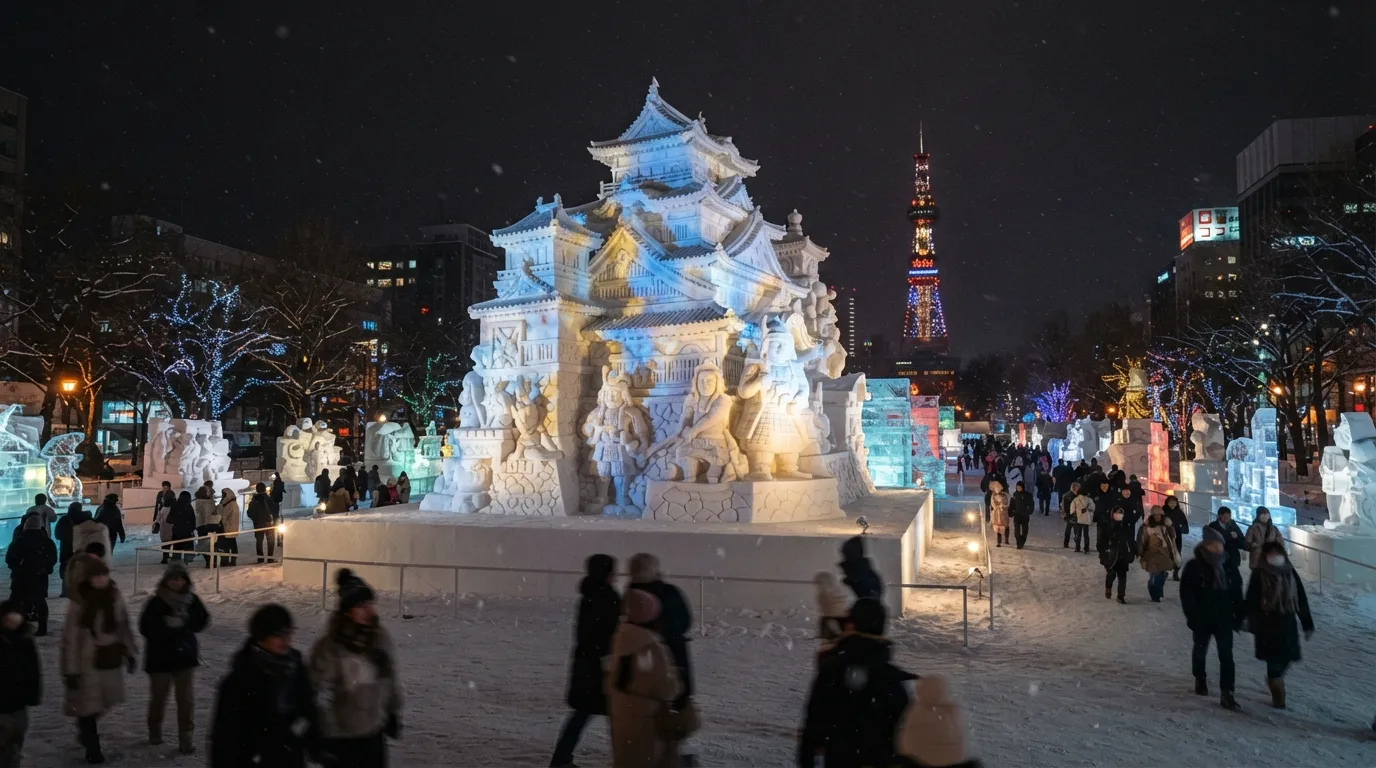
In the middle of a Hokkaido winter, an entire park fills with sculptures taller than buildings. The Sapporo Snow Festival turns Odori Park into an open-air gallery every February.
It started in 1950, when local high school students built six snow statues in the park. Now teams craft enormous snow sculptures, and the displays glow after dark.
The festival spreads across several sites, including the Susukino district, where you’ll find ice sculptures lit against the night. It lasts about a week, and the sculptures are only on display for that short window.
Bundle up, because it’s cold, and bring warm food from the local stalls. Hokkaido’s seafood, ramen, and soup curry are part of the fun.
From a gentle sculpture park, we move to a festival that ends with a blazing ship at #14…
#14 – Up Helly Aa in Lerwick, Shetland
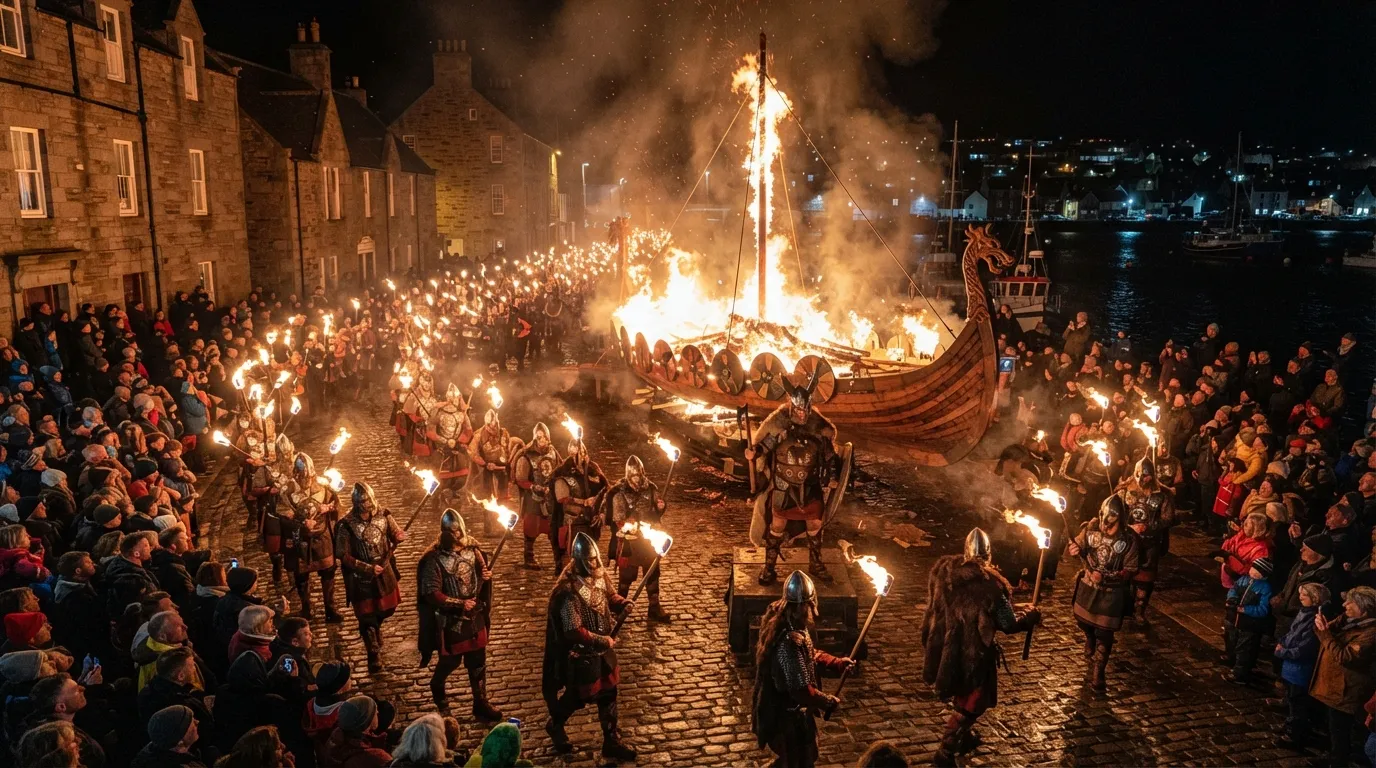
Hundreds of flaming torches wind through a Scottish town at night, and then the crowd sets a Viking ship on fire. That’s Up Helly Aa, held in Lerwick on the last Tuesday of January.
It’s a fire festival that celebrates Shetland’s Norse heritage. The procession is led by the Guizer Jarl and his squad in Viking costume, with the rest of the marchers dressed in elaborate guizer outfits.
The centerpiece is a replica longship, built over the months leading up to the festival. When the marchers reach the burning site, they hurl their torches into the galley.
The night doesn’t end when the flames die down. The costumed squads move from hall to hall for a night of music, performances, and dancing that lasts until morning.
Fire is one thing, but our next festival started with a farmer, a field, and a free carton of milk at #13…
#13 – Glastonbury Festival in Somerset, England
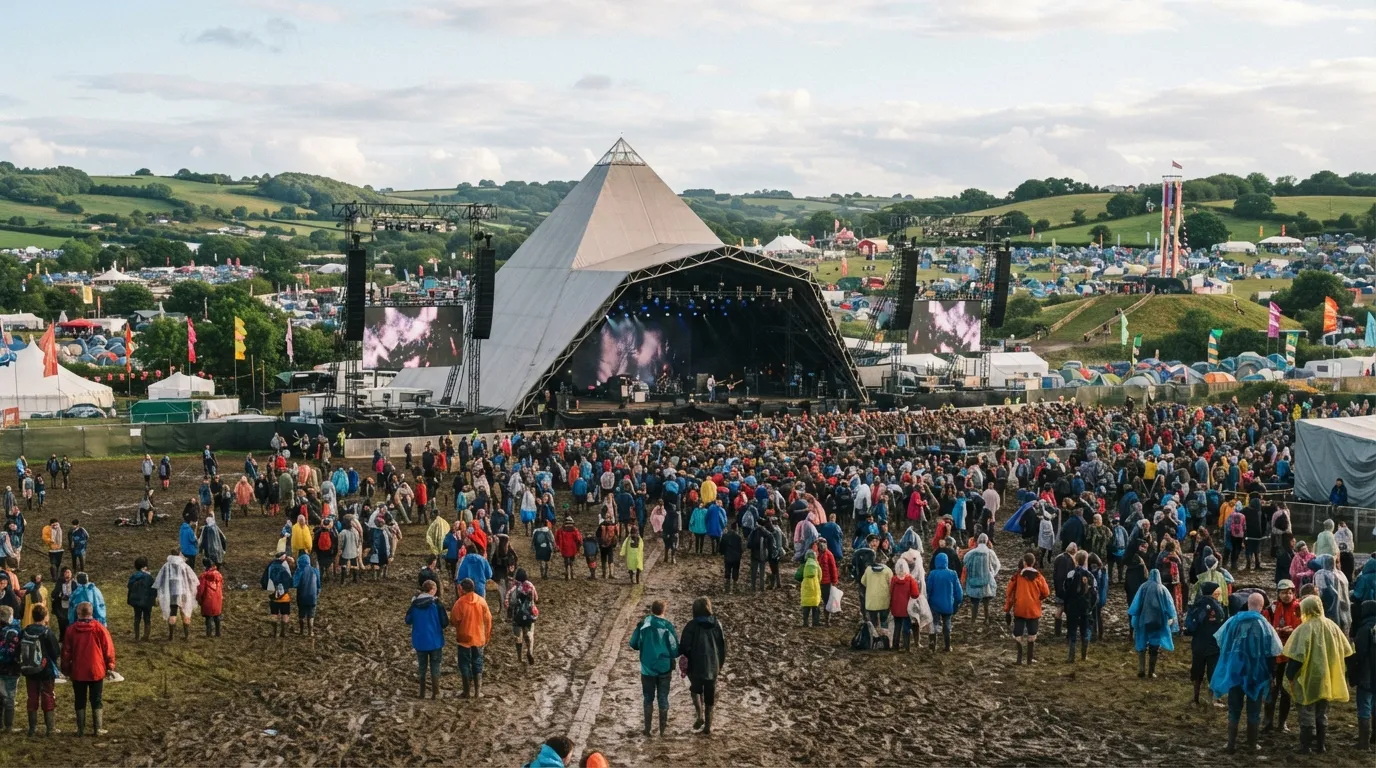
The most famous music festival in Britain started on a dairy farm. In 1970, Michael Eavis welcomed visitors to Worthy Farm in Pilton, Somerset, with a ticket price of one pound that included free milk.
Today, Glastonbury is held on the same farm, usually in late June. Every so often it takes a fallow year, a rest for the land, so check the calendar before you plan.
The Pyramid Stage is the main attraction, but the festival is full of corners most people miss. There’s the Stone Circle for sunrise, the Park Stage, and Shangri-La, an after-dark world of art installations and surprises.
Plan for mud. It’s practically a tradition, and half the stories people tell afterward involve it.
Why It Stands Out
- It still happens on the working farm where it began in 1970
- The first ticket cost one pound and came with free milk
- Sunrise at the Stone Circle is a ritual of its own
- Fallow years mean the calendar is part of your planning
From farmland to a desert sky: the next festival began with just 13 hot-air balloons at #12…
#12 – Albuquerque International Balloon Fiesta in New Mexico
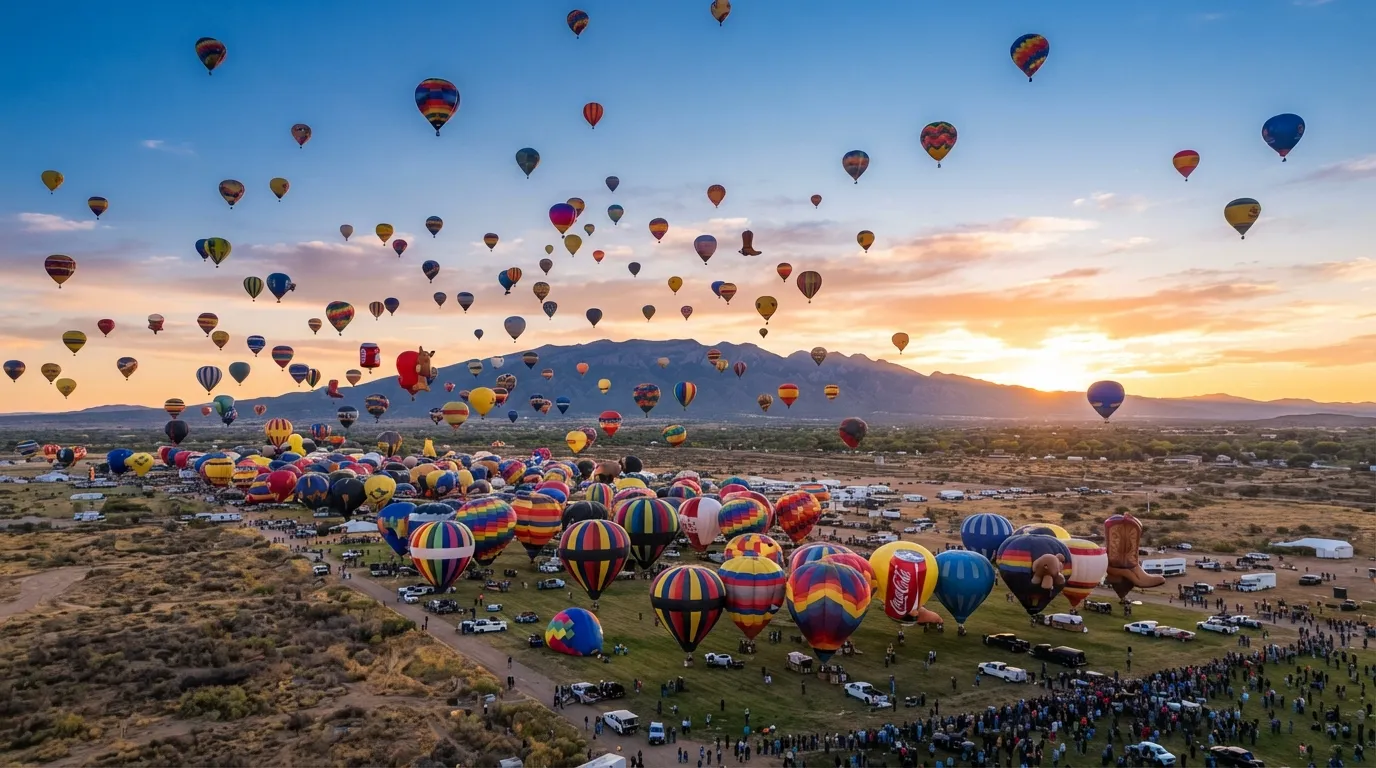
Hundreds of hot-air balloons rise at dawn over the New Mexico desert, and the sky fills with color. The Albuquerque International Balloon Fiesta happens every October.
It all began in 1972 with just 13 balloons in a shopping center parking lot, held to celebrate a local radio station’s anniversary. Now it’s one of the most photographed events in the American Southwest.
The highlight is the Mass Ascension, when balloons lift off in waves from Balloon Fiesta Park. Local wind patterns, sometimes called the Albuquerque Box, can help pilots float away and then drift back.
Look for the special-shape balloons, which come in all sorts of unexpected forms. In the evening, the balloons glow against the dark in a sight that’s hard to forget.
Glowing things are more than a photo opportunity at #11, where an entire French city puts candles in its windows…
#11 – Fête des Lumières in Lyon, France
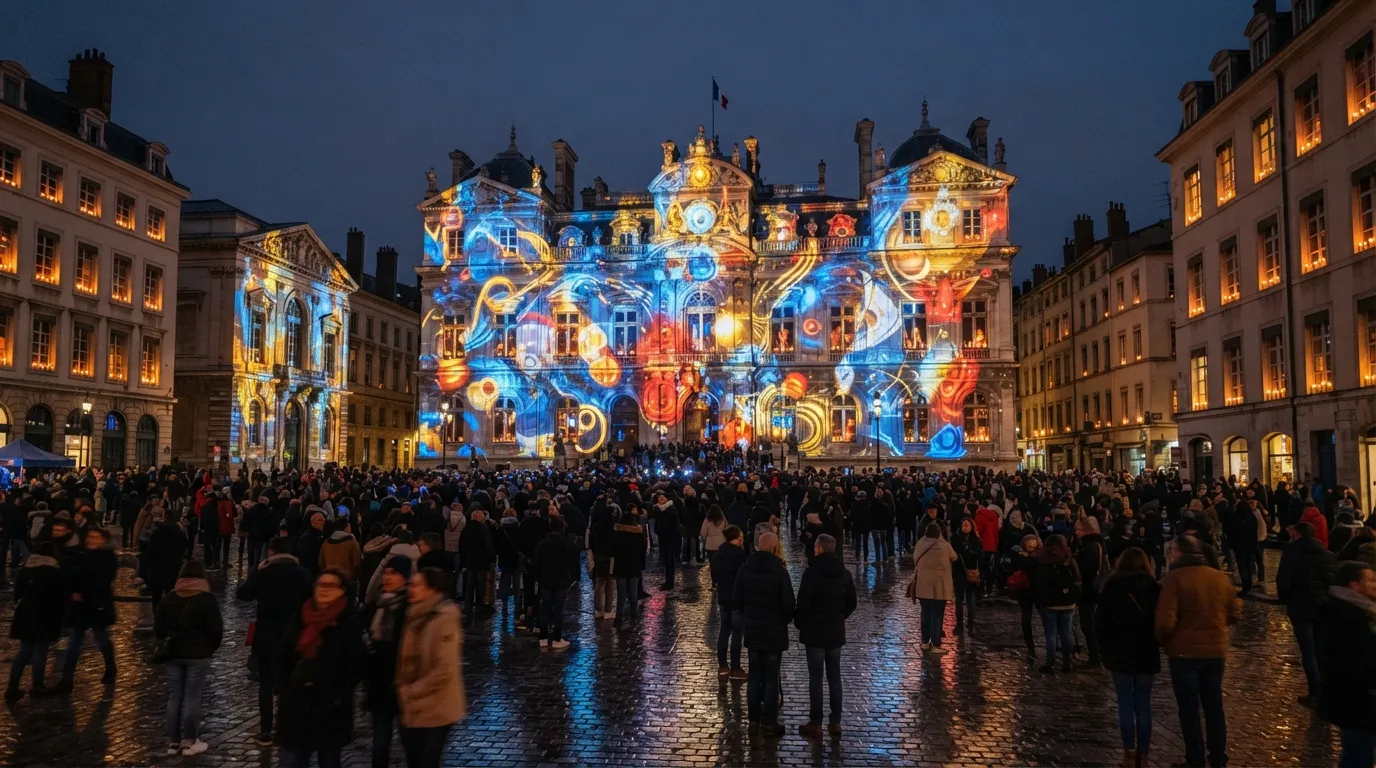
On one December night, thousands of candles flicker in the windows of Lyon. The Fête des Lumières traces back to 1852, when the city planned to unveil a statue of the Virgin Mary on Fourvière Hill.
A flood delayed the ceremony, and when the weather cleared, residents lit candles in their windows on December 8 as a thank-you. The tradition stuck, and it’s still observed around that date.
These days the festival lasts four nights, and artists project light installations onto historic buildings across the city. Places like Place des Terreaux and the basilica on the hill become glowing canvases.
Stroll slowly and look up. The best parts are often just around the next corner, shimmering on a façade.
If you’d rather join in than watch, our next festival lets you dance through the streets all night at #10…
#10 – Awa Odori in Tokushima, Japan
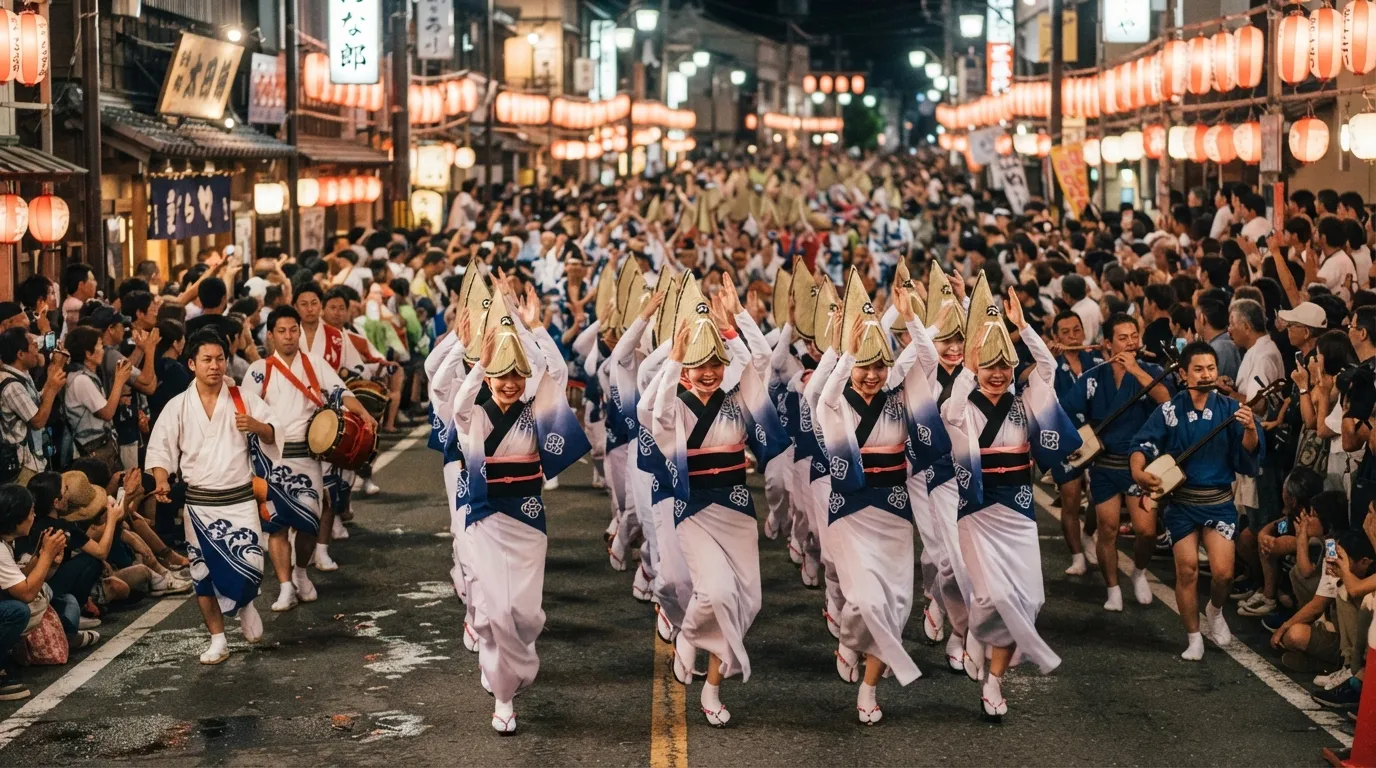
Thousands of dancers fill the streets of Tokushima, chanting and weaving in perfectly timed lines. Awa Odori takes place August 12-15, during the Obon season.
The tradition goes back roughly 400 years. Dancers perform in groups called ren, moving to the sounds of drums, flutes, and shamisen with the call “Yatto sa, yatto sa!”
The most famous saying about the dance is that fools dance and fools watch, so you might as well dance. And visitors really can join in, especially at the open-participation sessions.
Even if you only watch, the rhythm is contagious, and the hand movements are hypnotic. The festival fills the city with lanterns and street food.
Japan has another festival that has run all month long since the year 869, and it features floats tied together without nails at #9…
#9 – Gion Matsuri in Kyoto, Japan
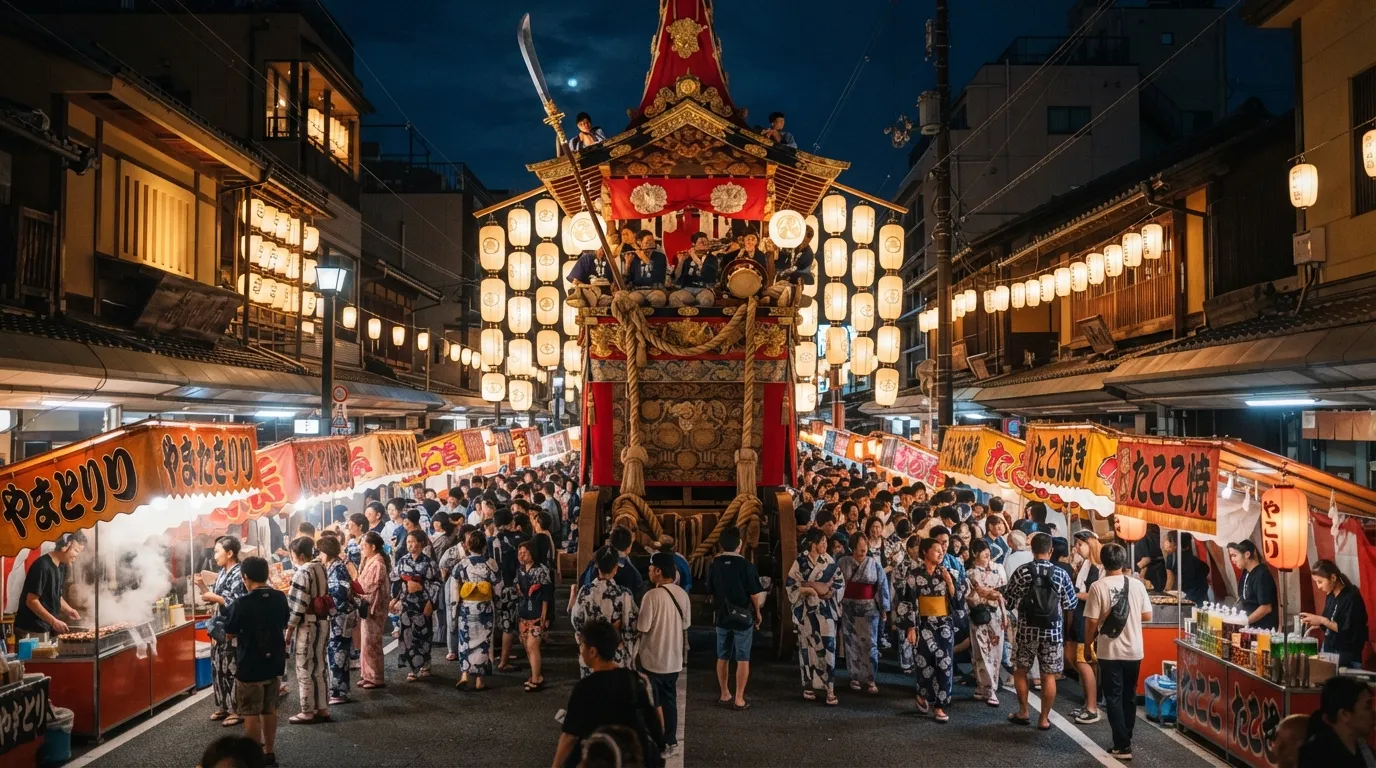
For the entire month of July, Kyoto lives inside a festival. Gion Matsuri is linked to Yasaka Shrine, and its origins stretch back to 869, when it began as a ritual to calm angry spirits during an epidemic.
The big moments are the Yamaboko Junko processions on July 17 and July 24. Enormous wooden floats, known as hoko and yama, roll through the streets.
Many of the floats are assembled using rope joinery rather than nails, a technique passed down through generations. The tall hoko floats carry musicians playing festival music as crowds line the roads.
The evenings before the main procession, known as yoiyama, are just as magical. Streets close to traffic, lanterns glow, and food stalls line the way.
From Kyoto’s wooden floats, we head to a high plateau where wrestlers, horse riders, and archers compete at #8…
#8 – Naadam in Mongolia
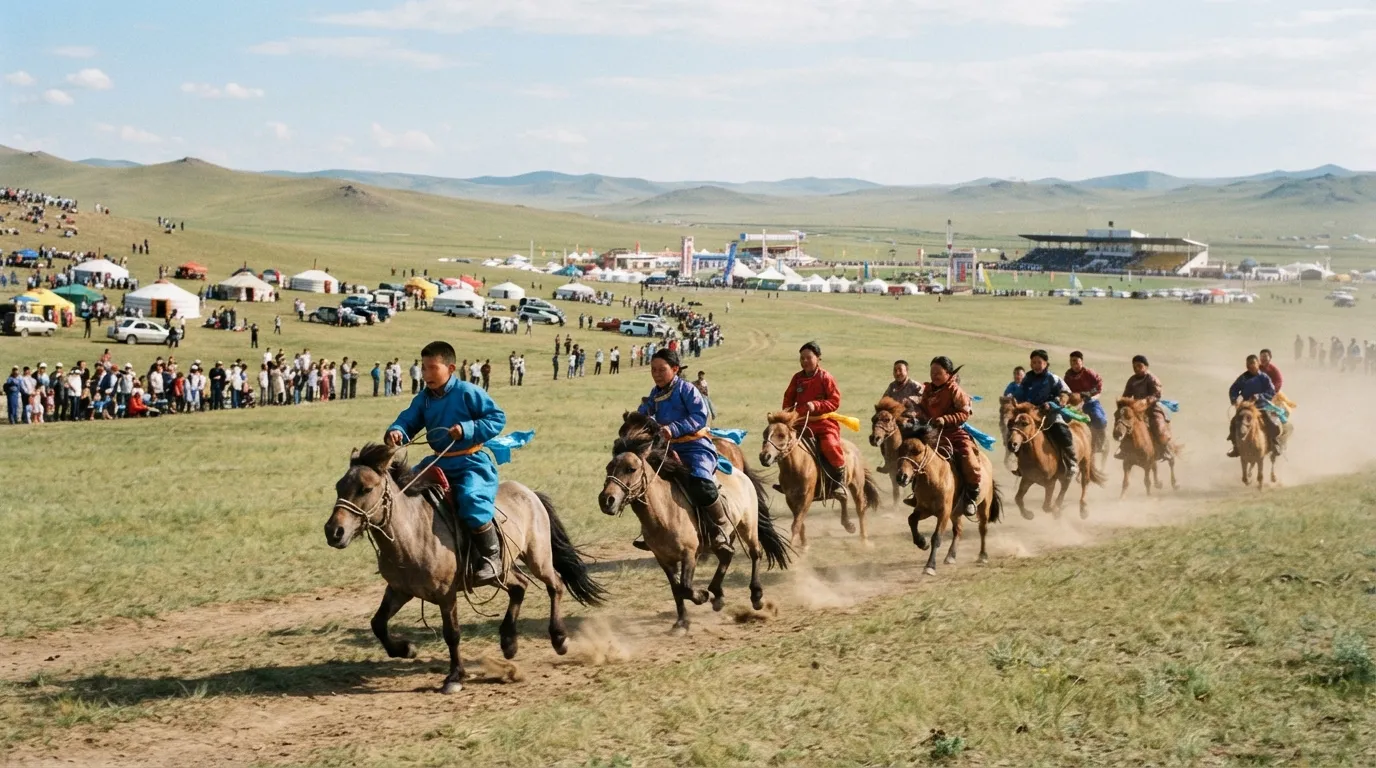
On the Mongolian steppe, the biggest sporting event of the year isn’t played with a ball. Naadam, held around July 11-13, features the “three manly games”: wrestling, horse racing, and archery.
The main celebration takes place in Ulaanbaatar with an opening ceremony, and smaller festivals spread across the countryside. UNESCO recognized the tradition as intangible cultural heritage in 2010.
The wrestlers wear tight shorts and open-chested vests, and winners perform a graceful eagle dance. The horse races stretch across open grassland, and young riders gallop for miles.
Women also take part in archery, and the whole event is a blend of sport, ritual, and national pride. Try the local food, including dumplings and fermented mare’s milk.
Back in the U.S., the next festival turns an entire city into a rolling party at #7…
#7 – Mardi Gras in New Orleans, Louisiana
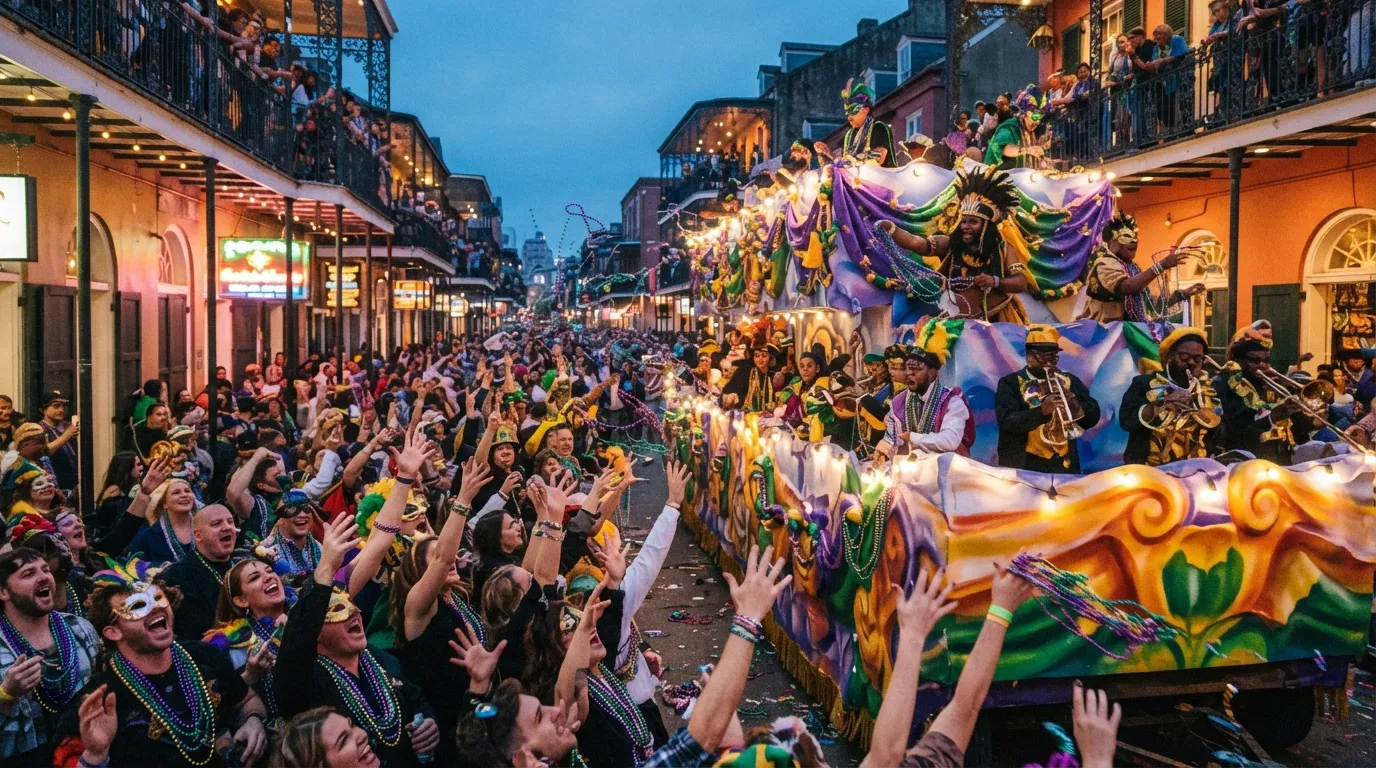
Strangers shout for beads from floats, brass bands echo through the streets, and a city celebrates for weeks. Mardi Gras in New Orleans builds from Twelfth Night in January to Fat Tuesday, the day before Ash Wednesday.
The first big parade in 1857 was staged by the Mistick Krewe of Comus. Today, groups called krewes organize the parades, balls, and floats.
The official colors are purple, green, and gold, and you’ll see them everywhere. Throws range from beads and doubloons to the coveted decorated coconuts handed out by the Krewe of Zulu.
Don’t skip the king cake, a sweet pastry with a tiny plastic baby hidden inside. Whoever finds it traditionally brings the next one.
Mardi Gras is loud and sprawling, but our next race takes less time than a commercial break at #6…
#6 – Palio di Siena in Siena, Italy
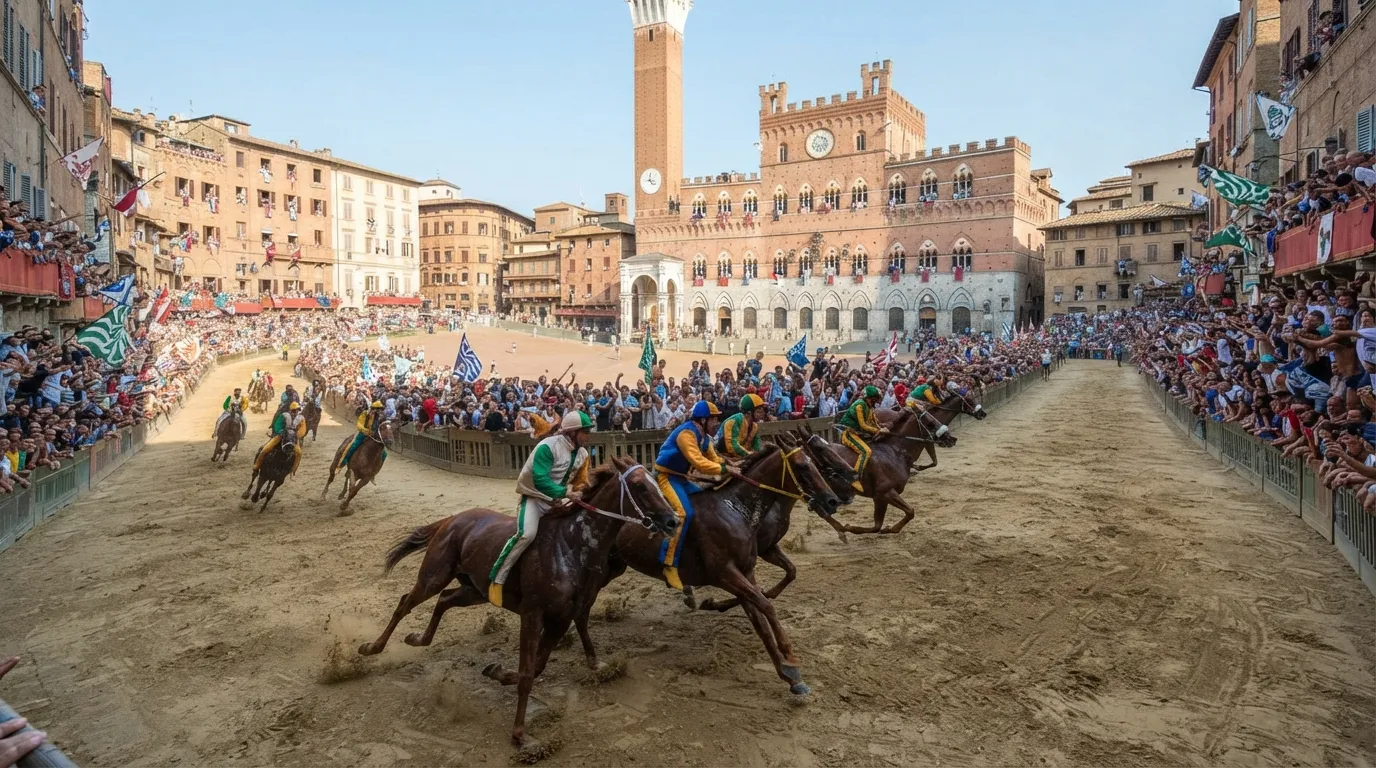
A race that lasts about ninety seconds can define a city’s pride for a whole year. The Palio di Siena is held twice each summer, on July 2 and August 16, in the Piazza del Campo.
Ten of the city’s seventeen neighborhoods, called contrade, compete each time. Riders race bareback around the square for three laps on a track of packed dirt laid over the stones.
The days leading up to the race are as dramatic as the race itself. Each contrada blesses its horse in its own church, and neighborhoods drum, sing, and wave their flags through the streets.
The square fills with spectators, and the sound builds as the horses line up. Then it’s over almost before you realize it started.
Quick Compare
- The build-up: days of horse blessings, drumming, and flag waving
- The race: about ninety seconds, three laps, no saddles
- The calendar: two races each summer, July 2 and August 16
- The field: ten of Siena’s seventeen contrade at a time
If ninety seconds sounds intense, wait until you see a parade that lasts for hours and shakes an entire stadium at #5…
#5 – Rio Carnival in Rio de Janeiro, Brazil
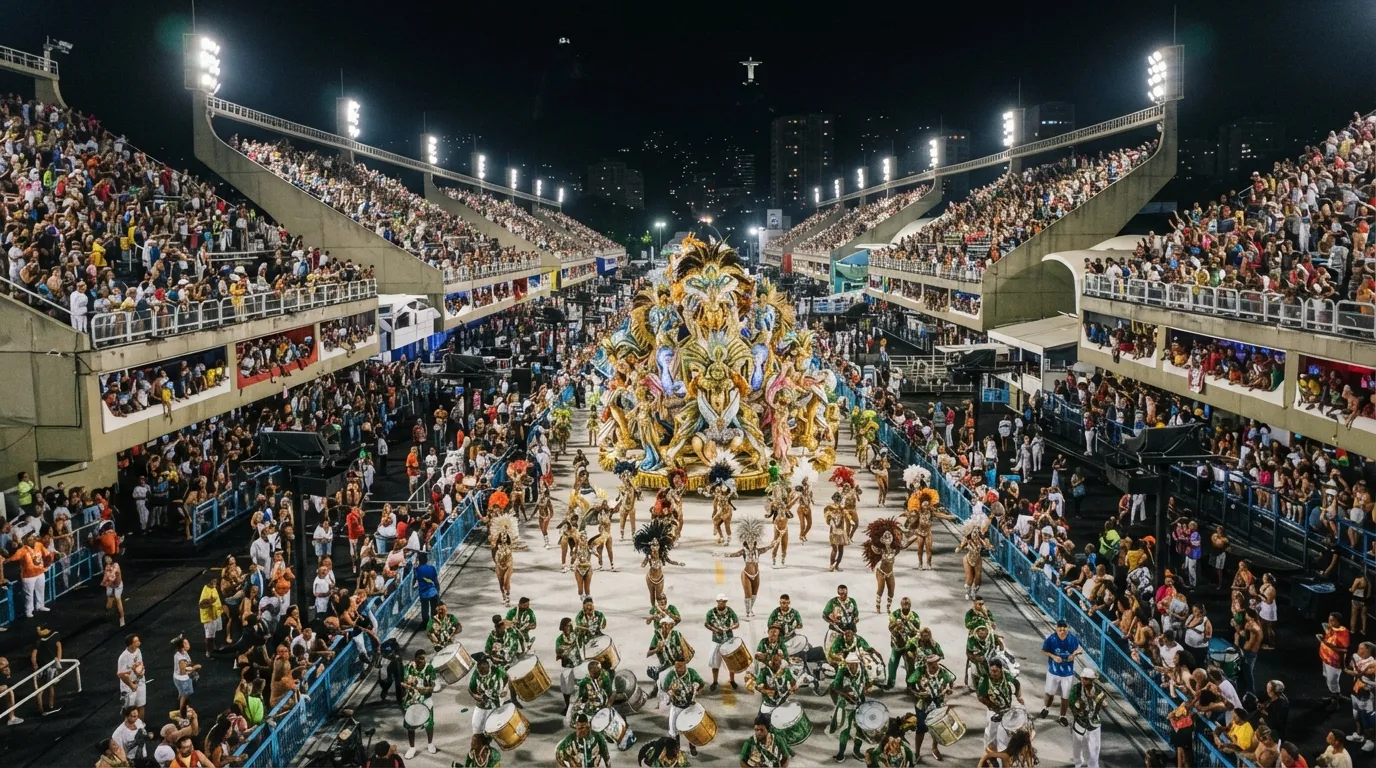
Thousands of dancers, towering floats, and a wall of drums all move through a single concrete stadium. That’s the Rio Carnival parade at the Sambadrome, designed by Oscar Niemeyer and opened in 1984.
The top-tier samba schools parade on two nights during the weekend before Ash Wednesday. Each school presents a theme, known as an enredo, with costumes, floats, and music built around it.
The bateria, or drum section, drives the whole performance, and the sound is felt in your chest. Judges score each school, so every detail matters.
Beyond the Sambadrome, street parties called blocos fill neighborhoods across Rio. You can join one with nothing but a smile and some comfortable shoes.
Rio is a blast of color, but our next festival goes back more than five centuries, to the Andes and the sun at #4…
#4 – Inti Raymi in Cusco, Peru
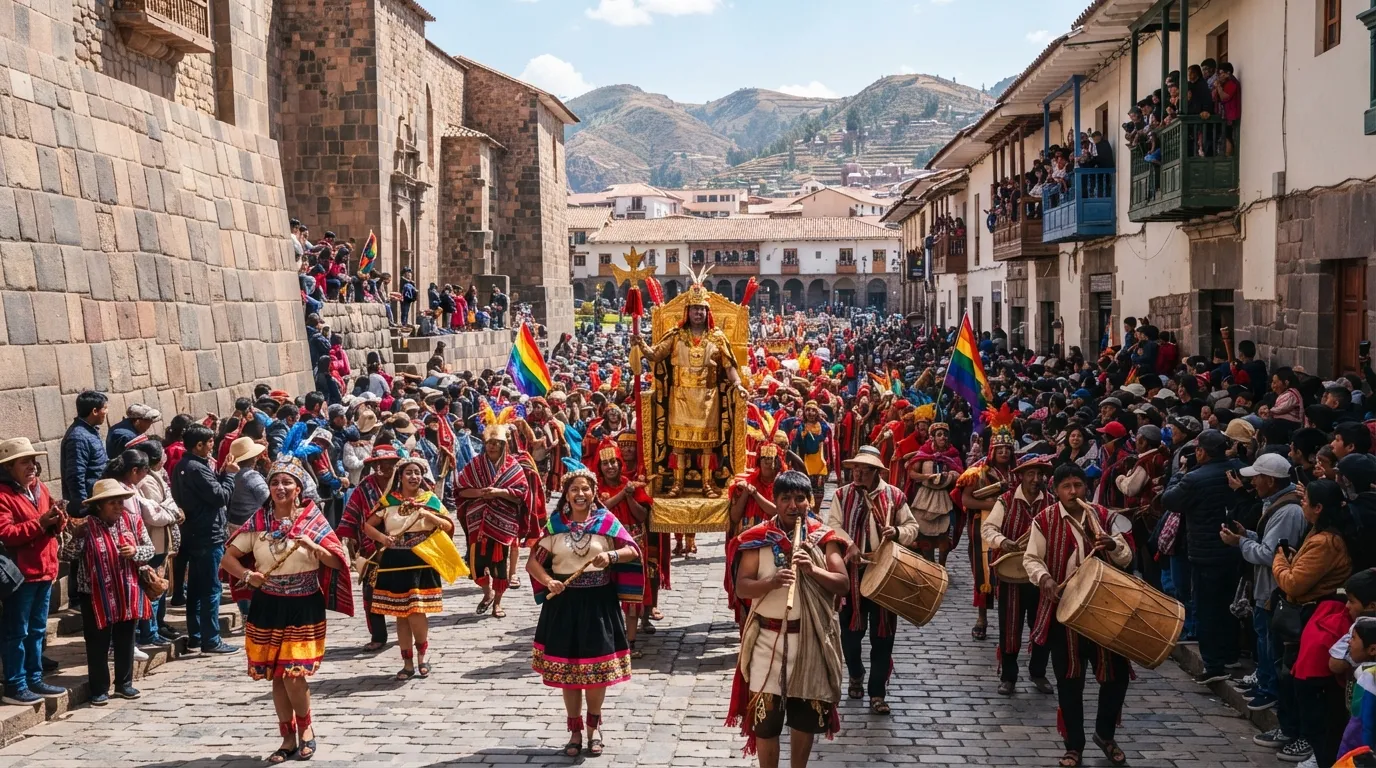
Every June 24, the former capital of the Inca Empire honors the sun. Inti Raymi marks the winter solstice in the Southern Hemisphere, and it’s one of the biggest celebrations in the Andes.
It was an important Inca ceremony that was suppressed during the colonial era. The modern staged reenactment dates to 1944 and brings the tradition back to life.
The performance begins at the Qorikancha, a former Inca temple, then moves through the Plaza de Armas. It ends at the hilltop ruins of Sacsayhuamán, where the main ceremony takes place.
You can buy tickets for the stands at Sacsayhuamán, or watch parts of the procession for free in the streets. Book lodging well ahead, because Cusco fills up fast.
From a sun festival, we go to a five-day celebration of lamps that lights up an entire subcontinent at #3…
#3 – Diwali in India
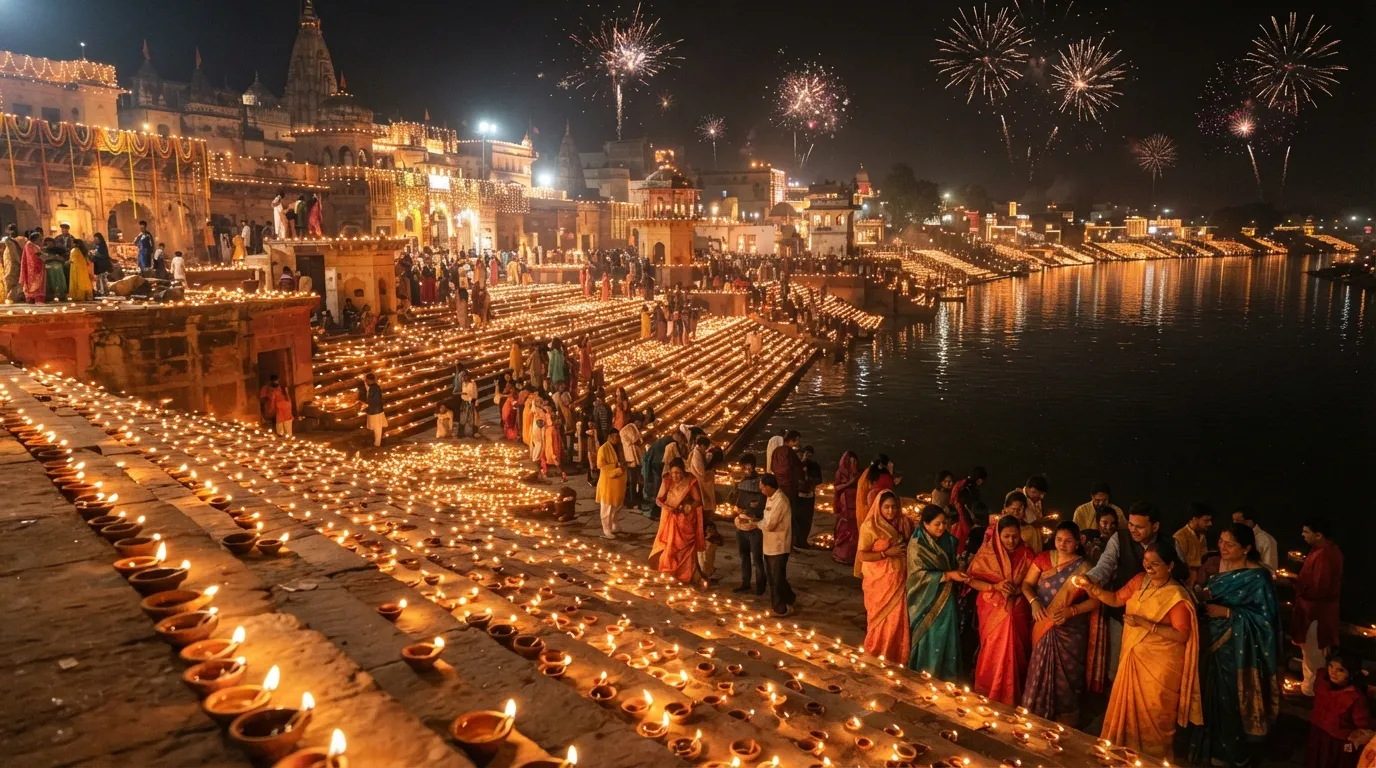
Picture rows of tiny clay lamps glowing on every doorstep, rooftop, and riverbank. Diwali, the festival of lights, lasts five days and peaks on the new moon night of the Hindu month of Kartik, in October or November.
Homes are cleaned, decorated with colorful rangoli patterns, and filled with sweets. Families gather, exchange gifts, and light diyas to welcome good fortune.
In Ayodhya, the city tied to the Ramayana, the Deepotsav celebration lights huge numbers of lamps along the Sarayu riverbank. Markets across India are strung with lights, and fireworks fill the sky.
Diwali is as much about gathering as glowing. If someone invites you into their home, say yes.
Diwali is a festival of light. But the next one is a pilgrimage that moves across four cities and draws crowds like no other event on Earth at #2…
#2 – Kumbh Mela in India
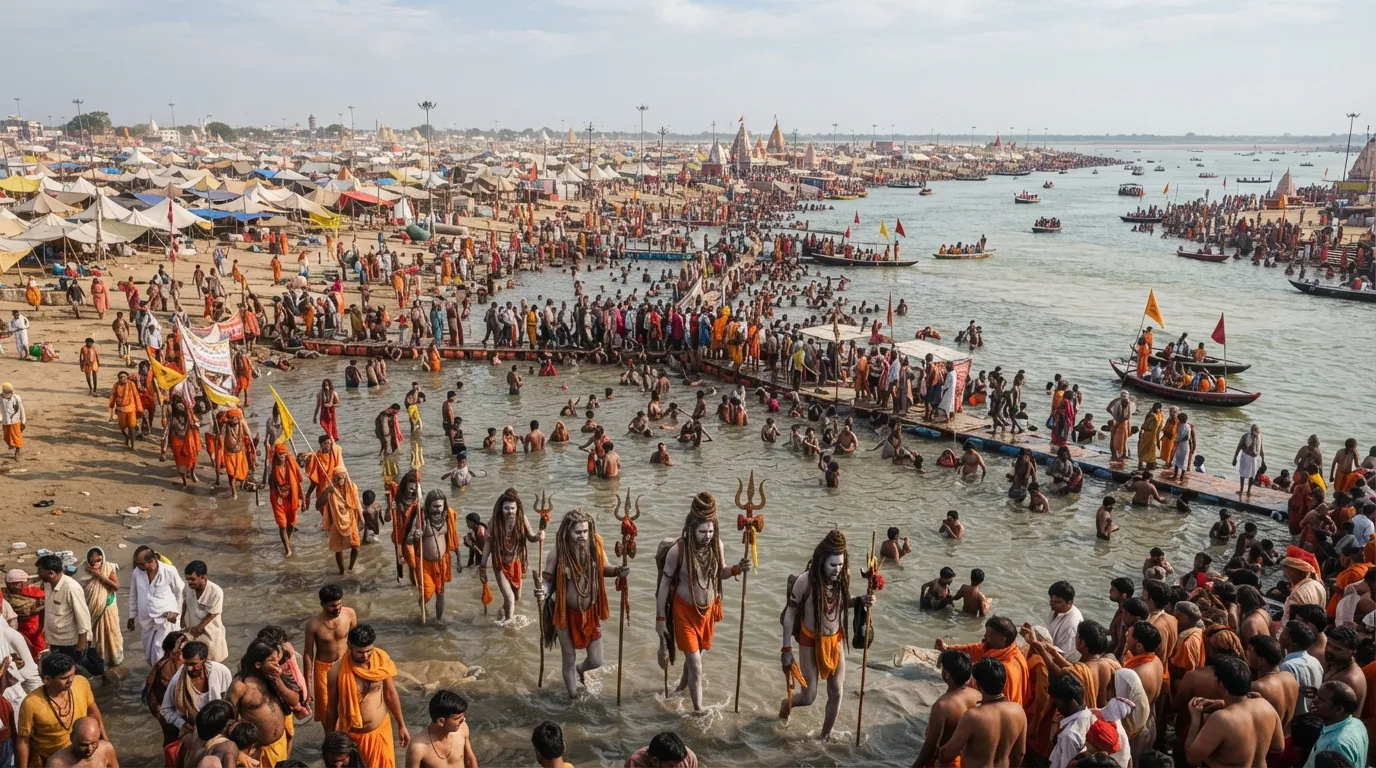
Imagine a temporary city of tents rising along a river, filled with pilgrims, holy men, and chanting. Kumbh Mela is one of the largest gatherings of people on the planet.
It rotates among four cities: Prayagraj, Haridwar, Ujjain, and Nashik. The Maha Kumbh Mela takes place every 12 years at Prayagraj, most recently in 2025, at the Sangam, the meeting point of the Ganges, Yamuna, and the mythical Sarasvati.
Pilgrims bathe in the river on astrologically significant dates. UNESCO added the Kumbh Mela to its Intangible Cultural Heritage list in 2017.
You’ll see processions of sadhus, or holy men, from different akharas, or orders, as well as lines of devotees and temporary temples. The exact dates are set by astrology, so check the schedule carefully before you book.
Worth Knowing
- The festival rotates among Prayagraj, Haridwar, Ujjain, and Nashik
- The Maha Kumbh at Prayagraj comes around every 12 years
- The most recent one was in 2025, at the Sangam
- Key dates follow astrology, so confirm the schedule before booking
Nothing scales quite like the Kumbh, and yet our final festival is intimate and quiet. It’s #1, and it takes place in a graveyard…
#1 – Day of the Dead in Oaxaca, Mexico
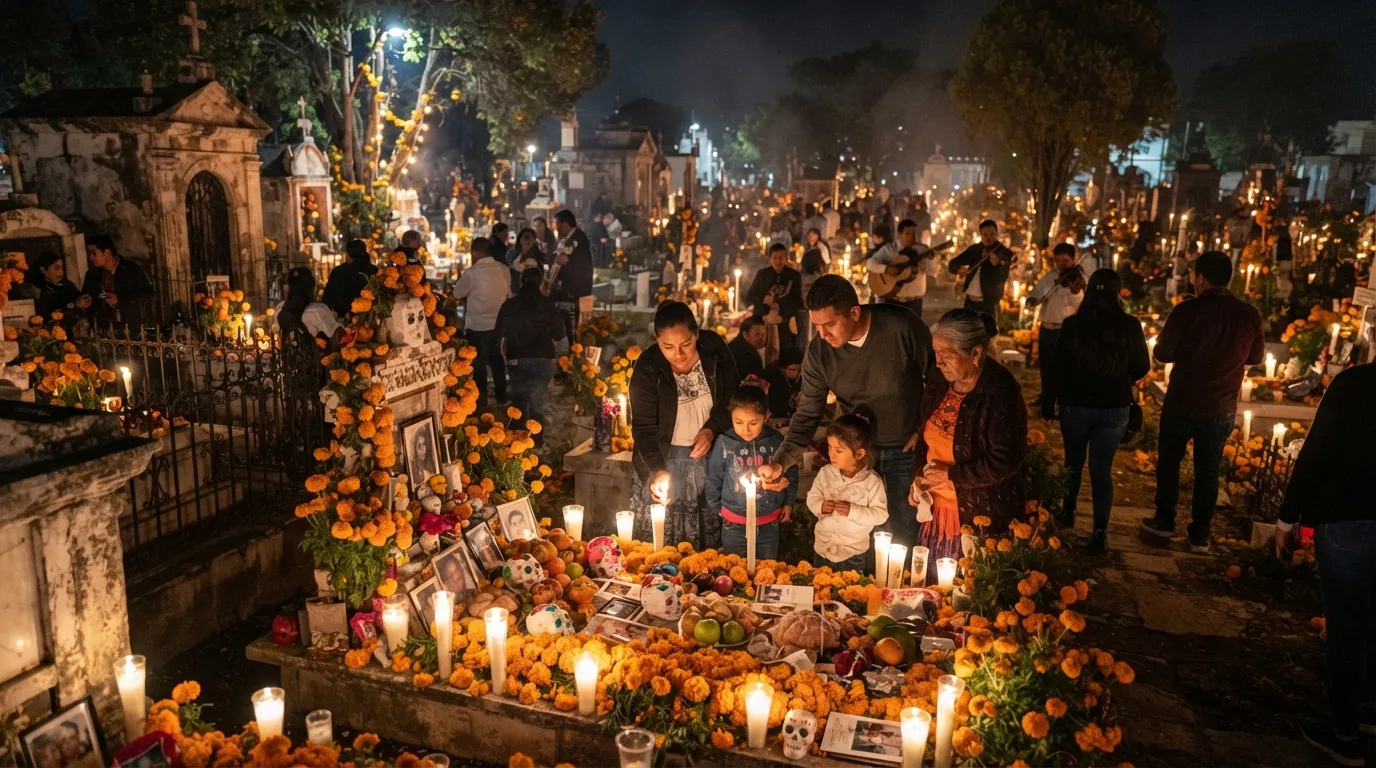
On the night of November 1, a cemetery in Oaxaca fills with families, candles, and music. This isn’t a spooky night, it’s a reunion.
Día de Muertos is celebrated on November 1 and 2, traditionally honoring children first and then adults. UNESCO inscribed the Indigenous festivity dedicated to the dead on its Intangible Cultural Heritage list in 2008.
Families build ofrendas, or altars, with photos, candles, marigolds called cempasúchil, and the favorite foods of those who’ve passed. Pan de muerto, a sweet bread, is a staple.
In Oaxaca City, you’ll see sand tapestries, colorful comparsas, and streets filled with marigolds. Outlying cemeteries, called panteones, glow with candlelight as families keep vigil through the night.
If you go, remember you’re a guest at a family ritual. Ask before taking photos, and follow the lead of the locals.
Maybe that’s the real answer to which festivals are worth the trip. The best ones don’t just entertain you, they let you step briefly into something much older than yourself.
CEO-Co-Founder