

- 15 Hotel Breakfast Charges Guests Can Avoid by Checking the Rate Plan - October 24, 2026
- 17 Shoulder Season Travel Rules for Sudden Weather Changes - October 24, 2026
- 18 Hotel Arrival Rules That Prevent Expensive Check-In Problems - October 24, 2026
You watch the doors close on the train you were supposed to catch, and your stomach drops. Most people assume the next move is to buy a new ticket and absorb the loss. Often, that is exactly the wrong move.
When a delay causes the miss, connection rules can work in your favor, but almost nobody reads them until they are standing on an empty platform. Ticket validity, rerouting, and assistance vary by operator and journey type, and the first few minutes after a miss can decide what you get back. The surprises start at the bottom of the list and get bigger.
#15 – Ticket Restrictions Often Lift Automatically on Delayed Connections

Many advance or saver tickets tie you to one specific train. When a delay on an earlier leg causes the miss, that restriction is frequently waived at no extra cost.
Operators commonly let you take the next available train on the same route and carrier when the disruption was theirs. Note the original delay times before boarding anything new, because that evidence helps with any later claim.
This usually applies only when the whole journey sits on one ticket or meets minimum connection standards at the interchange. Separate tickets and non-rail delays often fall outside the rule.
Keep the original ticket and any delay evidence, even if nobody asks for it at the time. It prevents disputes later.
But that’s nothing compared to what comes next…
#14 – Seat Reservations Rarely Transfer to Replacement Services
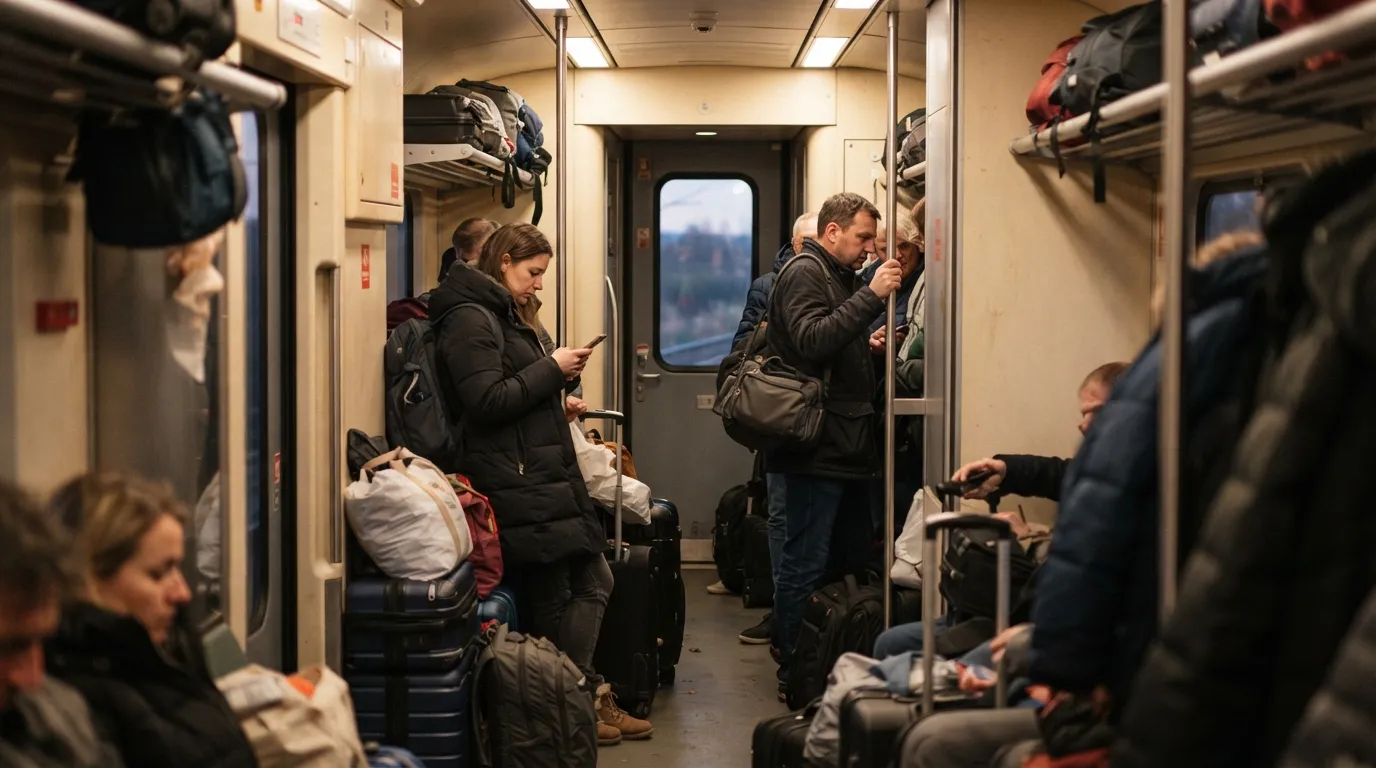
A reservation guarantees a seat only on the train you booked. Once a delay forces you onto another service, that reservation typically expires.
The replacement train is usually first come, first served. At peak times, that can mean standing in a vestibule with your luggage.
If you can, ask for a new reservation at the service desk. Some operators allow seat selection on the replacement train at no charge when space exists.
And the next fact changes how you judge the whole disaster.
#13 – Final Destination Delay Determines Most Passenger Rights

Compensation and rerouting entitlements usually hinge on when you reach your final destination, not on the moment you missed the connection. A ten-minute miss that still gets you home on time often triggers nothing.
Full rights typically activate only when the overall journey runs late by a set threshold. So the platform drama matters less than the clock at the end of your ticket.
Track the whole itinerary, and note your actual arrival time.
At a Glance
- The measuring point is your final arrival, not the missed platform.
- Under EU rail rules, compensation starts at 60 minutes late: 25% of the ticket price for 60 to 119 minutes.
- At 120 minutes or more, the EU band rises to 50%.
- Other countries and operators set their own thresholds, so check yours.
But the next one catches many travelers before they even board.
#12 – Minimum Connection Times Are Real, and Planners Respect Them

Stations set minimum interchange times, and official journey planners generally won’t offer a connection shorter than that. The figure accounts for walking distance, stairs, and platform changes.
Those minimums are built for travelers who move briskly with light luggage. If you have bags, children, or limited mobility, pick the longer connection when the planner offers one.
A spare twenty minutes at a big interchange can be the cheapest insurance on the trip.
#11 – Split Tickets Can Leave You Completely Unprotected

Two separate tickets are two separate contracts. If the first train runs late and you miss the second, the operator of the second train usually owes you nothing, because it doesn’t know your journey is connected.
The savings from split fares can vanish in one missed platform. If you do split, leave a generous buffer and keep each ticket handy.
For tight transfers, a single through ticket is usually the safer choice.
Quick Compare
- Through ticket: one contract, so a delay on the first leg is generally treated as part of one journey.
- Split tickets: separate contracts, so a late first train doesn’t automatically protect the second.
- Tight transfer: favor the through ticket, or build in a generous buffer if you split.
#10 – Platforms Change Late, and the Board Is the Final Word

The platform on your printed itinerary or app is often only a plan. Stations frequently confirm the real platform shortly before departure, and changes can happen with little warning.
Don’t sprint on a guess. Look at the departure board as you arrive, then check again as you reach the stairs.
Listen for announcements too. They are sometimes the first sign that your train has moved.
#9 – Staff Can Sometimes Authorize a Different Route or Operator

In some networks, such as Britain’s, station staff can endorse your ticket so it is accepted on another operator’s service or another route. It is not automatic, and it depends on the situation.
Find a staff member before you board anything unfamiliar and ask what your ticket is valid on right now. Get a clear answer on which trains count and, if possible, a note on your ticket.
A thirty-second question can save a penalty fare.
#8 – A Long Expected Delay Can Open Refund or Rerouting Choices

Under EU rail passenger rules, when a delay of 60 minutes or more is expected, you can generally choose between a refund, continuing your journey, or rerouting to your destination. Other regions have their own rules.
That choice can matter more than the missed train itself. Before accepting the first option offered, ask what your ticket entitles you to.
Check the operator’s conditions of carriage for the exact terms that apply to your trip.
Fast Facts
- The trigger is an expected delay of 60 minutes or more at your final destination.
- You generally choose between a refund, continuing, or rerouting.
- Rerouting can be at the earliest opportunity, or at a later date that suits you.
- Outside the EU, the trigger and the choices may be quite different.
#7 – Help While You Wait May Be Owed, Even If Nobody Offers It

Where passenger rights rules apply, operators may need to provide assistance during a long wait, such as meals or refreshments in reasonable relation to the delay. It isn’t always handed out on its own.
Ask at the information desk or a staffed point, and say clearly that you missed your connection because of a delay.
If you buy food yourself while waiting, keep the receipt. It may matter if you later claim costs.
#6 – Missing the Last Connection of the Day Changes the Rules of the Night

If the last onward service has gone, some operators arrange alternative transport or accommodation when their delay caused the miss, depending on the network and the rules that apply.
Don’t leave the station or book a room on impulse. Ask staff first what the operator will arrange.
If you pay for a taxi or hotel without checking, reimbursement can become far harder to win.
#5 – Booked Assistance Can Be Rearranged When Your Connection Collapses

If you booked assistance for boarding or changing trains, a missed connection can leave the staff at the next stop waiting for a train you are no longer on.
Tell the nearest staff member straight away that you have assistance booked. They can often contact the next station and update the arrangement.
Don’t assume the system updates itself.
#4 – Receipts Turn a Bad Day Into a Possible Claim

If you buy a replacement ticket, a meal, or other transport because of a delay, those costs may be claimable under the operator’s rules. It is never guaranteed.
Photograph receipts, delay screens, and your original ticket on the spot. Screens clear and apps refresh, and the evidence disappears.
Before buying anything expensive, ask staff whether the operator will cover it or arrange it.
Worth Knowing
- Photograph the departure board showing the delay or cancellation.
- Keep the original ticket and any replacement ticket together.
- Write down your scheduled and actual arrival times.
- Save any reference number or staff note you are given.
#3 – Compensation Claims Come With Deadlines

Operators typically set a time window for submitting delay compensation claims, and it varies by company and region. Miss it, and a valid claim can be rejected.
Look up the deadline on the operator’s website the same day. Then submit the claim with your ticket details, journey times, and evidence.
Waiting until you feel less annoyed is how many people lose out.
#2 – The Ticket Seller and the Delaying Operator Aren’t Always the Same

You may buy from one company and be delayed by another. Who handles your claim depends on the ticket conditions and the rules of the region you traveled in.
Read the claims section of your booking confirmation. It usually says where to apply and what proof you’ll need.
If the instructions are unclear, ask the seller first, and keep every reference number you get.
#1 – The Best Move Is Often to Ask Before You Leave the Platform Area

Many travelers react fast: they buy a new ticket, board the first train, or leave the station. Each of those can complicate what you’re owed.
Instead, find a staff member or information point and ask three things: what is my ticket valid on now, is there a reservation, and what should I keep for a claim?
The missed platform is the moment you can’t change. The next five minutes are the part you can control.
CEO-Co-Founder