
- 15 Authors Who Used a Pen Name and Outsold Their Real Byline - October 8, 2026
- Article - October 8, 2026
- 12 Encore Traditions That One City Started and Other Venues Copied - October 8, 2026
Somewhere right now, a student is being handed a book that critics once waved off, mocked, or tried to run out of town. That’s the strange magic of literature: the verdict comes first, and readers can spend decades overruling it. These fifteen books were shrugged at, scorned, or banned on arrival. Then they became classics anyway.
Some of the stories are quietly brutal. One author died believing his masterpiece was forgotten. Another never lived to see his novel in print, until his mother refused to let it die. And the book at #1 began as a self-funded gamble that left most reviewers baffled. Start the countdown.
#15 – Moby-Dick by Herman Melville
Herman Melville poured everything into Moby-Dick in 1851, and the reaction was a bucket of cold water. Reviewers were baffled by a whale hunt that kept pausing for whaling lore, Shakespearean speeches, and a chapter about the color white.
Sales were brutal. Melville sold only a few thousand copies of the novel in his lifetime, and he died in 1891 as a writer most people had forgotten.
Then the tide turned. Around the centennial of his birth in 1919, critics and scholars began rereading him and found a book decades ahead of its audience. Ahab’s obsession stopped looking like excess and started looking like prophecy.
Now the novel that opened to a shrug opens with one of the most famous lines in English: “Call me Ishmael.” It took the world about seventy years to catch up.
#14 – The Great Gatsby by F. Scott Fitzgerald
F. Scott Fitzgerald believed The Great Gatsby was his best work. In 1925, the verdict was lukewarm. Reviews were mixed, and some critics treated the tale of Jay Gatsby and Daisy Buchanan as a slight, clever sketch rather than a serious novel.
Sales disappointed him too. When he died in 1940, he believed his work had been forgotten.
The rescue came from an unlikely place: a war. During World War II, the Armed Services Editions program put paperbacks into the hands of American troops, and this slim novel was among the titles. Soldiers far from any classroom met that green light across the water for the first time.
After the war, there was no stopping it. The Modern Library’s 1998 list of the century’s best English-language novels placed it second, behind only Ulysses. The critics’ shrug has aged badly.
#13 – Brave New World by Aldous Huxley
When Aldous Huxley published Brave New World in 1932, readers weren’t sure whether to laugh or recoil. A future of lab-grown people, assigned castes, casual sex, and a cheerful drug called soma struck some critics as cold, contrived, and more lecture than story. The book was even banned in Ireland.
What they missed was how uneasy it would feel once the real world started to rhyme with it. Huxley’s nightmare had no jackboots. It ran on comfort: entertainment, pleasure, and easy answers that make people stop asking questions.
Fast Facts
- Published in 1932, with a title borrowed from a line in Shakespeare’s The Tempest.
- Banned in Ireland after its release.
- Huxley revisited his own predictions in the 1958 nonfiction book Brave New World Revisited.
- Ranked fifth on the Modern Library’s 1998 list of the century’s best English-language novels.
Readers kept passing it along as debates over technology, consumerism, and control grew louder. Each generation found something uncomfortably familiar inside.
A book first scolded as bleak became the one people reach for whenever the future starts to feel strange.
#12 – The Grapes of Wrath by John Steinbeck
John Steinbeck’s 1939 novel followed the Joad family from Oklahoma toward California, and it landed like a thrown brick. Critics, politicians, and business interests attacked it as exaggerated and even un-American. Kern County, California, banned it from its public libraries, in the very region the story described.
Yet the people closest to the story didn’t treat it as fiction. Migrants and ordinary readers recognized the hunger, the roadside camps, and the humiliations on the page, and the book became a bestseller.
Steinbeck won the Pulitzer Prize for the novel in 1940, and John Ford’s film followed that same year. He also gave Route 66 a nickname that stuck: the Mother Road.
The book some officials wanted kept out of town ended up shaping how Americans picture the Dust Bowl exodus. Critics argued about whether it was fair. Readers had already made up their minds.
#11 – Lolita by Vladimir Nabokov
Vladimir Nabokov couldn’t find an American publisher willing to touch Lolita. It first appeared in Paris in 1955 through Olympia Press, trailing scandal, and when a U.S. edition followed in 1958, many reviewers recoiled from its narrator, Humbert Humbert, and from the book itself.
Some critics dismissed it as repellent, others as tedious. Yet it had defenders too. Graham Greene had championed it in England, and readers who pushed past the shock found a novel obsessed with language, performance, and the way a charming voice can bury the truth.
That unreliable narration is why Lolita is still argued over rather than simply admired. It trains readers to distrust a seductive storyteller and to notice the girl he keeps trying to erase.
It became a bestseller in the United States and later landed fourth on the Modern Library’s 1998 list. It remains deeply uneasy reading, and that discomfort is part of why people keep talking about it.
#10 – Ulysses by James Joyce
Few books have had a rougher welcome than James Joyce’s Ulysses. Virginia Woolf, herself a daring novelist, wrote in her private diary that it struck her as underbred and, in the end, nauseating.
The book was banned in the United States until a federal court ruled in 1933 that it could be published. Its structure didn’t help: one ordinary day in Dublin, June 16, 1904, mapped onto Homer’s Odyssey and told through jokes, parodies, and torrents of thought.
At a Glance
- First published in full in Paris in 1922 by Sylvia Beach’s Shakespeare and Company.
- Eighteen episodes, loosely echoing Homer’s Odyssey.
- The action unfolds on a single day: June 16, 1904.
- The 1933 U.S. court decision cleared the way for American publication.
Readers took the dare anyway. They formed study groups, wrote guides, and discovered the book’s tenderness hiding inside the puzzle. Bloomsday, celebrated every June 16, turned a rejected novel into an annual party.
In 1998, the Modern Library placed Ulysses first on its list of the century’s best English-language novels. The book Woolf couldn’t stomach became the one everyone else measured themselves against.
#9 – Wuthering Heights by Emily Brontë

When Wuthering Heights appeared in 1847, Emily Brontë hid behind the pen name Ellis Bell. Reviewers hardly knew what to make of it. They were rattled by the cruelty, the ghosts, and Heathcliff, a hero who seemed to love as if he were trying to wreck the world.
Some critics called it savage and wondered what kind of mind could produce it. Emily never got to answer. She died the next year, at thirty.
Her sister Charlotte defended the book in an 1850 edition, but readers did most of the rescuing. The moors, the doomed bond between Heathcliff and Catherine, and the strange two-generation structure stayed lodged in their heads.
Over time, scandal turned into staple. It’s now a landmark of Victorian and Gothic fiction, and few love stories have been adapted or argued over as often. The book too wild for its time outlasted the manners that judged it.
#8 – The Lord of the Rings by J.R.R. Tolkien
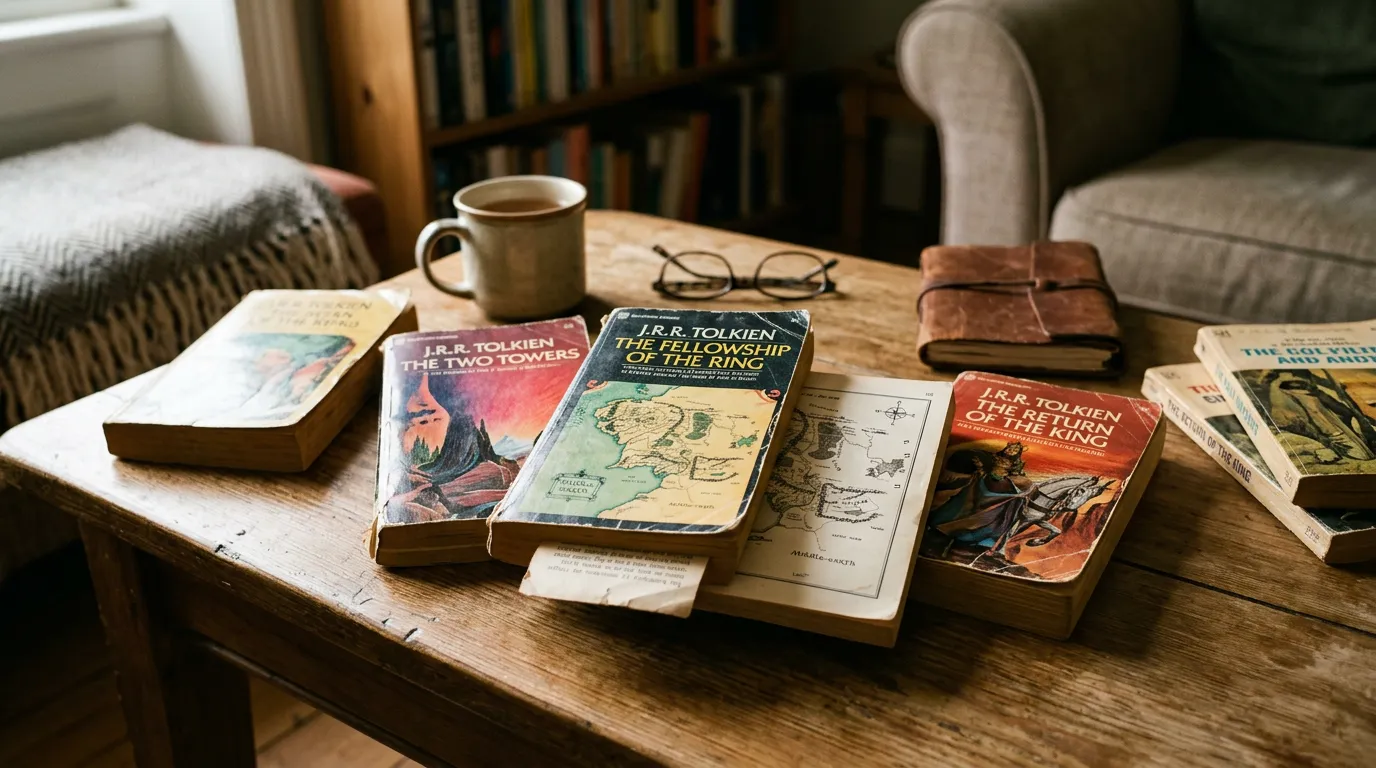
When The Lord of the Rings appeared in 1954 and 1955, some critics couldn’t take it seriously. The most famous pan came from Edmund Wilson, whose 1956 essay was titled “Oo, Those Awful Orcs!” and treated the work as juvenile.
Tolkien’s readers didn’t care. They loved the maps, the invented languages, the long road to Mordor, and the feeling that a whole world existed beyond the page.
Quick Compare
- Critics, 1950s: Some dismissed it as childish escapism.
- Campus readers, 1960s: Paperbacks turned it into a cultural craze.
- Moviegoers, 2001-2003: Peter Jackson’s three films carried it to a vast new audience.
The real explosion came in the 1960s, when paperback editions, including an unauthorized American one, swept through college campuses. “Frodo Lives!” showed up on buttons and walls.
Modern fantasy grew in the long shadow of that success. The critics who sneered at orcs ended up watching a genre rebuild itself around them.
#7 – The Picture of Dorian Gray by Oscar Wilde
Oscar Wilde’s The Picture of Dorian Gray first appeared in Lippincott’s Monthly Magazine in 1890, and the British press pounced. Reviewers accused it of immorality and decadence, and some treated it less like fiction than a public danger.
Wilde fired back. When he expanded the story into a book in 1891, he added a preface that read like a dare:
There is no such thing as a moral or an immoral book. Books are well written, or badly written. That is all.
Oscar Wilde
The story itself is simple and chilling: a beautiful young man stays unchanged while his hidden portrait absorbs the cost of his choices. Readers came back for the epigrams and stayed for the dread.
The darkest twist came in 1895, when Wilde’s own legal battles dragged the novel into the courtroom. Yet the book outlived the scandal, and it still reads as both a sparkling comedy and a warning.
#6 – Lord of the Flies by William Golding
William Golding’s first novel was turned away by more than twenty publishers before Faber and Faber took a chance. Editors found the story of schoolboys stranded on an island too bleak and violent to sell.
It came out in 1954 and sold modestly. In the United States, it even slipped out of print for a time.
Then students got hold of it. By the 1960s, it had become a favorite in classrooms and on campuses, where its central question was impossible to dodge: what happens when the rules vanish and the loudest voice wins?
Golding won the Nobel Prize in Literature in 1983. The conch, the beast, and Piggy’s broken glasses still turn up in arguments about human nature. A story editors called too dark ended up lighting up debates for generations.
#5 – Their Eyes Were Watching God by Zora Neale Hurston
Zora Neale Hurston published Their Eyes Were Watching God in 1937, and some of the sharpest resistance came from inside the Black literary world. Richard Wright, reviewing it in New Masses, complained that it carried no theme, no message, and no thought.
The novel follows Janie Crawford through three marriages and a lifetime of learning to speak for herself, told in the Southern Black dialect Hurston had studied as an anthropologist. Some critics treated that voice as a flaw. Later readers heard it as the book’s music.
The book faded and went out of print. Then, in 1975, Alice Walker published “In Search of Zora Neale Hurston,” an essay that sent readers hunting for her work and, famously, for her unmarked grave.
The University of Illinois Press reissued the novel in 1978, and it became a fixture of American classrooms. A book dismissed as lacking a message had simply been waiting for its audience.
#4 – A Confederacy of Dunces by John Kennedy Toole
John Kennedy Toole wrote A Confederacy of Dunces in the 1960s, and publishers kept sending it back. He died in 1969, at thirty-one, with the manuscript unpublished.
His mother, Thelma, refused to let it vanish. She pressed the manuscript on anyone who would listen, until novelist Walker Percy began reading reluctantly, got hooked, and became its champion.
Worth Knowing
- The title comes from a line by Jonathan Swift, used as the book’s epigraph.
- Walker Percy wrote the foreword to the first edition.
- Louisiana State University Press published it in 1980.
- It won the 1981 Pulitzer Prize for Fiction.
Its hero, Ignatius J. Reilly, is a pompous, medieval-minded misfit pushing a hot dog cart through New Orleans, and readers couldn’t resist him.
A book nobody wanted became a New Orleans landmark, and a statue of Ignatius now stands on Canal Street.
#3 – Slaughterhouse-Five by Kurt Vonnegut
By 1969, Kurt Vonnegut had spent years trying to write about the Dresden firebombing, which he survived as a prisoner of war. When Slaughterhouse-Five arrived, it threw readers: Billy Pilgrim comes unstuck in time, drifts between wartime Germany and an alien zoo, and meets every death with the phrase “So it goes.”
Literary gatekeepers had long treated Vonnegut as a science-fiction writer who didn’t belong in serious company, and the time-jumping structure puzzled some readers.
Then came the book burners. In 1973, a school board in Drake, North Dakota, burned copies of the novel in the school furnace, and Vonnegut protested publicly.
Efforts to remove it only made it more tempting. The novel remains one of the often-challenged books in American schools, which has helped keep war, memory, and what we tell the young at the center of the conversation.
#2 – The Catcher in the Rye by J.D. Salinger
J.D. Salinger’s 1951 novel did not arrive to universal applause. Reviews were divided, and some critics found Holden Caulfield tiresome: a privileged prep-school dropout whining his way through a few days in New York and calling nearly everyone a phony.
The voice was both the problem and the miracle. Teenagers who had never seen themselves in a novel suddenly heard someone talking in their own rhythms: restless, funny, wounded, and furious at fakery.
Parents and school boards heard something else. The slang, the profanity, and Holden’s unraveling made it one of the most challenged books in American schools, even as it became one of the most assigned.
Salinger retreated from public life, which only deepened the mystery. Reviewers may have tired of Holden, but readers never did. Every year, a new batch of teenagers meets a narrator who sounds like a friend.
#1 – Leaves of Grass by Walt Whitman
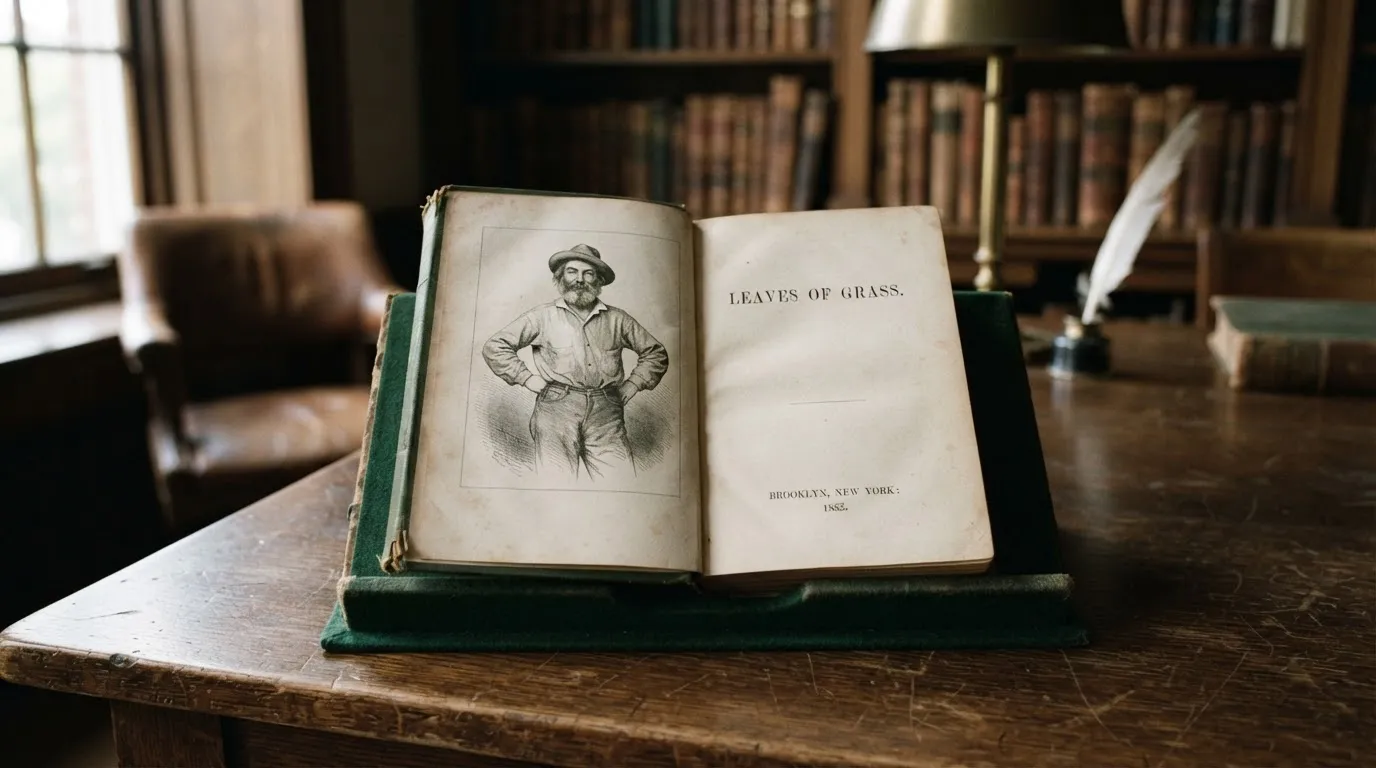
In 1855, Walt Whitman paid to have Leaves of Grass printed, then watched much of the world shrug. The first edition was a slim book of twelve untitled poems with no author’s name on the title page, just an engraving of a man in work clothes and a slouch hat.
Many reviewers were baffled or offended by the free verse, the open celebration of the body, and Whitman’s refusal to behave like a proper poet. Ralph Waldo Emerson saw something else, writing to him, “I greet you at the beginning of a great career.”
Whitman spent the rest of his life revising and expanding the book, edition after edition, until the so-called deathbed edition of 1891-92.
Slowly, the poet nobody knew how to classify became the voice of a country singing about itself. That’s the lesson of this whole countdown: critics own the first week, but readers get the next hundred years. Whitman bet on an audience that didn’t exist yet, and eventually it showed up.
CEO-Co-Founder