
- 15 Hotel Breakfast Charges Guests Can Avoid by Checking the Rate Plan - October 24, 2026
- 17 Shoulder Season Travel Rules for Sudden Weather Changes - October 24, 2026
- 18 Hotel Arrival Rules That Prevent Expensive Check-In Problems - October 24, 2026
Most people picture an overnight train as a hotel room that happens to move. Then they meet the carriage number, the attendant with the clipboard, and the quiet rules nobody mentioned at booking.
These are the details that decide whether you sleep until dawn or lie awake sorting out the routine. Some are small and some are surprisingly bossy, and a few only show up when it’s too late to fix them. The one that catches most first-timers happens before the train even moves.
#17 – Arriving Early Enough to Locate Your Carriage
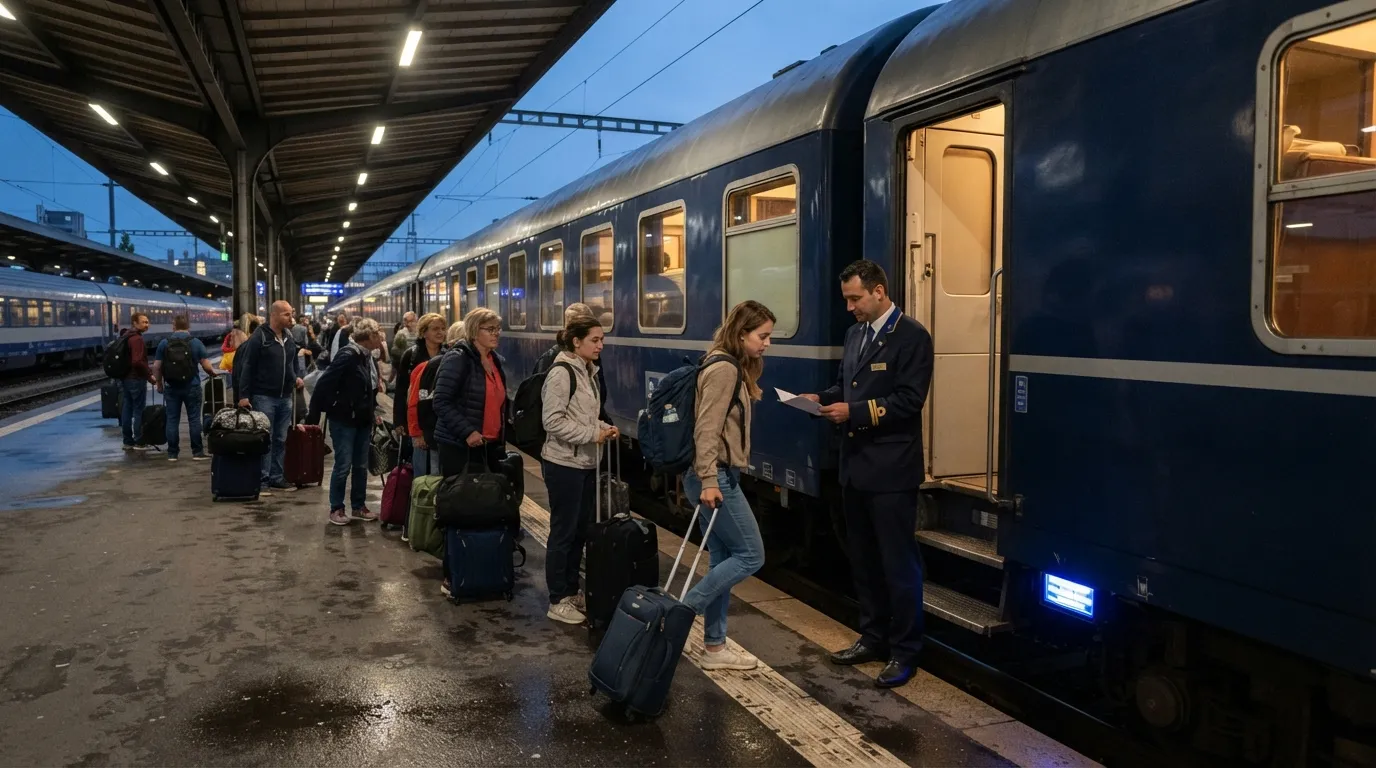
The first surprise happens on the platform, before you’ve even seen your bed. On many sleeper services, attendants stand at the door of each sleeping car, check reservations, and point you to your compartment number.
Sleeper trains can be long, and your carriage may sit far from the platform entrance. Get there early enough to find the right coach before the train pulls in.
Carry your luggage aboard right away instead of leaving it on the platform during checks. On busy routes, the gap between the platform announcement and departure can be short.
At a Glance
- Know your carriage number and compartment number before you reach the station.
- Expect a reservation check at the door of the sleeping car.
- Walk the platform early, because your coach may be far from the entrance.
- Board with your bags instead of leaving them waiting.
#16 – Confirming Your Exact Berth Assignment Before Departure
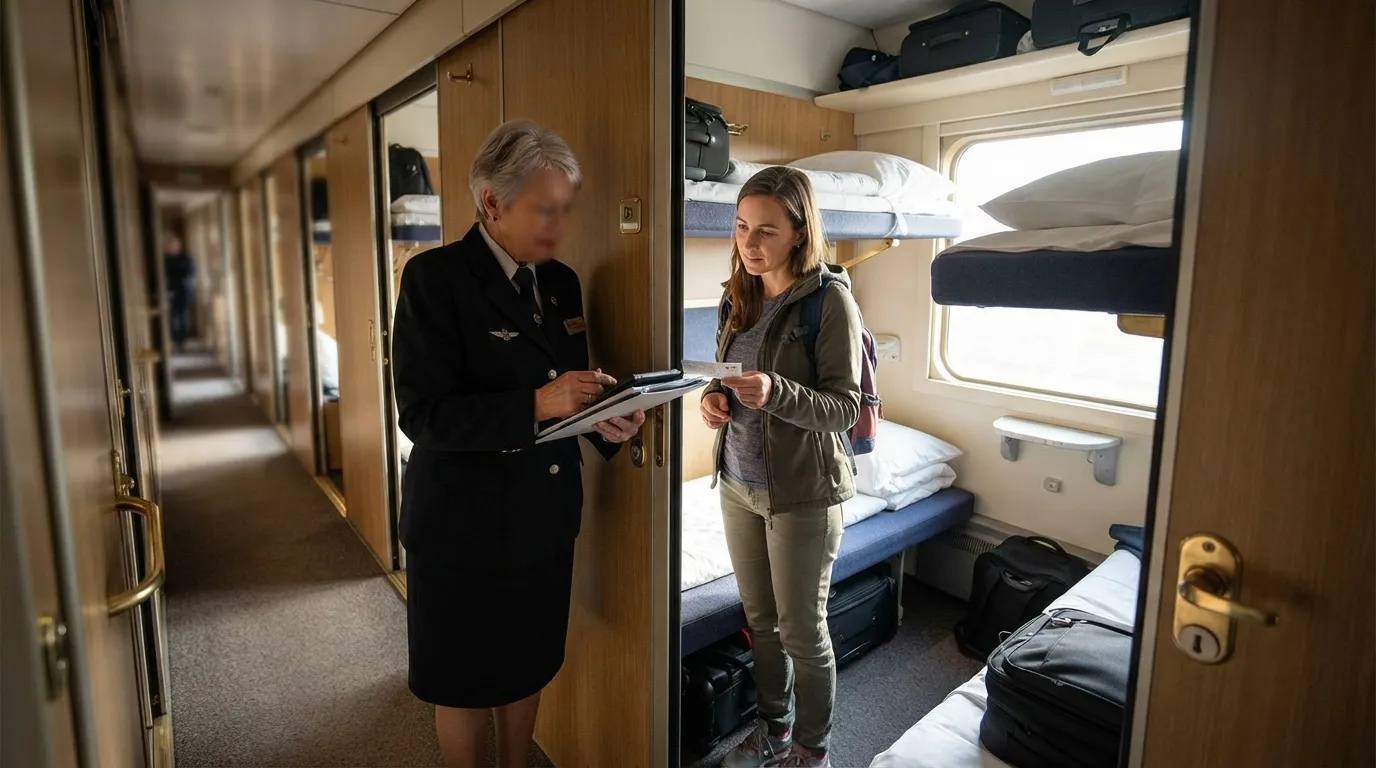
Your berth type shapes your whole night and your morning. Sleeper and couchette cars are laid out differently, and in shared compartments the lower berths often turn into daytime seating.
Attendants confirm reservation details at the door and note special requests, such as ladies-only compartments where offered. On some networks, the name on your ticket must match your ID exactly.
Upper-berth travelers can stay in place once the train is moving, while lower berths double as shared seats. Check your berth before you board, not after.
#15 – Stowing Luggage in the Designated Spaces Only
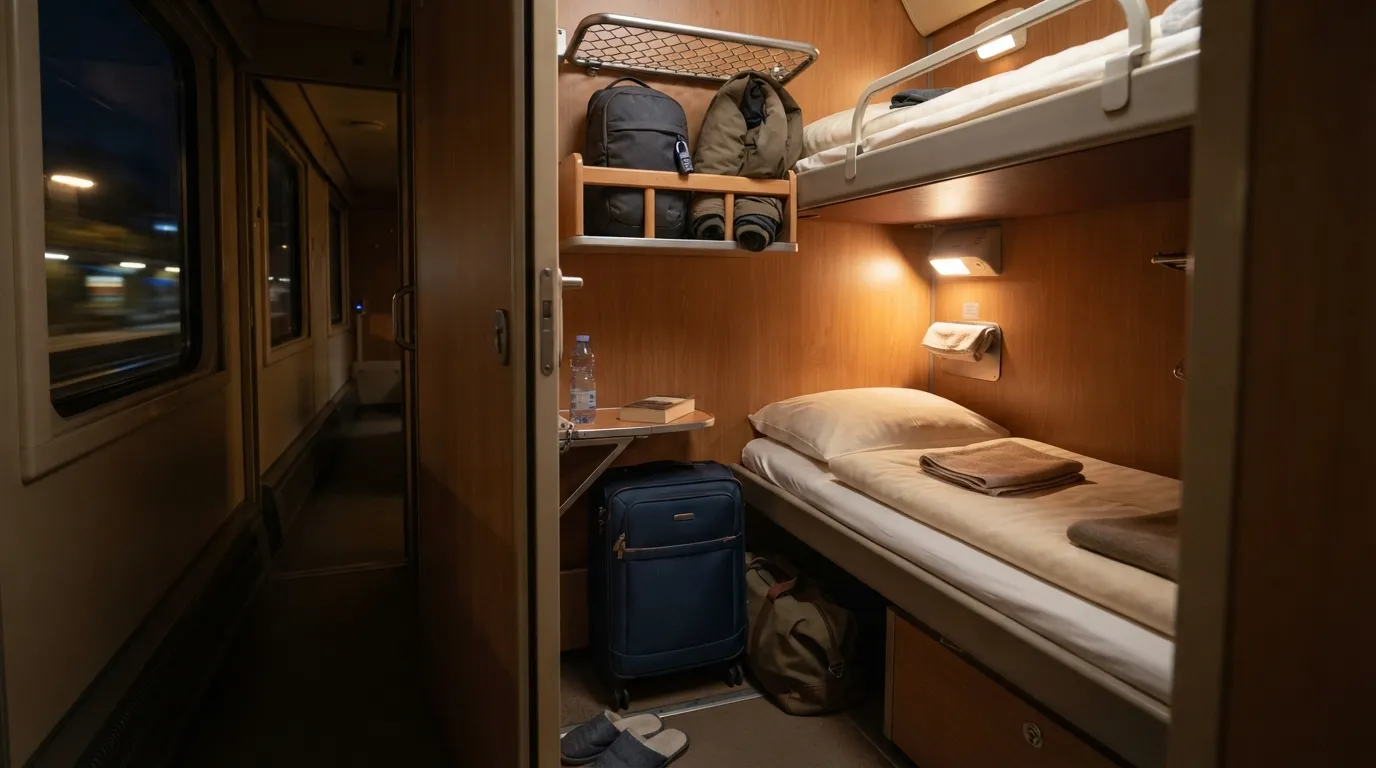
A sleeper compartment is tiny, and every bag needs a home. Many compartments offer a recess above the door for smaller bags and space under the lower berth for medium suitcases.
Aisles and neighboring compartments are off-limits for luggage. Many travelers split their things into one larger case stored under the bunk and a small daypack kept within reach.
Overhead racks have small guardrails on many services to stop bags from shifting as the train moves. Straps or small locks add another layer of security.
#14 – Letting the Attendant Hold Your Ticket Overnight
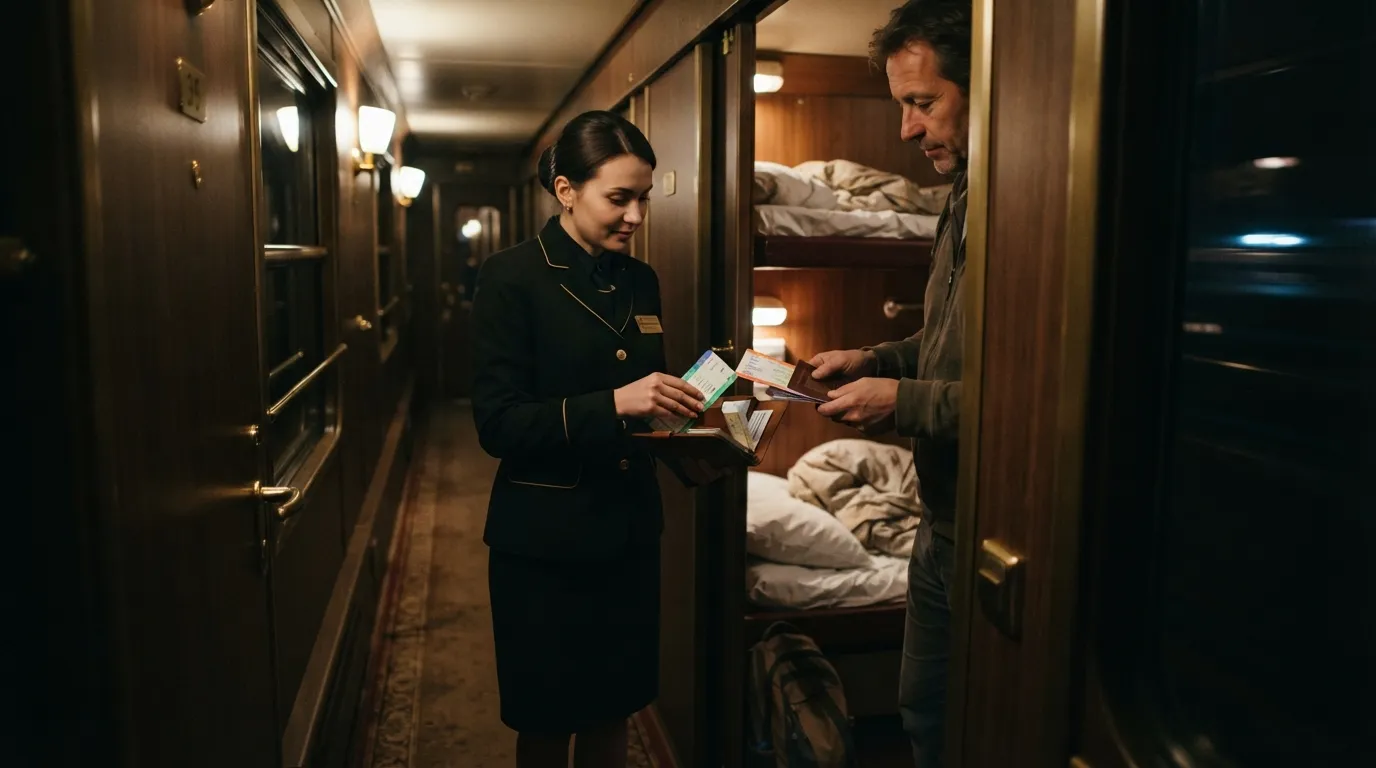
On some sleeper services, the attendant collects your ticket at boarding and keeps it until morning. That way nobody has to wake you for a routine check.
Ask what they’re keeping and when you’ll get it back. Take a photo of your booking details first, and keep any documents you might need in your own hands unless the attendant says otherwise.
#13 – Locking Your Compartment Door From the Inside
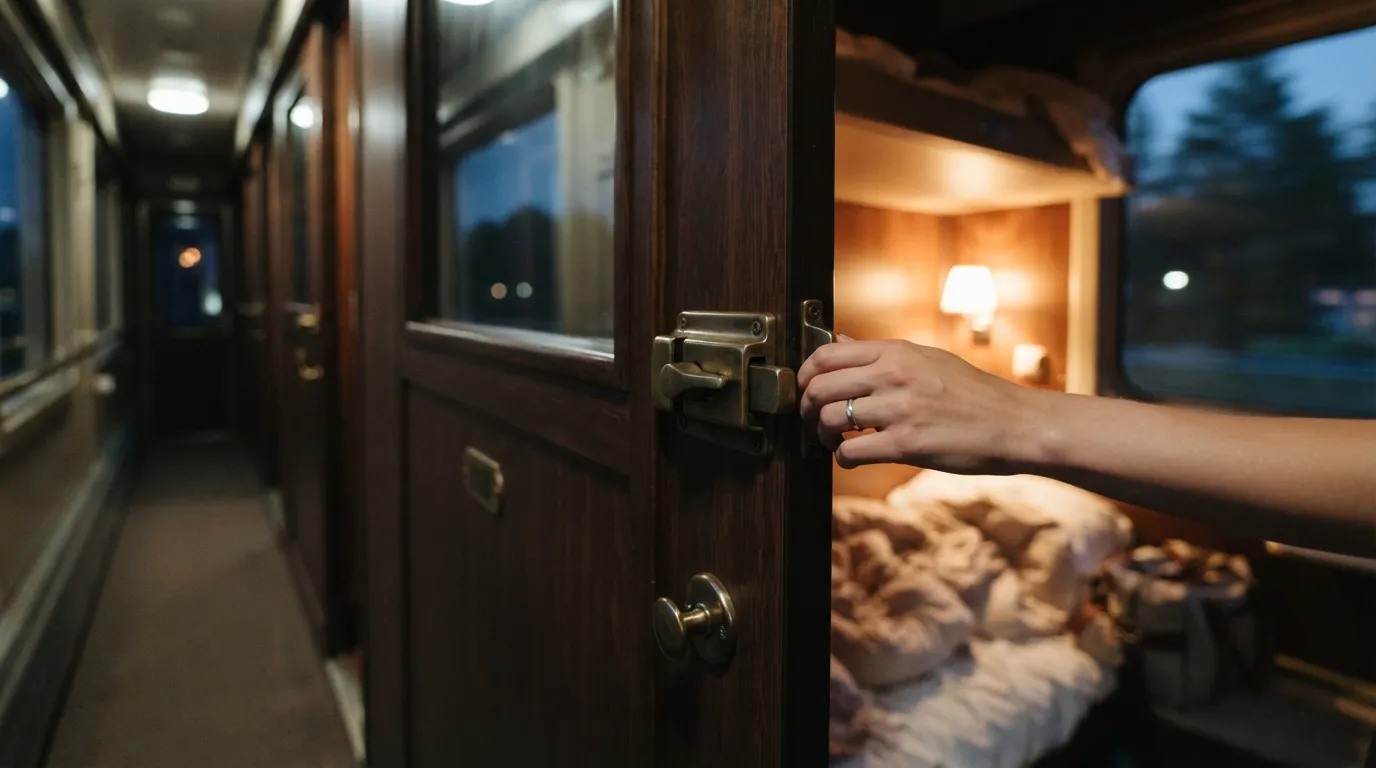
Most sleeper compartments have a door lock or latch you can secure from the inside. Attendants typically have their own way in, so ask at boarding how locking works on your train.
Learn how to unlock it in the dark before the lights go out. It’s much easier to figure out in daylight than at 2 a.m.
#12 – Respecting the Quiet Hours
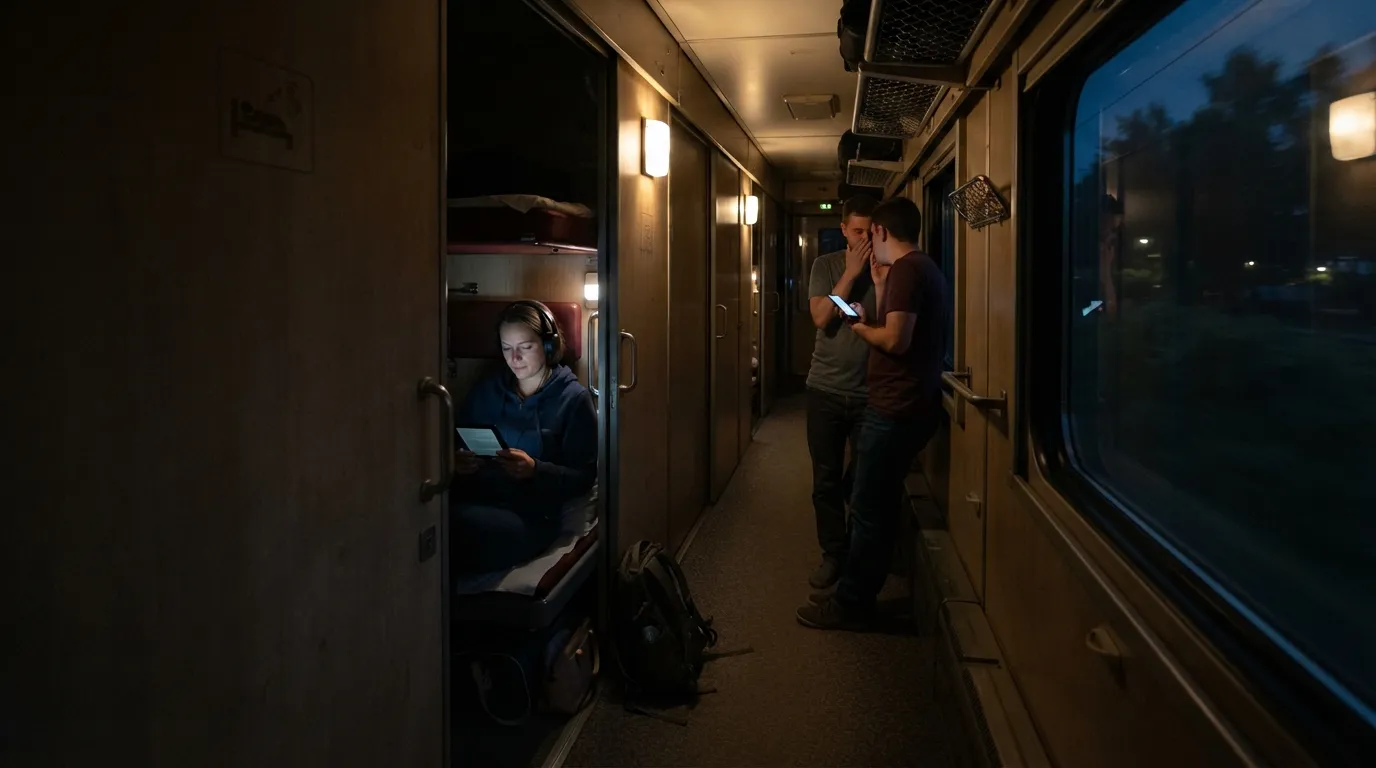
Many sleeper operators set quiet hours overnight, and compartment walls are thin. Late phone calls and loud videos travel farther than you’d think.
Use headphones, silence notifications, and keep corridor conversations short. If you’re sharing a compartment, agree on a lights-out time with your companions before settling in.
#11 – Knowing Where Breakfast Actually Comes From
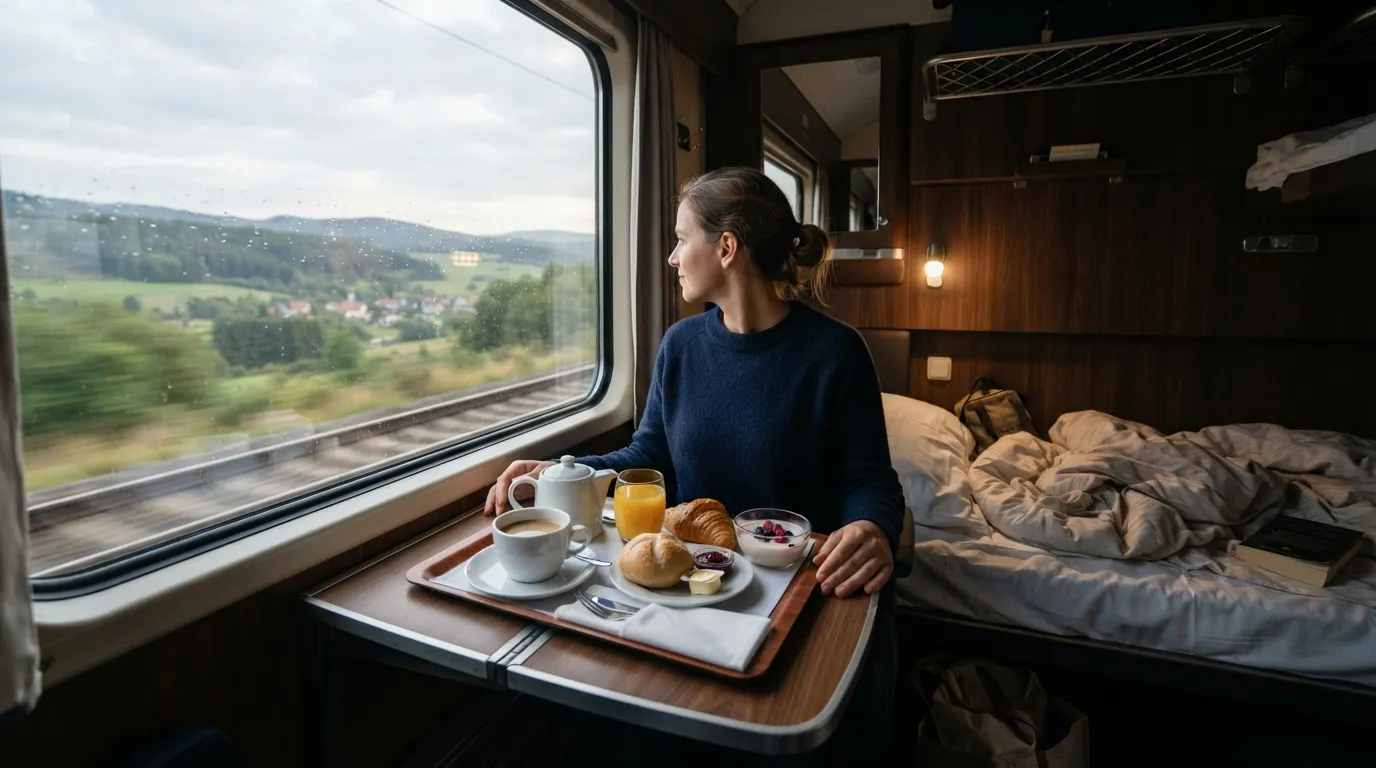
Meal service varies widely. Some sleeper tickets include breakfast delivered to your compartment, and some ask you to order it the evening before. Other trains have no meal service at all.
Check what your booking includes before you leave. If a dining car isn’t guaranteed, pack dinner and a snack for the morning, plus a bottle of water.
Quick Compare
- Breakfast included: It may arrive at your compartment, so confirm how and when.
- Order the evening before: Ask the attendant about the cutoff so you don’t miss it.
- No meal service: Bring your own dinner, a morning snack, and water.
#10 – Understanding the Bedding Setup
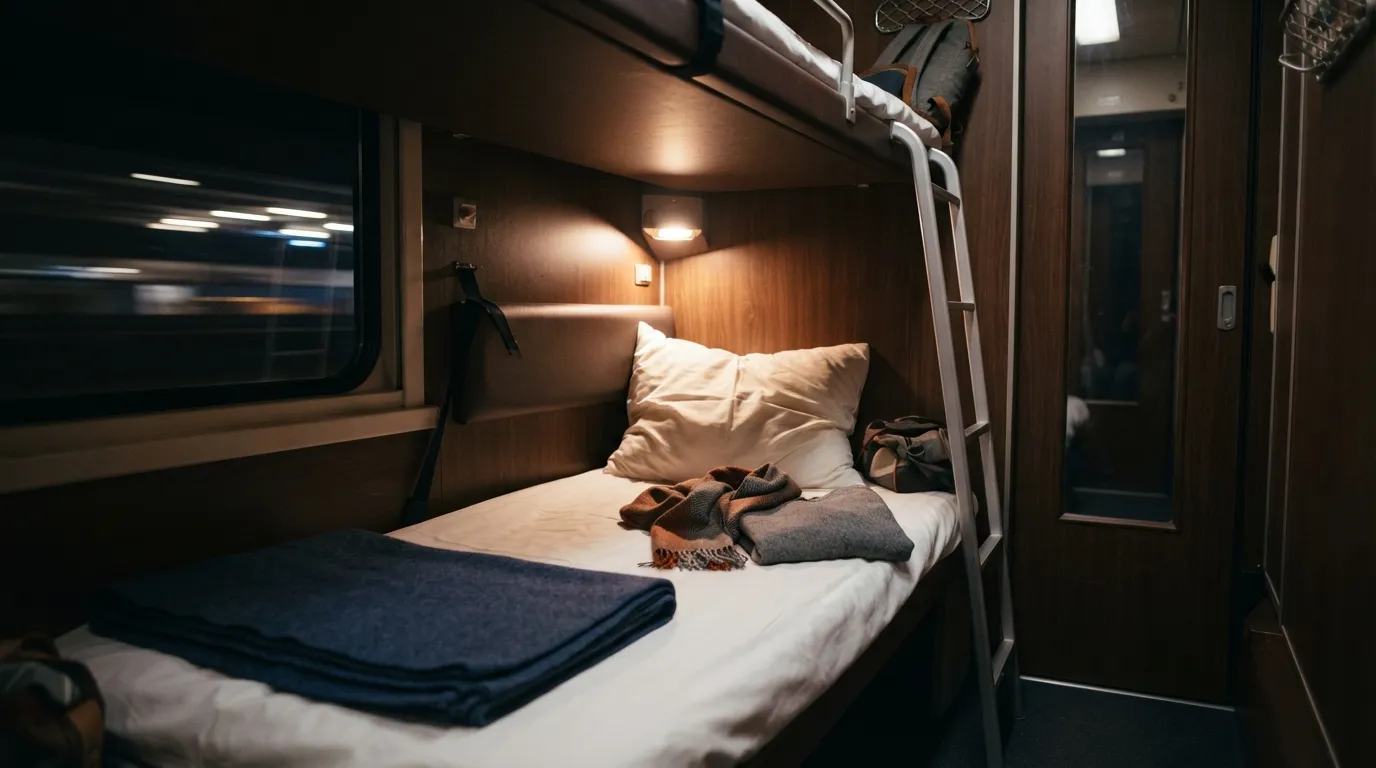
Many sleeper services provide a pillow, sheets, and a blanket, though the amount varies by class and operator. Some attendants make up the berths, and on others you do it yourself.
Compartment temperature isn’t always easy to adjust. Bring a light layer and a scarf or sweater so you can adapt without disturbing anyone.
#9 – Packing a Washing-Up Kit You Can Reach in the Dark
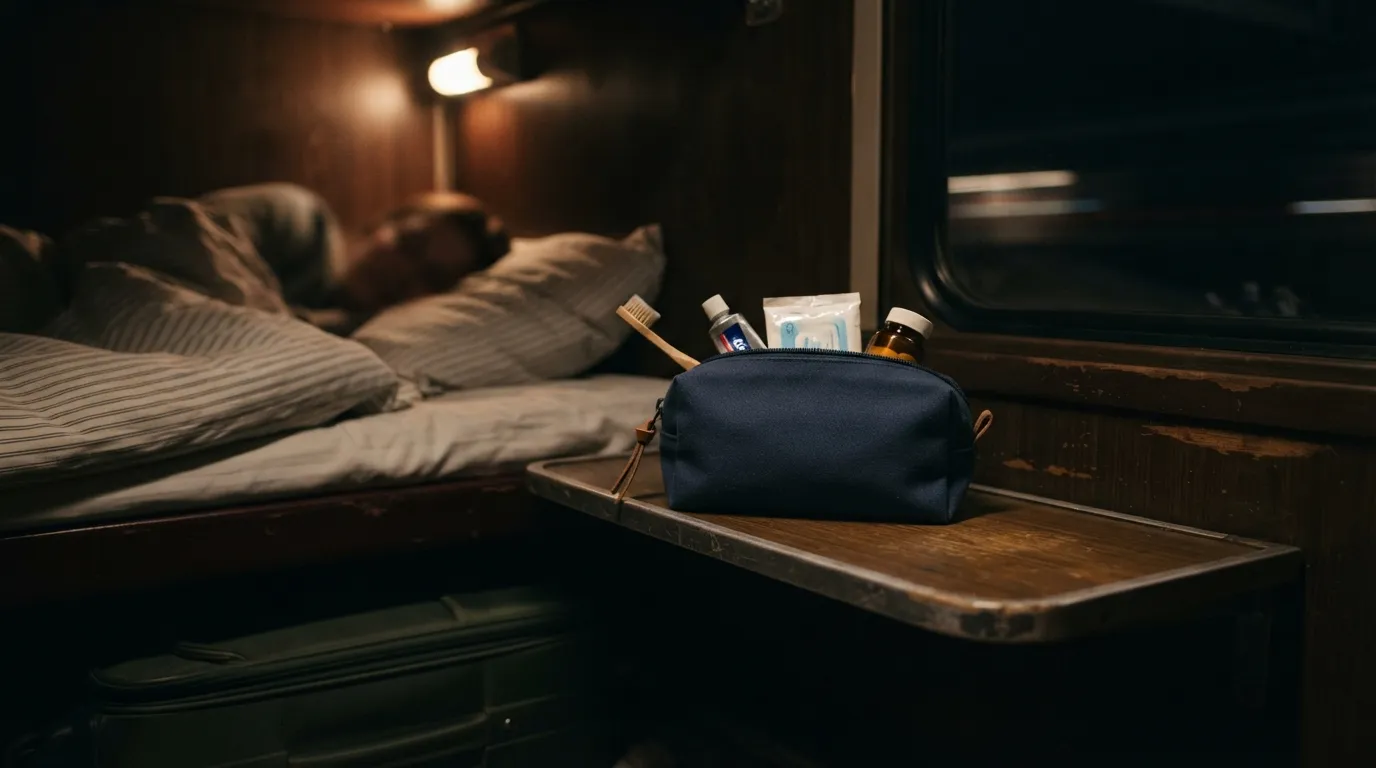
Not every compartment has its own sink, and many sleeper cars use shared toilets in the corridor. Higher-class cabins may have private facilities, so check your ticket.
Pack a small pouch with a toothbrush, wipes, and any medication, and keep it near your pillow. You won’t want to dig through a suitcase under the bunk at night.
#8 – Not Counting on Outlets and Charging
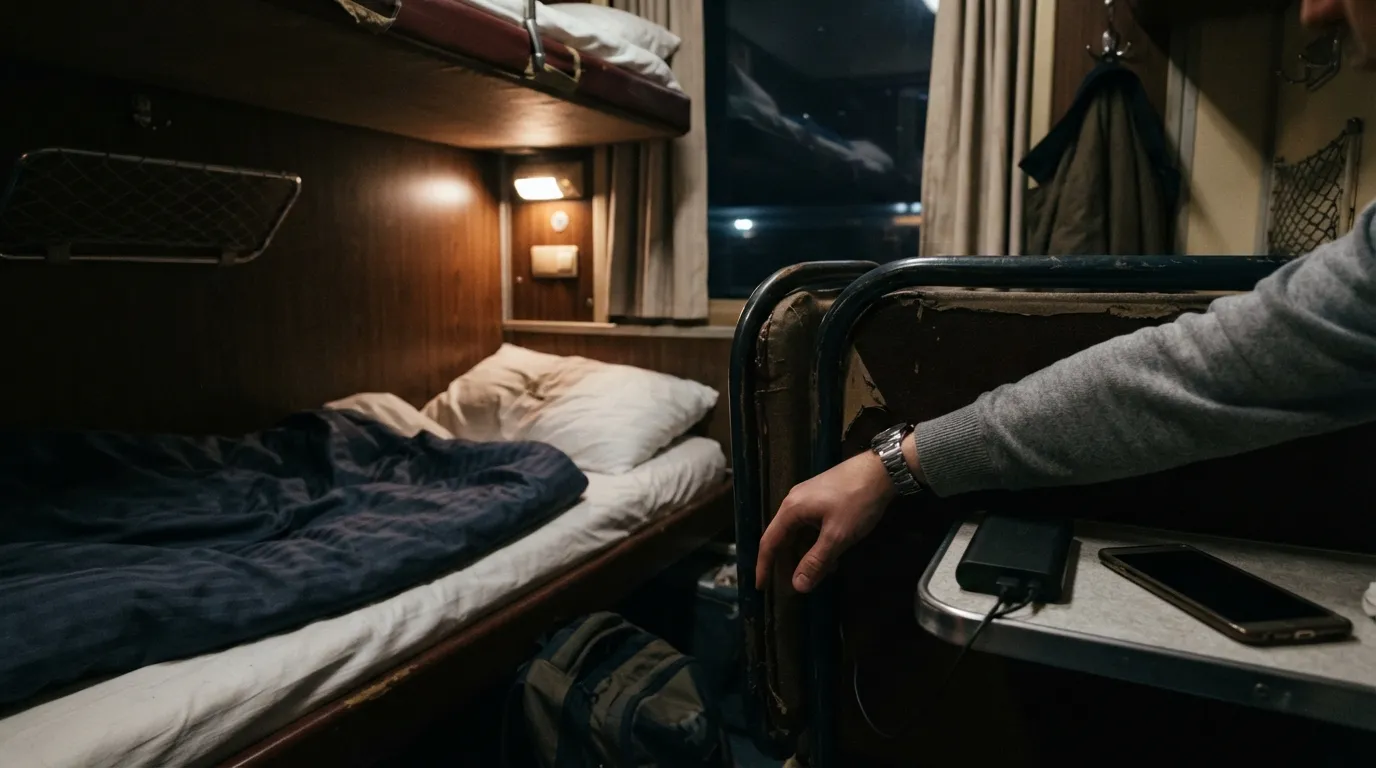
Many modern sleeper cars have sockets in the compartment, but they aren’t guaranteed on every train. Older cars may have none.
Charge everything before you board and carry a power bank. If you’re crossing borders, bring the right plug adapter for the country your train runs through.
#7 – Planning the Nighttime Climb to the Upper Berth
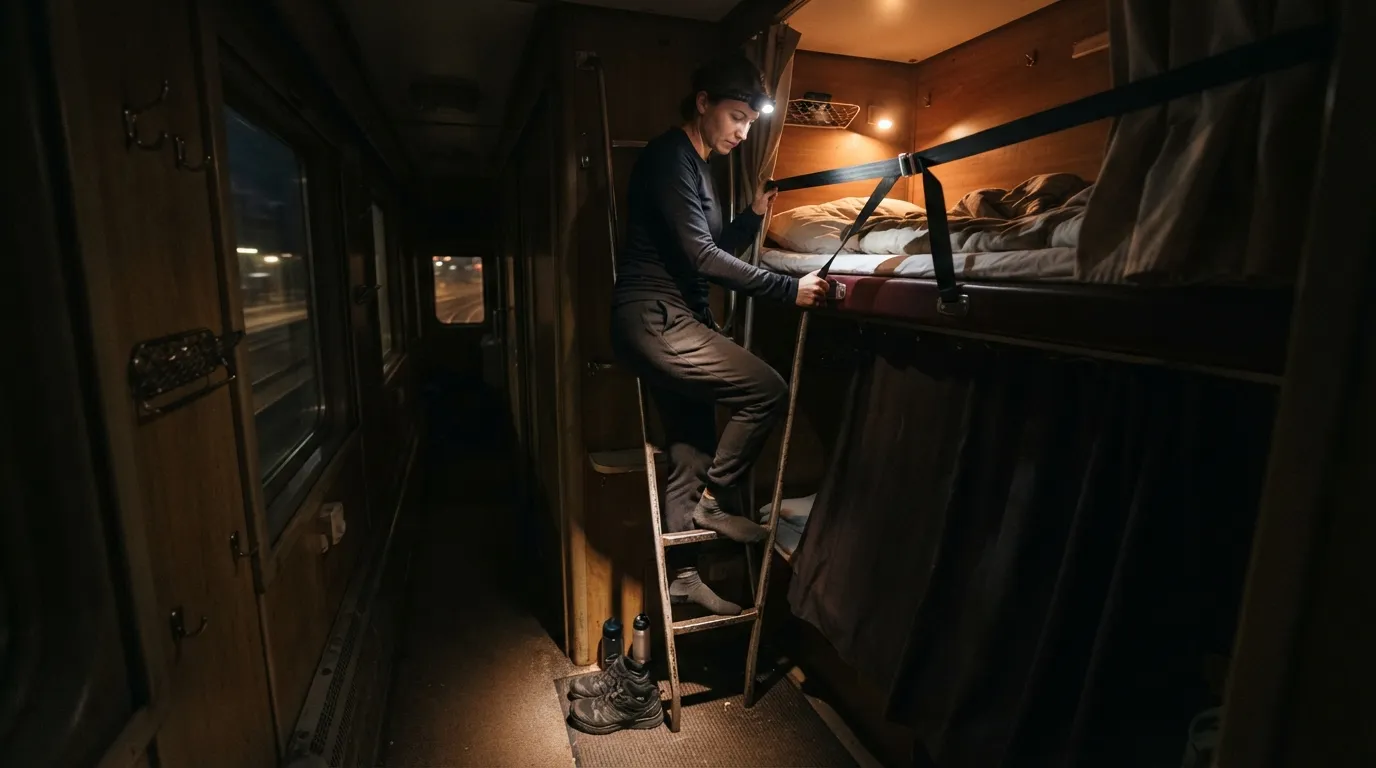
Upper berths are reached by a ladder or built-in steps, and getting down half asleep is harder than going up. Some berths have a safety strap or net to keep you from rolling out.
Keep your shoes in a consistent spot and a small light handy. Decide before bedtime whether you’ll need a bathroom trip, and avoid rushing it in a moving, dim corridor.
Worth Knowing
- Do your bathroom trip and teeth-brushing before you climb up for the night.
- Keep a small light and your shoes in the same spot every time.
- If your berth has a strap or net, set it up before you fall asleep.
- Come down slowly and facing the ladder, especially while the train is moving.
#6 – Keeping Valuables Close, Not Buried
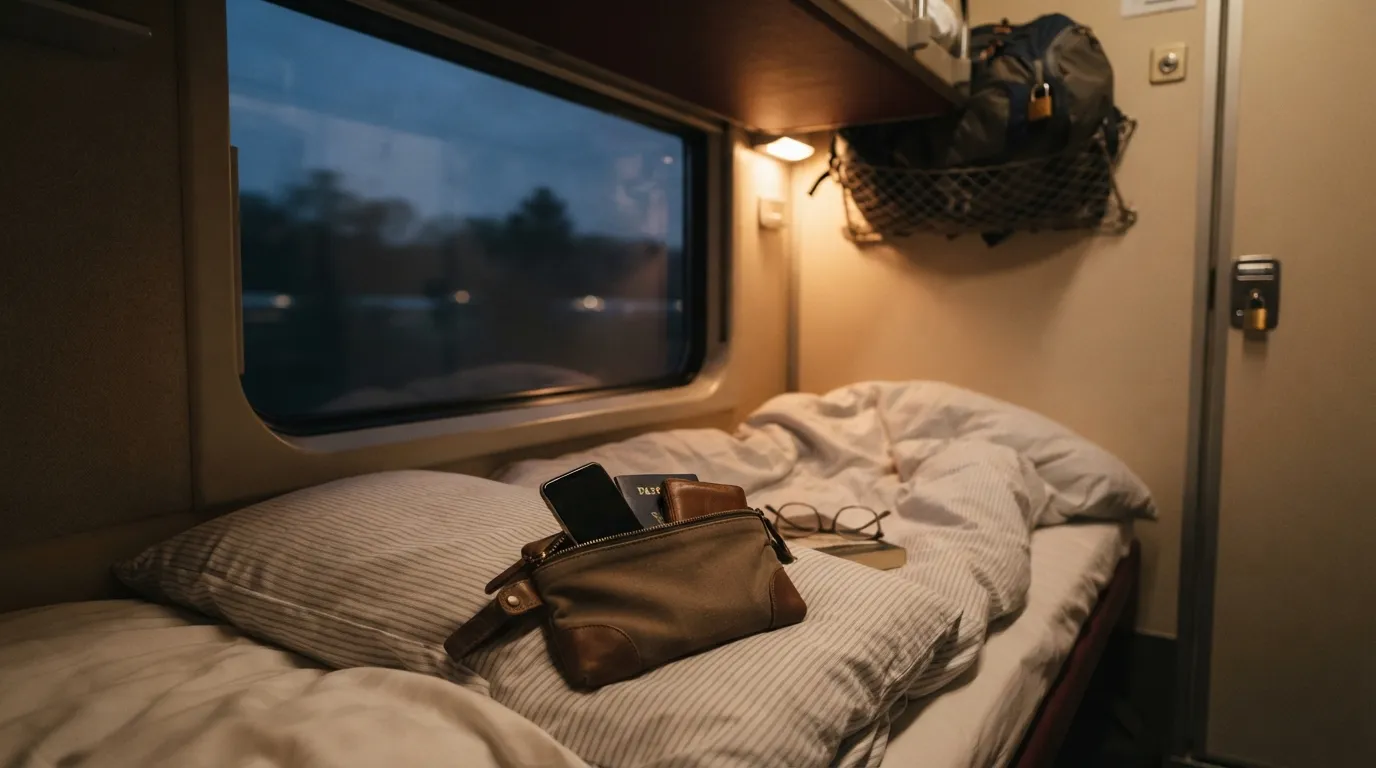
Your wallet, phone, and documents shouldn’t live in the bottom of a suitcase under the bunk. Keep them in a small pouch within arm’s reach of your pillow.
Lock the compartment as instructed, and stow bigger bags in the designated spaces. This also saves you from rummaging through luggage when the train is rocking.
#5 – Asking About a Wake-Up Call Instead of Trusting Your Phone Alone
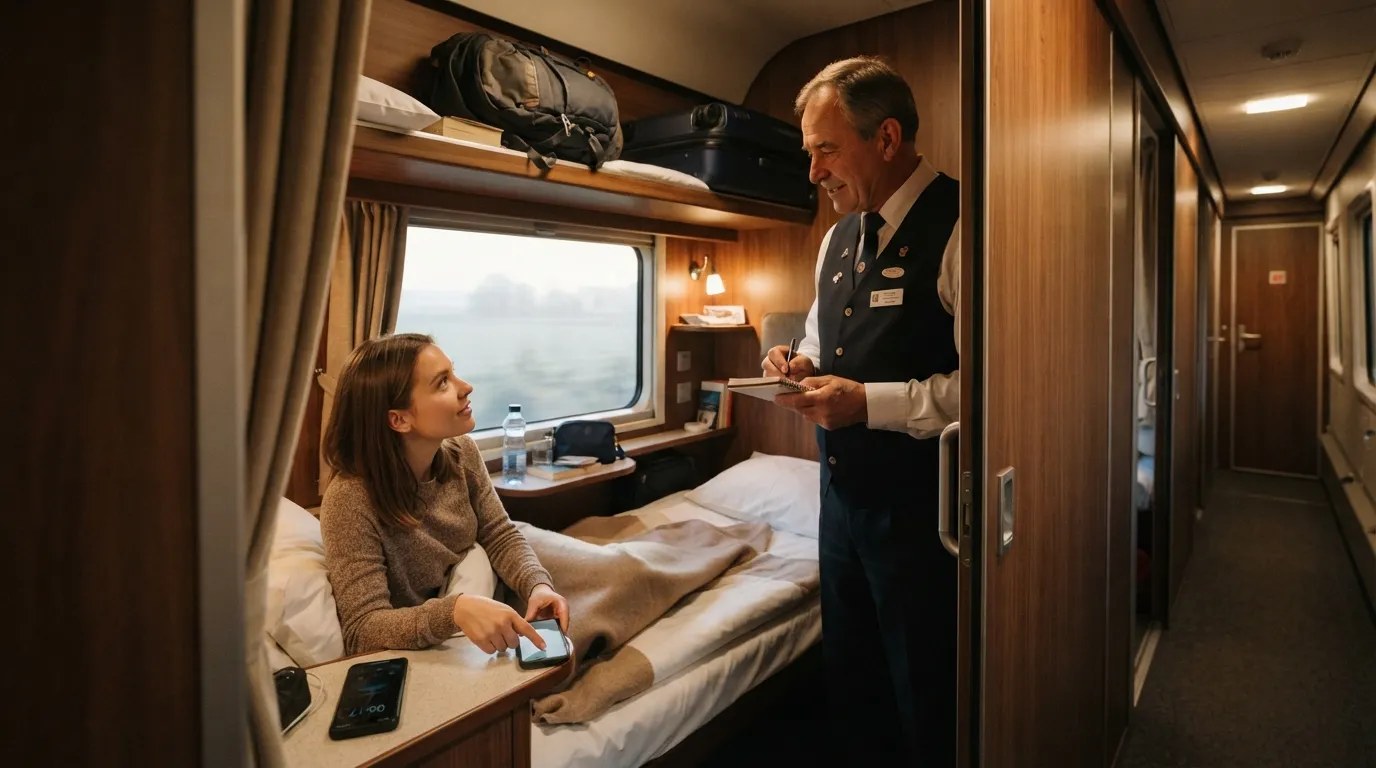
A phone alarm can fail, run out of battery, or be set to the wrong time zone on cross-border routes. Many attendants can wake you before arrival if you ask at boarding.
Tell them your stop and the time you need to be up. Then still set your own alarm as a backup.
#4 – Expecting Dawn to Be a Moving Target
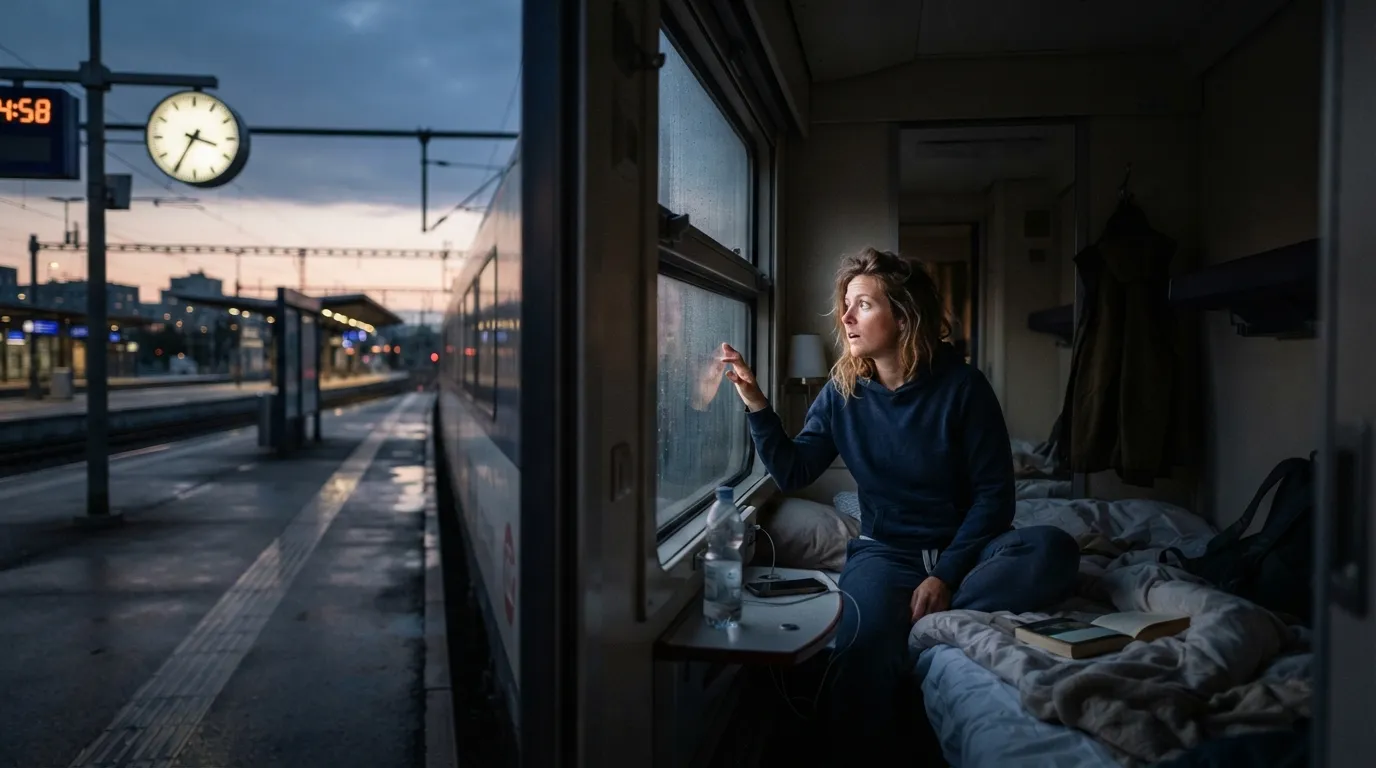
Delays and early arrivals can shift your morning. The timetable gives you a plan, but the train doesn’t always follow it exactly.
Some stations or services let passengers stay aboard for a while after arrival, and others expect you off quickly. Check your operator’s policy so you aren’t surprised at the platform.
#3 – Sleeping in Clothes You’d Be Comfortable Being Seen In
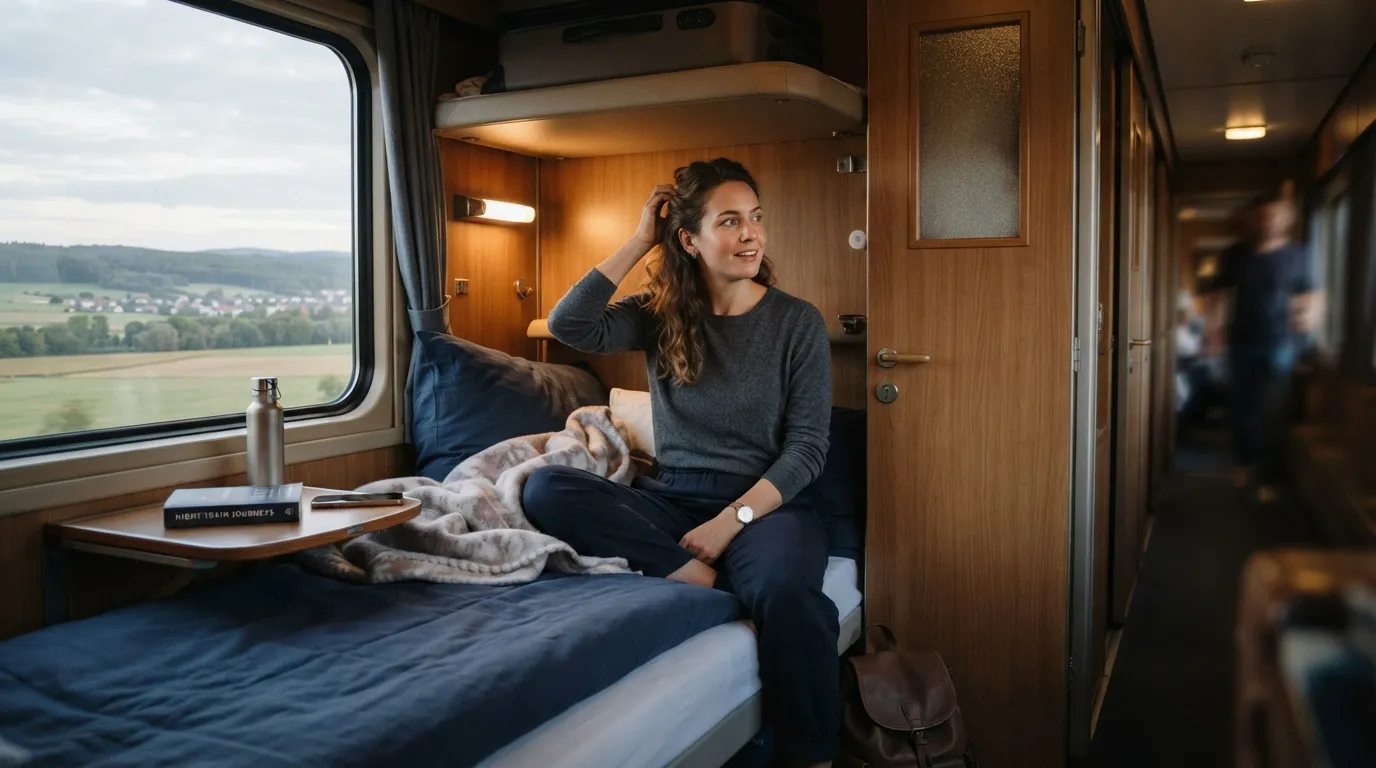
Attendants may knock, and on international routes, officials may too. That’s not the moment to be wearing pajamas you wouldn’t want anyone to see.
Many travelers wear comfortable layers they can be seen in. It makes a sudden knock far less stressful and gets you ready for the morning faster.
#2 – Being Ready for Border Control While You’re Asleep
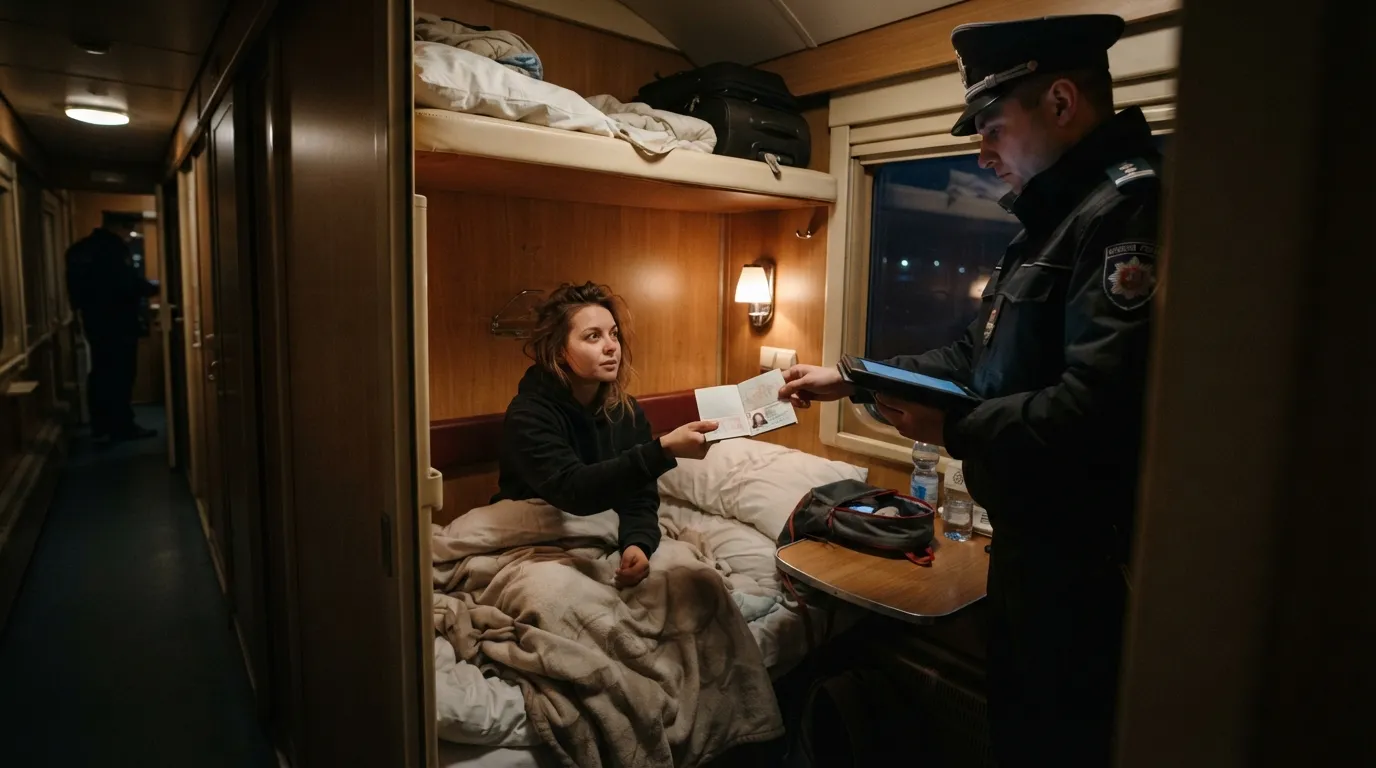
On international routes, border checks may happen in the middle of the night. Officers may knock on your compartment door or ask for documents in the corridor.
Keep your passport where you can reach it without searching, and ask your attendant at boarding how checks will work on your route. Rules differ by border and operator, so don’t assume it’s the same everywhere.
Fast Facts
- Checks can happen overnight, so plan to be woken.
- Your passport should be reachable without opening a suitcase.
- Ask at boarding whether officials come to your door or check in the corridor.
- If the attendant holds documents, ask when you’ll get them back.
#1 – Packing Up Before the Final Hour
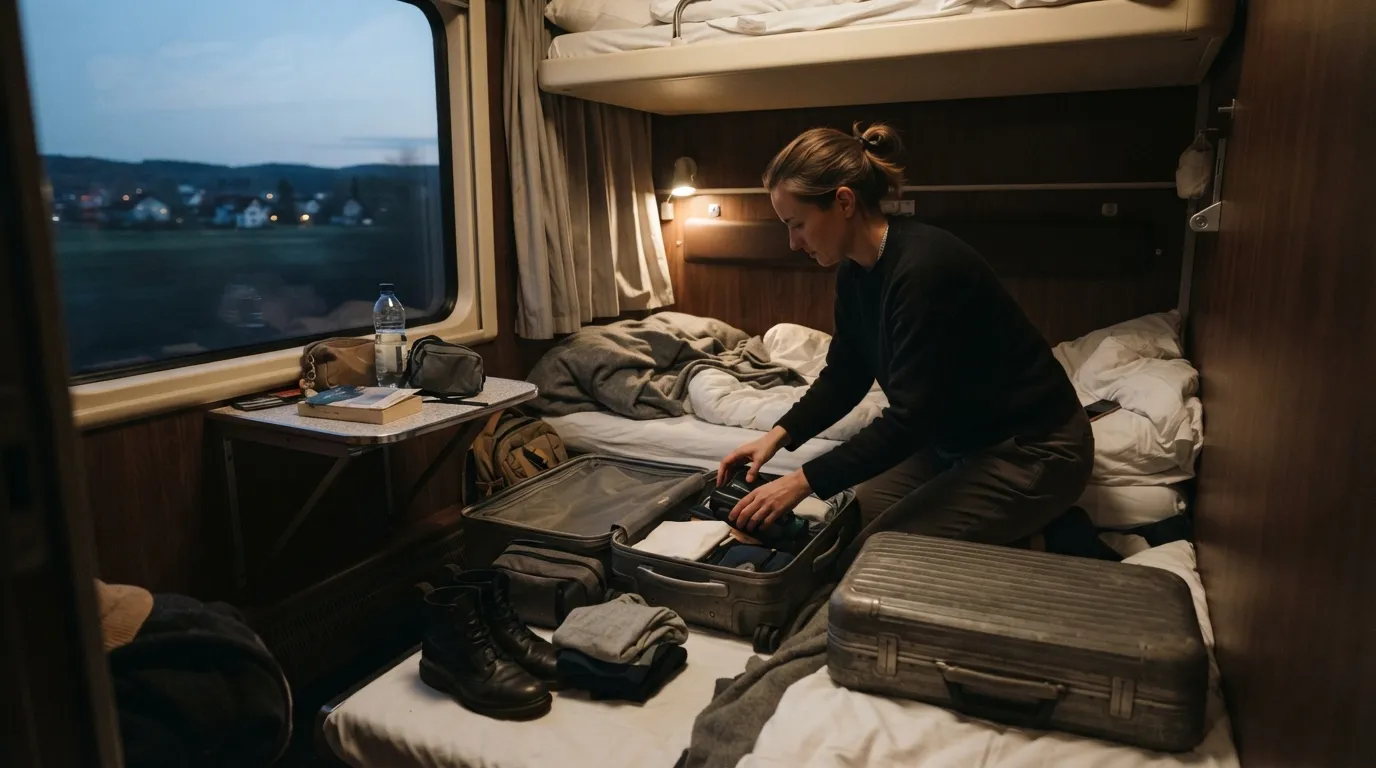
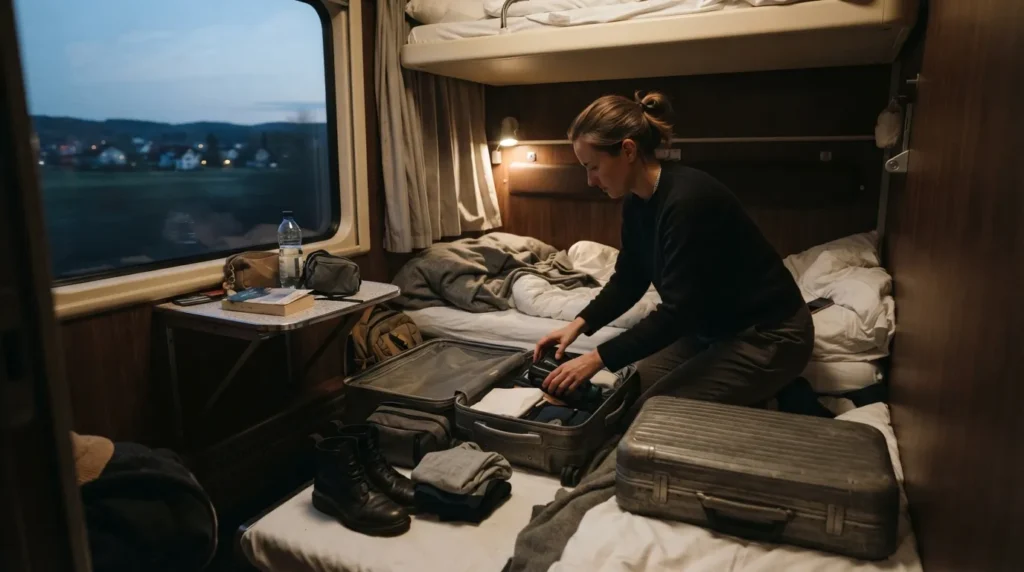
Arrival can come faster than you expect, and station stops may be short. If you wait for the announcement, you can end up scrambling with bedding, shoes, and luggage.
Pack your things in the final hour. Dress, follow the attendant’s instructions about bedding, and pull your bags out from under the bunk. That way, when the train finally slows into the station, you walk off calm instead of rushed.
CEO-Co-Founder