
- 15 Hotel Breakfast Charges Guests Can Avoid by Checking the Rate Plan - October 24, 2026
- 17 Shoulder Season Travel Rules for Sudden Weather Changes - October 24, 2026
- 18 Hotel Arrival Rules That Prevent Expensive Check-In Problems - October 24, 2026
A balcony at the back of the ship or a room steps from the elevator sounds like the easy, sensible pick. Deck plans show that many of these choices simply swap one problem for another once the ship leaves port.
The twist is that some of the most tempting cabins can feel very different at bedtime than they did at booking. Here are 17 of them, counting down to the one that avoids the most surprises.
#17 – Aft-Facing Balcony for Wake Views
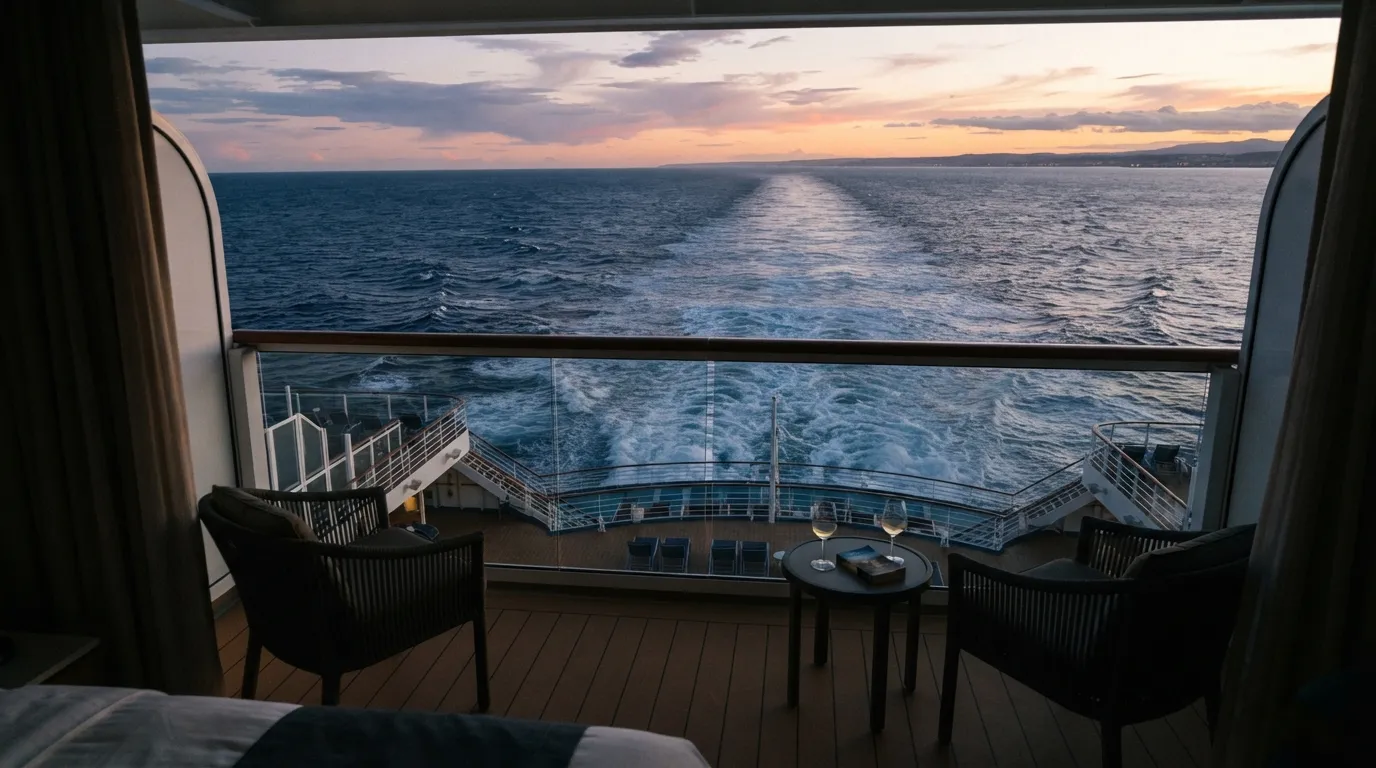
Aft balconies sell a lovely picture: a private perch over the wake at sunset. Deck plans for many ships put these rooms near the propulsion machinery, and some cabins can pick up vibration during maneuvering or at certain speeds.
The view never changes, but the hum underfoot can be what you notice once the lights go out. Add the long walk forward to dining and shows, and midship starts to look better.
#16 – Cabin Directly Beside an Elevator Bank
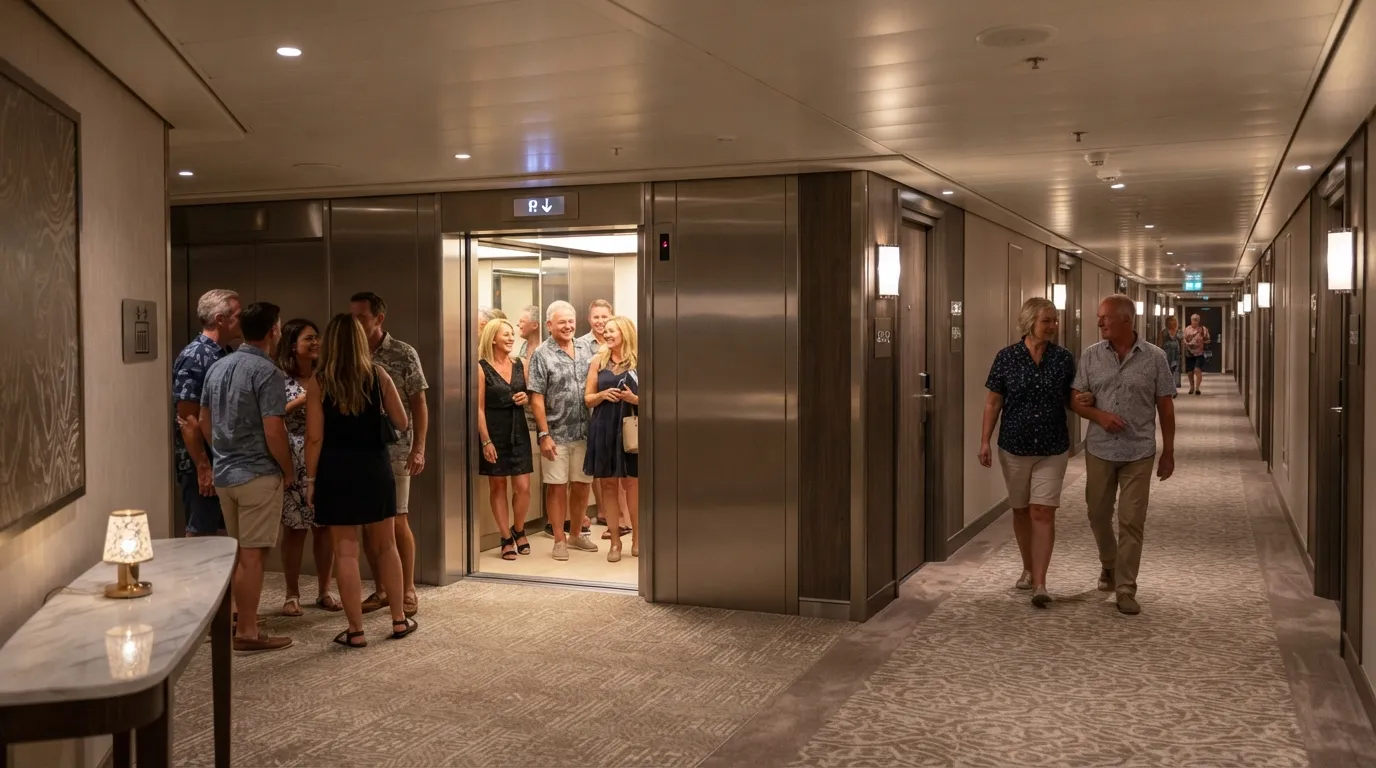
Being next to the elevators feels like a shortcut built into your room number. Deck plans show these spots sit in busy corridors where people gather and doors open and close.
By day, that’s pure convenience. After the evening venues let out, the same hallway can stay lively longer than a quieter stretch would. A few doors down usually keeps most of the access with far less of the traffic.
#15 – Guarantee Cabin for Potential Upgrade
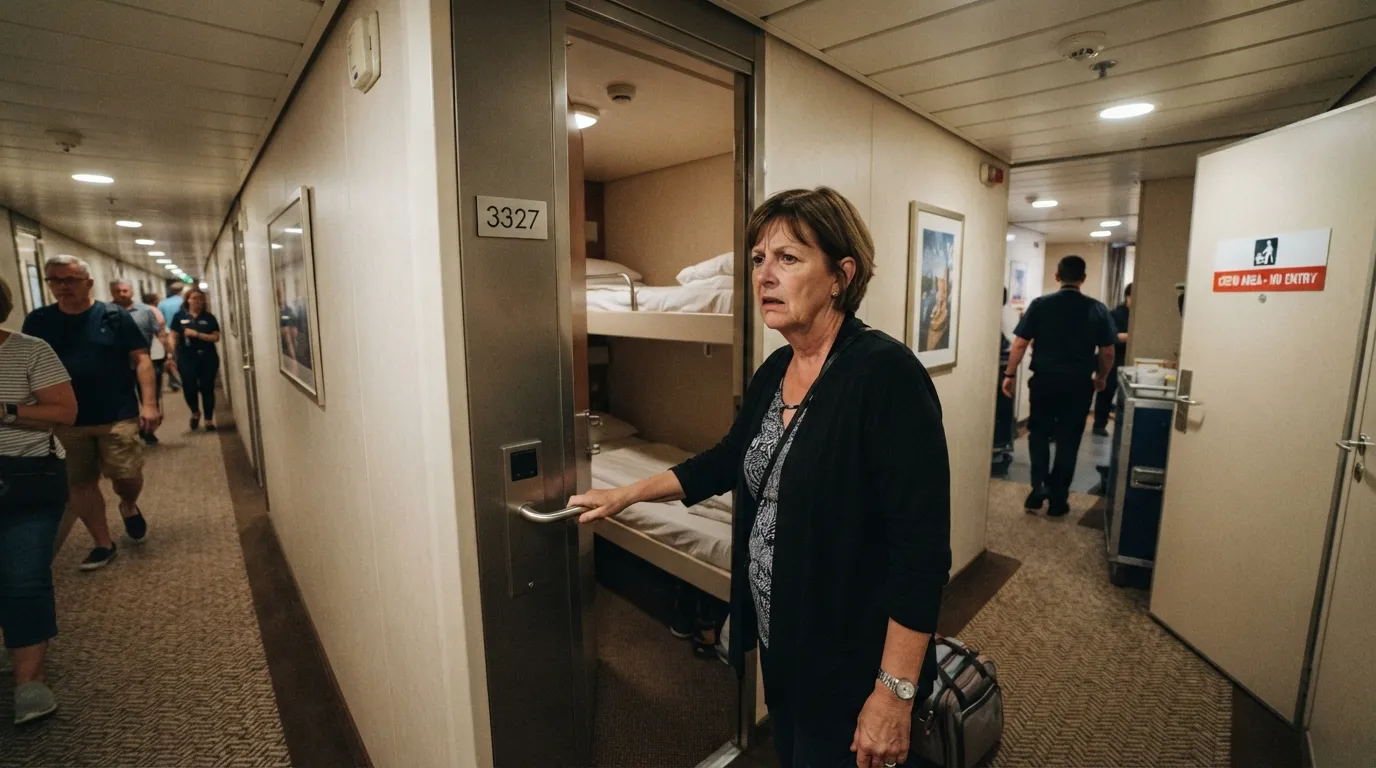
A guarantee cabin dangles the chance of a better category at the same fare. The catch is that the cruise line picks the exact room after you’ve paid.
That means you give up control over what sits beside, above, or below you, including venues and service areas. The first night shows whether the luck went your way. On ships where locations differ a lot, choosing the cabin yourself removes the gamble.
Worth Knowing
- You are buying a category, not a specific cabin number.
- The room assigned can land almost anywhere that category is sold on the ship.
- An upgrade is a possibility, not a promise.
- Picking your own cabin lets you check the rooms above, below, and beside it first.
#14 – High-Deck Forward Cabin for Scenery
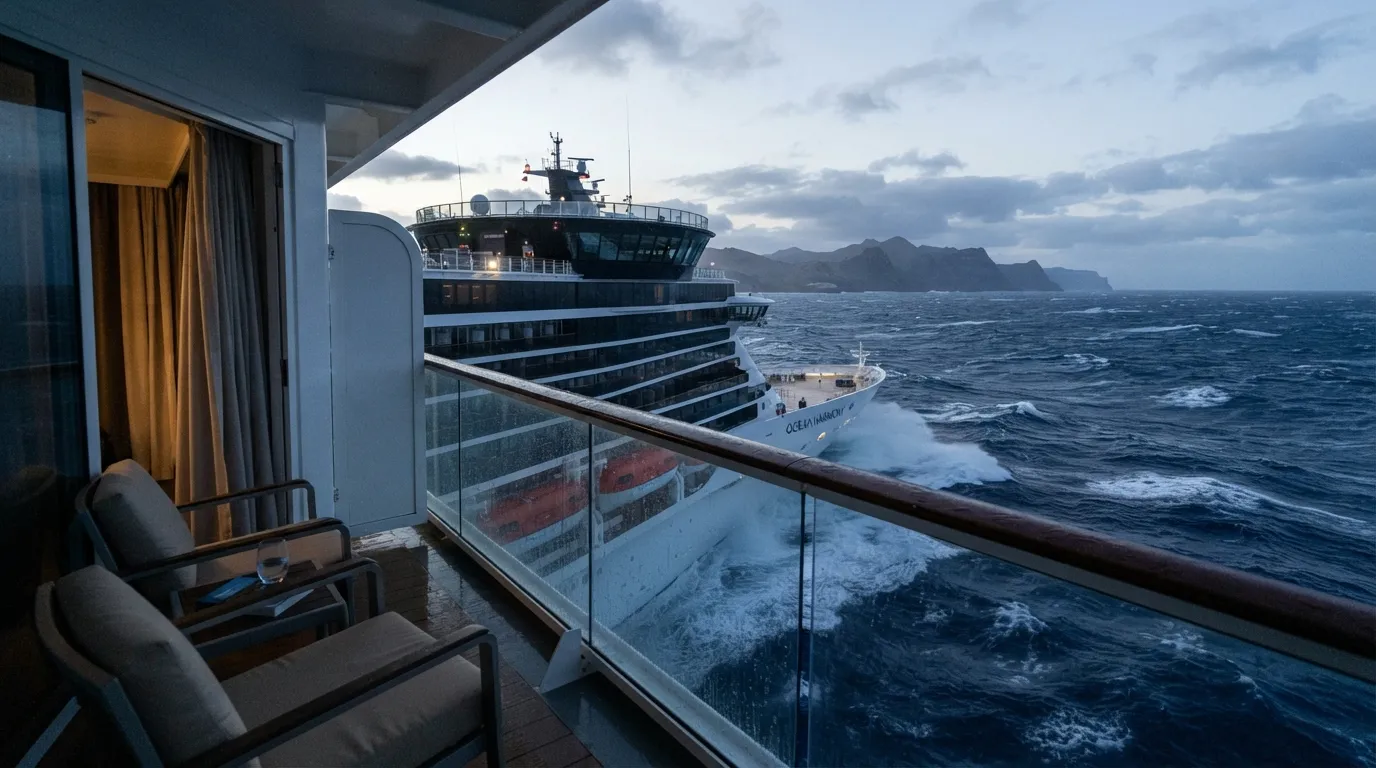
Up high near the bow, the views can be dramatic on many itineraries. But plans place these rooms where pitching is felt more than in lower midship cabins, and wind and swells can make that more noticeable.
The view stays. So does the motion. If you’re sensitive to movement, you may find out soon after leaving port, while a lower midship room on the same itinerary generally softens that up-and-down feel.
#13 – Inside Cabin Under a Theater
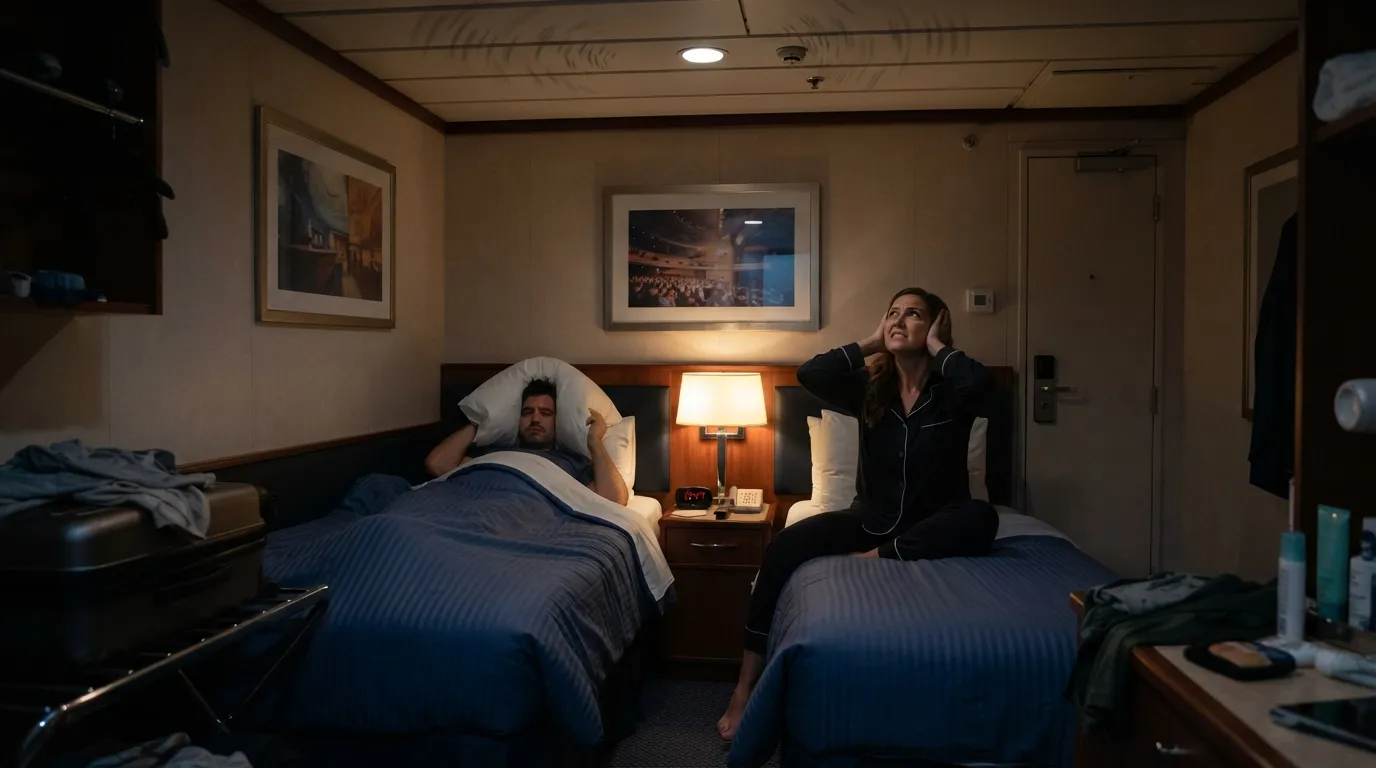
An inside cabin looks like a smart saving: lower price, and you’ll barely be in the room anyway. But some plans place them directly below performance spaces.
Sound from shows or rehearsals can carry through the structure on certain decks, so the discount feels great right up until the evening activity starts overhead. A cabin deck with cabins above and below it changes the noise profile.
#12 – Promenade-Level Oceanview
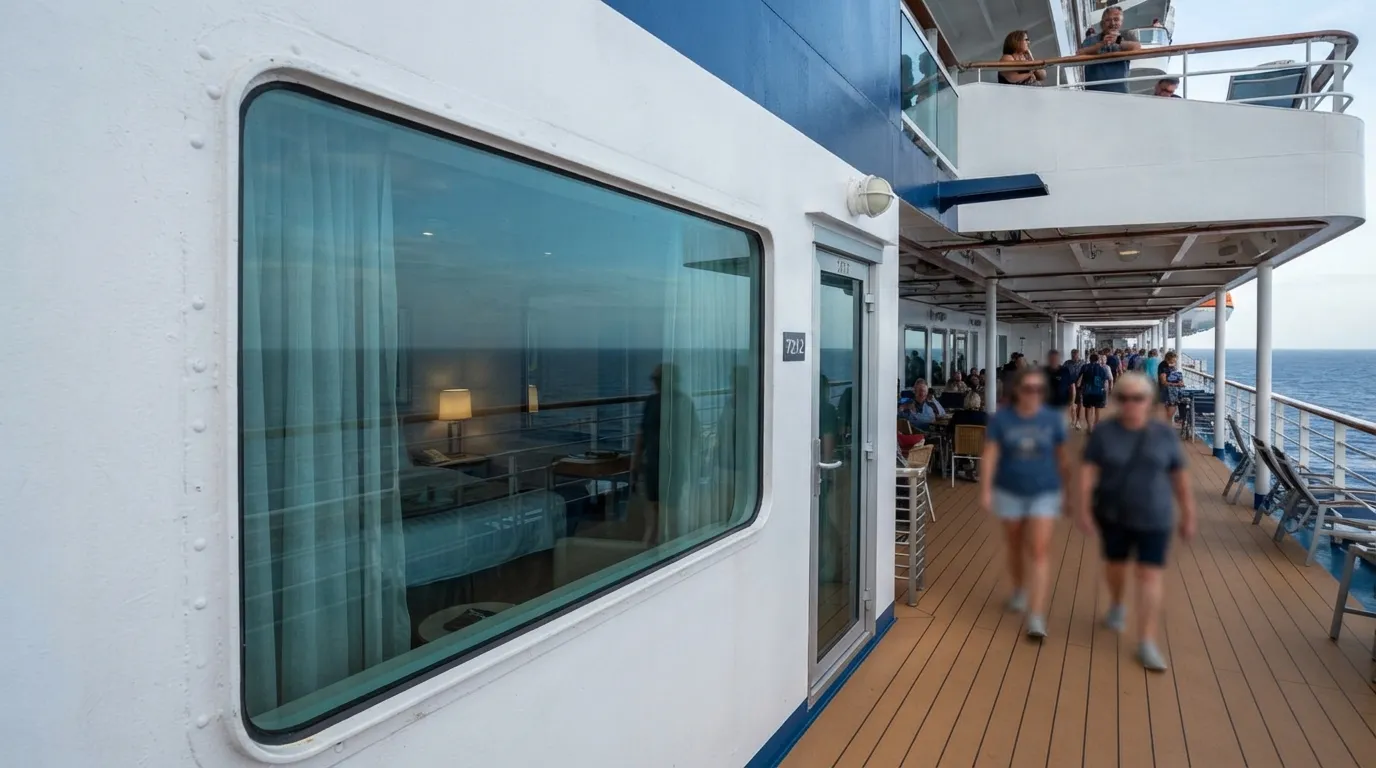
Promenade-level cabins promise easy access to the open-air walking route, and sometimes a lower fare. Plans show windows or doors right beside that route.
Passenger traffic and occasional announcements can reach the room more easily than on fully enclosed cabin decks. In daylight, the convenience is real. When you want quiet, the location can work against you. Interior corridor placement on another deck limits that exposure.
#11 – Connecting Cabin for Family Flexibility
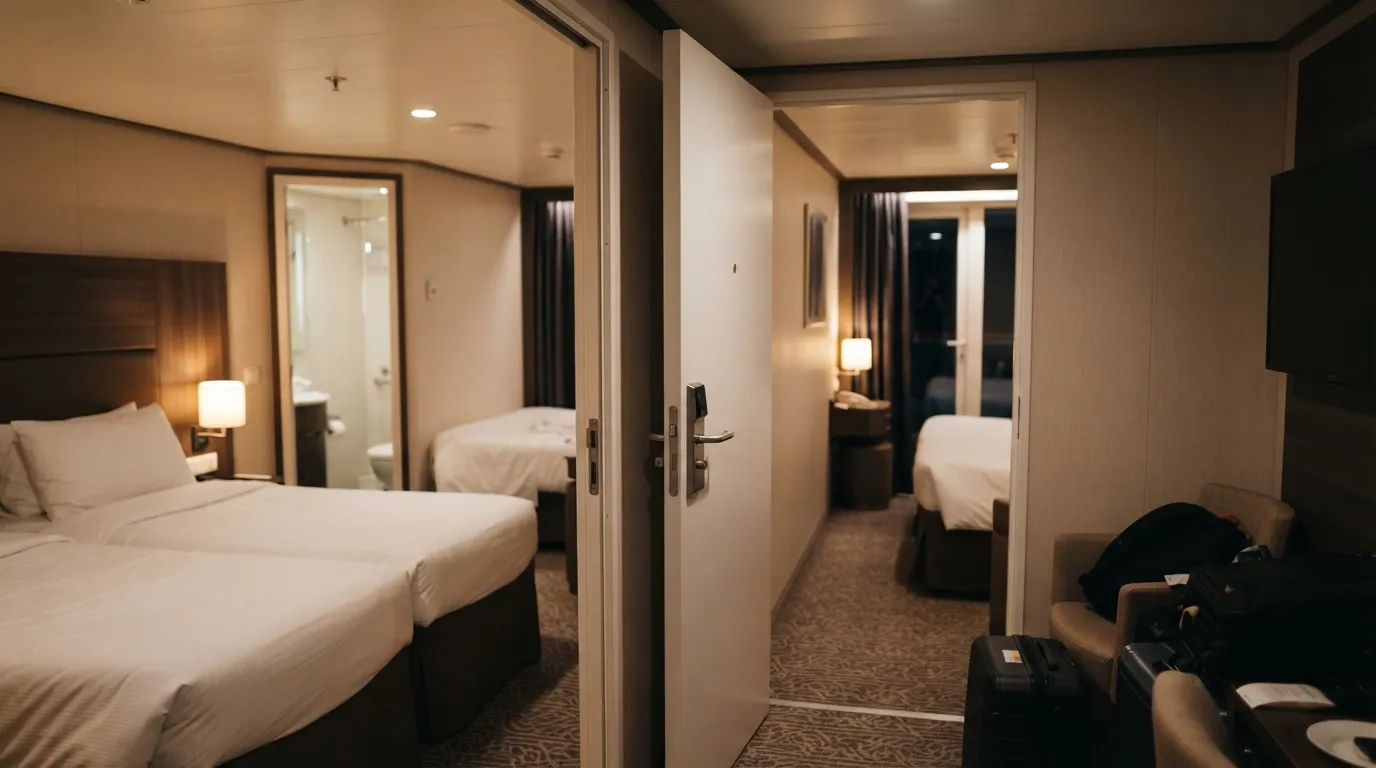
Connecting doors are a gift for families who want to move easily between rooms. They’re also shared walls, and plans mark them that way.
That means neighbor activity can be easier to hear than in non-connecting setups. The flexibility stays, but if schedules differ, the first night can be a restless one. A non-connecting room in the same category removes that variable.
Quick Compare
- Connecting: Easy movement between rooms, with a shared door in the wall.
- Non-connecting: No internal passage, and a more standard wall between neighbors.
- Best fit: Connecting suits groups moving as one. Non-connecting suits groups with different bedtimes.
#10 – Cabin Directly Below the Pool Deck
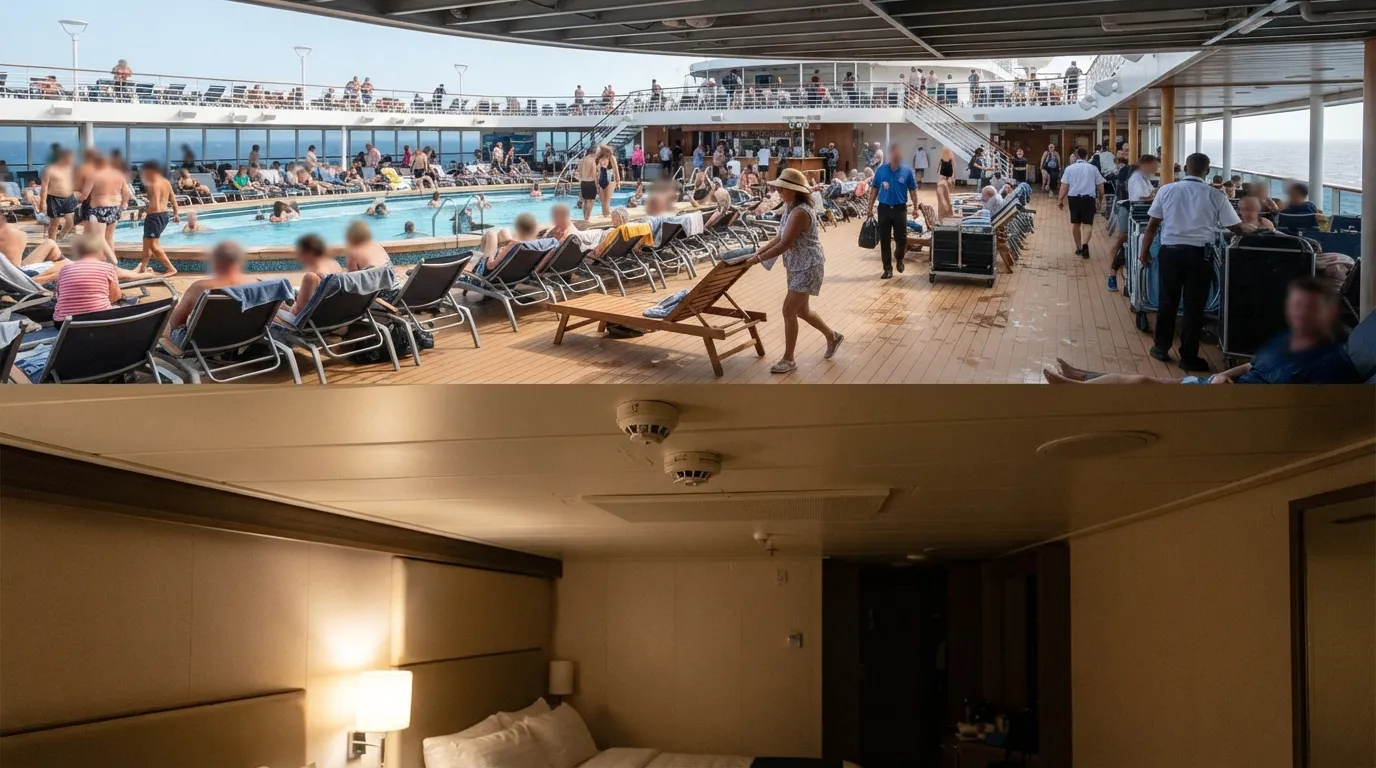
Right below the pool deck sounds like instant access to sun and loungers. Plans show many of these cabins sit under high-traffic outdoor areas with chairs, footsteps, and equipment movement.
How much sound gets through depends on the exact position and deck construction. Once the activity starts above you, the perk fades fast. Decks with cabins above and below typically offer steadier quiet.
#9 – Far-Forward Lower Deck for Value
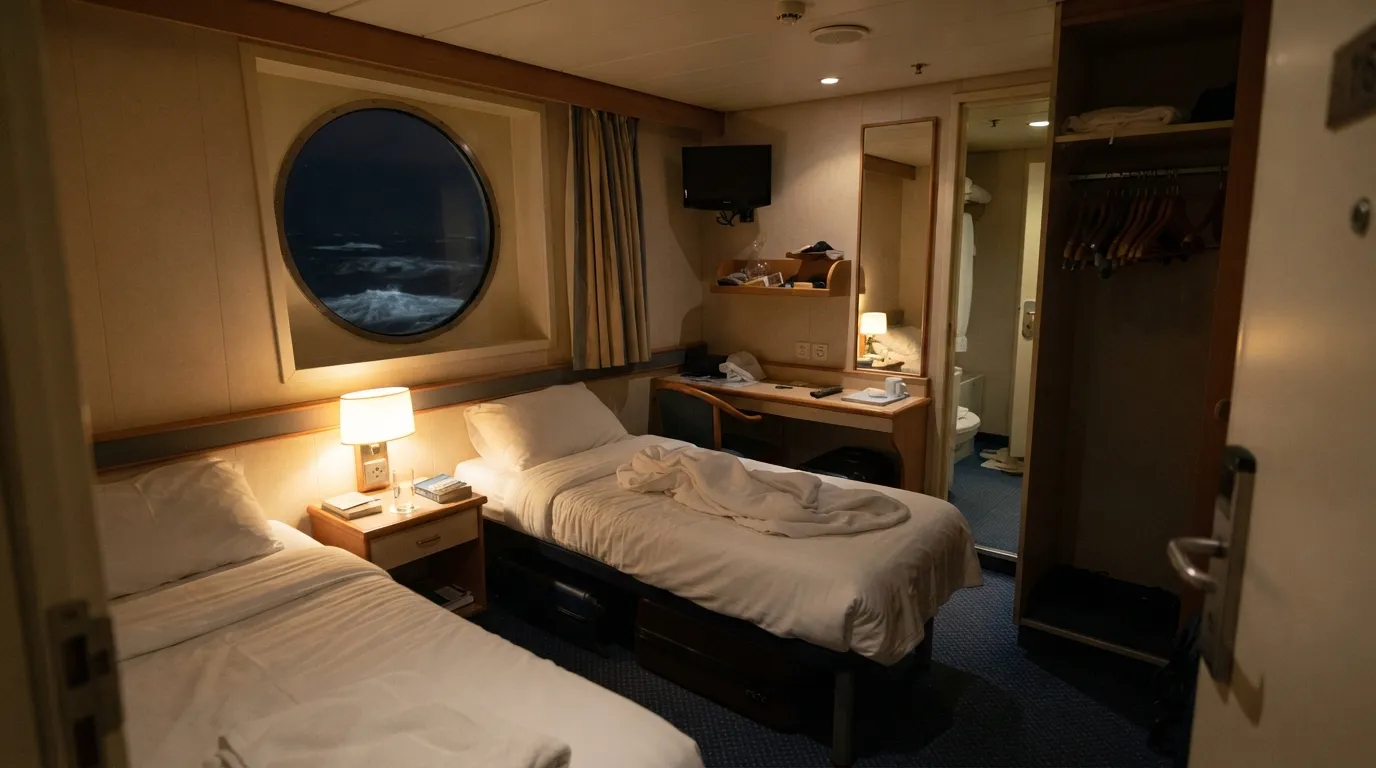
Lower forward cabins often carry lower fares, which makes them tempting. Plans place them near the bow, where pitching motion registers more readily in moderate seas.
Thruster or anchor operations can also add brief noise during port calls. The savings are real. So is the motion, and it can show up on the first night at sea. Midship lower decks offer a different balance on the same ships.
#8 – Obstructed-View Balcony
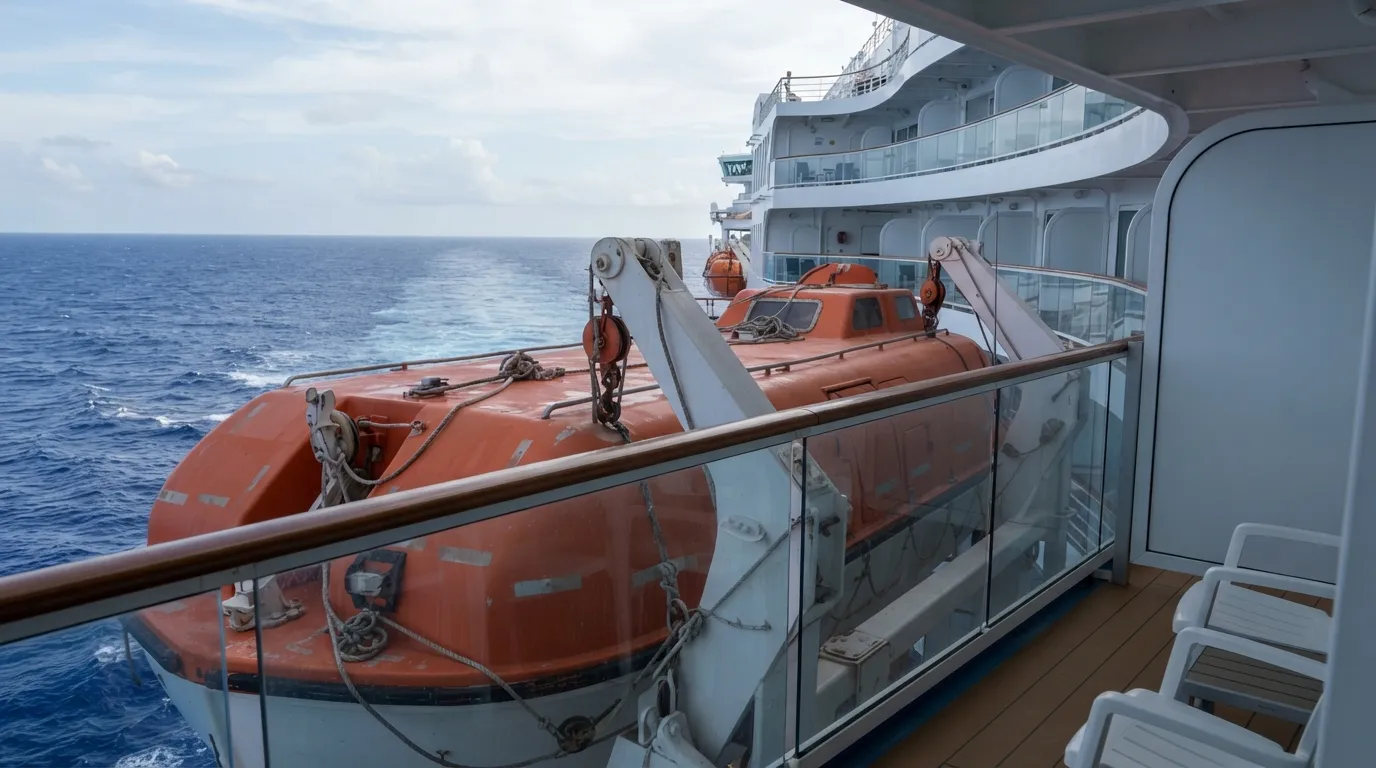
An obstructed-view balcony can cost less than a clear-view one, and the savings are easy to like. Plans label the specific rooms affected by lifeboats or other structures.
Still, the real sightline often only sinks in once you step out and look. You have a view, just maybe not the one you pictured. Unobstructed categories on the same deck remove that surprise.
#7 – Midship High Deck for Convenience
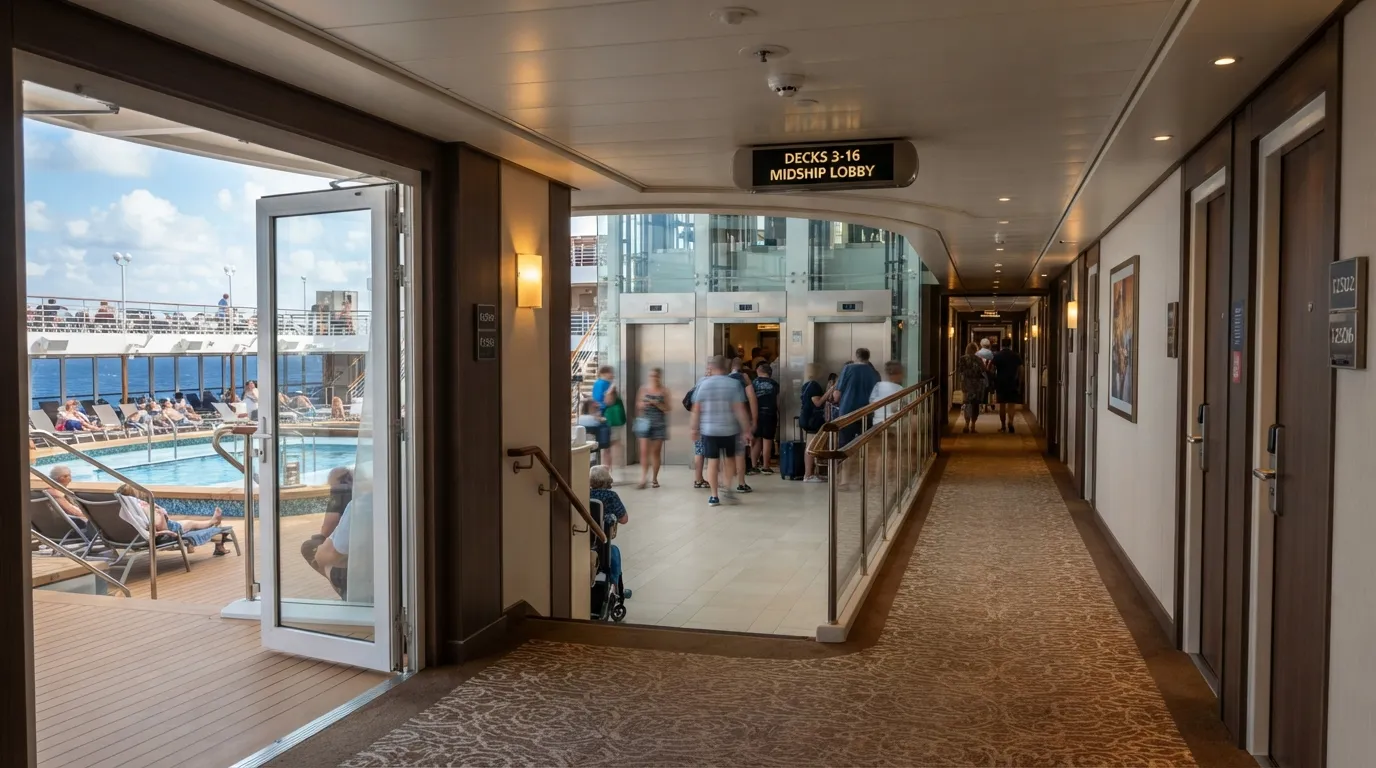
High midship cabins sit near central elevators and upper venues, so they feel like the best of both worlds. Plans show they experience more vertical motion than lower rooms in the same section.
Wind exposure on nearby open decks can also increase. The convenience holds, but the motion profile changes. Lower midship rooms often moderate that effect while keeping reasonable access.
#6 – Cabin Next to a Service Area
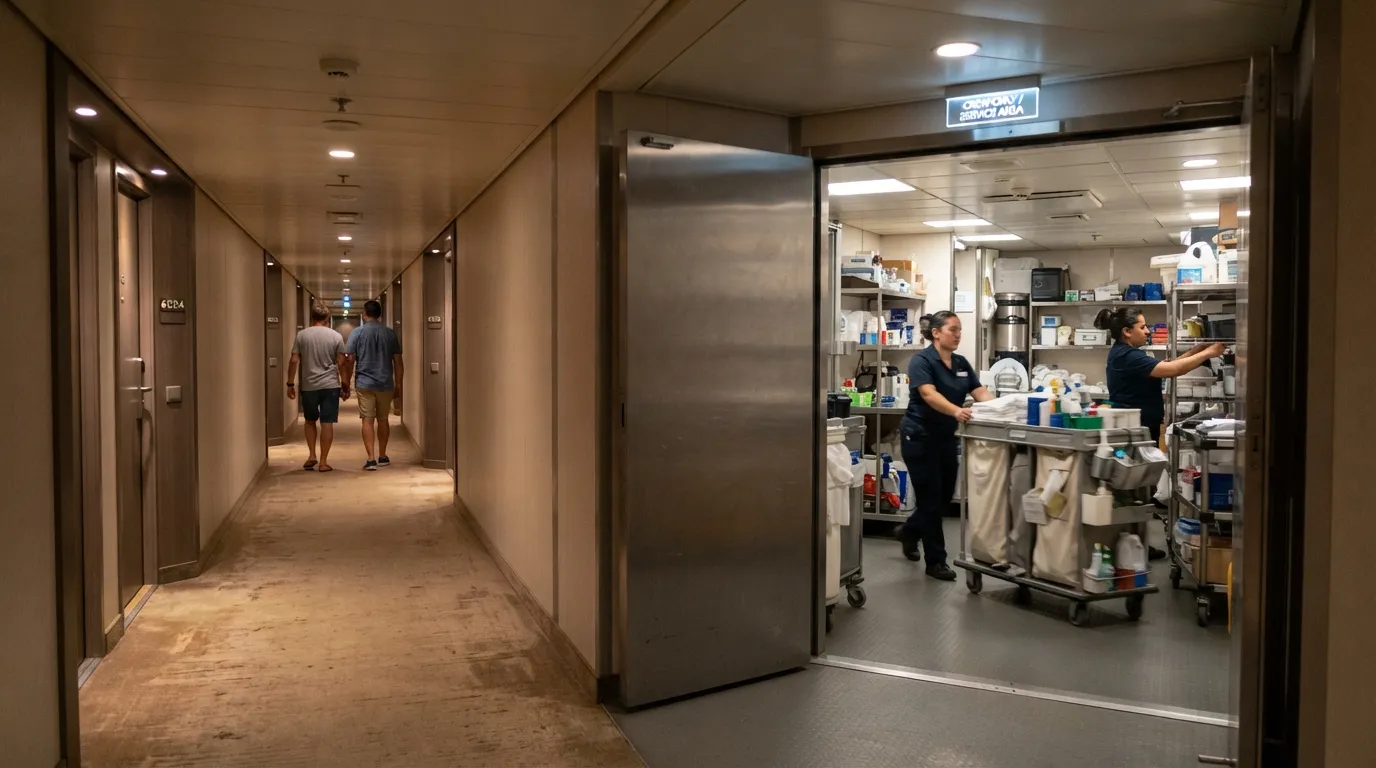
Some deck plans put cabins near crew corridors or storage, and on certain ships that can mean shorter internal routes. But foot traffic and operational sounds can differ from a purely residential stretch.
The shortcut may come with a soundtrack, and you won’t know the real activity level until the first night. Pure cabin corridors on either side typically limit those unknowns.
#5 – Aft Cabin Above Late-Night Venues
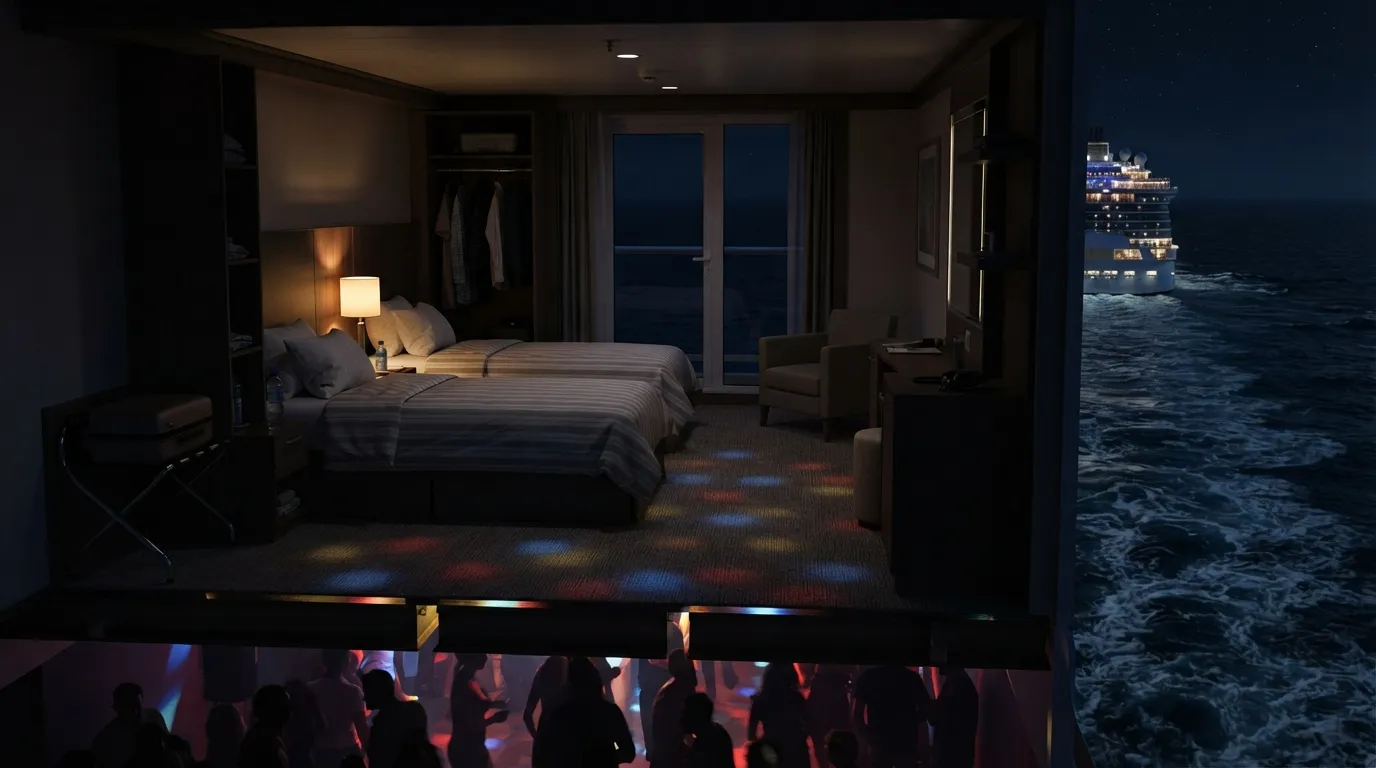
Aft cabins near dining rooms or lounges shorten the walk home at night. Plans place some of them directly above performance or bar spaces.
Sound from below can carry upward depending on the venue’s schedule. The access benefit is real while the venues are operating, but overnight can feel different. Residential buffers on other decks alter that profile.
At a Glance
- Below: Look for lounges, bars, or show spaces on the deck underneath.
- Above: Check what occupies the deck overhead.
- Beside: Note stairwells, elevators, and service doors on the same deck.
- Venue hours: A space that is quiet by day may not stay that way at night.
#4 – Inside Cabin on a High Passenger Deck
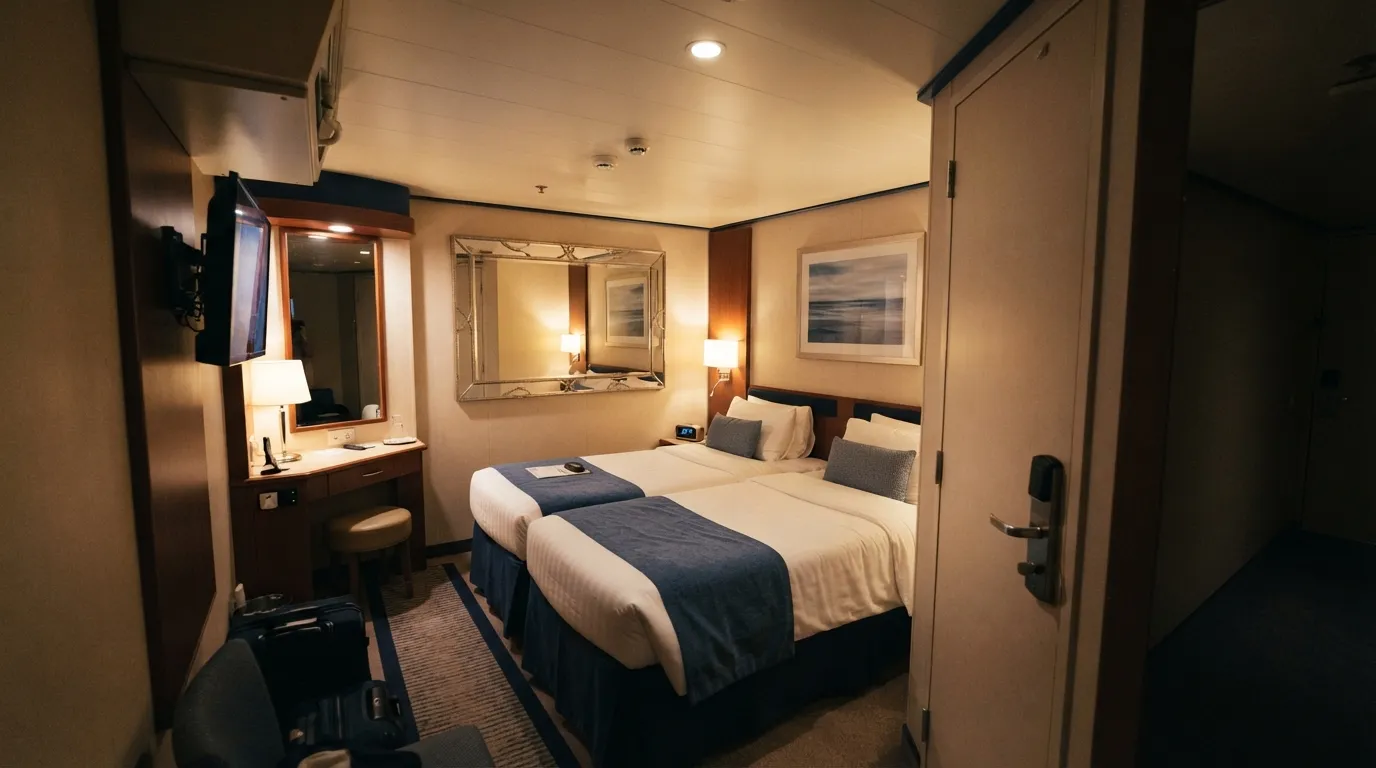
High inside cabins skip exterior weather worries. Plans show they can sit closer to upper public areas and the activity that comes with them.
Motion may still register more than on lower decks. The enclosed feel is the same, but the overall environment isn’t identical to a lower inside room. Lower inside cabins often add more separation from top-deck noise.
#3 – Forward Cabin Near Observation Areas
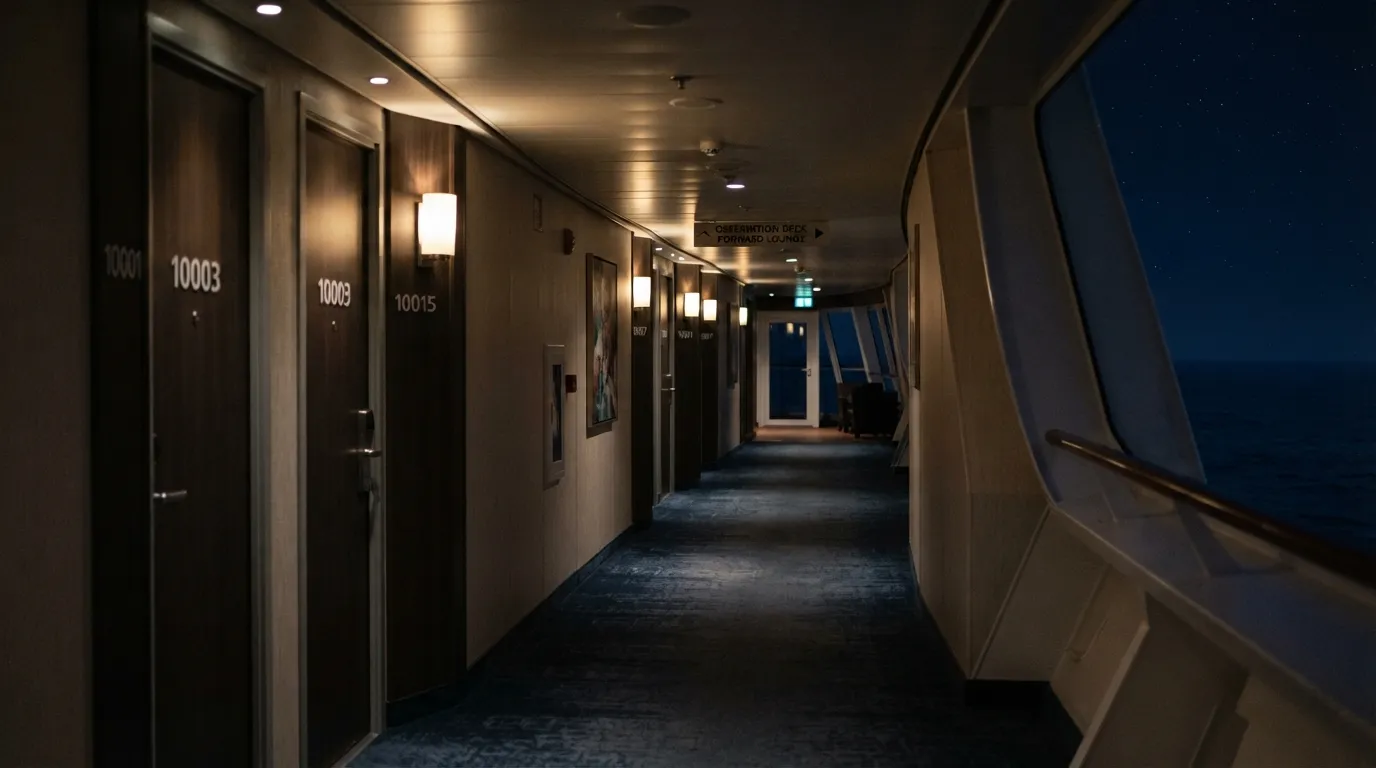
A forward cabin near lounges or observation spaces puts the view minutes away. Plans also indicate proximity to bow operations and potential thruster noise during docking.
The scenery is close, and so is the machinery. By day the location shines, but overnight quiet depends on exactly which spaces sit next door. Midship placement shifts the balance away from bow-specific factors.
#2 – Balcony Cabin Directly Under Sports Deck
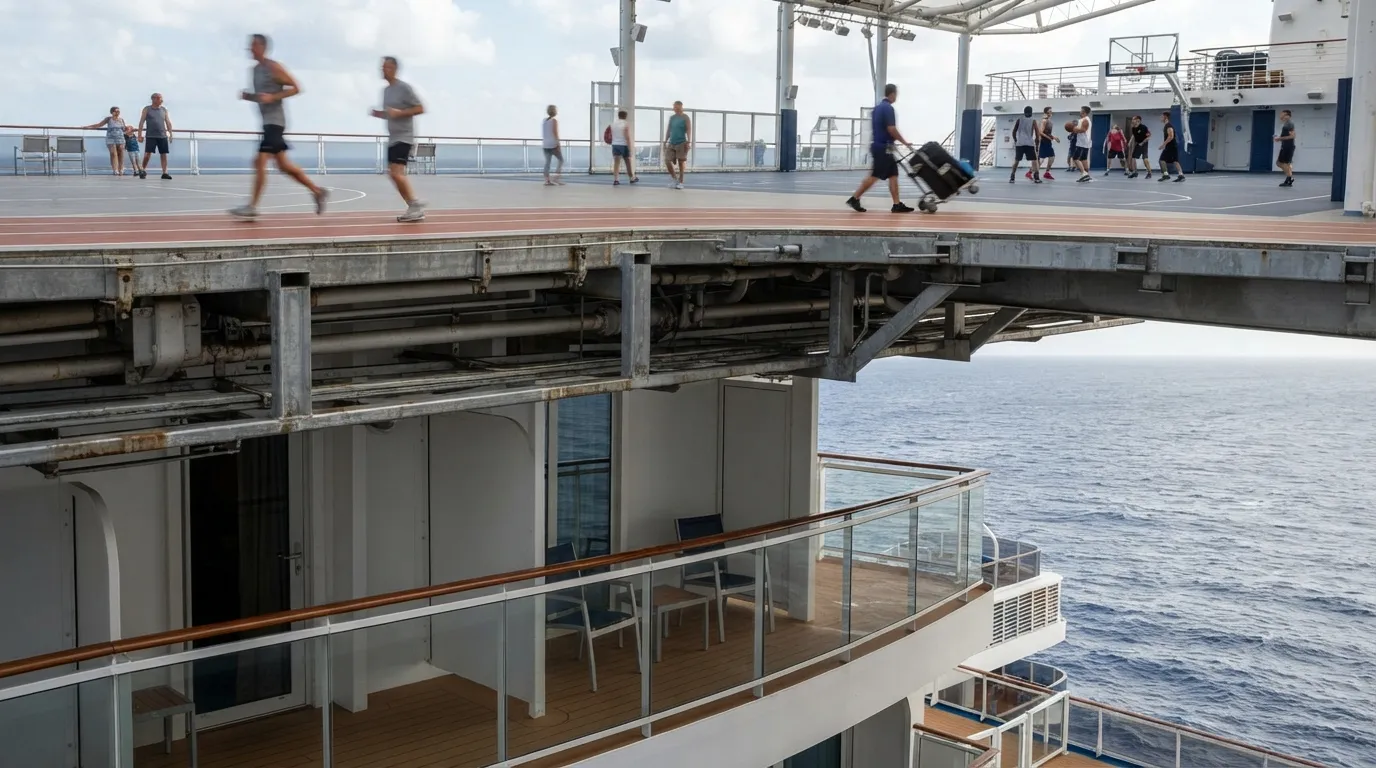
Upper balcony cabins near sports areas feel lively and convenient. Plans frequently position some beneath fitness or court spaces.
Impact sounds and early setup can transmit downward. The balcony is exactly what you booked, but the ceiling above it is the question. Lower balcony decks with cabin buffers above reduce that specific exposure.
#1 – Midship Cabin on a Middle Passenger Deck
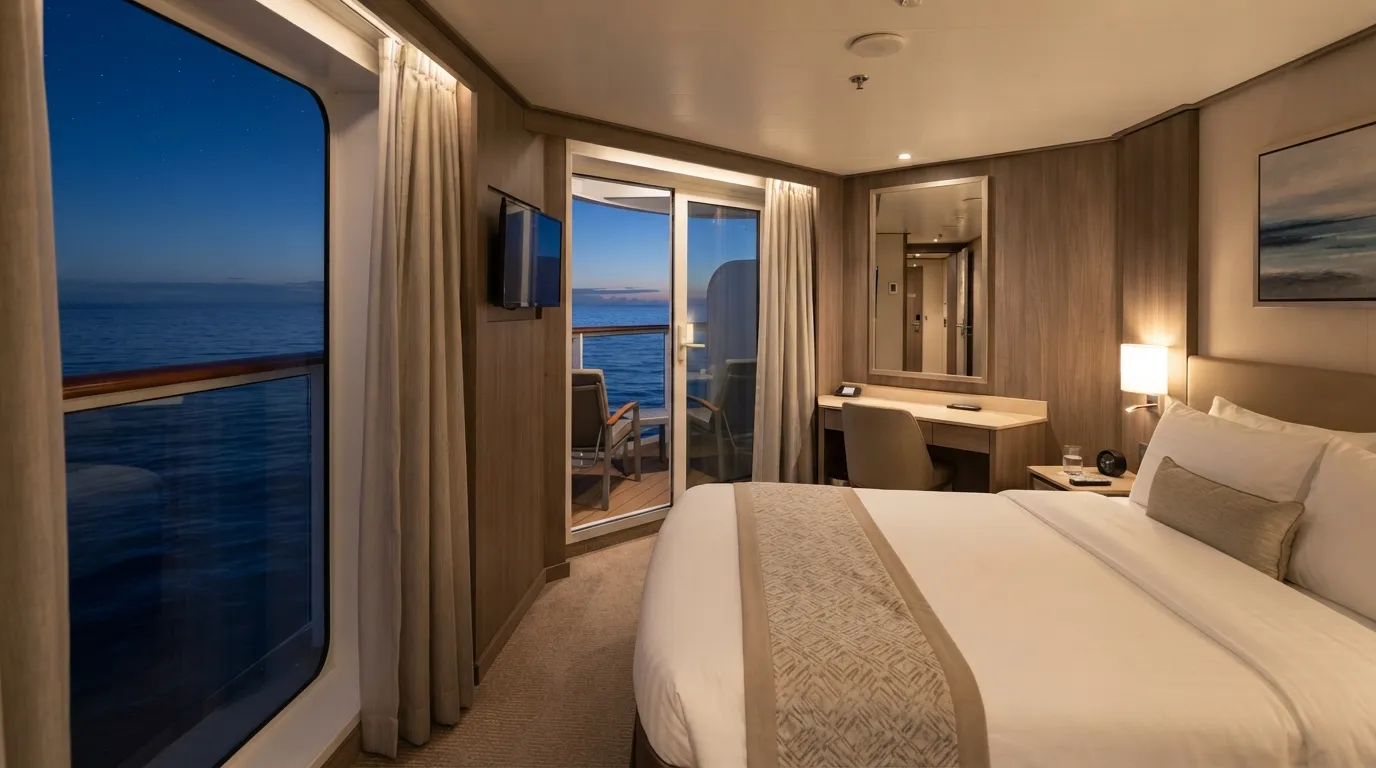
Midship middle-deck cabins show up on plans as a frequent default recommendation, and there’s a reason. They sit nearer the ship’s center, with cabins above and below on many vessels.
Motion registers less than at the ends, and walking distances balance out across venues. The first night often confirms steadier conditions compared with end placements. Multiple deck plan reviews point to this setup for fewer extremes in both movement and noise adjacency.
Why It Stands Out
- It sits closer to the ship’s center, where motion tends to be gentler.
- Cabins above and below can act as a buffer on many ships.
- Walking distances to dining, shows, and elevators stay balanced.
- It avoids end-specific factors like bow thrusters and aft vibration.
Across all 17, the same four forces keep showing up: motion, noise next door, walking distance, and the view. Midship lower-to-middle decks with cabins above and below often minimize several of them at once, while the forward and aft ends bring their own motion or vibration tradeoffs, depending on the ship.
The best fix is simple: check the exact cabin number against the current plan for what’s above, below, and beside it before you book. Did we miss one? Drop it in the comments.
CEO-Co-Founder