
- 15 Hotel Breakfast Charges Guests Can Avoid by Checking the Rate Plan - October 24, 2026
- 17 Shoulder Season Travel Rules for Sudden Weather Changes - October 24, 2026
- 18 Hotel Arrival Rules That Prevent Expensive Check-In Problems - October 24, 2026
Most people picture weapons when they think of airport confiscations, but plenty of ordinary items end up in the checkpoint bin.
The reasons are rarely random, and the fixes are usually simple. A few items on this list still catch frequent flyers off guard.
#16 – Full-Size Water Bottles
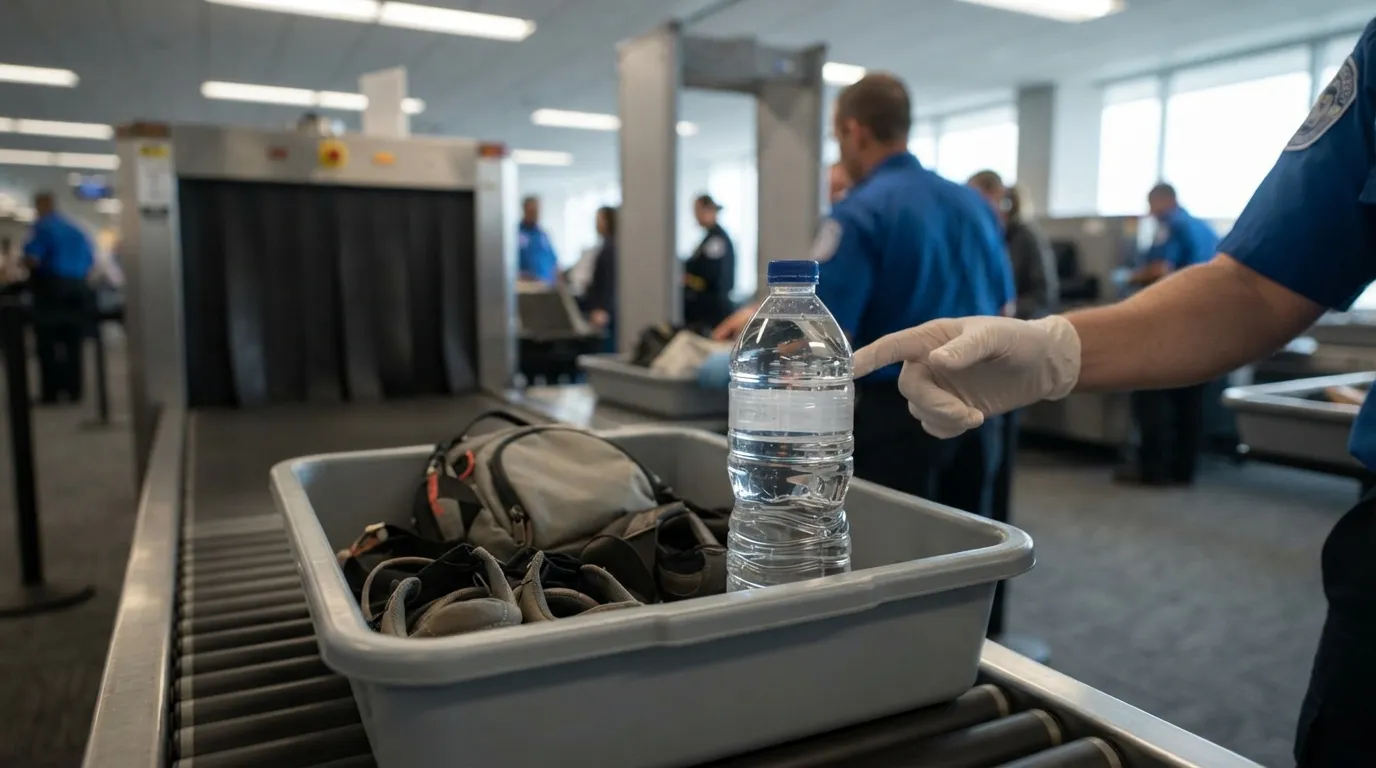
Filled water bottles are the classic checkpoint casualty. TSA’s 3-1-1 rule limits carry-on liquids to containers of 3.4 ounces or less, so a standard bottle of water doesn’t qualify.
Empty it before you reach the bins, then refill at a fountain or filling station past security. An empty reusable bottle sails through, which makes this the easiest confiscation to dodge.
But the next one hides in your toiletry bag…
#15 – Oversized Shampoo and Conditioner Bottles
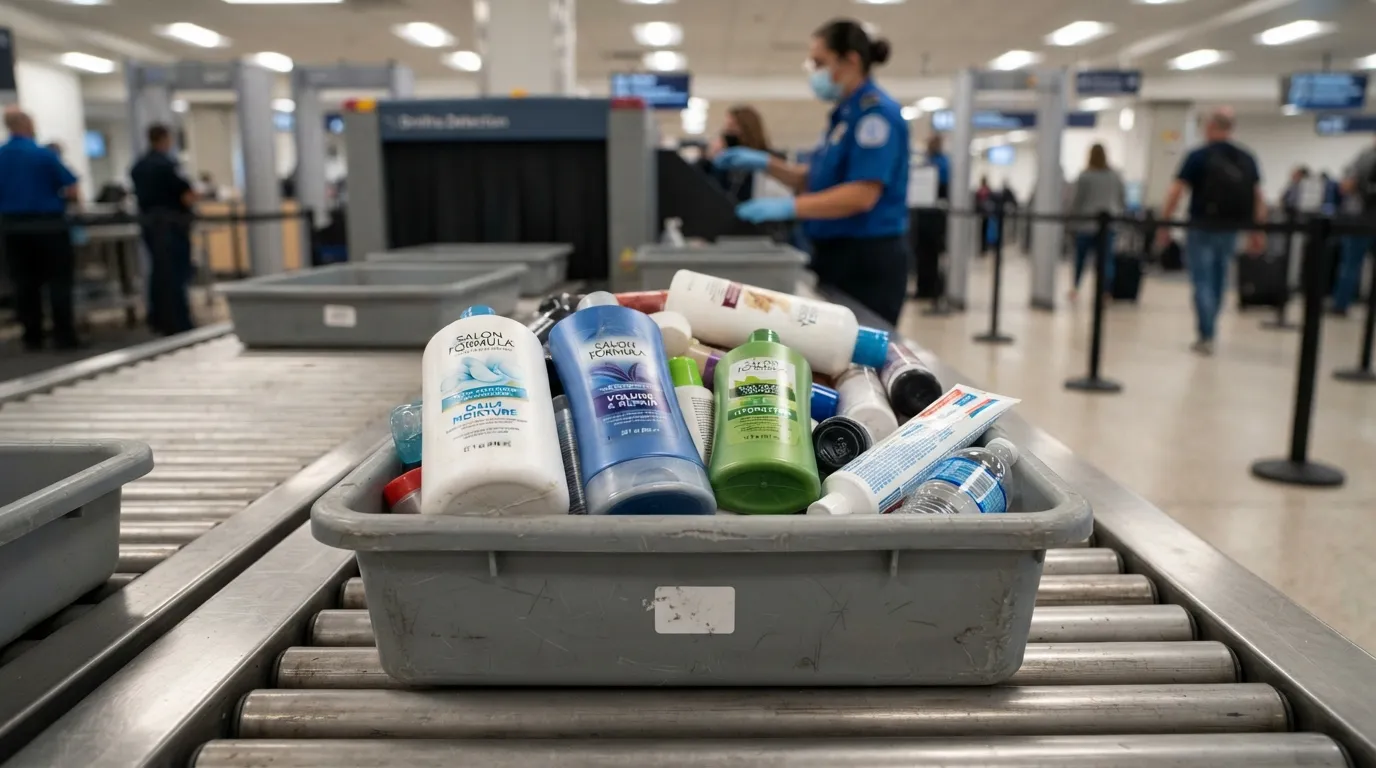
Full-size shampoo and conditioner bottles run far past the 3.4-ounce limit. They also rarely fit the single quart-size bag TSA allows for liquids, gels, and aerosols.
Solid shampoo bars, travel-size bottles, or small refillable containers keep your routine intact. The limit applies to container size, so a half-empty big bottle still gets stopped.
#14 – Pocket Knives of Any Blade Length
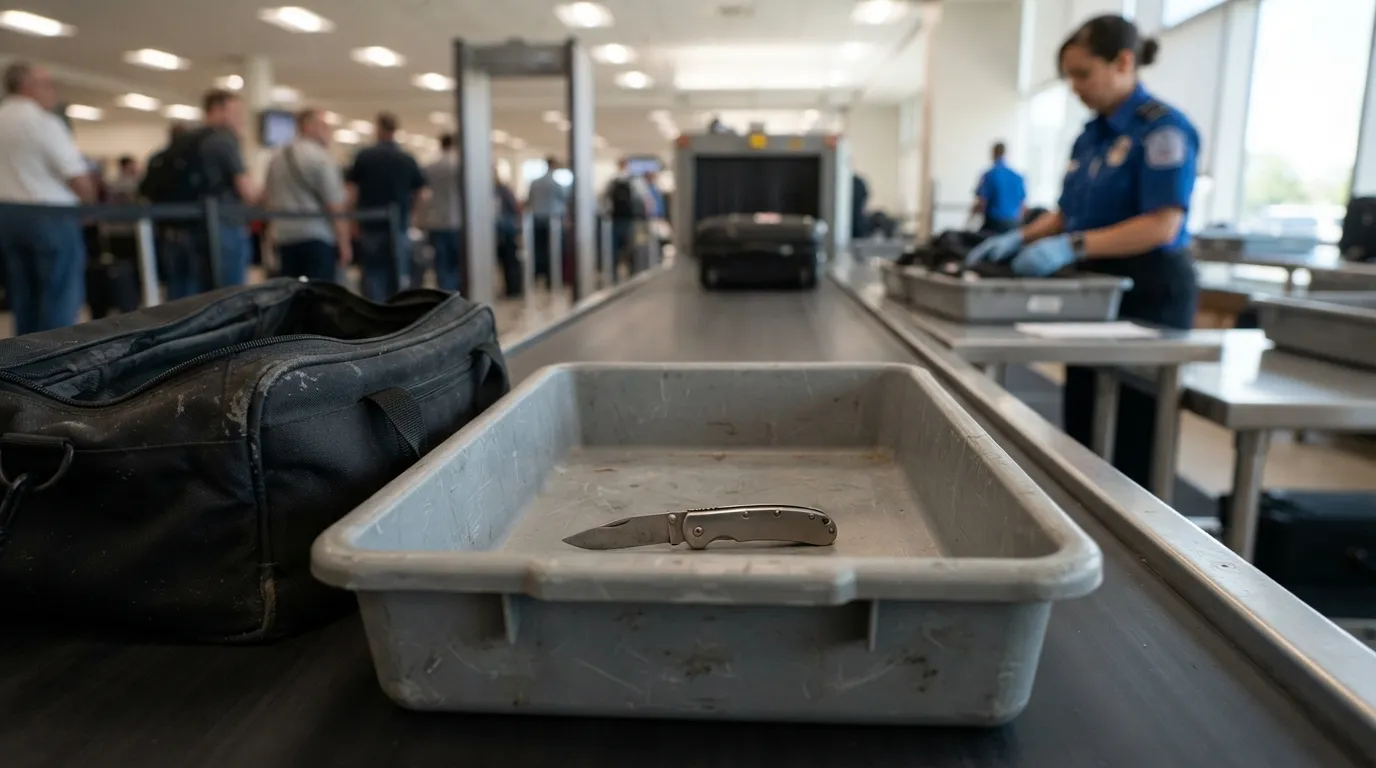
A tiny pocket knife is still a knife. TSA doesn’t allow knives in carry-on bags regardless of blade length, with narrow exceptions such as plastic or round-bladed butter knives.
If you want it at your destination, pack it in checked baggage, sheathed or wrapped. Multi-tools with a knife blade follow the same rule. The usual culprit is a knife forgotten at the bottom of a bag.
#13 – Scissors With Long Blades
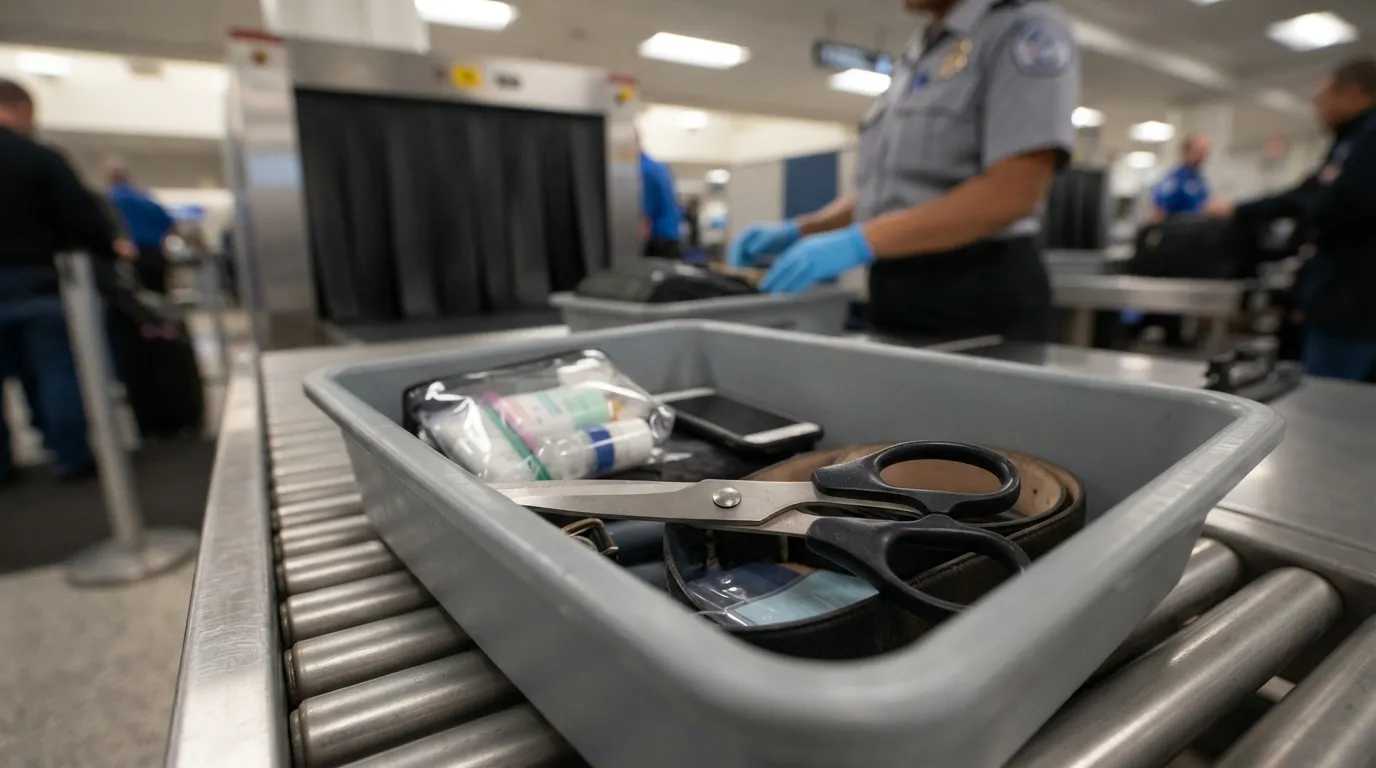
Scissors are one of the few sharp items with a real carry-on exception. TSA allows scissors with blades shorter than four inches, measured from the pivot point.
Anything longer has to go in checked baggage. Small travel scissors or blunt-tipped craft scissors under that limit are the simple workaround.
At a Glance: Size Limits That Matter
- Scissors: blades shorter than 4 inches from the pivot point
- Tools such as wrenches and pliers: 7 inches or shorter, end to end
- Knives: not allowed in carry-ons, apart from plastic or round-bladed butter knives
- Anything over the limit: checked baggage, wrapped or sheathed
#12 – Wine Openers With Built-In Blades
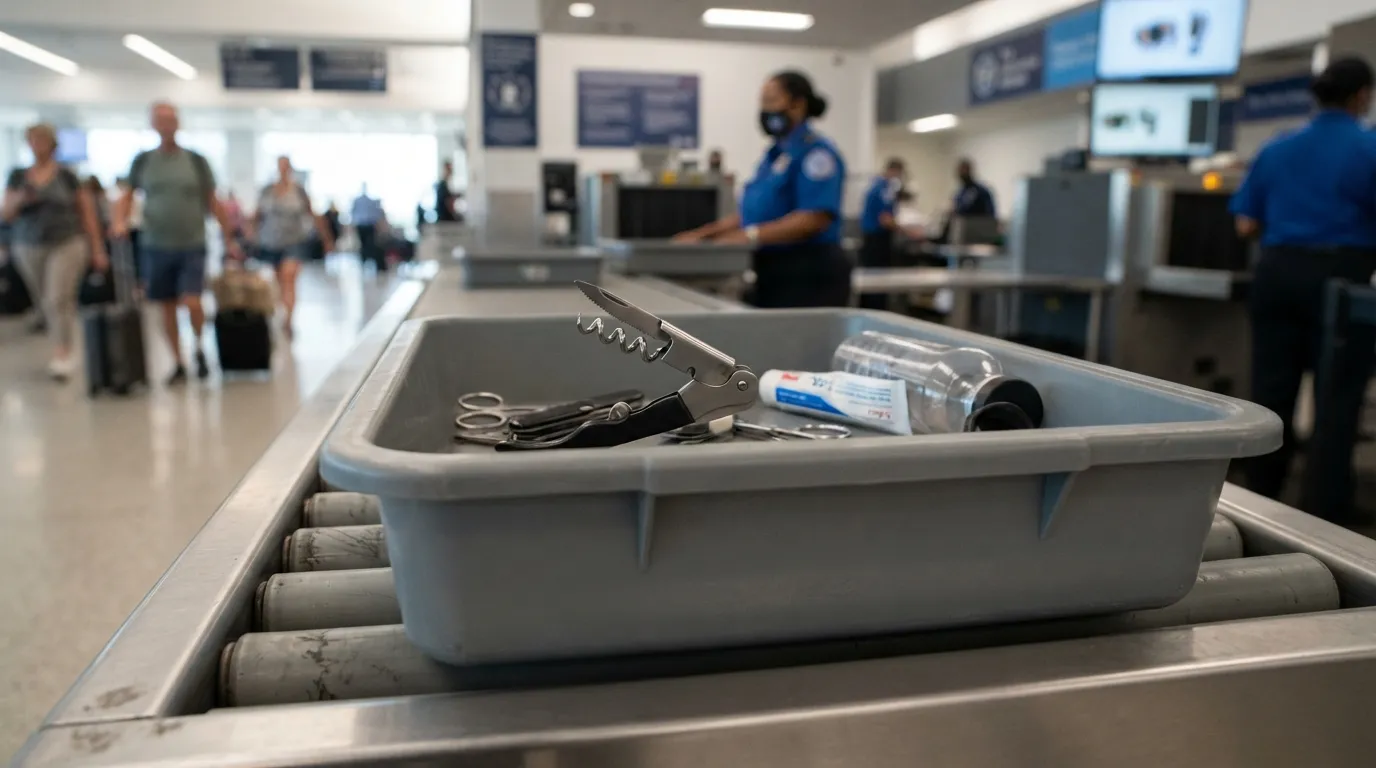
A basic corkscrew is generally fine under TSA guidance, but many wine keys include a small foil-cutting blade. That blade can make the whole tool count as a knife.
If yours has one, put it in checked baggage or buy a bladeless opener for the trip. Officers make the final call at the checkpoint, so a vacation souvenir can still get pulled.
#11 – Wrenches and Pliers Over 7 Inches
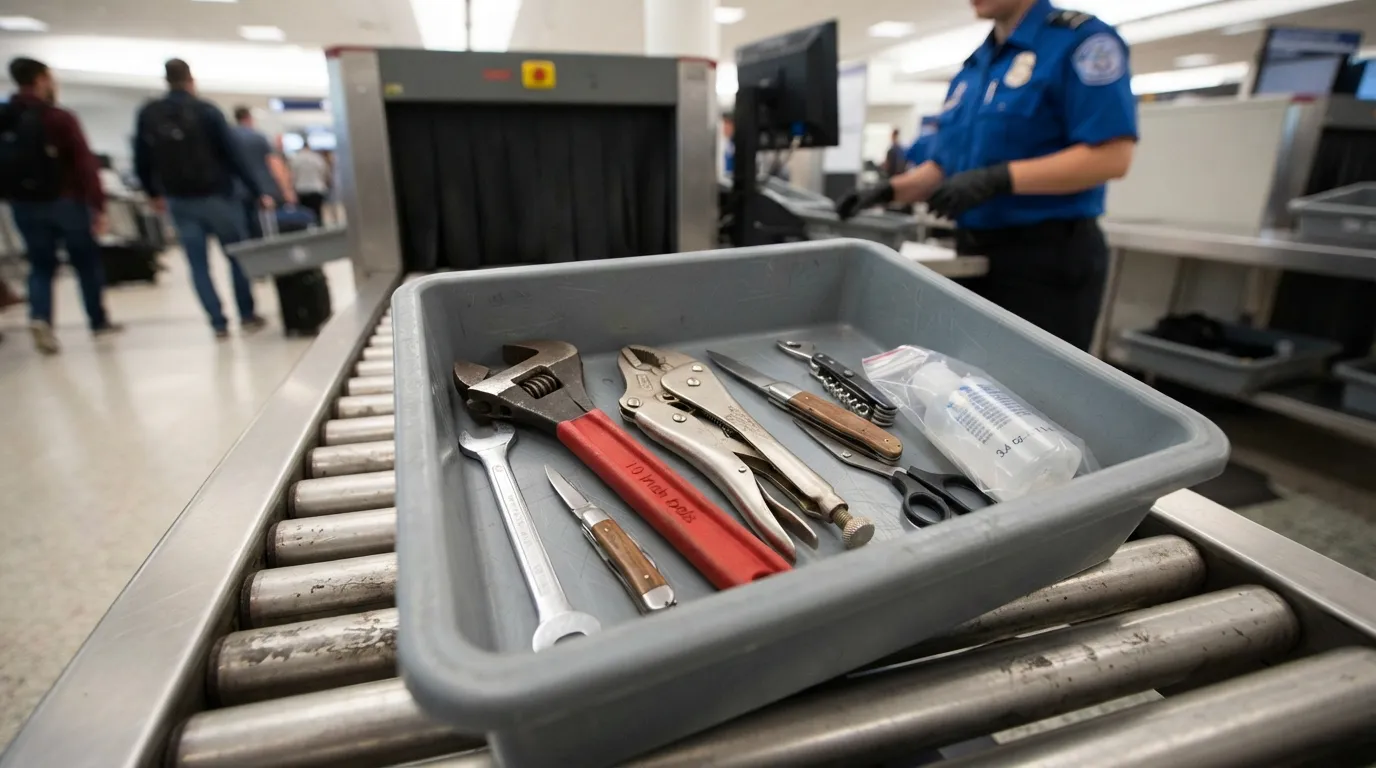
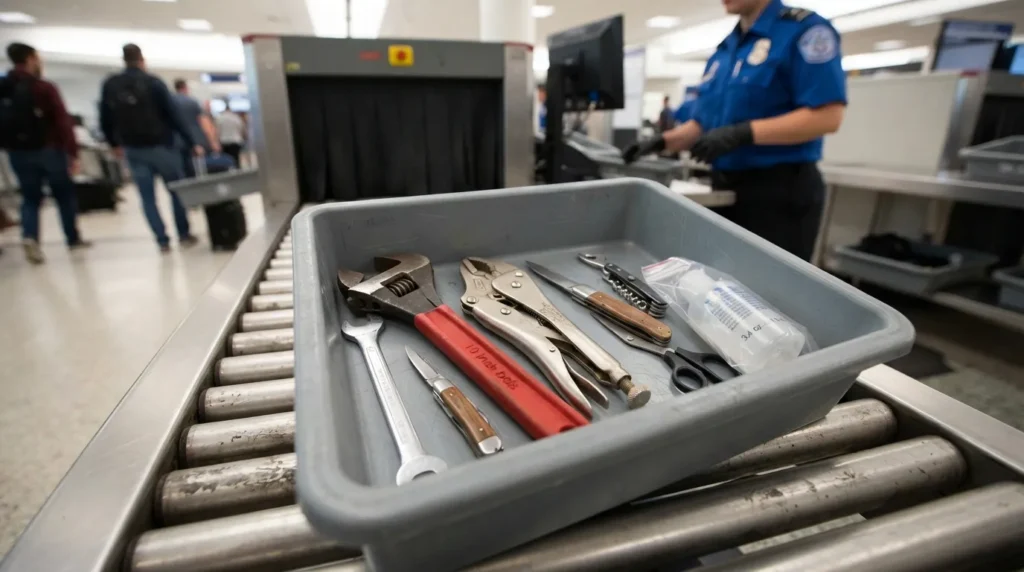
Small tools can ride in carry-on bags, but only up to a point. TSA allows tools 7 inches or shorter, measured end to end, and longer wrenches and pliers are prohibited.
Move full-size tools to checked baggage. Pack a compact tool that fits the 7-inch limit if you need something with you in the cabin.
#10 – Hammers
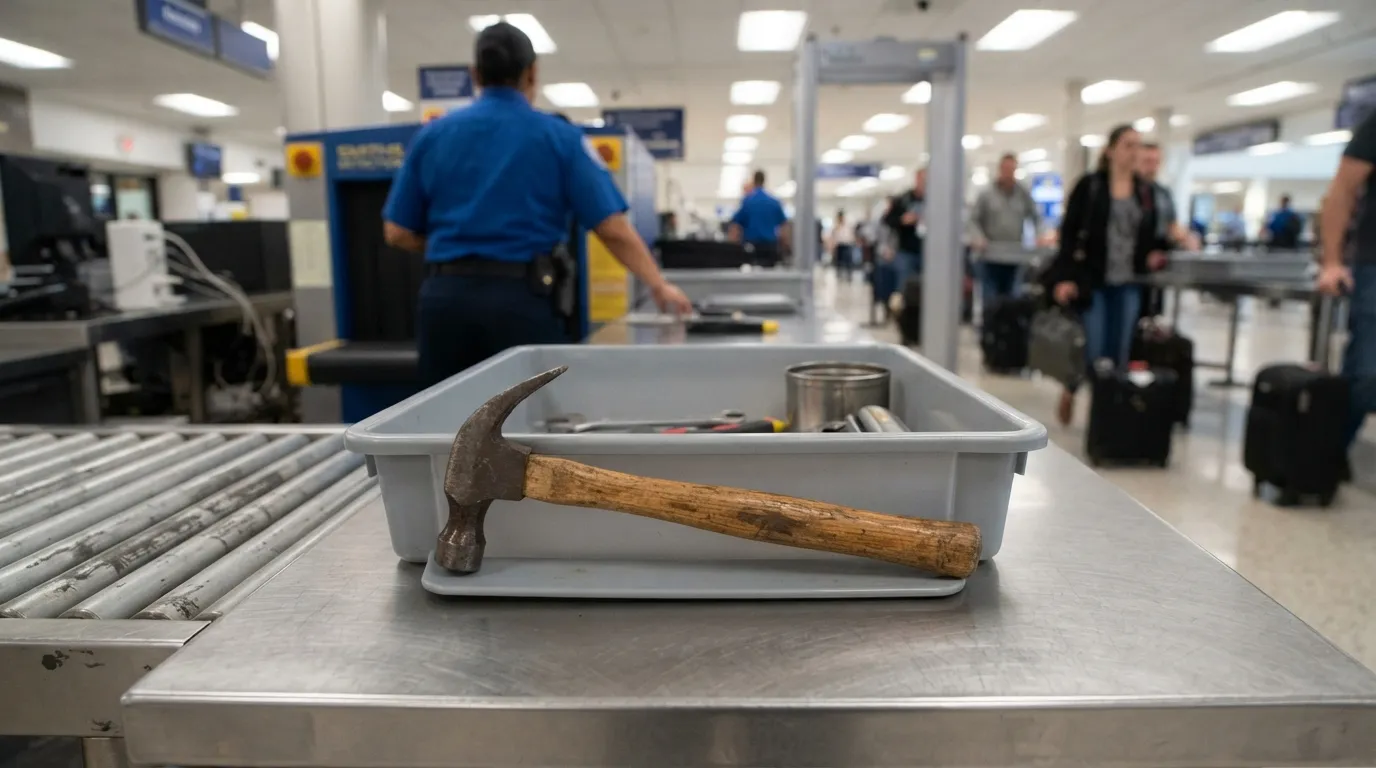
A hammer can look harmless in a toolbox, but TSA does not allow hammers in carry-on bags. Officers treat them as heavy tools that could be swung as a blunt object.
The solution is checked baggage. If a hammer is part of a larger home-project kit, check the whole toolbox and keep only small, compliant tools with you.
The next two items sound dramatic, but they show up in luggage more than you’d think…
#9 – Axes and Hatchets
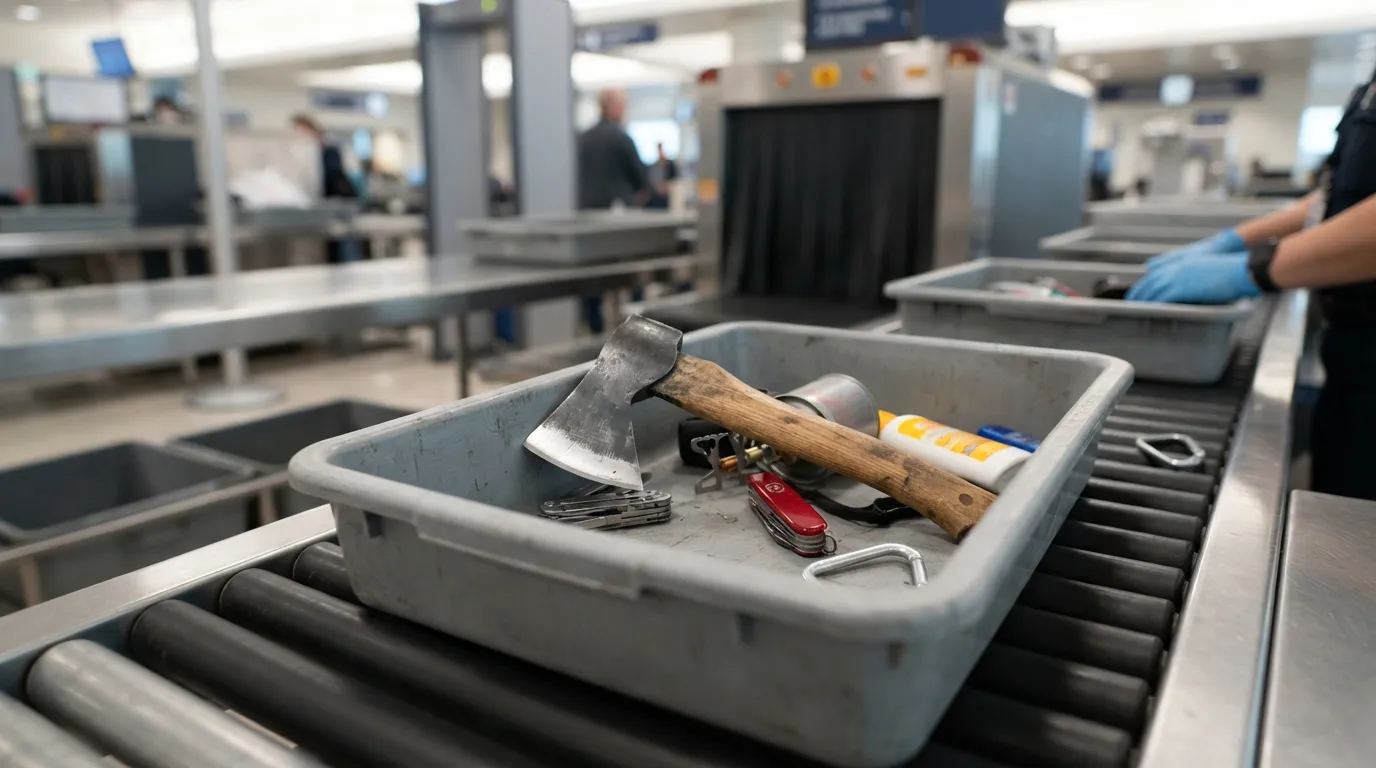
Camping trips lead to some of the most surprising bag discoveries. TSA does not allow axes or hatchets in carry-on baggage because of their large, sharp cutting edges.
They’re allowed in checked baggage when the blade is properly covered. Check the camping bag before you leave for the airport, not at the checkpoint.
#8 – Spray Paint and Other Flammable Aerosols
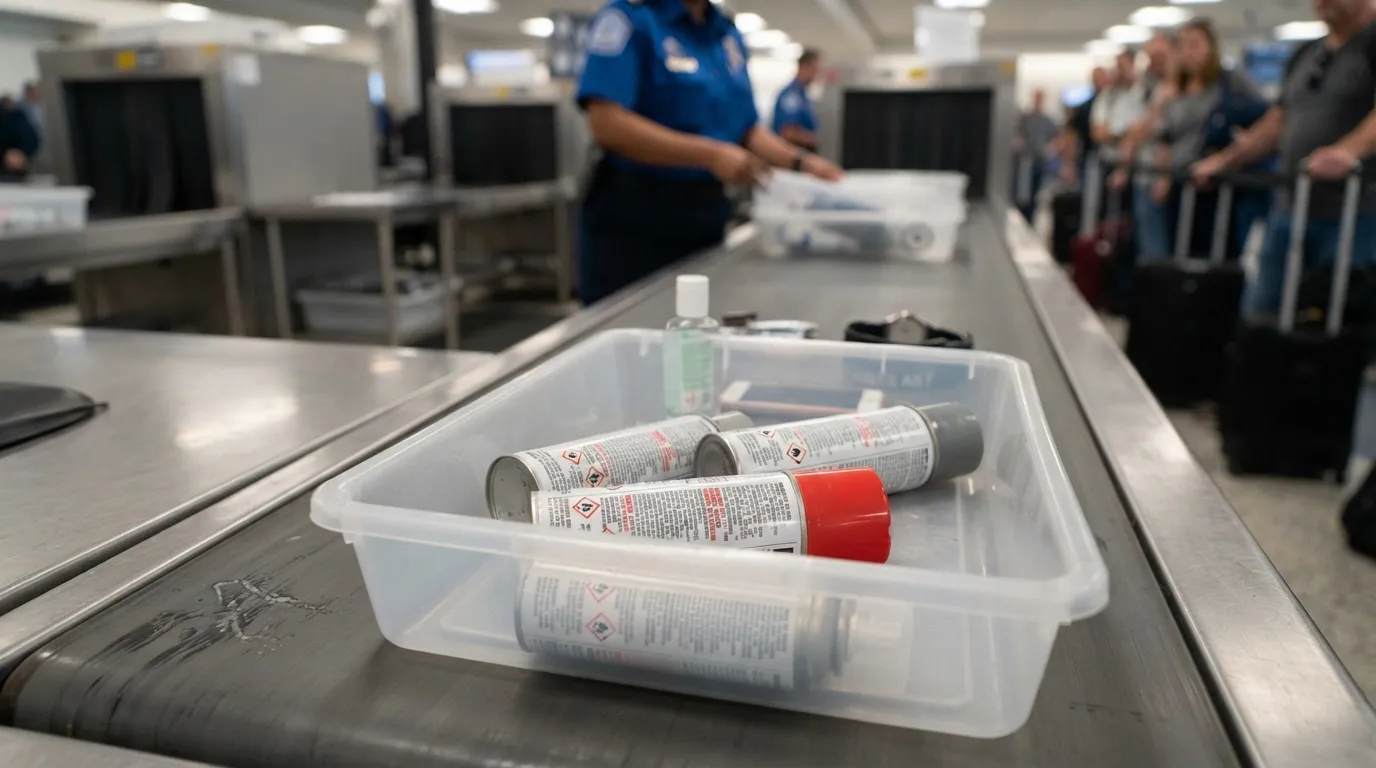
Ordinary toiletry aerosols like hairspray are allowed in carry-ons if they’re 3.4 ounces or less. Flammable aerosols such as spray paint are a different story, because hazardous-materials rules generally bar them.
Check TSA’s “What Can I Bring?” tool for the specific product. Often the best fix is buying paint or similar supplies at your destination or shipping them ahead.
#7 – Peanut Butter and Other Spreads
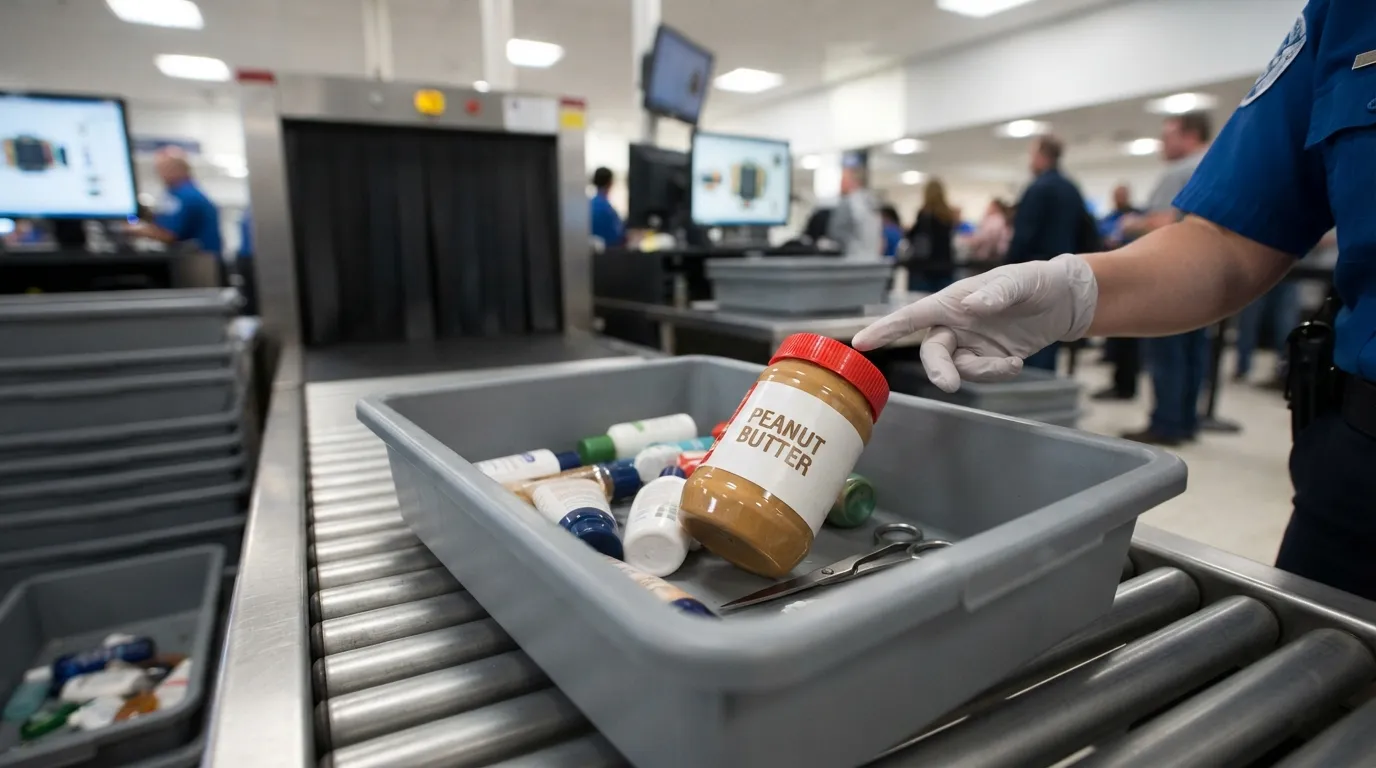
Peanut butter surprises people because it’s food. TSA treats spreadable foods as liquids and gels, so a jar over 3.4 ounces can’t go in a carry-on.
Put big jars in checked baggage, or bring single-serve packets within the limit. A peanut butter sandwich, already spread, avoids the problem entirely.
Worth Knowing: The 3-1-1 Rule in Brief
- 3: each container holds 3.4 ounces or less
- 1: all containers fit in one quart-size, clear bag
- 1: each traveler gets one such bag
- Spreads, gels, and creams count, not just drinks and lotions
#6 – Toy Guns That Look Real
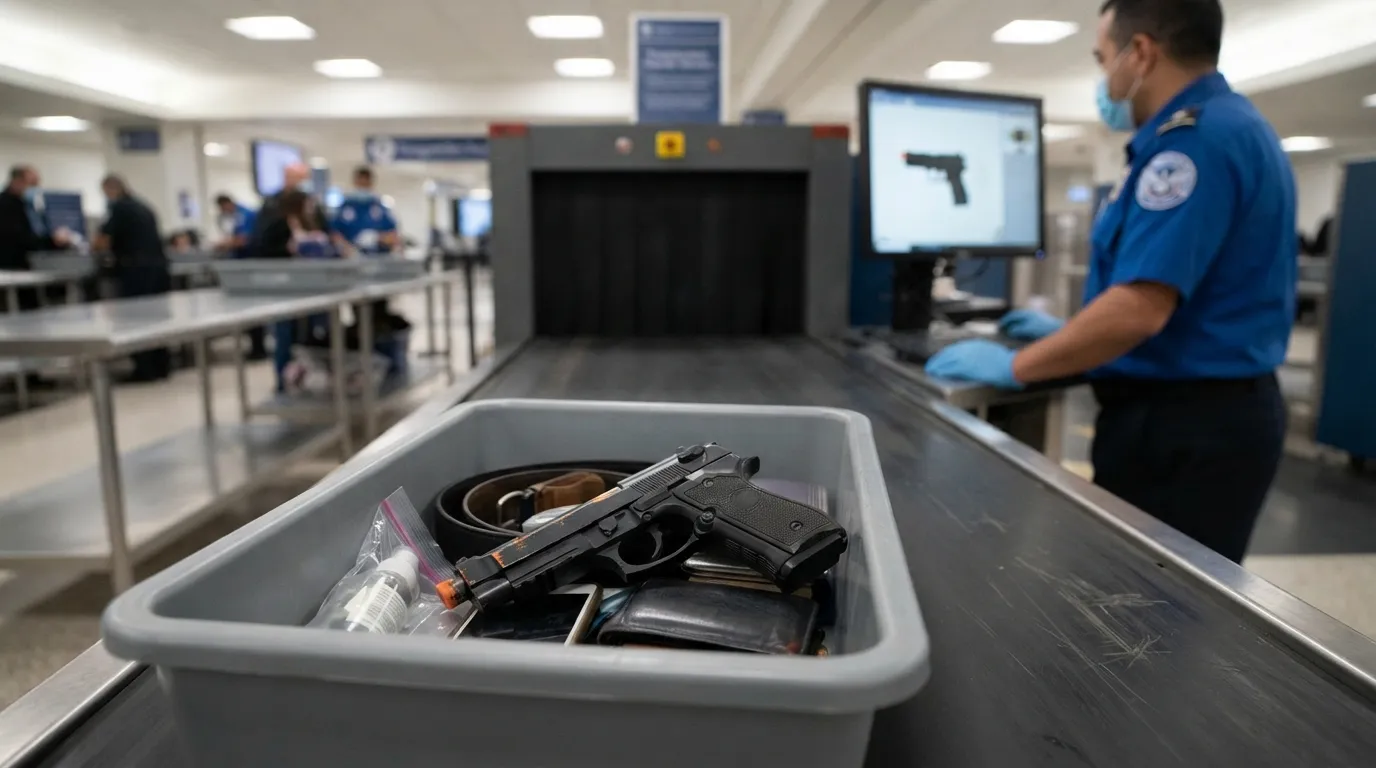
A toy can still look like a threat on an X-ray screen. TSA prohibits realistic replicas of firearms in carry-on bags, even when they’re clearly meant for play.
Leave realistic toys at home or ship them. Airlines may set their own rules for checked bags. Obvious costume props are not always a safe bet, because officers decide on the spot.
#5 – Box Cutters
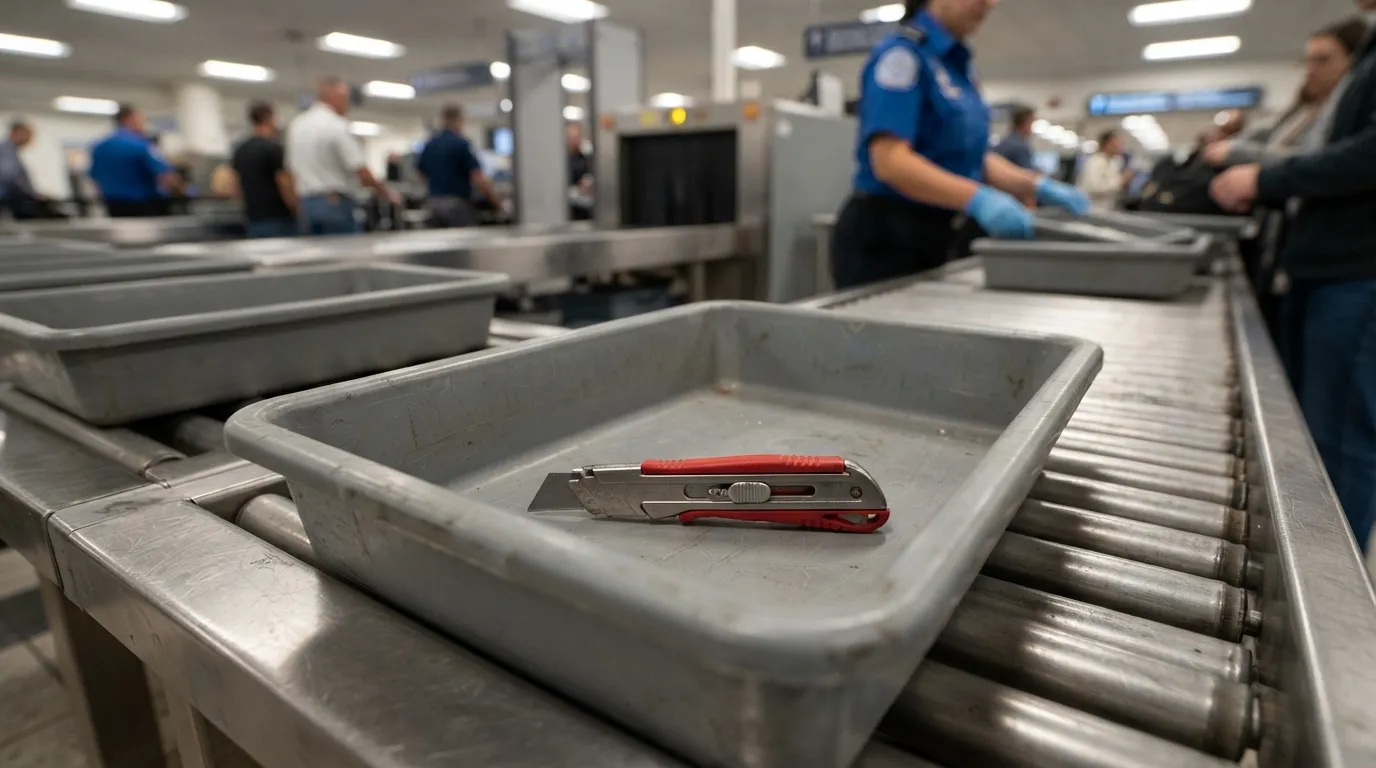
Box cutters often travel in bags for moving day or craft projects. TSA does not allow them in carry-ons because the blade can be exposed quickly.
Place them in checked baggage with the blade sheathed or wrapped. If you need to cut something on arrival, buy a cheap one at your destination.
#4 – Loose Razor Blades
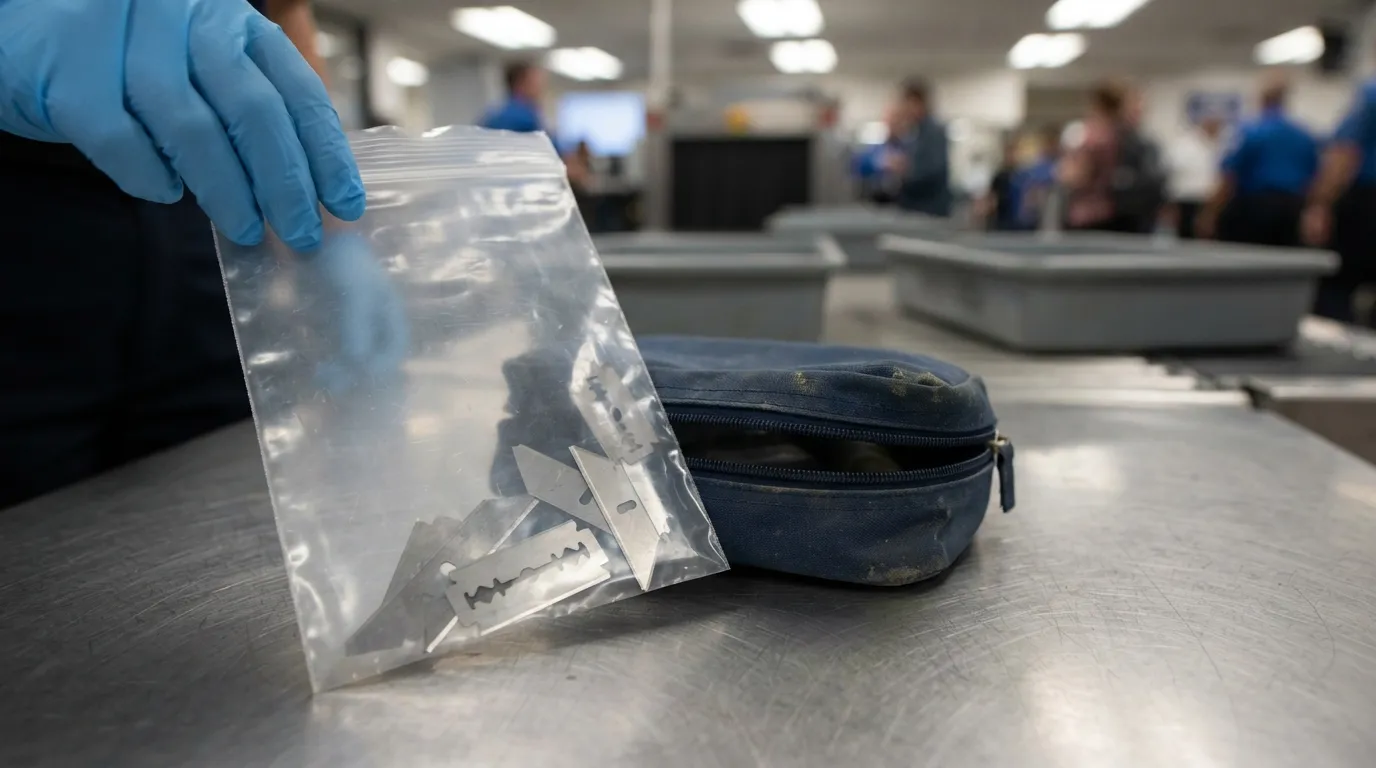
Razor-type blades such as loose razor, utility, and hobby blades are not allowed in carry-on bags. A forgotten spare in a toiletry kit is an easy mistake.
Safety razors with the blade fixed in a cartridge and disposable razors are the carry-on-friendly options. Wrap any spare blades well and put them in checked baggage.
The last three items can cause real trouble, not just a lost souvenir…
#3 – Undeclared Liquid Medications
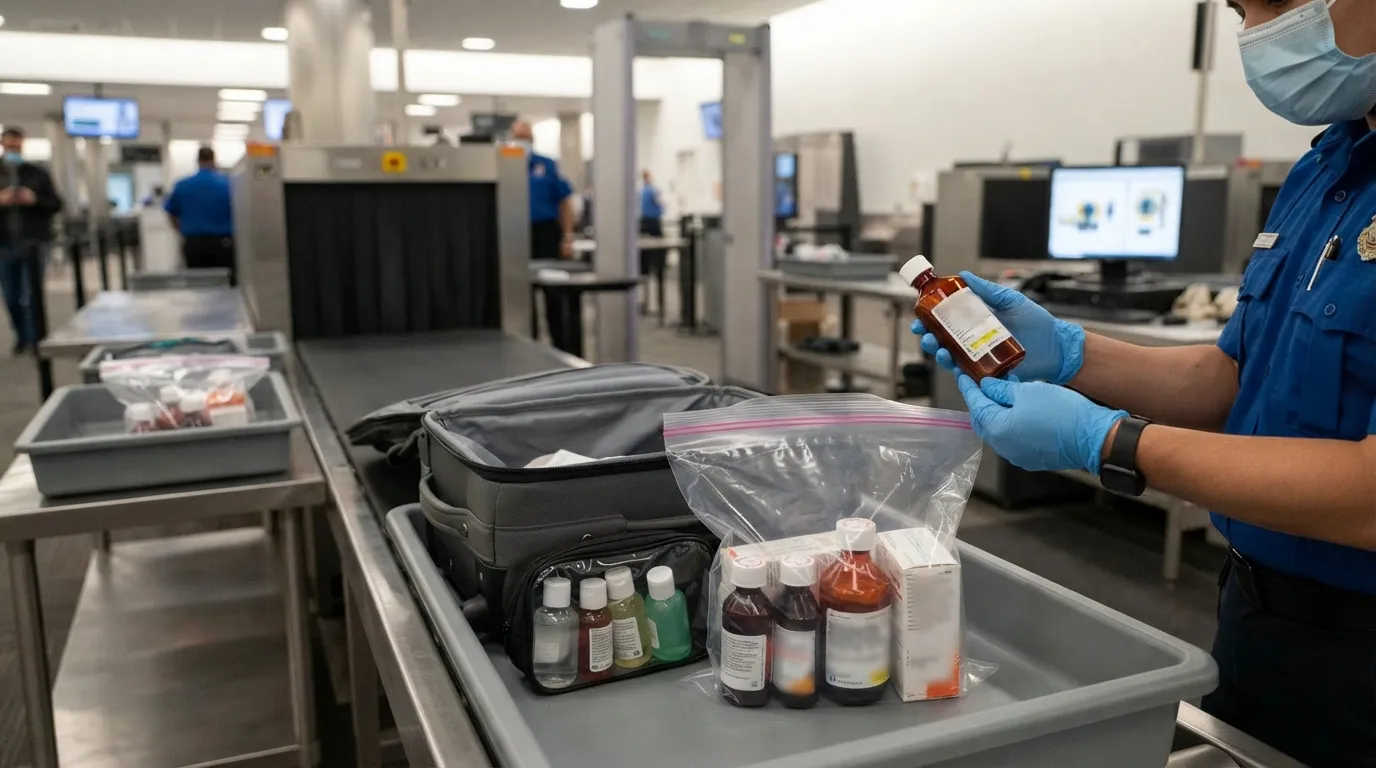
TSA allows medically necessary liquids in reasonable quantities above 3.4 ounces. The catch is that you need to declare them at the start of screening and keep them separate from your other liquids.
Officers may do additional screening of the medication. Declaring it up front prevents a confusing stop that can leave you without something you need.
#2 – Power Banks Over the Watt-Hour Limit
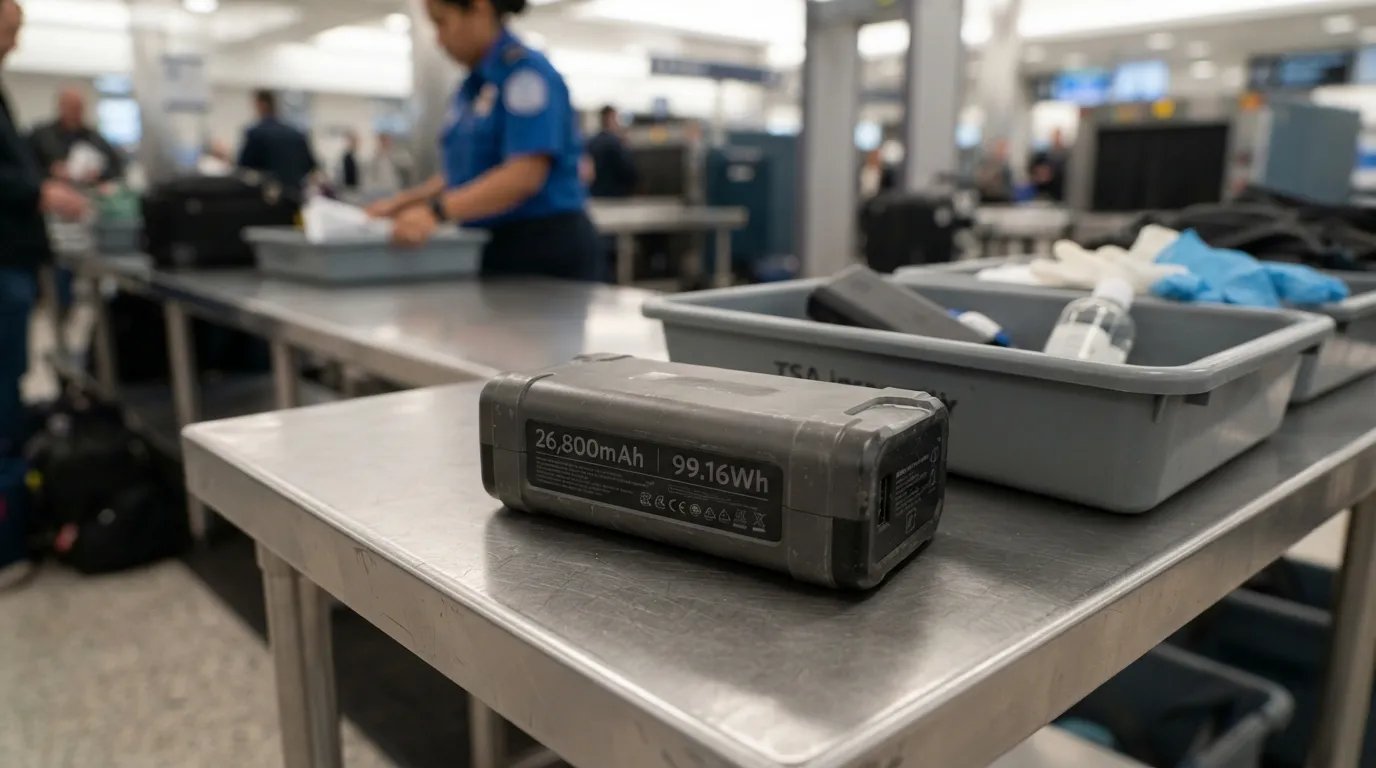
Power banks are everywhere, but their size matters. Under FAA and TSA guidance, spare lithium batteries of 100 watt-hours or less are generally allowed in carry-ons. Those between 101 and 160 watt-hours need airline approval, and larger ones are not allowed.
Look for the watt-hour rating printed on the battery. Check your airline’s policy for the quantity it allows.
Quick Compare: Battery Size Tiers
- 100 Wh or less: generally allowed in carry-ons
- 101 to 160 Wh: needs airline approval
- Over 160 Wh: not allowed
- Rating not visible: check the manufacturer’s specs before you pack
#1 – Spare Lithium Batteries in Checked Bags
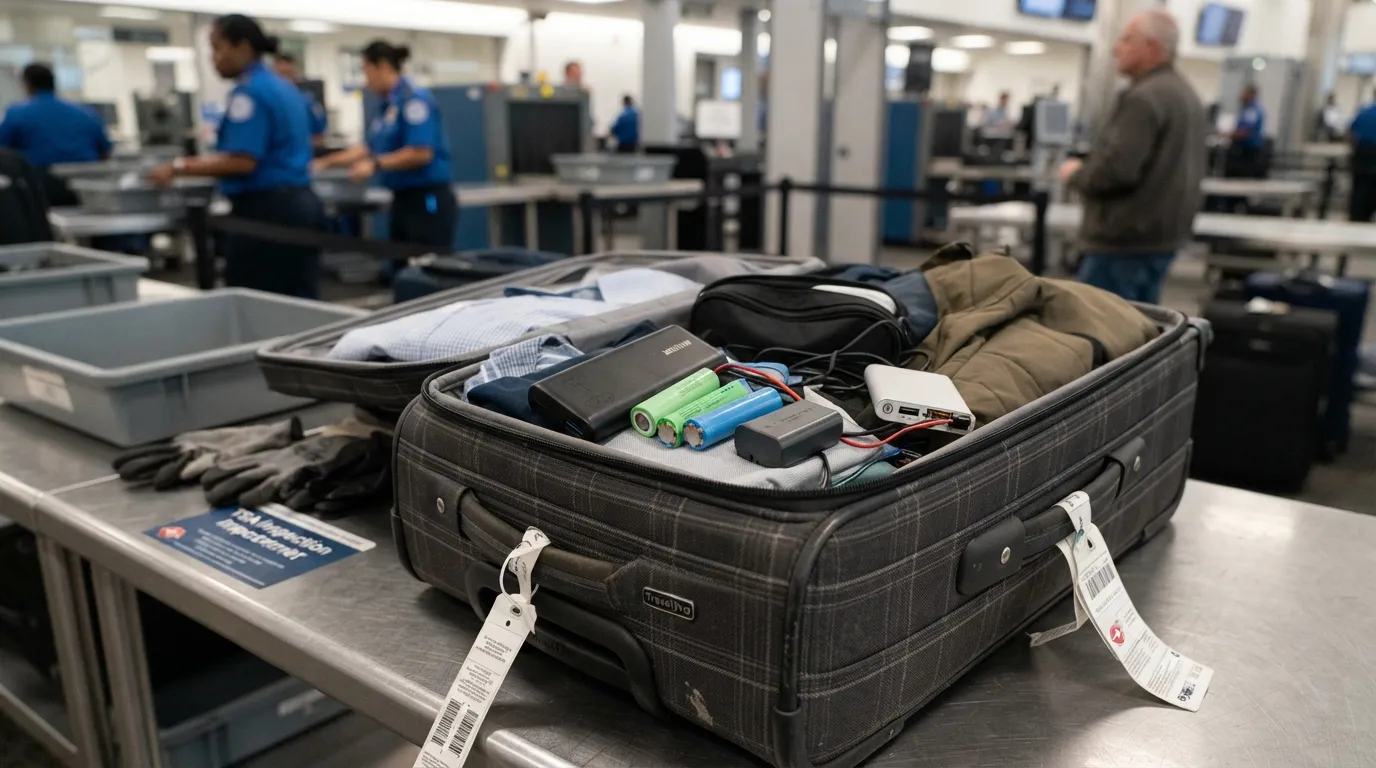
This is the one that can turn dangerous in flight. FAA and TSA rules require spare lithium batteries and power banks to travel in carry-on bags, because a fire in the cargo hold is much harder to reach.
Keep them with you and protect the terminals from short circuits, for example with tape or separate pouches. If your bag gets checked at the gate, take the batteries out first.
The Bottom Line
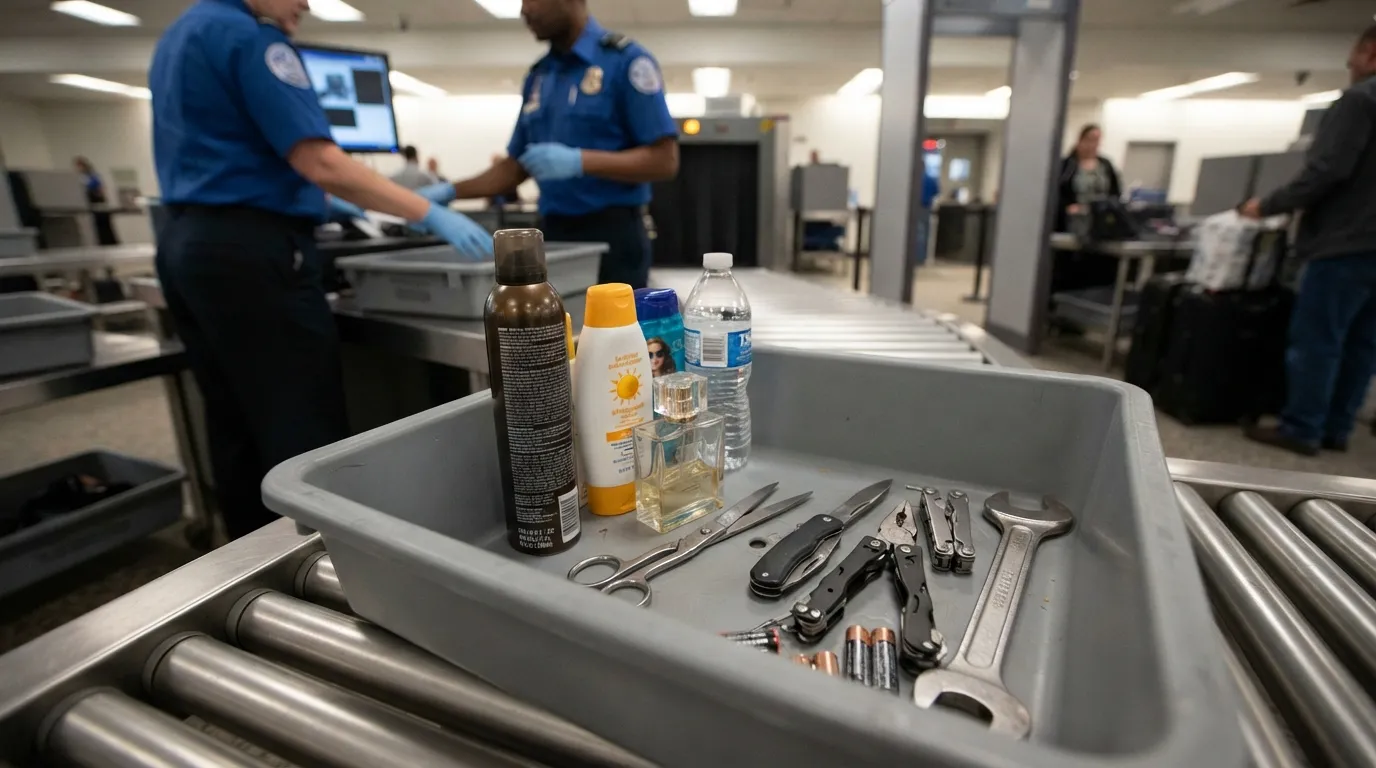
The pattern is simple. Liquids over 3.4 ounces, sharp objects, bulky tools, and batteries in the wrong bag account for most of the surprises on this list.
Checked baggage works for most restricted items, while travel-size containers, solid alternatives, and declared medical liquids keep your carry-on legal. Rules can differ by country and airline, and officers have the final say, so check official guidance before you pack.
CEO-Co-Founder