
- 15 Songs That Sparked Generations of Activists - October 23, 2026
- 20 Books That Brought American Myths to Life - October 23, 2026
- The True Origins of America’s Greatest Rock Bands - October 23, 2026
One tiny bottle, one spare battery, or one extra pound can turn a smooth airport morning into a fee, a forfeited item, or a suitcase spilled open on the floor.
The published TSA and airline rules behind these 18 mistakes are stricter than most people expect, and the ones near the top are the easiest to miss.
#18 – Leaving Full-Size Toiletries in Your Carry-On
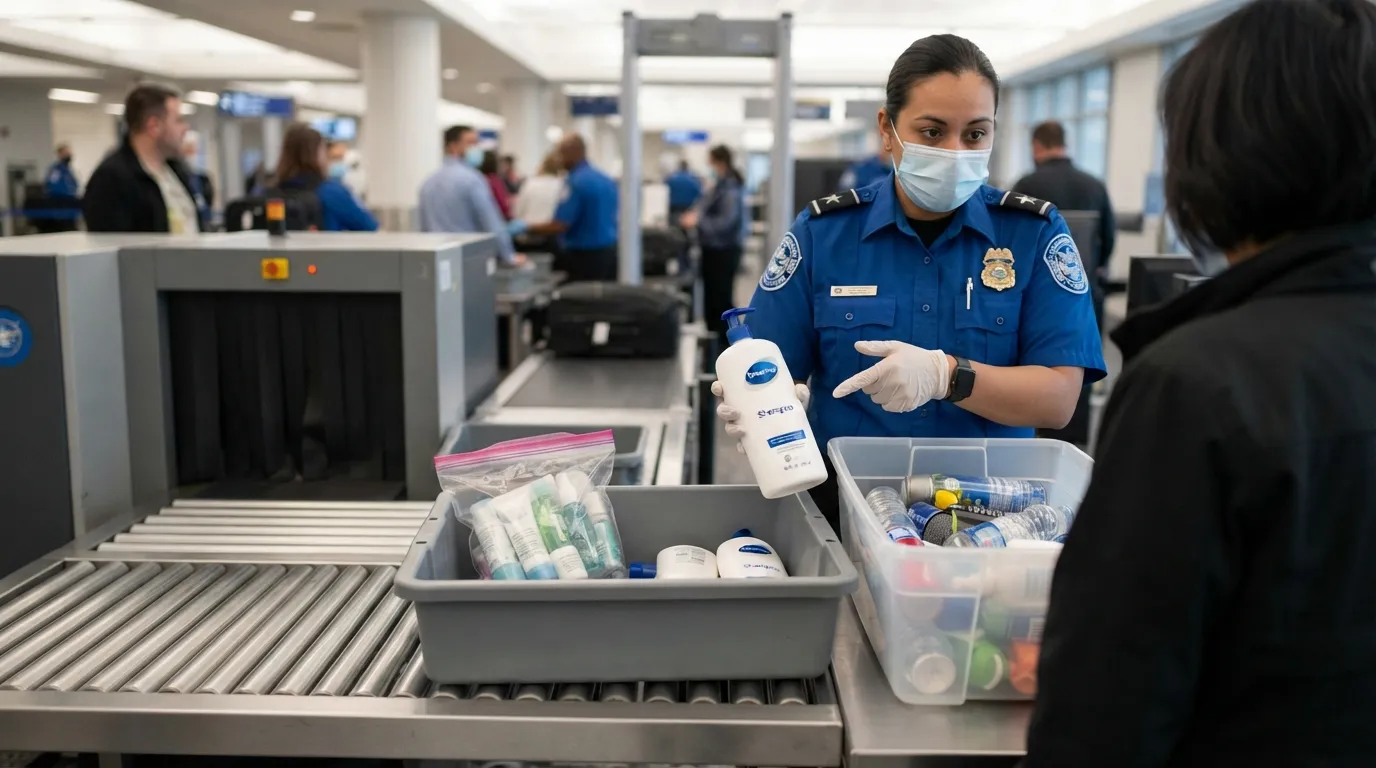
Your everyday shampoo bottle looks harmless, but TSA’s 3-1-1 rule says carry-on liquids, gels, creams, and pastes must be in containers of 3.4 ounces or less. They must all fit in one quart-sized clear bag per passenger.
The size printed on the container counts, not how much is left inside. Oversized bottles get tossed at the checkpoint, and replacements bought airside cost more. The fix: pack full sizes in checked luggage.
But #17 trips up even more people…
#17 – Carrying a Full Water Bottle Through Security
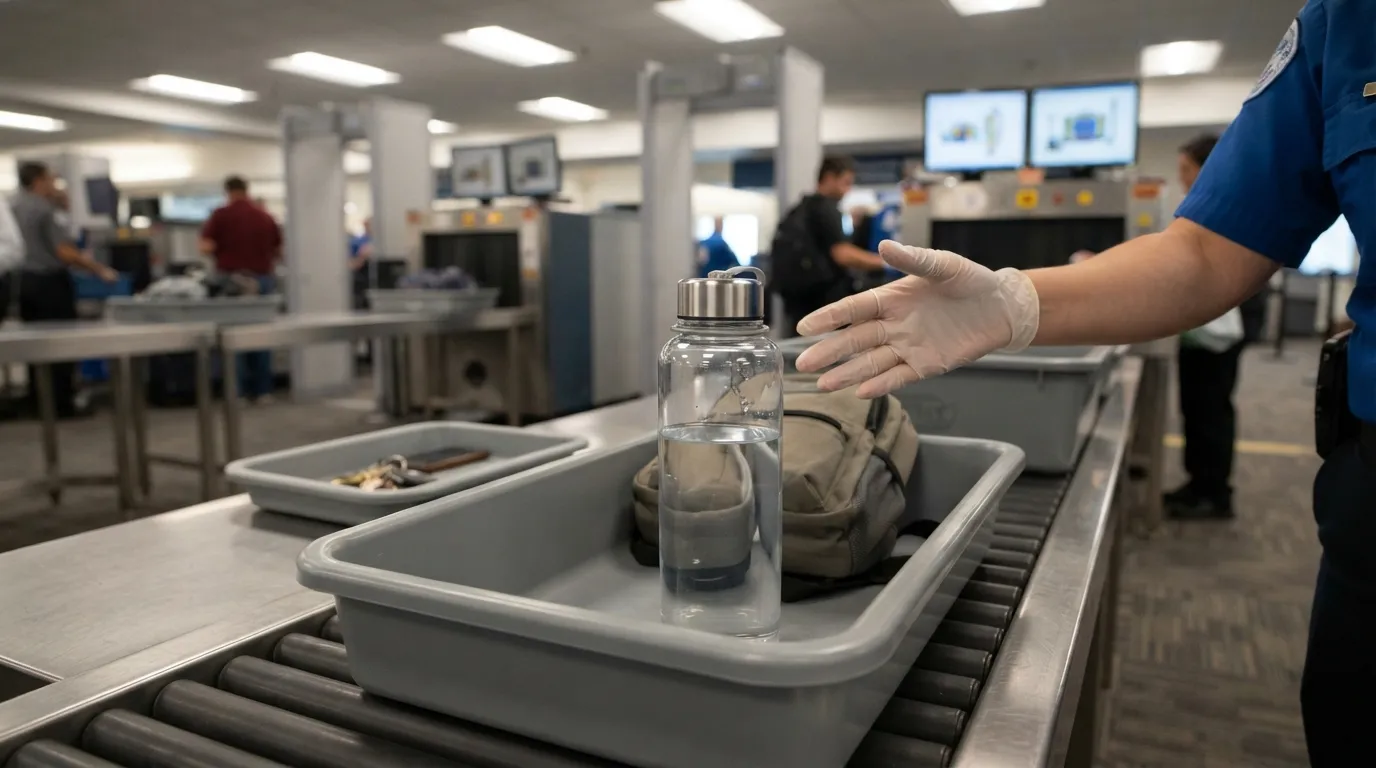
A full water bottle is a liquid, and TSA won’t let it through unless it fits the 3.4-ounce limit inside the quart bag. Many travelers only remember when a bin appears and the bottle disappears.
An empty bottle is fine. The fix: drain it before the line, then refill at a fountain or filling station past security. A collapsible bottle packs flat until you need it.
But #16 hits the wallet harder…
#16 – Ignoring the 50-Pound Checked Bag Limit
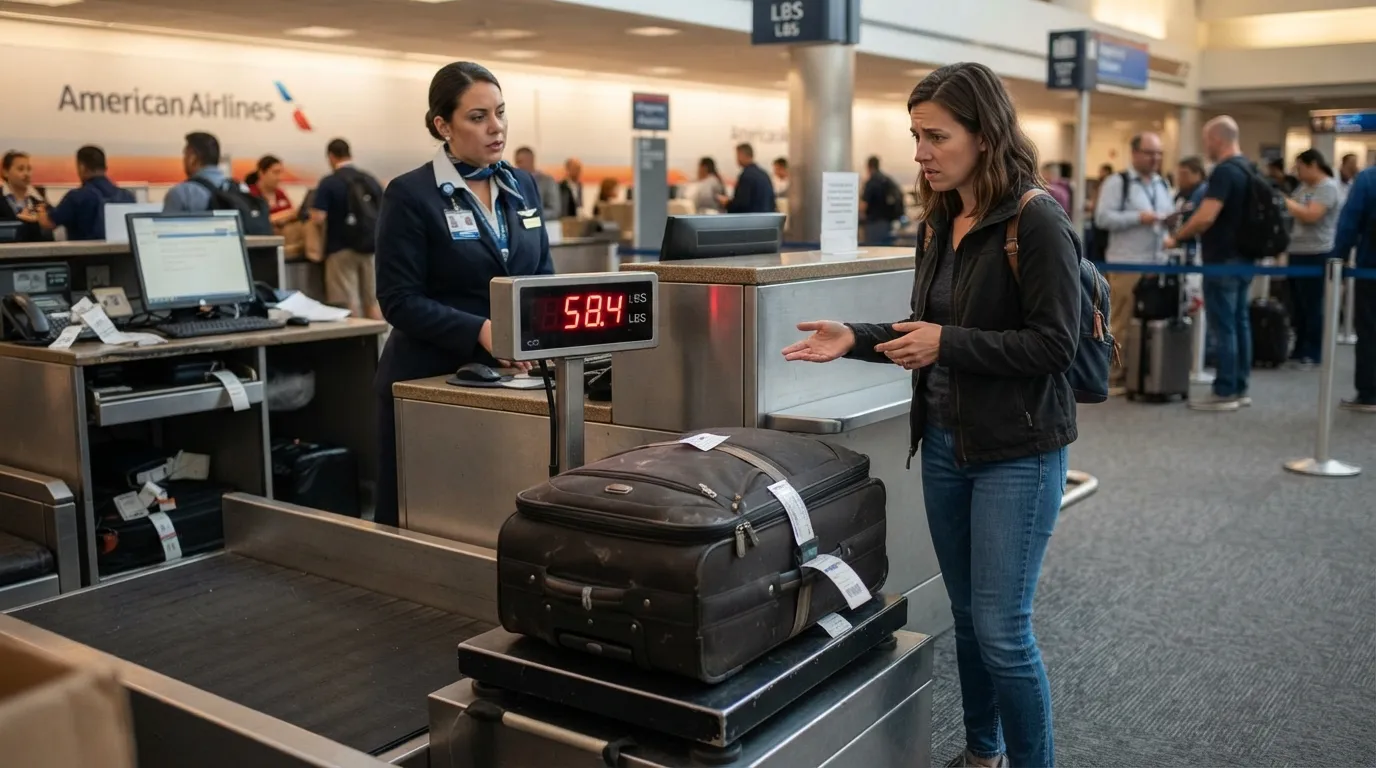
Most major U.S. carriers cap standard checked bags at 50 pounds. Go over, and the airline applies an overweight fee set by its own published baggage policy.
Bags are weighed at the counter, and the charge lands on the spot. The fix: weigh your suitcase at home with a digital scale, then shift heavy items into a second bag before you leave.
But #15 can get your bag opened mid-journey…
#15 – Packing Spare Lithium Batteries in Checked Luggage
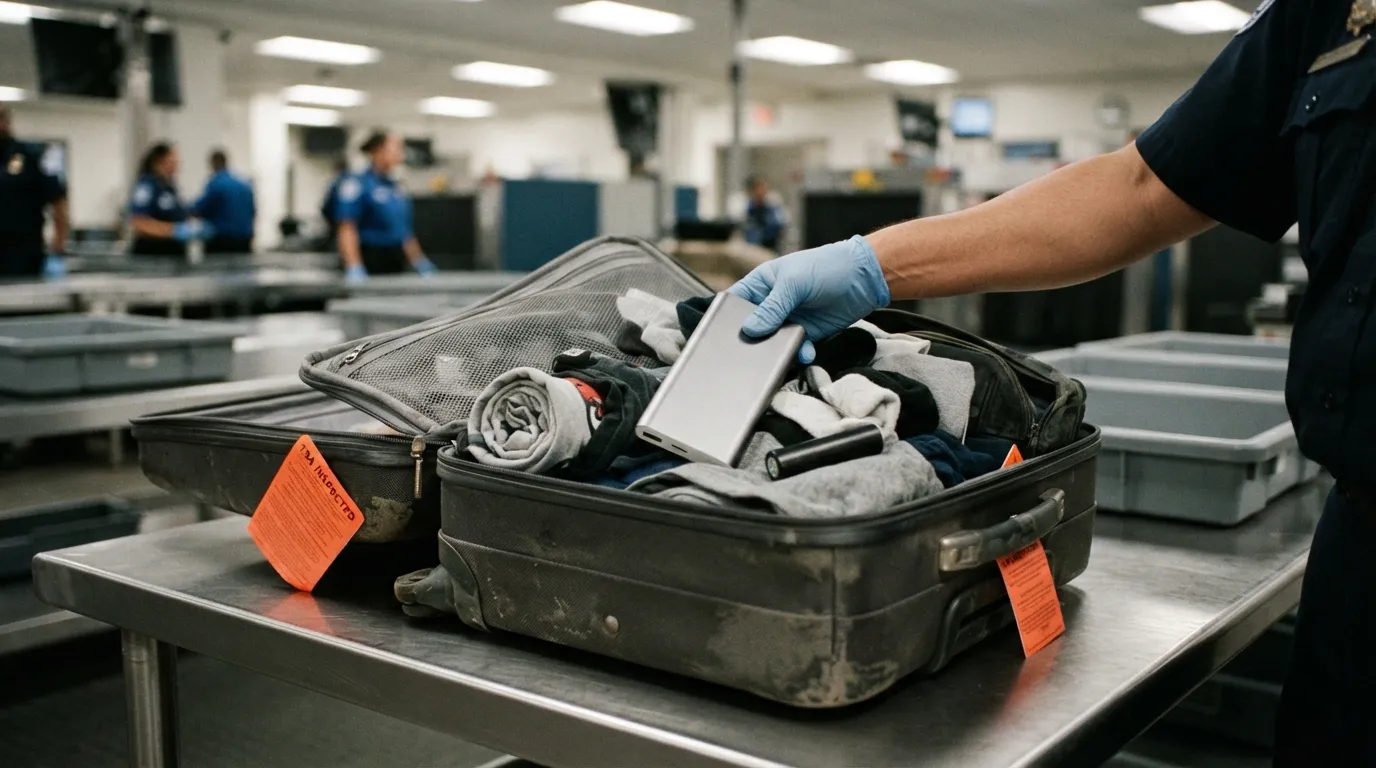
Spare lithium batteries and power banks are not allowed in checked bags. FAA and TSA rules require them in the cabin, where a battery fire can be spotted and handled quickly.
Tuck one into a checked suitcase and the bag can be opened and the battery pulled, with delays at the counter. The fix: carry every spare battery and power bank in your carry-on, with the terminals kept from touching metal.
#14 – Slipping a Knife or Bladed Multi-Tool Into Your Carry-On
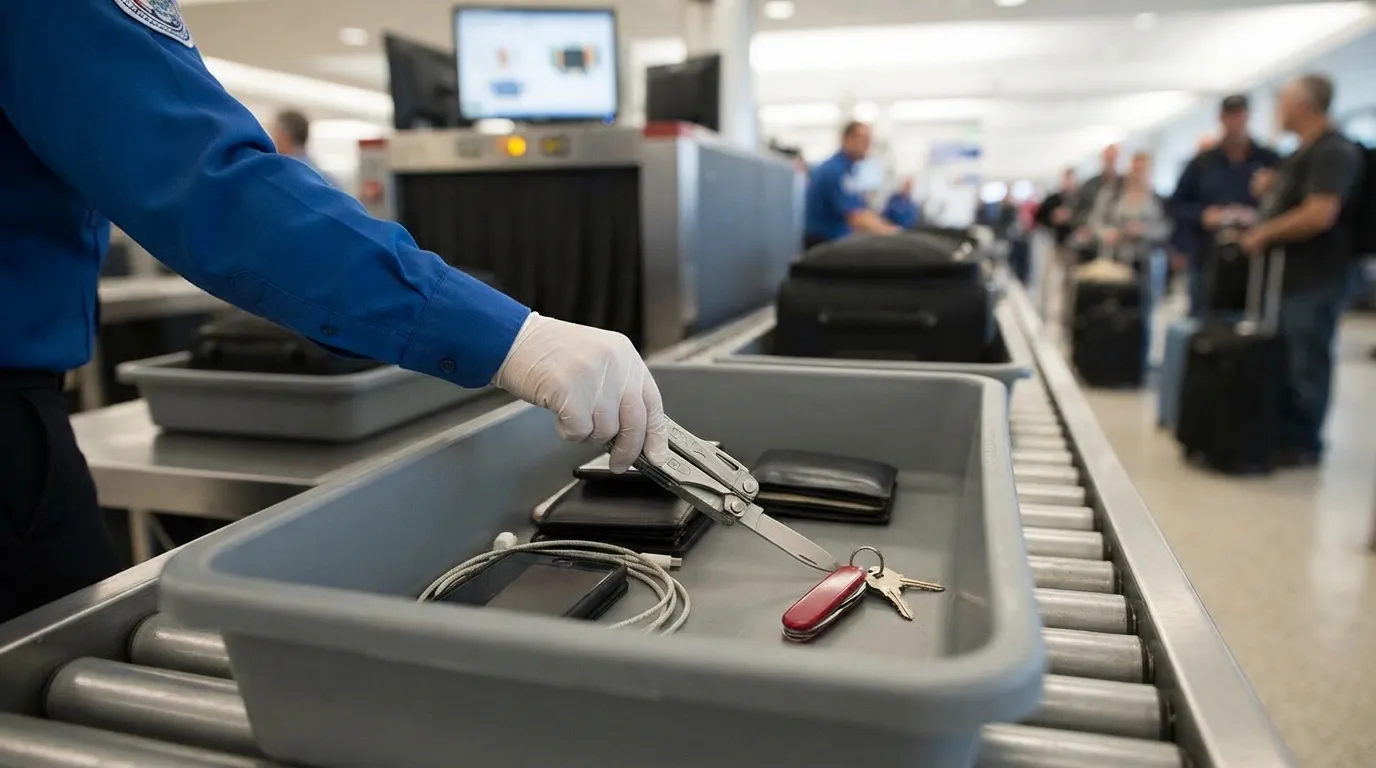
TSA bans knives from carry-ons, with narrow exceptions such as plastic or round-bladed butter knives. That includes the pocketknife on your keychain and the multi-tool with a blade at the bottom of your gear bag.
You either surrender it at the checkpoint or pay to go back and check a bag. The fix: pack every blade in checked luggage, and sweep your carry-on pockets before you leave home.
#13 – Treating Spreads and Dips Like Solid Food
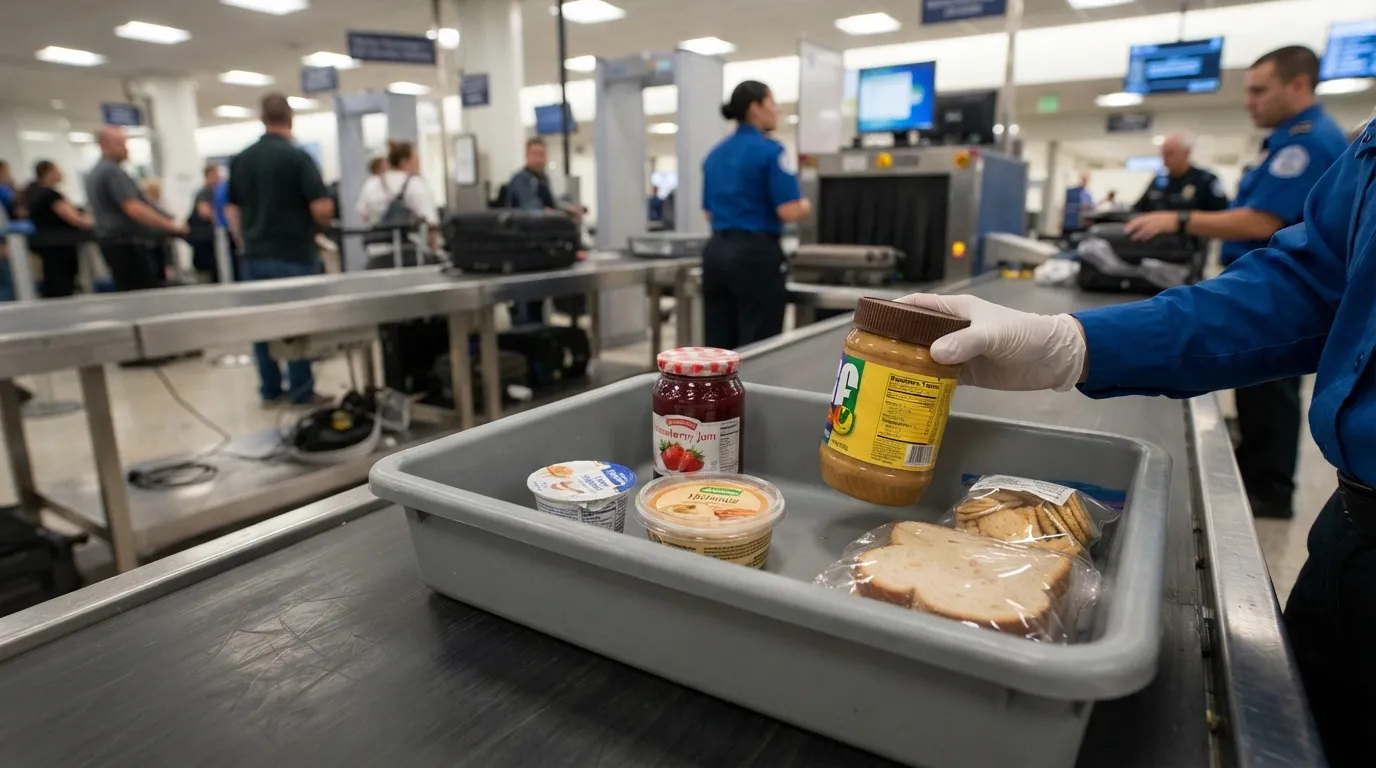
Peanut butter, jam, hummus, yogurt, and cream cheese feel like food, not liquid. TSA treats creamy and spreadable items as liquids or gels in carry-ons, so they must fit the 3.4-ounce limit inside the quart bag.
A full kitchen jar gets tossed. The fix: put big jars in checked luggage, or buy snacks after security. Solid foods like sandwiches and crackers can stay in your carry-on.
Fast Facts
- Spreadable means liquid: peanut butter, jam, hummus, yogurt, and cream cheese all count.
- Size cap: 3.4 ounces or less per container in a carry-on.
- Bag limit: everything must fit in one quart-sized clear bag.
- Safe to carry: solid foods like sandwiches and crackers.
#12 – Packing Oversized Aerosol Cans
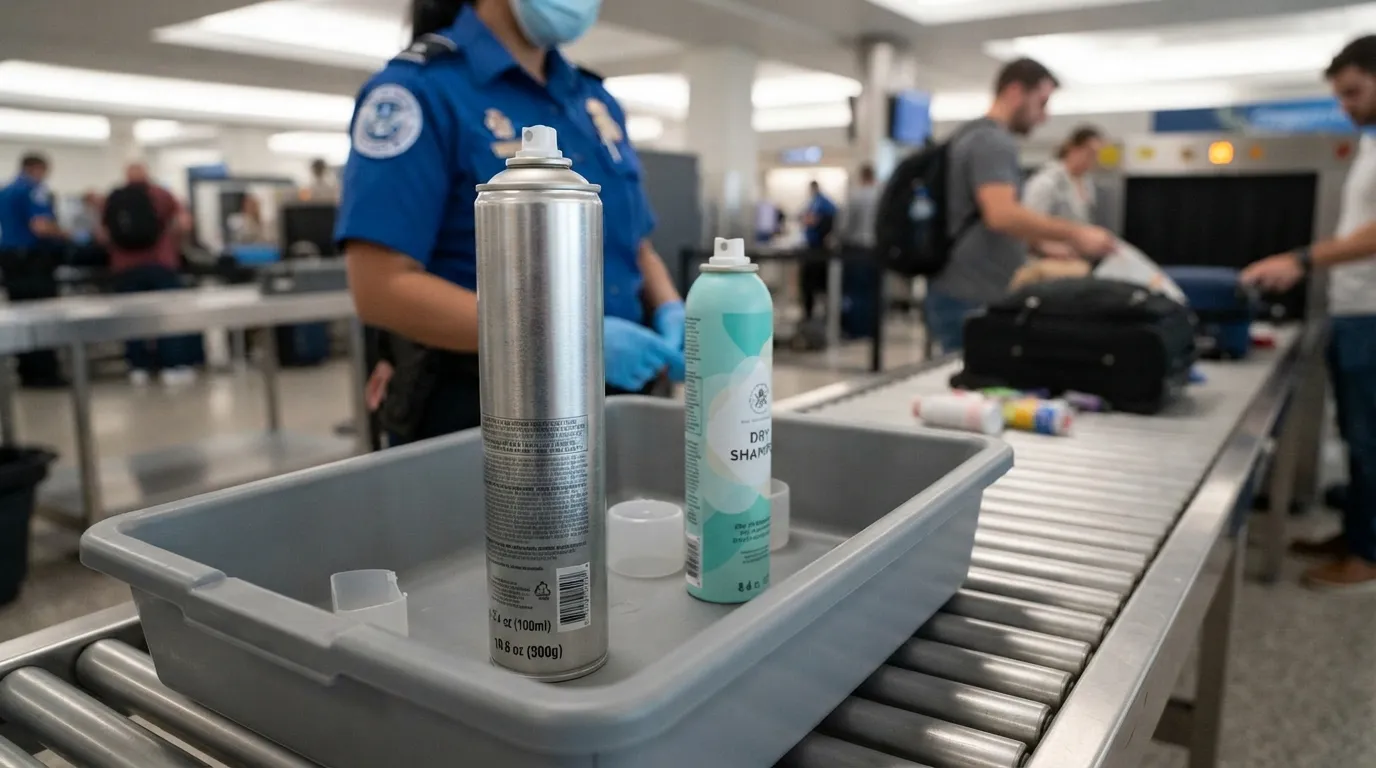
Aerosols come with two sets of rules. In a carry-on, toiletry aerosols like hairspray and dry shampoo follow the 3-1-1 limit. In checked bags, TSA allows toiletry and medicinal aerosols up to 18 ounces per container, with a 70-ounce total.
Oversized cans can be pulled and discarded. The fix: read the ounces on the label, cap the nozzles, and leave the giant can at home.
#11 – Overstuffing a Checked Bag Past Its Size Limit
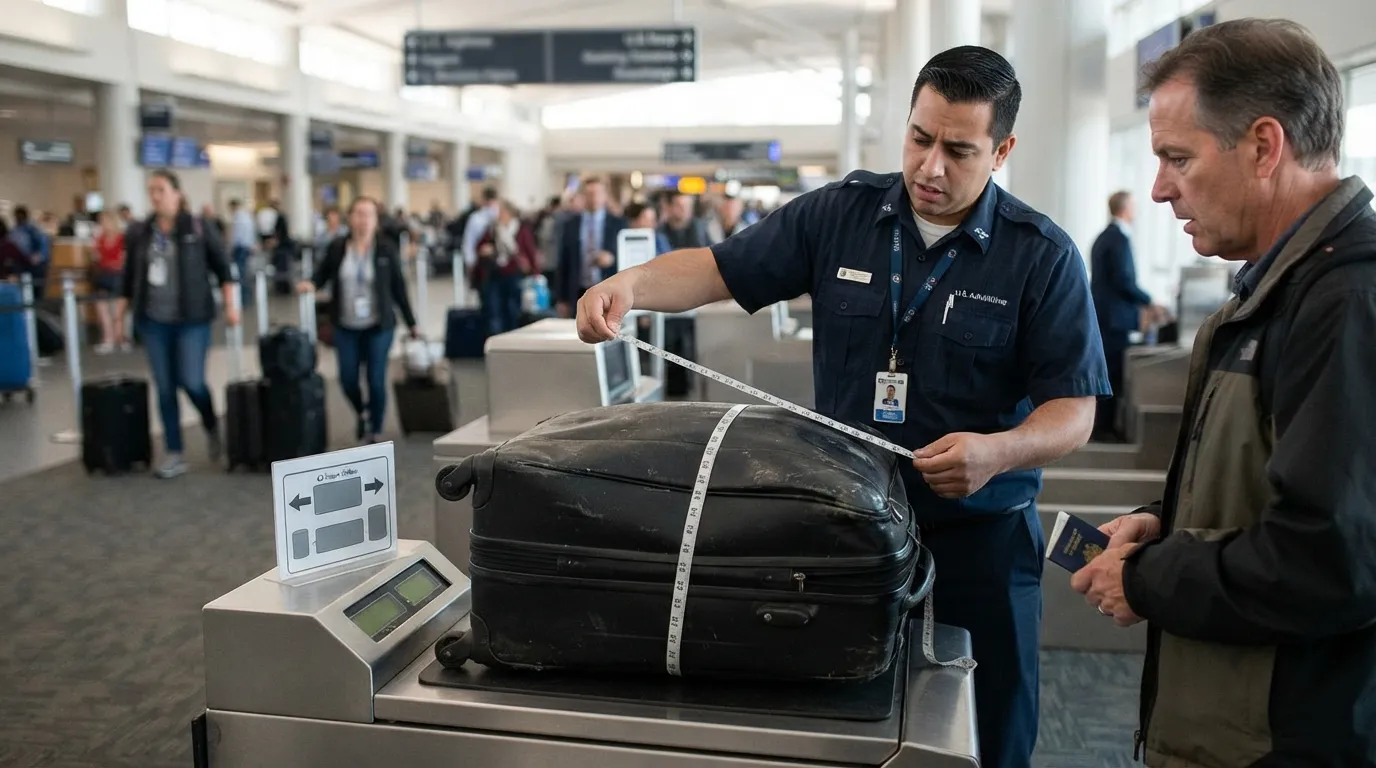
Checked bags have size limits as well as weight limits. Many U.S. airlines define standard size as 62 linear inches, meaning length plus width plus height.
A bulging suitcase or bulky sports case can trigger an oversize fee listed in the airline’s baggage policy. The fix: measure the bag, wheels and handles included, before you leave, and check your airline’s size rules.
#10 – Bringing a Carry-On That Doesn’t Fit the Airline’s Dimensions
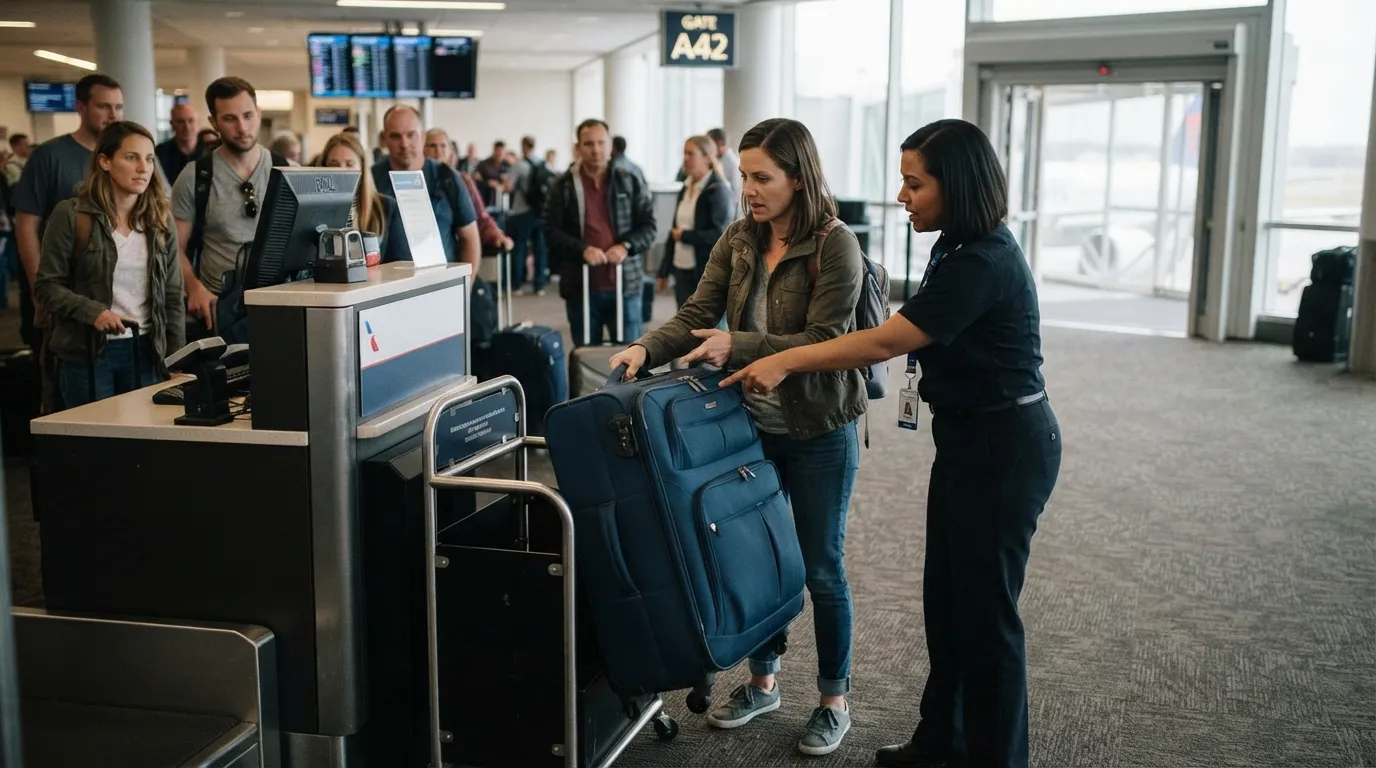
Carry-ons must fit the airline’s published dimensions, and many carriers use about 22 by 14 by 9 inches, wheels and handles included. An overstuffed bag can be sent to the hold at the gate, sometimes with a fee.
Some low-cost carriers charge for any full-size carry-on at all. The fix: check the exact allowance for your fare, and measure the bag before you go.
Quick Compare
- Personal item: one bag that fits under the seat.
- Carry-on: many carriers allow about 22 x 14 x 9 inches, wheels and handles included.
- Checked bag: many U.S. airlines use 62 linear inches, and most major carriers cap standard weight at 50 pounds.
#9 – Counting Three Bags as One Personal Item
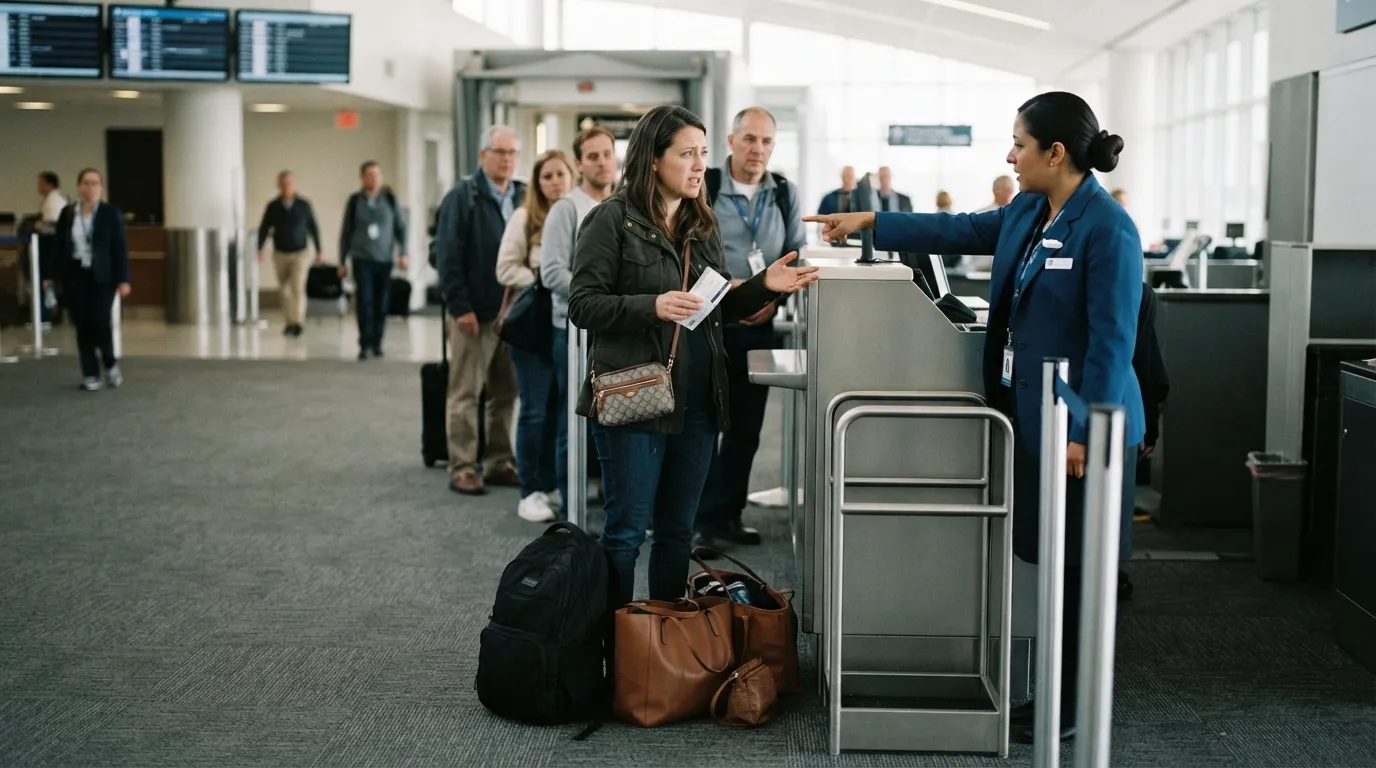
A purse, a backpack, and a tote do not add up to one personal item. Airlines usually allow a single personal item that fits under the seat, and extra bags count as carry-ons or checked bags.
Show up with too many and you may pay for the extra at the gate. The fix: stuff small items inside your main bag, and confirm your airline’s personal-item size.
#8 – Wrapping Gifts Before You Fly
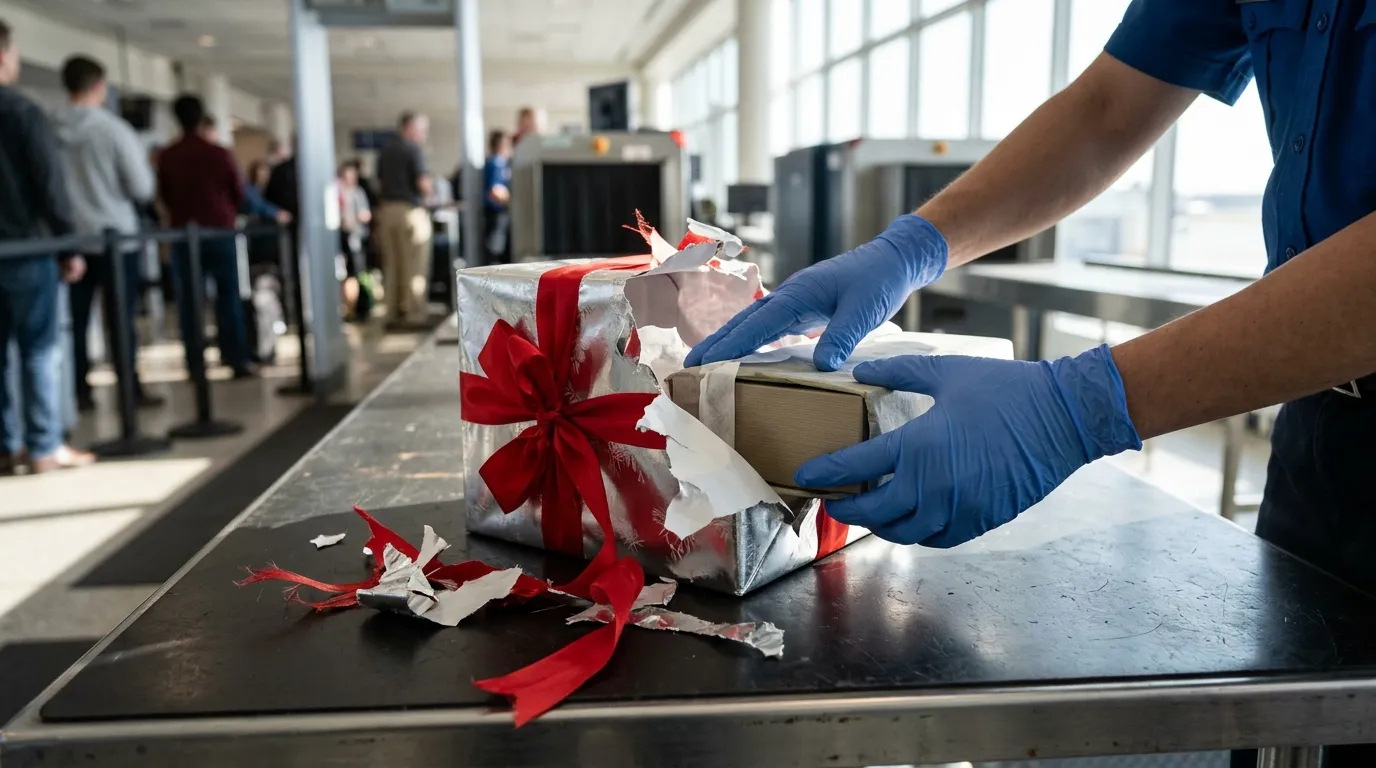
Beautifully wrapped presents can become a mess at security. TSA says officers may have to unwrap a package if the item can’t be cleared by the scanner, which means torn paper and ribbon scraps on the table.
The fix: wrap gifts at your destination, ship them ahead, or use gift bags so officers can look inside without ruining anything.
#7 – Locking a Checked Bag With the Wrong Lock
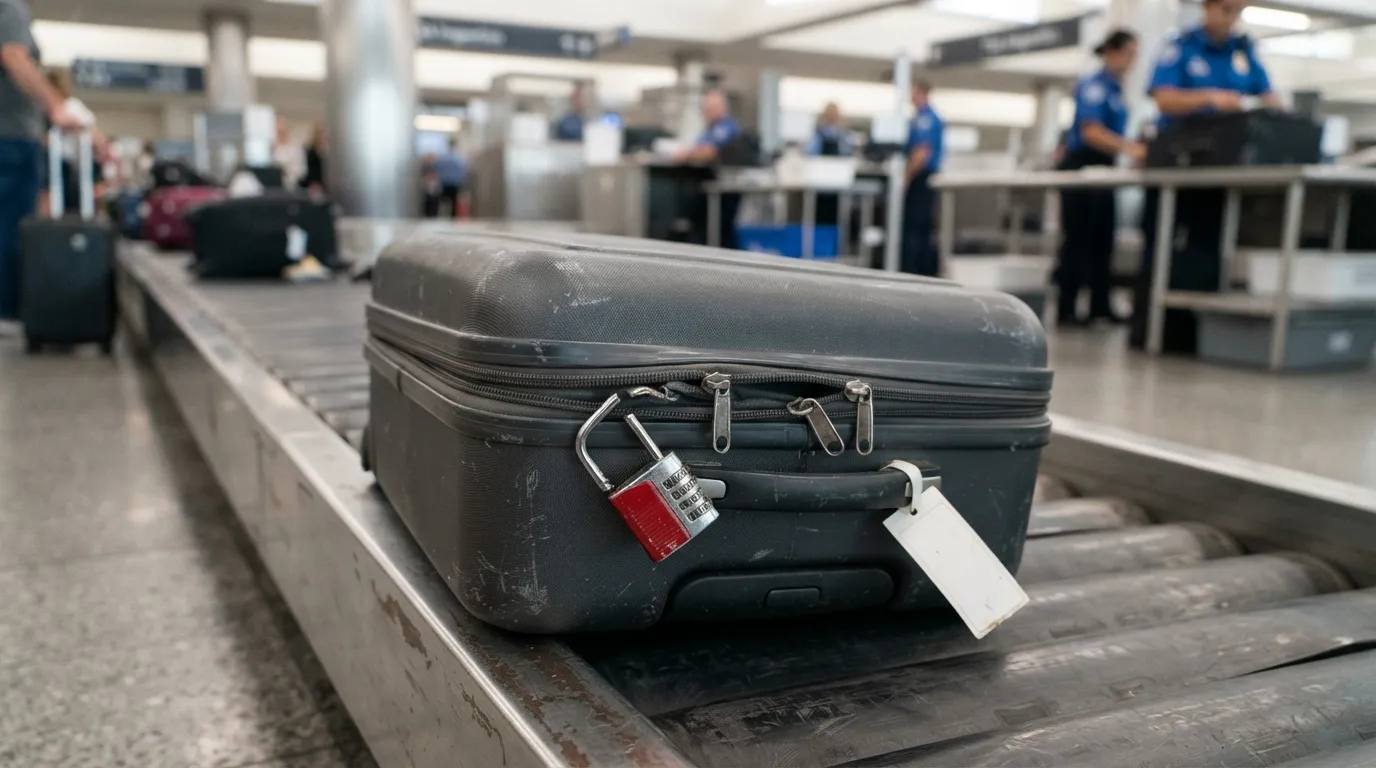
TSA officers may need to open checked bags, and if your lock isn’t TSA-recognized, they can break it to inspect the contents. TSA is not responsible for damage that results.
You end up with a broken lock and a bag that won’t close right. The fix: use a lock marked as TSA-accepted, or skip the lock and use a luggage strap.
#6 – Putting Pepper Spray in a Carry-On
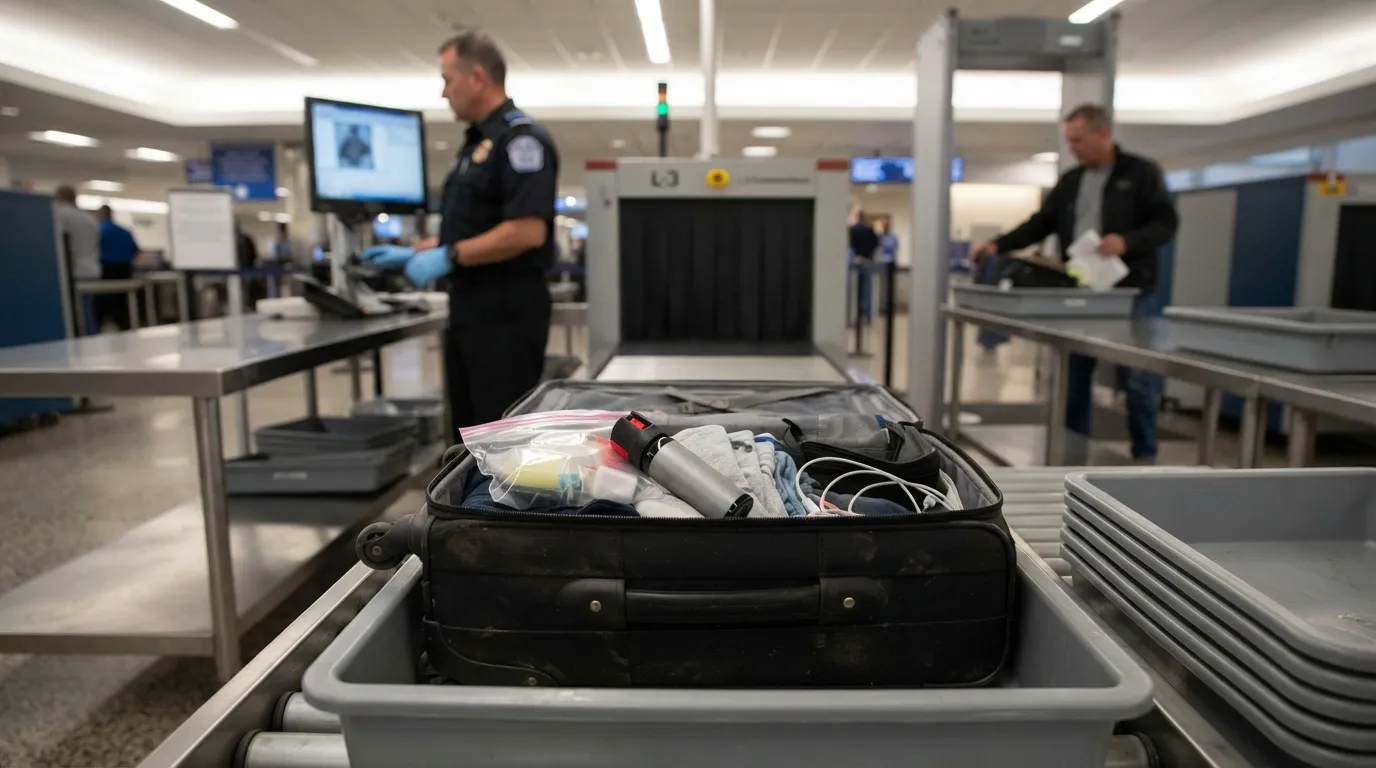
Pepper spray in a carry-on gets confiscated. TSA allows one container up to 4 fluid ounces in checked bags only, and it must have a safety mechanism that prevents accidental discharge.
The fix: check the size and the safety cap, pack it in checked luggage, and confirm local and airline rules before you fly.
#5 – Packing a Firearm Without Following Every Step
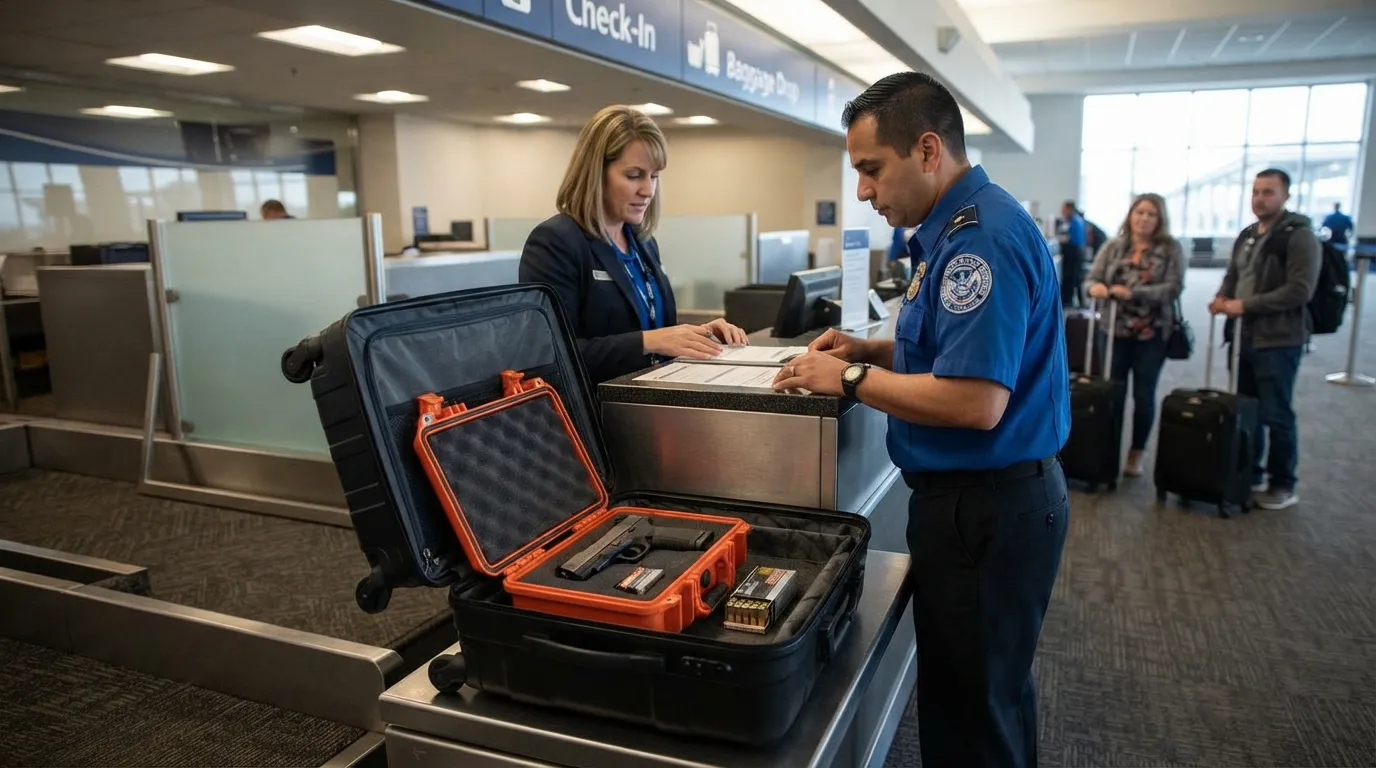
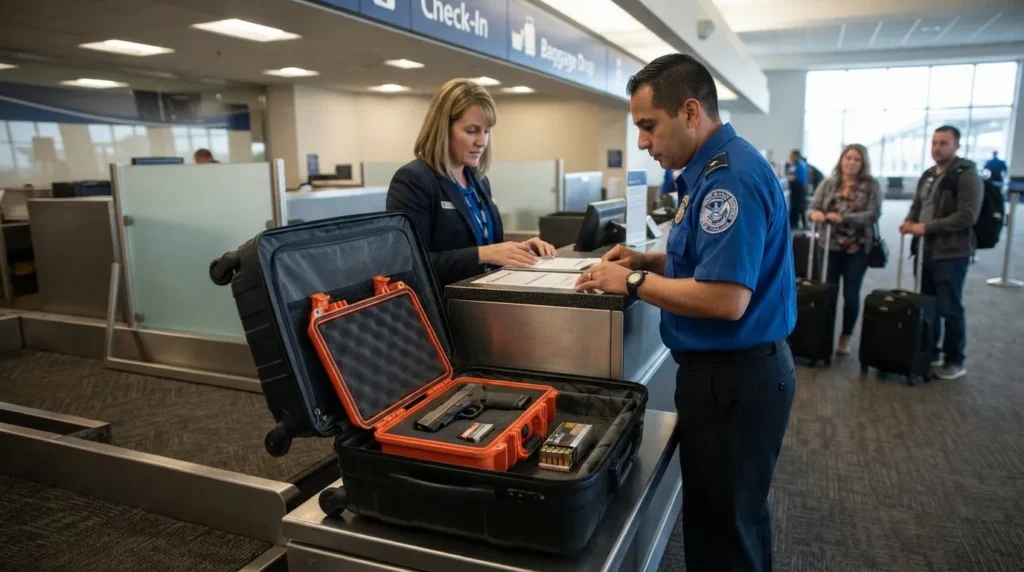
Firearms can’t go in carry-ons. In checked luggage, TSA requires them unloaded, locked in a hard-sided case, and declared to the airline at check-in.
Skip a step and you risk delays, civil penalties, and possible criminal charges. The fix: follow TSA’s firearm rules and your airline’s policy exactly, including how ammunition must be packed, before you reach the counter.
Worth Knowing
- Never in the cabin: firearms are not allowed in carry-ons.
- In checked bags: unloaded and locked in a hard-sided case.
- At check-in: declare the firearm to the airline.
- Ammunition: follow the airline’s packing policy, not just TSA’s.
#4 – Sealing Dry Ice in an Airtight Cooler
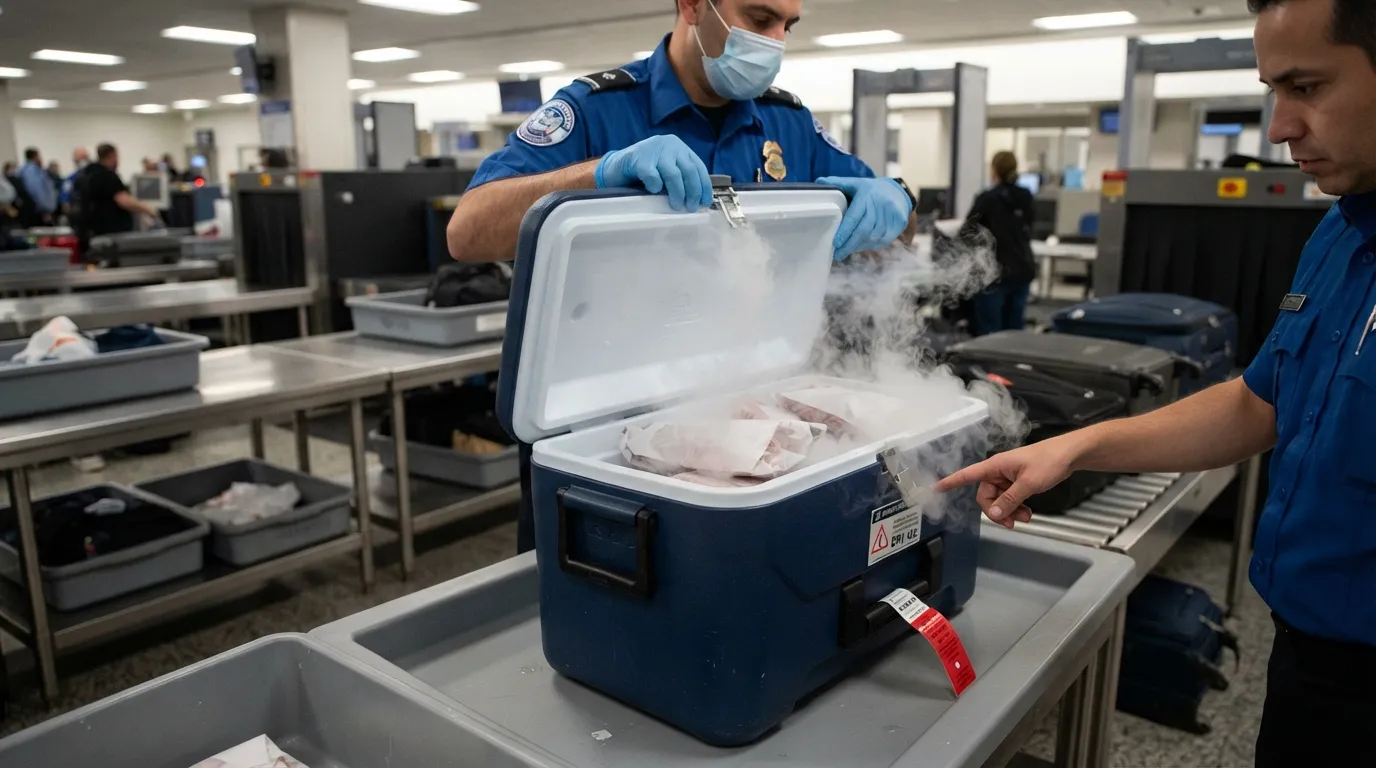
Dry ice can protect perishables, but it has limits. TSA permits up to 5.5 pounds in carry-on or checked bags when the package is vented, because the gas can’t be trapped, and airline rules also apply.
A sealed cooler can be refused. The fix: use packaging that lets gas escape, make sure it’s marked as containing dry ice, and ask your airline before you pack.
#3 – Checking Your Vape or E-Cigarette
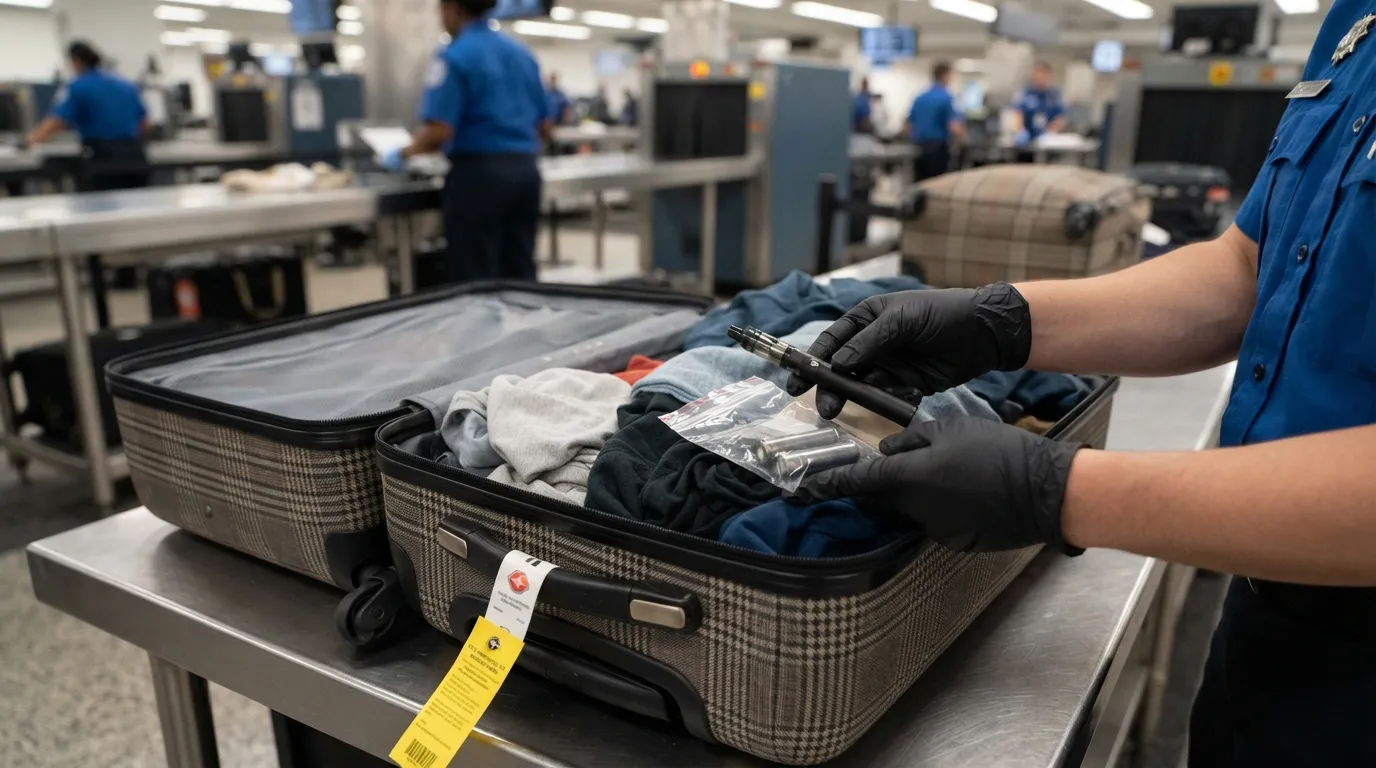
E-cigarettes and vapes belong in your carry-on, not your checked bag. TSA requires them in the cabin, because their batteries are a fire risk in a cargo hold.
Pack one in a suitcase and the bag can be pulled for inspection, along with the delay that comes with it. The fix: keep vapes and their spare batteries on you or in your carry-on.
At a Glance
- Cabin only: vapes and e-cigarettes.
- Cabin only: spare lithium batteries and power banks.
- Why: a battery fire is easier to catch in the cabin than in a cargo hold.
- Quick habit: check every pocket and charger pouch before you hand over a checked bag.
#2 – Not Declaring Medically Necessary Liquids
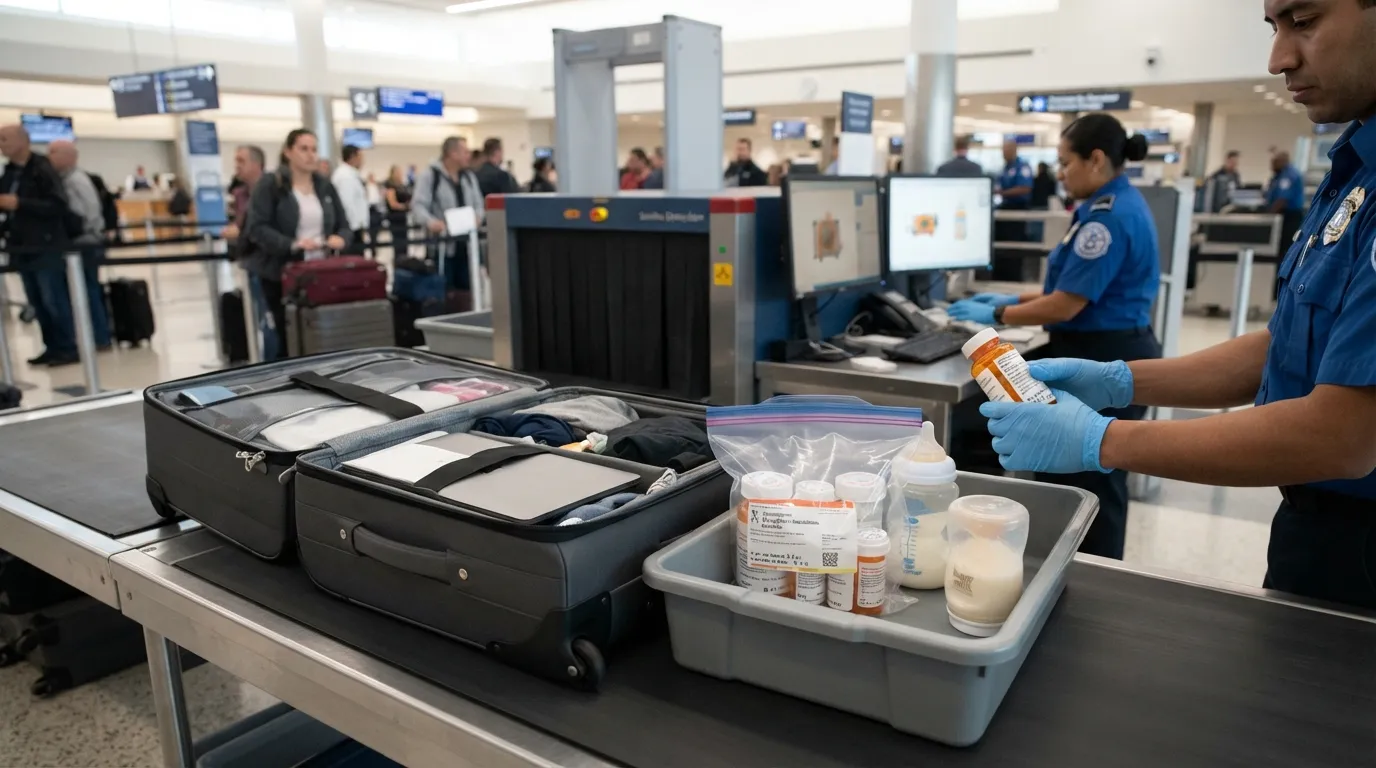
Medications, baby formula, and breast milk can exceed 3.4 ounces, but only if you handle them right. TSA says to tell officers at the start of screening so they can be screened separately.
Bury them in a crowded bag or squeeze them into the quart bag and you slow the whole line. The fix: keep these items together, easy to reach, and declare them upfront.
#1 – Assuming the 50-Pound Rule Follows You Everywhere
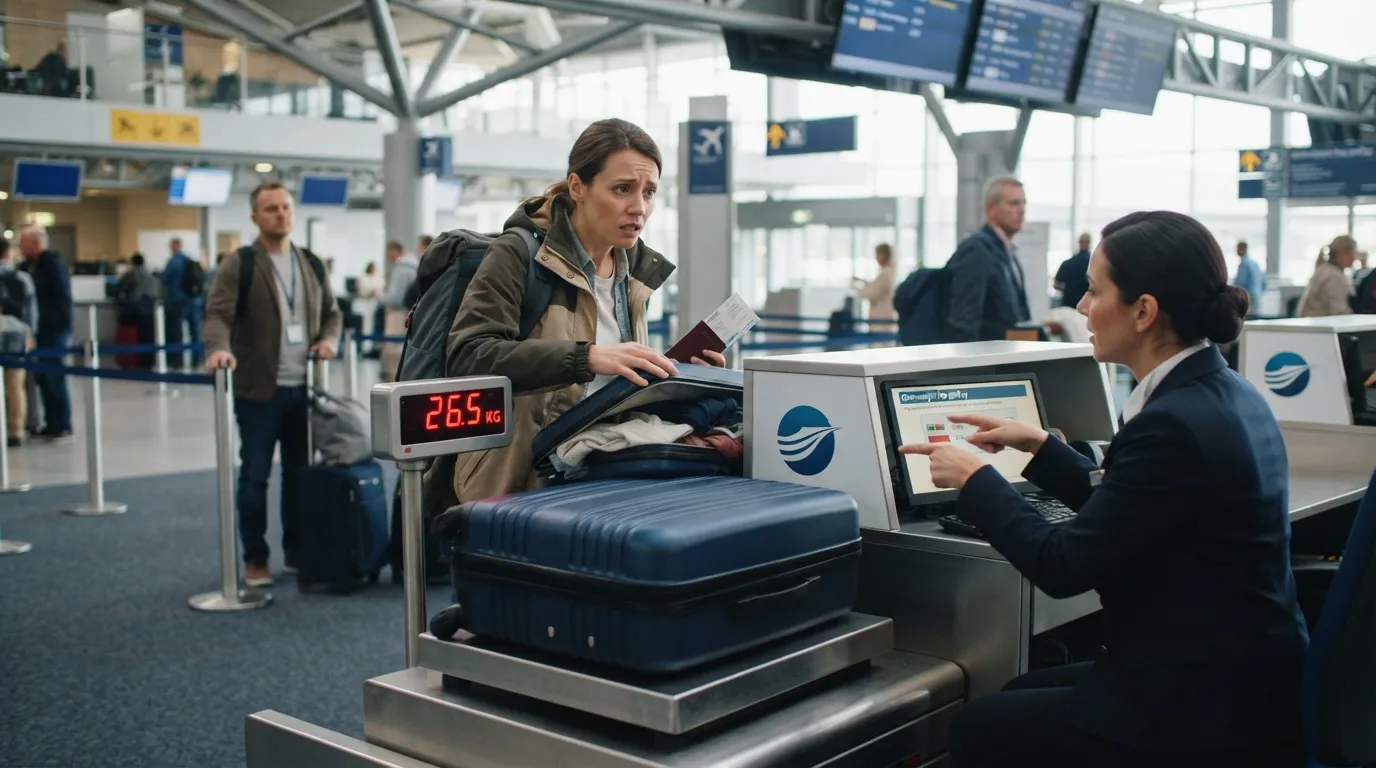
That 50-pound limit is a U.S. habit, not a universal law. Many international and low-cost airlines set different weight allowances, and the allowance can change with your fare. A connecting flight on a partner carrier can bring stricter limits than the airline you booked with.
Overweight fees are set by each airline. The fix: read the baggage policy for every leg of your trip and pack to the strictest limit. Do that, and the counter stops being a gamble.
CEO-Co-Founder