- The Secret Origins of America’s Oldest Music Festivals - October 20, 2026
- Historic Disasters That Inspired American Novels - October 20, 2026
- How Protest Songs Helped End Major U.S. Wars - October 20, 2026
You paid for the tickets, planned the route, and braced for the heat. What actually wrecks a theme park day is often a stranger doing something small and selfish right in front of you. Published conduct policies from Disney World, Universal Orlando, Six Flags, and other parks put names on these behaviors, and the list is more familiar than you’d think.
The rules aren’t really about protecting the rides or the lawns. They’re about stopping one guest from costing hundreds of others their time, comfort, or safety. Some of these offenses can get a guest removed without a refund, and a few of them aren’t the ones people expect. Start at #20 and work your way down.
#20 – Holding Spots in Line for a Whole Crowd
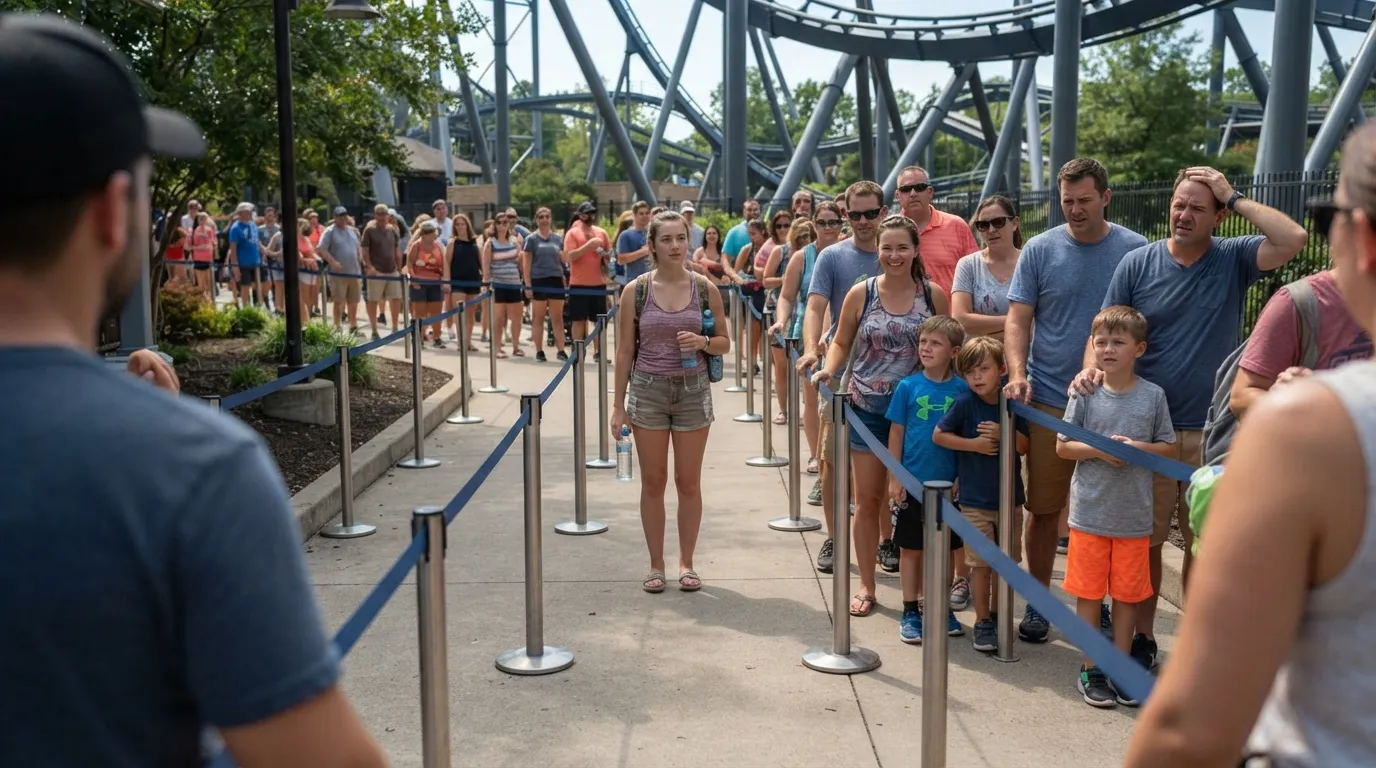
One person strolls up to the queue, and ten minutes later a whole group of relatives slides in beside them. Everyone who waited the honest way just got pushed back.
Many park policies treat line cutting and place-saving as prohibited because they undermine the first-come, first-served system. Families with small kids or tight schedules often lose the most, since every extra person ahead of them adds minutes they didn’t plan for.
It usually gets justified as “just waiting for family.” To the people behind them, it feels like watching someone skip the line at the grocery store, only with a ninety-degree sun overhead.
#19 – Freezing in the Middle of a Packed Walkway
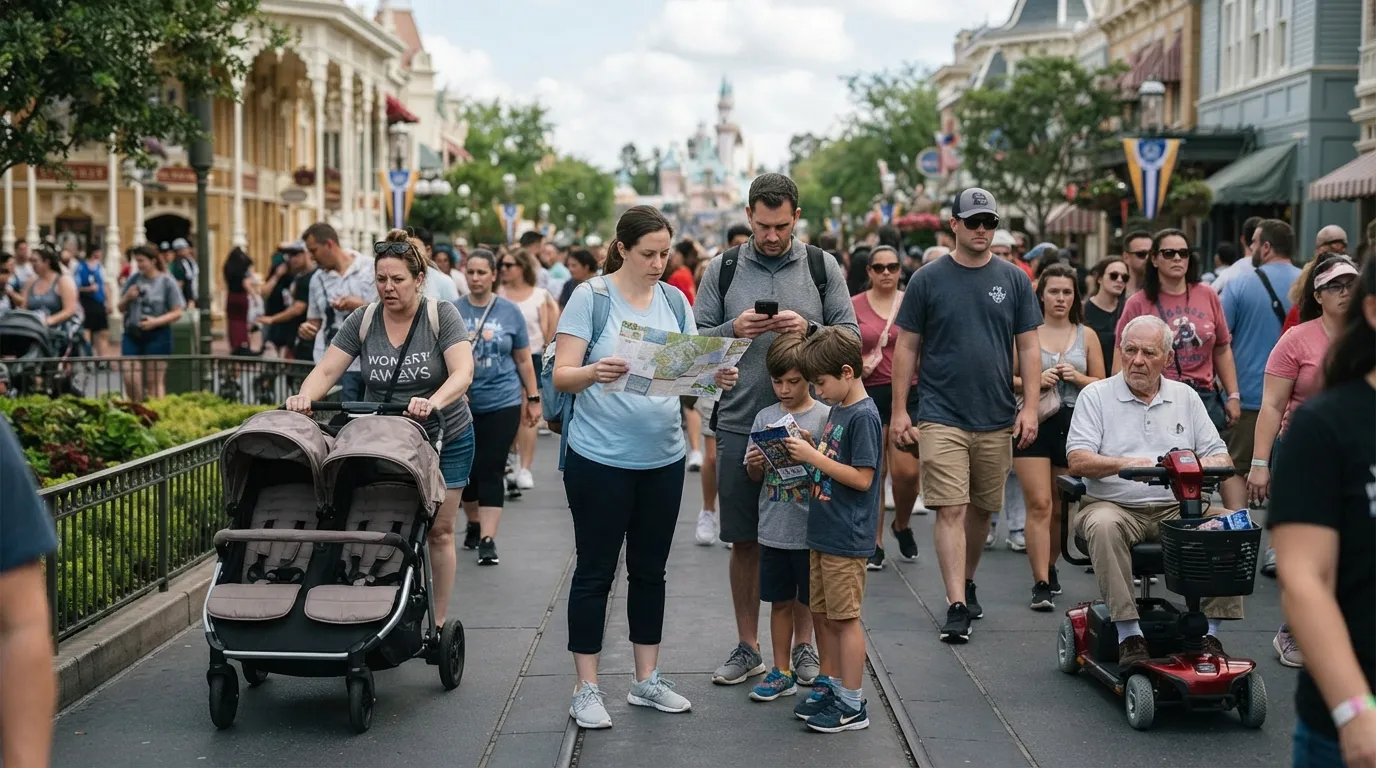
Someone stops dead to check a map, answer a text, or find their group. Behind them, dozens of people brake, swerve, and mutter.
Guest courtesy guidance at Disney World and similar parks asks visitors to keep moving or step to the side rather than block pathways. Stroller users and mobility scooter riders feel it most, because they can’t dodge a sudden obstacle as easily.
It’s especially bad right after a parade or show lets out, when the crowd is already tight. Some operators note that blocking walkways and exits can lead to removal when it interferes with other guests’ enjoyment.
#18 – Smoking or Vaping Outside Designated Areas
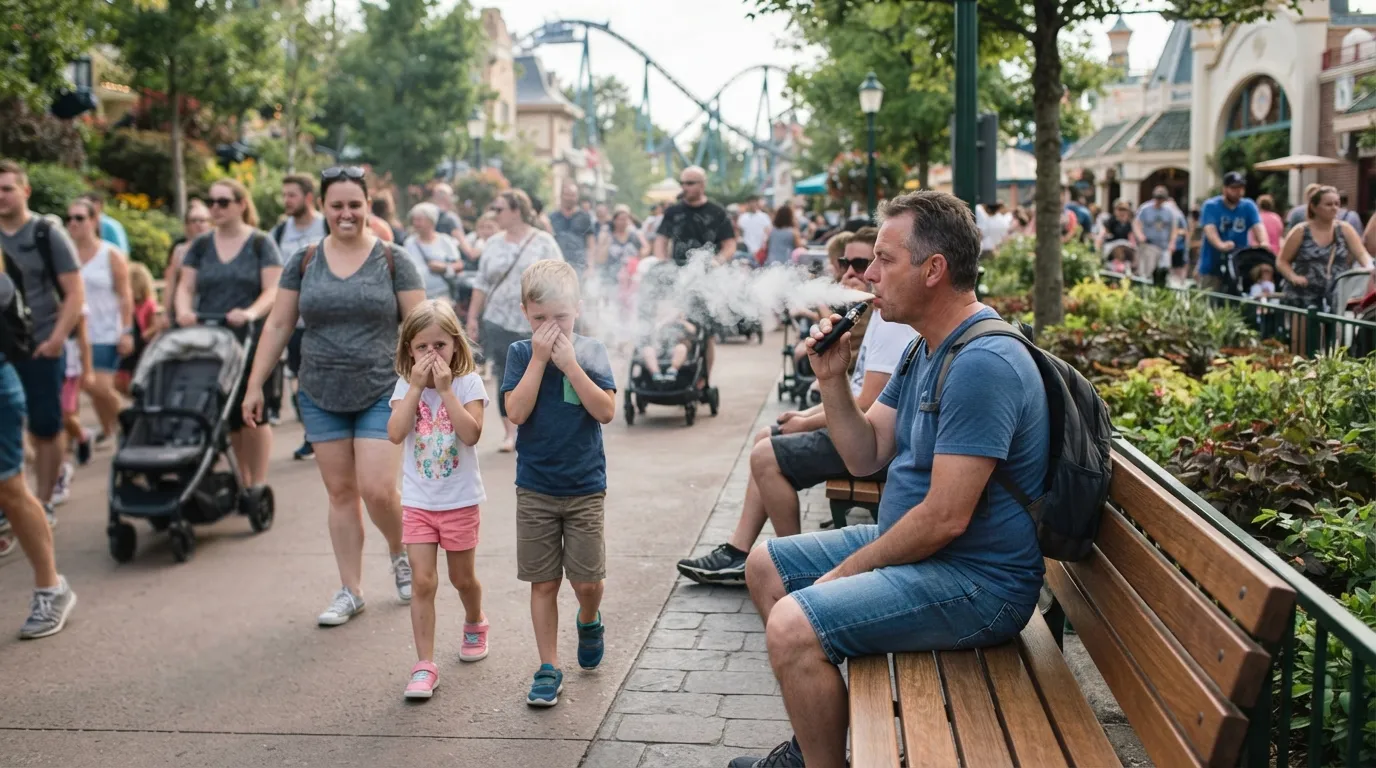
You find a shady bench, unwrap a snack, and then a cloud of smoke drifts over from the next table. Parks that restrict tobacco and e-cigarettes to specific outdoor zones are trying to prevent exactly that.
Fast Facts
- Disney, Universal, and Six Flags all limit smoking and vaping to designated areas.
- Walkways and queues are not designated zones, even when they’re outdoors.
- Vapor counts under these policies, not just traditional cigarettes.
- Park maps and posted signs are the quickest way to find the approved spots.
Lighting up in a walkway or near a queue exposes families and kids to smoke they never signed up for.
The odor lingers around dining and seating areas, and staff end up having to step in. The designated zones exist so the problem stays in one spot instead of following everyone around the park.
#17 – Cursing and Obscene Gestures Around Kids
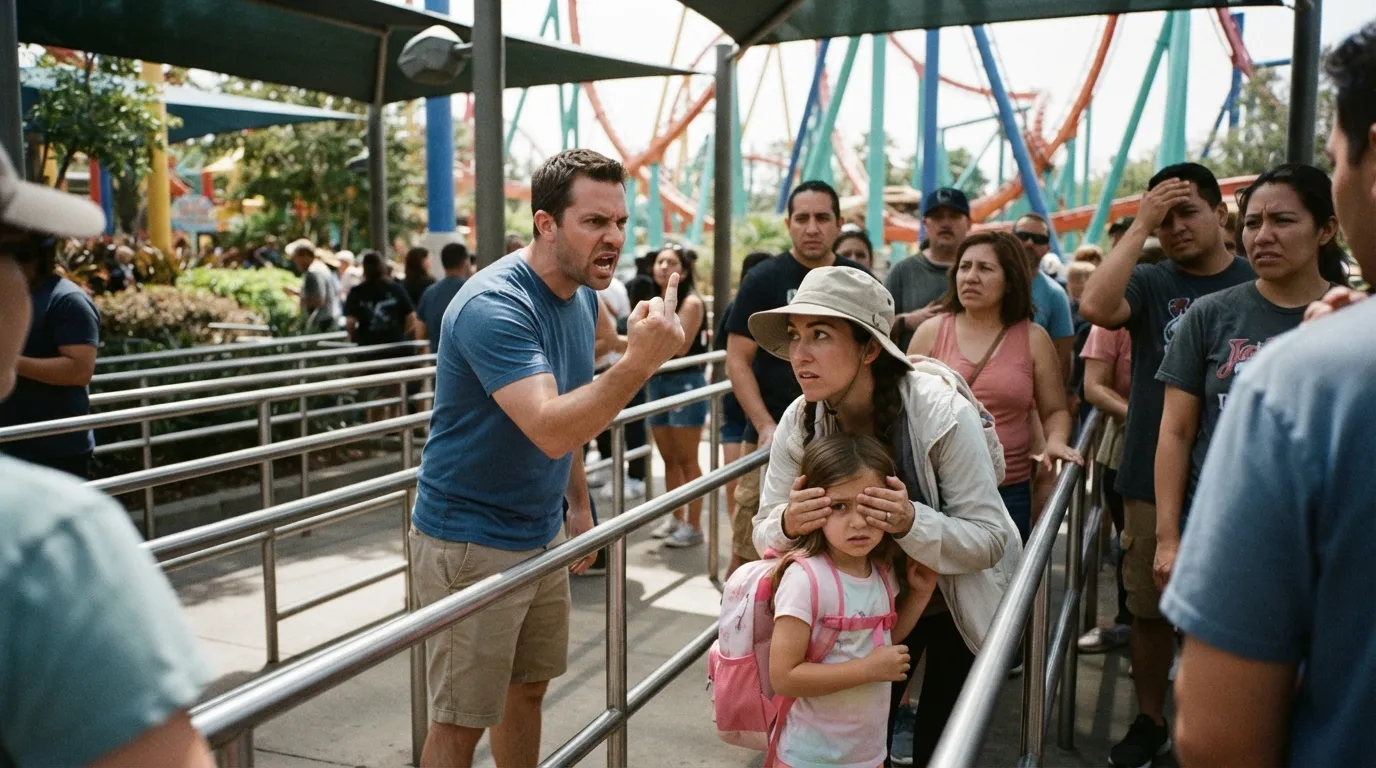
A ride breaks down, tempers flare, and suddenly half the queue gets a vocabulary lesson. Parents quickly lean in to cover small ears.
Family-oriented conduct codes at Six Flags, Dutch Wonderland, and other parks prohibit profanity and obscene gestures because so many guests are children. Repeated or aggressive use can be treated as disruptive behavior that gets a guest ejected.
Whoever is swearing may think they’re just venting. To everyone within earshot, it can feel like harassment, and operators reserve the right to act on it.
#16 – Dropping Trash Instead of Walking to a Bin
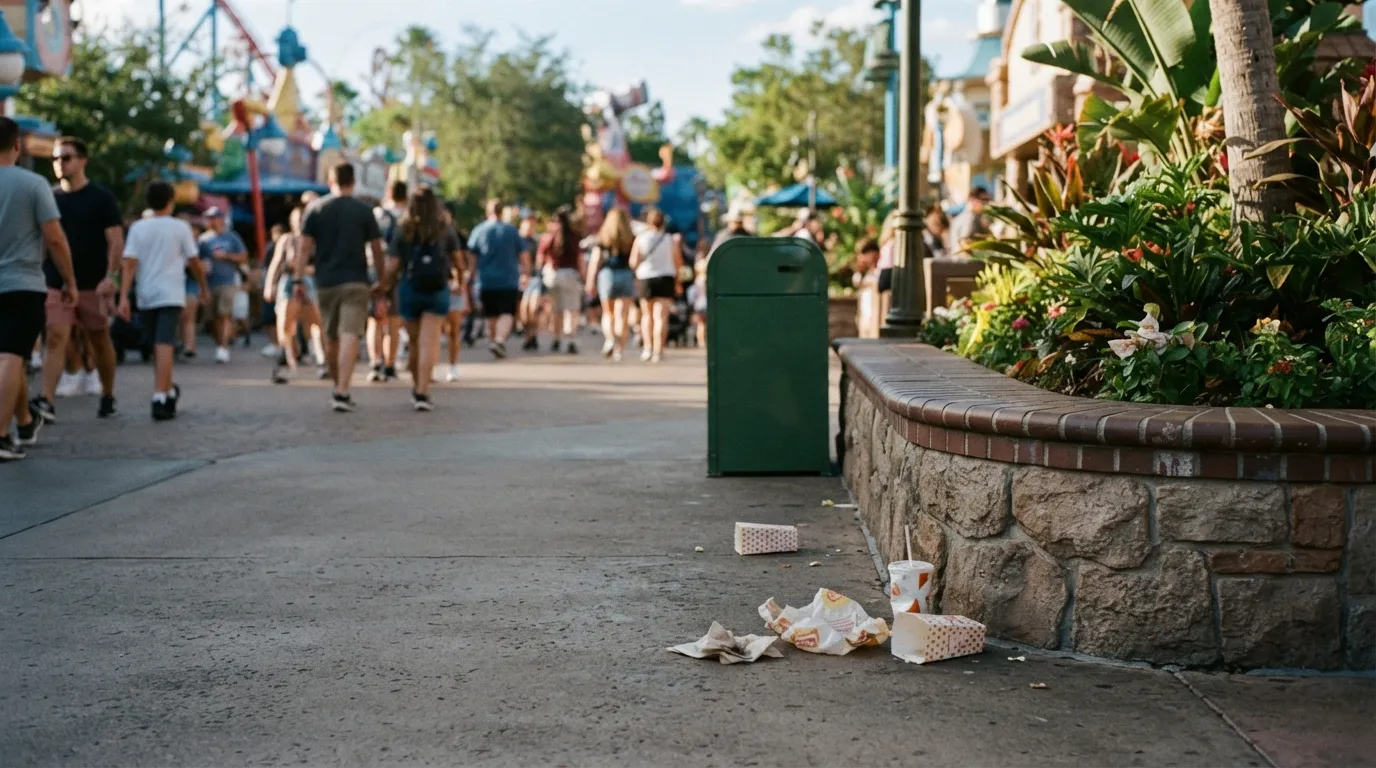
Parks put trash cans everywhere, and yet there’s always a cup on the pavement and napkins stuck to a planter. It looks small, but a messy walkway changes how the whole place feels.
Park rules and etiquette guidance ask guests to dispose of their own waste. Every wrapper on the ground pulls a custodial worker away from something else.
Litter also tends to attract more litter. One cup left on a ledge in a busy spot gives everyone else permission to do the same.
#15 – Running Through Crowds
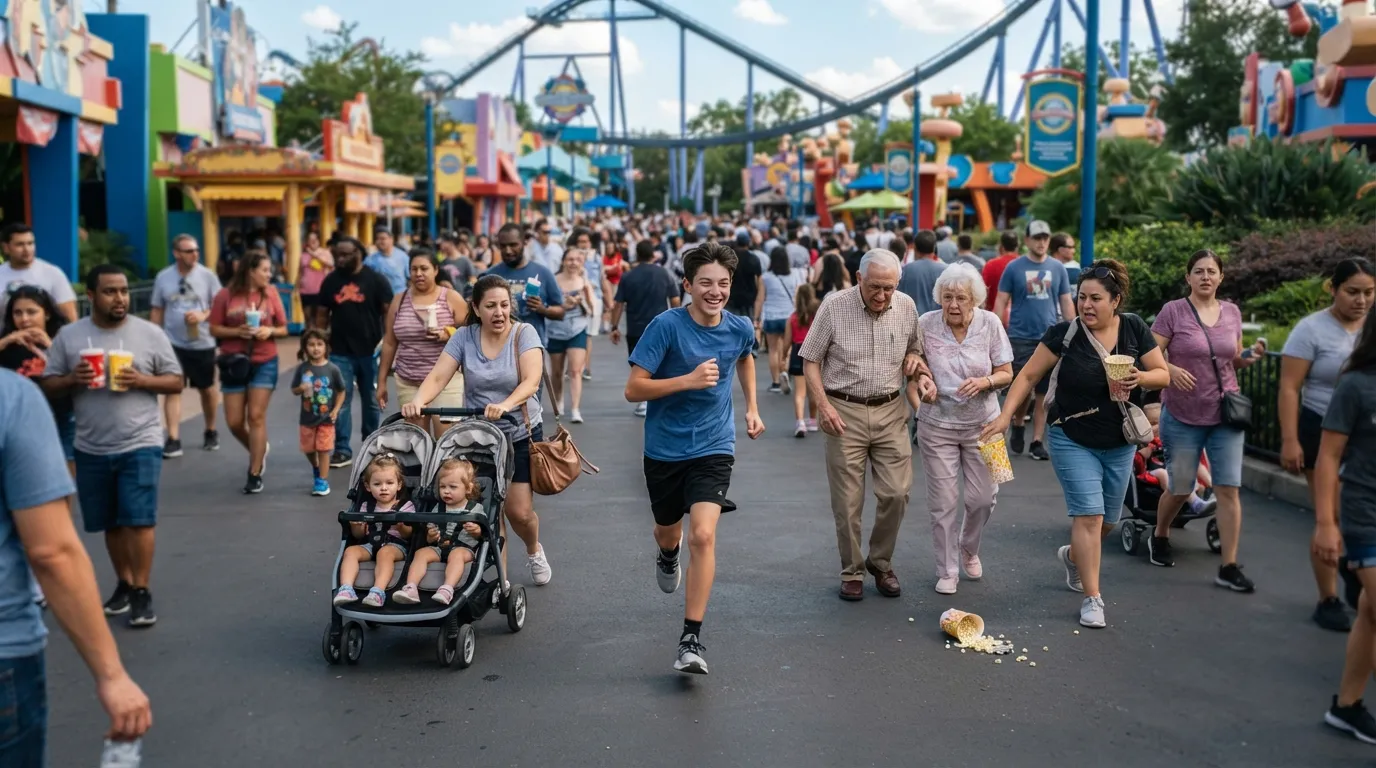
A kid sprints ahead, a teenager shoves a friend, and a stroller suddenly has to swerve. In a dense crowd, a playful dash can turn into a collision very quickly.
Conduct codes at venues such as Raging Waters and Six Flags ban running and rough play outside designated areas. The concern is simple: crowded midways are full of strollers, older guests, and people carrying hot food and full drinks.
What starts as high spirits can end in spilled lunches, hurt feelings, or a call to security. It’s rarely worth it for the person running, and almost never for the people they hit.
#14 – Ignoring “Keep Your Hands Inside” on Rides
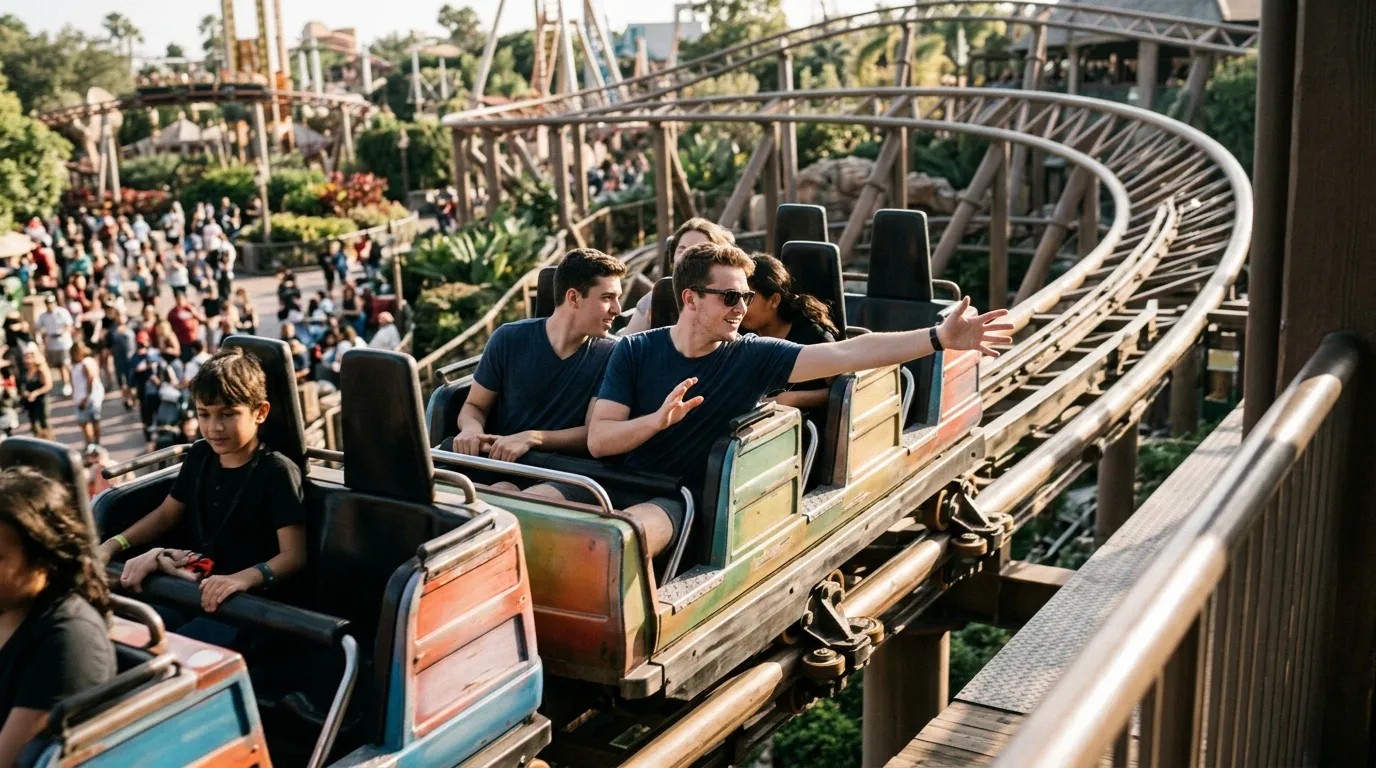
Every ride operator says it, and every ride seems to have someone who treats it as a suggestion. Standing up, reaching out, or dangling arms are all violations of posted safety rules.
Parks require riders to stay seated with hands, arms, and legs inside the vehicle. Ignoring that can get a guest pulled from the attraction or removed from the park, and it can stop the ride for everyone else.
That’s the part people forget. The rule protects the rider, but it also protects the hundreds of guests waiting behind them from sitting through an unplanned delay.
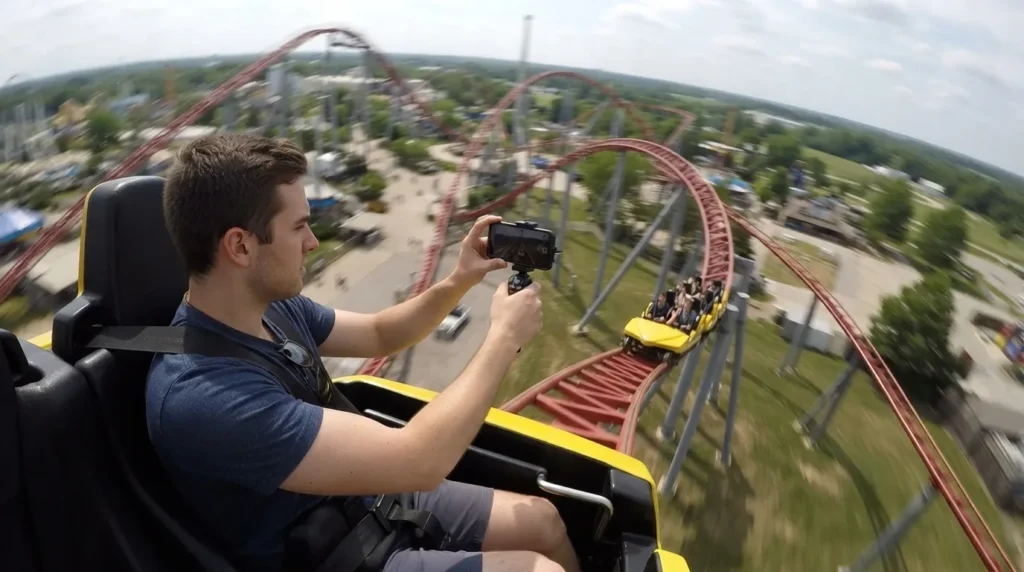
#13 – Filming POV Videos on Roller Coasters
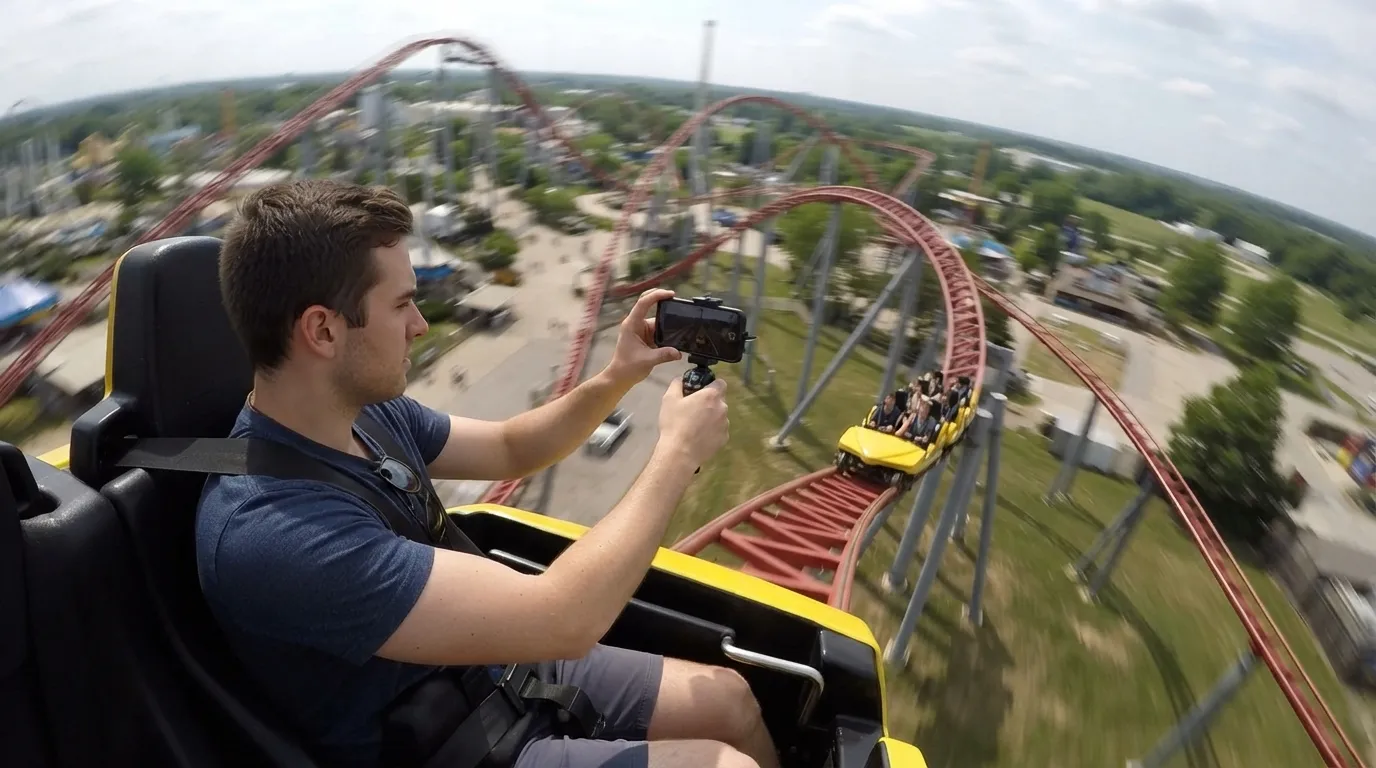
The dream is a viral clip. The reality is often a stalled ride and a very unhappy line. Many parks ban phones and cameras on moving attractions because loose devices can fall, fly, or pull a rider out of a safe position.
Worth Knowing
- Cedar Point and other parks explicitly prohibit picture-taking or phone use on coasters.
- A ride halt or ejection is a real possibility for guests who try anyway.
- The risk is the device as much as the person: a phone can become a hazard at speed.
- Posted signs at the ride entrance spell out what’s allowed on that specific attraction.
The danger isn’t just to the person filming. A dropped phone at speed can be a hazard to everyone nearby.
#12 – Climbing Into Restricted or Employee-Only Areas
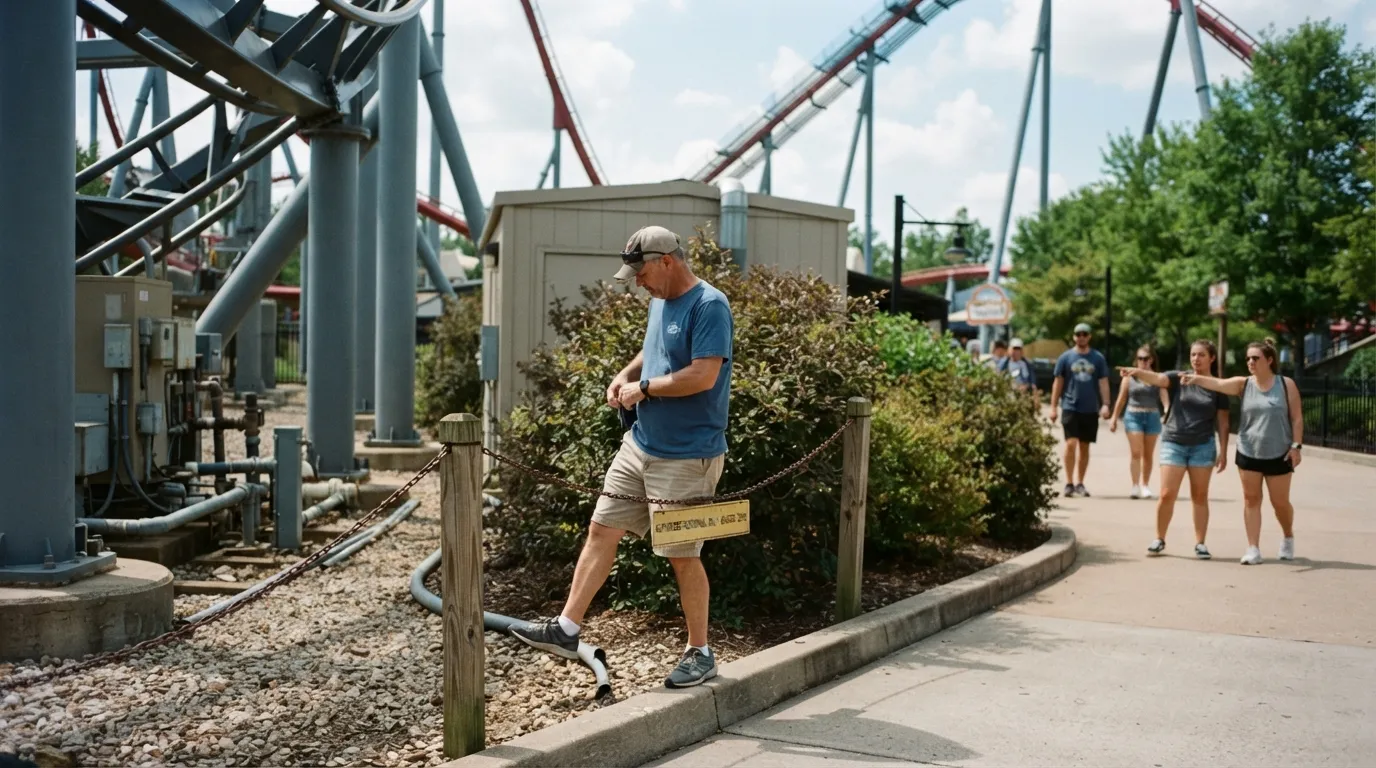
Dropped sunglasses, a perfect photo angle, a shortcut past a barrier: none of those justify stepping into a restricted zone. Disney and Universal policies forbid unauthorized access to backstage areas and ride danger zones.
Those areas contain equipment and mechanisms that were never designed for guests. A person hopping a barrier can force a ride to shut down while staff sort it out.
Violations can lead to immediate removal and, in some cases, a trespass notice. And everyone waiting in that line pays for it in lost time.
#11 – Showing Up Impaired in a Family Setting
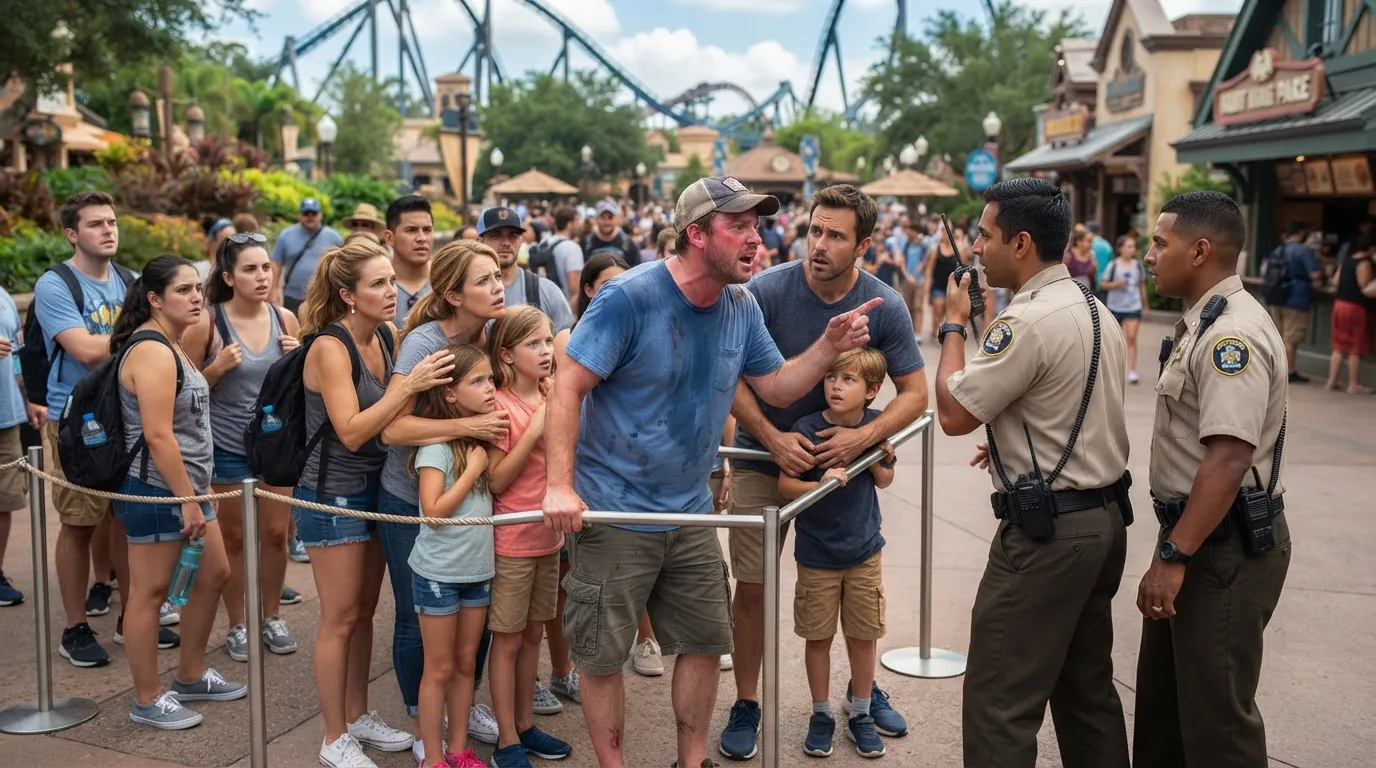
A few drinks too many can turn a good-natured guest into a loud, unsteady, or confrontational one. In a park full of children, that gets noticed fast.
Conduct codes at many parks prohibit intoxication or impairment that leads to irresponsible behavior. Policies allow removal without a refund when someone’s condition affects the peace or safety of other guests.
To the person who’s impaired, it might feel like relaxing. To the family beside them in line, it can feel like a threat they didn’t expect to face on vacation.
#10 – Wearing Clothing With Offensive Messages
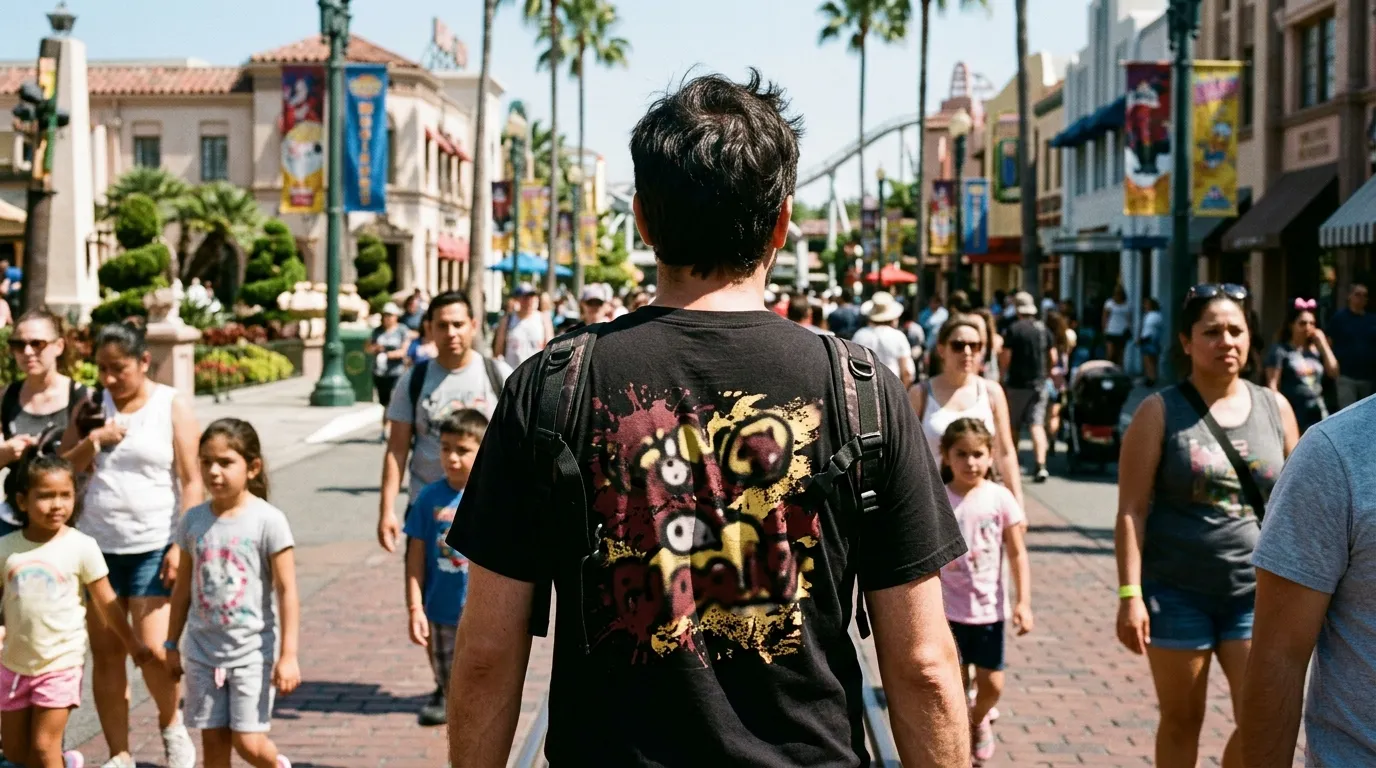
Some guests treat a theme park like a place to make a statement, literally, with a graphic T-shirt. Park attire policies at Disney, Six Flags, and others reserve the right to deny entry or ask guests to change or leave if their clothing is obscene, threatening, or inappropriate.
The rules give management discretion over what detracts from a family-friendly atmosphere. Guests who push the limits often end up being asked to change.
At some properties, visible tattoos with objectionable content may be reviewed under similar standards. The point is the same: the message is on you, but the discomfort lands on everyone nearby.
#9 – Over-the-Top Public Displays of Affection
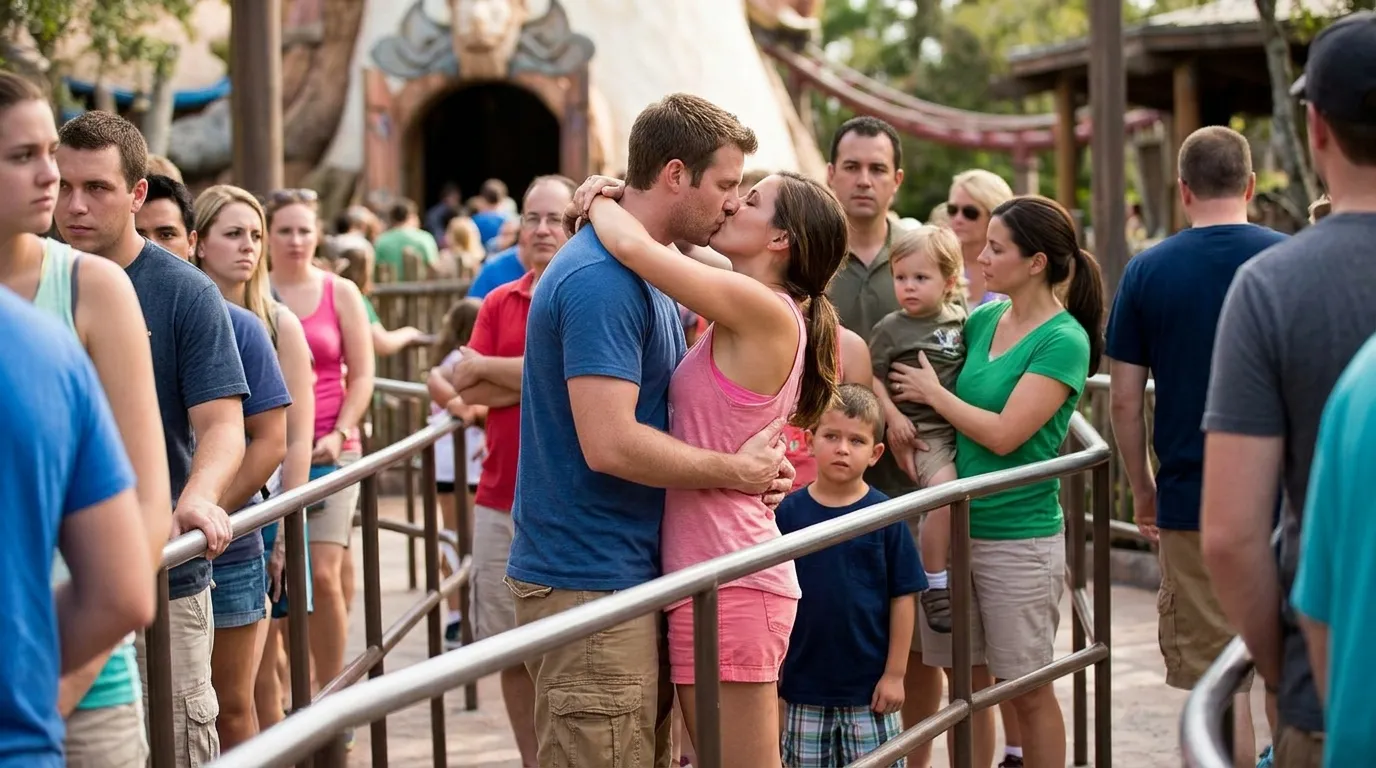
Holding hands is one thing. A make-out session in a queue is another, and the people stuck beside it know exactly where to look instead.
Family-oriented guidelines discourage overt sexual behavior or graphic PDA because parks want a comfortable setting for kids and mixed-age groups. Lewd or inappropriate behavior is listed as a possible ejection offense.
At a Glance
- Normal affection, like holding hands or a hug, is tolerated.
- Graphic or overtly sexual behavior is discouraged in family guidelines.
- Lewd conduct is listed as a possible ejection offense.
- A good test: if it draws stares from nearby families, it has probably gone too far.
The standard is basically PG. Normal affection is tolerated, but when it draws stares and uncomfortable glances, it has probably crossed the line.
#8 – Throwing Things Near Rides and Crowds
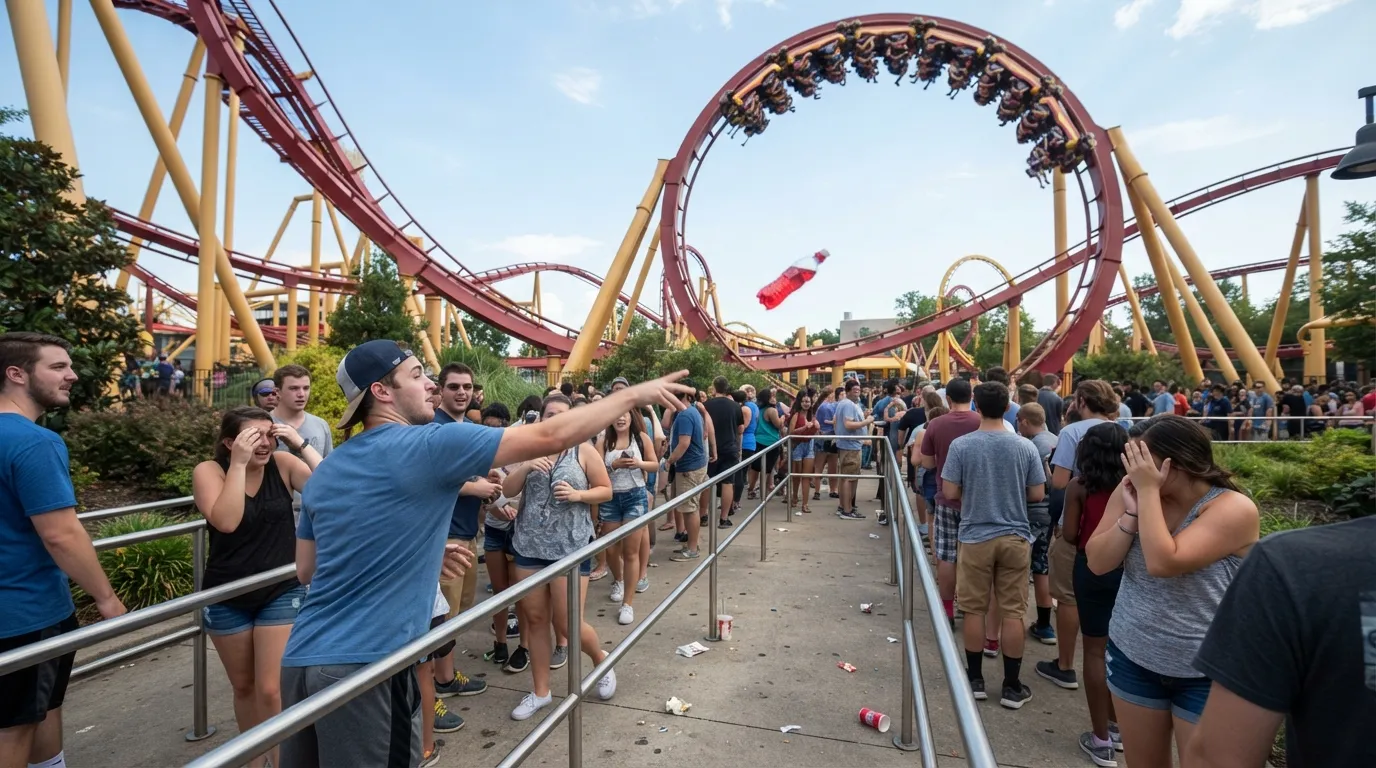
A tossed toy, a flung wrapper, a ball lobbed across the queue: it only takes one to hit a stranger or land where it shouldn’t. Park rules prohibit throwing objects because they can strike other guests or interfere with ride operations.
Even minor tossing becomes a hazard in a crowded zone. Multiple codes tie it to broader disruptive conduct that can lead to removal.
It’s the kind of thing that seems harmless right up until someone’s eye, drink, or child gets in the way.
#7 – Arguing With the Staff Member Who Didn’t Make the Rule
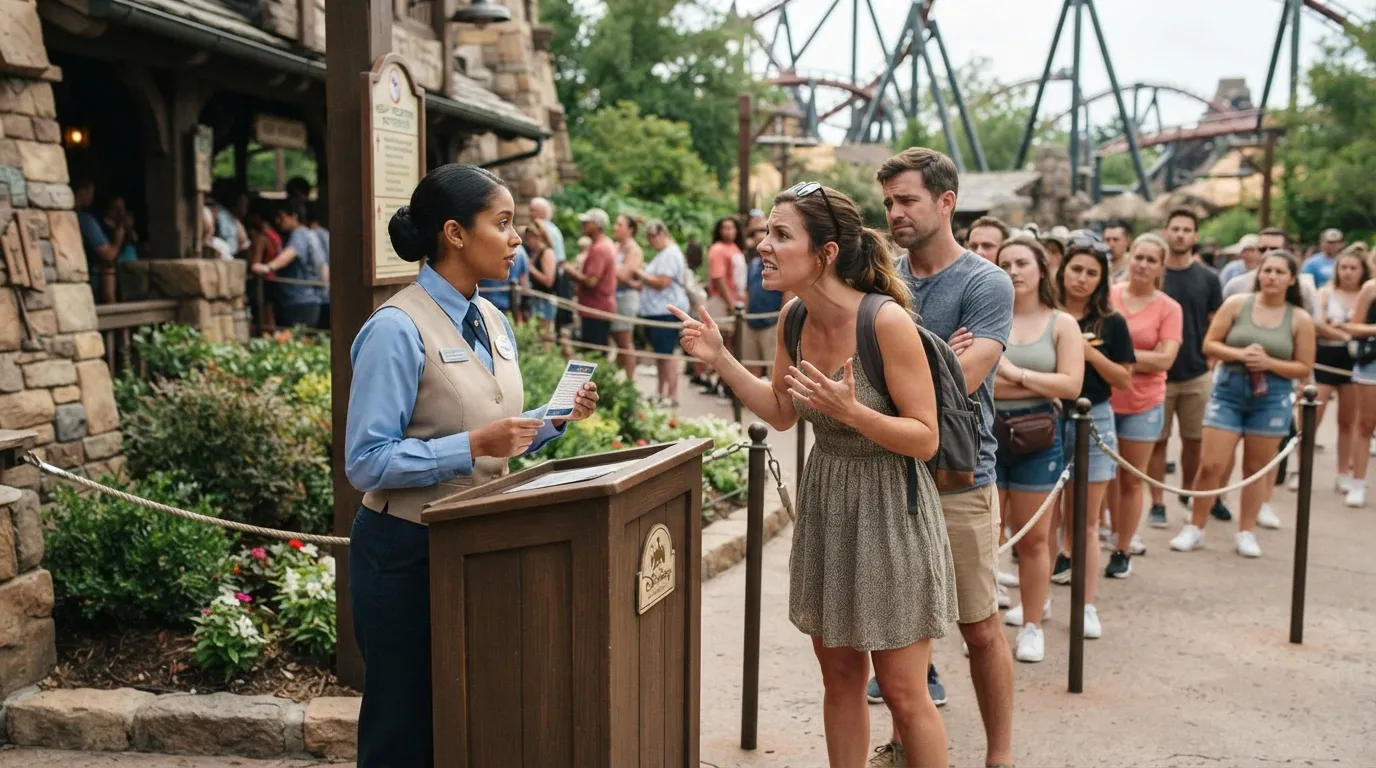
The employee at the ride entrance didn’t write the height requirement or the bag policy. They just enforce it, and they’re usually the first person to hear about your bad day.
Park guidance asks guests to treat cast members and associates with courtesy because they apply rules built for everyone’s safety. Aggressive arguments create tension that spreads through the whole queue.
Persistent disputes can escalate to removal. Meanwhile, everyone watching has to stand there and wait for it to end.
#6 – Blocking Exits and Loitering in Big Groups
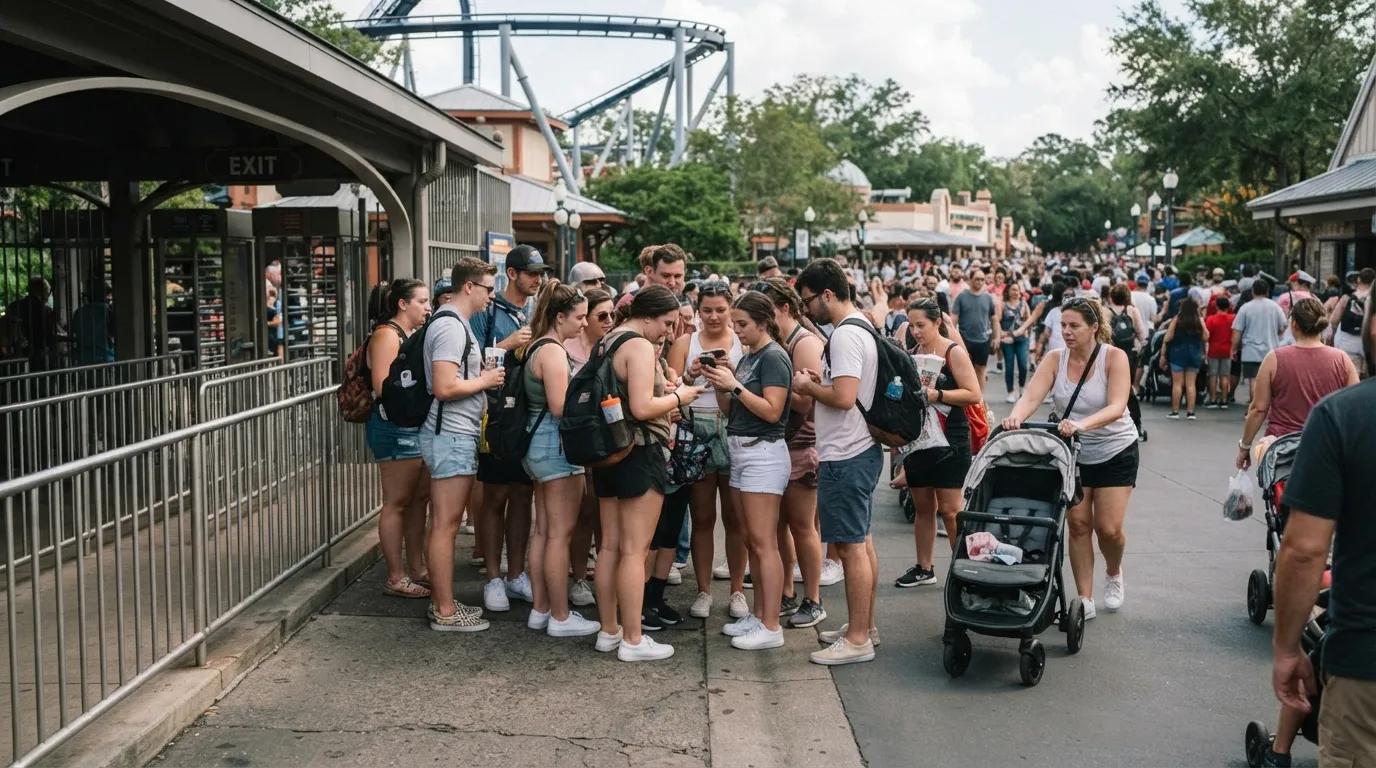
A big group decides the middle of an exit is the perfect place to plan the next move. Everyone else has to squeeze around them.
Universal and Six Flags codes ban loitering or moving in ways that obstruct entrances, exits, or walkways. These rules target behavior that inconveniences the broader crowd, not someone briefly stopping.
Clear paths aren’t just about convenience. They matter most when a crowd needs to move quickly, which is why parks take blocked exits seriously.
#5 – Bringing Selfie Sticks Where They Don’t Belong
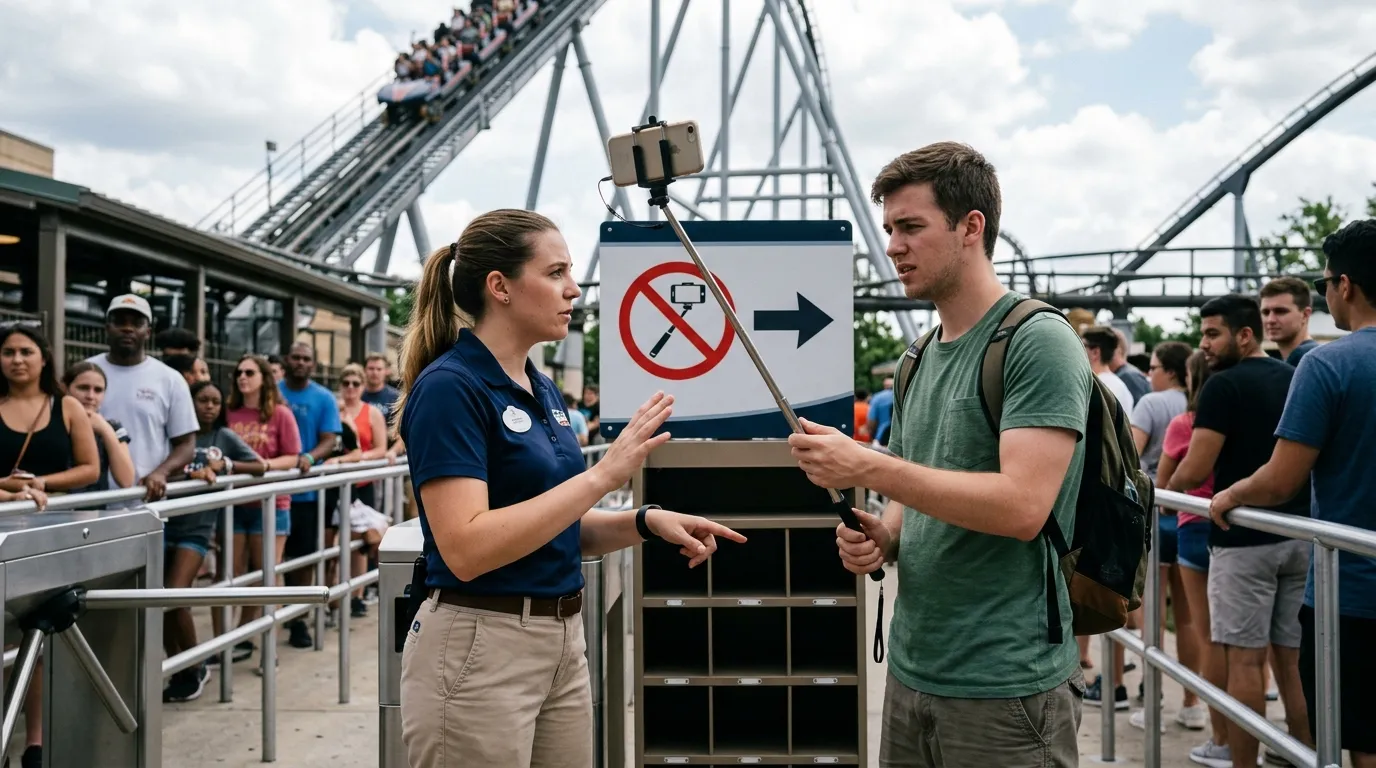
A selfie stick looks harmless until you picture it on a ride at speed. Parks restrict or ban them on attractions because they can become projectiles or cause entanglement.
Disney and Universal both have policies limiting these extensions. When a guest ignores the restriction, staff have to step in before boarding, and the item may be confiscated or ride access denied.
It’s a small item that can cause a big delay, usually right at the front of a long line.
#4 – Jumping Into Ride Water or Leaving a Vehicle Midway
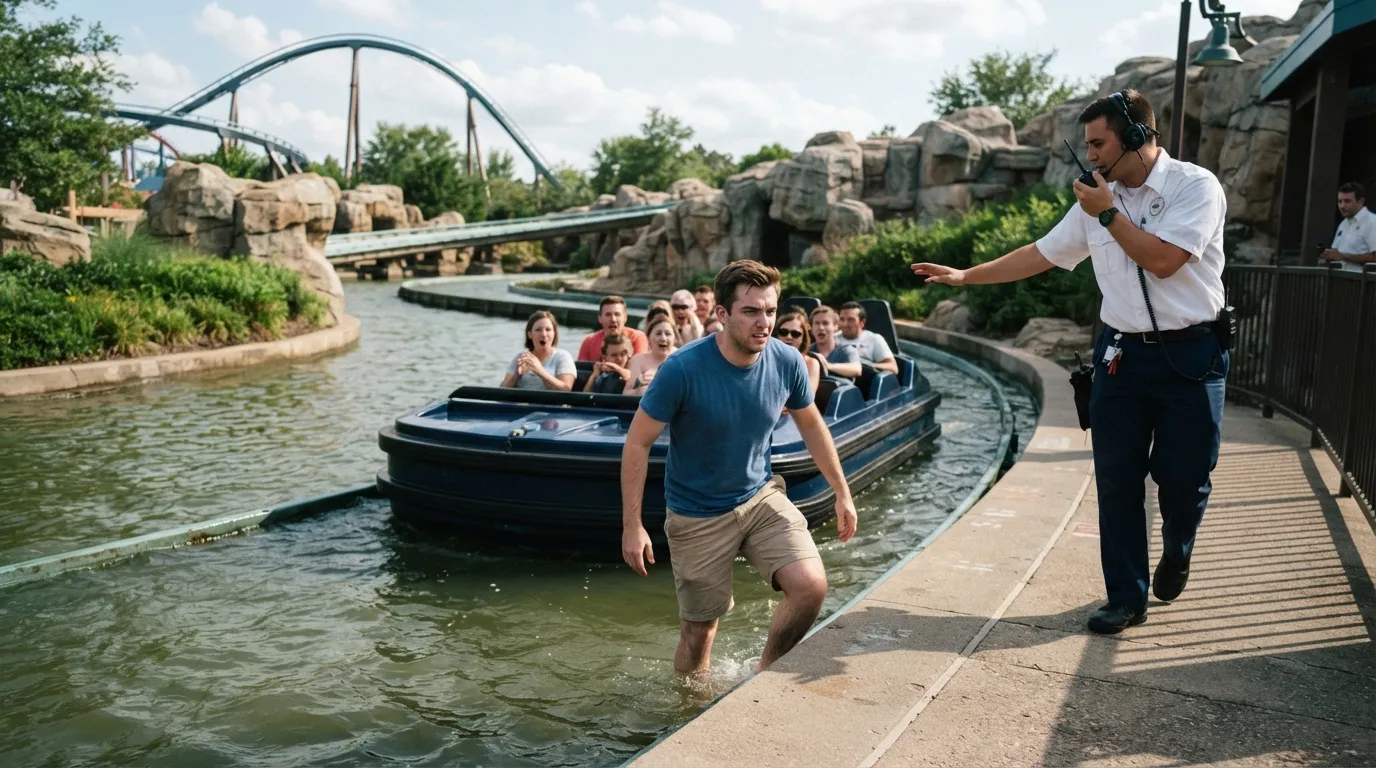
It sounds unbelievable, but guests have climbed out of ride vehicles and into water features. Park safety rules strictly prohibit it, and the consequences are serious.
Disney has banned guests who left boat attractions or entered ride water, since the behavior endangers everyone involved. Such incidents can trigger a full ride shutdown while staff address the situation.
Everyone else in the line loses their wait, and the rider who jumped can lose a lot more than a day at the park.
#3 – Harassing, Threatening, or Picking Fights
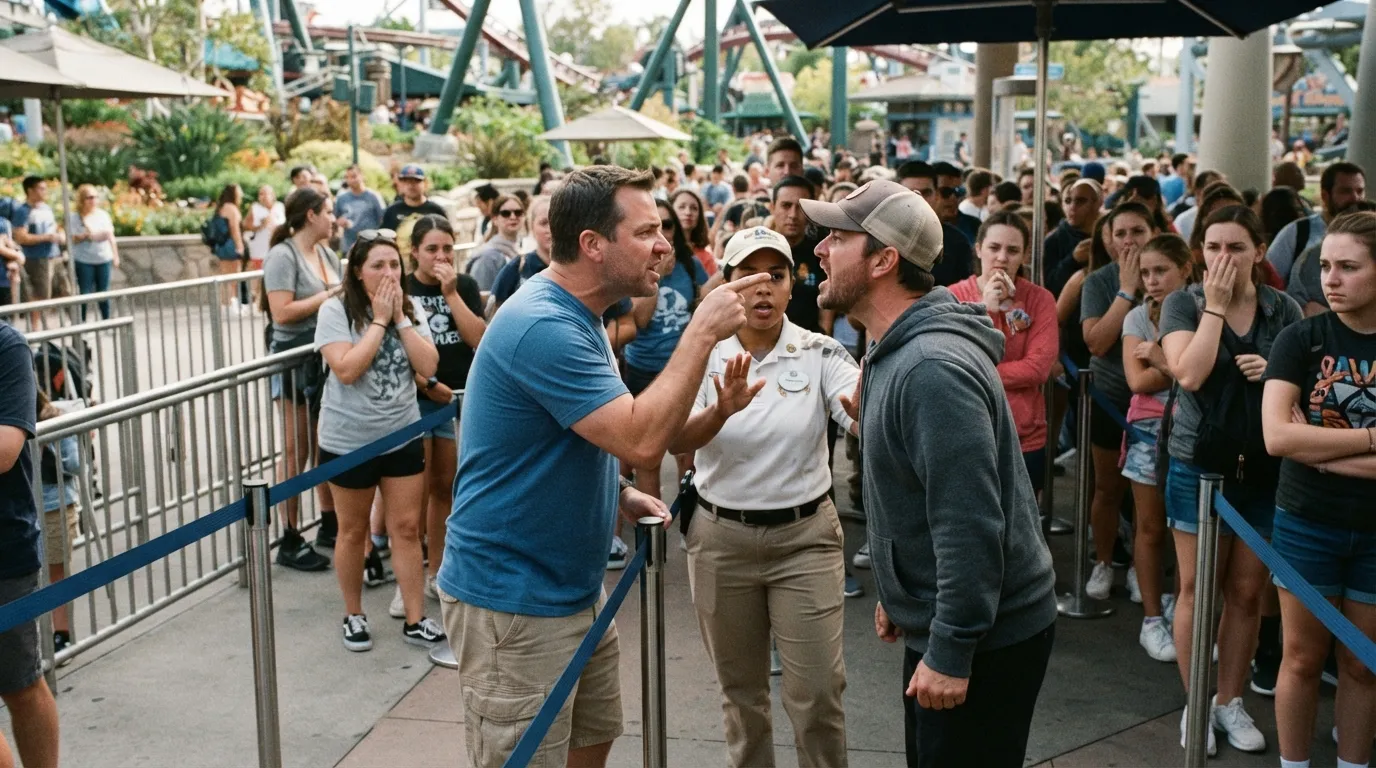
Few things drain the fun out of a place faster than watching an argument turn ugly. Operators across the industry list threats, physical aggression, and harassment as zero-tolerance offenses.
Why It Stands Out
- Removal without a refund is standard for this kind of conduct.
- Severe cases can involve law enforcement.
- Verbal intimidation counts, whether it’s aimed at staff or other guests.
- Bystanders, not just the people involved, are the ones who feel unsafe.
Removal without a refund is standard, and severe cases can involve law enforcement. Verbal intimidation, whether aimed at staff or other guests, makes bystanders feel unsafe.
The fight might be about something small, like a spot in line or a bump in the crowd. But it’s often dozens of witnesses whose day gets ruined.
#2 – Gaming the Height Rules for Kids
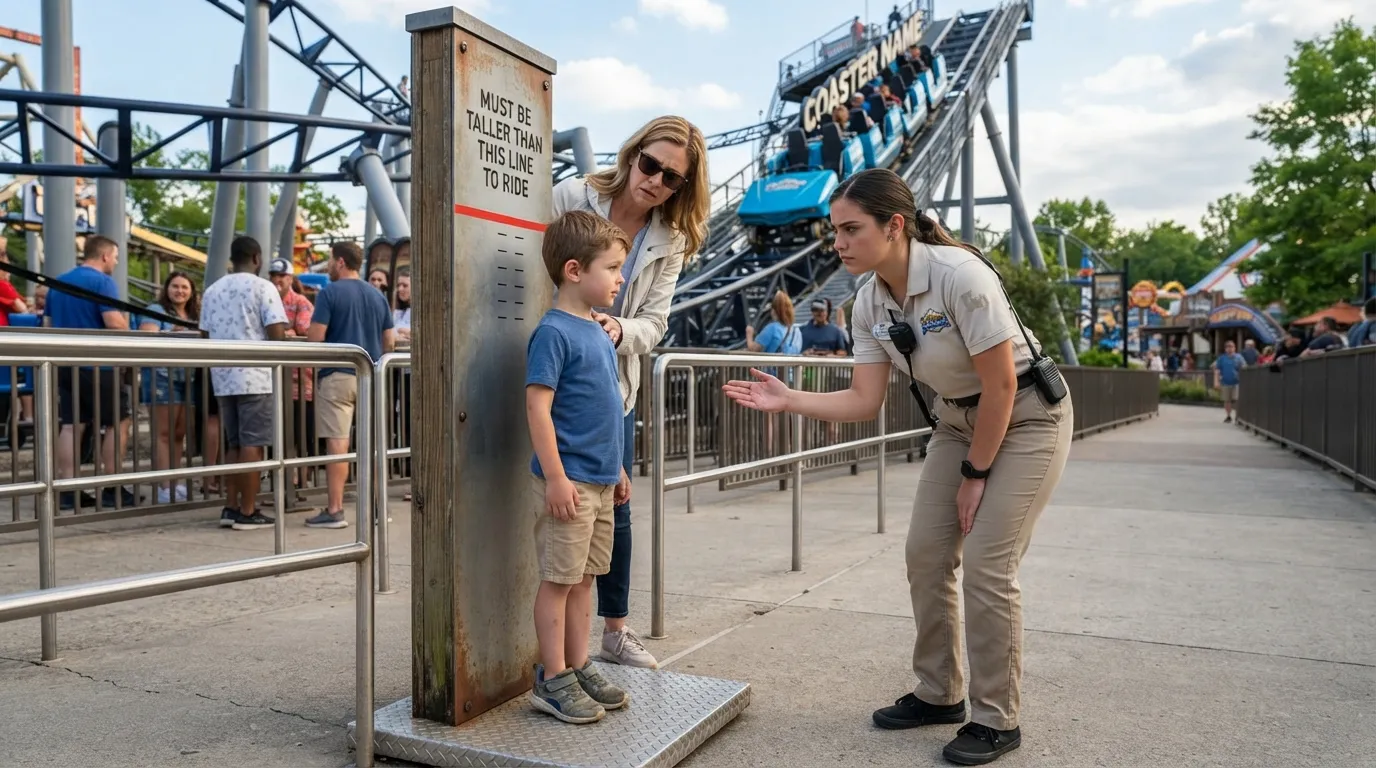
A child stands on tiptoes, someone slips a shoe insert in, or a parent coaches them to slouch less. Height and eligibility rules exist because restraints and ride systems are designed around certain body sizes.
Trying to bypass them puts the child at risk, along with the riders around them. Parks enforce the rules strictly because a poor fit can force an attraction to stop.
Operators, not guests, make the final call, and staff have the authority to deny boarding when rules are clearly being circumvented. It’s a disappointing moment for a kid, and usually it’s one a parent could have avoided.
#1 – Ignoring Loose-Article Rules and Triggering Ride Stops
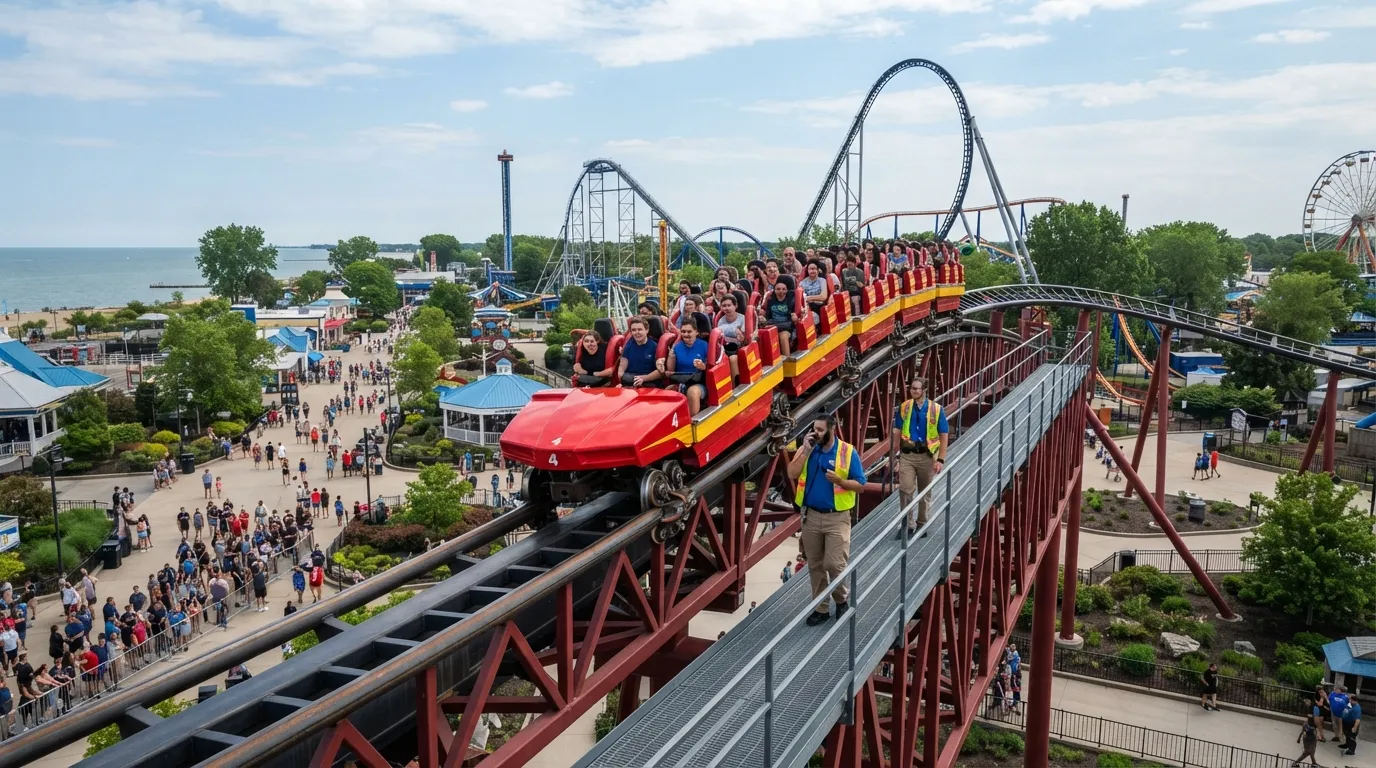
It starts with a hat, a pair of sunglasses, or a phone slipping out of a pocket. On a high-motion ride, any of them can become a problem for riders and operators alike.
Parks like Cedar Point and Disney ask guests to secure or store loose articles before boarding. When items fall or riders shift into unsafe positions, rides may need to be paused so staff can check on things.
That’s what makes this one so frustrating. Hundreds of people can wait longer because someone didn’t zip a pocket, and the whole line feels it.
Look at the whole list and a pattern shows up. Almost every item involves someone shifting their inconvenience, risk, or bad mood onto strangers who just wanted a good day.
Park policies are built around that idea, and they tend to target behaviors that cost the most people the most time or comfort. The best-behaved guests often don’t stand out at all, because the day just works for them and for everyone around them.
Did we miss one? Drop it in the comments.
CEO-Co-Founder