
- 15 Songs That Sparked Generations of Activists - October 23, 2026
- 20 Books That Brought American Myths to Life - October 23, 2026
- The True Origins of America’s Greatest Rock Bands - October 23, 2026
Street food can be the best meal of your trip, but the stall that looks freshest and draws the biggest crowd isn’t always the safest one.
Public health and traveler advice point to quieter risks in water, handling, and temperature, and some of these rules are usually learned during a miserable night in a hotel bathroom.
#18 – Skip the Ice in Your Drink
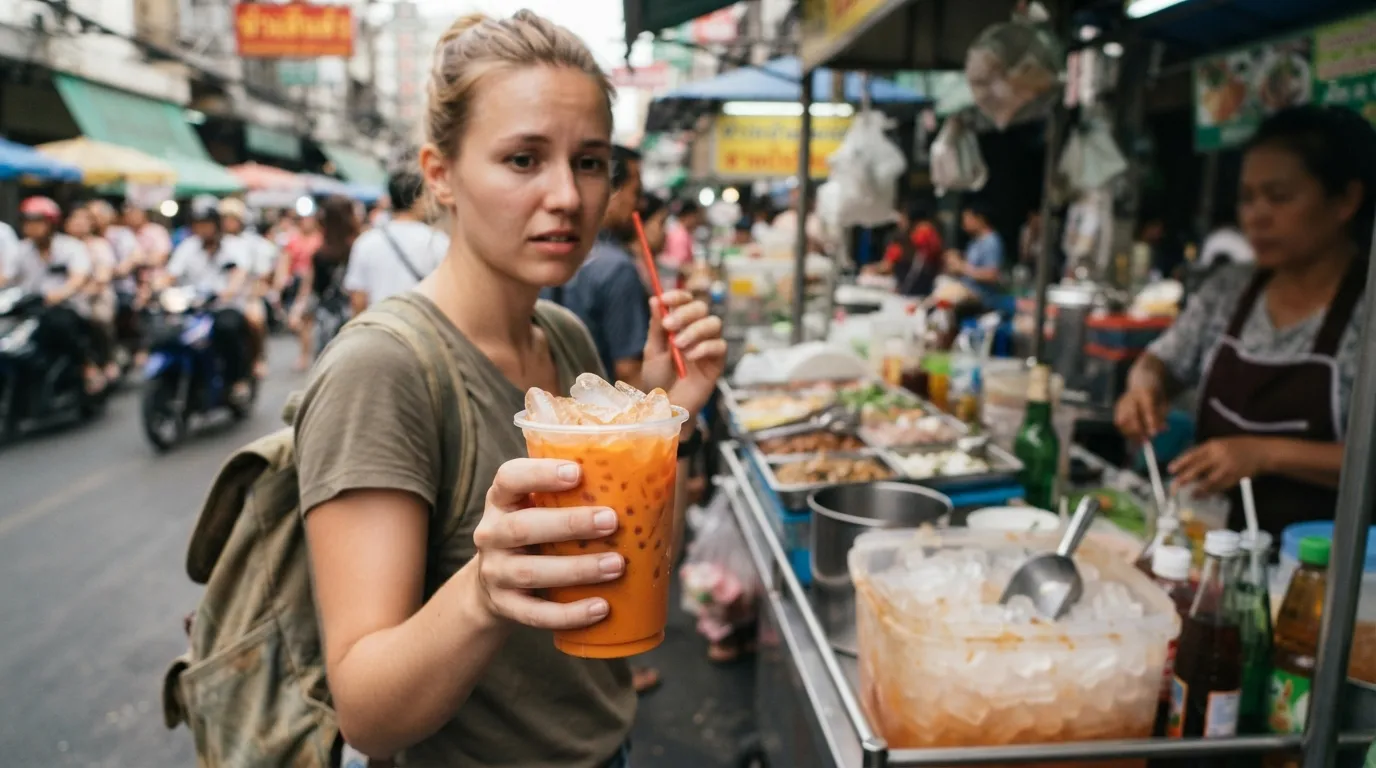
Clear ice looks harmless, but public health sources warn it may be made from untreated local water. As it melts, it mixes straight into a drink that otherwise seems fine.
Ask for no ice, or confirm it comes from sealed bottled water. Busy vendors may refill trays without anyone checking the source.
#17 – Choose Sealed Bottled Water Only
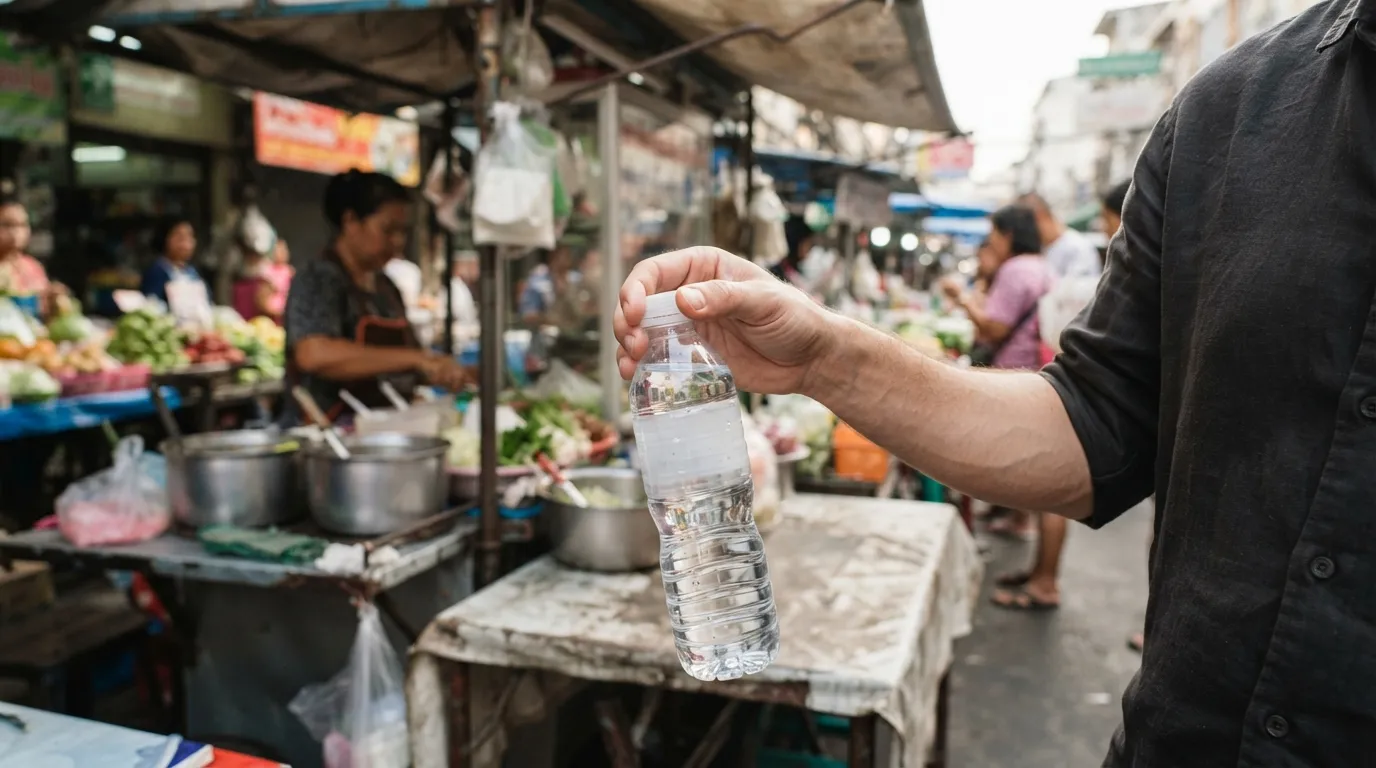
Sealed bottles keep you away from local supplies that may carry pathogens. Open containers or refills at a stall leave you guessing about what’s really inside.
Check that the seal is intact before you pay, since refilled bottles can look brand new. A reusable bottle helps, as long as you fill it from a trusted, safe source.
#16 – Peel Fruits Yourself When Possible
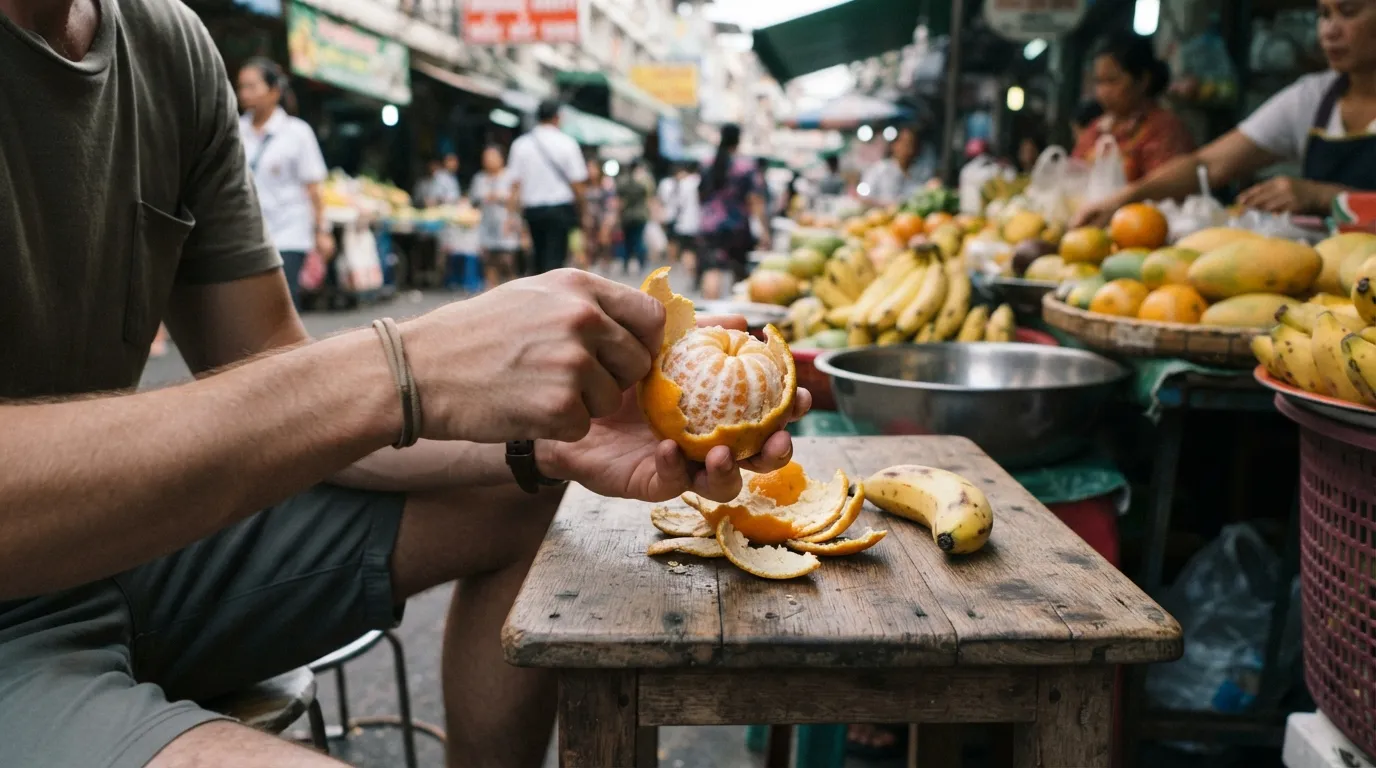
Pre-peeled fruit can sit out after being handled with unwashed hands or set on dirty surfaces. Public health advice favors whole fruit that you peel right before eating.
The peel works as a barrier until the moment you open it. Bananas and oranges are easy examples, and they spare you the vendor’s knife and cutting board.
#15 – Pick Food Cooked to Order in Front of You
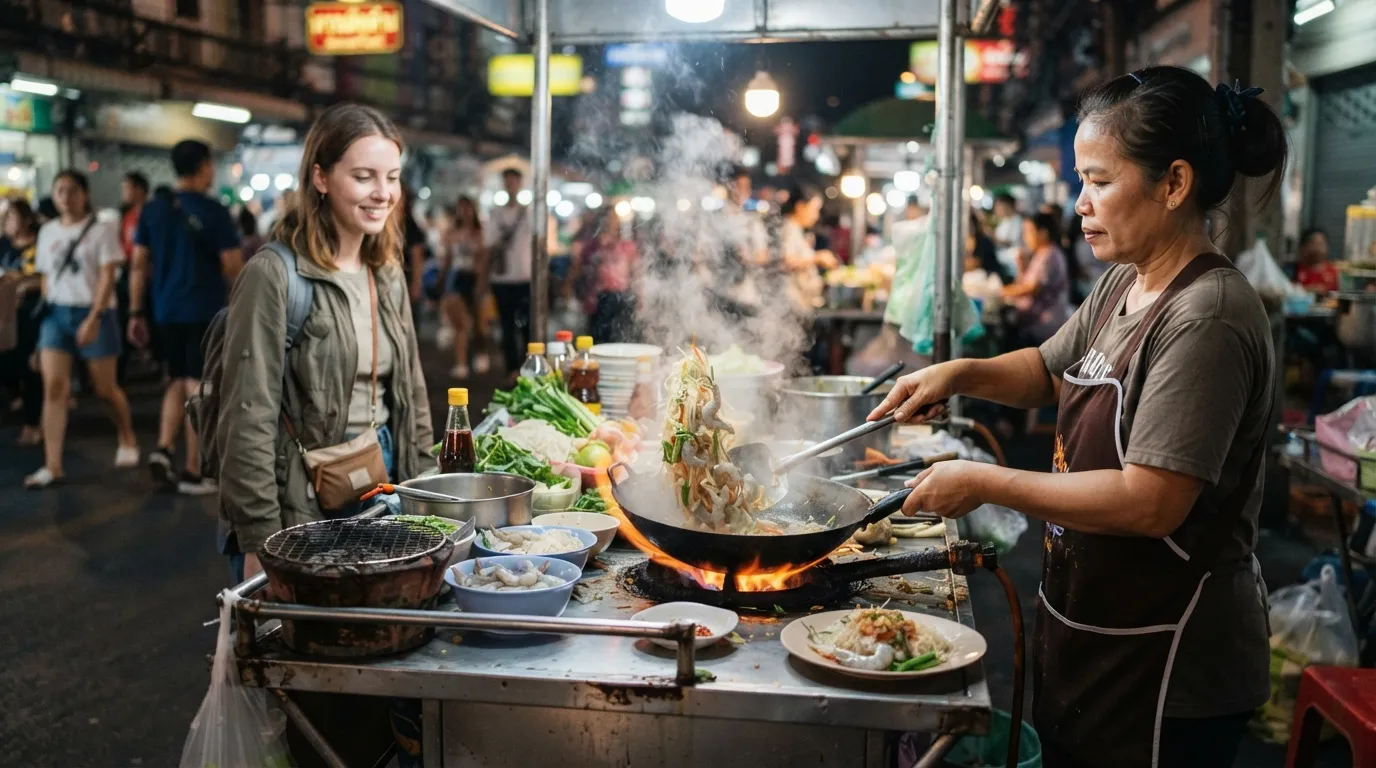
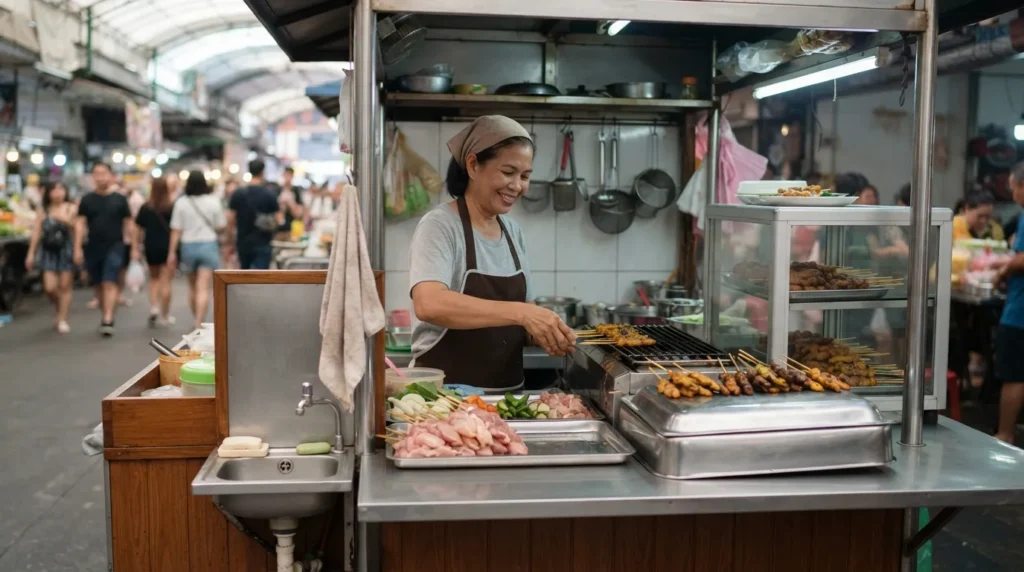
When your meal is cooked while you watch, you see the whole process. Heat is one of the most dependable ways to kill many of the germs that cause food poisoning.
Choose the stall where your food goes straight from raw to hot pan or grill. You can see what touches it along the way, and nothing has time to sit around.
#14 – Eat It Steaming Hot or Not at All
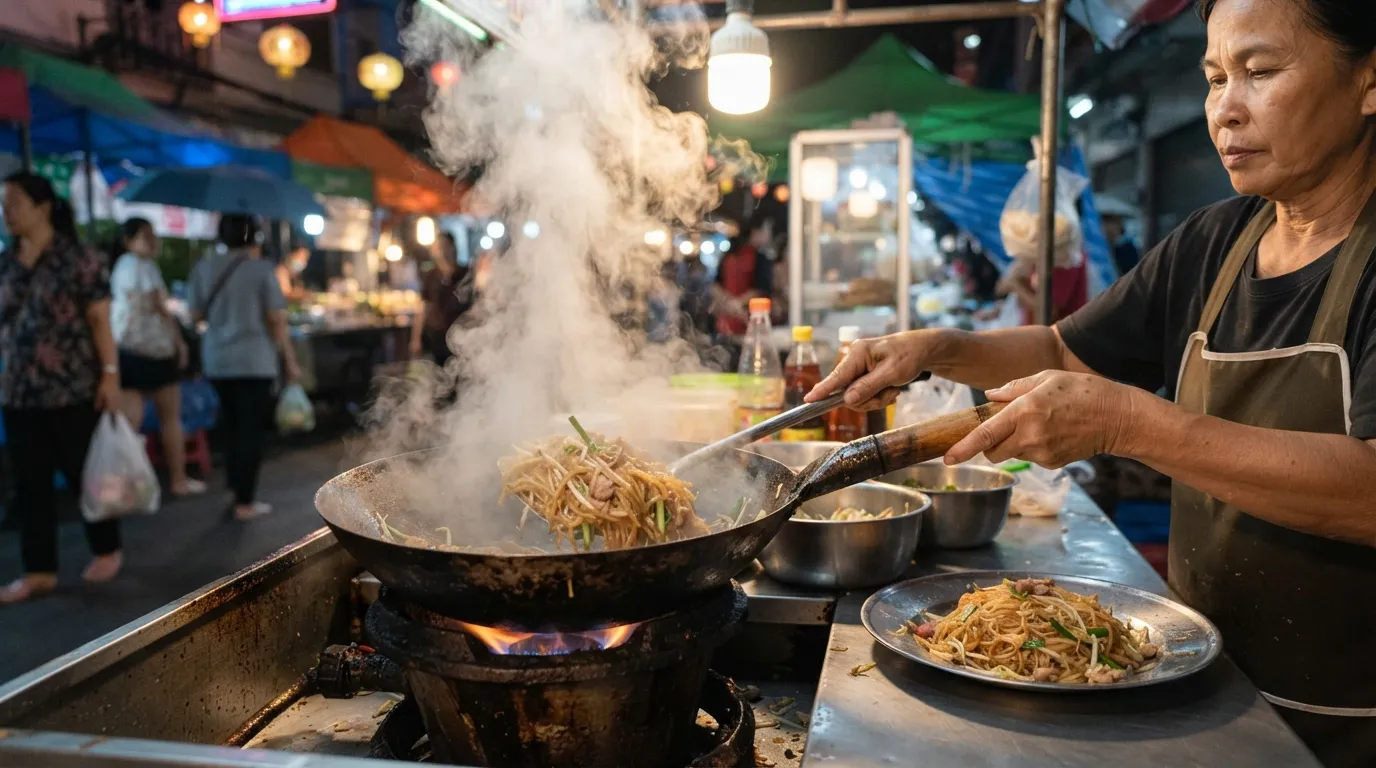
Travel health guidance often boils down to eating food that is thoroughly cooked and served hot. Lukewarm dishes sit in a temperature range where bacteria can multiply.
Fast Facts
- The USDA puts the bacteria “danger zone” between 40°F and 140°F (about 4°C to 60°C).
- Cooked food left out for more than 2 hours should be tossed, or 1 hour when it’s above 90°F.
- Poultry is considered safe at an internal temperature of 165°F.
- You won’t have a thermometer, so rely on visible steam and a hot center.
If your noodles or skewers arrive barely warm, send them back or walk away. Steam rising off the plate is a better sign than a pretty display.
#13 – Follow Fast Turnover, Not Just the Crowd
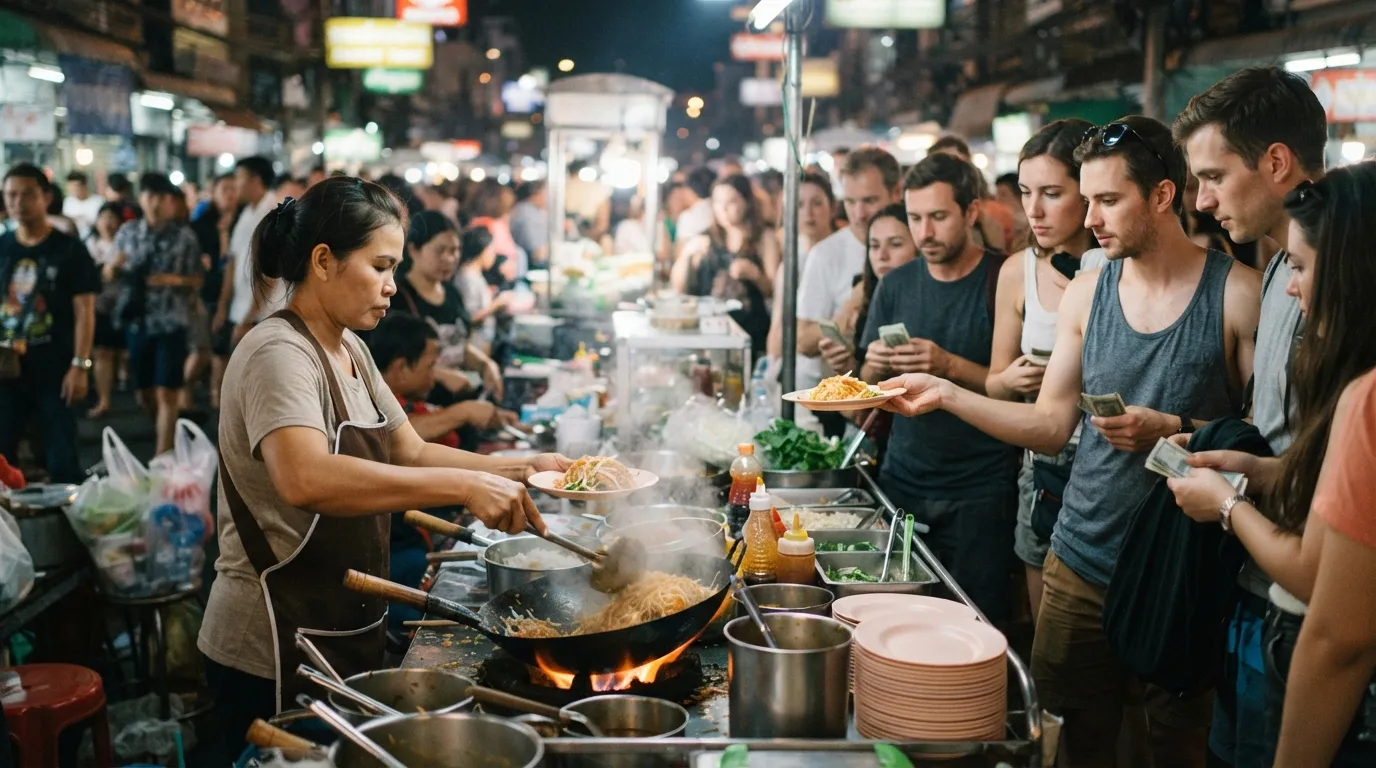
A long line only helps if the food is actually moving. Quick turnover means ingredients get used soon after cooking instead of lingering in the open air.
Watch for a few minutes. Are fresh batches coming off the heat and plates leaving quickly? That tells you more than popularity alone, which can still hide sloppy handling.
#12 – Be Wary of Food Sitting Out on Display
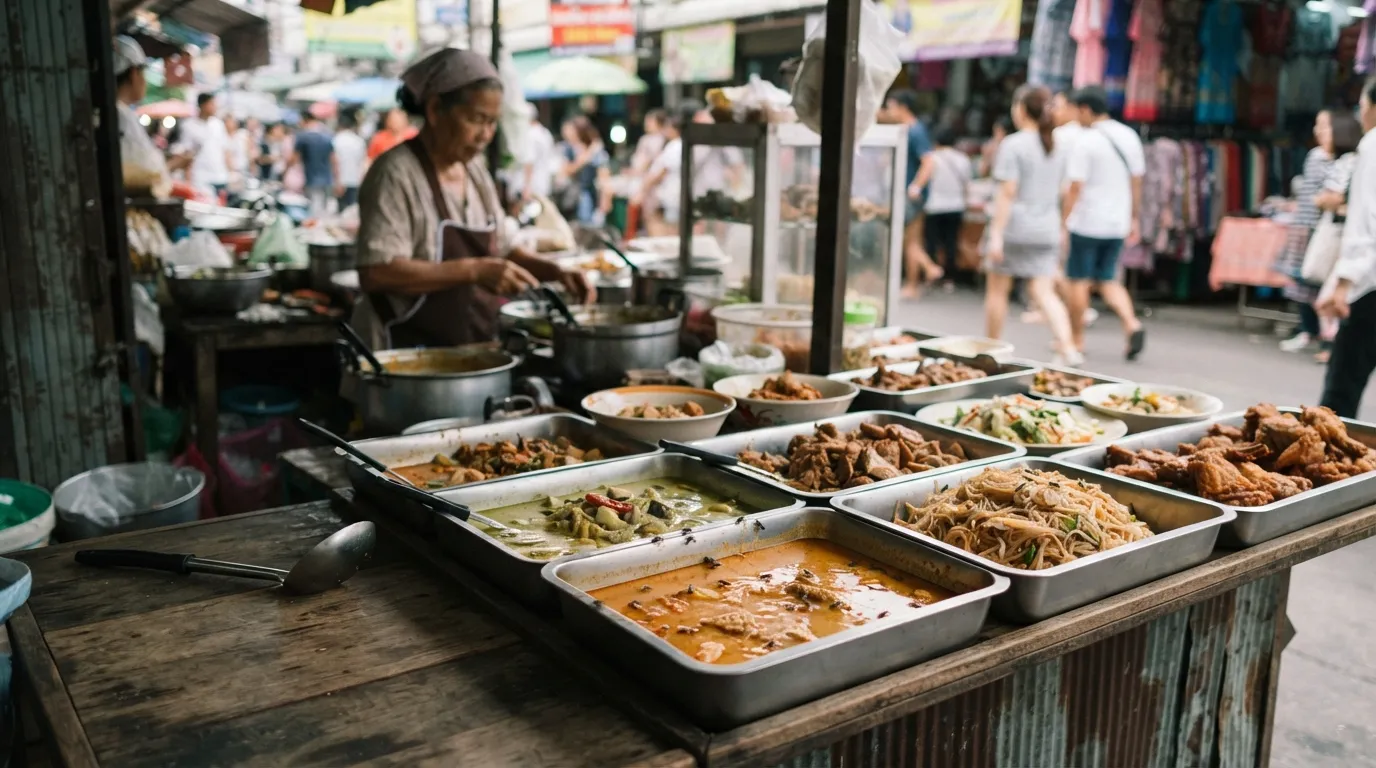
Trays of cooked food left at room temperature give bacteria time to grow. Open displays also invite dust, flies, and curious hands.
Food that was safe when it left the heat may not be hours later. Choose items kept hot or made fresh, and move on from anything that looks tired.
#11 – Watch Who Handles the Money
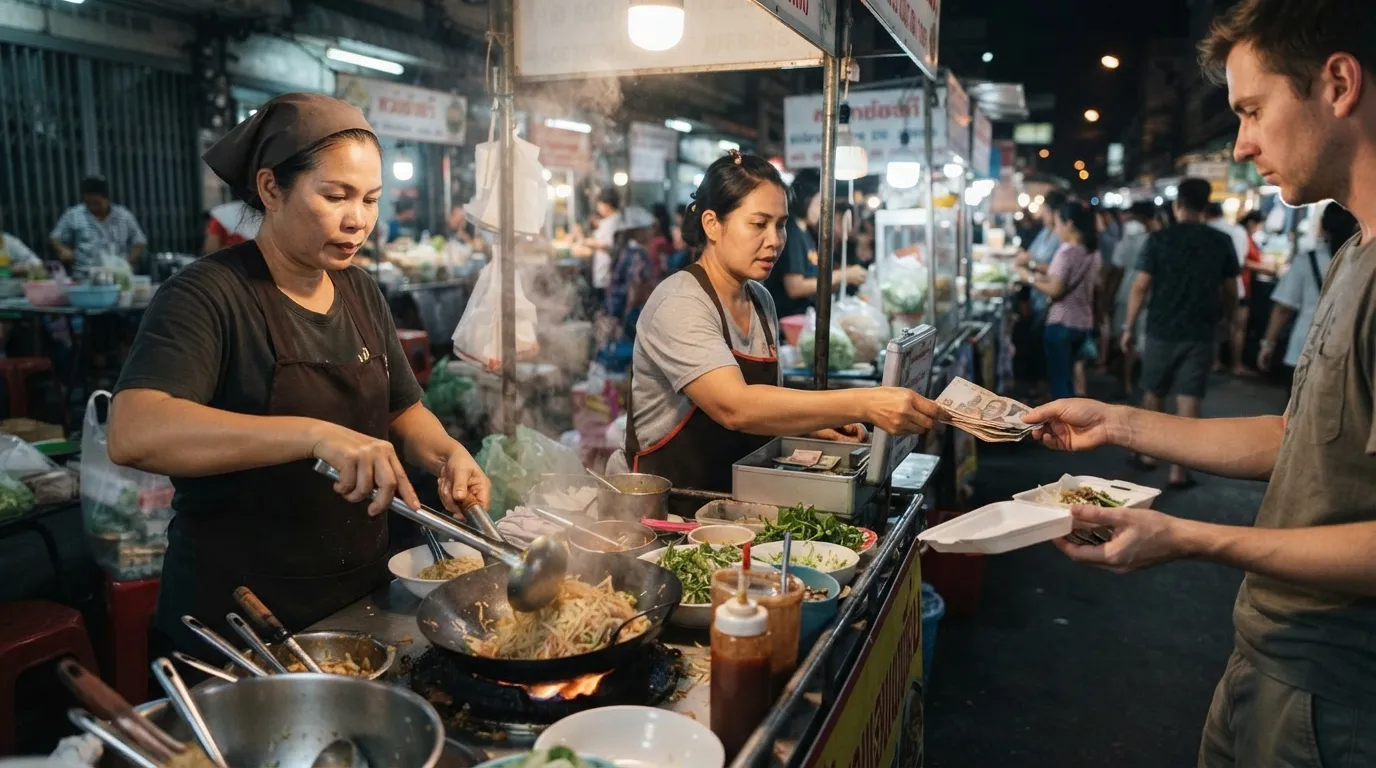
Coins and bills pass through countless hands, and then a vendor may reach straight for your food. Cash can carry germs, and handling it without washing creates an easy path to your plate.
Look for stalls where one person takes payment and another prepares food. Tongs, wrappers, or other barriers beat bare hands.
#10 – Clean Your Own Hands After You Pay
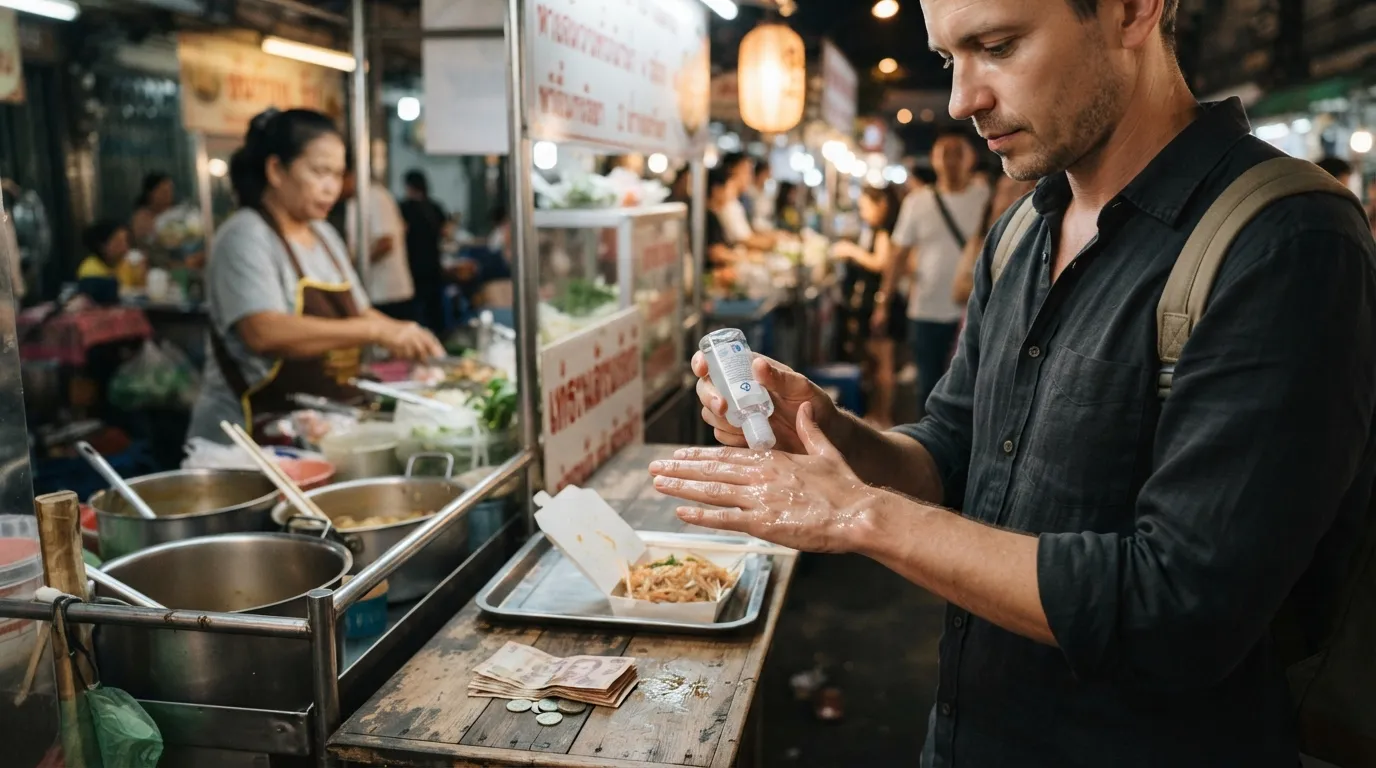
Your hands count too. After touching cash, railings, or shared surfaces, you can carry germs directly to food you eat with your fingers.
Worth Knowing
- The CDC advises a hand sanitizer with at least 60% alcohol.
- Rub it over every surface of your hands until they feel dry.
- Sanitizer works less well on visibly greasy or dirty hands, so soap and safe water is the better choice then.
- Pay first, clean up, then take the food.
If soap and safe water aren’t around, sanitizer is a solid backup. Just use it before you eat, not after.
#9 – Skip Raw Salads and Garnishes
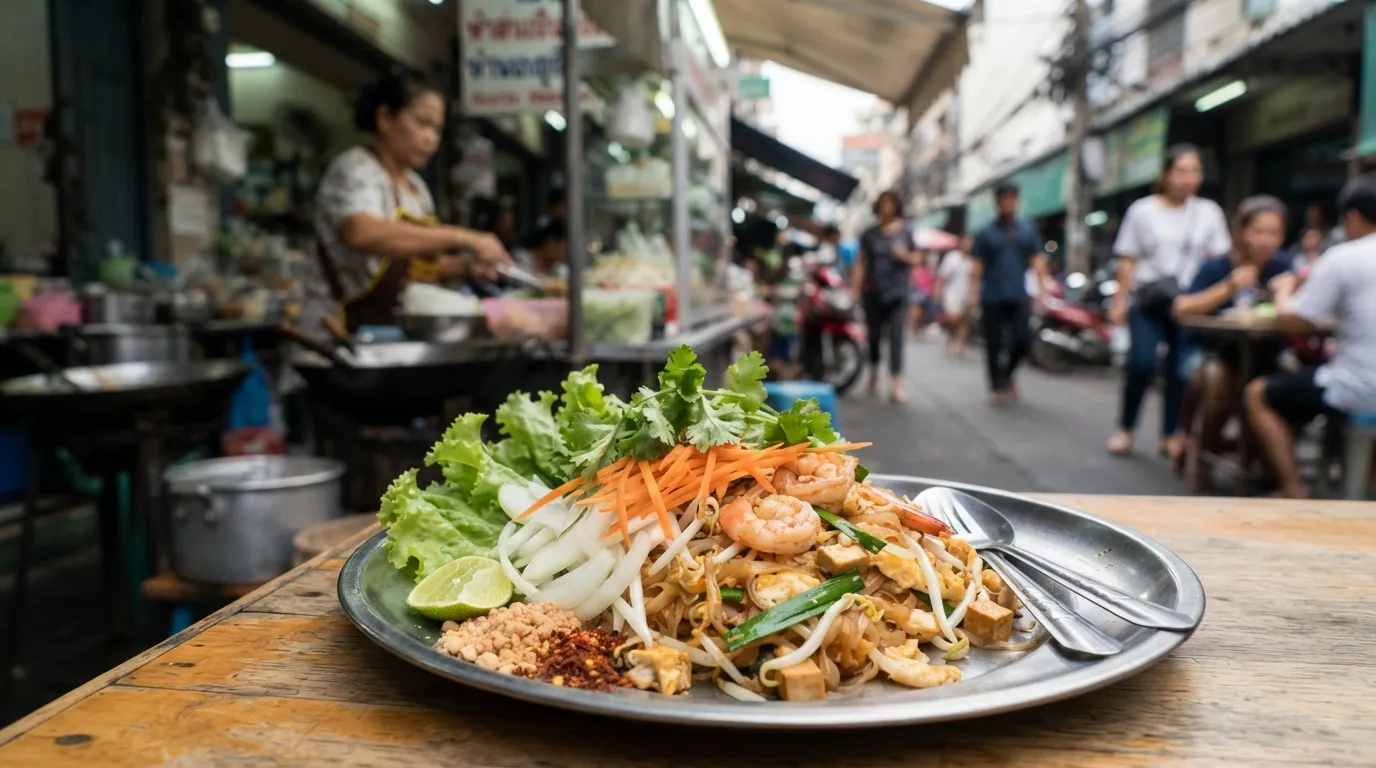
Raw vegetables are often washed in local water, and toppings like lettuce, herbs, and sliced onions go on the plate uncooked. Nothing afterward removes whatever they picked up.
Ask for your dish without raw toppings, or stick with cooked vegetables. That pretty side salad is a quiet risk.
#8 – Think Twice About Fresh Juice and Smoothies
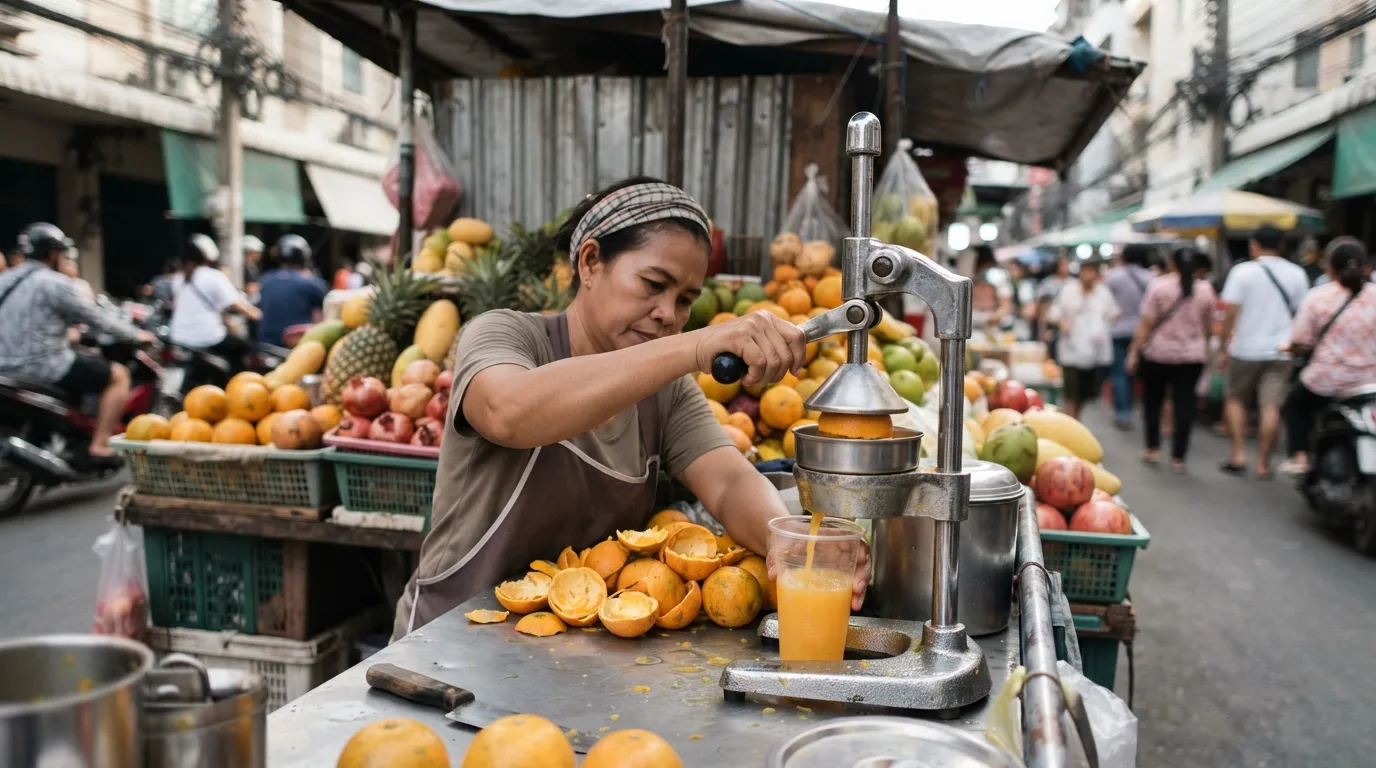
Juice may come from fruit washed in local water, blended with ice, or thinned with tap water. That packs several risks into one cup.
Choose a stall where you can watch whole fruit being peeled and squeezed, and ask for no ice or added water. Sealed bottled juice is the safer fallback.
#7 – Make Sure Meat Is Cooked All the Way Through
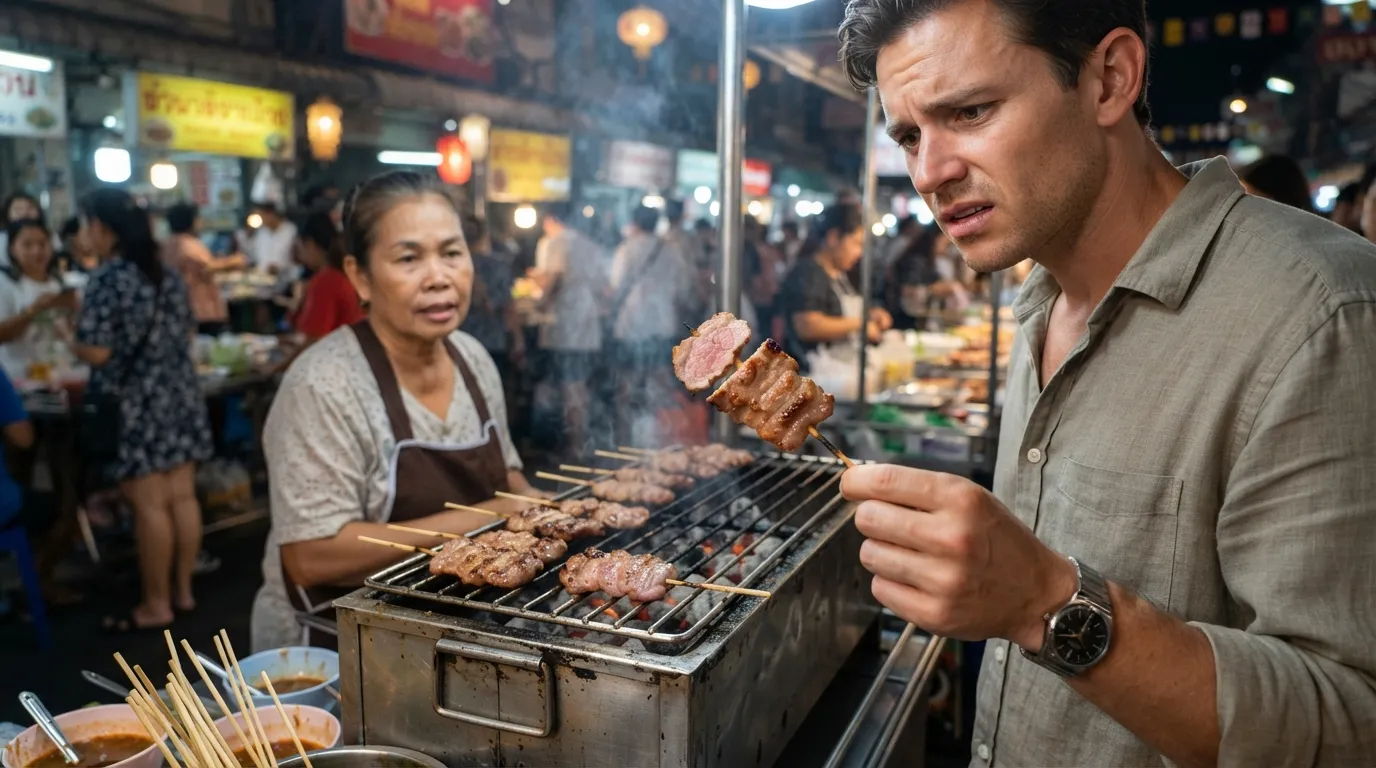
Pink centers, cool middles, and half-grilled skewers are red flags. Meat, poultry, seafood, and eggs need proper heat to reduce the germs they can carry.
If the inside isn’t hot all the way through, ask for it to go back on the grill. A moment of awkwardness beats days of regret.
#6 – Avoid Food Reheated From Earlier in the Day
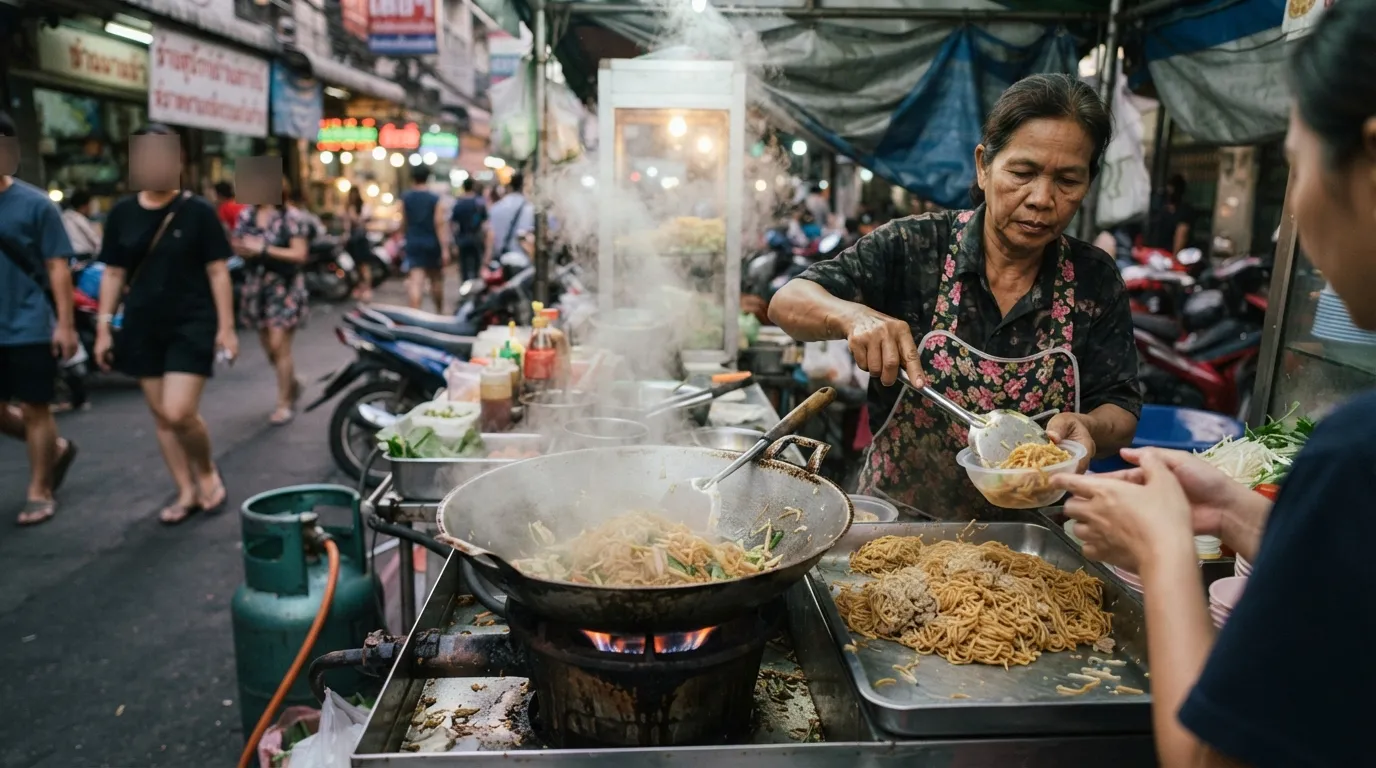
Cooked food that cools slowly and gets warmed up later gives bacteria extra chances to grow. A quick reheat can also leave cool spots in the middle.
Quick Compare
- Cooked to order: the heat is applied minutes before you eat, so bacteria have little time to build.
- Reheated leftovers: USDA advises reheating to 165°F throughout, which is hard to confirm at a stall.
- Your best check: steam rising from the center, not just a hot surface.
Choose dishes made fresh when you can. If something must be reheated, it should be steaming hot throughout, not just warm on top.
#5 – Think Twice About Rice and Stews Left Sitting
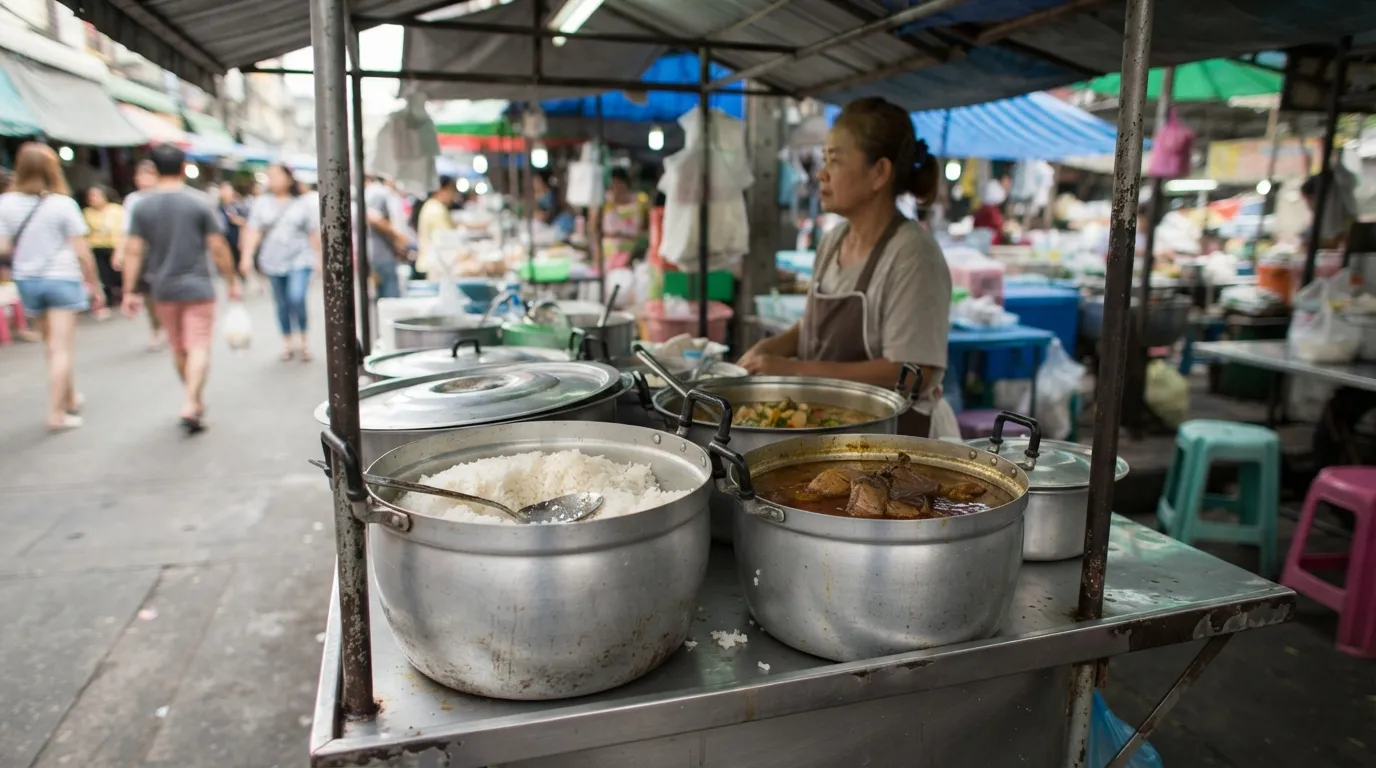
Rice, soups, and stews held in big pots at lukewarm temperatures can be risky. Cooked rice left at room temperature is a known concern, and reheating may not fix the problem.
Look for pots that are kept properly hot or dishes served straight from a fresh batch. A pot that has been sitting all afternoon deserves your suspicion.
#4 – Check How Plates and Cups Are Washed
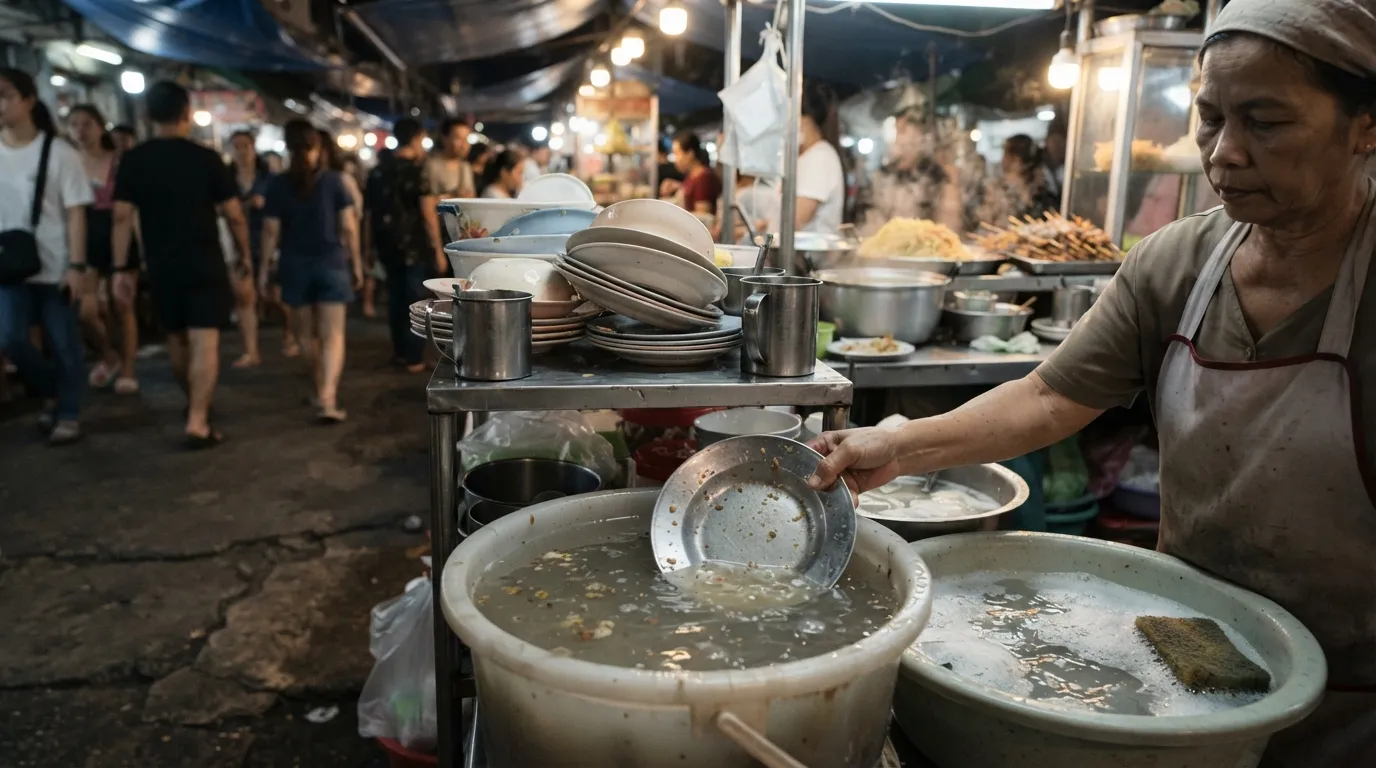
Even well-cooked food can pick up trouble from a plate or cup rinsed in a bucket of dirty water. Shared rinse water spreads germs around instead of removing them.
Look for clean, dry dishes or single-use items. When in doubt, ask for disposable wrapping or use your own utensils.
#3 – If You Can’t Peel It or Cook It, Forget It
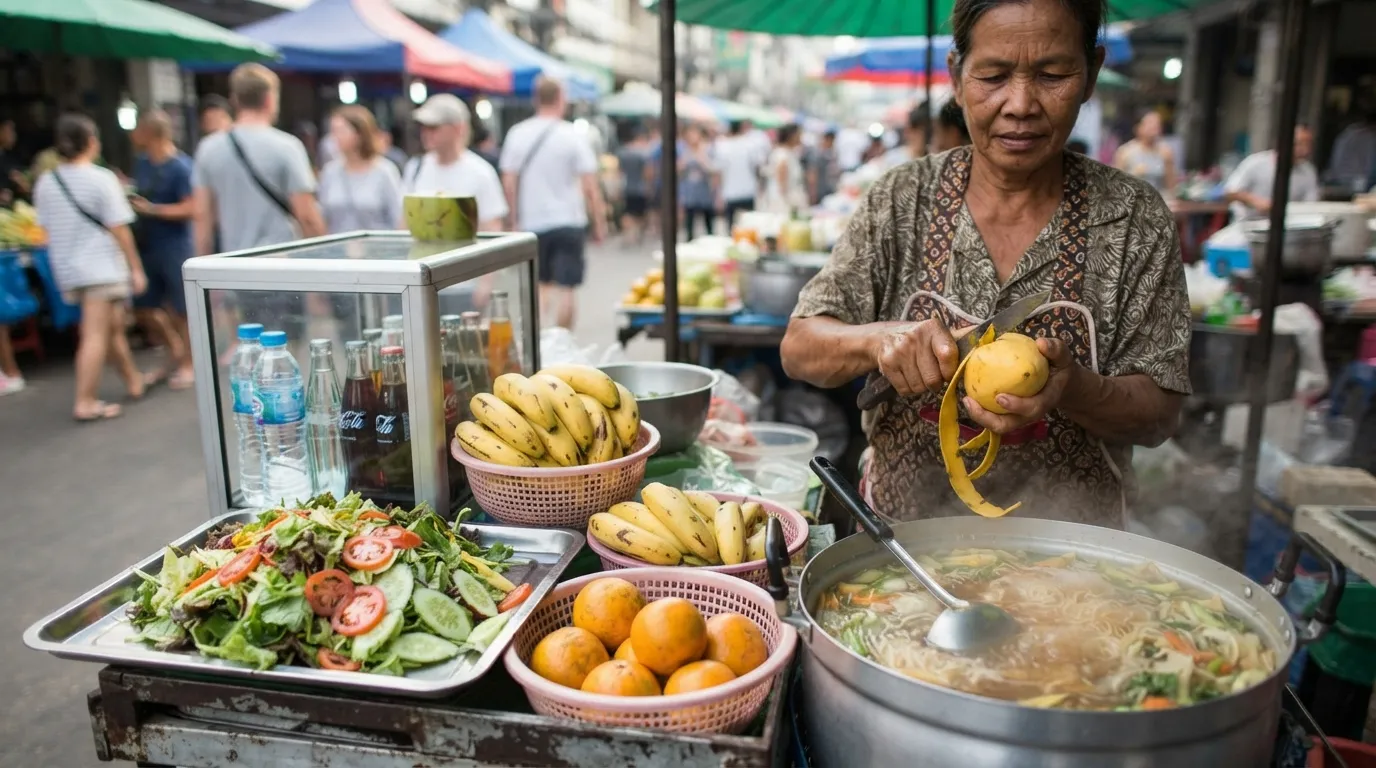
This classic traveler rule covers produce that has no protective skin, like berries and leafy greens. Washing them in local water may not make them safe.
At a Glance
- Lower risk: fruit you peel yourself, food served piping hot, and sealed bottled drinks.
- Higher risk: berries, leafy greens, raw salads, and uncooked garnishes.
- Rule of thumb: boil it, cook it, peel it, or skip it.
Stick with fruit you can peel and food that has been cooked. Anything that is neither is a gamble.
#2 – Look Closely at the Vendor’s Setup
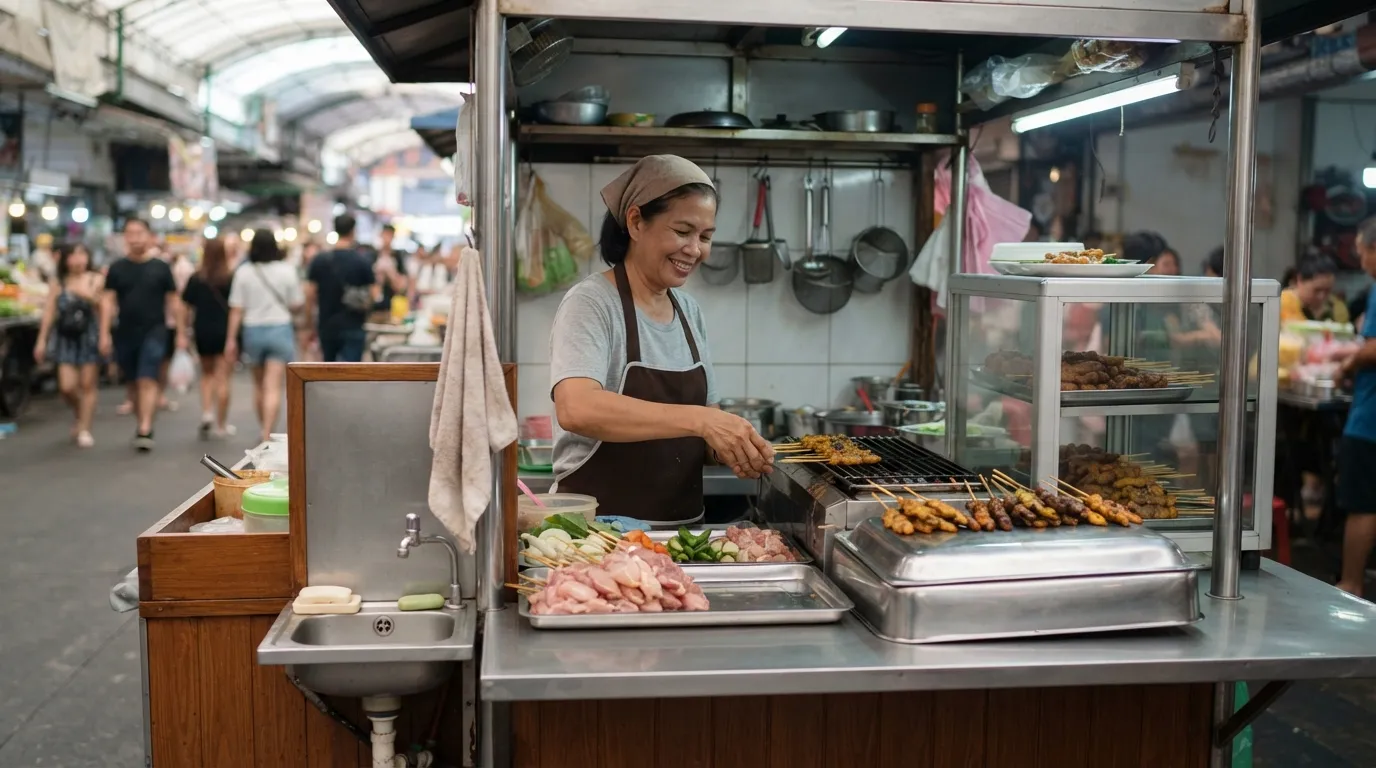
A stall tells you a lot before you order. Covered food, clean surfaces, and a safe place to wash hands all point to a vendor who takes handling seriously.
Raw meat sitting beside cooked food, or one cloth wiping everything, signals trouble. Cross-contact can spoil an otherwise safe meal.
#1 – Walk Away When Something Feels Off
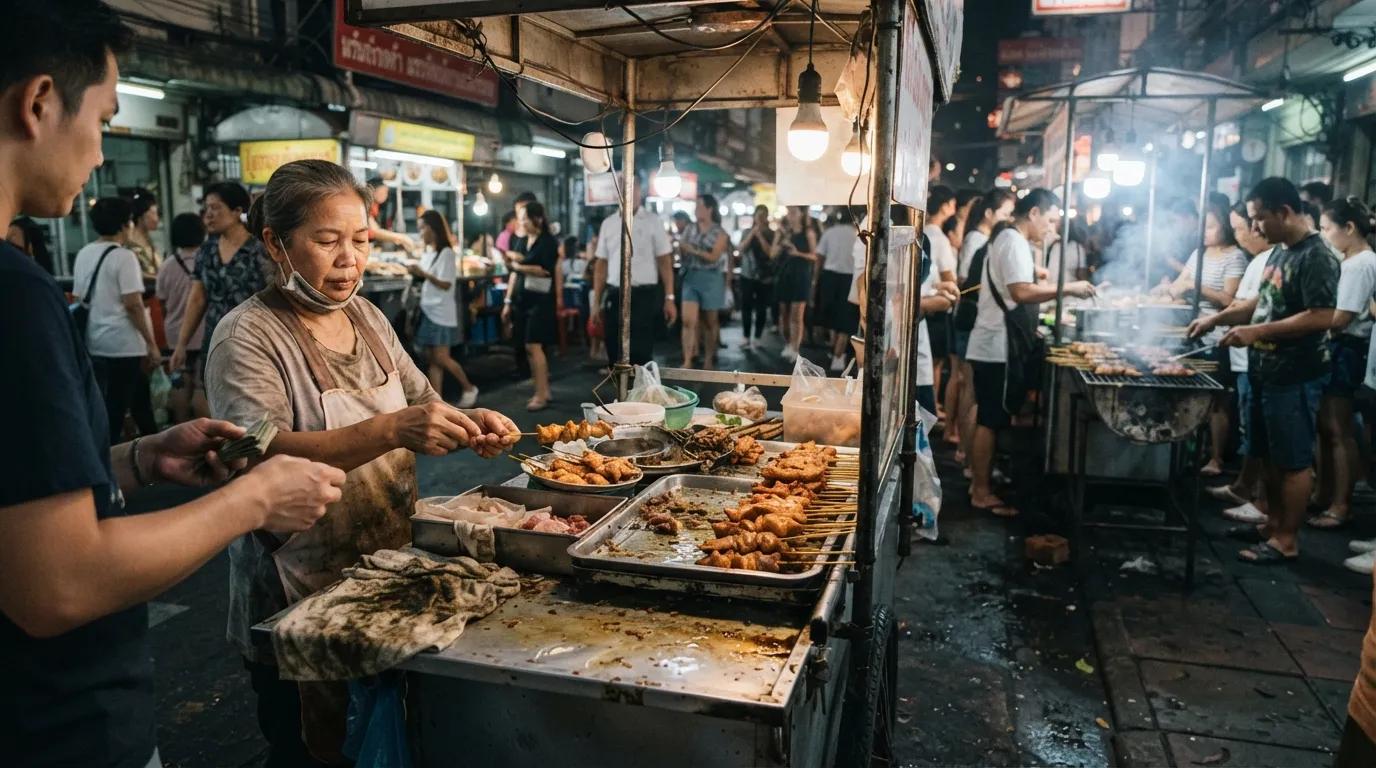
Lukewarm food, a dirty cloth, bare hands going from cash to your plate: when a stall breaks more than one rule, trust that feeling. Politeness isn’t worth a ruined trip.
Skipping one snack costs you almost nothing. There’s usually another stall a few steps away, with a hot grill and a line of people moving quickly.
CEO-Co-Founder