
- 15 Hotel Breakfast Charges Guests Can Avoid by Checking the Rate Plan - October 24, 2026
- 17 Shoulder Season Travel Rules for Sudden Weather Changes - October 24, 2026
- 18 Hotel Arrival Rules That Prevent Expensive Check-In Problems - October 24, 2026
Two cabins on the same ship can give you completely different first nights, and most booking pages never mention why. Deck plans and passenger reports point to the same culprits: motion, noise, and foot traffic that peak right at embarkation.
Below are 17 locations, from the spots that tend to cost people sleep to the ones that protect it. The best one on the list isn’t a single feature at all, and it’s hiding in plain sight on the deck plan.
#17 – Cabins Directly Beside Elevator Banks
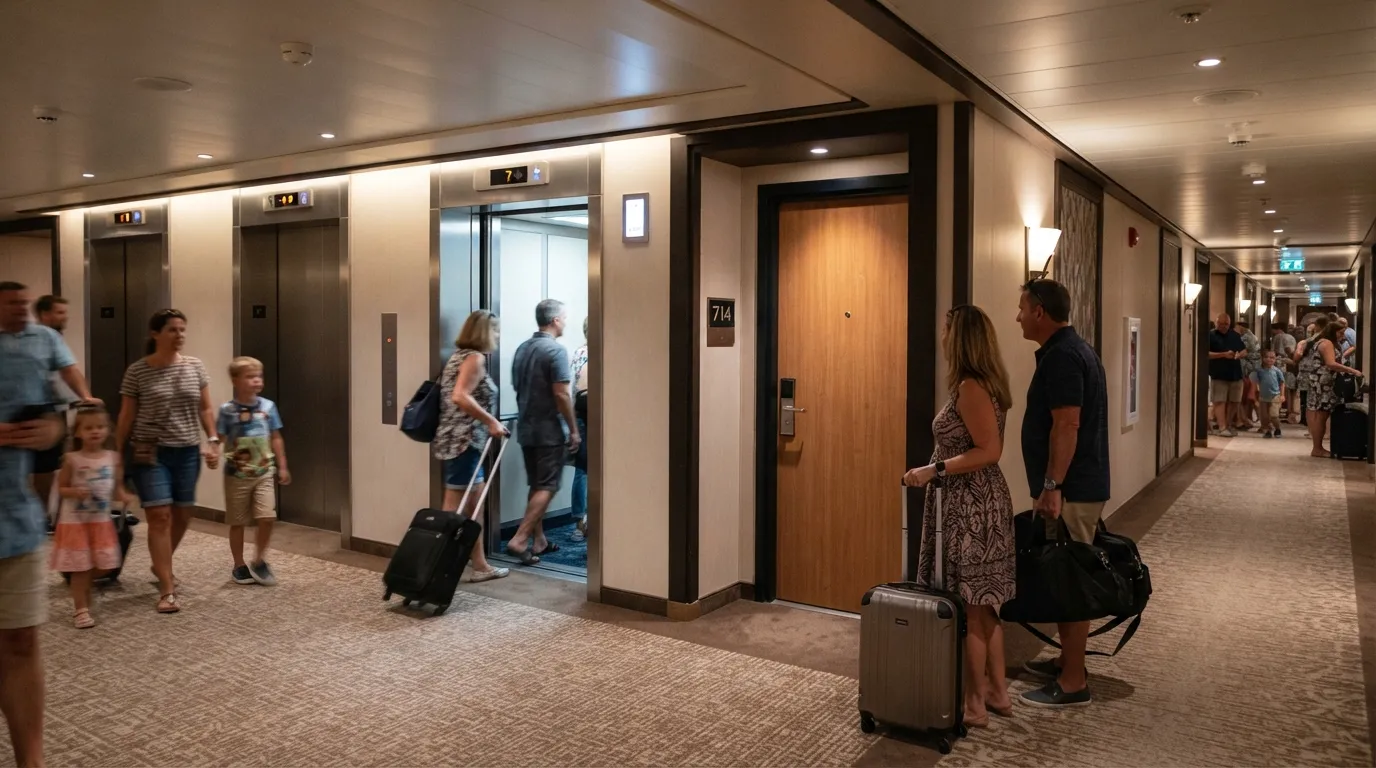
Elevator lobbies get busy the moment boarding starts. Door chimes, rolling luggage, and chatter build up, and on many ships the central banks stay active until people drift back from shows and dinner.
Cabins right next to them can pick up that movement through the walls. Deck plans from lines like Royal Caribbean and Carnival show exactly where these lobbies sit. Midship elevator banks on larger vessels often run nonstop during the first evening.
#16 – Forward Cabins on Upper Decks
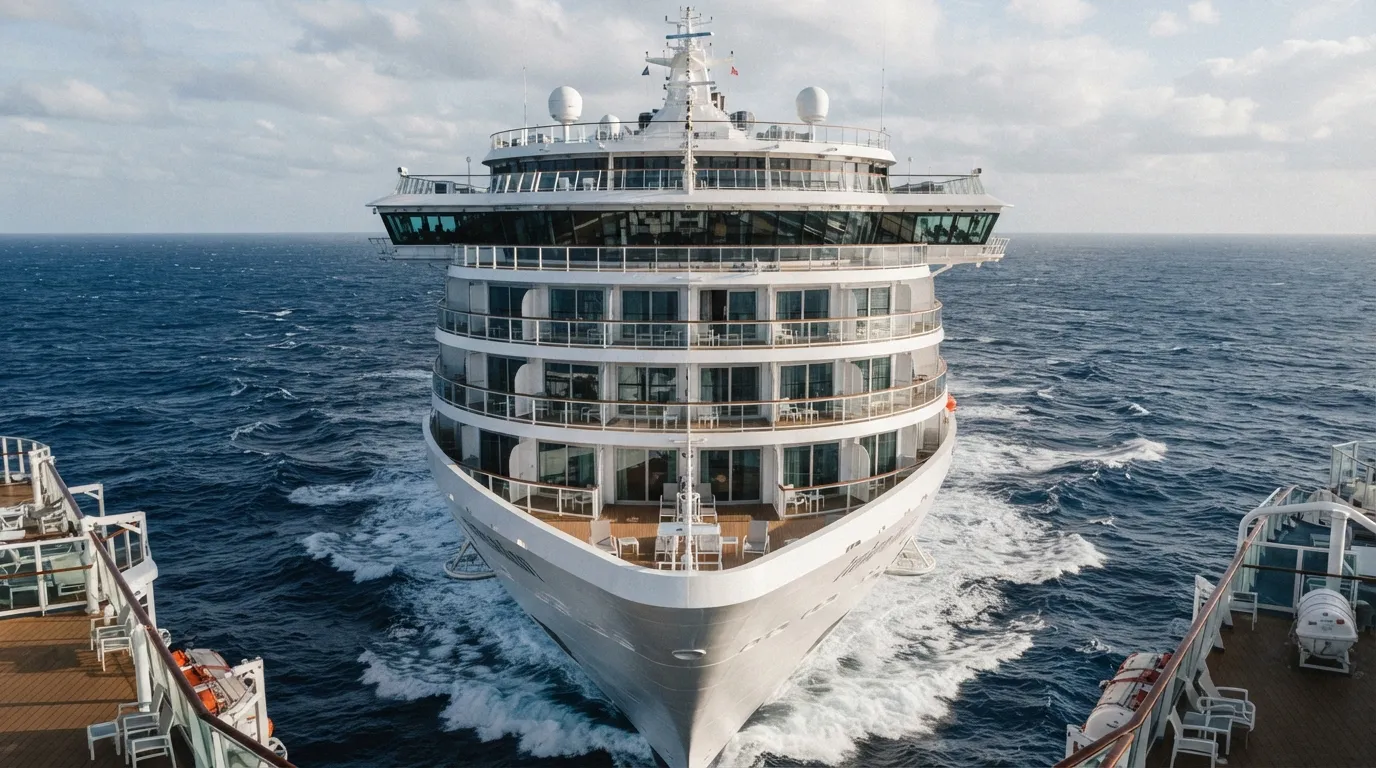
The bow is the first part of the ship to meet the waves, and height exaggerates that rise and fall. Deck plans from multiple lines put forward staterooms on decks 10 and above far from the ship’s center of motion.
Passengers on open-water itineraries, transatlantic crossings included, report more noticeable pitching here than in midship equivalents. Some forward cabins also sit near the bow thrusters used during docking. High forward locations pair maximum pitch with possible early-morning mechanical sounds.
Quick Compare
- Bow: the most pitching, and possible thruster sounds near docking.
- Midship: closest to the ship’s pivot point, so generally the steadiest.
- Stern: milder pitching than the bow, with vibration that varies by hull.
- Higher decks: more sway than lower decks at any position.
#15 – Aft Cabins Near Propulsion Areas
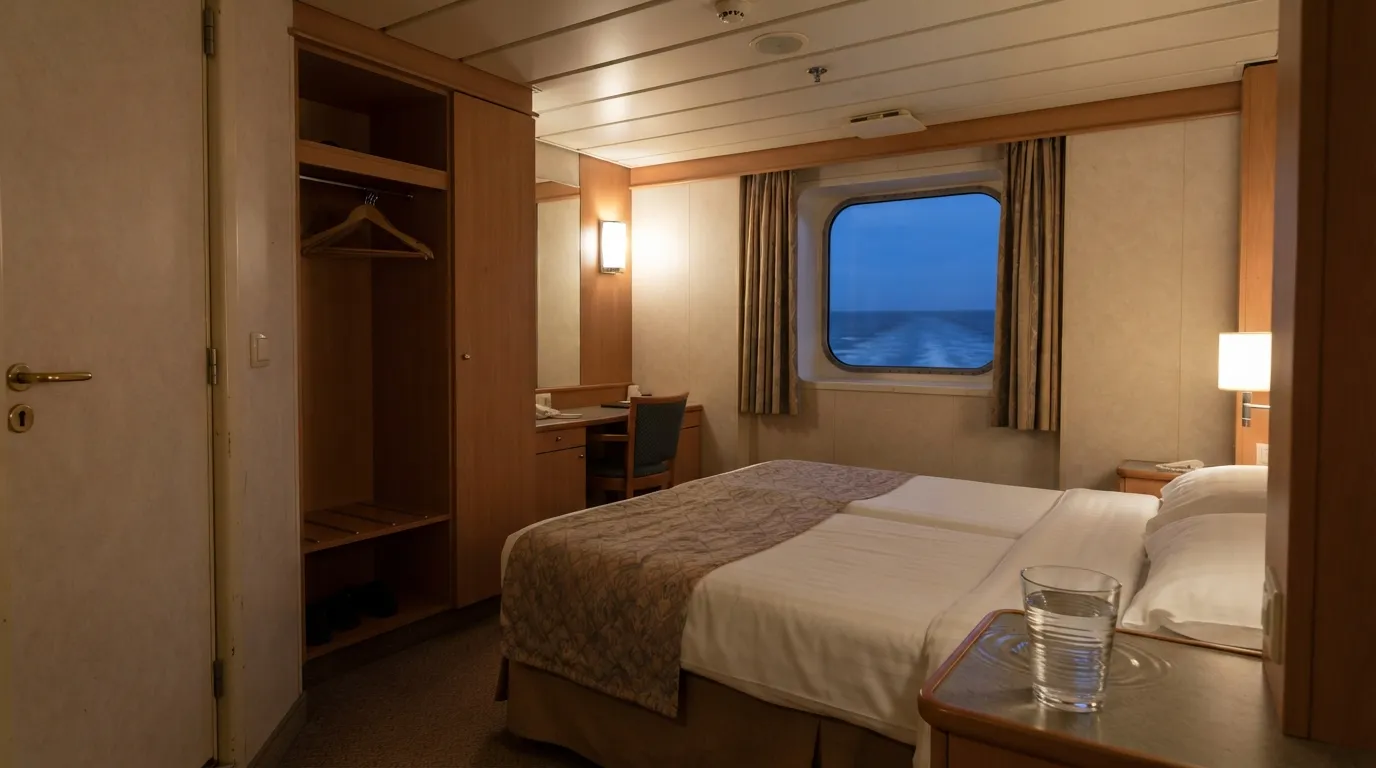
The stern can carry engine or stabilizer vibration, especially where machinery runs close to passenger decks. Deck plans for several ship classes show lower aft cabins sitting above or beside service spaces.
Pitching is often milder than at the bow, but the rumble differs by hull design. Larger ships with advanced stabilizers soften it, while smaller or older vessels vary more. Aft vibration tends to show up during maneuvering rather than steady cruising.
#14 – Cabins Directly Below the Pool Deck
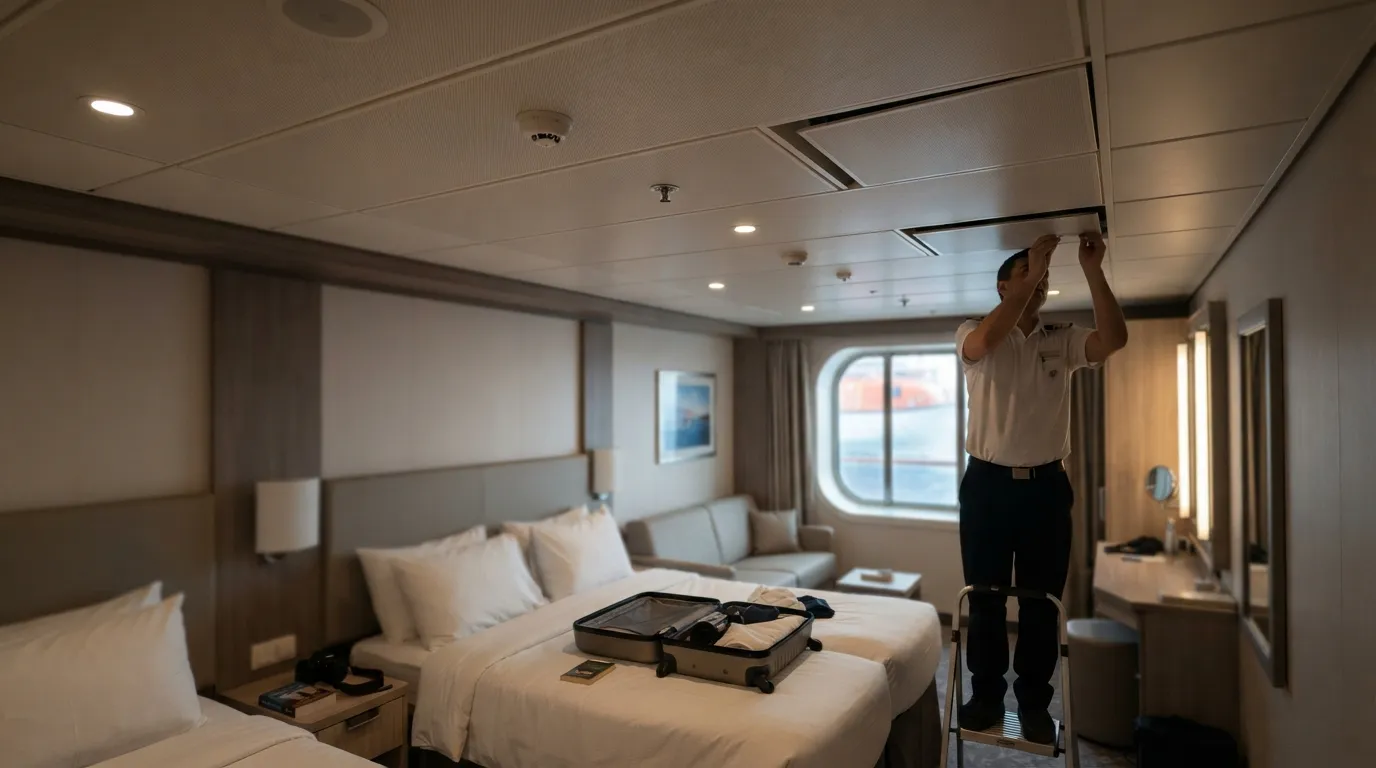
Pool decks mean dragged chairs, splashing, and early setup, and all of it can travel through a ceiling. Deck plans mark which upper-deck staterooms sit under these areas, and lines such as Norwegian and MSC stack many cabins this way on their larger ships.
Light sleepers feel it most on embarkation day, when crews are preparing the deck. Distance from active outdoor spaces matters more than deck number alone.
#13 – Interior Cabins Next to Connecting Doors
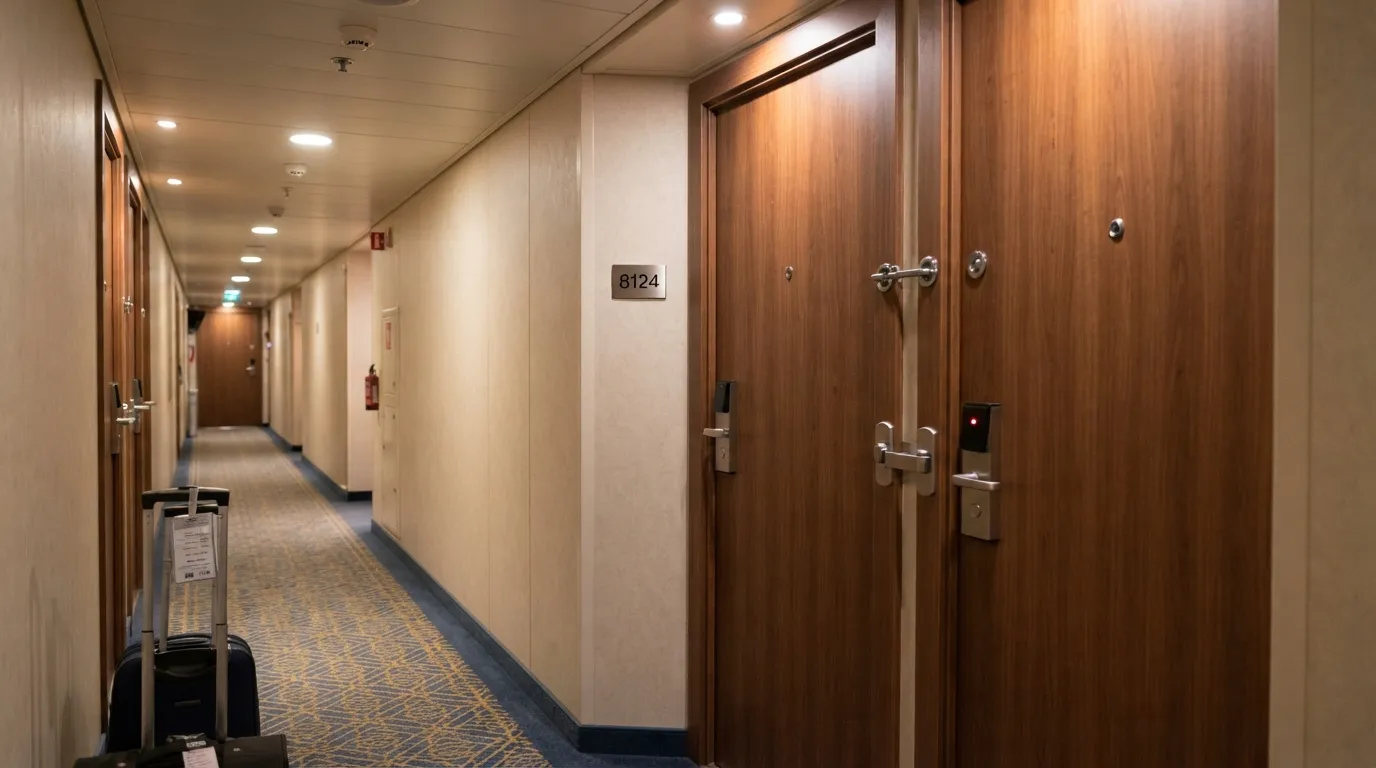
A connecting door gives sound an extra path between two rooms, even when it’s closed. Deck plans identify these pairs, and some lines let guests request a non-connecting cabin. Not every category offers that option.
On the first night, neighbors are still hauling luggage and settling in, so the shared wall gets noticed fast. Checking the exact cabin number against the deck plan reveals whether you’d share one.
#12 – Cabins Near Late-Night Lounges or Theaters
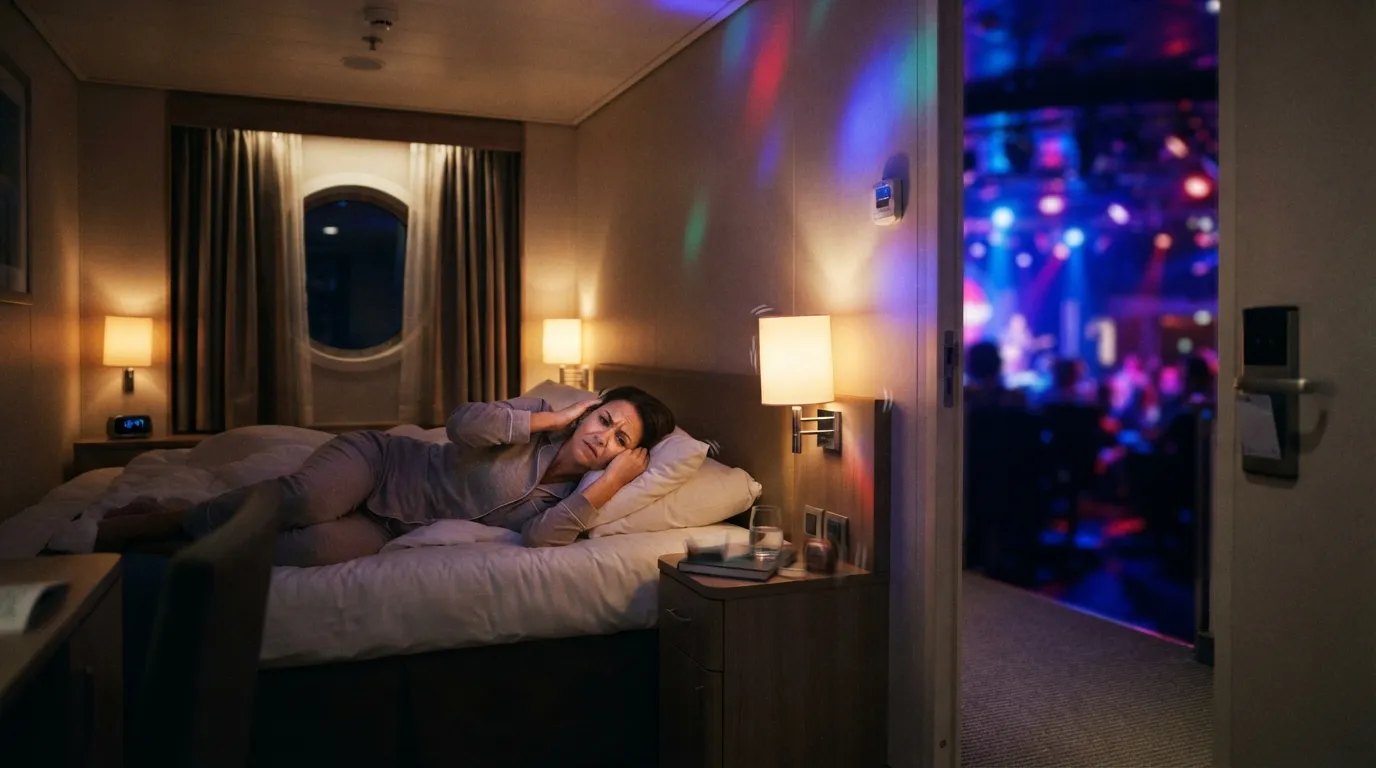
Evening entertainment venues often sit on decks 5 through 7. Cabins on the same or neighboring decks can catch bass and crowd noise through floors and walls.
Royal Caribbean and Carnival deck plans show clear separation on some ship classes and much closer proximity on others. Welcome shows on night one often run later than daytime activities. Proximity to entertainment zones can affect quiet hours more than motion does.
Worth Knowing
- Check the decks above and below your cabin, not just your own deck.
- Noise travels through floors as well as walls, so a venue overhead counts.
- Venue placement differs by ship class, even within one cruise line.
- Late-night venues and early-morning deck setup can bracket the same cabin.
#11 – High-Deck Forward Oceanview Cabins
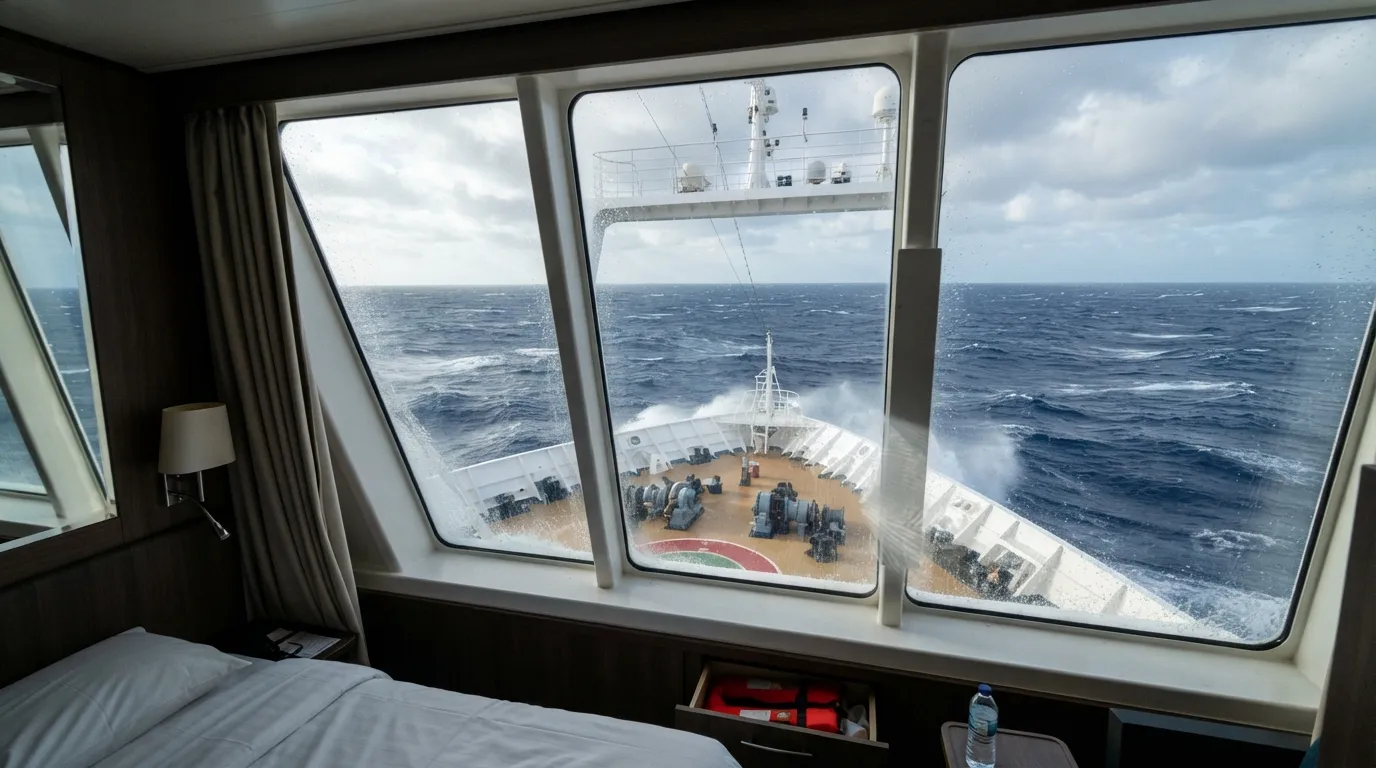
This spot stacks height on top of forward pitching, and the bow structure can limit the horizon view. Deck plans for several lines mark forward windows as obstructed or partly restricted.
The effect can feel stronger on smaller ships or in moderate seas. Larger vessels with stabilizers narrow the gap, but location still registers. Forward high placements trade view potential for a stronger sense of movement.
#10 – Cabins Beside Crew or Service Corridors
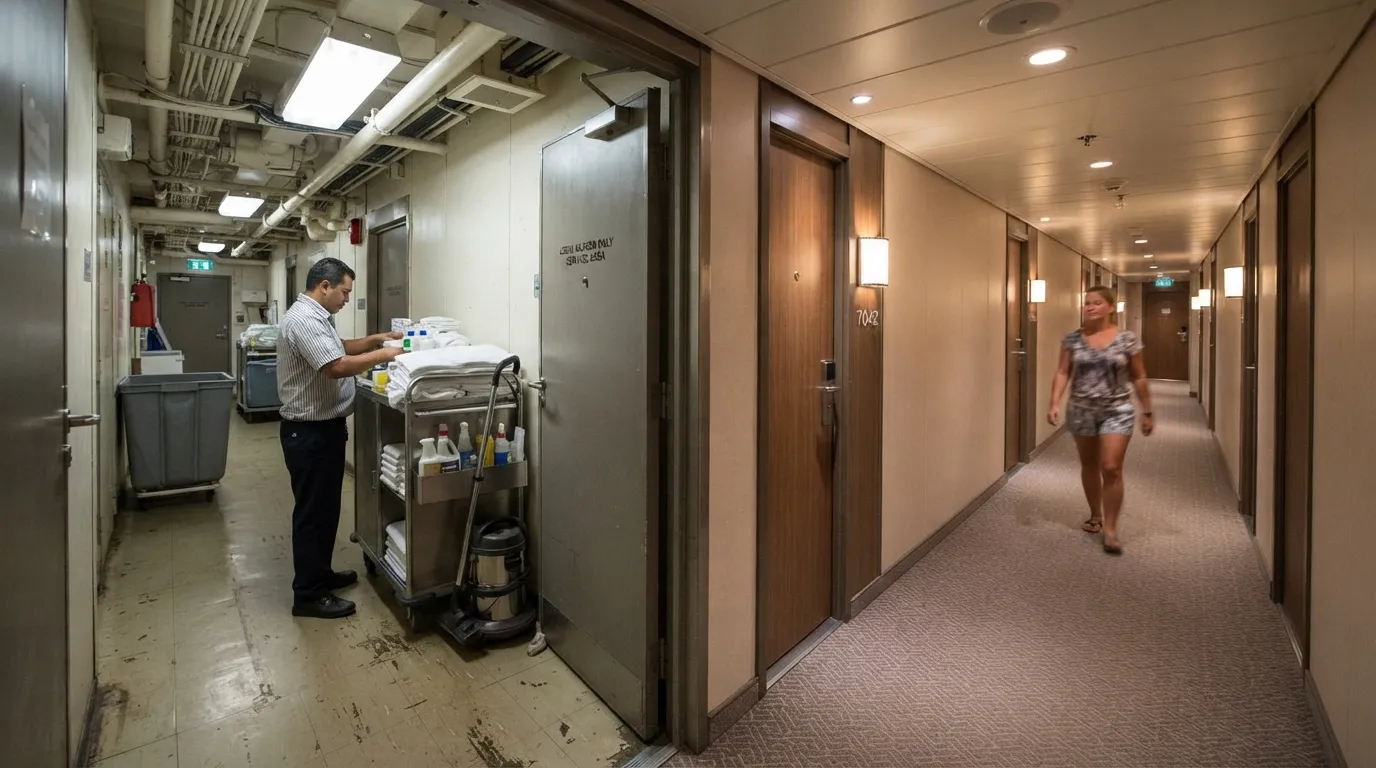
Service areas run on their own clock, with provisioning and cleaning at early and late hours. Deck plans label these gray zones, and on certain decks some lines place passenger cabins right alongside them.
How much noise carts and doors make differs by ship and itinerary. Midship residential decks usually avoid this adjacency more consistently. The full deck plan shows service boundaries that category descriptions leave out.
#9 – Aft-Facing Balconies on Mid-to-High Decks
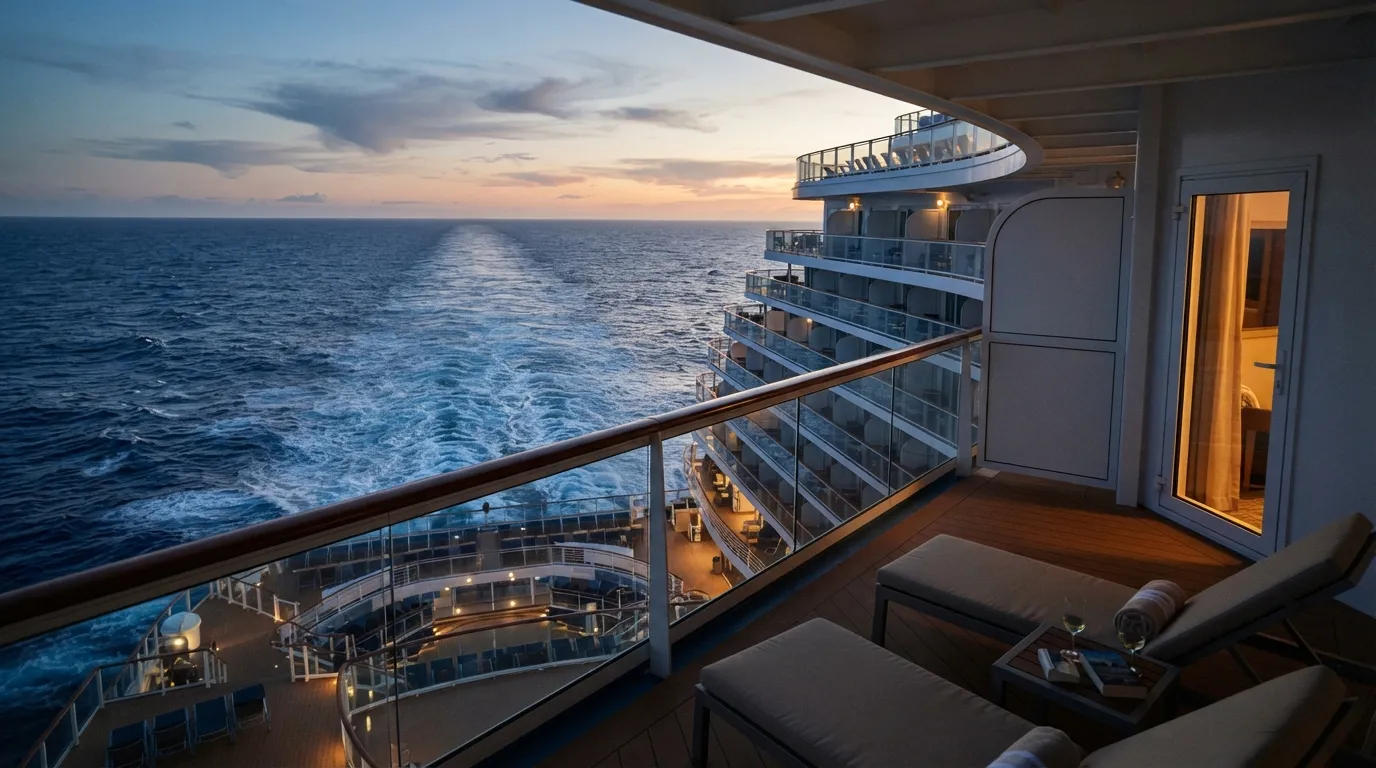
A wake view is a big draw, but aft sections still feel some rolling and occasional vibration, depending on the hull. Deck plans show larger balconies in some aft categories, while motion stays tied to position.
Lines like Princess and Celebrity discuss these trade-offs in their location guidance. The first night’s sea conditions can make the difference obvious. Aft balconies deliver scenery, but the stern’s movement comes with the view.
#8 – Lower-Deck Cabins Near the Waterline but Forward
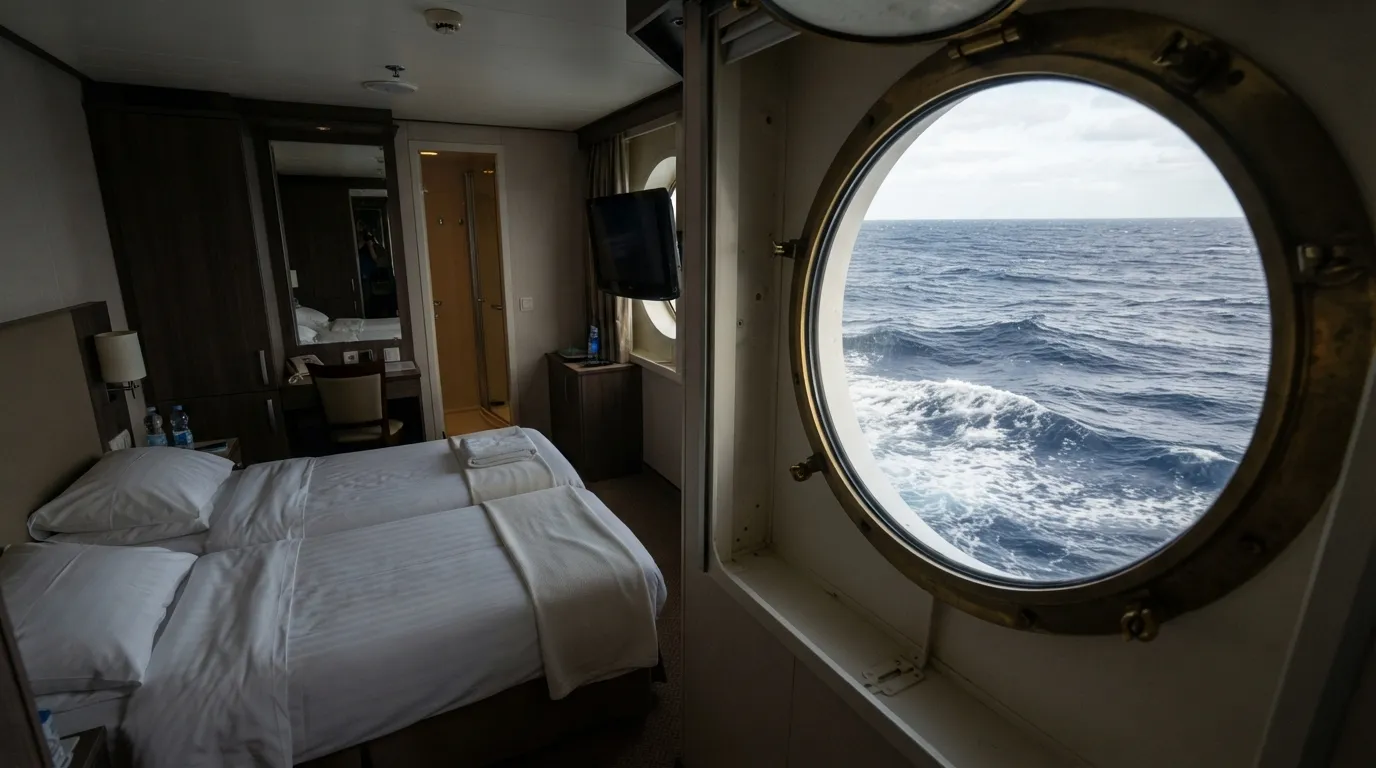
Lower decks shrink the overall motion arc, yet a forward position still catches more pitching than a midship cabin. Deck plans across operators confirm that front-to-middle gradient.
Smaller ships and river vessels show less distinction, while ocean-going mega-ships keep a clearer split between forward and midship. Lower forward cabins beat high forward ones for stability but don’t match true midship.
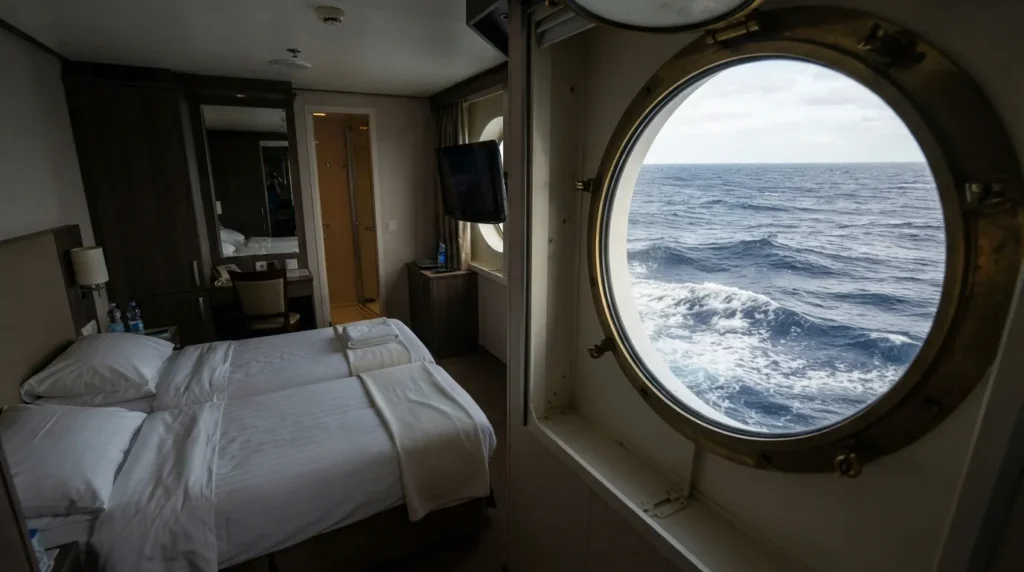
#7 – Cabins with Obstructed Ocean Views
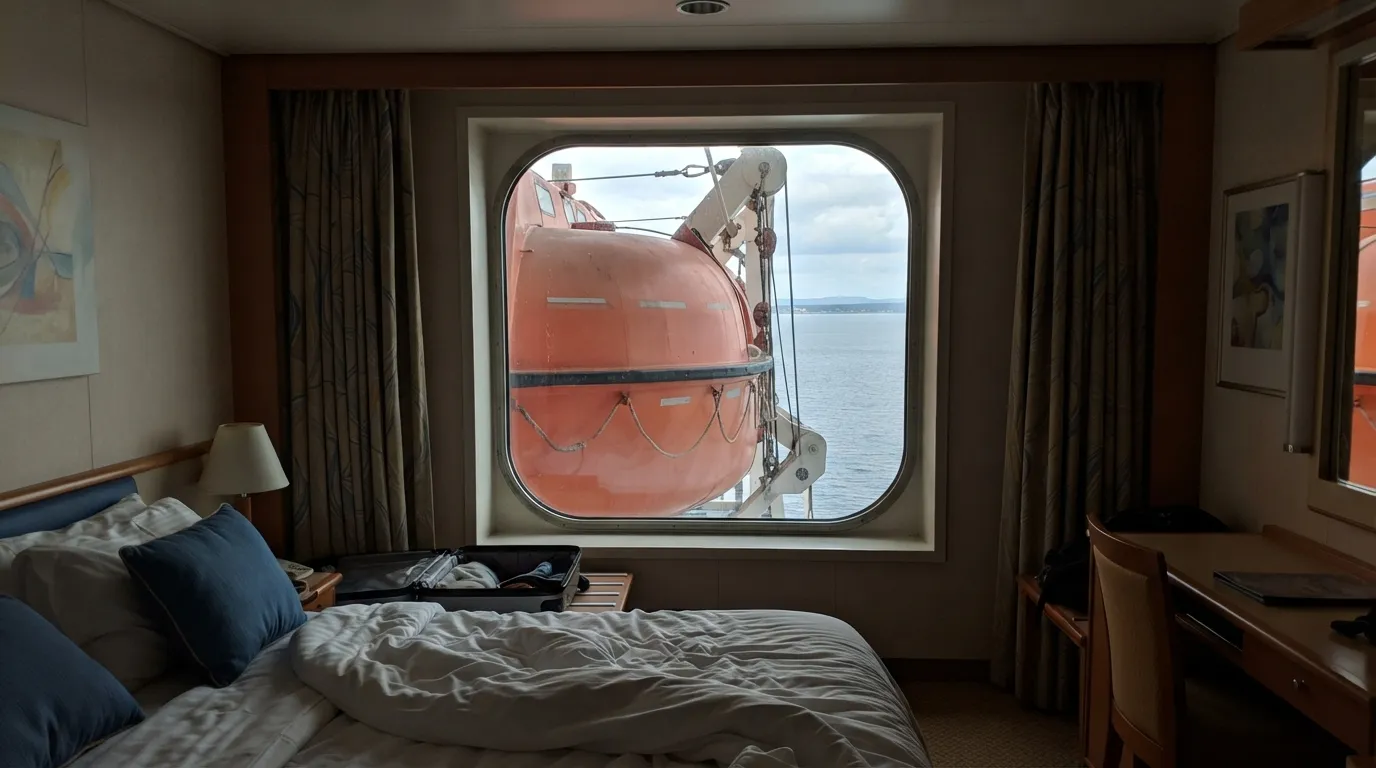
Lifeboats, overhangs, and walkways can block part of the window in certain oceanview categories. Deck plans and photos published by the lines identify these specific staterooms.
You walk in on night one with no time to adjust expectations. For motion-sensitive travelers, a partly blocked horizon can also weaken a helpful visual reference. Obstruction details appear on detailed deck plans, not category summaries.
Fast Facts
- Common blockers include lifeboats, structural overhangs, and walkways.
- Many lines list obstructed or partial-view cabins as their own category or note.
- Wording and labeling vary by operator, so read each line’s fine print.
- Line-published stateroom photos can confirm what the window really shows.
#6 – Mid-Deck Cabins Adjacent to Stairwells
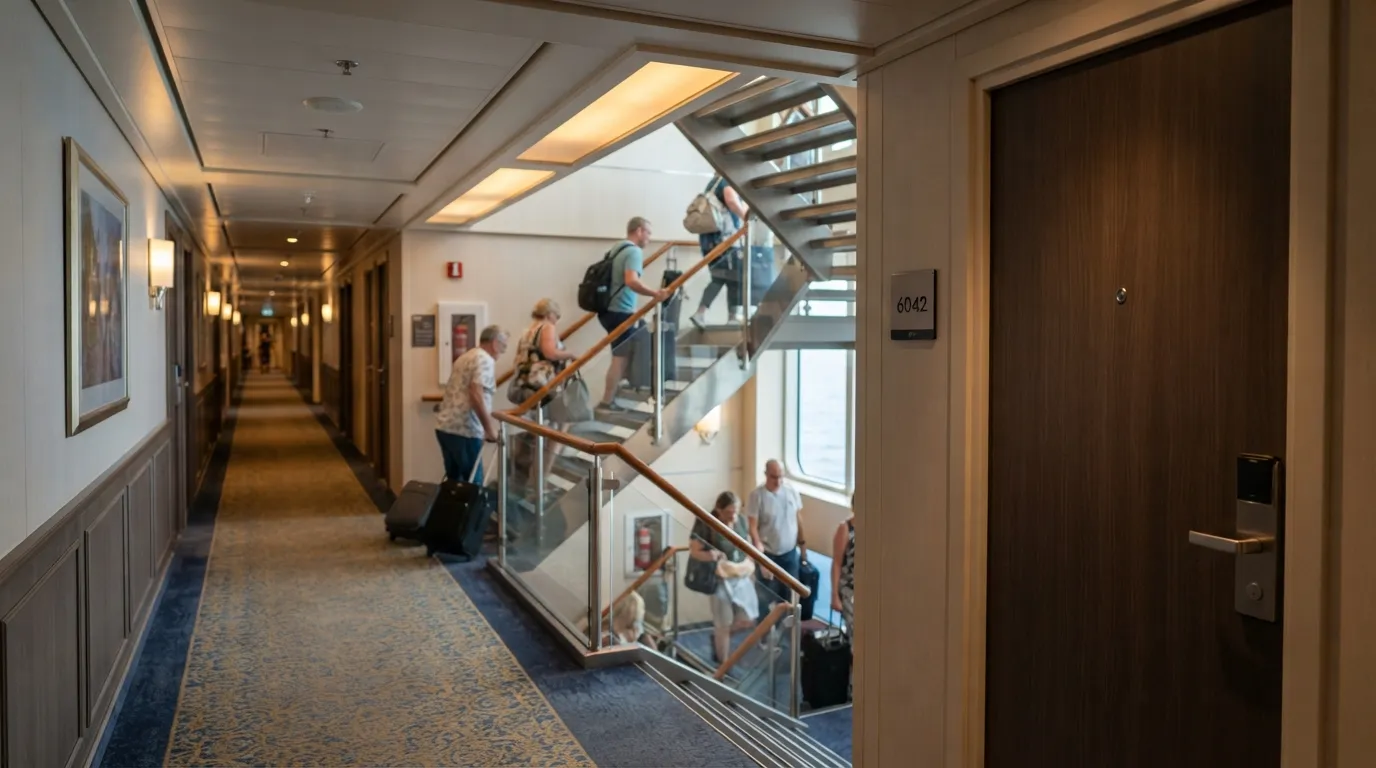
Stairwells see steady use, and footsteps or conversation can carry into nearby rooms. Deck plans show where the stairs sit relative to each row of cabins.
On embarkation day the pattern differs from elevator banks, with intermittent bursts of sound instead of a constant stream. Some lines cluster stairs away from the main residential blocks. Stair proximity creates a different noise profile than elevator traffic.
#5 – Upper-Deck Midship Cabins
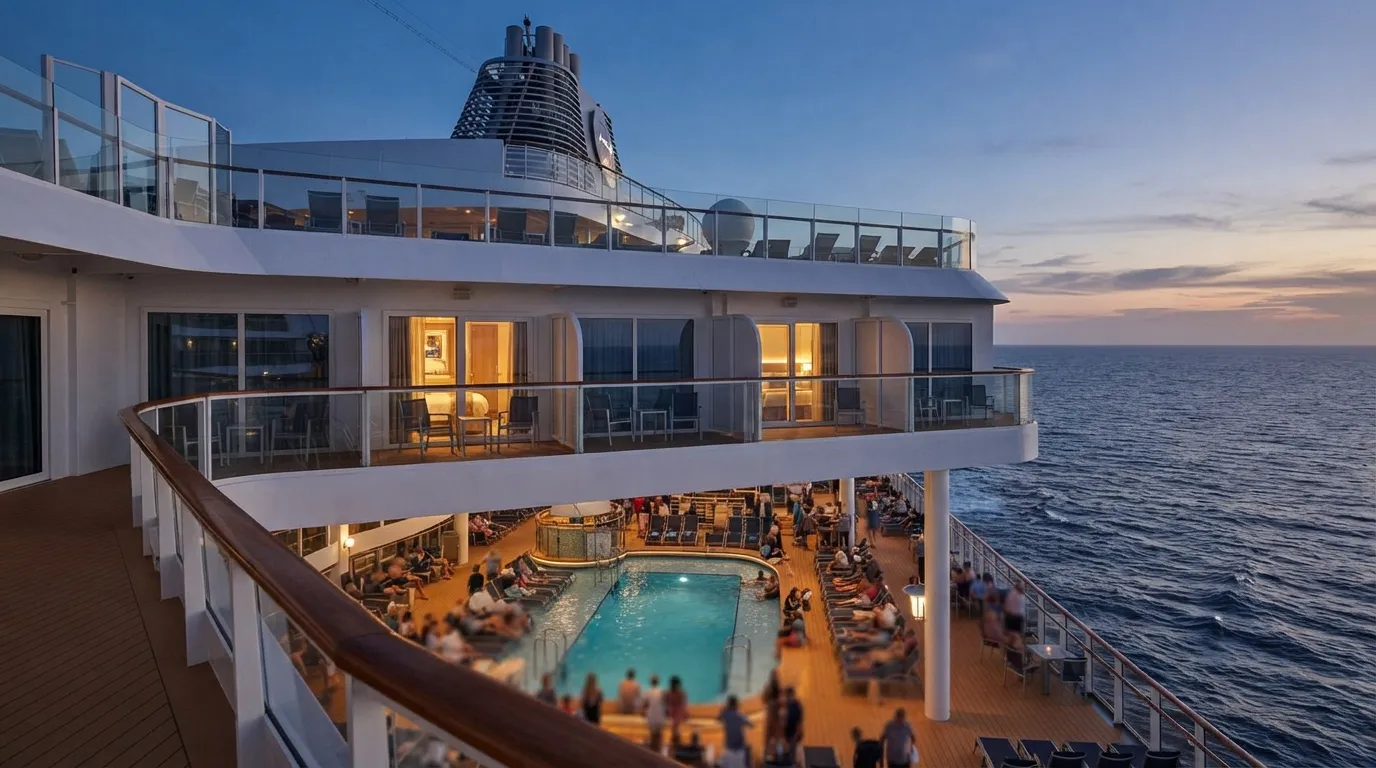
Higher midship locations put pools and views close by, but they add roll compared with lower midship. Deck plans illustrate that vertical gradient clearly.
Larger ships soften it through size and stabilizers, yet the physics of distance from the waterline holds across operators. Midship helps, but deck height still shapes how much movement you feel.
#4 – Cabins Surrounded by Other Staterooms on All Sides
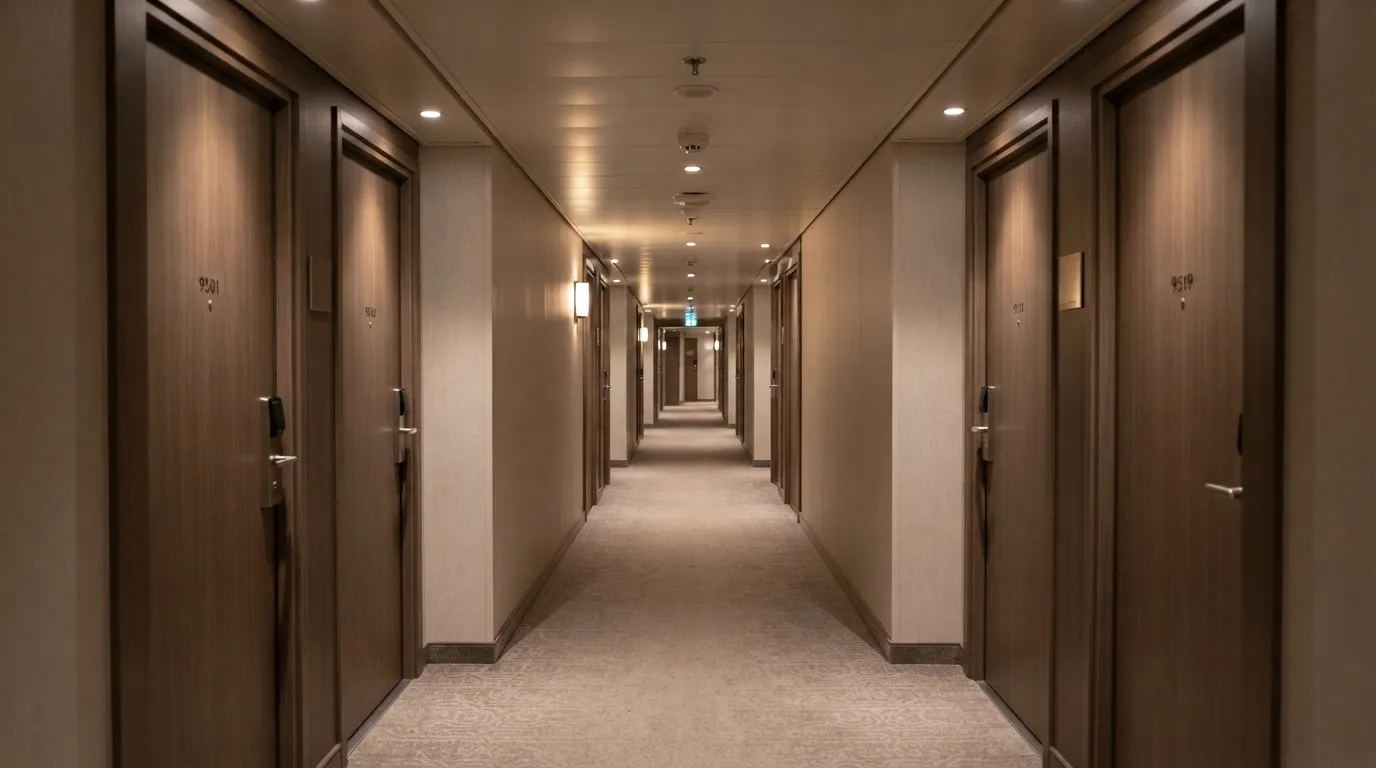
When passenger cabins sit above, below, and beside you, public-space noise drops significantly. Deck plans identify these fully residential pockets.
That layout cuts both the vertical and horizontal sound paths on the night the ship is busiest with boarding and orientation. Full cabin surround is the strongest buffer against venue and corridor noise.
Why It Stands Out
- It blocks noise from above, below, and both sides at once.
- It works on any ship where the deck plan shows a residential pocket.
- It matters most on embarkation night, when activity peaks.
- It costs nothing extra to check on the deck plan.
#3 – Lower Midship Cabins on Mid-Size Ships
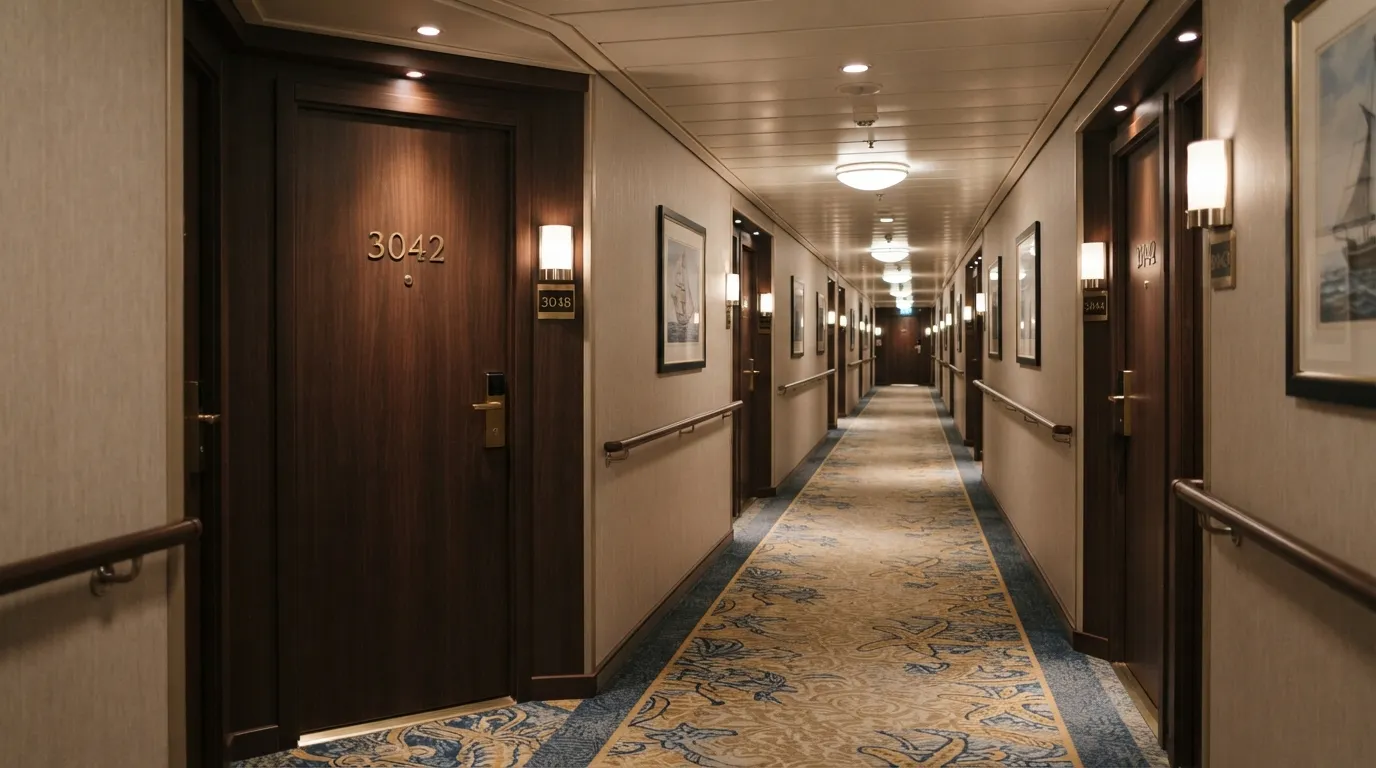
Mid-size vessels, roughly 50,000 to 90,000 GT, show clearer motion differences by location than the largest ships. Deck plans for these classes highlight the benefit of lower midship placement.
Stabilizer effectiveness varies, so position stays a practical lever for the first night. Smaller hulls make location choices more consequential than on mega-ships.
#2 – Lower Midship Cabins with Horizon Access
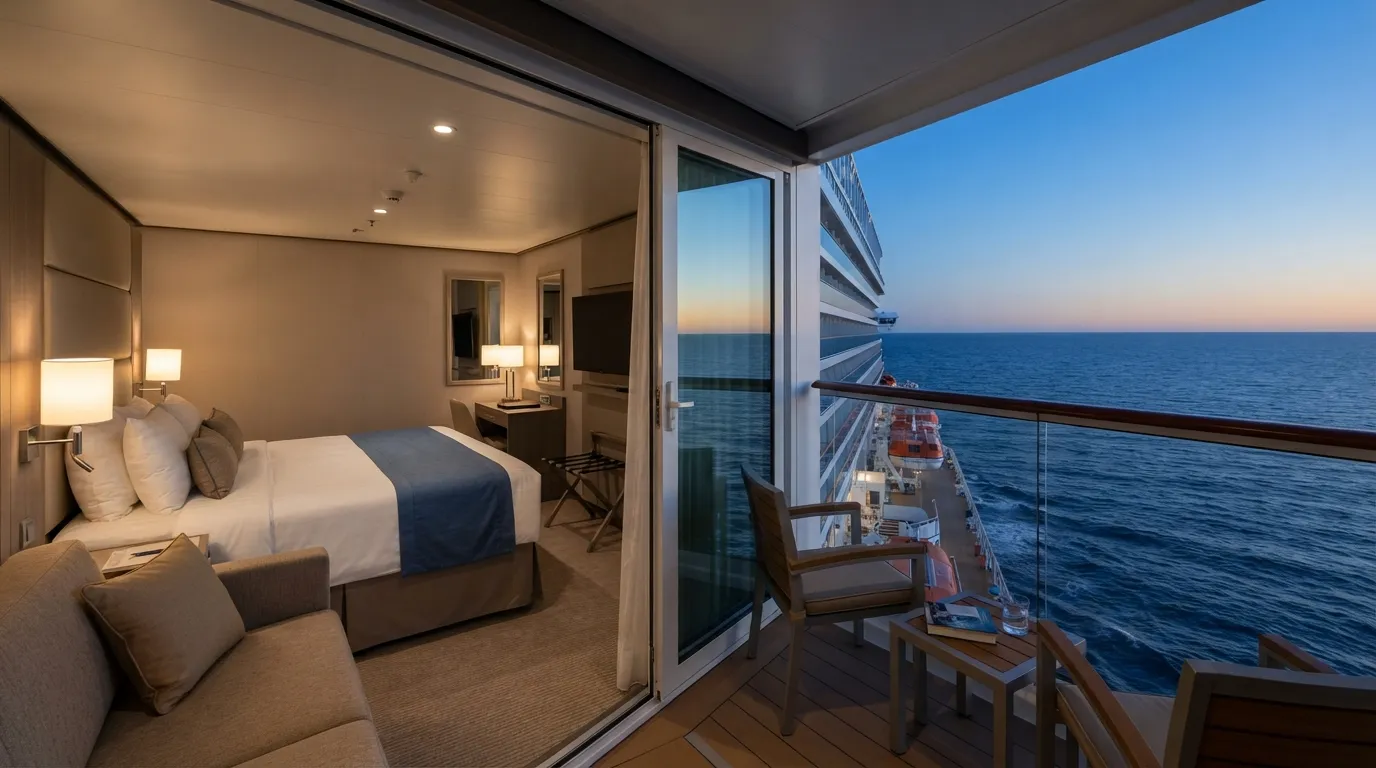
A window or balcony on a lower midship cabin pairs minimal motion with a visible horizon. Multiple lines recommend this combination for motion-sensitive guests in their planning materials.
The first night often sets the tone for the whole trip, and this placement supports both stability and visual orientation. Lower midship with an outside view solves two problems at once.
#1 – Lower Midship Cabins Surrounded by Other Cabins
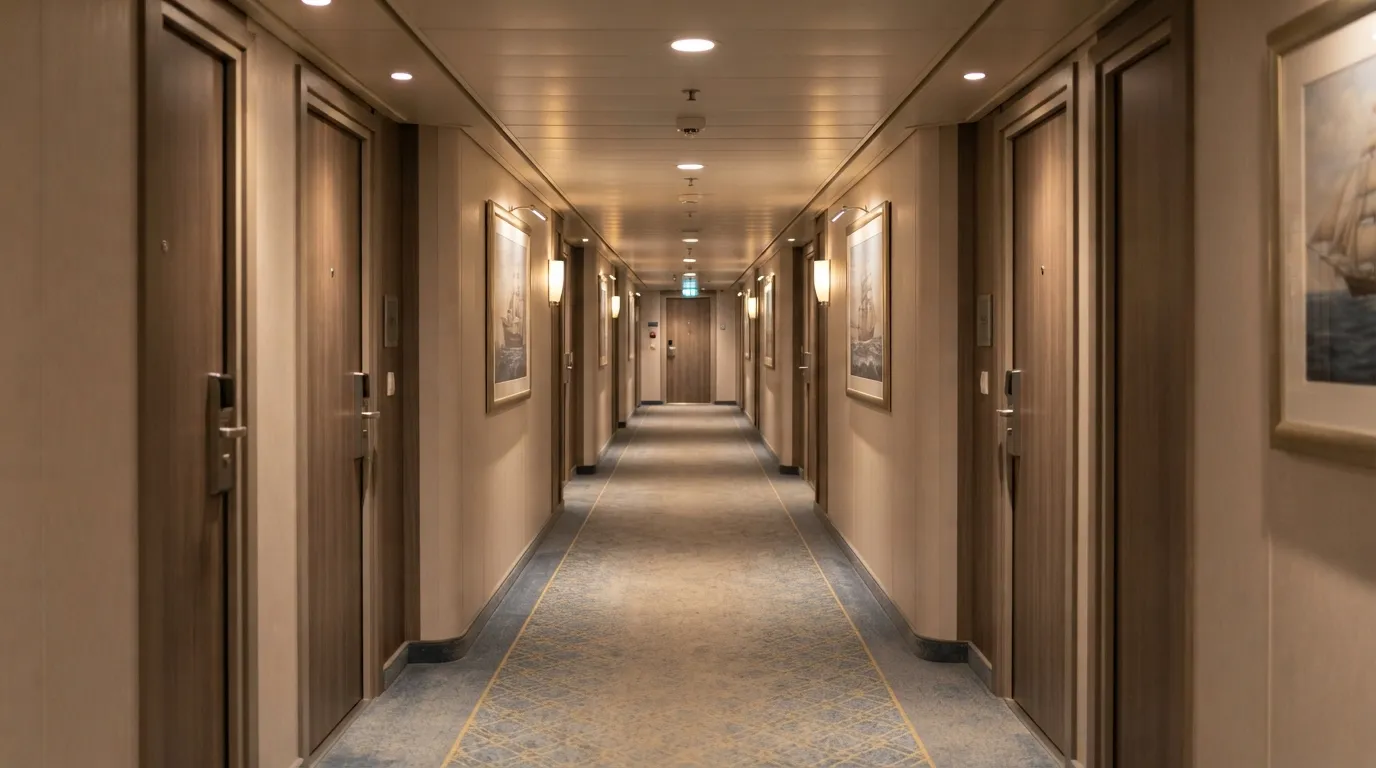
This combination puts the cabin near the ship’s pivot point on a lower deck, then wraps it in staterooms on every side. Deck plans across Royal Caribbean, Carnival, Princess, and others consistently mark these areas as the steadiest and quietest residential zones.
Larger ships with advanced stabilizers narrow the motion gap further, yet the location principle holds. Embarkation night gets less movement and less outside noise together. Lower midship residential pockets offer the clearest advantage for sleep on embarkation evening.
The Bottom Line
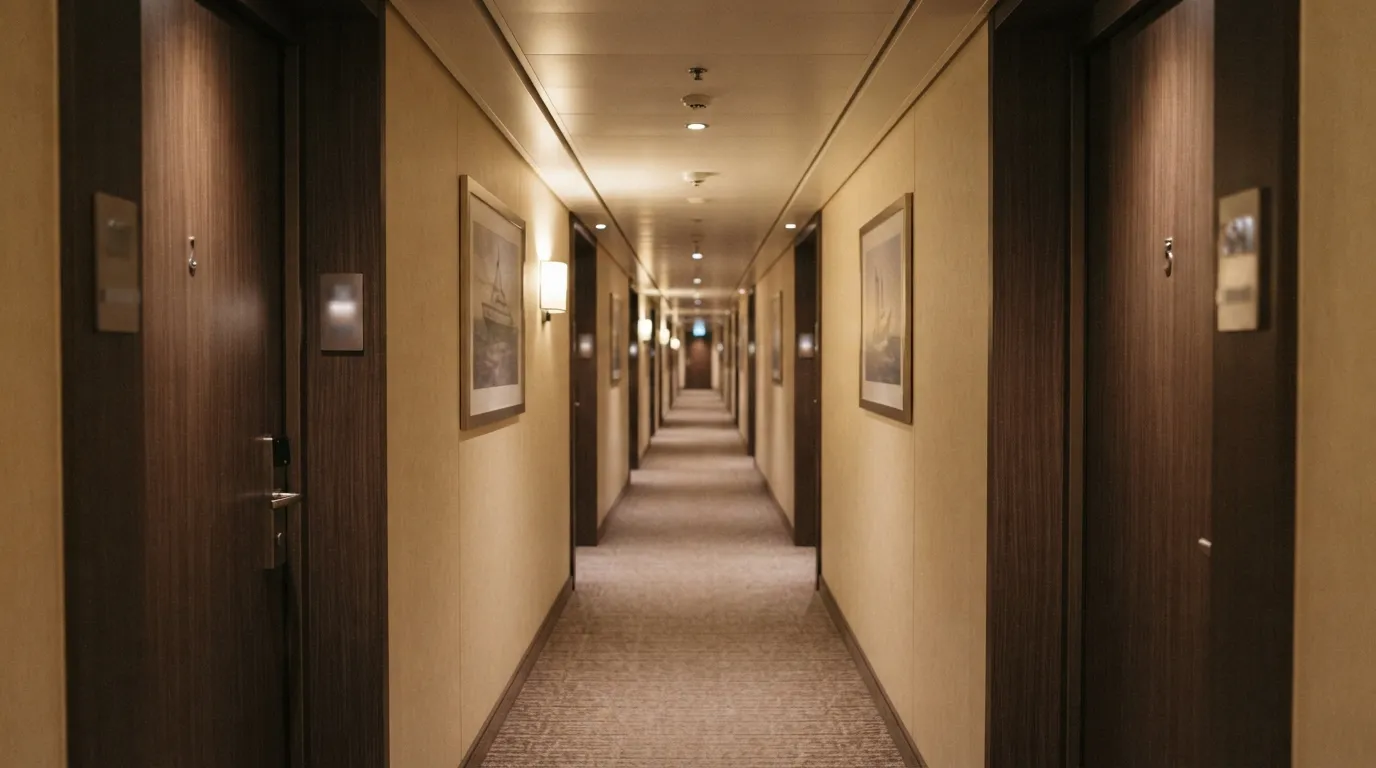
First-night comfort comes down to what you avoid and what you pair. Skip forward pitching, aft vibration, and neighbors like elevators, pools, and entertainment venues, and look for lower midship spots buffered by other cabins.
Larger, stabilizer-equipped ships reduce overall motion, but exact location still shapes the experience. Operators differ in how they cluster public spaces and label obstructed categories, so the cabin number on the deck plan tells you more than the category name ever will.
CEO-Co-Founder