
- 15 Hotel Breakfast Charges Guests Can Avoid by Checking the Rate Plan - October 24, 2026
- 17 Shoulder Season Travel Rules for Sudden Weather Changes - October 24, 2026
- 18 Hotel Arrival Rules That Prevent Expensive Check-In Problems - October 24, 2026
You probably think any overnight berth guarantees a quiet night once the lights go down. It doesn’t, and the rules that decide whether you sleep or stare at the ceiling change from one operator to the next.
A basic couchette and a premium sleeper can feel like different planets, and the gap usually comes down to small details most passengers learn only after the train is moving. These 17 rules are worth knowing before you board.
#17 – Lock the Compartment Door Before You Do Anything Else
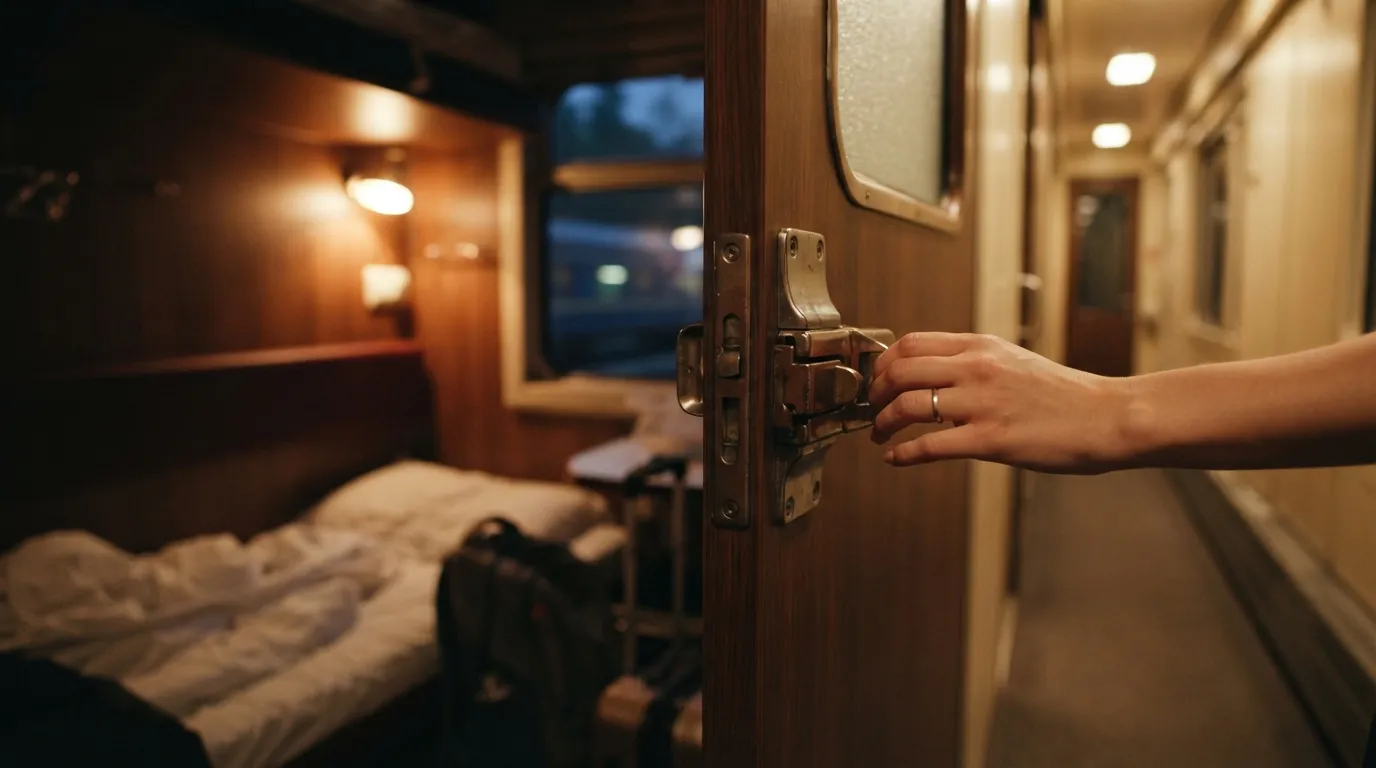
On most European night trains, couchette and sleeper compartments can be locked from the inside. Do it right after boarding, not after the corridor has filled with people hauling bags.
Treat the lock as a privacy measure, not a vault. Attendants carry keys, and the exact latch varies by operator and carriage, so ask the attendant to show you how yours works.
#16 – Keep Passport, Phone and Cards in One Small Bag Within Reach
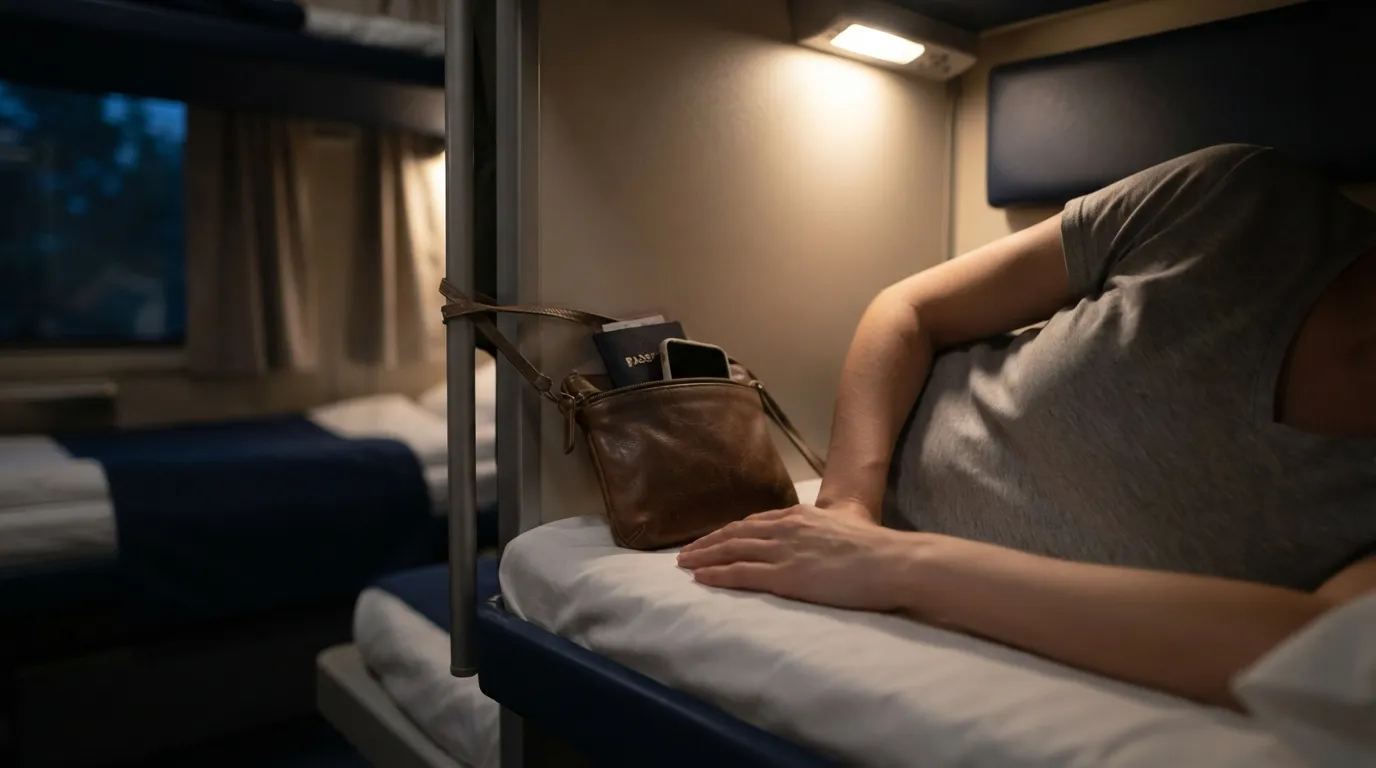
European night train advice keeps landing on the same habit: valuables stay with you, not in an overhead rack or under a bunk. Theft is uncommon, but a bag you can touch from your berth removes the worry that wakes people at 3 a.m.
Clip it to the bunk frame or tuck it between you and the wall. If your attendant collects documents for the night, keep your phone and payment cards in the bag.
#15 – Put Luggage Where You Can See It From Your Berth
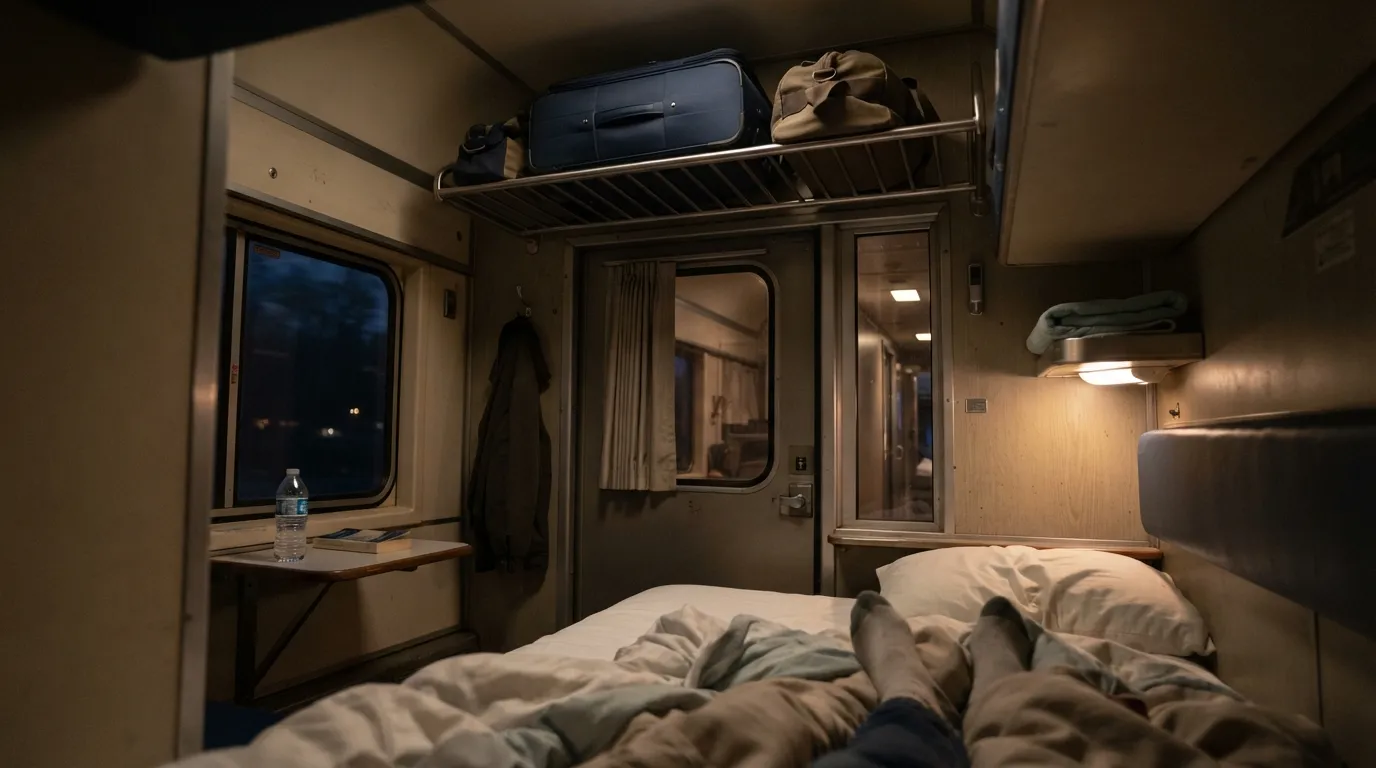
On most operators, bags belong inside your compartment, not in the corridor or a neighboring car. Overhead racks and the space above the door are common spots, and a bag you can see is a bag you stop thinking about.
Storage differs a lot by service. Couchettes are tight, while Amtrak long-distance sleeping cars give you some in-room space and a luggage area near the car entrance. Pack light enough that everything fits in your own space.
#14 – Know Whether You Booked a Seat, a Couchette or a Sleeper
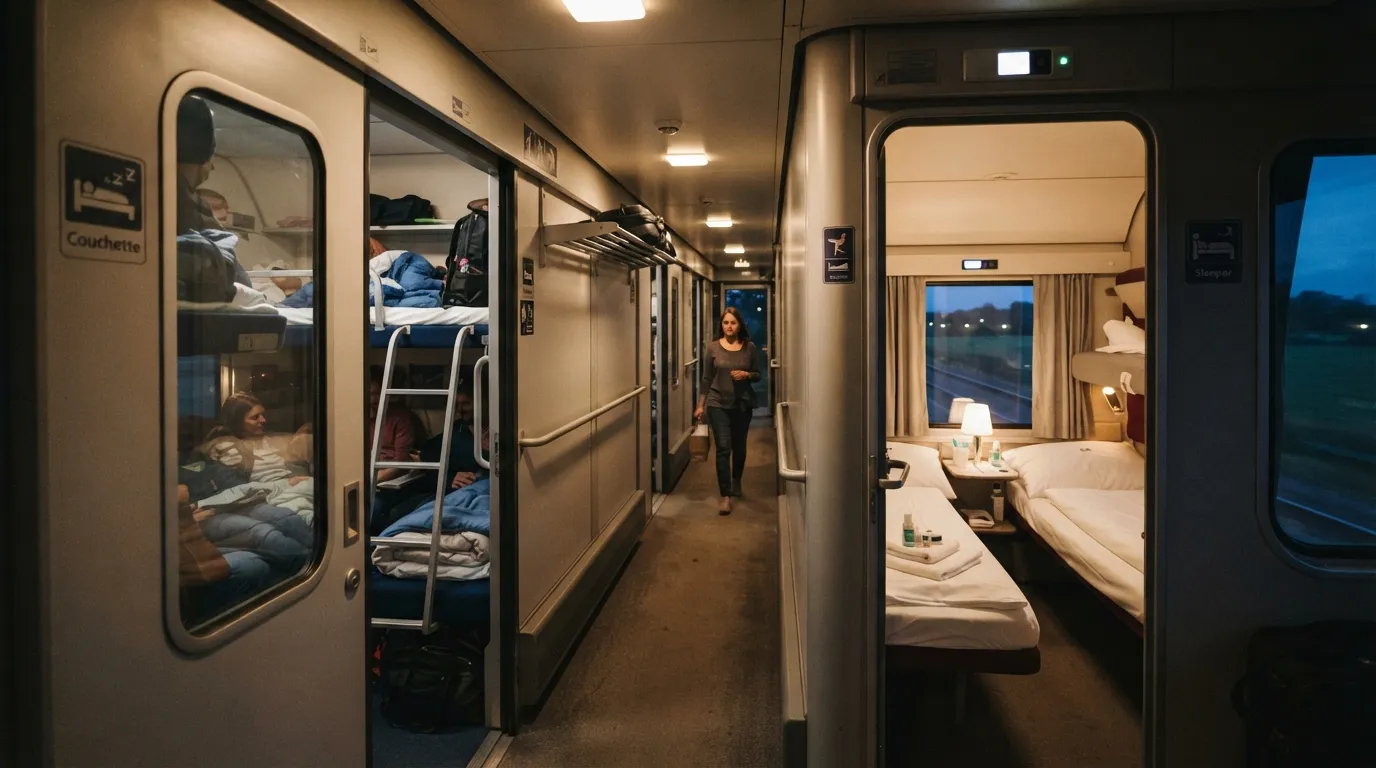
These are three very different nights. A reclining seat means sleeping upright among strangers, while a couchette is a shared compartment with several fold-down bunks.
A sleeper is a private or semi-private room with real beds. On Nightjet, couchettes typically hold four or six berths and sleepers one to three beds. Check which you have before you board, not after.
Quick Compare
- Seat: the cheapest way to travel, with the least privacy and the most noise from fellow passengers.
- Couchette: shared compartment, fold-down bunks, and a pillow and blanket on most services.
- Sleeper: your own room or a small shared one, with real beds and usually fuller linen.
#13 – Choose Your Bunk Based on Your Night, Not the Price Difference
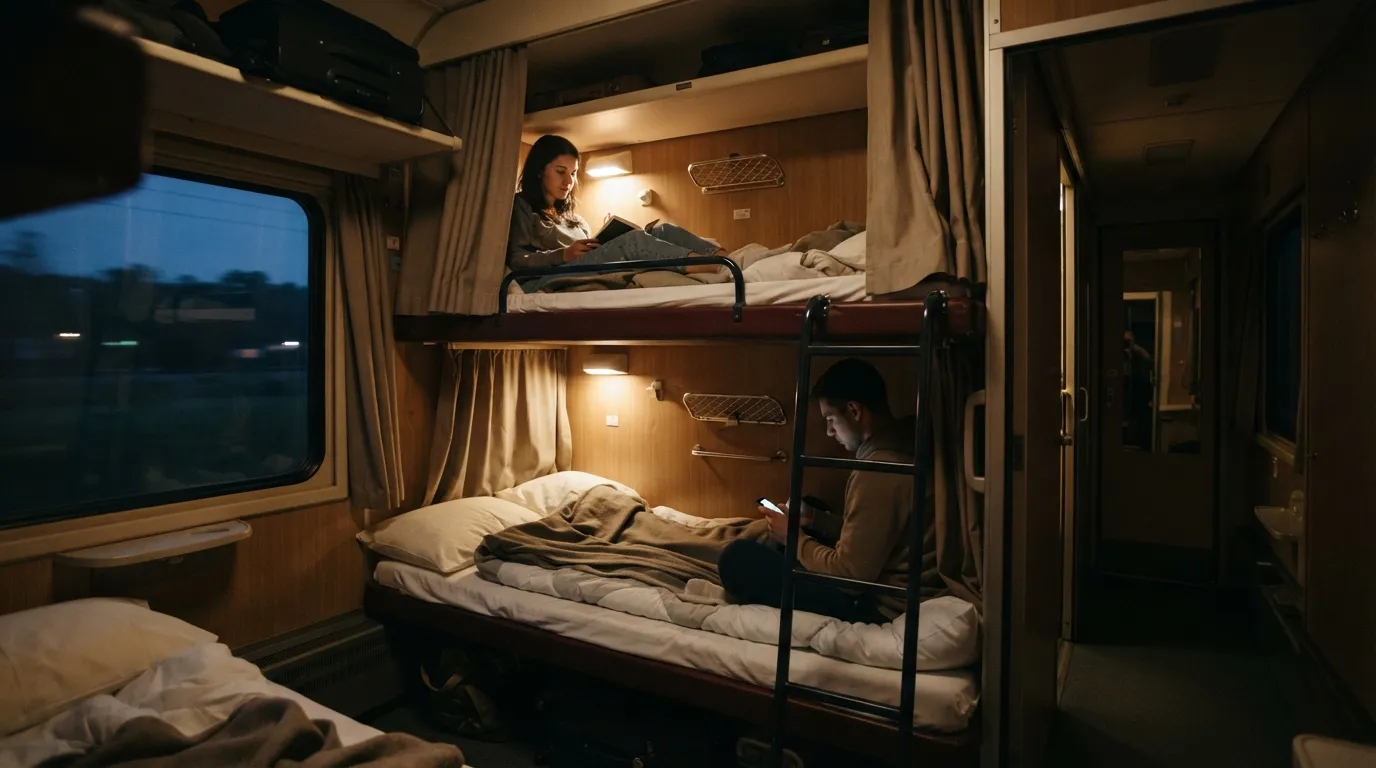
In a shared couchette, the upper bunk means a ladder climb every time you need the bathroom. The lower bunk means being the seat everyone else uses until the beds are made up.
Where you can choose, light sleepers who wake up often usually do better low, and anyone who wants to be left alone does better up high. Ask at booking if your operator lets you pick.
#12 – Check What Bedding Comes Included Before You Pack
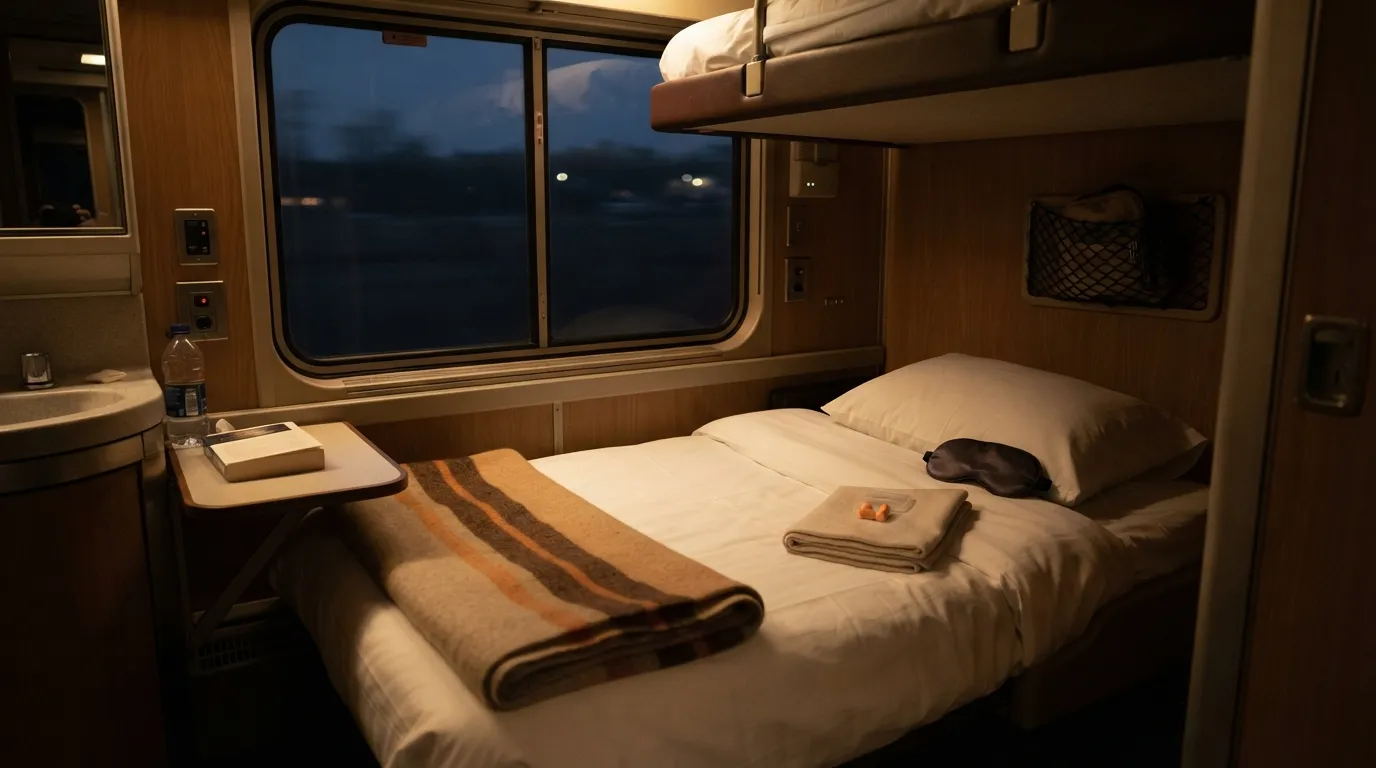
Bedding is not the same everywhere. Couchettes typically include a pillow and blanket, while sleepers usually step up to fuller bed linen. Amtrak sleeping car fares include bedding as well.
Reading the operator’s own description of your berth type tells you whether to pack a travel pillow, a light layer, or nothing. Earplugs and an eye mask are worth carrying either way.
#11 – Learn What Breakfast Actually Means on Your Train
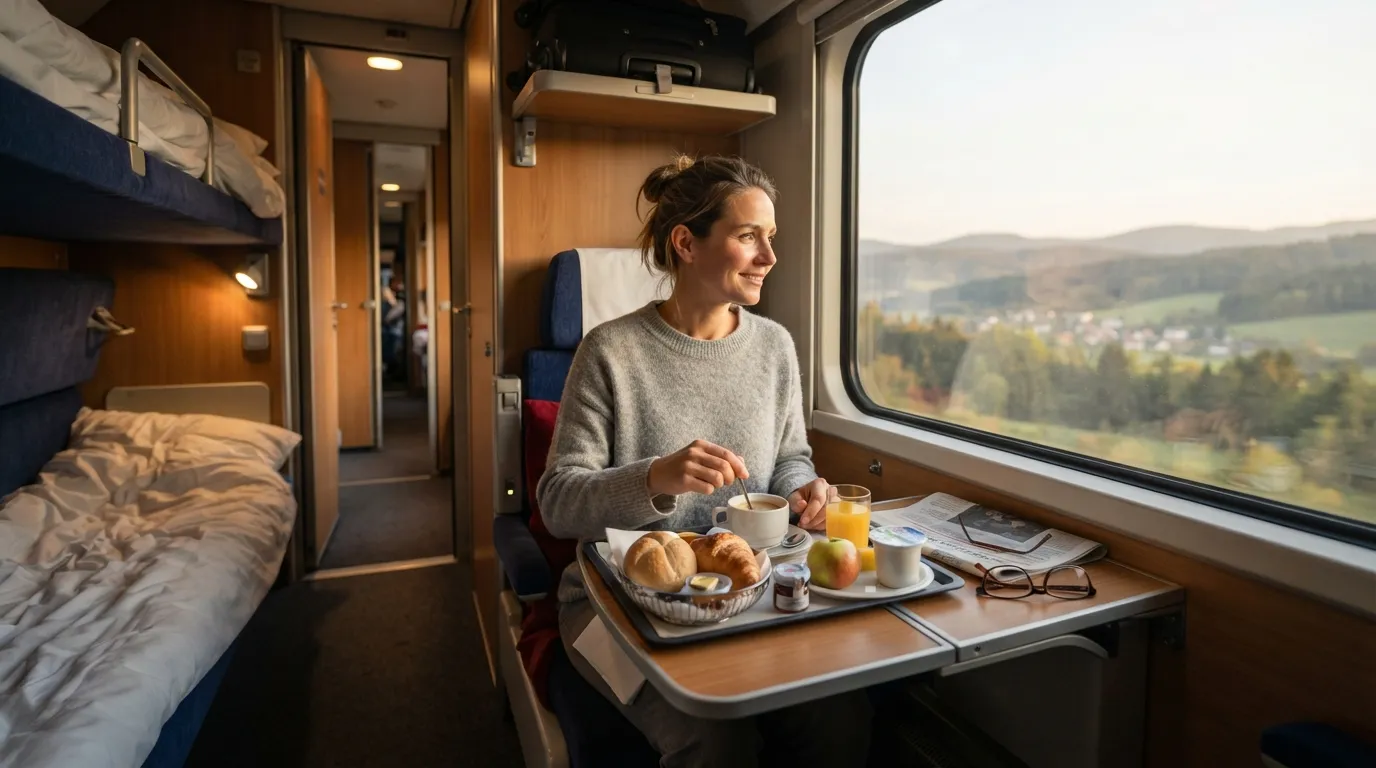
Breakfast can be a tray at your door, a bag of snacks, a seat in the dining car, or nothing at all. It depends on the operator and your ticket.
On Nightjet, breakfast is part of sleeper fares, and couchette passengers can usually add it. Amtrak often includes meals for sleeping car passengers on long-distance routes, though service varies. Confirm yours the day before.
Fast Facts
- Nightjet sleeper fares include breakfast.
- Nightjet couchette passengers can usually add it.
- Amtrak long-distance sleeping car fares often include meals, but service varies by route.
- Seat tickets usually mean you bring your own.
#10 – Eat Dinner Before You Board Unless You’ve Confirmed a Dining Car
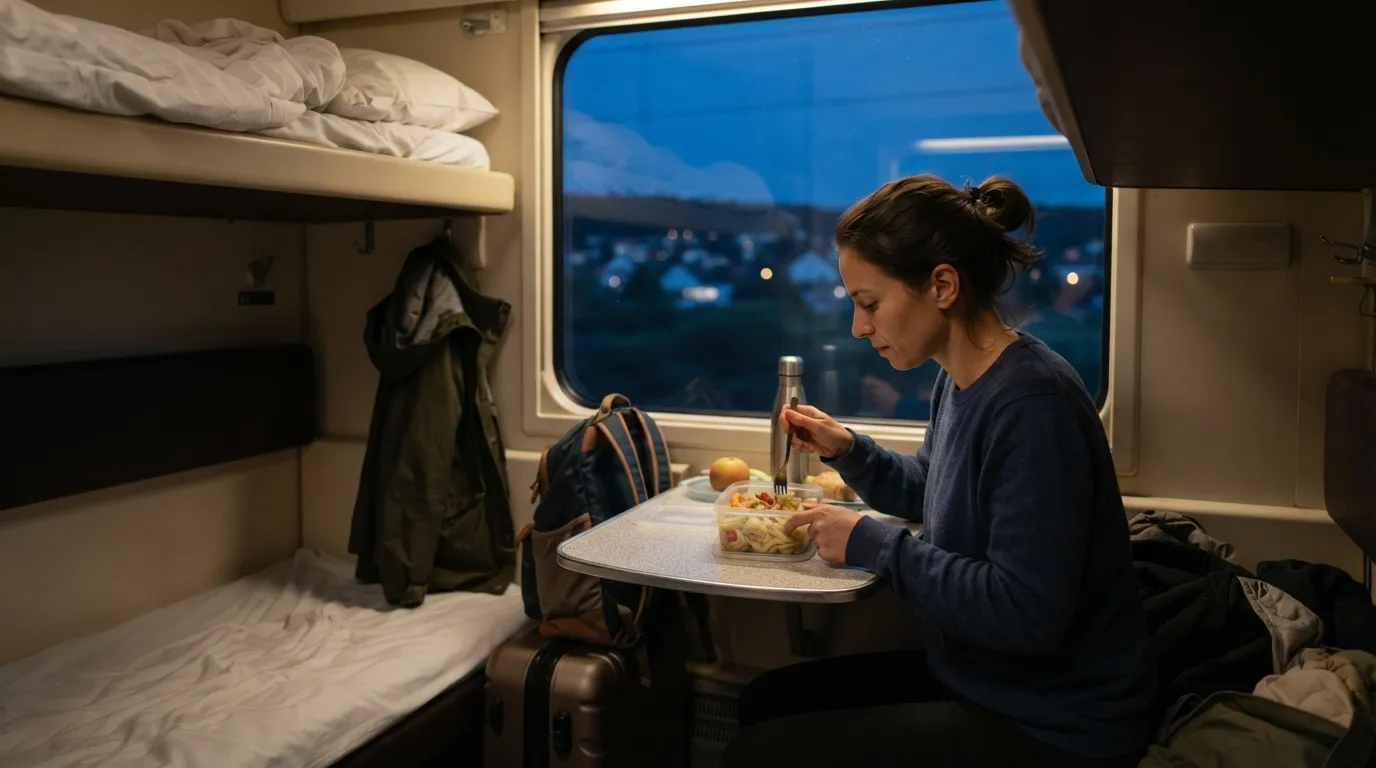
Many European night trains have no full restaurant car, and a long evening with a growling stomach is a quiet sleep wrecker. Where food service exists, it can be limited or end early.
Bring something simple that doesn’t smell up a shared compartment. Long-distance Amtrak trains with a dining car are the more comfortable exception, but check your route’s current service.
#9 – Check Your Operator’s Quiet Hours Instead of Assuming
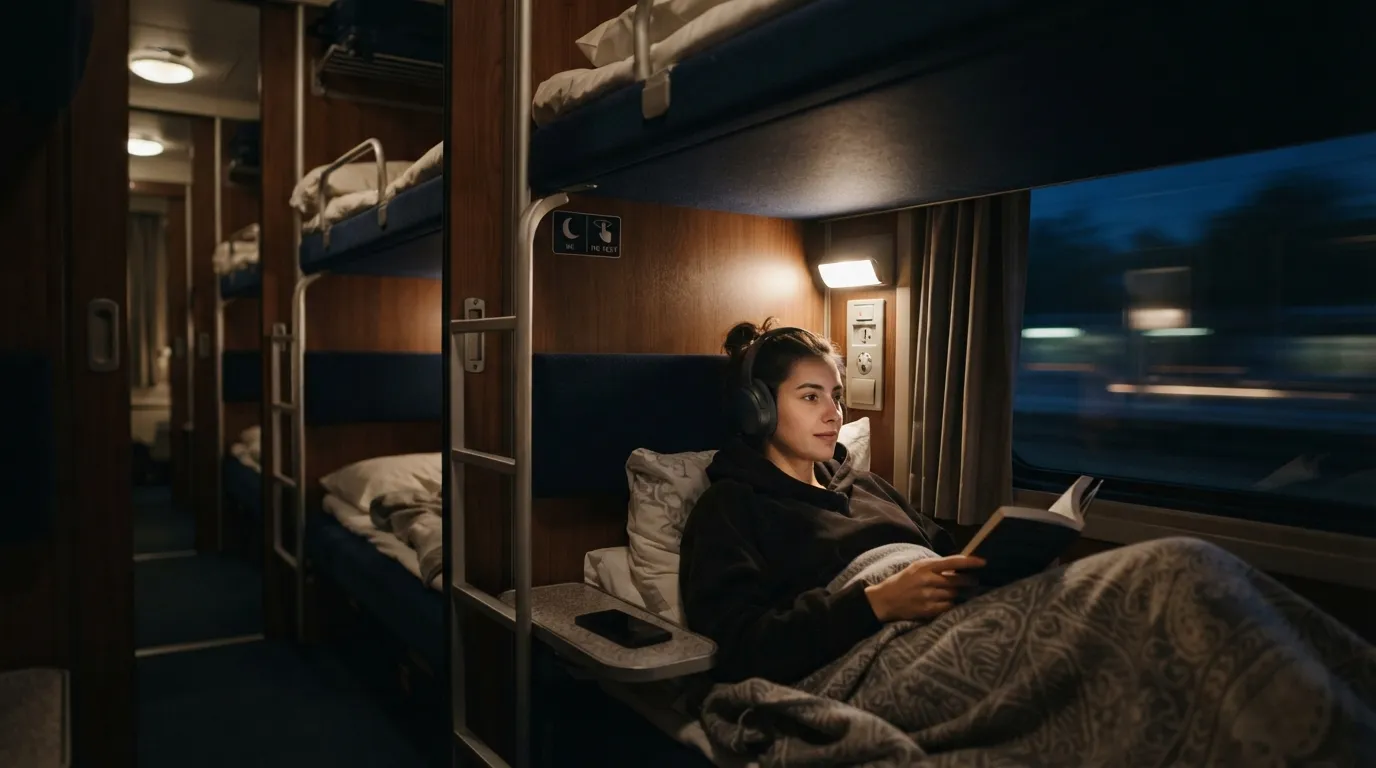
Most operators expect passengers to keep voices and devices low overnight, but there’s no single hour or policy that applies everywhere. What’s enforced also depends on how seriously your attendant takes it.
Use headphones, silence your phone, and keep late conversations out of shared compartments. If your cabin mates ignore the mood, the attendant is your next move.
#8 – Expect Border Checks to Differ by Route
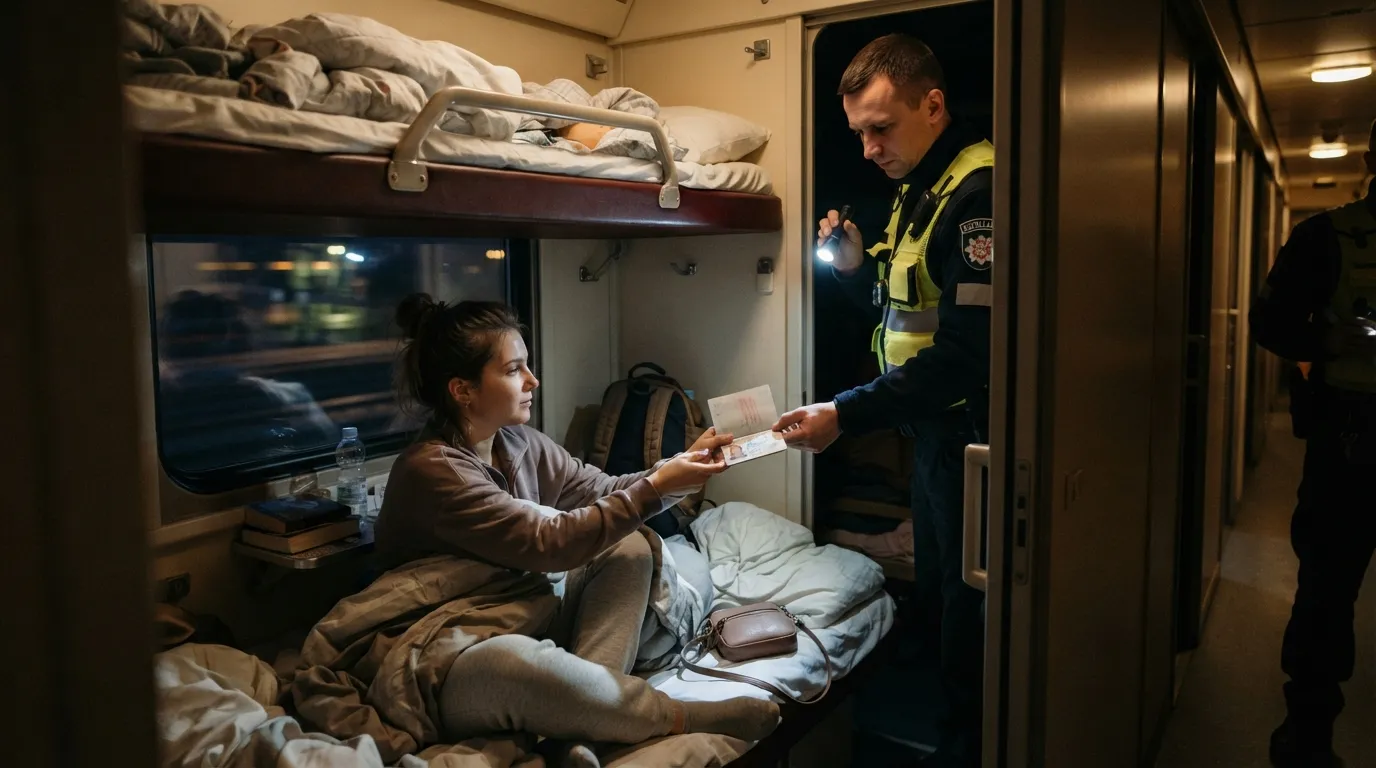
Crossing between Schengen countries usually means no routine passport check, but spot checks can still happen. Routes that leave the Schengen area, or head toward the UK or other non-Schengen countries, are more likely to involve officers at night.
Some attendants hold passports so you aren’t woken, while others expect you to keep them handy. Ask your attendant which applies.
Worth Knowing
- Schengen-to-Schengen legs usually have no routine check, but spot checks are possible.
- Non-Schengen routes are more likely to bring officers aboard overnight.
- Passport handling depends on the attendant, so ask before bedtime.
- Keep your ID in your small valuables bag either way.
#7 – Keep Your Ticket and ID Easy to Find for Night Inspections
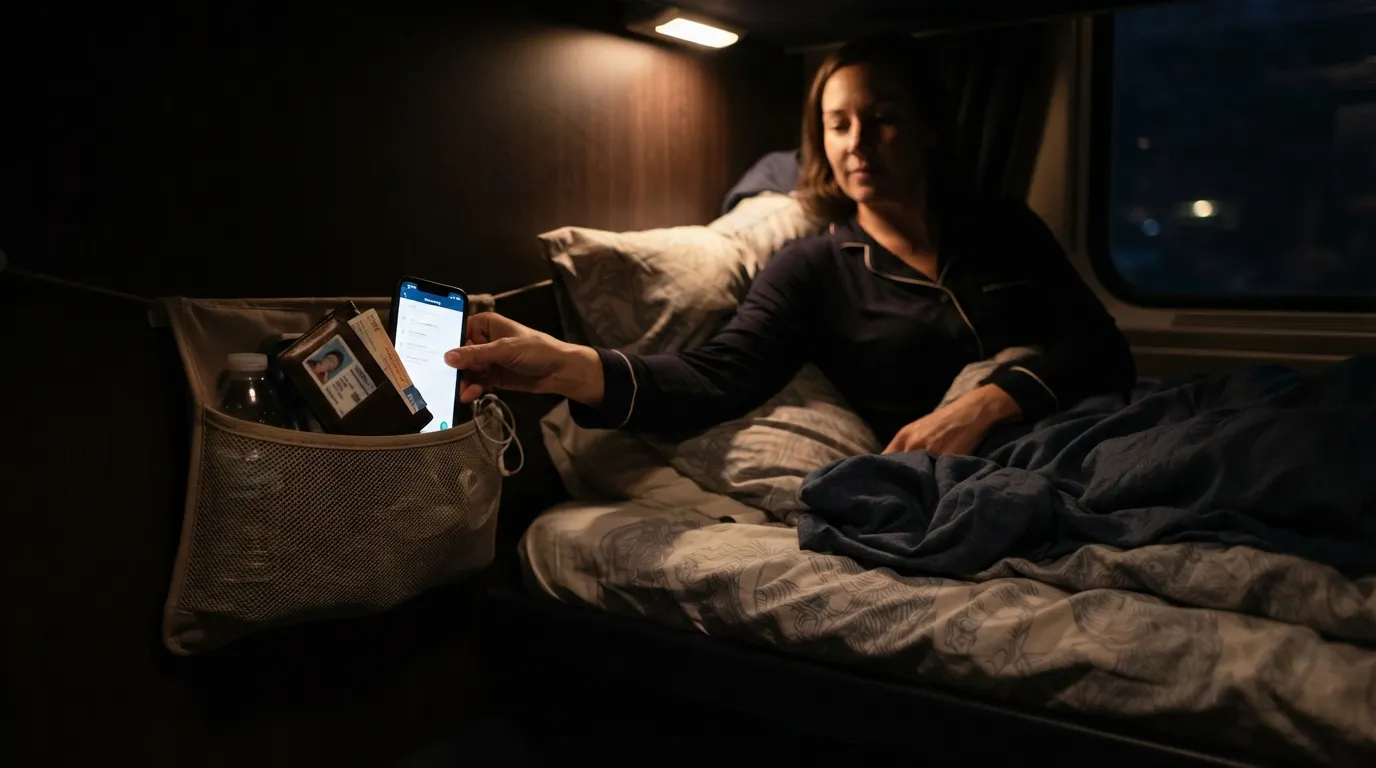
Inspections can come before bedtime or at an odd hour, and digging through a bag in the dark is nobody’s idea of rest. Some attendants collect tickets when you board so you aren’t disturbed later.
If yours doesn’t, keep your booking on your phone and a photo ID within reach. Carry the same ID you used to book, since requirements differ by operator and border.
#6 – Plan Your Bathroom Routine Before the Lights Go Down
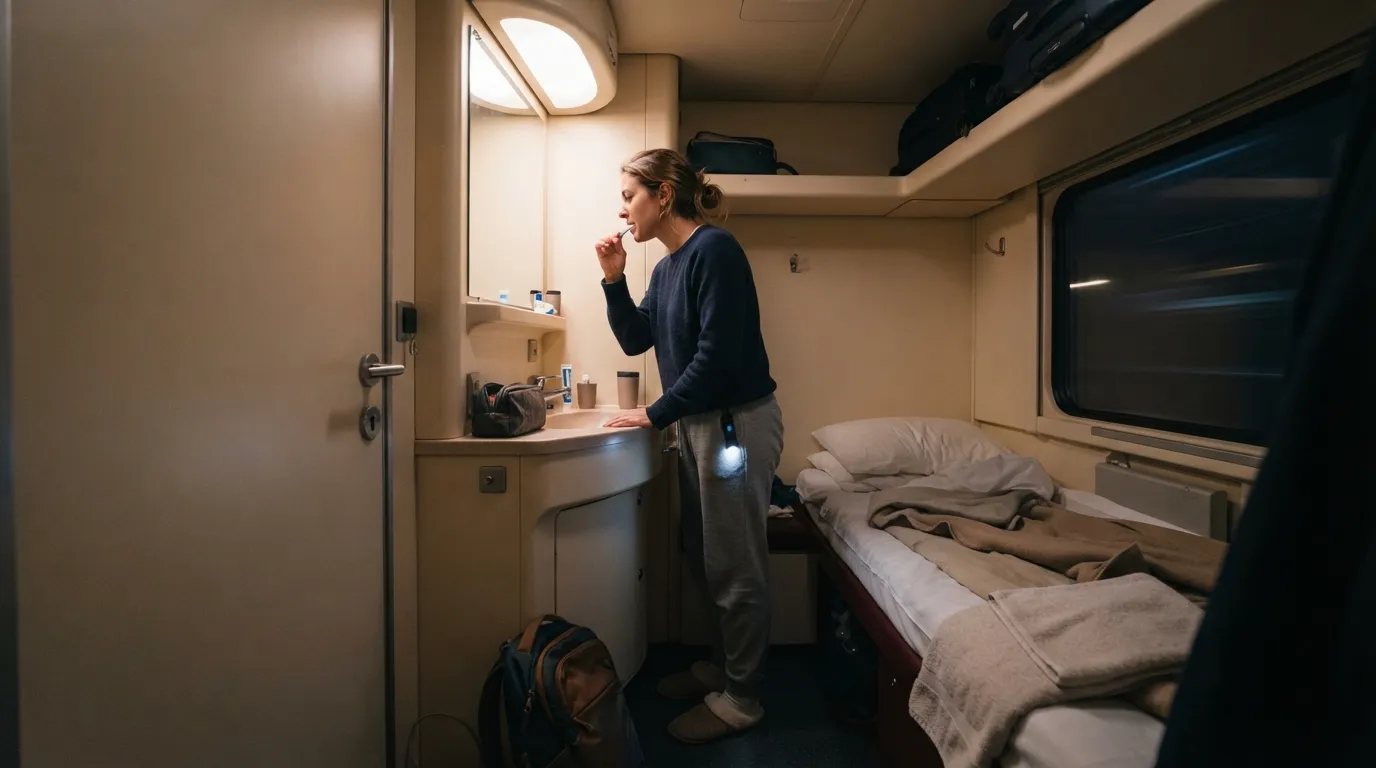
Couchette passengers generally share washrooms at the end of the car, so brushing teeth and changing before bedtime means fewer shuffles through the dark corridor later. Slippers and a small flashlight or phone light help.
Many sleeper compartments include a sink, and some premium cabins add a private shower and toilet. Check what your fare includes before you plan your evening.
#5 – Find the Light Controls and Outlets Early
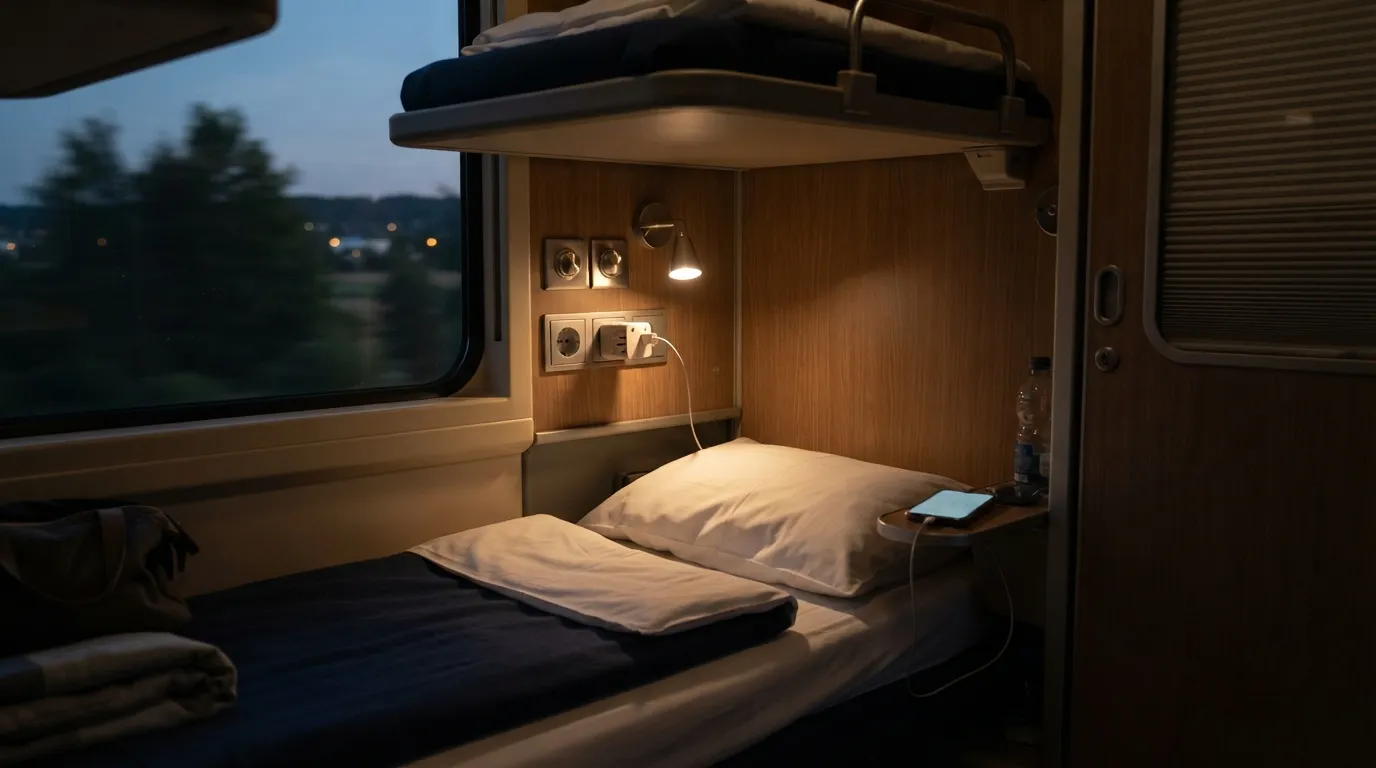
Compartment lighting and power vary widely, so check them while you can still see. Some sleepers give you individual reading lights and sockets, while a basic couchette may offer less.
Bring a charged power bank and the right plug adapter for the country you’re in. Then dim your own light as soon as bunks are made, since a bright screen wakes cabin mates faster than a snore.
#4 – Adjust the Temperature Early and Pack Layers
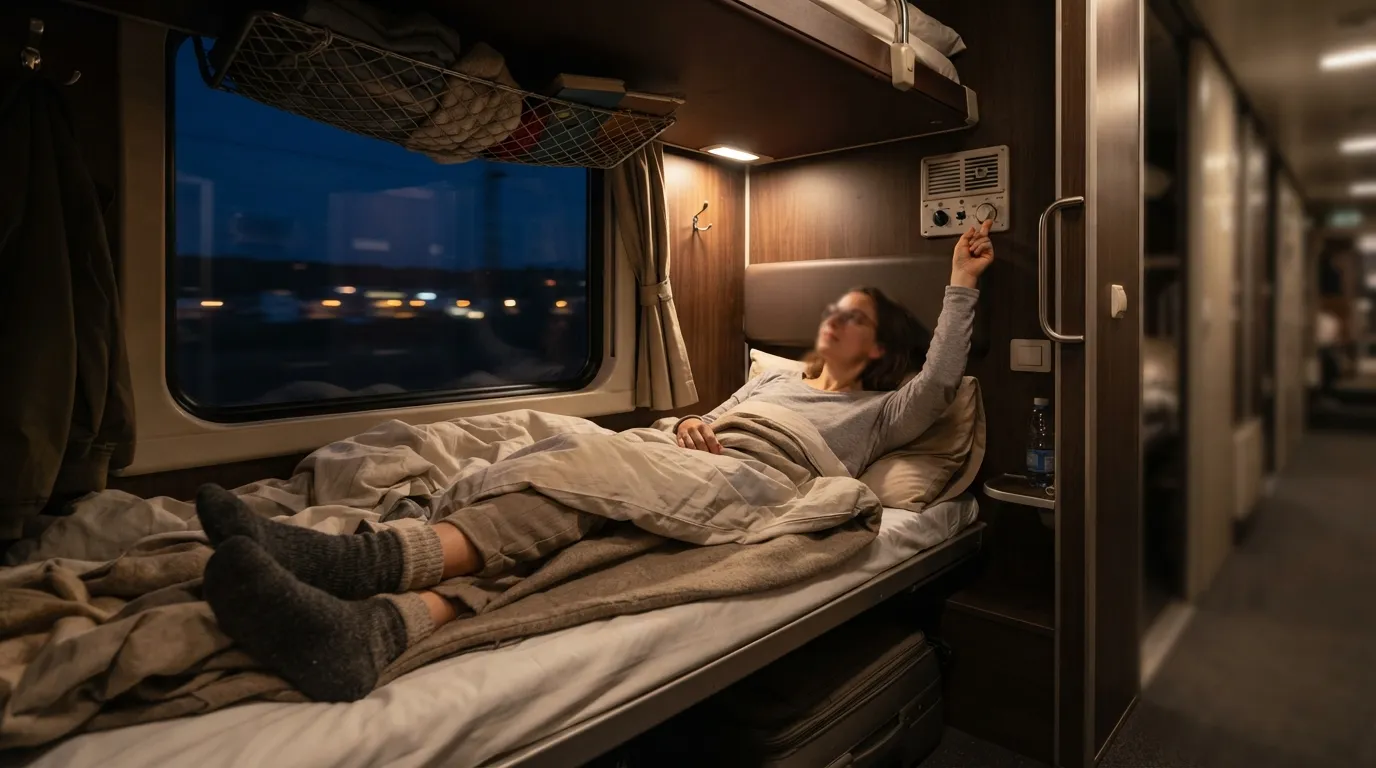
Rail cars can run too hot early in the night and too cold by dawn. Where your compartment has a climate control or vent, adjust it before you sleep rather than at 2 a.m.
Some cars have little individual control, and windows typically don’t open. A light layer and a pair of socks fix more sleep problems than most gadgets do.
#3 – Treat the Arrival Time as an Estimate, Not a Promise
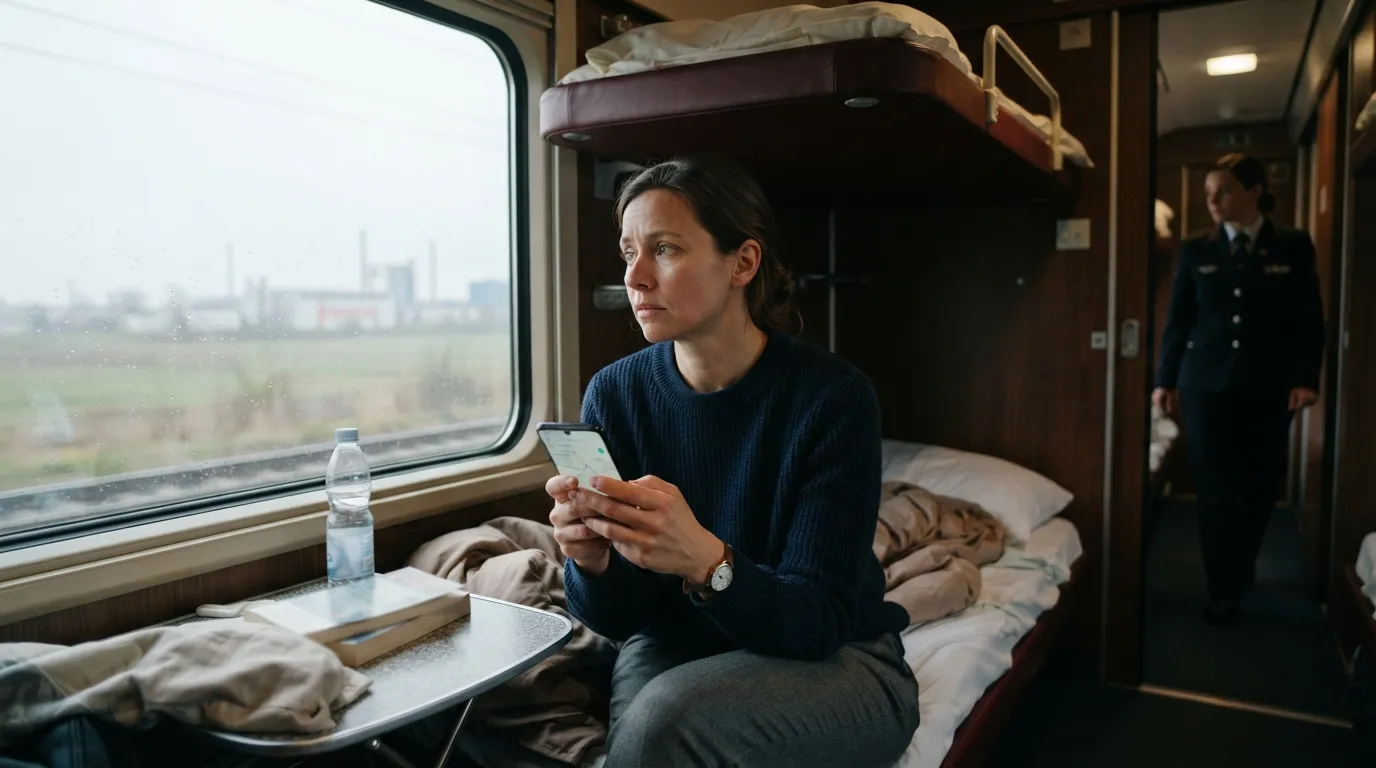
Night trains are often scheduled to arrive at a civilized hour, but delays happen, especially on long routes and cross-border services. Check your operator’s live updates before you sleep and again when you wake.
If you have a tight onward connection, ask your attendant what the plan is. Plan your first morning with some slack built in.
At a Glance
- Check live updates twice: before sleeping and on waking.
- Delays are most likely on long and cross-border routes.
- Tight connection? Ask your attendant about the plan early.
- Leave slack in your first morning.
#2 – Tell the Attendant Quickly if Something Is Wrong
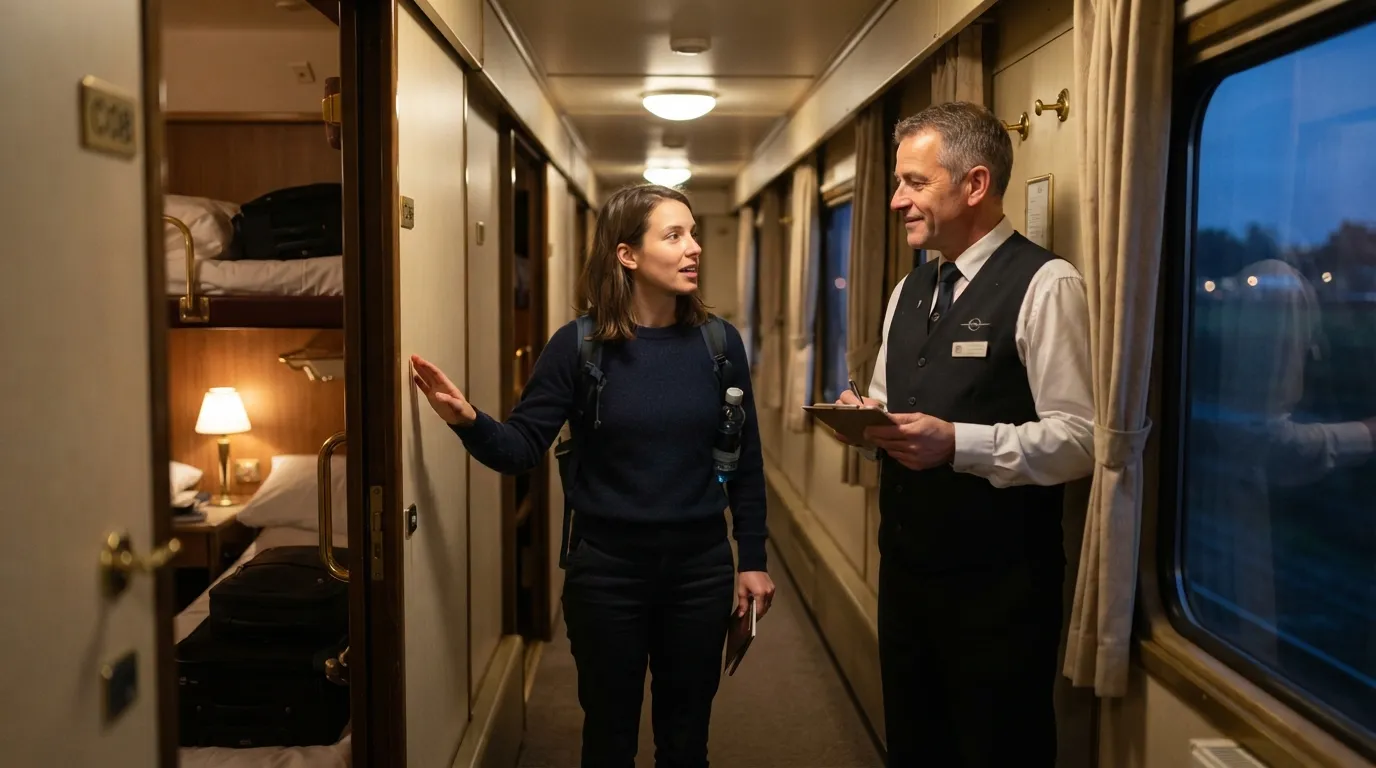
A noisy cabin mate, a broken light, or a berth that isn’t what you booked is much easier to fix early in the night. Attendants are often the only staff on the car, so bringing them in sooner is the best option.
Depending on the operator and how full the train is, they may be able to mediate or move you. Ask politely and early, not at 5 a.m.
#1 – Confirm the Wake-Up Knock and Your Stop the Night Before
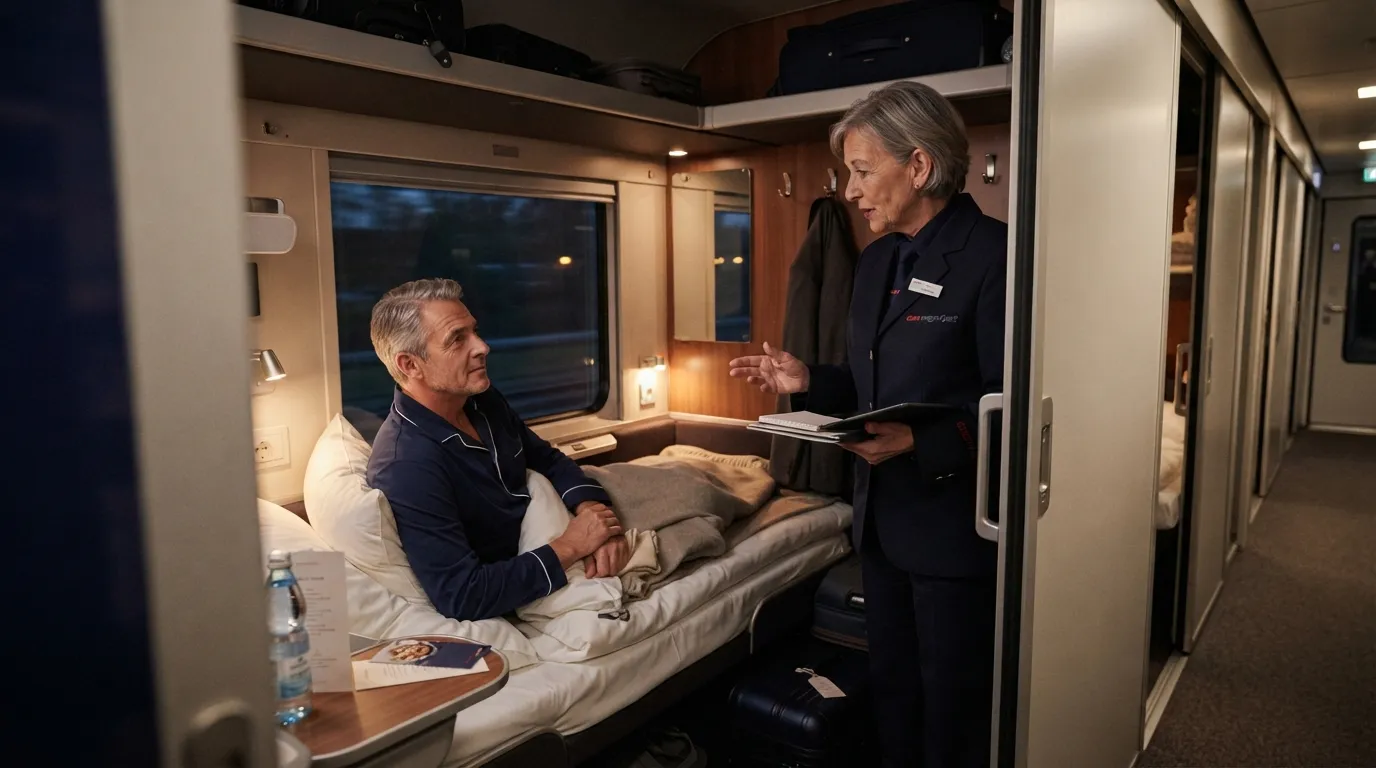
The most reliable way to arrive rested is to tell the attendant your stop and ask how and when you’ll be woken. On Nightjet and many other European night trains, attendants wake sleeper passengers ahead of arrival, often timed to breakfast. Amtrak sleeping car attendants can also arrange wake-up calls on request.
Coach or seat passengers usually have to rely on their own alarms. Set a backup alarm anyway, because a crew can’t wake you if your berth isn’t on their list.
Sleeping until dawn on a night train depends less on luck than on matching your plans to your operator’s rules for locks, luggage, borders, meals, quiet hours, and wake-ups. The same habit that protects your rest on one route can backfire on another.
So before you board, spend five minutes with your operator’s own guidance, and spend five more asking your attendant. That’s the difference between the night you survive and the one you wake up from feeling like you actually slept.
CEO-Co-Founder