
- 15 Banned Books That Became School Staples - October 22, 2026
- 16 Sitcoms That Replaced Their Lead Actor and Stayed on Air - October 22, 2026
- 17 Things Nobody Tells You About Airport Overnight Stays Until the First Delay - October 22, 2026
Most travelers treat an airline fee as final the moment it appears on the screen, but a surprising number come with written exceptions that only kick in when a person at the counter applies them.
Some of these waivers are locked into published policy and others are pure goodwill, and that difference decides whether asking actually works.
#16 – Online Booking Fees on Budget Carriers
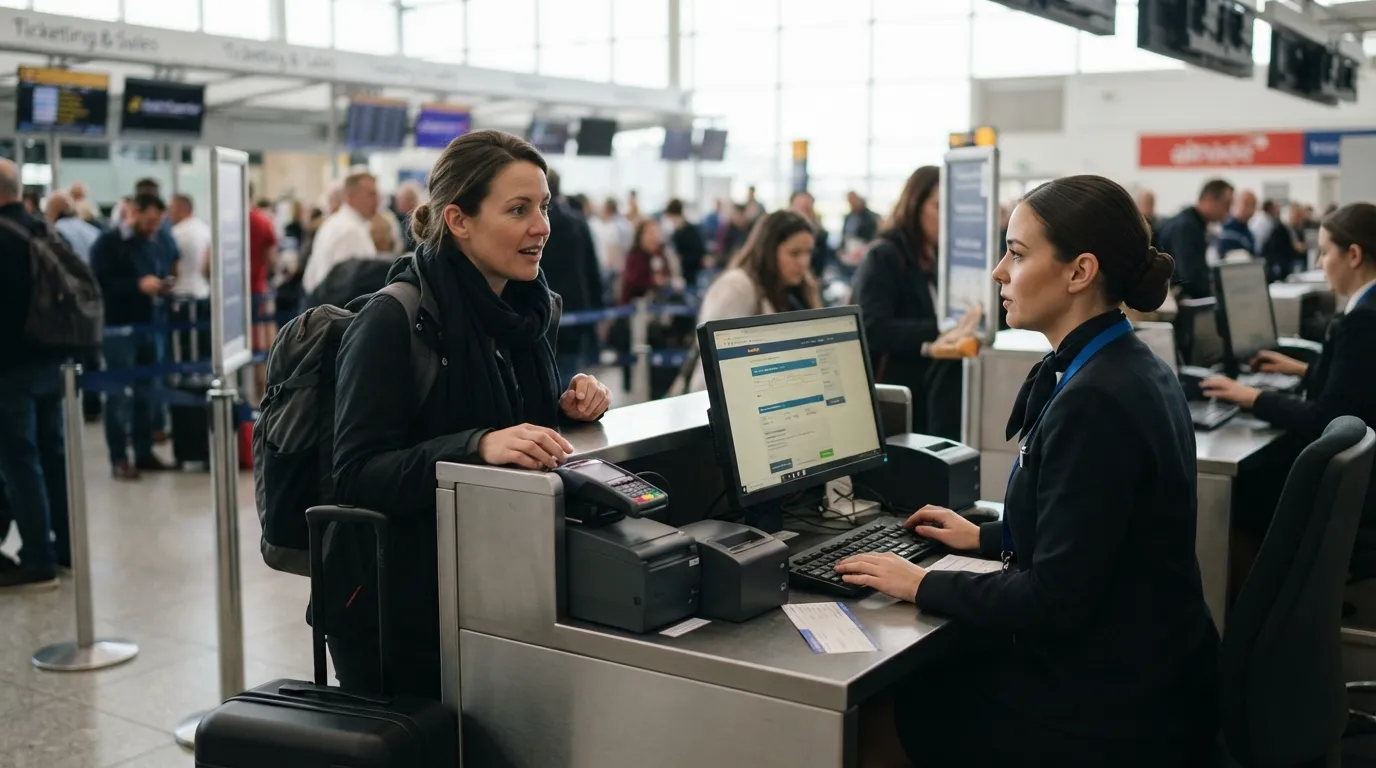
Some ultra-low-cost carriers add a booking or passenger-usage charge as its own line item on top of the base fare. Where a carrier’s schedule ties that charge to a particular channel, buying at a staffed airport counter can change the total.
Fees differ by carrier and change often, so ask the agent to quote the full price both ways before you pay. This is channel pricing, not goodwill.
#15 – Agent-Assisted Change Fees

Some carriers list a per-passenger service fee when an agent, rather than the app or website, processes a change or cancellation. It usually applies to specific fare types.
If the self-service tool won’t let you finish the change, say exactly that to the agent. Whether the fee gets dropped depends on the carrier’s written exceptions and the agent’s discretion, so treat it as a polite ask, not a guarantee.
#14 – Same-Day Confirmed Change Fees
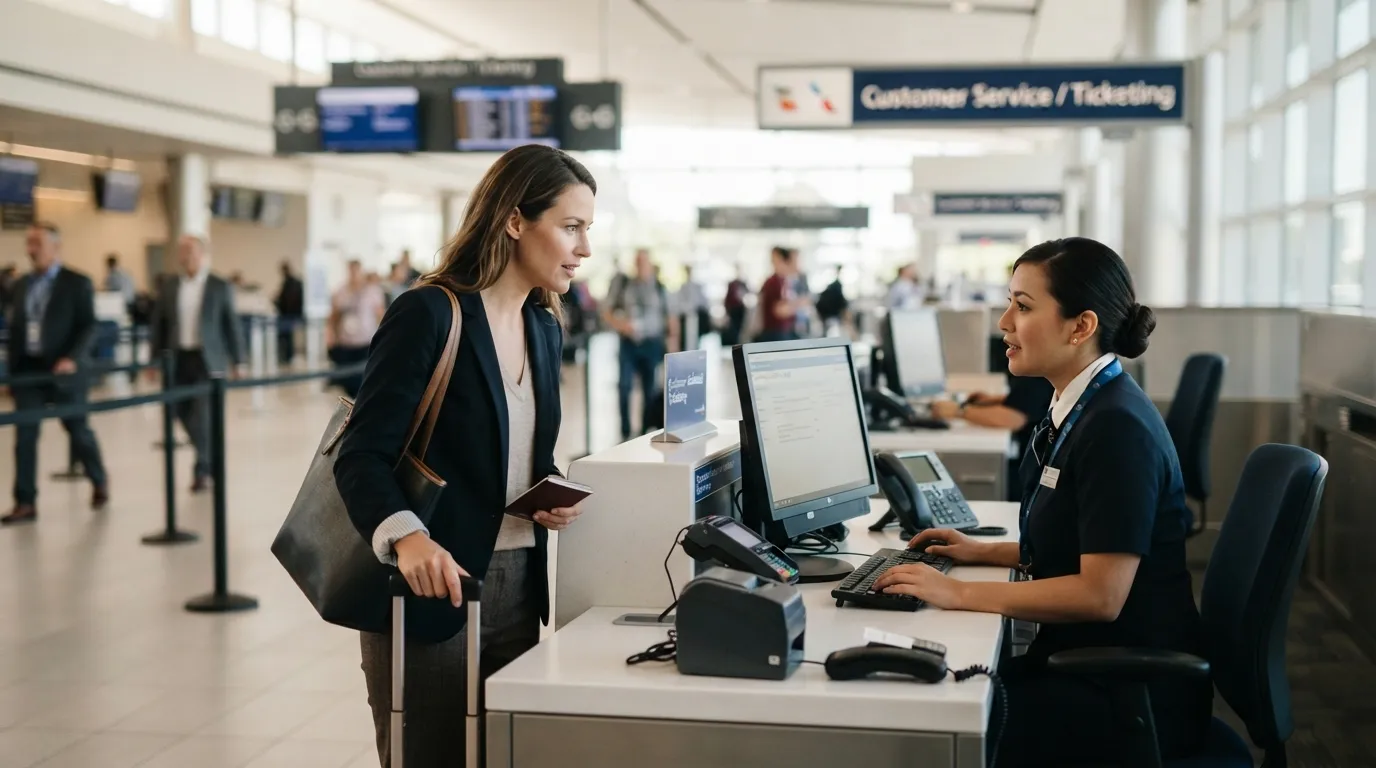
Many carriers publish a fee for confirmed same-day changes on standard economy tickets. Their written policies waive it for certain groups, usually elite members and, at some airlines, travelers on higher fares or on the same reservation as a qualifying member.
Ask the agent whether your fare class or reservation matches the published criteria. This one runs on written rules, not on the agent’s mood.
Quick Compare: Three Kinds of Waivers
- Written policy: The agent checks your record or documents and applies the rule.
- Channel pricing: The price changes because of where you buy, so ask for a quote both ways.
- Goodwill: The agent decides. Ask politely and don’t count on it.
#13 – Gate-Check Fees on Full Flights
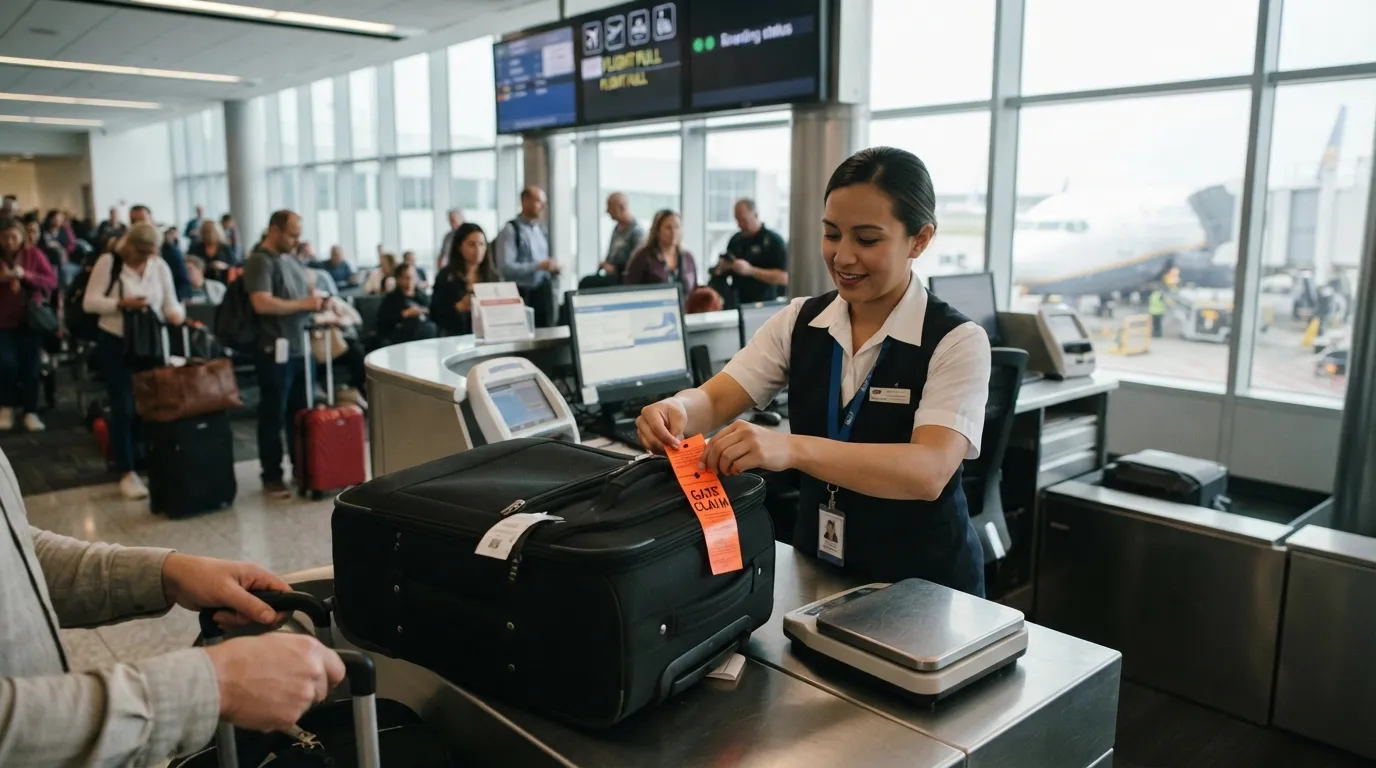
When overhead bins are about to fill, gate agents often start tagging carry-ons for the cargo hold. Gate agents frequently do this at no charge, even though the same bag checked at the counter would carry the standard fee.
This is an operational call, not a written entitlement, and it depends on the flight. If you’re offered a free gate-check, take it before you pay for a checked bag.
#12 – Overweight Bag Surcharges for Military Travelers
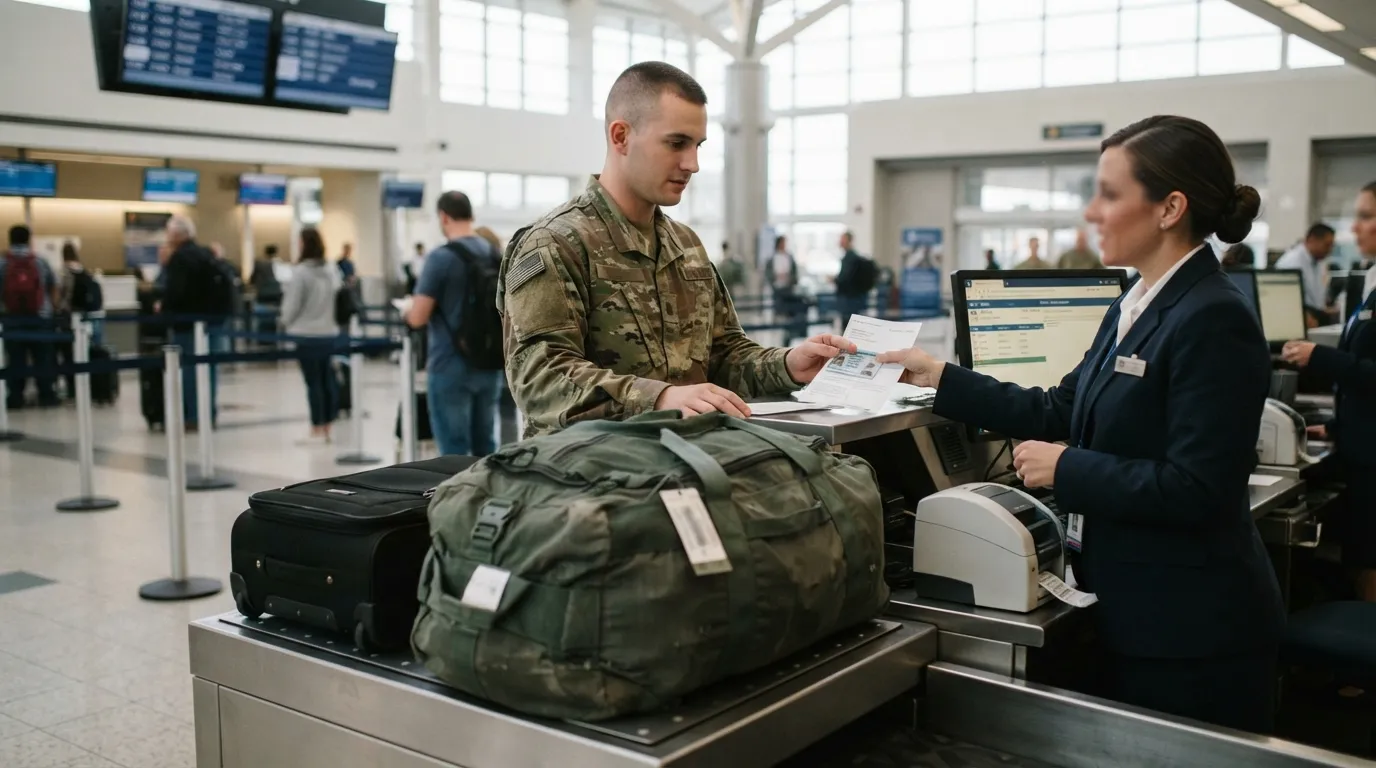
Published baggage rules add a flat surcharge when a bag goes over the weight limit, often at 50 pounds and again at 70.
Many carriers waive these overweight charges for active-duty military members traveling on orders. Bring your ID and orders to the counter, because agents verify them before removing the fee. It’s tied to military travel rules, not goodwill.
#11 – Seat Fees for Families on Basic Economy

Basic economy usually means a randomly assigned seat unless you pay to choose one. That’s a painful setup for a parent with a toddler.
After regulatory pressure, major airlines adopted practices to seat young children next to an accompanying adult without an extra seat fee, even on basic fares. Ask at check-in or the counter and mention the child’s age. Exact rules and age cutoffs vary, so confirm with your carrier.
#10 – Cancellation Fees When the Airline Causes the Disruption

Cancel a non-refundable ticket yourself and the carrier charges you. Flip the cause, and the rules flip too.
DOT rules require refunds or other remedies when the airline cancels a flight or makes a significant change. In those cases the passenger-initiated cancellation fee doesn’t apply, and counter staff can rebook you or start the refund. This is a regulatory requirement, not a favor.
Fast Facts: What Counts as a “Significant Change”
- A departure or arrival time shift of 3 hours or more on a domestic flight.
- A shift of 6 hours or more on an international flight.
- A change of departure or arrival airport, or an added connection.
- A downgrade to a lower class of service than you paid for.
- Refunds go to your original form of payment if you decline the alternative offered.
#9 – Counter Service Fees on Budget Carriers
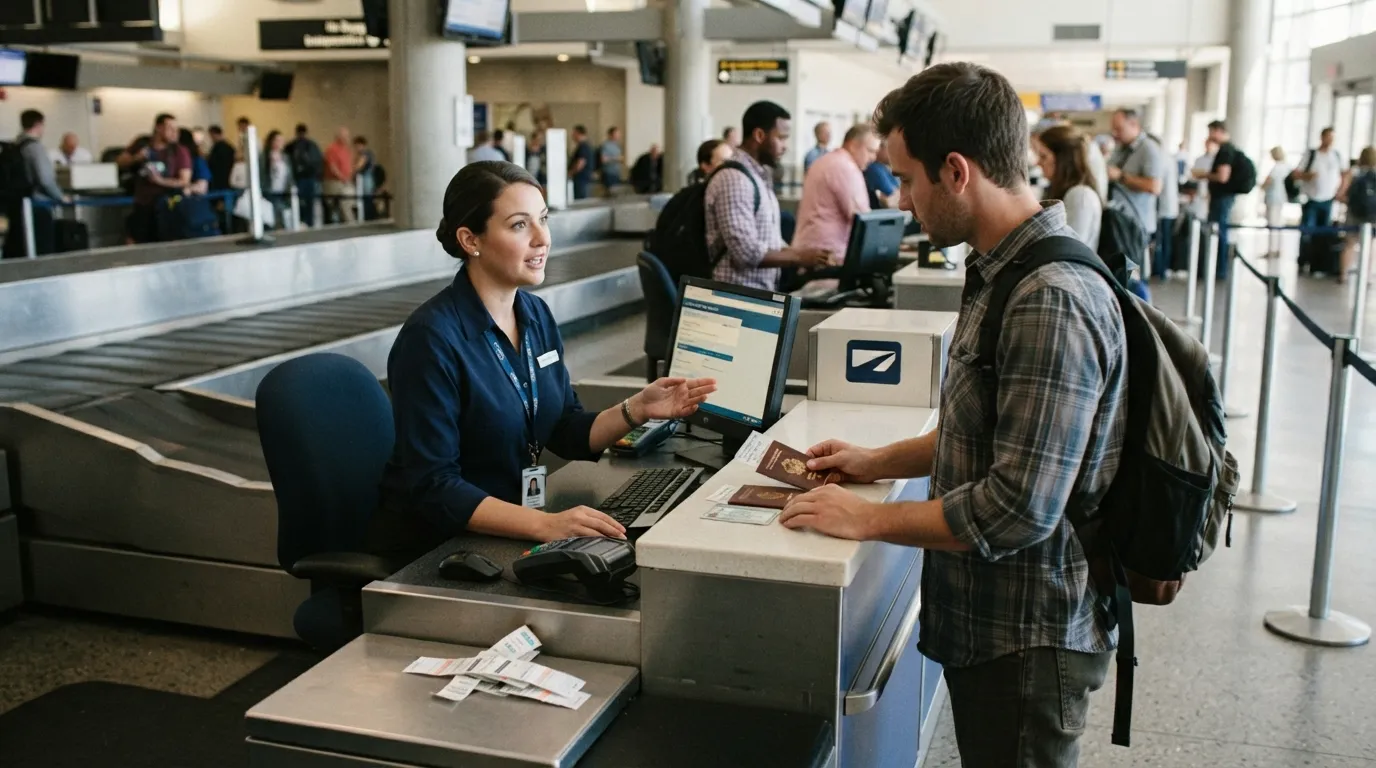
Some budget carriers charge per passenger for agent-assisted check-in or boarding pass printing at the airport. It’s easy to miss until you’re standing at the desk.
Their policies list written exemptions for certain categories, such as passengers with disabilities and active military. Ask the agent which category fits your situation and have documentation ready. This is a written exception, not goodwill.
#8 – Change Fees on Standard Fares
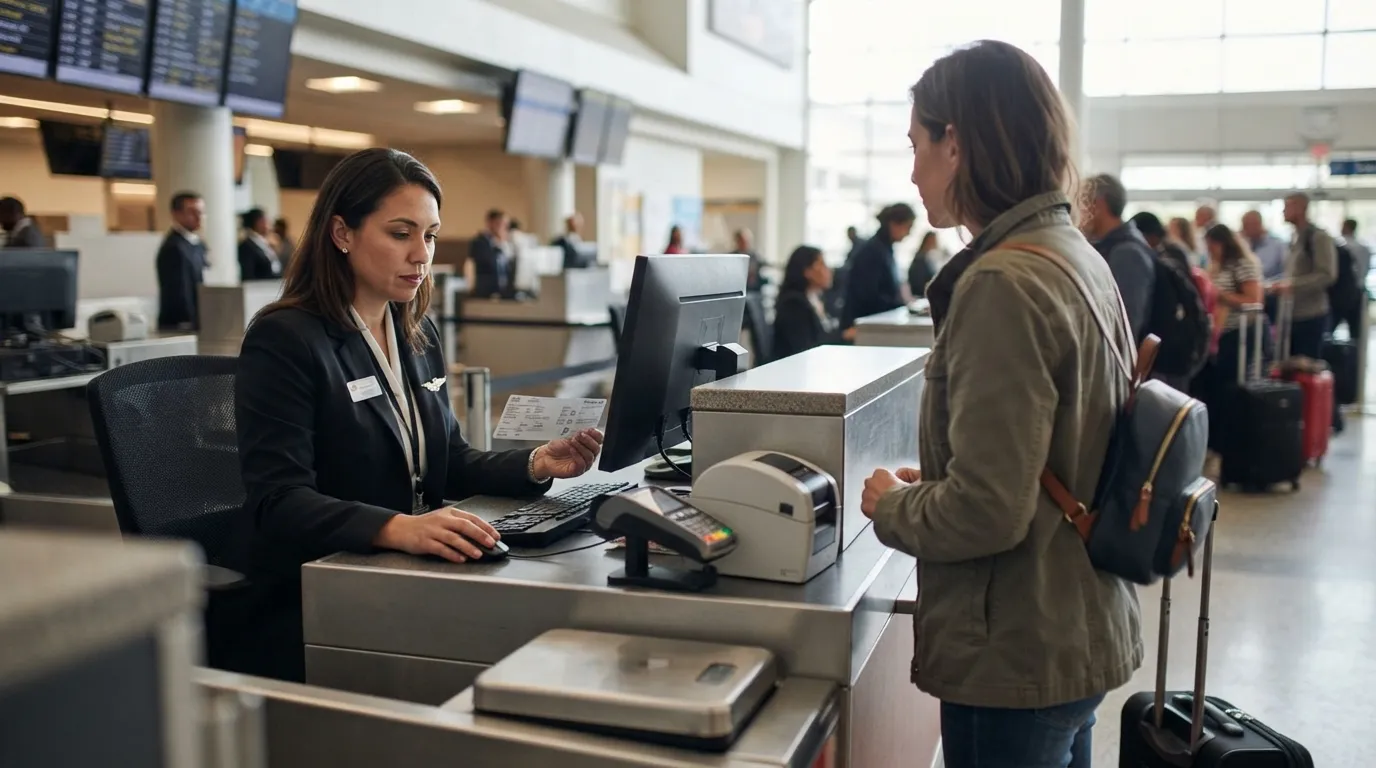
The change fee many travelers remember is gone on a lot of tickets. Major U.S. carriers eliminated it on standard economy and above for most domestic itineraries and some international ones, and United’s policy states the fee is waived on eligible fares.
The catch is basic economy, which remains non-changeable or restricted on most carriers. The agent will check your fare basis before updating anything, so know which fare you bought.
#7 – Second Checked Bag Fees for Status Holders and Cardholders

Baggage charts list a fee for the second checked bag on domestic flights, and many carriers waive it for elite members or co-branded cardholders.
The waiver is usually applied automatically, or when you present the card or membership at the counter. Each policy names the exact benefit level required. Agents confirm eligibility from your record rather than making an exception, so make sure your frequent-flyer number is on the reservation.
#6 – Same-Day Standby Fees for Non-Elite Travelers

Some carriers list a fee for same-day standby on certain fares, and it applies if you hold no status.
Written waivers typically cover listed categories such as elite members and companions on the same record as a qualifying traveler. Categories differ by airline and change over time, so check your carrier’s current list. When your documentation matches, the counter applies the waiver.
#5 – Oversized Bag Charges for Sports Equipment
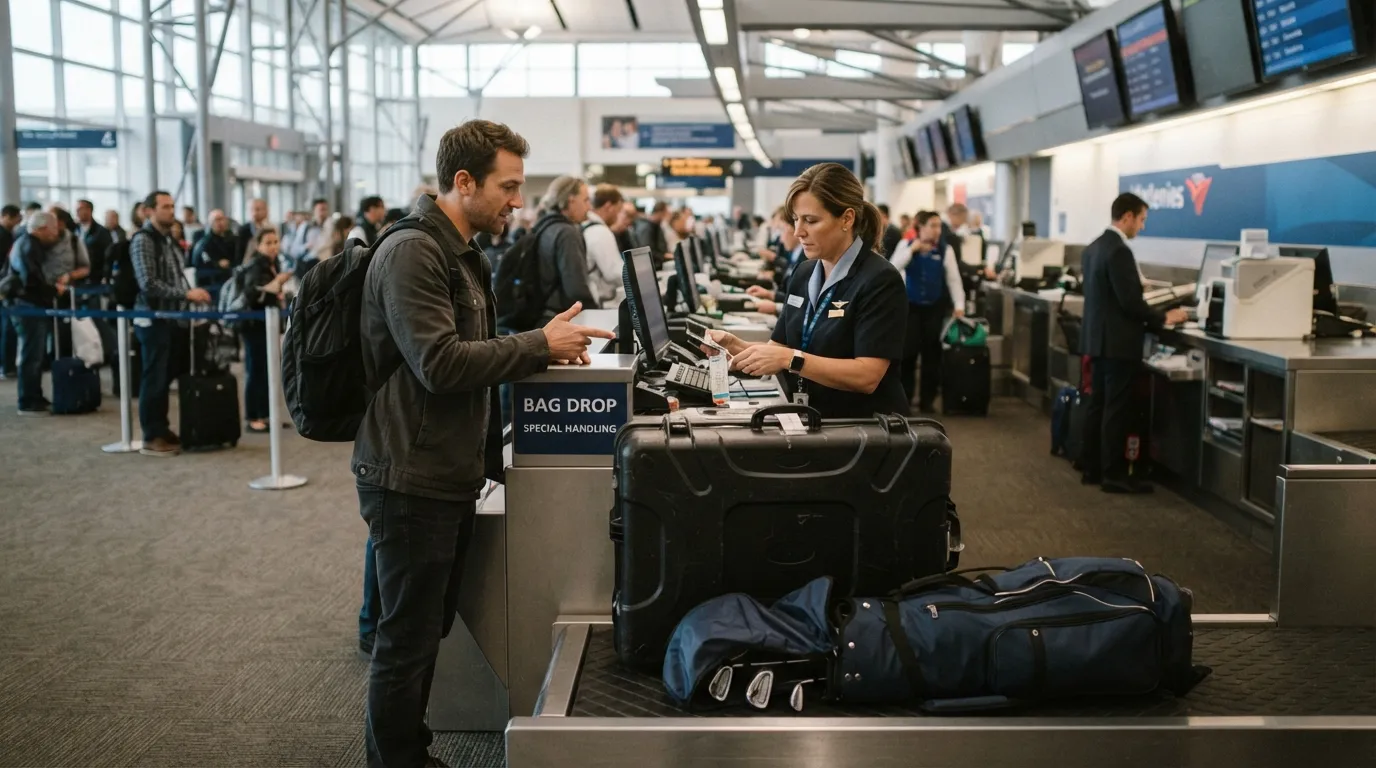
Oversized items beyond standard dimensions draw extra fees, and a bike or a golf bag can make that sting.
Some carriers publish separate treatment for specific sports equipment, with waived or reduced oversized charges. Declare the equipment at the counter so the agent can code it under the right category. This follows published equipment lists, not general discretion, and the lists vary by airline.
At a Glance: What to Bring to the Counter
- Military waivers: Government ID and your travel orders.
- Status or cardholder perks: Your frequent-flyer number on the reservation, plus the card if asked.
- Disability exemptions: Whatever documentation the carrier’s policy names.
- Sports gear: The item itself, declared up front so it’s coded correctly.
#4 – Phone and Chat Booking Fees
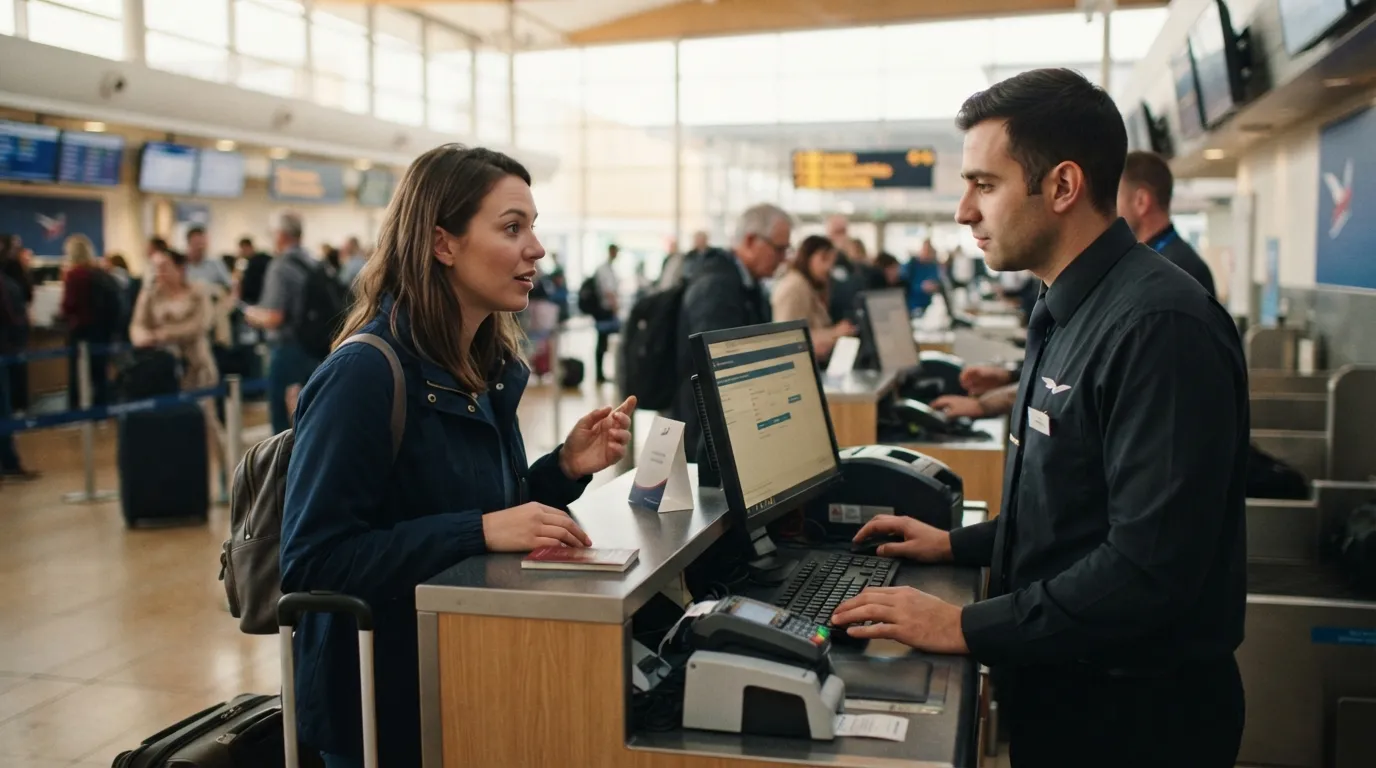
Some carriers charge a fee, sometimes per passenger, for new bookings completed by phone or chat instead of online.
Their policies note exceptions, such as lap infants or travelers who can’t use self-service options. If you can’t book online, say so up front. The agent can then handle it under the exception without adding the fee.
#3 – First Checked Bag Fees at the Airport vs. Prepaid
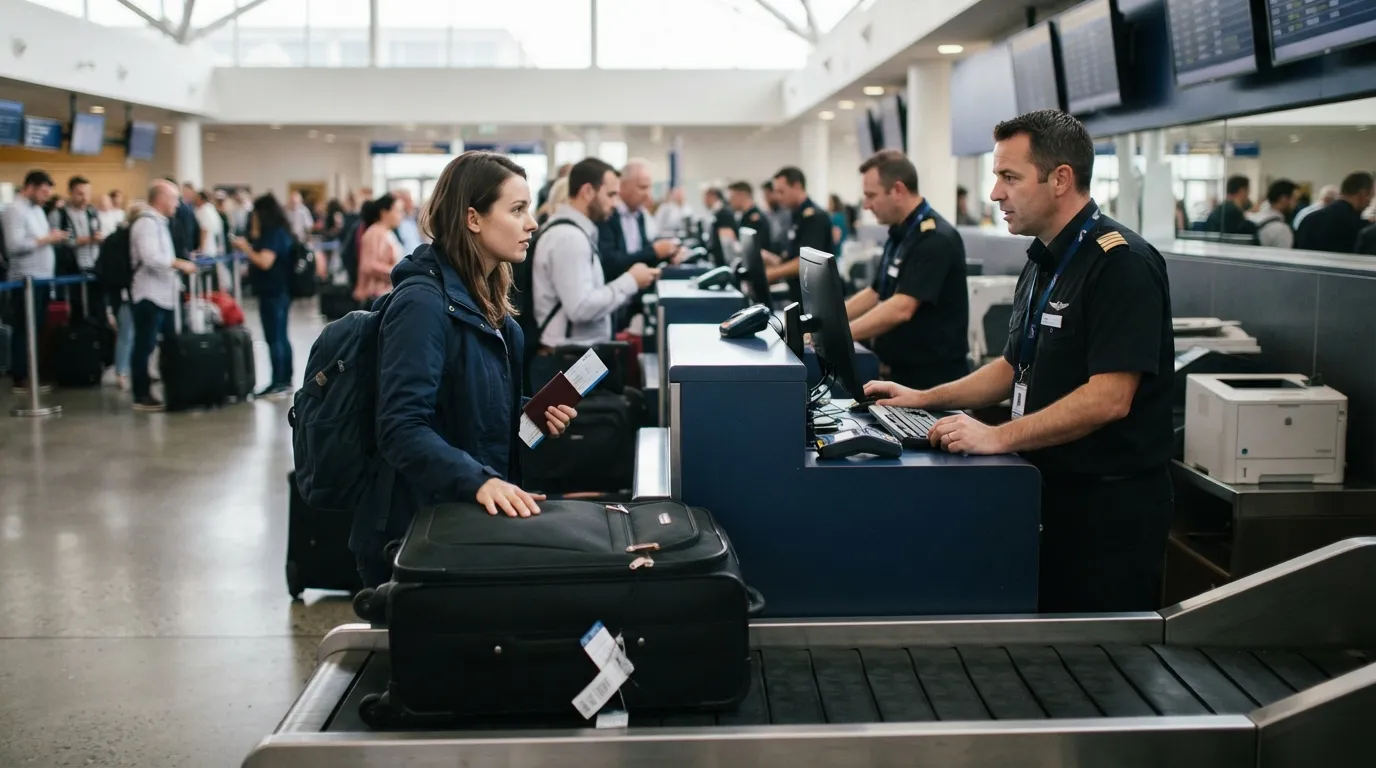
Baggage charts often show a higher price when a bag is added at the airport instead of prepaid online. That gap is the real cost of waiting.
Military and certain status passengers get the lower or waived rate even at the counter, verified from the reservation or ID. Everyone else pays the published airport rate, so prepaying is usually cheaper.
#2 – Rebooking Fees During Weather and Operational Waivers

When a storm or major disruption hits, airlines publish temporary waivers that allow changes without the standard fees. They appear on airline sites and at the counter.
The waiver generally covers passengers traveling through affected airports on specified dates, even if their own flight isn’t canceled. Counter staff reference the active waiver when processing your change. It’s published and time-limited, so act inside the window.
Worth Knowing Before You Rebook
- Check the waiver’s affected airports and date range against your itinerary.
- Look for the airline’s travel alert page and screenshot it before you get in line.
- Ask the agent to confirm the waiver is active on your ticket.
- Changes made outside the waiver window may be priced at standard rules.
#1 – Technology and Convenience Charges on Budget Airlines
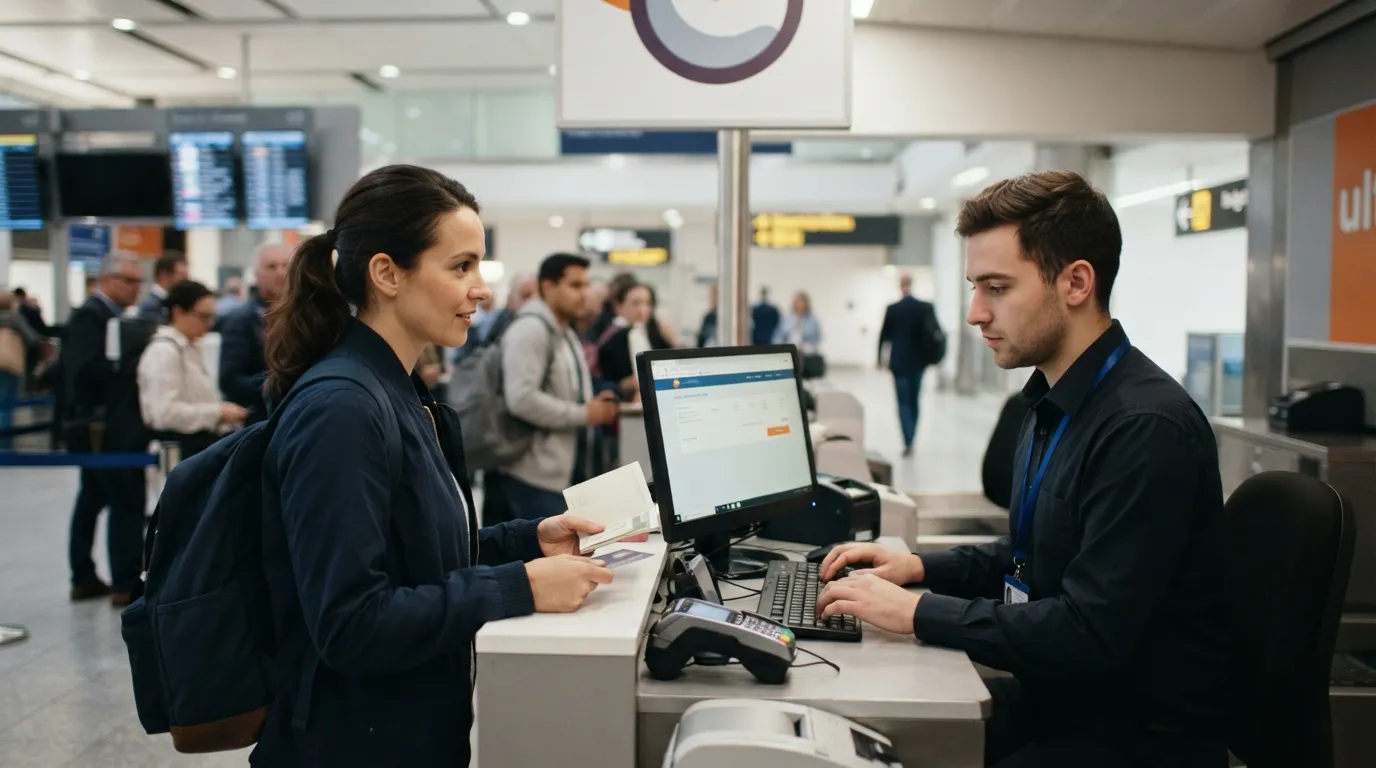
Some ultra-low-cost carriers attach technology or convenience charges to online bookings. The line item can add up fast across a family.
Where a carrier’s schedule treats the airport counter as a separate channel with its own fee structure, a counter purchase may skip the online add-on, even for future travel dates. Policies and counter availability vary, so ask the agent to price the same itinerary both ways before you commit.
The Bottom Line

Across major and budget carriers, many fees depend on the booking channel, fare type, or who is traveling, and the counter can sometimes process them without the charge when criteria are met. Military baggage allowances and disruption protections are written rules. Others depend on a specific carrier’s schedule.
Goodwill is a different story. It varies by agent and situation, so ask politely, bring documentation, and always ask for the total before you pay.
CEO-Co-Founder