
- The Secret Influence of Folk Music on American Society - October 26, 2026
- 15 Souvenir Shopping Traps That Cost Travelers Money Abroad - October 26, 2026
- 16 Travel Adapter Mistakes That Leave Travelers Without Power - October 26, 2026
Most booking pages sell you the bed and skip the details that decide whether your first shared night feels easy or exhausting.
Here are 17 of them, counting down from a lock you might forget to pack.
#17 – Your Lockers Demand More Than a Standard Padlock
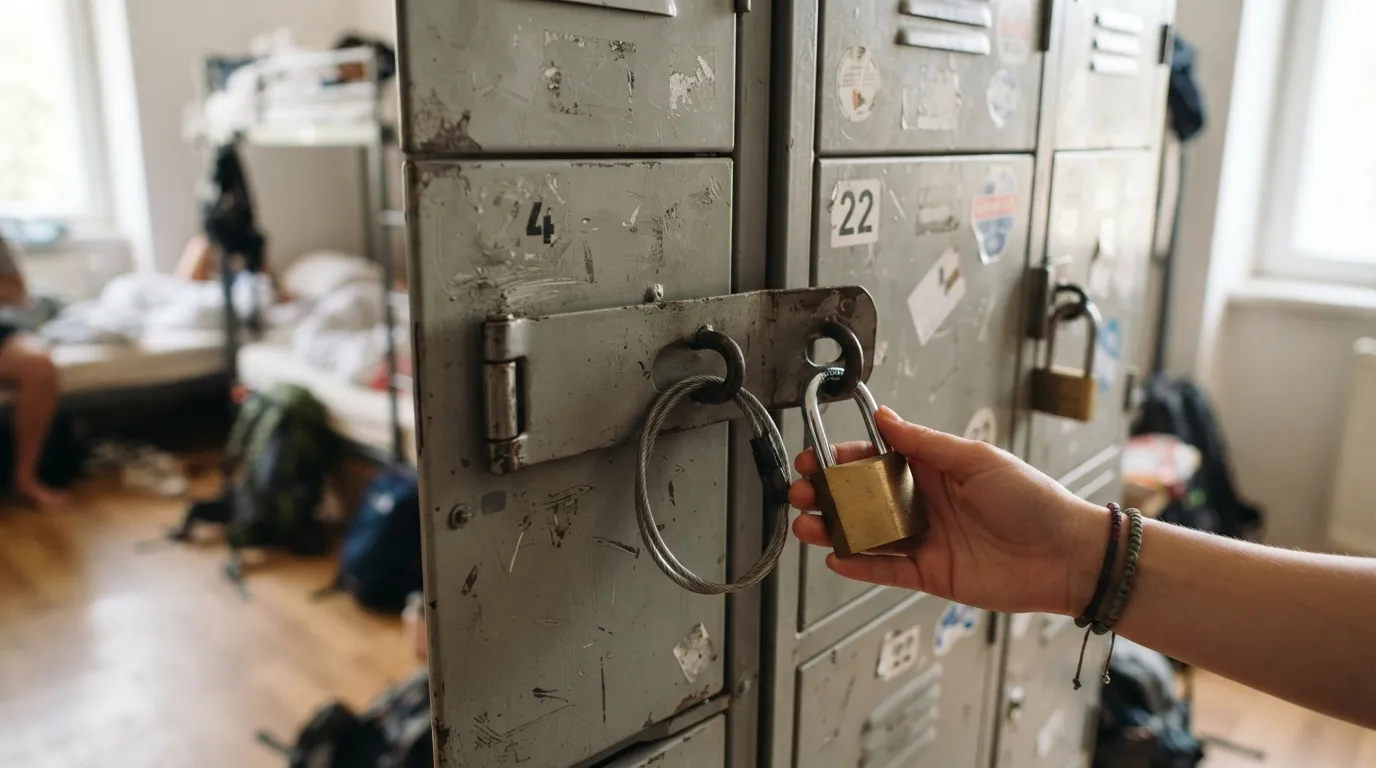
Many hostels expect you to bring your own padlock, and not just any lock will do. Some specify a shackle thickness or hasp size, occasionally printed right on the locker door.
Check the listing or message the hostel before you arrive, then pack a sturdy padlock rather than a thin cable lock. The front desk may only sell locks, or have none at all.
The next rule kicks in before you finish your first conversation.
#16 – Quiet Hours Start Earlier Than Posted Signs Suggest
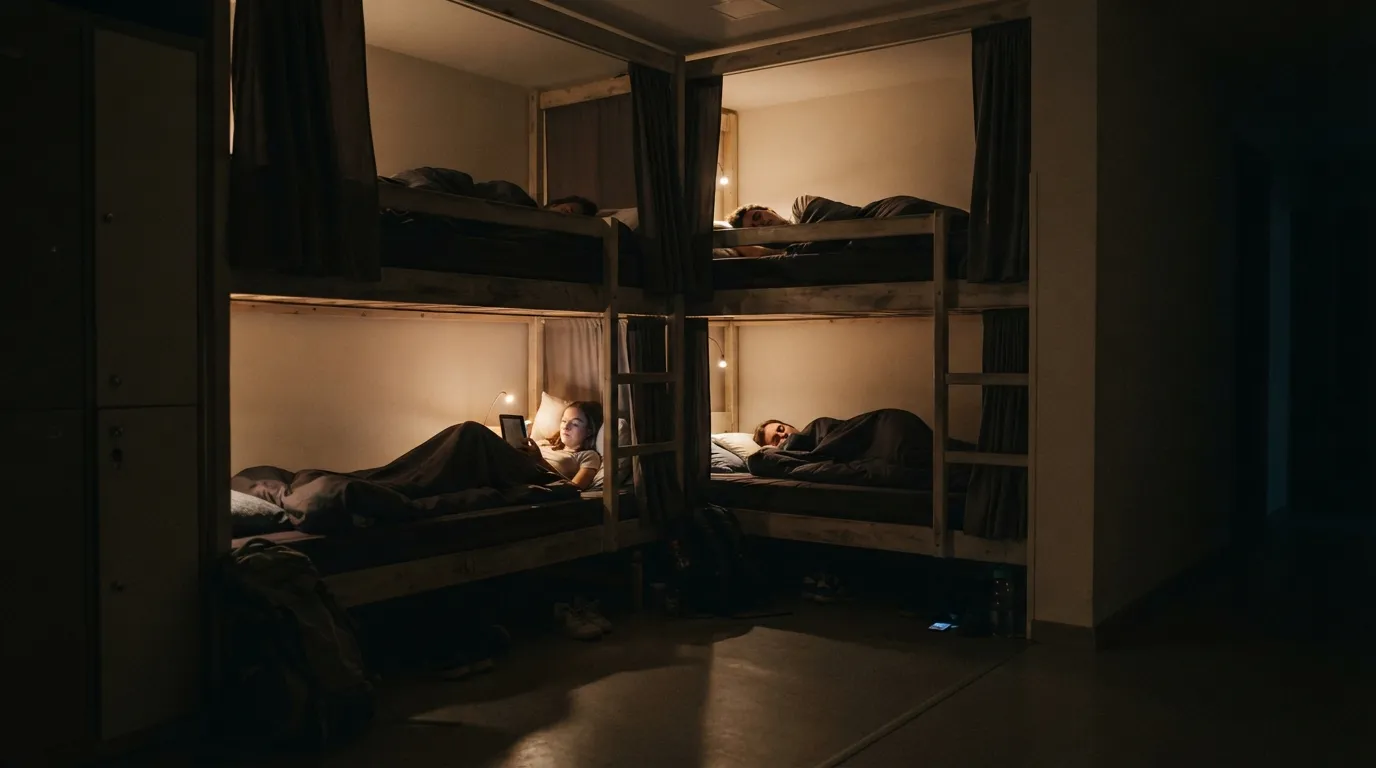
Posted quiet hours often run from about 10 p.m. to 8 a.m., but the real quiet can begin earlier. Once most roommates are in bed, a normal conversation starts to feel loud.
Take late chatting to the common room, and ask reception which areas close or go silent at night. Kitchens may close too, so cook before the lights-out crunch.
Even if you follow every rule, arriving late can create a problem of its own.
#15 – Late Arrivals Can Find a Locked Door and an Empty Desk
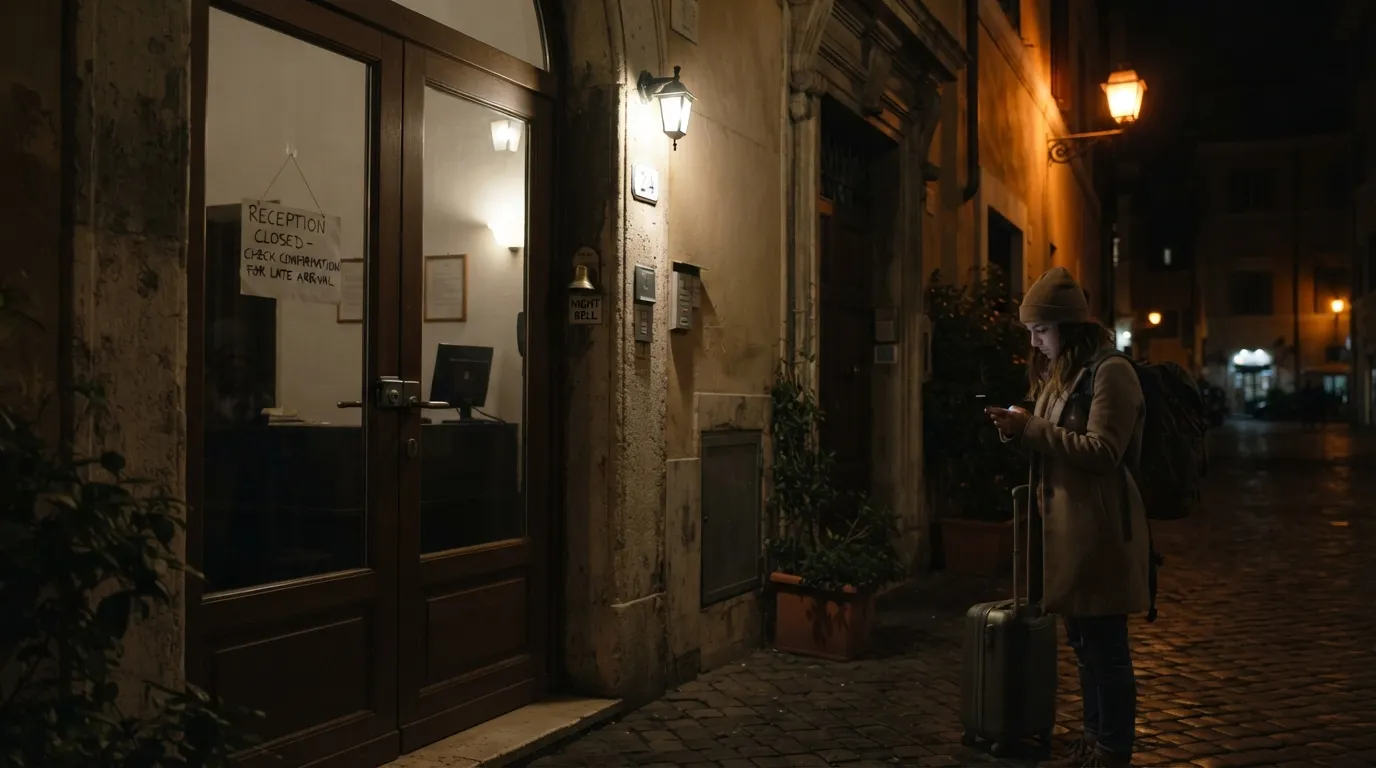
Not every hostel has a front desk open all night. Some close reception in the evening and expect late arrivals to arrange entry in advance.
Look for the reception hours in your confirmation and tell the hostel your arrival time. If you’ll be late, ask how you’ll get in, whether through a code, a keybox, or a night contact.
Fast Facts
- Reception hours are usually listed in your confirmation or on the booking page.
- Late entry may work by door code, keybox, or a night contact.
- Send your expected arrival time ahead, especially if a flight or train may run late.
- Screenshot the address and entry instructions in case your signal drops.
Once you’re inside, your phone may matter less than a plastic card.
#14 – A Key Card Can Control More Than Your Room
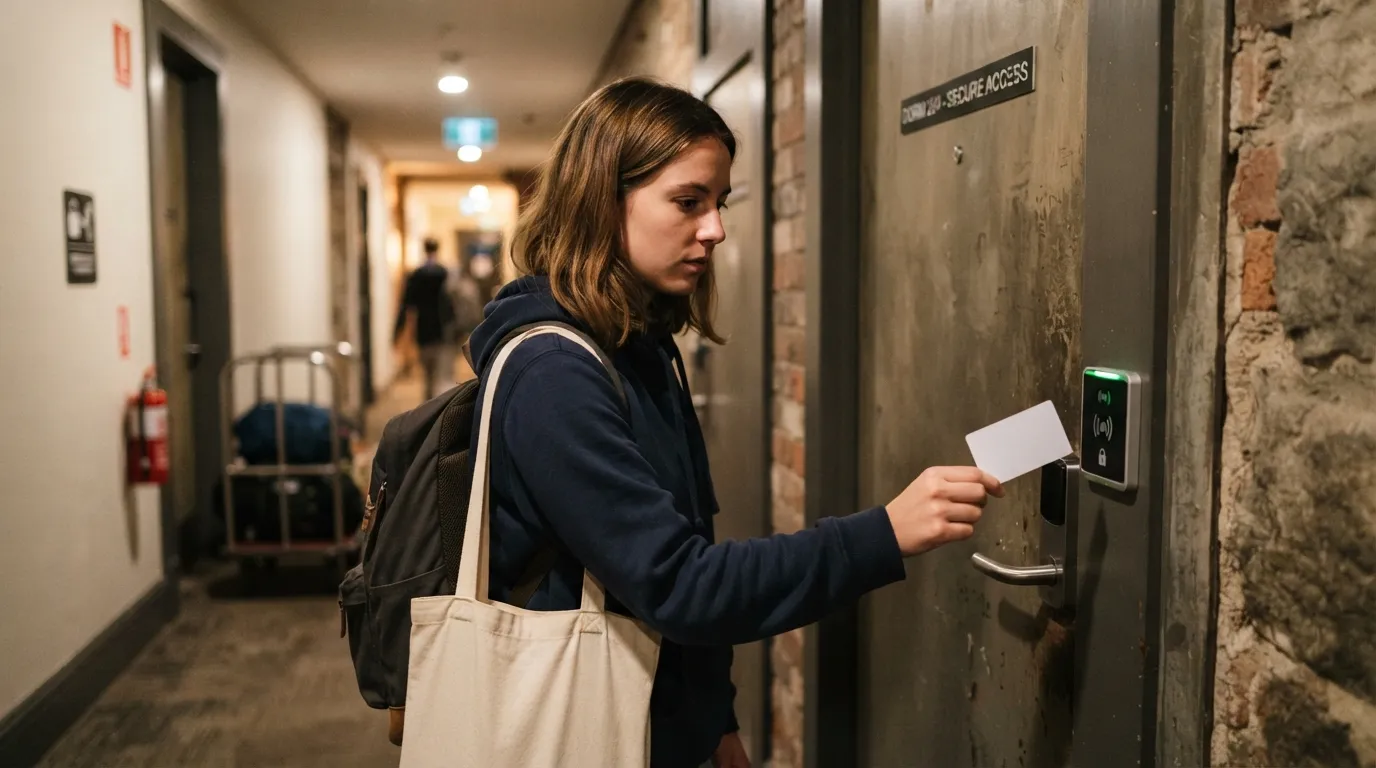
In many hostels, a key card or code controls the front door, your dorm, and sometimes the elevator or bathroom floor. Losing it can mean a replacement fee or a deposit problem.
Keep it somewhere secure, and never prop a door open for convenience. Ask at check-in which doors need it and what happens if you’re locked out at night.
Your bed may hold its own surprise too: no sheets.
#13 – Bedding Isn’t Always Part of the Price
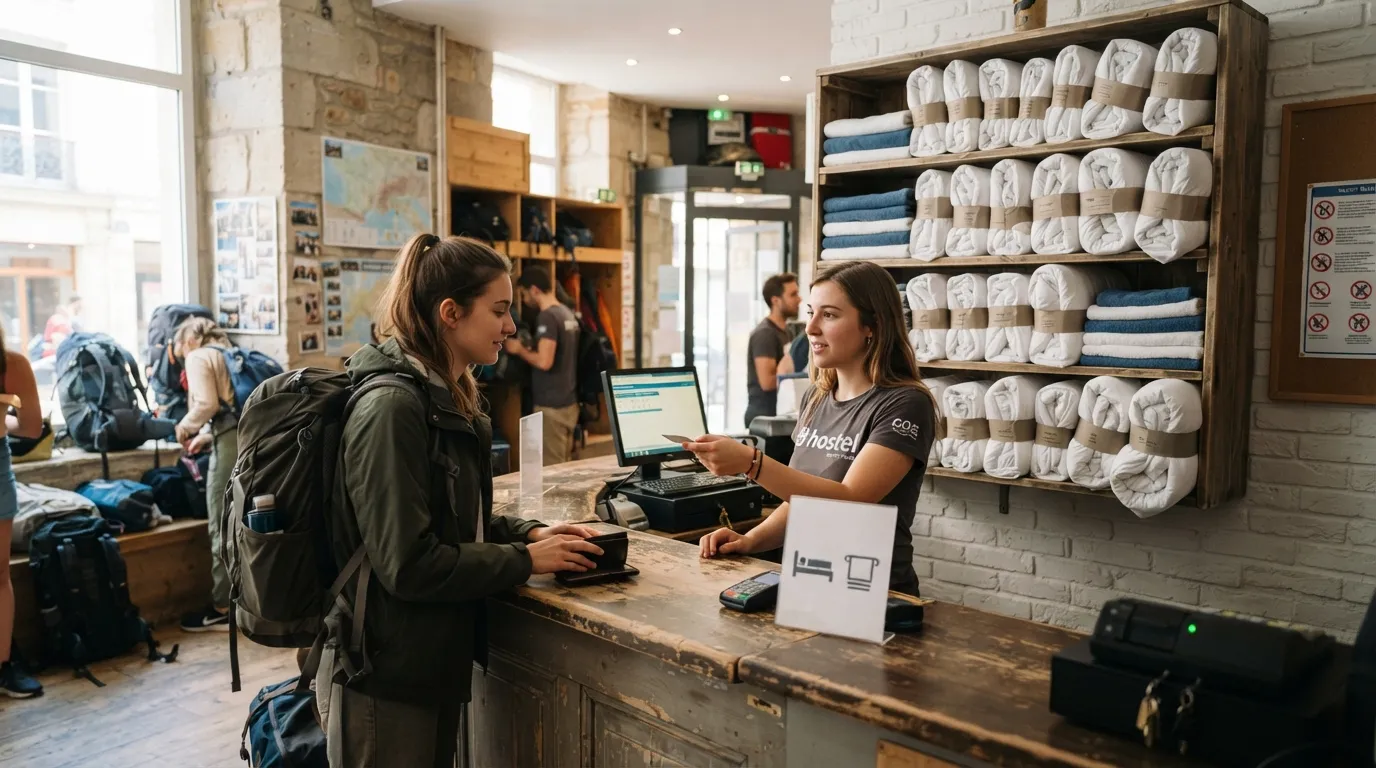
Some hostels provide sheets, some rent them, and some expect you to bring your own. The surprise often lands at the desk, not on the booking page.
Check the listing for linen and towel fees. Rules on sleeping bags and personal liners also vary, so ask before relying on one.
Quick Compare
- Included: Easiest option, but confirm towels are covered too.
- Rented: Pay at the desk, so check the fee and bring a card or cash.
- Bring your own: Saves money only if the hostel allows personal linens.
Then comes the bag question, which can catch you at check-out as much as check-in.
#12 – Your Big Bag May Not Be Welcome Beside Your Bed
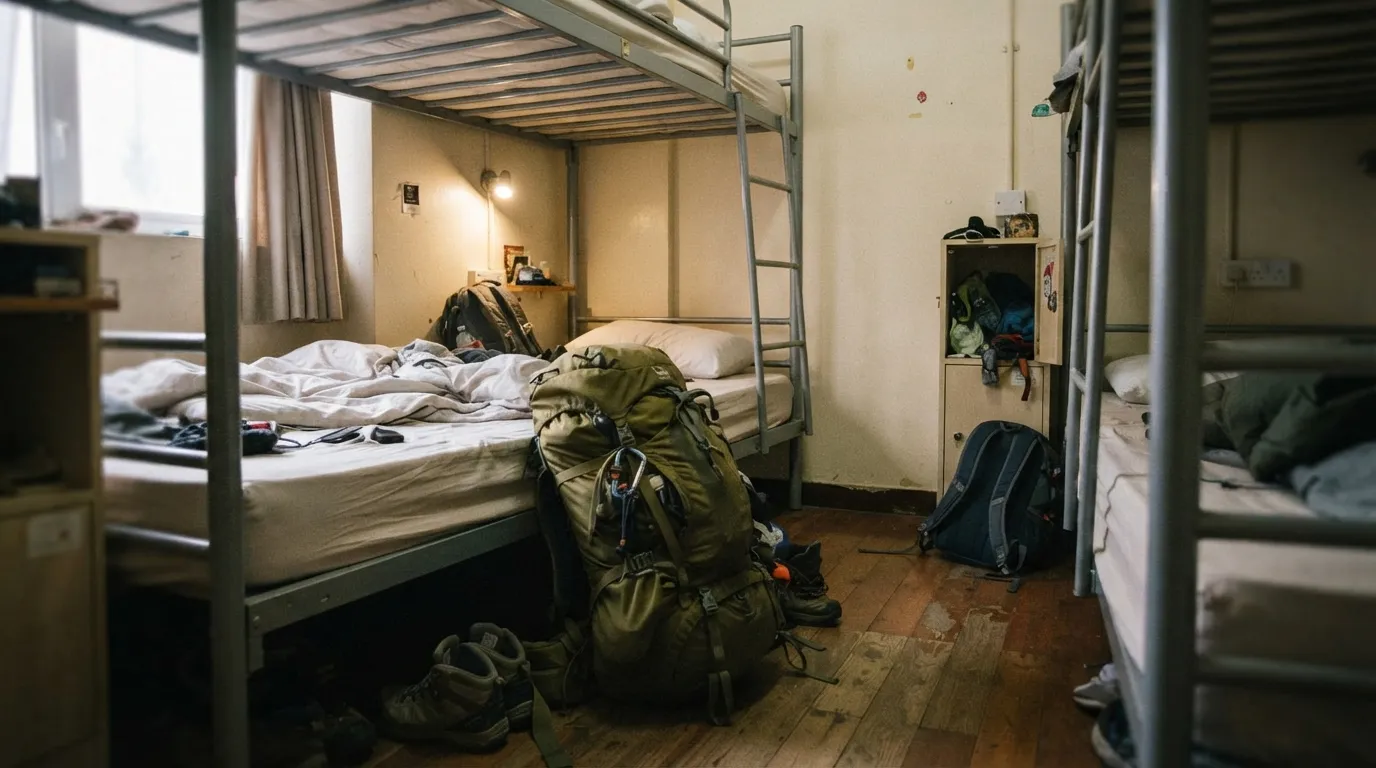
Large backpacks and suitcases can take over a small dorm quickly. Some hostels ask guests to keep bags in lockers, under beds, or in a storage room.
Check locker dimensions before assuming your bag fits, and keep valuables in the locker rather than in a storage area. After check-out, ask whether bag storage is free or paid and where the room is.
The kitchen has its own rules about what counts as yours.
#11 – Unlabeled Fridge Food Can Vanish
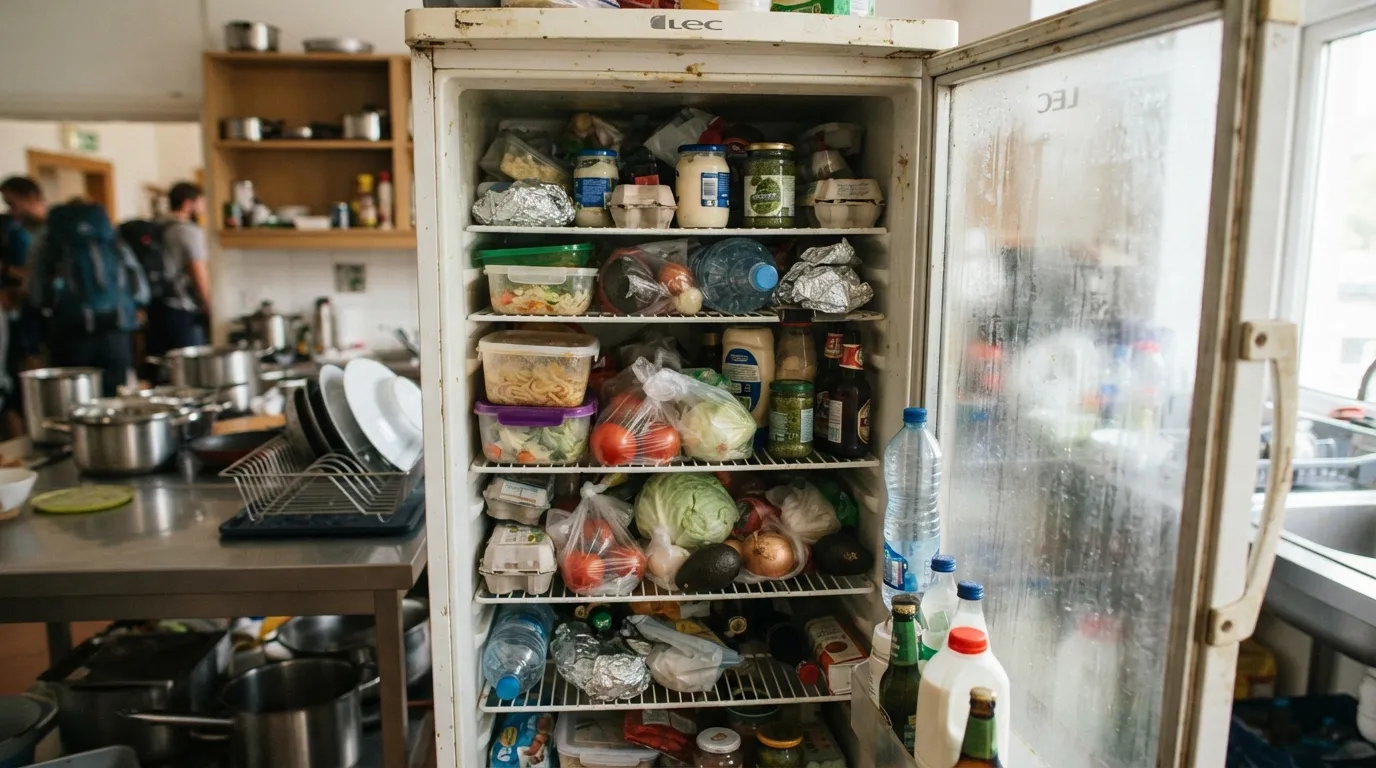
Shared kitchens come with unwritten rules, and some of them are posted on the fridge. Many hostels ask you to label food and clean up right away.
Some also clear out unlabeled or old food on a schedule. Put your name and date on anything you store, and wash your dishes before you leave.
Bathrooms, meanwhile, are a test of timing.
#10 – Shared Bathrooms Have a Rush Hour

Bathrooms may be down the hall, shared by several rooms, and busiest in the morning. Some hostels also have cleaning times when facilities close briefly.
Bring flip-flops, a towel if rentals cost extra, and a small bag for toiletries. Shower before the morning rush if you have an early plan.
At a Glance
- Busiest: Mornings, especially before tours and departures.
- Quieter: Often late evening or midday, though cleaning breaks vary.
- Carry: Flip-flops, towel, and a toiletry bag you can grab in one hand.
The air in the room is the next thing nobody mentions.
#9 – Dorm Air Can Get Stuffy Fast
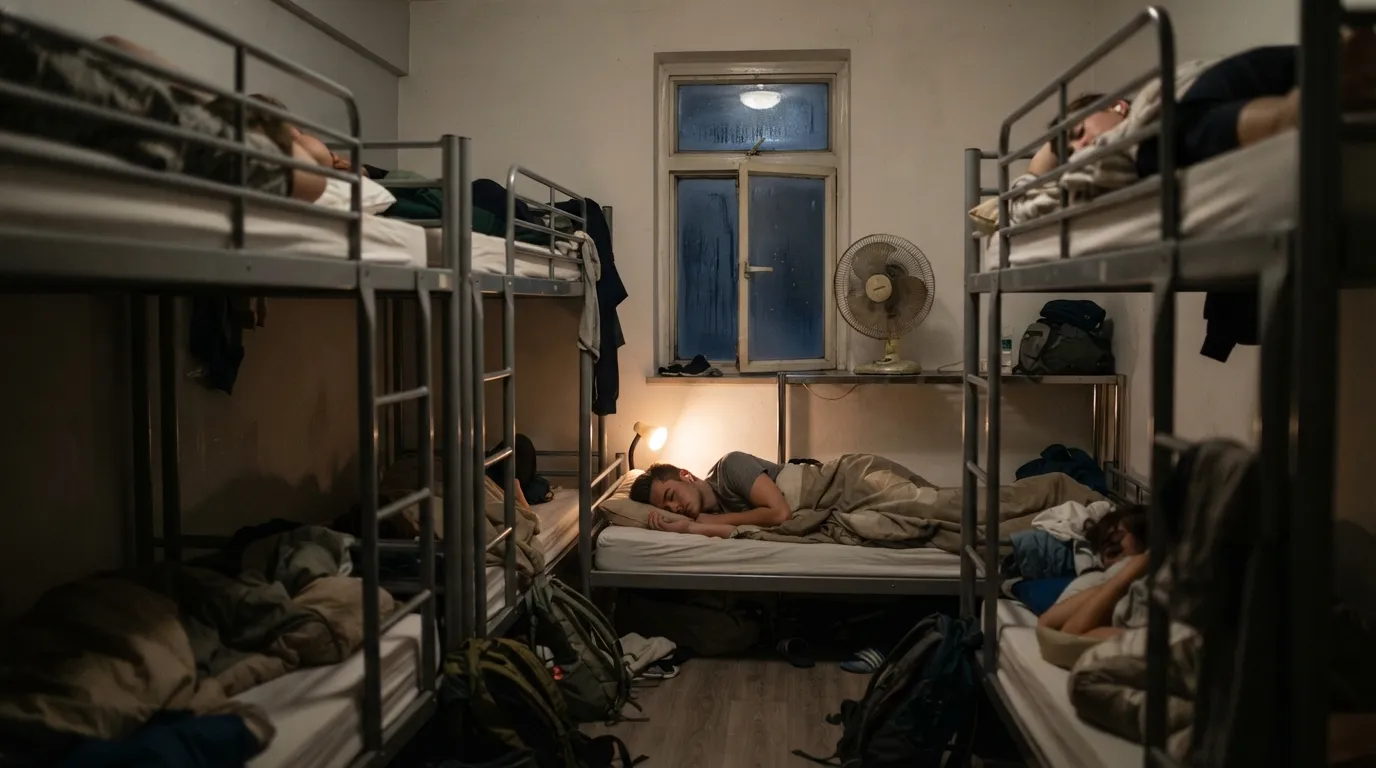
Windows may be small, fixed shut, or closed for noise or heating reasons. Whether you can open one often depends on the room and the other guests.
Check the room description for windows, fans, or air conditioning. If you’re sensitive to heat or stale air, ask about a bed near ventilation, and pack earplugs in case a fan is loud.
Your bed itself may not be yours to choose.
#8 – Your Bunk Is Often Assigned, Not Up for Negotiation
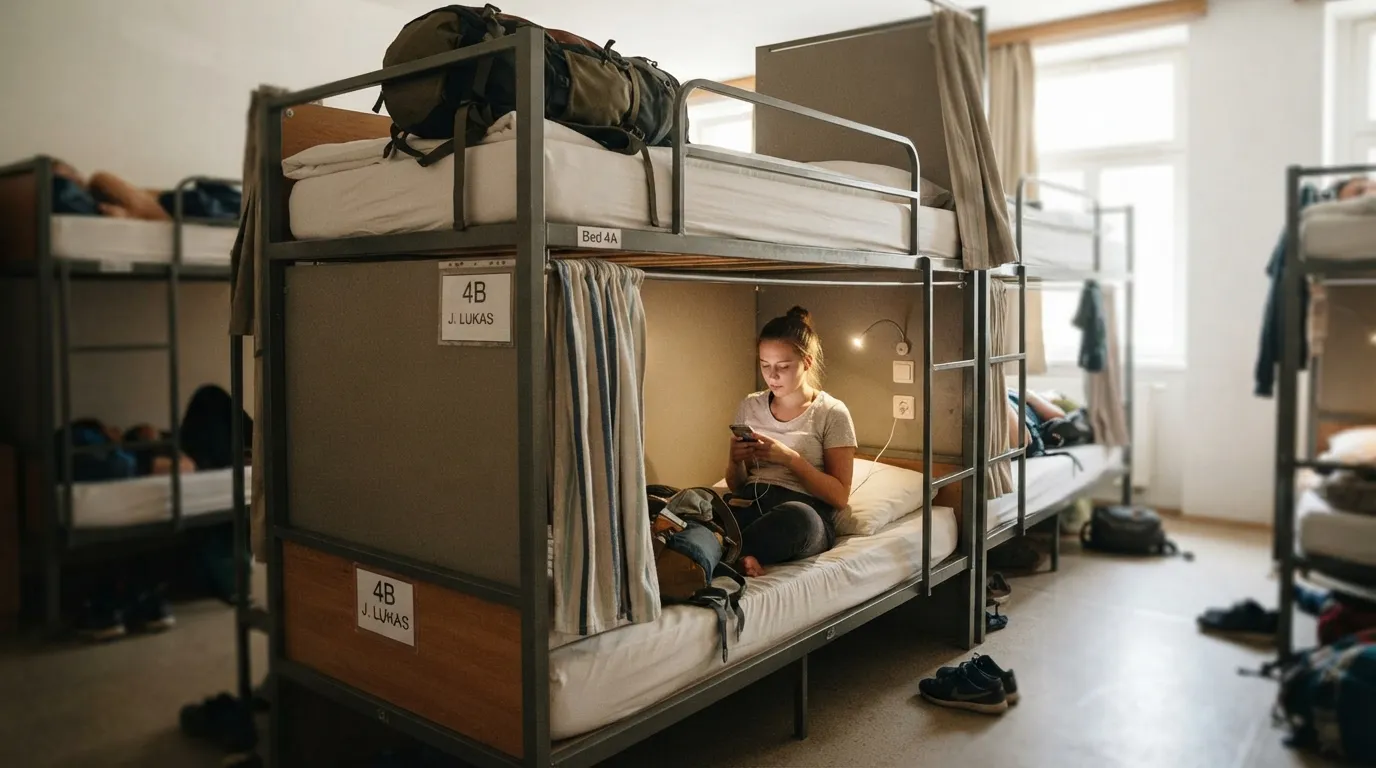
Many hostels assign your bed at check-in, and swapping on your own can create confusion. Top and bottom bunks feel very different if you have mobility needs or a heavy bag.
Ask politely at the desk if you need a lower bunk, and keep your assigned bed until staff approve a change. Check for a reading light, outlet, and curtain before you unpack.
Once you settle in, the night’s biggest etiquette test begins: light and noise.
#7 – Your Zipper Is Louder Than You Think
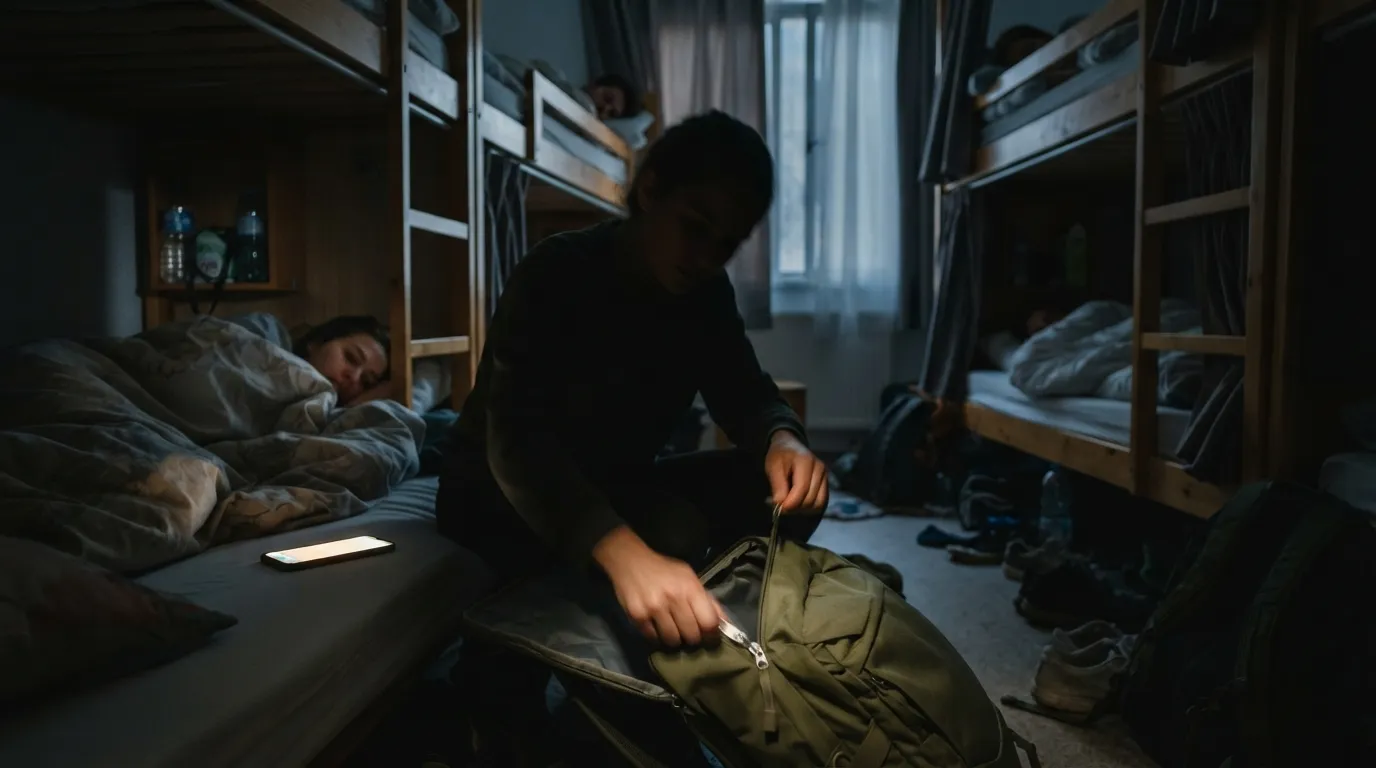
Light and rustling travel late at night, especially in a dorm with several sleepers. Plastic bags, zippers, and overhead lights can wake people before your alarm does.
Pack the night before if you have an early departure, and use a phone light or headlamp on low. Sort your bag in the hallway or common area when you can.
Morning has its own deadline, and it arrives faster than most guests expect.
#6 – Check-Out Time Comes Early

Check-out often happens in the morning, around 10 or 11 a.m., though times vary. Staff may need the beds ready for the next arrivals.
Check your confirmation for the exact time and any late-departure fee. If your transport leaves later, ask about luggage storage before you strip your bed or return your key card.
Before any of that, the desk may ask for something you didn’t expect to hand over.
#5 – The Front Desk May Ask for Your Passport

Many hostels ask for ID at check-in, and some countries require accommodation providers to register guests. The name usually needs to match your booking.
Carry your passport or ID, and keep a photo copy stored separately. If the hostel wants to hold the original, ask why and when it will be returned.
Your room type deserves a second look too.
#4 – A Dorm Label Can Hide Important Details
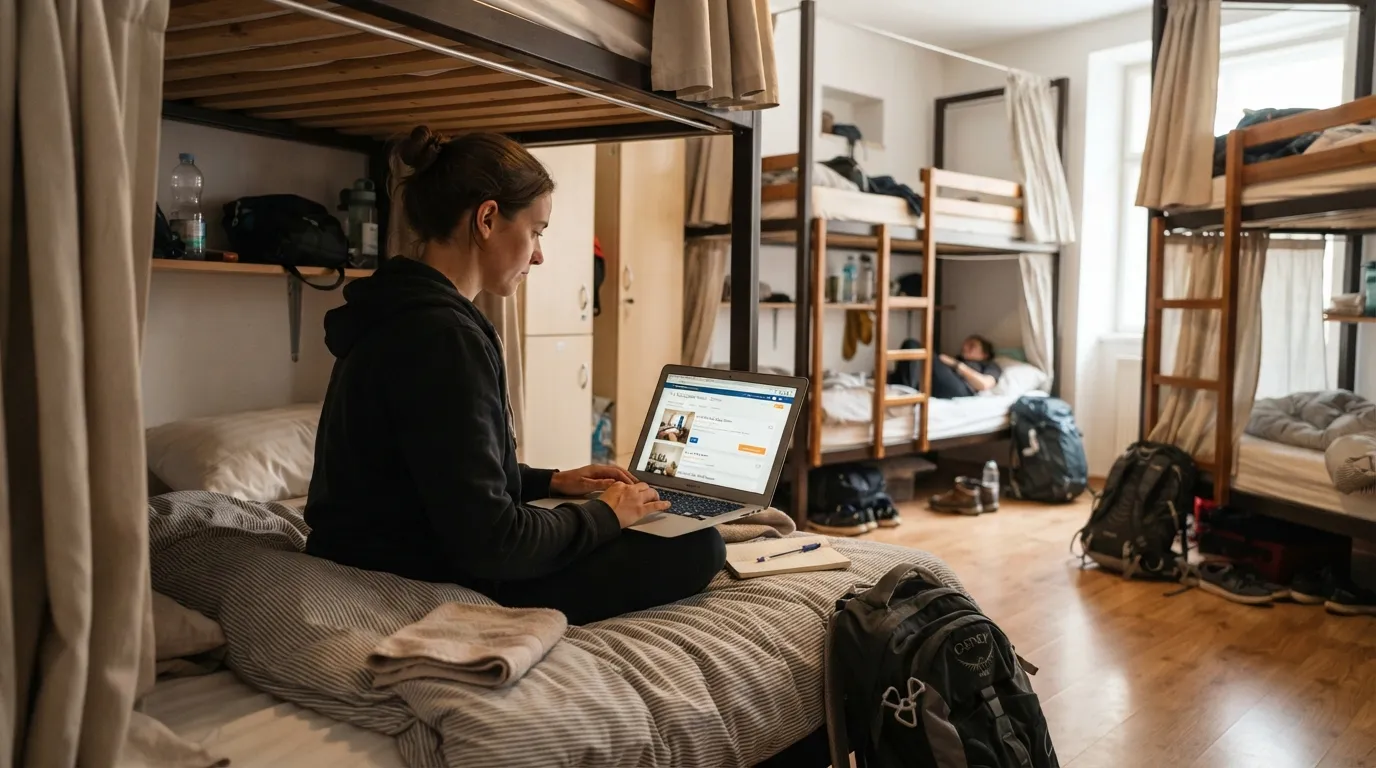
Hostels may offer mixed, female-only, or smaller dorms, and the details appear on the booking page. A cheap bed can mean a very different room from the one you pictured.
Read the room type before paying, and confirm anything you need, such as a female-only dorm or a lower bed. If it doesn’t match, contact the hostel before arrival rather than at the desk.
The price on the screen may not be the final number, either.
#3 – Extra Fees Can Appear at the Desk
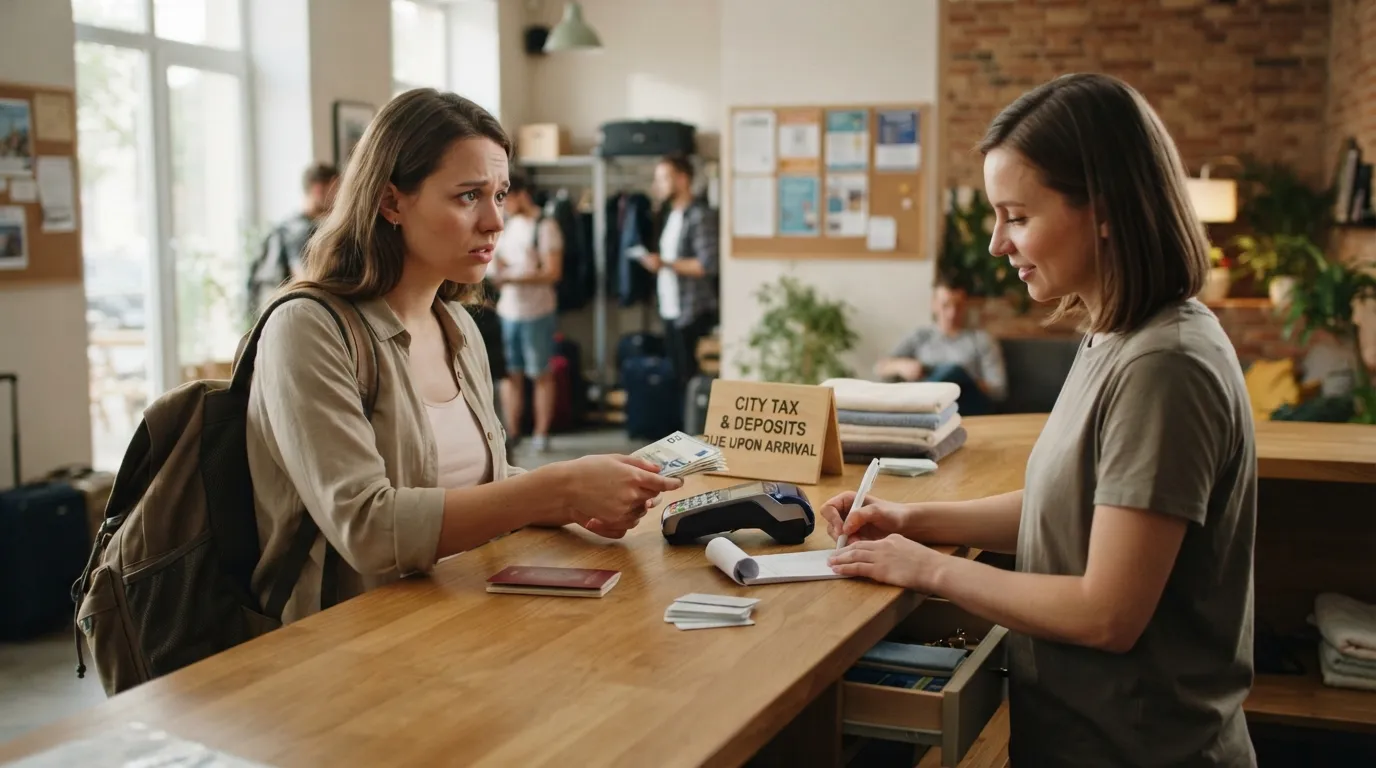
Some cities charge a local tourist tax that hostels collect separately from your booking. Hostels may also ask for a key deposit or charge for towels.
Read the fine print and keep some local currency or a card ready for the desk. Ask for a receipt for deposits so you know how and when they come back.
Worth Knowing
- Tourist taxes are set locally, so they differ from city to city.
- Deposits may apply to key cards, towels, or linens.
- Some desks take cards only, others prefer cash, so ask in advance.
- A receipt is your proof when it’s time to get a deposit back.
Even a smart booking can fall apart if you miss one deadline.
#2 – Cancellation Rules Can Be Strict
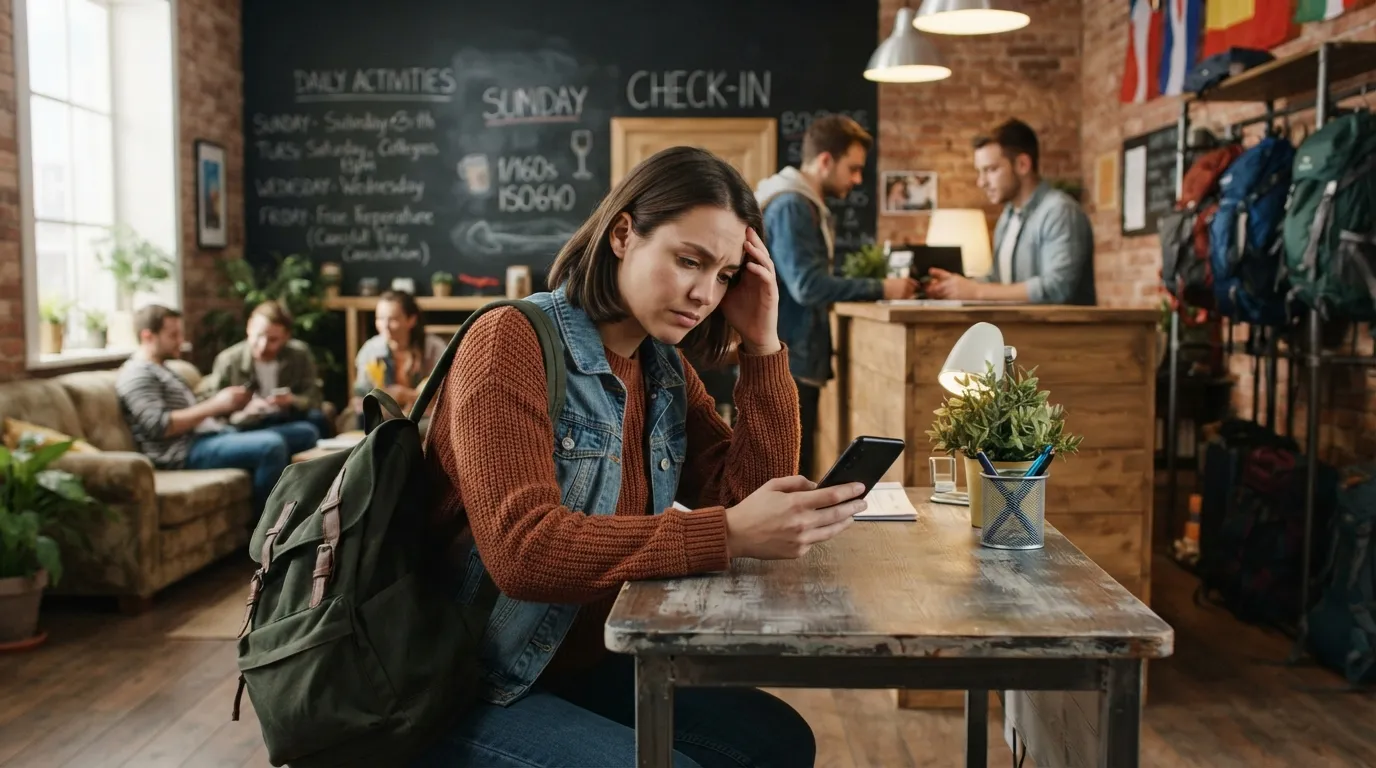
Dorm bookings can come with cancellation windows, non-refundable rates, or no-show policies. Missing the cutoff may cost you the first night, or more.
Check the cancellation terms before you click, and set a reminder for the deadline. If plans change, contact the hostel early, because policies vary and some staff may be able to help.
The final fact is about who gets through the door.
#1 – Your New Friends May Not Be Allowed in the Dorm
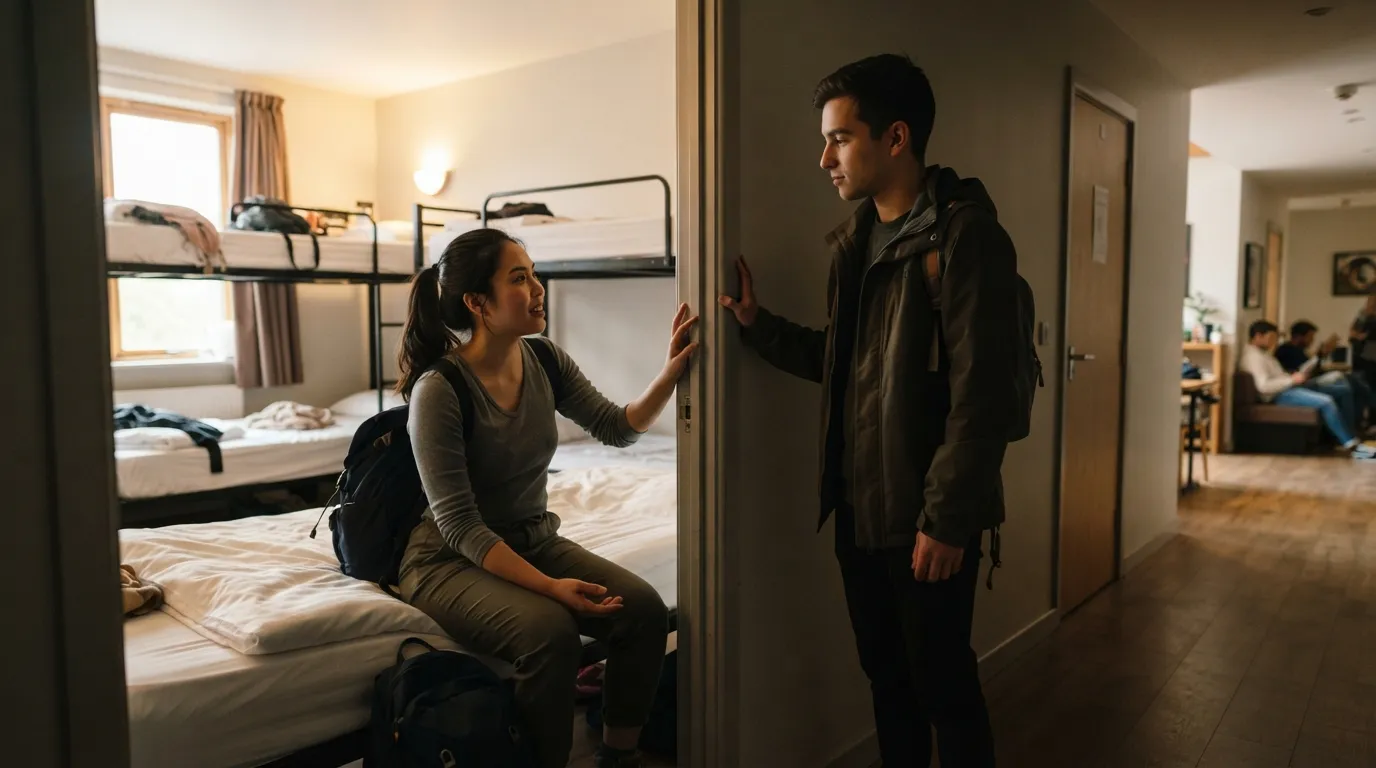
Many hostels limit non-guests in dorm rooms, and some ask visitors to register or stay in common areas. The rule protects the privacy and belongings of the people sleeping there.
Ask reception before inviting anyone in, and meet new friends in the lounge. That’s the secret behind this whole list: a hostel runs on small agreements, and the first night shows who read them.
CEO-Co-Founder