

- 25 Bands and the First Song They Ever Released vs the Song They Are Known For - October 21, 2026
- Most people assume the pilot episode that airs is close to the creators' original vision, but networks routinely demand recasts, plot overhauls, and tone shifts that scrap major elements before a show reaches viewers. Production histories show these changes often saved series from cancellation. Here's what the data actually say. - October 21, 2026
- 25 TV Shows and Their Original Pilot vs What Actually Aired - October 21, 2026
Picture the scene: it’s barely sunrise, the pool deck is silent, and a row of lounge chairs is already claimed by towels with no owner in sight. That’s only the first of 20 poolside habits that pool attendants and front-desk teams run into again and again. Many of them are spelled out in posted rules and standard pool-safety guidance.
Most of us think a hotel pool runs on common sense. Yet the same disruptions keep coming back, from chair-hogging to glass bottles to the quiet little rule-bends nobody thinks anyone will notice. Staff notice. Start at #20, and watch for the one that sparks the most arguments at the very end.
#20 – The Dawn Chair Sprint That Leaves Everyone Else Standing

Some guests set an alarm for sunrise just to drape towels over several prime loungers. Then they disappear for hours.
Many hotels answer with a time limit on unattended items, often somewhere between 30 and 60 minutes. The reason is simple: an empty chair with a towel on it is a chair a paying guest can’t use.
Staff end up refereeing the standoff. Latecomers circle the deck while the “reserved” seats sit untouched through breakfast.
Next up: the sound that carries farther than anyone expects…
#19 – Blasting Personal Playlists on Bluetooth Speakers
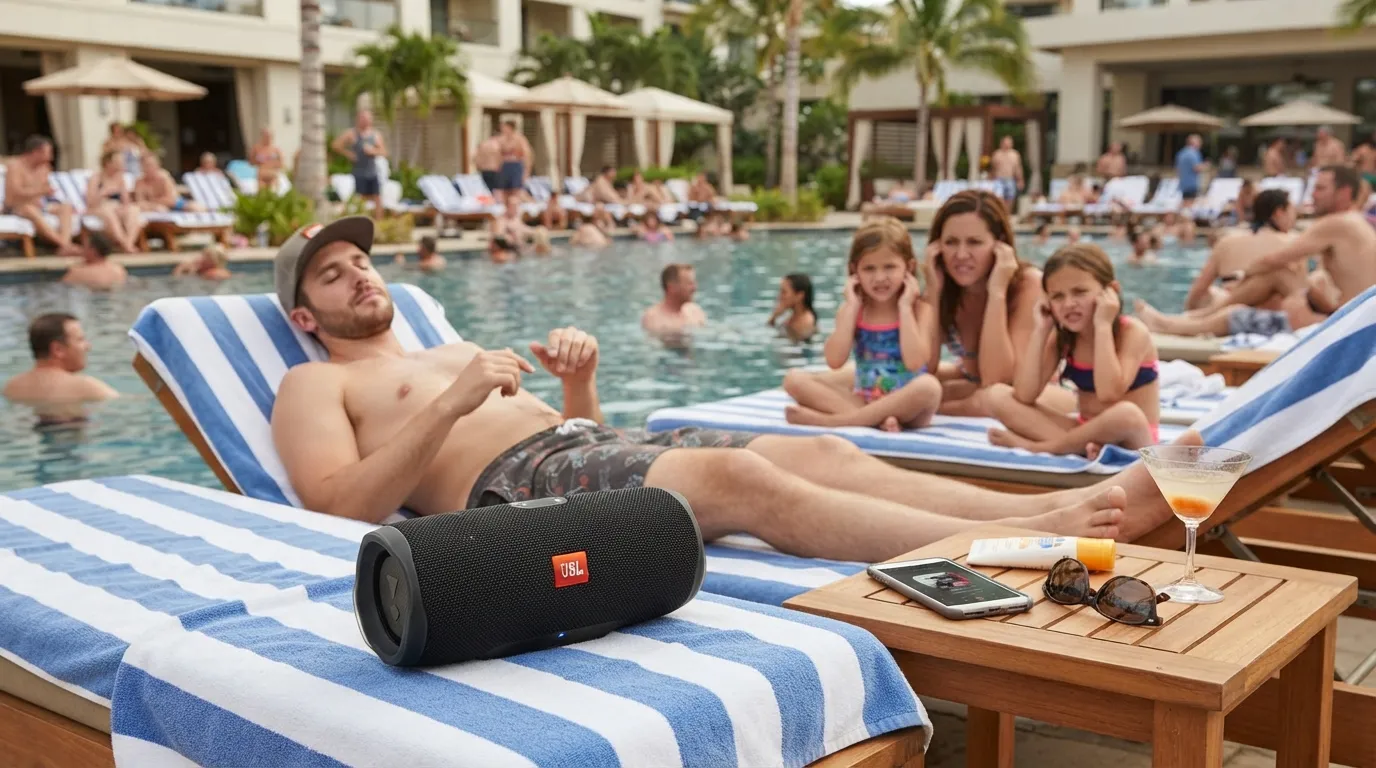
A portable speaker feels harmless to the person who owns it. To the family two chairs over, it’s a soundtrack they never picked.
Many resorts ask guests to keep music to headphones in shared pool areas. The problem grows when two or three groups start competing, each turning up their own playlist to drown out the others.
Attendants often end up making the same polite request all afternoon. Some pool bars and front desks keep a few spare items on hand to smooth things over, but the easiest fix is a pair of earbuds.
Next up: the haze that drifts where it isn’t wanted…
#18 – Lighting Up Cigarettes or Vapes Right Next to Other Guests

Smoking and vaping rules vary by property and location, but the common thread is distance. Many hotels restrict both around the pool, and some ban them in the pool area entirely.
The trouble starts when smoke or vapor drifts toward kids, snack tables, or someone trying to nap. Staff are often the ones who have to walk over and ask a guest to move.
Even where a designated spot exists, it’s rarely the one closest to the chair. That’s where the friction begins.
Next up: the sound every pool attendant dreads hearing from across the deck…
#17 – Bringing Glass Bottles and Cups to the Pool Deck
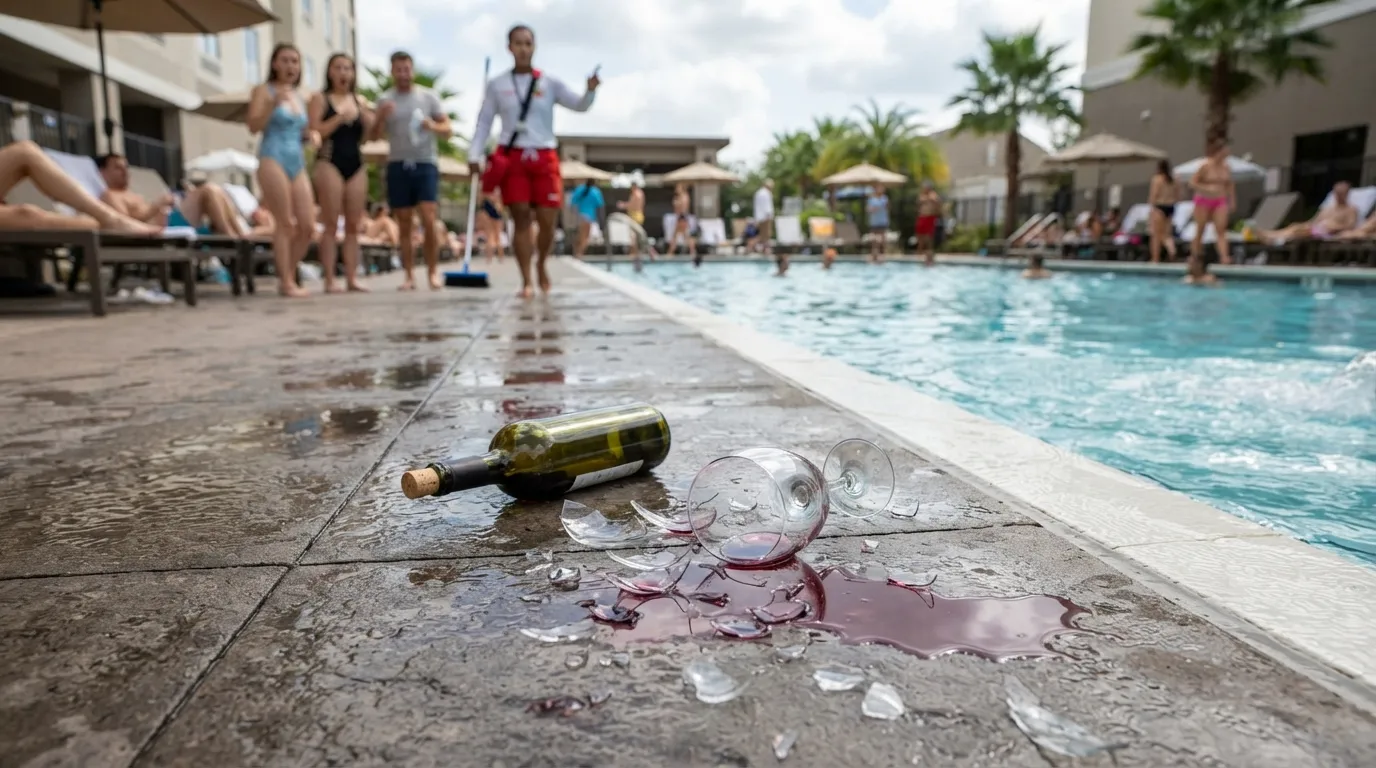
Glass and wet concrete are a bad mix. A dropped bottle can shatter into pieces nobody can see once they hit the water or the bare feet nearby.
That’s why many hotels ban glass around the pool and serve drinks in plastic or other shatter-resistant cups. Guests who carry in a wine bottle or a glass from the room are often asked to swap it out.
When a break does happen, the area can be shut down while staff clean up. Everyone’s afternoon pays for one guest’s convenience.
Next up: the cooler that doesn’t belong…
#16 – Smuggling in Outside Food and Alcohol

Tote bags that clink, coolers that appear out of nowhere, and a suspiciously large “water bottle” are all familiar sights to pool staff.
Many hotels and resorts prohibit outside alcohol at the pool, partly because of licensing rules and partly because they have to manage how much guests drink. Some also restrict outside food to keep the deck clean and the pool clear of crumbs and spills.
Guests who get caught are usually asked to put the items away or take them back to the room. Staff remember the repeat offenders.
Next up: a quick step most people skip…
#15 – Skipping the Rinse Before Jumping In
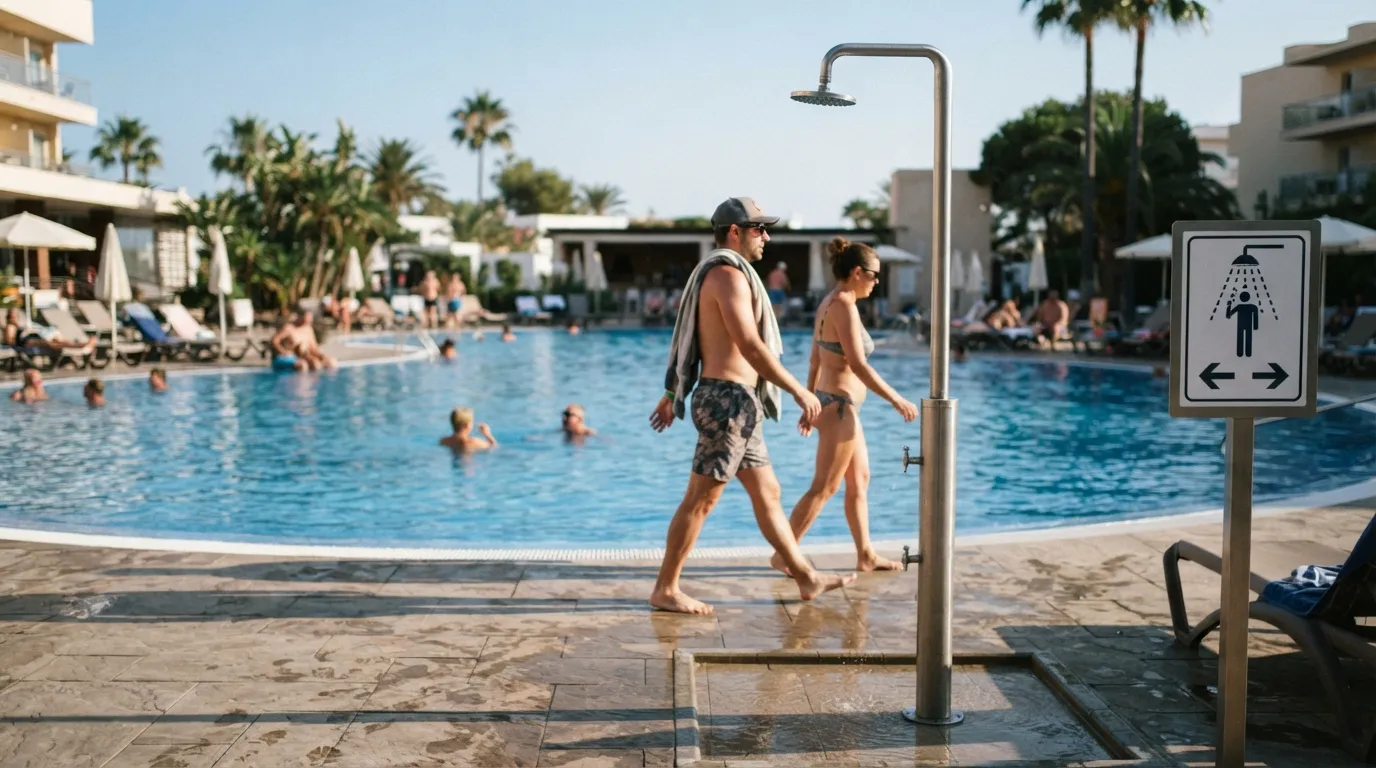
Sunscreen, sweat, lotion, and the beach sand still stuck to your feet all end up in the water. Public health guidance commonly recommends a quick shower before swimming for exactly that reason.
Many hotels place showers near the pool entrance, and some post signs asking guests to use them. Plenty of people stride right past.
It’s a small habit with a visible result: cloudier water and more work for the people who keep it clean.
Fast Facts
- The CDC says a one-minute shower removes most of the dirt, sweat, and oils that use up pool chemicals.
- For pools, CDC guidance recommends free chlorine of 1–3 ppm and a pH of 7.2–7.8.
- A strong “chlorine” smell usually points to chlorine mixed with pee and body soil, not a freshly cleaned pool.
Next up: a habit that sounds like a joke, until it isn’t…
#14 – Treating the Pool Like a Bathroom
Nobody admits to it, but it’s one of the best-known pool problems. Health agencies like the CDC advise swimmers to take bathroom breaks and not to pee in the water.
The consequences go beyond the ick factor. Urine and sweat can react with pool chemicals and contribute to that strong chemical smell and eye irritation many swimmers blame on “too much chlorine.”
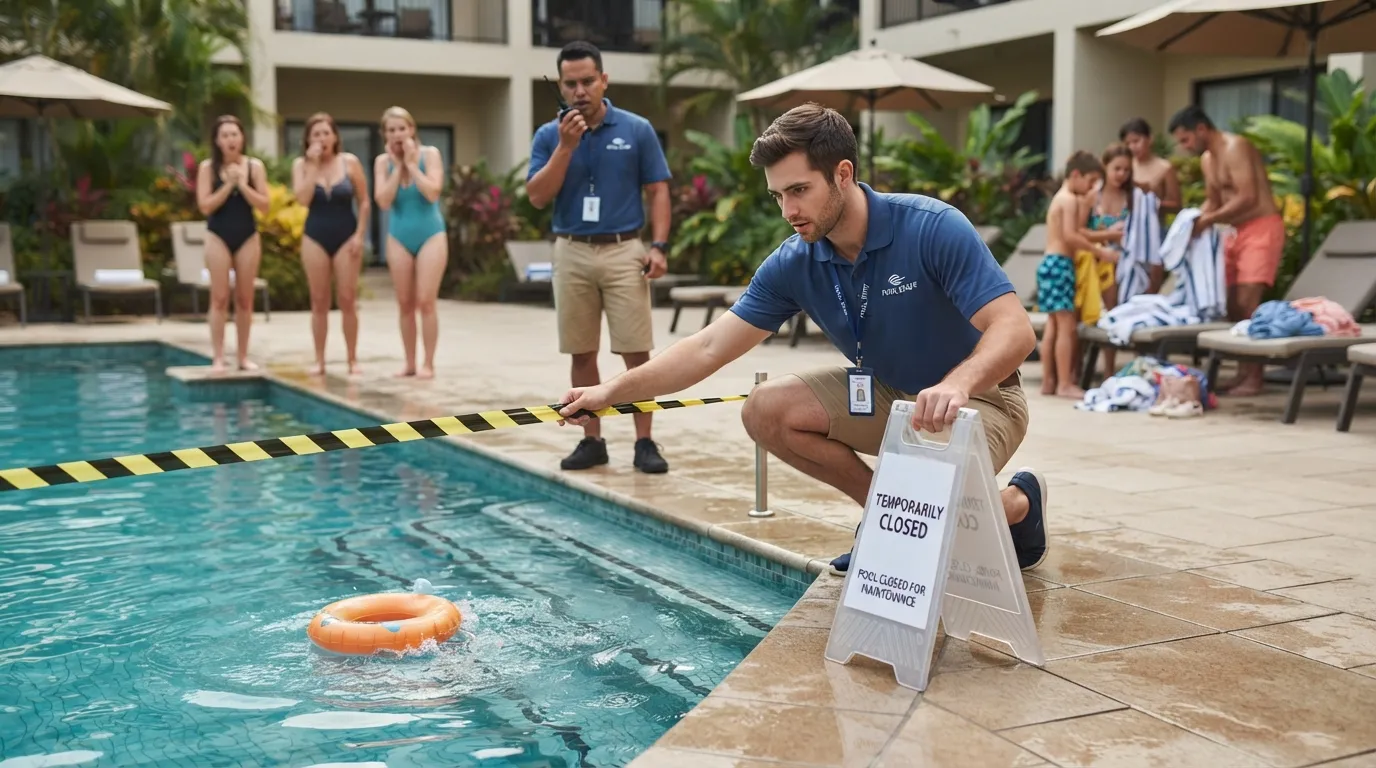
Staff can’t watch every swimmer, but they do end up managing the aftermath, including temporary closures when something worse happens.
Next up: the guest who should have stayed in bed…
#13 – Swimming While Sick With a Stomach Bug
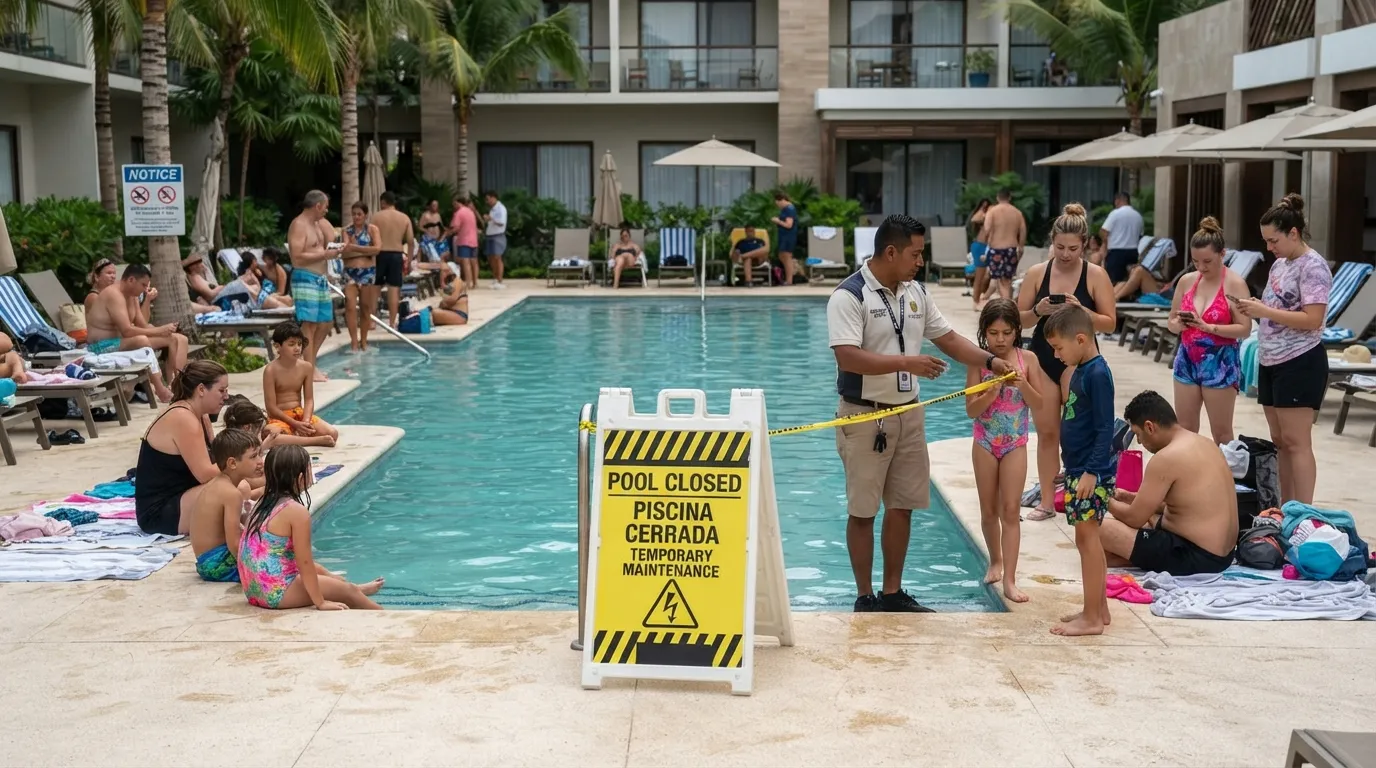
Vacation days are precious, so some guests head to the pool even when they’re feeling awful. Health guidance is clear that people with diarrhea should stay out of the water, because germs can spread to other swimmers.
When an incident happens, hotels may need to close the pool to clean and treat the water. That can leave a full deck of families with nowhere to swim.
Staff remember that day. So do the guests who had planned theirs around the pool.
Worth Knowing
- Chlorine kills most germs within minutes, but not instantly.
- Cryptosporidium can survive more than 7 days in properly chlorinated water.
- If diagnosed with Crypto, the CDC says to wait until two weeks after diarrhea has completely stopped.
- Children, pregnant women, and people with weakened immune systems are most at risk.
Next up: the diaper dilemma…
#12 – Changing Diapers Right on the Pool Deck
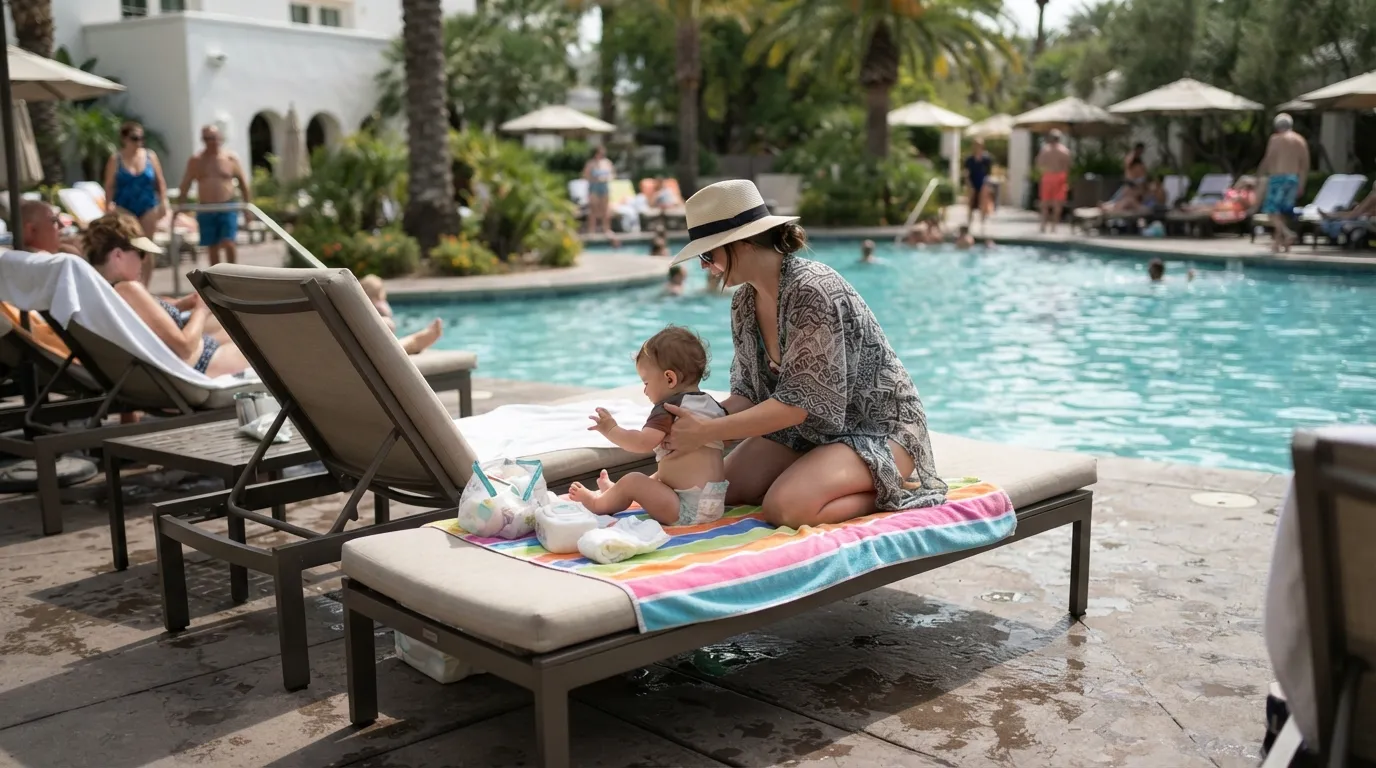
Parents of small kids are doing their best, but changing a diaper on a lounge chair or towel near the water spreads germs fast. Pool-safety guidance recommends changing diapers away from the pool, in a restroom or changing area.
Many properties also require swim diapers for little ones in the water. Staff have to enforce those rules without making anyone feel judged, which is a delicate job.
The chair that was used for the change tends to get cleaned right away. Other guests rarely know what happened.
Next up: the one nobody should leave to chance…
#11 – Leaving Kids Unsupervised Because “Someone Will Watch Them”
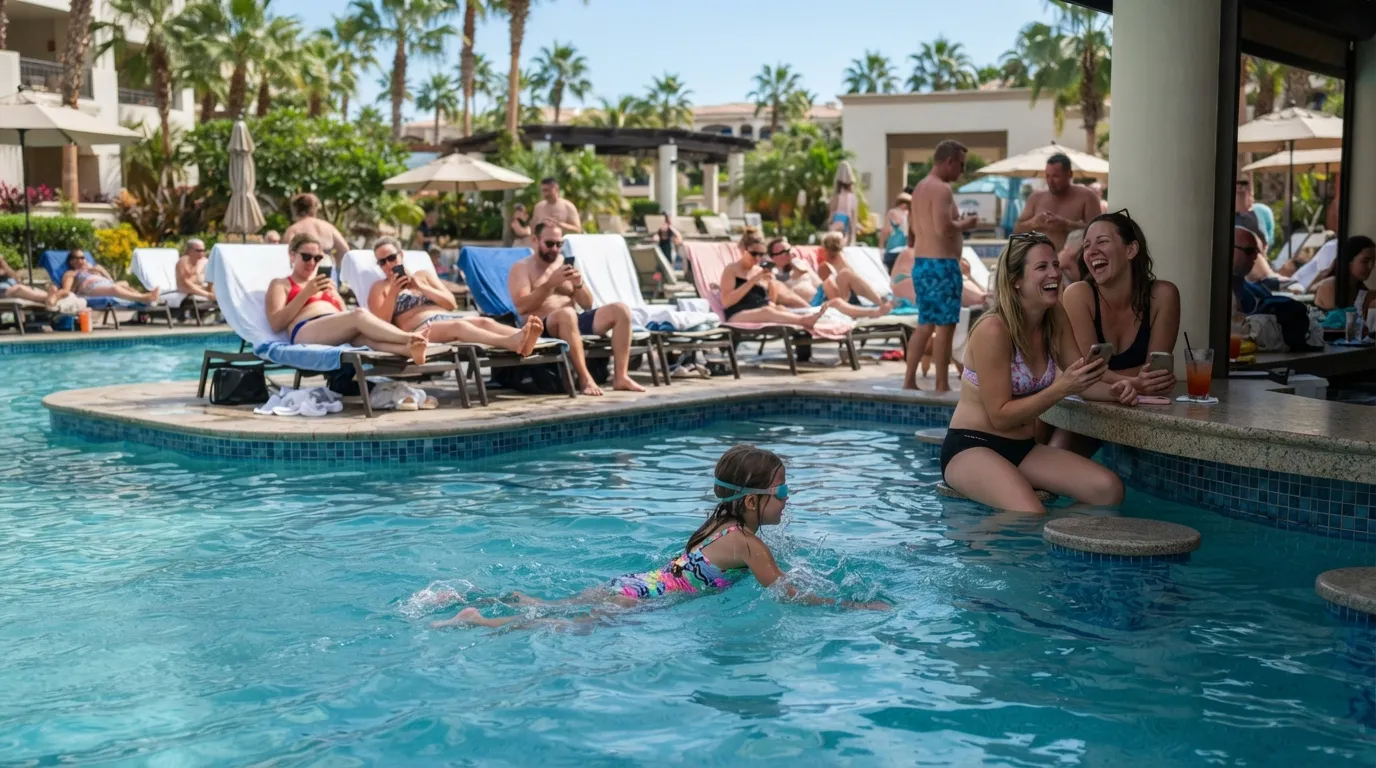
Plenty of hotel pools have no lifeguard on duty, and signs often say so. Those signs usually also say that children must be accompanied by an adult.
Even so, staff regularly spot young swimmers on their own while parents are at the bar, on their phones, or back in the room. Attendants who are there to serve drinks and tidy up aren’t a substitute for a parent paying attention.
It’s one of the most serious items on this list, and the one staff are least likely to let slide.
At a Glance
- CDC data shows more children ages 1–4 die from drowning than from any other cause.
- Drowning happens quickly and quietly, so it rarely looks like splashing and shouting.
- The CDC specifically names phone use as a distraction to avoid while watching kids near water.
- Check the sign at the gate: if no lifeguard is posted, you are the lifeguard.
Next up: the deck is not a playground…
#10 – Running, Diving, and Roughhousing Where Signs Say Don’t
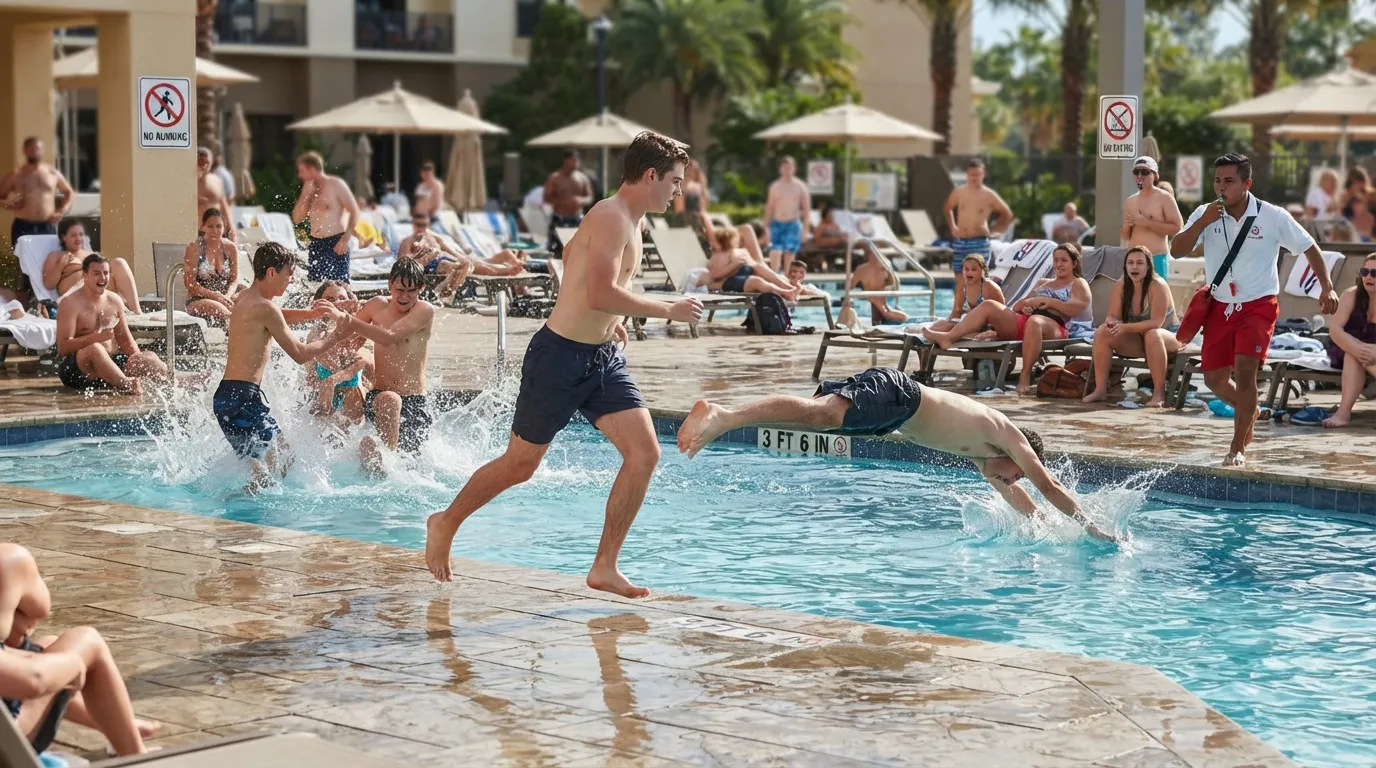
Slippery decks, shallow water, and splashy games are a recipe for injuries. That’s why so many hotels post “No Running” and “No Diving” signs, especially where the water is shallow.
Dunking, cannonballs next to other swimmers, and tossing people in all tend to land on the same list of requests from staff. Attendants usually step in quickly because one bad fall can end someone’s trip.
Guests who think the rules are for other people tend to be the ones who need them most.
Next up: the pool after dark…
#9 – Swimming After Hours Like the Gate Doesn’t Apply
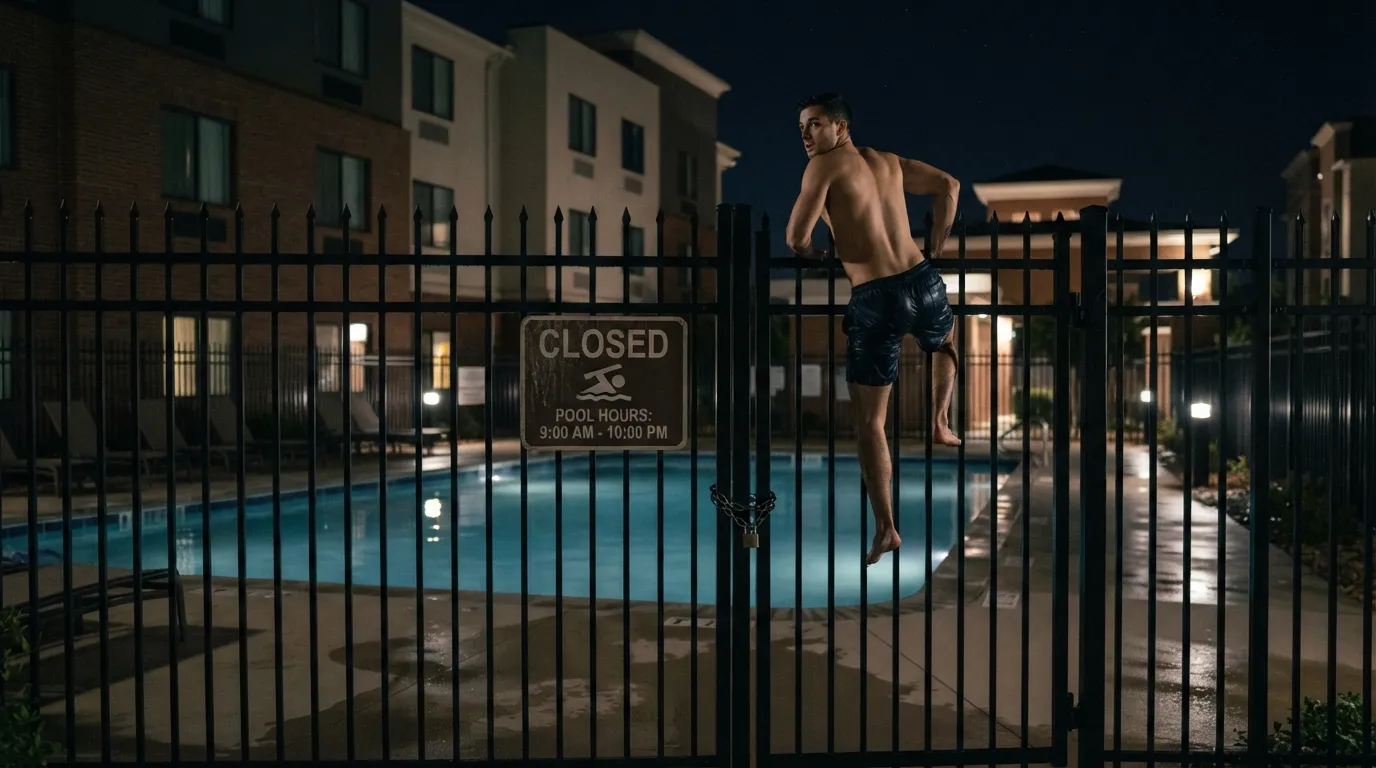
Most hotel pools have set hours, and a gate or sign that makes them clear. Some guests decide a late-night dip is worth ignoring both.
After hours, there’s often no attendant on deck, and the lighting and supervision are limited. That’s the main reason hotels close the pool at night.
Security teams know the late-night crowd well. Guests who climb a gate or push past a lock tend to end up with a conversation they didn’t plan on.
Next up: the guest who isn’t a guest…
#8 – Sneaking Friends In as “Guests”
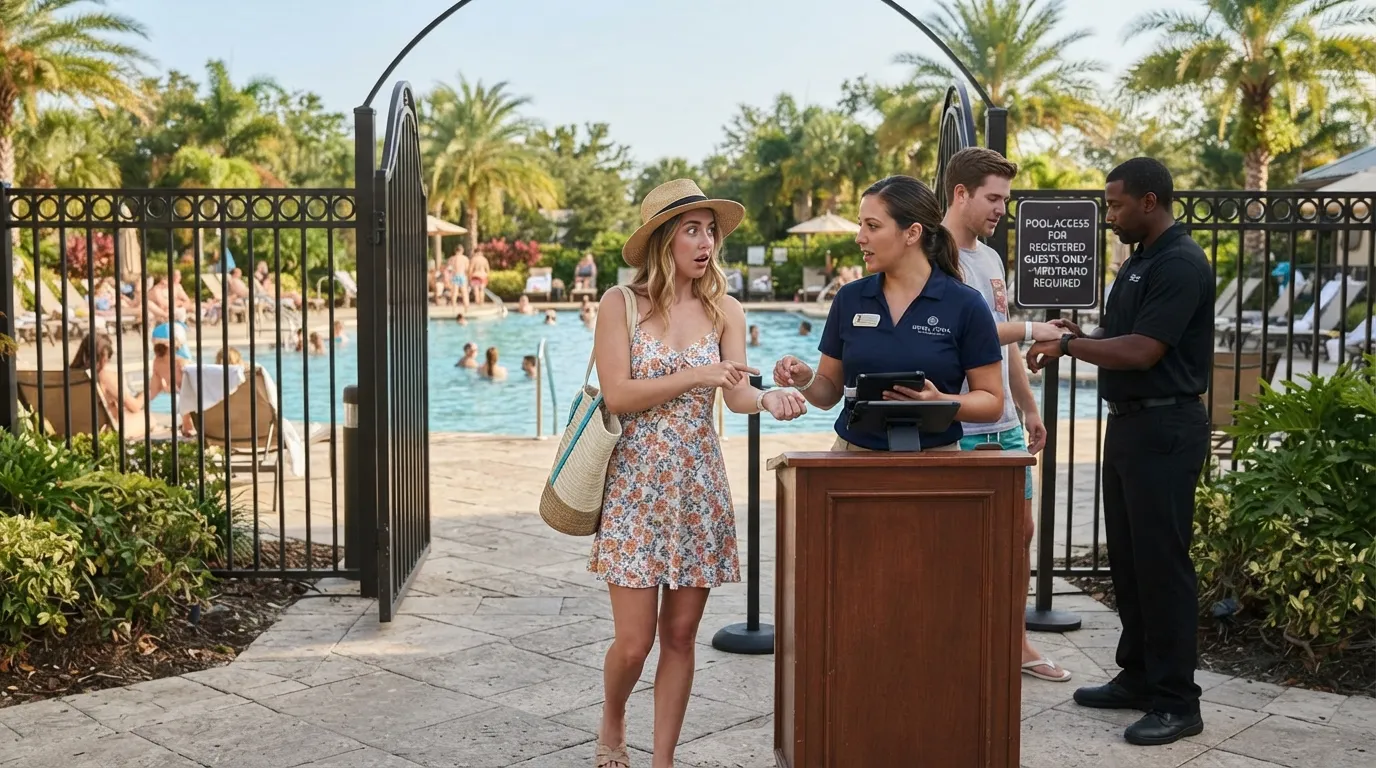
Many hotels limit pool access to registered guests, and some check wristbands or room keys at the door. Others sell day passes, which makes the line between guest and visitor even more important.
Staff sometimes see a guest pass a wristband to a friend or walk a group of outsiders in. It strains capacity and can crowd out the people who are actually paying for the room.
Attendants who’ve spotted the same trick before tend to recognize it quickly.
Next up: the souvenir nobody asked for…
#7 – Walking Off With Pool Towels
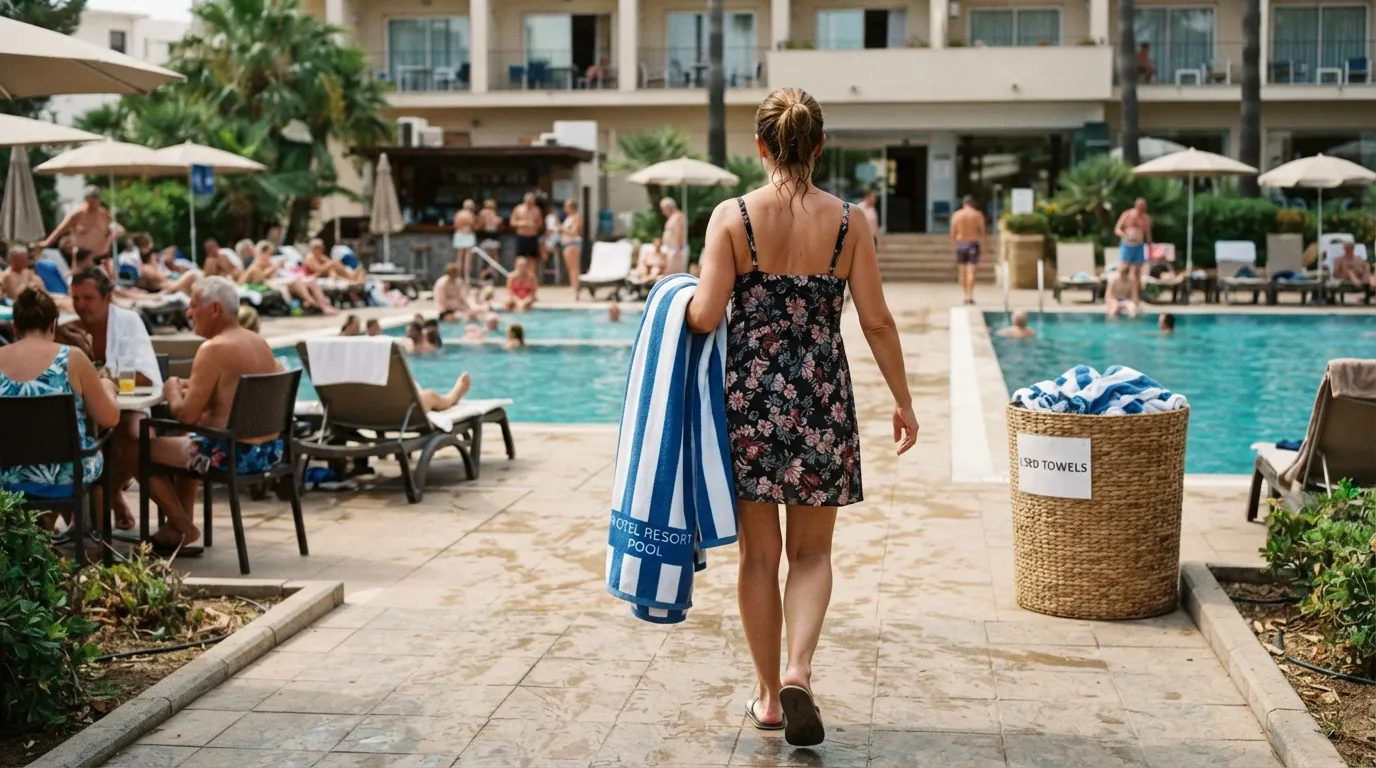
It’s easy to treat a fluffy pool towel as part of the room. Hotels see it differently, and many policies say that missing towels can be charged to the room.
Some properties use a towel card or tracking system at the pool to keep supplies from vanishing. Others simply ask guests to leave used towels in the bins provided.
Housekeeping and pool teams count towels for a reason. Running out on a busy day affects everyone.
Next up: what you wear into the water matters more than you’d think…
#6 – Swimming in Street Clothes or Cutoffs
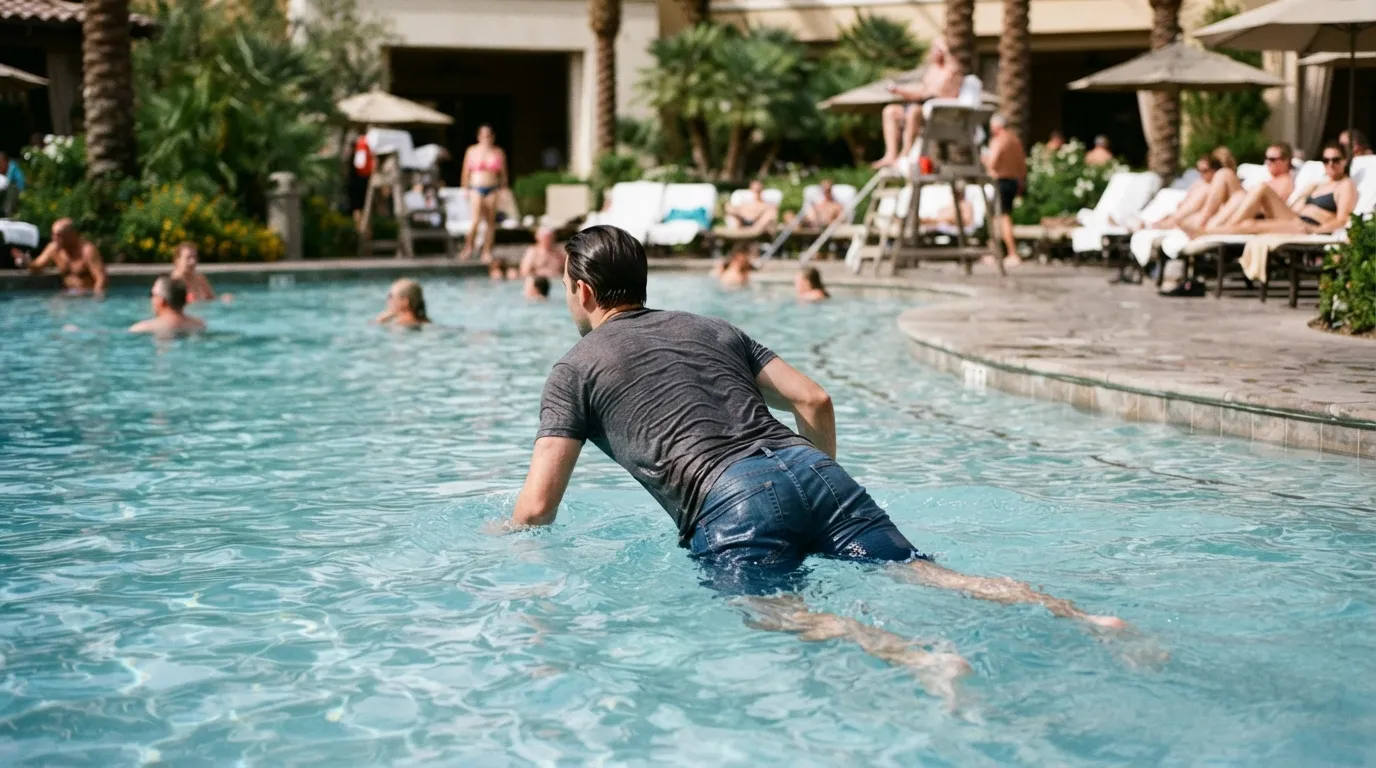
Many pools ask guests to wear proper swimwear in the water. Jeans, cotton shorts, and street clothes can shed fibers and dirt, and they’re heavy and risky when wet.
Some hotels list this rule on their pool signs, along with limits on shoes and other items. Staff enforce it more often than you’d expect, usually with a polite reminder.
It’s a small rule that keeps the water cleaner and the filters working.
Next up: the stain that doesn’t wash out…
#5 – Slathering on Tanning Oil, Then Climbing Back on the Lounger
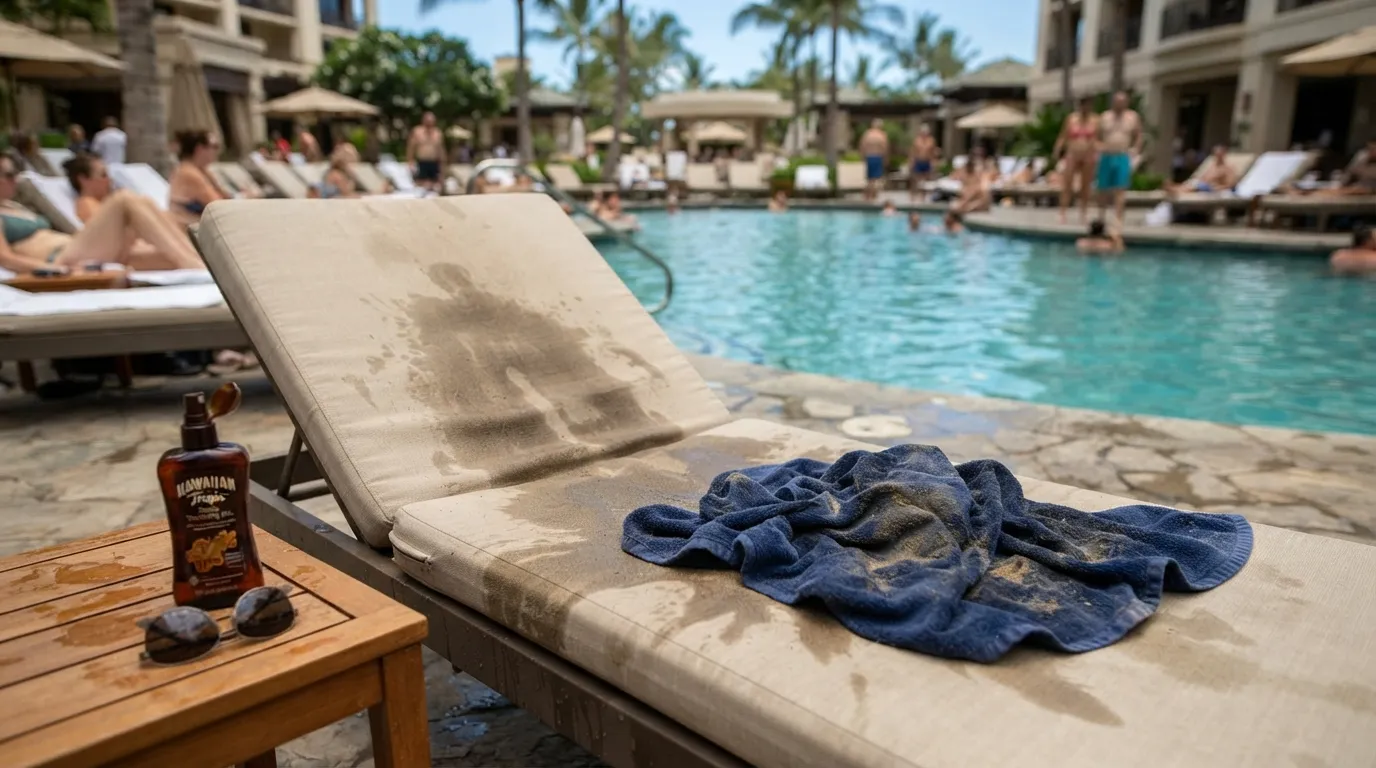
Greasy tanning oils and heavy lotions are tough on lounge cushions and towels. They can leave marks on furniture that other guests then sit on.
Some hotels ask guests to lay a towel over the chair, and some limit certain products around the pool. Staff end up wiping, flipping, or replacing cushions that still show last week’s tan.
A towel under you protects the chair and the next guest’s swimsuit.
Next up: the pool toy that took over the pool…
#4 – Taking Over the Pool With Giant Floats and Games
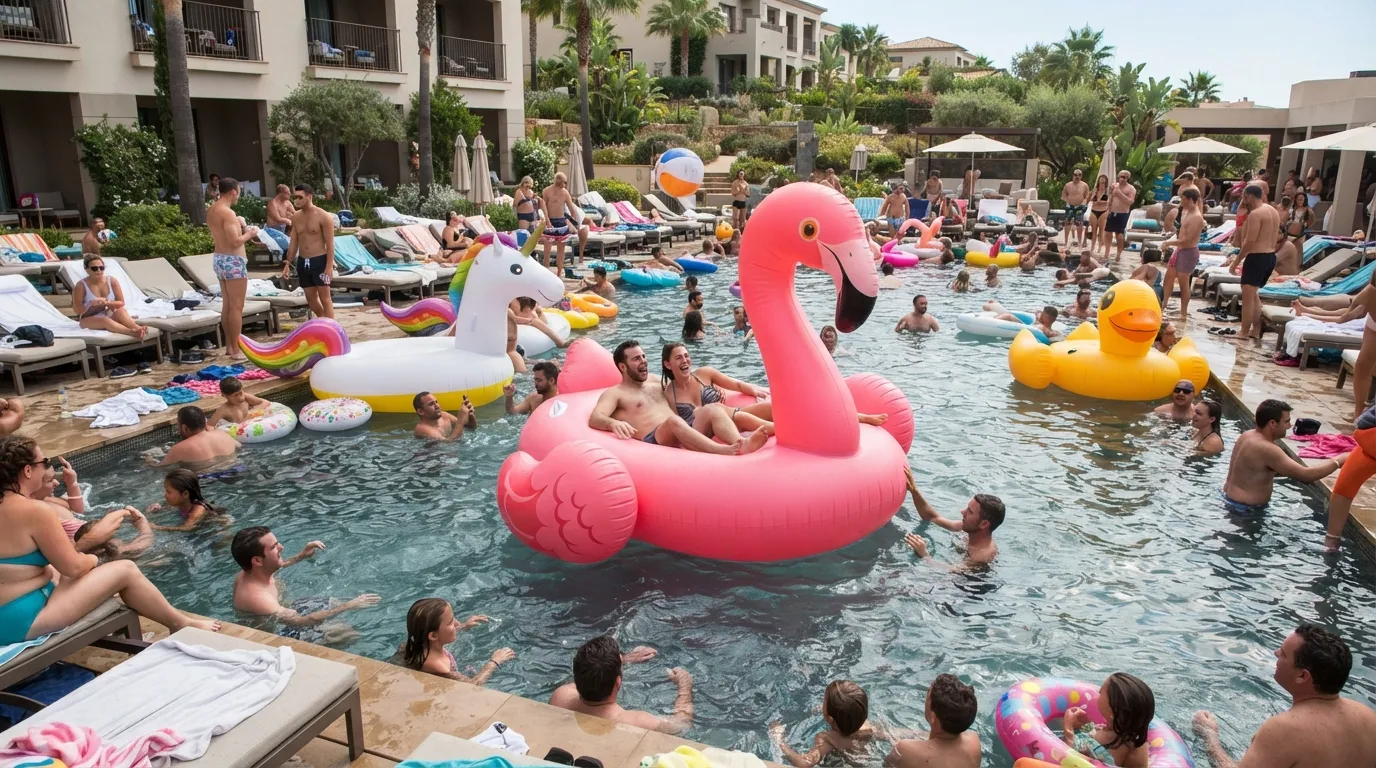
Oversized inflatables look great in photos. In a crowded pool, they can block lanes, fill the shallow end, and turn a relaxing swim into an obstacle course.
Many hotels restrict large floats, balls, or games, especially at busy times. Staff step in when a flamingo the size of a sofa starts crowding out other swimmers.
Some properties provide their own floats or set aside certain hours for play. Asking first usually avoids the awkward moment.
Quick Compare
- Usually fine: a single-person float that stays within arm’s reach of its owner.
- Usually flagged: sofa-sized inflatables and ball games in a packed shallow end.
- Smartest move: ask staff about house floats or designated play hours before you inflate anything.
Next up: a guest with four legs…
#3 – Bringing Pets Into the Pool Area
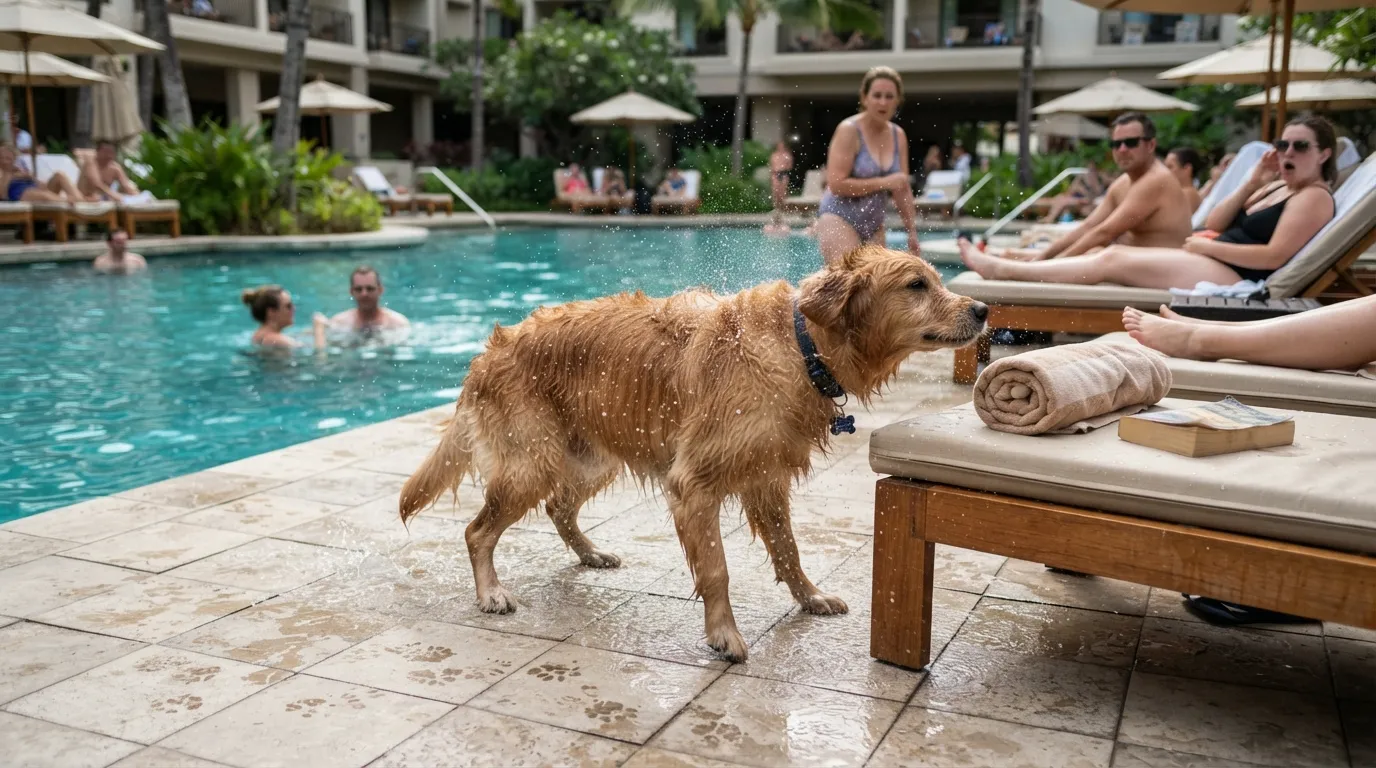
Plenty of hotels welcome dogs, but that doesn’t mean the pool is open to them. Many policies keep pets out of pool areas, with an exception for service animals.
The reasons are practical: hygiene, allergies, and the comfort of other guests. A wet dog shaking off beside someone’s lounger is the kind of thing staff remember.
When a guest asks for an exception, front-desk teams typically point to the posted rules.
Next up: the camera that keeps rolling…
#2 – Turning the Pool Into a Photo Set
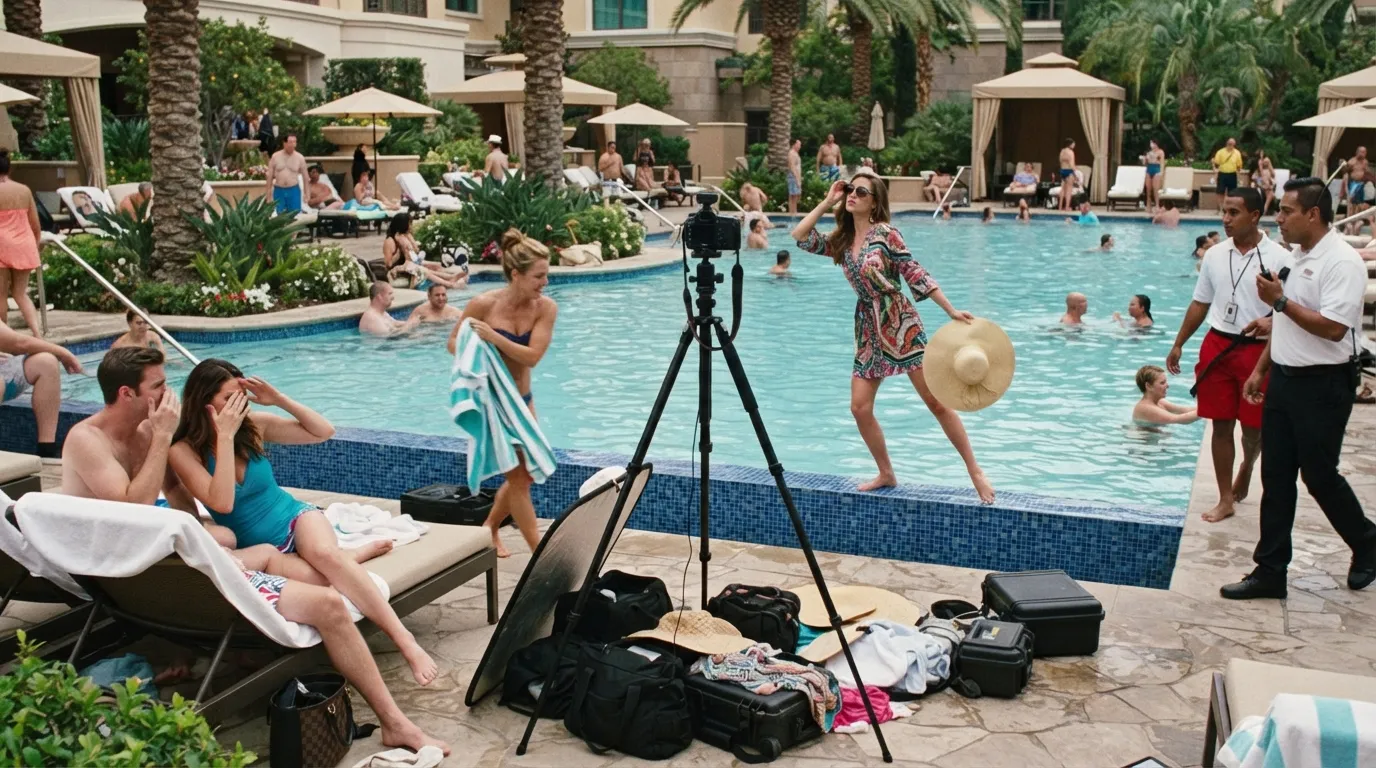
A pool deck is a perfect backdrop, and everyone wants the shot. The trouble starts when the shoot involves tripods, staged setups, or strangers ending up in the frame.
Many hotels ask guests to respect others’ privacy and avoid photographing or filming people who haven’t agreed to it. Some also restrict commercial shoots without permission, and drones are often limited on property.
Staff are often the ones asked to say, kindly, that the pool is still a shared space. That conversation rarely goes smoothly in the middle of a photo session.
And finally, the one that ties everything together…
#1 – Arguing With the Attendant Instead of Following the Rule
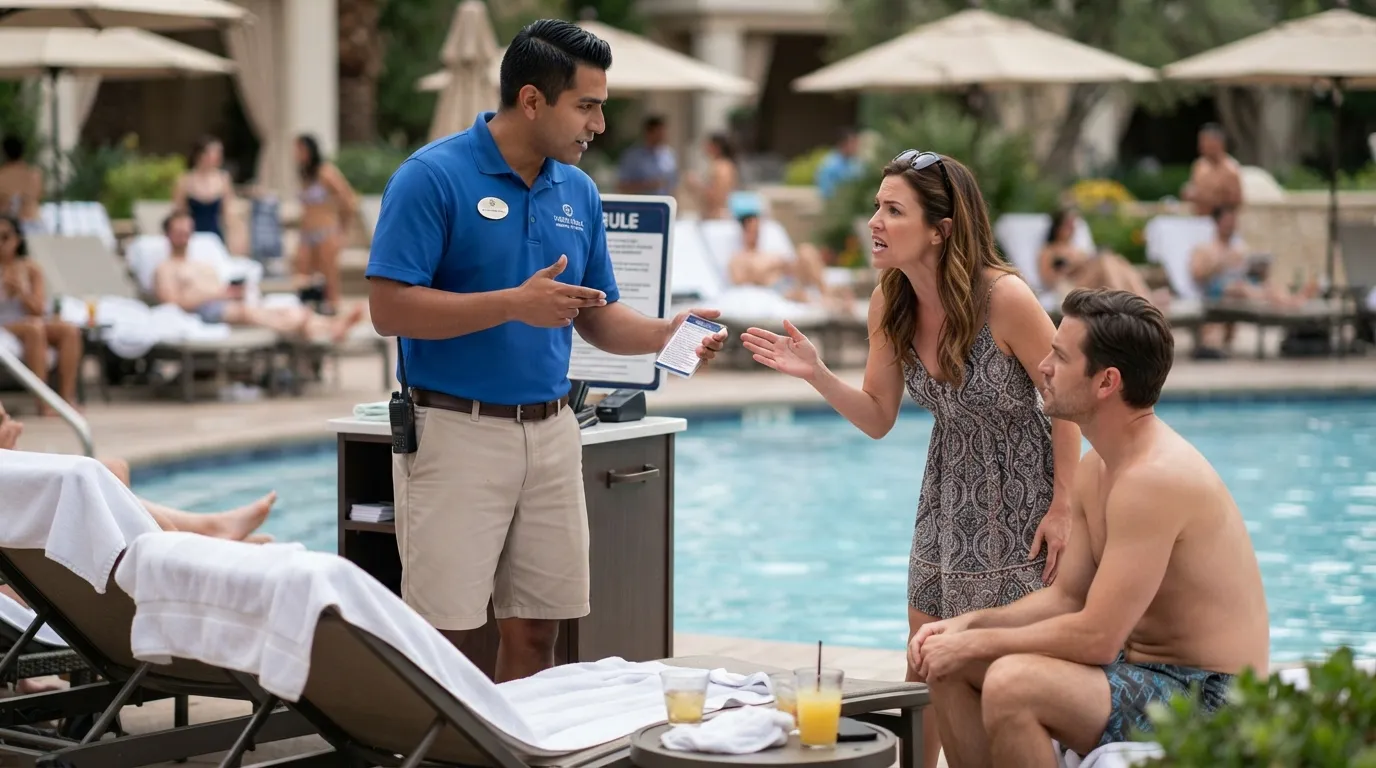
Nearly every item above comes down to one moment: a staff member makes a polite request, and a guest pushes back. The towels, the speakers, the glass, the gate. Each rule is easy until someone decides it doesn’t apply to them.
Attendants are rarely trying to spoil anyone’s day. They’re enforcing rules their property has set for safety, cleanliness, and fairness, often while juggling a full deck and a busy bar.
That’s why this one tends to stick in memory. Not the chair or the speaker, but the tone of the conversation. A hotel pool works because most people follow the rules without being asked, and the ones who don’t are the guests staff talk about long after checkout.
CEO-Co-Founder