

- 15 Songs That Sparked Generational Movements - October 14, 2026
- How American Memoirs Changed Global Diplomacy - October 14, 2026
- 27 Celebrities Who Were Everywhere in the 1970s and Then Suddenly Stepped Away - October 14, 2026
Here’s the odd thing about 1970s arena rock: the bands that sold out the biggest rooms often had the shortest fuses. A few years of roaring crowds, grinding tours, and bruised egos could end what a decade of fame couldn’t.
This countdown starts with the acts that quietly burned out and ends with a band whose silence still echoes. Some reunited later. All of them hit a night when the lights were up, the seats were full, and the end was closer than anyone in the crowd knew.
#22 – Humble Pie
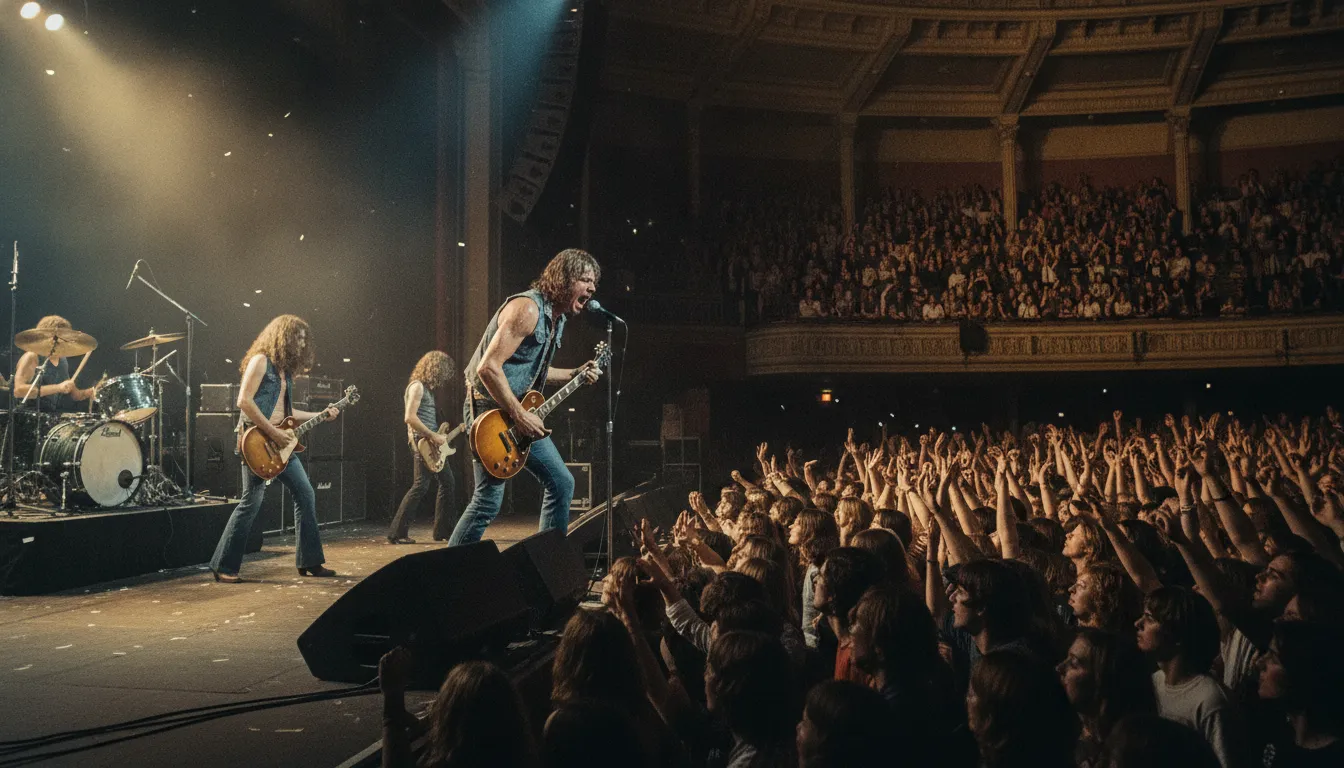
Before Peter Frampton became a solo superstar, he shared a stage with one of the loudest voices in British rock. Humble Pie was built around Steve Marriott, who had already fronted the Small Faces and sang like he was trying to out-shout his own amplifier. Their 1971 live album Rockin’ the Fillmore turned them into a serious American concert draw.
Frampton left that year to go solo, but the band kept going. Their 1972 album Smokin’ went gold and kept U.S. halls packed with a grittier, bluesier sound.
By 1975, the road had worn them down and the group split. The irony stings: Frampton’s 1976 live album became a monster hit while his old bandmates were already gone.
#21 – T. Rex
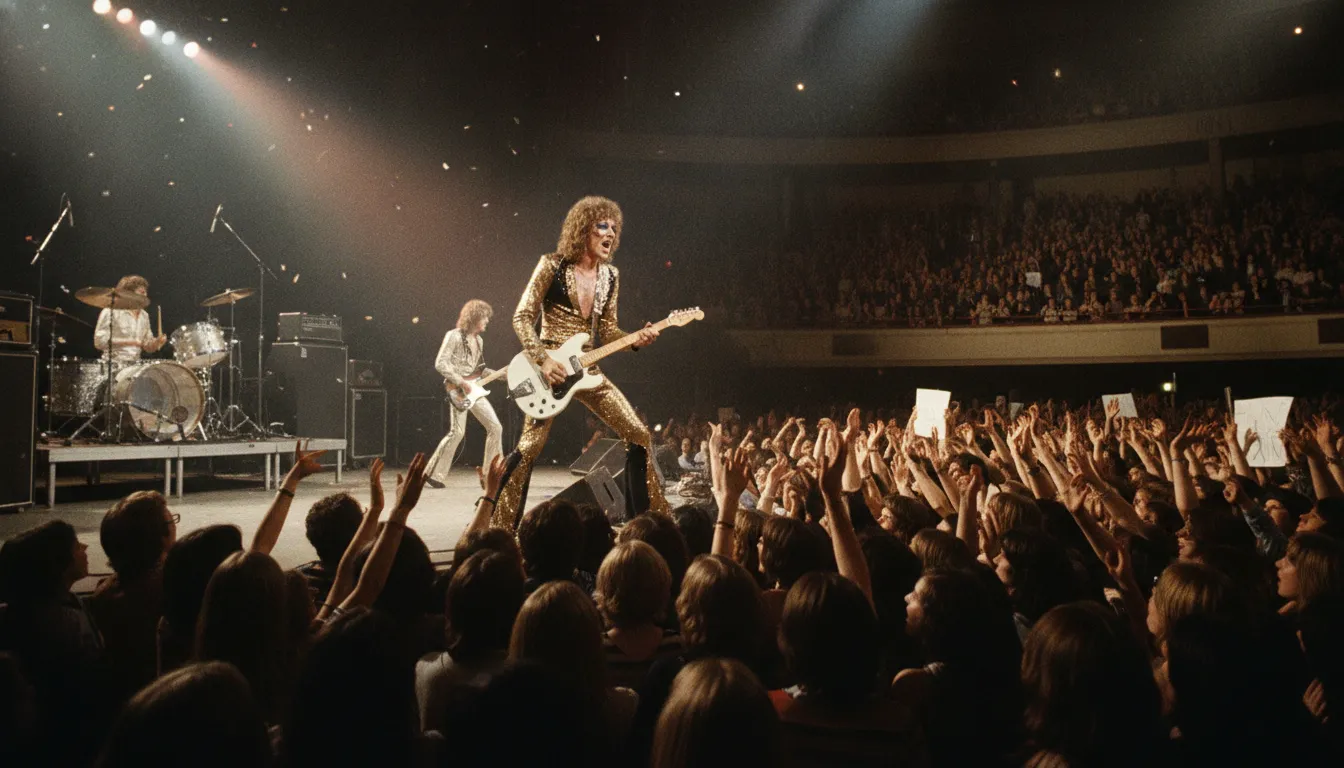
Marc Bolan went from barefoot folk dreamer to glitter-streaked rock idol almost overnight. By 1971, T. Rex had swapped acoustic whimsy for crunchy electric riffs, and “Get It On (Bang a Gong)” became a British smash that cracked the U.S. Top 10 in 1972.
In the UK, the craze got its own name, “T. Rextasy,” complete with screaming fans and packed London shows. American audiences never matched that frenzy, but Bolan still became one of glam rock’s defining faces.
As the mid-1970s moved on, the hits cooled and Bolan kept trying to reinvent himself. Then he died in a car crash in September 1977, just two weeks shy of his 30th birthday. T. Rex ended right there, mid-comeback.
#20 – Bachman-Turner Overdrive
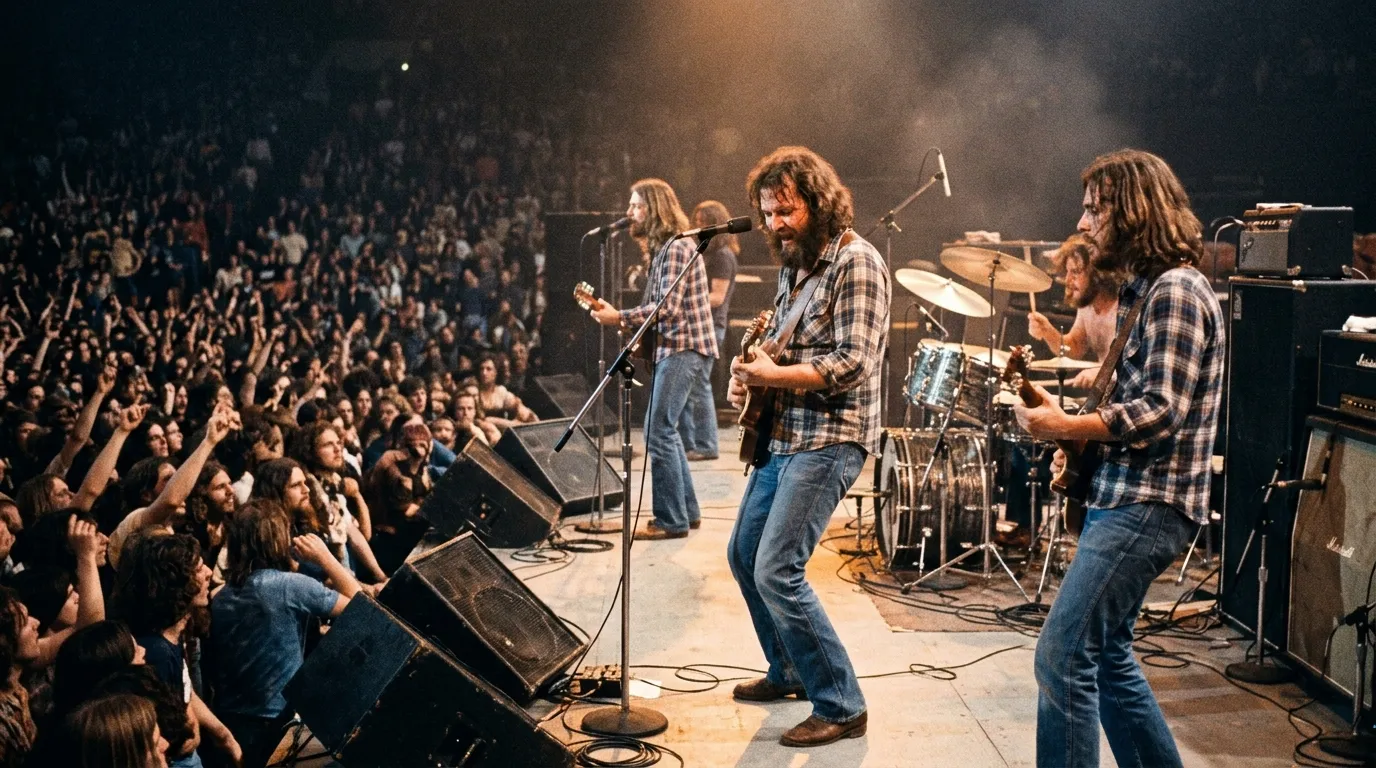
No capes, no glitter, no concept albums. Just plaid shirts, thick riffs, and songs built for people who clocked out and wanted something loud. Randy Bachman had already left The Guess Who when he put together Bachman-Turner Overdrive, and the Canadian band became a North American arena regular by 1974.
That year brought “Takin’ Care of Business” and “You Ain’t Seen Nothing Yet,” the latter a U.S. chart-topper. Both still turn up on classic rock radio.
The grind of constant touring and shifting priorities eventually pulled the group apart. Bachman himself left in 1977, and by the end of the decade the band that sounded unstoppable had stopped.
#19 – Deep Purple
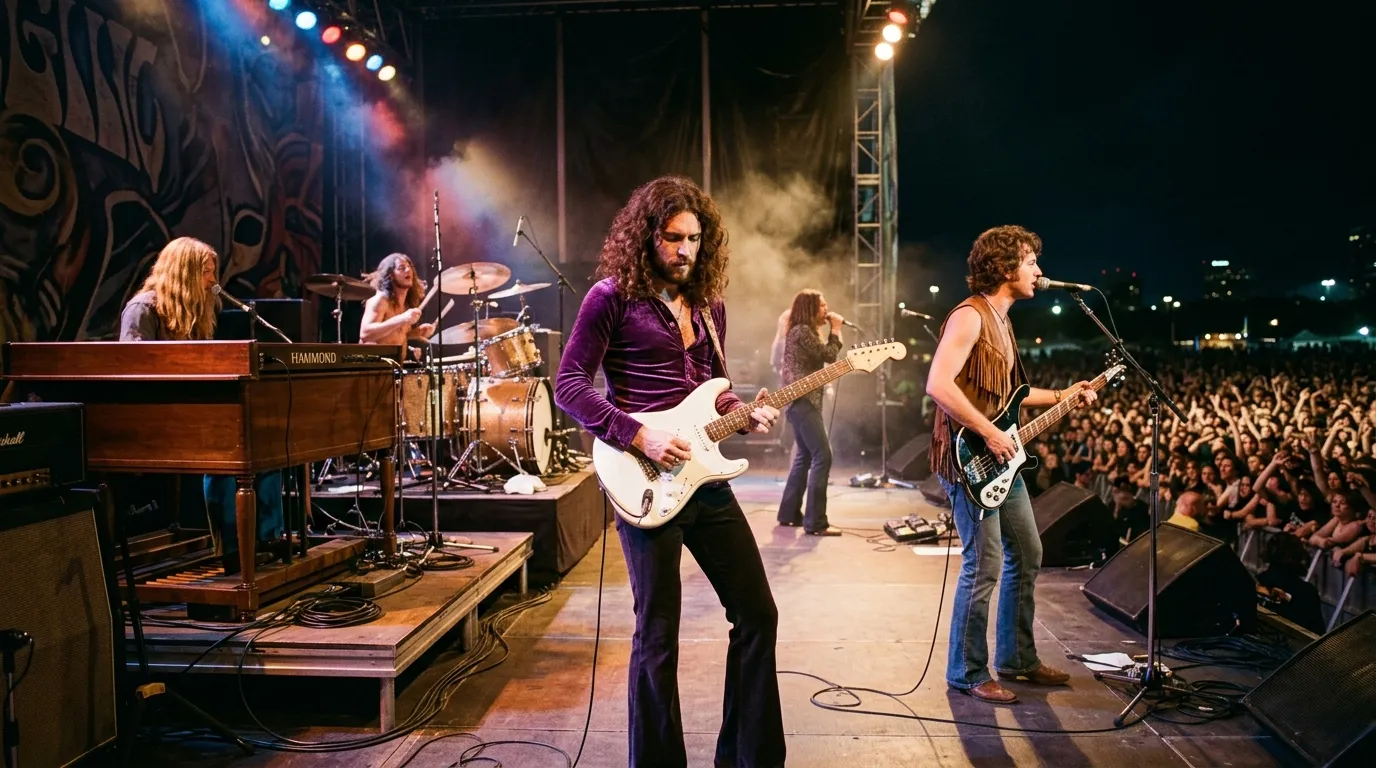
Deep Purple gave rock one of its most recognizable riffs. “Smoke on the Water” came off 1972’s Machine Head, and the band’s thunderous live shows made them a top arena act, including a headline slot at 1974’s California Jam festival.
Behind the volume, the lineup kept shifting. Guitarist Ritchie Blackmore quit in 1975 to form Rainbow, and the band carried on with American guitarist Tommy Bolin.
It didn’t hold. Deep Purple called it quits in 1976, and Bolin died later that year. That seemed like the end of the story, until the classic lineup reunited in 1984 for Perfect Strangers. For eight years, though, one of hard rock’s biggest bands simply wasn’t there.
Fast Facts
- 1972: Machine Head arrives with “Smoke on the Water.”
- 1974: The band headlines the California Jam festival.
- 1975: Blackmore leaves to form Rainbow.
- 1976: The band splits.
- 1984: The classic lineup returns with Perfect Strangers.
#18 – Emerson, Lake & Palmer
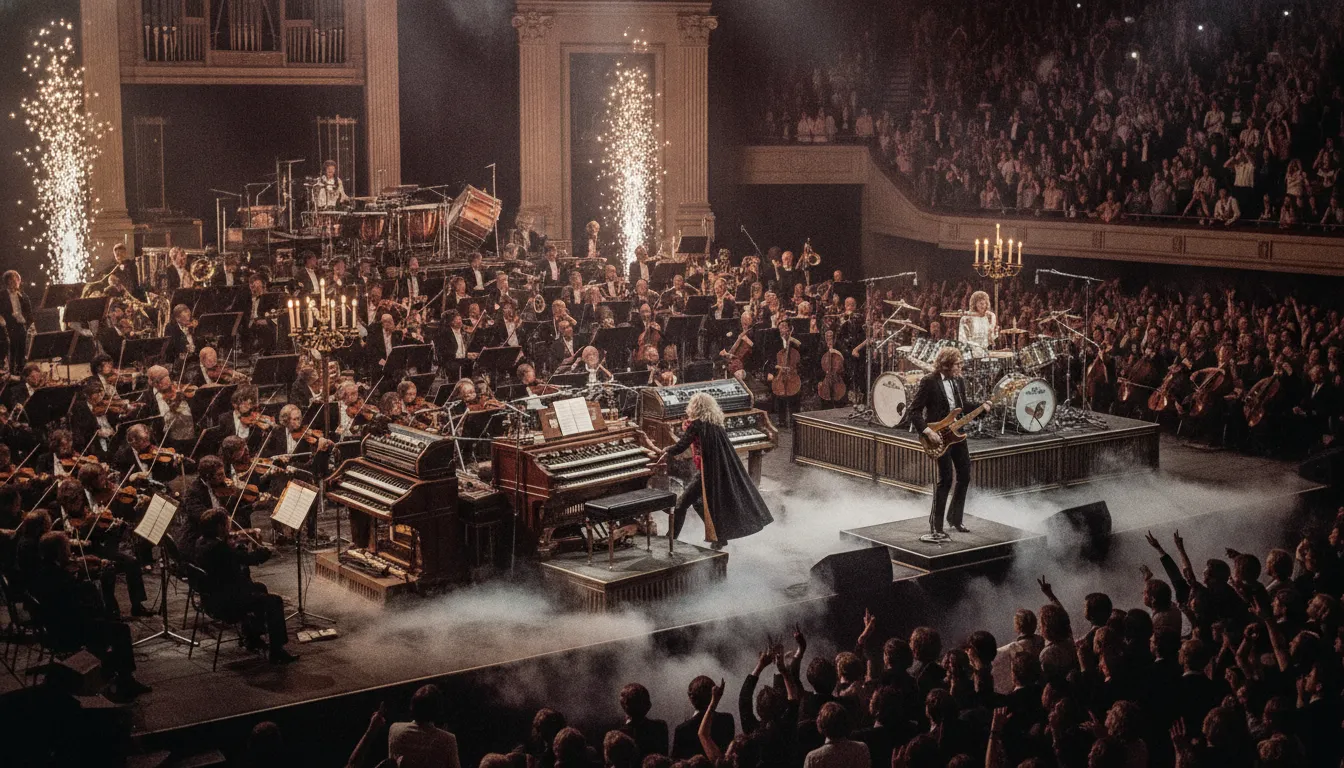
Few bands took 1970s excess as literally as Emerson, Lake & Palmer. Keith Emerson attacked his keyboards like a stunt performer, famously stabbing and wrestling his Hammond organ on stage, while the trio turned classical pieces into thunderous rock spectacles. Brain Salad Surgery in 1973 captured them at full, glorious overreach.
Their tours grew just as huge. By the late 1970s they were hauling a full orchestra on the road, and that kind of ambition is expensive. The tour reportedly lost money.
Punk was rising, prog was falling out of fashion, and the group’s 1978 album Love Beach felt like a shrug. ELP split in 1979, leaving behind the decade’s most extravagant farewell to an extravagant style.
#17 – Free
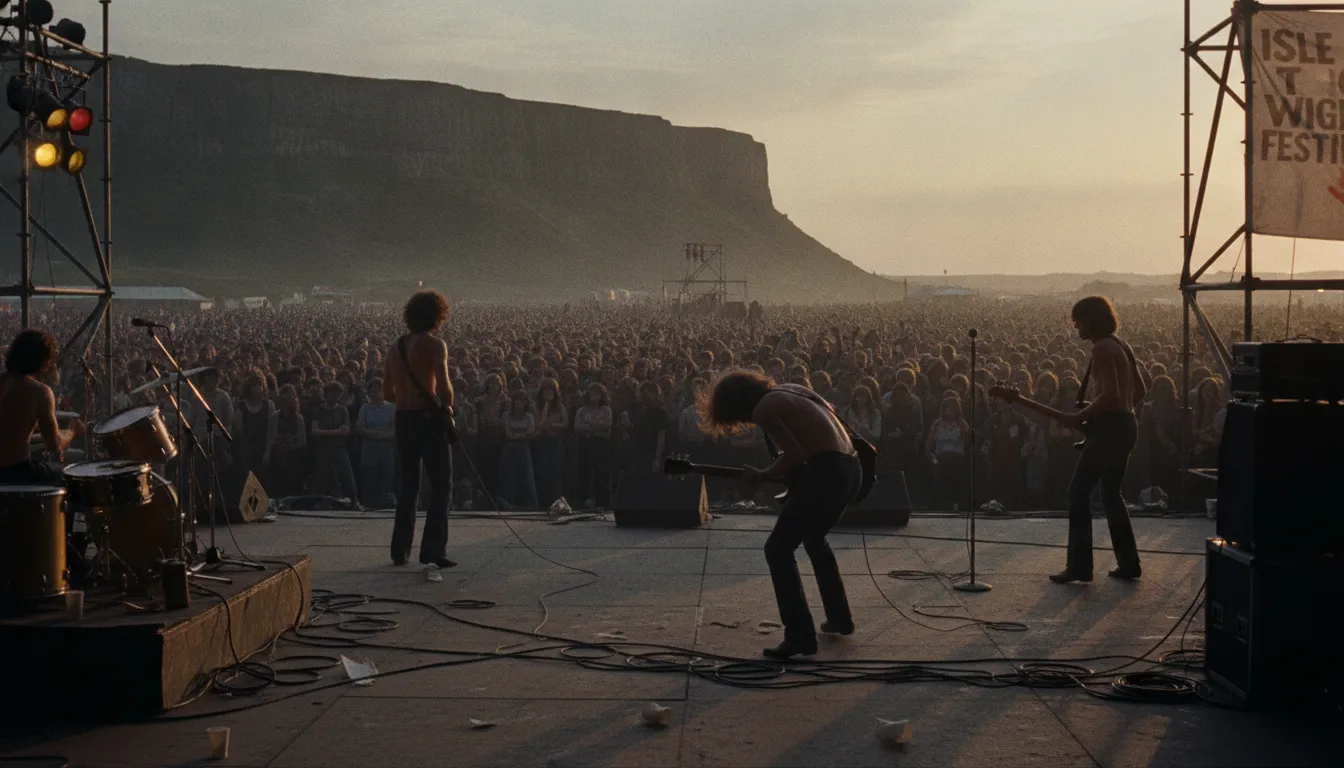
Free built an arena-sized sound with almost nothing. Paul Rodgers sang with a soulful ache, Paul Kossoff’s guitar bent every note until it hurt, and the whole band left space between the notes. “All Right Now” became a worldwide hit in 1970, the same year they played the Isle of Wight Festival.
Success arrived while the members were still very young, and the pressure showed. The band broke up in 1971, reformed in 1972, and split for good in 1973 as Kossoff’s struggles made the group’s future uncertain.
Kossoff died in 1976 at just 25. The band that started with teenage promise ended as one of rock’s saddest what-ifs, though Rodgers’ voice would soon fill arenas again.
#16 – The Knack
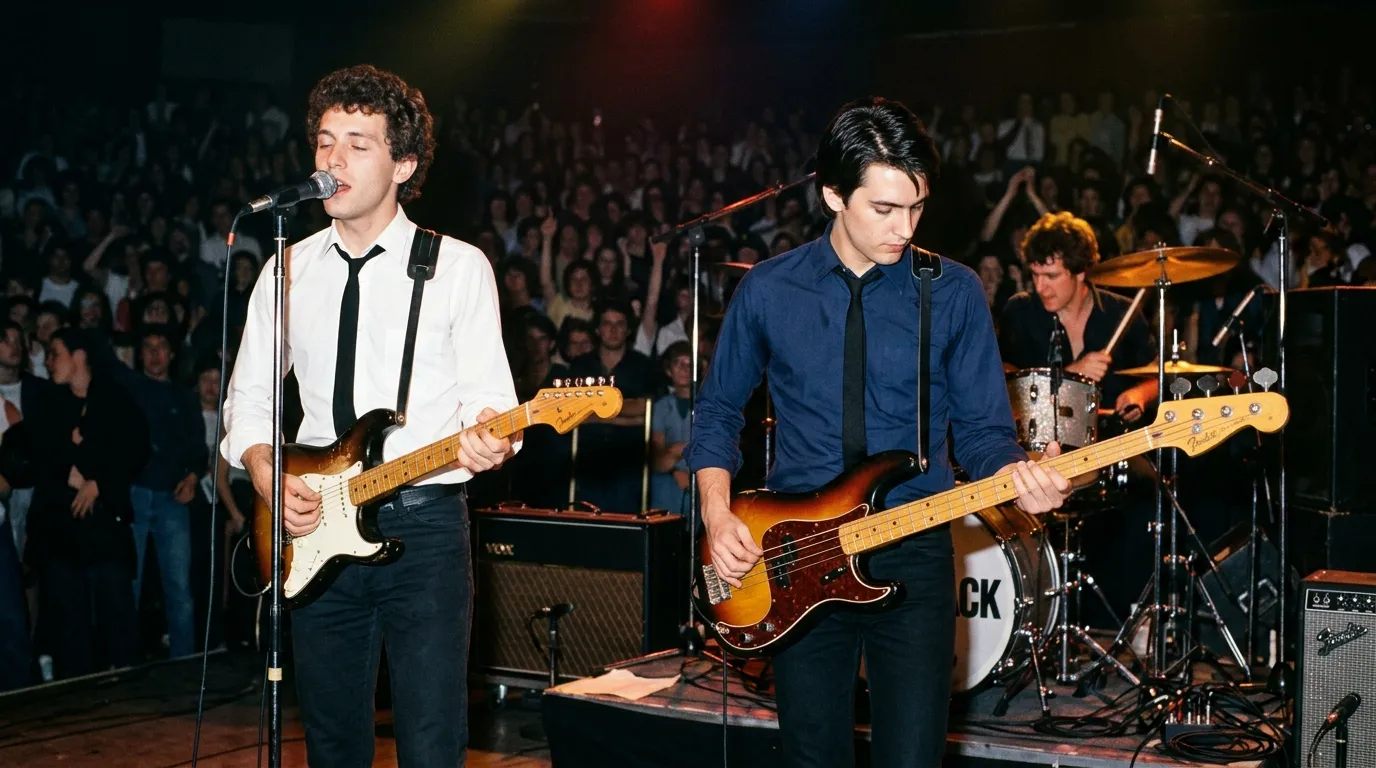
The Knack went from Los Angeles club band to national obsession in a matter of weeks. “My Sharona” hit in the summer of 1979, spent weeks at No. 1, and its stuttering guitar riff seemed to be coming out of every car window in America. The debut album Get the Knack went multi-platinum.
Then came the backlash. The band’s retro look and brash attitude drew a hostile reaction from critics, and the follow-up albums couldn’t recapture the magic.
By 1982 the group had split, a fast fall from a fast rise. They later reunited, but the legend of that one explosive summer was what lasted. It’s a rare case where being everywhere made it harder to stay anywhere.
#15 – Faces
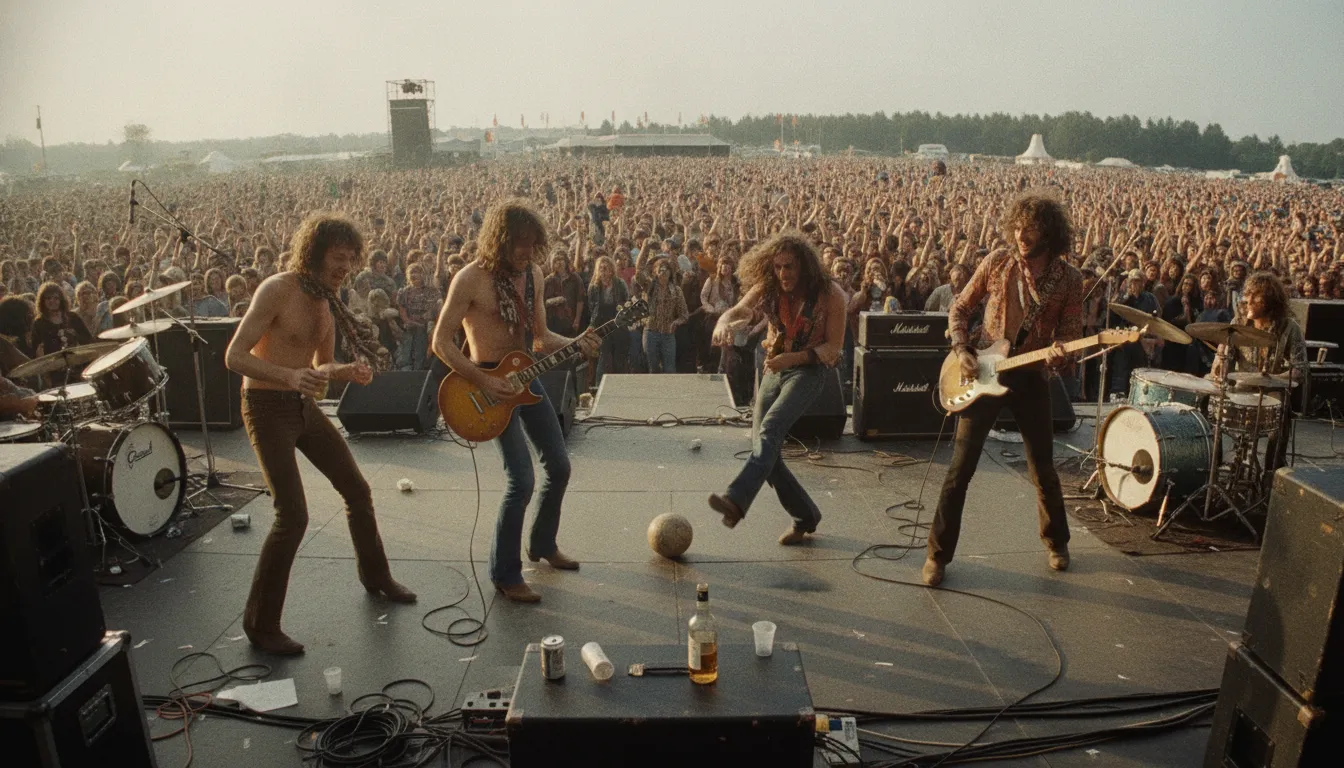
Faces looked like a bar band that wandered onto a festival stage. They stumbled in, passed around drinks, kicked soccer balls into the crowd, and somehow played with a looseness that tighter bands envied. Rod Stewart’s raspy voice and Ronnie Wood’s guitar drove “Stay With Me” and the loose, joyful Ooh La La era.
They were a major draw in Britain and America in the early 1970s, even as Stewart’s solo career was exploding at the same time.
That double life proved impossible to keep. Wood was drawn toward the Rolling Stones, Ronnie Lane had already walked out, and Stewart was becoming a superstar on his own. The Faces called it a day in 1975.
#14 – Bad Company
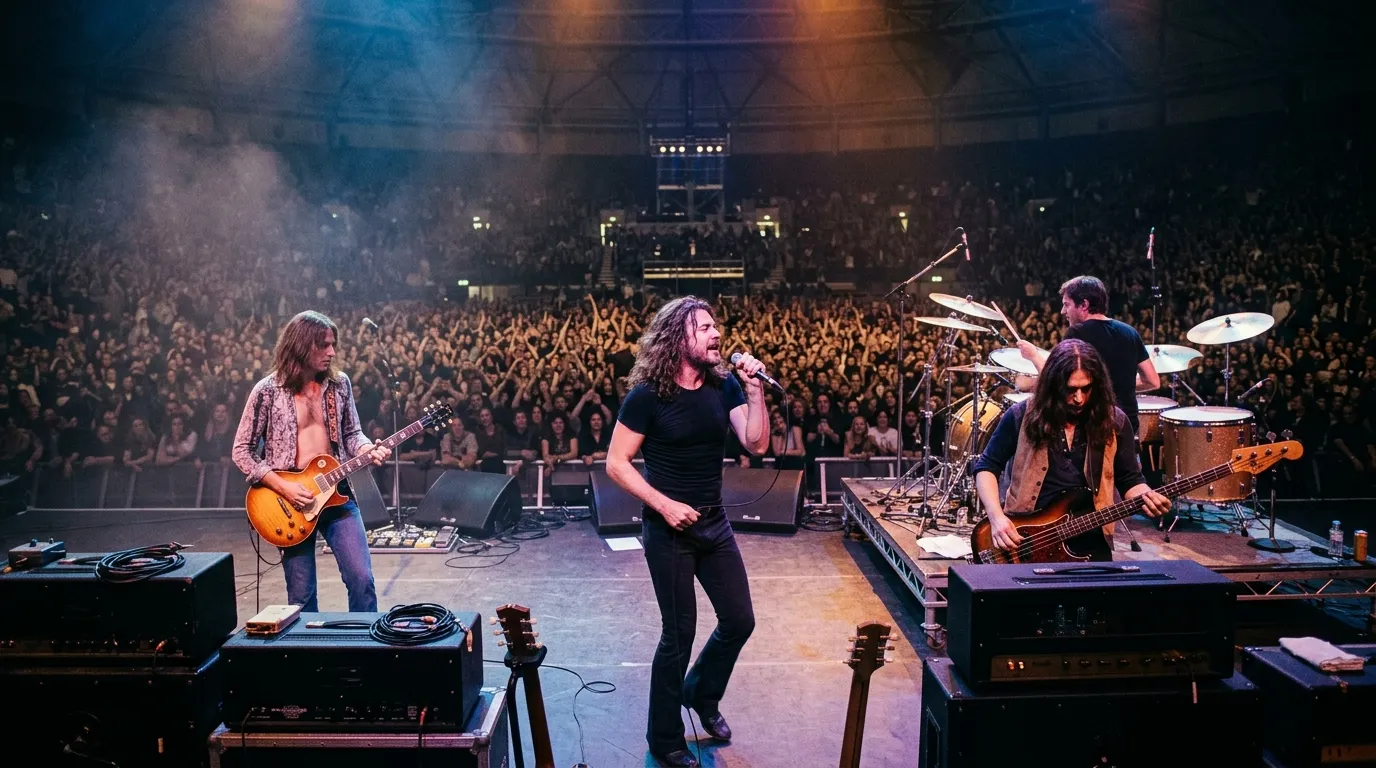
Bad Company was a supergroup assembled with no wasted parts. Paul Rodgers and drummer Simon Kirke came from Free, guitarist Mick Ralphs from Mott the Hoople, and bassist Boz Burrell from King Crimson. Their 1974 debut, Bad Company, was a hit, and Straight Shooter followed in 1975.
The music was lean and bluesy, built around songs like “Can’t Get Enough” and “Feel Like Makin’ Love.” Arenas across America filled for it all through the decade.
But the original lineup eventually wore down. Rodgers departed in 1982, and the band ended its first run. Bad Company later returned with a different singer, though for many fans the original chemistry belonged to those first records.
#13 – Creedence Clearwater Revival
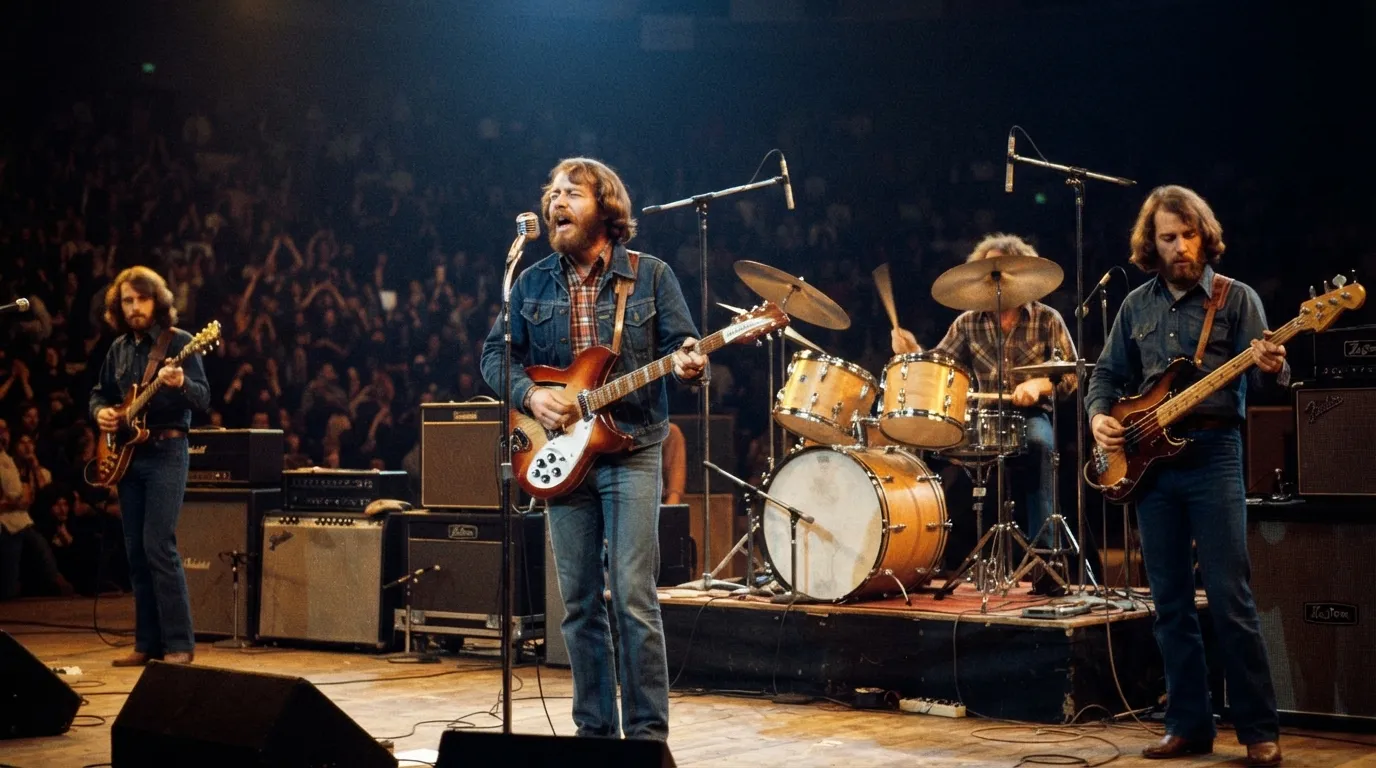
For a stretch of 1969 and 1970, Creedence Clearwater Revival seemed to release a classic every few months. “Proud Mary,” “Bad Moon Rising,” and “Fortunate Son” all came out of a band from El Cerrito, California, that sounded like it was raised in the Louisiana bayou.
The speed of that run left little room to breathe. John Fogerty wrote, sang, and steered the whole band, and that control created friction with his bandmates. His brother Tom left in 1971.
CCR broke up in 1972. The bitterness lasted far longer, with the members clashing over business matters and long fights with their label, Fantasy Records. A band that gave away its sound so freely ended up fighting over everything else.
#12 – The Eagles
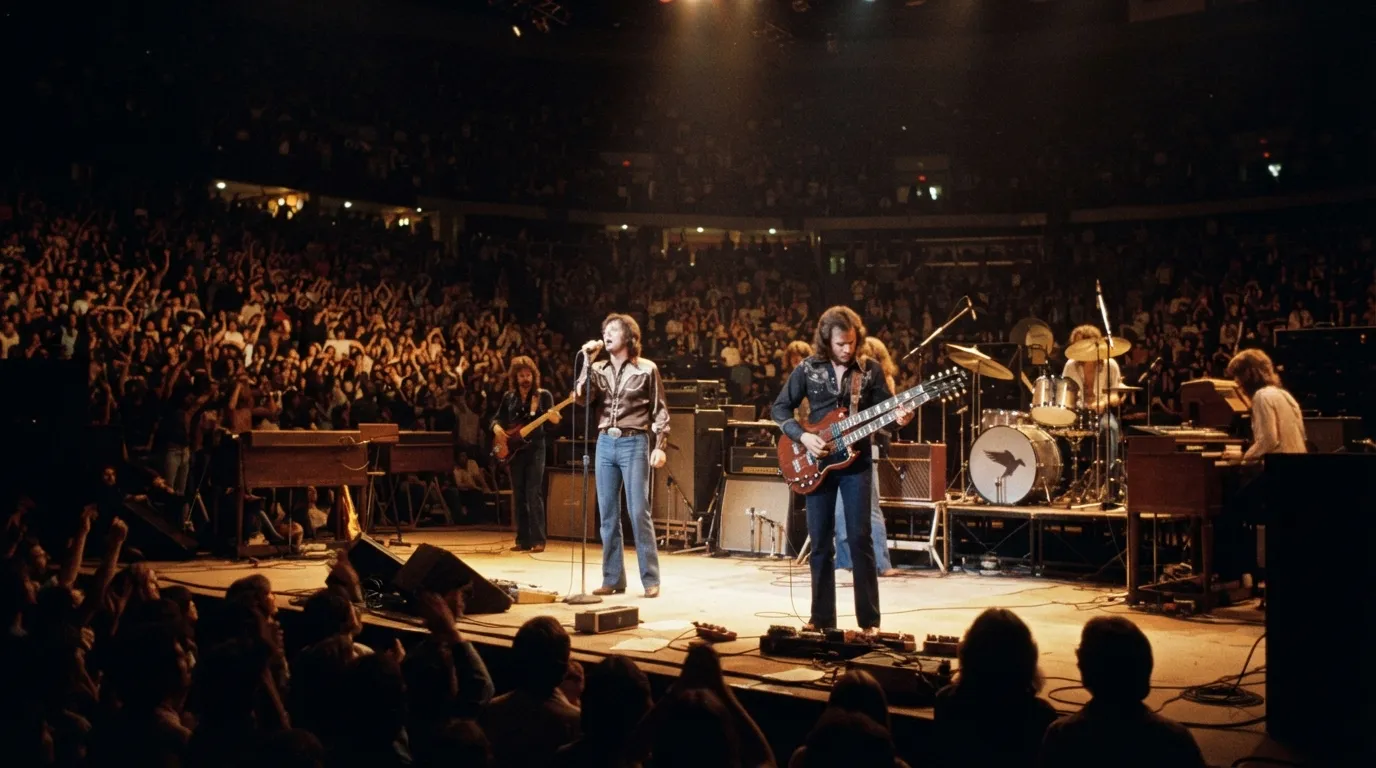
The Eagles made heartbreak sound like a sunny drive down the California coast. Hotel California in 1976 turned them into one of the biggest bands in the world, and their harmonies were as polished as anything on radio.
The polish hid a lot of friction. By the end of the decade, Glenn Frey and Don Felder were barely speaking.
The breaking point came in July 1980 at a benefit concert in Long Beach, California, where the two reportedly traded threats on stage. The band split soon after. The Eagles famously stayed apart for 14 years before reuniting in 1994, with their return tour carrying the sarcastic title Hell Freezes Over.
Worth Knowing
- 1976: Hotel California turns the band into a global force.
- July 1980: The Long Beach benefit show becomes the breaking point.
- 14 years: The gap before the reunion.
- 1994: The Hell Freezes Over reunion begins.
#11 – The Doobie Brothers
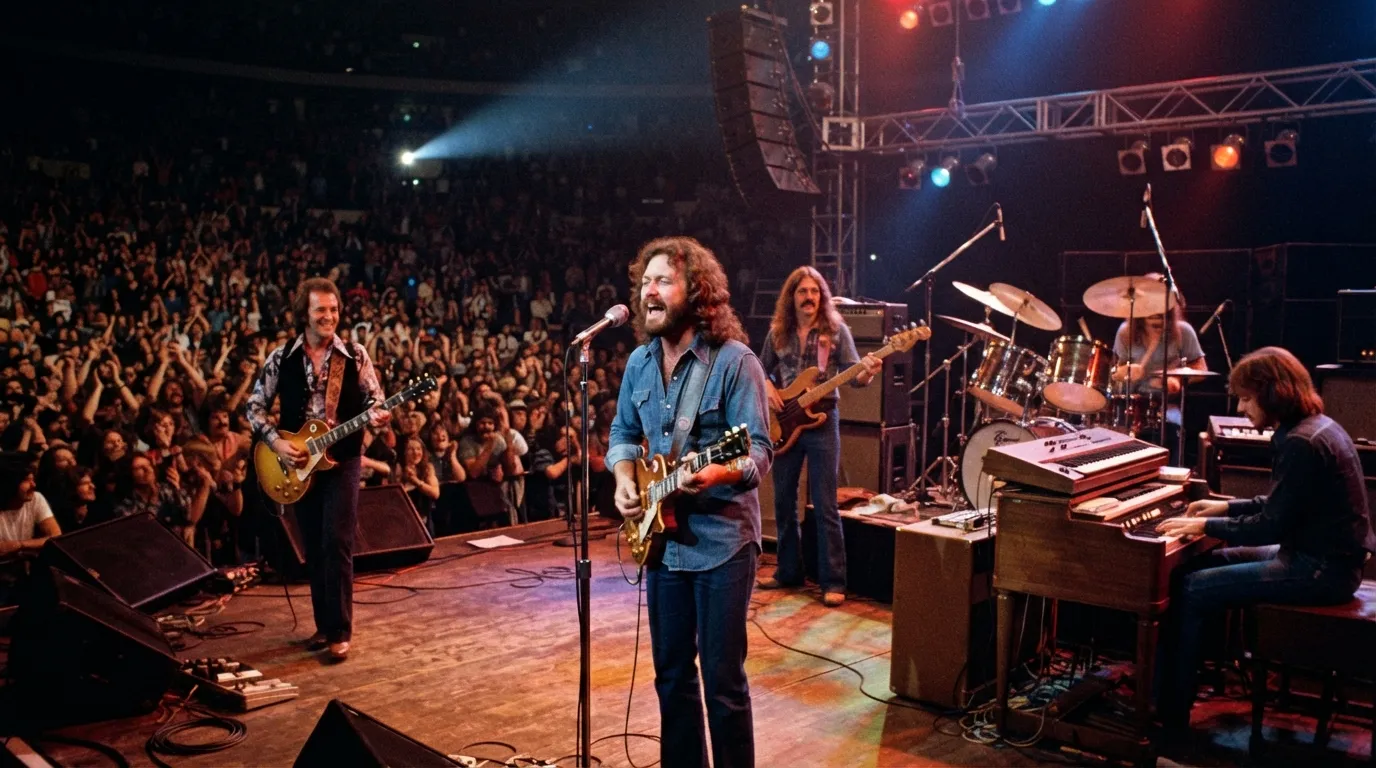
The Doobie Brothers started as a biker-bar boogie band and ended up a polished hit factory. “Listen to the Music” and “Long Train Runnin’” defined their early sound, and then Michael McDonald’s soulful voice took them in a smoother direction. “What a Fool Believes” became one of the late decade’s defining songs.
They were a staple of American arenas throughout the 1970s, a band that fans of very different styles could agree on.
But the group had changed so much that the original spirit was hard to find. In 1982 the Doobie Brothers staged a farewell tour and called it a day. They came back later in the decade, but the ending was a clean, honest goodbye rather than a blowup.
#10 – Blondie
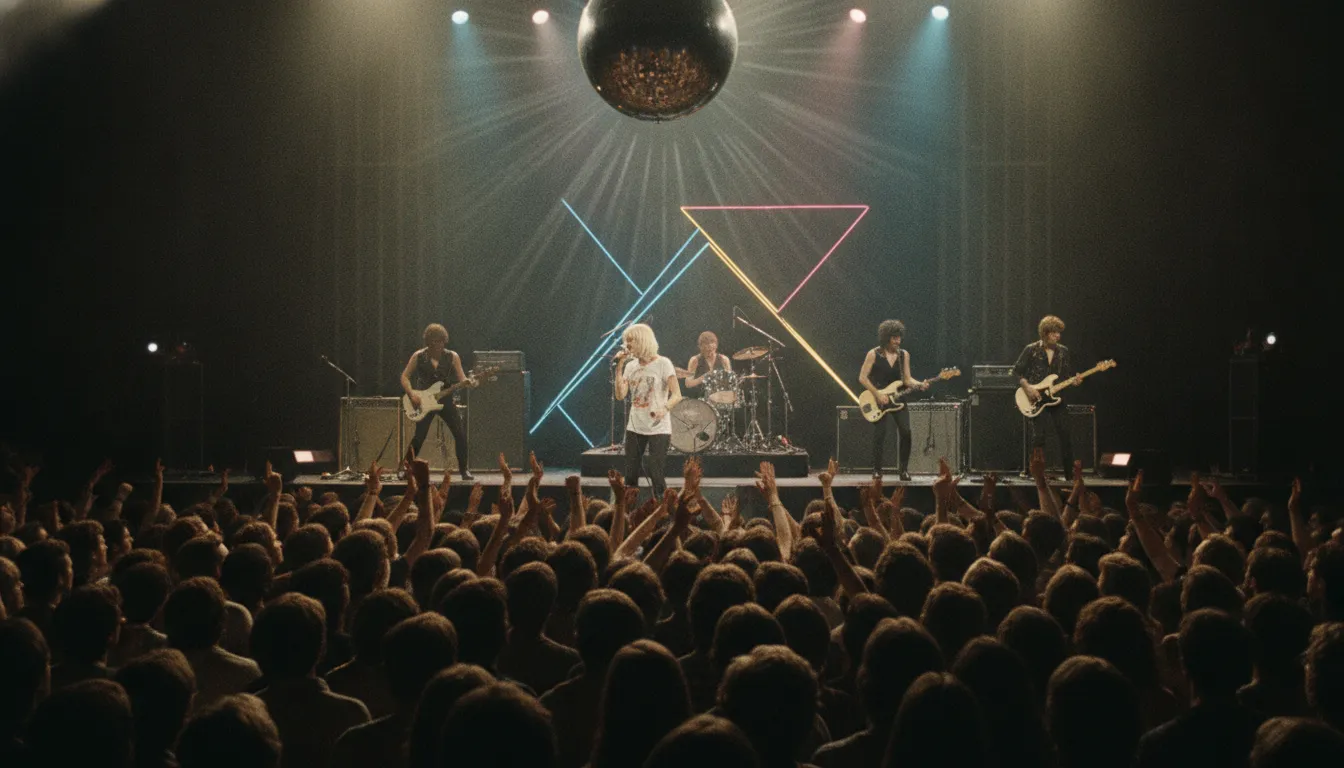
Blondie never stayed in one box long enough for anyone to close it. They emerged from New York’s CBGB scene as a punk-adjacent band and turned into a pop phenomenon with “Heart of Glass,” a disco-flavored hit from 1979’s Parallel Lines. Debbie Harry became one of the era’s most recognizable faces.
The band’s late-1970s success took them from tiny downtown clubs to big halls, and the range of their sound kept widening with hits like “Call Me.”
The pace was exhausting, though. After 1982’s The Hunter disappointed, the group broke up. Blondie reunited in the late 1990s and found that people still wanted “Heart of Glass,” which is a pretty good problem to have.
#9 – Talking Heads
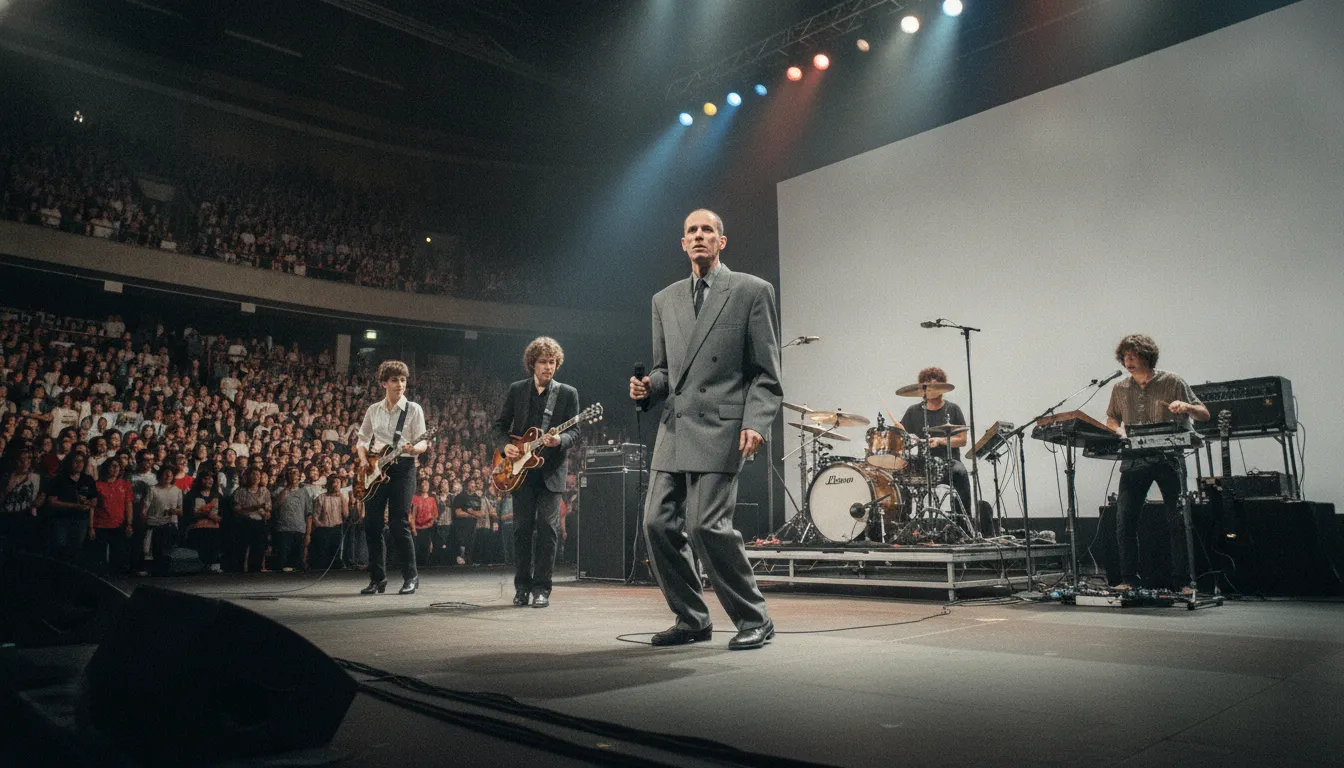
Talking Heads began in 1975 as three art-school friends playing CBGB in New York, a band nobody could quite categorize. David Byrne twitched and stared like a man watching the audience from a different planet, yet the rhythms underneath could make anyone move.
The sound grew bigger and more rhythmic with 1980’s Remain in Light. By the mid-1980s, the band was filling large halls, and the concert film Stop Making Sense captured the peak, including Byrne’s famously oversized suit.
Behind the scenes, Byrne increasingly wanted to go his own way. By 1991 his departure was public, and the band’s classic era was over. The three other members, Tina Weymouth, Chris Frantz, and Jerry Harrison, were left to wonder how the strangest band in the arena had slipped away.
#8 – The Clash
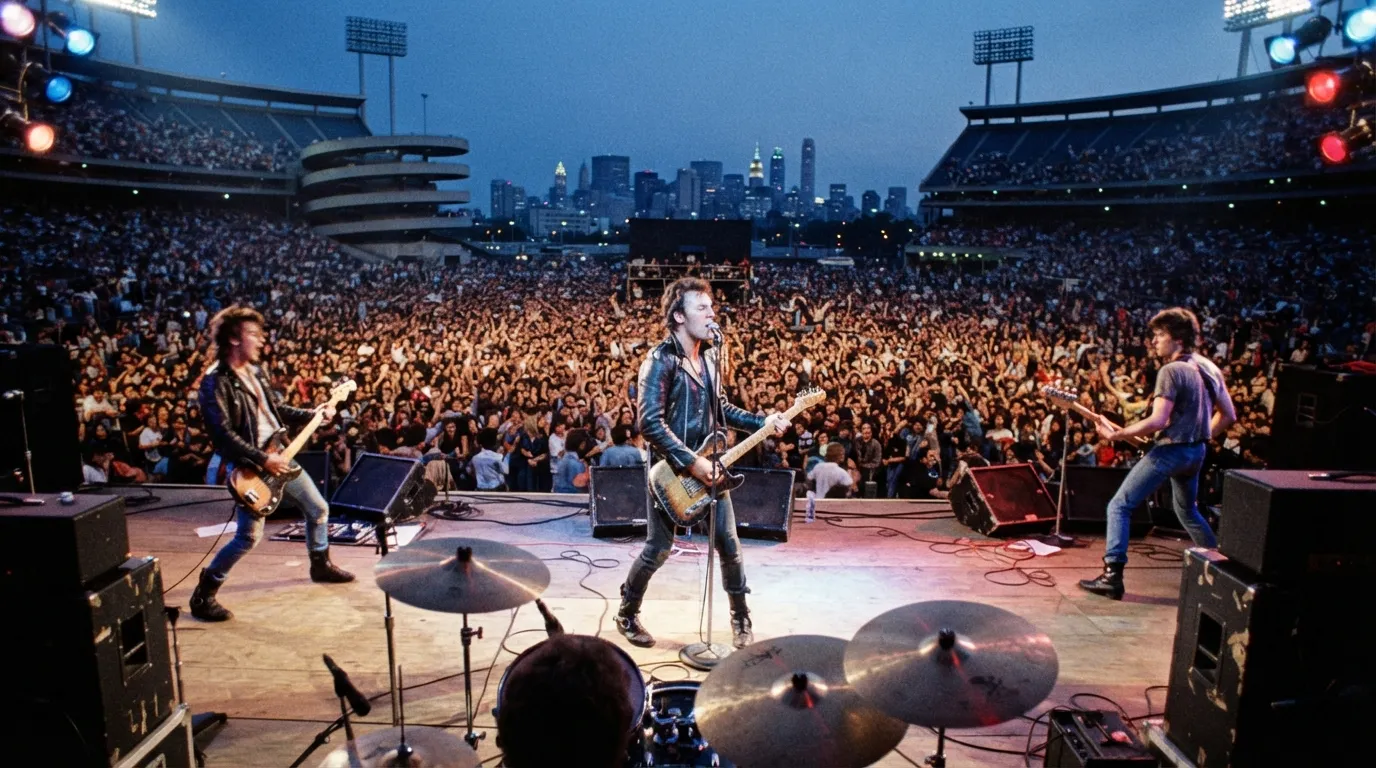
The Clash didn’t just play punk; they treated it like a mission. Joe Strummer and Mick Jones wrote songs about unemployment, racism, and rebellion, and then wrapped them in reggae, rockabilly, and pop. London Calling arrived at the very end of 1979 and expanded what a punk band could be.
Their reach kept growing. In 1982 they opened for The Who in huge stadiums, including Shea Stadium in New York.
But the band was fraying. Drummer Topper Headon left in 1982, and Strummer pushed Jones out in 1983. The group limped on until 1986, a sad end for a band that had once seemed as if it could change everything. The original four never played together again as the Clash.
#7 – Sex Pistols
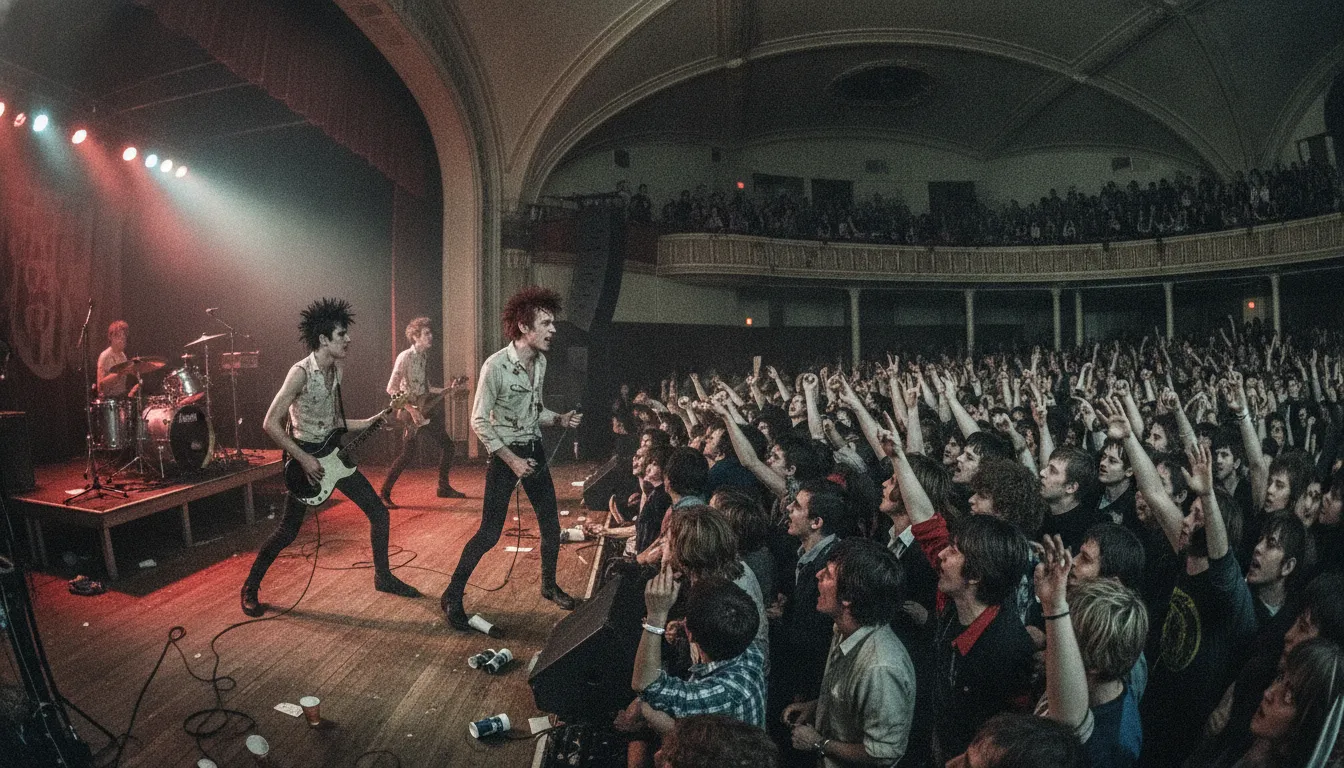
The Sex Pistols lasted barely over two years, and still shook the music world. They released a single studio album, Never Mind the Bollocks in 1977, and drew outrage and headlines nearly everywhere they went. Their shows were events, not just concerts.
Their final show came in January 1978 at Winterland in San Francisco, a big ballroom, at the end of a chaotic U.S. tour. Johnny Rotten walked off the stage after a parting remark that sounded more like an accusation:
Ever get the feeling you’ve been cheated?
Johnny Rotten
The band was finished within days. Bassist Sid Vicious died in early 1979. The Pistols reunited much later, but the original blaze was over before most bands had even found their sound.
#6 – ABBA
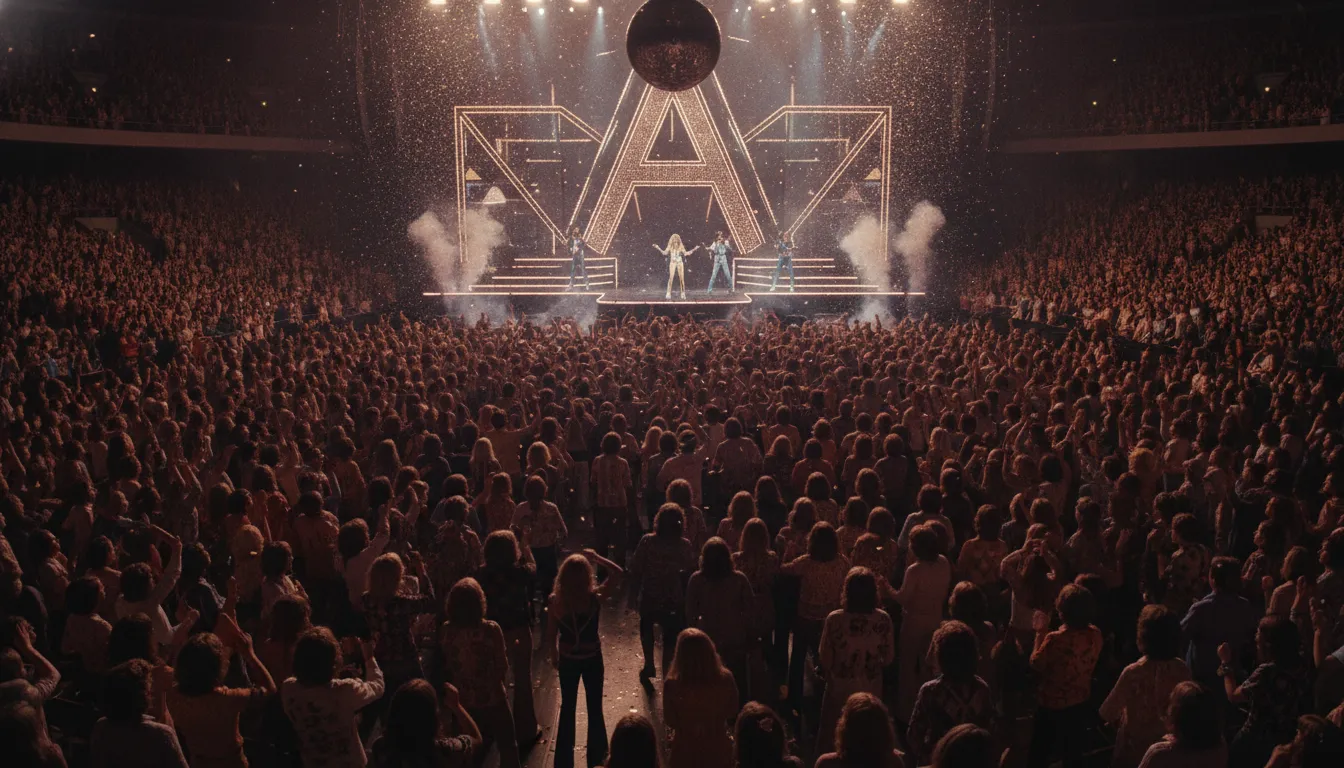
Nobody expected four Swedes to take over pop music, yet that’s what ABBA did after winning Eurovision in 1974 with “Waterloo.” “Dancing Queen” followed in 1976, and the band kept turning out hits so polished they could survive any language.
Their live shows grew into major productions, including a 1979 tour of North America and Europe. But the real drama was happening off stage. Björn Ulvaeus and Agnetha Fältskog divorced, then Benny Andersson and Anni-Frid Lyngstad did too, and the band kept recording through the pain.
By 1982, ABBA had gone on indefinite hiatus. For decades they resisted reunions, then returned in 2021 with a new album, Voyage, and a digital concert in London. Not bad for a band that had gone quiet.
At a Glance
- 1974: “Waterloo” wins Eurovision.
- 1976: “Dancing Queen” lands.
- 1979: A North American and European tour.
- 1982: Indefinite hiatus begins.
- 2021: Voyage ends the long silence.
#5 – The Runaways
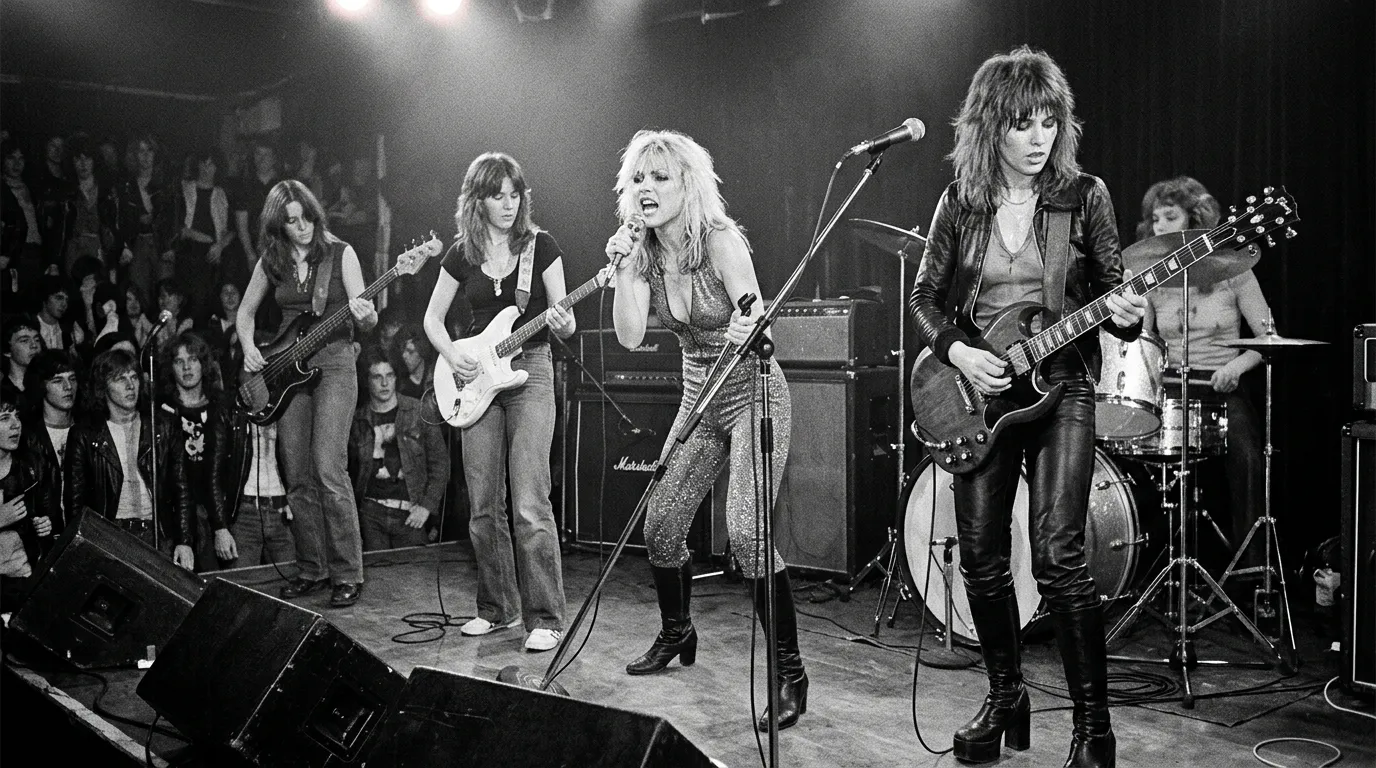
In 1975, five teenage girls in Los Angeles set out to prove that rock wasn’t a boys’ club. Producer Kim Fowley helped put The Runaways together, and the group, which included Joan Jett, Lita Ford, and Cherie Currie, burst out with “Cherry Bomb.” Their stage show was loud, sweaty, and defiant.
They were never mainstream hit makers in the U.S., but they were huge in Japan, where they played big venues like Tokyo’s Budokan in 1977.
Lineup changes, management disputes, and exhaustion tore them apart. The Runaways split in 1979, only about four years after they began. Their influence far outlasted their run, and Jett’s later solo career became the proof.
#4 – The Jam
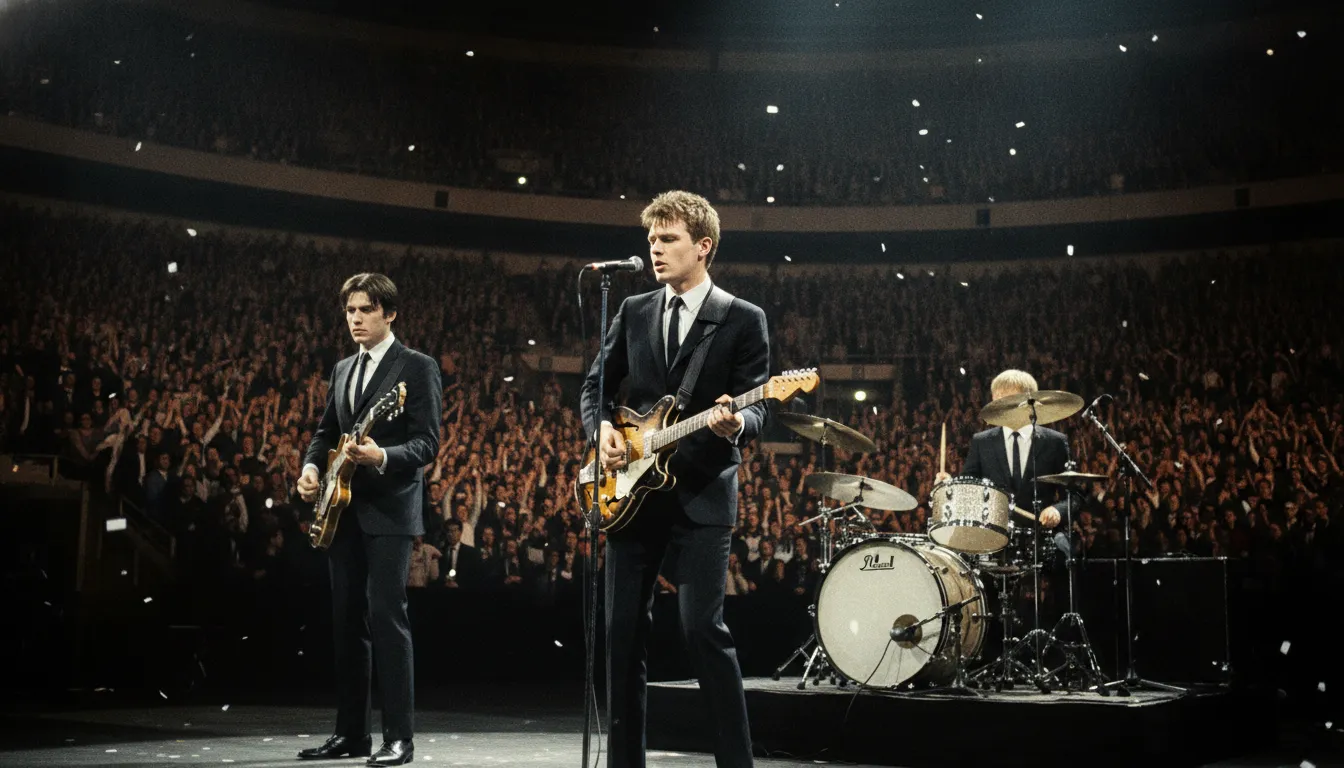
The Jam wore sharp suits in a scene full of safety pins. Paul Weller, Bruce Foxton, and Rick Buckler arrived in 1977 with a punk-fueled mod revival, then spent the next five years writing songs that grew sharper and more complicated, like “Down in the Tube Station at Midnight.”
By 1982 they were one of the biggest bands in Britain. “Town Called Malice” went to No. 1, and the group played large halls including Wembley Arena.
That was exactly when Weller decided to walk away. He told his bandmates he felt the group had gone as far as it could. The Jam broke up at its peak in late 1982, and Weller moved on to The Style Council. Fans were stunned, and some still haven’t forgiven him.
#3 – The Police
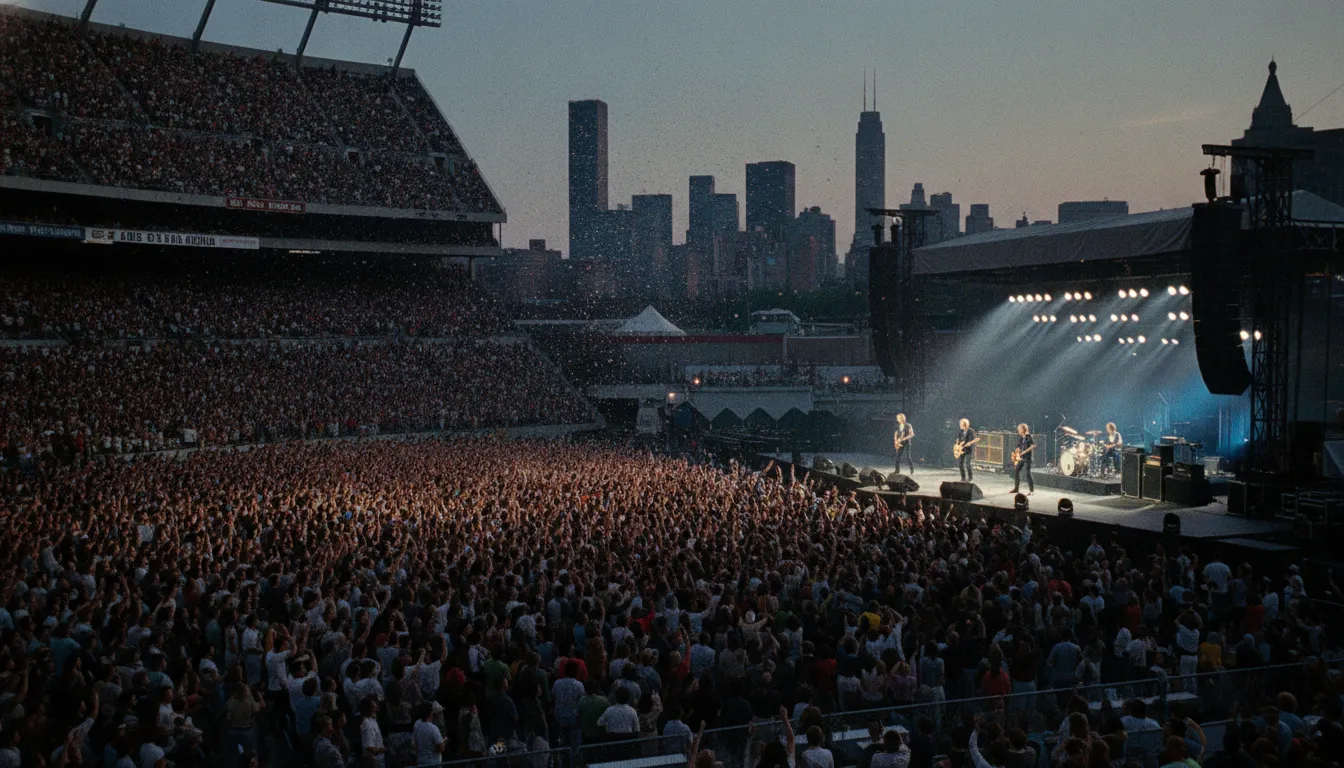
The Police sounded like three people pulling in three different directions, and somehow it worked. Sting’s voice, Andy Summers’ shimmering guitar, and Stewart Copeland’s twitchy drums combined reggae and rock into something fresh. They started out in 1977 and became global stars by the early 1980s.
The peak arrived with 1983’s Synchronicity, which included “Every Breath You Take.” Their tour filled stadiums, including Shea Stadium in New York.
But the friction had been building for years. After the tour, the band went quiet, and Sting launched his solo career in 1985. They never formally announced a split, and they reunited for a huge world tour in 2007 and 2008. The tension, it turns out, hadn’t gone anywhere.
#2 – Styx
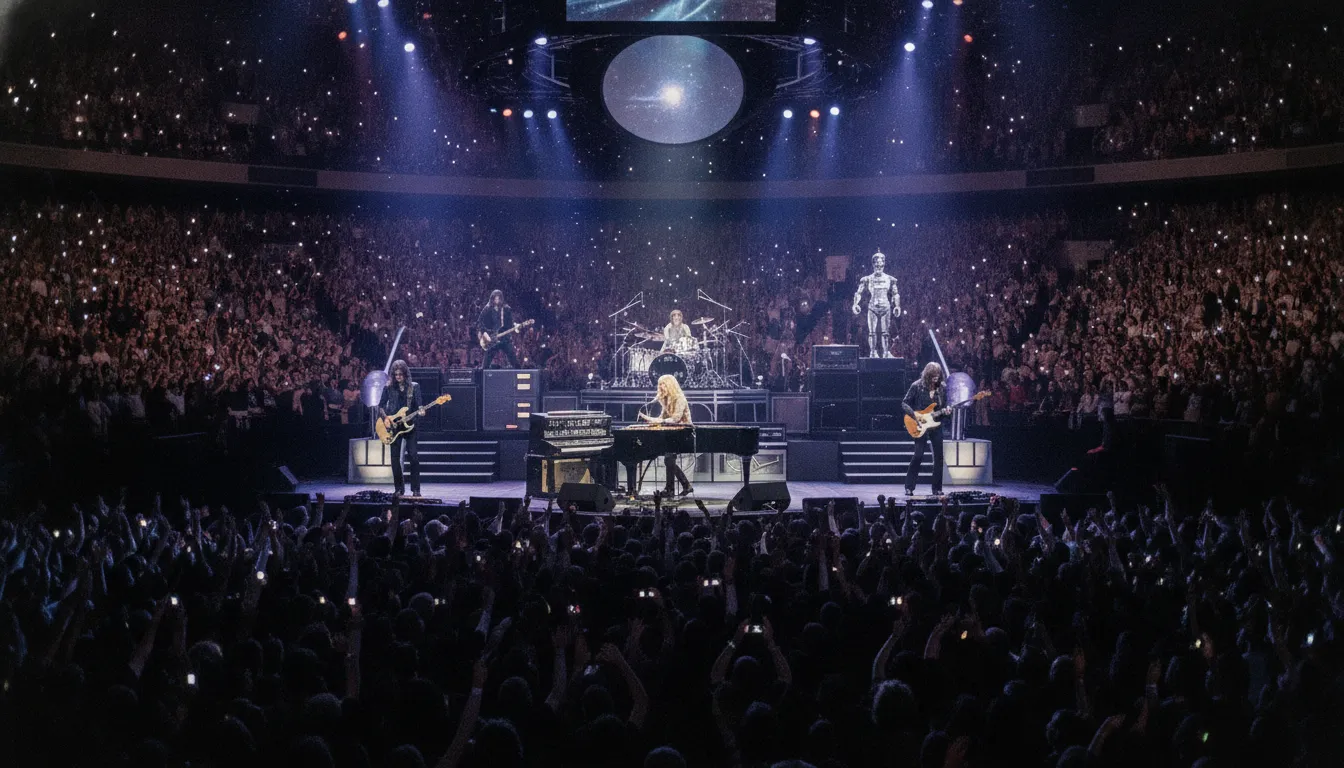
Styx specialized in rock operas for stadiums. Dennis DeYoung’s keyboards and soaring vocals mixed with the guitars of James Young and Tommy Shaw on The Grand Illusion and Pieces of Eight, and songs like “Come Sail Away” became arena-rock standards. In 1981, Paradise Theatre hit No. 1.
Then DeYoung pushed the band toward a full theatrical concept with 1983’s Kilroy Was Here, built around the hit “Mr. Roboto.” Shaw and Young weren’t convinced. The tour became a fight about what Styx was supposed to be.
The band split in the mid-1980s. They regrouped later without that same unity, and DeYoung eventually left for good. It’s a rare breakup caused by a band’s own ambitions.
#1 – Led Zeppelin
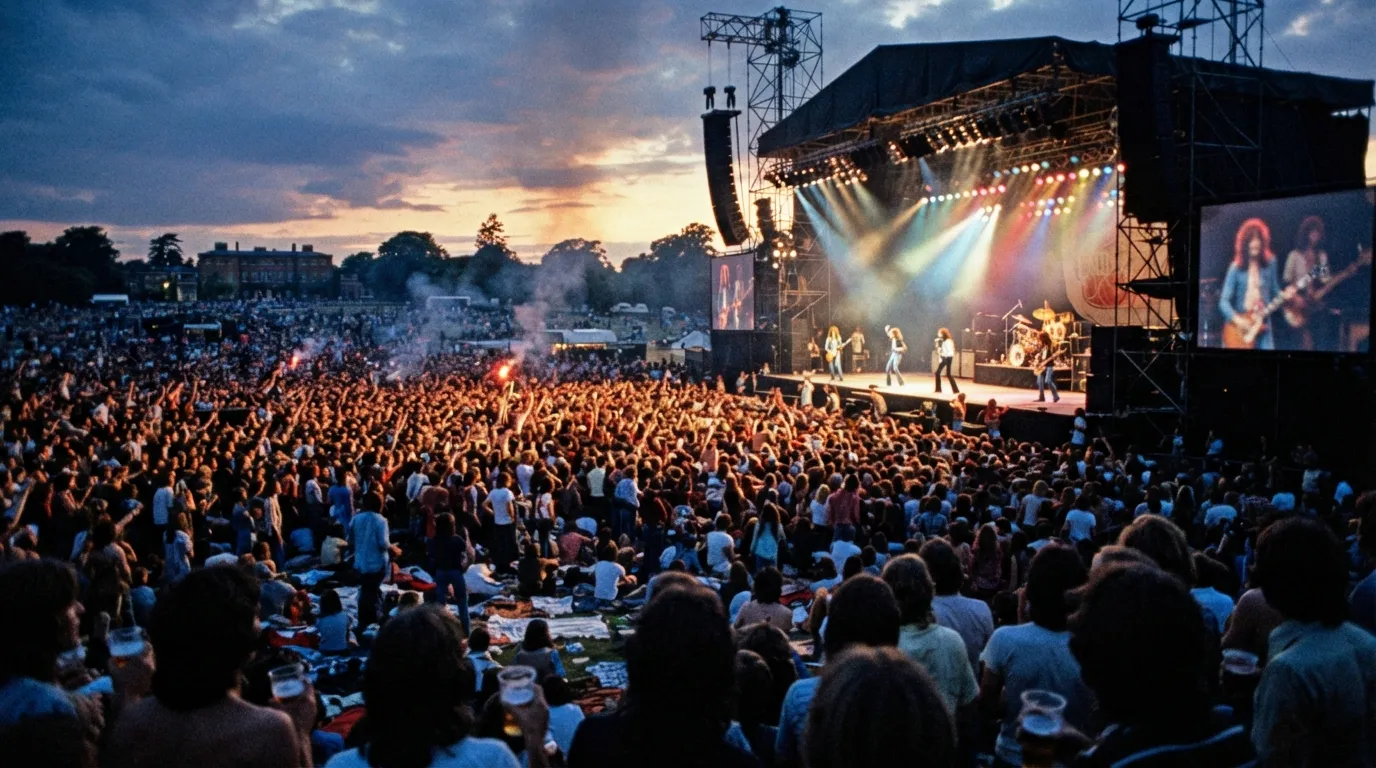
Led Zeppelin didn’t just fill arenas; they changed the scale of what a rock concert could be. In 1973, their show at Tampa Stadium drew a crowd that topped the Beatles’ record at Shea Stadium. Jimmy Page’s riffs, Robert Plant’s wail, John Paul Jones’ bass, and John Bonham’s earthquake drumming made everything feel bigger than life.
Their shows stretched into marathon improvisations, and in 1975 they played five nights at London’s Earls Court. In 1979, they played Knebworth to a massive crowd.
Why It Stands Out
- 1973: Tampa Stadium sets a new attendance mark for a single-act show.
- 1975: Five straight nights at Earls Court.
- 1979: Knebworth draws a massive crowd.
- September 1980: Bonham dies and the band ends.
Then, in September 1980, Bonham died, and the band announced it would not continue without him. Zeppelin has reunited only for rare one-off performances, including a 2007 show in London with Bonham’s son Jason on drums. But the group itself ended the moment its heartbeat stopped.
CEO-Co-Founder
