

You picture a moving hotel room: lights off, curtain drawn, eight hours gone in a blink. That’s the promise on the booking page, and it’s why the details below are worth your next few minutes.
But a handful of operator rules shape the whole night, from your berth number to your bag to where the bus will actually stop. Most of them show up only after the cabin goes dark. The first one can catch you at the gate.
#16 – Your Berth Number May Change at Boarding
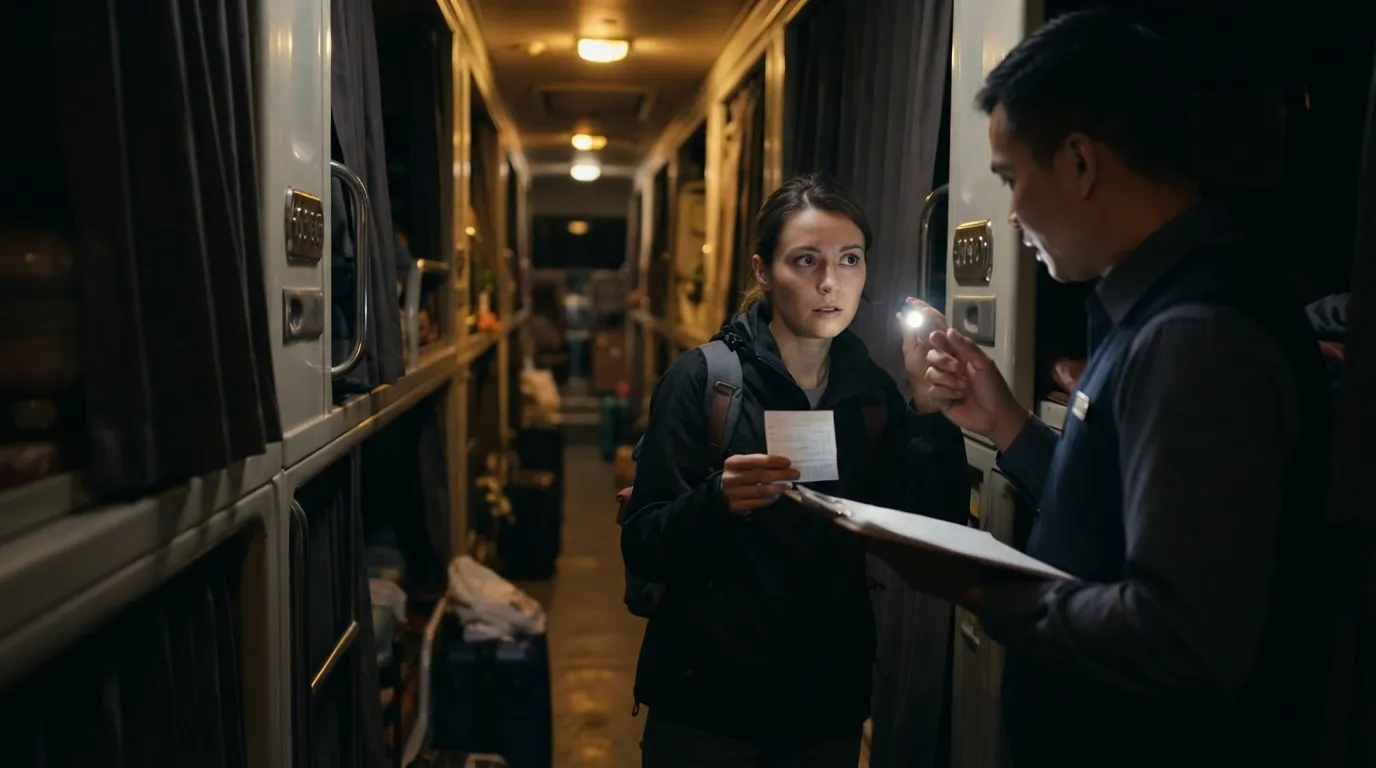
Many operators reserve the right to adjust berth assignments at boarding, whether for group seating, last-minute changes, or loading needs. The number on your ticket may not be the final word.
Ask staff to confirm your berth at the gate, then check the tag again once you’re aboard. Keep a small light handy so you can read it after the lights dim without waking anyone.
But the next rule gets enforced right at the door…
#15 – Oversized Bags May Be Refused Before You Even Board
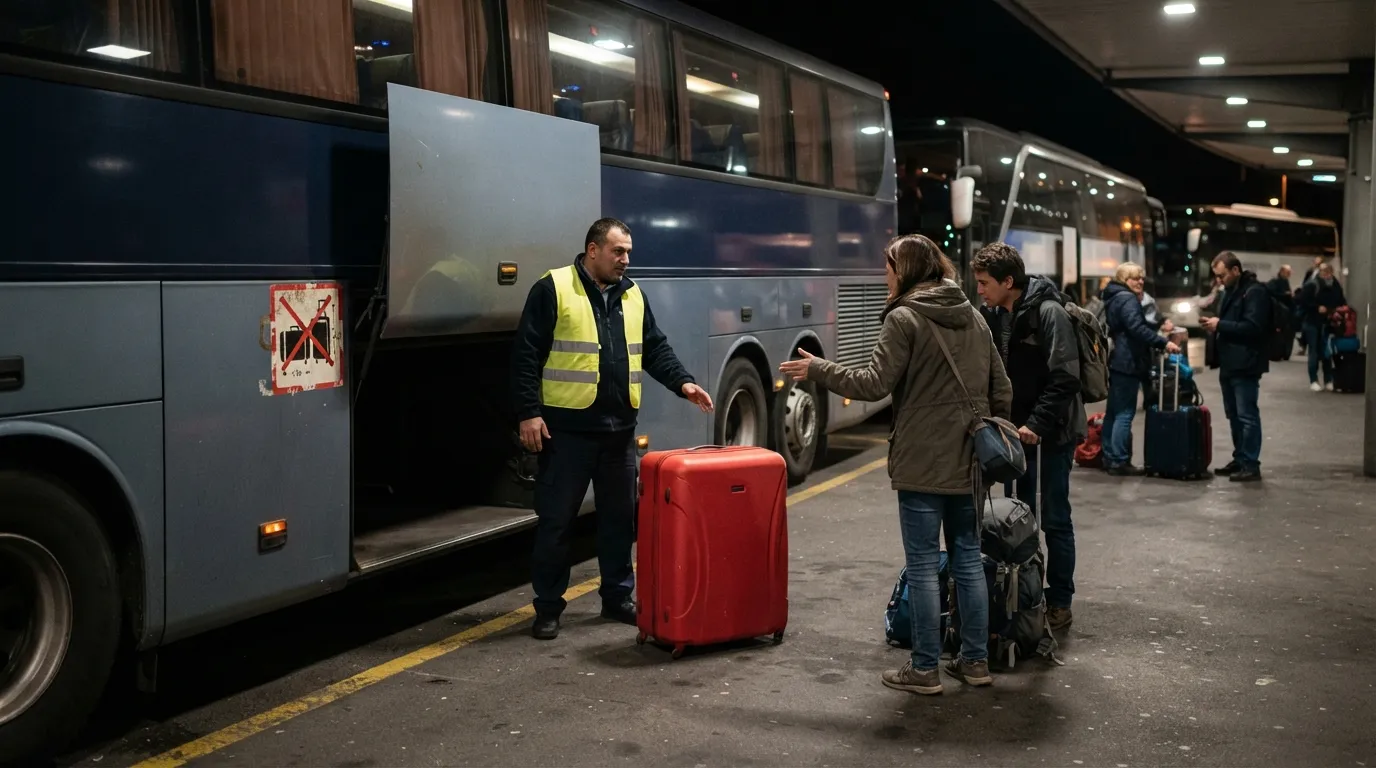
Sleeper buses have limited storage, often under the berths or in a designated hold, and many operators publish size and weight limits. A bag that doesn’t fit may be turned away or charged extra, depending on the company.
Measure and weigh your bag before you leave for the terminal. Pack a small day bag for anything you’ll want within reach once you’re in your berth.
But the next one decides when you can use the restroom…
#14 – Rest Stops Follow the Driver’s Plan, Not Your Bladder
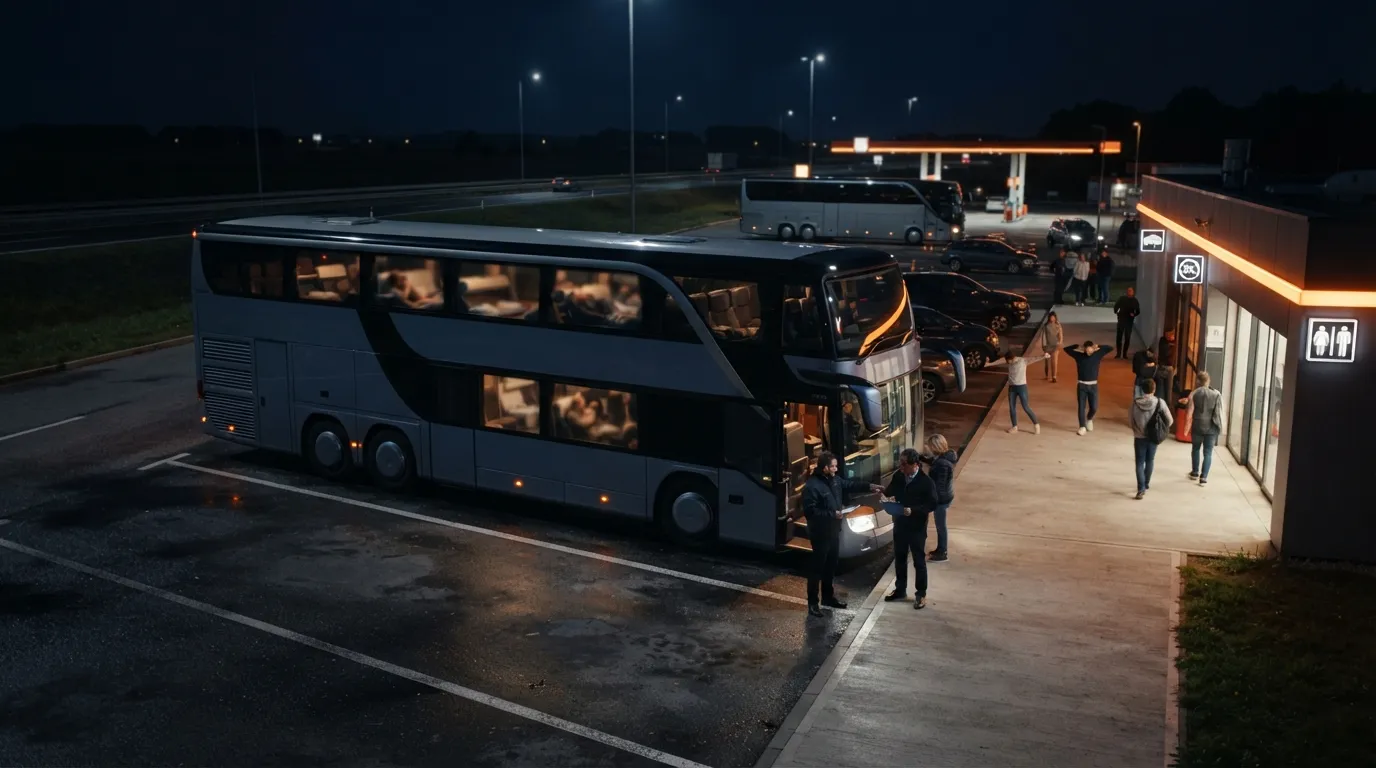
Overnight routes stop at set points for fuel, driver changes, and meal or restroom breaks, and the crew follows that plan rather than individual requests. Breaks are often short, and some operators tell passengers exactly when to be back on board.
Ask at boarding when the first stop is expected and set a phone alarm for return times. Use the restroom early and carry water so a long stretch doesn’t leave you stuck.
But some buses solve that problem differently…
#13 – Not Every Sleeper Bus Has a Toilet Onboard
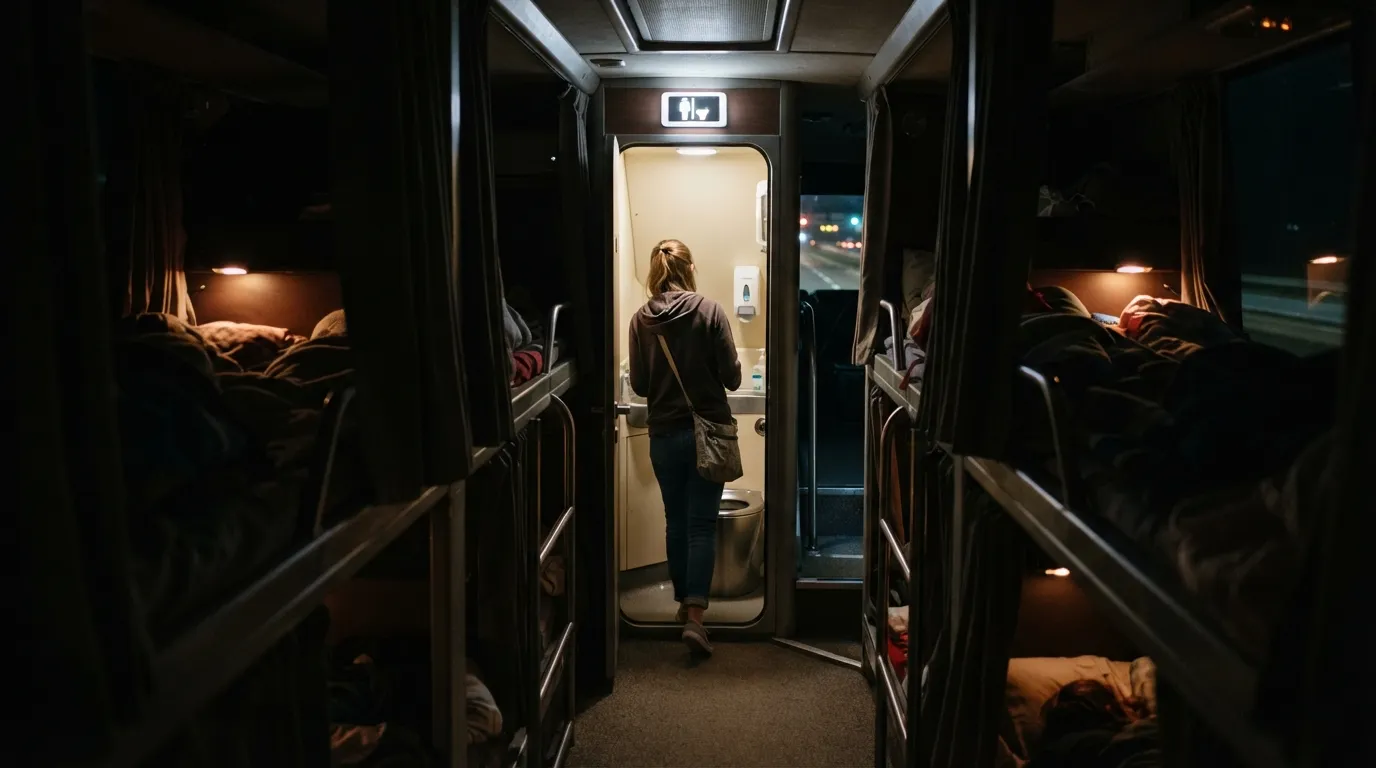
Some sleeper buses have an onboard restroom, and many don’t. Those that do may restrict its use while the bus is moving.
Check your operator’s listed facilities before you book instead of assuming. If there’s no toilet, go right before boarding, ease off drinks late in the evening, and keep tissues and hand sanitizer in your day bag.
Quick Compare
- Toilet onboard: check whether it can be used while the bus is moving.
- No toilet onboard: your only breaks are the scheduled stops.
- Either way: sanitizer and tissues in your day bag cost almost nothing.
And then there’s the rule about your shoes…
#12 – Your Shoes May Have to Come Off Before You Climb In

Some sleeper operators ask passengers to remove shoes before entering a berth, and some provide a bag or small shelf for them. Policies differ, so look for posted notices or ask the crew.
Bring clean socks and a cloth or plastic bag so your shoes stay out of your bedding. Put them somewhere you can find them in the dark when it’s time to get off.
But the temperature is the one people regret most…
#11 – The Cabin Can Get Cold, and You May Not Control It

Air conditioning is typically managed by the driver or crew, and individual berths may have little or no vent control. Overnight cabins can run cooler than you expect, even on a route that starts in warm weather.
Pack a light jacket, warm socks, and a scarf or wrap you can use as a blanket. Check whether your operator supplies blankets, since that varies.
Which brings up what’s actually on the mattress…
#10 – Bedding Is Included on Some Buses and Missing on Others
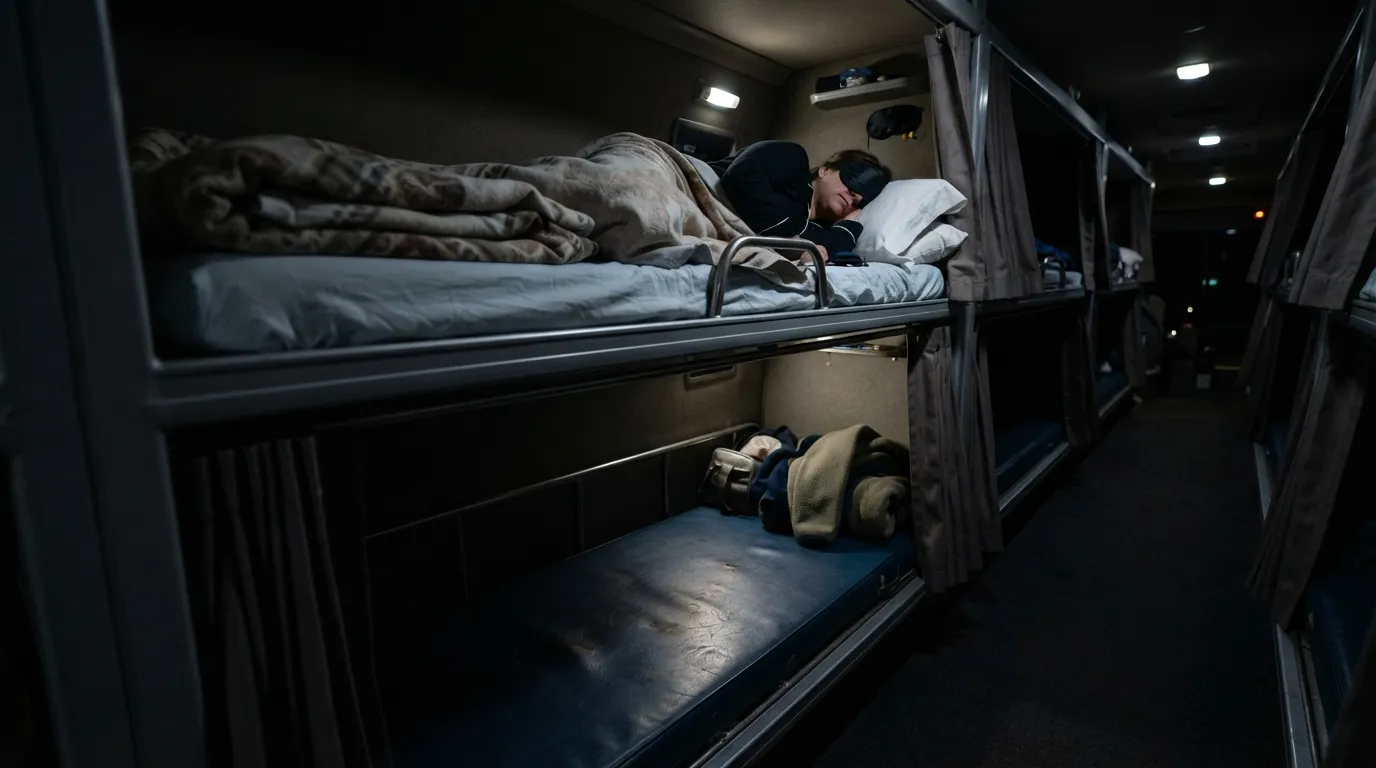
Some operators provide a pillow and blanket. Others expect you to bring your own, and a berth may be little more than a mattress. Your booking page or the operator’s amenities list should say which applies to you.
Don’t count on bedding unless it’s listed. A compact travel pillow, an eye mask, and earplugs are small additions that make a big difference once the cabin goes quiet.
But even a good night’s setup can fail without this…
#9 – Charging Ports and Wi-Fi Aren’t Guaranteed
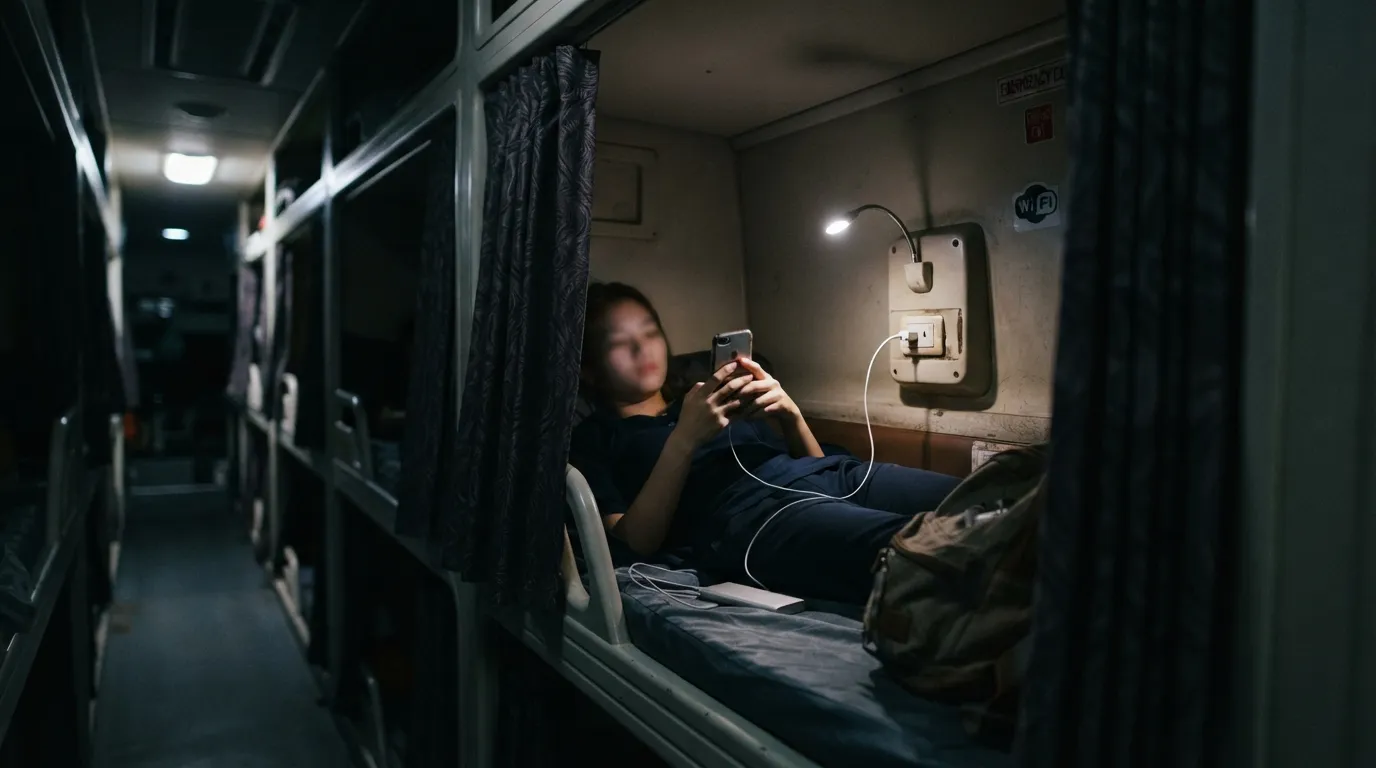
Some operators list charging points and Wi-Fi as amenities, but a listed feature may not be on every bus or working the whole trip. Don’t plan your night around either one.
Bring a charged power bank, and download tickets, maps, and entertainment before you leave. Keep your phone, wallet, and documents in a small bag inside your berth, not in the luggage hold, where you can’t reach them until arrival.
Now for the part that starts well before departure…
#8 – Boarding Starts Earlier Than Departure Time

Operators usually ask passengers to arrive ahead of departure for check-in, ID checks where required, and luggage loading. Buses generally leave on schedule, so cutting it close is a gamble.
Find the reporting time in your confirmation, not just the departure time. Arrive early, carry the ID your operator requires, and keep your ticket ready on your phone or on paper.
Worth Knowing
- The reporting time and the departure time are often two different things.
- Check-in, ID checks, and luggage loading all happen before the bus rolls.
- A screenshot of your ticket still works if your signal drops at the gate.
- Late arrivals risk missing a bus that leaves on schedule.
And if your route crosses a border, the night gets even less predictable…
#7 – Border Checks Can Interrupt Your Sleep
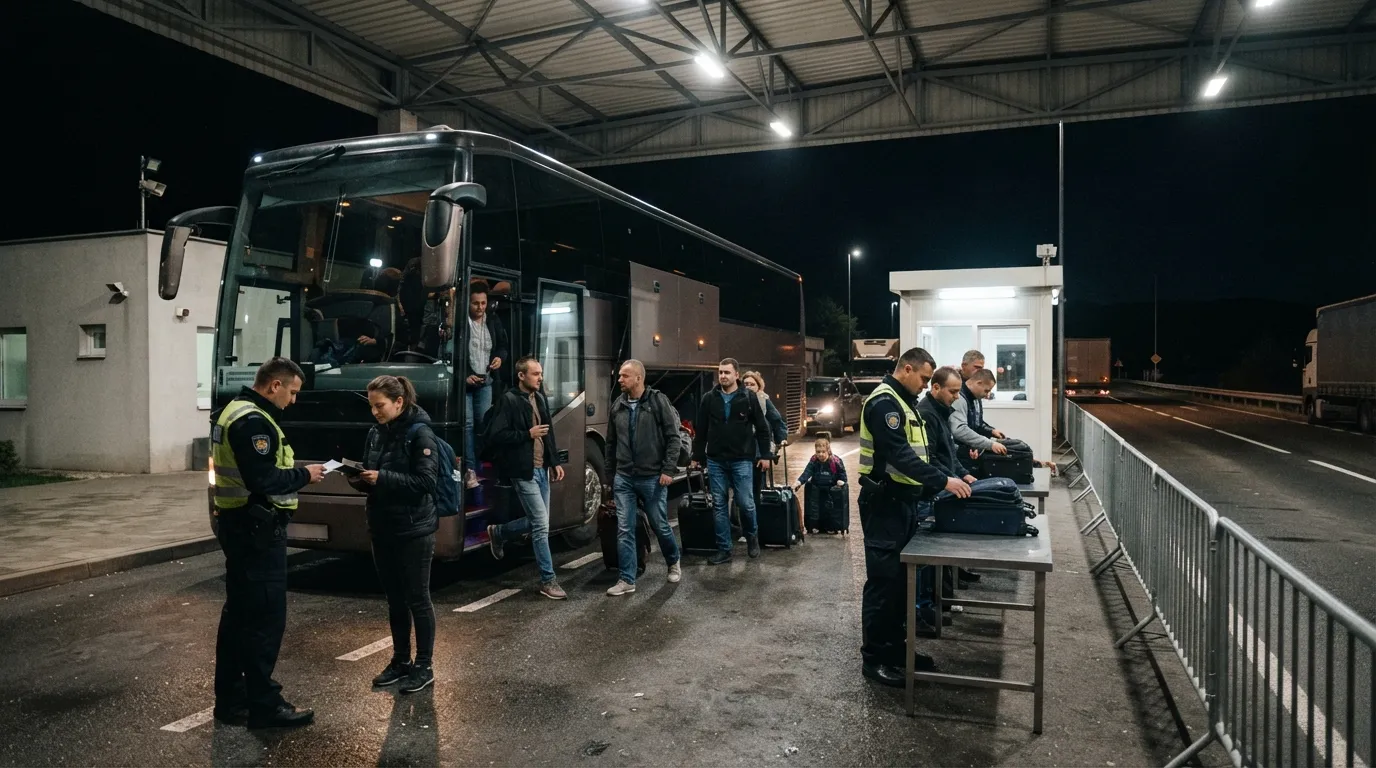
On international routes, crossings can mean waking up, stepping off the bus, or opening luggage for officers. Exact requirements depend on the countries involved and the operator.
Keep your passport and any visa or entry documents in an easy-to-reach pocket, not buried in a bag in the hold. Check entry rules before booking, and ask the crew how the crossing will be handled.
But the next mix-up starts at the booking screen…
#6 – A Sleeper Ticket Isn’t the Same as a Seat Ticket
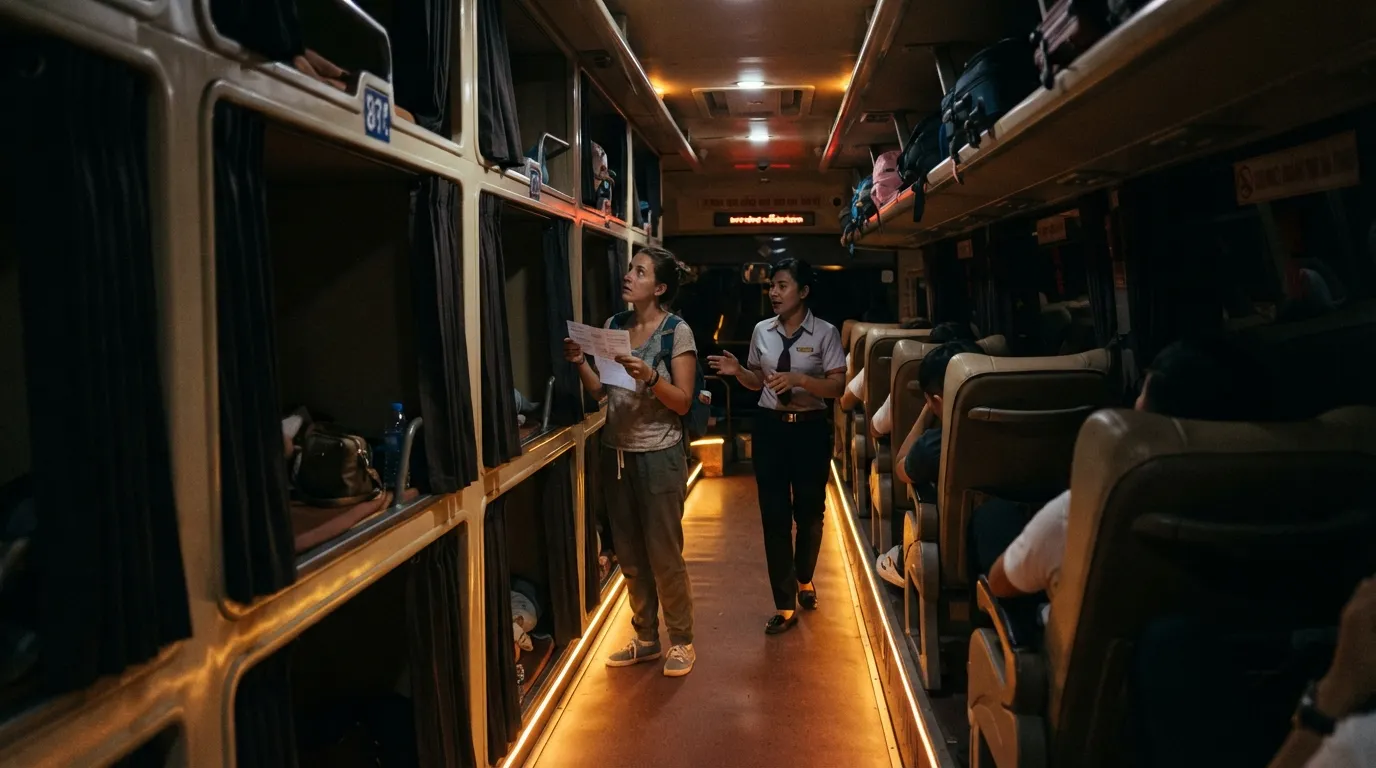
Many sleeper buses sell both berth and seat categories, and they aren’t interchangeable. A sleeper ticket means lying down. A seat ticket usually doesn’t.
Check the category on your booking and study the seat map during checkout. Some operators also sell double or shared berths, so confirm whether yours is single or double, especially if you’re traveling alone.
And once you find your berth, size becomes the next surprise…
#5 – Berths Are Smaller Than Most People Expect
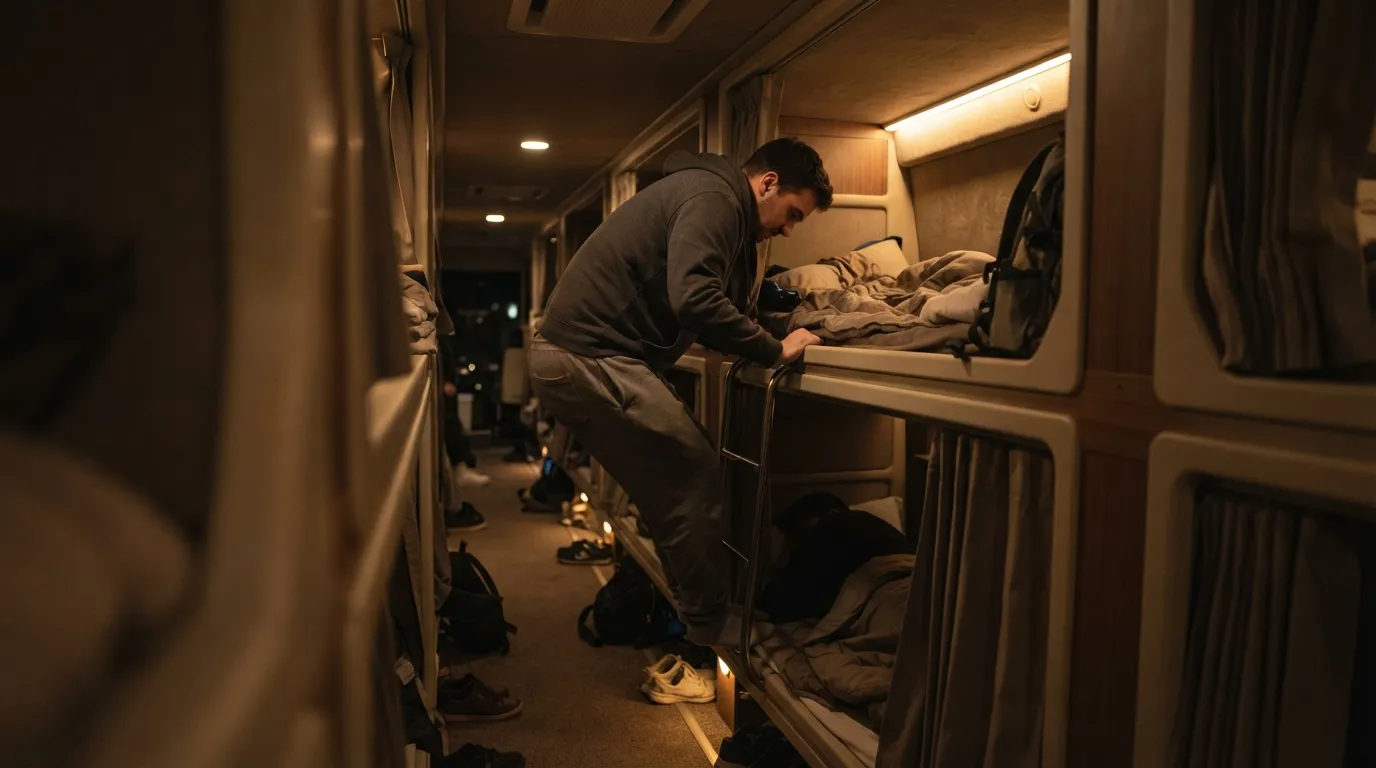
Berths are compact, and some operators publish dimensions or height limits. Taller travelers may find them tight, and climbing into an upper berth can be awkward in the dark.
Check any posted measurements before you book. If you can choose, consider a lower berth for easier access, and wear loose, comfortable clothes you can actually sleep in.
At a Glance
- Before booking: look for posted dimensions or height limits.
- Lower berth: easier to get in and out of in the dark.
- Upper berth: expect a climb, so travel light inside.
- What to wear: loose layers you can sleep in.
But getting out of that berth can be restricted too…
#4 – Moving Around the Cabin Once the Bus Is Rolling May Be Restricted

Many operators ask passengers to stay in their berths or seats while the bus is moving, and some berths have a strap or side barrier. Wandering the aisle in the dark can be limited for safety reasons.
Ask the crew about movement rules at boarding. Get everything you need into your berth before the lights dim, so you aren’t climbing around for a charger at midnight.
Then there’s the question of snacks…
#3 – Food, Drink, and Smoking Rules Are Often Stricter Than You Think
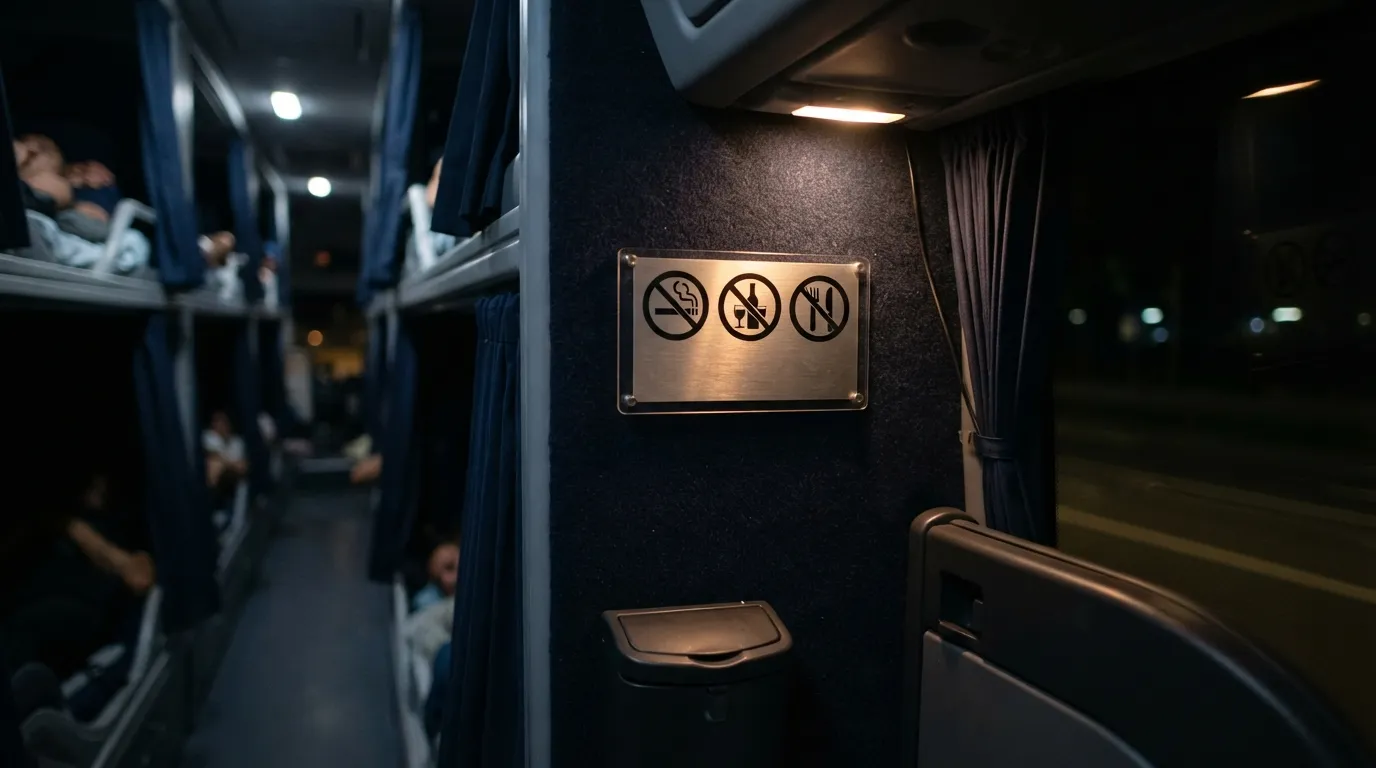
Many operators limit eating onboard, especially strong-smelling food, and some ban alcohol or smoking outright. These rules usually appear in booking terms or posted notices.
Plan meals around the scheduled stops. If snacks are allowed, pack dry, low-odor ones in a sealed bag, and keep your trash with you until you can dispose of it.
But the biggest curveball comes when the night ends…
#2 – Arrival Time and Drop-Off Point Can Differ From Your Plan
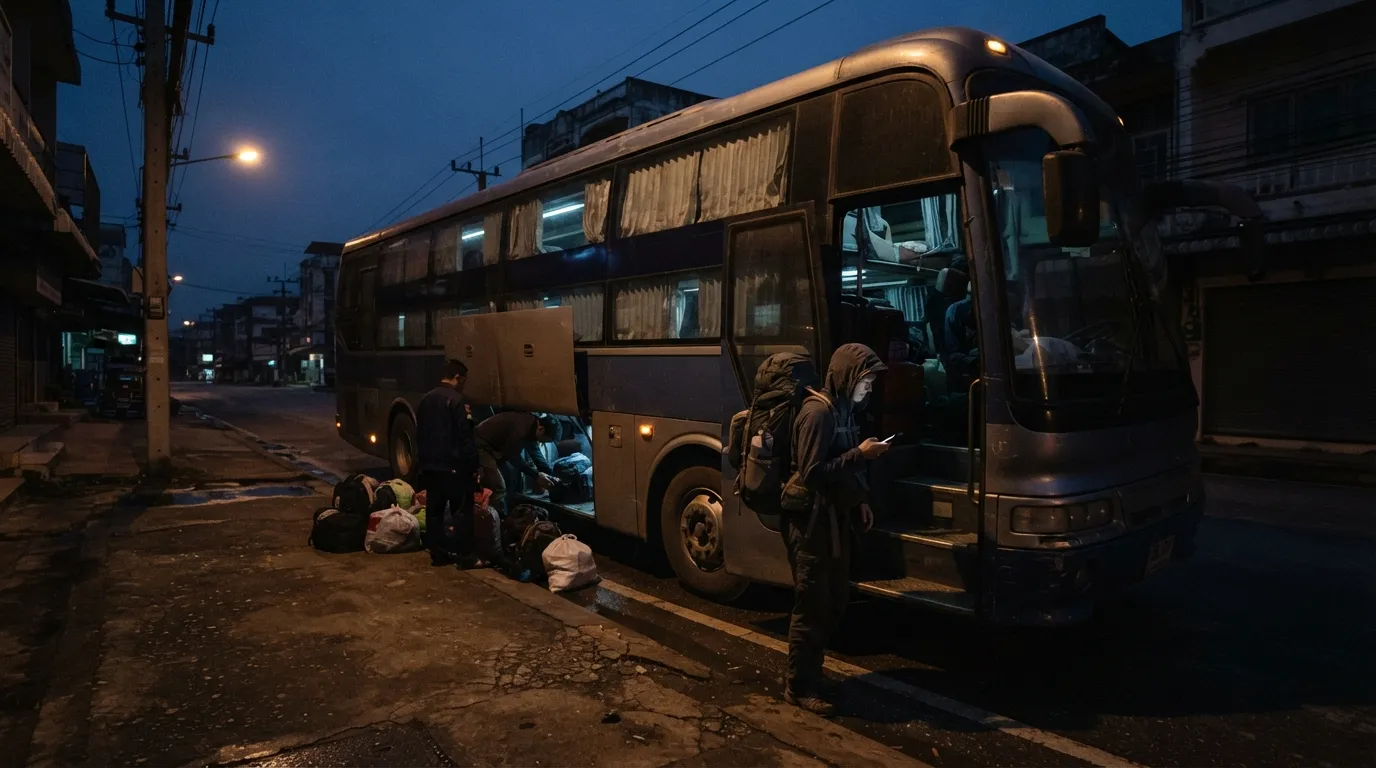
Overnight buses can arrive earlier or later than scheduled, and the drop-off point isn’t always the main terminal. Crew may wake passengers when you arrive, whatever the hour.
Check the drop-off location in your booking and save the map offline. Line up onward transport ahead of time, and have a backup plan in case you arrive before anything has opened.
Fast Facts
- Arrival can be earlier or later than the listed time.
- The drop-off may not be the main terminal.
- Offline maps help when your signal is weak.
- Have a plan for a pre-dawn arrival when nothing is open.
And the last one is about the moment the lights go out…
#1 – The Best Preparation Happens Before the Lights Dim
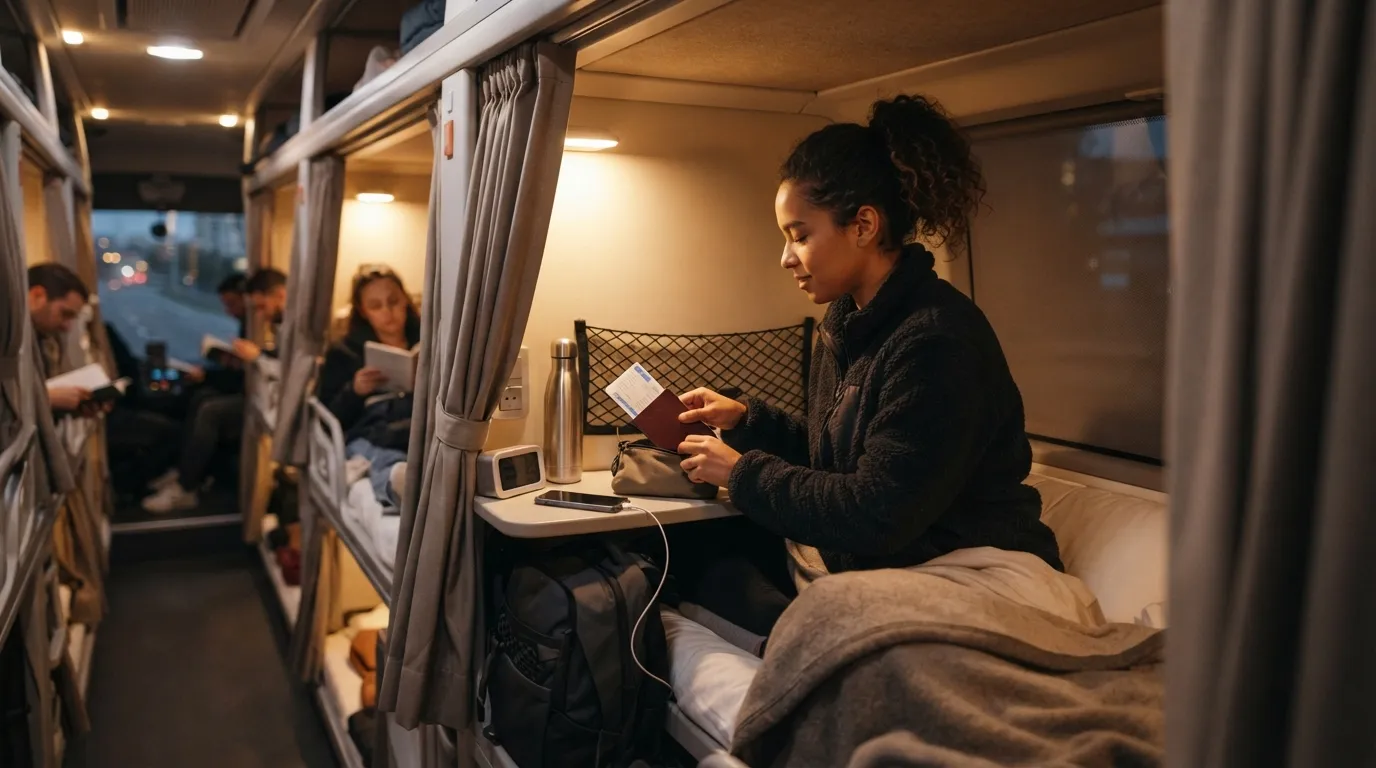
Many crews give instructions before dimming the cabin, and after that, announcements are often limited. Whatever you forgot is now harder to fix in a dark, moving bus.
Before lights out, keep your ticket, ID, water, charger, and jacket within reach, and set an alarm for your arrival. Ask how wake-ups are handled. The night goes smoothest for the people who did their thinking at the gate.
CEO-Co-Founder