
- 15 Banned Books That Became School Staples - October 22, 2026
- 16 Sitcoms That Replaced Their Lead Actor and Stayed on Air - October 22, 2026
- 17 Things Nobody Tells You About Airport Overnight Stays Until the First Delay - October 22, 2026
You pictured dim lights, a gentle rocking, and a quiet berth where sleep just happens. That picture is the whole reason people book overnight trains, and a few repeat behaviors can wreck it for an entire shared carriage.
Operator rules and etiquette guidance name these habits again and again. Some seem tiny until you’re the one lying awake, and the worst offender isn’t a single habit at all.
#18 – Dragging Oversized Luggage Through Narrow Aisles at Boarding
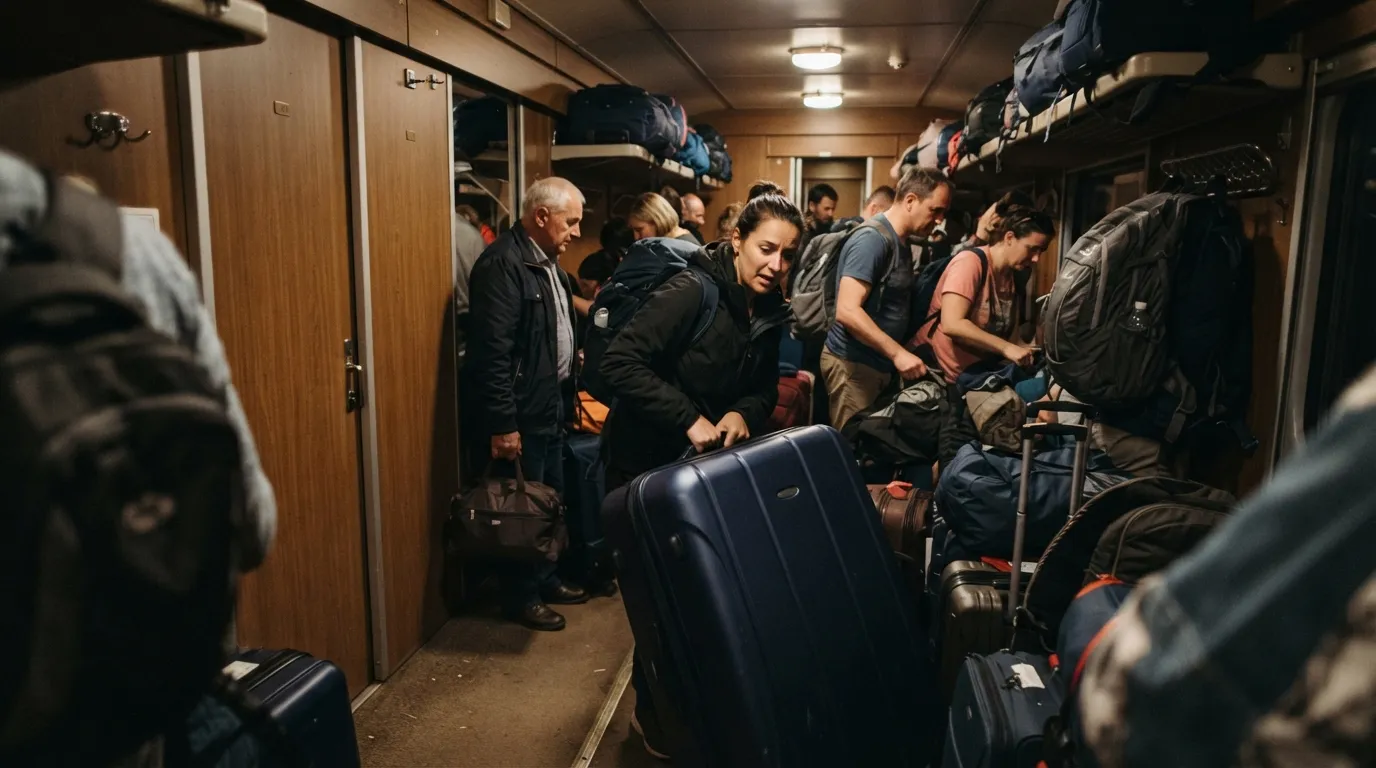
Plenty of passengers show up with suitcases far bigger than a sleeper or couchette car can store. European operators and Amtrak both advise compact bags because corridors and compartments fill fast once everyone boards.
A big case parked in the walkway forces people to climb over it or wait while its owner rearranges everything. Crews ask passengers to move oversized items to the luggage area at the end of the car, but the jam has already slowed boarding for everyone.
The worst cases happen when several passengers do this at once on a busy night service.
#17 – Eating Strong-Smelling Food in Shared Compartments
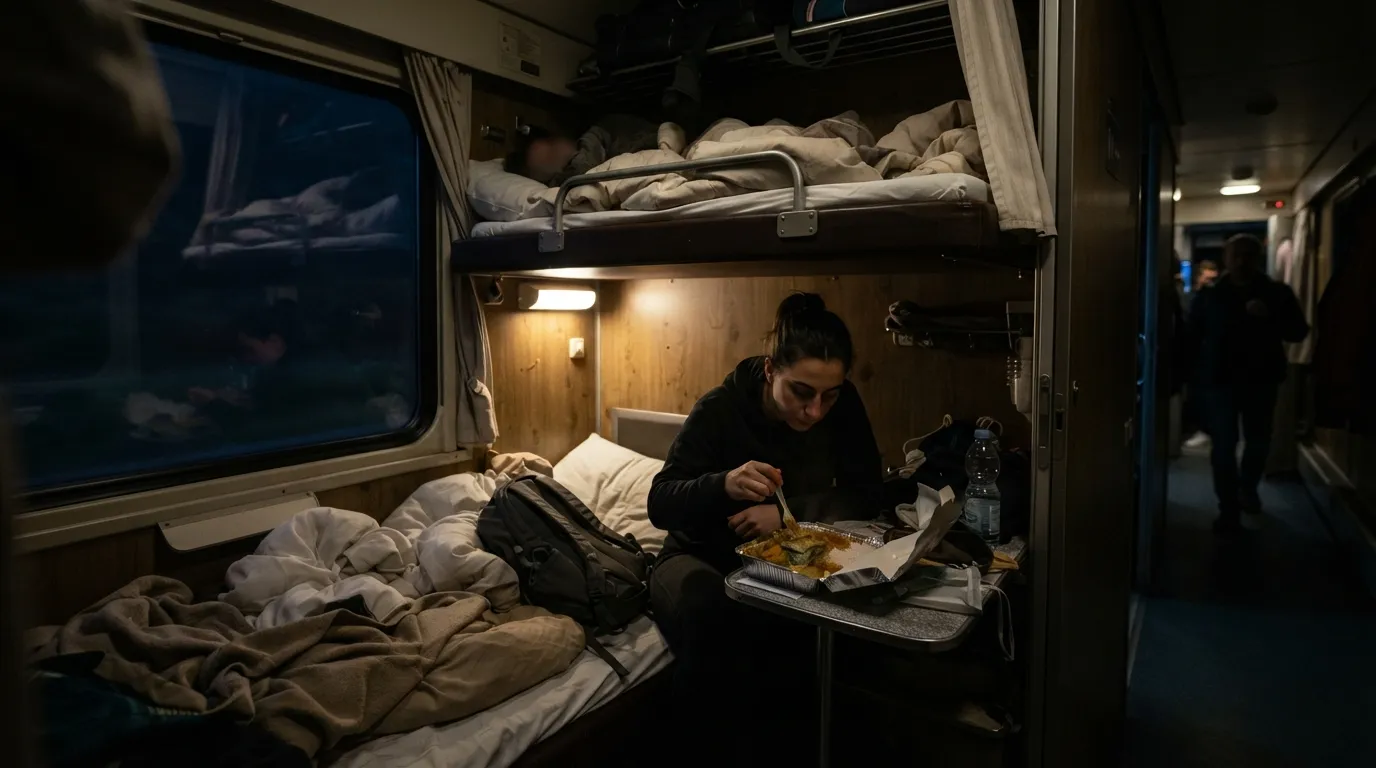
Sleeper etiquette lists smelly food among the top complaints because odors linger in small spaces with limited ventilation. Fish, eggs, and heavily spiced meals drift through thin walls and reach neighbors who are trying to sleep.
Passengers are expected to eat in the dining car or before boarding when possible. Crews remind travelers they’re sharing air, and in repeat cases they may direct them to eat elsewhere.
Opening pungent packaging after lights-out is one of the fastest ways to turn a calm cabin tense.
#16 – Playing Videos or Music on Phone Speakers
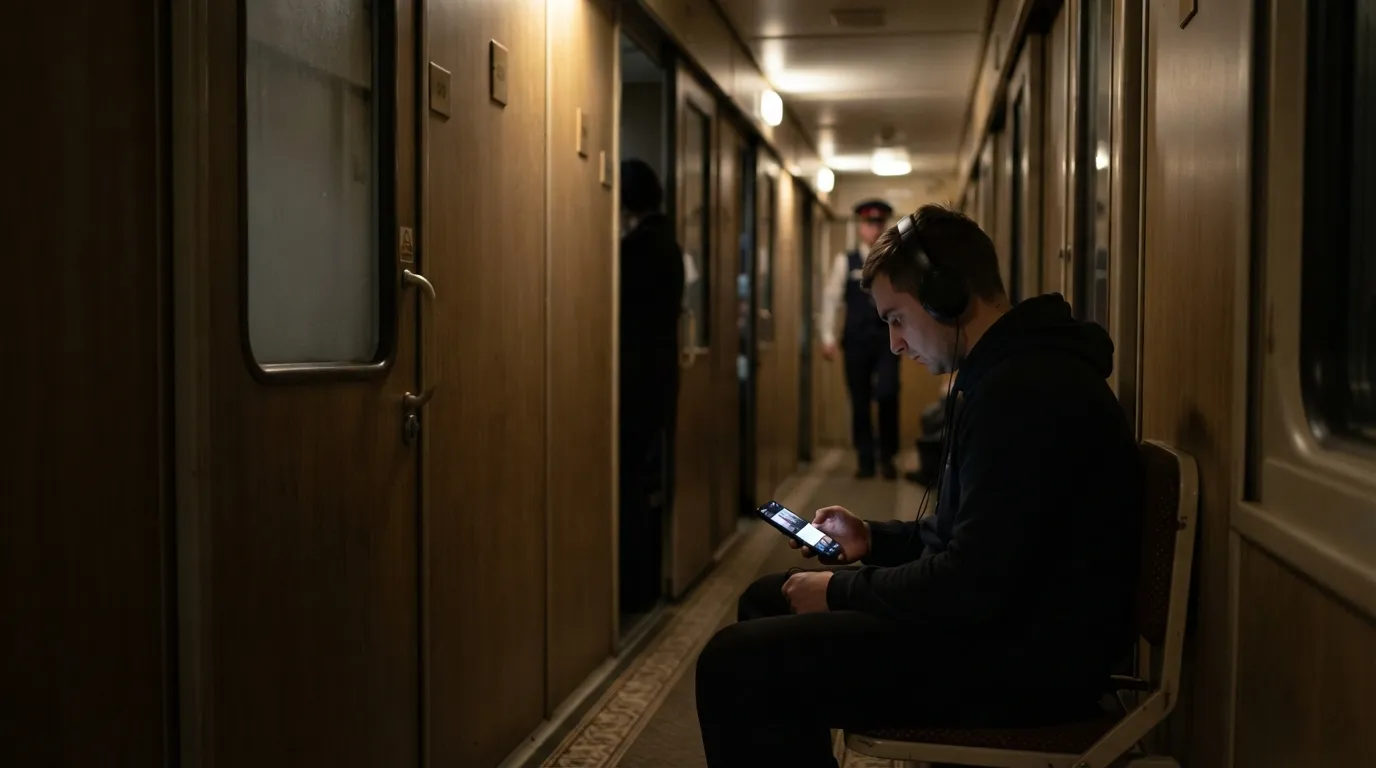
Guidance on European night trains and Amtrak stresses headphones once the carriage settles. Speaker audio travels through compartment walls and wakes several passengers at once.
Crew members describe it as one of the most frequent evening complaints. The rule is simple: keep your entertainment private, or take it to a corridor or vestibule.
Quick Compare
- Phone speaker: sound passes through thin walls and wakes several people at once.
- Headphones: keeps the audio private once the carriage settles.
- Corridor or vestibule: the suggested spot if you truly need sound.
It often continues until an attendant steps in and asks for earphones.
#15 – Taking Loud Phone Calls in the Compartment
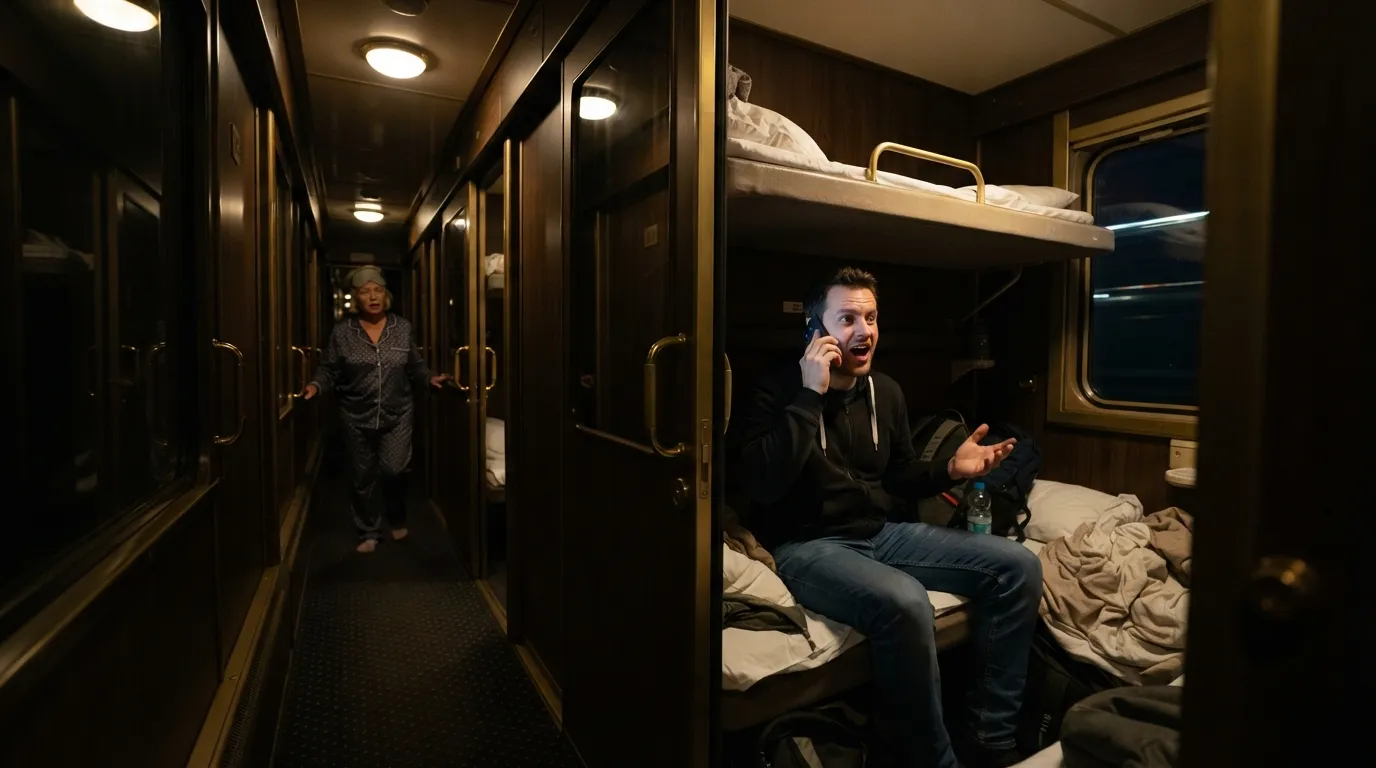
Quiet hours after 10 p.m. are standard on most overnight services to protect sleep. A loud call, especially on speakerphone, breaks that expectation for everyone in the space.
Operators advise stepping into the corridor or switching to text at night. When complaints come in, attendants ask callers to lower their voices or move.
In many sleeper cars the walls are thin enough that even a normal-volume call carries into the next berth.
#14 – Switching on the Overhead Light After Dark
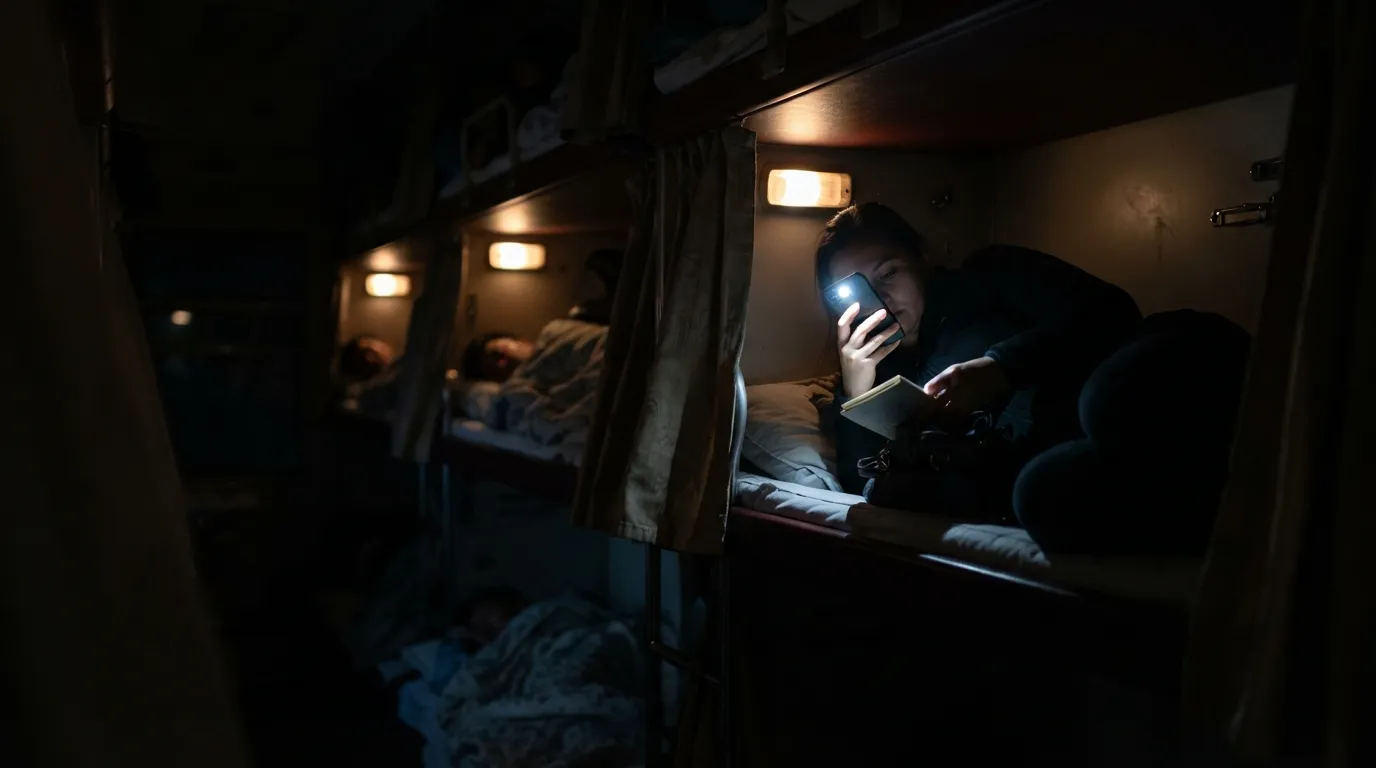
Sleeper etiquette explicitly prohibits turning on the main compartment light once others have settled. One bright flick wakes the whole cabin and can make it hard for people to fall back asleep.
Crew guidance points to a phone flashlight or the small night light instead. Passengers who ignore this usually get a polite but firm reminder from the attendant.
It remains one of the most commonly reported disturbances on overnight routes.
#13 – Putting Feet Up on Seats and Berths
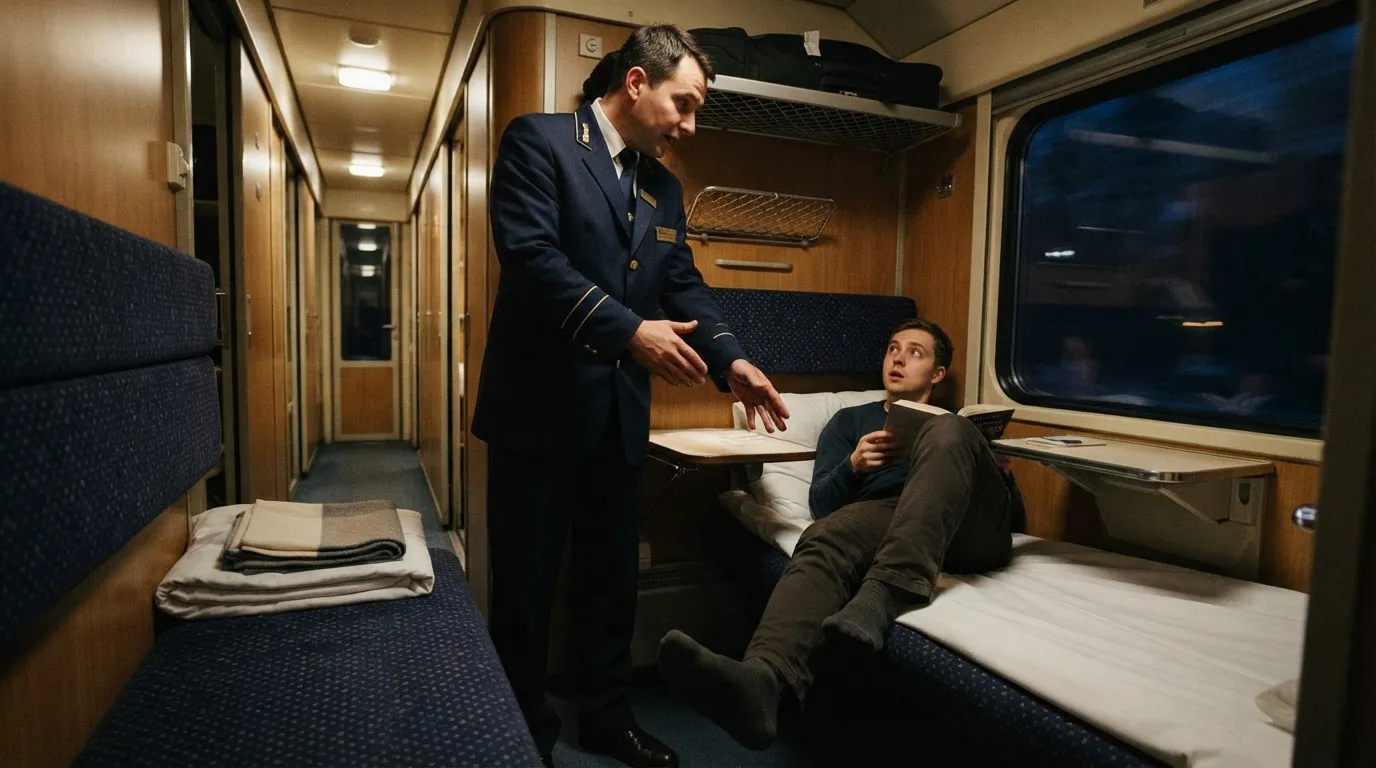
Railway byelaws and operator rules prohibit feet on upholstery because it soils surfaces for the next passenger. On overnight trains that covers berths and the seat cushions used during the daytime part of the trip.
Crews enforce it by asking passengers to take their feet down, and they sometimes note repeat offenders for later attention.
Someone else will be sleeping on that cushion tonight, and the carriage only stays clean if everyone treats it as shared property.
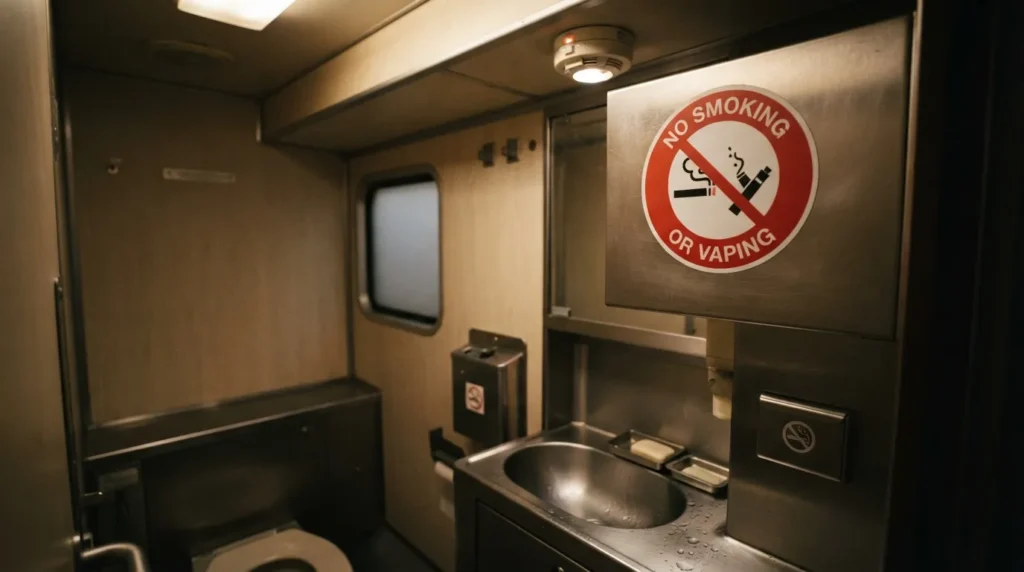
#12 – Smoking or Vaping in Toilets or Onboard Areas
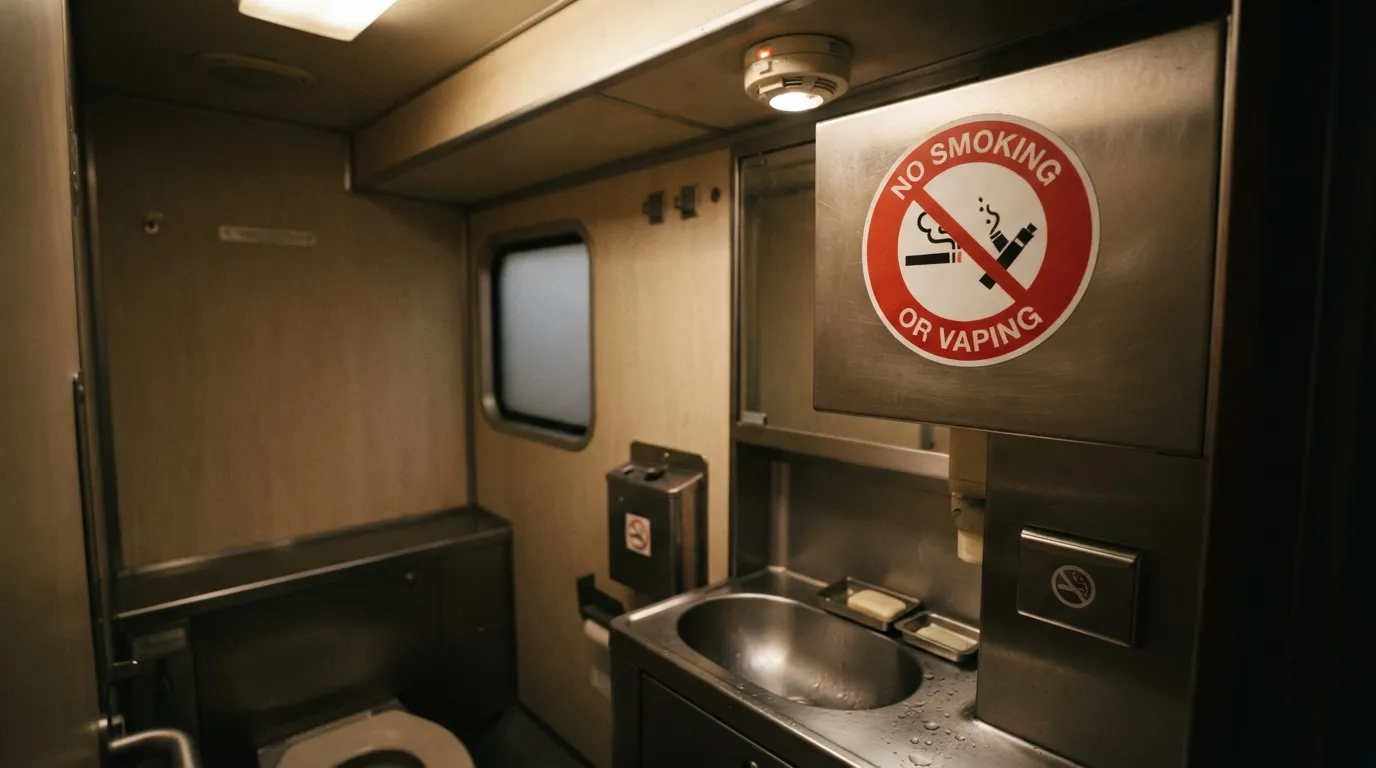
Smoking and vaping are banned on virtually all passenger trains, overnight services included. The toilet looks like a hidden, enclosed spot, which is exactly why people try it.
Operators take it seriously because smoke travels through ventilation and can trigger alarms or complaints. Crews confront offenders and, where local rules allow, can impose fines or remove them at the next station.
Fast Facts
- The ban covers vaping as well as cigarettes.
- Toilets are not exempt, even though they feel private.
- Smoke can spread through shared ventilation.
- Possible outcomes include fines or removal at the next station, where local rules allow.
In a sealed night train carriage, even a little smoke is easy for neighboring compartments to notice.
#11 – Failing to Secure the Compartment Door Properly
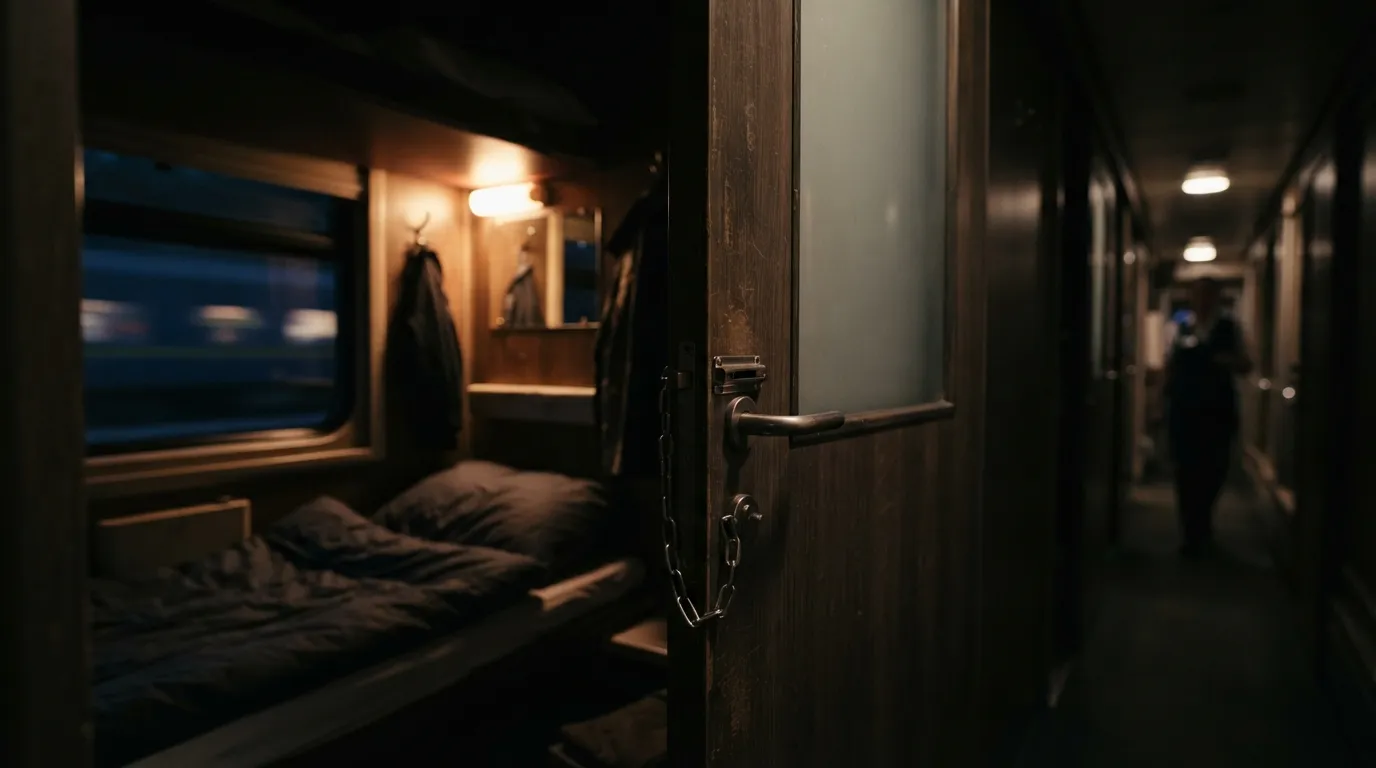
Many sleeper cars have a secondary bolt or chain that can’t be opened from outside, even with a staff key. Leave it undone and you open the door to unauthorized entry and raise the theft risk for the whole carriage.
Crew briefings routinely remind passengers to use the internal lock once settled. Attendants check doors on night rounds and will secure any they find open.
Security in a shared overnight car depends on every passenger taking basic precautions.
#10 – Rummaging Noisily Through Bags After Lights Out
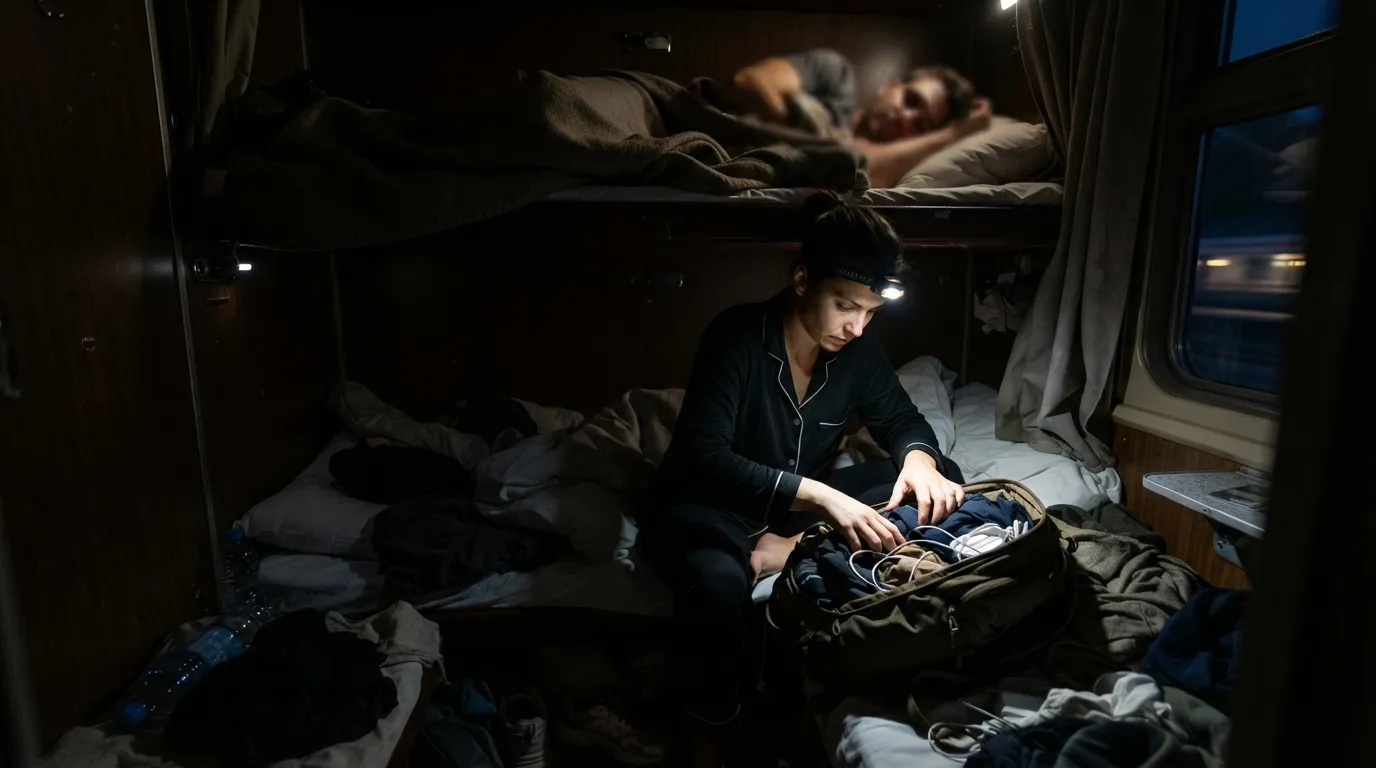
Late-night unpacking and hunting for a missing charger wakes everyone in a shared compartment. Guidance encourages passengers to get their belongings ready before quiet hours begin.
If something is needed in the dark, attendants advise minimal light and slow, careful movement. Repeated rustling often earns a direct request to settle down.
Thin compartment walls carry small sounds more clearly than most passengers expect.
#9 – Ignoring Quiet Hours After 10 p.m.
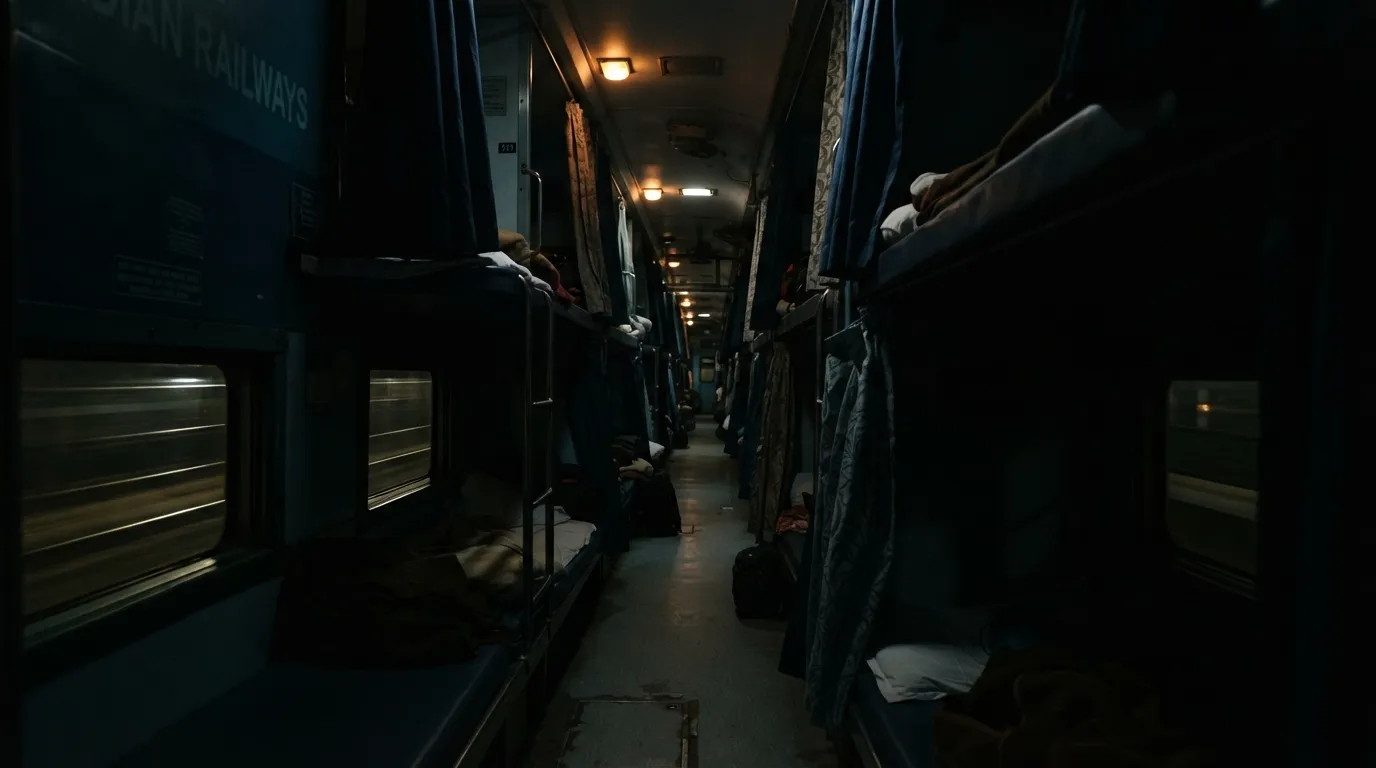
Indian Railways and other operators set aside roughly 10 p.m. to 6 a.m. as quiet time, with reduced lighting and minimal conversation. Loud talking or activity during those hours breaks carriage rules designed to protect rest.
Crews monitor compliance and ask groups to lower their voices when complaints come in.
At a Glance
- Typical window: roughly 10 p.m. to 6 a.m.
- What changes: lighting is reduced and conversation stays minimal.
- Crew response: groups are asked to lower their voices when complaints come in.
- Smart prep: sort bags, meals, and headphones before the window starts.
A carriage full of strangers only sleeps if everyone agrees on when the night begins.
#8 – Blocking Corridors by Packing Early Before Arrival
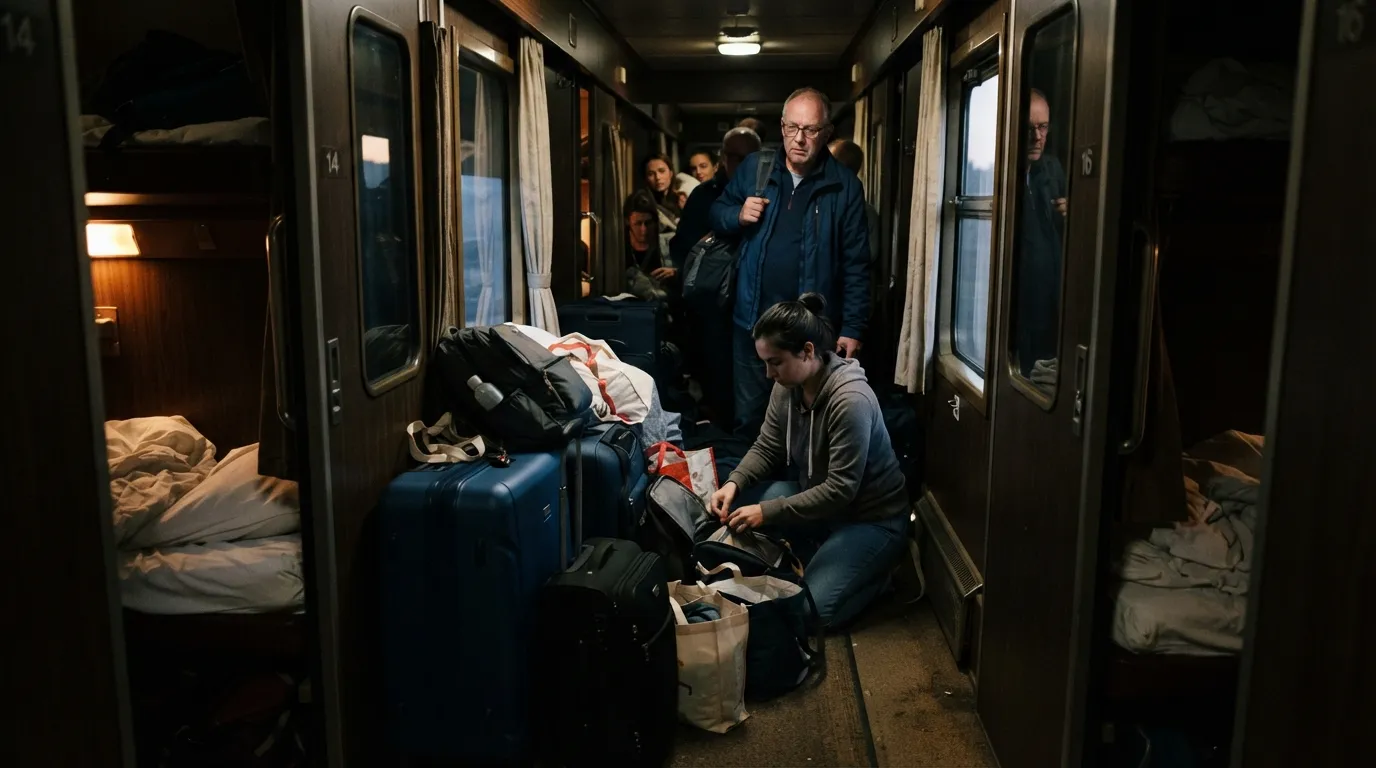
Some passengers dismantle their berths and pile luggage in the aisle an hour or more before the stop. The result is a bottleneck that traps everyone behind them.
Crew reports identify this as one of the most common sources of morning friction. Operators recommend waiting until the train nears the station and keeping belongings contained until then, and attendants will ask early packers to clear the walkway.
One blocked corridor can delay getting off for the entire car.
#7 – Using Bright Phone Screens Without Dimming
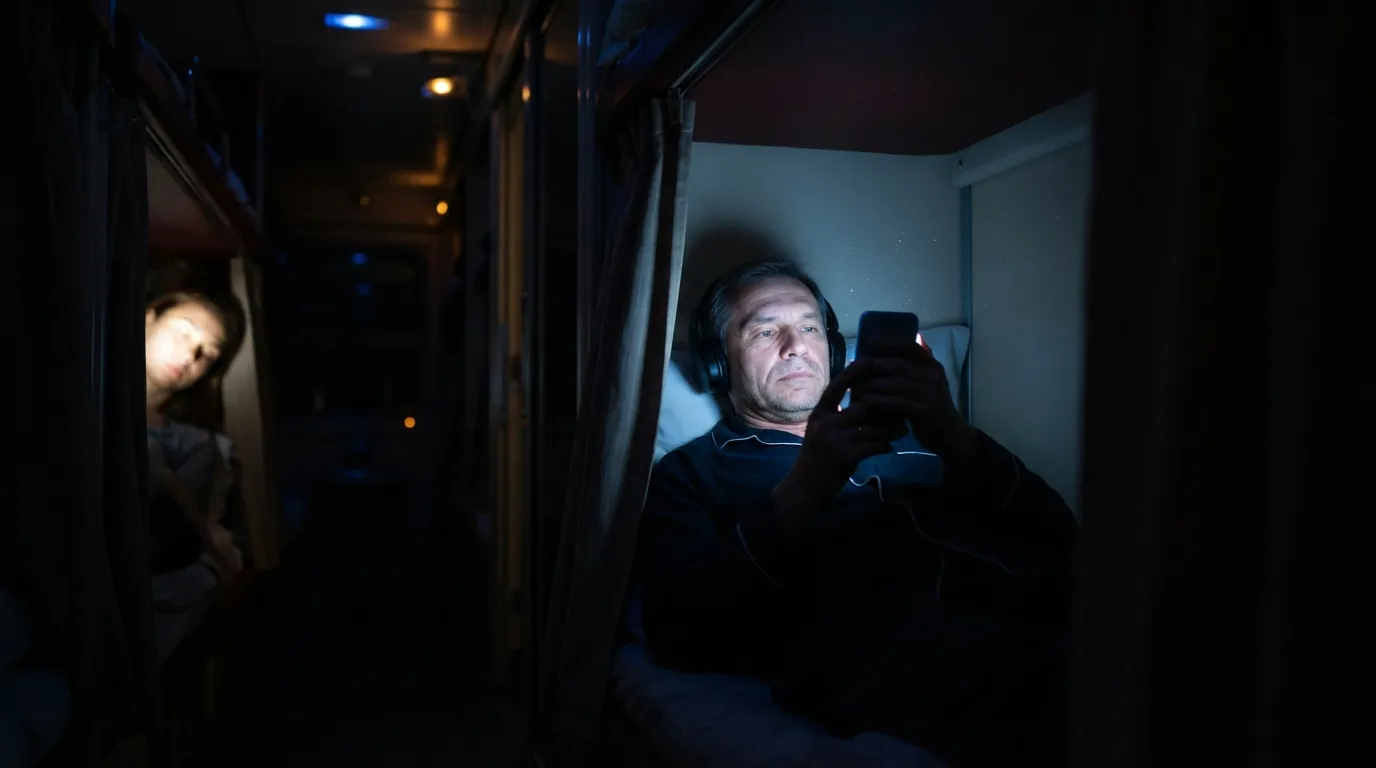
Headphones solve the sound, but a bright screen in a dark compartment still lights up everyone’s faces. Guidance suggests lowering brightness or angling the device away from neighbors.
Attendants note that repeated screen glare prompts complaints the next morning. A few small adjustments prevent most of the trouble.
Even a brief flash of bright light can wreck the night vision of people settling into sleep.
#6 – Entering the Wrong Compartment or Cabin
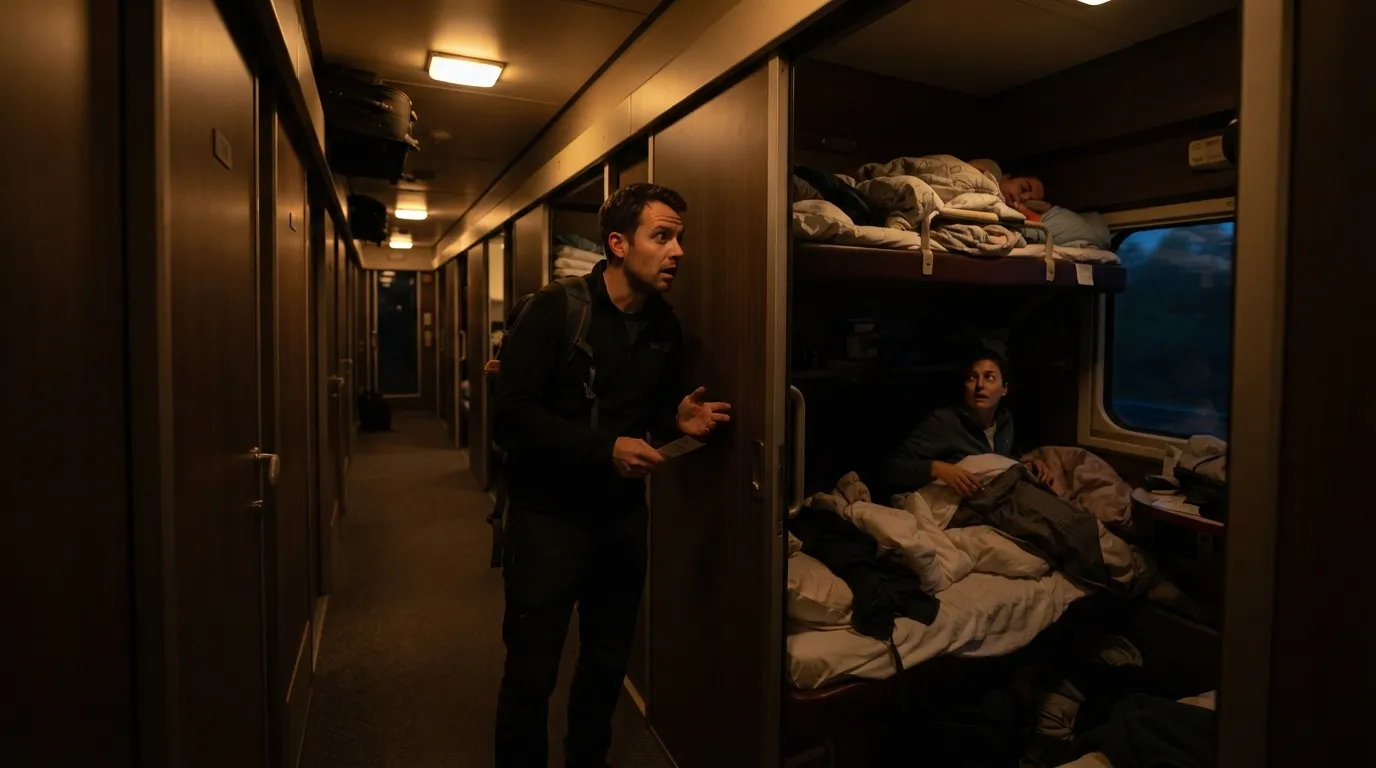
Mixed-up berth numbers or car layouts lead passengers to open occupied compartments in the middle of the night. That startles sleeping travelers and creates a disturbance no one asked for.
Operators advise double-checking the platform display and car number before boarding. Crews redirect misplaced passengers quickly, but the intrusion has already woken people up.
One wrong door can set off a ripple through the whole carriage.
#5 – Disregarding Lower Berth Priority Rules
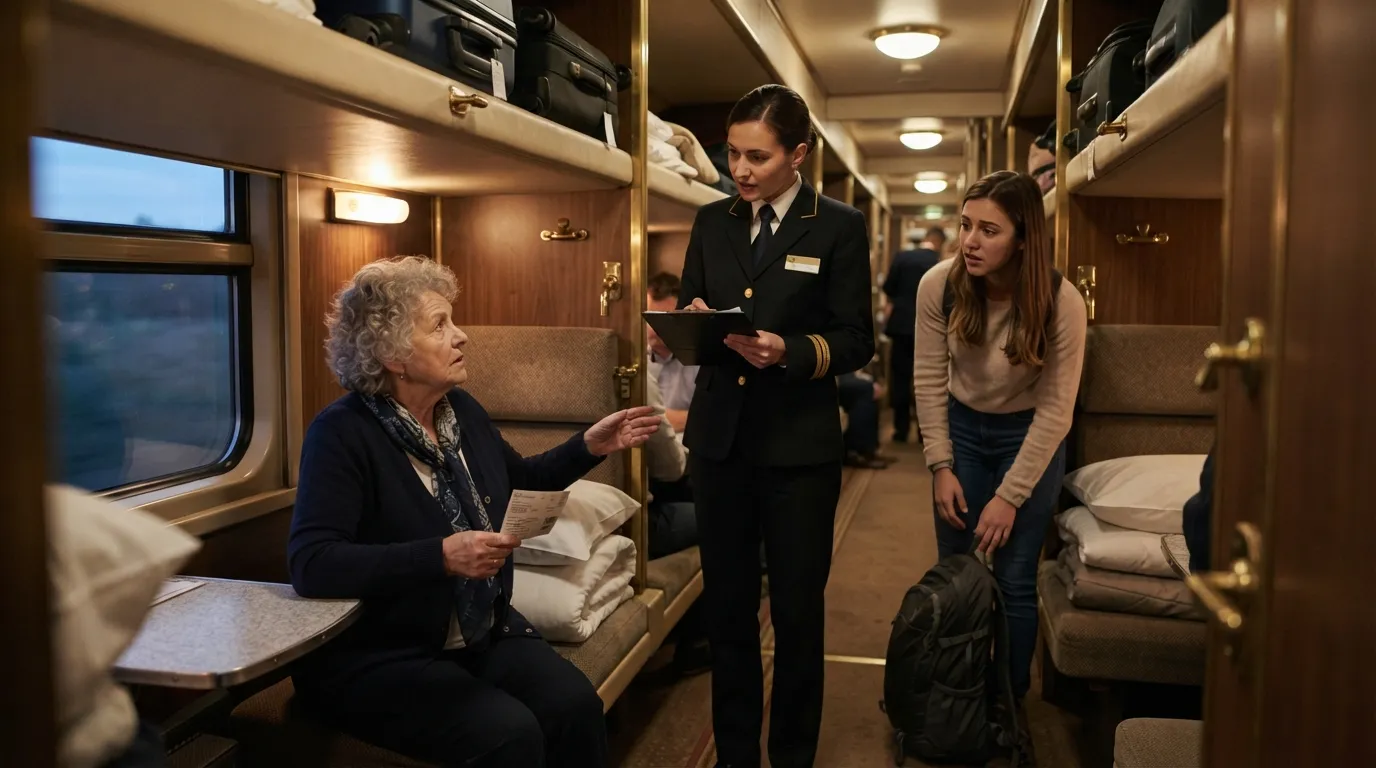
Many systems reserve lower berths for seniors, pregnant passengers, or travelers with mobility needs during overnight hours. Taking one of those spaces without regard for the allocation creates conflict fast.
Crew members enforce the priority when issues arise and may reassign berths.
On many trains lower berths double as daytime seating and nighttime beds, so there’s a lot riding on who gets them.
#4 – Bringing Non-Ticketed Guests Into Sleeper Compartments
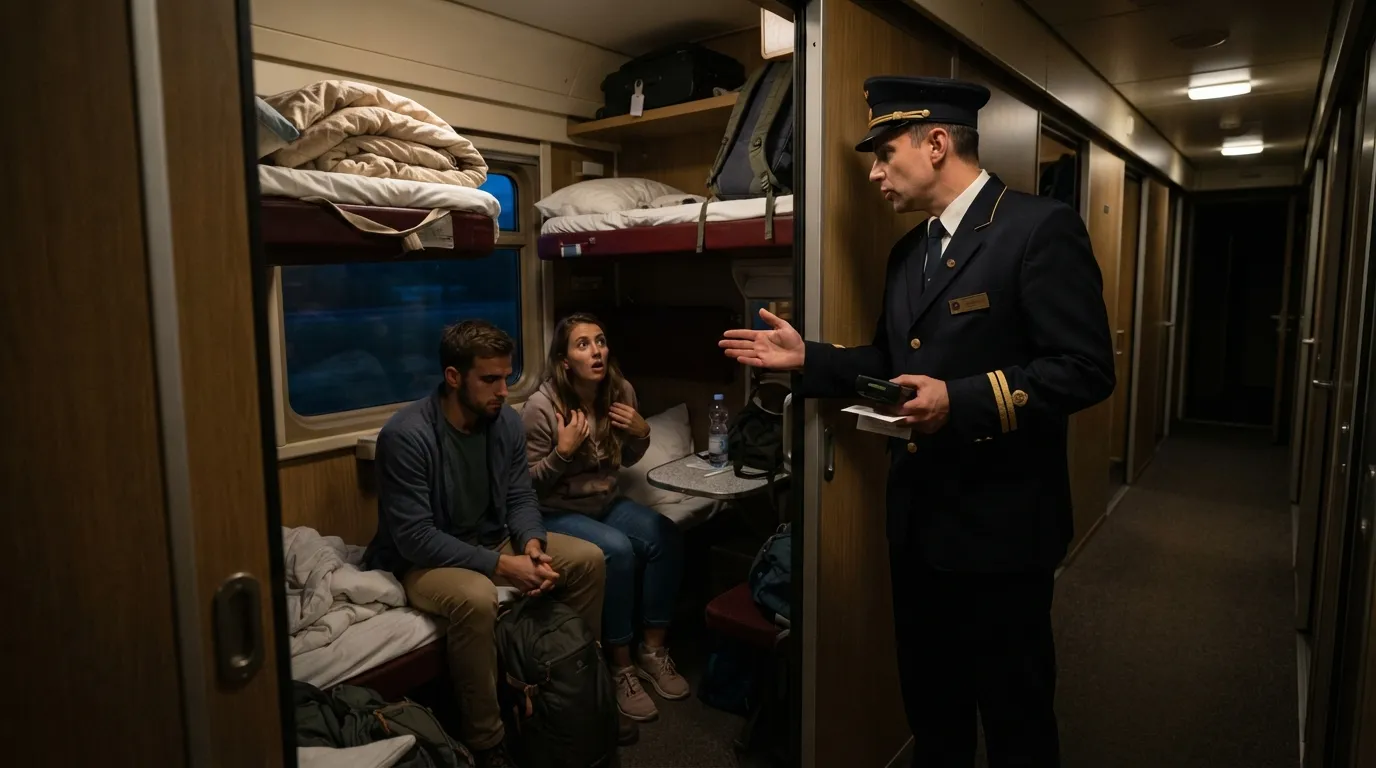
Sleeper and couchette tickets cover specific berths. Slipping extra people into paid space violates capacity and safety rules.
Crews treat it as a serious breach and will ask unauthorized visitors to return to their own seats or buy proper accommodation.
Overnight cars run on strict berth counts for both comfort and emergency access.
#3 – Leaving Trash or Personal Items in Common Areas
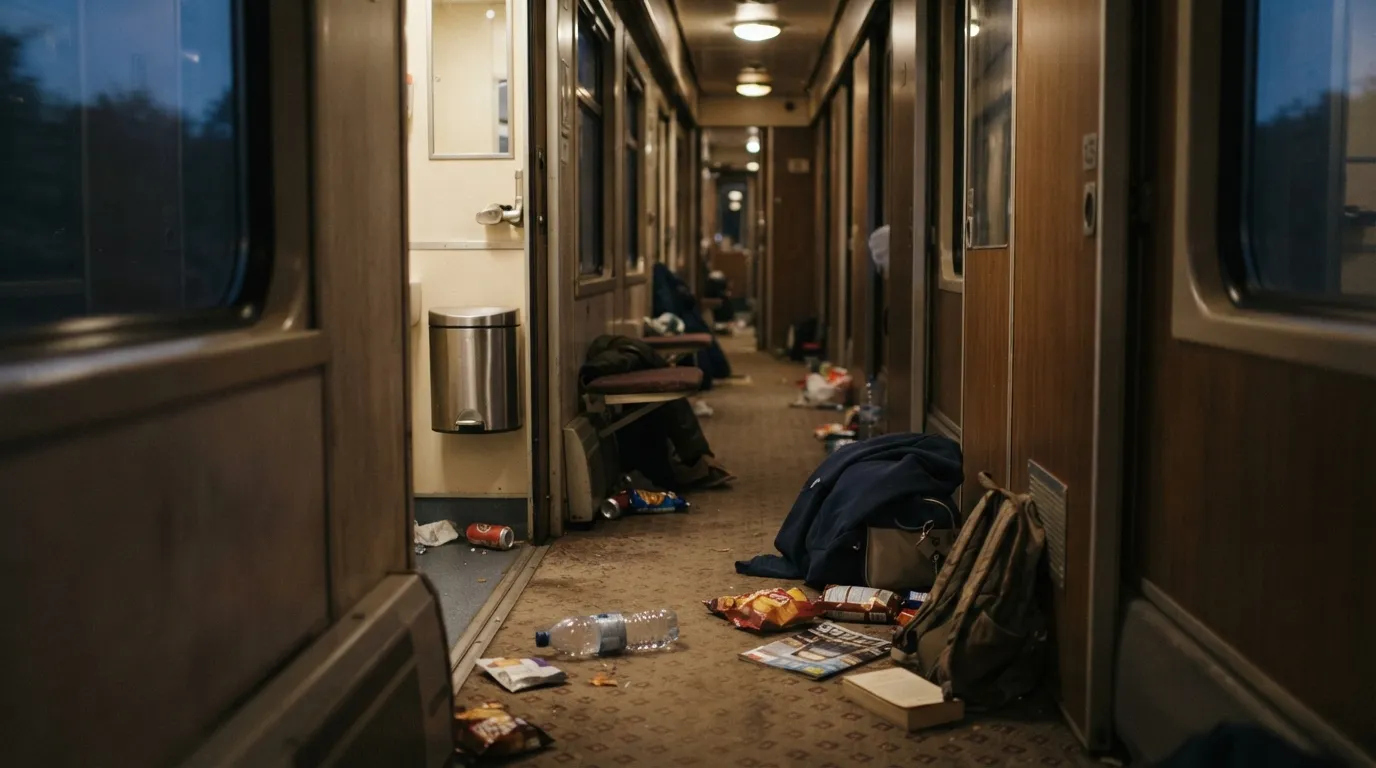
Wrappers, bottles, and stray clothing left in corridors and toilets create hazards and extra work for attendants. Operators expect passengers to use the bins provided and keep shared spaces clear.
Crews do regular checks and will ask for cleanup when items pile up.
Worth Knowing
- Bins are provided, and passengers are expected to use them.
- Corridors and toilets are shared spaces, not storage.
- Loose items in walkways can become trip hazards.
- Attendants make regular checks and will ask for cleanup.
A clean carriage depends on everyone pitching in, not just the staff.
#2 – Continuing Loud Conversations After Lights Out
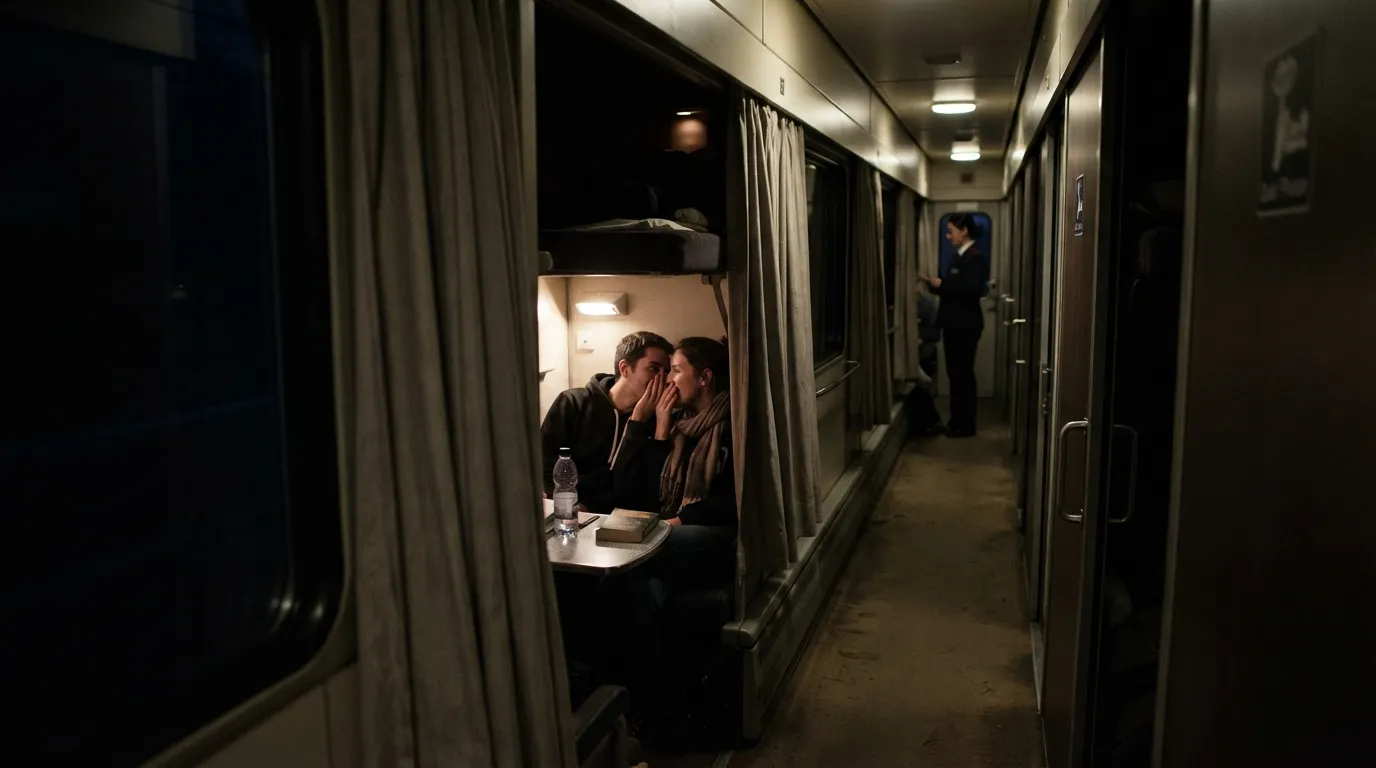
Even a whispered group chat carries in a quiet overnight car. Guidance calls for lowering voices or moving to the vestibule once the carriage has settled.
Attendants answer noise complaints by asking groups to respect sleeping neighbors.
Rest is the main reason most people choose an overnight train in the first place.
#1 – Repeatedly Disturbing the Entire Carriage With Multiple Violations
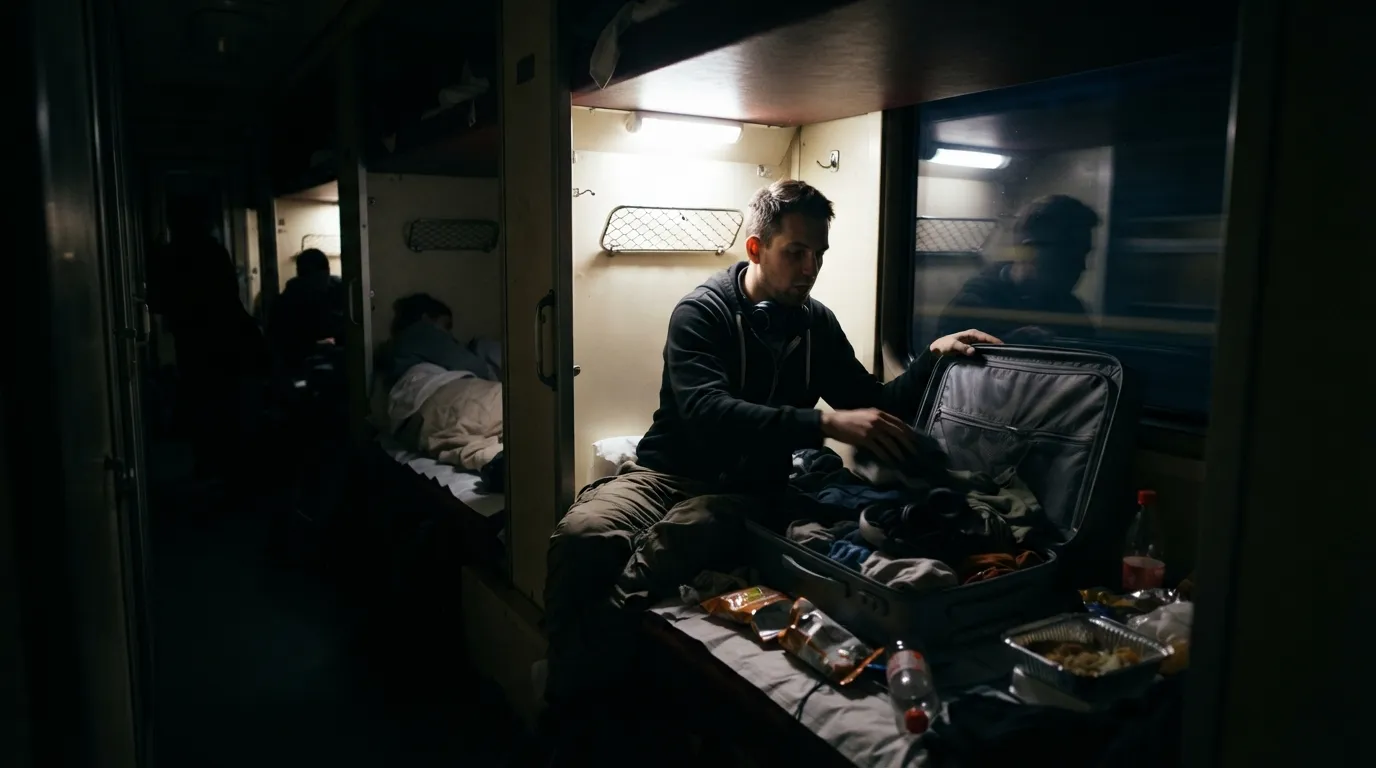
The most damaging pattern is one passenger stacking several of these behaviors in a single journey: lights, noise, smells, and early packing. Crews report that such cases draw the highest volume of complaints and demand the most intervention.
Operators rely on passengers to regulate themselves. When that fails, attendants spend a disproportionate amount of the night managing one person instead of looking after everyone else.
One inconsiderate traveler can undo the quiet that overnight rail is built to provide.
Look at the full list and a pattern shows up. Almost every item comes down to light, sound, space, or timing in a compartment where the walls are thin and the neighbors are strangers.
Operators worldwide keep stressing headphones, minimal light after dark, contained luggage, and respect for quiet hours because small actions reach many people at once. Did we miss one you’ve run into on an overnight service? Drop it in the comments.
CEO-Co-Founder