
- 15 Hotel Breakfast Charges Guests Can Avoid by Checking the Rate Plan - October 24, 2026
- 17 Shoulder Season Travel Rules for Sudden Weather Changes - October 24, 2026
- 18 Hotel Arrival Rules That Prevent Expensive Check-In Problems - October 24, 2026
Plenty of everyday things in your bag can get pulled aside at the checkpoint, and TSA and its counterparts abroad each draw the line a little differently.
Some of these are obvious, but a few depend on size, packing, or which country you’re flying from, and officers always make the final call.
#1 – Full Water Bottles and Beverages
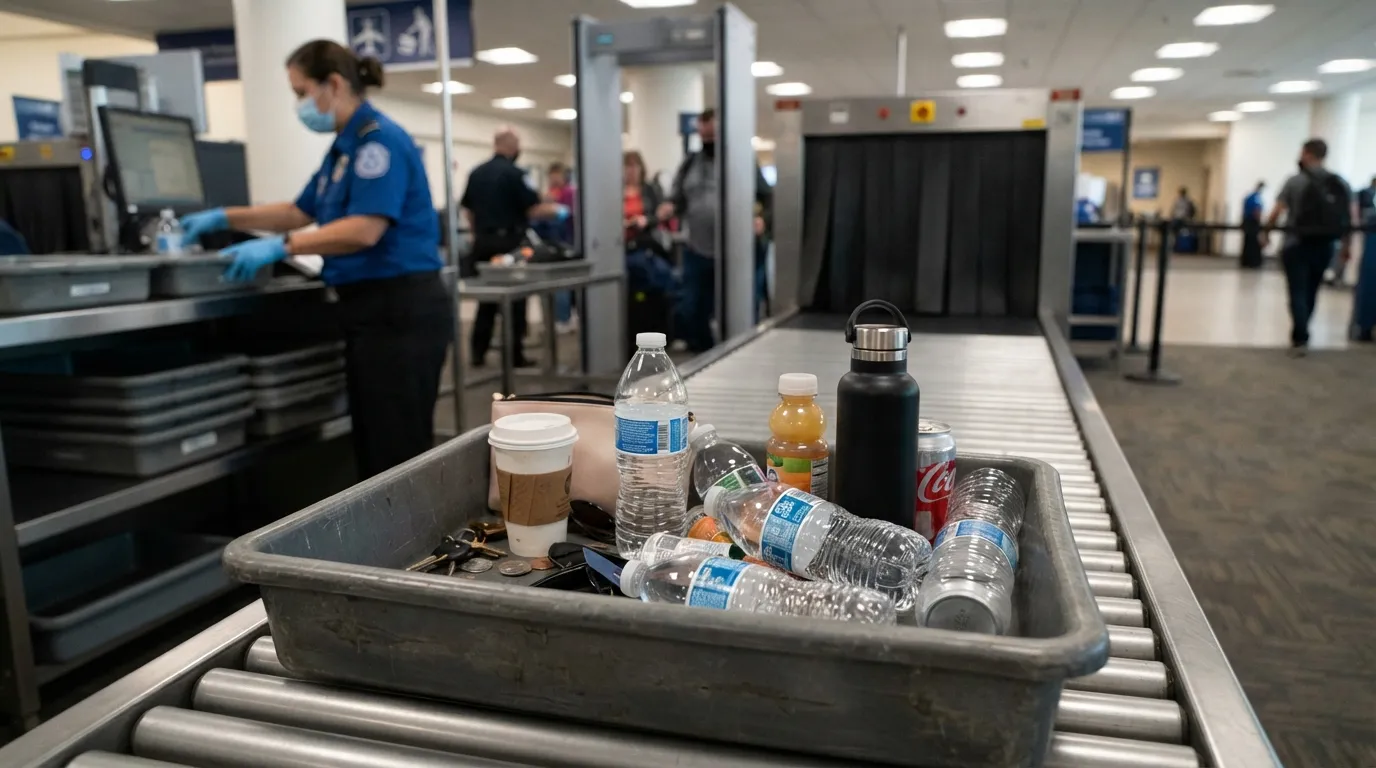
Under TSA’s 3-1-1 rule, any drink container larger than 3.4 ounces gets pulled from a carry-on, whether it’s full water, coffee, juice, or soda. Empty bottles are usually allowed, so many travelers refill after the checkpoint. Some international airports apply similar limits, though duty-free liquids in sealed tamper-evident bags may be allowed on certain connecting flights.
#2 – Oversized Liquids, Gels, and Aerosols
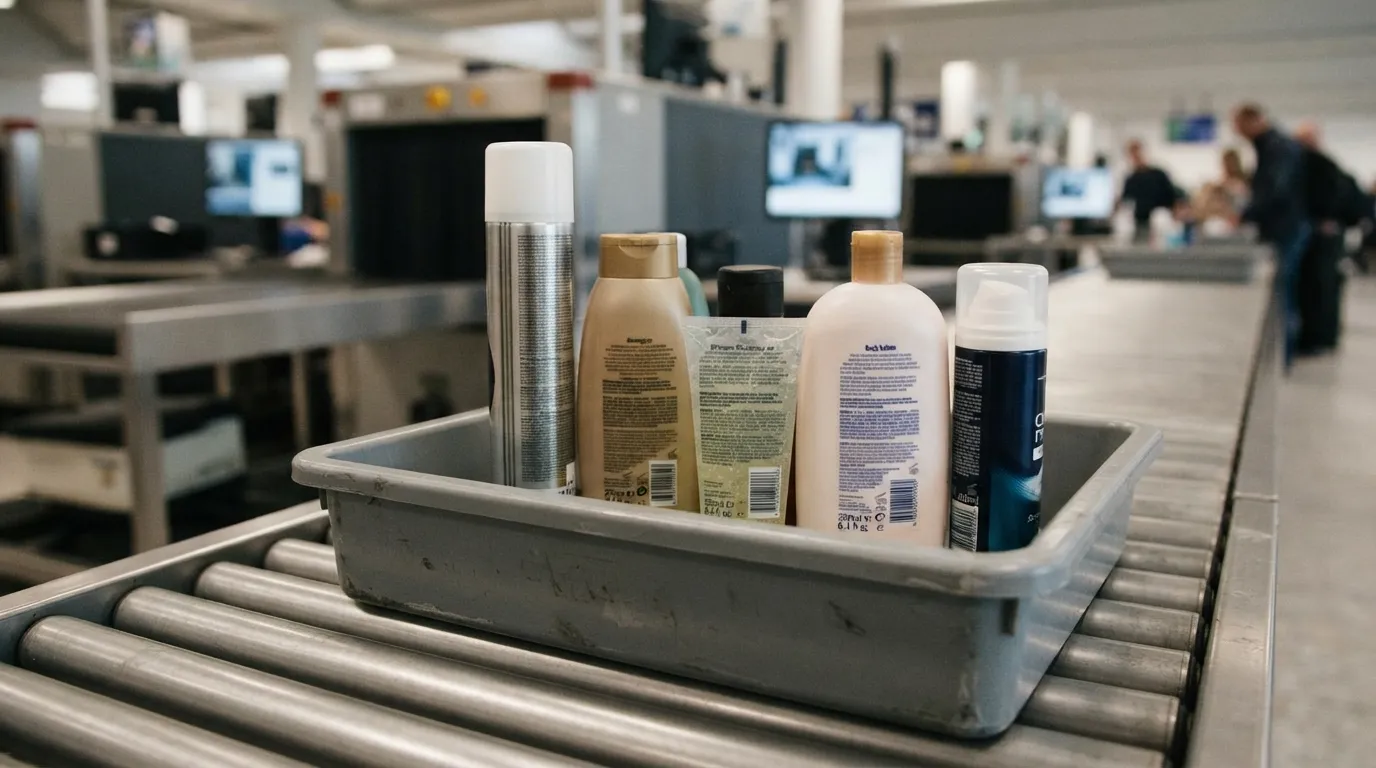
Hairspray, shaving cream, gels, and similar products in containers over 3.4 ounces (100 milliliters) can’t go in a TSA carry-on. They belong in checked bags instead. Medically necessary liquids can be exceptions if you declare them at screening. Many other countries use the same 100 ml limit, but how strictly it’s enforced varies by airport.
Fast Facts
- The “3” means each container holds 3.4 ounces (100 ml) or less.
- The first “1” is one clear, quart-size bag.
- The second “1” is one bag per traveler.
- Container size counts, not how much is left inside.
#3 – Knives and Sharp Objects
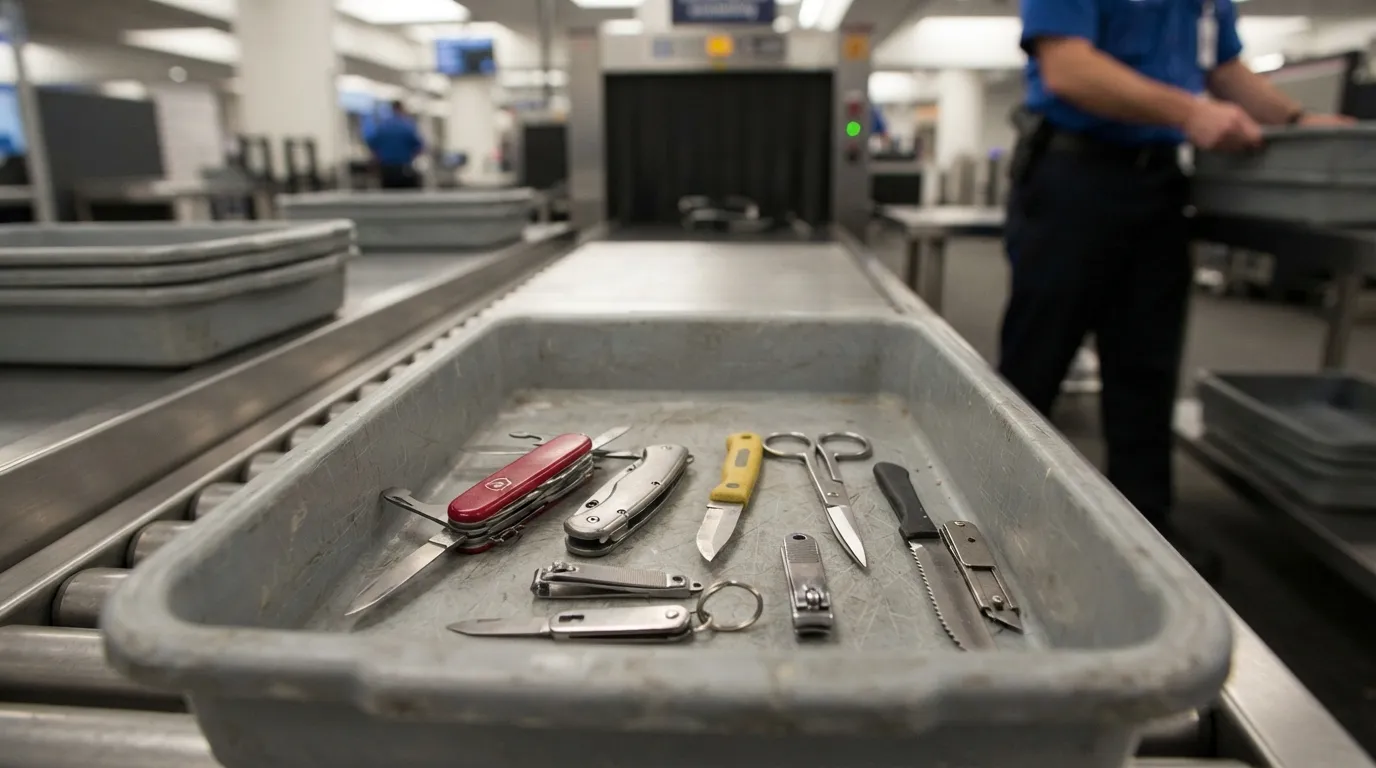
TSA bans nearly all knives from carry-on bags, including pocket knives. The main exceptions are plastic or round-bladed butter knives. Checked bags can hold knives when they’re sheathed or securely wrapped. Many other countries also ban blades in the cabin, but their length limits and exceptions differ, so check the rules for each country on your route.
#4 – Scissors and Cutting Tools
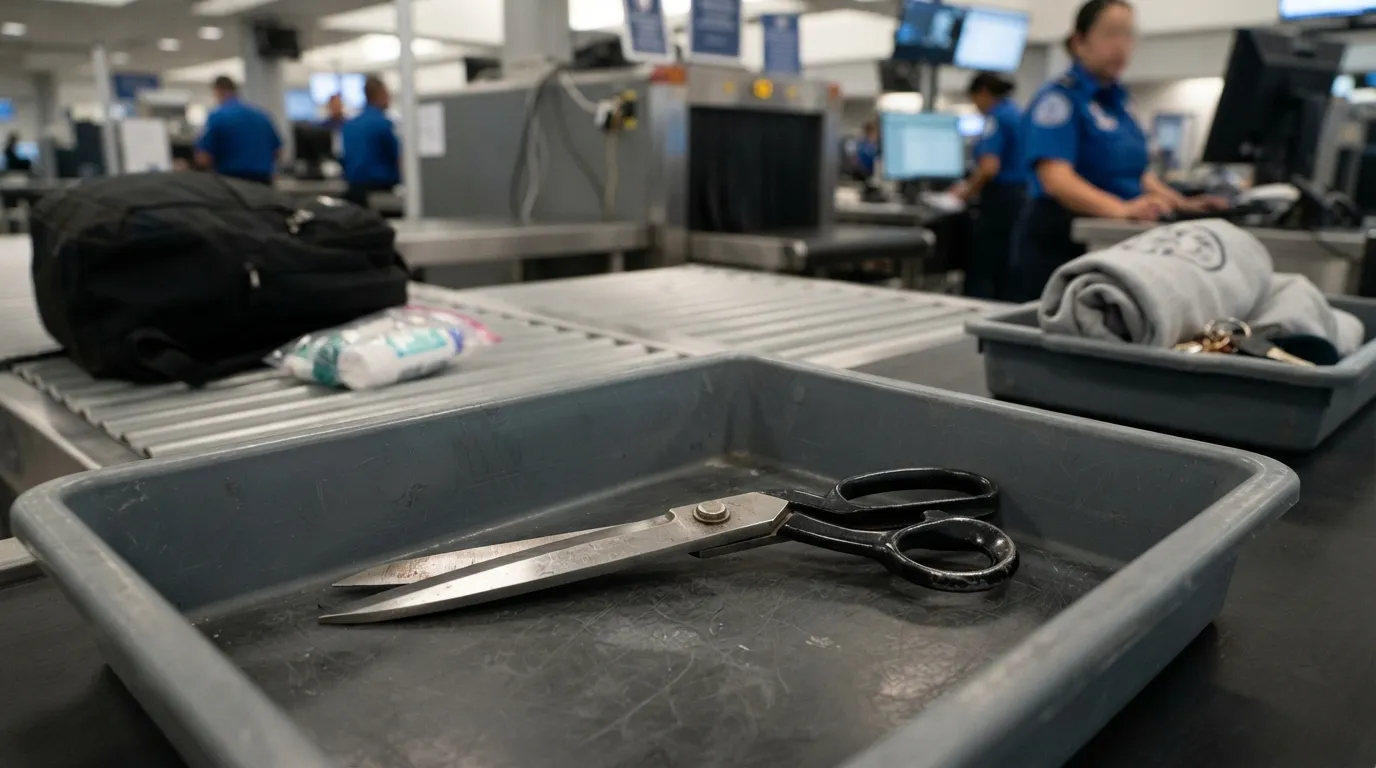
TSA allows scissors in carry-on only if the blades are shorter than 4 inches, measured from the pivot point. Small pairs usually pass, but large shears often get pulled and may be confiscated. Other countries set their own blade-length limits, and some are shorter than TSA’s, so check before you fly.
#5 – Wrenches, Pliers, and Tools Over 7 Inches
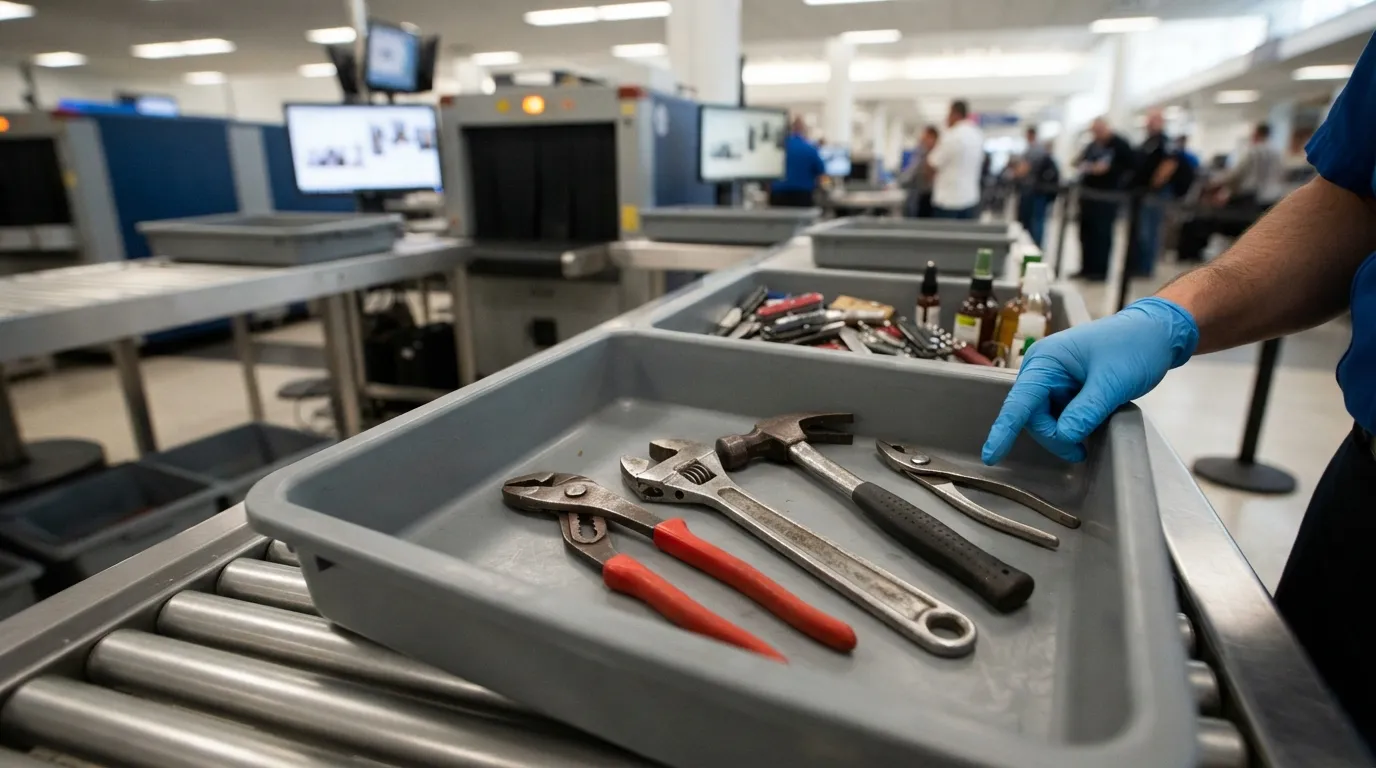
TSA bars wrenches, pliers, and other tools longer than 7 inches from carry-on bags. Officers commonly pull the oversized ones, and they must travel in checked luggage instead. Shorter tools may pass screening. Other countries set comparable size limits, but the exact cutoff and the list of covered tools can differ by country and operator.
#6 – Full-Size Toiletries and Creams
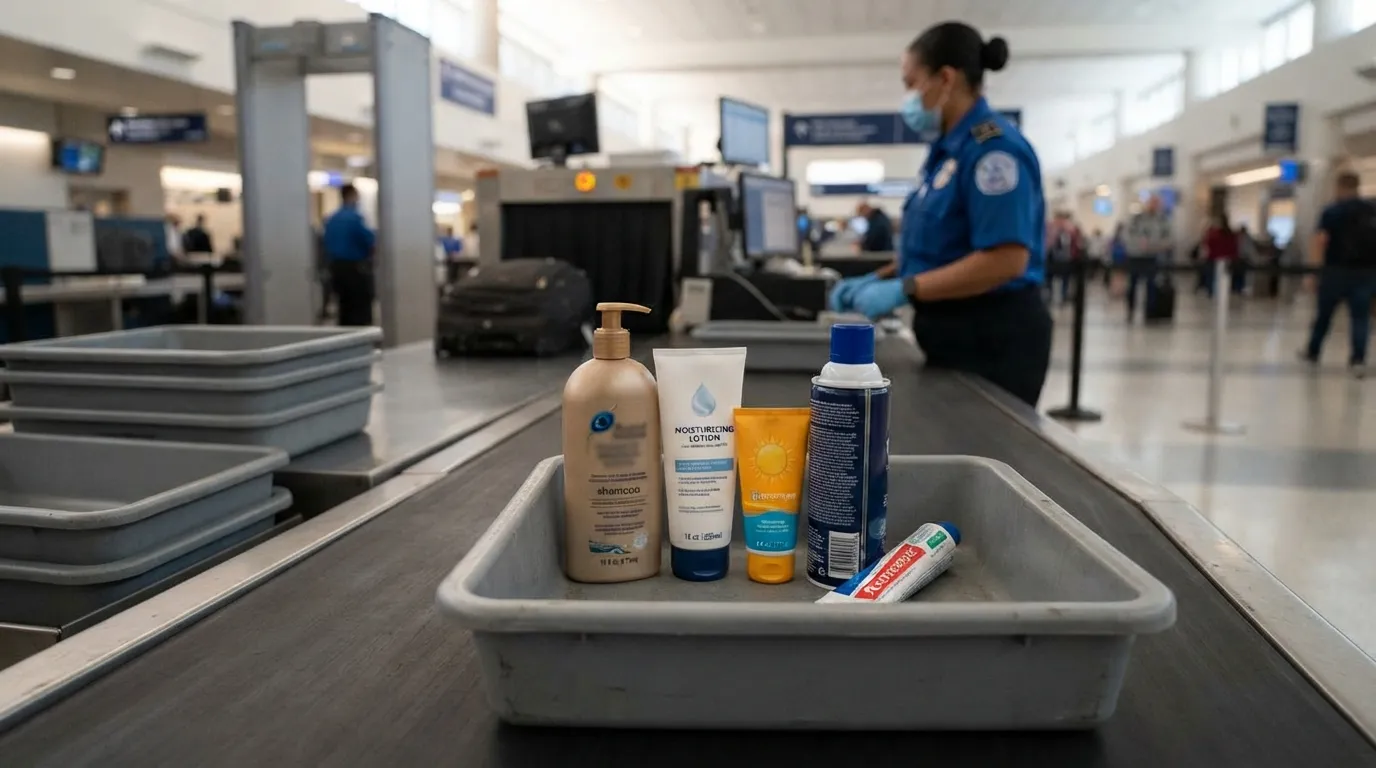
Shampoo, lotion, toothpaste, and sunscreen all count as liquids or gels at a TSA checkpoint. Each container must be 3.4 ounces or less and fit in one quart-size bag. Anything bigger gets pulled, even if it’s nearly empty, because container size is what counts. Many other countries use similar limits with varying enforcement.
#7 – Powders Exceeding 12 Ounces
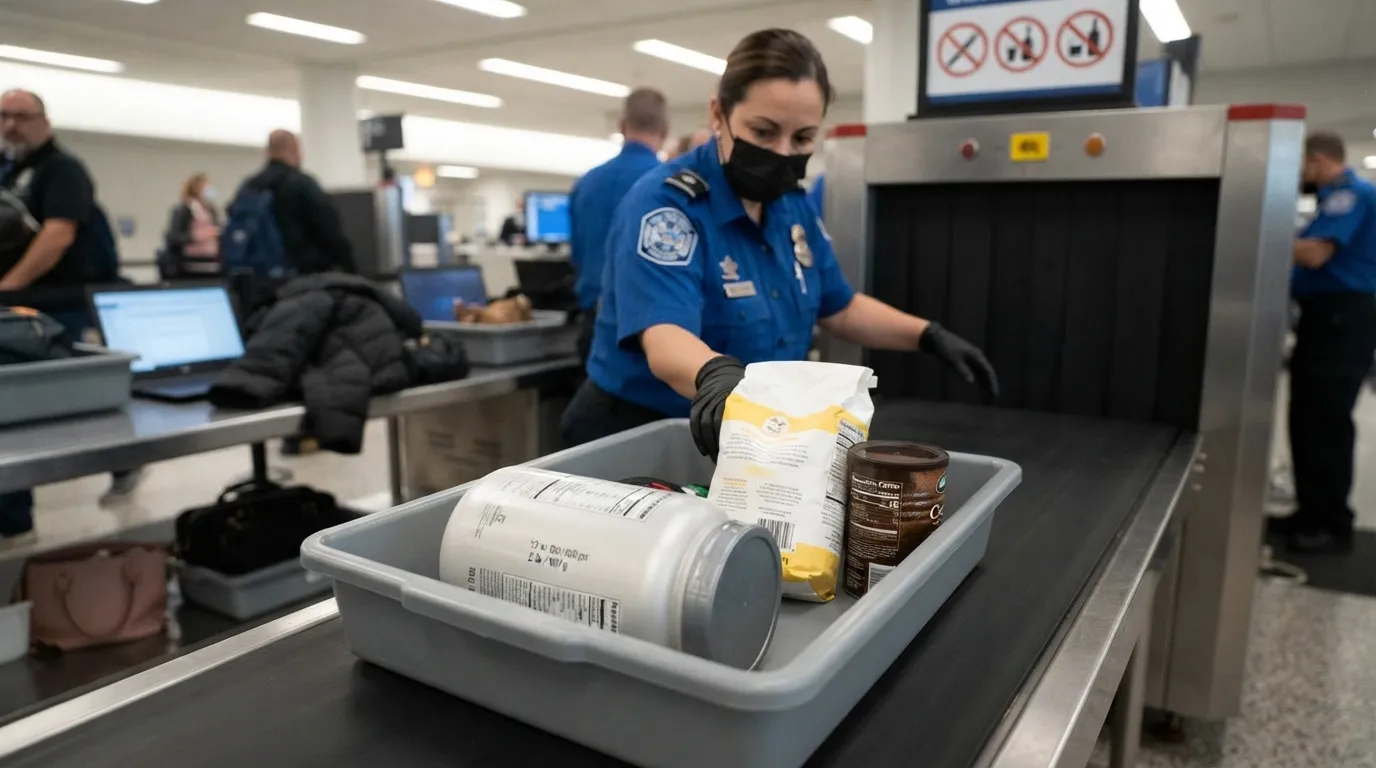
At TSA checkpoints, powders over 12 ounces (350 milliliters) in carry-on must come out of the bag for separate screening, and officers may run extra checks. Smaller amounts generally stay put. Travelers are advised to pack non-essential powders in checked bags. Other jurisdictions have their own powder screening practices, so rules differ abroad.
Quick Compare
- Liquids, gels, aerosols: 3.4 oz (100 ml) per container.
- Powders: over 12 oz (350 ml) come out for extra screening.
- Scissors: blades under 4 inches from the pivot.
- Tools: 7 inches or shorter for carry-on.
#8 – Pepper Spray and Self-Defense Sprays
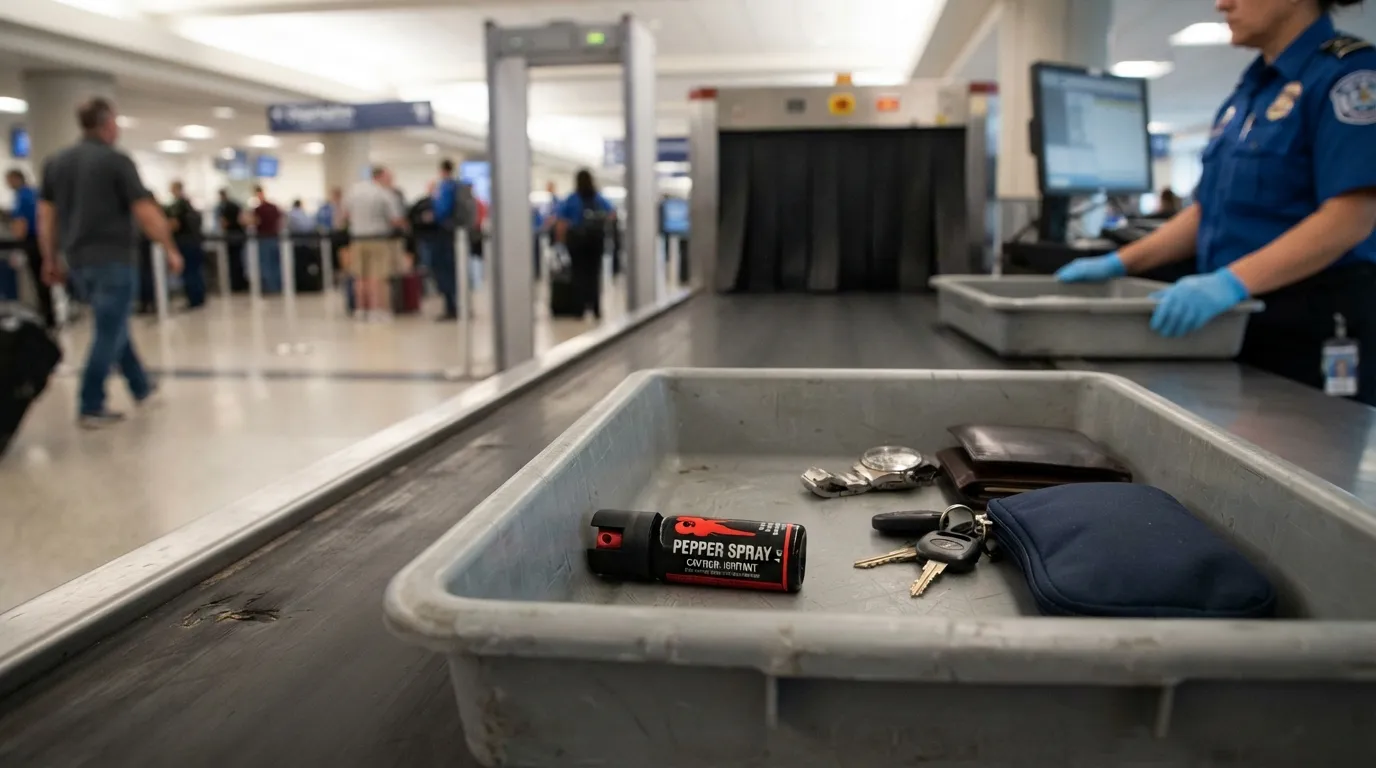
TSA allows one 4-ounce container of pepper spray in checked baggage only, and it must have a safety mechanism to prevent accidental discharge. Carry-on spray is typically pulled at the checkpoint. Rules abroad are tougher in some places, with certain countries prohibiting self-defense sprays entirely, in both carry-on and checked bags.
#9 – Torch Lighters and Certain Lighters
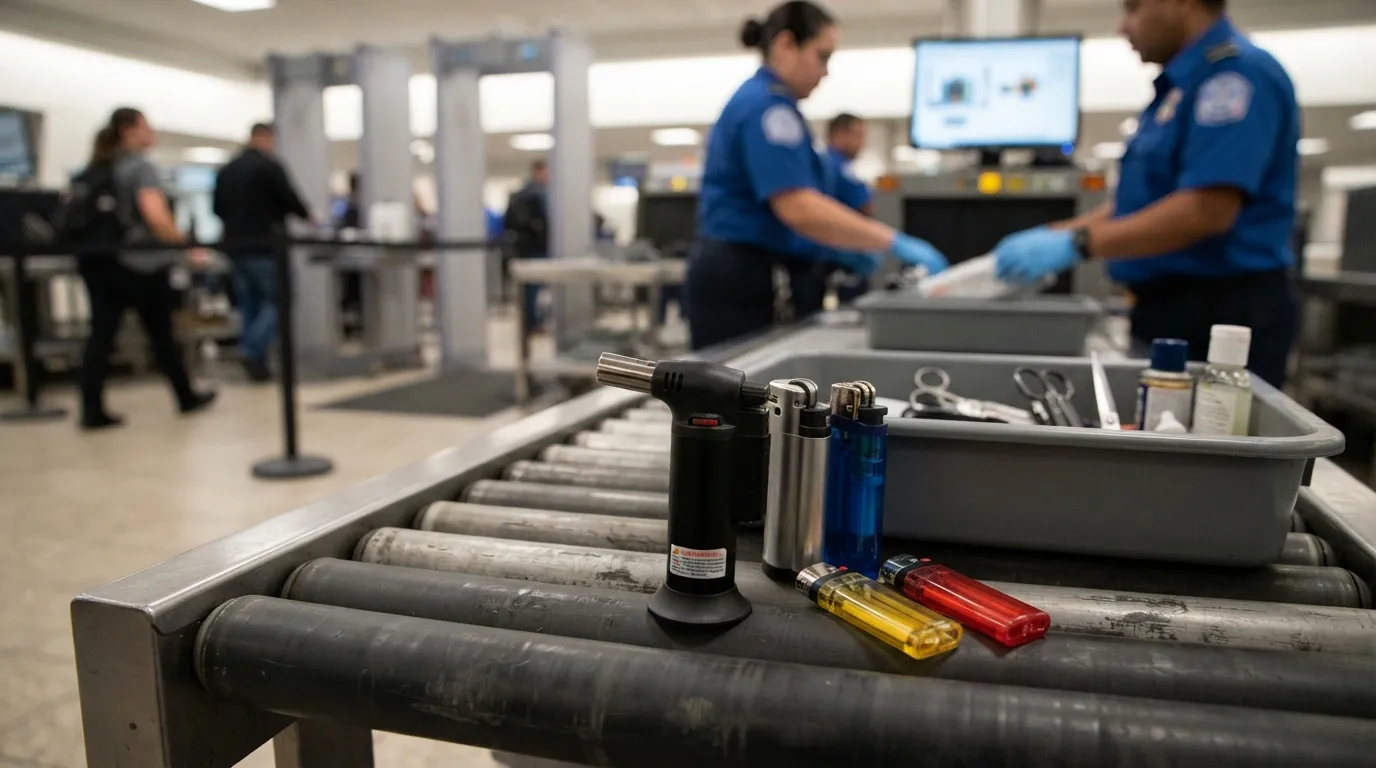
TSA prohibits torch lighters, the kind with a hot blue flame, in both carry-on and checked bags. Officers pull them at screening. Standard disposable lighters are treated differently and are generally allowed in carry-on. Other countries often cap lighters at one per passenger, and some operators restrict them further, so limits vary by route.
#10 – Axes, Hatchets, and Similar Tools
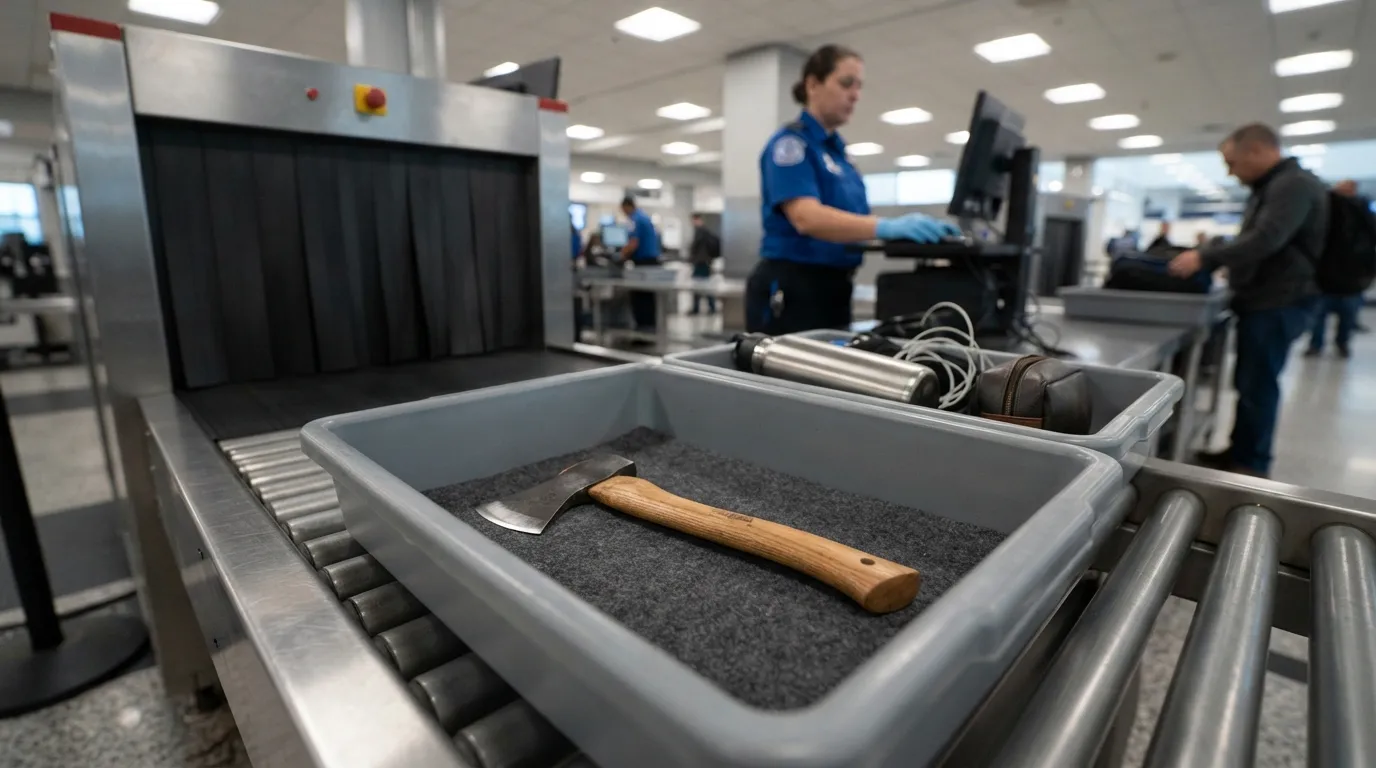
TSA prohibits axes and hatchets in carry-on bags, and officers pull them during screening. Checked baggage may allow them, subject to airline rules. Many other countries also ban axes and similar bladed tools from the cabin, though the specifics differ, so check each airline and airport on your trip.
#11 – Baseball Bats and Sporting Equipment
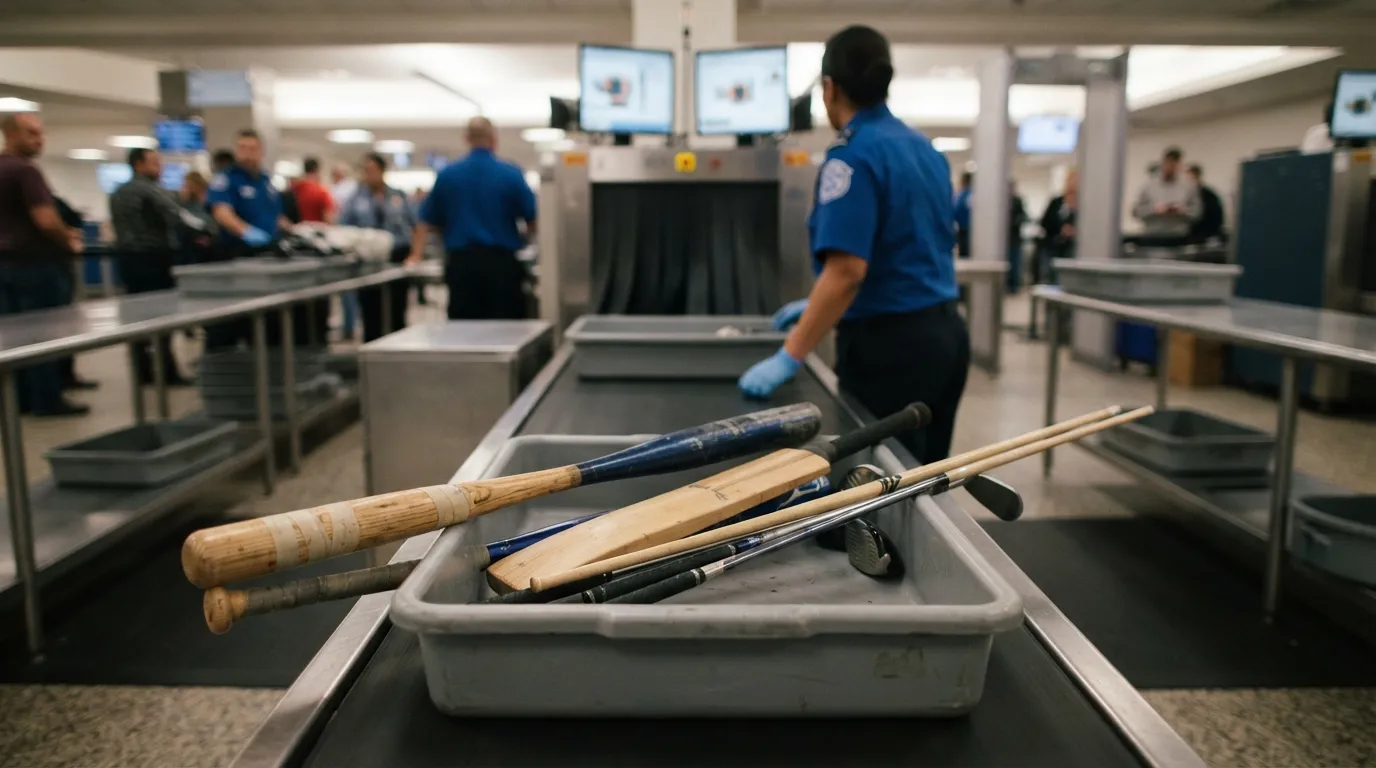
TSA doesn’t allow baseball bats in carry-on, and the same goes for cricket bats, golf clubs, hockey sticks, and pool cues. Officers commonly pull them, and they must travel in checked baggage. Other jurisdictions often follow similar policies for gear that could be used as a weapon, though airlines may add their own size or packing rules.
#12 – Loose or High-Capacity Spare Lithium Batteries
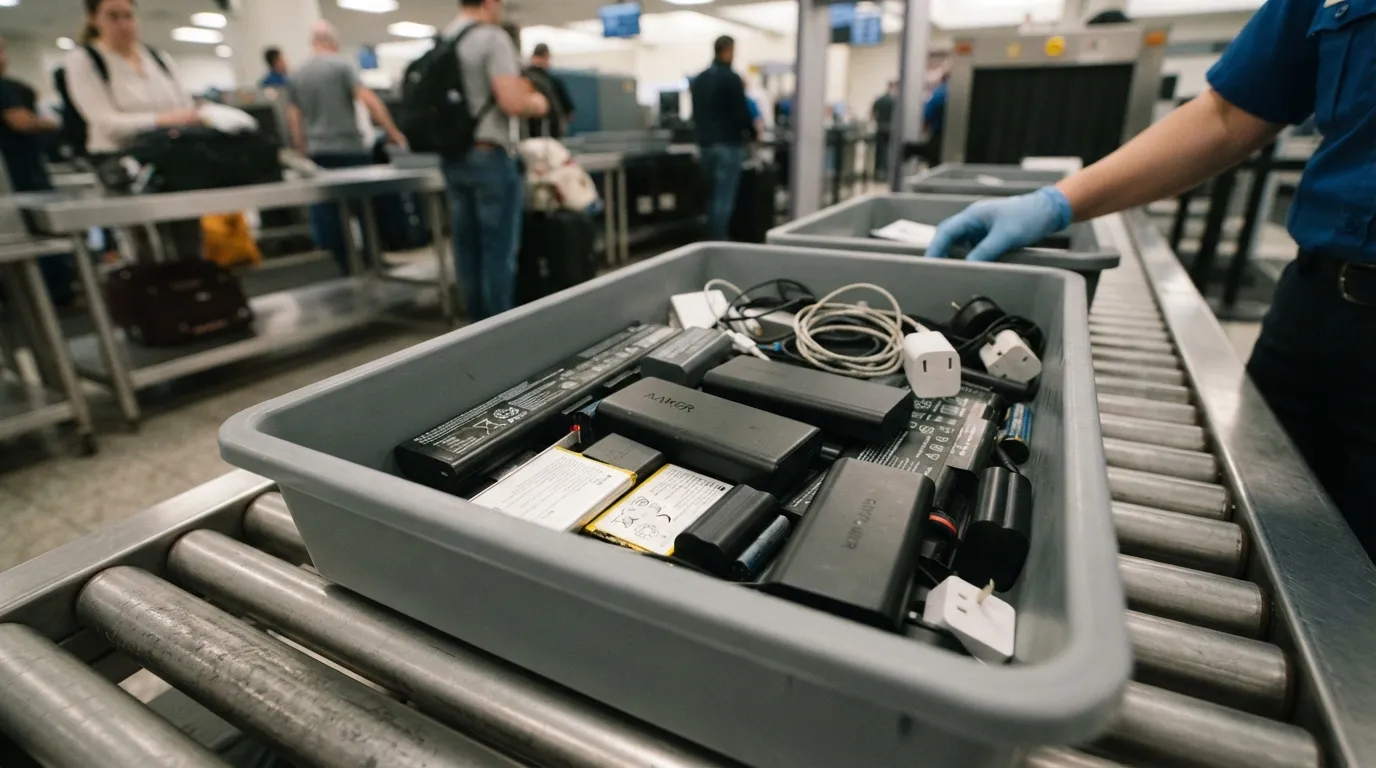
Spare lithium batteries and power banks must travel in carry-on, never checked bags. Under FAA and TSA guidance, those over 100 watt-hours need airline approval and those over 160 are barred. Officers may pull improperly packed ones. Other countries also require cabin placement, but watt-hour limits and extra rules differ by country and airline.
Worth Knowing
- 100 Wh or less: generally fine in the cabin.
- 101 to 160 Wh: airline approval needed, and the FAA limits travelers to two spares.
- Over 160 Wh: not allowed on passenger flights.
- No Wh printed on it? Multiply volts by amp-hours to estimate.
#13 – Bug Spray and Insecticide Aerosols
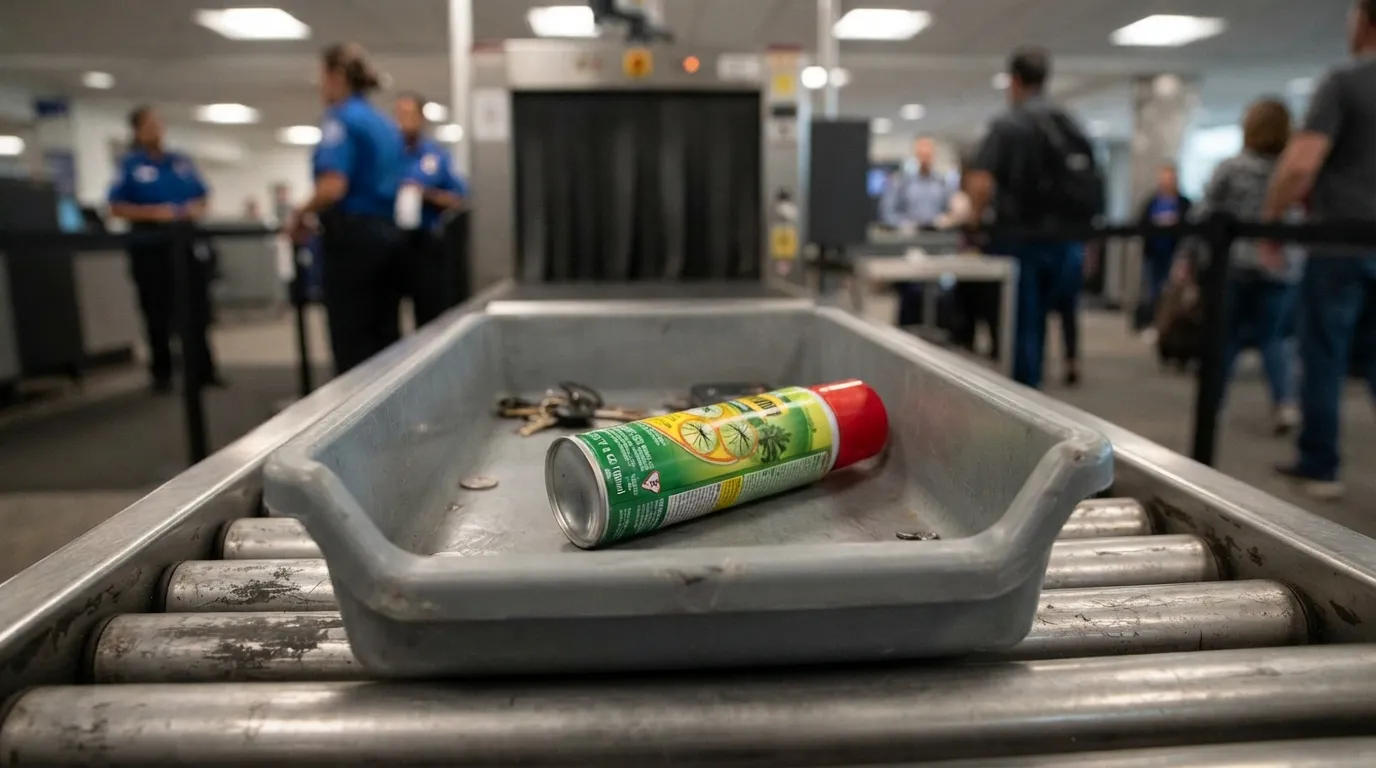
Aerosol bug spray follows the same liquids limit as other aerosols: only containers of 3.4 ounces or less fit in a TSA carry-on, so larger cans get pulled. Heavy-duty pest-control insecticides can fall under hazardous materials rules, so check TSA and airline guidance first. Other countries apply similar restrictions, with differing labeling requirements.
#14 – Fireworks and Explosives
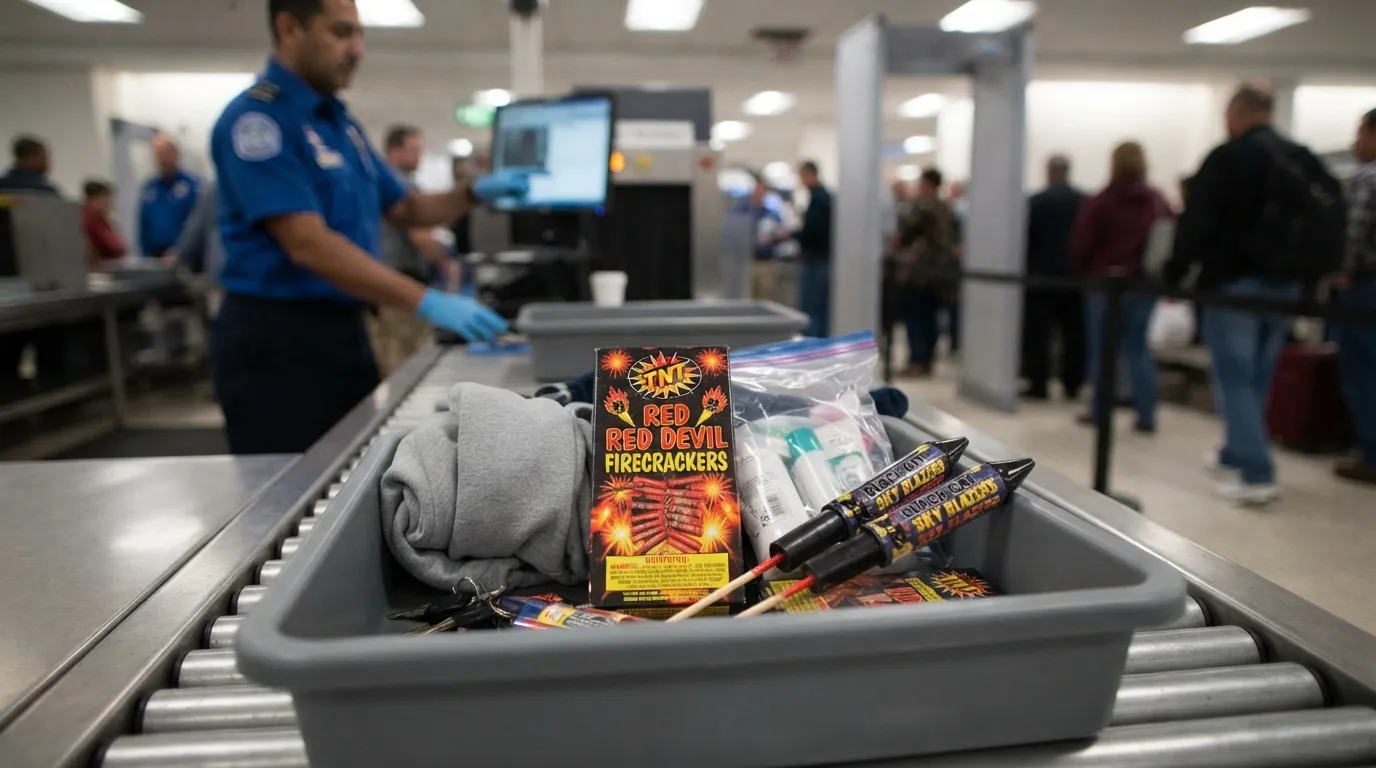
TSA bans fireworks in both carry-on and checked bags, and officers remove any they find. Even small consumer fireworks count, and so does anything classed as an explosive. Most international operators enforce complete bans on fireworks and explosives too, so no packing trick makes them allowed.
#15 – Multi-Tools and Box Cutters
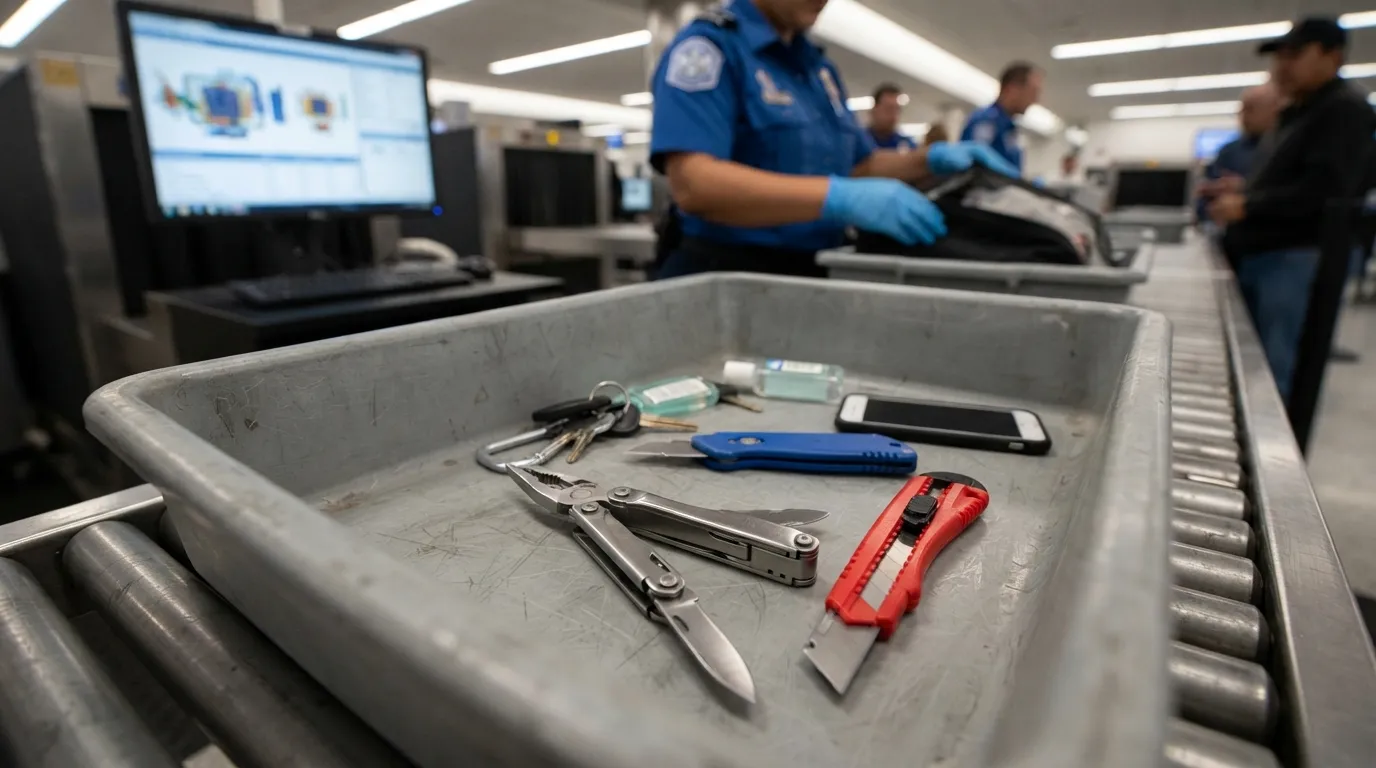
TSA prohibits multi-tools with blades, along with utility knives and box cutters, in carry-on bags. Officers frequently pull them, even when the knife is a tiny part of the tool. Checked bags permit them when properly secured. Rules differ across countries on blade length and tool type, so a multi-tool that clears one airport may not clear another.
#16 – Laptops, Tablets, and Larger Electronics
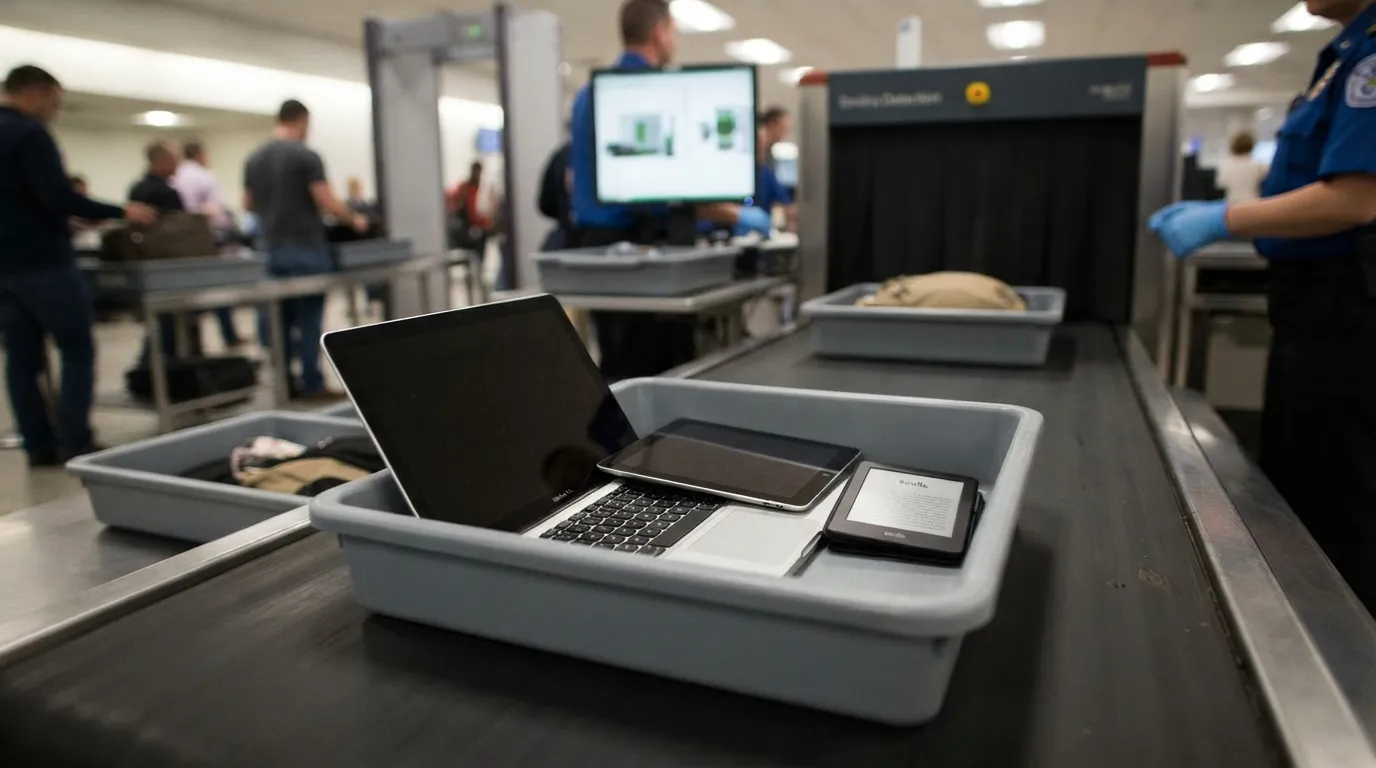
At standard TSA checkpoints, laptops and other electronics larger than a cell phone usually come out of the bag for separate X-ray. TSA PreCheck travelers generally can leave them in, and some airports with newer CT scanners may not require removal. Other countries set their own electronics procedures, which vary by airport and operator.

Quiz Widget: Which item surprised you most? Take our quick quiz and comment your score below!
- Have you ever had a water bottle removed at security?
- What about a multi-tool?
CEO-Co-Founder